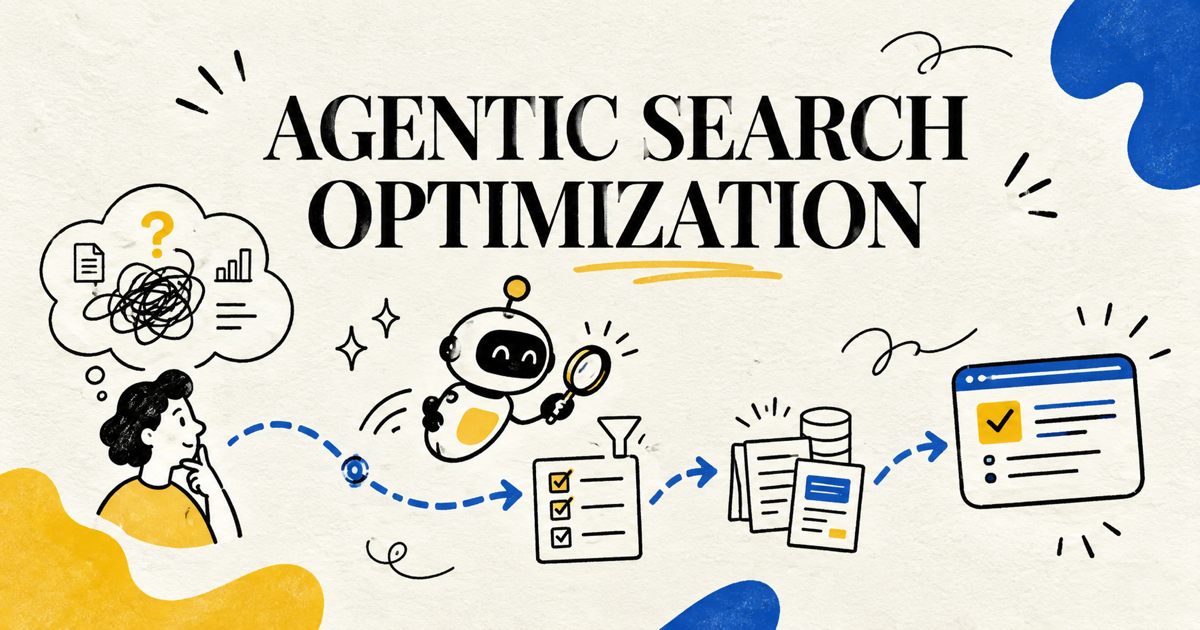
Search is starting to do more than retrieve a page. An agent can monitor a topic, compare options, combine live facts, and help a person complete a task. That changes the practical question for content teams. It is no longer only, “Can this page rank?” It is also, “Can a search agent reliably extract, compare, and act on what this page says?”
That does not make traditional SEO obsolete. Google’s current guidance says its generative features still depend on the core Search index, ranking systems, retrieval-augmented generation, and query fan-out. The foundation remains crawlable, indexable, useful content. Agentic search optimization adds another layer: make the facts, constraints, states, and next actions clear enough for an automated system to use without guessing.
This guide turns that idea into a practical audit. It focuses on content and site changes you can make now, without inventing special “AI markup” or rebuilding your entire website around an unproven protocol.
Agentic Search Is a Task Layer on Top of Retrieval
Classic search helps a person find documents. Generative search synthesizes an answer from retrieved sources. Agentic search can keep working after the first answer: it can monitor for changes, compare choices against multiple constraints, or help the user complete an action.
Google described this direction at I/O 2026 with information agents that can monitor web sources over time, notify users when conditions change, and support tasks such as finding listings that meet detailed requirements. Google also expanded agentic booking and shopping capabilities. The important shift is persistence and constraint handling. A single task may include location, budget, availability, eligibility, timing, and personal preferences.
For a publisher or business, that creates more ways to be useful. A page can supply evidence for an answer, one fact in a comparison, a current state such as price or availability, or a destination where the user finishes the task. It also creates more failure modes. Ambiguous conditions, stale dates, hidden fees, and inconsistent fields can cause an agent to exclude or misrepresent an otherwise relevant offer.
Agentic search optimization is therefore not a separate channel hack. It is the discipline of making task-relevant information discoverable, interpretable, current, and actionable.
Start With the Jobs an Agent May Need to Complete
Do not begin with a list of bots or speculative schema types. Begin with user jobs. Identify the tasks that lead people toward your product, service, or expertise, then identify the facts an agent would need to complete each task safely.
| User task | Information the agent needs | Common content failure | Better page design |
|---|---|---|---|
| Compare two products | capabilities, limits, price basis, audience, tradeoffs | feature list without decision criteria | comparison table plus a clear recommendation boundary |
| Find an eligible service | location, hours, qualifications, exclusions, availability | generic service page with hidden restrictions | explicit eligibility and service-area section |
| Monitor a changing condition | status, effective date, update history, threshold | undated claim or stale snapshot | timestamped status and change log |
| Book or buy | real price, inventory, cancellation terms, next action | CTA disconnected from current facts | consistent offer data and a stable action path |
| Research a complex decision | evidence, methodology, assumptions, uncertainty | unsupported summary | sourced analysis with assumptions and limitations |
This exercise separates “interesting content” from “operationally useful content.” A thought-leadership article may build trust, while a specification page, policy page, availability feed, or comparison table supplies the precise fact an agent needs. Strong sites connect both.
Make Constraints Explicit Instead of Leaving Them in Prose
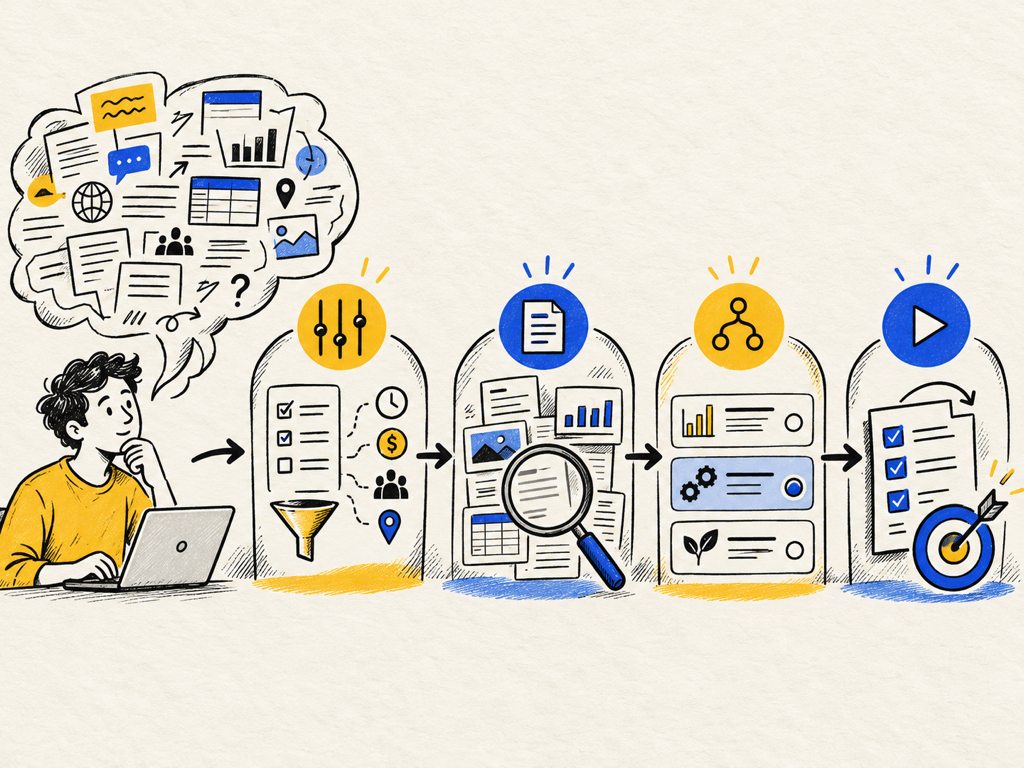
Agents are often asked to satisfy several constraints at once. A traveler may want a hotel under a budget, near a station, with late check-in and a refundable rate. A buyer may want software for a specific team size, region, security standard, and integration stack. If those facts are scattered across marketing copy, PDFs, footnotes, and modal windows, the system has to infer too much.
Create a visible constraint layer on the page. Use precise headings such as “Who this plan is for,” “Service area,” “Requirements,” “What is included,” “Availability,” and “Cancellation policy.” State units, currencies, tax treatment, and effective dates. When a limit depends on a plan, region, or variant, attach the condition directly to the value.
Tables help when they genuinely support comparison. Lists help when order or eligibility matters. Short definitions help when your terminology differs from market language. None of this requires chopping every sentence into an artificial “AI-friendly” fragment. Google explicitly says there is no requirement to chunk pages into tiny pieces or rewrite them in a special style for generative search. Structure should improve the human reading experience first.
Publish Evidence That Can Survive Comparison
An agent comparing sources needs more than a confident conclusion. It needs evidence that can be checked against other pages. This is where non-commodity content becomes especially valuable.
Google’s generative AI optimization guide recommends unique viewpoints, first-hand experience, original expertise, and content that goes beyond summaries anyone could reproduce. For agentic tasks, useful evidence often includes:
- a clearly defined measurement method;
- a dated test or observation window;
- first-party data with the sample and denominator explained;
- screenshots or images that demonstrate the condition being discussed;
- primary-source citations near the claim they support;
- a limitation section that prevents overgeneralization;
- a changelog when the underlying product or policy evolves.
Treat important claims as reusable evidence units. Each unit should answer: What happened? Under what conditions? How was it measured? When was it true? What would make it no longer true? This makes the content more credible to people and easier to reconcile with other sources.
Keep the Technical Foundation Boring and Reliable
Agentic features still need access to the web. Google states that pages generally need to be indexed and eligible for snippets to appear in its generative Search features. It also advises maintaining crawlability, sound JavaScript SEO, good page experience, and reduced duplication.
The practical checklist is familiar:
- Return a successful HTTP status for the canonical page.
- Keep essential facts in accessible page content, not only inside an image or an interaction that fails without JavaScript.
- Use one stable canonical URL for each durable resource.
- Keep headings, links, forms, and controls understandable in the DOM and accessibility tree.
- Ensure the mobile layout exposes the same important facts as desktop.
- Match structured data to visible content and validate supported types.
- Avoid blocking the crawlers or preview behavior required for the search experiences you want.
Google notes that browser agents may inspect visual renderings, DOM structure, and the accessibility tree. That makes accessibility work operational, not decorative. A properly labeled button, a visible form error, and a logical heading order help both people and automated systems understand what can be done on the page.
Design Action Paths That Preserve Context
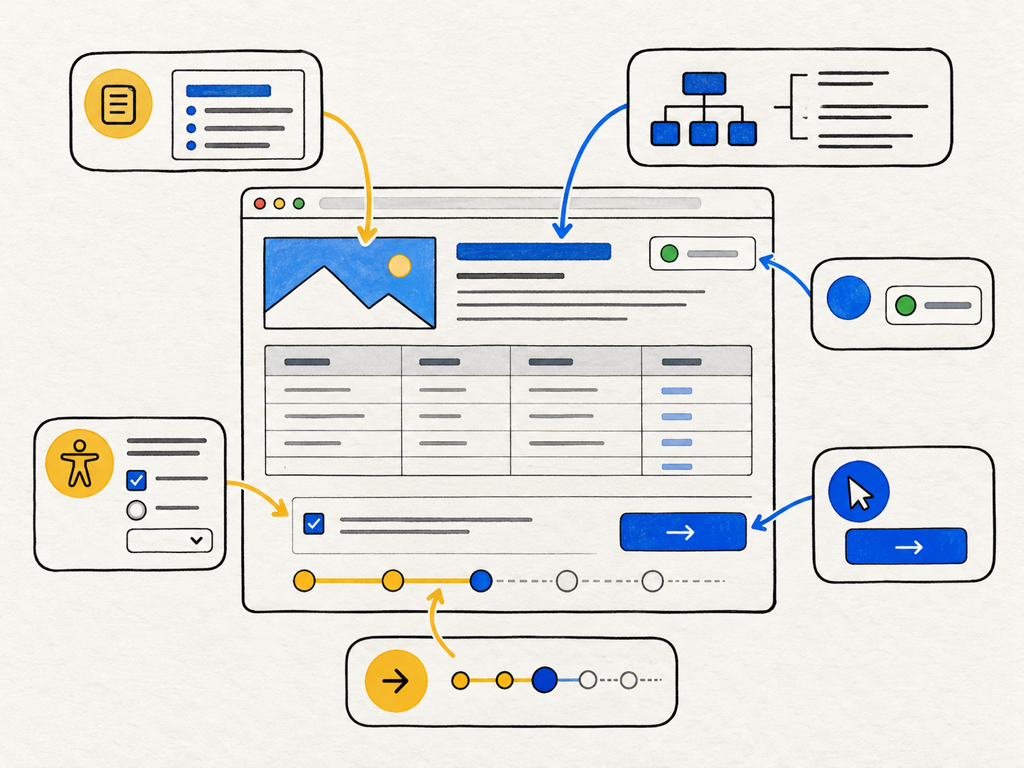
An agent can find the right option and still fail at the handoff. Common breaks include a price changing between the comparison page and checkout, a variant losing its selected state, a booking link opening at the wrong location, or a form asking for information already supplied.
Audit the full path from discovery to completion. Stable URLs should preserve the selected product, plan, location, or variant. CTAs should describe the action instead of using vague labels. Forms should expose requirements before submission and return specific, recoverable errors. If a person must take over, the page should retain the context the agent assembled.
For commerce and booking, freshness matters as much as structure. A perfectly marked-up page with yesterday’s availability is less useful than a plain page with accurate current data. Assign an owner and update frequency to every high-impact field. If a value cannot be guaranteed in real time, say when it was last updated and what the user must confirm.
Measure Agentic Search as a Chain of Evidence
There is no single “agent readiness” score that proves performance. Measure the chain from eligibility to business outcome.
At the technical layer, monitor indexability, rendering, structured-data validity, accessibility, and action completion. At the discovery layer, track the prompts or task clusters where your pages appear, the sources cited, and the pages selected. At the behavior layer, track qualified referral sessions, completed forms, bookings, purchases, and assisted conversions.
Topify can help teams monitor answer visibility and citation patterns across a stable prompt set. Use that evidence to identify which topics and pages are being selected, then combine it with analytics and conversion data. A citation is evidence of source use, not proof of a sale. A referral is observable traffic, not the full influence of an AI interaction. Keep those layers separate.
Run task-based tests rather than random prompts. For each important user job, create representative prompts with realistic constraints. Repeat them across engines and time windows. Record whether the answer found the right facts, cited the right page, preserved conditions, and offered a valid next action. The resulting failures provide a more useful backlog than a generic visibility score.
Prioritize Fixes by Task Risk and Business Value
Not every page needs an agentic redesign. Prioritize pages where an inaccurate or missing fact could change a decision, block a transaction, or create customer harm.
Use a simple four-part score:
- Task value: How close is the task to a meaningful business outcome?
- Information volatility: How often do price, inventory, availability, rules, or eligibility change?
- Interpretation risk: How costly would a wrong inference be?
- Current clarity: Can a person quickly verify the important facts and next action?
High-value, high-volatility pages should receive clear data ownership and frequent checks. High-risk policy or eligibility pages need explicit limitations and effective dates. Stable educational pages may need only better evidence, headings, and internal links.
Avoid building around a speculative feature simply because it is new. Google says special AI files such as llms.txt are not required for its Search features, and there is no special schema type for generative search. Emerging protocols may become useful for particular transactions, but they should sit on top of accurate content and reliable site behavior.
Build an Agent-Ready Publishing Workflow
The strongest improvement is not a one-time audit. It is a publishing workflow that treats task facts as maintained assets.
Before publication, the content owner defines the user job, evidence, constraints, and likely next action. A subject-matter reviewer checks factual accuracy and limitations. SEO verifies discovery, canonicalization, and internal links. Design checks mobile readability and image meaning. Engineering or operations verifies dynamic fields and forms. After publication, analytics monitors the discovery-to-action chain.
Add a short agent-readiness review to existing quality assurance:
- Can the main task and audience be identified within seconds?
- Are decision-critical constraints visible and unambiguous?
- Are claims supported by dated, primary, or first-hand evidence?
- Does the current state match the destination or transaction flow?
- Can keyboard, screen-reader, and browser-agent users operate the page?
- Is there a clear owner for volatile information?
- Can performance be measured without treating citations as conversions?
This workflow improves traditional search, AI answers, accessibility, and conversion quality at the same time. That overlap is the reason agentic search optimization is worth doing now, even while specific products and protocols continue to change.
Frequently Asked Questions
What is agentic search optimization?
Agentic search optimization is the practice of making web content and actions usable by search agents that retrieve information, compare options, monitor changes, or help complete tasks. It combines foundational SEO with clear constraints, current state, accessible interfaces, reliable evidence, and stable action paths.
Do I need special schema for search agents?
No universal special schema is required. Use supported structured data where it accurately matches visible content, but do not invent markup solely for AI systems. The more important foundation is crawlable, indexable, current, and well-structured information.
Is an llms.txt file required for Google agentic search?
No. Google’s current documentation says its Search systems do not use llms.txt as a special signal. Other services may choose to use such files, so the decision should be based on a documented provider requirement rather than a general ranking claim.
How should I measure agentic search performance?
Measure technical eligibility, task-level answer visibility, citations, qualified referrals, action completion, and revenue as separate layers. Use a stable prompt set and repeat tests over comparable time windows. Do not collapse every layer into one unexplained score.
Leave a Reply