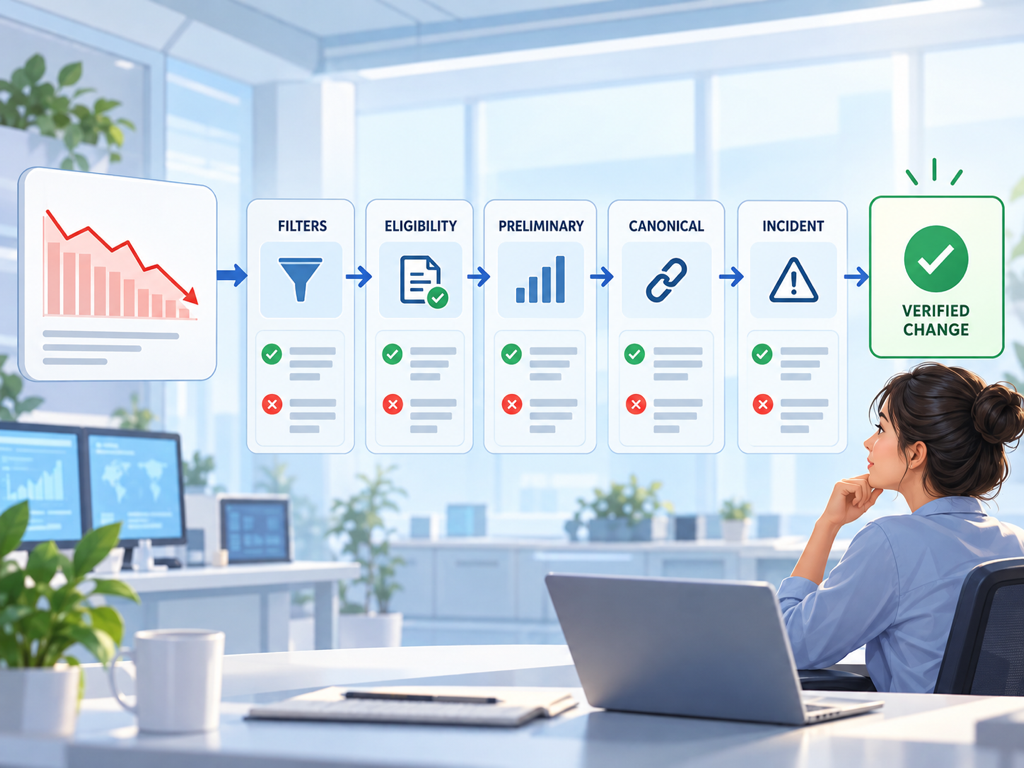
A content lead opens Bing Webmaster Tools after a product launch and sees citations rising. The chart looks encouraging, but it does not answer the question waiting in the next meeting: did the launch improve visibility, or did Microsoft simply surface more pages for unrelated requests? A citation total can confirm that your site appeared as a source. It cannot, by itself, reveal prominence, recommendation quality, audience fit, or business impact.
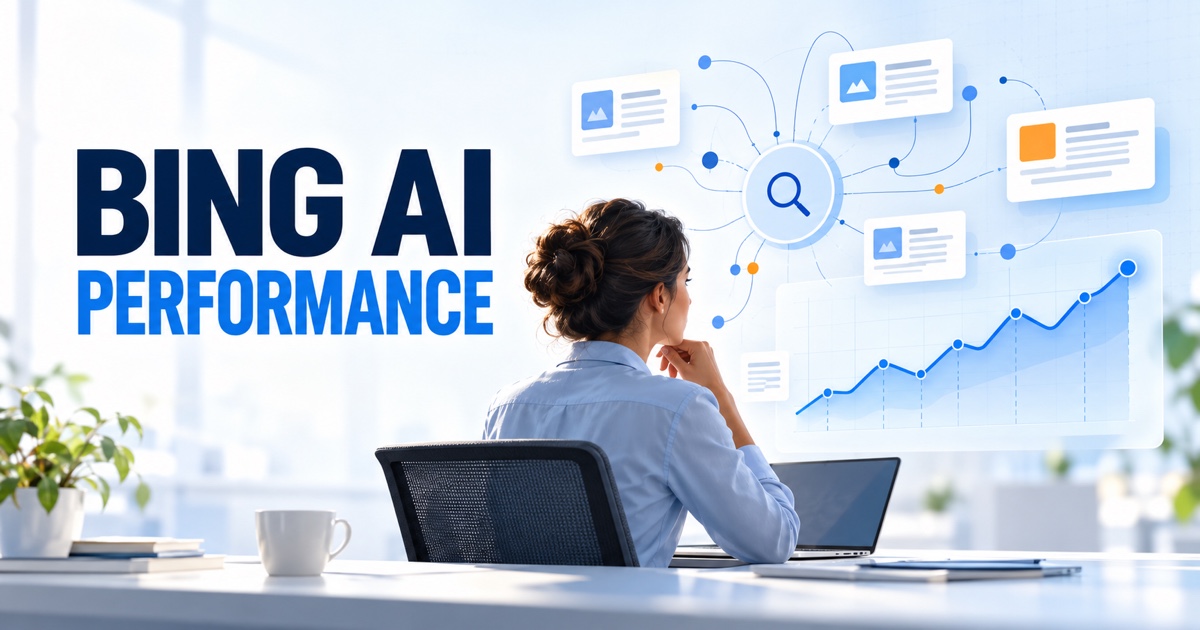
Bing AI Performance becomes useful when you read its metrics as a connected diagnostic system. The report can show where your content participates in Microsoft-powered AI answers, which retrieval phrases led to those citations, and how the pattern changes over time. The work is translating those observations into decisions without assigning meaning the data cannot support.
Bing AI Performance Measures Source Use, Not Traditional Rankings
Microsoft introduced the AI Performance report in Bing Webmaster Tools in February 2026. The public preview covers citations across Microsoft Copilot, AI-generated summaries in Bing, and selected partner integrations. Its core unit is not a blue-link position or a click. It is the use of a page as a cited source in a generated answer.
That distinction changes how you interpret success. A citation means Microsoft displayed your URL as supporting material. It does not tell you whether your brand was recommended, whether the citation appeared early in the answer, or whether the user opened it.
The report therefore sits between two familiar systems. Search performance tools explain discoverability and visits. Answer-monitoring tools explain what an AI response said, which brands it mentioned, and how those brands were framed. Bing AI Performance supplies first-party evidence that your content participated in the grounding layer.
Treat it as evidence of source inclusion, not a replacement for rankings, analytics, or answer-level observation.
Read the Five Core Metrics as Different Layers of Evidence
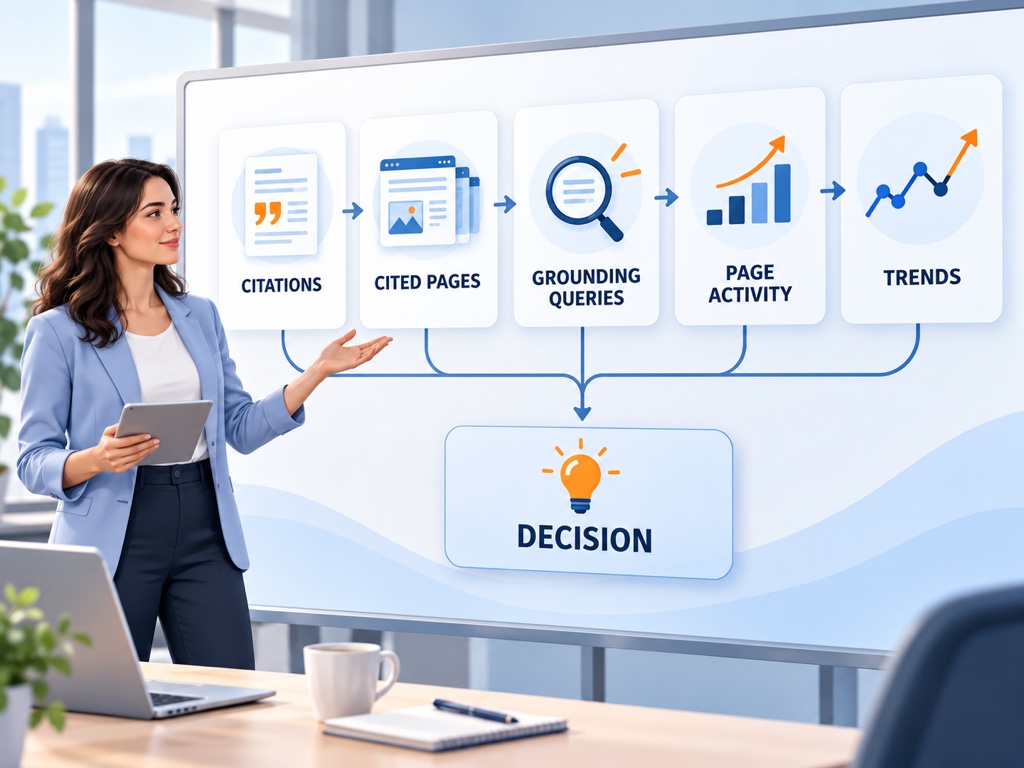
The dashboard begins with five views: Total Citations, Average Cited Pages, Grounding Queries, Page-Level Citation Activity, and Visibility Trends. Each answers a different operational question.
Total Citations counts how often sources from your site were displayed in supported AI answers during the selected period. It is the broadest measure of citation activity, but it does not represent unique answers or users.
Average Cited Pages describes the average number of unique pages from your site cited per day. A rise can indicate broader coverage across your content library, while a flat value paired with rising citations may mean a small set of pages is being reused more frequently.
Grounding Queries are phrases used during retrieval when your content was referenced. Microsoft describes this data as a sample, so it should guide investigation rather than serve as a complete demand model.
Page-Level Citation Activity shows which URLs receive citations. It helps separate site-wide growth from one-page concentration, but it does not assign authority or rank to those pages.
Visibility Trends place citation activity on a timeline. The chart helps you find breakpoints and sustained movement. It cannot identify the cause without additional checks.
| Bing AI Performance metric | What it directly shows | Decision it can support | What it does not prove |
|---|---|---|---|
| Total Citations | Displayed source citations from your site | Whether citation activity is expanding or contracting | Unique users, clicks, recommendations, or rank |
| Average Cited Pages | Average unique cited URLs per day | Whether visibility is broadening across the site | Content quality or page authority |
| Grounding Queries | Sample retrieval phrases associated with citations | Which needs or concepts to investigate | Complete prompt demand or search volume |
| Page-Level Citation Activity | Citation counts by URL | Which pages deserve review or replication | Why the page was selected |
| Visibility Trends | Change over the selected time range | When a shift began and whether it persisted | The event that caused the change |
Grounding Queries Reveal Retrieval Context, Not the Full User Prompt
A grounding query is not necessarily the exact sentence a person entered. AI systems can break a request into retrieval steps, expand concepts, or search for supporting details. The phrase shown in the report is evidence about what the system retrieved, not a verbatim transcript of user intent.
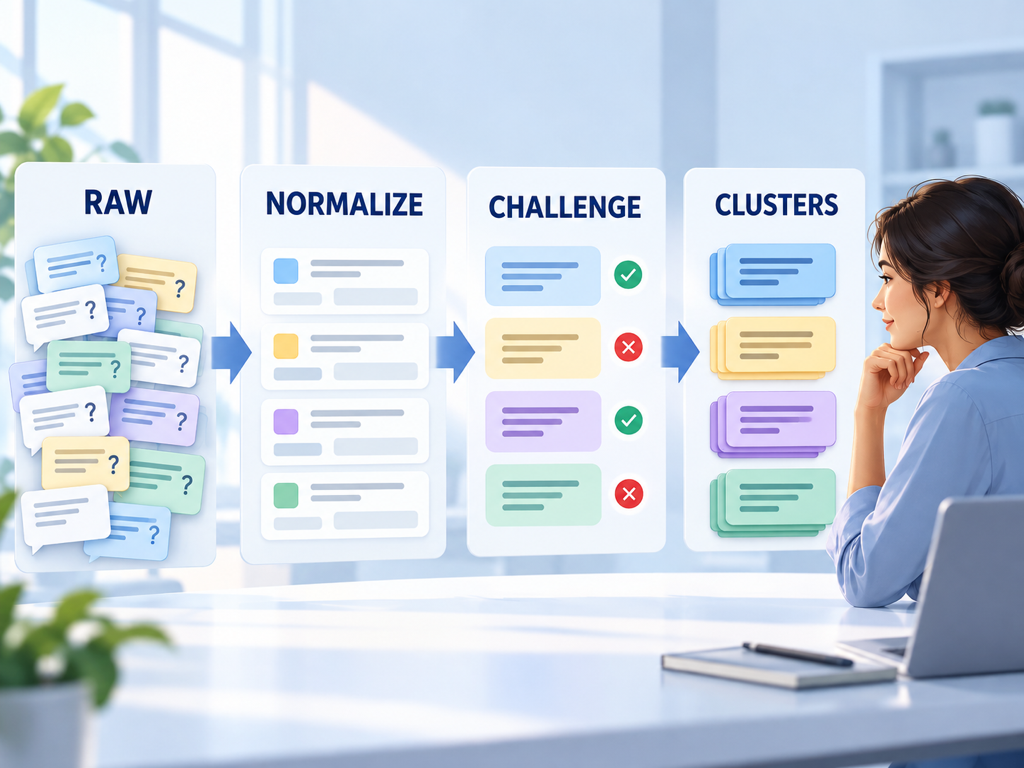
This makes grounding-query analysis closer to content diagnosis than keyword research. Group the phrases by the task they imply: learning, comparison, troubleshooting, local discovery, commercial evaluation, or creation. Then ask whether the cited page actually resolves that task.
Microsoft expanded the preview in June 2026 with Intents and Topics. Intents classify retrieval context into categories such as informational, commercial, navigational, research, local, and solve-oriented activity. Topics cluster related grounding queries into broader themes.
Both are classification layers, not ground truth. Microsoft notes that labels may remain broad for specialized subjects during the preview. Use them to find patterns, then read the associated pages and answers before assigning editorial work.
Page Trends Show Whether Growth Is Broad, Concentrated, or Fragile
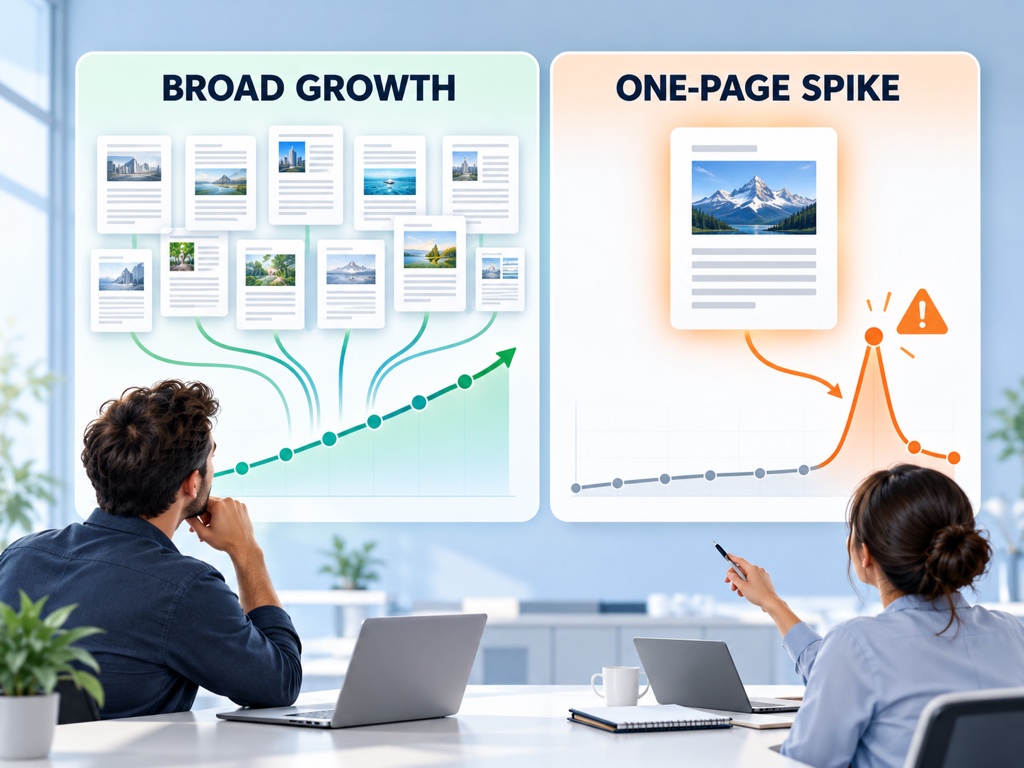
The same citation increase can describe three very different situations. Ten URLs may each gain a small number of citations. One evergreen guide may account for nearly the entire change. Or several pages may alternate in and out of the source set from day to day.
Start with concentration. Calculate the share of site citations represented by the top one, five, and ten URLs. A high top-one share creates operational risk because one outdated or redirected page can change the entire trend.
Next, inspect role. Label cited URLs as product pages, category pages, documentation, research, comparisons, support content, or editorial articles. The distribution tells you whether Microsoft is using your site to explain a subject, validate a fact, compare options, or support a transaction.
Finally, check freshness. Review each leading page for dates, prices, feature descriptions, availability, and source evidence. Microsoft recommends keeping cited material current and points publishers to IndexNow for notifying participating search engines about added, updated, or deleted URLs. An accepted IndexNow request only confirms receipt, not indexing or citation.
Compare Equivalent Periods Before Explaining a Change
Microsoft’s Compare view can overlay the current period with a previous period. The feature makes trends easier to see, but a clean chart does not guarantee a fair comparison.
Use complete periods with the same duration and reporting scope. Compare Monday through Sunday against the prior Monday through Sunday, not seven complete days against a partial current week. Record any site release, migration, major content update, campaign, seasonal event, or reporting change that occurred near the breakpoint.
Then classify the movement:
- Volume change: total citations move while cited-page breadth remains stable.
- Coverage change: average cited pages and unique cited URLs expand or contract.
- Topic-mix change: different themes or intents account for the citations.
- Concentration change: the same total becomes more dependent on a small page set.
- Volatility change: repeated spikes and reversals make the apparent trend unreliable.
Do not write “the content update caused citation growth” merely because the dates align. A defensible statement is narrower: citations increased after the update, the updated page contributed most of the change, and no larger reporting or demand shift was visible. Causality remains a hypothesis until repeated evidence supports it.
Turn Every Signal Into a Testable Content Decision
The report is most valuable when every observation produces a bounded next step. A frequently cited documentation page may justify expanding adjacent definitions. A commercially relevant grounding-query cluster may reveal that an educational page is doing the work of a missing comparison page. A formerly cited page that drops sharply may need a freshness, canonical, or accessibility review.
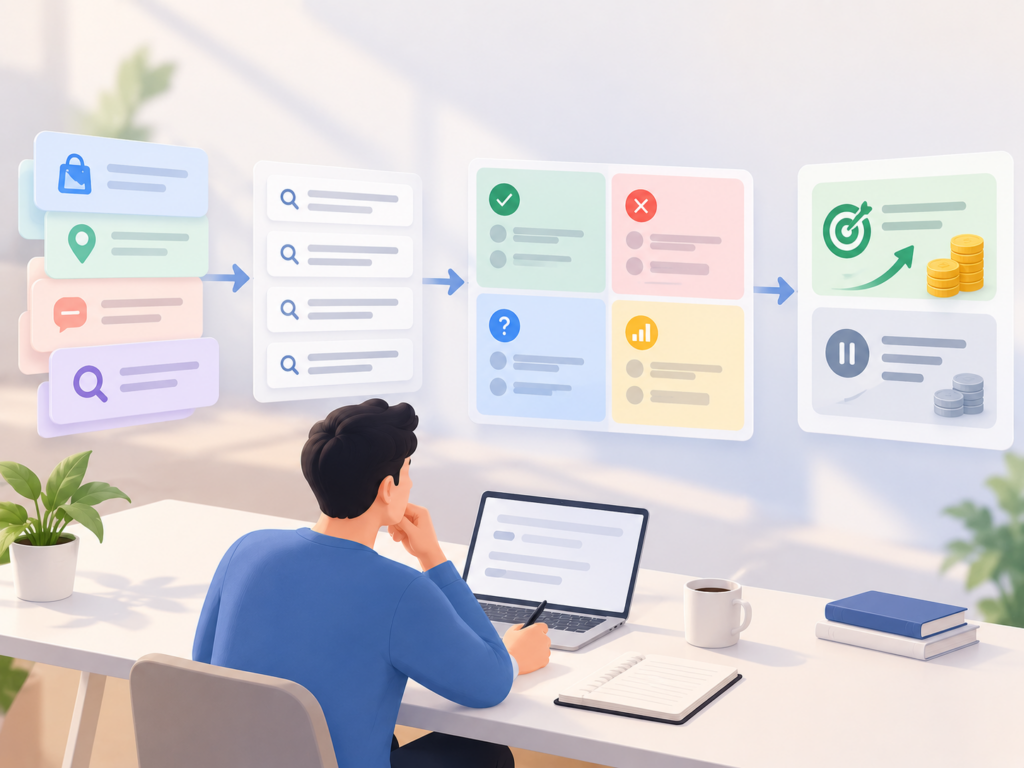
Use this four-step loop:
- State the observation. Include the period, metric, page set, topic, and intent.
- List plausible explanations. Separate demand, page eligibility, content fit, freshness, and reporting possibilities.
- Choose one change. Update one page group or publish one missing asset instead of changing the entire site.
- Define the confirming signal. Specify the citation, coverage, query, answer, and conversion evidence expected after the change.
For example, suppose citations for “enterprise data retention requirements” rise, but nearly all of them point to a general glossary. The immediate decision is not to publish ten keyword variants. First inspect whether the glossary contains the specific legal distinctions, jurisdiction notes, and update dates the retrieval context requires. Then decide whether the page needs a clearer evidence section or whether a dedicated compliance comparison is warranted.
Pair First-Party Citation Data With Answer-Level Monitoring
Bing AI Performance can show that Microsoft cited your pages. It cannot show the complete wording of every answer, the order in which brands appeared, or whether the citation supported a positive, negative, or neutral claim.
That is where an answer-level layer becomes useful. Topify can be used to monitor a controlled set of prompts, observe brand mentions and recommendations, compare competitors, and inspect the sources shaping answers. The two systems should not be forced into one metric. Bing supplies first-party citation activity across its supported experiences, while prompt monitoring samples specific questions and answer conditions.
Build a joined review rather than a blended score. Put Bing citation trends beside prompt-level visibility, brand framing, cited domains, analytics sessions, and conversions. A rise in citations with no improvement in relevant recommendations may indicate informational authority without commercial inclusion. A stable citation count paired with stronger answer position may signal better use of the same source footprint.
The disagreement is often the insight.
Use a Weekly Diagnostic and a Monthly Decision Review
A weekly review should remain narrow. Check data completeness, compare equivalent periods, identify the largest page and topic movements, and flag unusual concentration. Avoid launching work from a single volatile day.
A monthly review can support decisions. Recalculate concentration, review intent and topic mix, inspect leading pages for freshness, compare answer-level behavior, and connect visibility with qualified visits or business events. Record both actions and non-actions so the team does not repeat the same inconclusive diagnosis.
Use a shared note with four fields: observation, confidence, next test, and owner. This keeps the report from becoming a passive chart that everyone interprets differently.
Conclusion
Bing AI Performance gives publishers rare first-party evidence about how their content participates in Microsoft-powered AI answers. Its value comes from respecting the boundaries of each metric. Citations show source use, grounding queries reveal sampled retrieval context, page activity exposes concentration, and trends identify when a movement began. None of them independently proves rank, recommendation quality, traffic, or causality.
Start with one complete comparison period. Classify the movement by volume, coverage, topic mix, concentration, or volatility. Then test one explanation using page checks, answer observations, and conversion evidence. The goal is not to turn every citation into a victory. It is to turn an otherwise ambiguous signal into a decision the content team can defend.
FAQ
What is Bing AI Performance?
Bing AI Performance is a Bing Webmaster Tools report showing how pages from your site are cited across supported Microsoft AI experiences, including Copilot and AI-generated Bing summaries.
Does a Bing AI citation mean my page ranked first?
No. A citation confirms that the page was displayed as a source. It does not reveal a traditional rank, answer position, click, endorsement, or recommendation.
Are grounding queries the same as user prompts?
Not necessarily. Grounding queries reflect phrases used during retrieval and may represent one step within a broader AI request. Microsoft also describes the available data as a sample.
How often should I review Bing AI Performance?
Use weekly checks for anomalies and monthly reviews for content decisions. Compare complete equivalent periods and avoid treating a single day’s movement as a durable trend.