Category: Knowledge

  • LLM Citations: What They Are and Why Marketers Should Care

    LLM Citations: What They Are and Why Marketers Should Care

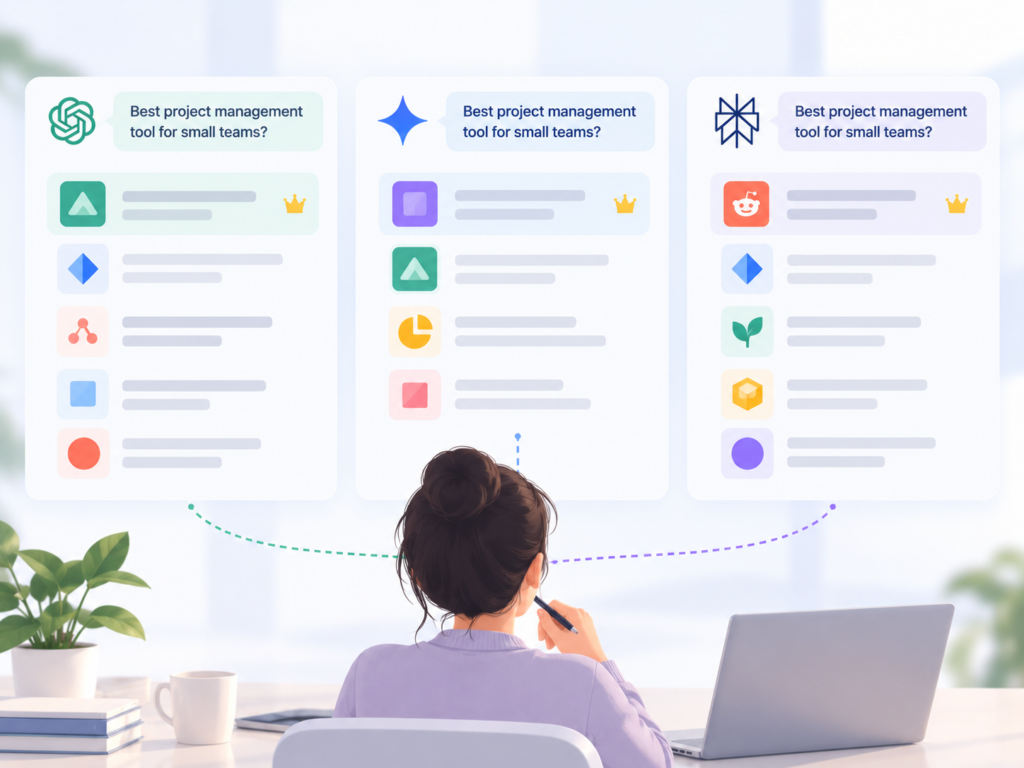
    Your team spent six months building content authority. Domain rating is climbing, organic traffic is strong, and your top 50 keywords all sit in the first three positions on Google. Then a prospective buyer asks ChatGPT, “Which platform offers the most reliable solution for [your category]?” The response names three competitors, links to a niche blog and a Reddit thread, and doesn’t mention your brand once.

    That disconnect has a name: the Visibility Gap. It’s the growing space between where your brand ranks on Google and whether AI systems mention you at all. Research shows only 11% of domains get cited by both ChatGPT and Perplexity for the same queries. Traditional search dominance no longer guarantees presence in the discovery layer that’s reshaping how buyers find brands.

    The signal that determines whether you show up in that layer is called an LLM citation.

    What Is an LLM Citation, and How Is It Different from a Backlink?

    An LLM citation is any instance where a large language model references, mentions, or links to a brand while generating a response. It shows up in two forms. Explicit citations include a direct URL or hover-over source link, common on platforms like Perplexity and Google AI Overviews. Implicit mentions happen when the AI recommends or describes a brand in its prose without linking to the source.

    That distinction matters because the signals driving each are fundamentally different from traditional SEO.

    Backlinks are static, page-to-page hyperlinks designed to pass link equity. An LLM citation is a declaration of entity relevance within a specific semantic context. While traditional SEO has long prioritized backlink volume and domain authority, those factors show a weak to neutral correlation with whether an LLM will actually cite a brand. The strongest predictor of LLM citation frequency is brand search volume, with a correlation coefficient of 0.334. In practice, LLMs prioritize brands that already have high mental availability among human users, mirroring real-world authority rather than technical link-building strength.

    FeatureTraditional BacklinkLLM Citation
    Core intentNavigation and SEO authorityAttribution and factual support
    StabilityRelatively permanentHighly volatile, changes per inference
    Discovery pathLink graph crawlingParametric knowledge + RAG
    User impactDirect referral trafficBrand perception and shortlist inclusion
    Evaluation metricDomain Rating / Page AuthorityEntity salience and source reliability

    Here’s the thing: an LLM citation represents a model’s “confidence” that your brand is a necessary component of a correct answer. That’s a fundamentally more powerful signal than a hyperlink.

    The Economics of Being Cited: Why LLM Citations Drive Buyer Decisions

    The shift toward AI-powered discovery isn’t speculative. Estimates suggest over $750 billion in U.S. revenue will funnel through AI-powered search environments by 2028. Roughly one-third of consumers now start their research directly within AI tools rather than traditional search engines, and in B2B, that figure is even steeper: 51% of software buyers report using AI chatbots more frequently than Google for initial vendor research.

    The economic value of an LLM citation is significantly higher than a traditional search impression. In a Google search, a brand must win a click to start influencing the buyer. In an AI response, brand exposure happens directly within the answer. The buyer is pre-educated before they ever visit your website.

    When users do click through from an AI citation, the traffic converts at 14.2%, roughly five times higher than traditional organic traffic. The user arrives pre-qualified by the AI’s synthesis.

    The most significant risk is compression of choice. Google typically displays ten organic links per page. An AI model often synthesizes a shortlist of just three recommendations. Being excluded from that response is equivalent to being excluded from the buyer’s entire consideration set. And the effect compounds: every time a brand is cited as a top choice, that response contributes to future training data and reinforces the model’s association between the brand and the category.

    The traditional research phase, which used to involve 12 to 15 separate search sessions over several weeks, is being compressed into a single interaction with an AI agent.

    How LLMs Decide Which Brands to Cite

    When a user asks a broad question, the AI doesn’t process it as a single query. It performs “query fan-out,” decomposing the prompt into 8 to 12 sub-queries covering pricing, reviews, technical specifications, and more. A brand that only provides high-level marketing copy but lacks presence in those sub-categories gets skipped.

    Five factors determine which brands pass the selection filter.

    Entity authority. The model evaluates how clearly a brand is recognized as an authority in a specific niche. Wikipedia alone provides nearly 48% of all citations for ChatGPT. If your brand doesn’t exist in ground-truth reference sources, you’re starting at a disadvantage.

    Structural extractability. Content that uses clear H2/H3 hierarchies and leads with a direct answer in the first 30% of the text is 44.2% more likely to be selected as a source. LLMs can’t cite what they can’t easily parse.

    Cross-platform consensus. A single source claiming a brand is “the best” isn’t enough. Most AI models require verification from five or more independent, high-authority sources before triggering a citation. 85% of citations come from third-party sites like Reddit, G2, or industry publications.

    Content freshness. More than 70% of pages cited by AI models were updated within the last year. Pages that fall out of a quarterly update cycle are three times as likely to lose their citations.

    Entity consistency. If your brand name varies across LinkedIn, your website, and directory listings, the AI’s entity resolution algorithms may fail to connect the signals. One airline brand unified its naming across all platforms and saw a 35% increase in citation rates within three months.

    Each AI platform also has its own source preferences. ChatGPT leans on Wikipedia (47.9% of citations). Perplexity favors Reddit (46.7%). Google AI Overviews mix Reddit (21%) with YouTube (18.8%). That platform divergence is what makes the 11% overlap statistic so important: optimizing for one platform doesn’t guarantee visibility on another.

    Why Your Google Rankings Don’t Protect You from the Visibility Gap

    A Google ranking is relatively stable over a week. An AI’s citation profile can fluctuate wildly between identical queries because of the model’s inference randomness.

    Research into brand persistence found that only 30% of brands maintain visibility from one answer to the next for the same prompt. Even more concerning, just 20% remain present across five consecutive queries.

    That instability makes one-off manual checks misleading. A marketing team might check ChatGPT once, see their brand cited, and assume success. In reality, they could be invisible to 80% of users asking the same question.

    Being cited once doesn’t protect against “citation drift” either. When models retrain or update their indices, a long-standing citation can be replaced by a newer or more consensus-rich competitor. Brands that earn both a text mention and a linked citation are 40% more likely to reappear consistently across sessions, suggesting the model’s confidence is strongest when its retrieval system and generation system align.

    This volatility makes continuous, automated tracking a requirement, not a nice-to-have.

    How to Track and Improve Your LLM Citation Performance

    Tracking LLM citations requires a different framework than keyword tracking. The process starts with building a prompt library rather than a keyword list.

    Build a prompt universe. Move beyond single keywords like “marketing software” and create 20 to 50 conversational prompts that reflect actual buyer intent. “What are the best marketing automation tools for a mid-market ecommerce brand looking to reduce churn?” is the kind of query AI users actually type. Segment by persona, region, and intent stage.

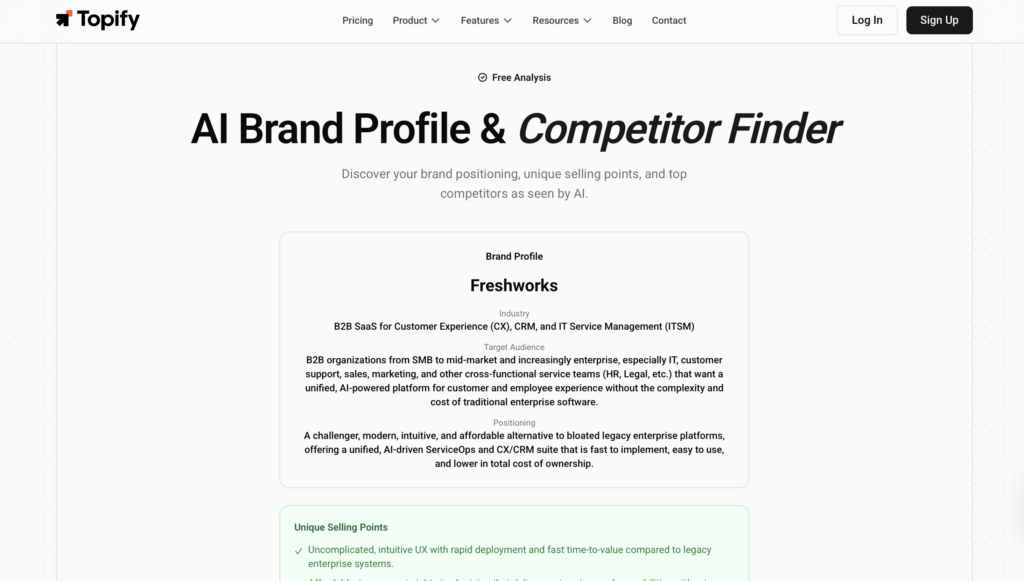
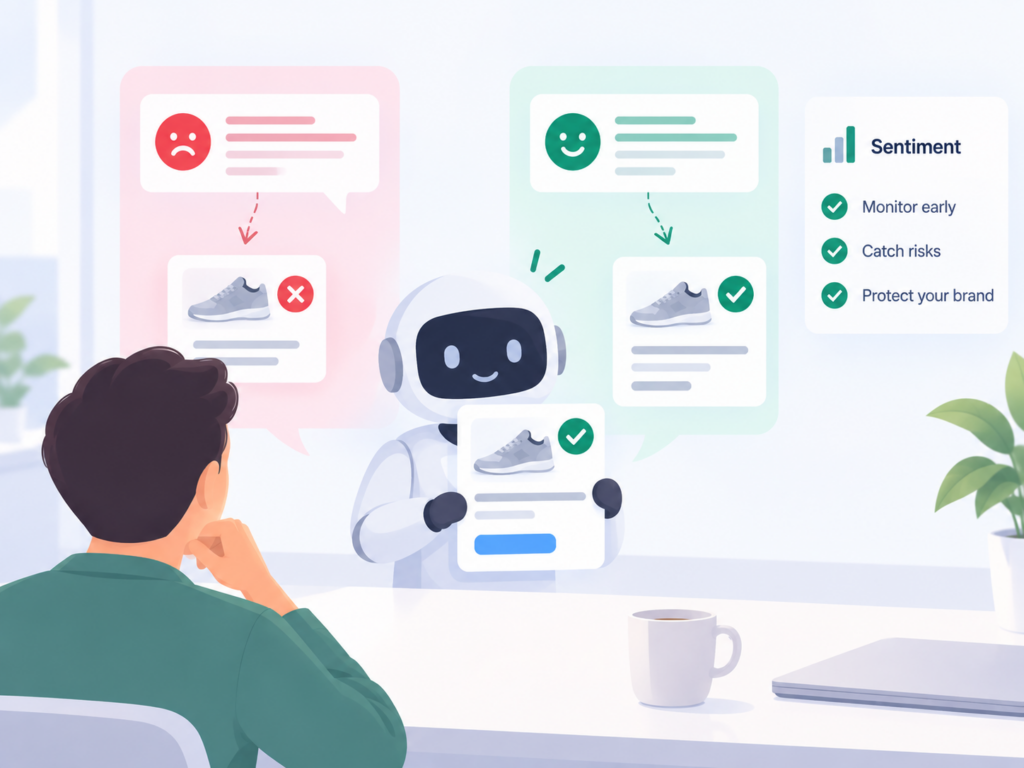
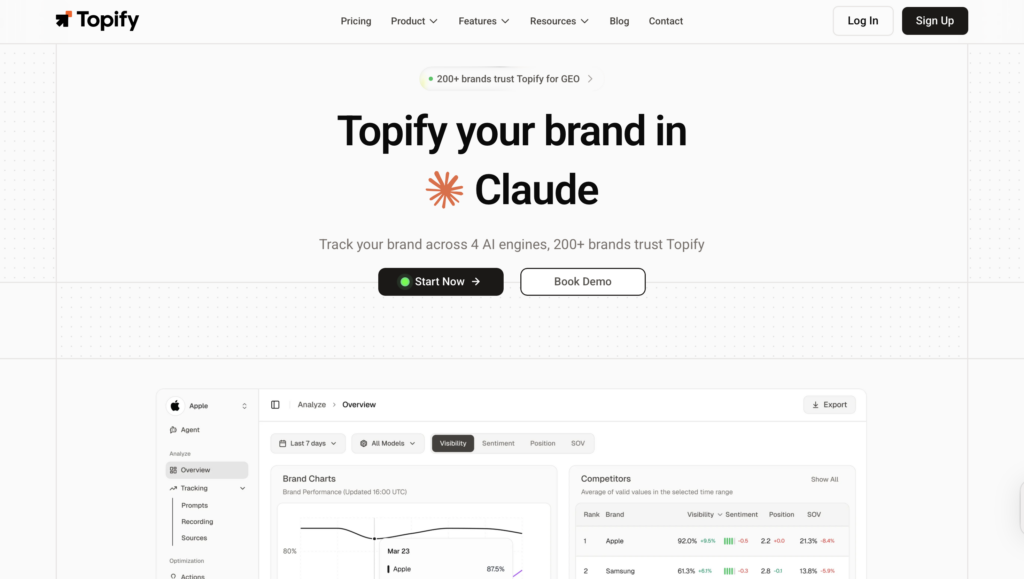
    Track across platforms. Because of the fragmentation between AI engines, manual tracking doesn’t scale. Topifyautomates three core functions that map directly to LLM citation performance. Source Analysis identifies which specific third-party domains are driving competitor citations, so you can reverse-engineer where to earn more mentions. Visibility Tracking monitors your brand’s presence across ChatGPT, Perplexity, Gemini, and Claude on a daily or weekly cadence. And Sentiment Analysis evaluates the tone AI uses to describe you, because high visibility with negative framing is often worse than no visibility at all.

    Measure AI Share of Voice. The ultimate metric for the AI era is Share of Voice: your brand’s mentions divided by total mentions across a category-relevant set of prompts. Topify weights this score by sentiment and recommendation position to produce a blended AI-SoV that serves as a leading indicator of future market share.

    AI-SoV ScoreBrand StatusRecommended Strategy
    > 50%Dominant entityDefend position, monitor sentiment velocity
    20%-49%ContenderDifferentiate with original data and frameworks
    5%-19%Niche playerExpand semantic relevance with broader guides
    < 5%InvisibleLaunch entity salience campaign across 4+ platforms

    5 Quick Wins to Boost Your Brand’s LLM Citation Rate

    Front-load your answers. LLMs exhibit “lost in the middle” behavior, where information buried in a document gets ignored during synthesis. Writing each section with a direct, self-contained answer chunk in the first 150 to 300 words makes content 2.8x more likely to be extracted and cited.

    Trigger the consensus mechanism. AI systems rarely cite a brand based solely on its own website. Brands mentioned across four or more trusted platforms (Reddit, YouTube, G2, industry press) are 2.8x more likely to appear in ChatGPT responses.

    Optimize for AI crawlers. Fast-loading pages with FCP under 0.4 seconds are three times more likely to be cited. Implementing FAQ, HowTo, and Organization schema acts as a map for AI crawlers, helping them resolve entities and understand relationships.

    Lead with data. Content that includes statistical data provides a +22% improvement in citation likelihood. Direct quotes from subject matter experts add a +37% boost on Perplexity specifically. LLMs prioritize primary evidence over marketing fluff.

    Refresh on a quarterly cycle. Pages that haven’t been updated in the last 90 days are three times more likely to lose their citations to newer content. A systematic content refresh cycle, with visible “last updated” dates, is one of the simplest ways to maintain a strong AI Share of Voice.

    Conclusion

    The shift from a ranking economy to a citation economy isn’t coming. It’s here. LLM citations aren’t just links. They’re a verification of your brand’s place in the knowledge graph of the machine. The brands moving now to build entity authority, structural citability, and cross-platform consensus are building a compounding advantage that gets harder to overcome with each model update.

    The practical path is clear: audit where you stand today, benchmark against the competitors AI is already recommending, and optimize the assets that drive citation. Start with a baseline AI visibility audit through Topify, and you’ll know within a week exactly where your brand stands in AI search.

    FAQ

    What’s the difference between an LLM citation and a traditional backlink? 

    A backlink is a static hyperlink between two web pages, designed to pass link equity for SEO. An LLM citation is a dynamic reference generated in real time when an AI model determines your brand is relevant to a user’s query. Backlinks are permanent until removed. LLM citations can change with every inference.

    How often should I track my brand’s LLM citations? 

    Weekly tracking is the minimum recommended cadence. Because only 30% of brands maintain visibility between consecutive answers, single checks provide a misleading picture. Brands in fast-moving sectors like SaaS or finance should track daily to catch citation drift early.

    Can I improve my LLM citation rate without changing my website content? 

    Yes. Building brand presence across four or more third-party platforms (Reddit, G2, YouTube, industry directories) is one of the highest-impact levers. Unifying your brand name across all digital properties and earning PR coverage on high-authority outlets also directly improve citation rates without touching your own site.

    Which AI platforms should I prioritize for citation tracking? 

    At minimum, track ChatGPT, Perplexity, and Google AI Overviews. Each uses fundamentally different source preferences: ChatGPT relies on Wikipedia and parametric knowledge, Perplexity favors Reddit and real-time retrieval, and Google AI Overviews mix organic results with forum and video content. Only 11% of domains are cited across both ChatGPT and Perplexity, so cross-platform monitoring is non-negotiable.

    Read More

  • AI Visibility Tracking Reports Your C-Suite Will Actually Read

    AI Visibility Tracking Reports Your C-Suite Will Actually Read

    Your quarterly board deck has 40 slides on SEO performance. Domain authority is up. Organic traffic grew 12%. Keyword rankings look solid. Then your CEO asks one question: “Are we showing up when someone asks ChatGPT for a recommendation in our category?” And you don’t have an answer.

    That silence is becoming the most expensive gap in enterprise marketing. While 89% of enterprise leaders report measurable gains from AI search in 2025, roughly 26% still can’t trace the user journey from AI discovery to final conversion, and 24% admit their analytics infrastructure isn’t built for AI attribution. The data exists. The translation layer doesn’t.

    Why Most AI Visibility Reports Get Ignored in the Boardroom

    The problem isn’t a lack of metrics. It’s that marketing teams keep presenting AI visibility data through the lens of traditional SEO, and executives don’t speak that language.

    Traditional SEO reports focus on the “how”: crawling, indexing, backlink profiles. The C-Suite needs the “why”: how AI presence translates into revenue, market share, and competitive defensibility. When a VP of Marketing shows a dashboard full of prompt-level data without tying it to pipeline impact, the executive response is predictable. “So what?”

    That disconnect turns AI visibility programs into what leadership perceives as discretionary experiments rather than core revenue drivers. Budgets stall. Headcount requests get deprioritized. And competitors who’ve figured out the reporting piece pull further ahead in the fastest-growing search category.

    Here’s what shifted: the discovery interface itself changed. The old model gave users ten blue links and let them choose. Generative search gives one to three synthesized recommendations, each carrying an implicit endorsement. The economic unit moved from cost-per-click to cost-per-mention. The trust signal moved from backlinks to multi-source consensus.

    DimensionTraditional SearchGenerative Search
    User InteractionKeywords and blue linksConversational prompts and synthesized answers
    Primary MetricOrganic clicks and trafficShare of Model and citations
    Trust SignalBacklinks and PageRankEntity confidence and multi-source consensus
    Discovery Result10 results per page1-3 direct recommendations
    Economic UnitCost Per ClickCost Per Mention/Citation

    If your reporting framework hasn’t caught up to this shift, your leadership team is making decisions with a map from 2019.

    5 AI Visibility Tracking Metrics That Belong in Every Executive Report

    To move from reporting activity to reporting influence, marketing leaders need to strip the metric set down to what actually drives board-level decisions. These five, drawn from Topify’s seven-metric framework, map directly to business outcomes executives already care about.

    Visibility Score: Your Market Reach in AI Discovery

    The Visibility Score measures the percentage of target prompts where your brand appears across major AI platforms. For an executive, this is the digital equivalent of “mental availability.”

    In a market where 58% of consumers now use AI for product research, a Visibility Score below 30% in your core category means you’re functionally invisible to more than half your prospective buyers. A score above 80% signals category dominance. Anything in between reveals specific “semantic holes” where the model doesn’t perceive your brand as a relevant option.

    Sentiment Score: Real-Time Brand Equity Monitoring

    An AI response doesn’t just list your brand. It characterizes it. The Sentiment Score uses NLP to rate the tone of AI recommendations on a scale of -100 to +100.

    Being mentioned frequently becomes a liability if every mention comes with a caveat like “users often report slow onboarding” or “the interface feels dated.” Tracking sentiment lets the team catch and counter negative narratives before they harden into the model’s training data.

    Position Rank: The New “Position 1”

    AI platforms typically recommend three to five brands per query. The brand in first position carries an implicit endorsement that dwarfs every subsequent mention.

    If your brand consistently lands third or fourth, its influence on the user’s decision is minimal compared to the first-position competitor. For B2B SaaS and enterprise finance, where high-consideration purchases are the norm, Position Rank is the single clearest indicator of competitive standing.

    Citation Share: Authority You Can Measure

    As AI platforms lean harder on Retrieval-Augmented Generation (RAG), the sources they cite become the battleground for authority. Citation Share tracks what percentage of outbound links point to your domain versus competitors.

    The data here is striking: 85.5% of AI citations reference earned media rather than brand-owned sites. That tells the CMO exactly where to allocate PR and content partnership budgets. It also gives the board a concrete measure of the brand’s status as a “source of truth” in its category.

    Conversion Visibility Rate: The Revenue Metric

    CVR connects AI mentions directly to on-site revenue. By integrating with GA4 or Shopify, it estimates the economic value of an AI mention based on recommendation context and prompt intent.

    AI-referred visitors tend to convert at rates up to 5x higher than traditional organic traffic (14.2% vs. 2.8%), because the AI has already pre-qualified their intent. When you can show the CFO that AI mentions generated a specific number of qualified demos last quarter, visibility stops being a brand play and starts looking like a highly efficient lead generation channel.

    Traditional SEO MetricAI Visibility EquivalentWhy the C-Suite Cares
    Monthly TrafficVisibility ScoreOverall market reach in AI discovery
    Backlink CountCitation ShareBrand authority and “source of truth” status
    Keyword RankingPosition RankTrust and likelihood of direct recommendation
    Branded SearchMention FrequencyBrand strength as an entity in the model’s memory
    Site ConversionCVRDirect connection between AI presence and revenue

    How to Structure a Monthly AI Visibility Tracking Report

    An effective report follows the inverted pyramid: the most critical business impact goes on page one. Supporting evidence and tactical details follow. If your CMO has three minutes, they should still walk away with a clear decision.

    Layer 1: Executive Summary

    This is a standalone one-pager. It leads with a headline narrative that puts the month’s performance in business terms: “AI Visibility Score increased 15% following the restructuring of our comparison guides, contributing to a 22% lift in pre-qualified demo requests from enterprise accounts.”

    Four components, nothing more: an overall AI Visibility Score (0-100) as a quick health check, a Citation Gap comparison against the top three competitors, a revenue impact figure tied to AI-referred traffic, and three action items for the next cycle.

    Layer 2: Platform and Competitor Deep Dive

    The second layer explains the “why” behind the executive summary. It breaks performance down by platform (ChatGPT, Perplexity, Gemini) and by competitor.

    This is where you’ll spot fragmentation. A brand might be highly visible in Perplexity’s research-driven environment but absent from ChatGPT’s conversational responses. The report should show where competitors are winning share of voice and which specific sources (Reddit threads, G2 pages, industry blogs) the AI is using to back those competitors.

    Layer 3: Action Items and Roadmap

    Every metric must connect to execution. If sentiment dropped, the action item might be a content refresh targeting outdated statistics. If citation share slipped, the roadmap should prioritize a targeted PR push to authoritative industry publications. No finding without a “now what.”

    Weekly, Monthly, Quarterly: Matching Cadence to Decisions

    Not every stakeholder needs the same report at the same frequency. The cadence should match the speed of decisions each audience makes.

    Weekly reports serve the marketing operations team. The focus is speed over precision: flag sudden drops in visibility or sentiment that signal a technical error or a competitor’s aggressive content push. Monitoring a core set of 25-35 prompts weekly lets the team adjust campaigns still in flight.

    Monthly reports are the core rhythm for the VP of Marketing or Director. This is where trend analysis happens and budget reallocations occur, like shifting funds from traditional link building to entity-building activities that AI models prioritize.

    Quarterly reports go to the C-Suite and the board. They ladder up to OKRs, map market share trends over multiple cycles, and assess strategic risks like model drift or new platform partnerships that could reshape the visibility landscape.

    CadenceAudienceFocusImpact
    WeeklyMarketing OperationsAnomaly detection, prompt-level SOVTactical course correction
    MonthlyMarketing DirectorsTrend analysis, competitor gap analysisStrategy and budget adjustment
    QuarterlyC-Suite / BoardPipeline ROI, market share, strategic riskMulti-quarter goal setting

    How Topify Powers Enterprise-Scale AI Visibility Tracking

    For teams building this reporting infrastructure from scratch, Topify serves as the operating system for AI search intelligence. Unlike traditional SEO tools that have added AI features as afterthoughts, Topify was built natively for the generative era, with a proprietary database and LLM-research-backed methodology.

    The platform covers the full optimization lifecycle. Its AI Visibility Checker automates prompt testing across ChatGPT, Perplexity, Gemini, and Google AI Overviews to establish a real-time baseline. The citation tracking engine identifies the exact third-party domains driving competitor recommendations, turning passive monitoring into competitive intelligence. And when it detects a visibility gap, Topify’s One-Click Execution provides guided workflows to restructure content into formats AI models prefer.

    Here’s what that looks like in practice. A VP of Marketing at a growth-stage SaaS company runs a baseline audit and discovers their brand appears in only 22% of “category leader” prompts across Perplexity and ChatGPT. Topify’s gap analysis reveals the top competitor is winning because of three high-authority Reddit threads and two G2 comparison pages the VP’s team had ignored. After restructuring five core product pages using Topify’s execution workflows, the brand sees a 7x increase in AI visibility within 30 days, and demo requests from the AI channel double.

    Enterprise plans start at $499/mo with dedicated account management, custom configurations, and coverage across regional platforms including DeepSeek and Qwen. Smaller teams can start at $99/mo with the Basic Plan.

    3 Reporting Mistakes That Kill Executive Buy-In

    Even with the right data, poor framing can undermine the entire program. These three patterns show up repeatedly in organizations that struggle to secure C-Suite support.

    Reporting activity instead of outcomes. Executives don’t care how many meta tags got updated or how many prompts were tested. They care whether those activities protected market share or moved pipeline. The fix: frame every technical achievement as a business implication. Instead of “we fixed our schema,” try “we restructured our technical data so AI agents accurately cite our pricing and security features, reducing misinformation risk in the pre-purchase phase.”

    Missing the competitive baseline. Without a comparison point, data is just a number. If your Visibility Score is 45%, is that good? Executives can’t tell unless they know the nearest competitor sits at 72%. Always include a “Citation Gap” or “Share of Model” comparison in the executive summary. Showing that a competitor gets cited 3x more often creates an immediate imperative for action that performance-only tracking can’t match.

    Presenting the “what” without the “so what” and “now what.” A report that shows a drop in visibility without explaining the cause or proposing a fix reads like a vanity audit, not a strategic document. Follow the Rule of Three: for every finding, provide a reasoning and a recommendation. “Finding: Citation rate dropped 10%. Reason: A competitor launched a comprehensive industry whitepaper now cited across four platforms. Recommendation: Accelerate our Q3 original research release to reclaim the source-of-truth position.”

    Conclusion

    AI visibility tracking isn’t primarily a technical challenge. It’s a communication challenge. The organizations winning in generative search are the ones that can translate complex LLM behavior into the language of revenue, risk, and competitive positioning.

    Your leadership team doesn’t need more data. They need a reporting framework that answers three questions in under a minute: Are we visible? Are we winning? What do we do next? Build that cadence, back it with the right metrics, and AI visibility stops being a line item the CFO questions. It becomes the growth lever your CEO asks about first.

    Ready to build your first enterprise-grade AI visibility report? Get started with Topify and see where your brand stands across every major AI platform.

    FAQ

    What is AI visibility tracking?

    AI visibility tracking is the systematic measurement of how frequently, prominently, and favorably a brand appears in responses generated by large language models and generative search engines like ChatGPT, Perplexity, and Gemini. It goes beyond traditional rank tracking by analyzing the synthesized content, citations, and sentiment of the AI’s answer.

    How often should you report AI visibility to executives?

    A monthly cadence works best for strategic reporting to the C-Suite, providing enough time for trends to stabilize and optimization efforts to show results. Supplement this with weekly tactical monitoring for the marketing team and quarterly strategic reviews that align AI visibility goals with annual business OKRs.

    What KPIs should a C-suite AI visibility report include?

    Focus on five metrics with direct business impact: Visibility Score (market reach), Sentiment Score (brand reputation), Position Rank (trust and recall), Citation Share (authority), and Conversion Visibility Rate (revenue attribution). Each metric should be presented alongside a competitive benchmark.

    How is AI visibility tracking different from traditional SEO reporting?

    Traditional SEO reports focus on clicks, keyword rankings, and backlink counts within a static list of blue links. AI visibility tracking measures mentions, citations, and sentiment within generative conversational interfaces where influence often happens without a direct website visit. The fundamental shift is from tracking traffic to tracking endorsement.

    Read More

  • AI Citation Report: What Sources LLMs Trust in 2026

    AI Citation Report: What Sources LLMs Trust in 2026

    Your domain authority is 75. Your blog ranks on the first page for a dozen high-intent keywords. But when a potential buyer asks ChatGPT, “What’s the best platform for [your category]?”, the answer pulls from Reddit threads, Wikipedia entries, and a G2 review page you didn’t even know existed.

    That disconnect is growing. The top 15 domains now capture roughly 68% of all AI citations across major platforms, and most brand-owned sites aren’t among them. Traditional SEO metrics weren’t built to tell you which sources LLMs actually trust, or where your brand fits in that hierarchy.

    This report breaks down the citation patterns behind ChatGPT, Perplexity, Gemini, and Claude, along with what those patterns mean for ai visibility tracking in 2026.

    A Small Group of Domains Controls Most AI Citations

    LLMs don’t treat the internet as a flat index. They’ve built a clear hierarchy, and it’s more concentrated than Google’s PageRank ever was.

    Analysis of over one billion citation data points shows that a handful of sources dominate AI-generated answers. Wikipedia alone accounts for nearly 48% of top-ten citations in ChatGPT. Reddit captures about 40% of LLM citations overall, with its share climbing to 46.5% on Perplexity. YouTube leads Google’s AI Overviews at 29.5% citation share, thanks to its rich metadata, auto-generated captions, and chapter markers.

    Then there’s the professional and editorial layer. LinkedIn dominates B2B and executive-level queries. Reuters, the Associated Press, and Bloomberg anchor time-sensitive financial and news responses. Forbes and the New York Times round out the editorial authority tier.

    RankDomainCore StrengthStrongest Platform
    1Wikipedia.orgEntity definitions, factual groundingChatGPT
    2Reddit.comFirst-hand experience, comparisonsPerplexity / AIO
    3YouTube.comVisual evidence, tutorial metadataGemini / AIO
    4LinkedIn.comProfessional authority, B2B contextMulti-platform
    5Forbes.comEditorial authority, business rankingsChatGPT / Perplexity

    The takeaway isn’t that these domains are “better.” It’s that LLMs have been trained to weight certain trust signals, and these sources happen to score highest on those signals consistently.

    Each AI Platform Has a Different Citation Personality

    Brands that treat AI search as a single channel are misreading the landscape. ChatGPT, Perplexity, Gemini, and Claude each pull from different source pools, with meaningfully different preferences.

    ChatGPT behaves like a cautious encyclopedia editor. It leans on Wikipedia and top-tier news outlets, keeping citations tight at 2 to 4 sources per answer. Brand-owned pages rarely appear unless the query has explicit commercial intent.

    Perplexity is the citation-heavy researcher. It typically surfaces 5 to 12 footnotes per response, drawing heavily from Reddit, academic sources, and third-party review platforms like G2 and Capterra. For SaaS brands, Perplexity tends to deliver the highest conversion efficiency because it directly references comparison and review sites.

    Gemini and Google AI Overviews favor Google’s own ecosystem. YouTube, Google Maps, and Google Shopping dominate the citation mix. The overlap between AIO citations and traditional top-ten SERP results once hit 76.1%, though that number is declining in 2026 as Google diversifies its sources.

    Claude prefers long-form depth. The Atlantic, The New Yorker, and The Economist appear more frequently in Claude’s citations than in any other platform. It favors time-tested analysis over breaking news, making it the strongest platform for brands with deep editorial content.

    DimensionChatGPTPerplexityGemini / AIOClaude
    Top source typeWikipedia, elite newsReddit, G2, academicYouTube, local listingsLong-form magazines
    Citations per answer2-45-123-52-3
    Algorithmic preferenceEditorial authorityReal-time UGC + dataGoogle ecosystem, E-E-A-TNarrative quality, logic

    One critical warning: citation patterns shift. In September 2025, a ChatGPT parameter update dropped Reddit’s citation share from 60% to 10% in six weeks. PR Newswire, Forbes, and Medium absorbed the gap. Brands that had over-invested in Reddit visibility lost ground overnight.

    That’s the kind of volatility that makes ongoing ai visibility tracking non-negotiable.

    Why AI Engines Favor Certain Content Formats

    Domain authority gets you considered. But the format and structure of your content determines whether AI actually extracts and cites it.

    The data here is specific. Pages that include concrete statistics, percentages, and data points are 40% more likely to be cited than purely qualitative content. That’s a significant gap for a single structural choice.

    Position matters too. 44.2% of AI citations are extracted from the first 30% of an article. If your key claim or definition sits in paragraph eight, most LLMs won’t reach it. Front-loading your core statement is one of the highest-leverage GEO moves available.

    A few more structural signals that correlate with higher citation rates:

    Heading hierarchy68.7% of cited pages follow strict H1 to H2 to H3 logic. AI crawlers use these levels to map entity relationships.

    Content freshness50% of cited content was published within the last 13 weeks. On Perplexity, freshness can override domain authority entirely.

    Depth over brevity: Content exceeding 20,000 characters gets 4.3x more citations on average than thin pages. LLMs prefer comprehensive “single source of truth” documents they can chunk on their own.

    The pattern is clear. AI engines don’t want summaries of summaries. They want structured, data-rich, deeply reported source material they can extract from confidently.

    The Citation Gap Where Most Brands Lose AI Visibility

    Here’s the number that should reframe every brand’s content strategy: 82% to 85% of AI citations come from third-party sources, not from brand-owned websites.

    That means the page you spent three months optimizing on your own domain might never appear in an AI-generated answer. The Reddit thread where a customer described their experience with your product? That’s 6.5 times more likely to get cited.

    This gap creates two problems.

    First, brands that focus exclusively on their own site are building content in a space LLMs tend to ignore. Second, there’s the “ghost citation” phenomenon: one study found that Gemini cited a brand’s website 182 times in 30 days but never mentioned the brand name in its generated text. The AI extracted knowledge from the site but didn’t consider the brand identity relevant to the user’s question.

    Closing that gap requires a shift in strategy. Instead of funneling all content investment into owned properties, brands need to build signal across the platforms LLMs trust most: Reddit, LinkedIn, G2, YouTube, and authoritative editorial outlets. The goal isn’t just visibility on your own site. It’s presence across the sources AI actually cites.

    Topify‘s Source Analysis feature is built for exactly this problem. It reverse-engineers the domains and URLs that AI platforms cite for your target prompts, showing you where competitors are getting referenced and where your brand has gaps. That kind of ai visibility tracking at the citation layer turns a vague “we’re not showing up” into a specific, actionable map.

    How to Track AI Visibility at the Source Level

    Traditional keyword rankings can’t measure what’s happening inside AI-generated answers. The industry has developed a new set of KPIs specifically for this:

    AI Share of Voice measures how often your brand gets mentioned relative to competitors across a defined set of prompts. It’s the closest equivalent to market share in AI search.

    Citation Probability Score evaluates how likely a specific page is to be cited, based on its structure, data density, and freshness. Think of it as a predictive quality metric for GEO.

    Sentiment Score tracks whether AI mentions your brand positively, neutrally, or negatively. The current data shows AI references negative sentiment at 6.1% in comparative contexts, slightly higher than positive sentiment at 5.0%. That makes sentiment monitoring a brand safety issue, not just a vanity metric.

    For teams building an ai visibility tracking workflow, the practical framework looks like this: define your target prompts, monitor which sources get cited in each answer, identify content gaps between your coverage and your competitors’, then optimize content to fill those gaps.

    Topify brings these steps into one platform. Its Visibility Tracking covers ChatGPT, Perplexity, Gemini, DeepSeek, and other major AI engines. Competitor Monitoring automatically detects rivals and benchmarks your position, sentiment, and citation sources against theirs. And the one-click GEO execution feature turns those insights into content actions without manual workflows.

    That end-to-end loop, from tracking to diagnosis to execution, is what separates a dashboard from a system. You can get started with Topify to see where your brand currently stands across AI platforms.

    3 Moves That Earn More AI Citations in 2026

    The data from this report points to three high-impact actions brands can take now.

    1. Front-load facts in every piece of content. If 44.2% of citations come from the first 30% of a page, burying your strongest claims below the fold is a structural disadvantage. Lead with your core insight, definition, or data point. Save the context for paragraphs two and three.

    2. Build third-party signal where LLMs actually look. Your blog is important, but it’s not where AI citations concentrate. Invest in Reddit participation, G2 reviews with real use-case detail, LinkedIn thought leadership, and earned media in publications AI trusts. Brands with active third-party presence are 3x more likely to be selected as a recommended source by ChatGPT.

    3. Monitor citation patterns continuously, not quarterly. The September 2025 algorithm shift proved that citation shares can swing dramatically in weeks. Monthly or quarterly audits miss these inflection points. Real-time ai visibility tracking tools like Topify’s AI search monitoring dashboard let you catch drops before they compound.

    One more data point worth keeping in mind: despite the overall decline in click-through rates from AI answers (the top organic result loses 58% of its CTR when AIO is present), the traffic that does come through AI citations converts at dramatically higher rates. An Ahrefs case study found that AI-referred visitors, while representing just 0.5% of total traffic, generated 12.1% of signups, a 23x conversion premium over traditional organic traffic.

    The volume is smaller. The value per visit is much higher.

    Conclusion

    The sources LLMs trust in 2026 are concentrated, platform-specific, and shifting faster than most brands realize. Wikipedia, Reddit, YouTube, and a small group of editorial authorities dominate the citation layer, and each AI platform weights them differently.

    For brands, the strategic implication is straightforward: stop optimizing only for your own site, start building signal where AI actually pulls citations, and track the results continuously. The brands that treat ai visibility tracking as an ongoing discipline, not a one-time audit, are the ones that’ll hold position as citation patterns evolve.

    FAQ

    Q: What is ai visibility tracking? 

    A: AI visibility tracking is the practice of monitoring how and where your brand appears in AI-generated answers across platforms like ChatGPT, Perplexity, and Gemini. It measures metrics like citation frequency, source attribution, sentiment, and competitive positioning within AI search results.

    Q: Which AI search engine cites the most external sources? 

    A: Perplexity currently provides the most citations per answer, typically 5 to 12 footnotes per response. It draws heavily from Reddit, academic databases, and third-party review platforms, making it the most citation-transparent AI search engine available.

    Q: Does high domain authority guarantee AI citations? 

    A: No. Domain authority helps with traditional SEO rankings, but LLMs use a different trust hierarchy. Content structure, data density, freshness, and third-party presence on platforms like Reddit and G2 often matter more than DA alone.

    Q: How often do AI citation patterns change? 

    A: They can shift significantly within weeks. The September 2025 ChatGPT update moved Reddit’s citation share from 60% to 10% in six weeks. Continuous monitoring is the only way to catch these changes before they affect your brand’s visibility.

    Read More

  • Schema Markup for AI Search: What Moves the Needle

    Schema Markup for AI Search: What Moves the Needle

    Your site passes every structured data test Google offers. Rich snippets show up exactly where they should. Then someone asks ChatGPT for a recommendation in your category, and your brand doesn’t appear in the answer. Not once.

    That disconnect isn’t a bug. It’s a gap between how traditional search engines and generative AI engines process structured data. Google’s crawler treats Schema as a direct classification instruction: star ratings go here, prices go there. LLMs treat it as a probability signal, one input among many that shapes whether your content gets cited or skipped. Most SEO teams are still optimizing for the first system while the second one quietly decides who gets recommended.

    Most Schema Markup Doesn’t Reach AI Models. Here’s Why.

    There’s a persistent myth in SEO circles: add JSON-LD to your pages, and AI models will automatically “read” it and boost your visibility. The reality is more nuanced.

    Traditional crawlers like Googlebot parse Schema as a syntax tree, slotting data into specific SERP features. LLMs process content through tokenization, treating structured data as what researchers call a “probability calibration signal” rather than a direct ranking instruction. The model doesn’t see your JSON-LD the way Google does. It uses it to reduce ambiguity and increase confidence when extracting facts from your page.

    That distinction matters. Studies from late 2024 found no direct positive correlation between Schema coverage rates and AI citation rates. Simply having the code on your page isn’t enough. What AI models care about is “structured clarity,” whether the markup actually helps them extract accurate, verifiable information faster than they could from unstructured text.

    Here’s where it gets interesting. In systems like Google AI Overviews and Bing Copilot, Schema’s influence is more direct. These platforms lean heavily on existing search indexes, and structured data helps them identify answer boundaries. Microsoft noted in a late-2025 technical session that structured data functions as a “steering” mechanism, guiding the AI toward higher-confidence answers.

    Processing DimensionTraditional Search (Google/Bing)Generative AI (ChatGPT/Perplexity)
    Primary GoalPage indexing and feature classificationEntity recognition and answer synthesis
    Schema FunctionTriggers Rich Results (stars, prices)Boosts RAG retrieval confidence scores
    Reading MethodStrict Schema.org syntax treeContextual tokenization + symbolic reasoning
    Citation LogicPageRank + keyword relevanceAuthority (E-E-A-T) + information density
    Data LinkingIsolated page-level markupCross-domain entity graphs (@id, @graph)

    The bottom line: Schema is a signal, not a shortcut. It works when it’s paired with content AI models actually trust.

    3 Schema Types That Actually Influence AI Recommendations

    Out of hundreds of Schema types, only a handful consistently move ai visibility tracking metrics. They share one trait: they match the way AI systems process questions.

    FAQ Schema: The Highest-Impact Format

    FAQPage Schema is the single most effective type for AI citation. The logic is straightforward. Generative search is fundamentally a question-answering system, and FAQ Schema packages information into exactly the unit AI handles best: question-answer pairs.

    Pages with properly implemented FAQPage Schema see citation rates roughly 2.5 times higher than unmarked pages in AI responses. GPT-4’s accuracy in understanding structured FAQ content jumps from 16% to 54% compared to unstructured text on the same topic.

    One detail most guides miss: answer length matters. The sweet spot sits between 134 and 167 words per answer. That range gives the model enough verifiable facts (specific numbers, locations, credentials) while staying short enough to embed cleanly into a synthesized response. Go much longer, and the model is more likely to paraphrase loosely or skip it entirely.

    HowTo Schema: Capturing Step-by-Step Intent

    One of the most common AI use cases is “how do I…” queries. When users ask for instructions, AI systems prioritize content with clear, sequential steps over narrative explanations.

    HowTo Schema marks up each step, required tools, and expected outcomes in a format AI can extract without guessing. How-to guides show citation rates around 54% across AI platforms, with particularly strong performance in Perplexity and Google AI Overviews. The structured format also helps AI cross-reference your steps against other sources, which increases citation confidence.

    Product and Review Schema: Entering the Consideration Set

    In purchase-decision contexts, AI models act as comparison engines. They sort brands by price, specs, user ratings, and availability.

    Product, Offer, and AggregateRating Schema are effectively your ticket into that comparison. Analysis of 768,000 AI citations found that product-focused content accounts for 46% to 70% of all AI citations in commercial queries, while traditional long-form blog posts account for just 3% to 6%. AI heavily favors pages with hard specs, pricing tables, and structured review data when generating shopping recommendations.

    Schema TypeAI Citation Lift (vs. No Markup)Core AdvantageBest For
    FAQPage+89% (Google AIO)Direct Q&A format matchService pages, FAQ sections
    HowTo+76%Structured step extractionGuides, tutorials, SOPs
    Product+60%-70% (overall)Parameterized comparisonE-commerce, SaaS feature pages
    Article/Blog+36% (median)Author identity signalsThought leadership, industry news

    What Schema Won’t Fix: The Content Gap That Tanks AI Visibility

    Schema is a powerful signal. It’s not a rescue plan for weak content.

    The most common failure pattern: brands invest heavily in technical markup while ignoring what AI models actually weigh most in citation decisions. In AI’s evaluation framework, Schema accounts for roughly 10% of the total weight. Domain authority and content depth carry the rest, at an estimated 3.5:1 ratio over Schema alone.

    That’s the gap most brands still can’t see.

    AI systems, especially Perplexity and ChatGPT, show a strong preference for “earned media,” third-party, authoritative, independent sources. If your brand only has Schema on your own website but lacks external citations from platforms like Reddit, G2, or industry publications, AI will often cite those external sources instead of your site. Research consistently shows that 82% to 85% of AI brand citations originate from third-party domains.

    There’s also the problem of “semantic drift.” When AI models form opinions based on outdated training data, Schema alone can’t override that bias. One documented case involved a fintech brand whose AI profile was shaped by a minor incident from two years prior. Correcting it required building a structured “trust center” packed with verifiable credentials (ISO certifications, security standards) that the RAG retrieval layer could pick up in real time.

    What does move the needle alongside Schema:

    • Layered heading structures where H2/H3 titles mirror the actual questions users ask AI
    • Answer-first architecture that puts the conclusion in the opening sentence of each section
    • Data tables instead of paragraphs for comparison content, which shows 2.8x higher citation rates than prose-based comparisons

    How to Measure If Your Schema Changes AI Visibility Tracking Results

    Google Rich Results Test confirms your code is valid. It tells you nothing about whether ChatGPT, Perplexity, or Gemini are actually citing your pages.

    That’s where dedicated ai visibility tracking fills the gap. Traditional SEO tools were built to measure clicks and rankings. AI visibility requires a different measurement layer entirely.

    Topify approaches this through five core metrics designed specifically for Schema-to-visibility measurement:

    MetricWhat It Measures2026 Success Benchmark
    Visibility ScoreBrand appearance frequency across target promptsCore category > 60%
    Sentiment ScoreHow positively AI describes your brand (0-100)> 85 (weighted positive)
    Position RankPlacement in AI recommendation lists (top 3-5)Average < 2.0
    Source CitationWhich URLs are driving AI’s opinionsYour domain in top 3 citation sources
    CVR (Visibility Rate)Estimated conversion value of AI mentionsOutperform traditional organic CPC

    The Source Analysis feature reveals a critical detail most teams miss: is AI citing your site because of your Schema improvements, or is it still pulling from a Reddit thread you’ve never seen? If 60% of citations come from external forums, that’s a clear signal to shift effort from technical markup toward community engagement and third-party coverage.

    Start with the free GEO Score Checker to get your baseline across AI bot access, structured data, content signals, and overall visibility. No signup required.

    A 30-Day Schema-to-Visibility Playbook

    Theory doesn’t move metrics. Here’s a tested four-week plan that connects Schema deployment to measurable AI visibility gains.

    Week 1: Audit and Baseline

    Pull 20-50 real conversational queries from sales calls, support tickets, and community threads. These are the prompts AI users are actually typing.

    Run a technical check: is your robots.txt blocking AI crawlers? Is your site using server-side rendering? Heavy client-side JavaScript reduces AI citation visibility by roughly 60%. Use Topify’s GEO Score Checker to capture your starting Visibility Score across ChatGPT, Perplexity, and Google AI Overviews.

    div data-topify-widget=”geo-score-checker”>

    Week 2: Deploy Schema and Align Content

    Target your top 10 ranking pages first. Deploy FAQPage Schema with Q&A pairs that exactly match visible page content. Any mismatch triggers AI consistency checks that disqualify your page.

    “Machine-ize” your content: convert key comparison data into HTML tables. Place a direct answer to the core question within the first 150 words of each page. That’s the highest-priority extraction window for AI retrieval models.

    Week 3: Build the Entity Graph

    Use @id attributes to link “author,” “organization,” and “article” entities into a connected loop. This can boost AI content confidence by approximately 20%.

    Simultaneously, update your brand information on third-party platforms (G2, Reddit, industry directories) so AI can cross-verify structured data across multiple sources.

    Week 4: Monitor, Iterate, Declare Victory

    Track these signals through Topify’s Visibility Tracking:

    • Citation frequency: look for a 30%+ increase in Google AIO mentions
    • Sentiment shift: AI descriptions moving from vague or negative toward precise and positive
    • Conversion quality: AI-referred visitors typically convert at 4.4x to 23x higher rates than standard organic traffic, even if raw click volume stays flat

    Google AIO changes tend to appear within 2-4 weeks. For models with periodic training updates (like GPT), the impact takes longer in the base model but shows faster in web-search mode.

    Conclusion

    Schema Markup in 2026 isn’t about earning star ratings on Google. It’s infrastructure for machine trust, accounting for 10% to 20% of what determines whether AI cites your brand or your competitor’s.

    That 10-20% matters. It lowers the friction AI faces when extracting facts from your pages. Combined with content depth and continuous ai visibility tracking, it’s the difference between showing up in the answer and being left out entirely.

    The starting point is specific: audit your FAQ Schema, restructure answers to hit the 134-167 word sweet spot, and deploy Topify to measure what changes. The brands that treat Schema as part of a tracking loop, not a one-time technical fix, are the ones AI keeps recommending.

    FAQ

    Does schema markup directly affect ChatGPT recommendations?

    Not the way it affects Google. LLMs treat JSON-LD as an auxiliary signal during RAG retrieval, using it to disambiguate entities and improve fact-extraction accuracy. It increases the probability your content is “correctly understood,” which indirectly influences recommendations.

    Which schema type is most important for AI search?

    FAQPage Schema currently has the highest measured impact, with approximately 89% citation lift in Google AI Overviews. Its Q&A structure matches how generative engines process and synthesize information.

    How long does it take for schema changes to impact AI visibility?

    For engines using real-time search indexes (Google AIO, Perplexity), expect 2-4 weeks. For models with periodic training data updates (ChatGPT’s base model), it can take months, though results appear faster when the model uses its live web-search mode.

    Can I track my brand’s AI visibility after adding schema?

    Yes. Topify monitors brand mentions, ranking positions, and sentiment scores across ChatGPT, Gemini, Perplexity, and other major AI platforms. You can directly compare pre- and post-Schema metrics to measure the impact of your optimization work.

    Read More

  • Why Ahrefs and SEMrush Can’t Track AI Search

    Why Ahrefs and SEMrush Can’t Track AI Search

    Your domain authority is 70. Your keyword rankings are climbing. Your backlink profile looks healthy. Then someone asks ChatGPT, “What’s the best tool for [your category]?” and your brand doesn’t appear. Not second. Not fifth. Not at all.

    You open Ahrefs. Everything looks fine. You check SEMrush. Same story. The problem isn’t that your SEO is failing. It’s that your SEO dashboard is measuring a game that’s already changed, and neither tool was built to track what’s replacing it.

    AI Search Runs on Inference, Not Indexes

    Traditional search engines work like librarians. They crawl pages, organize them into a massive index, and return a ranked list of links when you type in a query. The user still has to click through multiple results and piece together their own answer.

    AI search engines like ChatGPT, Perplexity, and Google’s AI Overviews operate on a completely different architecture. Instead of matching keywords to documents, they use large language models to understand the intent behind natural language prompts, then generate a synthesized narrative response pulled from multiple sources in real time.

    This is the core disconnect. Ahrefs and SEMrush were engineered to monitor an index-based system: crawl the SERP, record positions, track changes. But AI search doesn’t produce a SERP. There’s no ranked list of ten blue links to scrape.

    The shift from keyword matching to vector similarity is what makes traditional ai visibility tracking tools structurally incompatible with this new layer of search. LLMs convert words into numerical vectors that capture conceptual relationships, not exact matches. That means AI can answer questions where the query terms never explicitly appear in the source material. Traditional tools can’t map that kind of fluid, multi-dimensional semantic reasoning.

    FeatureTraditional SearchAI Search
    Core mechanismInverted index + PageRankVector embeddings + LLM inference
    Retrieval typeStatic keyword matchingDynamic semantic retrieval
    Output formatRanked list of hyperlinksSynthesized narrative or recommendation
    User intent recognitionNavigational/informational keywordsComplex natural language prompts
    Performance metricPosition/ranking (1-100)Mention rate, citation rate, sentiment score

    What Ahrefs and SEMrush Measure (and the Blind Spots They Can’t Close)

    Traditional SEO tools excel at what they were designed for: domain authority, keyword rankings, backlink profiles, and SERP visibility. These metrics still matter for Google organic. But they fail to capture what’s happening inside AI-generated answers.

    Here’s where the gap becomes structural.

    There’s no public SERP for ChatGPT or Claude. Unlike Google, where anyone can view the top ten results for a given keyword, AI search interactions happen inside private, logged-in conversations. There’s no equivalent of a “ChatGPT SERP” for SEMrush to scan and report a global ranking.

    AI platforms don’t offer native analytics. Google gives brand owners Search Console with impressions and click data. ChatGPT, Perplexity, and Gemini currently provide nothing comparable for brands to monitor their own visibility.

    AI responses blend training data with real-time retrieval. A brand that ranks first on Google might be absent from AI answers because it wasn’t prominent in the model’s original training corpus, or because the AI’s internal reasoning favors other “consensus” sources.

    The query mismatch is also significant. The average AI search query is 23 words long, conversational, and intent-rich. Ahrefs’ keyword database is built around short-tail terms. The search volume data it provides often has zero overlap with what users actually ask their AI assistants.

    And then there’s cost. Full-platform AI tracking on Ahrefs can require $500 to $800 per month in add-on fees. These features tend to function as bolt-on patches rather than native capabilities, limited to Google AI Overviews and ChatGPT while specialized tools cover 10 or more models.

    5 AI Visibility Metrics Your SEO Dashboard Doesn’t Have

    If you’re relying on traditional SEO tools for ai visibility tracking, you’re missing an entire layer of performance data. Here are the five metrics that define success in AI search, and none of them exist in Ahrefs or SEMrush.

    Mention Rate. How often your brand appears per 1,000 relevant AI queries. This is the baseline measure of whether AI even knows you exist. Think of it as the AI equivalent of “impressions,” but with a twist: each mention carries a recommendation signal, not just a listing.

    Recommendation Position. Where your brand ranks in AI-generated comparison lists. If ChatGPT recommends five tools in your category and you’re number four, that positioning directly affects trust and click-through. Traditional rank tracking can’t capture this because there’s no fixed SERP to scrape.

    Citation Rate. The percentage of AI responses that cite your content as a factual source. This is the AI-era equivalent of a “page one ranking.” When an AI links to your page as evidence for its answer, it’s the strongest signal of content authority in generative search.

    AI Share of Voice. Your brand’s mention volume as a percentage of total category mentions. The math is straightforward: if you test 100 buyer-intent queries and your brand appears in 30 responses while competitors collectively appear in 70, your AI SoV is 30%. This metric reveals competitive positioning at a glance.

    Sentiment Score. How AI describes your brand when it does mention you. Positive, neutral, or negative framing in AI responses shapes perception before a prospect ever visits your site. If Perplexity consistently calls your product “powerful but hard to learn,” that narrative erodes conversion upstream. Traditional tools have no natural language processing layer to detect these tonal shifts across AI platforms.

    Why High Domain Authority Doesn’t Guarantee AI Recommendations

    This is where the data gets uncomfortable for SEO-first teams.

    An analysis of 1.9 million AI citations found that only 12% of links cited by AI also appeared in Google’s top ten results for the same queries. The median domain overlap between Google rankings and AI citations sits between 10% and 15%. And the rank correlation between Google position and AI citation likelihood is just 0.034, which is statistically near zero.

    That means a DA-80 brand can be completely invisible to ChatGPT while a smaller, structurally optimized competitor gets cited as the go-to recommendation.

    The reason comes down to what AI models actually look for. Google prioritizes keywords and backlink profiles. AI models prioritize entity structure, factual density, and consensus validation. Traditional SEO content often uses narrative language designed to engage human readers, something like “our innovative platform helps teams collaborate more effectively.” That sentence gives an LLM nothing to extract. The AI-optimized version would be: “Asana is a project management platform that integrates with Slack and Microsoft Teams.” Clear entity definitions raise the model’s extraction confidence.

    There’s also a “cliff effect” in AI authority recognition. Sites with domain ratings between 88 and 100 receive heavy AI citations, while sites below 63 are nearly invisible to AI systems. But domain rating alone isn’t what drives this. A study of 75,000 brands found that the correlation between total web mentions and AI Overviews visibility is 0.664, while backlink correlation is just 0.218. Digital PR, third-party mentions across forums, review sites, and industry publications, matters more for AI visibility than traditional link building.

    What AI Visibility Tracking Actually Looks Like

    So if Ahrefs and SEMrush can’t do this, what does proper ai visibility tracking look like in practice?

    It starts with prompt-level monitoring. Instead of tracking keywords, you’re tracking the natural language questions your buyers actually ask AI platforms. “What’s the best CRM for mid-market SaaS?” is a prompt. You need to know whether your brand appears in the answer, where it ranks in the recommendation, what sources the AI cites, and how the AI describes you.

    This monitoring needs to happen across platforms, not just one. ChatGPT commands 77.97% of AI-driven search trafficwith 900 million weekly active users as of 2026. Perplexity holds 15.10% with strong B2B traction. Google Gemini is growing at 6.40%. Tracking just one platform gives you an incomplete picture.

    And the stakes are real. AI-referred visitors spend close to 10 minutes on average per site visit. In B2B, ChatGPT referral traffic converts at 15.9% compared to 1.76% for Google organic search. That’s a nine-fold efficiency gap that traditional tools can’t even measure, let alone optimize for.

    Topify is built specifically for this layer. It tracks brand visibility across ChatGPT, Gemini, Perplexity, DeepSeek, and other major AI platforms through seven core metrics: visibility, sentiment, position, volume, mentions, intent, and CVR (Conversion Visibility Rate). For SEO teams already using Ahrefs or SEMrush, Topify doesn’t replace those tools. It fills the gap they can’t cover.

    In practice, that means you can spot a drop in ChatGPT mentions, trace it back to a competitor gaining citation share, identify which source URLs the AI started favoring, and take action with one-click execution. The Basic plan starts at $99/month with 100 prompt tracking slots, 9,000 AI answer analyses, and coverage across three major AI platforms.

    Princeton researchers found that specific structural content adjustments can boost AI visibility by 30% to 40%. Adding concrete data points and verifiable claims alone can drive a 40% lift. Those are the kinds of optimizations that GEO tools like Topify surface and help execute. Traditional SEO platforms report data. They don’t provide the technical optimization roadmap for AI search.

    Your SEO Stack Isn’t Broken. It’s Incomplete.

    Ahrefs and SEMrush aren’t bad tools. They’re incomplete tools for a search environment that now spans two layers: traditional Google rankings and AI-generated recommendations. The metrics that matter for the second layer, mention rate, citation rate, sentiment, AI share of voice, don’t exist in traditional dashboards.

    The brands getting this right aren’t abandoning SEO. They’re adding a GEO layer on top of it: structured entity definitions, fact-dense content, third-party consensus signals, and dedicated ai visibility tracking across the platforms where their buyers are increasingly getting answers.

    If you haven’t checked how AI sees your brand, Topify’s free GEO score check is a good starting point. Three minutes, no credit card, and you’ll know exactly where the gaps are.

    FAQ

    Can Ahrefs or SEMrush track ChatGPT mentions?

    Both have introduced limited AI tracking modules, such as Ahrefs’ Brand Radar and SEMrush One. But these typically cover only Google AI Overviews and ChatGPT, while dedicated GEO tools track 10 or more AI models. The add-on cost for full AI tracking on traditional platforms can run $500 to $800 per month, and the data tends to rely on short-tail keyword databases that don’t match how users query AI assistants.

    What is ai visibility tracking?

    AI visibility tracking measures how often, where, and how favorably your brand appears in AI-generated responses across platforms like ChatGPT, Perplexity, and Gemini. Unlike traditional rank tracking, it monitors mention rate, recommendation position, citation sources, sentiment, and competitive share of voice at the prompt level.

    Does ranking well on Google mean AI will recommend my brand?

    Not necessarily. Research shows that only 12% of AI-cited links also appear in Google’s top ten results. The correlation between Google ranking position and AI citation likelihood is 0.034. AI models prioritize entity clarity, factual density, and cross-platform consensus over traditional ranking signals like backlinks and domain authority.

    How often should I check my brand’s AI visibility?

    AI citation patterns shift frequently due to the probabilistic nature of LLM responses and evolving training data. Weekly monitoring is the minimum for brands actively optimizing. Tools like Topify run continuous tracking across platforms so you can catch drops in mention rate or sentiment before they compound.

    Read More

  • The Death of the Click: Why Rankings Don’t Matter in AI Search

    The Death of the Click: Why Rankings Don’t Matter in AI Search

    Your team spent six months climbing to page one on Google. Domain authority is strong. Organic traffic looks healthy. Then your CEO asks ChatGPT for a product recommendation in your category, and your brand doesn’t appear anywhere in the answer. Five competitors do.

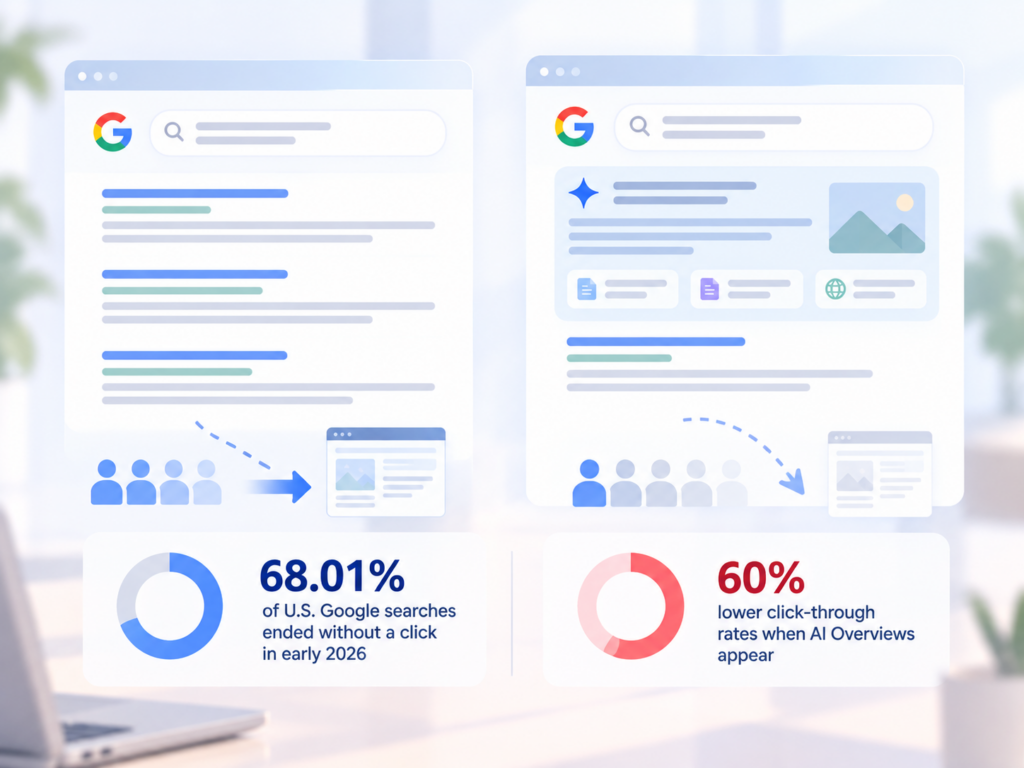
    The disconnect isn’t a glitch. It’s a structural shift. Roughly 64.82% of all Google searches now end without a single click to an external website, and that number jumps to 77% on mobile. The search-to-visit economy that powered two decades of SEO is being replaced by what researchers call the “Answer Economy,” where AI platforms synthesize a single response and users never scroll, never click, never land on your site. Traditional ranking dashboards can’t show you this because they weren’t built to measure what AI chooses to say.

    The Click Is Disappearing, and Your Dashboard Doesn’t Show It

    Between 2016 and 2026, zero-click search rates grew three times faster than total search volume. That’s not a blip. It’s a permanent realignment of how people satisfy informational intent.

    The numbers get worse by category. Informational queries, the backbone of top-of-funnel content marketing, now have a 74% zero-click rate. Local queries follow at 72%. When Google’s AI Overviews appear on a results page, the organic CTR for the first traditional link drops by roughly 28%. In healthcare, that decline hits 61%.

    Here’s what that looks like in practice: AI Overviews push traditional organic results approximately 842 pixels down the screen. For a user on a standard laptop, that means your number-one ranking sits below the fold, hidden behind an AI-generated summary that already answered the question.

    SectorAI Overview Appearance RateOrganic CTR Decline
    Education & How-to83%-31%
    B2B Technology82%-26%
    Healthcare76%-34%
    E-commerce14%-8%

    The pattern is clear. Google still protects transactional intent in e-commerce to preserve its ad revenue. But for education, tech, and healthcare content, AI-generated summaries have effectively replaced the click. Being the first link beneath an AI summary that provides 90% of the answer is the 2026 equivalent of ranking on page two.

    That’s the gap most brands still can’t see.

    What AI Visibility Tracking Actually Measures

    Traditional SEO tracking monitors where your link sits in a static list of results. AI visibility tracking measures something fundamentally different: whether your brand is included in the AI’s synthesized response, where it appears in the recommendation hierarchy, and how the machine describes you.

    It’s the difference between tracking “where you are” and tracking “how you are perceived.”

    AI visibility is defined by how frequently a brand surfaces across multiple generative platforms, including ChatGPT, Gemini, Perplexity, and Google AI Overviews. Unlike traditional SEO, where one keyword typically maps to one stable ranking, AI responses are non-deterministic. The same prompt can produce different answers depending on phrasing, context, and model temperature. That means tracking has to be aggregate and statistical, not snapshot-based.

    DimensionTraditional SEOAI Visibility Tracking
    Unit of ValueThe ClickThe Mention / Citation
    Primary KPIKeyword Ranking PositionAI Mention Rate (AMR)
    User JourneyBrowse multiple linksSingle consolidated answer
    Success SignalHigh Domain AuthorityEntity Clarity & Consensus
    Brand ControlHigh (on-page optimization)Lower (consensus-driven)

    The shift in unit of value is the most important row in that table. In the traditional model, success meant getting a user to click. In the AI model, success means getting the machine to cite you before the user ever sees a link.

    Why Google Rankings Can’t Tell You What AI Thinks of Your Brand

    The reason a number-one Google ranking doesn’t guarantee AI visibility comes down to architecture. Google’s legacy system evaluates authority primarily through backlinks and keyword relevance. AI search engines use Retrieval-Augmented Generation (RAG), which converts queries into high-dimensional vectors and searches for content with the highest semantic similarity, not the most links.

    RAG favors content with high “information gain”: additional nuance or data that isn’t already present in other retrieved sources. A mid-tier site with strong topical density and structured data can displace a high-authority domain if its content is more extractable for the AI’s synthesis phase.

    The data backs this up. Research shows that ChatGPT cites pages outside the Google top 10 approximately 90% of the time. Domain Authority, the metric that has defined SEO success for a decade, is essentially irrelevant to AI recommendation logic.

    What AI models actually look for:

    Consensus. How often is a brand mentioned across independent third-party sources like Reddit, Wikipedia, or industry trade publications?

    Extractability. Is the content formatted in clean, schema-rich blocks that RAG systems can pull into a summary without processing marketing copy?

    Corroboration. Does the brand’s data match the consensus found across the web? Contradictory information creates uncertainty, and AI models exclude uncertain entities to avoid hallucinations.

    PlatformCore Trust MechanismPrimary Sourcing Preference
    Google GeminiOwnership & StructureBrand-owned websites, Google Business Profiles
    ChatGPTConsensus & ValidationThird-party directories, listings, web reviews
    Perplexity AIExpert Niche AuthorityIndustry publications, research papers
    AI OverviewsEntity ProminenceWikipedia, Reddit, top-tier news outlets

    Each platform has a different sourcing bias. That’s why tracking AI visibility across multiple engines simultaneously matters more than checking one.

    The Brands That Win in AI Search Are Tracking These 3 Metrics

    Forget keyword rankings. The brands gaining ground in AI search have built their strategy around three metrics that define “citation worthiness.”

    AI Mention Rate: The New Page-One Ranking

    AI Mention Rate (AMR) measures the percentage of target prompts where a brand is explicitly named. If you’re tracked across 100 buyer-intent prompts and appear in 30, your AMR is 30%.

    Current benchmarks tell a stark story. The average brand has a visibility score of roughly 0.3%. Category leaders are above 12%. High-performing B2B SaaS companies target a baseline AMR of 20-30%, with the most aggressive aiming for 40-50%.

    The key difference from traditional keyword tracking: AMR is measured against conversational prompts (“What’s the best CRM for remote sales teams?”), not 3-word keywords. That changes the entire content strategy.

    Recommendation Position: First Mention Wins

    In a zero-click environment, the first recommendation captures the majority of user trust. “Share of Model” measures a brand’s prominence relative to competitors within a single AI answer.

    If a competitor is consistently listed first while you’re listed third, they have significantly higher effective visibility, even if both brands have the same raw mention frequency. Position isn’t just vanity. It’s the difference between being the recommendation and being “another option.”

    Sentiment Score: How the Machine Describes You

    AI models don’t just list brands. They describe them. And those descriptions shape user perception before any human interaction.

    A Sentiment Score above 80 (on a 0-100 scale) indicates the AI perceives a brand as a market leader. A score below 50 signals “Semantic Drift,” where the AI’s version of your brand has diverged from your actual positioning. Maybe it calls your enterprise product “budget-friendly.” Maybe it describes your innovative platform as “basic.”

    MetricLow VisibilityOptimizedCategory Leader
    AI Mention Rate<8%15-30%>40%
    Recommendation Position4th or lower2nd-3rd1st
    Sentiment Score<4050-75>80
    Citation Share<5%15%>25%

    For marketing teams tracking these metrics across ChatGPT, Perplexity, and AI Overviews simultaneously, Topifyconsolidates Visibility, Sentiment, and Position data into a single dashboard. In practice, that means you can spot a drop in ChatGPT mentions and trace it back to a specific source that stopped citing your brand, all within the same view.

    Topify’s Source Analysis feature goes a step further by identifying the exact third-party URLs that AI models cite to justify their recommendations. Research indicates that citations from independent domains carry 6.5 times more weight than brand-owned content. Knowing which Reddit threads, G2 reviews, or trade publications drive your AI presence turns vague “improve our brand perception” goals into specific, actionable tasks.

    How to Start Tracking Your Brand’s AI Visibility Today

    Knowing the theory is one thing. Acting on it is another. Here’s where most brands get stuck, and what the first 30 days of AI visibility tracking typically look like.

    Fix the Technical Foundation First

    The most common reason brands don’t appear in AI answers is technical, not strategic. Many sites still block GPTBot, ChatGPT-User, or PerplexityBot through legacy robots.txt rules. Default CDN security settings on platforms like Cloudflare can automatically block AI crawlers without anyone noticing.

    Sites that rely heavily on client-side JavaScript rendering see roughly 60% less visibility in AI citations because LLM crawlers don’t interact with pages like a browser. Server-Side Rendering (SSR) and clean HTML structure aren’t optional anymore. Adding JSON-LD schema for FAQ, HowTo, and Product pages increases citation probability by an estimated 67%.

    Discover Your High-Value Prompts

    Users don’t search AI engines with 3-word keywords. They use 23-word conversational prompts. The prompts that matter most are the ones where your competitors appear and you don’t.

    Topify’s High-Value Prompt Discovery uses real-world AI search volume data to surface exactly these gaps. Instead of guessing which questions matter, you’re working from actual search behavior on AI platforms.

    Build Consensus Off-Site

    Here’s the thing. You can’t optimize your way into AI recommendations through on-site SEO alone. AI models build trust through third-party consensus. That means earning mentions on Reddit, G2, Trustpilot, niche forums, and trade publications matters as much as (often more than) on-page content.

    A case study from the solar industry illustrates this. A market leader held position one on Google for “best home solar panels” for over 24 months. But ChatGPT and Perplexity consistently recommended a smaller competitor. The reason: the competitor had 3x the volume of mentions on niche renewable energy forums, used FAQ schema that directly answered conversational prompts, and had an active engagement strategy on G2 and Trustpilot. The market leader, despite superior SEO metrics, was invisible to the AI because it lacked the third-party corroboration the models require.

    Conclusion

    The search-to-click economy is giving way to the search-to-answer economy. Gartner projects that traditional search volume will drop by at least 25% by 2026 as AI chatbots and virtual agents capture that share. But this isn’t a threat to marketing. It’s a mandate to change what you measure.

    The conversion visibility rate of users who arrive via AI citations is estimated at up to 12.9 times higher than traditional organic search, because those users have already been pre-qualified by the AI’s recommendation. The brands that win aren’t the ones with the highest Domain Authority. They’re the ones with the highest entity clarity, the most third-party consensus, and the most extractable content.

    Stop tracking where you rank. Start tracking how AI sees you.

    FAQ

    Q: What is AI visibility tracking?

    A: AI visibility tracking measures how often and how accurately a brand is mentioned in AI-generated answers across platforms like ChatGPT, Gemini, and Perplexity. It replaces traditional ranking tracking with a focus on mention share, recommendation position, and sentiment analysis.

    Q: How is AI search different from traditional Google search?

    A: Traditional search returns a list of links that users browse. AI search synthesizes information from multiple sources into a single, direct answer. The goal shifts from getting ranked to getting cited within that synthesized response.

    Q: Can I track my brand’s mentions in ChatGPT?

    A: Yes. Platforms like Topify’s AI Visibility Checker monitor whether your brand appears in response to specific buyer-intent prompts in real time, providing a baseline visibility score and sentiment analysis across ChatGPT, Perplexity, and AI Overviews.

    Q: Why does my brand rank #1 on Google but not show up in AI answers?

    A: This typically comes down to a lack of “Entity Consensus.” AI models look for corroboration across the web. If your brand only exists on your own website and isn’t mentioned on Reddit, review sites, or trade publications, the AI may not trust it enough to include in a recommendation, regardless of SEO performance.

    Read More

  • AI Visibility Tracking: A 2026 Primer

    AI Visibility Tracking: A 2026 Primer

    Your team spent six months building SEO authority. Domain Authority climbed, keyword rankings held steady, organic impressions trended up. Then your CEO typed your product category into ChatGPT and got a list of five recommendations. Your brand wasn’t on it.

    Traditional SEO dashboards can’t explain why. They weren’t built to measure what AI chooses to say, or who it chooses to recommend. That gap between ranking well on Google and being invisible to AI is where most marketing teams are operating right now, whether they realize it or not.

    Your SEO Dashboard Says You’re Winning. AI Search Says Otherwise.

    The disconnect isn’t a bug. It’s a structural shift in how information gets discovered.

    Traditional SEO was built on a “rank and click” model: secure a top position on a search engine results page, earn a click, drive traffic to your site. The AI-driven discovery model works differently. It synthesizes a direct answer for the user, often bypassing the need for any outbound click at all. A website can rank first on Google for a specific keyword but fail to appear when an AI model summarizes the same topic.

    The data backs this up. Only approximately 17% of citations in Google’s AI Overviews come from pages that rank in the top ten organic results for the same query. That means the AI’s criteria for “source-worthiness” are fundamentally different from traditional ranking algorithms.

    Here’s the practical gap this creates: while traditional SEO rewards domain age, backlink volume, and keyword density, generative engines prioritize semantic clarity, factual density, and extractive readiness. Tracking AI visibility isn’t an optional add-on to your SEO stack. It’s the primary diagnostic for whether your brand exists in the generative discovery layer.

    MetricTraditional SEOAI Visibility Tracking
    Primary ObjectiveSERP Position (Top 10)Citation Inclusion and Recommendation
    Value ExchangeUser Clicks to WebsiteInclusion in Synthesized Answer
    Key Authority SignalBacklinks and Domain AuthorityFactual Density and Entity Confidence
    Tracking UnitKeywordsNatural Language Prompts
    Performance GoalTraffic VolumeShare of Model and Sentiment

    Without dedicated AI visibility tracking, your team can’t answer why a competitor is consistently recommended by Perplexity for a high-intent query while your brand is ignored. That blind spot compounds over time.

    What AI Visibility Tracking Actually Measures

    AI visibility tracking is the systematic monitoring of how a brand is mentioned, characterized, and cited within the outputs of generative AI platforms and answer engines. It’s not a binary “yes or no” check. It’s multidimensional, accounting for frequency of mentions, sentiment of characterization, relative position in recommendation lists, and quality of the citations used to support the AI’s claims.

    The fundamental unit of measurement has changed. SEO monitors keywords. AI visibility tracking monitors prompts: full-sentence, conversational queries that often exceed twenty words and include complex constraints like budget, location, and specific use cases. The goal is to determine your “Share of Model,” the frequency with which an AI platform selects your brand as the optimal solution for a given prompt set.

    Professional tracking frameworks in 2026, like the system built by Topify, use a seven-dimension metric system to provide a holistic view of brand presence across AI platforms:

    MetricWhat It MeasuresWhy It Matters
    Visibility Score% of target prompts where the brand appearsOverall reach in AI discovery
    Sentiment ScoreTone of AI’s characterization (positive/neutral/negative)Brand reputation and narrative framing
    Position RankNumerical order in recommendation listsUser trust and recall
    Mention FrequencyTotal brand name appearances in responsesEntity strength
    Citation Share% of outbound links pointing to your domainContent authority as a “source of truth”
    Intent AlignmentHow well presence matches user journey stageVisibility for high-value commercial queries
    CVREstimated conversion probability based on mention contextDirect revenue impact

    One critical detail that catches most teams off guard: AI visibility is highly volatile and platform-dependent. A brand’s citation volume can vary by as much as 615x between different platforms. A single-platform approach leaves enormous blind spots.

    Why Marketers Can’t Afford to Skip AI Visibility Tracking in 2026

    The numbers tell the story.

    By early 2026, the AI search engine market has expanded past USD 20 billion, with 900 million weekly active users on ChatGPT alone. Gartner predicted in 2024 that traditional search volume would drop 25% by 2026 as users shifted to AI assistants. Real-world data from mid-2026 suggests this trend has accelerated, especially for informational queries where AI Overviews satisfy user intent directly on the results page.

    Zero-click searches now account for roughly 64.82% of all Google searches. AI Overviews trigger on 25.11% of Google searches, up from about 13% in early 2025. When an AI summary appears, only 8% of users click on a traditional organic result, compared to 15% when no summary is present.

    That’s the volume side. The value side is even more striking.

    AI search visitors convert at an average rate of 14.2%, compared to 2.8% for traditional Google organic search. That’s a 5x conversion advantage. Ahrefs research from June 2025 found that AI search visitors, while representing only 0.5% of total traffic for some domains, can drive up to 12.1% of all sign-ups. A 23x conversion premium.

    These users arrive pre-qualified. They’ve already done their research and comparison inside the AI interface. When they finally click through, they’re moving from research to decision. Being the cited brand in an AI response isn’t just a visibility play. It’s a direct pipeline to high-intent conversions.

    The 5 Metrics That Define Your AI Visibility

    A professional AI visibility tracking strategy focuses on five core metrics. Each one addresses a specific stage of the AI discovery funnel and informs a different optimization lever.

    Visibility Score: does the AI know you exist?

    This measures the frequency of your brand’s appearance across a defined prompt universe. In 2026, a Visibility Score below 30% in your core category signals a significant discovery gap. Above 80% indicates market leadership.

    A SaaS company might score 45% for “best PM tools” but only 12% for “PM tools with built-in time tracking.” That gap reveals a semantic hole in how AI models perceive their feature set.

    Sentiment: what is the AI actually saying about you?

    Being mentioned is only half the equation. An AI platform could reference your brand consistently while adding caveats like “users often report slow delivery times.” Tracking sentiment lets your team catch and counter these narratives before they calcify.

    Position: where do you rank in the AI’s recommendation list?

    AI platforms typically recommend three to five brands per query. The brand listed first carries an implicit endorsement. If you’re consistently placed third or fourth, your influence on the user’s decision is minimal compared to the first-position brand.

    Source Citations: what’s feeding the AI’s opinion?

    AI models rely on specific web sources. Source citation analysis identifies which external URLs are influencing the response. If 60% of Perplexity’s citations for your category come from Reddit threads and G2 reviews rather than your own content, that’s a clear signal to shift your PR and community engagement strategy toward the platforms that actually shape AI recommendations.

    CVR (Conversion Visibility Rate): what’s the revenue impact?

    CVR estimates the economic value of an AI mention by analyzing the recommendation context and prompt intent. A fintech brand might have fewer total mentions than a competitor, but if those mentions appear in higher-converting contexts like “secure tools for high-net-worth individuals,” the projected ROI is higher.

    MetricTarget Goal
    Visibility Score> 60% for core categories
    Sentiment Score> 85/100 (weighted positive)
    Position Rank< 2.0 (Top 2 placement)
    Source CitationsDominating top-3 citation sources
    CVROutperforming traditional organic CPC value

    How to Start Tracking Your Brand’s AI Visibility

    The implementation path follows three steps, from manual baseline to automated monitoring.

    Step 1: Platform selection and baseline audit.

    Identify where your audience asks AI for recommendations. In 2026, that typically means ChatGPT (creative and reasoning tasks), Perplexity (research-oriented queries), Gemini (Google ecosystem users), and Google AI Overviews. Run a representative sample of queries across each and record current visibility, sentiment, and citations.

    Step 2: High-value prompt discovery.

    Tracking the right questions matters more than tracking many questions. Unlike keyword research, prompt discovery focuses on intent and conversational context. The average conversational query in 2026 runs about 23 words long, packed with qualifiers that push an AI from “explanation mode” into “recommendation mode.”

    The methodology: pull language from sales transcripts, support tickets, and community forums. Map those prompts to the buyer journey (awareness, consideration, purchase) to ensure your brand is visible at every decision point.

    Step 3: Move from manual checks to automated monitoring.

    Manual tracking is fundamentally unscalable. AI responses are non-deterministic: the same prompt can yield different results across multiple sessions. Automated systems resolve this by running real-time monitoring across thousands of prompts simultaneously, calculating a statistical baseline that accounts for model volatility.

    Topify’s platform handles this by combining High-Value Prompt Discovery with continuous visibility tracking across all major AI platforms. The difference in accuracy is measurable: automated systems detect visibility regressions with 92% sensitivity, compared to 64% for manual monitoring, with an average detection lead time of 4.2 hours.

    For marketing teams, automation is the only way to catch “drift,” the gradual change in AI outputs as models retrain on new data, before it hits your bottom line.

    Monitoring ApproachSensitivityLead TimeScalability
    Manual Tracking64%Immediate but spottyVery Low
    Automated (Topify)92%4.2 hours (early detection)Unlimited

    3 AI Visibility Tracking Mistakes That Waste Your Budget

    As marketing teams rush to adapt, several recurring errors undermine the accuracy of their visibility data.

    Mistake 1: Treating ChatGPT as the entire AI search landscape.

    ChatGPT holds roughly 77-87% of AI referral traffic. But Perplexity, Gemini, and Google’s AI Overviews use different retrieval mechanisms and citation sources. A brand well-represented in ChatGPT’s training data can be entirely absent from Perplexity’s real-time web search results. Multi-platform tracking across at least three major models is the baseline for a representative view.

    Mistake 2: Counting mentions without measuring sentiment or position.

    A 100% mention rate means nothing if the AI characterizes your brand negatively in every instance. And being listed at the end of a five-brand recommendation carries far less weight than a first-position mention. Your tracking system needs a weighted scoring approach that prioritizes prominence and positive framing, not just raw frequency.

    Mistake 3: Benchmarking in isolation, without competitor context.

    AI visibility is a zero-sum game within the synthesized answer box. If you track your own visibility without monitoring competitors, you’ll miss that a rival’s citation share is growing twice as fast, or that the AI has started pairing your brand with a new, disruptive competitor. Continuous dynamic competitor benchmarking is non-negotiable.

    Conclusion

    The old playbook of backlinks and keyword density is no longer sufficient to guarantee that your brand shows up where your audience is looking. In 2026, the marketing team’s defining question has shifted from “how do we rank higher?” to “does the AI know we exist, and does it recommend us correctly?”

    AI visibility tracking gives you the answer. It turns an opaque, unmanaged channel into something measurable and actionable: which platforms mention you, how they describe you, where you rank against competitors, and what sources are shaping the AI’s opinion.

    The path forward starts with a baseline. Topify’s free GEO score check gives your team an immediate snapshot of where your brand stands across AI platforms, so you know exactly which gaps to close first.

    FAQ

    What’s the difference between SEO and AI visibility tracking?

    SEO optimizes for page rankings to earn clicks. AI visibility tracking optimizes for inclusion in synthesized answers to earn citations and recommendations. SEO is a volume-based traffic play. AI visibility tracking is an authority-based brand influence play. They measure fundamentally different things, and strong performance in one doesn’t guarantee performance in the other.

    Which AI platforms should I track my brand on?

    Most brands should monitor ChatGPT, Perplexity, and Google Gemini, as these represent the majority of user queries and referral traffic in 2026. Google AI Overviews are also critical because they appear directly on the primary search results page and significantly impact traditional click-through rates.

    How often should I check my AI visibility metrics?

    Weekly monitoring is the recommended cadence for most brands. AI models are volatile and retrain frequently, so weekly checks let you catch drift and competitive shifts early. Daily tracking is appropriate for high-competition sectors like SaaS or finance where recommendation positions change rapidly.

    Can I track AI visibility manually without a tool?

    Manual tracking works for a very small set of prompts, maybe 10-20. But it’s statistically unreliable due to model variance and completely unscalable for professional operations. A single prompt can return different results across different sessions. Automated tools provide the statistical rigor needed for enterprise-level decisions.

    Read More

  • Why Your Brand Is Invisible in ChatGPT and How to Fix It

    Why Your Brand Is Invisible in ChatGPT and How to Fix It

    Your team spent six months building domain authority, earning backlinks, and climbing to Google’s top three for your primary keyword. Then a prospect typed that same keyword into ChatGPT and got a list of five recommendations. Your brand wasn’t on it.

    That disconnect isn’t a glitch. It’s structural. Generative AI traffic grew by 796% between January 2024 and December 2025, and the visitors it sends convert at 1.2x the rate of traditional organic search. The brands showing up in those AI answers are capturing pipeline you can’t even see in your analytics dashboard. The ones that aren’t are losing deals before the first click ever happens.

    Google Rankings and AI Search Visibility Run on Different Logic

    A top-three Google ranking used to mean your brand was visible where it mattered. That assumption no longer holds.

    Traditional SEO optimizes for keyword relevance, backlinks, and technical health. Generative engines like ChatGPT, Perplexity, and Gemini operate on a completely different retrieval model. They don’t rank pages. They synthesize answers by pulling “citation-worthy” chunks from a small set of trusted sources, then weave those into a single response.

    The result is a growing zero-click environment. By mid-2025, roughly 60% of Google searches ended without a click to any website. On mobile, that figure hit 77.2%. When AI Overviews appear, click-through rates for traditional organic results drop by up to 47%.

    HubSpot, widely considered an SEO benchmark, experienced a 70-80% decline in organic traffic between 2024 and 2025 as AI summaries began satisfying the top-of-funnel queries that once drove millions of blog visits. If a brand with that level of domain authority can lose visibility overnight, the traditional SEO playbook alone isn’t enough anymore.

    That’s the core shift: AI search visibility isn’t about ranking pages. It’s about whether an AI engine can identify, trust, and recommend your brand as a specific solution. Google ranks URLs. AI surfaces entities.

    3 Reasons AI Engines Skip Your Brand

    Brand invisibility in AI answers typically traces back to three structural gaps, not random algorithmic variance.

    Your Brand Falls Outside the AI’s Citation Radius

    AI engines don’t crawl the entire web equally. They rely on a specific set of high-authority, “citation-ready” sources to ground their responses. If your presence is limited to your own website and social channels, you’re likely outside that radius entirely.

    The data is stark: brands are cited 6.5 times more often through third-party sources than through their own domains. ChatGPT leans heavily on news publishers (38%) and niche authority sites (31%). Perplexity shows an even stronger bias toward publishers (42%) and community platforms like Reddit.

    A brand can rank #1 on Google for its primary keyword but remain invisible to ChatGPT simply because it’s never mentioned on Reddit, Wikipedia, G2, or major industry portals.

    Your Brand Narrative Is Fragmented

    AI models need what researchers call “Model Consensus,” consistent signals from multiple independent sources confirming what your brand is and what it does. When your description, pricing, or feature set varies across directories, review sites, and social platforms, the AI encounters “Semantic Drift.”

    The symptoms are specific. ChatGPT and Perplexity describe your brand differently. The AI confuses you with a similarly named company. It invents features you don’t have because the training data is contradictory. Each of these signals tells you the retrieval layer hasn’t reached a stable entity definition for your brand.

    Your Content Isn’t Built for AI Extraction

    Traditional SEO content is designed for human dwell time and keyword density. AI engines don’t read content that way. They chunk and extract.

    Content buried in long narrative introductions or padded with qualitative prose provides nothing for an AI to synthesize. What LLMs need instead: modular structures with autonomous blocks that can be quoted standalone, explicit statistics and expert citations that provide verifiable data points, and technical accessibility that lets AI crawlers actually parse the page.

    If your site blocks GPTBot or PerplexityBot via robots.txt, or relies heavily on client-side JavaScript rendering, your content may be invisible to the retrieval layer before any quality assessment even happens.

    How to Check Your AI Search Visibility Right Now

    The fastest way to start is manual. Open ChatGPT, Perplexity, and Gemini. Type 10-20 high-intent prompts relevant to your category. Document whether your brand appears, where it ranks in the recommendation list, and how it’s described.

    That manual audit answers three questions. First, mention rate: does your brand show up at all? Second, framing: is the AI describing you accurately, or is it hallucinating old pricing and features? Third, source forensics: which URLs is the AI citing, your own pages or third-party sites?

    The limitation is scale. Manual checks can’t track trends over time, cover enough prompts to be statistically meaningful, or account for the randomness baked into generative responses.

    Topify automates this across ChatGPT, Perplexity, Gemini, and other major AI platforms simultaneously. Its Visibility Tracking monitors brand mentions across thousands of prompts, calculates a composite AI Visibility Score, and benchmarks your performance against competitors in real time. Instead of a one-time snapshot, you get a continuous measurement loop that shows whether your content strategy is actually moving the needle.

    What Makes AI Recommend One Brand Over Another

    Understanding the retrieval-augmented generation (RAG) process is the key to getting cited. When a user asks a question, the AI retrieves relevant data chunks, evaluates their credibility, and synthesizes an answer. Not all content is treated equally in that process.

    Research published by Princeton University and Georgia Tech (KDD 2024) identified nine content optimization strategies and measured their impact on AI visibility. The top performers share a common trait: they provide concrete, verifiable units of information.

    Adding direct quotations from domain experts boosted visibility by 41%. Citing authoritative sources added 40%. Including specific statistics contributed a 37% lift. Technical terminology aligned with semantic embeddings added 28%. On the flip side, legacy SEO tactics like keyword stuffing showed zero or negative impact.

    Content freshness matters too, but unevenly across platforms. Perplexity cites content updated within the last 30 days at an 82% rate, dropping to 37% for content older than six months. ChatGPT is more tolerant of older content, particularly from established authority sources like Wikipedia and major news outlets.

    That platform-specific behavior means a single optimization approach won’t work everywhere. Topify’s Source Analysisreverse-engineers which domains and URLs each AI platform is actually citing for your category. If a competitor is winning citations because of a specific industry report or niche blog mention, you can see that and target the same sources. The Competitor Monitoring feature tracks where rivals appear and you don’t, turning competitive gaps into a prioritized action list.

    5 Steps to Get Your Brand Into AI Answers

    Moving from invisible to cited requires a systematic shift, not a single content update.

    Step 1: Establish Your AI Visibility Baseline

    Test high-intent prompts across multiple AI platforms. Document mention rate, sentiment accuracy, and source attribution. If manual testing isn’t scalable for your team, Topify’s dashboard provides a real-time baseline with competitive benchmarking built in.

    The free GEO Score Checker is a practical starting point. It evaluates your site across four dimensions: AI bot access, structured data, content signals, and overall visibility, with no signup required.

    Step 2: Restructure Content for AI Extractability

    The first 200 words of every key page should deliver a direct, concise answer to the user’s primary question. No narrative filler.

    Use H2/H3 headings phrased as questions (e.g., “What is the ROI of GEO?”) followed by 40-60 word paragraphs that work as standalone extractions. Deploy JSON-LD structured data to help LLMs identify authors, pricing, and FAQ pairs without consuming excessive tokens. Sites using schema markup see up to a 40% increase in click-through rates and higher AI citation rates.

    Step 3: Saturate Third-Party Authority Signals

    Since 85% of brand mentions in AI answers come from external sources, your off-domain strategy is where most of the leverage sits.

    Publish on high-authority platforms like LinkedIn and Tier 1 industry media to create a positive retrieval cushion. Engage in relevant Reddit threads and niche forums, which Perplexity and Google AI Overviews prioritize for “real person” perspectives. Ensure consistent entity information (name, description, category) across Wikipedia, directories, and review platforms to prevent the AI from confusing your brand with a competitor or a generic term.

    Step 4: Run a Competitor Gap Analysis

    AI search visibility is close to zero-sum. Responses rarely cite more than seven sources, creating a winner-take-all dynamic within each prompt.

    Identify the high-volume prompts where AI is recommending three competitors but omitting your brand. Those “missed prompts” become your immediate content priority. Topify’s High-Value Prompt Discovery surfaces these opportunities automatically as AI recommendations evolve.

    Step 5: Monitor Continuously and Iterate

    AI visibility shifts faster than organic rankings. A 30-day recheck cadence is the minimum. Weekly monitoring is recommended for competitive categories.

    Topify’s One-Click Execution bridges the gap between insight and action. Its AI Agent analyzes visibility gaps and generates a prioritized action feed. If your sentiment score drops due to a new negative review thread, the system flags it and suggests a specific content response. Marketing teams can publish GEO-optimized content directly to their CMS with a single click.

    The Numbers Behind a GEO Turnaround

    In a 2026 study of the accounts payable software sector, one brand implemented a targeted GEO strategy focused on extractable content and third-party consensus. They rewrote category landing pages into answer-first formats with comparison tables, integrated original survey data into technical guides, and actively managed mentions across LinkedIn and niche forums.

    Within 30 days, their visibility rate jumped from 3.2% to 22.2% across ChatGPT and Perplexity. Two optimized pages earned over 300 new AI citations. Their sales team reported a measurable increase in prospects who discovered the brand through AI during early-stage research.

    That’s the speed at which GEO operates. Traditional SEO takes 6-12 months to show results. GEO improvements can yield impact in 4-8 weeks when content is correctly structured for retrieval.

    Conclusion

    AI search visibility isn’t an extension of SEO. It’s a separate dimension of digital strategy that runs on different logic, rewards different content structures, and moves on a different timeline.

    The brands that continue to rely solely on Google rankings are effectively invisible in the interfaces where a growing share of buyers now start their research. The fix isn’t complicated, but it is specific: establish a baseline, restructure content for extraction, build third-party authority, close competitive gaps, and track everything continuously.

    The gap between “indexed by Google” and “cited by AI” is where pipeline is being won and lost right now.

    FAQ

    What is AI search visibility?

    AI search visibility measures how frequently, prominently, and accurately a brand appears in answers generated by AI platforms like ChatGPT, Perplexity, and Gemini. Unlike traditional SEO, which tracks link positions on a results page, AI visibility focuses on “Share of Model”: the degree to which a brand is integrated into the AI’s synthesized responses when users ask relevant questions.

    How is AI search visibility different from traditional SEO?

    Traditional SEO targets ranking a specific URL through keywords and backlinks. AI search visibility targets being cited and recommended in AI-generated responses through entity clarity, extractable content structures, and consistent third-party validation. The two systems measure different things, and performing well in one doesn’t guarantee results in the other. Only about 38% of AI citations overlap with Google’s top 10 results.

    Can I improve my ChatGPT visibility without paid tools?

    Yes, through manual effort. You can run a visibility audit by asking ChatGPT 10-20 high-intent questions about your category and documenting the results. You can then optimize content by adding statistics, expert quotes, and structured headings based on the Princeton GEO research. The limitation is scale: tracking sentiment trends, competitive movements, and cross-platform citation variations over time requires automated monitoring.

    How long does it take to appear in AI search results?

    GEO improvements can yield measurable impact in 4-8 weeks, significantly faster than traditional SEO’s 6-12 month timeline. Perplexity can index and cite well-structured content within days of publication. Consistent visibility growth across all major platforms typically requires 3-6 months of sustained optimization.

    Read More

  • LLM Citation Tracking Software: What It Measures and Why It Matters

    LLM Citation Tracking Software: What It Measures and Why It Matters

    Your domain authority is 70. Your keyword rankings are climbing. Your content team shipped 40 articles last quarter, and organic traffic looks healthy. But when someone asks ChatGPT, “What’s the best tool for [your category]?” your brand isn’t in the answer. Worse, you don’t even know it’s missing, because nothing in your SEO dashboard tracks what AI models choose to cite.

    That disconnect is growing. Fewer than 10% of the sources cited in AI-generated answers even rank in the top 10 on Google for those same queries. And with projections showing web traffic from traditional search engines dropping by as much as 25% by 2026, the gap between what your dashboard tells you and what’s actually happening in AI search is becoming a strategic liability.

    Your SEO Dashboard Can’t Tell You Who ChatGPT Is Citing

    Traditional SEO dashboards were built for a different era. They track rankings in a list of ten blue links. They measure clicks, impressions, and backlink authority. None of that tells you whether an AI model is citing your content when it synthesizes an answer.

    The core difference: SEO dashboards track popularity. LLMs track consensus.

    An AI model doesn’t rank pages in a list. It selects sources that provide extractable, factual data points it can weave into a synthesized response. Those sources are often Reddit threads, niche comparison pages, or independent reviews, not the highest-ranking brand sites. In B2B SaaS categories, Reddit has become a dominating force for citations in both ChatGPT and Perplexity, while brand-owned content often lags behind.

    That’s a problem traditional tools can’t diagnose. Without LLM citation tracking software, you’re optimizing for a scoreboard that no longer reflects how buyers discover brands. About 82% of users now report that AI-powered search results are more helpful than traditional SERPs, and roughly 60% of modern searches end without a single click. The audience is shifting. The question is whether your measurement infrastructure is shifting with it.

    Discovery MetricTraditional SEOGenerative AI
    Primary GoalTop 10 SERP positioningInclusion in synthesized answer
    User IntentKeyword-based discoveryPrompt-based conversational synthesis
    AttributionDirect clicks and impressionsCitation share and brand recommendation
    Logic BasisBacklink equity and popularitySemantic density and entity reliability
    Result TypeConsistent list of linksPersonalized, synthesized response

    What LLM Citation Tracking Software Actually Measures

    LLM citation tracking isn’t a rebranding of brand monitoring. It’s a technical analysis of how AI models consume, synthesize, and attribute information. Four core metrics define the discipline.

    Citation frequency and share of voice. The most fundamental metric is how often an AI model cites your content across a standardized set of prompts. This isn’t the same as a “mention,” where the model simply names your brand in passing. A citation means the model selected a specific URL as an authoritative source. Professional LLM citation tracking tools measure this as “citation share,” comparing your frequency against competitors for high-intent prompts like “best tools for [category].”

    Source domain analysis. AI models pull from a diverse array of sources: official websites, news outlets, user-generated content. Source domain tracking identifies exactly which domains are feeding the AI’s logic. This matters because AI systems often rely on third-party consensus rather than brand-owned content. An LLM citation tracking platform that provides URL-level provenance lets you see not just that “Reddit” was cited, but which thread and which comment triggered it.

    Sentiment context. A citation can work against you. If an AI cites your brand as a “risky option” or discusses a past product failure, the visibility is actively harmful. LLM citation tracking analytics quantify the sentiment surrounding each mention, surfacing what some practitioners call “zombie narratives,” outdated information that persists in the model’s training data and keeps resurfacing in responses.

    Cross-platform behavior. No two AI models cite the same way. A study of over five million responses found that Gemini and OpenAI’s models share a 42% domain overlap, suggesting some convergence in training data. But Perplexity’s citation density runs two to three times higher than parametric models because its architecture mandates source attribution for nearly every claim. A strategy that wins in Perplexity may leave your brand invisible in ChatGPT. That variability makes a multi-engine LLM citation tracking system non-negotiable.

    5 Things That Quietly Kill Your Brand’s AI Citation Rate

    The market for AI visibility tools is maturing fast. But not every tool that calls itself an LLM citation tracking solution actually measures what matters. Five capabilities separate professional-grade platforms from surface-level wrappers.

    Multi-engine coverage. A platform that only tracks ChatGPT is flying with one eye closed. Users navigate between Perplexity for research, Claude for technical tasks, and Gemini for integrated Google searches. Enterprise LLM citation tracking software must monitor at least five to ten platforms simultaneously, including emerging engines like DeepSeek and Grok.

    URL-level citation provenance. Domain-level awareness isn’t enough. Knowing “Reddit” was cited doesn’t help. Knowing which thread and which comment triggered the citation does. That granularity turns raw data into a direct roadmap for content optimization.

    Competitor citation benchmarking. In AI search, visibility tends to be zero-sum. If a competitor is being recommended, your brand is being excluded. Side-by-side citation share analysis for the exact prompts your buyers use is the only way to spot where you’re losing.

    Longitudinal trend and decay monitoring. AI models aren’t static. Citation preferences evolve as new data is indexed and model weights update. Research shows that citations from high-velocity sources like Reddit or LinkedIn have a median decay window of just 47 days. Without historical tracking, you can’t tell a temporary fluctuation from a meaningful shift.

    Actionable workflow integration. Data without a path to action is noise. The strongest LLM citation tracking platforms connect insights to content execution: identifying refresh opportunities, suggesting structural changes like FAQ schema or HTML data tables, and flagging the third-party domains the AI currently favors.

    Platform FeatureStrategic ValueMarketing Impact
    Multi-engine supportPrevents blind spots across platformsUnified visibility across ChatGPT, Gemini, Perplexity
    URL-level trackingIdentifies specific source of AI’s logicDirect roadmap for reverse-engineering citations
    Sentiment analysisDetects zombie narratives or brand riskProactive reputation management in AI responses
    Competitor benchmarkingReveals relative share of voiceCompetitive gap analysis for high-intent prompts
    Historical auditingTracks citation durability and decayLong-term strategy adjustment based on model updates

    How Topify Turns LLM Citation Data into a Repeatable Workflow

    Most LLM citation tracking dashboards stop at reporting. Topify is built around what it calls the “Actionability Gap,” the space between seeing a problem and fixing it.

    The core workflow starts with reverse-engineering citations. When a marketing manager at a SaaS company discovers their brand is absent from a “best CRM” list on Perplexity, Topify doesn’t just report the omission. It identifies the specific competitor pages and third-party reviews that Perplexity did cite, then analyzes the structure of those pages. In practice, AI models often prefer concise HTML comparison tables and “answer-first” paragraph structures over marketing copy. That structural insight gives teams a concrete playbook for what to change.

    Topify’s seven-metric framework, covering visibility, sentiment, position, volume, mentions, intent, and CVR (Conversion Visibility Rate), provides a more complete picture than citation counts alone. You can track not just whether you’re being cited, but how the AI perceives your brand, where you rank relative to competitors, and what the estimated conversion impact looks like.

    The platform covers ChatGPT, Gemini, Perplexity, DeepSeek, Doubao, Qwen, and other major AI engines, addressing the cross-platform variability problem head-on. For agencies managing multiple clients, Topify supports multi-project setups with dedicated dashboards per brand.

    Then there’s the execution layer. Once a citation gap is identified, Topify’s one-click agent can trigger an automated workflow to close it, generating and deploying bot-optimized content variations that AI crawlers like GPTBot or PerplexityBot can more easily parse and prioritize.

    Here’s a scenario that illustrates the full loop. An e-commerce brand specializing in marathon footwear ranks in the top three on Google for “marathon shoes.” But Topify reveals they’re entirely missing from Perplexity’s recommendations for “sub-3 hour marathon shoes.” The analysis shows Perplexity is citing competitors who provide specific weight specs in grams and drop measurements in HTML tables, data the brand’s current pages bury in marketing copy. Within three weeks of restructuring their product pages based on Topify’s reverse-engineering insights, the brand appeared as a featured citation in Google AI Overviews, resulting in a 3x lift in conversion rates.

    Pricing starts at $99/month for the Basic plan (100 prompts, ChatGPT/Perplexity/AI Overviews tracking), with Pro at $199/month for expanded coverage. Teams ready to get started can run a baseline audit in minutes.

    GEO vs SEO: Why LLM Citation Tracking Fills a Gap Traditional Tools Can’t

    If you’re wondering about the difference between AI search optimization GEO vs SEO, it comes down to what you’re optimizing for and what you’re measuring.

    Traditional SEO is a game of link popularity. It assumes that enough high-quality backlinks make you an authority, and that ranking on page one means you’ll be found. GEO (Generative Engine Optimization) operates on a different logic: semantic density and entity reliability. An AI model may ignore a high-DA site in favor of a lower-authority page that provides a clearer, more factual answer it can synthesize into prose.

    LLM citation tracking is the only toolset that can measure this gap. Data shows that while 92% of AI citations come from sites in the top 10 search results, the specific source selected for the AI’s summary is often chosen for extractability, not rank. That distinction changes the entire optimization strategy.

    The financial impact is significant. Organic click-through rates have dropped by as much as 61% for queries with AI Overviews. But brands that are cited in those AI responses see a 35% increase in clicks compared to brands that are present but not cited. Even more telling: AI-referred visitors have shown a 23x advantage in conversion signups over traditional organic traffic, because they arrive “pre-qualified” by the AI’s recommendation.

    The bottom line on AI search optimization GEO vs SEO difference: they’re parallel systems, not replacements. SEO remains the foundation for capturing existing demand on Google. GEO is how you build trust and get recommended in the conversational interfaces where a growing share of high-intent research happens.

    FeatureTraditional SEOGenerative Engine Optimization (GEO)
    FocusSERP rankingAI citation and synthesis
    KeywordsShort-form, volume-basedLong-form, conversational prompts
    ContentKeyword placement and lengthData-backed authority and extractability
    Primary toolRank trackers (Ahrefs, Semrush)LLM citation trackers (Topify)
    KPIOrganic trafficCitation rate and brand score

    Where LLM Citation Tracking Analytics Belong in Your Marketing Stack

    LLM citation tracking analytics shouldn’t live in a silo. They connect to three specific workflows in a modern marketing operation.

    Content production: the “answer-first” model. Traditional content follows a “search volume first” playbook. In the AI era, this shifts to a “citation readiness” model. Research shows that 44.2% of AI citations reference the first 30% of a page, which means leading with direct answers (the BLUF rule) is the single most effective structural change for AI visibility. LLM citation tracking software lets editors verify whether their content structure, including short paragraphs, clear headings every 120 to 180 words, and HTML tables, is actually resulting in citations.

    Reputation defense. In the age of LLMs, your brand is an entity in a knowledge graph. If an AI model associates your brand with incorrect facts or outdated pricing, your visibility becomes a liability. An LLM citation tracking system acts as an early warning layer, flagging where hallucinations or negative narratives are taking root so you can proactively build “trust centers” with rich schema markup.

    Agency services. For SEO agencies, this is a major new revenue line. As traditional rankings become harder to defend, agencies can offer “AI Visibility Audits” and “GEO Strategy” as premium services. A formatted LLM citation tracking dashboard showing a client’s AI share of voice versus competitors demonstrates value in a way that traditional SEO reports no longer can.

    AI search already captures over 1.5 billion users monthly. That number is growing. The brands that build citation tracking into their stack now will have a structural advantage over those that wait.

    Conclusion

    The shift from click-based search to AI-synthesized answers isn’t coming. It’s here. Traditional SEO dashboards still matter for Google rankings, but they can’t tell you who ChatGPT is citing, what Perplexity is recommending, or how Gemini describes your brand. That’s the gap LLM citation tracking software fills.

    Start with a baseline audit. Find out where your brand actually stands in AI-generated answers, not just in Google’s index. Then engineer your content for extractability: direct answers first, structured data, and the kind of factual clarity that AI models select as citation-worthy. The infrastructure exists. The data is available. The only real risk is not looking.

    FAQ

    Q: What is LLM citation tracking software?

    A: LLM citation tracking software automatically queries multiple AI platforms, including ChatGPT, Gemini, and Perplexity, to detect when they cite or link to your brand’s URLs. Unlike traditional rank tracking, it measures presence and context in synthesized, generative answers rather than a numerical list position.

    Q: What’s the difference between AI search optimization GEO vs SEO?

    A: Traditional SEO focuses on ranking pages in a list of search results to drive clicks. GEO (Generative Engine Optimization) focuses on getting your brand cited, recommended, and synthesized into the AI’s text-based answer. SEO prioritizes keyword density and backlink authority. GEO prioritizes factual accuracy, content structure, and machine-readable formatting.

    Q: How often should I check LLM citation data?

    A: Monthly monitoring is a baseline because AI models update frequently. For competitive markets, bi-weekly or real-time monitoring is better. Citations from high-velocity sources like Reddit and LinkedIn can decay in as little as 47 days, so more frequent checks help you catch shifts early.

    Q: Can LLM citation tracking tools track multiple AI platforms at once?

    A: Yes. Professional-grade platforms like Topify monitor visibility across ChatGPT, Perplexity, Gemini, Claude, DeepSeek, and Google AI Overviews simultaneously, providing a unified dashboard that accounts for each model’s unique citation behavior.

    Read More

  • What an AI Brand Intelligence Platform Actually Does

    What an AI Brand Intelligence Platform Actually Does

    Your marketing team spent the last quarter building dashboards for social mentions, PR hits, and review site scores. Then a high-intent buyer asked ChatGPT to recommend a solution in your category, and the AI described your product as “dated” based on a three-year-old blog post. Your social listening tool didn’t catch it. Your media monitoring didn’t flag it. And your brand team had no idea the AI was shaping buyer perception before your website even loaded.

    That gap between what you think your brand says and what AI actually tells people is growing wider every month. Closing it requires a different kind of infrastructure: one built to interrogate machines, not just monitor humans.

    Most Brands Are Monitoring the Wrong Conversation

    Traditional brand monitoring tools were designed for a world where humans write, share, and comment. Social listening platforms scrape X, aggregate Reddit threads, and track news mentions to produce real-time sentiment scores. That model works for crisis management and PR tracking. It doesn’t work for the channel that’s quietly replacing the Google search bar.

    The shift is already measurable. Roughly 39% of consumers now use AI assistants for product discovery, and 79% say they feel more confident making purchase decisions when guided by AI. Among Gen Z, the adoption rate hits 85%. Meanwhile, traditional search volume is projected to drop 25% by 2026, and 65% of Google searches already end without a click because the AI Overview answers the question directly.

    None of those AI-generated responses show up in a social listening dashboard.

    That’s the blind spot. AI search engines synthesize brand narratives from training data, web retrieval, and citation patterns. They don’t just repeat what people say online. They construct a probabilistic summary of what your brand “is.” And unless you’re systematically probing those models, you have no visibility into the story they’re telling.

    What an AI Brand Intelligence Platform Actually Tracks

    An AI brand intelligence platform doesn’t measure “mentions” the way social tools do. It measures salience: how visible, how accurately described, and how favorably positioned your brand is inside AI-generated answers.

    The core metrics break down into a structured matrix:

    • Visibility (Mention Rate): How often your brand appears across a defined set of prompts. Think of it as Share of Voice, but for AI responses.
    • Sentiment Integrity: Not just positive or negative, but how the AI characterizes your brand. “Innovator” and “budget alternative” are both technically neutral, but they carry very different positioning weight.
    • Position (Recommendation Rank): When an AI lists three vendors, first place captures disproportionate attention. AI answers compress the consideration set far more aggressively than a Google SERP.
    • Source Attribution (Citation Share): Which URLs and domains the AI retrieves to build its answer. If a competitor’s blog is the primary citation for your category, you have an authority problem.
    • Fact Accuracy: Whether the AI hallucinates your pricing, features, or compliance status. High visibility paired with wrong facts is worse than invisibility.
    • AI Search Volume: How many real users are actually asking the prompts that trigger your brand’s mention (or absence).

    AI Brand Intelligence Analytics vs. Traditional Brand Analytics

    The two disciplines measure fundamentally different layers of the information lifecycle.

    DimensionTraditional Brand AnalyticsAI Brand Intelligence Analytics
    Data SourceSocial APIs, news feeds, review sitesTraining corpora, RAG pipelines, web retrieval
    What It AnalyzesHuman conversations, PR eventsMachine synthesis, model outputs
    Temporal FocusReal-time, reactiveLongitudinal, proactive
    Discovery MethodKeyword and hashtag trackingPrompt matrixing, synthetic probing
    Primary KPISentiment score, Share of VoiceShare of Model, Citation Frequency
    Actionable OutputPR response, social engagementGEO strategy, content structure fixes

    The key difference: a social media campaign can shift human sentiment in 24 hours. But it may take weeks for that signal to reach the parametric memory or retrieval layers of an AI engine. AI brand intelligence analytics give you the roadmap for that longer-term authority building.

    How an AI Brand Intelligence Platform Works Under the Hood

    A serious AI brand intelligence system doesn’t just ask ChatGPT a question and screenshot the answer. It treats each AI model as a laboratory subject, using a methodology often called “Prompt Matrixing” or “Synthetic User Testing.”

    The process follows four stages:

    Stage 1: Prompt Monitoring and Matrixing. The platform generates thousands of prompt variations based on real customer personas. Instead of tracking “best CRM,” it tracks “best CRM for a 50-person legal firm specializing in patent law.” Specificity matters because AI responses shift dramatically with context.

    Stage 2: Cross-Platform Response Capture. The platform queries multiple engines simultaneously: ChatGPT, Gemini, Perplexity, Claude, and others. Each model carries different biases based on its training data and retrieval integrations. A brand that’s visible on one platform can be invisible on another.

    Stage 3: NLP Analysis and Structured Parsing. Secondary AI agents parse each response, extracting competitor entities, analyzing contextual sentiment (praised for price but criticized for support, for example), and identifying citation URLs.

    Stage 4: Insight Generation and GEO Action Plans. Raw data converts into prioritized tasks. If the analysis shows a competitor winning 80% of citations because they have a specific comparison table that AI retrievers favor, the platform tells you to build one.

    Topify operationalizes this pipeline through a five-step workflow: Discover high-volume prompts your buyers are asking AI. Track visibility and Share of Model across engines to establish a baseline. Understand why you’re invisible or misrepresented by diagnosing content gaps and citation weaknesses. Act on one-click optimization recommendations. Measure the lift over time to prove ROI.

    5 Mistakes That Tank Your AI Brand Intelligence Strategy

    Treating AI search like “SEO 2.0” leads to strategic misalignment. The probabilistic nature of LLMs requires a fundamentally different approach to reputation management.

    1. Single-platform tunnel vision. A brand might score 65% visibility in ChatGPT but only 20% in Claude because the models pull from different training sets and retrieval sources. Monitoring one engine and assuming the rest follow is a dangerous bet.

    2. Chasing visibility while ignoring sentiment. Being mentioned frequently is a liability if the AI is hallucinating negative facts. If a model tells users your software has a known security vulnerability that doesn’t exist, your high mention rate is accelerating a reputation crisis.

    3. Not tracking competitors in AI responses. AI assistants synthesize concise answers, often excluding 90% of the brands that would appear on a traditional search results page. If you’re not tracking which competitors get “paired” with your brand in AI recommendations, you can’t build a displacement strategy.

    4. Relying on manual spot-checks. Asking ChatGPT a few questions from your desk and drawing conclusions is the AI equivalent of reading one Yelp review and calling it market research. AI responses vary by geography, session context, and model temperature. Only automated, systematic probing produces statistically meaningful data.

    5. Collecting data without executing GEO. Many brands track their invisibility but never act on it. Research from Princeton shows that specific content techniques, such as citing authoritative sources and embedding statistics, can boost AI visibility by 30-40%. Tracking without optimizing is a cost center, not a strategy.

    The Checklist for Choosing an AI Brand Intelligence Tool

    The market for AI brand intelligence software is maturing fast, and not every tool delivers the same depth. Here’s what separates a real AI brand intelligence solution from a basic scraper.

    Engine coverage. Look for a platform that tracks at least 5-7 major AI engines: ChatGPT, Gemini, Perplexity, Claude, Copilot, and ideally regional models like DeepSeek or Doubao if you operate in non-English markets.

    Metric granularity. The AI brand intelligence dashboard should distinguish between parametric mentions (from training data) and retrieved citations (from live search). That distinction tells you whether your problem is historical brand perception or current content quality.

    Competitive intelligence. Can it identify competitors outside your known set? AI models often recommend “adjacent” solutions you wouldn’t consider direct rivals. Automated competitor detection matters more in AI search than in traditional SEO.

    Actionability. A tool that only shows a declining graph is a cost. An AI brand intelligence tool that tells you exactly which paragraph to rewrite, which citation source to target, and which prompt cluster to prioritize is an investment. Topify’s one-click execution model is designed specifically for this: state your goals, review the proposed strategy, and deploy without manual workflows.

    Pricing transparency. AI brand intelligence platform pricing typically follows a tiered model. SMB-focused plans start around $99-$199/month for core monitoring. Enterprise plans with higher prompt volumes, more seats, and dedicated support often start from $499/month. Topify’s pricing follows this structure, scaling from 100-prompt Basic plans to custom Enterprise configurations.

    How to Build an AI Brand Intelligence Strategy from Zero

    You don’t need a six-figure budget to start. But you do need a structured approach that moves from observation to optimization.

    Step 1: Run a manual AI reputation audit. Query ChatGPT, Gemini, and Perplexity for your brand name and core product categories. Document the gaps: Are you mentioned? Is the information accurate? Are competitors preferred? This creates your “Invisibility Baseline.”

    Step 2: Set up systematic tracking. Deploy an AI brand intelligence dashboard like Topify to automate the probing. Configure a prompt matrix that reflects how your customers actually talk: “alternative to [competitor],” “best [category] for [use case],” and “is [your brand] worth it” queries tend to carry the highest conversion intent.

    Step 3: Benchmark competitors and map citation sources. Identify the “source stack” each AI engine relies on. If the AI cites Reddit threads for your competitor’s recommendations, you need a community content strategy. If it cites technical documentation, your help center needs to be optimized for retrieval-friendliness.

    Step 4: Execute GEO optimizations. Apply three core principles. Authority injection: add verifiable statistics and expert references to your content. Structural optimization: use “answer-first” formatting that places direct, concise statements at the top of each section. Entity clarity: implement schema markup so AI crawlers correctly identify your brand’s attributes and category.

    Step 5: Measure, iterate, attribute. Track Share of Model monthly. Use GA4 to identify referral traffic from chatgpt.com or perplexity.ai. That closes the attribution loop and proves AI visibility directly drives pipeline.

    Conclusion

    The gap between brand monitoring and brand intelligence is no longer theoretical. With 85% of Gen Z and roughly 40% of all consumers running their discovery journey through AI assistants, the channel you can’t see is the channel that’s shaping buying decisions.

    Traditional social listening still has its place. But it leaves a blind spot where a quarter of search volume is already disappearing into AI-generated answers. Closing that gap requires an AI brand intelligence platform that can probe, parse, and act on what machines are saying about your brand. The brands that build this capability now won’t just “show up” in search. They’ll be synthesized into the answer.

    FAQ

    Q: What is an AI brand intelligence platform?

    A: It’s a specialized software category built to track, analyze, and optimize how AI search engines and large language models represent your brand. Unlike social listening, which monitors human conversations, an AI brand intelligence platform measures machine-generated narratives, including visibility, sentiment, citation sources, and recommendation rankings across engines like ChatGPT, Gemini, and Perplexity.

    Q: How does an AI brand intelligence platform work?

    A: It uses a method called “Synthetic Probing,” systematically querying multiple AI models with a structured matrix of prompts that mirror real buyer questions. The platform captures each response, parses it for brand mentions, sentiment, competitor references, and citation URLs, then converts the data into actionable optimization recommendations.

    Q: How much does an AI brand intelligence platform cost?

    A: Pricing is typically tiered based on prompt volume and platform coverage. Entry-level plans for smaller teams generally start at $99-$199/month. Mid-tier plans for growing teams run around $199-$499/month. Enterprise configurations with custom prompt volumes, dedicated account management, and expanded seat counts are priced from $499/month upward.

    Q: What’s the difference between AI brand intelligence and social listening?

    A: Social listening tracks what humans say about your brand on social platforms, news sites, and forums in real time. AI brand intelligence tracks what AI engines “know” and “say” about your brand based on their training data and retrieval pipelines. One measures public conversation. The other measures machine synthesis. You need both, but they answer fundamentally different questions.

    Read More