Author: Topify_admin

  • Your Brand Is Being Queried by AI Every Day. Here’s How to Actually Track It.

    Your Brand Is Being Queried by AI Every Day. Here’s How to Actually Track It.

    You open ChatGPT, type “best [your category] tool for mid-sized teams,” and scan the response. Your brand appears. You feel good. You close the tab.

    Two days later, a colleague runs the same query. Different answer. Your brand is gone. A competitor you’d never paid much attention to is now the top recommendation.

    That’s not a bug. That’s how AI search works, and it’s why manual spot-checks aren’t a tracking strategy.

    Manual Spot-Checks Won’t Cut It Anymore

    Traditional search engines are deterministic. Type a query, get the same ranked list. AI search engines are probabilistic, meaning the same prompt can produce different answers depending on timing, session context, and a randomness parameter called “temperature.”

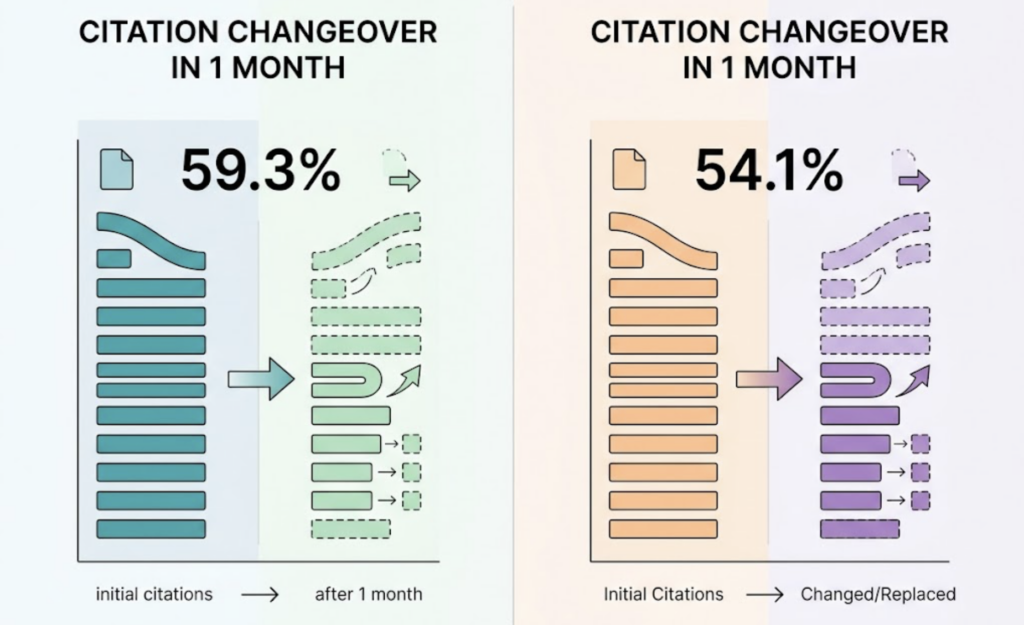
    Research shows that 59.3% of domains cited by Google AI Overviews changed within a single month, and ChatGPT’s citation turnover runs at 54.1% over the same period. If you’re checking manually once a week, you’re not tracking visibility. You’re sampling noise.
    The scale of the problem compounds this. AI assistants now generate 45 billion conversations per month globally, accounting for roughly 56% of total search volume. Your brand is being queried constantly, across platforms you may not even be monitoring.

    That’s exactly what an AI query tracking tool is built to solve.

    What an AI Query Tracking Tool Actually Does

    An AI query tracking tool automates what your team has been doing manually, but at a scale and frequency no human process can match. It sends a predefined library of prompts to multiple AI platforms, records every response, and analyzes how your brand appears over time.

    The core distinction from traditional SEO tools is fundamental. SEO rank trackers index static pages. An AI query tracking tool captures dynamic, generated answers — each one the output of a probabilistic model that may cite different sources every single time it runs.

    You can’t crawl your way to this data. AI responses are synthesized, not indexed. That’s why AI query tracking software exists as its own category, separate from anything your current SEO stack can provide.

    One nuance worth understanding: AI platforms distinguish between citation (your domain appears as a source link) and mention (your brand is directly recommended in the synthesized answer). A brand with high citation rates but low mention rates has authority that isn’t converting into recommendations. An AI query tracking tool quantifies both, so you know exactly which gap to close.

    The Metrics That Turn Raw AI Answers into Actionable Data

    Knowing that your brand “appeared” in an AI answer is a start. It’s not enough.

    A properly built AI query tracking dashboard tracks seven core dimensions: visibility (did your brand appear?), sentiment (how was it described?), position (where did it rank relative to competitors?), volume (how many users are querying this topic?), mentions (raw frequency), intent (what stage of the buyer journey does this query represent?), and CVR (the likelihood that an AI mention leads to a brand interaction).

    The three metrics most teams overlook are sentiment, position, and source. AI platforms routinely describe the same brand differently. One engine may call your product “enterprise-grade.” Another may describe it as “a budget alternative.” Neither may match your actual positioning.

    This matters more than it sounds. Research shows that visitors arriving from generative AI sources convert at 4.4x to 23x the rate of traditional organic search traffic. In transportation and logistics, AI-referred visitors convert at 62.76% versus 39.52% for organic. In SaaS and software, the gap runs 57.84% versus 37.17%. Microsoft Advertising data indicates that Copilot-assisted customer journeys are 33% shorter and drive a 76% lift in high-intent conversion rates.
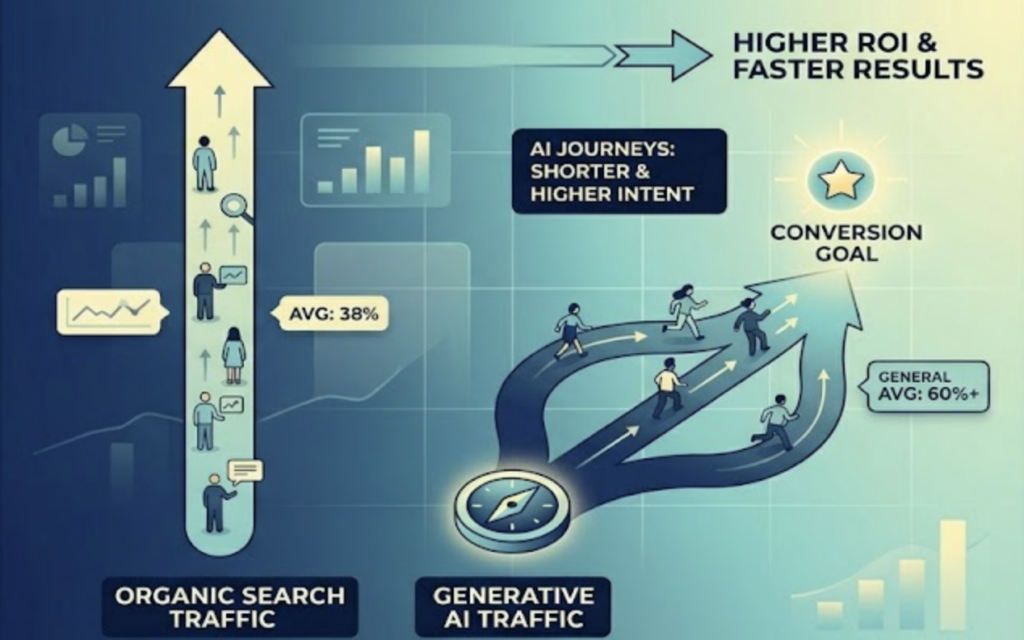
    That conversion premium means how AI describes your brand directly affects revenue, not just awareness. Your AI query tracking analytics need to capture sentiment and position, not just presence.

    Why Platform Coverage Determines Whether Your Data Is Reliable

    Not all AI platforms recommend brands the same way. The differences aren’t cosmetic.

    ChatGPT synthesizes answers from a relatively compact source set, averaging 7.92 sources per response, with a strong lean toward Bing-indexed content, Wikipedia, and Reddit. Perplexity is built search-first and averages 21.87 sources per response, consistently favoring official brand sites and authoritative directories. Google AI Overviews is deeply integrated with Google’s Knowledge Graph, and notably, 40% of its citations come from pages ranking outside the traditional top 10 in organic search.

    Claude shows a different pattern entirely, citing user-generated content and reviews at 2-4x the rate of other models. What works for ChatGPT visibility often won’t move the needle on Claude.

    A brand that performs well on one platform may be invisible on another. A brand well-cited by Gemini may be described negatively by Claude. If your AI query tracking platform only monitors one engine, your data has a structural blind spot built in.

    For brands operating globally, this complexity compounds fast. DeepSeek reached 100 million users in seven days after launch, breaking every prior growth record in the category. Platforms like Qwen and Doubao dominate Chinese-language AI search, each with distinct citation preferences. An AI query tracking system that ignores these platforms misses a meaningful share of global AI-driven discovery.

    How Topify Tracks AI Queries Across Every Major Platform

    Most AI visibility tools cover one or two platforms and market it as comprehensive coverage. Topify tracks ChatGPT, Gemini, Perplexity, DeepSeek, Doubao, Qwen, and other major AI engines across every market where your audience is actually searching.

    The platform’s tracking architecture is built around those seven core metrics: visibility, sentiment, position, volume, mentions, intent, and CVR. These aren’t separate reports you have to triangulate manually. They’re unified into a single AI query tracking dashboard so your team can see, in one view, that ChatGPT mentions dropped this week, trace it back to a specific domain that stopped being cited, and understand whether sentiment shifted at the same time.

    Topify’s Competitor Monitoring runs in parallel. You don’t just see your own data. You see which competitors AI platforms are recommending instead of you, where they’re gaining ground, and what content they’re being cited for. That’s the difference between knowing you’re losing visibility and knowing why.

    The Source Analysis feature goes a level deeper, mapping the exact URLs and domains that AI platforms use when they reference your category. If AI engines consistently cite a third-party review site that doesn’t mention your brand, that’s a specific gap you can close with a targeted piece of content.

    Topify’s team includes founding researchers from OpenAI and Google SEO champions, which reflects in the algorithm’s precision. The Basic plan starts at $99/month, covering 100 prompts and 9,000 AI answer analyses monthly across 4 projects. The Pro plan at $199/month scales to 250 prompts and 22,500 analyses for larger teams. Get started here.

    How to Track Your Brand’s Visibility in AI Search Results (Step by Step)

    The long-tail question “how can I track my brand’s visibility in AI search results?” has a practical answer that most guides skip past: start with your prompt library, not your platform selection.

    Step 1: Build a 30-50 prompt baseline set. Around 25% should be brand-verification queries (“What is [brand]?”, “How does [brand] price its product?”). The remaining 75% should split between category-discovery queries (“What’s the best [category] software for mid-sized teams in 2026?”) and competitive comparison queries (“[Brand] vs [Competitor]: what’s the difference?”).

    Step 2: Set your baseline across multiple platforms simultaneously. Run your prompt library across ChatGPT, Perplexity, and Gemini at minimum. Record visibility rate, position, and sentiment for each platform separately. Don’t aggregate them. Platform differences are the insight.

    Step 3: Define a share of voice target. In B2B SaaS, a reasonable initial benchmark is a 15% category query mention rate, meaning your brand should appear in AI answers to relevant category prompts at least 15% of the time. Track against this weekly, not monthly.

    Step 4: Monitor for hallucinations. Research indicates GPT-4 produces factual errors in news-adjacent content at a 67% rate. If AI platforms are misrepresenting your pricing, describing discontinued features, or mischaracterizing your market position, that’s an active brand reputation problem, not just a visibility issue.

    Step 5: Connect AI visibility to downstream business metrics. Track whether increases in AI mention frequency correlate with increases in branded search volume on Google. This “assist effect” is how you make the ROI case to stakeholders who still think in terms of clicks and sessions.

    An AI query tracking solution like Topify automates steps 2 through 5, surfacing anomalies, competitor shifts, and source changes without manual analysis. That means your team spends time acting on data rather than collecting it.

    Conclusion

    The gap between brands that are visible in AI search and those that aren’t is widening. By 2028, an estimated $750 billion in consumer spending will be directly influenced by AI search recommendations. The brands showing up consistently aren’t the ones doing the most manual checking. They’re the ones that built a structured AI query tracking system before it became obvious that they needed one.

    The starting point isn’t complicated. Define your prompt library. Choose an AI query tracking platform that covers the engines your audience actually uses. Set a share of voice baseline, and track against it week over week. The brands that do this now will have 12 to 18 months of competitive data by the time this becomes standard practice.

    Topify is worth a close look if you’re building this infrastructure today. Global AI engine coverage, metrics that connect directly to revenue, and execution tools that don’t require a team of analysts to interpret the results. Start here.


    FAQ

    Q: What’s the difference between an AI query tracking tool and a traditional SEO rank tracker?

    A: A traditional SEO rank tracker monitors your position in static, indexed search results. An AI query tracking tool captures something fundamentally different: the probabilistic, generated answers that AI platforms produce each time a user asks a question. Because AI responses aren’t indexed pages, conventional SEO tools can’t access them. You need purpose-built AI query tracking software that directly queries AI engines, records the outputs, and analyzes them at scale over time.

    Q: How many AI platforms should I be tracking?

    A: At minimum, ChatGPT, Perplexity, and Gemini for most markets. If you have global operations or serve Asian markets, add DeepSeek, Qwen, and Doubao. Each platform uses different citation logic and source preferences, so a brand’s visibility can vary significantly across engines. Single-platform data creates structural blind spots in your reporting.

    Q: How often should I run AI query tracking?

    A: Weekly at minimum. Given that ChatGPT’s cited domains turn over at a 54.1% monthly rate, monthly checks will miss meaningful shifts. For brands actively running GEO optimization campaigns or in competitive categories, daily tracking is the more defensible standard.

    Q: How can I track my brand’s visibility in AI search results without spending hours manually?

    A: Use an AI query tracking platform that automates prompt execution, records responses over time, and surfaces anomalies automatically. The manual approach, where someone pastes queries into ChatGPT and screenshots the results, doesn’t scale and doesn’t produce trend data. Tools like Topify handle the monitoring layer so your team works with interpreted insights rather than raw AI outputs. Less time copy-pasting, more time acting on what the data shows.
    Read More

  • AI Query Tracking: What It Is, How It Works, and Why Your SEO Dashboard Can’t Tell You

    AI Query Tracking: What It Is, How It Works, and Why Your SEO Dashboard Can’t Tell You

    Your domain authority is solid. Your top keywords rank well. Search Console shows impressions trending up. Then a colleague types your category into ChatGPT and your brand doesn’t appear once, while a competitor you’ve outranked on Google for two years gets the first recommendation.

    That gap has a name: missing AI query tracking. And your current analytics stack has no way to show it to you.

    AI Query Tracking Is Not the Same as AI Traffic Tracking

    Most teams conflate these two things, and it’s an expensive mistake.

    AI traffic tracking measures what happens after someone clicks a link from an AI response to your website. AI query tracking measures something upstream: whether your brand appears in the AI’s answer at all, across which prompts, on which platforms, and in what context.

    The distinction matters because the click is increasingly optional. When a user asks Perplexity “What’s the best project management tool for remote teams?”, they get a synthesized answer. They may never click through to any website. If your brand isn’t in that answer, you’ve lost a potential customer before they ever reached your domain, and your analytics will show nothing unusual.

    Google Search Console currently provides no native way to isolate AI Overview impressions from traditional search data. Google officially merges both into the same reporting view. GA4, meanwhile, frequently miscategorizes AI-referred traffic as “Direct” because many AI platforms strip referrer headers before passing traffic. The result: high-value AI visitors quietly enter your funnel labeled as unassigned, while the actual source stays invisible.

    That’s not a minor reporting quirk. Research shows that AI-referred visitors convert at 4.4 times the rate of average organic search visitors. You can’t optimize what you can’t see.

    How AI Query Tracking Actually Works

    The core mechanism is straightforward: define a set of prompts your target customers are likely to ask AI platforms, submit those prompts, parse the AI’s responses, and record whether your brand was mentioned, where, and how.

    In practice, it’s significantly more complex. Modern AI platforms use Retrieval-Augmented Generation (RAG), pulling from live indexes and synthesizing answers that vary based on session context, model temperature, and recent data updates. The same prompt submitted twice can return different brand recommendations. That non-deterministic behavior is exactly why a single manual check is unreliable.

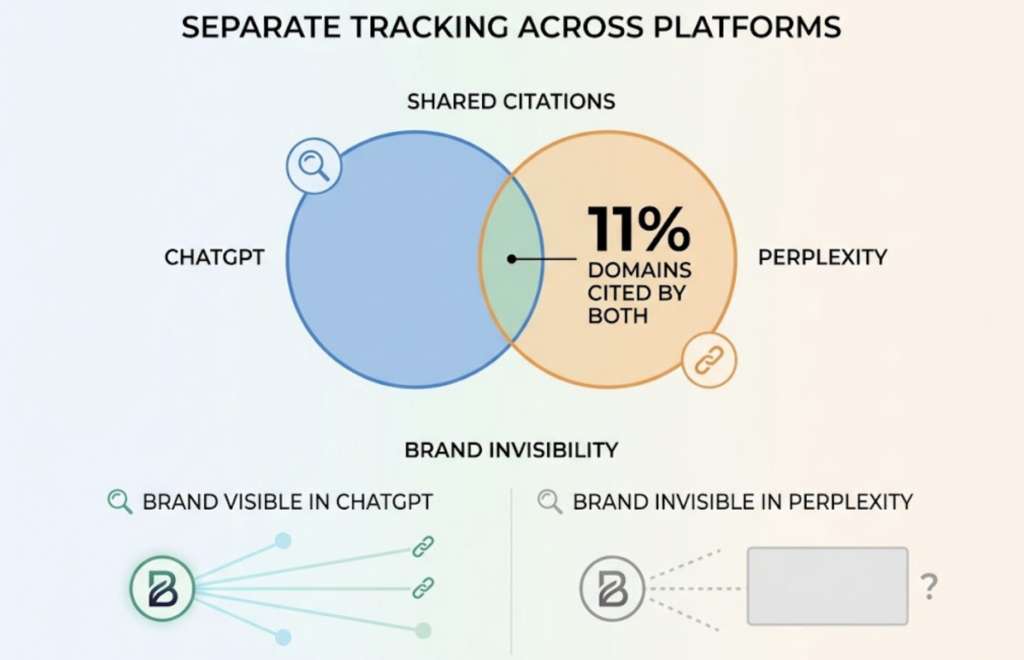
    It also means tracking needs to happen across platforms separately. The architectures are fundamentally different. ChatGPT synthesizes from internal knowledge first, pulling external sources selectively for verification. Perplexity is retrieval-first, constructing answers around live web sources and citing heavily. Gemini is search-native, integrated tightly with Google’s index. Research shows that only 11% of domains are cited by both ChatGPT and Perplexity, which means a brand showing up strongly in one engine can be nearly invisible in another.

    Add DeepSeek, Qwen, and the growing range of AI assistants, and the platform fragmentation problem becomes clear. AI query tracking that covers only ChatGPT isn’t tracking. It’s sampling.

    What AI Query Tracking Actually Measures: 7 Metrics That Matter

    Once you have a tracking system in place, the data falls into seven categories. Each measures a different dimension of your AI search visibility.

    Visibility Rate is the foundational metric: out of all the prompts you’re monitoring, what percentage of AI responses include your brand? This is also expressed as Generative Share of Voice (GSOV), calculated as total brand mentions divided by total queries analyzed, multiplied by 100. A GSOV of 40% means your brand appears in roughly half of all relevant AI conversations in your category.

    Position captures where in the response your brand appears. Research indicates brands mentioned in the first two sentences receive five times more consideration than those cited later in the response. Being mentioned isn’t enough; placement matters.

    Sentiment tracks the tone of how AI platforms describe your brand. An AI might mention you while calling you “a budget option” when your positioning is premium. That’s a different problem than not being mentioned at all, and it requires a different fix.

    Share of Voice provides competitive context. Your absolute mentions could increase while your share of voice drops because competitors are growing faster. GSOV without competitive benchmarking gives you half the picture.

    Mention CountSource Attribution (which domains the AI is pulling from when it cites your category), and AI Search Volume (how frequently real users are submitting the prompts you’re tracking) round out the full picture.

    Topify tracks all seven of these metrics across ChatGPT, Gemini, Perplexity, DeepSeek, and others in a unified dashboard, surfacing the data in a format that connects visibility trends to specific source changes.

    A Practical AI Query Tracking Checklist

    Getting started doesn’t require perfecting every variable at once. Here’s what matters in the first 30 days.

    Prompt selection. Build a prompt library that covers the full buyer journey: awareness-stage questions (“what tools help with AI search visibility”), evaluation questions (“best AI search analytics platform”), and decision-stage comparisons (“Topify vs [competitor]”). A starting library of 30 to 50 prompts gives enough coverage to produce statistically meaningful data.

    Platform coverage. At minimum, track ChatGPT, Perplexity, and Gemini. These three represent the majority of current AI search usage in most Western markets. If your audience skews technical or global, add DeepSeek and Qwen. The research suggests that 250 to 500 high-intent queries tracked consistently across platforms is the threshold for statistical stability.

    Baseline measurement. Your first round of data is your baseline. Don’t act on it immediately. Run the same prompts for two to four weeks before drawing conclusions. What you’re looking for is a trend, not a single data point.

    Review cadence. A weekly snapshot is enough to catch sudden changes. A monthly deep review is where you diagnose root causes and adjust content strategy. Quarterly at minimum, because pages that aren’t updated at that frequency are three times more likely to lose AI citations as fresher competitor content displaces them.

    Action triggers. Define in advance what data will prompt a response. A visibility drop of more than 10 percentage points on a specific platform suggests a source attribution issue. A sentiment shift toward negative language around your brand points to off-site content needing attention.

    4 Mistakes That Break AI Query Tracking Before It Starts

    These aren’t edge cases. They’re the most common reasons teams invest in tracking and still don’t get useful data.

    Tracking only branded prompts. Searching “[your brand name]” in ChatGPT tells you whether the AI knows you exist. It doesn’t tell you whether the AI recommends you when someone asks a category or comparison question, which is where most purchase decisions actually happen. Branded prompts should be a small fraction of your total prompt library.

    Only checking ChatGPT. Given that only 11% of domains are cited across both ChatGPT and Perplexity, a brand can look healthy on one platform while being almost completely absent from another. Perplexity’s owned website citations account for just 12% of total brand mentions in its responses, meaning the platforms that drive AI discovery aren’t always the platforms where you think you have coverage.

    Treating it as a one-time audit. AI models update their citation behavior continuously. A snapshot report from three months ago reflects a different information environment than today. On the flip side, a single bad week of data doesn’t indicate a structural problem. Tracking is useful as a continuous signal, not as an annual exercise.

    Ignoring source attribution. Knowing that your visibility dropped is half the information you need. The other half is understanding why. AI engines form their recommendations based on what sources they trust for your category. If your brand stops appearing in Perplexity responses, it often means the third-party sources that used to validate your authority have been displaced by fresher competitor mentions. That’s fixable, but only if you can see the source layer.

    How to Build an AI Query Tracking Strategy That Drives Action

    The data is only useful if it connects to decisions. A working strategy follows four steps: Track, Diagnose, Optimize, Measure.

    Track means running your prompt library consistently across platforms and recording the output. This is the operational foundation. Topify’s AI Volume Analytics surfaces high-value prompts you might not have identified manually, showing which queries are driving real AI search behavior in your category, not just which queries you assumed were important.

    Diagnose means identifying where visibility is weak and understanding the cause. Platform-level gaps suggest structural content issues specific to how that engine retrieves data. A category of prompts with consistently low visibility suggests topical authority problems. Negative sentiment in AI descriptions points to off-site narrative management issues.

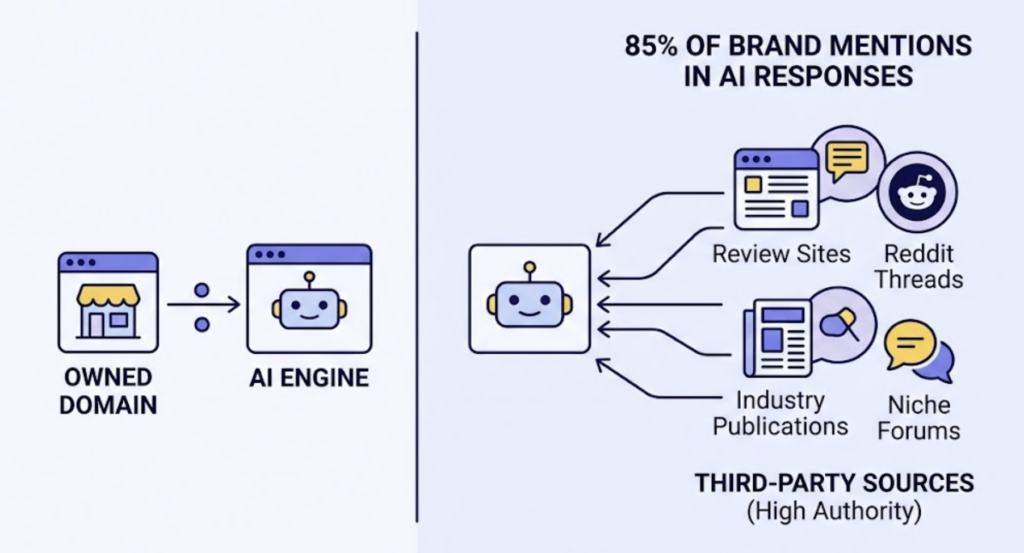
    Optimize is where the data drives action. Research consistently shows that 85% of brand mentions in AI responses originate from third-party pages rather than owned domains. That means optimizing your own site content is necessary but not sufficient. The bigger lever is ensuring your brand is mentioned accurately and consistently in the sources AI engines trust: high-authority review sites, Reddit threads, industry publications, and niche forums. Source Analysis in Topify identifies which domains AI engines are pulling from for your category, so you know exactly where to focus off-site efforts.

    Measure closes the loop by tracking whether changes in source attribution and content structure translate into Visibility and Position improvements over the following four to eight weeks. Research indicates brands that appear in the top three AI recommendations see up to 34% more qualified lead requests compared to those cited later in responses. That’s a revenue-level metric, not a vanity metric.

    AI Query Tracking Pricing: What to Expect

    Most AI query tracking tools price based on two variables: the number of prompts you track and the number of AI platforms covered. Volume and breadth both drive cost.

    At the budget end, tools like Otterly AI start around $29 per month but typically cover basic mention presence without deep sentiment analysis or source attribution. Mid-market platforms like Peec AI start around €85/month and are popular with agencies for multi-brand reporting. Enterprise platforms like seoClarity start at $2,500/month and are built for large global teams needing SOC 2 compliance and historical data retention.

    Topify’s pricing is structured around actual usage rather than inflated enterprise bundles. The Basic plan starts at $99/month (billed annually) and includes 100 prompt slots with coverage across ChatGPT, Perplexity, and AI Overviews. The Pro plan at $199/month expands to 250 prompts and 8 projects, which is the right scale for most growth-stage SaaS and mid-market brands running category-level and competitive tracking simultaneously. Enterprise plans start at $499/month with custom configurations and dedicated account management.

    To size your prompt budget: start with 5 to 10 awareness-stage prompts per product category, 5 to 10 comparison/evaluation prompts, and 5 branded prompts. For most brands, 30 to 50 prompts cover the core tracking needs at the Basic tier. Scale up when you’re actively running optimization campaigns and need tighter measurement resolution.

    Conclusion

    Your SEO rankings haven’t disappeared. But they’re no longer the full picture of how buyers discover your brand. AI search is operating as a parallel discovery layer, and for the visitors it’s generating, conversion rates are 4.4 times higherthan standard organic traffic. That value is accruing to brands that can see and measure their AI presence, and compounding against those that can’t.

    The starting point isn’t complex. Build a prompt list of 30 to 50 queries your buyers are likely asking. Pick two or three platforms to baseline. Run the tracking for four weeks before making any changes. What you learn in that first month will tell you more about your actual discovery gaps than a year of keyword rank reports.

    Get started with Topify to set up your first prompt tracking project and see exactly where your brand stands across AI platforms today.


    FAQ

    Q: What is AI query tracking? A: AI query tracking is the practice of monitoring whether and how your brand appears in AI-generated responses across platforms like ChatGPT, Perplexity, and Gemini. It involves submitting a defined set of prompts, analyzing the AI’s answers, and recording metrics like visibility rate, position, and sentiment over time.

    Q: How does AI query tracking work? A: A set of prompts representing your customers’ likely questions is submitted to AI platforms on a recurring basis. The responses are parsed to detect brand mentions, record where in the response the brand appears, and evaluate the tone. Because AI responses are non-deterministic (the same prompt can return different answers), tracking requires consistent sampling across 250 to 500 prompts to produce statistically stable data.

    Q: How often should I update my AI query tracking data? A: A weekly snapshot is enough to catch sudden shifts. Monthly reviews are where you diagnose patterns and adjust strategy. Content that isn’t refreshed quarterly is three times more likely to lose AI citations as fresher competitor material displaces it in the retrieval layer.

    Q: What’s the difference between AI query tracking and traditional SEO monitoring? A: Traditional SEO monitoring tracks keyword rankings and organic traffic, both of which measure what happens after a user reaches a search results page. AI query tracking measures what happens before that, specifically whether AI platforms include your brand in the synthesized answers they present to users, many of whom never click through to any website at all.


    Read More

  • AI Recommendation Tracking Strategy: The Framework Most Brands Are Still Missing

    AI Recommendation Tracking Strategy: The Framework Most Brands Are Still Missing

    Your domain authority is solid. Your keyword rankings held through the last algorithm update. But none of that tells you whether ChatGPT is recommending your competitor every time a prospect asks about your category.

    That’s the real gap in most digital strategies right now. Research shows 62% of brands are effectively invisible to generative AI models, and in 81% of tested cases, AI failed to cite recognized market leaders when users asked direct, unbranded category questions. These brands weren’t outranked. They were simply absent. An AI recommendation tracking strategy is how you find out where you stand, and what to do about it.

    Why Your Google Rankings Don’t Reflect Your AI Recommendation Tracking Strategy

    Traditional SEO and AI recommendation tracking measure fundamentally different things.

    Traditional SEO tracks retrieval: which position you hold in a list of results. AI recommendation tracking measures selection: whether a language model synthesizes your brand into its final answer. That’s a structural shift in how visibility works, not a tactical tweak.

    65% of searches now end without a single click because the AI delivers the answer directly within the interface. The goal is no longer to appear somewhere in positions one through ten. It’s to be chosen when the model constructs its response.

    Traditional SEO TrackingAI Recommendation Tracking
    Core mechanismKeyword retrieval, link indexingProbabilistic synthesis, RAG retrieval
    Success metricRanking position, organic clicksMention rate, citation frequency
    User behaviorShort queries on search enginesComplex prompts on AI assistants
    Result formatList of blue linksSynthesized narrative or recommendation
    GoalGet foundGet chosen

    Here’s the thing: a brand’s overall authority correlates three times more strongly with AI citations than with any individual keyword ranking. AI models prioritize entities they recognize across multiple contexts. Broad authority now outperforms narrow keyword optimization.

    The 5 Search Visibility Metrics Behind a Working AI Recommendation Tracking Strategy

    Most teams track the wrong things. Here are the five numbers that actually reflect how AI recommends your brand.

    1. Mention Rate

    The percentage of relevant AI prompts where your brand appears. This is your baseline. Category leaders typically see mention rates of 30–50% across core use-case queries. Below 10% in your primary topic cluster means the model doesn’t have sufficient entity recognition of your brand, and users searching that topic will never encounter you.

    2. Position in AI Answer

    When AI does mention your brand, where does it appear? First mention signals the highest confidence. A target of average position 2.0 or better on high-intent “best of” queries is the benchmark to work toward. In platforms like Perplexity, the first cited source pulls the overwhelming majority of engagement.

    3. Sentiment Score

    High visibility with negative framing is worse than low visibility. AI models amplify existing web sentiment. If your third-party coverage is mixed, that’s what the model reflects back to users. A score of 70% or higher positive ratio is healthy. Below 60% warrants an immediate audit of review profiles and third-party coverage.

    4. Source Citation Rate

    When AI cites your domain or specific pages, that’s the primary driver of actual referral traffic. Target a citation-to-mention ratio of at least 30%. Lower than that means your content is being paraphrased without attribution, and you’re capturing zero traffic from those mentions.

    5. Prompt Coverage

    The percentage of your target prompts that trigger a brand mention. This reveals content gaps faster than any site audit. A coverage of 60% or more across your primary topic cluster is healthy. If you’re only appearing on branded queries, you’re missing most of the discovery happening in AI search right now.

    MetricWhat It MeasuresHealthy RangeWhen It’s Below Threshold
    Mention RateBrand awareness in AI30–50% across core queriesEntity recognition gap
    PositionRecommendation strengthAvg ≤2.0 on high-intent promptsAuthority gap vs. competitors
    SentimentReputation tone≥70% positive ratioThird-party coverage issue
    Citation RateTraffic potential≥30% citation-to-mentionContent trust gap in RAG pipeline
    Prompt CoverageMarket influence≥60% of target prompt setContent gap in topic cluster

    How to Set Up Your AI Recommendation Tracking Without Starting From Scratch

    Step 1: Prioritize your platforms.

    ChatGPT, Gemini, and Perplexity are the non-negotiables. ChatGPT accounts for roughly 70–87% of measured AI referral traffic. Perplexity matters for citation-heavy research queries. Google AI Overviews has the broadest reach in general search.

    Don’t optimize for one and assume the rest follow. There’s only a 13.7% citation overlap between Google AI Overviews and other AI platforms, even when they reach similar conclusions. Cross-platform tracking isn’t optional. It’s where the real gaps show up.

    Step 2: Build your prompt library from real customer language.

    Don’t test vanity queries. Build from support tickets, sales call transcripts, and review platforms. A solid library covers three types:

    • Branded: “Is [Brand] reliable for [use case]?”
    • Category: “What’s the best tool for [specific task]?”
    • Problem-solution: “How do I solve [specific problem]?”

    Twenty to thirty standardized prompts per core topic gives you statistically stable data week over week. Fewer than that, and trend detection becomes unreliable.

    Step 3: Automate the execution.

    Manual audits don’t hold up here. AI responses are probabilistic, meaning the same prompt returns different answers across sessions. You need to run hundreds of prompt variations on a consistent cadence to produce a visibility score you can act on.

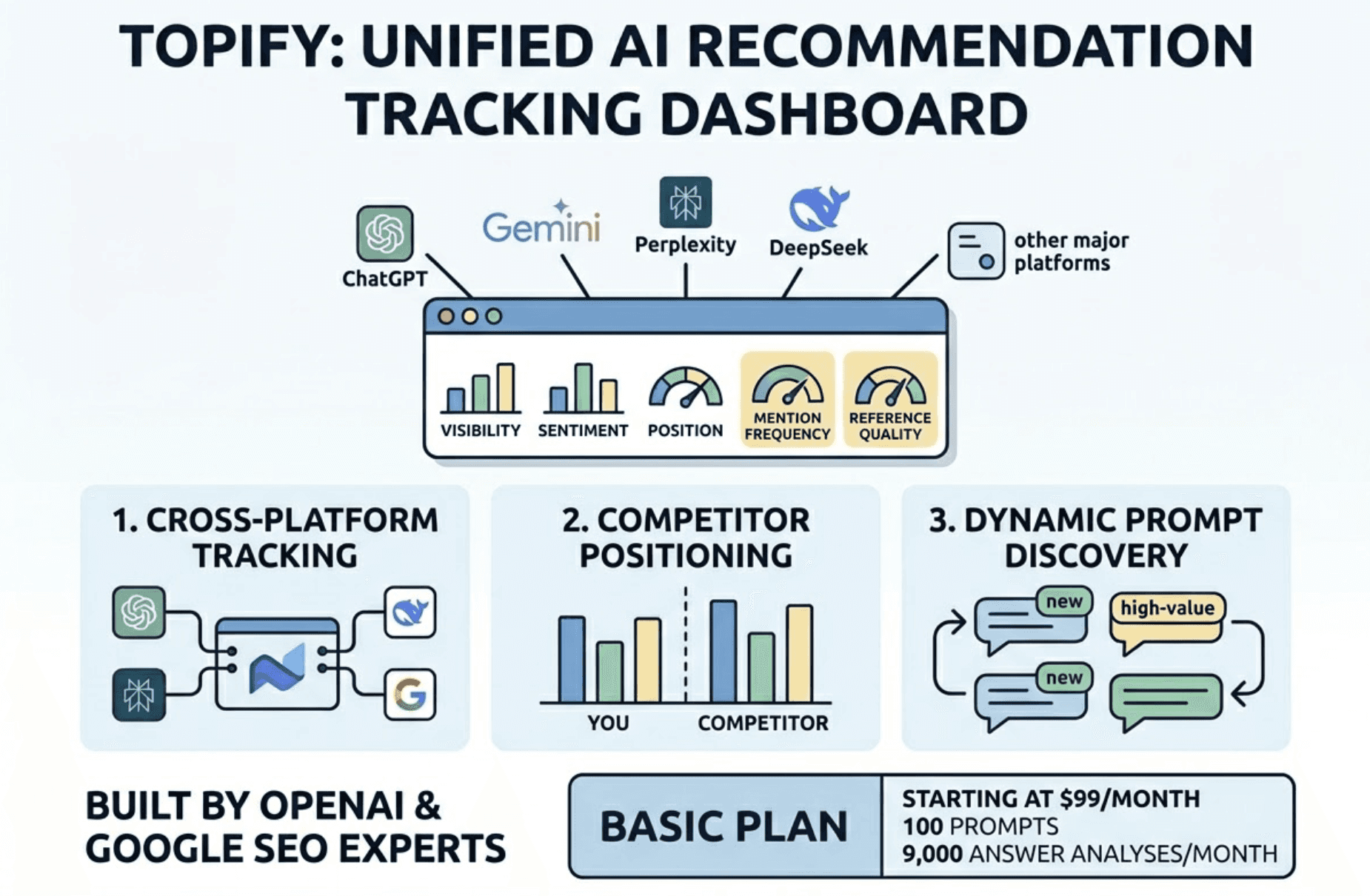
    Topify automates this process across ChatGPT, Gemini, Perplexity, DeepSeek, and other major platforms. It tracks all five core metrics in a unified dashboard, surfaces competitor positioning data in real time, and continuously identifies new high-value prompts as AI recommendation patterns shift. Built by founding researchers from OpenAI and Google SEO practitioners, the platform is designed for teams that need precision, not approximations. The Basic plan starts at $99/month with 100 prompts and 9,000 AI answer analyses per month.

    Step 4: Set your tracking cadence.

    Weekly is the minimum. Daily for queries tied directly to revenue or competitive positioning. Model updates can shift your visibility overnight.

    Monthly audits will miss it entirely.

    4 Signs Your AI Tracking Data Is Misleading You

    Getting numbers is easy. Getting numbers that mean something is harder. These are the four mistakes that consistently lead teams to invest in the wrong optimizations.

    Tracking only branded prompts. Testing queries that include your brand name only measures retention, not discovery. The majority of new AI-driven discovery happens on unbranded category prompts. If your prompt library is mostly “Is [Brand] good for X?”, you’re looking at the wrong data.

    Testing too infrequently. LLMs sample responses differently each time, even with identical inputs. A monthly test is statistically unreliable. You need enough volume across enough time to distinguish a real trend from random model variance.

    Optimizing for a single platform. Ranking well in ChatGPT doesn’t mean you rank well in Gemini or Perplexity. Platform-specific blind spots can cost you a significant share of total AI-driven traffic, and you won’t see it unless you’re tracking cross-platform.

    Data without competitive benchmarks. A 15% mention rate is excellent in a fragmented local services market. It’s a failure in consolidated software categories. Without competitive Share of Voice data, your visibility numbers are directional at best.

    That last point is where most teams get stuck.

    Topify’s Competitor Monitoring tracks how competitors perform across the same prompt set, so your visibility score has context rather than just magnitude. You stop guessing whether 20% is good and start knowing exactly who you’re behind and why.

    From AI Optimization Metrics to Real Search Visibility Actions

    Data without a feedback loop is just expensive reporting.

    Low citation rate on owned content? Rewrite with an answer-first format. Open each section with a direct 2–4 sentence answer to the question posed in the heading. Research shows this approach increases citation likelihood by roughly 40%.

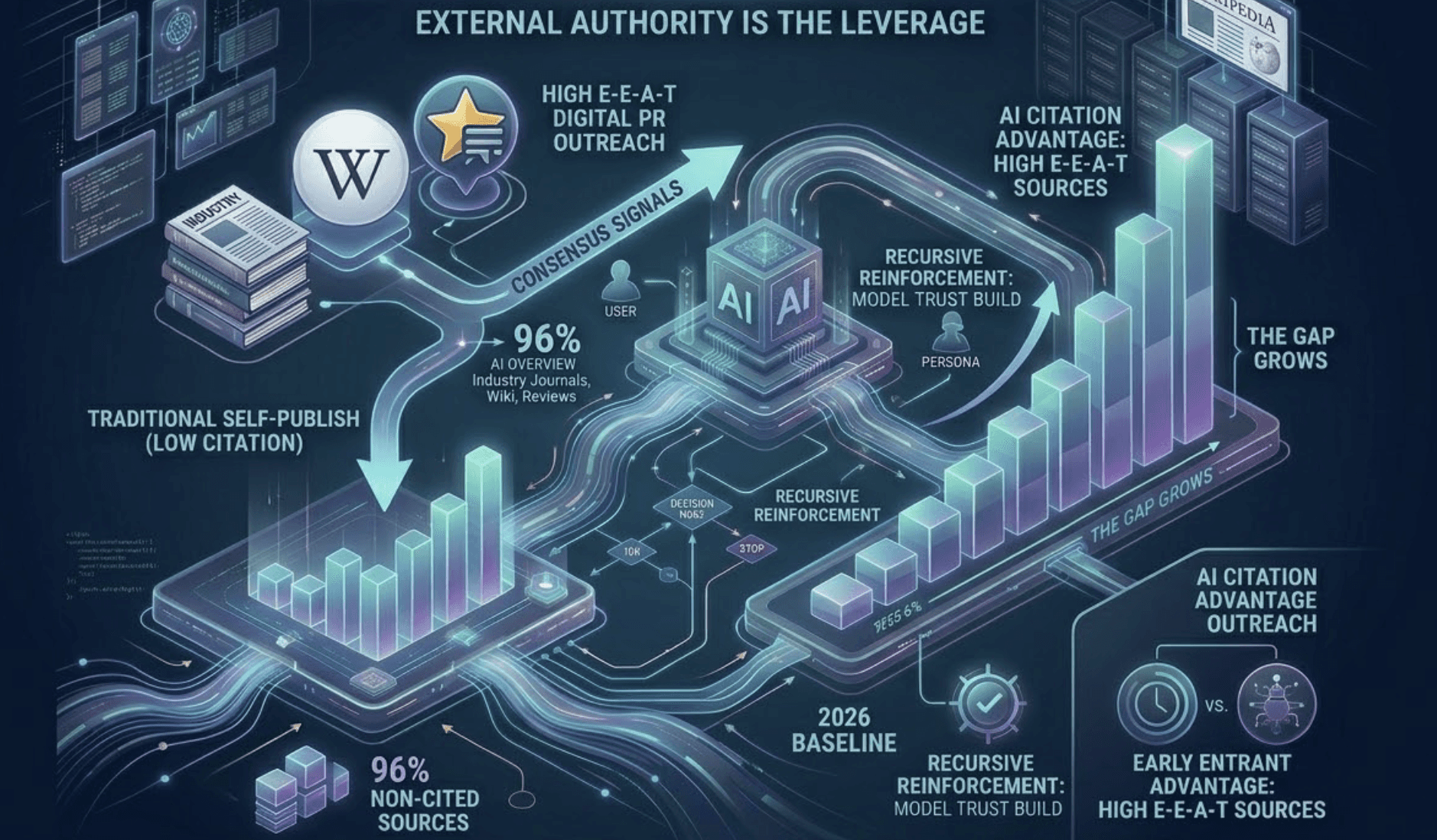
    Competitor getting cited via a third-party blog you’re not on? Don’t rewrite your website. Prioritize digital PR outreach to that specific publication. AI models build trust through consensus signals from authoritative external sources. 96% of AI Overview citations come from high E-E-A-T domains, including industry journals, Wikipedia, and authoritative review platforms. The leverage is in external authority, not self-published content.

    Low technical visibility despite strong content? Check your schema. Valid Organization, Product, and FAQPage schema makes a brand 3.5x more likely to be cited by AI. Also verify your robots.txt explicitly allows GPTBot and ClaudeBot to crawl your site.

    Declining freshness on key pages? A content refresh alone can boost citation frequency by 28%. AI models weight recency as a trust signal, especially for rapidly evolving categories.

    Topify’s Source Analysis surfaces exactly which domains AI platforms cite for your target topics. Your content team gets a prioritized outreach list instead of a blank page.

    That’s the difference between a tracking system and an optimization engine.

    A 10-Point Checklist for Your AI Recommendation Tracking Setup

    Score yourself before investing in prompt coverage expansion. Below 6 out of 10, fix the infrastructure first.

    1. Crawler access: robots.txt explicitly allows GPTBot, Google-Extended, and ClaudeBot
    2. Entity verification: consistent Name, Address, Phone (NAP) data across all directories, plus a clear About page with leadership bios
    3. Prompt diversity: at least 20 prompts covering branded, category, and comparison intents
    4. Platform breadth: tracking live across ChatGPT, Gemini, and Perplexity at minimum
    5. Sampling stability: weekly tracking cadence to account for model stochasticity
    6. Metric integration: Mention Rate, Position, Sentiment, and Citation Rate tracked as a unified visibility score
    7. Schema deployment: valid Organization, Product, and FAQPage schema on all key landing pages
    8. Source intelligence: top 10 third-party domains cited in your category identified and monitored
    9. Revenue attribution: AI visibility data connected to GA4 referral traffic and branded search volume
    10. Hallucination oversight: a review workflow to catch and correct AI misrepresentations of your brand

    Conclusion

    65% of searches now end without a website visit. That traffic isn’t disappearing. It’s being absorbed by the AI model that answered the question first.

    The brands that win in this environment aren’t the ones with the highest keyword rankings. They’re the ones with the highest model confidence. And model confidence is measurable. Track the five core metrics. Build a real prompt library. Automate the execution. Use the data to act, not just to report.

    If you want to see where your brand stands today, get started with Topify and run that entire workflow from a single dashboard.

    FAQ

    Q: What is an AI recommendation tracking strategy?

    A: It’s a systematic approach to monitoring how generative AI models perceive and recommend your brand. Unlike traditional SEO, which tracks where you appear in a list, an AI recommendation tracking strategy tracks whether a language model selects and synthesizes your brand into its answer when users ask questions about your product category or use case.

    Q: How do I measure an AI recommendation tracking strategy?

    A: Performance is measured through a composite of five core metrics: Mention Rate (how often you appear), Position (where you appear in the response), Sentiment Score (the tone used), Citation Rate (how often your domain is linked), and Prompt Coverage (how many relevant queries trigger a brand mention). These metrics should be benchmarked against competitors and tracked over time.

    Q: What are the best tools for AI recommendation tracking strategy?

    A: Topify is built specifically for this. It tracks all major AI platforms with seven GEO metrics, automates prompt monitoring, and includes one-click optimization execution. For teams exploring basic AI Overview tracking, SE Ranking and Authoritas offer entry-level options. Full-scale cross-platform monitoring typically requires a dedicated platform with multi-engine coverage.

    Q: How much does an AI recommendation tracking strategy cost?

    A: Topify’s Basic plan starts at $99/month and includes 100 prompts, 9,000 AI answer analyses, and tracking across ChatGPT, Perplexity, and AI Overviews. The Pro plan is $199/month for 250 prompts. Enterprise plans start at $499/month with dedicated account management. Across the broader market, basic monitoring tools range from $29–99/month, while enterprise-grade platforms typically run $800–2,500/month.

    Read More

  • AI Citation Tracking Analytics: How to Measure What AI Actually Links To

    Your technical white paper ranks #1 on Google for a high-intent query. A buyer types the exact same question into ChatGPT. The AI recommends three competitors. Your page doesn’t appear.

    That’s not an SEO failure. That’s an AI citation gap.

    Search rankings and AI citations are now two separate systems. What gets you to the top of Google doesn’t guarantee you’ll be sourced by ChatGPT, Perplexity, or Gemini. And in a world where over 50% of queries are satisfied directly within the AI interface, the citation has become the new click.

    AI citation tracking analytics is the discipline built to close that gap.

    What AI Citation Tracking Measures (It’s Not the Same as Brand Mentions)

    Most brands track whether AI mentions their name. That’s the wrong metric.

    There’s a meaningful difference between being “mentioned” and being “cited.” A mention means your brand name appears somewhere in the AI’s generated text. A citation means the AI used your content as an evidentiary source, typically with a clickable link or footnote pointing directly to your domain.

    These two signals tell you completely different things:

    Signal What It Means Strategic Value
    Brand Mention Your name appeared in the AI’s narrative Awareness, consideration shortlist
    AI Citation Your URL was used as a source Technical authority, referral traffic potential

    Here’s the thing that catches most teams off guard: brands are three times more likely to be cited as a source than to be both cited and mentioned as a recommendation. You can power an AI’s answer without ever getting credit for it.

    Researchers have formalized this as the “Mention-Source Divide.” The AI uses your data. It recommends your competitor. Organizations that achieve both signals simultaneously are 40% more likely to resurface in consecutive AI sessions, creating a compounding visibility advantage over time.

    How AI Platforms Decide Which Sources to Cite

    AI citation selection isn’t random. It’s risk minimization at scale.

    Most production-grade AI search systems use Retrieval-Augmented Generation (RAG): they query a live index, retrieve relevant passages, and ground their generated answer in those specific texts. In this environment, the primary ranking factor is token efficiency, which is the density of factual information per unit of text.

    AI engines frequently skip the #1 Google result if the page is cluttered with introductory fluff or lacks clear structure. Instead, they cite a lower-ranking page that offers a direct definition, a concise table, or what researchers call an “atomic fact,” meaning a self-contained sentence making a single, verifiable claim.

    The data backs this up:

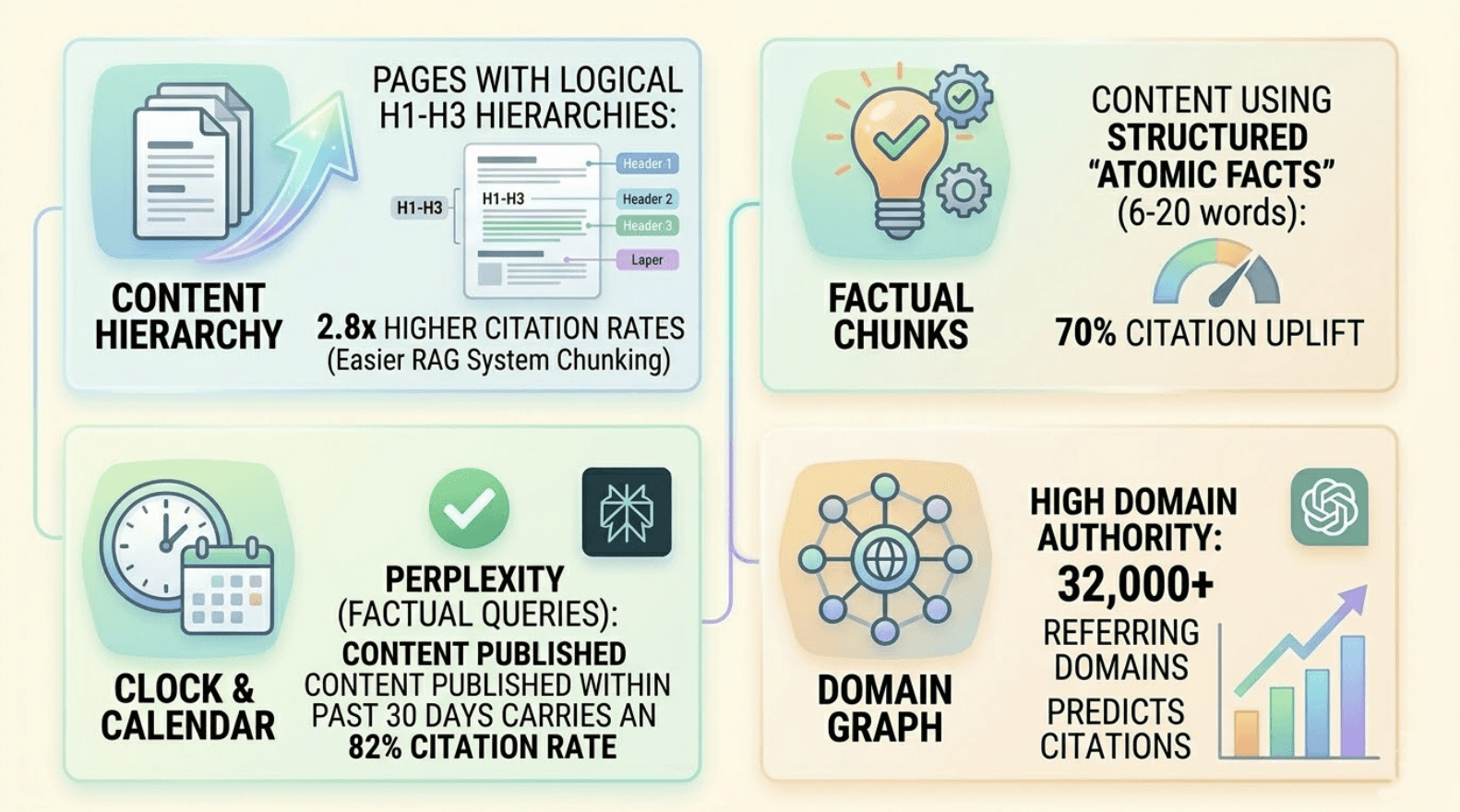
    • Pages with logical H1-H3 heading hierarchies see 2.8x higher citation rates due to easier chunking by RAG systems
    • Content using structured “atomic facts” (6-20 words) receives a 70% citation uplift
    • On Perplexity, content published within the past 30 days carries an 82% citation rate for factual queries
    • High domain authority (benchmark: 32,000+ referring domains) is a significant predictor of ChatGPT citations

    Platform behavior also varies considerably. ChatGPT cites an average of only 1.5 to 7.9 sources per response and heavily favors encyclopedic authorities (Wikipedia accounts for 47.9% of its top citations). Perplexity operates differently, often referencing 21+ sources per response with a strong bias toward recent and community-validated content. Google AI Overviews maintains a 93.6% overlap with traditional top-10 results but skews toward its own ecosystem properties.

    One SEO strategy can’t cover all three. That’s why cross-platform citation tracking matters.

    5 Signs Your Brand Has an AI Citation Gap

    You don’t always need a dashboard to know something is wrong. These patterns are often visible before any formal audit.

    Competitive displacement in evaluative queries. When an AI is asked to “compare the top solutions in your category,” it cites competitor domains even though your brand ranks higher in traditional search.

    Ranking inconsistency across search layers. Your content sits in the top 1-3 positions on Google, but the AI Overview or ChatGPT Search result for the same keyword ignores your domain entirely.

    Third-party attribution bias. The AI references data or a framework your brand originated, but credits a secondary publisher, such as a news outlet or a review site like G2 or Reddit, because they score higher in the model’s citability index.

    The mention-only anomaly. Your brand name appears in a synthesized recommendation list, but there’s no clickable link pointing back to your site. Your brand is in the training data, but your domain isn’t treated as an authoritative RAG target.

    Recurring competitor citations for niche topics. A competitor is repeatedly cited for a specific subtopic where you have exhaustive coverage. The AI has mapped them as the topical authority, not you.

    Any one of these signals warrants a structured audit. All five together indicates a systemic gap.

    How to Measure AI Citation Tracking Analytics

    Measuring citation performance requires a shift from tracking keywords to tracking prompts and their synthesized outputs.

    The Core Metrics

    Three KPIs form the foundation of any serious citation analytics program:

    Citation Frequency: The percentage of target prompts where your domain or specific URL is cited. A citation frequency above 30% for core category prompts is generally considered a benchmark for market leadership.

    Domain Citation Share of Voice (C-SOV): Your brand’s total citations as a percentage of all citations granted across a defined competitor set for the same prompt library.

    C-SOV = (Brand Citations / Total Citations in Category) × 100

    Platform Coverage: The degree to which your brand maintains citation presence across ChatGPT, Perplexity, and Gemini simultaneously. Only 11% of domains appear across both ChatGPT and Perplexity for identical queries, making cross-platform consistency a rare and meaningful signal.

    Manual Tracking vs. Automation

    Manual audits, running 20-30 prompts across platforms, are useful for establishing a baseline. But they don’t scale.

    Manual tracking suffers from “temperature variance,” where the same prompt produces different citations in different sessions. It also can’t surface what researchers call “Dark Queries,” the hidden intents that trigger AI answers for your category but that you haven’t thought to test.

    Automation enables “probabilistic synthetic probing”: running hundreds of prompts across multiple models and regions to calculate a stable probability of citation. This is the difference between a one-off data point and a defensible trend line.

    Topify was built specifically for this layer of measurement. Its Source Analysis feature identifies which URLs from your domain are being picked up by AI crawlers, maps competitor citation share against your prompt library, and automatically clusters queries where AI Overviews are prominent. The Basic plan ($99/mo) covers 100 prompts and 9,000 AI answer analyses across ChatGPT, Perplexity, and AI Overviews. The Pro plan ($199/mo) scales to 250 prompts and 22,500 analyses, with the Enterprise tier (from $499/mo) offering custom configurations for larger organizations.

    The jump from manual to automated isn’t just about convenience. It’s about having data stable enough to build strategy on.

    Common Mistakes in AI Citation Tracking Analytics

    Even teams that understand the importance of citation tracking tend to fall into predictable traps.

    Tracking mentions instead of citations. Only 28% of brands achieve both mentions and citations simultaneously. Focusing only on name-drops generates brand awareness data while missing the traffic-driving potential of actual citation links.

    The single-platform trap. Optimizing exclusively for ChatGPT is a strategic error. Given that only 11% of cited domains overlap between ChatGPT and Perplexity for identical queries, visibility on one platform does not transfer to the other.

    No baseline, no benchmark. Without a starting point, teams can’t measure what’s actually working. “Citation drift,” the natural volatility of AI responses over time, is only identifiable if historical data exists to compare against.

    Treating citation tracking as a one-time audit. 76% of content cited in ChatGPT was updated within the prior month. Freshness is a primary driver of citations in high-intent queries. Static snapshots decay fast.

    Ignoring competitor citation trends. Your own citation share is only half the picture. If a competitor’s share is growing for prompts in your category, that’s an early warning signal worth catching before it compounds.

    A Working Strategy for AI Citation Tracking Analytics

    A four-step cycle turns citation data into an actionable growth channel.

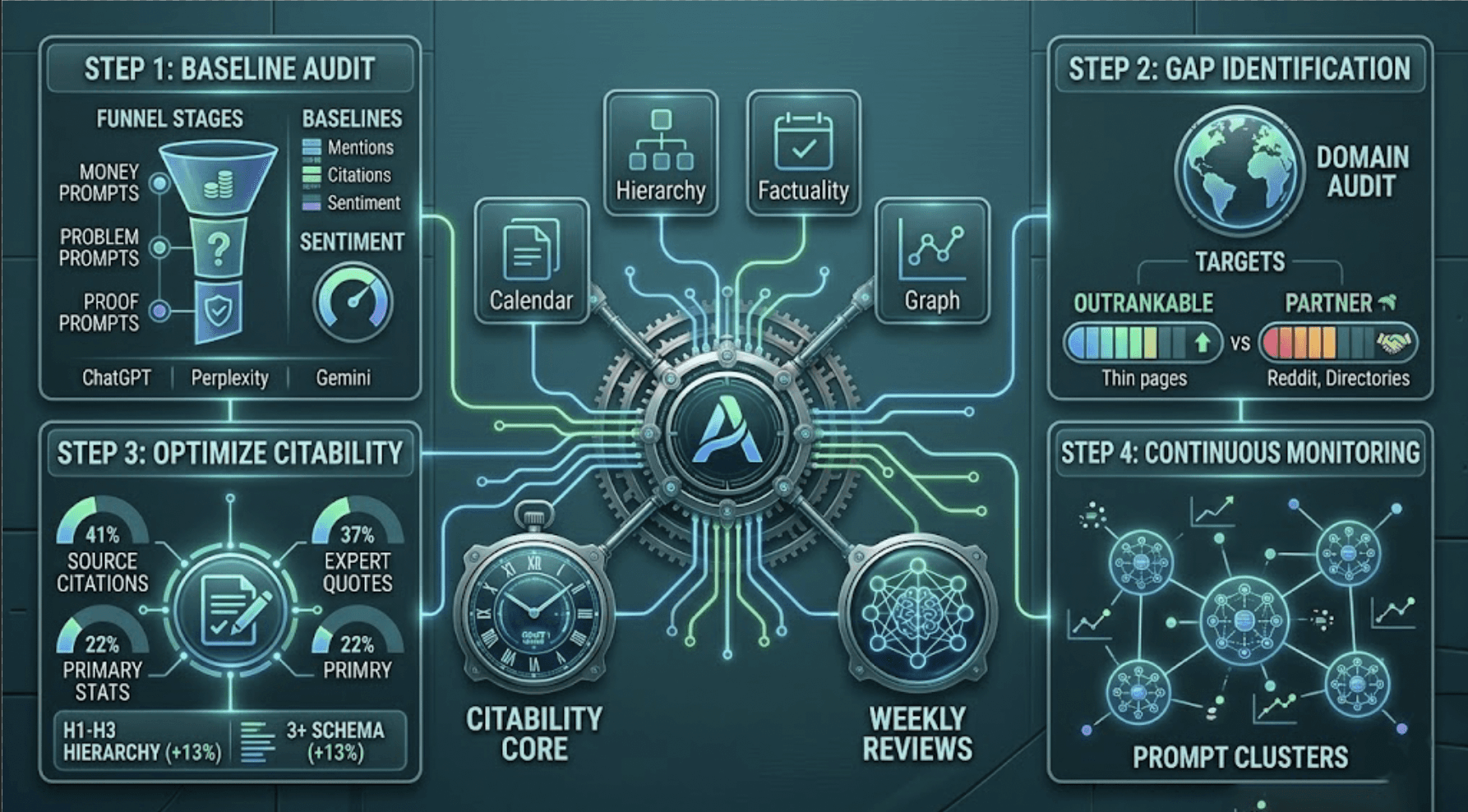
    Step 1: Baseline audit. Build a prompt portfolio categorized by funnel stage: “money prompts” (best solutions in your category), “problem prompts” (how to solve the issue your product addresses), and “proof prompts” (compliance, security, use cases). Record baseline mention rates, citation rates, and sentiment distribution across ChatGPT, Perplexity, and Gemini.

    Step 2: Citation gap identification. Analyze which domains are being cited for your target prompts. Split them into “outrankable” targets (thin competitor pages with weak structure) and “partner” targets (directories or communities like Reddit that are harder to displace but can be contributed to). The goal is understanding why the AI trusts those sources more.

    Step 3: Optimize for citability. Research from Princeton’s GEO study identified three content interventions that significantly boost citation probability: adding citations to other authoritative sources within your content (+41% citation uplift), incorporating specific expert quotes (+37%), and adding primary statistics (+22%). Technical improvements also matter: a strict H1-H3 hierarchy and 3+ types of schema markup increase citation likelihood by 13%.

    Step 4: Continuous monitoring. Weekly reviews of prompt clusters allow teams to detect citation drift and respond to new competitor entries or platform sourcing changes. AI models update frequently; a citation position held today isn’t guaranteed next month.

    Topify’s one-click execution layer connects this strategy directly to action. Once Source Analysis identifies which content is underperforming, the platform’s AI agent can propose and deploy targeted GEO updates without manual workflows.

    Best Tools for AI Citation Tracking Analytics

    The market for AI brand visibility software has matured enough that teams now have meaningful choices across budget and use case.

    Platform Key Strength Best For
    Topify Source Analysis, 250+ prompt tracking, GSC integration, competitor gap analysis, one-click execution SaaS and e-commerce brands running structured GEO programs
    Profound AI 6.8M+ citation dataset, enterprise brand alignment Fortune 500 companies needing large-scale compliance tracking
    Otterly AI Weekly insights, 400+ prompt monitoring, affordable entry point SMBs and agencies starting out
    SEMrush AIO Toolkit Traditional SEO integration, mention-source divide reports Existing SEMrush users expanding to AI visibility
    SE Ranking AIO tracker, Google AI Overview focus SEO teams prioritizing AI Overview visibility

    Among the AI search visibility software options, Topify is differentiated by the combination of Source Analysis and competitor benchmarking in a single platform. Where most tools surface citation data, Topify maps the gap between where you are and where competitors are being cited, then connects that insight to execution.

    Pricing scales from the Basic tier at $99/mo for teams beginning their AI citation tracking program, to Pro at $199/mo for more comprehensive prompt libraries, to Enterprise from $499/mo for dedicated account management and custom configurations.

    For teams that need managed execution alongside measurement, Topify’s service plans range from $3,999/mo (Standard) to $5,999/mo (Enterprise), covering prompt strategy, content production, and monthly reporting cycles.

    Conclusion

    The shift from search engines to answer engines hasn’t just changed where buyers find information. It’s changed what determines whether your brand is part of the answer at all.

    AI citation tracking analytics is how you measure that. Citation frequency, domain citation share, and cross-platform coverage give you a data-driven picture of your brand’s authority in the AI ecosystem, separate from and often divergent from your traditional search rankings.

    The brands that will hold ground in the next wave of AI-referred traffic aren’t necessarily the ones with the most content or the highest domain authority. They’re the ones who know exactly where they’re being cited, where they’re being displaced, and what to do about it.

    As AI-referred traffic converts at rates up to 4.4 times higher than traditional organic search, measurement is no longer optional. It’s the starting point.

    FAQ

    What is AI citation tracking analytics? It’s the systematic measurement of how often and where AI platforms (ChatGPT, Perplexity, Gemini) link to and reference your content as a source in their generated answers, distinct from simply tracking brand name mentions.

    How does AI citation tracking analytics work? It involves running systematic sets of prompts across multiple AI models, extracting the cited URLs from each response, and analyzing them for citation frequency, share of voice, and competitive positioning. Automated platforms like Topify run hundreds of prompt variations to generate statistically stable visibility scores.

    How to improve AI citation tracking analytics? Focus on content “citability”: add references to authoritative sources within your content (+41% citation uplift), incorporate specific statistics (+22%) and expert quotes (+37%), maintain a clean H1-H3 heading hierarchy, and keep content fresh. 76% of content cited in ChatGPT was updated within the prior month.

    Examples of AI citation tracking analytics? Measuring your Citation Share of Voice (C-SOV) across the CRM category. Tracking whether your brand achieves both mentions and citations on the same prompts. Identifying “Dark Queries,” high-intent prompts in your category where your domain has zero citation presence.

    Checklist for AI citation tracking analytics:

    • Define a prompt portfolio of 100+ queries across awareness, consideration, and decision stages
    • Audit baseline citation and mention rates across ChatGPT, Perplexity, and Gemini
    • Calculate your Domain Citation Share of Voice against 3-5 direct competitors
    • Identify competitor citation gaps and “source target” opportunities
    • Optimize content structure (schema markup, H1-H3) and factual density
    • Implement automated monitoring to track weekly citation trends

    What does AI citation tracking analytics cost? Basic prompt monitoring tools start around $29-$99/mo. Enterprise-grade platforms offering cross-platform audits and statistical modeling typically range from $499-$2,000+/mo. Topify’s tiers run from $99/mo (Basic, 100 prompts) to $199/mo (Pro, 250 prompts) to $499+/mo (Enterprise), with managed service plans available from $3,999/mo for teams that want full execution alongside measurement.

    Read More

  • How To Compare AI Search Optimization Tools

    Look for Tools That Help You Understand AI Citations

    Traditional SEO = keywords.
    AI Search Optimization = citations, prompts, answer positioning.

    When comparing tools, ask:

  • Does it tell me where my brand appears inside AI-generated answers?

  • Can it track competitor visibility across AI engines?

  • Does it measure which prompts generate mentions or traffic potential?

  • Can it help me optimize content to appear in AI answers?

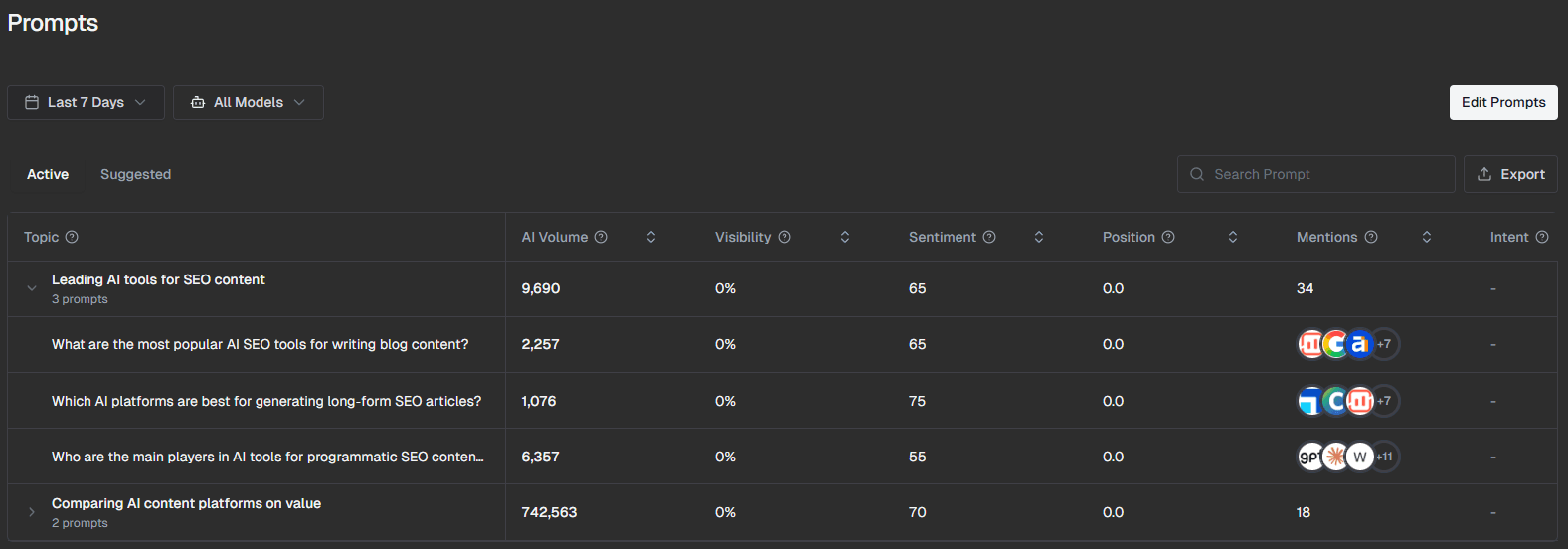
    Topify.ai screen that show prompts and how your brand is ranking in the ai platforms

  • Topify.ai is designed around this.

    It maps:

  • which AI engines mention your brand

  • which prompts you appear in

  • what answers include you

  • how often you win against competitors

  • which content pieces are improving your AI visibility

  • This is the biggest gap missing in traditional SEO platforms — and one of the key reasons they struggle to serve brands in an AI-search world.

    Compare Automation Depth: Is It Truly AI-Driven or Just a “Wrapper”?

    A lot of SEO tools have “AI features” that are basically:

  • text rewrites

  • surface-level optimization scores

  • basic suggestions

  • A real AI search optimization platform should automate complex, multi-step workflows, including:

  • AI search monitoring

  • Answer extraction

  • Visibility scoring

  • Competitor citation mapping

  • Content opportunity identification

  • Prompt-level ranking performance

  • Topify.ai automates the entire AI visibility pipeline, not just content generation, meaning that you spend less time guessing and more time executing strategies that actually influence AI engines.

    Look for Tools That Help You Build AI-Ready Content

    Ranking in AI search is not about keyword stuffing — AI engines prioritize:

  • trust

  • clarity

  • structure

  • entity relationships

  • factual signals

  • brand authority

  • A strong AI-search optimization tool should help create content that is:

     ✔ structurally readable by LLMs
    ✔ fact-reinforced
    ✔ entity-linked
    ✔ optimized for AI answer extraction
    ✔ aligned with the “how LLMs think” model

    Topify.ai helps uncover what content formats AI engines prefer, which pages drive citations, and how to structure content to increase answer inclusion — a key differentiator from “AI writing tools.”

    Compare Their Ability to Track Competitors in AI Search

    In traditional SEO, you track:

  • domain rank

  • backlinks

  • keyword position

  • In AI search, you track:

  • competitor mention frequency

  • competitors share inside AI answers

  • prompt-specific win/loss

  • overlapping answer coverage

  • Topify.ai brings this visibility through AI Competitor Tracking, showing:

  • who dominates prompts

  • where they’re mentioned

  • how often they win

  • what content earned those citations

  • When comparing tools, ensure they provide a clear competitive lens inside AI engines — not just SERPs.

    Evaluate if the Tool Helps You Build a Future-Proof Strategy

    Most SEO tools were not designed for:

  • LLM-driven discovery

  • answer-based engines

  • citation scoring

  • AI answer monitoring

  • entity-focused optimization

  • A modern tool should help you:

     ✔ adapt to generative search
    ✔ scale content based on AI-driven patterns
    ✔ future-proof your visibility
    ✔ reduce dependency on Google-only rankings

    Topify.ai is built specifically for the shift happening now, not the SEO world of 2015–2023.

    Final Checklist: What to Look For in an AI Search Optimization Tool

    When comparing tools, ensure they offer:

  • AI Search Visibility Tracking – not just Google rankings

  • Citation & Prompt Monitoring – you know where your brand wins in LLM answers

  • Competitor AI Visibility Analysis – to understand who’s winning in AI search

  • Content Recommendations Built for AI Engines – not keyword stuffing or generic scoring

  • Automation Across AI Search Workflows – real AI, not plug-ins

  • Future-Proof Strategy Support – built for the next era of search

  • Topify.ai checks all of these boxes — because it’s built from the ground up for the AI-search era, not retrofitted from older SEO practices.

    Conclusion: Picking the Right Tool Determines Your Visibility in the AI-Search Era

    Traditional SEO tools are still focusing to help brands only to win in tradicional Google-dominant era, but search is changing, and also the tools need to change.

    When comparing AI search optimization platforms, look for:

  • AI citation understanding

  • prompt and answer visibility

  • deep automation

  • competitor analysis

  • content structured for LLM discovery

  • future-proof capabilities

  • This is exactly where Topify.ai outperforms, enabling brands to grow AI search visibility, appear in AI answers, and win against competitors in the new search economy.

    Book a quick demo with us, and we’ll show you exactly how we can supercharge your site’s visibility in the world of AI.

  • What Is Aeo 6 Answer Engine Optimization Trends Dominating 2025

    How to Adapt Your Content Strategy for AEO (Actionable Steps)

    Knowing the key AEO changes is step one. Here is how you adapt your workflow to the emerging trends in AEO 2025.

  • Shift from Keywords to Entities & Topics: Don’t just target emerging trends in aeo 2025. Build a topic cluster around Answer Engine Optimization (the entity). Link your articles together to demonstrate topical authority..

  • Make “Experience-First” Your Default: For every claim you make, add proof.