Category: Article

  • Your Brand Has a Reputation in AI Search. Here’s How to Actually Monitor It.

    Your Brand Has a Reputation in AI Search. Here’s How to Actually Monitor It.

    Your team spent months building a clean brand identity. Then a potential customer opened Perplexity and asked, “What are the best tools in [your category]?” The response came back with five competitors, a confident tone, and zero mention of you.

    The unsettling part isn’t that you weren’t included. It’s that you had no idea.

    That’s the core problem with AI reputation right now. Most brand managers are still using tools built for a world where reputation lives on indexable pages. In the generative era, it doesn’t.

    Why Traditional Reputation Tools Leave You Blind to AI

    Tools like Google Alerts, Brandwatch, and Meltwater were engineered for a deterministic web. Content gets published to a URL, crawled by a bot, and retrieved based on keyword relevance. That’s how ORM has worked for two decades.

    Generative AI breaks every assumption in that model.

    When ChatGPT or Gemini answers a query, it synthesizes a unique response in real time. That response doesn’t live on a searchable URL. It’s generated within the context window of a specific prompt, then disappears. There’s no page for a monitoring tool to crawl, no feed to scrape, no alert to trigger.

    The result: traditional monitoring coverage of AI-generated content remains effectively 0%. A brand’s reputation can shift dramatically inside the latent space of an LLM while every legacy tool shows green.

    What makes this harder is the non-deterministic nature of AI responses. The same query can generate different narratives across different sessions, platforms, or timeframes. This means “brand reputation” in AI search isn’t a fixed fact to track. It’s a probability distribution that shifts continuously.

    FeatureTraditional Search (SEO/ORM)Generative Search (AI Reputation)
    Data RetrievalDeterministic: retrieves indexed linksProbabilistic: synthesizes new text
    Primary MetricClicks and rankingsMentions and citations
    Content StabilityStatic: pages remain consistentDynamic: responses evolve per prompt
    VisibilityPublicly searchable via URLsEphemeral: exists within chat sessions
    Authority SignalBacklinks and PageSpeedSemantic depth and entity clarity

    What AI Reputation Actually Means in 2026

    In the generative era, “AI reputation” isn’t a collection of reviews. It’s a synthesized narrative.

    It’s defined by what AI models believe to be true about your brand, based on training data, retrieval sources, and the specific prompt context. Unlike traditional ORM, which aggregates what users say about you, AI reputation is a summary of what the model says, unprompted, when someone asks.

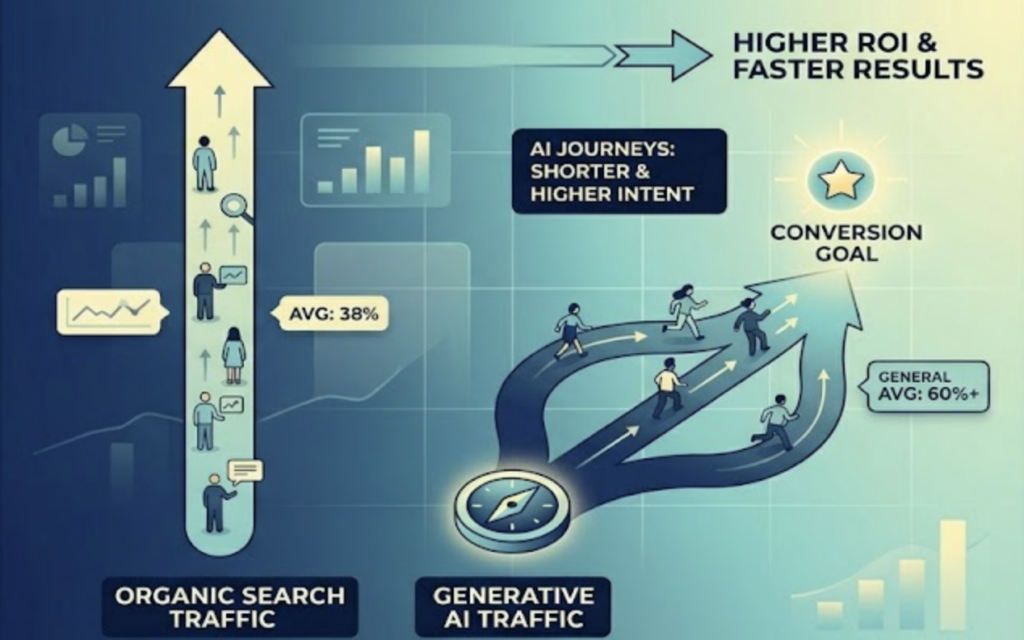
    Nearly 37% of consumers now start their search journeys on AI platforms rather than traditional search engines. And AI-driven traffic converts at 15.9%, compared to 1.76% for traditional organic search. The economic stakes of being misrepresented, or invisible, are real.

    A complete AI reputation monitoring solution needs to track four dimensions:

    Visibility (Mention Rate): How often your brand appears in AI responses for relevant category prompts. This is your share of voice in the generative ecosystem.

    Sentiment (Emotional Framing): Not just positive or negative, but how the model frames you. “Reliable market leader” and “budget alternative with occasional bugs” are both technically positive, and both will tank your enterprise pipeline.

    Position (Priority in List): In multi-brand recommendations, being first-mentioned carries meaningfully more authority than being listed fifth.

    Source Attribution (Citation Trust): Which domains the AI cites when describing your brand. If it’s citing your technical documentation, authority is high. If it’s citing a three-year-old Reddit thread, that’s a different problem.

    The 5 Things a Real AI Reputation Monitoring Solution Must Track

    Not every AI reputation monitoring tool covers the same ground. Before evaluating any platform, it helps to know what a complete solution actually tracks.

    1. Cross-platform visibility. Brand discovery is fragmented across AI engines. A brand may be well-represented on ChatGPT while remaining invisible on Perplexity or Gemini. This isn’t random: only 11% of cited domains overlap across major AI platforms, because each engine uses a different retrieval architecture with different source preferences. Any AI reputation monitoring software that only covers one platform is showing you a partial picture at best.

    2. Sentiment score over time. A score of 80+ on a 0-100 scale typically signals “market leader” framing. Scores below 65 indicate potential reputational risk. More important than any single score is the trajectory. A downward trend over three weeks, even within a “safe” range, signals narrative drift before it becomes a baseline fact for the model.

    3. Prompt-level intent breakdown. Knowing your brand was mentioned is not enough. A real AI reputation monitoring system tells you which specific prompts triggered the mention, and which didn’t. Prompts segment by intent: informational (“What is X?”), commercial (“Best X for use case Y”), and comparative (“Is X better than Z?”). Each segment can tell a completely different story about where you’re winning versus where you’re losing the narrative.

    4. Competitor positioning. In AI recommendations, the interaction is zero-sum. If a competitor is mentioned instead of you, you don’t get partial credit. Monitoring must track “Share of Model,” the percentage of category mentions that belong to your brand versus rivals. A competitor’s visibility jumping 10% in a week typically signals a successful GEO push that requires a counter-strategy.

    5. Source attribution integrity. AI models are only as accurate as what they’re citing. A robust AI reputation monitoring platform audits the domains AI engines use when describing your brand, including citation rate, source authority mapping (Wikipedia vs. unverified forum), and factual accuracy flags for hallucinations or outdated product information.

    What Your AI Reputation Monitoring Dashboard Should Actually Show You

    Most dashboards show you data. The ones worth using show you what changed, why, and what to do next.

    The visibility trend line is the starting point. It maps your brand’s inclusion rate across tracked prompts over time. But visibility in isolation is a vanity metric.

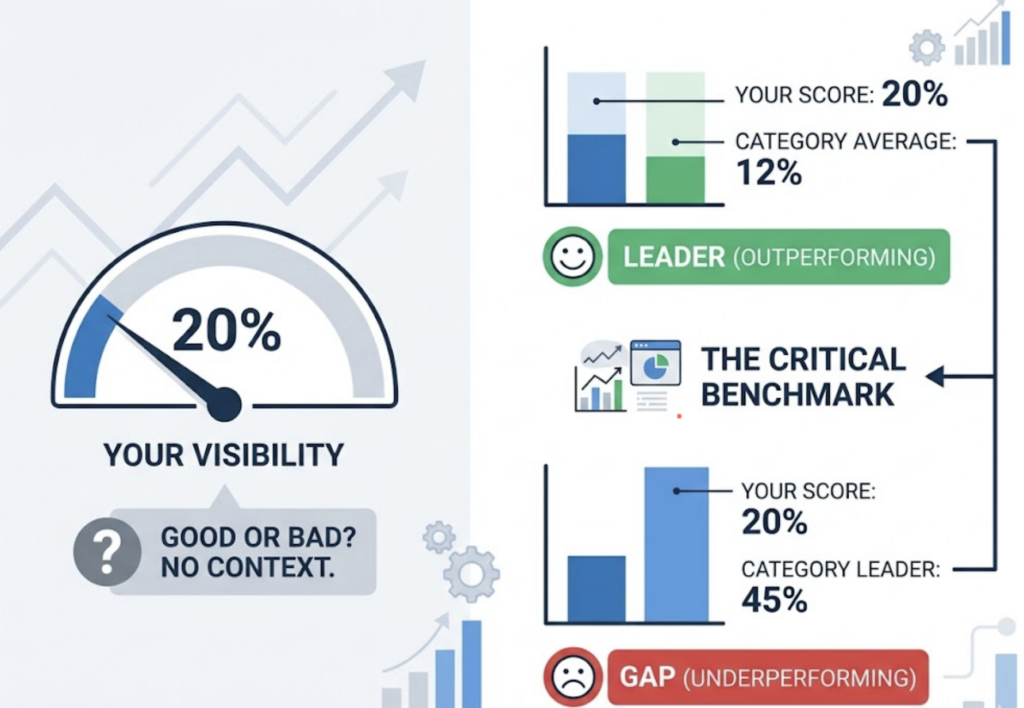
    That’s where the category average becomes critical. If your visibility is 20%, that number means nothing without context. A category average of 12% makes you a dominant leader. A category leader sitting at 45% makes 20% a serious gap. An AI reputation monitoring analytics suite without a category benchmark is telling you your score without telling you the game.
    The sentiment timeline works the same way. A sharp downward spike doesn’t always mean a crisis. It means something happened, and you need to find out what. NLP-based categorization (positive, neutral, negative) across sessions helps surface the shift pattern before it becomes a sustained trend.

    The competitor overlay adds the competitive dimension. A useful visualization maps brands on two axes: visibility score (how often mentioned) against citation rate (how often trusted as a source). This surfaces the strategic difference between brands with high visibility but low trust, and those with lower visibility but high citation authority. Knowing where you sit relative to competitors tells you whether your next move should be an awareness play or a credibility play.

    This is what a real AI engine optimization platform’s dashboard looks like when the data is actually configured for decision-making, not just reporting.

    How Topify Tracks AI Reputation Across Four Dimensions

    Topify is built around the five tracking requirements above, integrated into a single platform designed for brand managers and marketing teams who need action-ready intelligence, not raw data exports.

    The four core modules map directly to the dimensions that matter.

    Visibility Tracking monitors brand inclusion across ChatGPT, Gemini, Perplexity, DeepSeek, and other major AI platforms, with a real-time Visibility Index that shows how often your brand appears in category-defining prompts. You’ll see the trend line, the category average, and the gap in a single view.

    Sentiment Analysis scores each brand mention on a proprietary 0-100 scale and identifies the specific drivers pulling sentiment up or down. Is the model framing your pricing negatively? Is a specific feature getting described inaccurately? Topify surfaces the “why,” not just the score.

    Source Analysis maps the referral graph for every AI answer, identifying which domains are being cited when AI describes your brand. It also surfaces “source opportunities,” high-authority sites that are already citing competitors but not yet referencing you.

    Competitor Monitoring gives a head-to-head view against up to five rivals, tracking share of voice and position within AI recommendations across all covered platforms.

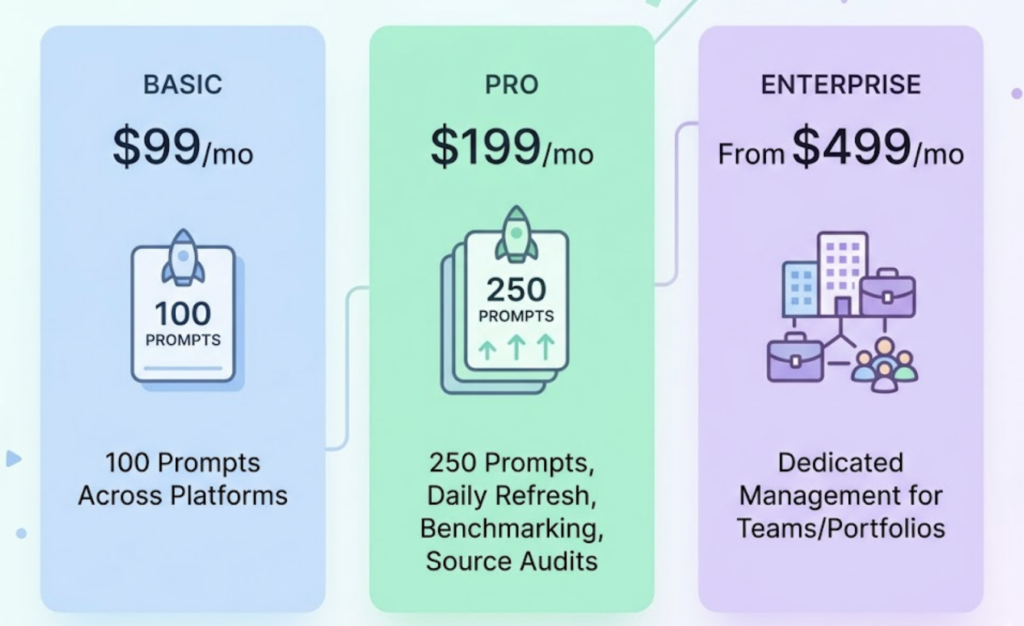
    Topify’s Basic plan starts at $99/month, covering 100 prompts across major AI platforms. The Pro plan at $199/month expands to 250 prompts, daily refresh cycles, full competitor benchmarking, and detailed source attribution audits. For enterprise teams managing multiple brands or client portfolios, dedicated account management is available from $499/month. Full pricing details are available here.
    From Monitoring to Action: What to Do With AI Reputation Data

    Data without a decision framework is just overhead. Here’s how brand managers typically translate Topify’s insights into concrete moves.

    Address sentiment at the source. When sentiment trends negative, the path forward isn’t a content blitz. Use Source Analysis to trace the root cause. In many cases, an LLM’s negative bias links back to a single widely-cited source, whether an outdated press release, a biased review aggregator, or a competitor’s comparison page. Publishing corrective content on high-authority domains, or updating the original source, can force a re-evaluation during the next retrieval cycle.

    Close visibility gaps with prompt-level targeting. When Competitor Monitoring shows a rival dominating a specific query type (say, “best option for mid-market teams”), the fix is structural. Content needs to directly address those prompt patterns, using question-forward summaries, extractable fact blocks, and consistent product naming that builds entity clarity. This is the core of GEO execution.

    Build citation authority where it counts. High visibility with a low citation rate signals that AI engines know your brand exists but don’t trust your site as a source. The action framework here is targeted placement on the domains AI engines already cite: industry directories, trade publications, Wikipedia categories, and niche research hubs relevant to your category. Topify’s Source Analysis identifies exactly which domains to prioritize.

    Conclusion

    Traditional ORM tools were built for a world where reputation lives on indexable pages. That world still exists, but it’s no longer where buying decisions start for a growing share of your audience.

    AI-driven search interactions are projected to account for 30% of total digital discovery by 2026. Brands without an AI reputation monitoring solution in place won’t know what AI engines are saying about them until the effect shows up in pipeline data. By then, the narrative has already been repeated thousands of times across millions of sessions.

    The starting point is straightforward: choose a platform that covers multiple AI engines, tracks sentiment over time, shows your visibility trend line against a category average, and gives you the source attribution data to act on what you find. That combination turns AI reputation from an invisible risk into a measurable, manageable channel.


    FAQ

    Q: What’s the difference between AI reputation monitoring and traditional online reputation management?

    A: Traditional ORM aggregates public reviews and social mentions from indexable web pages, focusing on star ratings and sentiment across visible, crawlable content. AI reputation monitoring tracks how Large Language Models synthesize those signals into a conversational narrative. It measures “share of model” and “citation trust” rather than review volume, which are fundamentally different metrics with different drivers.

    Q: How often should I monitor my brand’s AI reputation?

    A: Daily or weekly monitoring is recommended for active brands. AI models update their retrieval and weighting frequently, and a negative narrative can become a baseline “fact” for a model within weeks. Monthly snapshots are often too slow to catch a drift before it becomes established. Topify’s Pro plan supports daily refresh cycles for this reason.

    Q: Can I see how my AI reputation compares to competitors in the same category?

    A: Yes. Effective AI reputation monitoring platforms use category averages and competitor overlays to benchmark your Visibility and Sentiment scores against rivals. This distinction matters: a visibility drop could be brand-specific or an industry-wide shift. Category-level context is what tells you which intervention makes sense.

    Q: What is a visibility trend line and why does it matter in AI reputation tracking?

    A: A visibility trend line is a time-series graph tracking the percentage of relevant prompts where your brand appears in AI responses. A single data point tells you where you are. The trend line tells you whether you’re gaining ground, losing it, or holding steady, and whether that movement correlates with a product launch, a PR event, or a competitor’s GEO push. Without the trend line, you’re navigating without a direction.
    Read More

  • AI Search Analytics: How to Measure What Actually Drives Visibility in ChatGPT and Perplexity

    AI Search Analytics: How to Measure What Actually Drives Visibility in ChatGPT and Perplexity

    Your domain authority is strong. Your keyword rankings haven’t moved. Google Search Console shows stable impressions. Then someone on the exec team asks ChatGPT for a vendor recommendation in your category, and your brand doesn’t come up once.

    That’s not an SEO problem. That’s a measurement problem. The dashboards you’re relying on weren’t built to track how AI describes your brand, whether it includes you in a recommendation, or what sources it’s pulling to form that opinion. That’s exactly what AI search analytics is designed to do.

    What AI Search Analytics Actually Tracks (and Why Your Current Dashboard Won’t Show It)

    AI search analytics measures how generative AI platforms like ChatGPT, Perplexity, and Gemini perceive, describe, and recommend your brand within synthesized conversational answers. It’s a fundamentally different discipline from traditional web analytics.

    Traditional SEO analytics tracks traffic behavior: sessions, clicks, rankings, CTR. AI search analytics tracks what you might call “synthetic reputation.” The core questions it answers are not “how many people visited our site” but “does AI include us in the consideration set for our category,” “how does it frame our brand when it does mention us,” and “what sources is it using to form that narrative.”

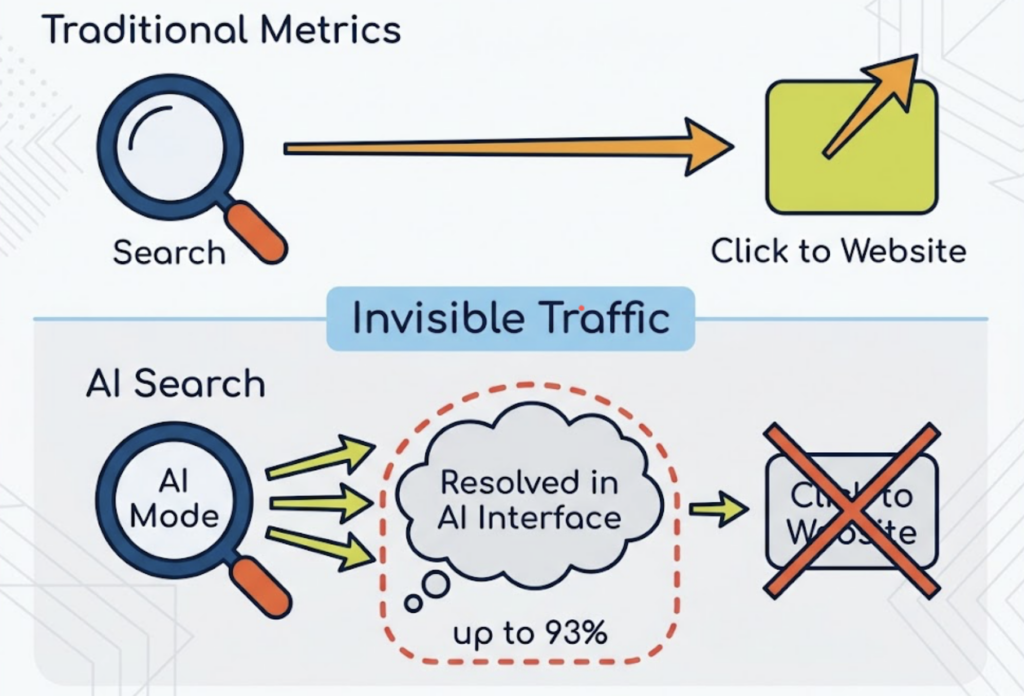
    The gap matters because traditional metrics can’t see what AI search is doing. Zero-click rates hit 83% when AI Overviews are present in search results, and climb to 93% for Google’s AI Mode. That’s the vast majority of search volume being resolved inside the AI interface, never touching your site. Google Analytics can’t measure an interaction that never generated a click.

    This is what makes AI search visibility a separate tracking problem entirely. You’re not optimizing for a page visit. You’re optimizing for a recommendation.

    The 6 Metrics That Define a Real AI Search Analytics Framework

    Not all visibility data is equally useful. A serious AI search analytics framework tracks six distinct metrics, each answering a different strategic question.

    Visibility Rate is the foundation. It measures how often your brand appears in AI responses across a target set of prompts. If you’re mentioned in 30 out of 100 prompt variations, your visibility rate is 30%. A low rate usually means the AI doesn’t associate your brand with the problem-space you’re trying to own.

    Position Score tracks where in the answer you appear. The primacy effect in AI responses is real: being the first brand named in a three-option list carries significantly more weight than being third. Position Score quantifies that prominence and tells you whether you’re the default recommendation or a secondary mention.

    Sentiment Score is where most teams have a blind spot. It quantifies the tone attached to your brand’s mention, typically on a 0-to-100 scale. High visibility with low sentiment is a conversion killer. If the AI consistently pairs your brand name with “expensive,” “limited integrations,” or outdated pricing data, that visibility is working against you.

    Intent Coverage maps your brand across the full customer journey: informational prompts (“what is X”), comparative prompts (“X vs Y for enterprise use”), and transactional prompts (“best pricing for X”). A brand can have near-perfect visibility for its own name and zero visibility for the problems it solves. That’s a critical gap.

    Source Citation Frequency identifies which URLs and domains the AI is pulling to generate information about your brand. This is the “upstream” metric: it tells you who’s influencing what the AI says about you, whether that’s your own site, a competitor’s blog, or a three-year-old forum thread.

    Share of Voice (SOV) benchmarks your AI presence against competitors. It’s a zero-sum metric. Enterprise leaders in mature categories typically aim for 25% to 30% SOV across their core query clusters. If your competitor’s SOV is rising, yours is falling.

    Traditional SEO MetricAI Search Analytics Equivalent
    Keyword RankingsPrompt Coverage & Position Score
    Domain AuthorityEntity Strength (AI association signals)
    Backlink CountCitation Frequency
    Page ImpressionsAnswer Inclusion Rate (Visibility)
    Organic SessionsAI-Referred Conversion Events

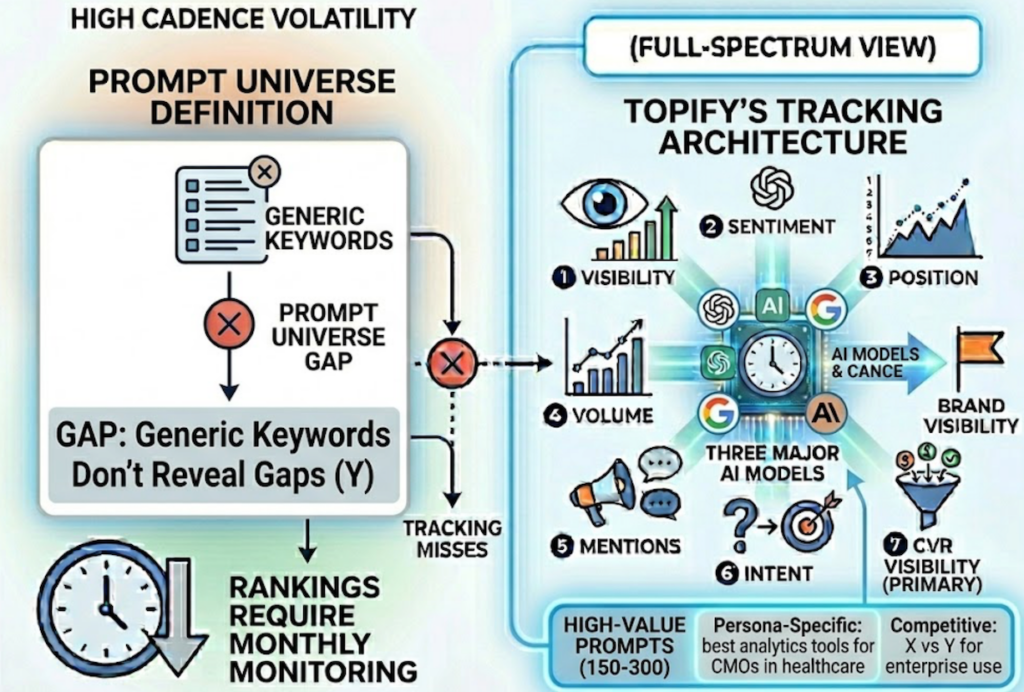
    For teams looking to structure this across platforms, Topify tracks all seven of these metrics in a unified dashboard, covering ChatGPT, Gemini, Perplexity, and DeepSeek simultaneously.

    3 Mistakes That Make Your AI Search Data Unreliable

    Most brands that attempt AI search monitoring end up with data that looks impressive but can’t guide a decision. Here’s where things typically go wrong.

    Mistake 1: Single-platform monitoring. Many teams track only ChatGPT and assume it represents the AI search landscape. It doesn’t. Research shows that only 11% of domains are cited by both ChatGPT and Perplexity for the same set of queries. ChatGPT tends to prioritize brand popularity and conversational fluency, Perplexity prioritizes real-time citations and factual accuracy, and Gemini leans heavily on Google’s existing Knowledge Graph. Monitoring one platform gives you one filter on reality, not the full picture.

    Mistake 2: Measuring presence without sentiment. Visibility is a quantity. Sentiment is the quality filter that determines whether that visibility helps or hurts. An AI can mention your brand at position one in response to “companies with the worst data security practices.” That’s high visibility with catastrophic sentiment. Even more common: AI hallucinations that describe your pricing as double the actual number, creating an “overpriced” narrative based on bad data you’d never catch without sentiment tracking.

    Mistake 3: Ignoring the source citation gap. This is the most common tactical error. AI platforms don’t generate answers from nothing; they synthesize from retrieved documents. If competitors are consistently cited from high-authority third-party sources while your brand is not, you have an authority gap that no amount of on-site optimization will fix. You need to know which sources the AI trusts before you can start influencing what it says.

    How to Build an AI Search Analytics Strategy That Actually Works

    The following framework moves from discovery to baseline to optimization. Use it as a starting checklist.

    •  Define your Prompt Universe. Identify 150 to 300 high-value prompts across informational, comparative, and transactional intent. Include persona-specific variants (“best analytics tools for CMOs in healthcare”) and competitive prompts (“X vs Y for enterprise use”). Generic keywords won’t reveal the gaps that matter.
    •  Run a 30-day cross-platform baseline. Track simultaneously on ChatGPT, Perplexity, and Gemini. Eighty-five percent of AI users cross-check answers across multiple platforms, which means gaps on any single platform directly impact how prospects verify your brand.
    •  Audit your source citations. Identify which URLs the AI is using to describe your brand. Check for outdated content, competitor domains, and third-party sources that may be shaping the AI’s narrative without your knowledge.
    •  Establish a weekly reporting cadence. AI recommendation logic and retrieval sets can shift every few weeks as models update. Daily tracking is worth it during major launches or PR events.
    •  Prioritize AI search optimization for content. Structure key pages with direct answers in the first 200 words, implement FAQ schema, and inject proprietary data so your site becomes a primary citation source rather than a secondary one.
    •  Track sentiment changes after content updates. Sentiment Score is the clearest signal that your AI search optimization is working. A rising score means the AI is picking up your updated narrative.

    This is what AI search optimization looks like in practice: not a one-time fix, but a continuous measurement-and-adjustment cycle.

    Why Visibility Without Conversion Context Gives You False Confidence

    A 2026 audit of Uplimit, an enterprise learning platform, shows exactly how this goes wrong. The brand had a 50% mention rate among Strategic Enterprise CLOs, which looks strong on paper. But deeper analysis revealed a sentiment and category gap: Uplimit was being mentioned in high-level strategy discussions while remaining entirely absent from “sales enablement” and “employee engagement” queries, the transactional prompts where actual vendor selections happen.

    That’s the gap most brands still can’t see.

    AI-referred visitors are not the same as organic traffic. They convert at 4.4 times the rate of standard organic visitors and spend 68% more time on-site. In some categories, AI search traffic converts 23 times better than organic. A brand invisible in bottom-of-funnel AI prompts isn’t just missing visibility. It’s missing the highest-converting traffic channel available.

    The Right Tools for AI Search Analytics: What to Look For and What to Expect to Pay

    Not every platform built for AI visibility actually delivers on the full framework. Here’s what matters when evaluating your options.

    The core capabilities you need: multi-platform coverage (at minimum ChatGPT, Perplexity, and Gemini), the full six-metric suite including sentiment and source citation, competitor share of voice benchmarking, and enough prompt capacity to cover 150+ queries without sampling errors.

    For most marketing teams and agencies, Topify is currently the only AI visibility platform that delivers the complete analytics matrix across all major AI engines. Its platform covers visibility tracking, sentiment scoring, source citation analysis, and competitor benchmarking in a single dashboard, built by founding researchers with OpenAI and Google SEO backgrounds.

    Topify’s pricing is structured around team size and tracking depth:

    PlanPriceBest For
    Basic$99/moIndividual marketers, small teams. 100 prompts across 4 platforms.
    Pro$199/moMid-market teams and agencies. 250 prompts, full sentiment suite, 10 seats.
    EnterpriseFrom $499/moGlobal brands. Unlimited prompts, API integration, dedicated account manager.

    For teams tracking high-value categories where a single customer represents thousands in LTV, the Pro plan pays for itself quickly. A 5% lift in AI visibility across 250 prompts often covers the annual cost within the first quarter, given the 4.4x conversion premium of AI-referred traffic.

    Conclusion

    The data gap isn’t subtle anymore. Fifty-eight percent of consumers are already using AI for product discovery and research. The brands invisible in those answers aren’t losing visibility in a secondary channel. They’re losing it in the primary channel where purchase intent is forming.

    AI search analytics gives you the measurement infrastructure to change that. Start with a Prompt Universe, build a 30-day baseline across ChatGPT, Perplexity, and Gemini, and let the Source Citation data tell you where the AI’s narrative about your brand is actually coming from. Once you can see it, you can optimize it.

    Get started with Topify and have your first AI search analytics baseline running within a week.

    FAQ

    Q: What is AI search analytics and how is it different from SEO analytics?

    A: AI search analytics measures how generative AI platforms like ChatGPT and Perplexity perceive, describe, and recommend your brand in synthesized conversational answers. Traditional SEO analytics focuses on keyword rankings, sessions, and click-through rates. AI search analytics focuses on Share of Voice, sentiment scores, position within AI responses, and source citation frequency — metrics that standard SEO tools don’t track at all.

    Q: How often should I run AI search analytics reports?

    A: A weekly cadence works for most competitive industries. AI recommendation logic and retrieval sets can shift every few weeks as models update, so monthly reporting is too slow to catch meaningful changes. During major product launches, PR events, or high-volatility periods, daily tracking is worth it, particularly for platforms like Google AI Overviews where retrieval sets refresh frequently.

    Q: What’s the most important metric to start tracking in AI search analytics?

    A: Visibility Rate (also called Answer Inclusion Rate) is the right starting point. It tells you whether the AI includes your brand in its consideration set for your category at all. Once you establish a visibility baseline, Sentiment Score becomes the next priority — it determines whether that visibility is actually helping conversions or creating friction.

    Q: How much do AI search analytics tools typically cost?

    A: Professional plans typically range from $99/month for basic monitoring (covering 100 prompts across 4 platforms) to $499+/month for enterprise solutions with unlimited prompts and API access. The main cost driver is prompt volume: tracking 150 to 300 prompts across multiple platforms requires a Pro or Enterprise tier on most platforms.

    Read More

  • Your Brand Ranks on Google. ChatGPT Has Never Heard of You. Here’s How AI Visibility Score Analytics Fixes That

    Your Brand Ranks on Google. ChatGPT Has Never Heard of You. Here’s How AI Visibility Score Analytics Fixes That

    You’re ranking on page one. Traffic looks stable. The quarterly report shows green.

    But when a potential customer asks ChatGPT “what’s the best [your category] tool?”, your brand doesn’t appear. Not on the first response. Not on the third. Not at all.

    That’s not a content problem. That’s a measurement problem, and AI visibility score analytics is how you start solving it.

    What AI Visibility Score Analytics Actually Measures (And Why It’s Not a Single Number)

    AI visibility score analytics is a multi-dimensional tracking system that measures how often your brand appears in AI-generated answers, how prominently it’s placed, and what the surrounding narrative says about you.

    It’s not a single ranking. It’s a composite index built from several interconnected signals, each telling a different part of the story.

    This distinction matters because the underlying mechanics of AI search are fundamentally different from traditional search. AI search tools captured between 12% and 15% of global search market share by end of 2025, up from roughly 5% at the start of that year. Google’s share dipped below 90% for the first time in a decade. The platforms driving this shift don’t work like search engines. They synthesize.

    A traditional search engine points. A generative model answers.

    That shift is why your Google rank stops being a reliable proxy for AI presence. Up to 80% of sources cited by ChatGPT don’t appear anywhere in Google’s top 100 results. The two ecosystems are running on different selection criteria.

    The 7 Metrics Behind a Complete Brand Visibility Generative Search Score

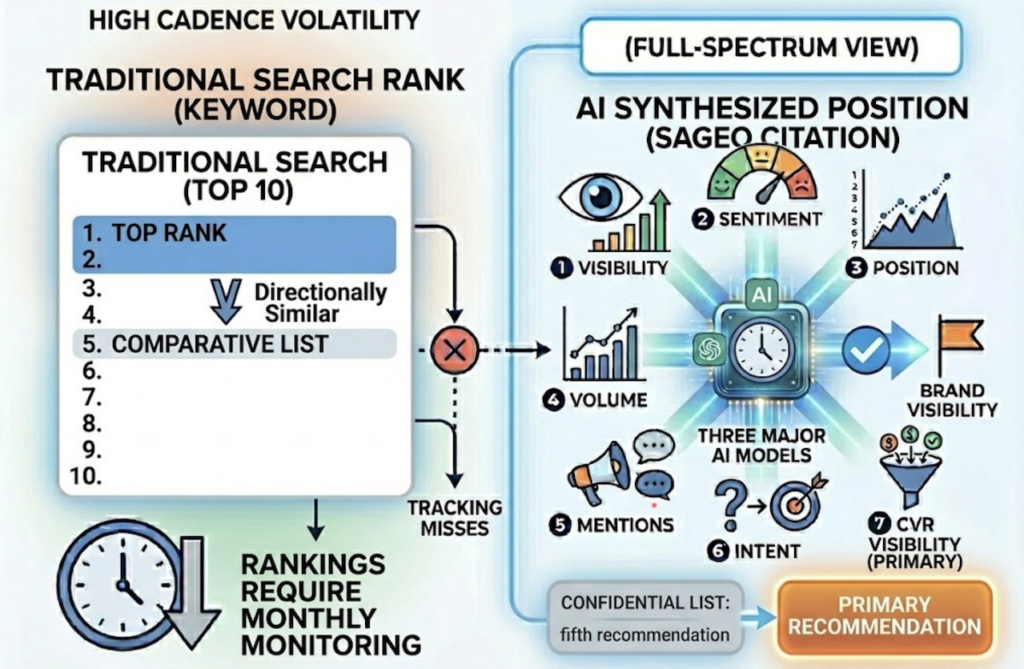
    Topify‘s seven-metric framework gives a full picture of where a brand actually stands in the generative search landscape:

    Visibility: The percentage of sampled AI queries that include your brand in the response. Industry analysts suggest investigating if this falls below 5% on your core queries.

    Sentiment: The tone of AI language when it mentions you. A 0-100 score that tracks whether you’re being recommended, described neutrally, or quietly undermined. Remediation is typically needed if more than 20% of mentions carry negative framing.

    Position: Where your brand lands within the response relative to competitors. First mention carries meaningfully more conversion weight.

    Volume: The estimated density of AI search queries relevant to your brand category, based on actual AI search behavior rather than inferred keyword data.

    Mentions: Raw frequency of brand references across platforms. Useful for trend-spotting even when Visibility is stable.

    Intent: The type of prompt your brand is appearing in. Being cited in “I need to solve X” prompts is a different signal than appearing in “what is X” queries.

    CVR (Conversion Visibility Rate): The estimated likelihood that an AI answer is directing users toward a branded interaction. AI referral visitors convert at 4.4x the rate of traditional organic search visitors, and in B2B SaaS contexts that multiplier can reach 23x.

    No single metric tells the full story. A brand with high Visibility and poor Sentiment is getting mentioned and quietly buried.

    Most Brands Are Flying Blind on Generative Search Metrics

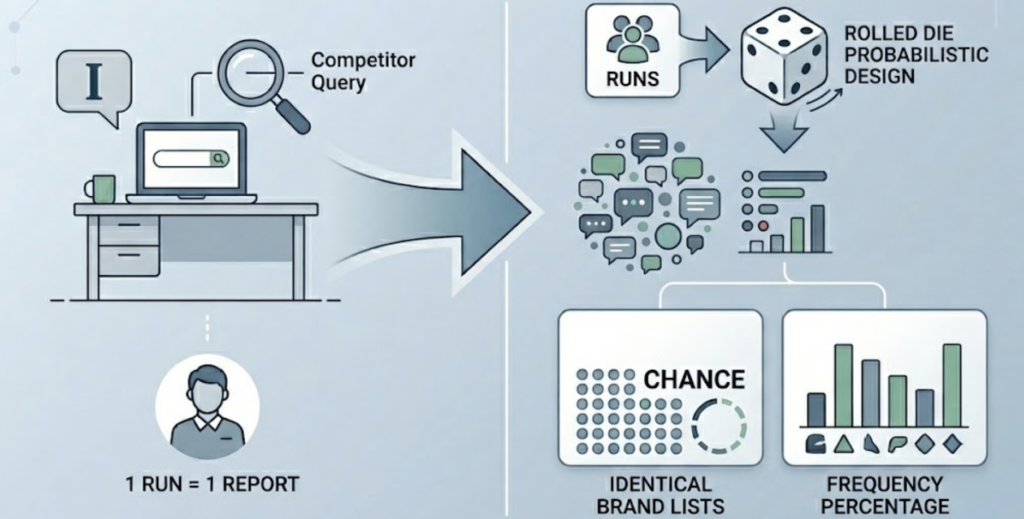
    The standard approach is still a spot check. Someone on the team opens ChatGPT, types a competitor query, and reports back at the next standup.

    That’s not analytics. It’s anecdote.

    Here’s why it fails: AI responses are probabilistic by design. Research conducted across more than 2,900 AI runs found there is less than a 1-in-100 chance of receiving an identical list of brand recommendations in successive prompts. The model calculates the next token based on weighted probability, which means your brand’s “ranking” isn’t a fixed position. It’s a frequency percentage across a large sample.

    If you appear in 45 out of 100 relevant prompts, your AI visibility is 45%. If you appear in 3, it’s 3%. You won’t know which one you are from a single query.

    The second blind spot is attribution. GA4 typically categorizes AI referral traffic as generic “Referral,” mixing high-intent ChatGPT visitors with random forum links. Without custom channel configuration, you can’t isolate what AI is actually driving, which means you can’t measure the ROI of any GEO effort you make.

    How to Measure AI Visibility Score Analytics: A 4-Step Framework

    Step 1: Define your core prompt set. These are the specific questions your ideal customer would ask an AI when looking for your solution. Not just “[brand name]” queries. Category queries: “best [category] tool for [use case],” “how do I solve [problem].” Start with 30 to 50 prompts.

    Step 2: Run those prompts across multiple platforms. ChatGPT, Gemini, Perplexity, and DeepSeek each operate on different training data and weight different signals. A brand that dominates on Perplexity can be invisible on Gemini. Topify covers all major AI platforms including ChatGPT, Gemini, Perplexity, and DeepSeek, logging every response at scale.

    Step 3: Establish your baseline and benchmark against competitors. Your raw visibility number is only useful relative to something. Topify’s competitor monitoring lets you track your position against rivals in real time, so you know whether a visibility dip is absolute or relative.

    Step 4: Run the cycle continuously, not monthly. AI models update their weighting frequently. A content refresh from a competitor, a new Reddit thread gaining traction, a model retraining cycle: any of these can shift your score. AI Overviews usage grew 4x in under a year. The measurement cadence needs to keep pace.

    5 Mistakes That Tank Your AI Visibility Score Analytics

    Tracking only your brand name. Your brand name is the easiest query to win. It tells you almost nothing. The queries that matter are category-level: “project management tool for remote teams,” “affordable CRM for SMBs.” If you’re not appearing there, you’re losing buyers who’ve never heard of you.

    Using one platform as a proxy for all. The correlation between branded web mentions and AI visibility is 0.664, compared to 0.218 for backlinks. But that relationship plays out differently across platforms. Don’t generalize from one AI’s behavior to others.

    Treating AI visibility like keyword rank. Traditional rank is relatively stable. AI responses are stochastic. The list order alone has approximately a 1-in-1,000 chance of repeating across successive runs. Measuring visibility as a point-in-time rank is statistically invalid.

    Monthly reporting cycles. In traditional SEO, a monthly report often captures enough signal. In generative search, where zero-click rates have climbed to 93% in Google’s AI Mode, the window between a model shift and a traffic change is measured in days, not weeks.

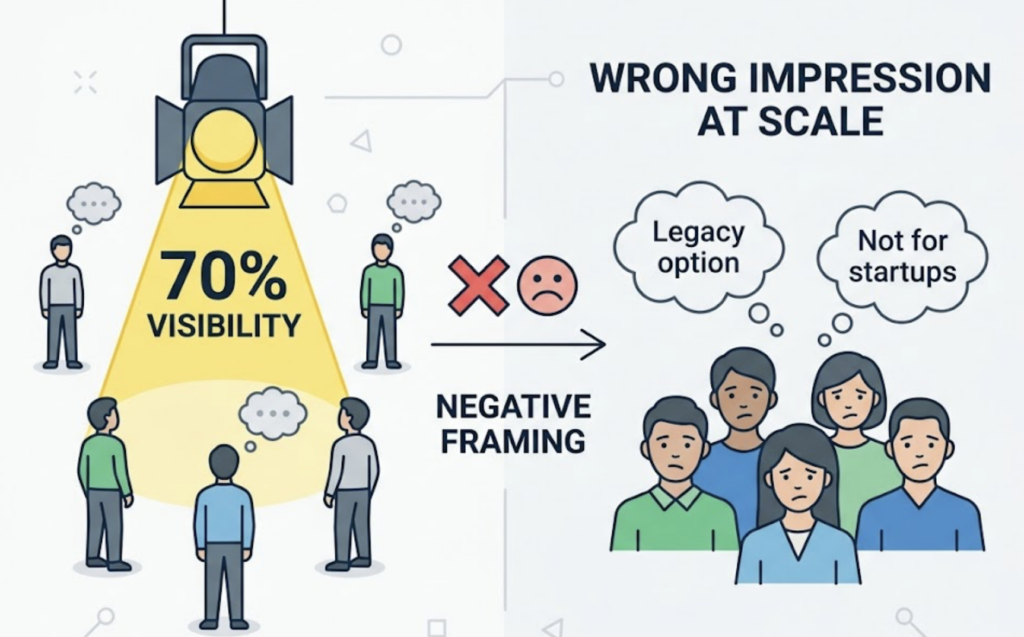
    Ignoring Sentiment in favor of Visibility. Appearing in 70% of relevant prompts sounds strong. It’s actually a liability if the AI is consistently describing you as “the legacy option” or “better for enterprise, not startups.” High visibility with negative framing accelerates the wrong impression at scale.

    The Tools That Actually Track AI Visibility Score Analytics in 2026

    The AI visibility software market has seen over $120 million in investment as of 2026, producing a wide range of platforms built for different team sizes and use cases.

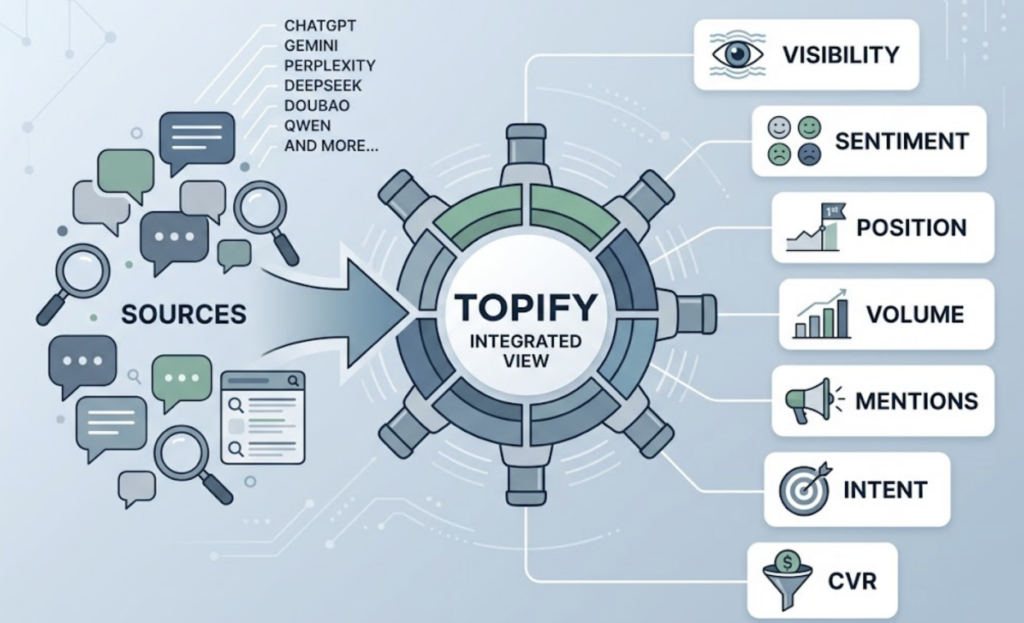
    For teams that need comprehensive analytics with execution built in, Topify covers all seven core metrics (visibility, sentiment, position, volume, mentions, intent, CVR) across ChatGPT, Gemini, Perplexity, DeepSeek, and other major platforms. Its Source Analysis feature reverse-engineers the exact domains AI is citing so you can identify content gaps and act on them. The AI agent handles continuous monitoring and strategy execution from a single prompt, no manual workflows required.

    Here’s how the current tooling landscape breaks down:

    ToolBest ForPlatform CoverageStarting Price
    TopifyFull-funnel analytics + executionChatGPT, Gemini, Perplexity, DeepSeek, and more$99/mo
    ProfoundEnterprise compliance10+ engines~$4,000/mo
    ZipTieContent optimization workflowsAIO, ChatGPT, Perplexity$69/mo
    Otterly.aiStartup baseline trackingChatGPT, Perplexity, AIO$29/mo
    SE RankingSEO + GEO blendedAIO, Perplexity, Gemini$119/mo
    RankscaleExecutive reportingMulti-engine$20/mo

    The biggest trap is selecting a tool based on price alone without checking query set stability (does it track the same prompts consistently?) and whether it captures citation-level data, not just mentions.

    How to Improve Your AI Visibility Score: A Strategy Checklist

    These are the levers that actually move the needle, in priority order:

    Content architecture first. 44.2% of all LLM citations come from the first 30% of a document. Put your direct answer within the first 60 words of every page targeting AI visibility.

    Build structured content assets. Tables, numbered lists, and comparison blocks are extracted significantly more often than dense prose. Format for machine comprehension, not just human readability.

    Prioritize factual density. Specific data points and cited research make content “citable.” Vague benefit claims don’t survive the AI synthesis process.

    Fix your E-E-A-T signals. E-E-A-T remains the primary positive ranking activity for 66.3% of search professionals. Clear author credentials, linked professional profiles, and cited external sources build trust with LLMs, especially in competitive categories.

    Expand your third-party footprint. AI models aggregate consensus across the web. A mention in a reputable trade publication or an active Reddit discussion carries more AI visibility weight than a new landing page. Branded web mentions correlate with AI visibility at 0.664, three times stronger than backlinks.

    Audit your “dark prompts” weekly. These are category-level buyer questions your customers ask AI but never search on Google. Test them manually or use Topify’s prompt discovery to surface the ones worth tracking.

    Track AI referral traffic separately in GA4. Use a regex channel group to isolate AI platforms from generic referral traffic. AI sessions run 68% longer and view 50% more pages per session than standard organic. Losing that signal in an aggregated bucket means losing your ROI story.

    Run competitor benchmarking monthly. Visibility is relative. Topify’s competitor monitoring flags when a rival gains share so you can identify what changed in their content strategy.

    Monitor Sentiment as a leading indicator. A dip in Sentiment often precedes a Visibility drop by several weeks. Catching it early gives you time to correct the narrative before the AI’s weighting shifts.

    Set a visibility floor and alert on it. If your score drops more than 10% month-over-month, that’s typically a signal that a competitor has published more citable content or a model has retrained. Don’t wait for the monthly report to find out.

    Conclusion

    AI visibility score analytics isn’t a replacement for SEO. It’s a parallel measurement system built for a different discovery environment.

    The brands that will lead in the next two years aren’t necessarily the ones with the highest domain authority or the most backlinks. They’re the ones that figured out, early, that a different kind of authority was being built in the AI layer, and started measuring it before their competitors did.

    Start with your prompt set. Pick a tool that tracks across platforms. Build the baseline. The data will tell you where to go next.


    FAQ

    What is AI visibility score analytics? AI visibility score analytics is a measurement framework that tracks how often and how well a brand appears in AI-generated responses across platforms like ChatGPT, Gemini, and Perplexity. It combines metrics like mention rate, sentiment, citation quality, and position into a composite view of brand presence in generative search.

    How does AI visibility score analytics work? The system runs a predefined set of relevant prompts across multiple AI platforms, records whether and how the brand appears in each response, and aggregates those results into percentage-based scores over time. Because AI responses are probabilistic, a statistically valid score requires running hundreds of prompts rather than spot-checking a few.

    How do I measure AI visibility score analytics? Define your core prompt library, run those prompts at consistent intervals across all major AI platforms, establish a competitor benchmark, and track score changes over time rather than snapshots. Tools like Topify automate this process at scale.

    What are the best tools for AI visibility score analytics? The right tool depends on your scale and goals. Topify covers the broadest range of AI platforms with a full seven-metric analytics suite and built-in execution capabilities. For enterprise compliance needs, Profound offers deep multi-engine coverage. For early-stage monitoring, Otterly.ai provides a lower-cost entry point.

    What does AI visibility score analytics cost? Pricing varies by tool and team size. Topify starts at $99/month for the Basic plan (100 prompts, 4 platforms, 4 seats) and scales to $199/month for the Pro plan (250 prompts, 10 seats). Enterprise plans start at $499/month with custom configuration and a dedicated account manager.


    Read More

  • Your Brand Has an AI Visibility Score. Here’s How to Actually Measure and Improve It

    Your Brand Has an AI Visibility Score. Here’s How to Actually Measure and Improve It

    Your brand ranks #1 on Google. You’ve earned it. But when someone asks ChatGPT to recommend the best tool in your category, your name doesn’t come up once.

    That’s not bad luck. It’s a measurement gap.

    In 2026, brands operate in what researchers are calling the “synthesis economy,” where AI engines like ChatGPT, Gemini, and Perplexity don’t return a list of links. They return a synthesized answer, with a handful of cited brands, and everyone else is simply invisible. The question is no longer “where do we rank?” It’s “do we exist in the AI answer at all?”

    That’s exactly what an AI visibility score solution is built to answer.

    Most Brands Are Flying Blind on Their AI Visibility Score

    ChatGPT now has 800 million weekly active users, doubling from 400 million in early 2025. Google Gemini logged 1.2 billion visits in October 2025 alone. Perplexity quietly crossed 60 million monthly active users. These aren’t niche tools anymore. They’re primary discovery channels.

    And yet most brands have zero data on how they appear inside them.

    The scale of the problem becomes clearer when you look at what’s happening to traditional search. AI Overviews now appear on over 50% of all Google queries, a 670% growth rate in under a year. Zero-click searches account for 58.5% of U.S. searches and 59.7% in the EU. When AI Overviews appear, position-one organic CTR drops by as much as 58% to 79%.

    Here’s the flip side: visitors arriving from AI platforms view 50% more pages per session and convert at rates 4 to 23 times higher than traditional organic traffic. The traffic is smaller. The intent is much higher.

    That’s the gap most brands still can’t see, let alone measure.

    What Actually Goes Into an AI Visibility Score Solution

    An AI visibility score (AVS) is a composite index, typically normalized from 0 to 100, that quantifies how often and how prominently a brand appears inside AI-generated answers.

    It’s not a single number pulled from thin air. A professional AI visibility score solution aggregates multiple underlying signals:

    Visibility (Mention Frequency): The raw percentage of prompts where your brand appears across a defined set of category-relevant queries. This is your baseline.

    Position (Prominence): Where you appear within the response matters enormously. A mention in the opening paragraph as a primary recommendation carries far more weight than a footnote in a five-brand list.

    Sentiment (Contextual Perception): AI platforms don’t just mention brands. They describe them. Being cited as “a trusted option” vs. “a legacy, expensive tool” is a meaningful difference that raw mention counts completely miss.

    Source Citation: When an AI engine links directly to your domain as a reference, it signals higher trust than a mention alone. This is the citation layer, and it’s where authority compounds.

    Volume (Share of Discovery): The estimated AI-driven impressions your brand receives for a given topic set. Think of it as share of voice, but measured in AI answers instead of ad placements.

    A widely used mathematical model weights these dimensions as: AVS=(SIR×wSIR)+(AMV×wAMV)+(SOV×wSOV)+(S×wS)AVS=(SIR×wSIR​)+(AMV×wAMV​)+(SOV×wSOV​)+(S×wS​), where SIR is your summarization inclusion rate, AMV is mention velocity over time, SOV is share of voice against competitors, and S is your normalized sentiment score.

    The score itself is just a dashboard reading. The dimensions underneath it are where the actual work happens.

    How to Measure Your AI Visibility Score: A Practical Framework

    You don’t need a fully built AI visibility score platform to start. But you do need a structured approach, because unstructured sampling produces noise, not insight.

    Step 1: Build a prompt library. A reliable measurement requires 50 to 150 prompts mapped to four categories: definitional (“What is the best [category] tool?”), comparative (“X vs Y alternatives”), use-case specific (“Best software for [workflow]”), and price-intent (“How much does [category] cost?”). These mirror how real users actually query AI systems.

    Step 2: Cover multiple platforms. Data collected from a single AI engine is structurally misleading. A brand may score well on ChatGPT due to its training data presence but be invisible on Perplexity, which relies heavily on live web crawling. Research shows AI engines diverge on source selection in 38% to 42% of cases. You need at minimum ChatGPT, Gemini, and Perplexity.

    Step 3: Establish a baseline and benchmark against competitors. Once you’ve run your first sampling round, normalize results and identify “shortlisting gaps,” the specific topics or categories where competitors appear consistently but your brand doesn’t. This tells you exactly where to focus.

    Step 4: Monitor continuously, not periodically. AI model updates shift citation behavior quickly. Brands that review scores weekly or bi-weekly catch competitive shifts before they compound.

    Here’s a counterintuitive finding worth understanding: research into AI citation behavior shows that AI engines frequently bypass top-ranked Google results if the content is poorly structured, instead citing sites from position 11 or lower that provide clear tables, lists, or direct definitions. This “Page 2 Anomaly” means smaller brands with well-structured content can outperform established players in AI visibility even without dominant backlink profiles.

    That changes the optimization calculus significantly.

    5 Signals That Your AI Visibility Score Solution Is Working

    Structural content improvements take time to register in AI systems. Expect a 4 to 8-week window before changes in your AI visibility score reflect real optimizations. Here’s what you’re watching for:

    1. Rising mention rate on target prompts. Your brand starts appearing in a higher percentage of the category queries you’re tracking. This is the most direct indicator.

    2. Positional advancement. You move from appearing fifth in a comparative list to being introduced as a primary recommendation. Position matters inside synthesized answers in a way that’s directionally similar to, but mechanically different from, traditional keyword ranking.

    3. Sentiment shift. The language AI engines use to describe your brand changes from generic or neutral to authority-signaling. Words like “trusted,” “widely used,” or “recommended for” indicate positive momentum in how LLMs classify your entity.

    4. Citation ownership. AI platforms begin linking directly to your domain for specific claims, statistics, or definitions rather than routing through third-party review sites. This is the clearest signal that your content is now seen as a primary source.

    5. Attributable referral traffic. While still a fraction of total traffic, inbound visits from Perplexity, ChatGPT, and Google AI Overviews trend upward with high engagement metrics. High pages-per-session from AI-referred visitors is a strong indicator of intent alignment.

    None of these signals are meaningful in isolation. Tracked together on an AI visibility score dashboard, they tell a coherent story about brand trajectory in the generative discovery layer.

    The Tools That Power a Real AI Visibility Score Dashboard

    The market for AI visibility score software has sorted itself into three tiers.

    Single-platform trackers give you one engine’s data. Lightweight and affordable, but structurally limited given the 38-42% cross-engine divergence rate.

    Multi-dimensional analytics suites cover multiple platforms and track several dimensions simultaneously. This is where most serious marketing teams operate.

    Full-stack solutions combine tracking, analysis, and execution into one workflow. These handle measurement and act on it.

    Here’s how the leading options compare:

    ToolPrice/MonthEngine CoverageStrongest Use Case
    Topify$99-$1997+ PlatformsSaaS teams needing intent, citation, and sentiment analytics
    BrightEdge CatalystCustomAIO, ChatGPT, PerplexityFortune 500 teams on existing BrightEdge infrastructure
    SE Ranking$189 (Core)ChatGPT, Gemini, PerplexityAll-in-one SEO teams adding AI visibility tracking
    Peec AI~$105Multi-modelStartups focused on citation and sentiment monitoring

    Topify runs its AI visibility score analytics across ChatGPT, Gemini, Perplexity, DeepSeek, Doubao, Qwen, and others, covering the major markets where enterprise and consumer discovery actually happens. Its seven-dimension tracking index measures visibility, sentiment, position, volume, mentions, intent, and CVR simultaneously, not as separate reports but as an integrated view.

    Two features differentiate it at the platform level. The AI Volume Analytics module estimates conversational query volume based on actual AI platform usage patterns rather than traditional keyword search volume, which tends to significantly undercount AI-native intent. The Source Analysis feature tracks which third-party domains AI engines are citing for your category, making content gap identification systematic rather than guesswork.

    For teams that need more than data, Topify’s one-click execution layer lets you define optimization goals in plain English and deploy the strategy without manual workflows. Pricing starts at $99/mo for the Basic plan (30-day trial, 100 prompts, 4 projects), $199/mo for Pro (250 prompts, 10 seats), and Enterprise from $499/mo with dedicated support.

    5 Mistakes That Tank Your AI Visibility Score Before You Even Start

    Most brands don’t fail at AI visibility optimization because of bad strategy. They fail because of structural errors in how they measure and approach the problem.

    Tracking only one platform. Optimizing solely for ChatGPT creates a systematic blind spot. AI engines diverge on source selection 38% to 42% of the time. A brand invisible on Perplexity is missing a real audience, regardless of its ChatGPT score.

    Running one-time audits instead of continuous monitoring. A single measurement tells you where you stood on a specific day. AI models update frequently, and competitive shifts happen between audits. Visibility only becomes strategically useful as a trendline.

    Ignoring sentiment. A brand appearing in 70% of prompts with consistently negative framing (“the expensive legacy option”) has a high mention rate and a damaged position. The AI visibility score analytics layer must include sentiment as a core dimension, not an afterthought.

    Assuming Google rank predicts AI rank. Research on 15 brands across competitive categories found that top-10 Google results appear in ChatGPT responses only 62% of the time. The correlation between Google position and AI mention position is essentially zero (0.034). These are separate signals requiring separate optimization strategies.

    Blocking AI crawlers or using JavaScript-heavy rendering. If PerplexityBot or ChatGPT-User can’t access your pages, you don’t exist in their index. Technical accessibility is table stakes for any AI visibility score solution to actually work.

    That last one is the most common mistake, and the cheapest to fix.

    Conclusion

    An AI visibility score solution isn’t a nice-to-have analytics feature. In 2026, it’s the measurement infrastructure for a traffic channel that’s growing faster than any brand’s current strategy accounts for.

    The brands that will maintain relevance in the synthesis economy are the ones treating AI visibility as an operational function: measurable, tracked continuously, and tied to real business outcomes. That means a structured prompt library, multi-platform coverage, and a platform that tracks not just mentions but position, sentiment, citation, and intent together.

    The goal isn’t to rank on a page. It’s to be the entity an AI cites when someone asks a question in your category.


    FAQ

    What is an AI visibility score solution? An AI visibility score solution is a combination of technology and methodology used to measure how often and how prominently a brand appears in generative AI answers across platforms like ChatGPT, Gemini, and Perplexity. It moves beyond traditional SEO to quantify a brand’s share of voice in the conversational discovery layer.

    How is an AI visibility score calculated? It’s typically a weighted index from 0 to 100 that aggregates mention frequency, position within the AI response, sentiment, citation share, and estimated volume of AI queries for your category. Advanced systems apply different weights to each dimension based on strategic priorities.

    How often should I check my AI visibility score? For stable industries, monthly monitoring is a reasonable floor. For competitive or fast-moving categories, weekly or bi-weekly reviews are recommended to detect model updates and competitive shifts before they compound.

    What’s the difference between AI visibility score and SEO rank? SEO rank measures your URL’s position in a list of links for a keyword. AI visibility score measures how an LLM classifies and cites your brand within a synthesized prose answer. They use different signals and respond to different optimization levers.

    How much does an AI visibility score solution cost? Entry-level tools start around $89 to $105 per month for basic tracking. Professional tiers range from $199 to $499 per month. Enterprise-grade solutions with custom data pipelines can exceed $1,500 per month. Topify starts at $99/mo with a 30-day trial.

    What’s the fastest way to improve my AI visibility score? Add original statistics and unique data to your content, use clear heading hierarchies (H1 through H3), place direct answers in the first 100 words of key pages, and ensure your brand has a presence on authoritative third-party sites like industry review platforms and Wikipedia. Site speed matters too: pages with a First Contentful Paint under 0.4 seconds are cited at roughly 3 times the rate of slower pages.

    Is there a checklist for AI visibility optimization? Yes. Optimize for FCP under 0.4 seconds, implement schema markup (Organization, Article, Person), update content at least every 90 days, structure pages with short sections of 100 to 150 words that lead with direct answers, and ensure AI crawlers like PerplexityBot are not blocked in your robots.txt.


    Read More

  • Your Brand Is Being Queried by AI Every Day. Here’s How to Actually Track It.

    Your Brand Is Being Queried by AI Every Day. Here’s How to Actually Track It.

    You open ChatGPT, type “best [your category] tool for mid-sized teams,” and scan the response. Your brand appears. You feel good. You close the tab.

    Two days later, a colleague runs the same query. Different answer. Your brand is gone. A competitor you’d never paid much attention to is now the top recommendation.

    That’s not a bug. That’s how AI search works, and it’s why manual spot-checks aren’t a tracking strategy.

    Manual Spot-Checks Won’t Cut It Anymore

    Traditional search engines are deterministic. Type a query, get the same ranked list. AI search engines are probabilistic, meaning the same prompt can produce different answers depending on timing, session context, and a randomness parameter called “temperature.”

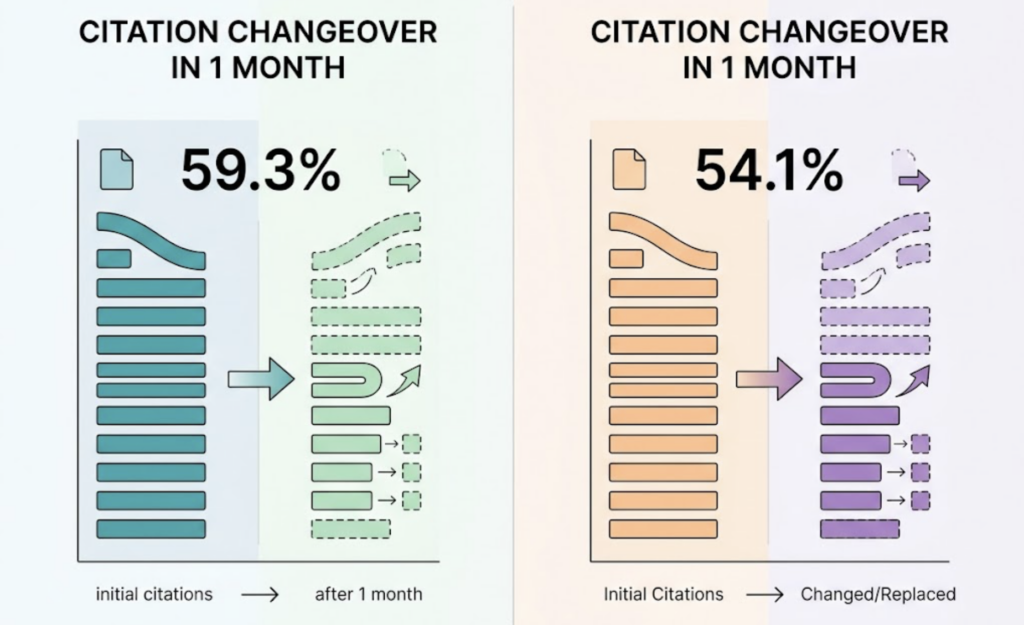
    Research shows that 59.3% of domains cited by Google AI Overviews changed within a single month, and ChatGPT’s citation turnover runs at 54.1% over the same period. If you’re checking manually once a week, you’re not tracking visibility. You’re sampling noise.

    The scale of the problem compounds this. AI assistants now generate 45 billion conversations per month globally, accounting for roughly 56% of total search volume. Your brand is being queried constantly, across platforms you may not even be monitoring.

    That’s exactly what an AI query tracking tool is built to solve.

    What an AI Query Tracking Tool Actually Does

    An AI query tracking tool automates what your team has been doing manually, but at a scale and frequency no human process can match. It sends a predefined library of prompts to multiple AI platforms, records every response, and analyzes how your brand appears over time.

    The core distinction from traditional SEO tools is fundamental. SEO rank trackers index static pages. An AI query tracking tool captures dynamic, generated answers — each one the output of a probabilistic model that may cite different sources every single time it runs.

    You can’t crawl your way to this data. AI responses are synthesized, not indexed. That’s why AI query tracking software exists as its own category, separate from anything your current SEO stack can provide.

    One nuance worth understanding: AI platforms distinguish between citation (your domain appears as a source link) and mention (your brand is directly recommended in the synthesized answer). A brand with high citation rates but low mention rates has authority that isn’t converting into recommendations. An AI query tracking tool quantifies both, so you know exactly which gap to close.

    The Metrics That Turn Raw AI Answers into Actionable Data

    Knowing that your brand “appeared” in an AI answer is a start. It’s not enough.

    A properly built AI query tracking dashboard tracks seven core dimensions: visibility (did your brand appear?), sentiment (how was it described?), position (where did it rank relative to competitors?), volume (how many users are querying this topic?), mentions (raw frequency), intent (what stage of the buyer journey does this query represent?), and CVR (the likelihood that an AI mention leads to a brand interaction).

    The three metrics most teams overlook are sentiment, position, and source. AI platforms routinely describe the same brand differently. One engine may call your product “enterprise-grade.” Another may describe it as “a budget alternative.” Neither may match your actual positioning.

    This matters more than it sounds. Research shows that visitors arriving from generative AI sources convert at 4.4x to 23x the rate of traditional organic search traffic. In transportation and logistics, AI-referred visitors convert at 62.76% versus 39.52% for organic. In SaaS and software, the gap runs 57.84% versus 37.17%. Microsoft Advertising data indicates that Copilot-assisted customer journeys are 33% shorter and drive a 76% lift in high-intent conversion rates.

    That conversion premium means how AI describes your brand directly affects revenue, not just awareness. Your AI query tracking analytics need to capture sentiment and position, not just presence.

    Why Platform Coverage Determines Whether Your Data Is Reliable

    Not all AI platforms recommend brands the same way. The differences aren’t cosmetic.

    ChatGPT synthesizes answers from a relatively compact source set, averaging 7.92 sources per response, with a strong lean toward Bing-indexed content, Wikipedia, and Reddit. Perplexity is built search-first and averages 21.87 sources per response, consistently favoring official brand sites and authoritative directories. Google AI Overviews is deeply integrated with Google’s Knowledge Graph, and notably, 40% of its citations come from pages ranking outside the traditional top 10 in organic search.

    Claude shows a different pattern entirely, citing user-generated content and reviews at 2-4x the rate of other models. What works for ChatGPT visibility often won’t move the needle on Claude.

    A brand that performs well on one platform may be invisible on another. A brand well-cited by Gemini may be described negatively by Claude. If your AI query tracking platform only monitors one engine, your data has a structural blind spot built in.

    For brands operating globally, this complexity compounds fast. DeepSeek reached 100 million users in seven days after launch, breaking every prior growth record in the category. Platforms like Qwen and Doubao dominate Chinese-language AI search, each with distinct citation preferences. An AI query tracking system that ignores these platforms misses a meaningful share of global AI-driven discovery.

    How Topify Tracks AI Queries Across Every Major Platform

    Most AI visibility tools cover one or two platforms and market it as comprehensive coverage. Topify tracks ChatGPT, Gemini, Perplexity, DeepSeek, Doubao, Qwen, and other major AI engines across every market where your audience is actually searching.

    The platform’s tracking architecture is built around those seven core metrics: visibility, sentiment, position, volume, mentions, intent, and CVR. These aren’t separate reports you have to triangulate manually. They’re unified into a single AI query tracking dashboard so your team can see, in one view, that ChatGPT mentions dropped this week, trace it back to a specific domain that stopped being cited, and understand whether sentiment shifted at the same time.

    Topify’s Competitor Monitoring runs in parallel. You don’t just see your own data. You see which competitors AI platforms are recommending instead of you, where they’re gaining ground, and what content they’re being cited for. That’s the difference between knowing you’re losing visibility and knowing why.

    The Source Analysis feature goes a level deeper, mapping the exact URLs and domains that AI platforms use when they reference your category. If AI engines consistently cite a third-party review site that doesn’t mention your brand, that’s a specific gap you can close with a targeted piece of content.

    Topify’s team includes founding researchers from OpenAI and Google SEO champions, which reflects in the algorithm’s precision. The Basic plan starts at $99/month, covering 100 prompts and 9,000 AI answer analyses monthly across 4 projects. The Pro plan at $199/month scales to 250 prompts and 22,500 analyses for larger teams. Get started here.

    How to Track Your Brand’s Visibility in AI Search Results (Step by Step)

    The long-tail question “how can I track my brand’s visibility in AI search results?” has a practical answer that most guides skip past: start with your prompt library, not your platform selection.

    Step 1: Build a 30-50 prompt baseline set. Around 25% should be brand-verification queries (“What is [brand]?”, “How does [brand] price its product?”). The remaining 75% should split between category-discovery queries (“What’s the best [category] software for mid-sized teams in 2026?”) and competitive comparison queries (“[Brand] vs [Competitor]: what’s the difference?”).

    Step 2: Set your baseline across multiple platforms simultaneously. Run your prompt library across ChatGPT, Perplexity, and Gemini at minimum. Record visibility rate, position, and sentiment for each platform separately. Don’t aggregate them. Platform differences are the insight.

    Step 3: Define a share of voice target. In B2B SaaS, a reasonable initial benchmark is a 15% category query mention rate, meaning your brand should appear in AI answers to relevant category prompts at least 15% of the time. Track against this weekly, not monthly.

    Step 4: Monitor for hallucinations. Research indicates GPT-4 produces factual errors in news-adjacent content at a 67% rate. If AI platforms are misrepresenting your pricing, describing discontinued features, or mischaracterizing your market position, that’s an active brand reputation problem, not just a visibility issue.

    Step 5: Connect AI visibility to downstream business metrics. Track whether increases in AI mention frequency correlate with increases in branded search volume on Google. This “assist effect” is how you make the ROI case to stakeholders who still think in terms of clicks and sessions.

    An AI query tracking solution like Topify automates steps 2 through 5, surfacing anomalies, competitor shifts, and source changes without manual analysis. That means your team spends time acting on data rather than collecting it.

    Conclusion

    The gap between brands that are visible in AI search and those that aren’t is widening. By 2028, an estimated $750 billion in consumer spending will be directly influenced by AI search recommendations. The brands showing up consistently aren’t the ones doing the most manual checking. They’re the ones that built a structured AI query tracking system before it became obvious that they needed one.

    The starting point isn’t complicated. Define your prompt library. Choose an AI query tracking platform that covers the engines your audience actually uses. Set a share of voice baseline, and track against it week over week. The brands that do this now will have 12 to 18 months of competitive data by the time this becomes standard practice.

    Topify is worth a close look if you’re building this infrastructure today. Global AI engine coverage, metrics that connect directly to revenue, and execution tools that don’t require a team of analysts to interpret the results. Start here.


    FAQ

    Q: What’s the difference between an AI query tracking tool and a traditional SEO rank tracker?

    A: A traditional SEO rank tracker monitors your position in static, indexed search results. An AI query tracking tool captures something fundamentally different: the probabilistic, generated answers that AI platforms produce each time a user asks a question. Because AI responses aren’t indexed pages, conventional SEO tools can’t access them. You need purpose-built AI query tracking software that directly queries AI engines, records the outputs, and analyzes them at scale over time.

    Q: How many AI platforms should I be tracking?

    A: At minimum, ChatGPT, Perplexity, and Gemini for most markets. If you have global operations or serve Asian markets, add DeepSeek, Qwen, and Doubao. Each platform uses different citation logic and source preferences, so a brand’s visibility can vary significantly across engines. Single-platform data creates structural blind spots in your reporting.

    Q: How often should I run AI query tracking?

    A: Weekly at minimum. Given that ChatGPT’s cited domains turn over at a 54.1% monthly rate, monthly checks will miss meaningful shifts. For brands actively running GEO optimization campaigns or in competitive categories, daily tracking is the more defensible standard.

    Q: How can I track my brand’s visibility in AI search results without spending hours manually?

    A: Use an AI query tracking platform that automates prompt execution, records responses over time, and surfaces anomalies automatically. The manual approach, where someone pastes queries into ChatGPT and screenshots the results, doesn’t scale and doesn’t produce trend data. Tools like Topify handle the monitoring layer so your team works with interpreted insights rather than raw AI outputs. Less time copy-pasting, more time acting on what the data shows.


    Read More

  • What Is Aeo 6 Answer Engine Optimization Trends Dominating 2025

    How to Adapt Your Content Strategy for AEO (Actionable Steps)

    Knowing the key AEO changes is step one. Here is how you adapt your workflow to the emerging trends in AEO 2025.

  • Shift from Keywords to Entities & Topics: Don’t just target emerging trends in aeo 2025. Build a topic cluster around Answer Engine Optimization (the entity). Link your articles together to demonstrate topical authority..

  • Make “Experience-First” Your Default: For every claim you make, add proof.

    • Instead of: “This software is good.”

    • Write: “We tested this software for 40+ hours. Its key strength is [Specific Feature], but it failed our [Specific Test]. See our results dashboard here: [Needs to be supplemented | Screenshot of test results].”

    • Answer Questions Directly (Optimize for the FS): Put the most direct, 40-60 word answer to the primary query right at the top of your article (like we did in this one).

    • Implement Robust Schema: Use a tool like RankRanger or the Schema.org validator to audit your structured data. This is no longer optional.

    • Audit for “Answer Gaps”: Look at your top-performing articles. What questions do they fail to answer? Go back and add new H2s and FAQs to fill those gaps.

    • Frequently Asked Questions (FAQ)

      Q: What is the main difference between AEO and SEO? A: SEO aims to rank your page in a list of links. AEO aims to make your content the direct answer within an AI-generated summary. AEO is heavily reliant on E-E-A-T and structured data to build trust with the AI.

      Q: Will AEO kill all website traffic? A: No, but it will fundamentally change it. “Zero-click” summaries will reduce traffic for simple, factual queries. However, it will increase the value of traffic for complex topics where users must click through for data, templates, or in-depth “experience” content.

      Q: What are the best tools for AEO? A: While the field is new, the best tools for tracking the future of AEO are currently:

    • Google’s SGE itself (for testing queries)

    • Schema.org (for markup)

    • Tools like Semrush/Ahrefs or tracking entity and “People Also Ask” data.

    • Q: How do you measure AEO success? A: This is still emerging. Right now, success is measured by:

    • Mentions and citations in SGE snapshots.

    • Ranking for “People Also Ask” (PAA) boxes.

    • Increased conversions from “high-intent” visitors who click past the AI summary.

    • The Future: AEO is Your New Baseline

      Answer Engine Optimization isn’t just a trend; it’s the new baseline for content strategy.

      The AI won’t just look at your keywords; it will read your content for signals of real, human experience. The winners in 2025 and beyond will be the brands that master these newest AEO developments.