Category: Knowledge

  • Forum Content Marketing: The Underrated Channel That Feeds Both SEO and AI Search

    Forum Content Marketing: The Underrated Channel That Feeds Both SEO and AI Search

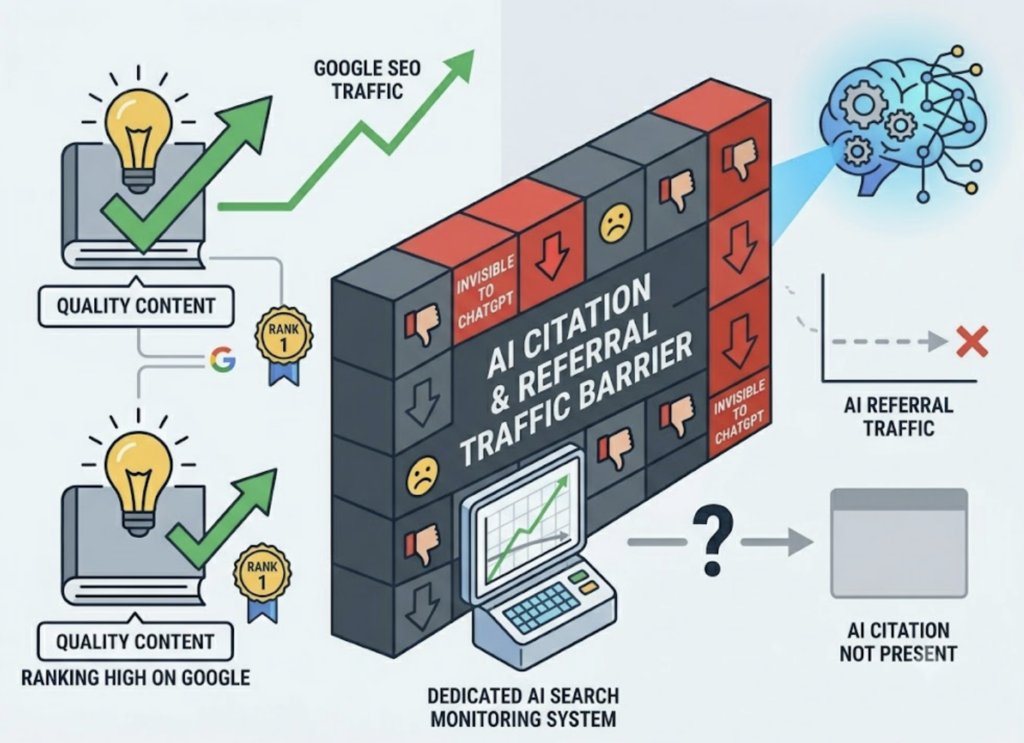
    You published a 3,000-word guide. Your team spent two weeks on it. It ranks on page one. And then you ask ChatGPT about your niche, and it cites a Reddit thread from 2023 instead.

    That’s not a one-off. That’s the new normal.

    AI platforms don’t reward polish. They reward authenticity, conversational density, and peer validation. And right now, the forums you’ve been ignoring are feeding those systems exactly what they want.

    Your Blog Is Losing to a Reddit Thread, and Here’s Why That’s Not a Fluke

    Traditional SEO assumed a simple premise: produce authoritative content on your domain, earn links, rank well. It worked for two decades. It still works. But it no longer works in isolation.

    Brand-owned content now accounts for only 5 to 10% of the sources cited by AI-powered search engines. The rest comes from forums, review sites, and community discussions. Even holding a top organic ranking doesn’t protect you: a #1 to #3 position in traditional search gives you only an 8% chance of being cited in a Google AI Overview. And 80% of sources appearing in AI Overviews don’t rank organically for the queried keyword at all.

    This isn’t a temporary distortion. It’s a structural shift in how information gets surfaced.

    Across 150,000 analyzed citations, Reddit leads all domains with a 40.1% citation frequency, surpassing Wikipedia at 26.3%. Meanwhile, 44% of users now say AI-powered search is their primary source of insight, outpacing traditional search at 31% and brand websites at 9%.

    That’s the gap. And forum content marketing is one of the most direct ways to close it.

    What Forum Content Marketing Actually Means in 2026

    Forum content marketing is not “post links in Reddit threads and hope nobody notices.” That’s spam, and communities will shut it down fast.

    What it actually means: strategic participation in digital communities to build topical authority, influence the conversations that shape perception, and establish the kind of signal footprint that AI systems use to decide who to recommend.

    The distinction matters.

    DimensionTraditional Forum Link BuildingForum Content Marketing (2026)
    Primary GoalIncrease domain authority via backlinksBuild topical authority and AI citation visibility
    MetricNumber of links, keyword rankingsShare of Model (SoM), citation frequency
    Content FormatPromotional comments, anchor-text linksHigh-value answers, peer-to-peer advice
    AI ImpactNegligible if links are “no-follow”High — AI treats mentions as entity signals
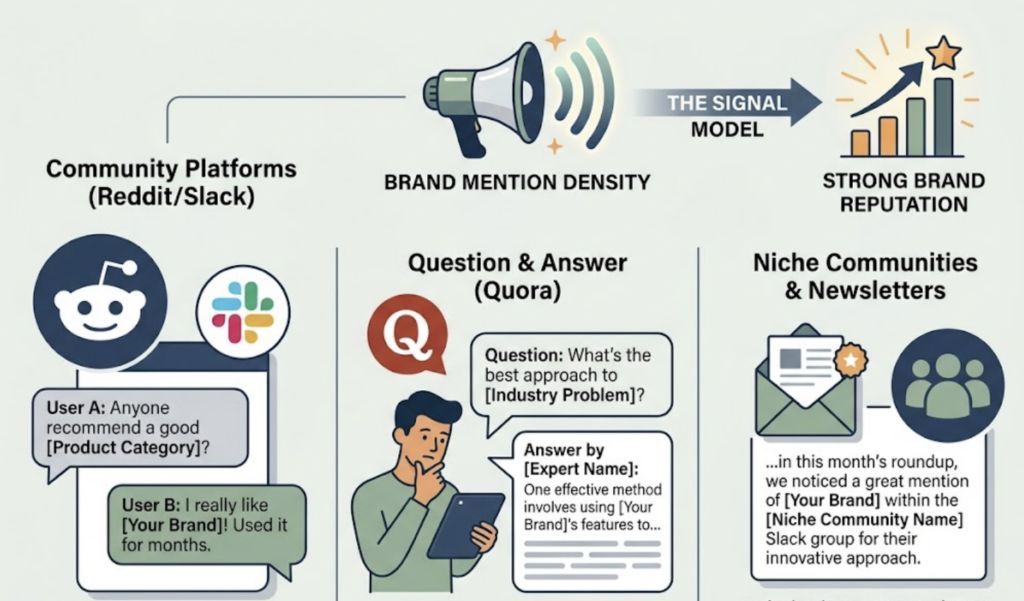
    Platform ScopeLow-moderation public forumsReddit, Quora, Discord, Slack, LinkedIn Groups

    Community-driven SEO operates as an independent signal system. It supplies the “experience” layer of E-E-A-T that static brand blogs often can’t provide. When real users discuss your product in a thread, they generate data points that AI models treat as independent verification.

    That kind of signal is harder to manufacture and harder to fake. Which is exactly why it carries weight.

    How Forum Discussions Feed AI Search Recommendations

    AI platforms don’t pull from forums because someone programmed a Reddit preference. They pull from forums because forum structure maps cleanly to how large language models process and retrieve information.

    LLMs operate under a “token budget.” Every token processed in a context window has a cost. Forum threads are inherently token-efficient: Q&A format front-loads the answer, skips the preamble, and compresses information density. A well-structured forum thread can surface the core insight in the first two sentences. Most brand blog posts bury it after 400 words of scene-setting.

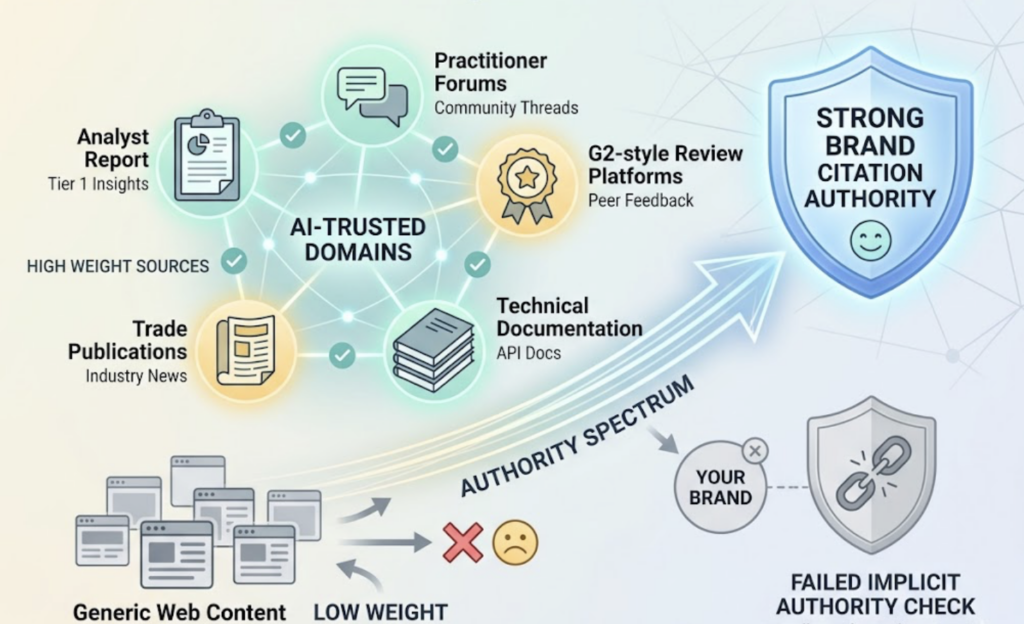
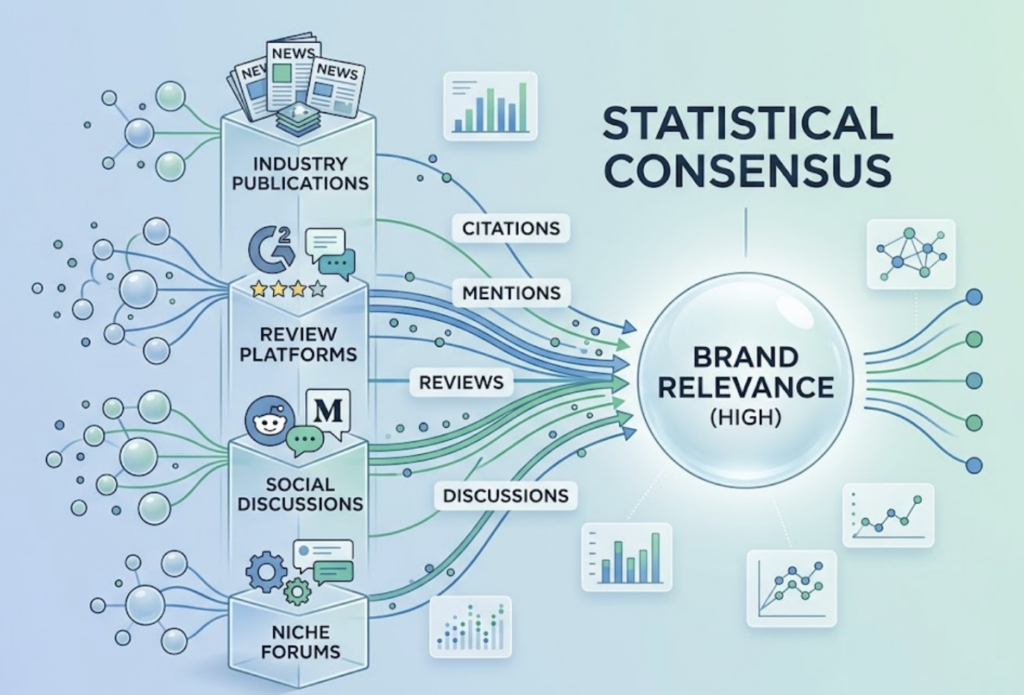
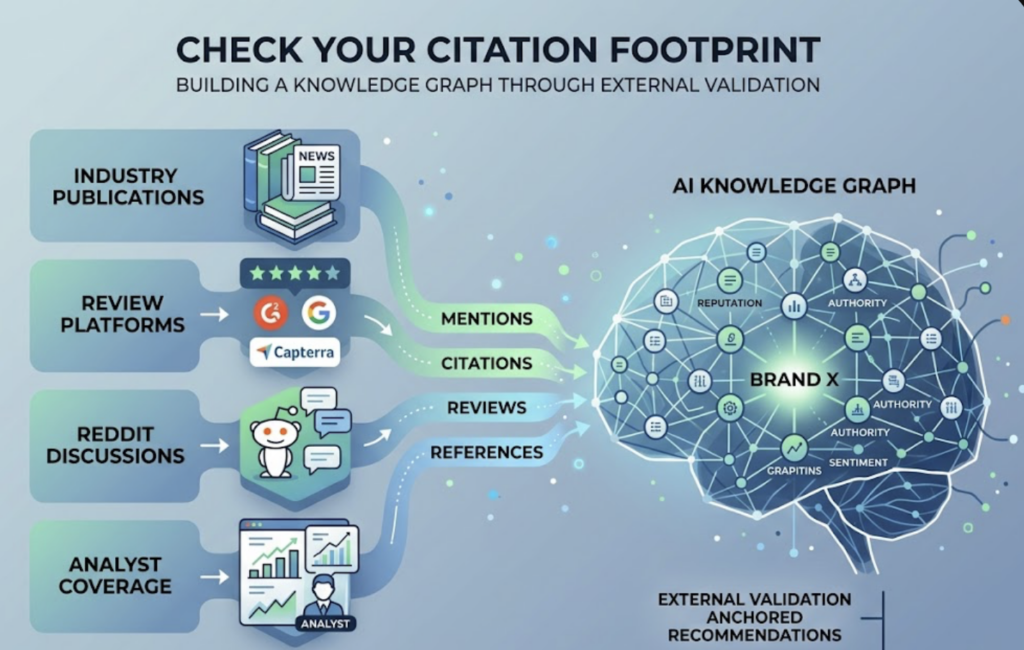
    There’s also a verification dynamic. When an LLM synthesizes an answer, it often runs a “query fan-out,” breaking a complex prompt into multiple sub-queries and checking for corroboration across independent sources. A brand mentioned across five different Reddit threads creates a stronger entity association than the same brand mentioned once on a high-DA blog. The model interprets repeated independent mentions as consensus. Consensus signals trust.

    This is why user-generated content accounts for over 31% of first-page search results and is the source for over 90% of AI citations. It’s not because AI platforms are biased toward informal content. It’s because UGC structurally matches what these systems are optimized to retrieve.

    A Practical Framework for Forum Content Marketing

    Getting this right requires more than “post more on Reddit.” Here’s how to approach it systematically.

    Step 1: Identify the right platforms for your niche.

    Not all forums carry equal weight with AI platforms. Selection criteria should include traffic volume, topical relevance, and how frequently that domain gets cited by ChatGPT, Perplexity, or Gemini. Reddit is the default entry point, but B2B brands often find stronger density in Hacker News, niche Slack communities, or LinkedIn Groups. Developer tools perform well on Stack Overflow. The key question isn’t “is this platform popular?” It’s “is this platform being cited when someone asks an AI about my category?”

    Step 2: Find high-value threads through “dark query” analysis.

    Dark queries are specific, long-tail questions where your brand is currently absent from AI answers, but competitors are present. To find them, simulate the sub-queries an AI would run on your core topics. Manually: search site:reddit.com "competitor name" "problem statement" on Google and look at the top five results. These threads are already feeding AI answers. You need to be in them.

    Step 3: Contribute answers that are actually extractable.

    For a forum post to be cited by an AI, it needs to be structurally clean. Front-load the key insight. Use clear comparisons, specific numbers, and direct answers to the thread’s question. The “95/5 rule” is the operational standard here: 95% of your contributions should be pure value (answering questions, sharing benchmarks, running a comparison), and 5% or less should include any brand mention.

    Formats that work well for AI extraction: “X vs Y” teardowns with specific criteria, benchmark data with original numbers, and FAQ-style answers that resolve one pain point directly.

    Step 4: Scale without triggering community backlash.

    Scale here doesn’t mean posting volume. It means building a “narrative footprint” over time. Founders, subject matter experts, and product leads participating under their real names carry far more signal weight than anonymous accounts dropping links. Avoid links unless they directly clarify an answer. Focus instead on entity clarity: make sure the brand name appears in contexts that create consistent, positive associations.

    The communities that matter most to AI systems are also the ones that most aggressively police promotional behavior. Getting banned from a high-DA forum erases the signal you’ve built. Slow, value-first, is the only approach that compounds.

    Reddit and Quora Are Distribution Channels, Not Link Farms

    74% of Reddit users say the platform influences their purchasing decisions. For B2B SaaS, developer tools, and marketing platforms, that number reflects a reality most brands still underestimate.

    Reddit threads rank highly on Google for product searches and review queries, often holding top positions for months or years. That’s the SEO play. But the more durable value is in brand protection. If your brand has an active Reddit presence, the AI pulls from a distributed, mostly positive narrative. If you’re absent, the narrative gets built by whoever shows up, which is often a competitor or a frustrated former customer.

    Quora operates differently. It favors structured, authoritative responses with clear hierarchies (subheadings, numbered steps, external references). This format is highly extractable by AI systems optimized for decision-stage queries like “how do B2B teams measure attribution” or “what’s the difference between SEO and GEO.” A detailed Quora answer on a niche professional question can drive consistent AI citations for years with no ongoing maintenance.

    The combined strategy: use Reddit for conversational authority and brand protection, use Quora for structured expertise on decision-stage questions. These aren’t competing tactics. They’re complementary layers of the same signal system.

    The Metric That Tells You If Forum Efforts Are Actually Working

    This is where most forum strategies fall apart: attribution. When a user asks ChatGPT about your category and your brand appears in the answer, no UTM fires. No cookie drops. Traditional analytics miss the conversion entirely.

    Measuring forum content marketing requires shifting from traffic-based attribution to AI visibility metrics:

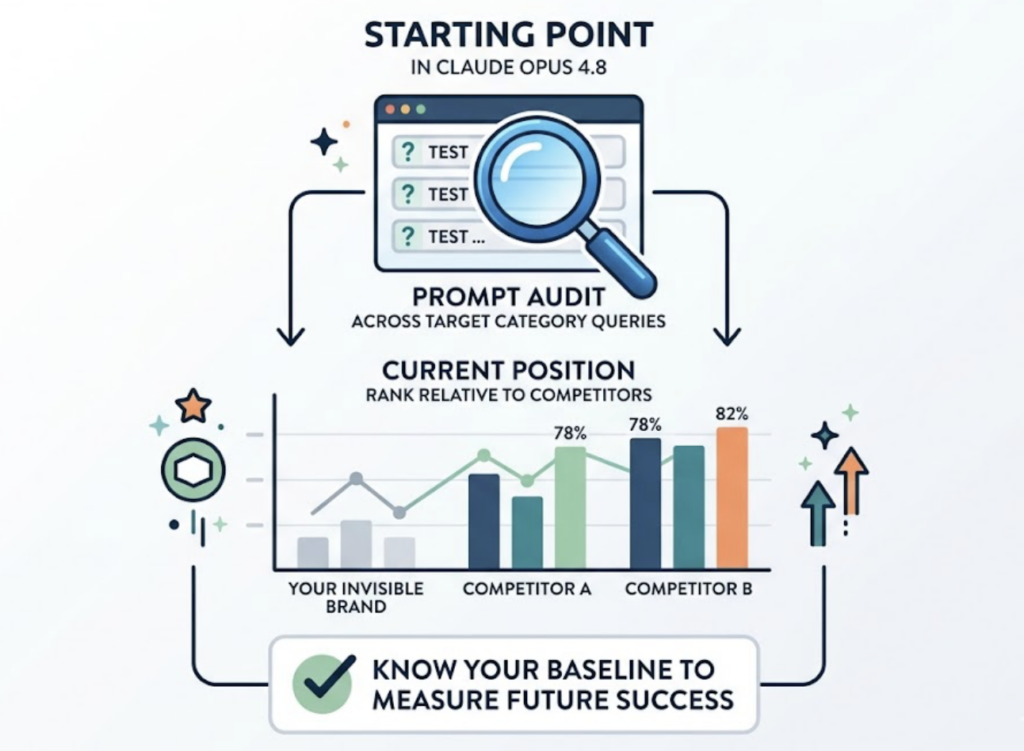
    Share of Model (SoM): the percentage of relevant prompts where your brand appears in the AI response, relative to competitors. This is the primary KPI.

    Answer Inclusion Rate: how frequently your brand appears across a broad matrix of AI prompts, not just the ones you’re tracking.

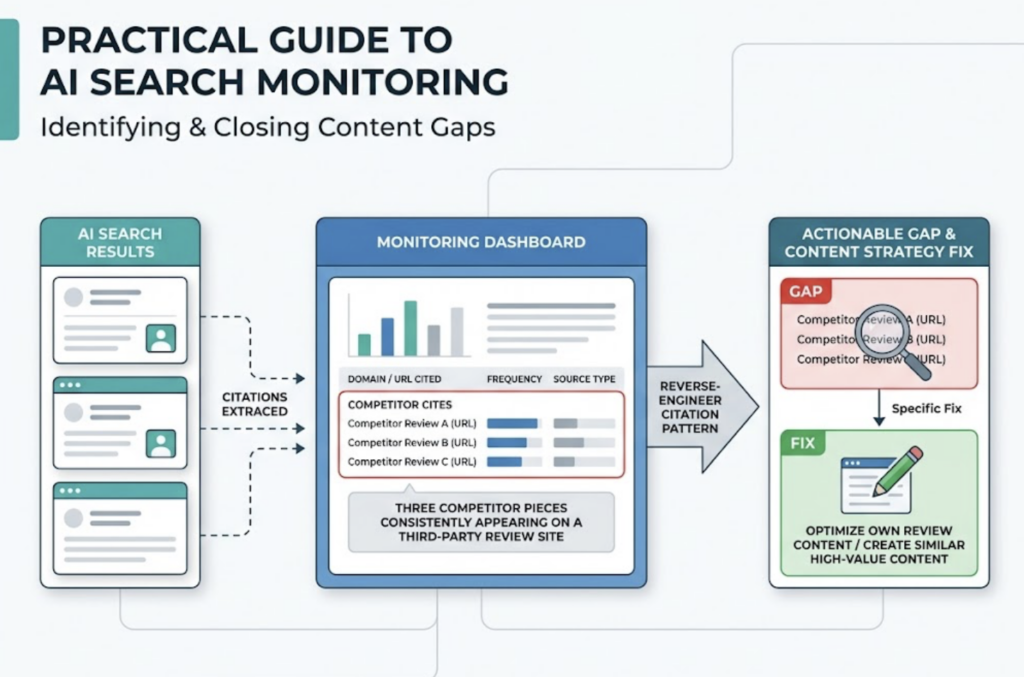
    Citation Mapping: which specific forum threads or third-party domains are being cited when the AI mentions your brand. This tells you where your forum efforts are landing and where the gaps are.

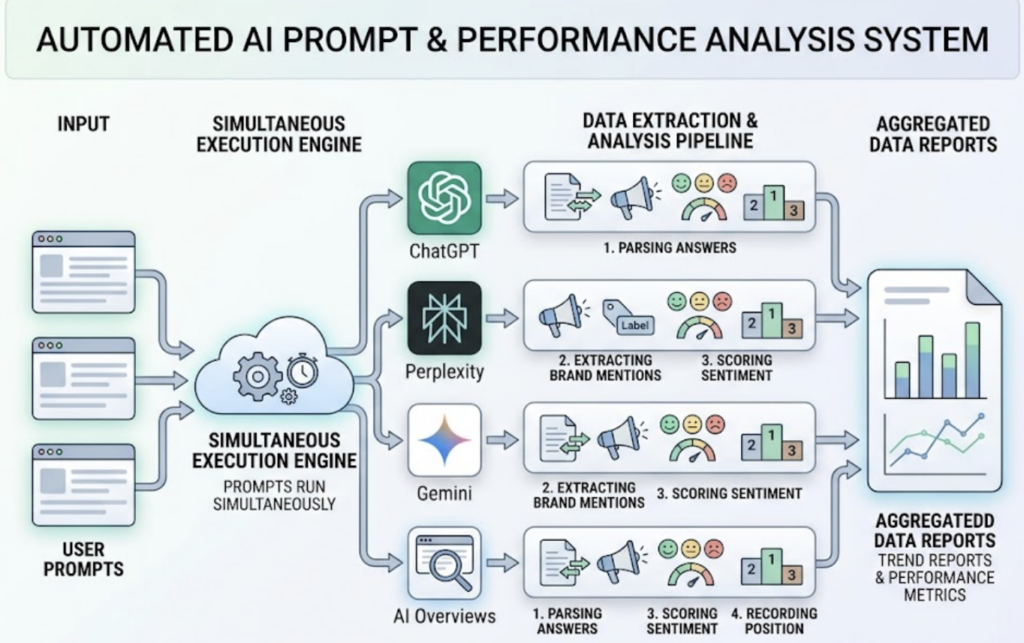
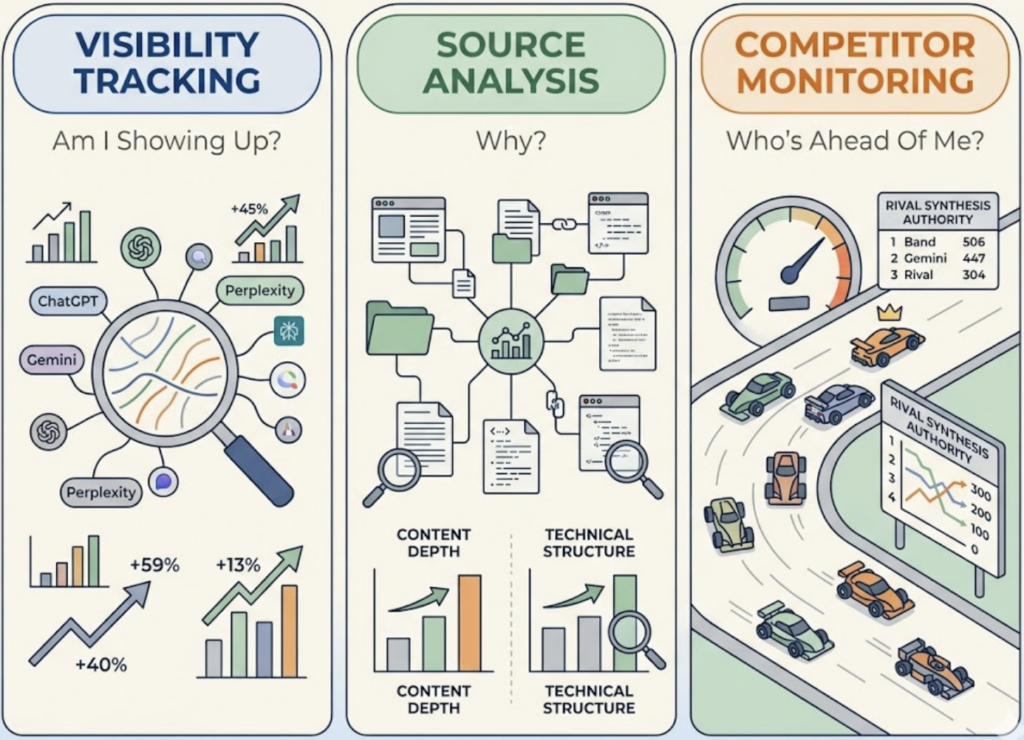
    This is where Topify becomes practically useful. The Source Analysis feature tracks which domains, including specific forum threads, are being cited by ChatGPT, Gemini, and Perplexity when your brand comes up. If you’ve been investing in Reddit for three months, Source Analysis shows whether those threads are actually appearing in AI answers. Visibility Tracking then lets you monitor whether your overall AI visibility is moving before and after your community engagement efforts.

    The B2B SaaS case study below shows what this looks like in practice.

    What a Six-Month Forum-Led Strategy Actually Produces

    A B2B SaaS company ran a six-month experiment shifting from a blog-only strategy to an AI-aware community strategy that included structured forum participation. The before/after results:

    MetricPre-Optimization (Month 0)Post-Optimization (Month 6)
    ChatGPT Citation Rate6%27%
    Monthly Organic Sessions11,40019,700 (+8,300)
    Inbound Demo RequestsBaseline+34%
    Trial-to-Paid Conversion1.0x2.1x (AI-referred leads)

    The conversion number is the one worth sitting with. AI-referred leads closed at 2.1x the average rate, with shorter sales cycles. The explanation is straightforward: a user who discovers a brand through an AI recommendation has already received a third-party endorsement. They arrive pre-validated. That’s a different kind of lead than someone who clicked a paid ad.

    Forum content marketing isn’t purely a traffic play. It’s a trust-compounding play with measurable downstream effects on pipeline quality.

    Building Long-Term Topical Authority Through Community Platforms

    The brands that get compounding returns from forum content marketing aren’t treating it as a campaign. They’re treating it as infrastructure.

    That means integrating forums into the primary content cycle, not running them in parallel. Use community discussions to identify the specific pain-point language and questions your audience is actually asking. Those become the inputs for your blog and content strategy. Then repurpose blog insights back into forum threads as direct, helpful answers. Encourage satisfied users to share their experiences on review platforms. Each of these steps creates an additional signal layer that reinforces the others.

    LLMs are also sensitive to “entity consistency.” If your brand is described as enterprise-grade on your website, positioned as “a startup tool” on Reddit, and reviewed as a “mid-market option” on G2, the AI can’t form a coherent entity model. Inconsistent positioning across community channels is one of the most common reasons brands with strong traditional SEO still underperform in AI search.

    Cleaning up entity consistency across forums, review sites, and your own properties is often the fastest lever available before starting a structured GEO optimization program.

    Conclusion

    The web’s shift from polished corporate content to peer-validated community discourse isn’t a trend to track. It’s a structural change that’s already repricing brand visibility across every major AI platform.

    Forum content marketing sits at the center of that shift. Done right, it feeds traditional SEO through secondary signals, builds the kind of topical authority that AI systems actually reward, and generates trust that converts at a measurably higher rate than traffic from brand-owned channels.

    The starting point isn’t complicated. Find the forums where your category is being discussed. Find the threads an AI would cite to answer a question about your space. Contribute the kind of answer that belongs there. Then use a tool like Topify to track whether it’s actually landing in AI answers, so you know what’s working before you scale.


    FAQ

    Q: How do forum discussions influence AI search recommendations?

    A: AI search engines use Retrieval-Augmented Generation (RAG) to synthesize answers. They favor forum discussions for their “token density,” Q&A structure, and peer-validated consensus. LLMs interpret forum threads as authenticated, real-world experience signals, which align directly with the E-E-A-T framework these systems use to evaluate and cite sources. A brand mentioned across multiple independent forum threads creates stronger entity associations than a single brand website.

    Q: How to build brand authority through community platforms?

    A: Authority builds through consistent, value-first participation rather than broadcast messaging. Establish entity consistency by maintaining a unified brand narrative across Reddit, Quora, and industry communities. Contribute high-value, extractable content like benchmarks, detailed comparisons, and direct answers to common pain points. Individual advocacy from founders or subject matter experts carries more weight with AI systems than anonymous accounts. The goal is a “narrative footprint” that AI platforms can ingest as a coherent signal of topical authority.

    Q: How to scale forum content marketing without appearing spammy?

    A: The 95/5 rule is the operational standard: 95% of contributions should be pure value, 5% or less should include any brand mention. Focus on “dark query” discovery to find threads where your expertise is genuinely needed. Prioritize direct, helpful answers that resolve user pain points over dropping links. Building credibility through named accounts (founders, product experts) over time generates signal that scales without the reputational risk of promotional behavior.

    Q: How does user-generated content boost SEO and GEO visibility?

    A: UGC accounts for over 31% of first-page search results and over 90% of AI citations. For traditional SEO, it provides off-site signals and long-tail keyword coverage that brand content typically can’t generate at scale. For GEO, UGC provides the independent verification and co-occurrence data that LLMs use to determine which brands to recommend. When a brand appears across multiple unaffiliated forum threads, the AI interprets repeated independent mentions as a trust and consensus signal, which directly increases citation probability.


    Read More

  • Here’s Why Visitors Leave Without Converting

    Here’s Why Visitors Leave Without Converting

    You’re getting traffic. Maybe even a lot of it. But the revenue isn’t moving the way it should.

    Here’s the uncomfortable truth: the global average website conversion rate sits between 2% and 4%. That means for every 100 visitors you’ve paid to acquire, roughly 96 leave without taking any meaningful action. The traffic budget grows. The conversion number stays flat. And somewhere in a monthly report, someone suggests running more ads.

    That’s not a traffic problem. That’s a yield problem.

    Conversion rate optimization (CRO) is the discipline of closing that gap. But done right, it’s not about tweaking button colors or rewriting headlines on instinct. It’s a structured, evidence-based process of diagnosing friction, testing hypotheses, and compounding marginal gains into significant revenue lifts. This guide breaks down how that process actually works in 2025.

    High Traffic, Low Conversions: The Gap Most Analytics Tools Can’t Explain

    Three structural failures cause the conversion gap in almost every case.

    The first is intent mismatch. When users with informational intent land on transactional pages, they bounce. Not because your product is bad, but because their psychological state isn’t ready for a purchase decision. Keyword volume without intent alignment is a common CRO strategy failure that costs teams far more than they realize.

    The second is unmitigated friction. Conversion is motivation minus friction. Even highly motivated users can be stopped by a slow load, a confusing form, or a CTA buried below the scroll line. Around 81% of users abandon forms before completion due to perceived complexity alone.

    The third is funnel fragmentation. Most organizations invest heavily in awareness and interest but leave the decision and action stages structurally broken. Without multi-touch attribution, top-funnel content never gets credit for bottom-funnel conversions, leading to chronic misallocation of budget.

    Understanding which of these three is driving your specific drop-off is the starting point for any CRO strategy.

    Conversion Rate Benchmarks by Industry in 2025: Know Your Baseline

    Before optimizing, you need to know what “good” looks like for your vertical.

    The data for 2025 shows conversion rates are highly sensitive to industry type, sales cycle length, and user psychological state. High-urgency, low-stakes sectors perform significantly better than high-consideration ones. SaaS and Professional Services, for instance, typically hover around 1%-2% for general website traffic, while Food & Beverage and Education can exceed 6%.

    IndustryGeneral Website CVRGoogle Ads CVRAvg CPL
    SaaS & Technology1.2% – 5.0%1.2% – 1.5%$62.80
    Finance & Insurance1.7% – 5.2%2.55%$83.93
    eCommerce & Retail1.8% – 4.1%3.83%$47.94
    Healthcare3.1% – 5.5%6.80% – 11.62%$56.83
    Legal Services3.2% – 5.3%5.09%$131.63
    Education2.8% – 6.5%11.38%$90.02
    Food & Beverage2.6% – 6.17%7.09%$30.27

    The median across all industries is approximately 2.35%. If you’re in SaaS and converting at 1.3%, you’re not failing. You’re in range. But the ceiling is meaningfully higher, and the math of improving from 1.3% to 2.6% is the same as doubling your revenue without adding a single visitor.

    That’s the ROI case for CRO. Research shows that implementing CRO technologies yields an average return of 223%.

    What a CRO Strategy Actually Looks Like End-to-End

    CRO isn’t a project. It’s a cycle.

    The most effective teams run a four-stage loop: audit (establish a data baseline using GA4, heatmaps, and session recordings), hypothesize (form testable theories tied to specific friction points), experiment (run A/B or multivariate tests with proper statistical significance), and iterate (deploy winners, extract insights from losers, restart).

    Organizations that apply this rigorously see an average conversion rate improvement of 49% through A/B testing alone. But there’s a calibration most teams miss.

    Only 1 in 8 A/B tests produces a statistically significant result.

    That number isn’t a reason to stop testing. It’s a reason to test faster, document hypotheses more carefully, and treat every failed test as behavioral data rather than wasted effort. Volume and velocity matter as much as test quality.

    The conversion funnel analysis sits at the center of this loop. Mapping each stage from awareness to action lets you identify exactly where users drop off, so optimization effort goes to the highest-leverage point rather than wherever feels most intuitive.

    The Signals Hidden in User Behavior Analysis

    Quantitative data tells you where users leave. Behavioral data tells you why.

    Three data types are consistently the most useful for identifying conversion blockers.

    Heatmaps reveal attention distribution. Click maps show which elements users interact with, and dead clicks — where users click on non-interactive elements — indicate a desire for functionality that doesn’t exist. Move maps expose where attention concentrates before users decide to leave.

    Session recordings are closer to a diagnostic tool than an analytics one. Rage clicks (repeated frustrated clicking on an unresponsive element) and navigation loops (users cycling back to the same pages without reaching checkout or contact) are visible patterns that point directly to design and UX failures.

    Scroll depth analysis is perhaps the most underused. If your primary CTA is positioned at a depth that only 30% of users reach, the bottleneck isn’t the messaging. It’s the placement. That’s a five-minute fix, not a six-week redesign.

    Tools like Hotjar and Microsoft Clarity are the standard for this type of analysis. Microsoft Clarity is free with unlimited traffic and integrates JavaScript error logging, making it particularly useful for identifying technical friction alongside behavioral friction. Hotjar adds survey and feedback capabilities for teams that need qualitative voice-of-customer data alongside the visual layer.

    Landing Page Optimization: What Actually Moves the Needle

    Landing page optimization is where CRO ROI tends to concentrate fastest.

    Because landing pages are often the first point of contact for paid traffic, their performance determines the profitability of entire ad accounts. The lever points are well-documented.

    A clear value proposition can improve conversion rates by 34%. Users need to understand within five seconds what the product is, why it matters, and what action to take next. If that’s not immediately obvious, most visitors won’t invest the cognitive effort to figure it out.

    CTA design and placement carry more weight than most teams assume. Websites with high-contrast, prominent CTA buttons average 17.85% CVR, compared to 11.48% for subtle designs. And using a single CTA on a page can increase conversions by 371% versus offering multiple competing choices. Choice complexity is friction.

    Social proof follows a similar logic. Including customer reviews and ratings can lift conversions by up to 34%, with the effect strongest in high-stakes sectors where trust is a primary purchase barrier.

    Then there’s technical performance.

    A one-second delay in page load time reduces conversions by 7% and decreases customer satisfaction by 16%. At five seconds, conversion rates drop to roughly a third of the one-second baseline. Retail sites lose an estimated $2.6 billion annually due to slow load times. 47% of smartphone users now expect pages to load in two seconds or less.

    Speed isn’t a technical metric. It’s a revenue metric. Treating it as anything less is a strategic oversight.

    Bounce Rate Optimization Doesn’t Mean Keeping Everyone Longer

    Low bounce rate is a vanity metric. Engagement quality is what matters.

    A “bounce” in GA4 (a session with no meaningful engagement) is genuinely bad only when the user left because of friction, not because they completed their task and left satisfied. Someone who finds a phone number or a quick answer and exits is a success, not a failure.

    The more useful frame is distinguishing bad bounces (caused by relevance failures, slow loads, or confusing page structure) from neutral exits (task completed, user satisfied). Industry median bounce rates in 2025 range from around 35% for Apparel and eCommerce to 40%-55% for SaaS, with an overall median engagement rate of 56.21% across verticals.

    Improving engagement quality comes down to three things: ensuring the hero section immediately echoes the user’s search intent (above-the-fold relevance), targeting an Interaction to Next Paint of 200ms or less (interactivity), and matching content format to search stage. Informational queries deserve long-form authoritative content. Commercial queries deserve fast, streamlined product pages. Mixing these up is one of the most common causes of high bounce rates that analytics alone can’t diagnose.

    Website Conversion Tracking: You Can’t Optimize What You Can’t Measure

    Most teams are measuring macro conversions and calling it done. That’s the equivalent of only checking your score at the end of the game.

    Micro conversions — “Add to Cart,” “Pricing Page View,” “Video View,” “Newsletter Signup” — are the early warning system for funnel health. They generate the data volume needed for statistically significant A/B tests long before macro conversion numbers are large enough to use. In GA4, tracking them requires identifying the relevant events (predefined or custom), then marking them as key events in the Admin section. It’s a configuration step, not a development project.

    The more structurally important issue is attribution.

    The modern customer journey is rarely linear. A user might discover a brand through an AI search result, return via a retargeting ad, then convert after clicking a promotional email. Last-click attribution, which remains the default in many tools, gives 100% credit to the email and zero credit to the AI discovery that started the whole journey.

    Companies that switch to data-driven attribution models typically see a 6% lift in total conversions simply by identifying and properly funding the assisted conversion touchpoints that were previously invisible. For B2B funnels with long sales cycles, W-shaped or position-based models generally provide more accurate representations of actual influence.

    The Conversion Gap That AI Search Traffic Creates

    Here’s what most CRO frameworks haven’t caught up to yet.

    A growing share of web traffic now originates from AI platforms. ChatGPT, Perplexity, and Gemini are increasingly the first point of discovery for users researching products and services, and the conversion behavior of this traffic cohort is structurally different from organic search.

    AI-referred traffic arrives pre-qualified. The AI has already vetted the brand and provided a recommendation before the user clicks. This “collapsed funnel” effect means AI-referred traffic converts at 5 to 23 times the rate of traditional organic search. Case studies show ChatGPT traffic converting at 15.9%, compared to 1.76% for Google organic.

    That’s not a marginal difference. That’s a different category of visitor.

    The challenge is twofold. First, 83% of AI-mediated searches result in zero clicks, meaning discovery and opinion-forming happen entirely within the chat interface. Brands that aren’t being cited don’t get a conversion opportunity at all. Second, ChatGPT strips referrer data from its paid accounts, so this high-intent traffic frequently appears as “Direct” in GA4, leading to systematic undervaluation of the AI acquisition channel.

    Traditional CRO tools can’t see any of this.

    This is where platforms like Topify address a gap that standard analytics stacks leave open. Topify’s CVR (Conversion Visibility Rate) metric estimates the probability that a brand will be cited as the primary recommendation for a given AI prompt, giving marketers a leading indicator of AI-sourced conversion potential rather than discovering it after the fact. Its Source Analysis capability identifies specific topics where competitors are being cited by AI platforms while a brand is being ignored, pointing directly to the content gaps that suppress AI citation rates.

    For teams running CRO programs in 2025, optimizing for AI citations is becoming as structurally important as optimizing for landing page load time. The traffic quality is higher. The measurement infrastructure is largely missing. And the gap between brands that understand this and those that don’t is widening.

    Conclusion

    The core insight from 2025 conversion data is consistent: the traffic problem is almost always a yield problem.

    Marginal gains in traffic volume are increasingly expensive. Marginal gains in conversion rate compound into meaningful revenue with no additional acquisition spend. Improving from 1% to 2% doubles revenue. Improving from 2% to 3% adds 50% more. The math is structurally favorable.

    The execution path is clear. Diagnose friction with behavioral data before making design changes. Track micro conversions to identify funnel leaks before they become revenue gaps. Treat page speed as a financial metric. Use multi-touch attribution to understand the full acquisition story. And account for AI search traffic as a distinct cohort with distinct conversion dynamics — one that requires different tooling and a different optimization mindset.

    The gap isn’t where the traffic comes from. It’s what happens after it arrives.


    FAQ

    Why does my site have high traffic but a low conversion rate?

    In most cases, it’s one of three causes: intent mismatch (visitors arriving at pages that don’t match their current stage in the decision process), technical friction (slow load times, confusing forms, or poor mobile experience), or a weak above-the-fold value proposition. Tools like Microsoft Clarity or Hotjar can identify the specific exit point and behavior pattern that signals which issue is dominant.

    What are realistic conversion rate benchmarks by industry in 2025?

    The overall median sits around 2.35%. SaaS and Professional Services typically range from 1% to 5% depending on funnel stage. Education and Food & Beverage tend to perform above 6%. High-urgency industries with short decision cycles consistently outperform complex B2B or financial categories. Your benchmark is less about the global average and more about what’s achievable in your specific vertical and traffic mix.

    How do I track micro conversions in Google Analytics 4?

    In GA4, identify the events you want to track — either from GA4’s predefined event library or by creating custom events. Once the event is being captured in your account, go to Admin > Events and toggle “Mark as conversion” on for that specific event. Micro conversions like Pricing Page Views or Video Completions immediately become trackable KPIs alongside macro conversion goals.

    How does website speed actually affect conversion rate?

    A one-second delay reduces conversions by 7%. Sites loading in one second convert at roughly 2.5x the rate of those loading in five seconds. At ten seconds, bounce probability increases by 123% compared to a one-second baseline. Speed is also a trust signal: 82% of customers report trusting fast sites more than slow ones, which compounds the conversion effect beyond pure patience thresholds.

    How do I improve the conversion rate of AI search traffic?

    The starting point is ensuring content consistency: the experience on your landing page needs to match exactly what the AI described. Beyond that, you need visibility into what AI platforms are saying about your brand and where you’re being cited or excluded. Platforms like Topify provide CVR measurement and source gap analysis specifically for this use case, identifying the prompt topics and content types where competitors are earning AI citations while your brand isn’t appearing.

    How do I reduce bounce rate without just keeping people on the page longer?

    Focus on relevance, not retention. Ensure the first screen matches the intent of the traffic source precisely. If a user clicks an ad about pricing, the page should immediately show pricing. Check scroll depth data to confirm key content is reaching the users who would benefit from it. And separate “bad bounces” caused by friction from neutral exits where users completed their task and left. GA4’s Engagement Rate metric is more useful than raw bounce rate for this distinction.


    Read More

  • Website Traffic Sources Explained: What Each Channel Actually Tells You

    Website Traffic Sources Explained: What Each Channel Actually Tells You

    Your Google Analytics report shows six traffic channels. You glance at organic and paid, maybe check direct when it spikes, and move on. That’s how most marketing decisions get made, and it’s a problem. Research shows over 60% of marketing decisions are based on just two of those channels, which means the data sitting in the other four is quietly shaping your results without anyone reading it.

    The labels aren’t the issue. The interpretations are.


    The 6 Website Traffic Sources and What They Actually Mean

    Organic search, paid search, direct, referral, social, and email. These six categories appear in every analytics platform, but each one hides more than it shows.

    Organic search accounts for 53.3% of all website traffic globally, making it the single largest channel for most sites. It represents users who found you through a non-paid search result and have enough intent to click. That’s a meaningful signal. But calling it “free traffic” is a stretch: getting there requires sustained investment in content quality, technical infrastructure, and E-E-A-T signals that take months to compound.

    Paid search sits at the other end of the spectrum. It’s fast, measurable, and completely dependent on budget continuity. Paid channels now account for nearly 42% of all traffic across the web, a figure that’s climbed as organic competition intensified. The average cost-per-click in paid search sits at $4.22, with high-intent verticals like legal pushing that to $6.75 or more. Stop paying, and the traffic stops the same day.

    Organic Traffic vs Paid Traffic: Not the Same Race

    The real difference isn’t cost, it’s the asset model. Organic search builds equity. A well-ranking article can generate traffic for years without incremental spend. Paid search is a rental agreement: excellent short-term returns, zero residual value.

    The financial case for organic is clearer over time. Organic traffic has a 54% higher lifetime value than paid traffic, largely because users arriving through search tend to have stronger purchase intent and deeper content engagement. That said, paid search delivers faster conversion cycles, with B2B paid search averaging a 3.75% conversion rate in the short term.

    Neither is universally better. The question is what your business actually needs right now.

    Direct Traffic vs Referral Traffic: Where the Confusion Starts

    Direct traffic is supposed to represent users who typed your URL directly or used a bookmark. Referral traffic is supposed to represent clicks from other websites.

    In practice, the line is much blurrier.

    A significant portion of what shows up as “Direct” in Google Analytics isn’t brand loyalty at all. It’s attribution failure. And referral traffic, while smaller in volume, consistently delivers some of the highest conversion rates of any channel, often above 3%, because it carries the implicit trust of the source that linked to you.


    Why Your Direct Traffic Number Is Probably Lying to You

    Here’s the thing about direct traffic: it’s not a channel. It’s a catch-all.

    Google Analytics classifies any visit without a referrer string as “Direct.” That sounds straightforward until you trace where those visits are actually coming from. A user clicks a link inside a WhatsApp group, the mobile app doesn’t pass referrer data, and GA4 records it as direct. Someone shares your article in a private Slack channel, their colleague clicks it on their phone, and again: direct.

    This is dark social. According to RadiumOne, 84% of consumer online sharing happens in private channels like WhatsApp, WeChat, and Slack, with only 16% occurring on public social platforms. All of that private sharing, when it drives clicks, lands in your direct traffic bucket.

    That’s not a minor data quality issue. In a controlled experiment tracking 16 subdomains, 100% of traffic from private messaging apps was recorded as direct. If your direct traffic is unusually high, the most likely explanation isn’t that you have a strong brand. It’s that your content is being shared in places your analytics can’t see.

    Dark social traffic is also disproportionately valuable. Content shared privately is perceived as 3.2x more credible than content shared publicly, and dark social channels tend to produce 4 to 5x higher conversion rates than public social platforms. You’re not seeing garbage traffic in that “Direct” bucket. You’re seeing your most trusted referrals, mislabeled.


    Social Media Traffic and Email Traffic: High Volume, Low Attribution

    Social media drives volume. Email drives conversions. Both are chronically misattributed.

    The core problem with social traffic is that most platforms don’t reliably pass referrer data when users click links inside native apps. A Facebook post click on mobile often drops the referrer entirely, sending the visit straight to Direct. Brands with structured UTM systems report 31% more accurate social attribution than those without, which tells you exactly how much data is leaking without proper tagging.

    Email has the opposite profile. It’s one of the few channels where 1:1 attribution is genuinely achievable. When UTM parameters are applied consistently and user IDs are tied to email links, you can trace a specific subscriber’s journey from click to purchase with precision. 73% of B2B organizations rate email as their most effective lead generation channel, and the data backs that up: email-generated leads convert 67% better than social media leads.

    That gap matters. Both channels require time and budget. But the conversion multiplier on email is hard to ignore.

    How to Use UTM Parameters to Track Traffic Sources Accurately

    UTM parameters are the GPS for traffic attribution. Without them, you’re guessing. A complete UTM structure includes five parameters: utm_source (where the click came from), utm_medium (the type of channel), utm_campaign (the specific initiative), utm_content (which creative or placement), and utm_term (for paid keyword tracking).

    The most common failure isn’t missing UTMs. It’s inconsistent UTMs. When one team tags Instagram links as source=instagram and another uses source=ig, you end up with fragmented data that can’t be aggregated. A shared naming convention, enforced across every team that publishes links, is non-negotiable.


    How to Compare Traffic Sources to Find Your Best-Performing Channel

    Volume is the worst metric to optimize for first.

    A channel with 50,000 monthly sessions and a 0.2% conversion rate generates 100 conversions. A channel with 5,000 sessions and a 2% conversion rate generates the same 100 conversions, at one-tenth the traffic cost. Optimizing for the first one while ignoring the second is exactly how marketing budgets get misallocated.

    The right framework combines four dimensions: volume, intent, conversion rate, and scalability. Here’s how the six channels typically stack up:

    ChannelVolumeUser IntentConversion RateScalability
    Organic SearchHighHighModerate–HighMedium
    Paid SearchMedium–HighVery HighHighVery High
    DirectMediumVery HighVery HighLow
    ReferralLowHighHigh (often 3%+)Low
    Social MediaVery HighLow–MediumLow (0.4–0.8%)High
    EmailMediumHighModerate–HighMedium

    The goal isn’t to pick one winner. It’s to understand what each channel is actually for. Social at 0.4% conversion isn’t failing. It’s operating as a brand awareness channel. Expecting it to perform like direct traffic is the mistake.

    The deeper financial metric is the LTV:CAC ratio. The ideal growth model targets a 3:1 LTV:CAC ratio, and not every channel gets you there. Paid search often wins on conversion speed but loses on retention, because intent-driven urgency doesn’t always translate to long-term loyalty. Organic and referral tend to produce customers who stay longer, which is why their lower short-term volume is often worth it.


    Traffic Source Breakdown: A Practical Audit Process

    Most marketing teams look at traffic dashboards weekly but audit the underlying data quality annually. That gap is where the mislabeled traffic accumulates.

    Step 1: Reconcile your attribution model. Compare what your ad platforms report against what your CRM shows. Due to iOS privacy changes and browser restrictions, ad platform pixels miss between 30% and 50% of real conversions. If your ads dashboard shows 200 conversions but your CRM shows 120 closed deals from the same cohort, you have an attribution gap.

    Step 2: Diagnose your direct traffic. Filter for “Direct” sessions landing on deep content pages like blog articles or product comparisons. If complex pages are showing up as direct, that’s almost certainly dark social or untagged email, not brand navigation. Homepage traffic being direct makes sense. Deep-content pages being direct usually doesn’t.

    Step 3: Run a technical check. One underappreciated cause of referral misattribution: HTTPS-to-HTTP redirects strip referrer data entirely. If any pages still serve on HTTP, all referral traffic to those pages will appear as Direct. Check your SSL coverage across all subdomains and confirm your consent banner is correctly configured so that users who accept tracking are being tracked.

    Step 4: Clean your UTM data. Pull a source/medium report for the past 90 days and look for variants of the same source spelled differently. Deduplicate and standardize. Build a shared UTM naming document that every team uses before publishing any link.

    Step 5: Score channels on value, not volume. Use the four-dimension matrix above. Flag channels with high spend and low LTV for review. Identify referral sources that are small in volume but high in conversion. Those are partnership opportunities worth scaling.

    Step 6: Build a monitoring cadence. Traffic attribution degrades over time as platforms change, tracking consent rules evolve, and link-sharing behavior shifts. A quarterly audit prevents six months of bad data from compounding into a year of bad decisions.


    AI Search Is Now a Website Traffic Source. Most Analytics Tools Can’t See It.

    This is the part most traffic source breakdowns miss entirely.

    AI platform-driven referral traffic grew by 357% between June 2024 and June 2025ChatGPT alone accounts for 87.4% of all AI referral traffic. Users are asking ChatGPT, Perplexity, and Gemini for product recommendations, and those platforms are linking out to brand websites in their answers.

    That’s a real traffic source. But GA4 doesn’t have an “AI Search” channel.

    Some of that traffic shows up under Referral, but inconsistently. ChatGPT’s paid subscribers often browse without passing referrer data, meaning the highest-intent AI users, the ones who pay for a premium tool and follow its recommendations, register in your analytics as Direct. You can’t see them. You can’t measure what AI said to send them.

    The conversion quality is substantial. AI referral traffic converts at 5 to 23x the rate of traditional organic search. That’s because AI platforms function as recommendation engines: by the time a user clicks a link from a ChatGPT response, the AI has already completed an initial qualification pass. The user arrives with a formed opinion and high purchase intent.

    On top of that, when AI Overviews appear in Google search results, organic CTR drops by 67.8%. Brands cited inside those AI Overviews, however, receive 35% more organic clicks than brands that don’t appear. Being visible in AI answers is no longer a future consideration. It’s already changing how traffic distributes across channels.

    For teams that want to measure and optimize this channel, Topify tracks brand visibility across ChatGPT, Gemini, Perplexity, and other major AI platforms. Its AI Volume Analytics and Visibility Tracking surface which prompts are driving AI recommendations in your category, how often your brand appears in responses, and which domains AI platforms are citing as sources. In practice, this fills the attribution gap that every traditional analytics tool currently has when it comes to AI-generated traffic.

    Get started with Topify to see where your brand stands across the AI channels your analytics dashboard can’t measure.


    Conclusion

    Website traffic sources haven’t changed in name. Organic, paid, direct, referral, social, email: those six categories still dominate every analytics report. What has changed is how much noise exists inside each label, and how consequential that noise is for decision-making.

    Dark social is hiding your most trusted referrals inside your direct traffic. Missing UTMs are sending your best social campaigns to the same bucket. And a fast-growing, high-converting traffic source called AI search is either showing up as referral or not showing up at all.

    The teams that win the next few years of traffic competition won’t be the ones with the highest volume. They’ll be the ones who actually know where their traffic is coming from, including the sources that today’s dashboards were never built to see.


    FAQ

    Q: How do I reduce reliance on paid traffic with organic growth?

    A: Start by identifying which paid campaigns generate customers with the highest LTV, not just the highest conversion rate. Paid channels often win on short-term conversion but lose on retention. Build content assets targeting the same high-intent queries your paid campaigns cover, and shift budget incrementally as organic rankings improve. The transition typically takes 6 to 12 months before organic can offset paid volume, but the long-term cost structure is significantly better.

    Q: How do I track dark social traffic that goes unattributed?

    A: Add UTM parameters to every link you share, including in internal Slack channels, newsletters, and email outreach. For content you know gets shared privately, monitor for spikes in direct traffic to specific deep pages as a proxy indicator. Some teams use campaign-specific landing pages with unique URLs to make private sharing traceable. Full dark social attribution isn’t achievable without consent-based identity resolution, but structured UTMs eliminate the most preventable leakage.

    Q: How do I attribute conversions to the right traffic source when users touch multiple channels?

    A: Last-click attribution gives credit to the final touchpoint and systematically undervalues brand-building channels like organic social and display. Data-driven attribution, available in GA4, distributes credit across the full path. For B2B with longer sales cycles, a time-decay or position-based model often captures multi-touch reality more accurately. The key is picking one model and applying it consistently, then comparing channels using the same rules.

    Q: How do I grow referral traffic through backlinks and partnerships?

    A: Quality matters far more than volume. One link from a high-authority publication in your vertical delivers more SEO value than dozens of low-quality directory links. The most scalable approach is digital PR: producing data-driven or original research content that journalists and bloggers link to naturally. Direct partnership programs with complementary tools or services, where you cross-link in product documentation or resource pages, tend to produce referral traffic with strong conversion rates because the audience overlap is intentional. Companies with a structured link-building strategy earn 97% more inbound links than those without one.


    Read More

  • Website Traffic Analysis: The Complete Guide

    Website Traffic Analysis: The Complete Guide

    Your Google Analytics dashboard looks fine. Traffic is up. Engagement is decent. But somewhere between your reports and reality, a growing category of high-intent visitors is slipping through untracked, showing up as “Direct” with no referral context, no source, no campaign. They came from ChatGPT or Perplexity. You’ll never know.

    That’s not a GA4 configuration problem. It’s a structural gap in how website traffic analysis was designed, and in 2026, it’s getting harder to ignore.

    This guide covers the full picture: how to read traditional traffic data well, how to diagnose drops, how to connect analytics to performance, and how to account for the channel your current stack can’t measure.

    The 6 Traffic Sources You Need to Track (One Keeps Growing Invisibly)

    Most teams still operate with a five-channel mental model: Organic Search, Direct, Referral, Social, and Paid. That model was accurate until about two years ago.

    As of Q1 2026, AI-referred traffic accounts for 12% to 18% of total global web referral traffic, up from 5-8% in late 2024. That’s 150-200% year-over-year growth. It’s no longer a rounding error.

    Here’s the problem. AI-referred traffic doesn’t travel cleanly. When a user clicks a link inside ChatGPT’s paid interface, the platform strips the referrer header. GA4 logs the session as “Direct.” The visitor came pre-qualified, already past the evaluation phase, ready to engage. You just have no idea they exist.

    Organic search still drives approximately 46.98% of global web traffic, and it remains the backbone of any sustainable acquisition strategy. But the gap between “search volume” and “clicks” is widening fast. More on that shortly.

    How to Use GA4 for Website Traffic Analysis

    GA4 is more capable than most teams give it credit for, but it rewards specificity. The default reports are a starting point, not a finish line.

    The most common mistake is conflating the User Acquisition and Traffic Acquisition reports. They answer different questions. User Acquisition is scoped to the first session: it tells you how a person originally discovered your site. Traffic Acquisition is session-scoped: it tells you what drove each individual visit, new or returning.

    That distinction matters when you’re measuring attribution. A user who discovered you via organic social, then converted three weeks later through a newsletter click, will show up differently in each report. One credits social. One credits email. Neither is wrong. They’re just answering different questions.

    For most practical traffic analysis, start with Traffic Acquisition. Filter by channel, segment by landing page, and correlate with engagement rate. If you’re measuring the long-term payoff of brand campaigns or awareness content, switch to User Acquisition.

    What GA4 Still Can’t Tell You

    GA4 has a structural attribution problem in the AI era. Research across millions of sessions found that approximately 22% of ChatGPT sessions and 32% of Perplexity sessions are categorized as “(not set)” or absorbed into Direct traffic. The referrer data simply doesn’t transfer.

    This isn’t a bug you can fix with better UTM hygiene. It’s an architectural reality of how major AI platforms handle outbound links.

    How to Read Organic Traffic Data and Find What’s Actually Working

    Google Search Console is the most underused tool in the average analyst’s stack.

    Most teams look at clicks and call it done. The real signal is in the Impressions vs. Clicks ratio. A page with 50,000 monthly impressions and 300 clicks isn’t performing well. It’s ranking for queries where nobody needs to click. That distinction changes your optimization strategy entirely.

    AI Overviews now appear in over 40% of U.S. queries, and when they’re present, the CTR for traditional results drops from a baseline of 15% to 8%. For informational queries, you may be “winning” in impressions while losing in traffic.

    The practical implication: look for pages where you rank in positions 4-10 with solid impressions. Those are your highest-leverage CTR optimization targets. Rewrite the meta title and description to address the specific intent, not just match the keyword.

    For identifying which pages get the most traffic, GA4’s Landing Page report (under Engagement) gives you session volume by entry point. Sort by sessions, then cross-reference with average engagement time. High traffic plus low engagement usually means either wrong audience or misaligned content.

    How to Diagnose a Traffic Drop Before Your Boss Asks

    Traffic drops tend to have three possible causes: algorithm, technical, or content. They rarely announce which one.

    The December 2025 Core Update introduced stricter AI content detection, targeting pages with what Google classified as “generic phrasing patterns” and thin E-E-A-T signals. Sites that dropped 50% or more typically lacked verifiable author credentials, original research, or first-hand experience signals.

    Start with this sequence when diagnosing a drop:

    First, check GSC’s Coverage report for new “Crawled – currently not indexed” pages. If previously indexed content is being excluded, that’s a signal, not a coincidence.

    Second, check Core Web Vitals. Sites with an LCP exceeding 3 seconds experienced 23% more traffic loss than faster competitors in the December 2025 cycle. What looks like a content penalty is sometimes a performance regression from a recent deploy.

    Third, look at whether the drop is query-wide or page-specific. A broad organic decline across dozens of pages suggests an authority or algorithm signal. A drop on a single cluster of pages usually points to content quality or cannibalization.

    Fourth, check for seasonality before escalating. A March traffic dip for a retail brand is rarely newsworthy.

    Document what you find against a 12-month calendar view in GA4. Comparing week-over-week without accounting for seasonal patterns produces a lot of false alarms.

    The Traffic Your Analytics Dashboard Can’t See

    This is the part most website traffic analytics guides skip.

    ChatGPT now processes more than 2.5 billion prompts dailyGoogle AI Overviews reach 2 billion users monthly. A material portion of your potential customers are discovering, evaluating, and selecting brands inside conversational AI interfaces before they ever touch a search result page.

    When that discovery happens and the user clicks through to your site, your GA4 shows “Direct.” There’s no source. No medium. No referral path. The influence of the AI recommendation is invisible in your reporting.

    That invisibility compounds. Users who learn about a brand from ChatGPT often don’t click immediately. They’ll search your brand name on Google later. GA4 attributes that session to “Organic Search,” hiding the original AI influence entirely. This is sometimes called the Branded Search Cascade, and it systematically understates the value of AI-channel visibility.

    Topify was built to solve this specific gap. Rather than crawling SERPs, it probes LLM interfaces directly, tracking brand mentions, recommendation positions, and sentiment across ChatGPT, Gemini, Perplexity, and other major AI platforms. The platform’s Visibility Tracking feature monitors how often your brand appears in AI responses to relevant queries. Its AI Volume Analytics surfaces the actual prompt clusters your target audience is using, based on real AI search behavior rather than estimated keyword volumes.

    For teams that are already good at GA4 and GSC, this is the layer that fills the remaining blind spot. It answers the question your current stack structurally cannot: is your brand being recommended by AI, and what does that look like compared to your competitors?

    How to Connect Traffic Data to Marketing Performance

    Traffic volume is a leading indicator. Revenue is the lagging one. The teams that lose credibility in reporting are the ones who treat the two as the same.

    The practical framework: measure traffic at the channel level, engagement at the page level, and conversion at the funnel level. Each layer has a different owner and a different optimization lever.

    For content specifically, the cleanest way to measure impact is to track organic sessions to a page over the 90 days following publication, then compare against a pre-publication baseline. This controls for seasonality without needing a complex cohort model.

    UTM parameters are non-negotiable for any traffic source you control. Every link in email campaigns, social posts, and paid placements should carry campaign-level tags. Default GA4 groupings for these channels are inconsistent and often wrong.

    B2B companies with structured lead generation processes see 133% more revenue than those without. Most of that gap isn’t channel selection. It’s attribution discipline. Teams that know exactly which content and channel combinations drive pipeline make better investment decisions, full stop.

    The metric worth adopting at the leadership level is Marketing Efficiency Ratio (MER): total revenue divided by total ad spend. Unlike Last-Click ROAS, MER accounts for unmeasurable influence channels like AI discovery and brand awareness content. It gives leadership a denominator that reflects how the modern funnel actually works.

    Website Traffic Analysis Tools: A Practical Comparison

    You don’t need a six-figure analytics stack to do this well. You need the right tools for the right questions.

    GA4 + Google Search Console are the non-negotiable foundation. GA4 covers on-site behavior. GSC covers search visibility and index health. Together, they answer 80% of day-to-day traffic questions. Both are free.

    For competitive traffic analysis, Semrush’s database of 25 billion keywords makes it the standard for identifying content gaps and tracking ranking movements. SimilarWeb is better suited for market share analysis and understanding competitor referral sources at scale. Both have SMB-tier pricing, but enterprise features carry enterprise costs.

    For AI visibility tracking, these tools have limited coverage. That’s where specialized platforms like Topify fill the gap. Traditional SEO tools weren’t designed to probe LLM query interfaces. They measure what happened on SERPs. Topify measures what’s happening inside the AI conversation before the user ever reaches a SERP.

    ToolPrimary Use CaseAI VisibilityCost Profile
    GA4On-site behavior trackingNoneFree
    Google Search ConsoleOrganic search visibilityLimitedFree
    SemrushSEO/PPC tactical executionEmergingSMB-friendly
    SimilarWebMarket share & competitive researchLimitedEnterprise-focused
    TopifyAI-channel visibility & GEOFull coverageAI strategy-first

    For small businesses doing website traffic analysis with a limited budget, start with GA4 and GSC. Add a competitor tool when you have a clear content strategy to validate. Layer in AI visibility tracking when you’re ready to measure the channel that’s growing fastest.

    Conclusion

    Website traffic analysis in 2026 is not fundamentally harder than it was five years ago. Most of the core questions are the same: where are visitors coming from, which pages drive value, what’s causing fluctuations.

    What’s changed is the surface area. AI platforms are now a primary discovery channel for high-intent audiences, and they operate almost entirely outside the visibility of traditional analytics infrastructure. GA4 and GSC remain essential. They just don’t cover everything anymore.

    The teams that will pull ahead are the ones that treat the GA4 “Direct” bucket with appropriate skepticism, build UTM discipline across every controlled channel, and invest in measurement tools that can reach into the AI conversation layer where purchase decisions are increasingly forming.

    Traffic you can’t see is traffic you can’t optimize.

    FAQ

    How to measure website traffic growth over time?

    Use both MoM (month-over-month) and YoY (year-over-year) comparisons in GA4 to control for seasonality. GA4’s Explore feature lets you build cohorts based on first-touch acquisition, which is useful for understanding the long-term value of users acquired in specific time periods rather than just looking at aggregate session counts.

    How to analyze website traffic for free?

    GA4 and Google Search Console cover the fundamentals at no cost. GA4 tracks what users do on your site; GSC tracks how they find it through organic search. For small businesses needing competitive context, Ubersuggest’s free tier or SimilarWeb’s browser extension provides a useful starting point. To track AI-platform traffic, you’ll need a dedicated tool, since neither GA4 nor GSC surfaces LLM referrals reliably.

    How to track website traffic sources?

    GA4’s Traffic Acquisition report maps sessions to default channel groupings using referrer headers. For any traffic source you control, add UTM parameters to every outbound link. For AI-native traffic, implement custom regex filters in GA4 Admin settings to catch identifiable referrals from domains like chatgpt.com or perplexity.ai, and treat unexplained “Direct” uplift as a proxy for AI influence you can’t yet attribute directly.

    How do I use website traffic analysis for SEO optimization?

    Correlate GSC impression data with GA4 engagement data at the page level. High impressions with low CTR typically points to a metadata problem. High CTR with high bounce rate usually means content-to-intent mismatch. In 2026, add an AI Overviews check: if a query triggers an AI Overview in GSC, the traffic potential from ranking alone is significantly lower, and optimizing for that query may mean targeting the AI citation rather than the click.

    How to analyze competitor website traffic?

    SimilarWeb provides panel-based traffic estimates for competitor domains, including referral source breakdowns and audience demographics. Semrush’s Traffic Analytics feature offers keyword-level data and visibility trends. Neither tool gives direct access to a competitor’s GA4 data, so treat estimates as directional signals for benchmarking rather than precise counts.

    Read More

  • The SEO Blog Writing Playbook That Works for Google and AI Search

    The SEO Blog Writing Playbook That Works for Google and AI Search

    Most blog posts never get found. Not because they’re poorly written, but because they weren’t built to be discovered.

    Ahrefs data consistently shows that roughly 91% of web content receives zero organic traffic. And with AI Overviews now intercepting top-of-funnel queries, organic click-through rates for informational content have dropped by as much as 58%. Writing a good article is no longer enough. You need to engineer content that both Google and AI engines can retrieve, parse, and cite.

    That’s what this guide covers.


    SEO Blog Writing vs. Regular Blog Writing: The Gap That Costs You Rankings

    Good writing and ranking content are not the same thing.

    Regular blog posts prioritize narrative flow and brand voice. They might build community, earn shares, or express perspective. What they typically don’t do is tell search algorithms and AI models exactly what they’re about.

    SEO blog writing is different in intent. Every structural decision, from heading hierarchy to paragraph length, serves a retrieval function. The goal isn’t just for a human to read the piece. It’s for an automated system to extract the right passage at the right moment.

    The gap shows up most clearly in how each approach handles user intent. Informational queries make up roughly 70% of global search volume. A conversational blog post might address the topic. An SEO-optimized post answers the specific question, in the first paragraph, in plain language, before doing anything else.

    That’s not a stylistic choice. It’s an architectural one.

    In 2026, AI models use what researchers call “retrieval-augmented generation” (RAG) to pull content fragments into their responses. If your post doesn’t front-load its core answer with clean structure, it won’t be extracted. It’ll be skipped, even if the underlying argument is stronger than anything that does get cited.


    Blog Post Structure for SEO: The Framework Behind Ranking Content

    Structure is the first signal. Before Google or an AI model reads a single sentence, the heading hierarchy tells them whether this content is worth parsing.

    Research across 10,000+ queries suggests the optimal heading depth for blog posts sits between three and five levels. Too shallow, and retrieval algorithms can’t find enough organizational cues. Too deep, and crawler attention gets diluted across too many structural tokens.

    Here’s what that looks like in practice:

    H1 (Title): Under 60 characters, contains the core keyword, solves a specific problem. Not “A Guide to SEO Writing” but “The SEO Blog Writing Playbook That Works for Google and AI Search.”

    Introduction: Provide a direct answer to the central query within the first 40 to 60 words. This satisfies Google’s NavBoost signals and the prompt-completion requirements of AI models simultaneously.

    H2 subheadings: Phrase these as questions or intent-anchored statements, not topic labels. “How to Structure a Blog Post for SEO” outperforms “Blog Structure” every time.

    Paragraph rhythm: Two to three sentences per paragraph is the baseline. This isn’t just for readability. It’s because AI agents index content at the passage level, and a bloated paragraph often returns a diluted extraction.

    The “modular block” principle applies here: each paragraph should be contextually complete on its own. If an AI engine pulls a single paragraph from a 2,500-word article, that paragraph should still make sense and deliver value. If it can’t stand alone, it probably won’t get cited.


    On-Page SEO for Blogs: What Actually Moves the Needle in 2026

    The old hierarchy of on-page SEO factors has been reshuffled significantly since Google’s August 2025 Core Update.

    Keyword density is now a liability, not an asset. Google’s SpamBrain systems can flag over-optimized content for demotion. What replaced it is entity coverage: does your content mention, define, and connect the concepts that belong in this topic’s semantic neighborhood?

    The highest-weight on-page factors in 2026 look like this:

    Factor2026 Ranking WeightImpact on AI Citations
    Schema Markup (JSON-LD)HighEssential for extraction accuracy in AIO and Perplexity
    Mobile Core Web VitalsHighPrerequisite for Google Discover inclusion
    Internal Linking (Clusters)HighEstablishes topical authority and entity relationships
    Image Alt TextMediumCritical for multimodal retrieval
    Keyword DensityLow / NegativeCan trigger spam demotions if overused

    Schema markup deserves specific attention. Connecting your Article, Person (author), and Organization schema nodes with stable @id identifiers creates a machine-readable knowledge graph. AI systems use this to verify E-E-A-T before deciding whether to cite your content. Without it, you’re asking the model to trust a source it can’t verify.

    Featured snippets remain valuable, but the dynamic has changed. When an AI Overview is present on a search results page, the top organic result’s CTR drops by roughly half. The upside: content cited inside the AI Overview earns 35% more clicks than non-cited competitors on the same page. Winning the citation is the new winning the top spot.

    To earn those citations, use direct answer formatting: state the question explicitly as a subheading, then answer it in one to two clean sentences immediately below. That’s the exact format AI agents are trained to extract.


    How to Use Keywords Naturally in SEO Blog Writing

    Keyword stuffing is dead. But keyword avoidance isn’t the answer either.

    The shift is from frequency to semantic coverage. Research on long-tail keyword distribution shows that nearly 74% of keywords receive fewer than 10 searches per month. The bulk of valuable traffic lives in conversational, intent-specific queries, not high-volume head terms.

    That changes the writing strategy.

    Instead of repeating a target keyword five times per 500 words, the goal is to cover the topic’s full semantic neighborhood. A post about “sustainable investment” that never mentions ESG criteria, carbon disclosure, or green bonds signals topical thinness to both Google and AI models. They expect related concepts to appear naturally in expert-level content.

    Three techniques for natural keyword integration:

    1. Term definition at first use. Define complex or technical terms when they first appear. This aids AI comprehension and signals genuine expertise.

    2. Entity linking. Link to authoritative external sources (academic institutions, government sites, established publications) at relevant points. Research cited by Princeton University found that this type of authoritative citation increases generative search visibility by over 30%.

    3. Cross-query coverage. AI engines often break down complex user queries into multiple sub-queries before synthesizing a response. If your article answers the main question and several adjacent ones, it’s more likely to be selected for synthesis. One post, multiple related questions, clean structural separation between them.

    What you’re not doing: mentioning the primary keyword in every other paragraph, forcing LSI terms into sentences that don’t need them, or writing for a keyword density percentage instead of a reader.


    Writing Blog Posts That Rank on Google and AI Search Simultaneously

    This is where most content strategies still have a blind spot.

    Traditional SEO optimizes for PageRank logic: backlinks, domain authority, crawlability. AI search visibility runs on different logic: answer inclusion rate, citation frequency, and content freshness. The mistake is assuming these are the same problem with the same solution.

    They’re not. But they’re not incompatible either.

    Analysis of 6.8 million AI citations shows that different platforms have distinct sourcing preferences. Google’s AI Overviews favor brand-owned content, LinkedIn, and structured web pages. ChatGPT gravitates toward Wikipedia, Reddit, and major news outlets. Perplexity prioritizes niche expertise: G2, Gartner, industry blogs.

    That has direct implications for content strategy:

    AI PlatformMost Cited Source Types
    Google Gemini (AIO)Brand websites, LinkedIn, Quora, Reddit, YouTube
    ChatGPT (OpenAI)Wikipedia, Reddit, Forbes, Business Insider
    PerplexityG2, Gartner, PCMag, Industry Blogs

    A blog post optimized purely for Google domain authority won’t automatically earn Perplexity citations. And vice versa. The hedge is content that satisfies cross-platform trust signals: original data, expert attribution, authoritative external links, and structured formatting.

    Content freshness is a compounding factor. Research shows 65% of AI citations occur on content updated within the last 12 months. A post written in 2023 and never touched is losing citation ground every month, even if it still ranks in Google’s top ten. Build a refresh cycle into your editorial calendar.

    One more thing worth knowing: most AI crawlers, including OAI-SearchBot and PerplexityBot, can’t execute JavaScript. If your blog runs on client-side rendering, these crawlers may never see your content at all. Server-side rendering isn’t optional for AI visibility.


    The SEO Blog Writing Checklist: From Draft to Published (and Beyond)

    The process doesn’t end at publish. That’s the outdated model.

    Before you write:

    • Map search intent: what specific answer does the searcher want, and how do they want it structured?
    • Audit your brand’s current share of model: is your site already being cited for related topics by ChatGPT or Gemini?
    • Identify which sources AI engines currently cite for your target keyword. Competitors? Wikipedia? Niche blogs? That tells you what you’re actually competing against.

    While you write:

    • Front-load the direct answer in the H1 and the first H2
    • Include at least 5 to 10 specific data points per major article
    • Add 2 expert quotes with clear attribution
    • Implement JSON-LD schema connecting Article, Author, and Organization nodes
    • Keep paragraphs to 2 to 3 sentences; no paragraph should require more than one reading to parse

    After you publish:

    • Link the new post from 3 to 5 high-authority internal pages immediately
    • Check server logs for OAI-SearchBot and PerplexityBot to confirm crawler access
    • Move beyond rank tracking: measure citation frequency across LLMs, not just Google position
    • Schedule a 6-month content refresh to maintain citation eligibility

    The last point matters more than most teams realize. Organic rankings can hold steady while AI citation rates erode quietly. You need different metrics to catch that.


    How Topify Turns SEO Blog Writing into a Measurable Growth Channel

    Writing the content is one side of the equation. Knowing whether it’s actually being found by AI is the other.

    That’s the gap most brands still operate in the dark on.

    Topify is built to close it. The platform tracks brand visibility across ChatGPT, Gemini, Perplexity, and other major AI engines using seven core metrics: visibility, sentiment, position, volume, mentions, intent, and CVR (Conversion Visibility Rate). Instead of guessing whether a blog post is earning AI citations, you can see it directly.

    Two features are especially relevant for content teams:

    Source Analysis shows which third-party domains AI platforms are currently citing in responses related to your target topics. That’s the competitive intelligence most content strategies are missing. You can see whether AI is citing a competitor’s white paper, a Reddit thread, or a niche industry blog, and then adjust your content to become the stronger source. It’s not guesswork. It’s reverse-engineering the citation graph.

    Visibility Tracking quantifies how a published post performs across AI platforms over time. If a piece earns strong Google rankings but low AI citation rates, that’s a specific signal: the content may need structural adjustments, fresher data, or additional schema implementation.

    For teams that want to outsource the production side, Topify’s content writing service delivers GEO-native articles built to rank on both Google and AI search from day one. The Basic plan at $3,999/month includes 60 high-quality articles. The Business plan at $4,999/month adds Source Analysis, dark query discovery, and multi-engine visibility tracking alongside 60 articles per month.

    The team behind the platform includes a Google White-Hat SEO champion with 10-plus years of experience scaling sites to 1M+ organic visitors, an LLM researcher from Stanford with publications at NeurIPS, AAAI, and ICLR, and a growth operator who has scaled over 100 companies from zero to $20M in revenue. The methodology isn’t theoretical.


    Conclusion

    SEO blog writing in 2026 is a two-front discipline. You’re writing for Google’s entity graphs and for AI engines’ synthesis logic at the same time. The structural requirements overlap significantly, but the measurement frameworks don’t.

    The fundamentals haven’t changed: answer the question clearly, support claims with data, build topical authority through internal linking, and keep technical hygiene tight. What has changed is the visibility layer. Ranking in Google’s top ten no longer means your content is actually reaching users in the AI search era.

    Track citation frequency, not just position. Refresh content on a defined cycle. And audit which sources AI platforms currently cite for your target topics before you write, not after.

    That’s the gap between content that exists and content that gets found.


    FAQ

    How to write a blog post that ranks on Google in 2026?

    Prioritize information gain and E-E-A-T. Google’s current systems reward original research, first-hand expertise, and fast-loading mobile pages. Use semantic clusters and clear heading hierarchies rather than keyword repetition. The key signal is whether your content adds something that doesn’t already exist at the top of the results page.

    What’s the difference between SEO blog writing and regular blog writing?

    Regular blog writing focuses on narrative and voice without technical structure. SEO blog writing is engineered for retrieval: structured data via Schema markup, intent-mapped headers, semantic LSI coverage, and direct-answer formatting in the introduction. The intent is for the content to be parsed and cited by automated systems, not just read by humans.

    How to write blog posts that rank in AI search results?

    Lead with a direct answer in the first 40 to 60 words. Include 5 to 10 specific data points and at least 2 expert quotes with attribution. Use tables and lists that AI agents can extract easily. Implement connected JSON-LD schema and link to authoritative external sources. Content freshness is also a major factor: 65% of AI citations go to content updated within the last 12 months.

    How to measure the SEO performance of your blog posts?

    Traditional traffic metrics are increasingly insufficient. Add Answer Inclusion Rate (AAIR), AI Share of Voice, and citation frequency to your measurement stack. Platforms like Topify’s Visibility Tracking can show how often and in what context your content is cited across ChatGPT, Perplexity, and Google AI Overviews.

    How to write blog introductions that improve SEO?

    Use the inverted pyramid: provide a direct answer to the query within the first two sentences. Don’t warm up with context or statistics. The first sentence should tell the reader (and the AI crawler) exactly what this post is about and why it matters. Save the supporting detail for the body.


    Read More

  • What Is an AI Blog Generator and Can It Replace Human Writers?

    What Is an AI Blog Generator and Can It Replace Human Writers?

    You can now produce a 1,500-word blog post in under three minutes. That’s not a claim from a product demo. It’s the operational reality for content teams that adopted AI writing tools in 2024.

    And yet, most of those teams are still asking the same question: why isn’t the traffic coming?

    The answer has less to do with writing speed and more to do with what happens after the content is published. AI blog generators changed how fast you can create. They didn’t change how AI search engines decide what to recommend.

    An AI Blog Generator Writes. It Doesn’t Think for You.

    An AI blog generator is a software tool built on Large Language Models (LLMs). It takes a prompt or keyword as input and produces a draft by predicting the most statistically likely sequence of words based on its training data. It doesn’t research. It doesn’t verify. It doesn’t know what your brand actually stands for.

    The quality of the output is shaped by two variables: the temperature setting (which controls creativity vs. factual accuracy) and the quality of the input prompt. A low temperature produces reliable, structured text suited for documentation. A high temperature produces creative phrasing with a higher risk of hallucination — where the model generates plausible-sounding information that is factually wrong.

    That’s the gap most teams underestimate. You can get 10 drafts in an hour. You still need a human to decide which ones are worth publishing.

    Where the Speed Gains Are Real

    The efficiency data is hard to argue with. Organizations using AI content tools report production speeds up to 400% fasterand per-article costs reduced by approximately 50%. The average productivity gain across teams is around 40%, and 78% of organizations have now integrated AI into their content workflows.

    For specific use cases, AI blog generators deliver clear value:

    • Long-tail keyword coverage: AI can generate dozens of topically related articles that a small team couldn’t produce manually
    • Content scaffolding: Outlines, headers, and first drafts that human writers refine rather than build from scratch
    • Repurposing: Turning transcripts, reports, or internal docs into structured blog posts

    The efficiency case is real. The strategic case is more complicated.

    The Part Where Human Writers Still Win

    Here’s the thing: Google and AI search engines are moving in the same direction. Both increasingly reward “Experience” — content that reflects genuine first-hand knowledge, proprietary data, and expert perspective.

    Google’s E-E-A-T framework (Experience, Expertise, Authoritativeness, Trustworthiness) has become significantly more demanding since 2025. Content that simply aggregates existing information without adding real insight is flagged as “lowest quality” by both human evaluators and algorithmic filters. “Scaled content abuse” — publishing hundreds of AI-generated pages that add no unique value — can trigger manual actions and de-indexing.

    AI can draft. It can’t replace the researcher who spent three months in the field, the analyst who found the anomaly in the dataset, or the practitioner who has a counter-intuitive take because they’ve actually done the work.

    The practical model that holds up: AI handles volume and structure. Humans supply the layer of experience that drives both rankings and trust.

    You Can’t Skip Keyword Research, Even with AI

    An AI blog generator is only as useful as the strategic direction you give it. The “garbage in, garbage out” principle applies directly here: if you feed the tool the wrong keywords, you get well-written content that no one finds.

    The bigger problem is that traditional keyword research tools are increasingly insufficient. Research shows these tools miss approximately 88% of the queries that AI systems generate when answering user questions. This happens because of a process called “Query Fan-Out”: when someone asks ChatGPT or Perplexity a question, the system doesn’t look up that exact phrase. It fires 5 to 11 parallel sub-queries targeting different angles simultaneously.

    A search for “best project management software for agencies” might trigger sub-queries about pricing tiers, integration with invoicing tools, onboarding time, and case studies by industry. Your content needs to satisfy those hidden sub-queries — not just the primary keyword.

    The implication: content strategy built around traditional search volume metrics will consistently underperform in AI search. The Total Addressable Search Surface accessible through AI is 10 to 16 times larger than what traditional tools can see.

    Writing for AI Search Is Different. AEO Changes the Goal.

    Traditional SEO aims for page rankings. Answer Engine Optimization (AEO) aims for citations in AI-generated responses. These are not the same thing, and optimizing for one doesn’t guarantee the other.

    The numbers make this concrete: 68% of pages cited in AI Overviews are not in the top 10 organic results for the primary keyword. Ranking well on Google is no longer sufficient to win visibility in AI answers.

    AI platforms cite content based on “Chunk-Level Relevance”: they extract specific passages that directly answer a narrow question. A 3,000-word guide that buries the answer in paragraph 14 will be skipped in favor of a shorter piece that states the answer in the first two sentences.

    This means content architecture changes fundamentally for AEO:

    DimensionTraditional SEOAEO
    Primary goalPage rankings, click-throughCitations in AI responses
    Success metricKeyword position, CTRAnswer inclusion rate
    Content structureLong-form, topic clustersFragment-ready, BLUF structure
    Retrieval modeIndex + keyword matchingRetrieval-Augmented Generation

    Freshness matters more than most teams realize. 85% of AI Overview citations come from content published within the last 24 months, and 76% of ChatGPT’s most-cited pages were updated within the last 30 days. In fast-moving categories, content can lose significant citation share within 90 days.

    The “Bottom Line Up Front” (BLUF) method is the most reliable structural approach: every key section opens with a 1-3 sentence summary that states the answer clearly. The supporting detail follows. AI engines pull the opening; humans read the rest.

    One More Gap: No AI Blog Generator Tracks What Happens Next

    You publish the article. Now what?

    A standard AI blog generator has no visibility into whether your content is being cited by ChatGPT, whether a competitor just displaced your brand in Perplexity’s recommendations, or whether AI is describing your pricing incorrectly. Research shows 67% of AI citations can be “dead” or uncontrollable — and hallucinations about a brand’s features or pricing can damage reputation before a user ever reaches the website.

    This is the visibility blind spot that separates a content production tool from a content growth system.

    Topify‘s AI Agent is built for the part that comes after writing. It continuously monitors how your brand appears across ChatGPT, Gemini, Perplexity, and other major AI platforms. It surfaces the high-value prompts your content isn’t winning. It audits which domains competitors are getting citations from, revealing the topical authority gaps in your own library.

    The underlying data supports why this matters: brand mentions correlate with AI search visibility at 0.664, compared to 0.218 for traditional backlinks. That’s a three-to-one advantage for brand presence over link-building in the AI search era. Topify tracks that presence quantitatively — visibility, sentiment, position, citation frequency — across every major AI platform.

    The workflow it enables:

    1. Discover high-value AI prompts your brand should be winning
    2. Track how your content performs in real AI responses, not estimated rankings
    3. Analyze which sources AI platforms cite in your category
    4. Execute optimization strategies with one-click deployment — no manual workflows

    That’s the gap between a generator and an agent. A generator fills pages. An agent drives growth.

    Conclusion

    AI blog generators are efficiency tools. They solve the “how fast can we produce” problem. They don’t solve the “will AI recommend this” problem.

    The real question for any content team in 2026 isn’t whether AI can write your next article. It’s whether your content will be cited when someone asks ChatGPT or Perplexity for a recommendation in your category. That requires a different kind of strategy: structured content, precise keyword research that accounts for AI query fan-out, AEO-optimized architecture, and ongoing visibility monitoring.

    Writing faster is the easy part. Getting recommended is the work.

    If you’re ready to move from content production to AI search visibility, Topify is built for that shift.


    FAQ

    Can AI-generated blog posts rank on Google? Yes, with conditions. Google’s policy is quality-focused, not origin-focused. AI content can rank if it’s genuinely helpful, accurate, and demonstrates real expertise. Content that mass-produces pages without adding unique insight — what Google calls “scaled content abuse” — risks de-indexing.

    What’s the difference between an AI blog generator and an AI agent? An AI blog generator takes a prompt and produces a draft. An AI agent like Topify operates in a feedback loop: it monitors how content performs in AI search environments, identifies visibility gaps, surfaces new opportunities, and executes optimization strategies autonomously.

    How does AEO differ from traditional SEO? SEO targets page rankings in search result lists. AEO targets citation in AI-generated answers. The success metric shifts from keyword position to “answer inclusion rate” — how often your content is cited when AI engines answer relevant queries. Structure, freshness, and entity clarity drive AEO performance more than backlinks.

    Is AI content good enough to replace a content team? For volume and structure: often yes. For original research, expert perspective, and the “Experience” layer that both Google and AI engines increasingly require: no. The teams seeing the best results use AI for production efficiency and humans for the strategic and experiential layer that drives authority.


    Read More

  • What Is AI Keyword Research and Why Should You Switch Now?

    What Is AI Keyword Research and Why Should You Switch Now?

    Your keyword rankings are holding. Your traffic report looks clean. Then someone on your team opens ChatGPT, types a category question your brand should own, and gets back five competitor names. Yours isn’t one of them.

    That’s not an SEO failure. It’s a measurement failure. Your tools were built to track Google, and Google no longer controls the full discovery journey.

    Your Keyword Rankings Are Fine. Your AI Search Visibility Isn’t.

    Traditional keyword research was built on one assumption: users type a short phrase into Google, click a link, and land on your site. That model worked for two decades.

    It’s breaking down now. Google’s global search market share fell below 90% for the first time in a decade during late 2024, coinciding with a 721% increase in traffic to AI-powered platforms. That’s not a trend. That’s a structural shift.

    Here’s what makes it a measurement problem: only 12% of AI citations overlap with Google’s top 10 organic results. Being number one on Google does not mean an AI engine knows you exist. The two systems are drawing from different sources, applying different logic, and delivering different answers to the same user intent.

    And that gap is widening every month.

    What AI Keyword Research Actually Means

    AI keyword research is the systematic study of the prompts users input into generative engines, and the analysis of which prompts trigger specific brand recommendations or citations.

    The fundamental unit has changed. Traditional keyword research tracks “search volume” for short phrases. AI keyword research tracks “prompt volume” for long-form, conversational questions.

    The scale of that difference is worth understanding concretely. The average Google query is 3.4 words. The average ChatGPT prompt is 60 words. A traditional search query like “best CRM for startups” is a broad intent signal. An AI prompt like “I’m a founder of a 10-person SaaS company with a $500 monthly budget; suggest a CRM that integrates with Slack and provides automated lead scoring” is a fully articulated scenario with trade-offs baked in.

    That’s a different research discipline entirely, not just a longer version of what you already do.

    How AI Engines Decide Who Gets Recommended

    AI engines don’t rank pages. They synthesize answers.

    When a user submits a prompt, the engine retrieves relevant content, extracts useful passages, and generates a response. At no point does it check your meta description or your domain authority score.

    What it does evaluate: semantic density, information gain, and token efficiency. Content that leads with specific statistics, uses structured headings, and delivers direct answers gets cited. Generic marketing copy gets skipped.

    One data point worth sitting with: AI models are 6.5 times more likely to cite a brand through a third-party source than through the brand’s own website. Your homepage is not your AI visibility strategy. Earned media and authoritative third-party coverage are.

    Also worth knowing: only 12% of AI citations overlap with Google’s top 10 organic results. The AI actively digs past your highest-ranked pages to find content it considers more “machine-readable.” Your competitors may be winning AI citations from page-two blog posts you’ve never bothered to track.

    GEO and AEO: The Two Frameworks Behind AI Keyword Strategy

    AI keyword research doesn’t stand alone. It feeds into two optimization frameworks that most SEO teams are still treating as optional.

    GEO (Generative Engine Optimization) focuses on influencing the synthesis process. The goal is to increase the probability that your brand is included in the narrative an AI platform generates. It’s less about driving clicks and more about shaping how an AI understands your category, so your brand becomes part of the synthesized answer.

    AEO (Answer Engine Optimization) is more targeted. It’s about becoming the definitive single-source answer for specific factual questions, optimized for featured snippets, voice assistants, and scenarios where only one response is returned.

    AI keyword research is the data layer that makes both of these work. Without it, GEO is guesswork: you’re optimizing content without knowing which prompts actually matter. Without it, how to do AEO becomes a structural exercise with no real prompt targeting. The research identifies which questions to win before you invest in winning them.

    How to Do AI Keyword Research: A Practical Framework

    Step 1: Map the Prompts Your Audience Actually Uses

    Start by shifting from keywords to scenarios. 10-word queries trigger AI Overviews five times more often than single-word searches, which means the value in AI search concentrates in the long tail.

    Instead of researching “project management software,” map prompts like “What’s the best project management tool for a remote team of 15 that already uses Google Workspace?” That level of specificity is where AI search volume lives, and it’s where traditional keyword tools stop giving you useful data.

    Step 2: Identify Which Prompts Trigger Brand Recommendations

    Run your mapped prompts across ChatGPT, Perplexity, and Gemini. Note which brands appear, how often, and in what context. This gives you a visibility baseline and surfaces the “recommendation triggers” your competitors have already secured.

    Sentiment matters alongside frequency. Being mentioned isn’t enough if the AI describes your product in terms that contradict your positioning. Tracking both gives you a clearer picture of where you stand.

    Step 3: Analyze Why Competitors Get Cited and You Don’t

    When a competitor shows up and you don’t, dig into the source layer. Identify the specific URLs the AI cited to support that recommendation. Look for patterns: are those sources Reddit threads, industry journals, or structured comparison pages?

    Perplexity, for example, draws heavily from community content and real-time sources. If your competitor owns category conversations in relevant forums and you don’t, that’s a citation gap with a clear fix. The AI is following a trail of trusted third-party endorsements, and right now that trail doesn’t always lead to you.

    Step 4: Prioritize by AI Search Volume, Not Google Volume

    Here’s the conversion math that changes how you should prioritize.

    AI traffic converts at 14.2%, compared to 2.8% for traditional Google search. A prompt with 1,000 monthly AI interactions can outperform a keyword with 5,000 Google searches in revenue terms. On top of that, AI-referred visitors view 50% more pages per session and spend 68% more time on-site than visitors from traditional search. The intent quality is structurally higher.

    That math should affect where your content budget goes.

    GEO Tools and AEO Tools That Make This Scalable

    Manual prompt testing across four AI platforms, tracked monthly, analyzed for source patterns, is not a workflow any team can sustain past the first quarter.

    That’s the problem a new category of GEO tools and AEO tools is built to solve.

    Topify is designed specifically for this use case. Its High-Value Prompt Discovery feature continuously scans for high-volume questions relevant to a specific brand or category, so you’re always optimizing for current conversational trends rather than last quarter’s data. Its AI Volume Analytics provides the modern equivalent of Google’s monthly search volume, measured against actual AI search behavior across ChatGPT, Gemini, Perplexity, and DeepSeek.

    The Source Analysis feature addresses the citation gap problem directly. It identifies which domains and URLs AI platforms are citing in your category, so you can see exactly where your content is missing from the conversation and where a competitor has locked in a citation advantage. Adding statistics to content guided by that prompt research can boost AI visibility by 30–40% in affected categories.

    For teams starting out, Topify’s Basic plan covers 100 prompts at $99 per month, which is enough to establish a meaningful visibility baseline across platforms. As your GEO program matures, the Pro plan at $199 per month scales to 250 prompts across eight projects.

    Worth noting: this category of tooling is still maturing. Topify’s advantage lies in combining prompt discovery, AI volume data, and multi-platform coverage in a single platform rather than requiring you to stitch together separate tools for each step of the research process.

    What “Machine-Friendly” Content Actually Looks Like

    Identifying the right prompts is half the equation. The content itself needs to be structured to satisfy the extraction logic of large language models.

    Research consistently points to a few formatting signals that increase citation probability. Leading each piece with a concise 40–60 word summary that directly answers the target prompt improves pickup in platforms like Perplexity that favor “answer-first” blocks. Using tables with descriptive headers, breaking content into modular sections of 120–180 words between headings, and grounding each claim in specific statistics all make content easier for an LLM to extract and cite.

    The most counterintuitive finding: because AI models prioritize third-party mentions, GEO is as much about PR strategy as content strategy. Earning coverage on high-authority domains can double citation rates for a given category. Your content needs to exist in the right places, not just on your own site.

    Conclusion

    The gap between Google rankings and AI visibility isn’t a temporary anomaly. The tipping point, where AI begins to drive the same conversion volume as traditional search, is projected to arrive between late 2027 and early 2028. Brands that build their AI search presence now will have a compound advantage by the time that window closes.

    The shift isn’t about abandoning SEO. It’s about extending your research methodology to include the actual prompts your audience is using in AI tools, and building content that satisfies those prompts with the structure and specificity that language models prefer. Prompt volume, citation sources, sentiment, and share of answer are the metrics that matter in this layer.

    Get started with Topify to map your brand’s current AI visibility and identify the high-value prompts your competitors are already winning.


    FAQ

    Q: What is the difference between AI keyword research and traditional SEO keyword research?

    A: Traditional SEO keyword research focuses on search volume for short phrases to rank in Google’s results. AI keyword research focuses on prompt volume for long-form, conversational questions to earn citations in AI-generated answers across platforms like ChatGPT and Perplexity. The average AI prompt is 60 words; the average Google query is 3.4 words. The research discipline, the metrics, and the content strategy that follows are fundamentally different.

    Q: How do I start doing keyword research for AI search engines like ChatGPT or Perplexity?

    A: Start by mapping the full-sentence scenarios your audience uses, not short keywords. Run those prompts across multiple AI platforms to identify which brands get recommended and why. Then use GEO tools like Topify to automate prompt discovery, track visibility changes over time, and analyze which domains the AI is citing as its primary sources in your category.

    Q: What are GEO tools and how do they help with AI keyword research?

    A: GEO tools automate the process of tracking brand mentions in AI-generated responses and discovering which prompts drive those mentions. They help identify citation gaps, measure AI share of voice, and surface high-value prompts that competitors are currently winning. Topify tracks prompt volume across ChatGPT, Gemini, Perplexity, and DeepSeek from a single dashboard, covering both prompt discovery and source analysis.

    Q: How to do AEO and what tools support it?

    A: AEO (Answer Engine Optimization) involves structuring content as direct answers to specific factual questions, using clear headings, concise 40–60 word summaries, and FAQ schema. The goal is to become the single-source answer for high-value questions in your category. Topify supports AEO by surfacing high-volume question-based prompts and identifying which content structures and source domains the AI platforms currently prefer to cite.


    Read More

  • Why Keyword Research Still Matters More Than Ever in 2026

    Why Keyword Research Still Matters More Than Ever in 2026

    You built a keyword matrix. Mapped 3,000 terms by volume, grouped into content pillars, distributed across a six-month editorial calendar. Then someone on your team typed your category into ChatGPT, and your brand wasn’t mentioned once. Not because the content was wrong. Because it was built for the wrong engine.

    That’s the gap most SEO teams are hitting in 2026. Keyword research didn’t become obsolete. It became more complicated.


    Keyword Research Didn’t Die. It Multiplied.

    The prevailing narrative is that GEO and AEO have replaced keyword research. That’s not what’s happening.

    These disciplines are built on the same foundation — understanding the language people use to describe their problems — applied to a new set of platforms. The battlefield expanded. Traditional SEO still governs high-volume, reflexive lookups. But ChatGPT now handles 17.1% of all digital queries and reaches over 900 million weekly active users. Perplexity processes 780 million monthly queries. These aren’t experimental channels anymore.

    The structural shift is not one search bar, but many. And each one requires its own keyword strategy.

    The Skills You Already Have Transfer Directly

    Intent analysis. Volume estimation. Competitive mapping. These three competencies are the pillars of keyword research, and they’re equally relevant in AI search.

    The only thing that changed is the unit of study. In traditional SEO, you researched “keyword fragments.” In AI search, you research “conversational prompts.” A professional who already knows how to ask “what language do people use when they describe this problem?” is already doing 80% of the work that GEO and AEO require.

    Here’s the practical translation: “how to reduce SaaS churn” becomes “Compare the top 5 churn reduction strategies for mid-market enterprise SaaS.” Same intent cluster. Different linguistic register.

    The tooling must upgrade. The analytical thinking doesn’t need to change.


    Why Ignoring AI Search Keywords Leaves 30%+ of Discovery Behind

    More than 30% of global search traffic now flows through conversational AI ecosystems, never touching a traditional search engine. Among users aged 18 to 24, 66% already use ChatGPT as a primary research tool. This isn’t a trend. It’s a structural redistribution of discovery.

    The core problem with existing keyword tools is that they’re blind to this traffic. Google’s Keyword Planner, Ahrefs, SEMrush — all are designed to surface queries with consistent monthly volume on search engines. A long-tail prompt with 200 Google searches per month might be the core of a question asked thousands of times daily on AI platforms. Traditional research will systematically miss it.

    The 58-60% zero-click rate makes this worse. When AI Overviews appear, organic CTR for the top Google position drops from 1.76% to 0.61%. Not appearing in the AI answer is no longer just a missed opportunity.

    It’s a visibility gap with a measurable cost.

    Beyond traffic volume, AI-referred visitors convert differently. AI-referred traffic converts at 10.5% to 15.9% — compared to 1.76% for traditional organic search. In SaaS specifically, that gap widens to 57.84% versus 37.17%. One lead from an AI citation is worth approximately five to ten leads from traditional SEO. The economics of ignoring AI search keywords aren’t just about impressions.

    They’re about pipeline.


    What AEO Actually Is (And Why It Starts With Keyword Research)

    Answer Engine Optimization (AEO) is the practice of structuring content so that AI-powered platforms — Google’s AI Overviews, Perplexity, Bing Copilot — select it as a cited source when generating direct answers. In 2026, AEO is the discovery layer of SEO. It focuses on becoming the answer, not just ranking near it.

    The first step of AEO is not about content format.

    It’s about identifying the right prompts. A brand can’t optimize for everything. The process begins by finding the top 10 to 20 “Golden Prompts” — the specific questions where being cited would have the greatest impact on trust and conversion. That identification process is keyword research, applied to AI platforms instead of a search bar.

    Once those prompts are identified, the content requirements become structural. Research shows that 68.7% of all ChatGPT citations follow a strict heading hierarchy (H1 → H2 → H3). For smaller domains, articles over 2,900 words have a 65% greater impact on AI citation probability than shorter content. Answer-first structure — leading with a direct 40-60 word response — dramatically increases the “liftability” of content for AI synthesis.

    How to do AEO if you already have an SEO workflow

    Start with the intent clusters from your existing keyword research. Translate each cluster into the conversational prompt format users bring to AI assistants. Then restructure your top-performing content into an answer-first format: direct definition at the top, strict heading hierarchy throughout, and FAQ schema covering the top questions in each cluster.

    The most impactful single change most content teams can make: front-load the answer. AI models extract the first well-formed response to a question and treat it as the citation candidate. Burying the answer in paragraph three means the content won’t be “lifted,” regardless of how good the rest of the page is.


    The GEO Tools That Replace Your Keyword Planner for AI Search

    Traditional keyword tools can’t tell you what people are asking on ChatGPT. That’s the functional gap a new category of GEO tools was built to fill.

    Topify is one of the specialist platforms built specifically for this use case. Its High-Value Prompt Discovery feature analyzes AI responses at scale to surface the specific prompts where a brand should be visible but isn’t — the AI-era equivalent of keyword gap analysis. Unlike a traditional keyword tool that surfaces search volume, Topify surfaces opportunity gaps in AI citation coverage.

    The platform’s AI Volume Analytics quantifies monthly prompt volume across AI tools, so teams can prioritize content investment based on actual AI search demand rather than Google estimates. Source Analysis goes further, reverse-engineering which external domains the AI currently trusts for a given topic — giving content teams a roadmap for where to build authority off-site.

    For teams tracking across multiple platforms, Topify’s Visibility Tracking monitors brand mentions across ChatGPT, Gemini, Perplexity, DeepSeek, and others simultaneously. Pricing starts at $99/month for the Basic plan, covering 100 prompts and 9,000 AI answer analyses per month.

    Here’s how that compares to traditional tooling:

    FeatureTraditional SEO ToolTopify (GEO-native)
    Keyword / Prompt DiscoverySearch engine queriesAI platform prompts
    Volume MetricMonthly Google searchesMonthly AI prompt volume
    Competitive BenchmarkingRanking positionsAI citation frequency vs competitors
    Source IntelligenceBacklink profilesDomains AI trusts and cites
    Platform CoverageGoogle, BingChatGPT, Gemini, Perplexity, DeepSeek +

    The contrast matters for budgeting decisions too. Enterprise tools with AI add-ons (Ahrefs’ Brand Radar, SEMrush’s AI Toolkit) can exceed $699/month. GEO-native platforms provide core AI visibility research for a fraction of that, making the entry barrier lower than most teams assume.


    A 2026 Keyword Research Workflow That Covers Both Channels

    The most effective teams in 2026 aren’t running separate SEO and GEO programs. They’re running one intent research process that feeds two execution layers.

    Step 1: Identify Intent Clusters (SEO layer)

    Start with traditional keyword research. Use Ahrefs or SEMrush to group high-value topics into intent clusters — categories defined by the problem they solve, not the exact phrases. “Cloud migration security” or “remote team productivity” are intent clusters. Individual keywords are just entry points into them.

    Step 2: Translate Clusters into Prompts (AI layer)

    Take each intent cluster and convert it into natural language questions. “Cloud migration security” becomes “What are the hidden risks of migrating a legacy database to AWS?” Same intent. Different register. This translation step is where most SEO teams stop — and where AI visibility gaps begin.

    Step 3: Validate with GEO Analytics (validation layer)

    Run those prompts through a GEO tool to verify AI volume and competitive citation coverage. This step surfaces the systematic underestimations that traditional tools produce. It also identifies which third-party domains the AI trusts for your topic. Reddit, YouTube, and LinkedIn collectively account for 48% of all AI citations — meaning your SEO strategy needs to account for these platforms, not just your own domain.

    Step 4: Prioritize by Dual Potential (execution layer)

    Rank content opportunities by a combined score: Google ranking potential and AI citation probability. The highest-priority content wins on both channels. Adding original statistics increases AI visibility by up to 40%. Citing primary sources and using direct answer introductions are the highest-ROI structural changes most content teams can make today.

    That’s not two workflows. It’s one workflow, run smarter.


    The Part Most Keyword Strategies Miss Entirely

    Here’s a data point that shifts how keyword research should be scoped: 85% of brand mentions in AI search originate from third-party pages — listicles, review roundups, comparison articles, community threads.

    Being visible in AI responses isn’t just about what’s on your domain. It’s about what the internet says about you.

    This creates a new category of research: off-site keyword discovery. The process involves identifying which Reddit threads, YouTube tutorials, G2 reviews, or industry roundups the AI is using as its source of truth for your category — then optimizing for presence there, not just on owned content.

    Only 11% of cited domains overlap between ChatGPT and Perplexity. A brand with a single-platform SEO strategy has a structural visibility blind spot across the rest of the LLM landscape. Keyword research must now inform a distribution strategy, not just an on-site content calendar.


    Conclusion

    The argument that keyword research is dead is usually made by people who were only doing one kind of keyword research. The professionals who built strong intent analysis skills aren’t starting over. They’re extending what they already know into a new layer of the search landscape.

    The discovery channel is fragmenting. But the intent behind it isn’t. Keyword research — expanded to cover prompts, AI platforms, and off-site citation networks — is the infrastructure that connects both. The brands that treat GEO and AEO as separate programs from their keyword strategy will build two incomplete maps. The ones that unify the research layer will own visibility across both.

    Get started with Topify to map your brand’s AI prompt visibility and identify the specific discovery gaps your current keyword strategy is missing.


    FAQ

    Q: Is traditional keyword research still useful in 2026?

    A: Yes. It remains the foundation for understanding intent and driving site traffic. It needs to be extended, not replaced, with prompt-based research to capture the 30%+ of discovery now happening on AI platforms like ChatGPT and Perplexity.

    Q: What’s the difference between SEO keyword research and GEO or AEO research?

    A: SEO research focuses on search volume and competition for reflexive lookups on search engines. GEO and AEO research focuses on conversational prompts — the specific questions that trigger citations and brand recommendations inside AI chat interfaces.

    Q: How do I start doing AEO if I already have an SEO workflow?

    A: Begin by identifying your top 10 informational “Golden Prompts” — the questions where being cited would most impact trust and conversion. Restructure your best-performing content with a direct 40-60 word answer at the top of each section, implement FAQ and HowTo schema, and enforce a strict H1 → H2 → H3 heading hierarchy throughout.

    Q: What are the best AEO tools and GEO tools for AI search visibility in 2026?

    A: For prompt discovery and AI citation tracking, Topify is a specialist platform built specifically for this use case. For broader coverage with SEO integration, Ahrefs’ Brand Radar and SEMrush’s AI Toolkit provide enterprise-grade options. Budget-conscious teams can also evaluate LLMrefs as an entry point into AI visibility monitoring.


    Read More

  • Keyword Research 101: A Step-by-Step Guide for Beginners

    Keyword Research 101: A Step-by-Step Guide for Beginners

    You spent two weeks writing a detailed guide. You published it, shared it, and waited. Three months later: 12 visits, mostly from yourself. No rankings, no traffic, no idea why.

    The article wasn’t bad. The problem was that nobody was searching for it, at least not in the way you wrote it. That’s the core failure of intuition-driven content, and it’s more common than most people admit. Keyword research fixes this by replacing guesswork with data on exactly what your audience is typing, asking, and expecting to find.

    Here’s the step-by-step process, including what traditional guides won’t tell you about AI search.


    Step 1: Understand What Keyword Research Actually Does

    Keyword research is not about finding popular words to stuff into a page. It’s about understanding the exact language your audience uses to describe a problem you can solve.

    The most important concept here is search intent, which is the underlying reason behind a query. Search engines now prioritize intent alignment above almost every other ranking signal. There are four types: informational (learning something), navigational (reaching a specific site), commercial (comparing options), and transactional (ready to buy or act). Informational queries account for 52.65% of all searches, while transactional queries sit at just 0.69%.

    Why does this matter? Because a page that mismatches intent, regardless of how good the content is, will struggle to rank. Pages that mismatch intent see bounce rates exceeding 70%, while intent-aligned content keeps users engaged three to four times longer. Getting this wrong at the research stage means no amount of writing effort will fix it later.


    Step 2: Start with Seed Keywords, Then Go Long-Tail

    A seed keyword is the core term that describes your product, service, or topic. “Project management,” “vegan recipes,” “SaaS pricing” are all seed keywords. They’re your starting point, not your destination.

    From each seed, your job is to expand into long-tail keywords: phrases of three or more words that are more specific and closer to real purchase or action intent. The data on this is compelling. Long-tail keywords account for 70% to 92% of all search traffic, and they convert at a significantly higher rate. A one-word keyword converts at roughly 0.17%. A four-word keyword converts at 1.61%, nearly 10 times higher.

    The fourth word in a query is often the “intent modifier”: “best,” “for beginners,” “near me,” “free trial.” That single word transforms a generic browse into a qualified search. New sites especially should focus here. Long-tail terms also move up in rankings an average of 11 positions faster than head keywords.

    To expand your seed keywords, use these four methods: competitor gap analysis (what are they ranking for that you’re not?), customer language from reviews and support tickets, Google’s “People Also Ask” boxes, and autocomplete suggestions. These reflect real queries from real users, not assumptions.


    The Keyword Research Tools Worth Using

    The right tool depends on where you are in your SEO journey. Here’s a practical breakdown:

    ToolEntry PriceBest For
    Google Keyword PlannerFreeBeginners, PPC validation, Google-native data
    Ahrefs$29 (Starter) / $129 (Lite)Backlink analysis, precise KD scoring
    Semrush$139.95/moAll-in-one marketing teams, AI visibility
    Ubersuggest$29/moFreelancers, small budgets
    Topify$99/mo (Basic)GEO/AEO: AI prompt discovery, multi-platform AI monitoring

    For most beginners, starting with Google Keyword Planner and one mid-tier tool is enough. What matters more than the tool is how you filter the output.

    The KD Filter: Don’t Punch Above Your Weight

    Keyword Difficulty (KD) tells you how hard it will be to rank for a given term based on the authority of existing results. For new sites, a practical rule: target KD under 30.

    KD ScoreClassificationWhat to Do
    0-14Very EasyPrioritize immediately
    15-29EasyPrimary target for growing sites
    30-49PossibleRequires quality content and some links
    50-69DifficultNeeds established domain authority
    70+Hard/Very HardSkip until you’ve built real authority

    Start low, build topical authority, then ladder up. Sites that organize content into topic clusters (one pillar page supported by multiple interconnected cluster pages) have seen traffic growth of up to 1,200% within 12 months. Cluster strategy signals to search engines that you own a topic, not just a page.


    Keyword Research in 2026 Goes Beyond Google: Enter GEO

    Here’s the thing most beginner guides skip entirely.

    Approximately 40% of users now use AI assistants like ChatGPT, Perplexity, and Gemini for discovery queries. That’s a substantial portion of your potential audience that traditional keyword tools can’t see, because AI search doesn’t work on keyword matching. It works on semantic understanding and source authority.

    This is the domain of GEO, or Generative Engine Optimization: the practice of optimizing content to be cited and recommended by AI-generated responses.

    In traditional SEO, you rank for a keyword. In GEO, you need to become a cited source in a probabilistic synthesis. AI engines use Retrieval-Augmented Generation (RAG) to pull small chunks of content that are mathematically relevant to a query. If your content isn’t structured for chunk-level retrieval, it won’t get pulled, regardless of your backlink count.

    The research on GEO citation signals is specific. For ChatGPT, appearing on authoritative “Best of” lists carries 41% weight in whether a brand gets cited. For Perplexity, that number rises to 64%. This is why “Consensus” (being on the top five lists for your category in Google) has become the new PageRank for AI visibility.

    Traditional keyword volume is also being replaced by prompt volume. Users ask ChatGPT full questions that average 23 words, queries that don’t exist in any Google dataset. Topify’s AI Volume Analytics and High-Value Prompt Discovery surfaces exactly these prompts, showing you which conversational queries in your category are driving the most AI responses and where your brand is visible or absent. For marketers trying to extend keyword research into the AI-first era, this is the data gap traditional tools can’t fill.


    How to Do AEO: The Layer Most Beginners Miss

    AEO, or Answer Engine Optimization, is the practice of optimizing content to appear in zero-click search features: Google’s AI Overviews, Featured Snippets, and voice assistants. It’s distinct from both traditional SEO and GEO, though all three share structural overlap.

    The numbers make AEO non-negotiable. Over 60% of US searches in 2024 ended without a click to any website. That’s the majority of queries answered before anyone reaches your page. If you’re not in the answer, you’re invisible.

    That said, the quality of traffic from AI answers is notably higher. AI-referred traffic converts at 14.2% compared to 2.8% for traditional search, because the AI has already pre-qualified the user before they click. And being cited in a Google AI Overview results in a 35% higher organic CTR compared to brands on the same page that aren’t cited.

    How to Optimize for AEO

    Start at the keyword research stage. The keywords best suited for AEO are question-shaped: “What is the best tool for X?”, “How do I do Y?”, “What’s the difference between A and B?” These map directly to how AI Overviews and voice assistants source their answers.

    Structural requirements:

    • Use H2/H3 headings that mirror actual user questions, not clever internal labels
    • Add a direct 40-60 word answer immediately after each question-shaped heading
    • Include an FAQ section with real questions your audience asks
    • Implement FAQPage and HowTo schema markup so machines can parse your content accurately

    Voice search alone is powered by conversational long-tail queries for 82% of queries, and there are now 153.5 million Americans using voice assistants. The language of AEO and the language of long-tail keyword research are, in practice, the same language.

    For AEO tools: Semrush’s AI Overview tracker and Ahrefs’ Featured Snippet reports cover the Google side. For tracking which sources AI engines like ChatGPT and Perplexity are actually citing in your category, Topify’s Source Analysis reveals the exact domains AI platforms are pulling from, which is the reverse-engineering step most AEO guides ignore entirely.


    5 Keyword Research Mistakes That Kill Your Traffic Before You Start

    1. The Volume Trap. Targeting “marketing” because it has 500,000 monthly searches will not help a new site. The intent is too broad, the competition is too high, and the conversion rate is near zero. Specificity is the multiplier.

    2. The Prompt Blind Spot. Brands that only do Google keyword research are building visibility for 60% of the search landscape while ignoring the 40% migrating to AI assistants. “AI Share of Voice” is now a measurable metric, and the brands ignoring it are ceding ground quietly.

    3. Content Cannibalization. When two pages on your site target the same keyword, they compete against each other. Both rankings suffer. Keyword research needs to account for your existing content map, not just the opportunity in front of you.

    4. Over-Optimization. Keyword stuffing still exists, and it still gets penalized. Google’s Helpful Content systems now prioritize demonstrable value over algorithmic manipulation. The goal is to answer the question better than anyone else, not to repeat the keyword more times.

    5. Set-and-Forget. AI models update their citation sources. Seasonal trends shift. New competitors enter. Keyword research is a 90-day cycle, not a one-time task. Strategies built on a single research pass tend to plateau within six months.


    Conclusion

    The gap between “writing content” and “writing content that ranks and gets cited” comes down to one thing: starting with data instead of assumptions.

    Keyword research gives you that data for Google. GEO prompt discovery extends it to ChatGPT, Gemini, and Perplexity. AEO optimization ensures you’re capturing zero-click visibility even when users don’t reach your page. These three disciplines now operate as a single system, not separate tracks.

    Start with your seed keywords. Validate them against KD and intent. Build topic clusters, not isolated articles. Then extend your research into AI search with tools that show you where your brand exists, or doesn’t, in the answers people are actually getting. Get started with Topify to see where your brand stands across AI platforms today.


    FAQ

    Q: What’s the difference between SEO, GEO, and AEO?

    A: SEO (Search Engine Optimization) targets ranking in Google’s traditional blue-link results. GEO (Generative Engine Optimization) focuses on being cited by AI assistants like ChatGPT and Perplexity in their generated responses. AEO (Answer Engine Optimization) targets zero-click features like Google’s AI Overviews and Featured Snippets. In practice, all three require overlapping content structures, but they each have distinct optimization signals.

    Q: How many keywords should a beginner target?

    A: Start with three to five long-tail keywords per piece of content. Targeting more than that per page leads to unfocused content that struggles to rank for anything. Build a keyword map across your full site, assigning one primary keyword per page, and expand from there as you build topical authority.

    Q: What are the best free keyword research tools?

    A: Google Keyword Planner is the most reliable free option, offering direct data from Google’s ad system. Google Search Console (for sites with existing traffic) also shows you what queries are already driving impressions. Ubersuggest has a limited free tier suitable for initial ideation. For AI prompt data, there’s no meaningful free option currently.

    Q: How do I find keywords for AI search engines like ChatGPT?

    A: Traditional keyword tools don’t cover AI search. The most direct method is to manually test your category’s common questions in ChatGPT and Perplexity and note which brands get cited. For a scalable approach, Topify’s High-Value Prompt Discovery automates this by surfacing the highest-volume AI prompts in your category and showing you where your brand appears or is missing.


    Read More

  • Topify AI Agent: The Smartest Way to Automate SEO in 2026

    Topify AI Agent: The Smartest Way to Automate SEO in 2026

    Your team is already tracking AI visibility. You’ve got dashboards showing where your brand appears in ChatGPT and Perplexity. What you don’t have is someone to act on it fast enough. The data keeps accumulating. The to-do list keeps growing. And every week, your competitors are getting cited in the same AI responses you’re trying to break into.

    That gap between insight and execution is where most GEO strategies stall.

    SEO Teams Are Spending 14.5 Hours a Week on Work an AI Agent Can Do Overnight

    The operational math of modern search is brutal. Surveys from 2024-2025 show that marketing teams spend an average of 14.5 hours per week just collecting and preparing performance data. That’s over 36% of a standard workweek on administrative tasks before a single strategic decision gets made.

    Add multi-platform GEO monitoring to that workload and the numbers get worse. Tracking visibility across ChatGPT, Perplexity, Gemini, and traditional SERPs simultaneously requires a different analytical framework for each platform, each with its own citation logic and ranking signals.

    The financial cost compounds the problem. Manual data workflows cost American companies an average of $28,500 per employee annually, with human error rates between 1% and 5%. High-performing marketing teams are now three times more likely to use automation than underperforming ones. That gap isn’t closing.

    Why 2026 Is the Tipping Point for Topify AI Agent Adoption

    The urgency isn’t arbitrary. Search has changed in ways that make manual optimization structurally insufficient.

    Organic click-through rates for queries featuring a Google AI Overview have dropped by 61%, falling from 1.76% to 0.61%. Zero-click search now accounts for 58.5% of all Google queries, rising to 93% when users are in active “AI Mode.” The traditional model, where a high ranking reliably delivers clicks, no longer holds.

    At the same time, ChatGPT now processes approximately 2 billion queries daily and reached 5.4 billion monthly visits by January 2026. Over 45% of its users are under 25. This isn’t transitional behavior. It’s the default discovery method for the next generation of buyers. And users referred by AI engines spend three times longer on-site and are twice as likely to convert compared to traditional search traffic.

    The opportunity is real. So is the execution gap.

    What the Topify AI Agent Actually Does (Beyond Monitoring)

    Most GEO platforms stop at data. They show you a visibility score, a sentiment reading, a competitor comparison, and then leave the next step to you.

    That’s the distinction worth understanding.

    Topify‘s AI Agent operates on a continuous autonomous loop: Monitor → Reason → Act. It doesn’t wait for a human to review a report and schedule a content update. It identifies the gap, generates the fix, and deploys it with a single click.

    The four-step workflow runs like this. First, the agent maps the brand’s digital footprint, identifying the core entities (products, services, authors) that anchor AI authority. Second, it discovers high-volume prompts that trigger AI recommendations, running each prompt dozens of times to build statistically significant Visibility and Sentiment scores. Third, it benchmarks competitors in real time, analyzing which “citable units” are driving their citation frequency. Fourth, once a gap is identified, it generates content structured specifically for LLM retrieval and deploys it on command.

    This is the difference between a dashboard and an operating system.

    The 5 GEO and AEO Tasks Topify Automates in 2026

    Prompt Discovery and Continuous Monitoring

    Traditional keyword research maps what users type into Google. AI prompt discovery is different. The prompts that trigger AI recommendations shift every few weeks as models update their parametric knowledge and citation preferences.

    Topify continuously scans for high-value prompts relevant to your brand category and flags new ones as they emerge. You don’t maintain a list manually. The agent does it, running each prompt multiple times to filter out the randomness inherent in AI-generated responses.

    Competitor Position Tracking Across AI Platforms

    In traditional SEO, competitor tracking means checking who’s ranking above you. In GEO, it means understanding which brands AI systems are recommending in the same context as your products, and why.

    Topify’s agent monitors competitor citation patterns across ChatGPT, Gemini, Perplexity, DeepSeek, and others. It identifies emerging rivals that weren’t in your competitive set six months ago. It also analyzes which sources those competitors are getting cited through, so you know exactly where the content gap is.

    Source and Citation Analysis

    Research analyzing 7,000 citations found that adding original statistics increases AI visibility by 22%, while expert quotations boost it by 37%. The problem is identifying which sources are actually driving citations in your category.

    Topify’s Source Analysis tracks which domains and URLs AI platforms pull from when they mention your brand. It maps content freshness as a core variable, which matters because 65% of AI citations target content published within the past year. When a previously reliable source stops getting cited, the agent flags it before you notice the visibility drop.

    GEO Content Structuring and Deployment

    LLMs retrieve information in chunks. According to NVIDIA benchmarks, page-level chunking achieves the highest accuracy for RAG systems, with each citable unit ideally 200-500 words, led by a question-based header, and anchored by verifiable data.

    Topify automates this restructuring process entirely. It audits existing content, identifies what needs to be reformatted into “Definition Box” or “FAQ” structures, generates the new chunks, and deploys them. What would take a content team days of manual restructuring happens in hours.

    Cross-Platform Reporting and One-Click Strategy Execution

    Once goals are set in plain English, the agent handles the full execution cycle. It tracks seven core metrics across platforms: Visibility, Sentiment, Position, Volume, Mentions, Intent, and CVR. Reports are generated without human data assembly. When a strategy needs updating, one click pushes the change live.

    The numbers speak for themselves:

    MetricManual SEO WorkflowTopify AI Agent
    Time-to-Market30 Days24 Hours
    Error Rate1–5%0%
    Content Production TimeBaseline-78%
    Operational CostsBaseline-82%
    Monthly Page Scaling~50 Pages500+ Pages

    SEO vs. GEO vs. AEO: Where Topify AI Agent Execution Fits

    These three frameworks operate at different layers of the discovery stack, and confusing them is one of the most common strategic mistakes in 2026.

    Traditional SEO targets Google’s ranking algorithm. It’s still necessary, but no longer sufficient on its own. GEO (Generative Engine Optimization) targets the AI-generated content layer, where the goal is to be cited within a synthesized response rather than ranked below it. AEO (Answer Engine Optimization) goes one layer deeper, targeting the direct-answer outputs of engines like Perplexity and ChatGPT where users don’t click through at all.

    LayerTargetSuccess MetricManual Execution Feasibility
    SEOGoogle SERP positionRanking, CTRModerate
    GEOAI-generated summariesCitation frequency, Visibility scoreLow
    AEODirect AI answersMention rate, Sentiment scoreVery Low

    Topify’s AI Agent is the execution layer for GEO and AEO. SEO foundations still matter because AI engines need to find the content in the first place. But once that foundation exists, the agent takes over the high-frequency, high-complexity work of making that content citation-ready across all three layers simultaneously.

    What 30 Days of Topify AI Agent Execution Looks Like

    Content freshness is the fastest-moving variable in AI visibility. Since 65% of AI citations favor content published within the past year, a consistent publishing cadence is structurally important, not just strategically nice.

    A case study of 27 local businesses found that shifting from manual to automated GEO-ready content delivery produced a median traffic growth of 155%, with outlier results reaching 2,800%. The key variable wasn’t content quality alone. It was reliability: the ability to maintain a 100% on-time publishing cadence that compounds over time.

    Here’s how the first 30 days typically unfold.

    Week 1: The agent maps the brand’s entity structure, sets up prompt monitoring across target AI platforms, and runs baseline competitor benchmarking. You get your first Visibility and Sentiment scores with no manual data pull required.

    Week 2: The first content restructuring recommendations land. The agent identifies existing pages that can be reformatted into higher-citation-probability chunks and queues them for deployment.

    Week 3: Fresh content enters the AI citation cycle. Because LLMs prioritize recent content, even repurposed and reformatted pages can surface in AI responses within days of being updated.

    Week 4: Sentiment tracking and source analysis begin showing patterns. Which platforms are picking up the brand? Which sources are driving citations? What competitor is gaining ground on which prompt? The agent is already adjusting.

    For teams previously spending 14.5 hours a week on data tasks, the shift is structural. The agent doesn’t replace strategic judgment. It removes the administrative overhead that was consuming it.

    How to Get Started with Topify AI Agent

    The setup is designed for speed. No technical configuration, no code required.

    Step 1: Define your goals in plain English. Tell the agent what you want: more Visibility on Perplexity for a specific product category, improved Sentiment across ChatGPT, higher citation frequency than a named competitor.

    Step 2: Select the AI platforms you want to track and identify your competitor set. Topify covers ChatGPT, Gemini, Perplexity, DeepSeek, Doubao, Qwen, and other major platforms.

    Step 3: Review the proposed strategy and launch with one click. Monitoring, analysis, content structuring, and reporting run autonomously from there.

    Pricing starts at $99/month for the Basic plan (100 prompts, 9,000 AI answer analyses across 4 projects). The Pro plan at $199/month expands to 250 prompts and 22,500 analyses. Enterprise plans start at $499/month with dedicated support and custom configuration.

    Conclusion

    Search in 2026 isn’t trending toward AI-mediated discovery. It’s already there. A 61% drop in organic CTR, 58.5% zero-click search rate, and 2 billion daily ChatGPT queries aren’t projections. They’re the operating conditions your brand is competing in right now.

    The brands winning in this environment aren’t necessarily the ones with the most content or the highest domain authority. They’re the ones with agents executing GEO and AEO strategies at a pace and precision that manual teams can’t match. Topify AI Agent is built for exactly this moment. Start with your first prompt set, run a 30-day cycle, and measure the delta.


    FAQ

    Q: What is Topify AI Agent?

    A: Topify AI Agent is an autonomous GEO and AEO execution system that monitors brand visibility across AI platforms, identifies citation gaps, and deploys optimized content strategies with a single click. It operates on a continuous Monitor → Reason → Act loop without requiring manual input at each step.

    Q: How is Topify AI Agent different from traditional SEO tools?

    A: Traditional SEO tools track rankings and backlinks on Google. Topify AI Agent is built for AI-mediated discovery, measuring Visibility, Sentiment, Position, and Citation frequency across generative platforms. It also goes beyond reporting: it structures content into LLM-citable chunks and executes strategy changes autonomously, rather than leaving execution to the user.

    Q: Can Topify AI Agent replace a GEO specialist?

    A: It handles the high-frequency, data-intensive tasks that consume most of a GEO specialist’s time: prompt monitoring, competitor benchmarking, source analysis, content structuring, and cross-platform reporting. Strategic decisions, brand positioning, and creative direction still benefit from human judgment. In practice, the agent functions as a force multiplier for a lean team.

    Q: How does Topify AI Agent handle AEO optimization?

    A: AEO targets the direct-answer outputs of AI engines where users don’t click through to a site. Topify optimizes for this by restructuring content into 200-500 word citable units with question-based headers, monitoring Sentiment scores to ensure brand mentions are positive, and tracking which sources AI platforms pull from when answering queries in your category. This increases the probability that your content gets “lifted” as a direct answer rather than just referenced.


    Read More