Author: Elsa Ji

  • AI Visibility Tools for Fintech: A Free Brand Authority Audit

    AI Visibility Tools for Fintech: A Free Brand Authority Audit

    Your SOC 2 Badge Doesn’t Mean AI Trusts You

    A CFO typed into Perplexity: “What’s the most trusted expense management tool for a 200-person fintech?” Five brands came back. Yours, with SOC 2 certification and 10,000 enterprise users, wasn’t on the list.

    The issue isn’t your credentials. It’s that AI doesn’t recognize them.

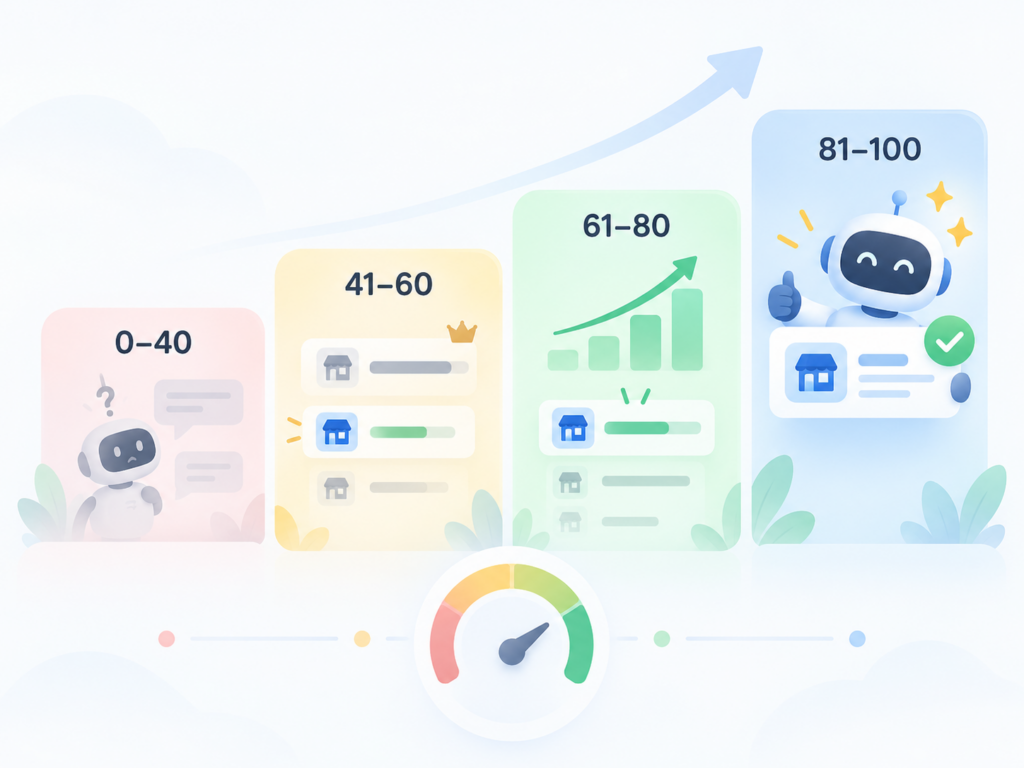
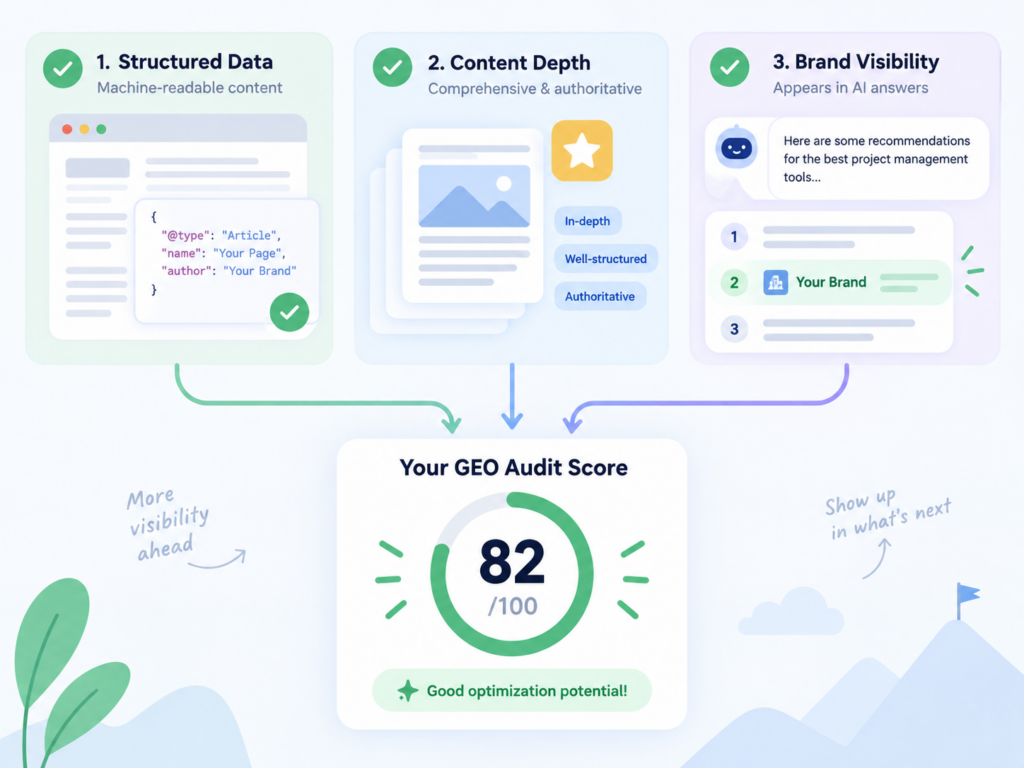
    There’s a way to see exactly where the disconnect is. Topify‘s Brand Authority Checker scores how AI models perceive your brand’s authority across four dimensions that directly affect whether you get recommended in financial services queries.

    ✅ Free ⚡ Results in 60 seconds 🔒 No signup required

    The Four Scores That Tell You If AI Trusts Your Fintech Brand

    Each Score, Translated for Financial Services

    The Brand Authority Checker doesn’t give you a single number and send you on your way. It breaks your brand’s AI-perceived authority into four distinct dimensions, each mapping to a specific problem fintech companies face in AI search.

    MetricWhat It MeasuresWhat It Means for Fintech Brands
    Recognition (0-100)How often AI identifies your brand in your categoryBelow 40: AI doesn’t associate you with your core product category, even if you process billions in transactions
    Expertise Depth (0-100)How well AI understands your capabilitiesBelow 50: AI may misrepresent your compliance certifications or fee structures
    Recommendation Rate (0-100)How often AI recommends you vs. alternativesBelow 30: you’re losing enterprise deals before your sales team talks to the prospect
    Trust Signals (0-100)External validation AI detects (media, reviews, citations)Below 40: AI can’t find enough third-party evidence to vouch for your brand’s reliability

    Here’s the thing: these four scores often tell a very different story than your internal brand perception. A fintech brand with a Recognition score of 85 but a Trust Signals score of 30 has a specific, fixable problem. AI knows who you are but doesn’t trust you enough to recommend you. That gap is where deals disappear.

    Three Signals That Should Worry a Fintech CMO

    High recognition, low recommendation. AI identifies your brand when users ask about your category, but consistently recommends others. This typically means your product information is visible but your third-party validation is weak. AI models in financial services weight external signals like analyst coverage, review platforms, and media mentions heavily before putting a brand on a shortlist.

    Low expertise depth in a regulated category. If AI can’t accurately describe what your product does, including its compliance posture, integration capabilities, and pricing model, it won’t recommend you for specific use cases. In fintech, where buyers ask precise questions like “Which payment processor supports PCI DSS Level 1 for marketplace transactions?”, a shallow expertise profile means you’re filtered out before the conversation starts.

    Declining trust signals after a product pivot. Fintech companies that rebrand, merge, or launch new product lines often see trust signals drop. The reason: AI models rely on a consensus of external sources. If your old product still dominates the media landscape while your new offering has thin coverage, AI will describe the version of your brand that no longer exists.

    Run Your Brand Through the Checker in 60 Seconds

    The process is straightforward. Go to the Brand Authority Checker, enter your brand name or domain, and get your four-dimensional authority breakdown. No account creation, no credit card, no strings. You’ll see exactly which of the four scores is dragging your AI visibility down and where to focus your effort.

    Fintech Buyers Ask AI Before They Call Sales. Here’s What AI Tells Them.

    58% of B2B technology buyers now use AI-powered search tools as part of their initial vendor research, up from 17% in 2023. In fintech, where switching costs are high and procurement cycles are long, the AI’s answer often determines which brands make the shortlist and which ones never get a meeting.

    The prompts these buyers type are specific, comparison-driven, and high-intent. Here’s what that looks like in practice:

    AI Prompt ExamplePlatformSearch IntentWhat It Reveals
    “Best payment processor for SaaS startups with PCI DSS compliance”ChatGPTPurchase decisionWhether your brand gets recommended for compliance-sensitive use cases
    “Is [brand] SOC 2 certified for enterprise payment processing?”PerplexityTrust verificationHow accurately AI describes your security posture
    “Compare embedded finance providers for marketplace apps”GeminiCompetitive researchWhere you rank against alternatives in AI’s assessment
    “Most trusted lending platform for small businesses 2026”ChatGPTCategory researchWhether AI considers you a category leader
    “Which regtech platform handles KYC for mid-size banks?”PerplexitySpecific capability matchWhether AI understands your product’s niche capabilities

    Each of these prompts represents a real moment where a buyer is forming a shortlist. If your brand isn’t in the AI’s response, you’re not on that list.

    Organic traffic in finance is down 7.4% year over year, while AI referral traffic to top sites surged 357%. The shift isn’t coming. It’s already here.

    The Credentials Gap: Why Your SOC 2 and Your AI Authority Score Don’t Match

    Most fintech brands assume that their real-world credentials, regulatory licenses, SOC 2 certifications, millions of users, translate directly into AI search authority. They don’t.

    AI models measure authority differently. They pull from external sources: analyst reports, review platforms like G2 and Trustpilot, media coverage, developer community discussions, and structured content on third-party sites. Your own website is one input among many, and often not the most influential one. Nearly 90% of AI citations come from earned media, according to a Muck Rack study. That means NerdWallet’s description of your product carries more weight in AI’s recommendation than your own feature page.

    This creates a specific problem for fintech brands. You may have invested heavily in compliance documentation, security audits, and product capabilities, but if those credentials aren’t reflected in the external sources AI trusts, the models won’t surface them.

    The Brand Authority Checker makes this gap visible. When your Trust Signals score is 30 points below your Recognition score, you’re looking at a brand that AI knows about but doesn’t trust enough to recommend. That’s the gap between what you’ve built and what the AI ecosystem can verify.

    AI Search Is Reshaping the Top of the Fintech Acquisition Funnel Right Now

    This isn’t a 2028 problem.

    Buyers arriving via AI citations convert at 5.1 times the rate of traditional search traffic. ChatGPT referrals convert at roughly 15.9%, Perplexity at 10.5%, compared to Google’s 1.8%. These aren’t vanity metrics. They reflect that AI-referred buyers arrive with higher intent and a pre-built shortlist.

    For fintech companies, this means the acquisition funnel is being restructured from the top. When a procurement officer at a regional bank asks ChatGPT to compare compliance platforms, the three or four brands in the response become the evaluation set. Everyone else starts at a deficit.

    The financial impact compounds. In fintech, where average contract values run into six or seven figures and switching costs lock in relationships for years, losing the initial shortlist doesn’t just cost you one deal. It costs you the entire lifetime value of that customer relationship.

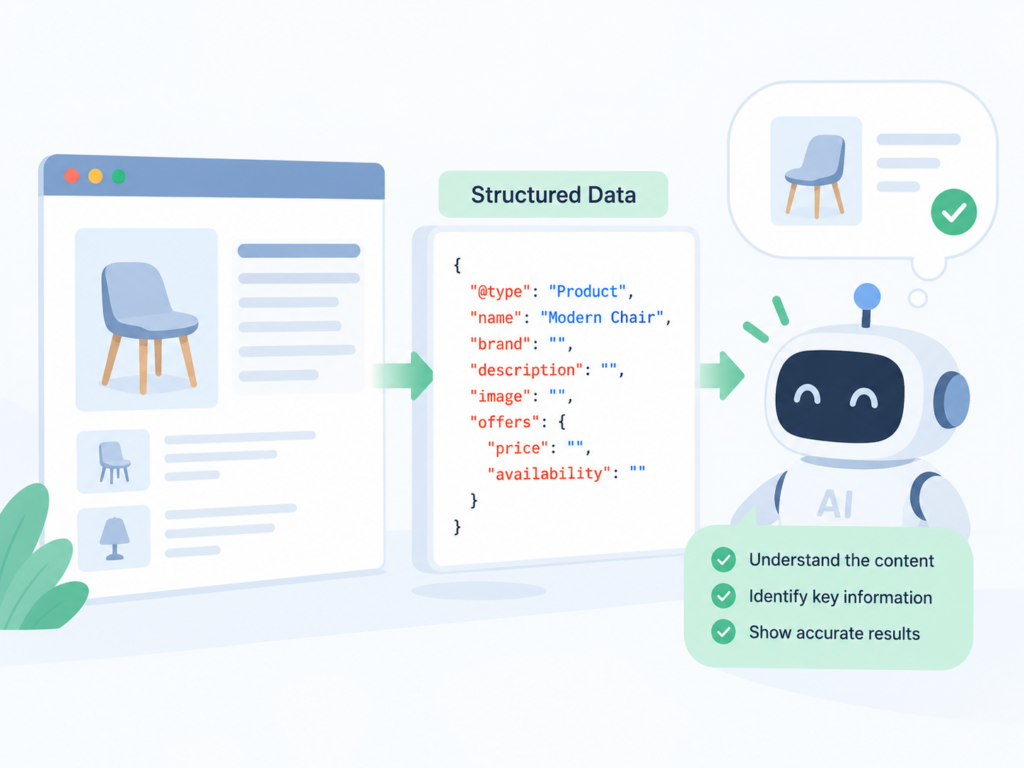
    Fintech brands with structured, data-rich content are 3.5 times more likely to receive unprompted AI citations in procurement-related queries. The pattern is clear: brands that make their expertise accessible and verifiable in formats AI can parse are the ones that show up. Brands that bury their best information in PDFs and gated whitepapers don’t.

    Your Brand Authority Checker score is the fastest way to see which side of that divide you’re on.

    One Authority Score Is a Starting Point. Tracking It Is the Strategy.

    Your Brand Authority Checker results tell you where you stand right now. But AI models update their training data, adjust ranking signals, and shift recommendations on a rolling basis. A Trust Signals score of 72 today could drop to 55 next quarter without any change on your end.

    Topify‘s platform picks up where the free tool leaves off. The Comprehensive GEO Analytics dashboard tracks your authority, sentiment, and visibility scores continuously across ChatGPT, Perplexity, Gemini, and Google AI Overviews. You’ll see trend lines, get alerts when scores shift, and receive specific recommendations for what to fix.

    Here’s how the free check compares to the full platform:

    CapabilityFree Brand Authority CheckerTopify Platform
    Check frequencyOne-time snapshotContinuous daily/weekly monitoring
    AI platforms coveredAggregated scorePer-platform breakdown (ChatGPT, Perplexity, Gemini, AI Overviews)
    Historical trendsNoneFull trend history with shift alerts
    Competitor trackingNot includedReal-time competitor benchmarking
    Action recommendationsGeneralSpecific, one-click GEO optimization
    Team collaborationNoUnlimited team member seats

    Every plan starts with a 7-day free trial, no credit card required. The Starter plan begins at $99/month.

    Conclusion

    AI search is already deciding which fintech brands make the shortlist and which ones stay invisible. The gap between your real-world credentials and your AI-perceived authority is measurable, and closing it starts with knowing your score.

    Run your brand through the Brand Authority Checker to see exactly where AI trusts you and where it doesn’t. Then use what you learn to build a visibility strategy that matches the way your buyers actually research financial products in 2026.

    For a complete picture, a few other free checks from Topify’s free tools can round out your diagnosis. The GEO Score Checker evaluates whether your site is technically optimized for AI crawlers. The AI Visibility Report shows how often your brand gets mentioned across major AI platforms. And the Competitor Analysis tool reveals who AI recommends instead of you, and why.

    FAQ

    Is the Brand Authority Checker really free? Do I need to create an account? 

    Yes, it’s completely free with no registration required. Enter your brand name or domain and get your four-score authority breakdown in under 60 seconds.

    What’s the difference between the free tool and the Topify paid platform? 

    The free tool gives you a one-time snapshot of your brand’s AI authority. The Topify platform provides continuous monitoring, historical trends, competitor benchmarking, and actionable optimization recommendations across all major AI platforms.

    How often should a fintech brand check its AI visibility? 

    At minimum, monthly. AI models update their training data and ranking signals regularly. A quarterly review is the bare minimum for regulated industries where accuracy of AI descriptions carries compliance implications.

    Can AI really misrepresent my fintech product’s compliance status? 

    Yes. AI models synthesize information from multiple sources, and outdated or conflicting data can lead to inaccurate descriptions of your certifications, fee structures, or regulatory standing. In fintech, this isn’t just a brand risk, it’s a potential legal exposure.

    Read More

  • AI Visibility Tools for DTC Brands in 2026

    AI Visibility Tools for DTC Brands in 2026

    Your customer just asked ChatGPT, “What’s the best sustainable sneaker brand under $150?” The AI responded with three recommendations, detailed pros and cons for each, and a confident verdict. Your brand, the one with 4.8-star reviews and a carbon-neutral supply chain, didn’t make the list. Worse, a competitor with fewer reviews and a higher price point did.

    The gap isn’t your product. It’s how AI perceives your brand.

    Topify‘s Brand Sentiment Checker shows you exactly what AI models think about your DTC brand, broken down by strengths, weaknesses, and an overall sentiment score that directly affects whether you get recommended or warned against.

    ✅ Free ⚡ Full sentiment breakdown in seconds 🔒 No signup required

    What the Brand Sentiment Checker Actually Tells You About Your DTC Brand

    Most DTC teams track NPS, Trustpilot scores, and social mentions. None of those tell you what AI models are saying about your brand when a shopper asks for a recommendation. That’s a different data layer entirely.

    The Brand Sentiment Checker bridges that gap. It analyzes how AI systems describe your brand and translates the output into actionable dimensions.

    Three Scores That Decide Whether AI Recommends or Warns Against You

    Each dimension maps to a specific risk for DTC brands competing in AI-driven product discovery.

    Sentiment DimensionWhat It MeasuresWhat It Means for DTC Brands
    Overall Sentiment Score (0-100)Net positive vs. negative tone AI associates with your brandBelow 50: AI is attaching caveats or warnings when mentioning your products
    Strengths DetectedSpecific positive attributes AI highlightsShows which product claims AI actually believes and repeats to shoppers
    Weaknesses FlaggedSpecific negative attributes AI surfacesReveals outdated complaints or misconceptions AI is still circulating

    A DTC skincare brand might score 75 overall but discover that AI consistently flags “fragrance irritation” as a weakness. If that formula was reformulated two years ago, you’ve found the exact disconnect costing you AI recommendations.

    That single insight is worth more than a month of keyword research.

    When AI Sentiment Doesn’t Match Your Current Product

    Here’s the pattern that hits DTC brands hardest: you ship V2 of your product, but AI still describes V1.

    AI models pull sentiment from reviews, articles, Reddit threads, and third-party comparisons. If the loudest signals in that mix are two-year-old complaints about sizing, durability, or shipping speed, the AI’s description of your brand is frozen in time. Your product improved. The AI’s opinion didn’t.

    This plays out in three common scenarios for DTC brands:

    Scenario 1: The fixed flaw. Early reviews mentioned a quality issue. You fixed it 18 months ago. AI still references it when shoppers ask about your category.

    Scenario 2: The missing upgrade. You launched a new product line or feature. AI doesn’t know it exists because the third-party content hasn’t caught up.

    Scenario 3: The sentiment mismatch. Your owned channels emphasize sustainability and premium quality. AI describes you as “budget-friendly but inconsistent.” The positioning you built isn’t the positioning AI learned.

    The Brand Sentiment Checker surfaces all three. You don’t need to guess which scenario applies to your brand.

    How to Run Your Brand Sentiment Check

    Three steps, under 60 seconds:

    1. Go to Brand Sentiment Checker
    2. Enter your brand name or domain
    3. Get your sentiment breakdown: overall score, specific strengths AI recognizes, and specific weaknesses AI flags

    No account needed. No credit card. You’ll see exactly how AI describes your brand to the shoppers asking about your category right now.

    The AI Prompts DTC Shoppers Are Already Using to Find (or Skip) Your Products

    37% of consumers now start their search journey with AI tools instead of Google. For DTC brands, that means your next customer might never visit a search engine at all. They’ll ask an AI assistant, get a direct answer, and buy.

    The table below shows how real DTC shoppers are prompting AI, and what each query reveals about your brand’s visibility.

    AI Prompt ExamplePlatformSearch IntentWhat It Reveals About Your Brand
    “Best DTC protein powder for women over 40”ChatGPTPurchase decisionWhether AI recommends you in your target demographic
    “Is [brand] worth the price compared to alternatives?”PerplexityTrust verificationHow AI frames your value proposition vs. competitors
    “Sustainable sneaker brands under $150”GeminiCategory discoveryWhether your brand appears in AI’s curated shortlist
    “What do people say about [brand] quality?”ChatGPTSentiment checkThe exact language AI uses to describe your product quality
    “Best dog food brands for allergies 2026”Google AI OverviewSpecific need matchWhether AI associates your brand with the right use case

    Each of these prompts triggers an AI response that either includes your brand or doesn’t. And when it does include you, the sentiment attached to your mention determines whether the shopper clicks through or moves on.

    DTC brands like Pawco have already reported that customers are discovering them through AI searches for terms like “best food for dogs with allergies.” The channel is real. The question is whether AI’s description of your brand helps or hurts when those queries happen.

    Two Shifts DTC Brands Can’t Afford to Ignore in AI Search

    AI Sentiment Is Stuck on Your Old Reviews. Your Product Has Moved On.

    A DTC bedding brand reformulates its pillow fill after early complaints about firmness. New reviews are overwhelmingly positive. But when a shopper asks Perplexity, “Is [brand] pillow too firm?”, the AI answers with a qualified yes, citing language patterns from reviews that are now two years old.

    This isn’t a hypothetical. AI models synthesize sentiment from everything published about your brand online, and they don’t weight recency the way a human reviewer would. A Criteo study tracking 28 fashion brands across ChatGPT, Gemini, and Claude found that AI recommendations correlated with consistent, specific positioning across all published content, not with the most recent content alone.

    For DTC brands that iterate fast, this creates a structural disadvantage. You ship improvements quarterly. AI updates its perception on a much slower cycle.

    The Brand Sentiment Checker makes this gap visible. Run your brand through the tool, and compare the weaknesses AI flags against your current product. If there’s a mismatch, you’ve identified exactly which narratives need to be updated across review platforms, PR, and third-party content.

    Ad Spend Doesn’t Buy AI Recommendations. Sentiment Signals Do.

    DTC growth has historically been a budget game. Bid higher on Meta, scale spend on Google, win more customers. The median DTC brand now spends $130 to $156 to acquire a single customer through those channels.

    AI search works on entirely different rules. You can’t bid your way into a ChatGPT recommendation.

    What determines whether AI recommends your brand? The signals it can verify: review quality, third-party citations, brand positioning consistency, and structured product data. In an analysis of over 5,000 ChatGPT shopping carousels, an online-only DTC brand most shoppers had never heard of appeared in nearly 30% of triggered results, while a globally recognized retailer appeared in fewer than 2%. The difference wasn’t brand awareness or ad spend. It was data quality and sentiment signals.

    This is the shift DTC teams need to internalize. AI referral traffic already converts at 11.4% compared to 5.3% for organic search. The channel is higher-intent, higher-converting, and completely inaccessible through traditional paid media.

    48% of AI citations come from community platforms like Reddit, review sites, and forums. That means your brand’s AI sentiment isn’t shaped by what you publish on your own site. It’s shaped by what others say about you on platforms you don’t control.

    The starting point is knowing what AI currently thinks. That’s what the Brand Sentiment Checker gives you in 60 seconds, for free.

    One Sentiment Snapshot vs. Continuous Brand Monitoring

    The Brand Sentiment Checker gives you a clear picture of where your brand stands right now. But AI models don’t stay static. They retrain, update their retrieval sources, and shift recommendations on a rolling basis. A sentiment score of 72 today could drop to 55 next quarter if a wave of negative reviews hits Reddit or a competitor’s PR push reshapes your category narrative.

    For DTC brands running product launches, seasonal campaigns, or responding to PR issues, a one-time check isn’t enough. You need to know when AI’s perception of your brand changes, not discover it after sales dip.

    Topify‘s Comprehensive GEO Analytics dashboard picks up where the free tool leaves off. It tracks your sentiment, visibility, and authority scores continuously across ChatGPT, Perplexity, Gemini, and Google AI Overviews. You’ll get trend data, alerts when scores shift, and specific recommendations for what to fix.

    Here’s how the free check compares to the full platform:

    CapabilityFree Brand Sentiment CheckerTopify Platform
    Check frequencyOne-time snapshotContinuous daily/weekly monitoring
    AI platforms coveredAggregated scorePer-platform breakdown (ChatGPT, Perplexity, Gemini, AI Overviews)
    Historical trendsNoneFull trend history with shift alerts
    Competitor sentiment trackingNot includedReal-time competitor benchmarking
    Action recommendationsGeneralSpecific, one-click GEO optimization
    Team collaborationNoUnlimited team member seats

    Every plan starts with a 7-day free trial, no credit card required. The Starter plan begins at $99/month.

    Conclusion

    DTC brand discovery is moving to AI, and it’s moving fast. Referral traffic from AI chatbots to US retailers grew 760% year-over-year in late 2025. Your customers are asking AI what to buy. The sentiment AI attaches to your brand in those answers determines whether you get the click or get passed over.

    Start with a free Brand Sentiment Checker scan. See what AI actually says about your products. Then build a plan to close the gap between your brand’s reality and AI’s perception of it.

    For ongoing monitoring, start a free trial of Topify’s platform to track sentiment shifts across every major AI platform.

    Other Free Tools to Round Out Your AI Visibility Audit

    While you’re checking your brand sentiment, a few other free tools can fill in the picture. Topify‘s GEO Score Checkerevaluates whether AI crawlers can access and understand your site’s structure. The AI Visibility Report shows how often your brand gets mentioned across major AI platforms. And the Prompts Researcher reveals the exact product questions DTC shoppers are asking AI in your category.

    FAQ

    Is the Brand Sentiment Checker free? Do I need to sign up? 

    Yes, it’s completely free. No signup, no credit card, no email required. Enter your brand name or domain and get your sentiment breakdown in under 60 seconds.

    What’s the difference between the free tool and the Topify platform? 

    The free Brand Sentiment Checker gives you a one-time snapshot of AI sentiment. The Topify platform provides continuous monitoring across ChatGPT, Perplexity, Gemini, and Google AI Overviews, with historical trends, competitor benchmarking, and actionable optimization recommendations. Plans start at $99/month with a 7-day free trial.

    How often should DTC brands check their AI sentiment? 

    At minimum, after every major product launch, reformulation, or PR event. AI models update their knowledge on irregular cycles, so a quarterly manual check with the free tool is a reasonable baseline. For brands in competitive categories or running frequent product updates, continuous monitoring through the platform is the more practical approach.

    Can AI sentiment actually affect DTC sales? 

    Yes. ChatGPT-referred visits convert at 11.4% compared to 5.3% for organic search. When AI attaches negative sentiment or outdated complaints to your brand, shoppers who discover you through AI start with a negative impression, or skip your brand entirely. The sentiment AI associates with your brand is increasingly a direct driver of purchase decisions.

    Read More

  • AI Visibility Tools for E-Commerce Brands

    AI Visibility Tools for E-Commerce Brands

    A shopper typed into ChatGPT: “Compare running shoes under $150 with good arch support.” Your brand appeared in the response, but with a caveat: “some users report inconsistent sizing.” That sizing issue was resolved two product lines ago. The AI doesn’t know that.

    You can see exactly how AI describes your brand right now. Topify‘s Brand Sentiment Checker analyzes the sentiment AI models attach to your brand, surfaces specific strengths and weaknesses AI associates with your products, and shows you where perception doesn’t match reality.

    ✅ Free ⚡ Full sentiment breakdown in seconds 🔒 No signup required

    What AI Actually Says About Your Brand When Shoppers Ask

    Your product pages tell one story. AI tells another. When a consumer asks ChatGPT, Perplexity, or Gemini for a product recommendation, the AI doesn’t pull your marketing copy. It synthesizes reviews, forum discussions, media coverage, and third-party evaluations to construct a description of your brand. That description includes a sentiment layer, and it directly affects whether AI recommends you or steers shoppers elsewhere.

    The Brand Sentiment Checker breaks down AI’s perception of your brand into specific, measurable dimensions. Here’s what each one tells you in an e-commerce context.

    The Scores That Decide If AI Recommends or Warns

    MetricWhat It MeasuresWhat It Means for E-Commerce Brands
    Overall Sentiment ScoreNet positive/negative/neutral tone AI uses to describe your brandBelow neutral: AI is actively cautioning shoppers about your products
    Strengths IdentifiedSpecific positive attributes AI associates with your brandFew strengths: AI has no compelling reason to recommend you over alternatives
    Weaknesses FlaggedSpecific negative attributes or concerns AI highlightsActive weaknesses: AI may add caveats like “some users report issues with…”
    Sentiment GapDifference between how AI describes you vs. how customers actually rate youLarge gap: AI is working with outdated or skewed information

    A brand with strong sales and a 4.6-star average on its own site can still carry a negative sentiment score in AI. That disconnect is the problem the checker is built to surface.

    When “Fixed Two Years Ago” Still Shows Up in AI Answers

    Here’s where e-commerce brands run into trouble. AI models don’t update their understanding of your brand in real time. They synthesize from a broad content ecosystem, and that ecosystem has a long memory.

    Scenario 1: The ghost review. Your brand had a batch of defective units in 2023. You issued a recall, improved QC, and moved on. But the Reddit threads, blog reviews, and forum complaints from that period are still indexed. AI picks up “quality control issues” as a recurring theme and mentions it when shoppers ask about your category.

    Scenario 2: The outdated comparison. A popular review site published a head-to-head comparison 18 months ago where your product scored lower on durability. You’ve since launched a redesigned version. AI still references the old comparison because no updated content has replaced it in the training ecosystem.

    Scenario 3: The sentiment mismatch. Your Trustpilot score is 4.5 with 3,000+ reviews, but AI describes your brand as “mixed reviews.” The reason: a cluster of negative reviews from a single incident weighs disproportionately in AI’s synthesis because those reviews generated the most discussion and backlinks.

    Running your brand through the checker exposes which of these patterns are affecting you.

    Run Your Brand Through the Checker in 60 Seconds

    Go to the Brand Sentiment Checker, enter your brand name or domain, and get your full sentiment breakdown. You’ll see the exact strengths AI associates with your brand, the specific weaknesses it flags, and your overall sentiment score. No account, no credit card, no waiting.

    The whole process takes under a minute, and the output tells you exactly where AI’s description of your brand diverges from reality.

    The AI Prompts Driving E-Commerce Decisions Right Now

    64% of consumers plan to use AI chatbots for shopping in 2026. That’s not a projection. It’s survey data from over 1,000 consumers. And among daily AI users, 70% have already used AI for shopping, spending an average of $540 across 9 transactions in 2025.

    The prompts these shoppers use aren’t vague. They’re specific, comparison-driven, and high-intent. Here’s what they look like in practice.

    AI Prompt ExamplePlatformSearch IntentWhat It Reveals About Your Brand
    “Best wireless earbuds under $100 for running”ChatGPTPurchase decisionWhether AI recommends your product or flags comfort/durability concerns
    “Compare organic skincare brands for sensitive skin”PerplexityCompetitive comparisonHow your sentiment stacks up against alternatives in the same category
    “Most reliable laptop brand for remote workers”GeminiTrust verificationWhether AI describes your brand as “reliable” or adds qualifiers
    “Which DTC mattress has the best return policy?”ChatGPTPolicy-driven decisionWhether AI accurately reflects your current policies or cites outdated info
    “Top-rated coffee makers under $200, 2026”PerplexityCategory researchWhether your brand appears at all, and with what sentiment

    Each of these prompts represents a moment where AI either recommends your brand with confidence or adds a caveat that sends the shopper elsewhere. The sentiment AI attaches to your brand in these responses isn’t random. It’s a direct reflection of what the content ecosystem says about you.

    On Black Friday 2025, shoppers arriving from ChatGPT converted on Amazon at 1.7x the rate of Google-referred shoppers, with 11% higher average order value. The channel is already converting. The question is whether your brand shows up in it with the right sentiment.

    AI’s Perception of Your Brand Is Built on Third-Party Reviews, Not Your Website

    Here’s the thing most e-commerce teams miss: the content that shapes AI’s sentiment about your brand isn’t on your website. It’s on Trustpilot, Reddit, YouTube reviews, niche blogs, and comparison sites. AI models weight third-party, user-generated content far more heavily than brand-owned marketing copy when forming sentiment judgments.

    This is a fundamental shift from traditional SEO. In Google rankings, you can control a significant portion of the narrative through on-page optimization, content marketing, and link building. In AI search, the narrative is shaped by what others say about you, and AI is very good at detecting patterns in that external conversation.

    A practical example: if your brand has a 4.7-star average across 5,000 reviews on your own site, but your Trustpilot score sits at 3.8 with 800 reviews and active negative threads on Reddit, AI will lean toward the Trustpilot and Reddit signals. Not because those platforms are more accurate, but because AI treats independent sources as more credible for sentiment synthesis.

    The data supports this pattern. 78% of consumers say reviews increase their trust in AI recommendations, and 98% verify AI’s suggestions by checking external sources. AI models anticipate this verification behavior and front-load sentiment signals from the same sources consumers will check.

    What This Means for Your Sentiment Strategy

    Review SourceAI WeightingWhy It Matters for E-Commerce
    Trustpilot / Google ReviewsHighPrimary sentiment signal for consumer brands
    Reddit threads and commentsHighAI treats candid user discussion as high-trust signal
    YouTube product reviewsMedium-HighVideo review sentiment gets synthesized into text descriptions
    Niche comparison blogsMediumCategory-specific authority influences AI’s competitive framing
    Brand-owned website copyLowAI discounts self-reported claims in favor of external validation

    This isn’t about gaming reviews. It’s about understanding which parts of your review ecosystem are actually shaping how AI describes you, and making sure that ecosystem reflects your current product quality, not last year’s problems.

    Outdated Negative Reviews Are Costing You AI Recommendations Right Now

    AI models don’t have a “recency” filter the way you’d expect. When ChatGPT or Perplexity synthesizes information about your brand, it pulls from the entire content history available to it. A negative review from 2022 that generated significant discussion carries roughly the same weight as a positive review from last month, sometimes more, because older content often has more backlinks and cross-references.

    For e-commerce brands, this creates a specific problem: product improvements don’t automatically update AI’s perception. You may have redesigned your packaging, upgraded your materials, or overhauled your customer service process. If the content ecosystem still has more volume and engagement around the old problems than the new solutions, AI keeps surfacing the old narrative.

    The Brand Sentiment Checker helps you identify exactly which negative signals AI is still picking up. Once you see the specific weaknesses AI flags, you can trace them back to their source and build a content strategy that addresses them directly. That might mean publishing updated comparison content, encouraging recent customers to leave reviews on high-weight platforms, or creating case studies that directly counter the outdated narrative.

    Only 16% of brands currently track their AI search performance systematically. That means the majority of e-commerce brands don’t know what AI is saying about them. In a channel where AI-referred traffic converts 42% better than non-AI traffic, that blind spot has a direct revenue impact.

    One Sentiment Check Is a Snapshot. Tracking It Is the Strategy.

    Your Brand Sentiment Checker results tell you where you stand right now. But AI models update their training data, ingest new content, and shift how they describe brands on a rolling basis. A positive sentiment score today doesn’t guarantee the same result next quarter, especially if a competitor launches a review campaign or a negative thread goes viral in your category.

    Topify‘s platform picks up where the free tool leaves off. The Comprehensive GEO Analytics dashboard tracks your sentiment, visibility, and authority scores continuously across ChatGPT, Perplexity, Gemini, and Google AI Overviews. You’ll see trend lines over time, get alerts when sentiment shifts, and receive specific recommendations for what to fix.

    Here’s how the free check compares to the full platform:

    CapabilityFree Brand Sentiment CheckerTopify Platform
    Check frequencyOne-time snapshotContinuous daily/weekly monitoring
    AI platforms coveredAggregated sentiment scorePer-platform breakdown (ChatGPT, Perplexity, Gemini, AI Overviews)
    Historical trendsNoneFull trend history with shift alerts
    Competitor sentimentNot includedReal-time competitor sentiment benchmarking
    Actionable next stepsGeneral insightSpecific, data-driven optimization recommendations
    Team collaborationNoUnlimited team member seats

    Every plan starts with a 7-day free trial, no credit card required. The Starter plan begins at $99/month.

    Conclusion

    AI shopping isn’t a future channel. ChatGPT processes roughly 50 million shopping queries per day, and the consumers using it convert at significantly higher rates than those arriving from traditional search. For e-commerce brands, the question isn’t whether AI matters. It’s whether AI describes your brand accurately and favorably when shoppers ask.

    Start with the free Brand Sentiment Checker to see exactly what AI says about your brand today. If the sentiment doesn’t match your current product quality and customer experience, you’ve found the gap. From there, Topify’s platform gives you the continuous monitoring and optimization tools to close it.

    Other Free Tools to Round Out the Picture

    While you’re assessing brand sentiment, a few other free checks can cover additional dimensions. Topify‘s GEO Score Checker evaluates whether AI crawlers can access and interpret your product pages properly. The AI Visibility Reportshows how often your brand gets mentioned across major AI platforms. And the Competitor Analysis tool reveals which brands AI considers your direct competitors and how you stack up.

    FAQ

    Is the Brand Sentiment Checker free? Do I need to sign up? 

    Yes, it’s completely free with no signup, no login, and no credit card required. Enter your brand name or domain and get your sentiment breakdown in under 60 seconds.

    What’s the difference between the free tool and Topify’s paid platform? 

    The free tool gives you a one-time sentiment snapshot. The paid platform adds continuous monitoring, per-platform breakdowns, historical trend tracking, competitor benchmarking, and actionable optimization recommendations. Plans start at $99/month with a 7-day free trial.

    How often should e-commerce brands check their AI sentiment?

     At minimum, once a month. If you’re running active campaigns, launching new products, or recovering from a PR issue, check bi-weekly. Significant changes in your review ecosystem, like new Trustpilot reviews, Reddit threads, or media coverage, can shift AI sentiment within weeks.

    Can AI sentiment actually affect my e-commerce revenue?

     Directly. AI-referred traffic to retail sites converts 42% better than non-AI traffic in 2026, and 64% of consumers plan to use AI for shopping this year. If AI describes your brand with negative sentiment or outdated caveats, those high-converting shoppers are going to your competitors instead.

    Read More

  • AI Visibility Tools for B2B Software

    AI Visibility Tools for B2B Software

    A VP of Procurement typed into ChatGPT: “Best project management software for enterprise teams with Salesforce integration.” Five brands came back. Yours wasn’t one of them. That VP didn’t search Google next. They didn’t visit your website. They shortlisted the five names AI gave them and moved on.

    This is happening at scale. 51% of B2B software buyers now start their research with an AI chatbot more often than with Google. And 69% end up choosing a different vendor than they originally planned, based on what the chatbot recommended.

    The question isn’t whether your product is good. It’s whether AI knows that.

    Topify‘s Brand Profile Checker shows you exactly how AI models perceive your brand: what category they place you in, which competitors they associate you with, and how much your positioning overlaps with theirs. ✅ Free ⚡ Results in 60 seconds 🔒 No signup required.

    What AI Actually Thinks About Your B2B Software Brand

    Most B2B software companies assume AI understands their positioning because their website does a good job explaining it. That assumption is wrong more often than you’d expect.

    AI models build their own brand portraits based on training data, citations, reviews, and content signals. The Brand Profile Checker surfaces that portrait and breaks it into three dimensions you can act on.

    The Three Dimensions That Shape Your AI Identity

    Each dimension maps to a specific risk for B2B software brands.

    DimensionWhat It RevealsWhat It Means for B2B Software
    Brand PortraitHow AI describes your product, category, and positioningIf AI calls your enterprise platform a “small business tool,” every recommendation goes to the wrong buyer segment
    Competitor DiscoveryWhich brands AI associates as your direct competitorsAI may compare you to brands outside your actual competitive set, diluting your positioning
    Competitive Overlap ScoreHow much your brand identity overlaps with each competitorHigh overlap with the wrong competitor means AI can’t differentiate you when buyers ask “which one should I pick”

    A B2B analytics platform with a strong Brand Portrait but high overlap with a general BI tool has a specific problem: AI recognizes what you do, but can’t articulate why you’re different. That’s the gap where deals get lost.

    Three AI Positioning Errors That Cost B2B Software Companies Pipeline

    Here’s what the Brand Profile Checker typically uncovers for B2B software brands.

    Wrong category placement. Your product serves mid-market and enterprise buyers, but AI categorizes you alongside SMB tools. Every time a buyer asks for “enterprise-grade” options, you’re filtered out before the answer is generated.

    Stale feature narrative. You launched a major platform update six months ago, but AI still describes capabilities from two versions back. Buyers comparing features through AI get an outdated picture of what you offer.

    Competitor mismatch. AI associates you with brands you don’t consider competitors. When a buyer asks “How does [your brand] compare to [unexpected competitor]?”, the comparison framework works against you because AI has grouped you incorrectly.

    How to Run Your Brand Profile Check

    Go to the Brand Profile Checker, enter your brand name or domain, and get your full AI brand portrait in under 60 seconds. You’ll see the exact language AI uses to describe you, the competitors it associates with you, and the overlap scores that show where differentiation is weak. No account, no credit card, nothing to install.

    The Prompts Your Buyers Type Before They Ever Visit Your Website

    B2B software buyers don’t type keywords into AI. They describe their exact situation, constraints, and requirements. These prompts are increasingly where shortlists get built.

    G2’s 2026 research found that 71% of B2B software buyers rely on AI chatbots somewhere in their research process. The prompts below represent the types of questions that determine whether your brand makes the cut.

    AI Prompt ExamplePlatformBuyer IntentWhat Determines If You Show Up
    “Best CRM for mid-market B2B with Salesforce integration”ChatGPTVendor shortlistingWhether AI places you in the CRM category for that company size
    “Compare [Category] tools for healthcare compliance”PerplexityFeature comparisonWhether AI accurately describes your compliance capabilities
    “What project management software do 500-person tech companies use?”GeminiSocial proof validationWhether AI associates your brand with that company profile
    “Is [Your Brand] good for enterprise teams?”ChatGPTDirect brand evaluationHow AI describes your strengths, weaknesses, and ideal customer
    “Top analytics platforms under $50K/year for B2B”PerplexityBudget-filtered discoveryWhether AI knows your pricing tier and positions you correctly
    “Which [Category] tool has the best API and integrations?”ClaudeTechnical evaluationWhether AI has indexed your technical documentation and partner ecosystem

    Notice the pattern. These aren’t keyword searches. They’re full buying scenarios. And AI assembles its answer based on how well it understands your brand’s profile, not just whether your website ranks for a given term.

    AI Is the New Front Door to B2B Software Discovery

    The shift is no longer emerging. It’s measurable and accelerating.

    73% of B2B buyers now use AI tools in their purchase research process. Among B2B software buyers specifically, the number starting with AI over Google jumped from 29% to 51% in just 11 months. This isn’t a niche behavior pattern. It’s the new default.

    Here’s the thing: AI doesn’t generate a page of ten links. It generates a single answer with three to five recommendations. If you’re not in that answer, you don’t get a second chance on “page two.” There is no page two.

    The pipeline impact is direct. AI search traffic converts at 14.2% compared to Google organic’s 2.8%. Buyers who arrive through AI recommendations are further along in their decision process and more likely to convert. But only 22% of marketers currently track AI visibility at all.

    The math is uncomfortable. The channel with the highest conversion rate is the one almost nobody is monitoring.

    DerivateX benchmark of 50 B2B SaaS companies found the average AI Presence Score is 56.9 out of 100, with 44% scoring below 50. The gap between the top scorer (89) and the bottom (2) is 87 points. Both companies had active marketing teams. The difference wasn’t marketing effort. It was whether AI could find, classify, and recommend them.

    Running your brand through the Brand Profile Checker is the fastest way to see which side of that gap you’re on.

    Your Real Competitors in AI Search Might Not Be Who You Think

    Most B2B software companies have a well-defined competitive set. You know who shows up in RFPs, who your sales team loses deals to, and who appears on G2 comparison pages.

    AI has its own competitive map. And it doesn’t always match yours.

    AI models construct competitive relationships based on content co-occurrence, citation patterns, review site associations, and training data signals. If a series of blog posts and analyst reports consistently mention your brand alongside a company you’ve never considered a competitor, AI will treat that association as real. When a buyer asks “How does [your brand] compare to [that company]?”, AI will generate a detailed comparison, whether or not the comparison makes sense.

    This creates two problems. First, you may be getting compared against brands that serve a different market segment, making your product look like a poor fit for the buyer’s needs. Second, the brands you actually compete with may not show up in AI’s competitive frame at all, meaning buyers never see the comparison you’d actually win.

    The Brand Profile Checker’s competitor discovery feature shows you exactly which brands AI associates with yours. The competitive overlap scores tell you how differentiated AI thinks you are from each one. If your overlap with the wrong competitor is 80%, that’s a positioning problem you can fix. But you have to see it first.

    On the flip side, low overlap with your actual competitors could mean AI isn’t even placing you in the right competitive conversation. Both scenarios require different strategies, and both start with knowing what AI currently sees.

    From a One-Time Brand Check to Continuous Competitive Intelligence

    Your Brand Profile Checker results show you a snapshot. It’s valuable, but it’s a snapshot of a moving target.

    AI models update their training data, re-index content, and adjust recommendation patterns continuously. A competitor publishes a wave of thought leadership content, and their overlap score with your brand shifts. A product review site updates its rankings, and AI’s competitive map reorganizes. Your brand portrait today may not be your brand portrait next quarter.

    Topify‘s Dynamic Competitor Benchmarking picks up where the free check leaves off. It tracks your brand’s competitive positioning across ChatGPT, Perplexity, Gemini, and Google AI Overviews on an ongoing basis, alerting you when competitive dynamics shift and giving you specific recommendations on how to respond.

    CapabilityFree Brand Profile CheckerTopify Platform
    Check frequencyOne-time snapshotContinuous daily/weekly monitoring
    Competitor discoveryAI-identified competitors at one point in timeOngoing competitor tracking with new entrant alerts
    Overlap scoringStatic scoreTrend lines showing overlap changes over time
    AI platforms coveredAggregated resultPer-platform breakdown (ChatGPT, Perplexity, Gemini, AI Overviews)
    Positioning alertsNoneAutomated alerts when AI changes how it describes you
    Action recommendationsManual interpretationSpecific, prioritized optimization steps

    Every plan starts with a 7-day free trial, no credit card required. The Starter plan begins at $99/month.

    Conclusion

    B2B software buying starts in AI now. Over half of buyers open a chatbot before they open Google, and most of them follow the recommendation they get. If AI doesn’t recognize your brand, place it in the right category, or differentiate it from competitors, you’re losing pipeline before your sales team has a chance to engage.

    Start with what you can see. Run your brand through the Brand Profile Checker and find out how AI perceives your positioning today. Then decide whether a one-time check is enough, or whether continuous monitoring through Topify’s platform is what your competitive landscape requires.

    Other Free Tools Worth Running

    While you’re checking your brand profile, a few other free checks can round out the picture. Topify‘s Competitor Analysistool shows you how AI ranks your brand against specific competitors on strengths, weaknesses, and market positioning. The AI Visibility Report gives you a cross-platform snapshot of how often your brand gets mentioned across major AI platforms. And the Prompts Researcher reveals the exact questions buyers in your category are asking AI, so you can align your content to the prompts that drive shortlists.

    FAQ

    Is the Brand Profile Checker free? Do I need to create an account? 

    Yes, it’s completely free. No account, no signup, no credit card. Enter your brand name or domain and get results in under 60 seconds.

    What’s the difference between the free tool and the Topify platform? 

    The free Brand Profile Checker gives you a one-time snapshot of your AI brand portrait and competitor associations. The Topify platform provides continuous monitoring, historical trend data, per-platform breakdowns, automated alerts, and actionable optimization recommendations. Plans start at $99/month with a 7-day free trial.

    How often should B2B software companies check their AI visibility? 

    At minimum, after any major product launch, pricing change, or competitive shift. AI models update frequently, and your brand’s positioning can change without any action on your end. Companies in fast-moving categories benefit from weekly or daily monitoring through the full platform.

    Can AI visibility actually impact B2B software pipeline? 

    Yes. AI search traffic converts at 5.1x the rate of traditional organic search, and 69% of B2B software buyers have changed their vendor choice based on an AI chatbot’s recommendation. Brands that are visible and correctly positioned in AI answers enter the consideration set earlier and more often.

    Read More

  • AI Visibility Tools for SaaS Companies

    AI Visibility Tools for SaaS Companies

    A VP of Marketing at a mid-stage SaaS company typed “best project management tool for 50-person startups” into ChatGPT last week. Her product has 4.7 stars on G2, ranks on page one of Google, and processes 10,000 active accounts. It didn’t appear in the AI’s answer. Three competitors she’d never tracked showed up instead.

    That gap between Google rankings and AI recommendations is where SaaS pipeline quietly disappears. And it’s measurable.

    Topify‘s Competitor Analysis tool shows you exactly who AI recommends instead of you, how your positioning compares, and where the overlap sits across your category. ✅ Free ⚡ Results in 60 seconds 🔒 No signup required

    What AI’s Competitive Map Looks Like for Your SaaS Category

    Most SaaS teams track competitors through G2 grids, analyst reports, and win/loss interviews. None of those sources reflect how AI search engines rank and recommend your category. The Competitor Analysis tool surfaces AI’s actual view of your competitive position, broken into dimensions that directly affect whether you get recommended.

    The Metrics That Tell You Who’s Winning in AI Search

    Each metric maps to a specific competitive dynamic SaaS brands face in AI-generated answers.

    MetricWhat It MeasuresWhat It Means for SaaS Brands
    Competitive Overlap (0-100)How much AI sees you and a competitor as interchangeableAbove 70: AI treats you as a direct substitute, meaning you’re competing for the same recommendation slots
    Strengths vs WeaknessesHow AI describes each brand’s advantages and gapsMisaligned descriptions mean AI is telling buyers the wrong story about your product
    Market PositioningWhere AI places you in the category hierarchyIf AI positions you as “mid-market” when you serve enterprise, your ICP never sees you
    AI Perception SummaryThe narrative AI builds about your brand vs competitorsPerception gaps reveal where third-party content is shaping AI’s view more than your own messaging

    A SaaS brand might discover that AI perceives its strongest competitor as a company it doesn’t even track in its competitive intelligence deck. That’s the kind of blind spot this tool exposes.

    Three Scenarios SaaS Brands Discover After Running This Check

    Your real AI competitors aren’t who you think. A CRM platform tracking five known competitors discovers that AI recommends three entirely different brands, two of which are smaller startups with strong Reddit presence and third-party editorial coverage. Traditional market share doesn’t predict AI recommendations.

    AI describes your strengths differently than your positioning. Your messaging emphasizes enterprise security and compliance. AI describes you as “affordable and easy to set up.” That disconnect means enterprise buyers filtering for security-first solutions never see your name. The Competitor Analysis tool surfaces exactly how AI frames your strengths versus how it frames your competitors’.

    You’re visible on one platform but invisible on another. Only 11% of domains get cited by both ChatGPT and Perplexity. Your competitor might dominate ChatGPT recommendations while you own Perplexity, and neither of you knows it without checking.

    How to Run Your Competitive Analysis in 60 Seconds

    Step 1: Go to Competitor Analysis and enter your brand name or domain.

    Step 2: The tool identifies who AI considers your competitors and scores the overlap, positioning, and perception for each.

    Step 3: Review the breakdown. Look for competitors you didn’t expect, positioning mismatches, and gaps in how AI describes your strengths versus theirs.

    No account needed. No credit card. You’ll have a full competitive picture in under a minute.

    The Prompts SaaS Buyers Type Into AI Before They Ever Visit Your Site

    94% of B2B buyers now use AI search during their purchasing process, and generative AI has surpassed vendor websites and sales reps as the most-cited information source. For SaaS, the prompts buyers type follow predictable patterns.

    AI Prompt ExamplePlatformSearch IntentWhat It Reveals
    “Best [category] software for startups”ChatGPTPurchase shortlistWhether AI includes you in the top 3-5 recommendations
    “[Your product] vs [competitor] for enterprise”PerplexityHead-to-head comparisonHow AI frames your strengths and weaknesses against a specific rival
    “Top alternatives to [competitor]”GeminiCompetitive replacementWhether you appear when buyers actively leave a competitor
    “[Category] tools comparison 2026”ChatGPTMarket overviewYour position in AI’s category hierarchy
    “Most secure [category] platform for regulated industries”PerplexityUse-case filteringWhether AI associates you with specific buyer requirements
    “What do people say about [your brand] on Reddit”PerplexitySocial proof checkHow community sentiment shapes AI’s trust in your brand

    Here’s the thing: these prompts generate a shortlist of 3-5 brands. Buyers open tabs only for those brands. If you’re not on that list, your SEO, paid ads, and outbound sequences are all fighting for attention from prospects who’ve already made their shortlist without you.

    Your Google Rankings and AI Recommendations Live in Different Worlds

    SaaS marketing teams spend months optimizing for Google. The assumption is that ranking on page one translates to visibility everywhere buyers search. It doesn’t.

    Only 12% of URLs cited by AI tools overlap with Google’s top 10 results. A SaaS company dominating Google for “best project management software” can be completely absent when a buyer asks ChatGPT the same question. The reason is structural: AI platforms pull from different source pools. ChatGPT leans on Wikipedia and established authority sites. Perplexity indexes Reddit threads and community discussions. Google AI Overviews pull from YouTube and multi-modal content.

    This means a competitor with a fraction of your SEO authority could outrank you in every AI-generated answer, simply because they have stronger presence on the platforms AI actually cites.

    2026 benchmark study of 50 B2B SaaS brands across 1,400 buyer-intent prompts found an 87-point gap between the most and least visible companies in identical categories. The average score was 56.9 out of 100, and 44% of brands scored below 50. Running Topify’s free Competitor Analysis is the fastest way to see whether you’re on the winning or losing side of that gap.

    AI Search Has Its Own Market Share Map, and It Doesn’t Match Yours

    Traditional competitive intelligence tracks market share by revenue, customer count, or analyst rankings. AI search has its own hierarchy, and it often looks nothing like the one you’re used to.

    Small SaaS brands with active Reddit communities, strong third-party editorial coverage, and structured documentation regularly outperform larger competitors in AI recommendations. 85% of brand mentions in AI-generated answers originate from third-party pages, not from brand-owned domains. 48% of citations come from community platforms like Reddit and YouTube.

    That’s a different game than most SaaS marketing teams are playing. If your competitive strategy focuses on outranking rivals on Google while they’re building citation equity on Reddit and industry publications, the AI recommendations gap will keep widening.

    On the flip side, this creates an opportunity. A SaaS brand that understands AI’s source preferences can build competitive visibility faster than traditional SEO timelines allow. But first, you need to know the current score. That’s what the Competitor Analysis tool delivers in a single check.

    93% of SaaS Marketers Know This Matters. Only 14% Are Doing Something About It.

    A 2026 survey of 169 B2B SaaS marketers found that 93% say AI search visibility is critically important. Only 14% have a mature strategy to address it.

    The gap isn’t about awareness. It’s about knowing where to start.

    Most teams are still measuring success with traditional SEO dashboards: rankings, impressions, organic traffic. Those metrics don’t show whether ChatGPT recommended you last week. They don’t tell you which competitors are taking your AI recommendation slots. And they don’t flag when your AI visibility drops because a model update shifted the source weights.

    The lowest-cost first step is a single competitive check. Run your brand through Topify’s Competitor Analysis, see who AI recommends instead of you, and use that data to decide whether AI visibility deserves a seat at your next planning meeting. For most SaaS brands, the answer becomes obvious the moment they see the results.

    One Snapshot Shows the Gap. Continuous Tracking Closes It.

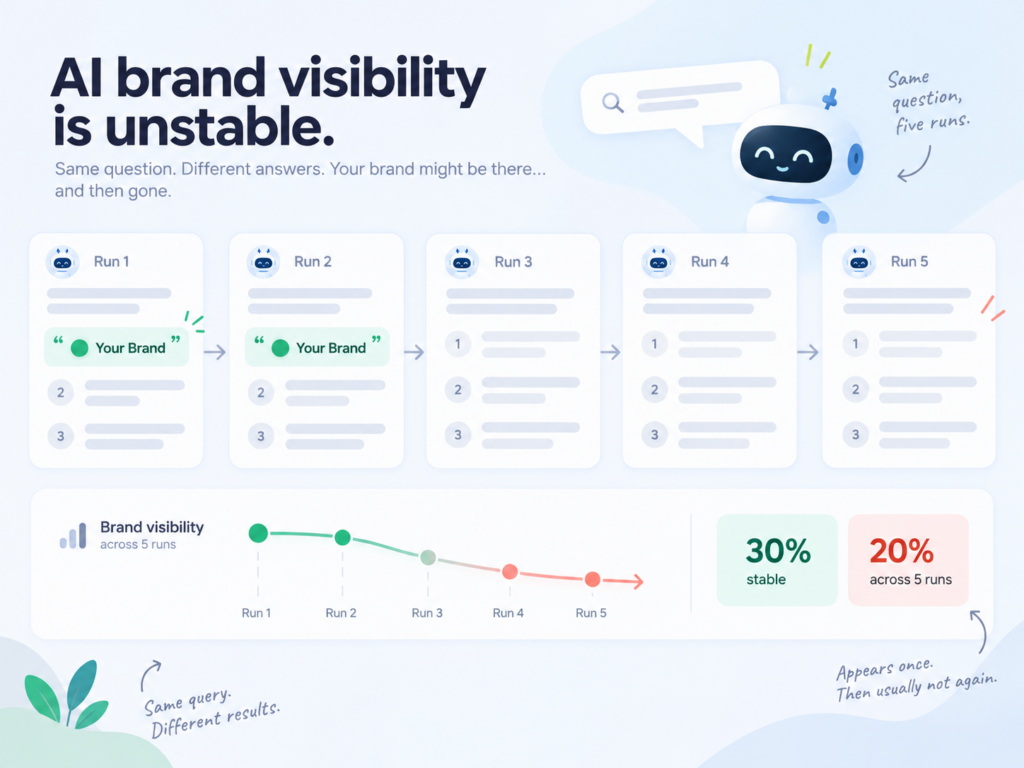
    The Competitor Analysis tool tells you where you stand right now. But AI recommendations shift constantly. Models update their training data, source weights change, and new competitors build citation equity every week. Only 30% of brands stay visible from one AI answer to the next, and across five consecutive runs, that drops to 20%.

    Topify‘s Dynamic Competitor Benchmarking picks up where the free tool leaves off. It tracks your competitive position continuously across ChatGPT, Perplexity, Gemini, and Google AI Overviews, alerts you when a competitor gains or loses ground, and shows you the specific content changes driving the shift.

    CapabilityFree Competitor AnalysisTopify Platform
    Check frequencyOne-time snapshotContinuous daily/weekly monitoring
    AI platforms coveredAggregated viewPer-platform competitive breakdown
    Historical trendsNoneFull trend history with alerts
    Competitor trackingCurrent state onlyReal-time shifts and ranking changes
    Action recommendationsManual interpretationSpecific, data-driven next steps
    Team collaborationIndividual useShared dashboards with unlimited seats

    Every plan starts with a 7-day free trial, no credit card required. The Starter plan begins at $99/month.

    Conclusion

    SaaS buyers are building vendor shortlists inside AI search before they ever visit your website, and 44% of B2B SaaS brands are scoring below the visibility threshold where AI recommends them. The gap between traditional SEO performance and AI recommendations is real, measurable, and growing.

    Start with a single check. Run your brand through Topify’s Competitor Analysis to see who AI recommends instead of you, where your positioning mismatches, and which competitors you didn’t know you had. Then decide whether continuous tracking through the Topify platform makes sense for your team.

    While you’re checking your competitive position, a few other free tools can round out the picture. Topify’s GEO Score Checker evaluates whether AI crawlers can actually access and interpret your site. The AI Visibility Report shows how often your brand gets mentioned across major AI platforms. And the Brand Profile Checker reveals how AI describes your brand’s identity and where perception doesn’t match reality.

    FAQ

    Is the Competitor Analysis tool really free? Do I need to create an account? 

    Yes, it’s completely free. No signup, no credit card, no account required. Enter your brand name or domain and get your competitive breakdown in under 60 seconds.

    What’s the difference between the free tool and Topify’s paid platform? 

    The free tool gives you a one-time snapshot of your AI competitive standing. The paid platform (starting at $99/month) tracks your competitive position continuously, sends alerts when rankings shift, and provides actionable recommendations across ChatGPT, Perplexity, Gemini, and Google AI Overviews.

    How often should SaaS brands check their AI competitive position? 

    AI models update source weights and training data regularly, so competitive positions can shift week to week. A monthly manual check with the free tool catches major changes. For brands in crowded SaaS categories where AI recommendations directly affect pipeline, weekly or continuous tracking through the platform provides the resolution needed to respond in time.

    My SaaS ranks well on Google. Do I still need to worry about AI visibility? 

    Yes. Only 12% of URLs cited by AI tools overlap with Google’s top 10 results. Strong Google rankings don’t predict AI recommendations. A 2026 benchmark found that 44% of B2B SaaS companies with solid traditional SEO score below 50 on AI visibility. The only way to know your actual AI competitive position is to check it directly.

    Read More

  • AI Visibility Tools for Marketing Teams

    AI Visibility Tools for Marketing Teams

    A VP of Marketing asked Perplexity, “Which agencies are best for B2B SaaS content strategy?” The AI listed five names. Three of them were firms this VP had never heard of. Two well-known agencies with decade-long track records didn’t make the list at all.

    The issue wasn’t their work quality. It was that AI didn’t recognize their authority in the category. And here’s the uncomfortable part: these invisible agencies spend their days optimizing visibility for clients. They just never checked their own.

    There’s a free tool that shows you exactly who AI thinks your competitors are, and whether your brand even makes the shortlist. It takes less than a minute.

    Marketing Brands Ask AI for Recommendations. Yours Might Not Be in the Answer.

    89% of B2B buyers now use generative AI during purchasing research. That includes the CMOs, marketing directors, and procurement teams evaluating your agency, your platform, or your services. When they type a prompt into ChatGPT or Perplexity, the AI doesn’t return ten blue links. It returns a short, synthesized answer with three to five recommendations.

    60% of Google searches already end without a click. Users get their answer from an AI overview or a conversational AI tool, and they move on. For marketing brands, this means your potential clients might form a shortlist before they ever visit your website.

    The prompts driving these decisions are specific and high-intent. Here’s what marketing buyers are actually asking AI:

    AI Prompt ExamplePlatformSearch IntentWhat It Reveals
    “Best marketing agency for B2B SaaS companies”ChatGPTVendor selectionWhether your agency gets recommended for your core niche
    “Top AI marketing tools for content teams 2026”PerplexityTool evaluationIf your product appears in AI’s curated list
    “Marketing automation platform comparison mid-size”GeminiPurchase decisionHow AI positions you against alternatives
    “How to choose a digital marketing agency for ecommerce”ChatGPTResearch / criteriaWhether AI cites your expertise as a decision factor
    “SEO agency vs in-house team for startup growth”PerplexityStrategy evaluationIf your agency model gets recommended at all
    “Best content marketing tools under $500/month”Google AI OverviewBudget-filtered purchaseWhether you make the cut within specific constraints

    Each of these prompts triggers a recommendation that your potential client may act on immediately. And here’s the data that makes this urgent: users who search through LLMs convert at 4.4x the rate of those using traditional search. These aren’t casual browsers. They’re ready to buy.

    The problem is that most marketing brands have no idea whether they appear in these answers, or who’s showing up instead of them.

    What Topify’s Competitor Analysis Tool Reveals About Your AI Rivals

    Enter Your Brand. See Who AI Puts You Up Against.

    Topify‘s Competitor Analysis tool does something no traditional SEO tool can: it shows you who AI considers your competitors. Not who you think they are. Not who ranks alongside you on Google. Who AI actually puts in the same answer when a buyer asks for recommendations in your category.

    Enter your brand name, and in under a minute you’ll see a list of the competitors AI associates with you, along with a comparison of strengths, weaknesses, and market positioning. No signup required. No credit card.

    This is different from Googling your own brand. Google shows you ranked pages. AI synthesizes a recommendation. The brands it groups together in a recommendation are the ones competing for the same buyer decision, and that list often looks nothing like your Google competitive set.

    Five Dimensions That Define Your AI Competitive Position

    The tool breaks down your competitive standing across specific dimensions that AI uses to evaluate and compare brands. Each one maps to a real problem marketing brands face in AI search.

    DimensionWhat It MeasuresWhat It Means for Marketing Brands
    Competitive OverlapHow closely AI associates you with specific rivalsHigh overlap with a weaker brand = AI may group you in a lower tier
    Strength ComparisonWhere AI sees your advantages vs. competitorsGaps here mean AI is recommending rivals for capabilities you actually have
    Weakness ExposureWhat AI perceives as your disadvantagesAI might cite a product limitation you fixed two versions ago
    Market PositioningHow AI categorizes your brand’s nicheMisaligned positioning = you’re competing in a category you don’t belong in
    Recommendation FrequencyHow often AI recommends you vs. alternativesLow frequency in your core category = invisible to high-intent buyers

    A marketing agency with strong Competitive Overlap scores but low Recommendation Frequency has a specific problem: AI knows who you are and groups you with relevant competitors, but it doesn’t recommend you. That tells you the issue isn’t brand recognition. It’s trust signals, content authority, or third-party validation.

    On the flip side, a MarTech company with high Recommendation Frequency but incorrect Market Positioning might be winning recommendations in the wrong category. AI might recommend your analytics platform when someone asks about email marketing, which wastes the visibility you do have.

    Three Scenarios Where Marketing Brands Get Surprised

    Scenario 1: The invisible incumbent. You’ve been a top-five agency in your niche for years. But when you run the Competitor Analysis, you discover AI doesn’t list you at all for your core service. Instead, it recommends three smaller firms that publish more structured, AI-readable content. Your reputation exists in the human world but not in the AI layer.

    Scenario 2: The mispositioned platform. Your MarTech product is an enterprise marketing automation tool. But AI describes you as a “small business email marketing solution.” Every prompt about enterprise marketing automation returns your competitors. The tool reveals that AI’s understanding of your product is based on outdated content or misattributed reviews.

    Scenario 3: The unknown rival. You’ve tracked five competitors for years. The Competitor Analysis shows a sixth brand you’ve never monitored, one that AI recommends more frequently than you in three out of four relevant prompt categories. This brand may not rank well on Google, but it dominates AI recommendations because of strong third-party citations and structured content signals.

    The Marketers’ Blind Spot: Optimizing Everyone’s Visibility Except Their Own

    Here’s the irony that defines this moment: 54% of US marketers plan to implement GEO within the next three to six months, but only 23% currently invest in measuring AI visibility. Marketing professionals spend their days building search strategies, optimizing content, and tracking performance for their clients or their company’s products. But when it comes to their own brand’s visibility in AI search, most are flying blind.

    This isn’t a minor oversight. If you’re an agency, your prospective clients are evaluating you through AI before they ever reach your website. If you’re a MarTech company, the product managers and marketing directors who might buy your tool are asking ChatGPT for comparisons. If AI doesn’t mention you, or describes you inaccurately, you’re losing deals you never knew existed.

    The fix starts with a simple diagnostic. Run your brand through the Competitor Analysis tool and see where you actually stand. Not where you assume you stand based on Google rankings or industry reputation, but where AI places you when a buyer asks for a recommendation.

    89% of B2B Buyers Use AI for Procurement. Your Competitors May Already Be Optimizing for It.

    The data is hard to ignore. 89% of B2B buyers use generative AI during purchasing research, and AI-powered search tools captured 12-15% of global search market share by the end of 2025, up from 5-6% at the start of that year. Among younger decision-makers, the shift is even sharper: roughly 31% of Gen Z begin searches using AI platforms rather than traditional engines.

    For marketing brands, this creates a compounding disadvantage. Every month you don’t know your AI competitive position is a month where a rival could be strengthening theirs. AI models update, retrain, and adjust their recommendation signals on a rolling basis. A brand that invests in structured content, third-party citations, and AI accessibility today will start showing up in recommendations within weeks, not years.

    The GEO market reflects this urgency. It’s projected to grow from $848 million to $33.7 billion by 2034. The marketing teams that treat AI visibility as a core channel now, not a future experiment, will have a structural advantage that’s hard to replicate later.

    Bottom line: if you don’t know who AI recommends instead of you, start with the Competitor Analysis. It takes 60 seconds and costs nothing.

    One Competitive Snapshot Shows the Gap. Continuous Tracking Closes It.

    Your Competitor Analysis results show you today’s AI competitive landscape. But AI recommendations aren’t static. Models retrain, new content gets indexed, and competitor brands adjust their strategies. A competitive position you hold today could shift next quarter without any change on your end.

    Topify‘s platform picks up where the free tool leaves off. The Dynamic Competitor Benchmarking feature tracks your competitive position continuously across ChatGPT, Perplexity, Gemini, and Google AI Overviews. You’ll see when a new competitor enters AI recommendations in your category, when your ranking shifts, and which specific signals are driving those changes.

    Here’s how the free check compares to the full platform:

    CapabilityFree Competitor AnalysisTopify Platform
    Check frequencyOne-time snapshotContinuous daily/weekly monitoring
    AI platforms coveredAggregated viewPer-platform breakdown (ChatGPT, Perplexity, Gemini, AI Overviews)
    Historical trendsNoneFull trend history with shift alerts
    Competitor trackingCurrent competitors onlyReal-time new competitor detection
    Action recommendationsGeneral positioning insightsSpecific, prioritized optimization steps
    Team collaborationIndividual useUnlimited team member seats

    Every plan starts with a 7-day free trial, no credit card required. The Starter plan begins at $99/month.

    Conclusion

    Marketing brands face a specific version of the AI visibility challenge: you understand search optimization better than most industries, but that expertise hasn’t translated to your own AI presence. The competitive landscape in AI search is different from Google, the stakes are rising as B2B buyers shift to AI-driven research, and the window to build a first-mover advantage is still open.

    Start with the free Competitor Analysis. See who AI recommends instead of you. Then decide whether the gap is small enough to ignore or large enough to act on.

    While you’re assessing your competitive position, a few other free checks can round out the picture. Topify’s AI Visibility Report shows how often your brand gets mentioned across major AI platforms. The Brand Authority Checker scores the trust signals AI uses to decide whether to recommend you. And the Prompts Researcher reveals the exact questions your potential clients are asking AI in your category.

    For the full suite of diagnostic tools, visit Topify’s free tools.

    FAQ

    Is the Competitor Analysis tool free? Do I need to sign up? Yes, it’s completely free. Enter your brand name and get results in under a minute. No registration, no credit card, no strings attached.

    What’s the difference between the free tool and Topify’s paid platform? The free tool gives you a one-time competitive snapshot. The paid platform provides continuous monitoring, historical trend data, per-platform breakdowns, new competitor alerts, and actionable optimization recommendations. Plans start at $99/month with a 7-day free trial.

    How often should marketing brands check their AI competitive position? AI models update frequently, and competitor strategies evolve. A monthly check with the free tool is a reasonable starting point. For brands in highly competitive categories (agencies, MarTech, performance marketing), weekly or continuous tracking through the platform gives a meaningful edge.

    Can AI visibility replace traditional SEO for marketing brands? No. AI visibility builds on strong SEO fundamentals, including structured content, technical accessibility, and domain authority. Think of it as an additional layer. Brands that rank well in traditional search often have a head start in AI recommendations, but it’s not automatic. AI evaluates different signals, and the competitive set can look entirely different.

    Read More

  • LLM Citation Patterns Across 4 AI Platforms

    LLM Citation Patterns Across 4 AI Platforms

    Your domain authority is 70. Your keyword rankings are solid. But when someone asks Perplexity for a recommendation in your category, it cites a Reddit thread from three weeks ago instead of your well-optimized landing page.

    That’s not a fluke. It’s a pattern.

    When the same prompt runs across ChatGPT, Perplexity, Gemini, and Google AI Overviews, the overlap in cited domains is roughly 11%. Four platforms, four almost entirely separate source lists. The traditional SEO playbook, built on backlink profiles and domain authority, doesn’t explain why your brand appears on one platform and vanishes on another.

    Each AI engine runs its own retrieval pipeline with distinct preferences for authority, recency, and source type. Understanding those differences isn’t optional anymore. It’s the foundation of any serious generative engine optimizationstrategy.

    ChatGPT Treats Wikipedia Like a Trust Anchor

    ChatGPT’s citation behavior reflects two layers: pre-training weight and real-time retrieval. Both skew heavily toward institutional authority.

    An analysis of 680 million ChatGPT citations shows commercial domains (.com) account for 80.41% of all cited URLs. Non-profit (.org) domains follow at 11.29%. Country-specific TLDs (.uk, .au, .ca) collectively represent about 3.5%. The hierarchy is clear: ChatGPT defaults to established, commercially credible entities.

    Within that landscape, Wikipedia holds a singular position. It contributes 7.8% of ChatGPT’s total citations and commands nearly half (47.9%) of the top 10 cited sources. Brands with a detailed Wikipedia entry get their first ChatGPT citation in an average of 28 days. Without one, that timeline stretches to 52 days.

    That’s not a minor gap. That’s a structural disadvantage.

    Wikipedia functions as what researchers call an “entity anchor.” When ChatGPT encounters a brand name through its Bing-powered search, it cross-references Wikipedia to verify the entity’s attributes and credibility. If that verification step fails, the brand gets filtered out during the re-ranking phase, regardless of how strong its on-site content is. ChatGPT also co-cites Wikipedia with institutional references like Britannica and Merriam-Webster at a rate of 43%, reinforcing its preference for encyclopedic, fact-dense sources.

    One detail worth noting for tech brands: .io and .ai domains, while small in overall share (1.67% and 1.13% respectively), show high penetration in developer-focused and technology-related queries. In vertical categories, domain authority matters less than topical authority.

    TLDShare of ChatGPT Citations
    .com80.41%
    .org11.29%
    .uk2.16%
    .io1.67%
    .ai1.13%
    .net1.01%
    .co0.97%

    Perplexity Reads 10 Pages but Cites 3

    Perplexity positions itself as the most transparent AI search engine. It shows numbered citations inline. It looks accountable.

    The numbers tell a more complicated story.

    Perplexity’s Sonar model averages 21.87 citations per response, the highest density of any major LLM platform. But its retrieval pipeline visits approximately 10 relevant websites per query and only credits 3 to 4 of them. Researchers describe this as a “high-volume, low-credit” pattern: the model absorbs information from sources it never attributes.

    That gap has real consequences for brands. Your content may be shaping Perplexity’s answer without you ever knowing it, and without any referral traffic flowing back.

    Perplexity’s strongest signal preference is recency. 82% of its cited content was updated within the past 30 days. For content older than six months, citation rates drop to 37%. If you’re not publishing or refreshing regularly, Perplexity’s attention window closes fast.

    Then there’s the Reddit factor. Reddit accounts for 6.6% of Perplexity’s total citations and 46.7% of its top 10 cited sources. The distribution within Reddit is specific: Q&A posts make up over 50% of Reddit-sourced citations, comparison threads account for 25%, and discussion threads contribute 15%. When a user asks Perplexity which CRM is best for startups, it trusts an upvoted Reddit thread over your product page.

    That’s not a bug. Perplexity’s model interprets Reddit as a proxy for human consensus, a crowdsourced credibility layer that branded content can’t easily replicate.

    Gemini: The Platform That Rarely Cites Anything

    Gemini presents a paradox. It sits on top of Google’s entire index, the largest repository of web content in existence. And yet it operates as if citations are optional.

    The data is striking: 92% of Gemini’s responses include zero clickable citation links. Even when the model clearly draws on external information, it doesn’t disclose where. On top of that, 34% of Gemini responses are generated entirely from pre-training data without triggering any external search at all.

    For brands, this creates a visibility black hole. You can’t earn a citation from a platform that doesn’t give them. And you can’t redirect traffic from an AI answer that doesn’t link anywhere.

    MetricGeminiChatGPT (GPT-4o)Perplexity (Sonar)
    No-search response rate34%24%< 5%
    Zero-citation response rate92%30%0% (cites by default)
    Avg. attribution gap (sites)3.04Very small3.12

    Researchers frame this behavior as a form of “data enclosure.” Gemini trains on the open web but keeps users within Google’s ecosystem at the point of delivery. The practical implication: optimizing specifically for Gemini citation is a low-ROI activity for most brands right now. The platform’s architecture simply doesn’t reward external content with traffic.

    That said, Gemini’s user base is massive. Even without clickable citations, brand mentions in Gemini’s responses influence perception. Monitoring what Gemini says about your brand, even when it doesn’t link to you, matters for reputation management.

    AI Overviews Play by Different Rules Than Gemini

    Here’s where it gets interesting. Google AI Overviews (AIO) and the standalone Gemini model share a parent company but not a citation philosophy.

    AIO operates more like a curated editor than a knowledge synthesizer. It pulls from a wider range of source types, integrates richer media, and cites more diversely than Gemini. The data shows AIO cites YouTube at 30 times the rate of ChatGPT. For retail and purchase-intent queries, AIO references major retailer domains at roughly 30% compared to ChatGPT’s 15%.

    This makes sense when you consider AIO’s context. It sits at the top of Google Search results, layered alongside shopping cards, local packs, and People Also Ask boxes. Its citation logic is designed to complement that existing infrastructure, not replace it.

    For brands, this means the path to AIO visibility is closer to traditional SEO than to LLM-specific optimization. Pages that rank well in organic search have a stronger shot at being cited in AIO, though it’s not a one-to-one mapping. Research shows only about 12% of links cited in AI-generated responses also appear in the top 10 traditional search results.

    Reddit also matters here, but less than in Perplexity. Reddit represents 2.2% of AIO citations, a meaningful but not dominant share.

    What Gets Cited Across All Four Platforms

    Despite the divergence, there are patterns that hold across platforms. These are the structural features that make content “citable” regardless of which AI engine is doing the retrieval.

    Research from Princeton University, Georgia Tech, and the Allen Institute for AI (published at KDD 2024) tested nine content modification strategies and found that targeted structural changes can boost AI visibility by up to 40%.

    The most impactful interventions:

    StrategyVisibility Lift
    Adding specific statistics+41%
    Citing authoritative sources within contentSignificant increase
    Including expert quotesHigh trust signal
    Fluency optimization (no new info, just better writing)+28%
    Schema markup (FAQPage, Article, HowTo)+30%

    AI engines, particularly Perplexity and ChatGPT, process web pages as a series of extractable chunks. The optimal snippet length falls between 40 and 60 words. Leading with the conclusion in the first 100 words of each section, what researchers call BLUF (Bottom Line Up Front), correlates with 90% of top-cited passages.

    Rewriting H2 and H3 headings as specific, searchable questions also improves extraction rates. “What is GEO?” gets picked up. “Understanding the Research Landscape” doesn’t.

    The common thread across all of this: AI engines reward content that’s structured for extraction, not for scrolling. Fact density, clear hierarchy, and self-contained answer blocks are the currency.

    How to Track LLM Citations When Every Platform Plays a Different Game

    Manual checking doesn’t scale. Running your core prompts across four platforms, noting which sources get cited, and repeating that weekly for every relevant query is a full-time job. And the data decays: citation performance drops to roughly 40% of its initial level within 90 days.

    That’s where purpose-built tracking becomes necessary.

    Topify approaches this through a seven-metric framework that covers visibility, sentiment, position, volume, mentions, intent, and conversion visibility rate (CVR). But the feature most relevant to LLM citation analysis is its Source Analysis capability.

    Source Analysis doesn’t just report whether your brand was mentioned. It identifies exactly which URLs AI platforms cited, how often each page appears across different prompts, and where your competitors are getting cited instead of you. If a competitor’s comparison table keeps showing up in Perplexity’s vendor briefings, Topify flags that as a content gap you can act on.

    The cross-platform dimension is where this matters most. Since ChatGPT, Perplexity, Gemini, and AI Overviews share only about 11% of their cited domains, single-platform tracking gives you a distorted picture. Topify monitors all four major US platforms plus regional models like DeepSeek, Doubao, and Qwen, so you can see patterns like: your brand has strong Wikipedia-backed authority in ChatGPT but is invisible in Perplexity because you have zero Reddit presence.

    For teams that want a starting point before committing to a full platform, the Topify GEO Score Checker runs a free baseline scan covering AI bot access, structured data, content signals, and visibility. It’s a quick way to identify whether your citation gap is a technical problem (AI crawlers blocked), a structural problem (content not formatted for extraction), or an authority problem (no third-party consensus around your brand).

    Conclusion

    LLM citation isn’t one game. It’s four separate games running on the same field.

    ChatGPT rewards institutional authority and Wikipedia presence. Perplexity chases recency and Reddit consensus. Gemini barely cites at all. AI Overviews borrows from traditional search ranking but applies its own editorial logic.

    The brands that win across all four share three traits: their content is structured for extraction (short, fact-dense, BLUF-formatted), their entity exists beyond their own website (Wikipedia, Reddit, G2, industry publications), and they track citation performance continuously rather than auditing once a quarter.

    The 11% overlap statistic isn’t just a research finding. It’s a strategic mandate. Optimizing for one platform while ignoring three others means you’re visible to a fraction of the AI search audience.

    Start with data. Know where you’re cited, where you’re not, and why. Then build from there.

    FAQ

    What is an LLM citation? 

    An LLM citation is a reference link that an AI platform includes in its generated response, pointing to the external source it used to construct its answer. Different platforms handle these differently: Perplexity shows inline numbered citations by default, ChatGPT provides citations selectively, and Gemini rarely includes clickable links at all.

    Which AI platform cites the most sources per response? 

    Perplexity leads by a wide margin, averaging 21.87 citations per response. ChatGPT averages 7.92. Google AI Mode comes in at 8.34. Gemini provides almost no clickable citations in 92% of its responses.

    Can I rank well on Google but still be invisible to ChatGPT? 

    Yes. ChatGPT’s citation logic depends heavily on entity authority, not just search ranking. If your brand doesn’t have sufficient presence on Wikipedia, Reddit, or major industry publications, ChatGPT’s retrieval pipeline may filter you out during the re-ranking phase, even if your page ranks first on Google.

    How often should I update content to stay cited by Perplexity? 

    Perplexity has a strong recency bias. 82% of its cited content was updated within the past 30 days, and citation rates for content older than six months drop to 37%. A monthly refresh cadence for your highest-priority pages is a practical baseline.

    Does adding Schema markup actually help with AI citations? 

    Yes. Pages with properly implemented Schema (FAQPage, Article, HowTo) see citation rates 30% to 47% higher than pages without markup. Schema helps AI models extract structured facts at lower computational cost, making your content easier to cite.

    Read More

  • How LLMs Pick Sources: 30M Citations Analyzed

    How LLMs Pick Sources: 30M Citations Analyzed

    You’ve spent months building domain authority, earning backlinks, and climbing Google’s first page. But when a prospect asks ChatGPT for a recommendation in your category, your brand doesn’t show up. The unsettling part: your DA score, your backlink profile, your keyword rankings don’t explain why. That’s because 80% of LLM citations don’t even rank in Google’s top 100 for the same query. The signals that drive AI to cite one source over another are different from what SEO teams have optimized for over the past decade.

    An analysis of 30 million AI citations across ChatGPT, Perplexity, Google AI Overviews, and Claude reveals a new set of rules. And for brands still relying on traditional search metrics alone, those rules are already reshaping who gets recommended and who gets ignored.

    Only 11% of Sites Get Cited by Both ChatGPT and Perplexity

    The first thing to understand about LLM citation is that there’s no single “AI search authority.” Each platform operates on a fundamentally different retrieval philosophy.

    Data from a cross-platform citation study shows that only 11% of domains appear in citations from both ChatGPT and Perplexity for the same buyer-relevant prompts. That means 89% of citations are unique to one platform. ChatGPT leans heavily on the Bing index and training data, with Wikipedia accounting for roughly 47.9% of citations in certain knowledge domains. Perplexity, which maintains a proprietary index of over 200 billion URLs, skews toward freshness and community-driven sources. Reddit alone captures 46.7% of Perplexity’s top-tier citations.

    Google AI Overviews follow yet another pattern, with 84.9% of responses pulling from the existing Google index and prioritizing E-E-A-T signals plus top-10 rankings.

    The practical takeaway: optimizing for one AI platform and assuming it covers the rest is a strategy that misses 89% of the picture.

    Brand Search Volume Beats Backlinks as the Top LLM Citation Signal

    Here’s the data point that rewrites the playbook. Brand search volume is the strongest predictor of whether an LLM cites a source, with a correlation coefficient of 0.334. That outweighs traditional backlinks, which show a weak or even neutral correlation with AI citation outcomes.

    Why? LLMs run on two knowledge systems: parametric memory (what the model learned during training) and retrieval-augmented knowledge (what it finds through real-time search). Brand search volume acts as a proxy for how deeply a brand is embedded in the model’s parametric memory. If people frequently search for your brand, the model develops higher “Entity Confidence” in you. When a retrieval trigger fires, the model is more likely to select and cite sources tied to entities it already recognizes.

    This creates what the research calls a “citation flywheel.” Brands with high search volume get cited more, which reinforces their presence in future training data and retrieval pipelines.

    YouTube mentions show an even stronger visibility signal, with a 0.737 correlation with AI citation frequency. That makes brand-building activities like digital PR, community presence, and YouTube visibility more effective for AI search than incremental backlink acquisition.

    The shift is clear: “who is talking about your brand” now carries more weight than “who is linking to your page.”

    What Content Gets Cited: The 30/44 Rule

    LLMs don’t read pages top to bottom the way humans do. They chunk content into modular fragments, and only the fragments that are self-contained and semantically dense survive the selection process. Structure matters more than length.

    The data confirms what’s known as the “30/44 rule”: 44% of all LLM citations are extracted from the first 30% of a page’s content. Pages that lead with direct, extractable answers get cited at significantly higher rates than pages that open with background context or definitions.

    The Princeton GEO study, which benchmarked optimization techniques across 10,000 queries, measured the impact of specific content signals:

    Optimization MethodVisibility Impact
    Statistics Addition+41% improvement
    Quotation Addition+37% improvement
    Fluency Optimization+15 to 30% boost
    Expert Citation+115.1% from Rank 5 baseline
    Keyword StuffingNegative impact

    Adding verifiable statistics and direct quotations are the two most effective methods for increasing LLM citation likelihood. These features act as “trust anchors” for risk-minimizing AI models, which preferentially cite content that provides primary-source data over derivative or promotional material.

    Highly cited content also tends to have an entity density of around 20.6%, roughly three to four times higher than standard English prose. And declarative language (“X is Y”) outperforms hedging language (“X might be Y”) by a 14% margin in citation rates.

    The “Answer Capsule” strategy, placing a 40-60 word self-contained summary immediately under an H2 heading, has been shown to significantly increase citation probability. Think of it as writing for extraction, not just for reading.

    Fan-Out Queries Drive 51% of All AI Citations

    When a user types a complex prompt, the LLM doesn’t run a single search. It decomposes the prompt into multiple sub-queries, each targeting a different angle of intent. This process, called “query fan-out,” is one of the most overlooked drivers of LLM citation.

    The numbers are striking. Pages ranking for both the main query and multiple fan-out sub-queries account for 51% of all AI citations. Pages that appear in fan-out results are 161% more likely to be cited than pages that only match the primary query. And topic clusters, interconnected pages covering different angles of a subject, capture up to 62% of cross-platform citations.

    This behavior structurally rewards comprehensive coverage. A pillar page on “employee retention” supported by sub-pages on exit interviews, onboarding, compensation benchmarking, and manager training will capture more fan-out sub-queries than any single page could. Content optimized narrowly for one keyword is increasingly disadvantaged in generative search.

    The challenge: unlike traditional keyword research based on search volume, fan-out sub-queries are generated dynamically by the model. Identifying them requires monitoring what questions the AI actually asks behind the scenes, not just what users type.

    50-90% of LLM Citations Don’t Fully Support Their Claims

    Being cited by AI sounds like a win. But the SourceCheckup study, published in Nature Communications in 2025, found that between 50% and 90% of LLM citations don’t fully support the claims they’re attached to. Across 13 models evaluated, hallucinated citation rates ranged from 14% to nearly 95%.

    That’s not an edge case. It’s the norm.

    For brands, this means citation ≠ accurate representation. AI models have been observed citing a brand while attributing a competitor’s feature or a fabricated statistic to it. The practical risk is real: your content gets cited, but the AI misrepresents what you actually said.

    The user behavior side makes this worse. Research shows that users hover over approximately 12 sources during a traditional search but check only about 2 sources when using an AI answer engine. Users trust AI’s “digital footnotes” more while verifying them less.

    This creates a new monitoring imperative. Tracking whether your brand is cited is only half the equation. Tracking what the AI says about you when it cites you is equally important.

    How to Track and Optimize Your LLM Citation Performance

    The data from 30 million citations points to a clear operational shift: from passive content publishing to active citation monitoring and optimization. Here’s what that looks like in practice.

    Build a Prompt Library. Start with 25-50 high-intent queries relevant to your category. Avoid biased phrasing or mentioning your own brand. Run these weekly across ChatGPT, Perplexity, and Google AI Overviews to establish a baseline.

    Identify Retrieval Gaps. When a competitor gets cited for a query where your brand should appear, that’s a retrieval gap. Platforms like Topify make this visible by tracking which specific URLs, both owned and third-party, AI engines are using to build their answers. Topify’s Source Analysis feature reverse-engineers AI citations at scale, showing you exactly which domains appear in responses and where your content is missing.

    Retrofit Content for Extractability. Apply the 30/44 rule. Move your most citation-worthy content, original statistics, expert quotes, direct answers, into the first third of each page. Use Answer Capsules under H2 headings. Add JSON-LD schema (FAQPage, SoftwareApplication), which has been shown to drive a 67% improvement in AI coverage.

    Monitor Citation Quality. Visibility tracking alone isn’t enough. You need to know whether AI accurately represents your brand when it cites you. Topify’s cross-platform monitoring covers ChatGPT, Perplexity, Gemini, and Google AI Overviews, tracking not just mention frequency but sentiment and positioning relative to competitors.

    Invest in Brand Signals. The 0.334 correlation between brand search volume and citation probability means that digital PR, community engagement, and YouTube presence aren’t just brand-building activities anymore. They’re direct inputs into your AI citation performance.

    86% of AI citations come from sources brands already control or influence, with 44% from owned websites and 42% from business listings and directories. AI search isn’t a black box of uncontrollable community chatter. It’s a data structure problem, and the data is largely within your reach.

    Conclusion

    The analysis of 30 million AI citations reveals a fundamental disconnect between traditional SEO metrics and the signals that drive LLM citation decisions. Backlinks and Domain Authority still matter for Google rankings, but they’re secondary in AI search. Brand search volume, content structure, semantic density, and fan-out query coverage are the primary drivers now.

    The stakes are high. AI search traffic converts at an average rate of 14.2%, compared to 2.8% for traditional organic search. Being the reference source for an AI model is becoming the modern equivalent of ranking number one on Google. The brands that treat LLM citation as a measurable, optimizable channel, rather than a black box, will capture that value first. Get started with Topify to see where your brand stands across AI search today.

    FAQ

    What is an LLM citation?

    An LLM citation is a hyperlink or source reference included in an AI-generated response to attribute information to a specific external source. It signals that the AI is grounding its answer in retrieved data rather than generating purely from parametric memory.

    How do I check if my content is cited by AI?

    You can manually run category, comparison, and use-case prompts across ChatGPT, Perplexity, and Gemini to see which URLs appear in the “Sources” section. For systematic tracking, platforms like Topify monitor citations and mentions across multiple AI engines automatically.

    Do backlinks still matter for LLM citations?

    Backlinks show a weak correlation (around 0.218) with AI citation outcomes, compared to brand search volume (0.334) and YouTube mentions (0.737). They still help with initial indexing and general authority, but they’re no longer the primary signal for AI retrieval systems.

    How often should I update content to maintain AI citations?

    Freshness is a high-priority signal, especially for Perplexity and Bing-powered AI. Content updated within the last 12 months is 3.2x more likely to be cited. High-visibility pages typically follow a 14-to-30-day update cadence.

    Read More

  • LLM Citation Tracking Tools That Actually Deliver in 2026

    LLM Citation Tracking Tools That Actually Deliver in 2026

    Your domain authority is 70. Your keyword rankings are solid. But none of that tells you whether Perplexity is recommending your competitor instead of you. The gap between traditional SEO performance and AI search visibility has widened to the point where brands with first-page Google rankings are completely invisible inside the conversational responses of ChatGPT, Gemini, and Claude. With over 21% of search intents now satisfied by AI-generated answers, the question isn’t whether your brand ranks. It’s whether AI cites it.

    That’s where LLM citation tracking tools come in. But the market is crowded, the terminology is fuzzy, and most tools measure the wrong thing.

    LLM Citations vs. Mentions: Most Tools Track the Wrong Signal

    Here’s the distinction that trips up most marketing teams: a brand mention and a citation are two completely different signals. A mention means an LLM includes your brand name in its text. A citation is the formal attribution link, the footnote or source icon that tells the user where the information came from.

    Why does this matter? LLMs often engage in what researchers call “post-hoc selection.” The model first picks which brand to recommend based on its training data, then goes looking for a URL to support the claim. This creates “ghost citations,” where your domain gets linked as a source for a factual claim while your brand doesn’t appear in the actual recommendation. If your tracking tool doesn’t separate these two signals, you’re looking at inflated numbers that mask a real visibility problem.

    The fragmentation across platforms makes this worse. Only 11% of domains are cited by both ChatGPT and Perplexity for the same query. Each engine has its own index bias:

    PlatformPrimary Source PreferenceTop Source Share
    ChatGPTWikipedia47.9%
    PerplexityReddit46.7%
    Google AI ModeYouTube23.3%
    ClaudeNiche Blogs / Editorial43.8%
    GeminiBrand-owned Domains52.1%

    A strategy built around long-form blog content might earn citations in Claude but fail entirely in Perplexity unless paired with Reddit and community engagement. Tracking only one platform gives you a partial picture at best.

    What Separates a Real Citation Tracker from a Dashboard That Just Looks Busy

    Not every tool that claims “AI visibility” is actually tracking citations at the source level. Here are the five dimensions that separate professional LLM citation trackers from surface-level dashboards:

    Prompt-level depth. Standard SEO tools track keywords. GEO requires prompt-level tracking that mirrors real conversational intent, multi-layered questions that single-term queries can’t replicate.

    Source-level decomposition. A professional tracker doesn’t just report that your brand was mentioned. It identifies which specific URLs, whether yours or a third-party review, triggered the citation. This matters because 85% of brand mentionsin AI search come from third-party pages, not the brand’s own domain.

    Multi-platform coverage. With 91% of AI citations appearing in only one engine, single-platform tracking is a blind spot, not a strategy.

    Refresh frequency. AirOps research shows that only 30% of brands maintain visibility from one AI answer to the next, and just 20% survive across five consecutive runs. Monthly snapshots are statistically meaningless in this environment. Daily or on-demand refreshes are the minimum.

    Actionability. Data without a path to execution is just noise. The best tools connect citation gaps directly to content strategies you can act on.

    Quick Comparison: Top LLM Citation Tracking Tools at a Glance

    ToolModels TrackedTracking DepthRefresh CadenceStarting Price
    TopifyChatGPT, Gemini, Perplexity, DeepSeek, Doubao, QwenURL-level citations + 7 metricsDaily / On-demand$99/mo
    Ahrefs Brand RadarChatGPT, Perplexity, Gemini, AIOBrand-level SOVMonthly$199/mo add-on
    Semrush AI VisibilityChatGPT, Gemini, AIO, ClaudeMention vs. citation separationWeekly$99/mo add-on
    AIclicks6+ models incl. GrokPrompt-level sentimentReal-time$79/mo
    Keyword.com10+ models incl. MistralFull response snapshotsCredit-based on-demand$24.50/mo
    NightwatchAI Overviews, AI Mode, ChatGPTSegmented local/engine trackingAPI-based$39/mo add-on

    The table gives you the high-level view. The next few sections dig into what each tool actually delivers.

    Topify: Reverse-Engineering Why AI Cites What It Cites

    Most citation trackers answer “where.” Topify answers “why.”

    Its Source Analysis engine doesn’t just flag that a URL was cited. It decomposes the citation to show which specific content elements, whether a comparison table, a data point, or a paragraph structure, satisfied the LLM’s informational retrieval requirements. For teams trying to close citation gaps, this is the difference between knowing you’re invisible and knowing exactly what to fix.

    Topify’s tracking is built around a 7-dimension metric system: Visibility Score (how often AI includes you), Sentiment Quotient (how positively AI frames you, scored 0-100), Relative Positioning (where you land in recommendation lists), AI Search Volume (estimated prompt frequency), Mention Density, Intent Alignment (primary recommendation vs. afterthought), and Attributed CVR (linking AI citations directly to revenue via GA4 or Shopify integration). Early adopters have reported a 12.9x improvement in lead efficiency from AI-referred traffic.

    One technical advantage that’s often overlooked: Topify natively tracks the Chinese LLM ecosystem, including DeepSeek, Doubao, and Qwen. Chinese models mention brands at a rate of 88.9% for English-language queries, a 30-point gap compared to Western models. For global brands, ignoring this is a massive blind spot.

    The platform also includes a One-Click Execution layer. Once you’ve identified citation gaps, you can translate insights into optimized content strategies without building manual workflows. Pricing starts at $99/mo, which covers 100 prompts across 9,000 AI answer analyses.

    The Rest of the Field: How Other LLM Citation Tools Stack Up

    Ahrefs Brand Radar sits on top of 28.7 billion keywords and a 350-million-entry prompt database. The scale is impressive. The limitation is that it relies on “People Also Ask” queries as a proxy for LLM prompts, and PAA questions are algorithmic artifacts designed for traditional SERPs, not the natural language intent clusters that drive ChatGPT conversations. Update cadence tends to be monthly, which misses the rapid citation shifts that happen every 2-4 weeks.

    Semrush AI Visibility works well for enterprise teams that want AI tracking inside a broader search suite. Its AI Search Site Audit is a standout, checking whether your robots.txt blocks GPTBot or other LLM crawlers. Citation depth runs lower than GEO-native tools, but competitive benchmarking against 3-5 direct rivals is solid.

    AIclicks bridges monitoring and execution. It connects prompt tracking directly to a content generation engine and delivers prioritized action plans each month. Its “Mention-Source Divide” analysis, which flags brands with high mention frequency but low citation authority, is particularly useful for agencies managing multiple accounts. Pricing starts at $79/mo.

    Keyword.com is built for teams that need verifiable proof. It logs timestamped, full-response snapshots across platforms, so agencies can show clients exactly when a citation appeared, what the sentiment was, and how it shifted. The Citation Tab provides clear visualizations of which competitor URLs are being referenced. At $24.50/mo, it’s the most budget-friendly entry point.

    Nightwatch combines traditional rank tracking with LLM monitoring. If your team needs both classic SERP data and AI citation data in one platform, it’s a practical choice. Segmented tracking by local market and engine is a strong feature for multi-geo brands.

    Choosing the Right Tool When “LLM Citation” Means Five Different Things

    The right tool depends on what you’re actually trying to solve.

    If you need attribution and full-funnel proof that AI citations drive revenue, Topify’s GA4/Shopify integration and 7-metric system give you the most granular view. AI-cited traffic converts at 12.4-15.9%, roughly 5x higher than traditional organic. Being able to tie that back to specific prompts and source URLs is where the ROI case gets built.

    If your team is already deep in the Semrush or Ahrefs ecosystem, their AI add-ons may cover top-of-funnel monitoring. Just be aware of the consensus gap: with 91% of citations appearing in only one engine, you’ll need more specialized tracking if multi-platform dominance is the goal.

    If you’re an agency that needs a fast monitor-to-action loop, AIclicks and Keyword.com are strong picks. AIclicks gives you built-in content workflows. Keyword.com gives you the timestamped proof that clients expect in quarterly reviews.

    For global brands that need to track visibility in both Western and Chinese AI ecosystems, Topify is currently the only platform with native DeepSeek, Doubao, and Qwen coverage.

    Conclusion

    The gap between SEO rankings and AI search visibility isn’t closing. It’s widening. Traditional organic CTR has dropped 61% for queries where AI Overviews appear, and the brands recovering that lost value are the ones tracking citations at the source level, not just counting mentions.

    LLM citation tracking in 2026 isn’t about having a dashboard. It’s about knowing which specific URLs AI cites, why it cites them, and what you can do to earn the next citation. Start with a baseline audit across ChatGPT, Perplexity, and Gemini. Identify the ghost citations where your domain serves as a footnote but your brand never gets recommended. Then close the gap.

    FAQ

    Q: What is LLM citation tracking? 

    A: LLM citation tracking monitors whether AI platforms like ChatGPT, Perplexity, and Gemini formally attribute information to your domain or URLs when generating answers. It’s different from traditional rank tracking, which measures position on a search results page. Citation tracking measures whether AI includes your content as a verified source.

    Q: How is an LLM citation different from a brand mention? 

    A: A mention means the AI names your brand in its text. A citation means the AI links to your URL as a source. You can be cited without being mentioned (ghost citation), or mentioned without being cited. The two signals represent different levels of trust, and tracking only one gives you an incomplete picture.

    Q: Which AI platforms should I track LLM citations on? 

    A: At minimum, ChatGPT, Perplexity, Google AI Overviews, and Gemini. Each platform has different source preferences: ChatGPT favors Wikipedia, Perplexity favors Reddit, and Google AI Mode leans heavily on YouTube. Only 11% of cited domains overlap between ChatGPT and Perplexity, so multi-platform tracking is essential.

    Q: How often do LLM citations change? 

    A: Frequently. Research shows only 30% of brands maintain visibility from one AI answer to the next, and just 20% hold presence across five consecutive runs of the same query. Monthly tracking isn’t enough. Daily or on-demand monitoring is the minimum cadence for actionable data.

    Read More

  • The LLM Citation Gap Google Can’t Fix

    The LLM Citation Gap Google Can’t Fix

    Your domain authority is 70. Your keywords sit comfortably on page one. Your SEO dashboard looks healthy by every traditional metric. Then someone on your team types your core product category into ChatGPT and gets back a confident recommendation of four vendors. You’re not one of them.

    That’s not a ranking failure. It’s a visibility gap that Google’s algorithm was never designed to detect. The signals that drive organic search rankings and the signals that drive AI citations are diverging fast, and the brands stuck measuring only one side are losing ground they can’t see.

    What LLM Citations Are and Why Google’s Rules Don’t Apply

    An LLM citation isn’t a backlink. It’s a dynamically generated reference that an AI model uses to attribute a fact, a recommendation, or a synthesized summary to a specific source. When ChatGPT or Perplexity answers a question, it doesn’t just list the top Google results. It evaluates content through a process called Retrieval-Augmented Generation(RAG), a multi-stage pipeline where queries get decomposed, documents get chunked, passages get scored, and only the most “extractable” content survives into the final response.

    The divergence from Google’s logic starts here. Google rewards backlink quantity, domain authority, and keyword relevance. LLMs reward something different: brand search volume, factual density, and semantic extractability. Research shows that brand search volume has a 0.334 correlation with LLM citation frequency, surpassing the influence of backlinks entirely. That’s a fundamental shift. LLMs act as mirrors of societal mindshare, not as tallies of who earned the most links.

    Here’s the thing: roughly 60% of ChatGPT queries get answered using only parametric memory, the information the model absorbed during training, with no external search triggered at all. For those queries, your page-one ranking is irrelevant. Your brand either exists in the model’s learned knowledge or it doesn’t.

    FeatureTraditional Search (Google)Generative Engine (LLM)
    Primary Visibility DriverBacklink quantity and qualityBrand search volume and entity clarity
    Content EvaluationKeyword frequency and topical clustersFactual density and semantic extractability
    Retrieval MechanismCrawling and indexing via PageRankRAG (Retrieval-Augmented Generation)
    User Interface GoalHigh-CTR navigational linksSynthesized answer or recommendation
    Measurement MetricPosition (Rank 1-10)Citation presence and sentiment score

    High Google Rank, Zero AI Visibility: How the Gap Forms

    The term “LLM citation gap” describes a specific pattern: brands with strong organic rankings that are functionally invisible in AI-generated responses. It’s not hypothetical. In competitive verticals like online education and B2B SaaS, institutions with multi-million dollar marketing budgets and top-tier organic visibility capture less than 1.5% of AI citation share in their categories.

    The root cause is structural. A page that repeats established consensus without adding unique, verifiable, or structured data might rank well on Google but gets discarded by a generative model during passage selection. LLMs don’t reward pages for having lots of links pointing at them. They reward pages that offer information gain: data, specifics, and structured answers that the model can confidently attribute.

    That changes the stakes. In traditional search, being ranked fifth still gets you clicks. In generative search, if you’re not cited, your visibility is literally zero. There’s no “page two” to scroll to. The AI either mentions you in its synthesis or it doesn’t.

    The behavioral shift makes this urgent. 73% of B2B buyers now report using AI tools as part of their purchase research. And the traffic that AI summaries capture tends to be the highest-value traffic: users in the consideration and evaluation phases, looking for direct recommendations rather than exploratory links. Early data suggests visitors arriving from an AI recommendation convert at roughly 5x the rate of traditional organic search visitors.

    The Signals That Actually Drive LLM Citations

    If backlinks and DA are losing their predictive power for AI visibility, what’s taking their place? Academic research into Generative Engine Optimization (GEO) has started to quantify the new signal hierarchy. Five factors stand out.

    Brand search volume is the single strongest predictor. The 0.334 correlation with citation frequency means that brands people actively search for are the brands AI models prioritize, both in parametric memory and in RAG reranking. Brand-building activities that once seemed disconnected from search now directly impact AI visibility.

    Source citations within your content have the largest documented impact on visibility, with research showing a 115.1% increase in citation likelihood when content references other credible sources. This signals to the retrieval system that your content is grounded in consensus, not isolated opinion.

    Expert quotations increase citation probability by 37%. Statistical facts and verifiable data points boost it by 22%. And content freshness contributes roughly a 30% uplift in visibility for time-sensitive queries.

    Optimization LeverVisibility ImpactSignal Type
    Brand Search Volume0.334 CorrelationExternal / Parametric
    Source Citations (within content)+115.1%Structural / Trust
    Expert Quotations+37%E-E-A-T / Authority
    Statistical Facts+22%Information Gain
    Content Freshness~30% IncreaseTemporal Relevance

    The pattern is clear. LLMs don’t reward keyword density. In fact, keyword stuffing actively harms GEO performance by up to 10% in generative engine responses. What they reward is factual density, structural clarity, and proof of expertise, the same qualities that make content genuinely useful to a human reader.

    Content demonstrating strong E-E-A-T signals, like verifiable author credentials and firsthand experience, receives 5.2 times more citations than content without these markers. In B2B verticals, the presence of specific author credentials linked via Person Schema can account for a 2.1x increase in citation rates on platforms like Claude and ChatGPT.

    Different AI Platforms, Different Citation Rules

    One of the trickiest aspects of the LLM citation gap is that it’s not a single gap. It’s a different gap on every platform.

    ChatGPT leans heavily on consensus data and authoritative foundations like Wikipedia. It matches Bing’s top search results for roughly 87% of retrieval-based queries. If your brand dominates traditional search, you have a partial advantage here, but only for the 40% of queries that trigger a web search at all.

    Perplexity operates differently. It favors real-time, user-generated content and academic research. Approximately 46.7% of its citations come from Reddit threads. If your brand isn’t part of the conversation on Reddit, G2, or niche community forums, Perplexity may never surface you.

    Google AI Overviews stay closely tied to the traditional organic index: roughly 76.1% of cited URLs rank in the top 10 organic results. That makes traditional SEO still relevant for AIO, but insufficient on its own, because the “summary selection” layer adds additional criteria.

    A brand can dominate ChatGPT and be invisible on Perplexity. Research shows only a 25% overlap in brand recommendations between these two platforms. Single-platform tracking creates a false ceiling on your understanding of AI visibility.

    How to Find Your Brand’s LLM Citation Blind Spots

    Traditional rank tracking is binary: it tells you where your URL sits in a list. AI visibility tracking is multidimensional. It measures whether your brand is recommended, how it’s framed, and which sources the AI uses to validate that recommendation.

    Build a prompt library, not a keyword list. LLM citation audits start with prompts that mirror how real buyers talk to AI. Unlike traditional keyword research, prompt research focuses on intent clusters: awareness prompts (“how to solve X”), consideration prompts (“best tools for Y”), and evaluation prompts (“Brand A vs Brand B”). The average AI prompt exceeds 20 words and contains multiple qualifiers that push the model from explanation to recommendation.

    Map your citation sources. Once you’ve got your prompts, the next step is tracking which domains AI cites when it mentions you versus when it mentions a competitor. Topify’s Source Analysis feature lets teams reverse-engineer the specific URLs driving competitor visibility. If ChatGPT consistently cites a G2 review or a Reddit thread to recommend your competitor, that specific domain is a blind spot in your content strategy.

    Measure Share of Model Voice. The primary KPI for the generative era is the percentage of AI-generated responses within your category that mention your brand. Unlike SERP share, Share of Model Voice accounts for both the frequency and the context of the mention. A brand recommended as a “reliable leader” carries a higher effective SOMV than one described as a “budget alternative” at the tail end of a list. Topify tracks this across ChatGPT, Gemini, Perplexity, DeepSeek, and other major AI platforms, combining visibility, sentiment, position, volume, mentions, intent, and CVR into a seven-metric framework.

    For teams wanting a quick baseline before committing to a full audit, Topify’s free GEO Score Checker evaluates a site across four dimensions: AI bot access, structured data, content signals, and overall AI visibility. It’s the fastest way to find out whether AI crawlers can even read your site. And the AI Search Volume Checker shows how often specific prompts are searched across AI platforms, so you can prioritize the queries that actually carry demand.

    From Invisible to Cited: Closing the LLM Citation Gap

    Closing the gap requires a shift from keyword optimization to what practitioners call “entity sculpting,” ensuring that AI models recognize your brand as a definitive entity worth citing. Three pillars drive this.

    Restructure content for extractability. AI models don’t read pages. They scrape chunks of text. To get cited, content needs to follow an “answer-first” architecture: state the direct answer in the first 60 words, then layer in context and supporting data. Modular paragraphs of 40-60 words improve the model’s ability to extract information during RAG processing.

    Build third-party consensus. LLMs prioritize safety through consensus. They’re more likely to cite brands that appear consistently across multiple high-authority platforms. Brands cited across four or more platforms are 2.8 times more likely to appear in ChatGPT responses than those with a siloed web presence. Optimization needs to extend beyond your own website to include earned media on Reddit, industry review sites like G2, and reputable journalistic outlets.

    Implement technical GEO infrastructure. Models and their RAG scrapers often struggle with JavaScript-heavy sites, leading to a 60% reduction in visibility for brands that don’t use server-side rendering. Advanced Schema.org markup, including FAQPage, HowTo, and Person schema, provides the “entity proof” that LLMs need to verify a brand’s credentials.

    The execution loop matters as much as the strategy. Topify’s One-Click Execution feature lets teams review AI-generated content improvements, like schema-rich FAQs or data-dense summaries, and deploy them directly. In practice, this closes the gap between identifying a visibility issue and fixing it, which is the stage where most manual GEO efforts stall.

    Conclusion

    The LLM citation gap isn’t a temporary glitch in AI search. It’s a structural divergence between two different systems of digital authority. Google measures who earned the most links. AI models measure who provides the most useful, verifiable, and extractable information.

    For SEO professionals and brand marketers, the goal has shifted from “ranking for clicks” to “being cited for authority.” That means elevating brand search volume, restructuring content for machine extractability, building third-party consensus across the platforms AI trusts, and using automated tools to monitor and maintain visibility across a fragmented landscape. The brands that close this gap now won’t just survive the shift to generative search. They’ll be the ones AI recommends first.

    FAQ

    Q: What is an LLM citation? A: An LLM citation is a reference that an AI model generates to attribute a specific fact or recommendation to an external source. It’s the primary way brands achieve visibility in AI-generated answers, and it works differently from a traditional backlink because it’s selected through semantic relevance and factual density, not link authority.

    Q: Why doesn’t my high Google ranking help me get cited by AI? A: Google’s algorithm prioritizes link-based authority and keyword relevance. LLMs prioritize information gain, extractability, and cross-platform consensus. A high-ranking page may be skipped by an AI model if it lacks unique data, is poorly structured for RAG extraction, or doesn’t exist in the model’s parametric memory.

    Q: How can I track whether AI platforms mention my brand? 

    A: Traditional SEO tools can’t measure this. You’ll need a dedicated AI visibility platform like Topify that monitors mentions, sentiment, citation sources, and share of voice across ChatGPT, Perplexity, Gemini, and other AI platforms. For a free starting point, the GEO Score Checker provides a quick baseline scan.

    Q: Does optimizing for LLMs hurt my Google rankings? 

    A: No. Most GEO strategies, like improving factual density, using clear headings, adding schema markup, and including expert quotations, align with Google’s own E-E-A-T and helpful content guidelines. In practice, brands that optimize for AI citations often see a “halo effect” that improves both traditional and AI visibility simultaneously.

    Read More