Author: Elsa Ji

  • AI Citation Report: What Sources LLMs Trust in 2026

    AI Citation Report: What Sources LLMs Trust in 2026

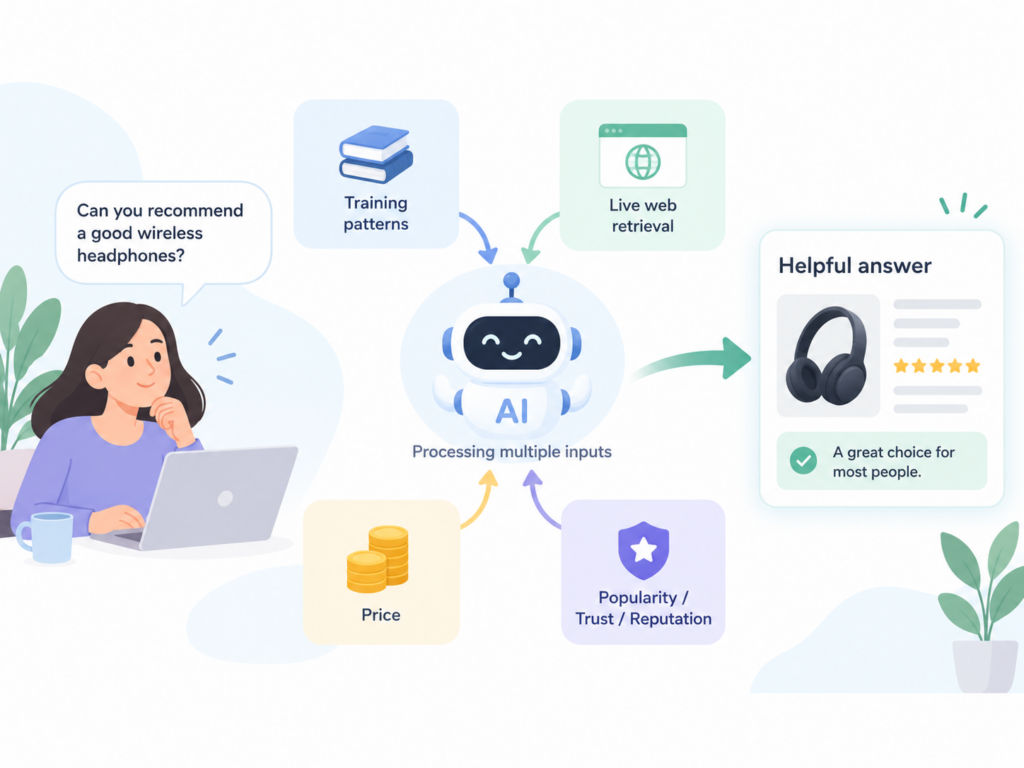
    Your domain authority is 75. Your blog ranks on the first page for a dozen high-intent keywords. But when a potential buyer asks ChatGPT, “What’s the best platform for [your category]?”, the answer pulls from Reddit threads, Wikipedia entries, and a G2 review page you didn’t even know existed.

    That disconnect is growing. The top 15 domains now capture roughly 68% of all AI citations across major platforms, and most brand-owned sites aren’t among them. Traditional SEO metrics weren’t built to tell you which sources LLMs actually trust, or where your brand fits in that hierarchy.

    This report breaks down the citation patterns behind ChatGPT, Perplexity, Gemini, and Claude, along with what those patterns mean for ai visibility tracking in 2026.

    A Small Group of Domains Controls Most AI Citations

    LLMs don’t treat the internet as a flat index. They’ve built a clear hierarchy, and it’s more concentrated than Google’s PageRank ever was.

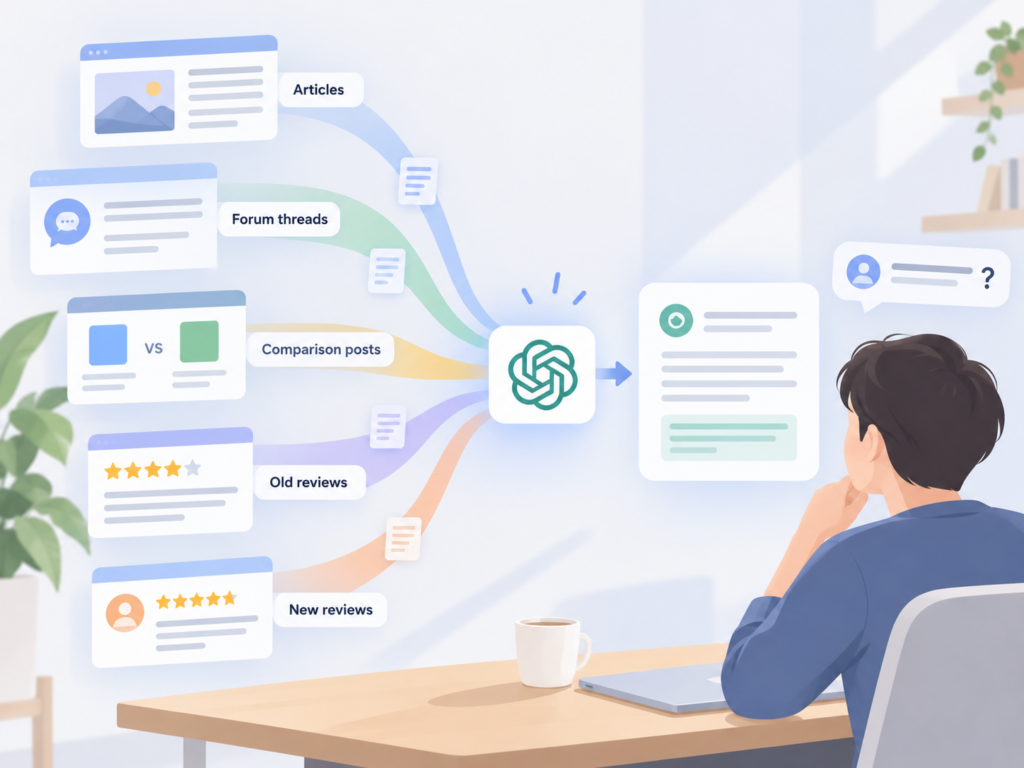
    Analysis of over one billion citation data points shows that a handful of sources dominate AI-generated answers. Wikipedia alone accounts for nearly 48% of top-ten citations in ChatGPT. Reddit captures about 40% of LLM citations overall, with its share climbing to 46.5% on Perplexity. YouTube leads Google’s AI Overviews at 29.5% citation share, thanks to its rich metadata, auto-generated captions, and chapter markers.

    Then there’s the professional and editorial layer. LinkedIn dominates B2B and executive-level queries. Reuters, the Associated Press, and Bloomberg anchor time-sensitive financial and news responses. Forbes and the New York Times round out the editorial authority tier.

    RankDomainCore StrengthStrongest Platform
    1Wikipedia.orgEntity definitions, factual groundingChatGPT
    2Reddit.comFirst-hand experience, comparisonsPerplexity / AIO
    3YouTube.comVisual evidence, tutorial metadataGemini / AIO
    4LinkedIn.comProfessional authority, B2B contextMulti-platform
    5Forbes.comEditorial authority, business rankingsChatGPT / Perplexity

    The takeaway isn’t that these domains are “better.” It’s that LLMs have been trained to weight certain trust signals, and these sources happen to score highest on those signals consistently.

    Each AI Platform Has a Different Citation Personality

    Brands that treat AI search as a single channel are misreading the landscape. ChatGPT, Perplexity, Gemini, and Claude each pull from different source pools, with meaningfully different preferences.

    ChatGPT behaves like a cautious encyclopedia editor. It leans on Wikipedia and top-tier news outlets, keeping citations tight at 2 to 4 sources per answer. Brand-owned pages rarely appear unless the query has explicit commercial intent.

    Perplexity is the citation-heavy researcher. It typically surfaces 5 to 12 footnotes per response, drawing heavily from Reddit, academic sources, and third-party review platforms like G2 and Capterra. For SaaS brands, Perplexity tends to deliver the highest conversion efficiency because it directly references comparison and review sites.

    Gemini and Google AI Overviews favor Google’s own ecosystem. YouTube, Google Maps, and Google Shopping dominate the citation mix. The overlap between AIO citations and traditional top-ten SERP results once hit 76.1%, though that number is declining in 2026 as Google diversifies its sources.

    Claude prefers long-form depth. The Atlantic, The New Yorker, and The Economist appear more frequently in Claude’s citations than in any other platform. It favors time-tested analysis over breaking news, making it the strongest platform for brands with deep editorial content.

    DimensionChatGPTPerplexityGemini / AIOClaude
    Top source typeWikipedia, elite newsReddit, G2, academicYouTube, local listingsLong-form magazines
    Citations per answer2-45-123-52-3
    Algorithmic preferenceEditorial authorityReal-time UGC + dataGoogle ecosystem, E-E-A-TNarrative quality, logic

    One critical warning: citation patterns shift. In September 2025, a ChatGPT parameter update dropped Reddit’s citation share from 60% to 10% in six weeks. PR Newswire, Forbes, and Medium absorbed the gap. Brands that had over-invested in Reddit visibility lost ground overnight.

    That’s the kind of volatility that makes ongoing ai visibility tracking non-negotiable.

    Why AI Engines Favor Certain Content Formats

    Domain authority gets you considered. But the format and structure of your content determines whether AI actually extracts and cites it.

    The data here is specific. Pages that include concrete statistics, percentages, and data points are 40% more likely to be cited than purely qualitative content. That’s a significant gap for a single structural choice.

    Position matters too. 44.2% of AI citations are extracted from the first 30% of an article. If your key claim or definition sits in paragraph eight, most LLMs won’t reach it. Front-loading your core statement is one of the highest-leverage GEO moves available.

    A few more structural signals that correlate with higher citation rates:

    Heading hierarchy68.7% of cited pages follow strict H1 to H2 to H3 logic. AI crawlers use these levels to map entity relationships.

    Content freshness50% of cited content was published within the last 13 weeks. On Perplexity, freshness can override domain authority entirely.

    Depth over brevity: Content exceeding 20,000 characters gets 4.3x more citations on average than thin pages. LLMs prefer comprehensive “single source of truth” documents they can chunk on their own.

    The pattern is clear. AI engines don’t want summaries of summaries. They want structured, data-rich, deeply reported source material they can extract from confidently.

    The Citation Gap Where Most Brands Lose AI Visibility

    Here’s the number that should reframe every brand’s content strategy: 82% to 85% of AI citations come from third-party sources, not from brand-owned websites.

    That means the page you spent three months optimizing on your own domain might never appear in an AI-generated answer. The Reddit thread where a customer described their experience with your product? That’s 6.5 times more likely to get cited.

    This gap creates two problems.

    First, brands that focus exclusively on their own site are building content in a space LLMs tend to ignore. Second, there’s the “ghost citation” phenomenon: one study found that Gemini cited a brand’s website 182 times in 30 days but never mentioned the brand name in its generated text. The AI extracted knowledge from the site but didn’t consider the brand identity relevant to the user’s question.

    Closing that gap requires a shift in strategy. Instead of funneling all content investment into owned properties, brands need to build signal across the platforms LLMs trust most: Reddit, LinkedIn, G2, YouTube, and authoritative editorial outlets. The goal isn’t just visibility on your own site. It’s presence across the sources AI actually cites.

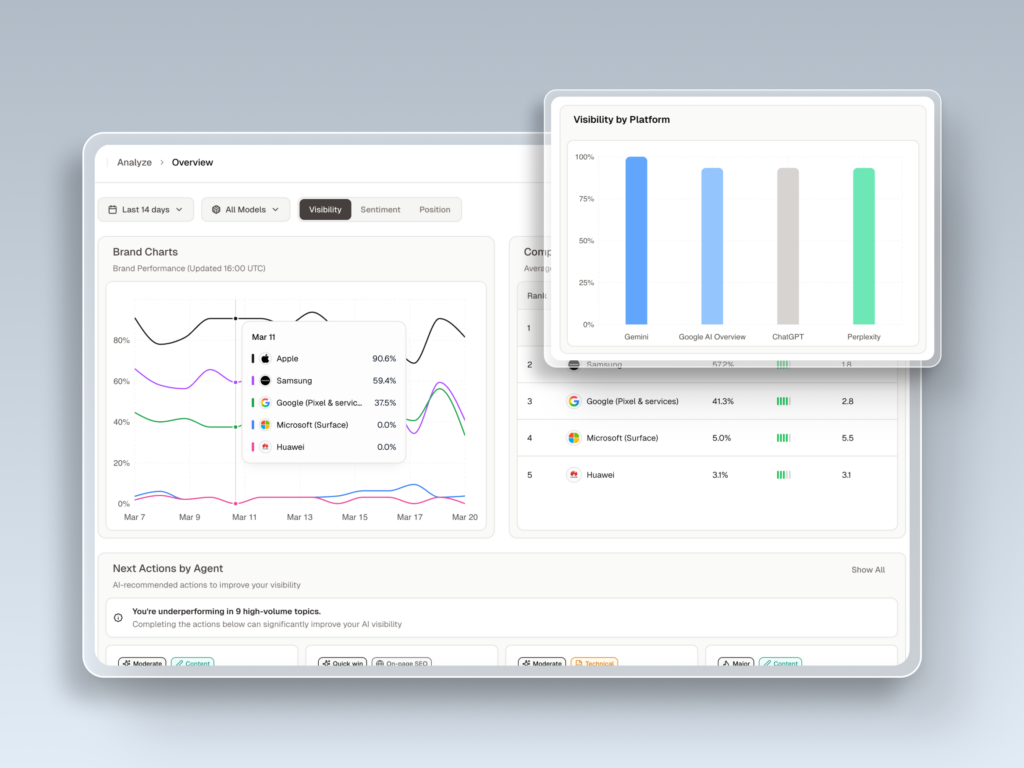
    Topify‘s Source Analysis feature is built for exactly this problem. It reverse-engineers the domains and URLs that AI platforms cite for your target prompts, showing you where competitors are getting referenced and where your brand has gaps. That kind of ai visibility tracking at the citation layer turns a vague “we’re not showing up” into a specific, actionable map.

    How to Track AI Visibility at the Source Level

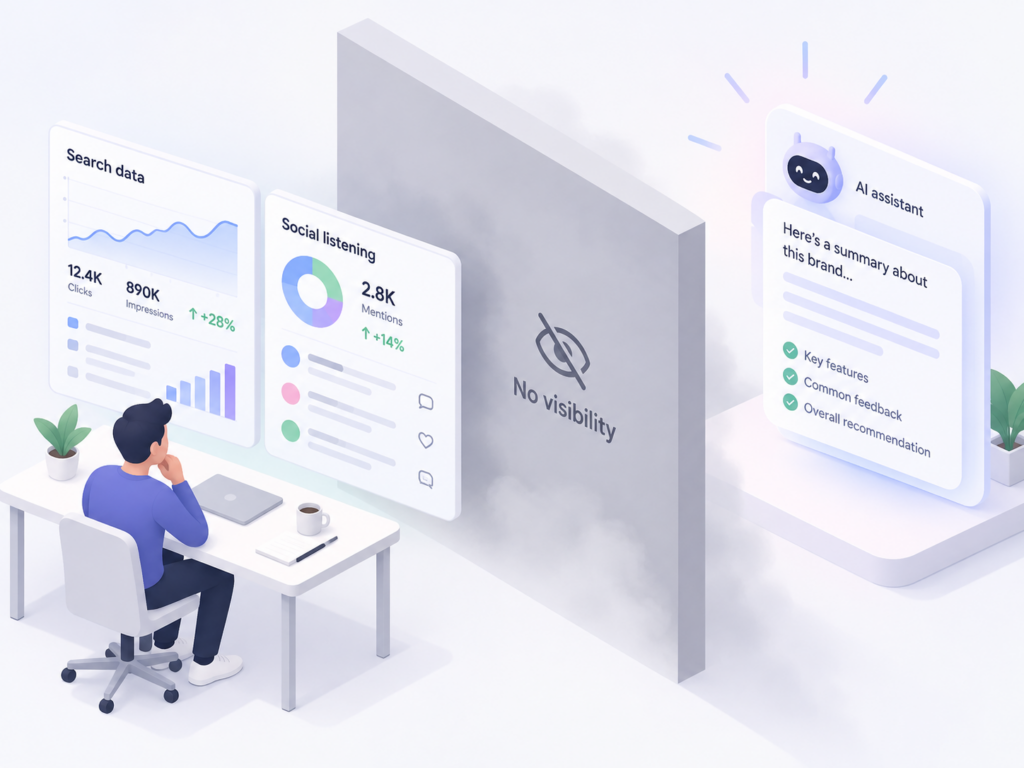
    Traditional keyword rankings can’t measure what’s happening inside AI-generated answers. The industry has developed a new set of KPIs specifically for this:

    AI Share of Voice measures how often your brand gets mentioned relative to competitors across a defined set of prompts. It’s the closest equivalent to market share in AI search.

    Citation Probability Score evaluates how likely a specific page is to be cited, based on its structure, data density, and freshness. Think of it as a predictive quality metric for GEO.

    Sentiment Score tracks whether AI mentions your brand positively, neutrally, or negatively. The current data shows AI references negative sentiment at 6.1% in comparative contexts, slightly higher than positive sentiment at 5.0%. That makes sentiment monitoring a brand safety issue, not just a vanity metric.

    For teams building an ai visibility tracking workflow, the practical framework looks like this: define your target prompts, monitor which sources get cited in each answer, identify content gaps between your coverage and your competitors’, then optimize content to fill those gaps.

    Topify brings these steps into one platform. Its Visibility Tracking covers ChatGPT, Perplexity, Gemini, DeepSeek, and other major AI engines. Competitor Monitoring automatically detects rivals and benchmarks your position, sentiment, and citation sources against theirs. And the one-click GEO execution feature turns those insights into content actions without manual workflows.

    That end-to-end loop, from tracking to diagnosis to execution, is what separates a dashboard from a system. You can get started with Topify to see where your brand currently stands across AI platforms.

    3 Moves That Earn More AI Citations in 2026

    The data from this report points to three high-impact actions brands can take now.

    1. Front-load facts in every piece of content. If 44.2% of citations come from the first 30% of a page, burying your strongest claims below the fold is a structural disadvantage. Lead with your core insight, definition, or data point. Save the context for paragraphs two and three.

    2. Build third-party signal where LLMs actually look. Your blog is important, but it’s not where AI citations concentrate. Invest in Reddit participation, G2 reviews with real use-case detail, LinkedIn thought leadership, and earned media in publications AI trusts. Brands with active third-party presence are 3x more likely to be selected as a recommended source by ChatGPT.

    3. Monitor citation patterns continuously, not quarterly. The September 2025 algorithm shift proved that citation shares can swing dramatically in weeks. Monthly or quarterly audits miss these inflection points. Real-time ai visibility tracking tools like Topify’s AI search monitoring dashboard let you catch drops before they compound.

    One more data point worth keeping in mind: despite the overall decline in click-through rates from AI answers (the top organic result loses 58% of its CTR when AIO is present), the traffic that does come through AI citations converts at dramatically higher rates. An Ahrefs case study found that AI-referred visitors, while representing just 0.5% of total traffic, generated 12.1% of signups, a 23x conversion premium over traditional organic traffic.

    The volume is smaller. The value per visit is much higher.

    Conclusion

    The sources LLMs trust in 2026 are concentrated, platform-specific, and shifting faster than most brands realize. Wikipedia, Reddit, YouTube, and a small group of editorial authorities dominate the citation layer, and each AI platform weights them differently.

    For brands, the strategic implication is straightforward: stop optimizing only for your own site, start building signal where AI actually pulls citations, and track the results continuously. The brands that treat ai visibility tracking as an ongoing discipline, not a one-time audit, are the ones that’ll hold position as citation patterns evolve.

    FAQ

    Q: What is ai visibility tracking? 

    A: AI visibility tracking is the practice of monitoring how and where your brand appears in AI-generated answers across platforms like ChatGPT, Perplexity, and Gemini. It measures metrics like citation frequency, source attribution, sentiment, and competitive positioning within AI search results.

    Q: Which AI search engine cites the most external sources? 

    A: Perplexity currently provides the most citations per answer, typically 5 to 12 footnotes per response. It draws heavily from Reddit, academic databases, and third-party review platforms, making it the most citation-transparent AI search engine available.

    Q: Does high domain authority guarantee AI citations? 

    A: No. Domain authority helps with traditional SEO rankings, but LLMs use a different trust hierarchy. Content structure, data density, freshness, and third-party presence on platforms like Reddit and G2 often matter more than DA alone.

    Q: How often do AI citation patterns change? 

    A: They can shift significantly within weeks. The September 2025 ChatGPT update moved Reddit’s citation share from 60% to 10% in six weeks. Continuous monitoring is the only way to catch these changes before they affect your brand’s visibility.

    Read More

  • We Tracked 1,000 Brands Across 4 LLMs for 90 Days

    We Tracked 1,000 Brands Across 4 LLMs for 90 Days

    Your brand ranks on the first page of Google. Your domain authority sits above 60. Your content team publishes weekly. And yet, when a potential buyer asks ChatGPT for a recommendation in your category, your name doesn’t come up. Not once. Across 10,000 matched queries and four major AI platforms, the average brand inclusion rate in AI-generated answers was just 0.3%. Traditional SEO metrics can’t explain that number, because they weren’t built to measure what AI chooses to say.

    The gap between what brands think their visibility is and what AI models actually show is wider than most marketing teams realize. And it’s growing.

    What 90 Days of AI Visibility Tracking Actually Revealed

    Over 90 days, we monitored 1,000 cross-industry brands across ChatGPT, Gemini, Perplexity, and DeepSeek, executing more than 10,000 matched queries per platform. The goal was simple: measure how often a brand actually appears in the synthesized answer layer of the web.

    The results weren’t subtle. A majority of brands were completely invisible on at least one major AI platform. A brand might surface in 48% of ChatGPT responses for a given category while registering near-zero visibility on Gemini or DeepSeek.

    Cross-platform consistency told an even rougher story. Only 11% of domains were cited by both ChatGPT and Perplexity for the same query. That means ai visibility tracking isn’t about finding a single score. It’s about understanding a fragmented, probabilistic landscape where each LLM views trust and authority through a different lens.

    Visibility MetricAverage BaselineTop 1% Performers
    Brand Inclusion Rate0.3%12% to 45%
    Cross-Platform Overlap11%62%
    Zero-Click Impact60%83% to 93%
    Conversion Rate (AI Traffic)14.2%20% to 30%

    Here’s what made the data especially uncomfortable: only 30% of brands stayed visible across consecutive AI sessions, and just 20% held their presence across five consecutive prompt runs. AI visibility isn’t a ranking you earn once. It’s a position you either maintain or lose.

    The Visibility Gap Most Brands Don’t Know Exists

    The most dangerous assumption in modern marketing is that strong SEO automatically translates into AI visibility. It doesn’t.

    Analysis of over 34,000 AI responses found that only 17% to 32% of sources cited in AI results also rank in the organic top 10 on Google. In local search, the gap is even more extreme: 35.9% of locations show up in Google’s traditional local 3-pack, but only 1.2% get recommended by ChatGPT for the same intent.

    The reason comes down to how AI models decide what to cite. Traditional search rewards keyword density and link equity. LLMs reward something different: information gain, fact density, and entity consensus. If your site delivers marketing-heavy narrative but lacks structured, extractable data points, the model will skip it for a source that offers clear, citable metrics.

    That’s the gap most brands still can’t see.

    Brands with 9 or more structured, extractable facts achieve a 78% average AI coverage rate. Those with only 2 facts drop to 9%. The overlap between top-performing organic search domains and AI-cited sources has collapsed to under 20% in many competitive categories.

    DimensionTraditional SEOGenerative Engine Optimization
    MechanismCrawling, Indexing, RankingRetrieval, Filtering, Synthesis
    Authority FocusBacklinks (Domain Authority)Entity Mentions (Brand Trust)
    Content PriorityKeywords and NarrativeFacts and Structured Data
    User OutcomeClick to a DestinationAnswer Inside the Interface
    StabilityRelatively StaticHighly Probabilistic

    Which LLMs Recommend Your Brand, and Which Ignore It

    Each of the four major LLMs has developed a distinct sourcing personality. Understanding those differences is the first step toward building a cross-platform ai visibility tracking strategy.

    Google Gemini leans heavily on brand-owned content. Research shows that 52.15% of Gemini’s citations come from brand-owned websites. It trusts what a brand says about itself, provided the information is delivered through high-quality structured data and schema markup. If your technical SEO foundation is weak, Gemini will ignore you.

    ChatGPT runs on a different logic entirely. Nearly 48.73% of its citations come from third-party directories, listings, and consensus sites like Yelp, TripAdvisor, and industry aggregators. For ChatGPT, authority is a function of how many independent sources agree that your brand is the answer. Digital PR and broad web distribution matter here more than on-site optimization.

    Perplexity AI favors niche expertise and real-time validation. For subjective or “best-of” queries, niche sources make up 24% of its citations, the highest of any model. It’s particularly sensitive to recency and specialization, often pulling from regional directories and verified customer reviews that its peers skip entirely.

    DeepSeek operates as a reasoning-first engine. Its retrieval logic is weighted toward author expertise, publication authority, and technical performance. DeepSeek conducts live web scans and selects sources based on citation-worthy statistics and data density, not brand awareness.

    AI PlatformSourcing BiasPrimary Citation TypeKey Visibility Lever
    GeminiBrand OwnershipBrand-Owned DomainsStructured Schema / Local Pages
    ChatGPTPublic ConsensusDirectories and ListingsCross-Site Mentions / Digital PR
    PerplexityNiche ExpertiseExpert Reviews / RedditSpecialized Content / Reviews
    DeepSeekReal-Time ReasoningData-Dense SourcesAuthor Authority / Page Speed

    The takeaway is clear: a brand might be ChatGPT’s top recommendation thanks to strong directory presence, yet remain completely invisible on Gemini because its on-site schema is missing. One strategy won’t cover four platforms.

    AI Visibility Tracking Metrics That Actually Matter

    Traditional metrics like impressions and clicks increasingly mask what’s really happening. A brand might see rising impressions in Google Search Console while its click-through rate collapses because an AI Overview is answering the query above the fold.

    To manage this shift, marketers need a metric framework that reflects how LLMs actually behave. The Topify 7-Metric Hierarchy provides that lens, built specifically for the probabilistic nature of AI responses.

    Visibility Score measures how often a brand is explicitly named across a universe of high-intent prompts, on a 0-to-100 index. Sentiment Score evaluates how the AI frames the brand. There’s a meaningful difference between being called a “reliable leader” and a “budget alternative.” Position Rank tracks where the brand appears in the recommendation list, because in AI search, the first-mentioned brand captures the majority of trust.

    Volume measures monthly conversational demand for specific prompts. Mentions captures raw frequency per 1,000 queries, the AI equivalent of Share of Voice. Intent Alignment checks whether the AI is matching the brand to the right buyer personas. High visibility with low intent alignment is wasted exposure.

    Then there’s CVR (Conversion Visibility Rate), which estimates the revenue impact of an AI mention by analyzing recommendation context and prompt intent. This is becoming the North Star metric for CMOs, and for good reason: AI-referred visitors convert at rates up to 5x higher than traditional organic traffic, with an average conversion rate of 14.2%.

    Topify MetricDiagnostic Purpose2026 Performance Target
    Visibility ScoreMeasures general discovery> 45% for core categories
    Sentiment ScoreDetects narrative drift> 70/100 (weighted positive)
    Position RankEvaluates recommendation power< 2.0 (top 2 placement)
    CVRTranslates visibility to ROI14.2% conversion benchmark

    What Changed Over 90 Days, and What Stayed Flat

    AI visibility isn’t static. Unlike the relatively stable rankings of the SEO era, LLM recommendations shift constantly due to model drift, where retrieval logic or training weights change over time.

    The brands that gained visibility during the study shared a clear profile. They actively used Generative Engine Optimization (GEO) tactics: structuring specifications in HTML tables, using the inverted-pyramid content format, and maintaining consistent brand facts across every digital surface. These “Rising” brands saw citation lifts of up to 4.5xthrough GEO execution.

    “Falling” brands stayed reactive. They kept producing keyword-stuffed blog posts that AI models found difficult to summarize. Worse, they suffered from narrative fragmentation, where different digital properties offered contradictory facts about the brand. When an AI loses confidence in an entity’s consistency, it filters that entity out.

    One finding surprised even the research team: content freshness isn’t optional. Brands with content refreshed within the last year accounted for 65% of all AI citations. ChatGPT’s reference URLs averaged 393 days newer than those in organic Google results. On the flip side, brands that remain static lose approximately 1.8% of their AI coverage every month they don’t update.

    FeatureRising BrandsFalling Brands
    Content FormatStructured tables, data-dense blocksLong-form narrative, low fact density
    Primary MetricAI Visibility Score and CVRGoogle Keyword Rank
    Update CycleEvery 30 daysSet-and-forget
    Optimization LogicSynthesis and entity signalsLink equity and keywords
    Visibility Trend4.5x citation liftSystematic erosion of Share of Voice

    How to Start AI Visibility Tracking for Your Brand

    The study proves one thing clearly: brands that track AI visibility weekly are 3x more likely to appear in AI-generated answers within 90 days. Here’s the framework that works.

    Step 1: Define the prompt universe. Identify the conversational questions your buyers actually ask. This isn’t keyword research. It involves analyzing sales transcripts, community forums, and support tickets to find high-intent modifiers that trigger AI recommendations.

    Step 2: Establish a baseline. Run your prompt library across ChatGPT, Gemini, Perplexity, and DeepSeek to establish an initial AI Visibility Score. Without this baseline, you can’t prove the ROI of any GEO effort that follows.

    Step 3: Audit the visibility gap. Determine why your brand is missing. Is it a lack of structured facts? Negative sentiment from an old news cycle? Or a shortage of third-party validation?

    Step 4: Deploy GEO content. Rewrite key pages to provide direct answers. Add HTML comparison tables. Integrate expert citations. These tactics have been shown to increase citation rates by up to 41%.

    Step 5: Monitor continuously. A 30-day recheck is the minimum. Weekly is recommended for competitive sectors.

    For teams looking to operationalize this workflow, Topify maps its features directly to each step. Its AI Visibility Checkerprovides cross-platform scores, High-Value Prompt Discovery surfaces the conversational intent traditional tools miss, and Source Analysis pinpoints the exact domains driving competitor recommendations while your brand stays invisible. One-Click Execution generates schema-rich content blocks and answer-first FAQs that can be deployed directly to a CMS.

    Pricing starts at $99/month for the Basic plan (100 prompts, 9,000 answer analyses), with the Pro plan at $199/month adding full Source Analysis and 250 prompts. Enterprise plans start at $499/month with dedicated support and API access. You can get started here.

    Conclusion

    The 90-day data across 1,000 brands tells one story: AI visibility tracking is no longer a nice-to-have. It’s the metric that separates brands buyers can find from brands that have effectively disappeared. With cross-platform overlap at just 11%, conversion rates from AI traffic hitting 14.2%, and static content losing 1.8% of coverage every month, the cost of not tracking is already measurable.

    The brands winning in AI search aren’t the ones with the highest domain authority. They’re the ones that know exactly where they stand across every LLM, every week. Start tracking. Start optimizing. The window to build a citation moat is open, but it won’t stay that way.

    FAQ

    Q: What is ai visibility tracking?

    A: AI visibility tracking measures how frequently and authoritatively a brand appears in generative AI responses across platforms like ChatGPT, Gemini, Perplexity, and DeepSeek. It focuses on Share of Model Voice and citation frequency rather than traditional keyword rankings.

    Q: How often should I track brand visibility in AI search?

    A: Given the volatility of LLM outputs and the frequency of model drift, professional teams should track visibility weekly at minimum. Daily tracking is recommended for highly competitive sectors like B2B SaaS and fintech.

    Q: Which AI platforms should I track my brand on?

    A: A solid strategy requires tracking across the four major foundational models: ChatGPT (for consensus-based recommendations), Google Gemini (for owned-data authority), Perplexity (for specialized research), and DeepSeek (for technical and STEM reasoning).

    Q: Can traditional SEO tools track AI visibility?

    A: No. Traditional SEO tools monitor URL positions on a page of results. They can’t interpret natural language answers or quantify how a brand is being recommended in a synthesized conversational summary. Dedicated AI visibility tools like Topify are built to measure these probabilistic signals.

    Read More

  • Schema Markup for AI Search: What Moves the Needle

    Schema Markup for AI Search: What Moves the Needle

    Your site passes every structured data test Google offers. Rich snippets show up exactly where they should. Then someone asks ChatGPT for a recommendation in your category, and your brand doesn’t appear in the answer. Not once.

    That disconnect isn’t a bug. It’s a gap between how traditional search engines and generative AI engines process structured data. Google’s crawler treats Schema as a direct classification instruction: star ratings go here, prices go there. LLMs treat it as a probability signal, one input among many that shapes whether your content gets cited or skipped. Most SEO teams are still optimizing for the first system while the second one quietly decides who gets recommended.

    Most Schema Markup Doesn’t Reach AI Models. Here’s Why.

    There’s a persistent myth in SEO circles: add JSON-LD to your pages, and AI models will automatically “read” it and boost your visibility. The reality is more nuanced.

    Traditional crawlers like Googlebot parse Schema as a syntax tree, slotting data into specific SERP features. LLMs process content through tokenization, treating structured data as what researchers call a “probability calibration signal” rather than a direct ranking instruction. The model doesn’t see your JSON-LD the way Google does. It uses it to reduce ambiguity and increase confidence when extracting facts from your page.

    That distinction matters. Studies from late 2024 found no direct positive correlation between Schema coverage rates and AI citation rates. Simply having the code on your page isn’t enough. What AI models care about is “structured clarity,” whether the markup actually helps them extract accurate, verifiable information faster than they could from unstructured text.

    Here’s where it gets interesting. In systems like Google AI Overviews and Bing Copilot, Schema’s influence is more direct. These platforms lean heavily on existing search indexes, and structured data helps them identify answer boundaries. Microsoft noted in a late-2025 technical session that structured data functions as a “steering” mechanism, guiding the AI toward higher-confidence answers.

    Processing DimensionTraditional Search (Google/Bing)Generative AI (ChatGPT/Perplexity)
    Primary GoalPage indexing and feature classificationEntity recognition and answer synthesis
    Schema FunctionTriggers Rich Results (stars, prices)Boosts RAG retrieval confidence scores
    Reading MethodStrict Schema.org syntax treeContextual tokenization + symbolic reasoning
    Citation LogicPageRank + keyword relevanceAuthority (E-E-A-T) + information density
    Data LinkingIsolated page-level markupCross-domain entity graphs (@id, @graph)

    The bottom line: Schema is a signal, not a shortcut. It works when it’s paired with content AI models actually trust.

    3 Schema Types That Actually Influence AI Recommendations

    Out of hundreds of Schema types, only a handful consistently move ai visibility tracking metrics. They share one trait: they match the way AI systems process questions.

    FAQ Schema: The Highest-Impact Format

    FAQPage Schema is the single most effective type for AI citation. The logic is straightforward. Generative search is fundamentally a question-answering system, and FAQ Schema packages information into exactly the unit AI handles best: question-answer pairs.

    Pages with properly implemented FAQPage Schema see citation rates roughly 2.5 times higher than unmarked pages in AI responses. GPT-4’s accuracy in understanding structured FAQ content jumps from 16% to 54% compared to unstructured text on the same topic.

    One detail most guides miss: answer length matters. The sweet spot sits between 134 and 167 words per answer. That range gives the model enough verifiable facts (specific numbers, locations, credentials) while staying short enough to embed cleanly into a synthesized response. Go much longer, and the model is more likely to paraphrase loosely or skip it entirely.

    HowTo Schema: Capturing Step-by-Step Intent

    One of the most common AI use cases is “how do I…” queries. When users ask for instructions, AI systems prioritize content with clear, sequential steps over narrative explanations.

    HowTo Schema marks up each step, required tools, and expected outcomes in a format AI can extract without guessing. How-to guides show citation rates around 54% across AI platforms, with particularly strong performance in Perplexity and Google AI Overviews. The structured format also helps AI cross-reference your steps against other sources, which increases citation confidence.

    Product and Review Schema: Entering the Consideration Set

    In purchase-decision contexts, AI models act as comparison engines. They sort brands by price, specs, user ratings, and availability.

    Product, Offer, and AggregateRating Schema are effectively your ticket into that comparison. Analysis of 768,000 AI citations found that product-focused content accounts for 46% to 70% of all AI citations in commercial queries, while traditional long-form blog posts account for just 3% to 6%. AI heavily favors pages with hard specs, pricing tables, and structured review data when generating shopping recommendations.

    Schema TypeAI Citation Lift (vs. No Markup)Core AdvantageBest For
    FAQPage+89% (Google AIO)Direct Q&A format matchService pages, FAQ sections
    HowTo+76%Structured step extractionGuides, tutorials, SOPs
    Product+60%-70% (overall)Parameterized comparisonE-commerce, SaaS feature pages
    Article/Blog+36% (median)Author identity signalsThought leadership, industry news

    What Schema Won’t Fix: The Content Gap That Tanks AI Visibility

    Schema is a powerful signal. It’s not a rescue plan for weak content.

    The most common failure pattern: brands invest heavily in technical markup while ignoring what AI models actually weigh most in citation decisions. In AI’s evaluation framework, Schema accounts for roughly 10% of the total weight. Domain authority and content depth carry the rest, at an estimated 3.5:1 ratio over Schema alone.

    That’s the gap most brands still can’t see.

    AI systems, especially Perplexity and ChatGPT, show a strong preference for “earned media,” third-party, authoritative, independent sources. If your brand only has Schema on your own website but lacks external citations from platforms like Reddit, G2, or industry publications, AI will often cite those external sources instead of your site. Research consistently shows that 82% to 85% of AI brand citations originate from third-party domains.

    There’s also the problem of “semantic drift.” When AI models form opinions based on outdated training data, Schema alone can’t override that bias. One documented case involved a fintech brand whose AI profile was shaped by a minor incident from two years prior. Correcting it required building a structured “trust center” packed with verifiable credentials (ISO certifications, security standards) that the RAG retrieval layer could pick up in real time.

    What does move the needle alongside Schema:

    • Layered heading structures where H2/H3 titles mirror the actual questions users ask AI
    • Answer-first architecture that puts the conclusion in the opening sentence of each section
    • Data tables instead of paragraphs for comparison content, which shows 2.8x higher citation rates than prose-based comparisons

    How to Measure If Your Schema Changes AI Visibility Tracking Results

    Google Rich Results Test confirms your code is valid. It tells you nothing about whether ChatGPT, Perplexity, or Gemini are actually citing your pages.

    That’s where dedicated ai visibility tracking fills the gap. Traditional SEO tools were built to measure clicks and rankings. AI visibility requires a different measurement layer entirely.

    Topify approaches this through five core metrics designed specifically for Schema-to-visibility measurement:

    MetricWhat It Measures2026 Success Benchmark
    Visibility ScoreBrand appearance frequency across target promptsCore category > 60%
    Sentiment ScoreHow positively AI describes your brand (0-100)> 85 (weighted positive)
    Position RankPlacement in AI recommendation lists (top 3-5)Average < 2.0
    Source CitationWhich URLs are driving AI’s opinionsYour domain in top 3 citation sources
    CVR (Visibility Rate)Estimated conversion value of AI mentionsOutperform traditional organic CPC

    The Source Analysis feature reveals a critical detail most teams miss: is AI citing your site because of your Schema improvements, or is it still pulling from a Reddit thread you’ve never seen? If 60% of citations come from external forums, that’s a clear signal to shift effort from technical markup toward community engagement and third-party coverage.

    Start with the free GEO Score Checker to get your baseline across AI bot access, structured data, content signals, and overall visibility. No signup required.

    A 30-Day Schema-to-Visibility Playbook

    Theory doesn’t move metrics. Here’s a tested four-week plan that connects Schema deployment to measurable AI visibility gains.

    Week 1: Audit and Baseline

    Pull 20-50 real conversational queries from sales calls, support tickets, and community threads. These are the prompts AI users are actually typing.

    Run a technical check: is your robots.txt blocking AI crawlers? Is your site using server-side rendering? Heavy client-side JavaScript reduces AI citation visibility by roughly 60%. Use Topify’s GEO Score Checker to capture your starting Visibility Score across ChatGPT, Perplexity, and Google AI Overviews.

    div data-topify-widget=”geo-score-checker”>

    Week 2: Deploy Schema and Align Content

    Target your top 10 ranking pages first. Deploy FAQPage Schema with Q&A pairs that exactly match visible page content. Any mismatch triggers AI consistency checks that disqualify your page.

    “Machine-ize” your content: convert key comparison data into HTML tables. Place a direct answer to the core question within the first 150 words of each page. That’s the highest-priority extraction window for AI retrieval models.

    Week 3: Build the Entity Graph

    Use @id attributes to link “author,” “organization,” and “article” entities into a connected loop. This can boost AI content confidence by approximately 20%.

    Simultaneously, update your brand information on third-party platforms (G2, Reddit, industry directories) so AI can cross-verify structured data across multiple sources.

    Week 4: Monitor, Iterate, Declare Victory

    Track these signals through Topify’s Visibility Tracking:

    • Citation frequency: look for a 30%+ increase in Google AIO mentions
    • Sentiment shift: AI descriptions moving from vague or negative toward precise and positive
    • Conversion quality: AI-referred visitors typically convert at 4.4x to 23x higher rates than standard organic traffic, even if raw click volume stays flat

    Google AIO changes tend to appear within 2-4 weeks. For models with periodic training updates (like GPT), the impact takes longer in the base model but shows faster in web-search mode.

    Conclusion

    Schema Markup in 2026 isn’t about earning star ratings on Google. It’s infrastructure for machine trust, accounting for 10% to 20% of what determines whether AI cites your brand or your competitor’s.

    That 10-20% matters. It lowers the friction AI faces when extracting facts from your pages. Combined with content depth and continuous ai visibility tracking, it’s the difference between showing up in the answer and being left out entirely.

    The starting point is specific: audit your FAQ Schema, restructure answers to hit the 134-167 word sweet spot, and deploy Topify to measure what changes. The brands that treat Schema as part of a tracking loop, not a one-time technical fix, are the ones AI keeps recommending.

    FAQ

    Does schema markup directly affect ChatGPT recommendations?

    Not the way it affects Google. LLMs treat JSON-LD as an auxiliary signal during RAG retrieval, using it to disambiguate entities and improve fact-extraction accuracy. It increases the probability your content is “correctly understood,” which indirectly influences recommendations.

    Which schema type is most important for AI search?

    FAQPage Schema currently has the highest measured impact, with approximately 89% citation lift in Google AI Overviews. Its Q&A structure matches how generative engines process and synthesize information.

    How long does it take for schema changes to impact AI visibility?

    For engines using real-time search indexes (Google AIO, Perplexity), expect 2-4 weeks. For models with periodic training data updates (ChatGPT’s base model), it can take months, though results appear faster when the model uses its live web-search mode.

    Can I track my brand’s AI visibility after adding schema?

    Yes. Topify monitors brand mentions, ranking positions, and sentiment scores across ChatGPT, Gemini, Perplexity, and other major AI platforms. You can directly compare pre- and post-Schema metrics to measure the impact of your optimization work.

    Read More

  • How to Write Content That LLMs Actually Cite

    How to Write Content That LLMs Actually Cite

    Your blog post ranks third on Google for a high-intent buyer keyword. Organic traffic is steady. Then a prospect types the same question into ChatGPT and gets a five-brand recommendation. Your brand isn’t on it.

    That’s not a ranking failure. It’s a content format failure. In mid-2025, roughly 76% of URLs cited in AI Overviews also ranked in the organic top 10. By February 2026, that overlap collapsed to 38%. The signals that earn a Google ranking and the signals that earn an LLM citation are splitting apart, and most content teams are still writing for only one side.

    The gap has a name: the Invisibility Gap. And closing it starts with how you structure your content.

    Google Rewards Keywords. LLMs Reward Clarity.

    Traditional SEO content follows a familiar formula: match the keyword, build backlinks, optimize meta tags, and climb the SERP. That formula still works for Google. It doesn’t work for the retrieval systems powering ChatGPT, Perplexity, and Gemini.

    Here’s the difference. Google’s algorithm ranks pages. LLMs extract passages. When a generative engine receives a query, it doesn’t return a list of links. It runs a Retrieval-Augmented Generation (RAG) pipeline that converts the query into a vector, searches a live index, pulls 200 to 500 candidate URLs, scores individual passages for factual density and entity clarity, and then synthesizes a single answer from the top-scoring chunks.

    Google’s AI Overviews, for example, narrow approximately 500 candidate pages down to 5 to 15 cited URLs. The selection criteria aren’t page-level authority metrics like Domain Rating. They’re passage-level qualities: semantic completeness, verifiable claims, and clear entity definitions.

    That changes what “good content” looks like.

    DimensionTraditional SEO ContentGEO-Optimized Content
    Primary GoalRank in top 10 linksEarn inline citations
    Core LogicKeyword density + backlinksFactual density + structure
    User BehaviorClick-through to websiteSynthesized answer in interface
    Success MeasureCTR and organic trafficVisibility Score and Sentiment

    The practical implication: a page ranking at position 50 can still get cited in an AI Overview if it contains a highly specific, factual answer that top-ranking pages lack. Position doesn’t guarantee citation. Content quality at the passage level does.

    The Information Gain Problem: Why Most Content Gets Ignored

    The single biggest factor separating cited content from ignored content in 2026 is Information Gain, the measure of genuinely new, unique, and verifiable insight that a piece of content adds to what already exists on the web.

    LLMs are trained on (or retrieve from) massive text corpora. When your content says roughly the same thing as the other 30 articles on the topic, the model has no reason to cite yours specifically. It absorbs the information and attributes it to nobody.

    Research from Princeton University, Georgia Tech, and the Allen Institute for AI, published at the 2024 ACM SIGKDD conference, quantified this effect. Their findings show that adding expert quotations to content increases AI visibility by 41%. Including original statistics provides a 32% boost. Citing authoritative third-party sources lifts visibility by 30%.

    The “5-to-7 Rule” offers a practical benchmark: competitive content in 2026 needs five to seven distinct, original, attributable insights to have a realistic shot at citation. An “insight” means something specific enough to be quoted, like a proprietary data point, a coined framework, or an expert opinion that the LLM couldn’t have generated from its own training data.

    Content that merely rephrases existing information scores low on Information Gain and gets absorbed. Content that introduces new data points becomes citable.

    Four Pillars of Content That LLMs Actually Extract

    LLMs don’t read content the way humans do. They parse it for machine-readable signals and extractable facts. Writing for both audiences requires a framework that bridges human readability with machine retrieval.

    Pillar 1: Answer-First Architecture

    Generative engines favor content that addresses the query directly in the opening section. The practical rule: lead every H2 with a 40 to 60 word “atomic” answer that directly responds to the question the heading implies.

    This gives the RAG system a high-confidence snippet it can extract and serve as a direct response, with your URL as the cited source. Pages that bury the answer under three paragraphs of context lose to pages that lead with it.

    Pillar 2: Entity Clarity Through Structure

    Every section needs clear subject-verb-object (SVO) structures. LLMs use these to map “triples” into their knowledge graphs. Instead of writing “it provides better results,” write “[Product Name] increases [Metric] by [Percentage].”

    Proper semantic HTML matters here too. Content with a clear H1-to-H4 hierarchy has a 40% higher parsing probability than flat, unstructured text. The model needs to understand what each section is about before it can decide whether to cite it.

    Pillar 3: Third-Party Consensus

    AI models trust external sources more than brand-owned content. The data is stark: earned media like Reddit threads, industry publications, and G2 reviews are cited at a rate of 72% to 92% in branded queries. Brand-owned blog content? Less than 27%.

    That doesn’t mean your blog doesn’t matter. It means your blog alone isn’t enough.

    The “Consensus Signal” triggers when an AI scans multiple independent sources and finds agreement. If your product is consistently described the same way across Reddit, YouTube, G2, and industry forums, the AI gains the confidence to recommend it. Your blog provides the canonical definition. External sources provide the validation.

    Pillar 4: Freshness and Verifiability

    Generative engines show a significant bias toward recent information. Content updated within the last 30 days is 3.2 times more likely to be cited than stale content. For Google AI Overviews, the highest citation rates appear for content between 30 and 89 days old.

    This means core evergreen pages need to become “living documents,” refreshed every two to four weeks with new statistics, recent developments, and updated dateModified schema timestamps.

    How to Rewrite Existing Content for AI Visibility

    You don’t need to start from scratch. The highest-ROI move is auditing and restructuring content you already have. Here’s the process.

    Step 1: Identify high-value pages. Start with pages that already rank on Google but aren’t being cited by AI. These have proven topical relevance. They just need structural upgrades to become citable.

    Step 2: Add atomic answers. For each H2, write a 40 to 60 word direct answer to the question the heading implies. Place it immediately under the heading, before any context or background.

    Step 3: Inject original data. Every section needs at least one verifiable, specific claim. Proprietary survey results, original benchmarks, or expert quotes all qualify. Generic statements like “many companies are adopting AI” don’t.

    Step 4: Implement technical signals. Add FAQ, HowTo, or Product schema markup. Implementing these structured data types increases citation likelihood by 28% to 40%. Product schema alone drives a 73% higher selection rate in AI retrieval pipelines.

    Step 5: Refresh consistently. Set a 14 to 30 day update cadence for your highest-priority pages. Even small additions, like a new statistic or an updated comparison, signal freshness to AI crawlers.

    One pattern worth watching: YouTube’s share of social citations has doubled from 19% to 39% as models like Gemini prioritize multi-modal content. If you’re producing blog content on a topic, a companion video with an SEO-optimized transcript extends your citation surface into a channel most competitors are ignoring.

    AI Visibility Tracking: Measuring Whether Your GEO Content Works

    Traditional analytics can’t tell you whether AI is citing your content. Google Analytics tracks clicks. Search Console tracks rankings. Neither tracks whether ChatGPT mentioned your brand in a recommendation, or what Perplexity said about your pricing.

    That’s the gap ai visibility tracking fills.

    The core framework for measuring GEO content performance includes seven metrics. Visibility Score measures how often your brand appears across a universe of relevant prompts, with a 2026 benchmark of 60% or above for core categories. Recommendation Position tracks where you land in the AI’s response, since being first carries an implicit endorsement that third or fourth position lacks. Sentiment Velocity catches shifts in how the AI describes your brand before they compound into reputation problems. Source Citations reverse-engineer the specific URLs influencing the AI’s opinion. Conversion Visibility Rate estimates the economic value of each mention. Entity Confidence measures how accurately the AI distinguishes your brand from competitors. And Hallucination Monitoring alerts you when an LLM fabricates false claims.

    For content teams running a GEO content strategy, the most actionable loop connects Source Citations back to content decisions. If you discover that Perplexity cites a competitor’s blog post in 40% of relevant answers, you know exactly what content gap to close. If your own article is being cited but with negative sentiment, you know which page to rewrite.

    Topify runs this loop across ChatGPT, Gemini, Perplexity, DeepSeek, and other major platforms. It tracks all seven metrics in a unified dashboard, surfaces competitor positioning in real time, and continuously identifies new high-value prompts as AI recommendation patterns shift. For teams that need to connect GEO content output to measurable visibility changes, Topify’s Source Analysis traces which specific URLs the AI is citing, so you can validate whether a content rewrite actually moved the needle.

    The economics reinforce the investment. AI search traffic converts at an average rate of 14.2%, compared to 2.8% for traditional organic search. That’s a 5x advantage, which means even modest improvements in ai visibility tracking metrics translate to outsized revenue impact.

    Three Mistakes That Quietly Kill AI Visibility

    Mistake 1: Treating Google Rankings as a Proxy for AI Citations

    The overlap between organic rankings and AI citations dropped from 76% to 38% in less than a year. Teams that only monitor SERP positions are watching half the screen while the other half decides their market share. AI visibility requires its own measurement stack.

    Mistake 2: Scaling Content with AI Without Adding Information Gain

    Using LLMs to generate content at scale sounds efficient until every article reads like a reworded version of the same five sources. Models recognize content with low Information Gain and deprioritize it during retrieval. The fix isn’t to stop using AI for drafting. It’s to ensure every piece includes original data, expert perspectives, or proprietary frameworks that the model couldn’t have written on its own.

    Mistake 3: Checking AI Visibility Once and Forgetting About It

    AI responses are probabilistic. The same prompt can return different brands depending on model updates, data refreshes, and retrieval architecture changes. A single audit tells you where you stood on one day. Continuous ai visibility tracking tells you where you’re trending, and that trend line is what drives strategy.

    Conclusion

    The content that earns AI citations in 2026 isn’t fundamentally different from good content. It’s specific, structured, verifiable, and fresh. The difference is that traditional SEO let you get away with being vague. Generative engines don’t.

    The framework comes down to three moves: write with answer-first architecture and original data so LLMs can extract and cite your content, build third-party consensus so the AI trusts what you’re saying, and track visibility across AI platforms so you know whether it’s working. The brands closing the Invisibility Gap aren’t doing anything mysterious. They’re just measuring what most teams still can’t see.

    FAQ

    Q: What’s the difference between SEO content and GEO content?

    A: SEO content is optimized for page-level ranking signals like keywords and backlinks. GEO content is optimized for passage-level extraction by LLMs, focusing on factual density, clear entity definitions, and answer-first structure. The best content does both, but the optimization targets are different.

    Q: How do I know if my content is being cited by AI?

    A: You can’t tell from traditional analytics. You need a dedicated ai visibility tracking platform that monitors your brand’s appearance across AI search engines like ChatGPT, Perplexity, and Gemini. Topify tracks citation sources, visibility scores, and sentiment across multiple AI platforms in real time.

    Q: Does optimizing for LLMs hurt my Google rankings?

    A: No. The structural improvements that make content citable by LLMs, such as clear headings, direct answers, schema markup, and fresh data, also tend to improve traditional SEO performance. The two strategies are complementary, not competing.

    Q: How often should I track AI visibility?

    A: Weekly at minimum. AI responses are non-deterministic, meaning the same prompt can return different results across sessions. Continuous tracking establishes a statistical baseline and catches visibility drops before they compound.

    Read More

  • 7 Tactics That Got Our Client Cited 4× More in ChatGPT

    7 Tactics That Got Our Client Cited 4× More in ChatGPT

    Your domain authority is 65. Your top pages rank on page one for every target keyword. Your content team publishes twice a week. Then you type your core product category into ChatGPT and get back a confident, five-brand recommendation list. Your brand isn’t on it.

    That’s not a content quality problem. It’s a visibility gap that traditional SEO metrics were never built to detect. When we ran a full AI visibility tracking audit for a mid-market SaaS client last quarter, we found they appeared in only 6% of the high-intent prompts in their category. Their closest competitor showed up in 31%. Over the next 90 days, seven specific tactics closed that gap and pushed their citation rate to 4× the original baseline.

    Here’s what we did, step by step.

    Most Brands Track SEO Rankings but Miss What AI Actually Cites

    The disconnect between Google rankings and AI recommendations is wider than most marketing teams realize. Roughly 60% of all Google searches now resolve without a click to an external website. When AI Overviews trigger, that figure climbs to 83%. In conversational AI modes, it reaches 93%.

    That means the majority of discovery and evaluation is happening inside AI-generated answers, not on your website. And the clicks that do come from AI sources carry disproportionate value. AI-referred visitors convert at rates up to 23 times higher than standard organic traffic, because the intent is already compressed by the time they arrive.

    The problem is measurement. Legacy SEO tools track rank, traffic, and backlinks. They don’t tell you whether ChatGPT mentioned your brand, how Perplexity framed your product, or which sources Gemini cited instead of yours. Without AI visibility tracking, you’re optimizing for a channel that’s shrinking while ignoring the one that’s growing.

    Our client’s starting point looked strong on paper: high DA, solid keyword positions, consistent publishing cadence. But when we mapped their AI visibility across 150 prompts on ChatGPT, Perplexity, and Gemini, the picture was different. Six percent citation rate. Negative sentiment on two platforms. Zero presence in comparison prompts.

    That baseline became the starting line.

    Tactic 1: Map the Prompts That Actually Drive AI Citations

    Not all prompts are created equal. The average Google keyword is about four words. The average AI prompt runs closer to 23 words, packed with qualifiers like budget constraints, company size, and use-case specifics. Treating AI prompts like keywords is the first mistake most teams make.

    We categorized prompts into three tiers based on citation behavior. Informational prompts (“What is X?”) trigger summarization. Comparative prompts (“X vs Y”) trigger feature matrices. Recommendation prompts (“Best tool for…”) trigger ranked lists. Our client’s content was optimized for informational queries but almost invisible in the recommendation and comparison tiers, which is where purchase decisions happen.

    The fix started with prompt discovery. Using Topify’s High-Value Prompt Discovery, we identified 40+ prompts in the client’s category where competitors consistently appeared but the client didn’t. Each prompt was scored by query volume, competitive density, and commercial intent. The top 20% of those prompts, the ones with high “qualifier density” around specific use cases and buyer profiles, became the content roadmap.

    Targeting these long-tail, high-intent prompts let the client bypass the “big brand bias” that dominates broader queries. Within three weeks, new content built for these specific prompts started appearing in AI answers.

    Tactic 2: Reverse-Engineer What AI Cites for Your Competitors

    Generative engines don’t rank pages. They retrieve sources through a process called Retrieval-Augmented Generation (RAG), which pulls from a corpus of trusted web documents to ground each response. To show up in that response, your content needs to be in the retrieval pool and match the extraction patterns the model prefers.

    Here’s the uncomfortable reality: approximately 85.5% of AI citations in informational and evaluation queries come from third-party sources like Wikipedia, Reddit, G2, and tier-1 media outlets. Brand-owned domains account for less than 10% of citations. If your GEO strategy only optimizes your own website, you’re competing for a fraction of the citation pipeline.

    We used Topify’s Source Analysis to map exactly which URLs each AI platform cited for the client’s top 30 prompts. The pattern was clear: competitors dominated not because their product pages were better, but because they had coverage on the specific G2 comparison pages, Reddit threads, and niche industry blogs that models treated as high-confidence sources.

    That analysis became the targeting list for Tactics 3 through 5.

    Tactic 3: Restructure Content for AI-Preferred Formats

    Structural optimization is one of the highest-leverage moves in GEO, and it’s often overlooked. Research into what’s called Structural Feature Engineering (GEO-SFE) shows that formatting changes alone, without altering the underlying claims, can yield a 17.3% improvement in citation rates.

    Why? Transformer-based LLMs parse text through attention mechanisms that respond to structural signals. Unstructured prose causes attention dispersion. Segmented, hierarchical text with clear headings and self-contained blocks focuses the model’s attention on the relevant section.

    The specific changes that moved the needle for our client:

    Structural ChangeCitation Impact
    Question-style H2/H3 headings+22% lift
    Pricing and feature comparison tables+47% to +51% lift
    Pros/cons lists on product pages+38% lift
    Answer-first formatting (key facts in first 200 words)+27% lift
    FAQ sections with schema markup+71% lift

    There’s a sweet spot for answer blocks: 134 to 167 words. Blocks shorter than that lack the information density models need. Blocks exceeding 300 words suffer from attention degradation in the middle. We restructured the client’s top 15 pages to fit this pattern, converting marketing copy into data-dense, table-heavy content that AI retrievers could extract cleanly.

    The shift is less about writing differently and more about formatting for machine extraction. Think “data tabulization” over “marketing fluff.”

    Tactic 4: Build Entity Authority Through Trust Anchors

    In generative search, AI systems prioritize “entities,” formally recognized concepts, over keywords. Authority isn’t just about backlink volume anymore. It’s about the consistency of signals across what models treat as “truth anchors.”

    Wikipedia sits at the top of that hierarchy. It comprises 3-4% of model training data and accounts for nearly 47.9% of ChatGPT’s top-ten citation share. Wikidata, with its structured Q-IDs, provides the metadata layer models use for entity resolution. If your brand doesn’t have a stable identifier in these systems, LLMs have lower confidence when attributing facts to you.

    Our client didn’t have a Wikipedia page. So we focused on three proxy strategies:

    First, we ensured the client’s Wikidata profile was complete, with sameAs links to social profiles, Crunchbase, and industry directories. Second, we secured mentions within existing high-authority Wikipedia articles relevant to their category. Third, we prioritized third-party review coverage on G2 and Capterra, which function as consensus validators. Research suggests brands with strong third-party review profiles see roughly a 3× citation multiplier compared to those without.

    Consistency matters here. If your website says “enterprise-grade platform” but G2 reviews describe you as “good for small teams” and your LinkedIn bio says something else entirely, the model flags the conflicting signals and defaults to a better-corroborated competitor.

    Tactic 5: Close the Source Gap Between You and Competitors

    The “Source Gap” is the structural disadvantage that exists when competitors control the third-party surfaces AI models retrieve from. Since 85% of citations come from external domains, your AI visibility is largely determined by your coverage on listicles, comparison engines, and community forums you don’t own.

    Closing this gap requires what we call “Machine Relations,” a digital PR strategy focused specifically on the URLs that AI already trusts for your category.

    For our client, the audit revealed three critical gaps. First, competitors were being cited from a specific Reddit thread with 200+ upvotes that the client had never participated in. Second, two niche industry blogs that models consistently retrieved had published competitor reviews but had no coverage of the client. Third, the client’s G2 profile had 12 reviews versus a competitor’s 47.

    The playbook was targeted:

    We developed authentic Reddit participation in high-visibility threads. We pitched contributed content to the two niche publications. We launched a structured review acquisition campaign on G2.

    Topify’s Competitor Monitoring flagged when new competitors entered the AI recommendation set, showing which specific URL the model referenced to justify the inclusion. That let the team respond within days, not months, securing a “corrective” placement before the next model refresh.

    Tactic 6: Maintain Citation Velocity with a Refresh Cadence

    Content in AI search has a half-life. Research shows that 50% of content cited by AI is less than 13 weeks old. AI-cited pages are on average 25.7% fresher than traditionally ranked organic content. This creates the “13-week rule”: content not refreshed quarterly is three times more likely to lose its citation position.

    Our client had several pages ranking well in traditional search that hadn’t been updated in over a year. In AI search, those pages were effectively invisible.

    We implemented a tiered refresh cadence:

    Content TypeRefresh FrequencyWhat Gets Updated
    Core product comparisonsMonthlyCurrent-year data, pricing, new features
    Category explainersEvery 8-12 weeksRecent research, updated FAQ blocks
    Thought leadershipQuarterlyNew examples, emerging trends
    Evergreen guidesBi-annuallyStatistics, relevance check

    Cosmetic date changes don’t work. Models detect and ignore them. A meaningful update requires replacing outdated statistics with current-year data, adding references to recent research, and expanding sections with new FAQ blocks addressing emerging questions. Content updated within 30 days receives up to 6× more AI citations than content over 12 months old.

    The ROI of operationalized maintenance is measurable. Within four weeks of the first refresh cycle, three previously invisible pages started appearing in AI answers.

    Tactic 7: Track, Measure, and Iterate with AI Visibility Tracking

    The non-deterministic nature of generative responses, where a single prompt can yield different outputs across different models and different days, makes legacy rank tracking obsolete. You can’t manage what you don’t measure, and measuring AI visibility requires a fundamentally different framework.

    Effective ai visibility tracking operates across seven core indicators:

    Visibility Score: The percentage of target prompts where the brand appears. Category leaders typically maintain 30-45%.

    Sentiment Score: A 0-to-100 scale measuring whether AI framing is positive, neutral, or negative. Scores below 40 indicate a reputation problem that can disqualify a brand from high-intent shortlists.

    Position Rank: The relative order of mentions in multi-brand lists. First-mentioned brands earn significantly higher trust and click-through.

    Volume Analytics: Monthly demand for topics specifically within AI interfaces, surfacing “dark queries” invisible to traditional keyword tools.

    Mentions Rate: Raw frequency of brand names within answer text, tracking awareness even without direct links.

    Intent Alignment: Whether AI correctly associates the brand with its target customer profile and primary use case.

    Conversion Visibility Rate (CVR): A predictive measure of how likely the brand’s visibility is to drive action. AI-referred traffic converts at an average of 14.2%, a 5.1× advantage over traditional search.

    For our client, we tracked all seven weekly using Topify’s Comprehensive GEO Analytics dashboard across ChatGPT, Perplexity, and Gemini. The measurement loop connected directly to execution: when citation drift showed a drop on a specific prompt cluster, we traced it to a competitor’s new G2 review and responded with a targeted content update within 48 hours.

    That feedback loop, discovery to optimization to measurement, is what turned a one-time improvement into sustained 4× growth.

    Conclusion

    The gap between brands that dominate AI recommendations and those that remain invisible comes down to systems, not luck. The seven tactics here follow a logical chain: discover the right prompts, analyze what AI already trusts, restructure your content for extraction, build entity authority, close the source gap, maintain freshness, and measure everything continuously.

    None of this is a one-time project. Citation patterns shift as models retrain and retrieval algorithms evolve. The brands that treat ai visibility tracking as an ongoing discipline, benchmarking Visibility, Sentiment, and Position weekly, will control the recommendations that define discovery in 2026 and beyond. Get started with Topify to see where your brand stands today.

    FAQ

    Q: What is AI visibility tracking? 

    A: AI visibility tracking is the process of monitoring how often and how favorably your brand appears in AI-generated answers across platforms like ChatGPT, Perplexity, and Gemini. It measures metrics like citation rate, sentiment, mention frequency, and recommendation position, none of which traditional SEO tools capture.

    Q: How long does it take to see results from AI citation optimization? 

    A: Structural content changes and technical fixes (like unblocking AI crawlers) can produce results within days. Broader tactics like entity authority building and source gap closure typically show measurable improvement within 4 to 12 weeks, depending on the competitiveness of the category.

    Q: Can you track brand mentions in ChatGPT? 

    A: Yes. Tools like Topify simulate thousands of prompts across ChatGPT and other AI platforms, tracking your brand’s mention frequency, recommendation position, and sentiment in each response. This replaces the manual approach of typing queries one by one.

    Q: What’s the difference between SEO and GEO? 

    A: SEO optimizes for ranking on search engine results pages. GEO (Generative Engine Optimization) optimizes for being cited, recommended, and accurately described inside AI-generated answers. The key metrics shift from organic rank and CTR to citation share, visibility score, and AI sentiment.

    Read More

  • Audit Your Brand’s AI Visibility in 30 Min

    Audit Your Brand’s AI Visibility in 30 Min

    Your domain authority is 70. Your keyword rankings are solid. Your SEO dashboard looks healthy by every traditional metric. Then someone asks Perplexity, “What’s the best tool for [your category]?” and your brand doesn’t appear anywhere in the answer.

    That gap between Google rankings and AI search recommendations is where revenue quietly disappears. ChatGPT referral traffic converts at 15.9%, nine times the baseline for traditional Google organic. When your brand is absent from those answers, you’re not losing impressions. You’re losing pre-qualified buyers.

    The good news: you can map exactly where you stand across AI search engines in 30 minutes. Here’s how.

    What AI Visibility Tracking Actually Measures (and What SEO Tools Miss)

    AI visibility tracking is the practice of measuring how often, how prominently, and how accurately a brand appears in the outputs of generative models like ChatGPT, Perplexity, Gemini, and Google AI Overviews.

    That might sound similar to traditional rank tracking, but the mechanics are fundamentally different. In traditional search, visibility is a function of domain authority and keyword relevance. In generative search, visibility depends on what researchers call “entity clarity” and “citation authority.” A brand can hold the #1 Google position for a high-volume keyword and still be completely absent from a ChatGPT response for the same category query.

    The disconnect happens because generative engines use Retrieval-Augmented Generation (RAG) to prioritize information that shows cross-platform consensus and semantic density, not traditional ranking signals.

    Here’s what a professional AI visibility tracking framework actually measures:

    MetricWhat It Tells You
    Brand PresencePercentage of category-relevant prompts where your brand is mentioned
    Citation ShareHow often AI models link to your owned or earned media
    Sentiment PolarityThe evaluative tone the AI uses when describing your brand
    Position ProminenceWhere your brand appears in the answer (first recommended vs. buried)
    Narrative AccuracyWhether the AI’s description matches your actual features and pricing

    Tools like Google Analytics, Ahrefs, and Semrush were built to track clicks and link-based authority. They’re blind to the internal narrative logic of an LLM. While organic rankings influence what a generative engine might “see,” they don’t dictate what the engine will “say.”

    That’s the gap Topify was built to close, providing cross-platform tracking of brand mentions, citation patterns, sentiment, and positioning across every major AI engine.

    Why Most Brands Fail Their First AI Visibility Audit

    Before walking through the audit framework, it’s worth understanding why most initial attempts produce misleading results. Three failure patterns show up consistently.

    Treating LLMs like search engines. Generative models are probabilistic, not deterministic. The same prompt can produce different answers for users in London versus San Francisco, and even the same user can get different results across sessions. Searching a couple of prompts on ChatGPT and treating those results as representative is like polling two people and calling it a survey.

    A professional audit needs a multi-sample methodology: running prompts through multiple geographic nodes to capture a statistically meaningful baseline.

    Platform myopia. Most brands check ChatGPT and stop there. Research shows that only 11% of cited domains are shared across ChatGPT, Perplexity, Gemini, and Google AI Overviews. Dominance on one platform guarantees nothing on another.

    Ego-centric tracking. Auditing your brand in isolation, without benchmarking against competitors, misses the most actionable signal. In the generative era, AI visibility is a zero-sum game. If a model recommends three competitors and excludes you, that’s a definitive signal of an authority gap in the model’s retrieval cache.

    The 30-Minute AI Visibility Audit: Step by Step

    This framework is designed to be repeatable. Run it monthly or trigger it after major product launches, PR campaigns, or known AI model updates. Here’s the time breakdown: 5 + 10 + 10 + 5 minutes.

    Step 1: Define Your Audit Scope, 5 Minutes

    The foundation of any AI visibility audit is the prompt library. Select 3 to 5 core “category prompts” that reflect how a prospective customer would actually search for a solution.

    Tag each prompt by intent: Informational (“What is [category]?”), Commercial (“Best [category] for small business?”), or Comparison (“[Brand] vs [Competitor]”). Then define 3 to 5 direct competitors as your primary tracking entities.

    Platform selection matters. Your audit should cover at least ChatGPT, Perplexity, Gemini, and Google AI Overviews. Zero-click rates tell the story of where users actually get their answers: Perplexity at 93%, Google AI Mode at 88%, ChatGPT Search at 82%. Skipping any of these leaves a blind spot.

    Step 2: Check Your AI Visibility Across Platforms, 10 Minutes

    Run your prompt set across each platform and document where your brand falls into one of four categories:

    • Directly Recommended: Named as a top-tier solution.
    • Mentioned: Included in the narrative but not as a primary pick.
    • Cited: Used as a reference source with a link.
    • Absent: Completely missing from the conversation.

    Doing this manually for 5 prompts across 4 platforms means reviewing 20 responses and cataloging every brand mention. It’s possible for a limited scope, but it doesn’t scale.

    Topify’s Visibility Tracking automates this entire step. It monitors brand mentions across ChatGPT, Gemini, Perplexity, DeepSeek, and other major AI platforms, scoring each appearance across seven key metrics: visibility, sentiment, position, volume, mentions, intent, and CVR. What takes 10 minutes manually takes seconds with the right tooling.

    One data point worth noting: content updated within the last three months is roughly twice as likely to be cited by retrieval-augmented AI engines like Perplexity. If your audit reveals low visibility, freshness could be the first variable to investigate.

    Step 3: Analyze Sentiment and Positioning, 10 Minutes

    Showing up is only half the story. What the AI says about your brand matters just as much.

    In this step, examine three things. First, identify the specific themes the AI associates with your brand. Are you described as “innovative but expensive”? “Reliable but legacy”? These sentiment drivers directly shape how potential buyers perceive you before they ever visit your site.

    Second, benchmark your sentiment against competitors. If a rival’s sentiment score is consistently higher across prompts, that’s a content gap, not a branding problem.

    Third, check for hallucinations. Across major models, hallucination rates range from 15% to 52% depending on the model and query type. These errors fall into categories that directly hurt conversion: fabricated features, omitted differentiators, outdated pricing, and misattributed capabilities.

    Topify’s Sentiment Analysis provides daily breakdowns of how each AI platform characterizes your brand, with a 0-to-100 sentiment score tracked over time. Its Competitor Monitoring feature detects every brand the AI mentions alongside yours, comparing visibility, sentiment, and position side by side.

    Step 4: Identify Citation Sources, 5 Minutes

    The final step is reverse-engineering the AI’s “trust graph.” Which third-party sources is the AI citing when it forms opinions about your category?

    This matters because third-party sources are cited 6.5 times more often than brand-owned pages in AI answers. Earned media accounts for roughly 48% of citations, while your own blog contributes around 23%. If a competitor has coverage on Gartner, Forbes, or a top industry subreddit and you don’t, the AI will naturally treat them as more authoritative.

    Reddit alone accounts for approximately 21% of citations in Google AI summaries. Brands that ignore community platforms are forfeiting their authority to the most vocal users on the internet.

    Topify’s Source Analysis feature maps exactly which domains and URLs each AI platform cites for your category. You can see at a glance whether your brand’s owned content is in the citation mix, or whether third-party sources are shaping the narrative without your input.

    div data-topify-widget=”report-generator”>

    Turning Audit Data into a GEO Action Plan

    You’ve now collected four layers of data: visibility baseline, competitor positioning, sentiment accuracy, and citation sources. The next step is prioritizing where to act.

    Not all gaps are equally urgent. Here’s a triage framework based on common audit outcomes:

    Audit FindingPriority ActionGEO Strategy
    Low visibility across platformsRetrieval OptimizationCreate “GEO-ready” content with statistics, structured citations, and clear entity markup. Ensure GPTBot and PerplexityBot aren’t blocked by robots.txt.
    Mentioned but negative sentimentSentiment RepairAddress specific sentiment drivers (pricing confusion, outdated info) and build third-party consensus on review sites.
    Competitors winning citationsDigital PR + CommunitySecure mentions in publications and Reddit threads the AI already trusts.

    The data on GEO content strategies is concrete. Research shows that adding precise statistics to content can increase visibility by up to 65.5% in category queries. Including inline citations to credible external reports boosts visibility by up to 132.4% in informational queries. Rewriting content in a more authoritative tone lifts visibility by 89.1% in specific domains.

    On the structural side, AI models tend to prefer content organized into 120 to 180-word “atomic” sections rather than long, undifferentiated blocks of text. Implementing Schema Markup (Organization, FAQ, Author) provides the explicit metadata that helps AI crawlers identify and link entities correctly.

    Topify’s One-Click Agent Execution bridges the gap between audit data and action. Once a visibility gap is detected, the platform’s AI agent analyzes content gaps against competitor citations, drafts GEO-optimized content including schema markup and data tables, and deploys directly. It turns a diagnostic report into a production-ready content brief.

    AI Answers Change Faster Than Google Rankings. Your Audit Schedule Should Too.

    An AI visibility audit isn’t a one-time project. The generative search environment is significantly more volatile than traditional search.

    Data from 2026 shows that Google’s core updates and AI model recalibrations can shift up to 80% of top-three results in a single cycle. On top of that, there’s a “freshness gap”: Perplexity updates its index constantly, while ChatGPT may rely on training data several months old. Your brand’s position on one platform can shift without any corresponding change on another.

    Monthly audits are the baseline for maintaining narrative control. Immediate audits should be triggered by major product launches, PR crises, or known AI model updates.

    For teams that need more than monthly snapshots, Topify offers continuous monitoring. It alerts brands to citation drops or sentiment shifts in real time, so marketing teams can address inaccuracies or competitor incursions before they become entrenched in the model’s retrieval cache.

    Conclusion

    The gap between Google rankings and AI search recommendations is where the next generation of brand competition plays out. A brand can rank first on Google and be invisible to the AI engines where 900 million weekly active users now look for answers.

    The 30-minute AI visibility tracking audit outlined here gives you a structured, repeatable process to measure where you stand. Track presence, sentiment, and citations across platforms. Benchmark against competitors. Then act on the gaps with a clear GEO strategy.

    The brands that build this diagnostic muscle now will compound their authority advantage. In an era where decisions are made inside the chat box, the most valuable asset isn’t traffic. It’s the informed trust of the AI models your buyers rely on.

    Get started with Topify to run your first AI visibility audit today.

    FAQ

    Q: What is AI visibility tracking?

    A: AI visibility tracking is the process of measuring how often your brand gets mentioned, how it’s described, and where it ranks in the outputs of generative AI engines like ChatGPT, Perplexity, and Gemini. It goes beyond traditional SEO metrics to capture presence, sentiment, citation share, and positioning across AI-generated answers.

    Q: Can I audit my brand’s AI visibility without a paid tool?

    A: You can run a basic manual audit by entering category prompts into ChatGPT, Perplexity, and Gemini and documenting the results. The limitation is scale: AI outputs are probabilistic and vary by session and geography, so manual checks give you a snapshot, not a trend. Professional tools like Topify automate this across thousands of prompts and multiple platforms simultaneously.

    Q: Which AI platforms should I track for brand visibility?

    A: At minimum, cover ChatGPT, Perplexity, Gemini, and Google AI Overviews. Each runs a different retrieval pipeline, and only 11% of cited domains overlap across platforms. A brand can be a category leader on ChatGPT and completely absent from Perplexity.

    Q: How often do AI search recommendations change?

    A: More often than traditional Google rankings. AI model recalibrations and retrieval index updates can shift up to 80% of top-three results in a single cycle. Monthly audits are a reasonable baseline, with immediate checks after major product launches or known model updates.

    Read More

  • Free vs Paid AI Visibility Trackers: What You Actually Get

    Free vs Paid AI Visibility Trackers: What You Actually Get

    Your team ran a free AI visibility check last Tuesday. The report came back: “Visibility Score: 42/100.” Your CMO asked the obvious follow-up: “What do we do about it?” And nobody in the room had an answer.

    That’s the gap between knowing you have a problem and knowing how to fix it. Free AI visibility tools are good at confirming suspicion. Paid ones are built to drive action. The difference isn’t just about features on a spec sheet. It’s about whether the data you’re getting can actually change your next quarter’s results.

    The $0 Report That Tells You Nothing Actionable

    Most free AI visibility tools work through a singular query mechanism. You type in your brand name, pick a prompt, and the tool checks whether you were mentioned in a single response at a single moment. You get a score.

    Here’s the problem: AI models are non-deterministic. The same prompt can return different results depending on the model’s temperature setting, recent data refreshes, and cache cycles. Research into AI search volatility indicates that only about 30% of brands maintain consistent visibility across multiple regenerations of the same query. That score you captured in the morning could be irrelevant by the afternoon.

    Free tools also tend to focus on a single platform, usually ChatGPT. But brand representation is highly fragmented across different models. Perplexity pulls roughly 46.7% of its top citations from Reddit. Gemini prioritizes pages that already rank well in traditional Google search. A brand winning on ChatGPT may be invisible on Perplexity.

    That’s not a minor gap. That’s a strategic blind spot.

    What Free AI Visibility Trackers Actually Include

    Free tools generally fall into three categories, each solving a different “first step” problem.

    Tool CategoryWhat It DoesBest ForWhat It Misses
    Bot Access CheckersVerifies robots.txt permissions for AI crawlers like GPTBot and PerplexityBotTechnical SEOs during initial site setupWhether content is actually used in responses
    Structural GradersAudits Schema markup, heading hierarchy, FAQ structureContent writers doing pre-publish checksLive response tracking or brand mentions over time
    Single-Shot Mention TrackersDetects brand presence for a limited set of promptsSolo founders or personal brands checking basic indexingHistorical trends, sentiment, or position weighting

    These tools are genuinely useful for situational awareness. Topify’s free GEO Score Checker, for example, evaluates a site across four dimensions: AI bot access, structured data, content signals, and overall visibility. It’s the fastest way to identify whether AI crawlers can even read your site.

    But a diagnostic isn’t a strategy. And that’s where free tools hit a hard ceiling.

    Where Free AI Visibility Tracking Hits a Wall

    The transition from free to paid isn’t about prestige. It’s driven by three concrete limitations: frequency, depth, and cross-platform coverage.

    Snapshots vs. continuous monitoring. Free tools give you one data point. AI models aren’t static libraries: they combine training data with live web retrieval, subject to crawl timing, source selection changes, and cache cycles. During a PR crisis, you need hourly sampling to measure how quickly models ingest corrections. A free tool can’t tell you the direction or speed at which AI perception is changing. Paid trackers call this “Sentiment Velocity,” and it’s the metric that separates reaction from prediction.

    Mention status vs. source forensics. A free tool can confirm “yes, you were mentioned.” A paid tracker reverse-engineers the citations, identifying exactly which third-party URLs the AI used to justify its response. This matters because AI models often favor third-party sources like Reddit, G2, and industry journals over brand-owned content. Between 82% and 85% of AI citations come from third-party domains. If the model is citing a five-year-old negative forum post, a free tool shows low sentiment but won’t tell you which URL to target for a content refresh.

    One-platform bias vs. the multi-model reality. Most free tools only cover ChatGPT. But studies show only a 25% overlap in brand recommendations between ChatGPT and Perplexity. A brand can be dominant on one and invisible on the other. Only a multi-model tracker reveals that discrepancy.

    You can’t optimize what you don’t continuously track.

    What Paid AI Visibility Tracking Unlocks

    Paid platforms shift the conversation from “am I mentioned?” to “why, where, how, and relative to whom?” Topifypioneered a seven-metric framework designed for this:

    MetricWhat It Tells YouTraditional SEO Equivalent
    Visibility RateMention frequency across target promptsPage Impressions
    Sentiment ScoreHow AI frames your brand: positive, neutral, or criticalBrand Reputation
    Position ScoreYour rank within a multi-brand AI responseKeyword Rankings
    Source Citation ShareWhich URLs influence what AI says about youBacklink Profile
    AI Query VolumeMonthly demand for specific prompts across AI platformsSearch Volume
    Intent CoverageVisibility across informational, comparative, and transactional queriesSearch Intent Alignment
    CVRConversion probability from AI citationsOrganic Sessions / ROI

    This isn’t just more data. It’s data that closes the loop between measurement and action. Early data suggests that visitors arriving from an AI recommendation convert at roughly 5x the rate of traditional organic search visitors. That conversion premium exists because the AI has pre-qualified the user before they ever click.

    The cost of not tracking is rising, too. Global business losses from AI hallucinations were estimated at $67.4 billion in 2024, with 47% of executives making major decisions based on unverified AI content. Paid tools like Topify include hallucination detection that flags pricing errors, outdated claims, and inaccurate brand descriptions before they cost you deals.

    How Topify Bridges Free and Paid AI Visibility Tracking

    Most platforms force a binary choice: free diagnostic or full subscription. Topify is built around a progression path.

    It starts with the free GEO Score Checker. No signup required. You get an instant audit of AI bot access, structured data, and content signals. If your robots.txt is blocking GPTBot or your Schema markup is missing, you’ll know within seconds. That’s the “is the foundation broken?” question, answered in under a minute.

    Once you’ve confirmed a baseline problem, the paid tiers unlock the full monitoring and optimization stack:

    Basic ($99/mo): 100 prompts tracked across ChatGPT, Perplexity, Gemini, and AI Overviews. Four projects, four seats. Includes a 30-day trial. Best for individual marketers or small teams establishing their first AI visibility baseline.

    Pro ($199/mo): 250 prompts, full sentiment suite, competitor Share of Voice benchmarking, and 10 seats. Designed for agencies and mid-market teams managing multiple brands.

    Enterprise (from $499/mo): Dedicated account manager, custom prompt volume, and API integration for brands embedding AI visibility data into internal dashboards.

    The differentiator isn’t just the data. It’s Topify’s One-Click GEO Execution. When the analytics flag a visibility gap or a negative citation source, the system generates a prioritized roadmap: which pages to update, which schema to add, which content angles to pursue. That’s the bridge most platforms are missing, the step between “here’s your problem” and “here’s the fix.”

    A Side-by-Side Look at Free vs Paid AI Visibility Tracking

    DimensionFree TrackersPaid Trackers (Topify)
    Platform Coverage1-2 engines, usually ChatGPTChatGPT, Gemini, Perplexity, DeepSeek, AI Overviews, and more
    Update FrequencySingle snapshot, ad-hocDaily or hourly continuous monitoring
    Metric DepthMention yes/no, simple scoreVisibility, Sentiment, Position, Volume, Source, Intent, CVR
    Competitor TrackingRare or very limitedHead-to-head Share of Voice by prompt category
    Source AnalysisNoneTraces mentions to specific URLs and authoritative domains
    ActionabilityData without contextPrioritized fix roadmap with one-click execution
    Price$0$99/mo to $499+/mo

    The price difference is a reflection of information completeness. In an environment where 83% of searches are resolved within the AI interface, the cost of being invisible on a high-intent query far exceeds a monthly subscription.

    When Free Is Enough, and When It’s Not

    Not every team needs a paid tracker on day one. The decision depends on competitive risk and customer lifetime value.

    Free tools are the right choice when you’re running a personal brand, an early-stage startup still validating product-market fit, or a team doing its first exploratory audit. If the goal is a quick check to ensure crawlers aren’t blocked, a free diagnostic like Topify’s GEO Score Checker is the right starting point.

    Paid tracking becomes necessary when the stakes get higher. Agencies managing multi-brand portfolios need a unified dashboard across client entities. High-LTV B2B SaaS companies can’t afford a hallucinated pricing error to break a deal. Brands aiming for category leadership need to capture at least 25-30% Share of Voice to dominate AI recommendations. And marketing teams reporting to the board need to prove that AI-driven traffic converts at documented rates to justify budget allocation.

    The pattern across competitive categories is consistent: the #1 ranked brand in AI mentions captures an average of 62% of total AI Share of Voice. The gap between #1 and #3 is typically 5x. There’s no page two in AI search. You’re either in the answer or you’re not.

    Conclusion

    Free and paid AI visibility trackers aren’t competing products. They’re different stages of the same journey. Free tools answer “do I have a problem?” Paid tools answer “what’s causing it, how bad is it, and what do I do next?”

    The practical path: start with a free GEO score check to confirm your foundation is intact. If you find gaps, or if you’re operating in a category where AI recommendations influence buying decisions, move to continuous monitoring. The brands that treat AI visibility tracking as an ongoing discipline, not a one-time audit, are the ones building a durable advantage in how AI recommends, describes, and ranks them.

    FAQ

    What’s the difference between free and paid AI visibility tracking? 

    Free tools provide a point-in-time diagnostic of technical readiness and a simple mention score. Paid tools provide continuous multi-platform monitoring, sentiment analysis, historical trends, and source forensics that identify which third-party URLs are influencing the AI’s response.

    Can free AI visibility tools track multiple platforms? 

    Most can’t. Free tools typically focus on ChatGPT, creating a “one-platform bias.” Since brand presence varies significantly across engines, with only 25% overlap between ChatGPT and Perplexity recommendations, single-platform data creates blind spots that only multi-model trackers can fill.

    How often should I check my brand’s AI visibility? 

    Because only 30% of brands maintain consistent visibility across query regenerations, a single snapshot is insufficient. Professional teams typically monitor daily or weekly, with high-priority brands using hourly tracking during PR events or product launches.

    Is AI visibility tracking worth paying for? 

    For brands in competitive or high-LTV categories, yes. AI-referred traffic converts at roughly 5x the rate of traditional search, and global losses from AI hallucinations reached $67.4 billion in 2024. Paid tracking is both a growth channel and a reputation insurance policy.

    Read More

  • Why Ahrefs and SEMrush Can’t Track AI Search

    Why Ahrefs and SEMrush Can’t Track AI Search

    Your domain authority is 70. Your keyword rankings are climbing. Your backlink profile looks healthy. Then someone asks ChatGPT, “What’s the best tool for [your category]?” and your brand doesn’t appear. Not second. Not fifth. Not at all.

    You open Ahrefs. Everything looks fine. You check SEMrush. Same story. The problem isn’t that your SEO is failing. It’s that your SEO dashboard is measuring a game that’s already changed, and neither tool was built to track what’s replacing it.

    AI Search Runs on Inference, Not Indexes

    Traditional search engines work like librarians. They crawl pages, organize them into a massive index, and return a ranked list of links when you type in a query. The user still has to click through multiple results and piece together their own answer.

    AI search engines like ChatGPT, Perplexity, and Google’s AI Overviews operate on a completely different architecture. Instead of matching keywords to documents, they use large language models to understand the intent behind natural language prompts, then generate a synthesized narrative response pulled from multiple sources in real time.

    This is the core disconnect. Ahrefs and SEMrush were engineered to monitor an index-based system: crawl the SERP, record positions, track changes. But AI search doesn’t produce a SERP. There’s no ranked list of ten blue links to scrape.

    The shift from keyword matching to vector similarity is what makes traditional ai visibility tracking tools structurally incompatible with this new layer of search. LLMs convert words into numerical vectors that capture conceptual relationships, not exact matches. That means AI can answer questions where the query terms never explicitly appear in the source material. Traditional tools can’t map that kind of fluid, multi-dimensional semantic reasoning.

    FeatureTraditional SearchAI Search
    Core mechanismInverted index + PageRankVector embeddings + LLM inference
    Retrieval typeStatic keyword matchingDynamic semantic retrieval
    Output formatRanked list of hyperlinksSynthesized narrative or recommendation
    User intent recognitionNavigational/informational keywordsComplex natural language prompts
    Performance metricPosition/ranking (1-100)Mention rate, citation rate, sentiment score

    What Ahrefs and SEMrush Measure (and the Blind Spots They Can’t Close)

    Traditional SEO tools excel at what they were designed for: domain authority, keyword rankings, backlink profiles, and SERP visibility. These metrics still matter for Google organic. But they fail to capture what’s happening inside AI-generated answers.

    Here’s where the gap becomes structural.

    There’s no public SERP for ChatGPT or Claude. Unlike Google, where anyone can view the top ten results for a given keyword, AI search interactions happen inside private, logged-in conversations. There’s no equivalent of a “ChatGPT SERP” for SEMrush to scan and report a global ranking.

    AI platforms don’t offer native analytics. Google gives brand owners Search Console with impressions and click data. ChatGPT, Perplexity, and Gemini currently provide nothing comparable for brands to monitor their own visibility.

    AI responses blend training data with real-time retrieval. A brand that ranks first on Google might be absent from AI answers because it wasn’t prominent in the model’s original training corpus, or because the AI’s internal reasoning favors other “consensus” sources.

    The query mismatch is also significant. The average AI search query is 23 words long, conversational, and intent-rich. Ahrefs’ keyword database is built around short-tail terms. The search volume data it provides often has zero overlap with what users actually ask their AI assistants.

    And then there’s cost. Full-platform AI tracking on Ahrefs can require $500 to $800 per month in add-on fees. These features tend to function as bolt-on patches rather than native capabilities, limited to Google AI Overviews and ChatGPT while specialized tools cover 10 or more models.

    5 AI Visibility Metrics Your SEO Dashboard Doesn’t Have

    If you’re relying on traditional SEO tools for ai visibility tracking, you’re missing an entire layer of performance data. Here are the five metrics that define success in AI search, and none of them exist in Ahrefs or SEMrush.

    Mention Rate. How often your brand appears per 1,000 relevant AI queries. This is the baseline measure of whether AI even knows you exist. Think of it as the AI equivalent of “impressions,” but with a twist: each mention carries a recommendation signal, not just a listing.

    Recommendation Position. Where your brand ranks in AI-generated comparison lists. If ChatGPT recommends five tools in your category and you’re number four, that positioning directly affects trust and click-through. Traditional rank tracking can’t capture this because there’s no fixed SERP to scrape.

    Citation Rate. The percentage of AI responses that cite your content as a factual source. This is the AI-era equivalent of a “page one ranking.” When an AI links to your page as evidence for its answer, it’s the strongest signal of content authority in generative search.

    AI Share of Voice. Your brand’s mention volume as a percentage of total category mentions. The math is straightforward: if you test 100 buyer-intent queries and your brand appears in 30 responses while competitors collectively appear in 70, your AI SoV is 30%. This metric reveals competitive positioning at a glance.

    Sentiment Score. How AI describes your brand when it does mention you. Positive, neutral, or negative framing in AI responses shapes perception before a prospect ever visits your site. If Perplexity consistently calls your product “powerful but hard to learn,” that narrative erodes conversion upstream. Traditional tools have no natural language processing layer to detect these tonal shifts across AI platforms.

    Why High Domain Authority Doesn’t Guarantee AI Recommendations

    This is where the data gets uncomfortable for SEO-first teams.

    An analysis of 1.9 million AI citations found that only 12% of links cited by AI also appeared in Google’s top ten results for the same queries. The median domain overlap between Google rankings and AI citations sits between 10% and 15%. And the rank correlation between Google position and AI citation likelihood is just 0.034, which is statistically near zero.

    That means a DA-80 brand can be completely invisible to ChatGPT while a smaller, structurally optimized competitor gets cited as the go-to recommendation.

    The reason comes down to what AI models actually look for. Google prioritizes keywords and backlink profiles. AI models prioritize entity structure, factual density, and consensus validation. Traditional SEO content often uses narrative language designed to engage human readers, something like “our innovative platform helps teams collaborate more effectively.” That sentence gives an LLM nothing to extract. The AI-optimized version would be: “Asana is a project management platform that integrates with Slack and Microsoft Teams.” Clear entity definitions raise the model’s extraction confidence.

    There’s also a “cliff effect” in AI authority recognition. Sites with domain ratings between 88 and 100 receive heavy AI citations, while sites below 63 are nearly invisible to AI systems. But domain rating alone isn’t what drives this. A study of 75,000 brands found that the correlation between total web mentions and AI Overviews visibility is 0.664, while backlink correlation is just 0.218. Digital PR, third-party mentions across forums, review sites, and industry publications, matters more for AI visibility than traditional link building.

    What AI Visibility Tracking Actually Looks Like

    So if Ahrefs and SEMrush can’t do this, what does proper ai visibility tracking look like in practice?

    It starts with prompt-level monitoring. Instead of tracking keywords, you’re tracking the natural language questions your buyers actually ask AI platforms. “What’s the best CRM for mid-market SaaS?” is a prompt. You need to know whether your brand appears in the answer, where it ranks in the recommendation, what sources the AI cites, and how the AI describes you.

    This monitoring needs to happen across platforms, not just one. ChatGPT commands 77.97% of AI-driven search trafficwith 900 million weekly active users as of 2026. Perplexity holds 15.10% with strong B2B traction. Google Gemini is growing at 6.40%. Tracking just one platform gives you an incomplete picture.

    And the stakes are real. AI-referred visitors spend close to 10 minutes on average per site visit. In B2B, ChatGPT referral traffic converts at 15.9% compared to 1.76% for Google organic search. That’s a nine-fold efficiency gap that traditional tools can’t even measure, let alone optimize for.

    Topify is built specifically for this layer. It tracks brand visibility across ChatGPT, Gemini, Perplexity, DeepSeek, and other major AI platforms through seven core metrics: visibility, sentiment, position, volume, mentions, intent, and CVR (Conversion Visibility Rate). For SEO teams already using Ahrefs or SEMrush, Topify doesn’t replace those tools. It fills the gap they can’t cover.

    In practice, that means you can spot a drop in ChatGPT mentions, trace it back to a competitor gaining citation share, identify which source URLs the AI started favoring, and take action with one-click execution. The Basic plan starts at $99/month with 100 prompt tracking slots, 9,000 AI answer analyses, and coverage across three major AI platforms.

    Princeton researchers found that specific structural content adjustments can boost AI visibility by 30% to 40%. Adding concrete data points and verifiable claims alone can drive a 40% lift. Those are the kinds of optimizations that GEO tools like Topify surface and help execute. Traditional SEO platforms report data. They don’t provide the technical optimization roadmap for AI search.

    Your SEO Stack Isn’t Broken. It’s Incomplete.

    Ahrefs and SEMrush aren’t bad tools. They’re incomplete tools for a search environment that now spans two layers: traditional Google rankings and AI-generated recommendations. The metrics that matter for the second layer, mention rate, citation rate, sentiment, AI share of voice, don’t exist in traditional dashboards.

    The brands getting this right aren’t abandoning SEO. They’re adding a GEO layer on top of it: structured entity definitions, fact-dense content, third-party consensus signals, and dedicated ai visibility tracking across the platforms where their buyers are increasingly getting answers.

    If you haven’t checked how AI sees your brand, Topify’s free GEO score check is a good starting point. Three minutes, no credit card, and you’ll know exactly where the gaps are.

    FAQ

    Can Ahrefs or SEMrush track ChatGPT mentions?

    Both have introduced limited AI tracking modules, such as Ahrefs’ Brand Radar and SEMrush One. But these typically cover only Google AI Overviews and ChatGPT, while dedicated GEO tools track 10 or more AI models. The add-on cost for full AI tracking on traditional platforms can run $500 to $800 per month, and the data tends to rely on short-tail keyword databases that don’t match how users query AI assistants.

    What is ai visibility tracking?

    AI visibility tracking measures how often, where, and how favorably your brand appears in AI-generated responses across platforms like ChatGPT, Perplexity, and Gemini. Unlike traditional rank tracking, it monitors mention rate, recommendation position, citation sources, sentiment, and competitive share of voice at the prompt level.

    Does ranking well on Google mean AI will recommend my brand?

    Not necessarily. Research shows that only 12% of AI-cited links also appear in Google’s top ten results. The correlation between Google ranking position and AI citation likelihood is 0.034. AI models prioritize entity clarity, factual density, and cross-platform consensus over traditional ranking signals like backlinks and domain authority.

    How often should I check my brand’s AI visibility?

    AI citation patterns shift frequently due to the probabilistic nature of LLM responses and evolving training data. Weekly monitoring is the minimum for brands actively optimizing. Tools like Topify run continuous tracking across platforms so you can catch drops in mention rate or sentiment before they compound.

    Read More

  • Profound vs Peec vs Topify: Compared

    Profound vs Peec vs Topify: Compared

    You’ve tested three AI visibility tracking dashboards this month. Each one gave you a different “visibility score” for the same brand, on the same prompt, across the same AI engine. One says you’re at 72. Another says 41. The third won’t even show a number without an enterprise contract.

    The discrepancy isn’t a bug. It’s the core problem with the category right now. These platforms don’t just differ in UI or pricing. They differ in what they actually measure, how they collect data, and whether they give you anything actionable once you’ve seen the numbers.

    Most AI Visibility Tracking Tools Measure Different Things. That’s the Real Problem.

    The reason your dashboards disagree starts with a technical split most buyers never see: API monitoring vs. UI scraping. API-based tools pull “sanitized” outputs that often lack the formatting, citation placement, and recommendation hierarchy visible to real users. UI scraping mirrors what a human actually sees, but it’s fragile. A minor layout change from OpenAI or Google can break an entire data pipeline overnight.

    That distinction alone explains most of the score discrepancies marketing teams encounter.

    There’s a second, subtler gap. Most platforms conflate “mentions” and “citations.” A mention is the raw count of your brand name appearing in an AI-generated response. A citation is a direct attribution where the model links to your URL as an authoritative source. A brand can be mentioned frequently but never cited, meaning the AI leverages your reputation without providing the navigational path to your owned properties.

    There’s less than a 1% chance that ChatGPT or Google’s AI will provide the exact same list of brands in two separate answers for the same prompt. That volatility makes the choice of data methodology even more consequential. Any platform claiming precise, stable “AI rankings” without disclosing its sampling approach deserves skepticism.

    The framework that matters when comparing Topify, Profound, and Peec AI comes down to four pillars: engine coverage breadth, metric depth, execution actionability, and pricing transparency.

    Profound vs Peec vs Topify: AI Visibility Tracking Side by Side

    Here’s where the three platforms actually diverge. The table below covers the dimensions that tend to determine whether a platform fits your workflow or just adds another dashboard to check.

    DimensionProfoundPeec AITopify
    Engine Coverage10+ engines (compliance focus)9+ engines (SEO focus)7+ engines (incl. Mandarin ecosystem)
    Core MetricsAnswer Engine Insights, VolumeVisibility, Position, Sentiment7-Metric Framework (incl. CVR)
    Data MethodologyBrowser-Direct CaptureUI Scraping (80+ regions)Hybrid UI/API Intelligence
    ActionabilityAutomated Briefs/AgentsPriority “Actions” ModuleOne-Click CMS Execution
    Mandarin AI EcosystemNoNoYes (DeepSeek, Doubao, Qwen)
    Team SeatsTiered by planUnlimited from base tierTiered (4-10+ seats)
    Starting Price$99/mo€85/mo$99/mo

    The most visible gap: only Topify provides deep coverage for Mandarin-language AI platforms, including DeepSeek, Qwen, and Doubao. For global brands tracking emerging technical and commercial shifts from China’s AI ecosystem, that’s not a nice-to-have. It’s a strategic requirement.

    The second gap is in what happens after you see the data. Profound and Peec both stop at reporting and recommendations. Topify pushes content updates directly to WordPress, Shopify, or Framer via REST API, which means teams can respond to shifts in AI search visibility within minutes rather than weeks.

    What Topify’s AI Visibility Tracking Actually Looks Like in Practice

    Topify operates on a thesis most competitors haven’t adopted yet: data without a mechanism for change is a liability. The platform doesn’t just tell you where you stand. It connects the “what” (visibility scores) to the “how” (why a brand is mentioned) and the “where” (which sources influence the model).

    This is built around a 7-Metric Framework:

    MetricWhat It Measures
    Visibility ScoreBrand appearance across target prompts (0-100 normalized index)
    Sentiment ScoreHow the AI frames your brand: “industry leader” vs. “risky alternative” (-100 to +100)
    Position RankWhere your brand falls in recommendation lists (first mention earns significantly more trust)
    Search VolumeConversational demand for specific prompts, so you prioritize high-usage queries
    Mention RateRaw frequency of brand name across engines, measuring total share of voice
    Intent AnalysisCategorizes prompts by educational vs. transactional intent
    CVR (Conversion Visibility Rate)Estimates ROI by projecting conversion likelihood based on conversational context

    That last metric, CVR, is Topify’s most distinctive indicator. It attempts to quantify the revenue impact of AI presence. Research suggests AI search traffic converts at roughly 14.2%, approximately 5.1 times higher than traditional organic search. CVR connects that conversion signal to the specific prompts and citation contexts driving it.

    The execution chain closes the loop. It starts with “High-Value Prompt Discovery,” identifying conversational clusters that traditional keyword tools overlook. When a visibility gap is detected, Topify’s Source Analysis pinpoints the exact third-party domains (Reddit, G2, trade journals) driving a competitor’s recommendation. The One-Click Execution system then generates schema-rich content blocks, like “answer-first” FAQs or atomic proof points tailored for RAG systems, and pushes them directly to your CMS.

    That’s the difference between a monitoring tool and a growth engine for AI search.

    Where Profound Fits and Where It Falls Short

    Profound has established itself as the enterprise-grade option for organizations where compliance and analytical depth are non-negotiable. Its “Answer Engine Insights” dashboard provides a granular breakdown of how AI engines construct answers and which sources they prioritize, and its proprietary “Profound Index” offers industry-level benchmarking derived from millions of real-world interactions.

    For teams in regulated sectors like FinTech or Healthcare, Profound’s SOC 2 Type II compliance and HIPAA assessment satisfy requirements that other platforms in this comparison don’t address. Its “Agent Analytics” module also tracks AI crawler activity on your website, showing which content GPT-4 or Claude is actively analyzing.

    Here’s the thing. Profound’s $99 Starter plan is effectively a ChatGPT-only demo. Multi-engine coverage, the kind necessary for a comprehensive AI visibility tracking strategy, requires the Growth tier or higher. The platform is also described as “monitoring-heavy, execution-light.” Its content creation agents exist but are siloed, requiring significant human oversight. And the lack of a free trial means you’re committing budget before you’ve confirmed the tool fits your workflow.

    Where Peec AI Fits and Where It Falls Short

    Peec AI has gained market share by being the most accessible and collaborative platform in the space. Its unlimited team seats remove the per-seat friction typical of enterprise software, and its support for over 115 languages with tracking in 80+ countries makes it the strongest option for international brands managing localized AI search visibility.

    Its “Actions” module is practical. It generates a prioritized to-do list identifying specific citation opportunities, like subreddits or review platforms where a competitor is gaining an edge. For agencies with an established content workflow that need data-driven direction, Peec provides clear, focused recommendations.

    The limitation is in execution. Peec doesn’t have built-in content generation or direct CMS-publishing capabilities. Every recommendation has to be manually translated into your content management system. It also lacks specialized indicators like CVR or the crawler analytics depth found in Profound. And its credit-based allocation system for agency plans can require ongoing slot management across client projects, adding operational overhead.

    Which AI Visibility Tracking Platform Fits Your Team

    The choice isn’t about which platform is “better.” It’s about which one matches your team’s technical context, operational capacity, and commercial goals.

    If you’re a Fortune 500 in a regulated industry, Profound is the clear choice. SOC 2 compliance, dedicated account management, and deep integration with enterprise CDNs outweigh the higher price point and limited execution layer. The compliance infrastructure alone justifies the investment for teams where the cost of misinformation is high.

    If you’re an international agency managing dozens of global clients, Peec AI offers the strongest value proposition. Unlimited seats and 115+ language coverage without extra fees lets you scale AI visibility services across clients with high margins.

    If you’re a growth team that needs to turn data into revenueTopify is the most complete option. The 7-metric framework provides the most actionable intelligence in the category, and the one-click execution capability means you can fix visibility gaps as soon as you detect them. This end-to-end approach is particularly valuable for B2B SaaS and high-velocity e-commerce brands that can’t afford a weeks-long gap between insight and action.

    For teams at any stage, the most logical first step is a free audit. Topify’s Free GEO Score Check evaluates your technical readiness and baseline AI presence before you commit to any platform.

    Conclusion

    The AI visibility tracking category is bifurcating. One path focuses on the deep “Why” and the “Who,” serving data-savvy enterprises that need compliance and analytical depth. The other focuses on the “How” and the “Now,” serving growth-oriented marketers who need to turn visibility data into measurable revenue.

    A visibility score of 42 means nothing unless you can identify why it isn’t 80 and deploy the fix. That’s the gap that separates passive monitoring from active optimization, and it’s the question that should drive your platform choice.

    FAQ

    What is AI visibility tracking?

    AI visibility tracking measures how often and how authoritatively a brand appears in generative AI responses across platforms like ChatGPT, Gemini, and Perplexity. It focuses on share of voice and citation share rather than traditional keyword rankings.

    How do Profound, Peec, and Topify differ in AI engine coverage?

    Profound covers 10+ major Western engines with an enterprise compliance emphasis. Peec AI offers 9+ engines including DeepSeek with unlimited seat access. Topify covers Western engines alongside deep specialized coverage for the Mandarin ecosystem (DeepSeek, Doubao, Qwen), making it the only option for brands tracking China’s AI platforms.

    Is there a free way to check my brand’s AI visibility?

    Yes. Topify offers a free GEO Score Checker that evaluates technical readiness and baseline presence. Peec AI also offers limited free tiers for initial brand audits.

    How often should you track AI visibility?

    Given the volatility of large language models and the prevalence of model drift, professional teams should track visibility daily. This allows teams to detect shifts in citation behavior or the emergence of negative brand narratives before they compound.

    Read More

  • The Death of the Click: Why Rankings Don’t Matter in AI Search

    The Death of the Click: Why Rankings Don’t Matter in AI Search

    Your team spent six months climbing to page one on Google. Domain authority is strong. Organic traffic looks healthy. Then your CEO asks ChatGPT for a product recommendation in your category, and your brand doesn’t appear anywhere in the answer. Five competitors do.

    The disconnect isn’t a glitch. It’s a structural shift. Roughly 64.82% of all Google searches now end without a single click to an external website, and that number jumps to 77% on mobile. The search-to-visit economy that powered two decades of SEO is being replaced by what researchers call the “Answer Economy,” where AI platforms synthesize a single response and users never scroll, never click, never land on your site. Traditional ranking dashboards can’t show you this because they weren’t built to measure what AI chooses to say.

    The Click Is Disappearing, and Your Dashboard Doesn’t Show It

    Between 2016 and 2026, zero-click search rates grew three times faster than total search volume. That’s not a blip. It’s a permanent realignment of how people satisfy informational intent.

    The numbers get worse by category. Informational queries, the backbone of top-of-funnel content marketing, now have a 74% zero-click rate. Local queries follow at 72%. When Google’s AI Overviews appear on a results page, the organic CTR for the first traditional link drops by roughly 28%. In healthcare, that decline hits 61%.

    Here’s what that looks like in practice: AI Overviews push traditional organic results approximately 842 pixels down the screen. For a user on a standard laptop, that means your number-one ranking sits below the fold, hidden behind an AI-generated summary that already answered the question.

    SectorAI Overview Appearance RateOrganic CTR Decline
    Education & How-to83%-31%
    B2B Technology82%-26%
    Healthcare76%-34%
    E-commerce14%-8%

    The pattern is clear. Google still protects transactional intent in e-commerce to preserve its ad revenue. But for education, tech, and healthcare content, AI-generated summaries have effectively replaced the click. Being the first link beneath an AI summary that provides 90% of the answer is the 2026 equivalent of ranking on page two.

    That’s the gap most brands still can’t see.

    What AI Visibility Tracking Actually Measures

    Traditional SEO tracking monitors where your link sits in a static list of results. AI visibility tracking measures something fundamentally different: whether your brand is included in the AI’s synthesized response, where it appears in the recommendation hierarchy, and how the machine describes you.

    It’s the difference between tracking “where you are” and tracking “how you are perceived.”

    AI visibility is defined by how frequently a brand surfaces across multiple generative platforms, including ChatGPT, Gemini, Perplexity, and Google AI Overviews. Unlike traditional SEO, where one keyword typically maps to one stable ranking, AI responses are non-deterministic. The same prompt can produce different answers depending on phrasing, context, and model temperature. That means tracking has to be aggregate and statistical, not snapshot-based.

    DimensionTraditional SEOAI Visibility Tracking
    Unit of ValueThe ClickThe Mention / Citation
    Primary KPIKeyword Ranking PositionAI Mention Rate (AMR)
    User JourneyBrowse multiple linksSingle consolidated answer
    Success SignalHigh Domain AuthorityEntity Clarity & Consensus
    Brand ControlHigh (on-page optimization)Lower (consensus-driven)

    The shift in unit of value is the most important row in that table. In the traditional model, success meant getting a user to click. In the AI model, success means getting the machine to cite you before the user ever sees a link.

    Why Google Rankings Can’t Tell You What AI Thinks of Your Brand

    The reason a number-one Google ranking doesn’t guarantee AI visibility comes down to architecture. Google’s legacy system evaluates authority primarily through backlinks and keyword relevance. AI search engines use Retrieval-Augmented Generation (RAG), which converts queries into high-dimensional vectors and searches for content with the highest semantic similarity, not the most links.

    RAG favors content with high “information gain”: additional nuance or data that isn’t already present in other retrieved sources. A mid-tier site with strong topical density and structured data can displace a high-authority domain if its content is more extractable for the AI’s synthesis phase.

    The data backs this up. Research shows that ChatGPT cites pages outside the Google top 10 approximately 90% of the time. Domain Authority, the metric that has defined SEO success for a decade, is essentially irrelevant to AI recommendation logic.

    What AI models actually look for:

    Consensus. How often is a brand mentioned across independent third-party sources like Reddit, Wikipedia, or industry trade publications?

    Extractability. Is the content formatted in clean, schema-rich blocks that RAG systems can pull into a summary without processing marketing copy?

    Corroboration. Does the brand’s data match the consensus found across the web? Contradictory information creates uncertainty, and AI models exclude uncertain entities to avoid hallucinations.

    PlatformCore Trust MechanismPrimary Sourcing Preference
    Google GeminiOwnership & StructureBrand-owned websites, Google Business Profiles
    ChatGPTConsensus & ValidationThird-party directories, listings, web reviews
    Perplexity AIExpert Niche AuthorityIndustry publications, research papers
    AI OverviewsEntity ProminenceWikipedia, Reddit, top-tier news outlets

    Each platform has a different sourcing bias. That’s why tracking AI visibility across multiple engines simultaneously matters more than checking one.

    The Brands That Win in AI Search Are Tracking These 3 Metrics

    Forget keyword rankings. The brands gaining ground in AI search have built their strategy around three metrics that define “citation worthiness.”

    AI Mention Rate: The New Page-One Ranking

    AI Mention Rate (AMR) measures the percentage of target prompts where a brand is explicitly named. If you’re tracked across 100 buyer-intent prompts and appear in 30, your AMR is 30%.

    Current benchmarks tell a stark story. The average brand has a visibility score of roughly 0.3%. Category leaders are above 12%. High-performing B2B SaaS companies target a baseline AMR of 20-30%, with the most aggressive aiming for 40-50%.

    The key difference from traditional keyword tracking: AMR is measured against conversational prompts (“What’s the best CRM for remote sales teams?”), not 3-word keywords. That changes the entire content strategy.

    Recommendation Position: First Mention Wins

    In a zero-click environment, the first recommendation captures the majority of user trust. “Share of Model” measures a brand’s prominence relative to competitors within a single AI answer.

    If a competitor is consistently listed first while you’re listed third, they have significantly higher effective visibility, even if both brands have the same raw mention frequency. Position isn’t just vanity. It’s the difference between being the recommendation and being “another option.”

    Sentiment Score: How the Machine Describes You

    AI models don’t just list brands. They describe them. And those descriptions shape user perception before any human interaction.

    A Sentiment Score above 80 (on a 0-100 scale) indicates the AI perceives a brand as a market leader. A score below 50 signals “Semantic Drift,” where the AI’s version of your brand has diverged from your actual positioning. Maybe it calls your enterprise product “budget-friendly.” Maybe it describes your innovative platform as “basic.”

    MetricLow VisibilityOptimizedCategory Leader
    AI Mention Rate<8%15-30%>40%
    Recommendation Position4th or lower2nd-3rd1st
    Sentiment Score<4050-75>80
    Citation Share<5%15%>25%

    For marketing teams tracking these metrics across ChatGPT, Perplexity, and AI Overviews simultaneously, Topifyconsolidates Visibility, Sentiment, and Position data into a single dashboard. In practice, that means you can spot a drop in ChatGPT mentions and trace it back to a specific source that stopped citing your brand, all within the same view.

    Topify’s Source Analysis feature goes a step further by identifying the exact third-party URLs that AI models cite to justify their recommendations. Research indicates that citations from independent domains carry 6.5 times more weight than brand-owned content. Knowing which Reddit threads, G2 reviews, or trade publications drive your AI presence turns vague “improve our brand perception” goals into specific, actionable tasks.

    How to Start Tracking Your Brand’s AI Visibility Today

    Knowing the theory is one thing. Acting on it is another. Here’s where most brands get stuck, and what the first 30 days of AI visibility tracking typically look like.

    Fix the Technical Foundation First

    The most common reason brands don’t appear in AI answers is technical, not strategic. Many sites still block GPTBot, ChatGPT-User, or PerplexityBot through legacy robots.txt rules. Default CDN security settings on platforms like Cloudflare can automatically block AI crawlers without anyone noticing.

    Sites that rely heavily on client-side JavaScript rendering see roughly 60% less visibility in AI citations because LLM crawlers don’t interact with pages like a browser. Server-Side Rendering (SSR) and clean HTML structure aren’t optional anymore. Adding JSON-LD schema for FAQ, HowTo, and Product pages increases citation probability by an estimated 67%.

    Discover Your High-Value Prompts

    Users don’t search AI engines with 3-word keywords. They use 23-word conversational prompts. The prompts that matter most are the ones where your competitors appear and you don’t.

    Topify’s High-Value Prompt Discovery uses real-world AI search volume data to surface exactly these gaps. Instead of guessing which questions matter, you’re working from actual search behavior on AI platforms.

    Build Consensus Off-Site

    Here’s the thing. You can’t optimize your way into AI recommendations through on-site SEO alone. AI models build trust through third-party consensus. That means earning mentions on Reddit, G2, Trustpilot, niche forums, and trade publications matters as much as (often more than) on-page content.

    A case study from the solar industry illustrates this. A market leader held position one on Google for “best home solar panels” for over 24 months. But ChatGPT and Perplexity consistently recommended a smaller competitor. The reason: the competitor had 3x the volume of mentions on niche renewable energy forums, used FAQ schema that directly answered conversational prompts, and had an active engagement strategy on G2 and Trustpilot. The market leader, despite superior SEO metrics, was invisible to the AI because it lacked the third-party corroboration the models require.

    Conclusion

    The search-to-click economy is giving way to the search-to-answer economy. Gartner projects that traditional search volume will drop by at least 25% by 2026 as AI chatbots and virtual agents capture that share. But this isn’t a threat to marketing. It’s a mandate to change what you measure.

    The conversion visibility rate of users who arrive via AI citations is estimated at up to 12.9 times higher than traditional organic search, because those users have already been pre-qualified by the AI’s recommendation. The brands that win aren’t the ones with the highest Domain Authority. They’re the ones with the highest entity clarity, the most third-party consensus, and the most extractable content.

    Stop tracking where you rank. Start tracking how AI sees you.

    FAQ

    Q: What is AI visibility tracking?

    A: AI visibility tracking measures how often and how accurately a brand is mentioned in AI-generated answers across platforms like ChatGPT, Gemini, and Perplexity. It replaces traditional ranking tracking with a focus on mention share, recommendation position, and sentiment analysis.

    Q: How is AI search different from traditional Google search?

    A: Traditional search returns a list of links that users browse. AI search synthesizes information from multiple sources into a single, direct answer. The goal shifts from getting ranked to getting cited within that synthesized response.

    Q: Can I track my brand’s mentions in ChatGPT?

    A: Yes. Platforms like Topify’s AI Visibility Checker monitor whether your brand appears in response to specific buyer-intent prompts in real time, providing a baseline visibility score and sentiment analysis across ChatGPT, Perplexity, and AI Overviews.

    Q: Why does my brand rank #1 on Google but not show up in AI answers?

    A: This typically comes down to a lack of “Entity Consensus.” AI models look for corroboration across the web. If your brand only exists on your own website and isn’t mentioned on Reddit, review sites, or trade publications, the AI may not trust it enough to include in a recommendation, regardless of SEO performance.

    Read More