Category: Article

  • AI Search Visibility: What It Is and How to Win It

    AI Search Visibility: What It Is and How to Win It

    Most SEO dashboards show you impressions, clicks, and rankings. None of them tell you whether ChatGPT recommended your brand this morning.

    That’s not a data gap. That’s a visibility gap.

    As AI systems handle more discovery queries, the game has fundamentally changed. Users don’t just Google anymore. They ask ChatGPT, Perplexity, or Gemini. They get a synthesized answer. They act on it. And if your brand isn’t in that answer, it doesn’t exist to that user at that moment.

    That’s what AI search visibility is about. And getting it right requires a different playbook than traditional SEO.

    Your Brand Might Be Invisible Where It Matters Most

    Think about how you found your last software tool, hotel, or B2B vendor. Increasingly, that journey starts with a question typed into an AI interface, not a search bar.

    Perplexity, ChatGPT, Gemini, and Google’s AI Overviews are now functioning as decision-making layers. They synthesize research, compare options, and present recommendations. The brands they recommend get considered. The ones they skip get bypassed entirely.

    Unlike a SERP, there’s no page 2. AI gives you one answer. Either you’re in it, or you’re not.

    That’s the new competitive reality. And most brands haven’t built a system to track it yet.

    What AI Search Visibility Actually Means

    AI search visibility is the measurable frequency, prominence, and sentiment with which an AI system references your brand when responding to relevant user prompts.

    It’s not a ranking. It’s not a traffic metric. It’s a question of whether AI engines recognize your brand as a trustworthy, citable entity within your category.

    Here’s how that works technically. Modern AI search systems use a process called Retrieval-Augmented Generation (RAG). Instead of pulling from a static index, they retrieve information from a curated set of web sources in real time, synthesize it based on the prompt’s intent, and generate a natural language answer. The brands that show up are the ones the AI recognizes as authoritative within their category’s knowledge graph.
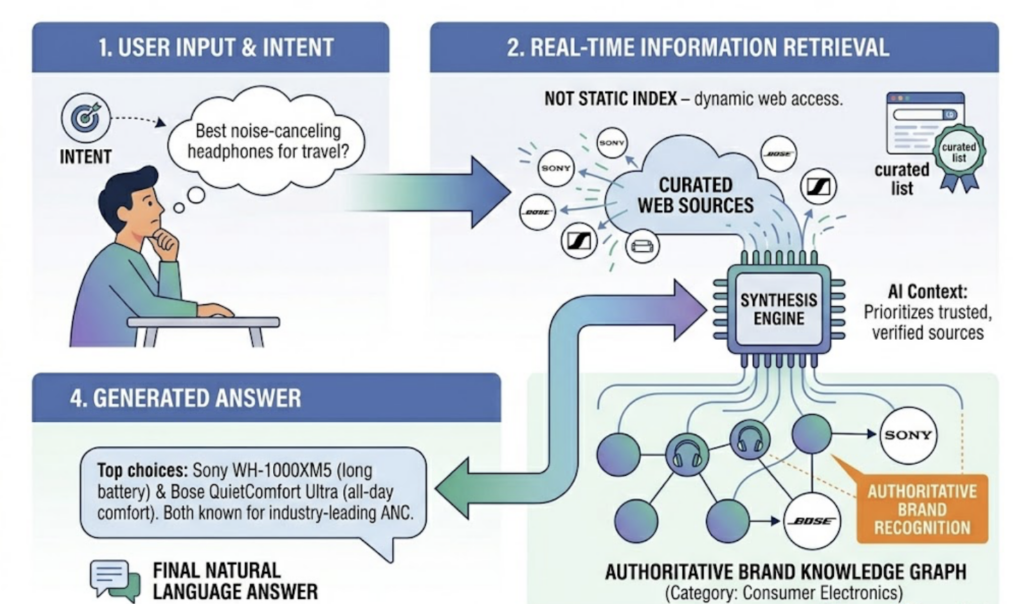
    Authority here doesn’t mean domain authority in the traditional sense. It means entity recognition: Is your brand consistently mentioned on trusted third-party sources? Does your content answer questions clearly and directly? Are the right authoritative domains citing you?

    That’s what determines inclusion. Not keyword density. Not backlink volume.

    The Metrics That Actually Tell You Where You Stand

    You can’t improve what you don’t measure. AI search visibility breaks down into five core indicators, each capturing a different dimension of your performance.

    Visibility Score measures how often your brand appears across a defined cluster of relevant prompts. If you’re tracking 100 prompts in your category and showing up in 34 of the AI responses, your visibility score is 34%. That’s your baseline.

    Citation Share captures the percentage of responses where AI platforms explicitly credit your brand as a primary source. This matters especially on Perplexity, which surfaces footnoted citations. High citation share means the AI isn’t just mentioning you but pulling from your content.

    Position tells you where in the response you appear. Being the third brand listed in a recommendation answer is very different from being the first. Both count as “visible.” Only one drives clicks.

    Sentiment Score tracks the framing. AI might mention your brand as “feature-rich but complex” or as “the go-to solution for enterprise teams.” Those framings influence decisions differently. Ignoring sentiment drift is one of the most common oversights in brand monitoring.

    Share of Model compares your visibility against competitors across specific AI platforms. You might dominate Perplexity and underperform on Gemini. That split tells you where to prioritize.

    Topify tracks all five of these, plus two more: an AI Volume metric that surfaces high-intent prompt opportunities, and a CVR (Conversion Visibility Rate) that estimates how likely an AI response is to drive a user toward your brand. Together, that’s a seven-metric matrix that gives marketing teams actual signal, not vanity stats.

    What Good AI Visibility Looks Like in Practice

    Concrete examples make this easier to grasp.

    A project management SaaS company starts monitoring 80 prompts like “best tools for remote team collaboration” and “how to manage engineering sprints in 2026.” After three months of GEO work, their Visibility Score on those prompts climbs from 18% to 41%. ChatGPT now lists them in the top two positions across most recommendation queries. Their organic sign-up rate from AI-referred traffic increases noticeably.

    An e-commerce brand selling ergonomic office equipment starts appearing in Perplexity answers to “best standing desk setups for home offices.” The AI cites a detailed buying guide they published on a third-party tech review site. Source Authority, not their own product page, drove the citation.

    A B2B consulting firm gets mentioned in Gemini’s response to “top strategy consultants for supply chain optimization.” The mention is positive but vague. After running a Sentiment Analysis, they find the AI is pulling from outdated case study content. They update their positioning across key citation sources. Sentiment improves within six weeks.

    In each case, the signal was invisible before AI visibility tracking. The opportunity only became actionable once the right metrics were in place.

    Why Most Teams Are Getting This Wrong

    Most brands aren’t losing AI visibility because they’re doing the wrong things. They’re losing it because they haven’t started doing the right things yet.

    The most common mistake is treating AI search as an extension of traditional SEO. Keyword rankings, meta descriptions, and backlink profiles don’t translate directly to AI citation rates. The rules are different enough that the same optimization playbook often produces no measurable GEO impact.

    The second mistake is the “owned-site fallacy.” Brands pour resources into their own domain and expect AI systems to follow. LLMs weight third-party validation heavily. Mentions in industry directories, analyst reports, trade media, and review platforms are what cross-reference trustworthiness in an AI’s knowledge graph. Your homepage alone won’t get you cited.

    Third is optimizing for keywords instead of prompts. Traditional keyword tools capture “standing desk” or “project management software.” But AI systems respond to natural language questions like “what’s the best standing desk for someone with back pain who works long hours?” Those are fundamentally different targets, and they require fundamentally different content.

    Fourth is ignoring machine-readability. Content written for engagement or keyword density often lacks the “answer-first” structure that LLMs need to extract and cite efficiently. Clear FAQs, structured data, and direct answer formats make content far more extractable.

    That last one is fixable quickly. The others require a strategic shift.

    A Practical Strategy to Improve Your AI Search Visibility

    There’s no shortcut, but there is a repeatable framework. The industry standard is a cyclical Audit → Optimize → Monitorprocess.

    Step 1: Map your prompts. Identify the 50 to 100 most critical questions your target customers ask in your category. These aren’t keywords. They’re the actual conversational queries that trigger AI summaries. Topify’s prompt discovery feature surfaces high-volume AI prompts continuously, so your list stays current as search behavior shifts.

    Step 2: Run a baseline audit. Before optimizing anything, benchmark where you actually stand. How often does your brand appear in responses to these prompts? What position? What sentiment? What are your top competitors scoring? Without this baseline, you’re guessing.

    Step 3: Build citation-worthy content on the right sources. Focus on the specific domains that AI models repeatedly pull from in your category. That typically includes industry analyst sites, established review platforms, trade publications, and forums with high engagement. A single well-placed article on a high-authority source often outperforms ten new pages on your own domain.

    Step 4: Monitor weekly. AI search visibility isn’t static. Competitor content gets published. AI training data shifts. Sentiment can drift in either direction. Weekly tracking with Topify’s Visibility Tracking and Competitor Monitoring keeps you responsive instead of reactive.
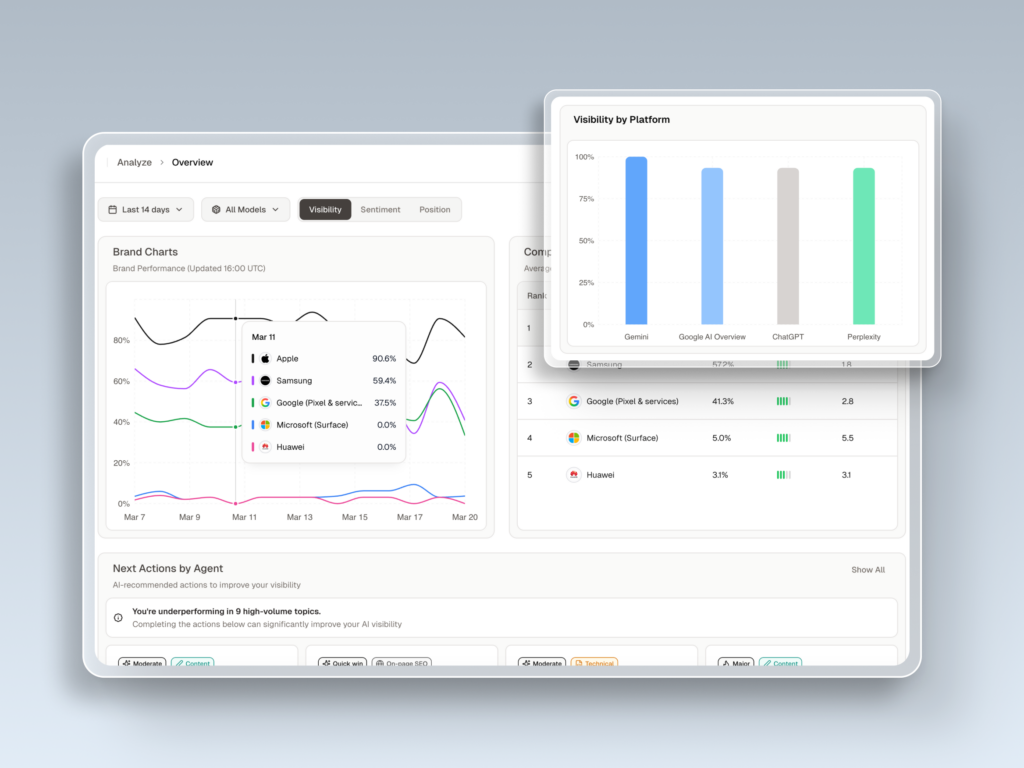
    Step 5: Execute with iteration. This is where most teams stall. Topify’s One-Click Execution lets you define your goals in plain English and deploy a structured GEO strategy without building manual workflows. You set the direction. The system handles the execution cycle.

    The teams that win at AI search visibility aren’t the ones with the biggest budgets. They’re the ones with the tightest feedback loops.

    The AI Search Visibility Checklist

    Use this as a starting point before your first GEO review.

    Setup

    •  Define your prompt cluster (minimum 50 prompts across your key categories)
    •  Identify the AI platforms your audience uses most (ChatGPT, Perplexity, Gemini, AI Overviews)
    •  Set up baseline tracking across Visibility Score, Position, Sentiment, and Share of Model

    Content

    •  Audit your top pages for answer-first structure and structured data (FAQ schema, How-to schema)
    •  Identify the third-party domains AI cites most in your category
    •  Publish or pitch content to those high-citation-weight sources

    Competitor Monitoring

    •  Map your top 3 to 5 competitors’ current AI visibility scores
    •  Track which prompts they’re appearing on that you’re not
    •  Monitor competitor sentiment for positioning gaps you can exploit

    Ongoing

    •  Review visibility and sentiment weekly
    •  Refresh content on high-citation sources quarterly
    •  Expand your prompt cluster as new AI search behaviors emerge

    Tools Built for AI Search Visibility

    The tools market has matured significantly in the past 12 months. A few platforms now offer genuine AI visibility tracking. When evaluating any GEO tool, four capabilities matter: multi-model probing across separate AI platforms, source analysis that shows you which domains drive citations, competitor benchmarking with Share of Model data, and execution features that go beyond just reporting.

    Topify covers all four. It tracks brand performance across ChatGPT, Gemini, Perplexity, DeepSeek, and AI Overviews simultaneously, running prompts through each platform’s separate RAG pipeline. The Source Analysis feature shows exactly which domains AI engines are pulling from when they reference brands in your category. Competitor Monitoringprovides real-time benchmarking against rivals across all tracked platforms. And One-Click Execution moves you from insight to action without manual workflow overhead.

    Topify’s pricing is structured around team size and prompt volume:

    PlanPricePromptsAI Answer Analyses
    Basic$99/mo100 prompts9,000/mo
    Pro$199/mo250 prompts22,500/mo
    Enterprisefrom $499/moCustomCustom

    All plans include a 30-day trial. The Basic plan covers ChatGPT, Perplexity, and AI Overviews tracking with four projects and four seats, which is enough for most mid-size marketing teams to get meaningful signal from day one.

    For teams not ready to commit to a platform, Topify also offers a free GEO Score Checker and an AI Search Volume Checker to get an initial read on your brand’s current AI search position.

    Other tools in the space offer partial coverage. Some focus exclusively on citation tracking without execution features. Others cover only one or two AI platforms. The right choice depends on whether you need monitoring only or a full optimization workflow.

    Conclusion

    AI search visibility isn’t a future concern. It’s a current one.

    Every day that ChatGPT, Perplexity, and Gemini answer your customers’ questions without mentioning your brand is a day your competitors fill that space instead. The gap compounds.

    The good news: this is still early enough that building structured tracking and a consistent optimization workflow creates a real moat. Most brands haven’t started yet.

    Start with a prompt audit. Measure your baseline. Then build from there.


    FAQ

    What is AI search visibility? AI search visibility refers to how frequently, prominently, and positively an AI system references your brand when responding to relevant user prompts across platforms like ChatGPT, Perplexity, and Gemini.

    How does AI search visibility work? AI systems use Retrieval-Augmented Generation (RAG) to pull from trusted web sources in real time, synthesize information, and generate answers. Brands that appear on high-authority sources the AI trusts get cited. Brands that don’t, don’t.

    How do I measure AI search visibility? The five core metrics are Visibility Score (citation frequency), Position (rank in AI responses), Sentiment Score (tone of how AI describes your brand), Citation Share (explicit source credits), and Share of Model (performance vs. competitors). Platforms like Topify track all five plus additional business-impact indicators.

    What are the most common mistakes in AI search visibility? The biggest ones are relying only on traditional SEO tactics, focusing exclusively on your own domain, optimizing for keywords instead of conversational prompts, and not monitoring how AI describes your brand over time.

    How much does AI search visibility tracking cost? Topify’s Basic plan starts at $99/month and covers 100 prompts with 9,000 AI answer analyses per month. Pro is $199/month for 250 prompts. Enterprise plans start at $499/month. A free GEO Score Checker is also available for an initial audit.
    Read More

  • How to Track ChatGPT Brand Mentions

    How to Track ChatGPT Brand Mentions

    Your domain authority is solid. Your Google rankings are holding. But none of that tells you whether ChatGPT is recommending your brand, dismissing it, or not mentioning it at all. With 37% of consumers now starting their product searches with AI tools rather than traditional engines, the gap between where your brand ranks on Google and where it stands in AI responses is becoming a real business problem.

    The issue isn’t awareness. Most marketing and SEO teams have heard about ChatGPT brand mentions by now. The issue is that nobody has a clean answer for how to actually track them.

    ChatGPT Brand Mentions Are Not the Same as Google Rankings

    This distinction matters more than most teams realize.

    A Google ranking is a fixed position on a list. You’re #3 for a keyword, or you’re not. ChatGPT brand mentions work differently: every time a user asks a question, the model generates a fresh response. There’s no list. There’s no stable position. Whether your brand gets mentioned depends on the prompt phrasing, the user’s context, and what the model has “learned” to associate with your category.

    Research into how AI platforms handle citations shows that ChatGPT, Gemini, and Perplexity each rely on different retrieval and training signals. A brand that gets strong citations on Perplexity might be nearly invisible on ChatGPT. The underlying mechanics are different enough that you can’t extrapolate from one platform to another.

    The strategic implication: ChatGPT brand mentions function more like reputation signals than rankings. They reflect how the model has synthesized information about your brand across its training data and retrieval pool. Getting mentioned is about trust, not just keyword relevance.

    Why Your Current Toolset Has a Blind Spot Here

    Ahrefs, Semrush, and similar platforms were built for a specific task: tracking what happens on pages that can be crawled, indexed, and ranked. That model doesn’t extend to AI-generated responses.

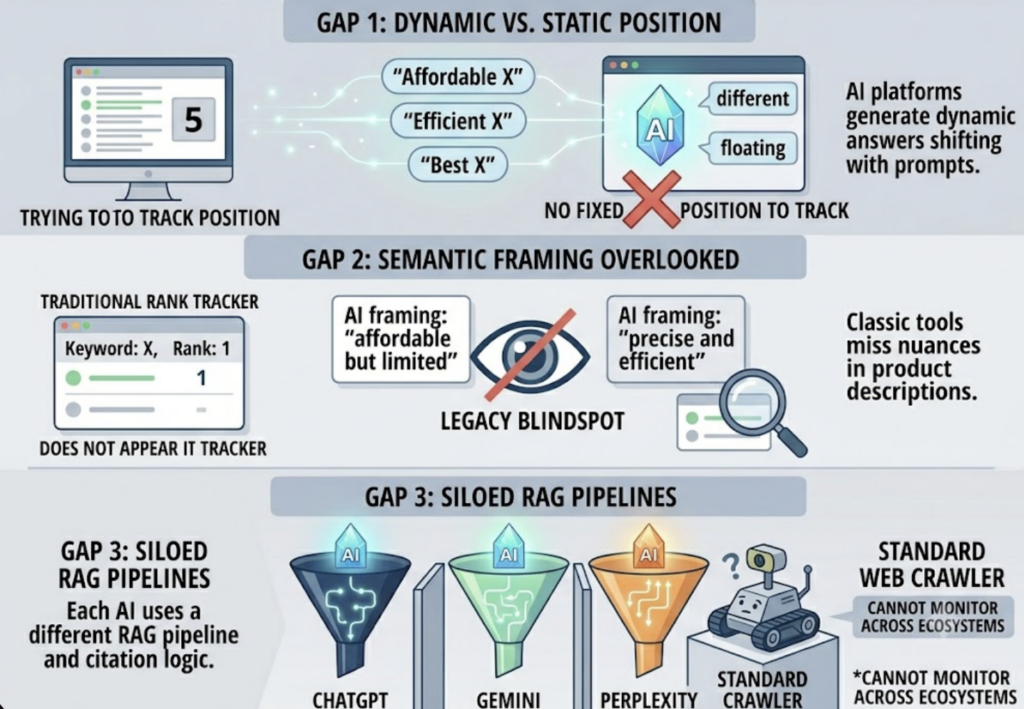
    Analysis of legacy SEO tool limitations points to three specific gaps. First, traditional tools measure keyword position on a static list. AI platforms generate dynamic answers that shift based on prompt variation. There’s no single “position” to track. Second, classic tools don’t capture semantic framing. When ChatGPT describes your product as “affordable but limited” versus “precise and efficient,” that distinction doesn’t show up in any rank tracker. Third, each major AI platform uses a different RAG (Retrieval-Augmented Generation) pipeline, meaning the citation logic for ChatGPT isn’t the same as for Gemini or Perplexity. Standard crawlers can’t monitor across these ecosystems.

    The result is a genuine monitoring blind spot. Your brand could be losing ground in AI-generated recommendations every week, and you’d have no way of knowing until a client or competitor points it out.

    What Makes ChatGPT Brand Mentions Hard to Measure

    There’s no API that returns “here’s who ChatGPT mentioned today.” Tracking requires what researchers call synthetic probing: systematically querying AI models at scale using variations of real user prompts, then analyzing the responses for brand mentions, position, sentiment, and citation sources.

    A single query gives you one data point. To get statistically meaningful data, you need to run hundreds or thousands of prompt variations across different phrasings, user scenarios, and question types. Then you need to normalize that data into a metric that shows change over time.

    This is why the evaluation criteria for AI visibility tools look different from what you’d apply to a traditional rank tracker:

    Evaluation MetricWhy It Matters
    Multi-platform coverageChatGPT and Perplexity use different citation logic; single-platform data is incomplete
    Statistical sampling depthHundreds of prompt variations required for a meaningful Visibility Score
    Source analysisIdentifying which domains AI cites reveals your content gaps
    Sentiment trackingCaptures how AI frames your brand, not just whether it appears
    Workflow integrationData needs to connect to content execution, not just dashboards

    Most tools check one or two of these boxes. The better ones cover all five.

    Best Tools to Monitor ChatGPT Brand Mentions

    The market for AI visibility monitoring has grown quickly in the past 18 months, but the tools vary considerably in what they actually measure.

    Topify is the most comprehensive option for teams that need full-spectrum ChatGPT brand monitoring. It tracks brand mentions across ChatGPT, Gemini, Perplexity, DeepSeek, and several other major AI platforms simultaneously, which matters because your audience isn’t using just one. The platform’s Visibility Tracking feature runs systematic prompt queries across your target category and aggregates results into a Visibility Score: the percentage of relevant AI responses where your brand appears. That score updates over a rolling window, so you can see whether you’re gaining or losing ground.

    What separates Topify from simpler mention trackers is the Source Analysis layer. It doesn’t just tell you whether ChatGPT mentioned your brand. It tells you which domains the AI cited when it did, and which domains it cited when it recommended a competitor instead. That data directly points to content gaps: articles you haven’t written, FAQs you haven’t answered, data you haven’t published. It turns a monitoring problem into an optimization roadmap.

    The platform also includes Sentiment Analysis (tracking how AI frames your brand, scored 0-100), Competitor Monitoring (automatically detecting which rivals are appearing in your target prompts), and Position Tracking (where your brand appears relative to competitors within the same AI response). For teams that want to act on the data, the One-Click Execution feature lets you define a content or optimization goal and deploy it without building a manual workflow.

    Topify’s Basic plan starts at $99/month and covers 100 prompts and 9,000 AI answer analyses across four projects. The Pro plan at $199/month expands to 250 prompts and 22,500 analyses.

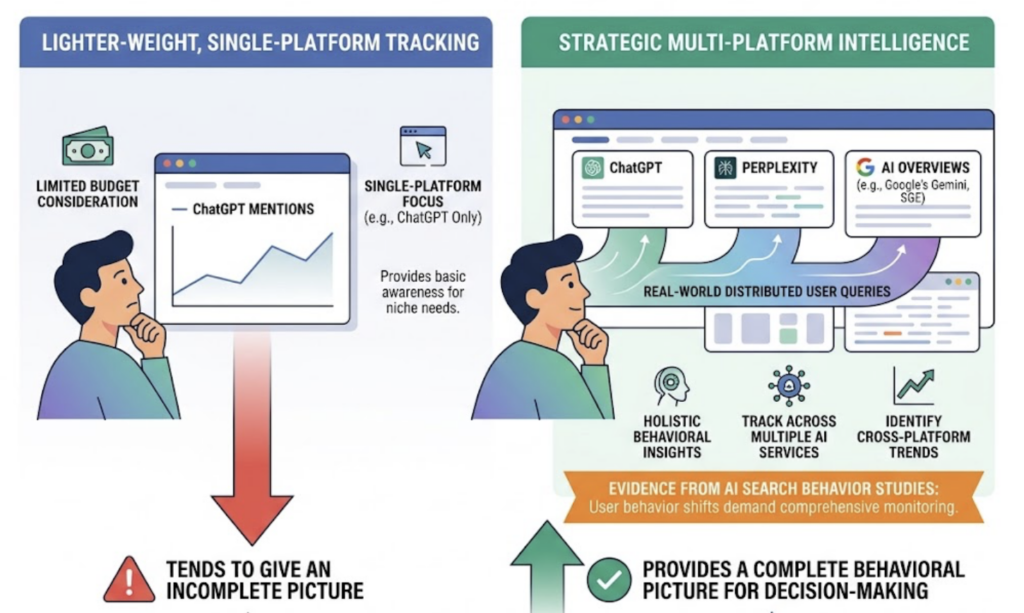
    Other tools in this space include platforms that focus on single-platform tracking or offer lighter-weight mention alerts. They’re worth considering if your budget is limited and ChatGPT is the only platform you need to monitor. That said, evidence from AI search behavior studies suggests that user queries are increasingly distributed across ChatGPT, Perplexity, and AI Overviews simultaneously. Single-platform monitoring tends to give an incomplete picture.

    How to Set Up ChatGPT Brand Monitoring in Practice

    The setup process matters as much as the tool you choose. A few things to get right from the start.

    Define your prompt set carefully. The prompts you monitor should reflect how your actual target audience asks about your category, not how you’d phrase it internally. “Best [category] tools” and “which [category] platform should I use” will surface different brands. Include both.

    Add your top three competitors from the start. ChatGPT brand mentions are relative. A Visibility Score of 40% means something very different if your closest competitor is at 20% versus 80%. Competitor Monitoring in Topify tracks this automatically once you configure your competitive set.

    Look at Source Analysis before you touch your content calendar. Most teams jump straight to “we need more content.” Source Analysis tells you what kind of content is actually driving AI citations in your category. You might find that AI consistently cites comparison pages, or data-heavy resources, or community posts on specific platforms. That’s where your effort should go first.

    Set a 30-day baseline before optimizing. ChatGPT citation patterns shift gradually. You need at least 30 days of data to distinguish a real trend from normal variance. Use Topify’s app to set up tracking now, then review your baseline before making content decisions.

    Turning Brand Mention Data into Actual Strategy

    Data without a workflow is just a dashboard nobody looks at.

    The most useful output from ChatGPT brand mention monitoring isn’t the Visibility Score itself. It’s the pattern behind it. Which prompts produce mentions? Which produce silence? Which produce a mention of your competitor with a framing that positions them as the default choice?

    Those patterns map directly to GEO best practices: structure content for extractability (clear H2s, direct answer-first paragraphs, FAQ sections), address the specific sub-questions AI models break complex queries into, and use consistent entity naming with proper schema markup so the model can unambiguously associate your content with your brand.

    Research on AI citation behavior also shows that small brands can compete effectively on this dimension. AI models prioritize “answerability,” not domain size. A focused, data-rich response to a specific question often gets cited over generic content from a much larger site. That’s a real opportunity for brands that haven’t had it in traditional SEO.

    Track it. Optimize it. Repeat.

    Conclusion

    ChatGPT brand mentions are now a measurable, trackable signal, not a mystery you have to accept. The challenge isn’t philosophical. It’s practical: you need a tool that runs systematic prompt queries at scale, surfaces source-level citation data, and connects that data to what your content team does next.

    The gap between brands that monitor this and brands that don’t is growing. The ones tracking ChatGPT visibility today are building a compounding advantage in AI search, the same way early movers in Google SEO did in the early 2010s. Starting with a 30-day baseline is enough to know where you actually stand.


    FAQ

    Q: How often does ChatGPT update its brand recommendations?

    A: There’s no fixed update schedule. ChatGPT’s recommendations shift as the model’s retrieval pool changes and as your brand’s underlying authority signals (citations, mentions, expert coverage) evolve across the web. This is why tracking over a rolling 30-day window gives more reliable data than point-in-time checks.

    Q: What’s the difference between ChatGPT brand mentions and Google rankings?

    A: Google rankings are based on link equity and keyword relevance, measured against a static index. ChatGPT brand mentions reflect semantic understanding, factual verification, and trust signals synthesized from multiple sources. A high-authority domain doesn’t automatically translate to frequent AI mentions, and vice versa.

    Q: Can small brands get mentioned in ChatGPT?

    A: Yes. Because AI prioritizes “answerability,” a smaller brand that provides precise, data-rich answers to specific questions often gets cited ahead of larger, more generic competitors. The playing field in AI search is more level than in traditional SEO, particularly for niche or specialized categories.

    Q: How do I know if my ChatGPT visibility is improving?

    A: Move away from keyword rank as your primary metric. Monitor Citation Share (the proportion of relevant AI responses where your brand is cited) and Visibility Score (the percentage of category prompts where your brand appears) over a 30-day rolling window. Both are available in Topify’s tracking dashboard.


    Read More

  • AI Search Optimization: What It Is and How to Do It

    AI Search Optimization: What It Is and How to Do It

    Your SEO rankings are solid. Your domain authority has been climbing for years. Then you search your brand name in ChatGPT and it recommends three competitors instead. Traditional SEO metrics can’t explain that gap, because they weren’t built to measure it.

    AI search optimization is a different discipline. It’s not about ranking higher on Google. It’s about becoming the brand that AI systems choose to cite, recommend, and explain when users ask a question your product can answer.

    Your Google Rankings Don’t Transfer to AI Search

    Traditional SEO and AI search visibility operate on completely different logic.

    According to research from Contentful, search engines rank pages based on backlinks, metadata, and keyword relevance. AI systems do something else entirely: they construct answers from retrieved content and assign citations to sources they deem trustworthy and extractable. A page can rank #1 on Google and never appear in a ChatGPT or Perplexity response.

    Traditional SEOAI Search Optimization
    Primary GoalTraffic and clicksBrand visibility and citation
    Success MetricKeyword ranking, CTRMention frequency, citation share, sentiment
    Source LogicBacklinks and metadataRAG retrieval and authority signals
    User IntentFinding a pageObtaining a direct answer

    The shift matters because user behavior is changing. More queries are going directly to AI engines, and users who arrive via an AI citation tend to be further along in their decision-making. That’s a higher-quality lead pool, but only if your brand makes it into the answer in the first place.

    How AI Decides to Recommend Your Brand

    AI engines don’t “rank” in the way Google does. They use a process called Retrieval-Augmented Generation (RAG), where the model retrieves candidate content from external sources, constructs a summary, and attaches citations to the most verifiable material.

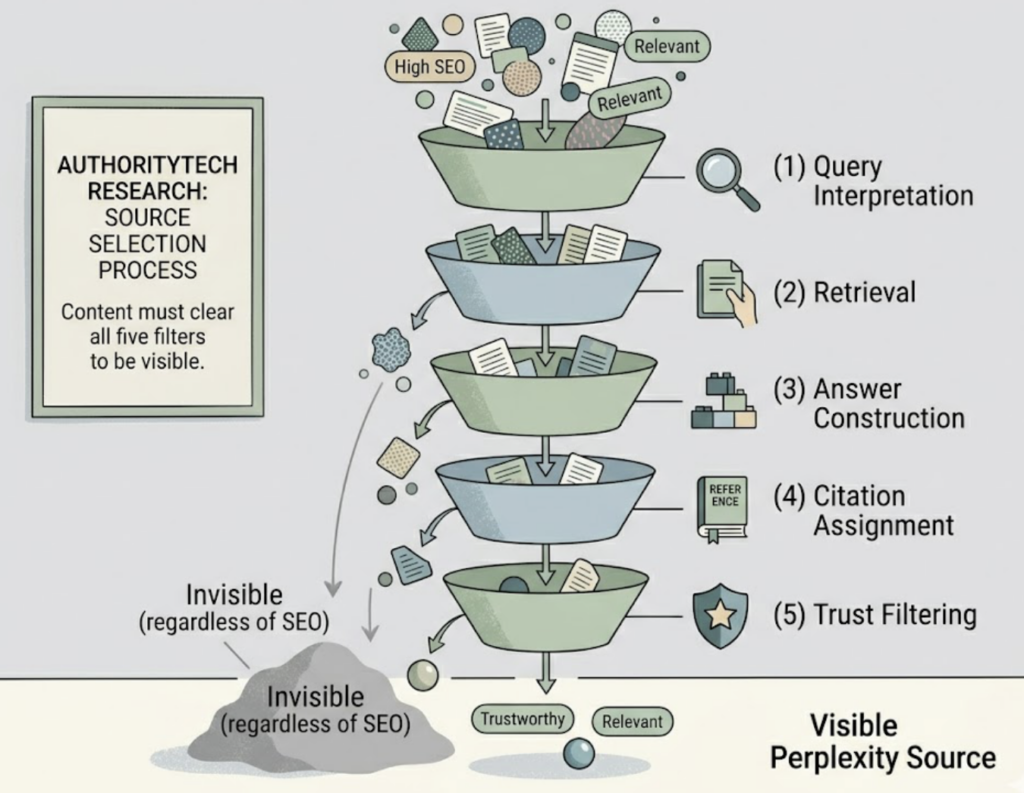
    AuthorityTech’s research on how Perplexity selects sources outlines five filters content must pass: query interpretation, retrieval, answer construction, citation assignment, and trust filtering. Content that clears all five consistently shows up. Content that doesn’t, stays invisible regardless of its traditional SEO performance.

    Three factors drive citation selection across platforms:

    Extractability. AI models prefer content structured for direct extraction. FAQ format, clear definitions, and “answer-first” writing are consistently cited at higher rates than long-form narrative prose.

    Authority signals. Being referenced by established media, government sources, or industry publications acts as a trust bridge. AI systems treat third-party corroboration similarly to how Google treats backlinks, with different mechanics but the same underlying principle.

    Original data. Proprietary statistics and original research are among the strongest predictors of AI citation. SourceBench’s 2026 analysis of quality signals in LLM citation confirms that platforms like Perplexity and ChatGPT consistently favor content containing first-party data over aggregated summaries.

    You Can’t Improve AI Search Visibility You Can’t Measure

    Before any optimization happens, you need a baseline. Manual monitoring, taking screenshots of AI outputs and tracking them in a spreadsheet, doesn’t scale and introduces significant sampling bias. STAT Search Analytics notes that AI search measurement carries four structural challenges that make manual approaches unreliable at any meaningful volume.

    The metrics that actually matter for AI search performance are:

    Visibility Score: How often your brand appears in responses to relevant prompts. Not just whether it appears, but across how many queries and platforms.

    Citation Share: The percentage of responses that link back to your domain as a primary source. This tells you whether you’re being mentioned or genuinely cited.

    Sentiment Score: The tone in which AI describes your brand. An AI system that mentions your product as “a budget option” when your positioning is premium is a problem. You need to know before a prospect does.

    Position vs. Competitors: Your relative ranking within AI-generated lists and recommendations. Being mentioned third when your main competitor is mentioned first has commercial implications.

    CVR (Conversion Visibility Rate): The downstream probability that an AI mention leads to brand engagement. Users arriving via AI citations tend to have higher purchase intent, which makes this metric more commercially relevant than raw mention frequency.

    Topify tracks all five metrics across ChatGPT, Gemini, Perplexity, and other major AI platforms by running hundreds of prompts simultaneously and aggregating the results. The platform’s Visibility Tracking module surfaces patterns that single-query manual checks would miss entirely.

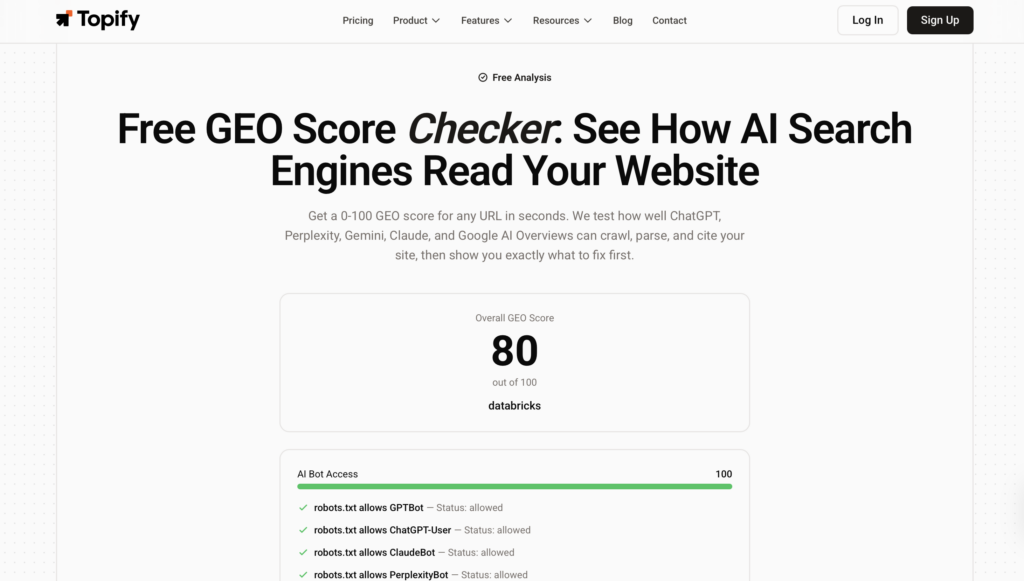
    Start with a free baseline. Topify’s GEO Score Checker evaluates your site across four dimensions: AI bot access, structured data, content signals, and overall AI visibility. No sign-up required for the first scan.

    The 4 Levers of AI Search Optimization

    Once you have a baseline, optimization works through four levers. Each one addresses a different part of how AI systems decide to cite your brand.

    Lever 1: Content Authority

    AI systems favor content that is dense with facts and structured for extraction. That means moving toward “citable assets”: modular pieces with clear definitions, specific statistics, and FAQ-formatted answers that AI can pull without restructuring.

    Long-form narrative content that works well for Google may score poorly on extractability. Restructuring key pages to lead with the answer, then provide context, is often the highest-leverage starting point.

    Lever 2: Entity Clarity

    AI systems build a model of what your brand is and who it serves. Inconsistent naming, conflicting product descriptions, or vague value propositions across your digital presence can result in the AI holding a blurred or inaccurate picture of your brand.

    Consistent, specific brand language across your website, social profiles, press coverage, and third-party reviews helps AI systems build a clear entity model. The more coherent that model, the more reliably you’ll be cited in relevant queries.

    Lever 3: Source Distribution

    AI doesn’t only pull from your website. The RAG pool includes forum content, industry media, whitepapers, and social platforms. Perplexity, for instance, draws heavily from Reddit when constructing category recommendations.

    Source distribution means ensuring your brand is represented across the domains AI systems treat as authoritative in your category. Digital PR, guest contributions, and community presence all feed into this, not as “brand awareness” plays, but as direct inputs into the AI citation pool.

    Topify’s Source Analysis feature reverse-engineers the exact domains and URLs that AI platforms cite for queries in your space. That data lets you target content distribution with precision rather than guessing which publications matter.

    Lever 4: Prompt Coverage

    AI users don’t search with keywords. They ask questions, often compound ones. “What’s a good tool for tracking brand mentions in ChatGPT for a SaaS company with a small team?” is a real prompt structure. Your content either covers that question directly or it doesn’t.

    Identifying the high-value prompts in your category, including the ones your competitors aren’t answering, is one of the fastest paths to AI visibility improvement. Topify’s AI Search Volume Checker shows monthly volume for specific prompts across ChatGPT, Gemini, and Perplexity so your team can prioritize coverage that actually moves metrics.

    Mistakes That Quietly Kill AI Search Visibility

    Most brands losing ground in AI search aren’t doing anything obviously wrong. The erosion tends to come from four patterns.

    The “link-only” trap. Treating AI search as a zero-click dead end because it doesn’t send direct traffic the way Google does. Users who arrive via AI citations are higher intent. Ignoring the channel doesn’t protect existing traffic; it cedes the top of the funnel to competitors who are paying attention.

    Inconsistent branding. When AI encounters contradictory descriptions of your brand across multiple sources, it may lower your authority score or default to a blended description that doesn’t match your positioning. This is common and almost never detected through traditional analytics.

    No competitive intelligence. Not knowing which sources AI uses to recommend your competitors means you can’t understand why you’re being passed over. Topify’s Competitor Monitoring tracks your rivals’ AI performance across the same metrics used for your own brand, so gaps become visible and actionable.

    Static strategy. AI recommendation patterns shift as models update and content environments change. A brand that ran a GEO audit six months ago and made no changes since is likely working from stale data. The brands consistently appearing in AI recommendations are monitoring continuously, not intermittently.

    A Practical AI Search Optimization Checklist

    Effective AI search optimization follows three phases. Each one builds on the previous.

    Audit

    • Run a baseline GEO Score scan on your highest-value pages
    • Check AI bot access: confirm GPTBot, PerplexityBot, and ClaudeBot are not blocked in your robots.txt
    • Identify which prompts your brand currently appears in, and which it doesn’t
    • Map where competitors are being cited that you aren’t

    Optimize

    • Restructure top pages for answer-first extraction: lead with the core claim, support with specifics
    • Add FAQ schema and HowTo markup to pages covering common category questions
    • Fill identified content gaps with citable assets: data-rich, modular, factually dense pieces
    • Clarify entity language consistently across all public-facing touchpoints
    • Target source distribution toward domains AI systems cite in your category

    Monitor

    • Track visibility, sentiment, position, and citation share on a regular cadence
    • Watch for sentiment drift: AI descriptions of your brand can shift without any action on your part
    • Monitor competitor positions: if a rival gains ground, Source Analysis tells you which new domains drove the shift
    • Feed monitoring data back into content prioritization

    Topify’s One-Click Execution module lets marketing teams state optimization goals in plain language and deploy the resulting strategy without building manual workflows. The AI agent handles execution; the team applies judgment at the review stage.

    Conclusion

    AI search optimization isn’t a replacement for traditional SEO. It’s a parallel discipline with different mechanics, different metrics, and different stakes. A brand that ranks well on Google but has no visibility in ChatGPT or Perplexity is operating with a significant blind spot, one that compounds over time as more users shift their queries to AI.

    The path forward starts with measurement. You can’t close a gap you can’t see. Run a free GEO score check to get your baseline, identify the highest-priority gaps, and build an optimization cycle that tracks the metrics AI search actually rewards.


    FAQ

    Q: What is AI search optimization?

    A: AI search optimization, also called Generative Engine Optimization (GEO), is the practice of improving your brand’s visibility in AI-generated answers from systems like ChatGPT, Perplexity, and Google AI Overviews. Unlike traditional SEO, which targets keyword rankings, AI search optimization focuses on making your content extractable, authoritative, and consistently cited by AI when users ask relevant questions.

    Q: How does AI search optimization work?

    A: AI systems use Retrieval-Augmented Generation (RAG) to construct answers. They retrieve candidate content from external sources, assess it for trust signals and extractability, and then build a response that cites the most reliable material. Optimizing for AI search means structuring content so it clears those retrieval and trust filters: answer-first formatting, consistent entity clarity, authoritative third-party references, and broad distribution across the sources AI treats as credible.

    Q: How do I measure AI search optimization performance?

    A: The five metrics that matter are Visibility Score (how often your brand appears in relevant AI responses), Citation Share (what percentage of responses link to your domain), Sentiment Score (how AI describes your brand), Position vs. competitors (your relative ranking in AI-generated lists), and CVR (the downstream conversion probability of AI-driven mentions). Manual tracking doesn’t scale; platforms like Topify automate measurement across hundreds of prompts and multiple AI engines simultaneously.

    Q: What’s the best tool for AI search optimization in 2026?

    A: For teams that need full-spectrum coverage, Topify is the most complete option currently available. It tracks seven core metrics across ChatGPT, Gemini, Perplexity, and other major AI platforms, includes Source Analysis to identify which domains drive competitor citations, and offers One-Click Execution for deploying optimization strategies. For teams starting out, the free GEO Score Checker and AI Search Volume Checker are practical starting points.


    Read More

  • AI Recommendation Tracking: Tools, Metrics, and What to Look for

    AI Recommendation Tracking: Tools, Metrics, and What to Look for

    Search “best project management software” on Perplexity right now. You’ll get a list of recommendations, a short explanation of each, and a confident tone that suggests the question is settled. Your brand may or may not appear. Either way, your GA4 dashboard won’t register a thing.

    That’s the core problem with AI recommendation tracking in 2026. The discovery is happening, the brand decisions are being made, but traditional analytics can’t see any of it. The tools that help you fix that are what this article covers.

    Why Your Analytics Stack Has a Blind Spot for AI Recommendations

    Traditional web analytics were built for a specific model: user searches, sees a link, clicks it, lands on your site. Every step leaves a data trail.

    AI search breaks that model at step two. When ChatGPT or Perplexity answers a query, users often don’t click anywhere. They read the answer and move on. The industry has started calling this “Zero-Click Visibility” because brand discovery happens inside the AI’s output, not on a results page.

    The consequence is a systematic blind spot. Your brand might be recommended 200 times a day across AI platforms, or it might not be mentioned at all, and your current analytics setup will report the same number either way: zero.

    There’s also a subtler risk. Researchers have identified a phenomenon called Prompt Drift, where model updates or shifts in training data quietly change how an AI describes or ranks your brand. A competitor gets a new round of press coverage, their domain authority climbs, and six weeks later ChatGPT starts listing them first in your category. Without an AI recommendation tracker, you won’t notice until the pipeline starts thinning.

    The Metrics That Actually Matter in AI Recommendation Tracking

    Before evaluating any AI recommendation tracking software, it helps to know what you’re measuring. The industry has started to converge on five core KPIs, though platforms differ significantly in how they define and calculate each one.

    Mention Rate is the percentage of relevant prompts where your brand is explicitly named. If you’re tracking 100 prompts about project management tools and your brand appears in 34 of the responses, your mention rate is 34%. Simple, but foundational.

    Citation Rate goes deeper: how often does the AI link to a specific URL on your domain as a source? Citation rate matters because it’s a signal that AI systems treat your content as authoritative, not just your brand name as a data point.

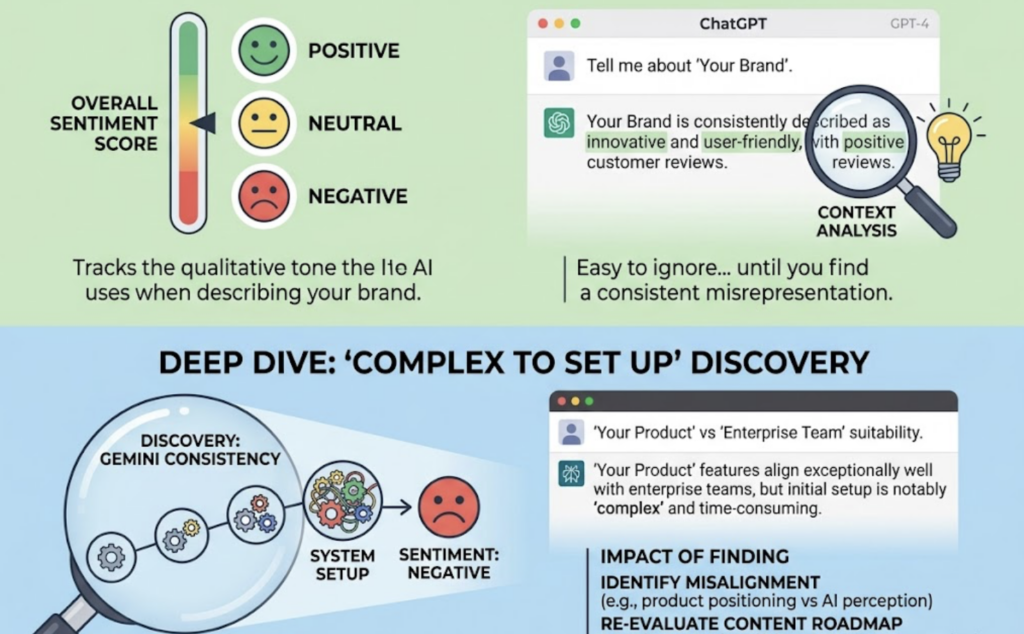
    Sentiment Score tracks the qualitative tone the AI uses when describing your brand. Positive, neutral, or negative. This one is easy to ignore until you discover that Gemini consistently describes your product as “complex to set up” or “better suited for enterprise teams.”

    Position tells you where your brand ranks within the AI’s recommendations. Being mentioned fifth out of five is very different from being mentioned first.

    CVR (Conversion Visibility Rate) is the newest metric on this list, and arguably the most commercially relevant. It estimates how likely an AI recommendation is to translate into actual user behavior, factoring in position, sentiment, and prompt intent. It’s the bridge between AI visibility data and revenue attribution.

    5 Things That Separate a Real AI Recommendation Tracker from a Basic Monitor

    Not all AI recommendation tracking tools are built the same. Here’s what to look for before committing to a platform.

    1. Cross-platform coverage that actually includes the platforms your audience uses. Some tools only track ChatGPT. Others add Perplexity. But if your audience skews toward Gemini, or toward regional models like DeepSeek, a tool with narrow coverage gives you an incomplete picture. Look for platforms that measure visibility across ChatGPT, Perplexity, Gemini, and ideally others.

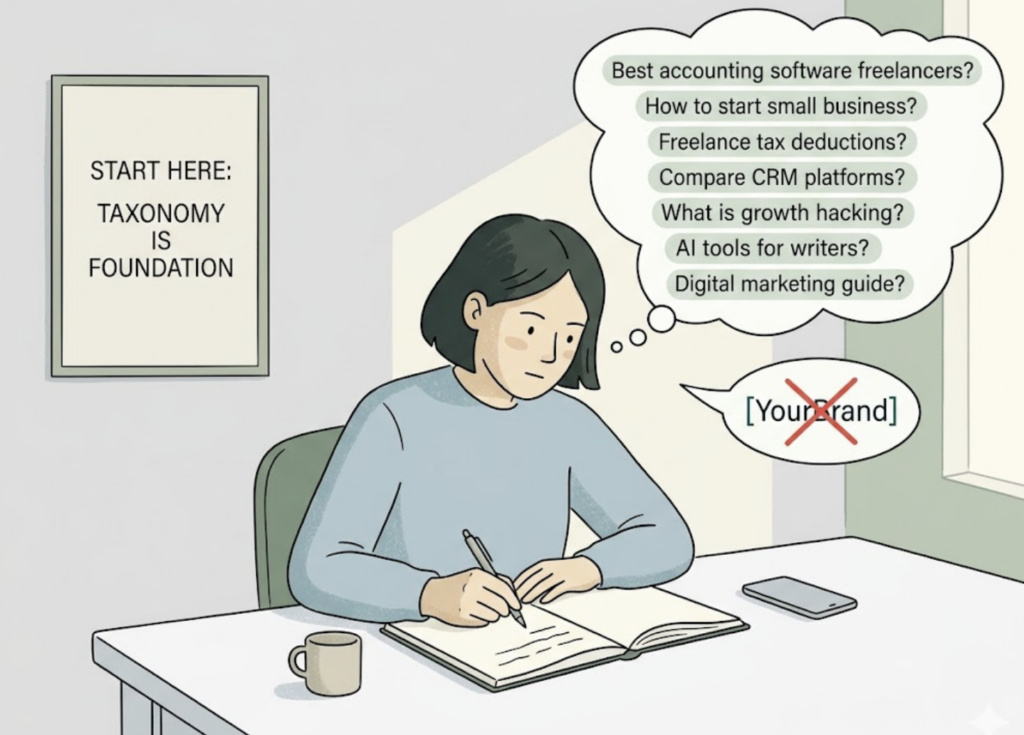
    2. Prompt-level tracking, not brand-level tracking. Searching your brand name directly in ChatGPT tells you almost nothing. Real tracking means defining a prompt taxonomy, a structured set of user intent queries like “best CRM for remote sales teams” or “alternatives to Salesforce for startups,” and then monitoring how your brand performs across all of them. This approach captures how buyers actually search, not how your marketing team thinks they search.

    3. Competitor benchmarking built in. Knowing your own mention rate is useful. Knowing your mention rate is 28% while your closest competitor runs 61% is actionable. A solid AI recommendation tracking platform should automatically surface competitor data alongside your own, not require you to set up separate projects for each.

    4. Historical trends and delta alerts. Point-in-time snapshots are useful for baselines. What you really need is the ability to spot changes over time and get flagged when something shifts significantly. A drop in Citation Rate after a model update, or a sudden jump in a competitor’s Position, are the signals that drive strategy.

    5. Optimization guidance, not just data. The gap between a monitoring tool and a tracking platform is what happens after you see the numbers. Does the AI recommendation tracking system tell you which source domains the AI is currently citing in your category? Does it show you where your content coverage is thin compared to competitors? Data without a path to action is just a prettier dashboard.

    AI Recommendation Tracking Tools Compared

    Here’s how the main platforms stack up across the dimensions that matter most for practical use:

    ToolPlatform CoverageMetric DepthCompetitor MonitoringOptimization ExecutionStarting Price
    TopifyChatGPT, Perplexity, Gemini, DeepSeek, and more7 metrics incl. CVRYes, automatedYes, one-click agent$99/mo
    Keyword.comPerplexity-focusedBrand mentionsLimitedNoVaries
    ProfoundChatGPT, Perplexity, othersPrompt volumes, SOC2YesNoEnterprise
    RankscaleChatGPT, Perplexity, AI OverviewsHigh-accuracy pollingPartialNoVaries
    Ahrefs / SemrushAI-adjacent (mostly traditional)SEO + basic AI trendsTraditional onlyTraditional SEOFrom $99/mo

    A few things worth noting about this table. Keyword.com’s strength is depth on Perplexity specifically, which makes it a decent fit for brands whose audience skews heavily toward that platform. Profound targets enterprise security and compliance requirements, including SOC2 reporting, which matters for regulated industries. Rankscale handles high-volume prompt polling well for large-scale operations.

    Topify covers the widest range of AI platforms and is the only option on this list that combines tracking with one-click optimization execution. Rather than just showing you that your Citation Rate dropped, it surfaces which source domains are being cited in your category and lets you deploy a content strategy against those gaps directly from the dashboard. For teams that need to go from insight to action without adding headcount, that distinction matters.

    How to Start Tracking AI Recommendations in 3 Steps

    You don’t need a six-month setup to start getting useful data. Here’s a practical starting point.

    Step 1: Define your prompt taxonomy before you touch any tool. Don’t start by tracking your brand name. Start by listing 20 to 30 user intent queries in your category, the kinds of questions your ideal customers are actually asking AI systems. “What’s the best accounting software for freelancers?” is a prompt. “[YourBrand]” is not. The taxonomy is the foundation everything else runs on.

    Step 2: Establish your baseline. Run your prompt set across ChatGPT, Perplexity, and Gemini and capture your current Mention Rate, Sentiment Score, and Position for each. This snapshot becomes the reference point for every future measurement. Without it, you can’t tell whether your optimization efforts are working.

    Step 3: Connect the data to your reporting workflow. AI recommendation tracking dashboards work best when the data flows into existing team processes, whether that’s a monthly marketing report, a quarterly C-Suite deck, or a weekly SEO standup. Visibility data that sits in a separate tool no one checks isn’t visibility data, it’s noise.

    For teams using Topify’s AI recommendation tracking solution, these three steps happen inside a single platform. The prompt taxonomy feeds the tracking engine, the baseline is captured automatically on day one, and the Source Analysisfeature shows which domains are being cited so you know exactly where to publish next.

    Conclusion

    The brands that win in AI search aren’t the ones with the highest domain authority. They’re the ones that know what AI is saying about them, why, and what to do about it.

    AI recommendation tracking closes the feedback loop that traditional analytics can’t. Start with a clear prompt taxonomy, establish a baseline across the platforms your audience actually uses, and pick an AI recommendation tracking tool that goes beyond monitoring to tell you what to fix. The data is there. The question is whether you’re set up to read it.

    Get started with Topify to see where your brand stands in AI recommendations today.

    FAQ

    Q: Is AI recommendation tracking the same as social listening?

    A: No. Social listening monitors what people say about your brand on platforms like X, Reddit, and LinkedIn. AI recommendation tracking monitors what AI systems say about your brand when users ask for product recommendations or category guidance. The two are complementary but measure completely different channels.

    Q: How often should I pull AI recommendation tracking reports?

    A: Weekly tracking is practical for most teams. That said, any major content push, PR announcement, or competitor product launch is worth a manual check, since AI citation patterns can shift within days of a significant publication event.

    Q: Can I track competitors’ AI recommendations too?

    A: Yes, and you should. Knowing your own Mention Rate in isolation is only half the picture. Competitor benchmarking shows you whether your category is dominated by one or two brands in AI responses, which tells you both where the opportunity is and how much ground you need to cover. Most AI recommendation tracking platforms support competitor monitoring as a core feature.

    Q: What’s the difference between AI recommendation tracking and traditional rank tracking?

    A: Traditional rank tracking shows your position on a Google SERP for a given keyword, a fixed list format with numbered positions. AI recommendation tracking measures presence, sentiment, source citation, and position within conversational AI outputs, across multiple platforms simultaneously. The underlying data structure and the actions you take based on it are fundamentally different.

    Read More

  • AI Recommendation Tracking Dashboard: Tools & Guide

    AI Recommendation Tracking Dashboard: Tools & Guide

    Your domain authority is solid. Your content calendar is full. Your SEO rankings haven’t moved in months, which usually means everything’s working.

    Then a prospect tells you they asked ChatGPT for a recommendation in your category and went with a competitor they’d never heard of before. You check. Your brand wasn’t mentioned once. And there’s nothing in GA4, Search Console, or your rank tracker that explains why.

    That’s the gap an AI recommendation tracking dashboard is built to close.

    What Your Analytics Stack Can’t See

    Google Analytics 4 tracks sessions. Search Console tracks clicks. Neither has visibility into what ChatGPT, Perplexity, or Gemini says when someone asks a buying question in your category.

    The core problem is structural. Traditional BI and SEO tools operate on a batch model, analyzing past structured data to explain what happened. AI recommendation tracking requires real-time, conversational analysis of unstructured, non-deterministic output.

    Three gaps stand out:

    Zero-click invisibility. AI search satisfies user intent directly in the chat interface. The traffic never hits your website, so your analytics never see it.

    Non-deterministic results. LLMs don’t return static SERPs. The same query can yield different brand mentions depending on model version, context, or recent training data. Weekly manual checks miss most of that variance.

    Source blindness. You can’t tell which of your content assets are building LLM trust or citation authority, so you can’t prioritize what to optimize.

    Tracking AI recommendations requires a purpose-built layer. That’s what an AI recommendation tracking dashboard delivers.

    What an AI Recommendation Tracking Dashboard Actually Tracks

    The term “dashboard” gets used loosely. A real AI recommendation tracking dashboard doesn’t just count brand mentions. It maps your brand’s position in the AI answer ecosystem across six dimensions:

    MetricWhat It Measures
    Visibility ScoreHow frequently your brand appears across a core set of buyer-intent prompts
    AI Share of Voice (SOV)Your mentions relative to competitor mentions across the same prompt set
    Sentiment ScoreWhether AI describes your brand positively, neutrally, or negatively
    Citation SourcesWhich URLs and domains LLMs use to validate their recommendations about your brand
    Mention PositionWhere your brand ranks within AI-generated lists (top 3 vs. buried in paragraph text)
    CVR (Conversion Visibility Rate)Estimated likelihood that AI-cited pages lead to downstream business outcomes

    Visibility Score tells you whether you exist in AI search. Share of Voice tells you whether you’re winning. Sentiment tells you whether being visible is actually helping your brand. Citation Sources tell you what to optimize.

    Without all six, you’re managing partial information.

    5 Signals Your Team Needs This Now

    You don’t always need a dashboard until something makes the absence obvious. These are the situations that tend to force the decision:

    A competitor appears in ChatGPT recommendations with no clear reason. They’re newer, smaller, and rank below you on Google. But AI keeps recommending them. Without citation source data, you can’t reverse-engineer why.

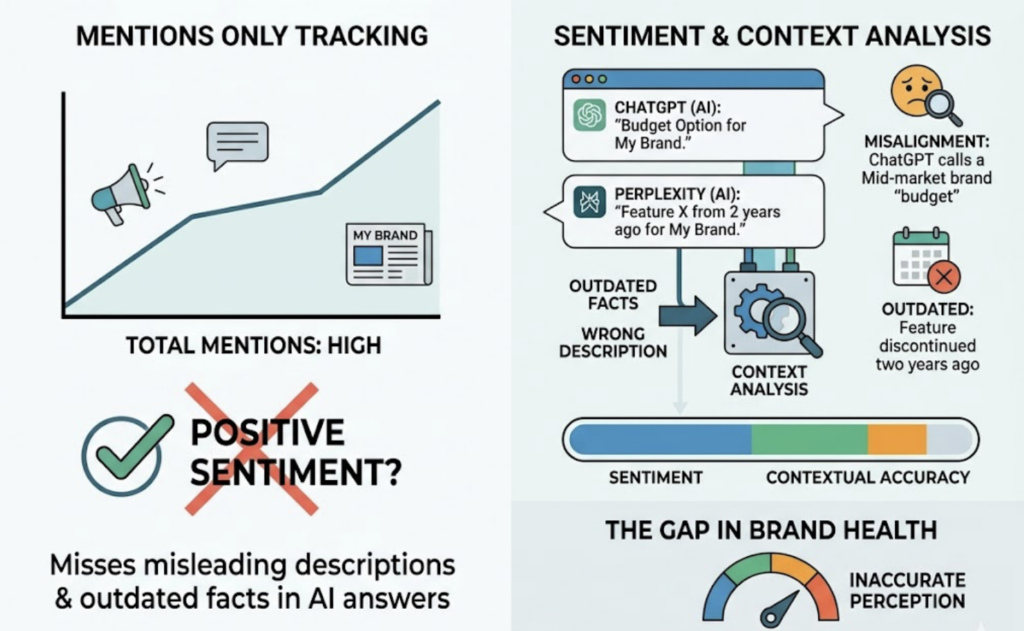
    Your brand shows up in AI answers, but the description is wrong. ChatGPT calls you a “budget option” when your positioning is mid-market. Perplexity describes a product feature you discontinued two years ago. Tracking only mentions without context doesn’t catch this. Sentiment analysis does.

    Traffic from AI platforms is unattributed in GA4. You’re seeing a new referral source you can’t identify, or direct traffic is climbing without an obvious cause. AI-referred traffic often lands as dark traffic.

    Your content team doesn’t know which assets build LLM authority. They’re producing articles without knowing whether any of them are cited by ChatGPT or Perplexity. Source analysis closes that gap.

    You’re reporting on AI search to leadership with no data. “We checked ChatGPT and our brand showed up” is not a reportable metric. A structured dashboard is.

    That last one is accelerating adoption. According to Semrush’s 2026 AI search visibility guide, marketing teams are under increasing pressure to report AI search performance alongside traditional SEO metrics.

    How to Measure What Actually Matters in AI Recommendations

    Not every metric in an AI recommendation tracking dashboard deserves equal weight. Some are useful for optimization. Others are useful for reporting. A few are mostly vanity.

    High-signal metrics (change your strategy):

    • Citation Sources: directly tells you what content to build or update
    • Sentiment Score: tells you whether your messaging is landing in AI training data
    • Mention Position: affects click intent; being mentioned fifth in a list is meaningfully different from being mentioned first

    Reporting metrics (useful for stakeholders):

    • Visibility Score and Share of Voice: trackable over time, comparable to competitors

    Context-dependent metrics:

    • CVR is valuable for BOFU teams but less relevant if your goal is top-of-funnel awareness

    One common mistake is tracking mentions without geo-context. A brand that appears in U.S. ChatGPT responses may be invisible in the UK or Australia. Localized citation patterns vary significantly, and global averages mask that variance.

    The practical benchmark: if a metric doesn’t tell you what to do next week, it’s probably not worth your weekly review time.

    Best Tools for AI Recommendation Tracking in 2025

    The market has split into two generations of tools. The first generation layered AI tracking onto existing SEO platforms. The second generation was built specifically for AI recommendation monitoring from the ground up.

    Here’s how the main options compare:

    ToolAI Platform CoverageCore StrengthBest For
    TopifyChatGPT, Gemini, Perplexity, DeepSeek, Doubao, Qwen + othersFull-spectrum GEO: visibility, sentiment, position, citation, CVR, competitor monitoring, one-click executionMarketing teams and agencies needing end-to-end AI visibility management
    OmniaChatGPT, Perplexity, AI OverviewsStrong action layer: converts citation data into content briefsContent teams focused on AI Overviews
    SE RankingPrimarily Google AI OverviewsIntegrates AI tracking into existing SEO workflowsSEO teams that want to add AI coverage without switching tools
    Semrush / AhrefsLimited AI-specific trackingStrong on traditional SEO, backlinks, on-pageTeams where traditional SEO is still the primary channel

    The difference between first- and second-generation tools becomes clear at the execution layer. Semrush and Ahrefs are excellent for on-page SEO and traditional backlinks but generally lack the generative AI-specific tracking required to measure LLM citations or prompt-level share.

    Topify sits closest to what the research calls an “action-layer” platform. It monitors brand performance across seven metrics simultaneously (visibility, sentiment, position, volume, mentions, intent, and CVR), covers more AI platforms than most alternatives, and connects monitoring to execution through its One-Click GEO Agent. For teams that need to do something with the data, not just look at it, that last part matters.

    Pricing starts at $99/month (Basic: 100 prompts, 9,000 AI answer analyses, 4 projects) and scales to $199/month (Pro: 250 prompts, 22,500 analyses) and enterprise plans from $499/month. There’s also a free GEO Score Checker available without signup.

    Build Your AI Tracking Workflow in 5 Steps

    A dashboard with no workflow attached is just a reporting tool. Here’s how to turn one into an active optimization system:

    Step 1: Build your prompt library. Aggregate high-intent buyer questions from sales call logs, support tickets, and your existing keyword research. Convert them into natural language prompts that mirror how your customers actually talk to AI. This is your monitoring foundation.

    Step 2: Set up competitor benchmarking. Catalog your brand alongside 3-5 direct competitors, including product variations and common aliases. You need this baseline before you can measure share of voice or position changes.

    Step 3: Deploy cross-platform monitoring. Run your prompt library across multiple LLMs simultaneously. Tracking only ChatGPT and ignoring Perplexity or Gemini misses the broader market reality. AI rankings fluctuate daily, so automated, consistent monitoring matters more than manual spot-checks.

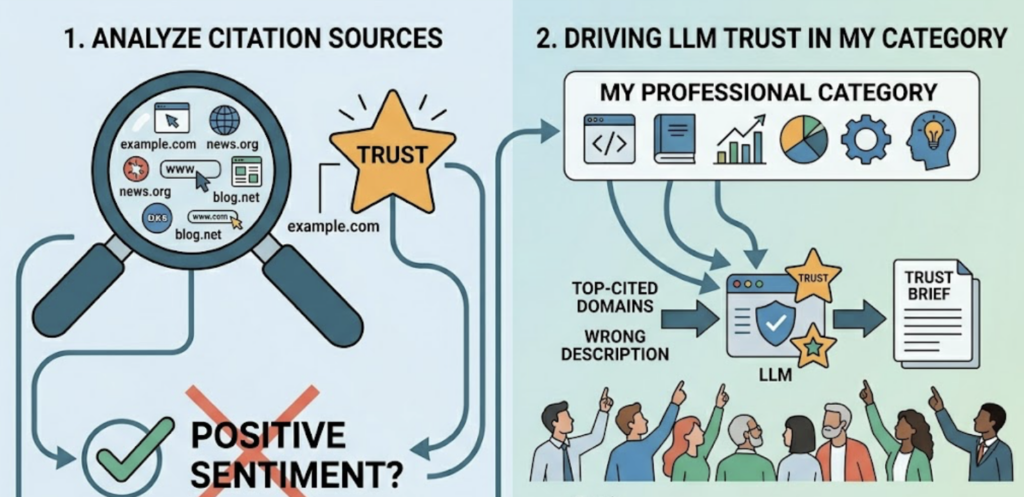
    Step 4: Analyze citation sources first. Before you look at visibility scores, check which domains and URLs are driving LLM trust in your category. This is your content optimization roadmap. Reverse-engineer what top-cited competitors are publishing, then build your own authority briefs.

    Step 5: Run a monthly prompt refresh. Buyer language evolves. Model training data updates. Your prompt library should reflect both. A static set of prompts gives you data, but not necessarily current data.

    That last step is what separates teams that get value from their dashboard from teams that have a dashboard they stopped checking.

    What Does an AI Visibility Dashboard Cost?

    Pricing in this market varies more than you’d expect, largely because the tools serve different scope requirements.

    Free tier: Several platforms offer limited free access. Topify’s GEO Score Checker requires no signup and gives you a starting benchmark. Useful for a first read, not for ongoing monitoring.

    Entry-level paid ($49-$99/month): Covers basic AI platform monitoring, limited prompt volume, and single-project tracking. Suitable for solo founders or small teams running one brand. Topify’s Basic plan at $99/month includes 100 prompts and 9,000 AI answer analyses across ChatGPT, Perplexity, and AI Overviews.

    Professional ($199-$499/month): Expanded prompt volume, multi-project support, competitor monitoring, and sentiment tracking. Topify’s Pro plan at $199/month handles 250 prompts and 22,500 analyses across 8 projects. See full pricing here.

    Enterprise ($499+/month): Custom prompt volumes, dedicated account management, and full-suite analytics. For larger agencies managing multiple client brands, Topify’s enterprise tier starts at $499/month.

    The pricing logic is straightforward. Cost scales with prompt volume and platform coverage, not with feature gates. You pay for how much monitoring you need, not for access to the metrics that matter.

    Conclusion

    The shift from “Google rankings” to “LLM authority” isn’t a future trend. It’s already shaping where high-intent buyers go after a ChatGPT conversation. Brands without an AI recommendation tracking dashboard are making decisions based on data that doesn’t include their most important discovery channel.

    The good news: the tooling has matured. You can build a functional tracking workflow in a week, with a structured prompt library, cross-platform monitoring, and citation source analysis. Start with a free GEO score check, map your current prompt coverage against competitors, and add systematic tracking from there. The brands building this infrastructure now will be the ones Get started with Topify showing up first when the next buyer asks.


    FAQ

    Q: What is an AI recommendation tracking dashboard? 

    A: It’s a monitoring tool that tracks how often, how positively, and in what position your brand appears in AI-generated responses across platforms like ChatGPT, Perplexity, and Gemini. Unlike traditional analytics tools, it captures brand presence in AI answers rather than website traffic.

    Q: How does an AI recommendation tracking dashboard work? 

    A: The system runs a library of buyer-intent prompts across multiple LLMs on a recurring basis, then analyzes the responses for brand mentions, sentiment, position, and citation sources. Over time, it builds a dataset that shows how your AI visibility changes relative to competitors.

    Q: What are examples of metrics tracked in an AI visibility dashboard? 

    A: Common metrics include Visibility Score (how often your brand appears), Share of Voice (your mentions vs. competitors’), Sentiment Score (positive/neutral/negative), Citation Sources (which domains AI trusts to validate your brand), Mention Position (rank within AI-generated lists), and CVR (Conversion Visibility Rate).

    Q: How much does an AI recommendation tracking dashboard cost? 

    A: Entry-level plans typically start around $49-$99/month for basic monitoring. Professional-tier tools with competitor tracking and multi-platform coverage run $199-$499/month. Enterprise pricing is custom. Some platforms, including Topify, offer a free GEO score check without requiring a subscription.


    Read More

  • AI Recommendation Tracking System: A Practical Guide

    AI Recommendation Tracking System: A Practical Guide

    Your brand ranks on Google. You’ve got dashboards, keyword reports, a healthy backlog of optimized content.

    But when someone asks ChatGPT “what’s the best [your category] tool,” you have no idea what it says. You’re not tracking it. You’re not even sure where to start.

    That’s the gap an AI recommendation tracking system is designed to close.

    What an AI Recommendation Tracking System Actually Does

    An AI recommendation tracking system (ARTS) is a framework for measuring how often, how positively, and in what context your brand appears inside LLM-generated answers across platforms like ChatGPT, Perplexity, Gemini, and others.

    It’s not keyword rank tracking. It’s entity-based attribution at the prompt level.

    The distinction matters. Traditional SEO tools track where your page appears in a list. An ARTS tracks whether your brand is named, recommended, or cited inside a generated answer, and what role it plays in that answer.

    The 5 Data Points Worth Tracking

    Most teams start by counting mentions. That’s not enough. A complete tracking system captures five signals:

    Direct Citation: How often your brand name appears in a generative response across your target prompt set.

    Sentiment Polarity: Whether AI positions you as a recommended solution, a neutral comparison, or a negative example. Being mentioned isn’t the same as being recommended.

    Source Attribution: Which of your URLs the model is citing as “evidence” when it mentions you. This tells you which content is actually driving your AI presence.

    Recommendation Category: Is the AI calling you “best for X,” an “alternative to Y,” or just including you in a generic list? The classification determines real commercial value.

    Prompt Coverage Consistency: Whether your brand appears across a range of semantically related queries, or only shows up on one narrow phrasing. Consistency is what converts visibility into a reliable channel.

    Why Your Current Analytics Can’t See Any of This

    Traditional tools like Google Analytics or Search Console are built on one assumption: users click through to your site.

    AI search breaks that assumption entirely. A user asks Perplexity a question, gets a fully formed answer, and never visits anyone’s website. There’s no click to track. No session to attribute. No conversion path to follow.

    The problem runs deeper than zero-click behavior, though.

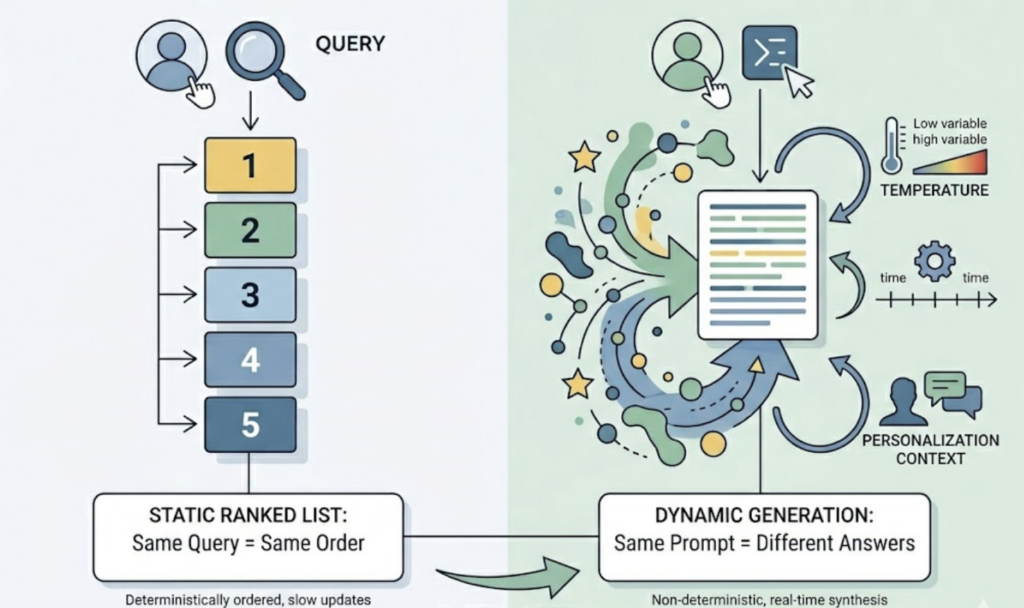
    Traditional SEO assumes static results. Type a query, get a ranked list. LLMs don’t work that way. The same prompt run twice can return different answers depending on model temperature, recent fine-tuning, or personalization context. Standard rank-tracking logic doesn’t apply to non-deterministic outputs.

    There’s also what researchers call the “black box” problem. Traditional tools can’t identify whether an LLM recommendation is driven by a direct citation in a RAG pipeline or by patterns baked into the model’s weights during training. Without that distinction, you can’t act on what you’re seeing.

    How the Tracking System Works, Step by Step

    A well-structured ARTS follows a three-stage cycle that runs continuously, not just once a quarter.

    Stage 1: Prompt Coverage

    The system executes a pre-defined set of high-intent queries against multiple LLMs simultaneously. Not just one model. A brand that only monitors ChatGPT is missing Perplexity users, Gemini users, and every AI assistant embedded in a browser or productivity tool.

    The query set should include head terms (“best CRM for small business”), long-tail variants (“what CRM do most startups use in 2026”), and comparison prompts (“alternatives to [competitor]”). Semantic coverage determines how accurate your visibility picture is.

    Stage 2: Answer Capture

    Raw responses are logged systematically: full answer text, any URLs cited, follow-up questions the model suggests, and the framing used around brand mentions. The goal is structured data, not screenshots.

    Stage 3: Brand Signal Extraction

    NLP or LLM-based classifiers parse each captured response to extract brand presence, sentiment score, citation source, and recommendation type. This is where raw tracking data becomes actionable insight.

    The full cycle runs continuously. AI rankings can shift daily based on model updates and changes in which content sources the model prioritizes.

    The Metrics That Actually Move Decisions

    Not all metrics are equally useful. Here’s how to prioritize:

    MetricWhat It MeasuresPriority
    AI Share of VoiceYour brand mentions vs. total competitor mentions in the tracked prompt setPrimary
    Citation DepthNumber of unique owned URLs the AI is citingPrimary
    Sentiment BiasPositivity/negativity of the context around your brandSecondary
    Query ReachHow many prompt variations result in a brand mentionSecondary

    One metric to deprioritize: click-through rate. It’s a reflex from traditional SEO thinking. In AI search, recommendation share is the signal that matters. Whether your brand is named and positioned favorably, not whether a click happened.

    Topify consolidates these metrics into a single visibility dashboard, tracking brand performance across ChatGPT, Gemini, Perplexity, and several other major AI platforms via seven core signals: visibility, sentiment, position, volume, mentions, intent, and CVR (Conversion Visibility Rate).

    5 Mistakes That Distort Your AI Tracking Data

    Most teams starting with AI recommendation tracking hit the same problems.

    Tracking only one model. ChatGPT is large, but it’s not the whole market. Different user segments use different AI tools. A brand that only monitors one platform is measuring a fragment of its actual AI footprint.

    Counting mentions without context. A brand mentioned as a “cautionary example” still counts as a mention. Without sentiment filtering, high mention volume can mask a fundamentally negative AI positioning.

    Ignoring source injection. If the AI is citing a competitor’s blog post as the “authoritative source” on your product category, that’s a content gap you need to fill. Tracking which URLs the model cites is as important as tracking brand names.

    Running static tests. A monthly manual check isn’t tracking. It’s a snapshot. AI models are fine-tuned continuously, and a content update from a competitor can shift your recommendation share within days.

    Prioritizing volume over quality. A mention buried in a low-intent, off-topic response is worth far less than a direct recommendation in a high-intent research prompt. Reach means nothing if the context doesn’t drive decisions.

    How to Choose the Right AI Recommendation Tracking Platform

    If you’re evaluating tools, these are the capabilities that separate functional platforms from ones that look good in a demo:

    Multi-model coverage. The platform should audit your brand across at least three to four major LLMs. Single-model tools give you partial data at full price.

    Automated prompt generation. Manually writing query sets at scale isn’t sustainable. Look for platforms that generate semantic permutations of your core terms automatically.

    Citation mapping. You need to see which specific URLs the AI is pulling from when it recommends or cites your brand. This is how you connect your content strategy to your AI visibility.

    Temporal tracking. Visibility trends over time, especially in response to content updates, are what let you prove ROI and iterate intelligently.

    Sentiment and position data. Knowing you’re mentioned isn’t enough. You need to know whether you’re being positioned as the first recommendation or the afterthought.

    Topify’s Source Analysis feature maps exactly which domains and URLs AI platforms cite when your brand or competitors come up. Its Competitor Monitoring module tracks position in real time across the full competitive set, so you know not just where you stand, but why.

    Pricing starts at $99/month for the Basic plan, covering 100 prompts and 9,000 AI answer analyses across ChatGPT, Perplexity, and AI Overviews. Enterprise plans start at $499/month with dedicated account management and custom configurations.

    For teams not ready to commit, Topify’s free GEO Score Checker provides an immediate read on your current AI visibility baseline without requiring signup.

    FAQ

    What is an AI recommendation tracking system? 

    It’s a framework for measuring how often and how favorably a brand appears in AI-generated answers across platforms like ChatGPT, Perplexity, and Gemini. It captures mentions, sentiment, source citations, and recommendation category across a defined set of prompts.

    How does an AI recommendation tracking system work? 

    It runs a defined set of queries against multiple LLMs continuously, captures full responses, and uses NLP classifiers to extract brand signals: presence, sentiment, position, and citation source.

    How do you measure an AI recommendation tracking system’s effectiveness? 

    The primary metrics are AI Share of Voice (your mentions vs. competitors) and Citation Depth (how many of your own URLs the AI is citing). Recommendation Share is a more actionable signal than click-through rate in this context.

    What’s the difference between an AI recommendation tracking tool and traditional SEO software? 

    Traditional SEO tools track page rankings in static search results. AI tracking tools monitor dynamic, generated answers where your brand may be recommended, compared, or excluded, with no traditional ranking signal to follow.

    How often should you run an AI recommendation tracking system? 

    Continuously. AI model fine-tuning happens frequently, and recommendation patterns can shift week to week. Monthly snapshots miss the movement between updates.

    What are the best tools for AI recommendation tracking? Platforms with multi-model coverage, automated prompt generation, citation mapping, and temporal tracking are the most reliable. Topify covers all four, with dedicated analytics for each major AI platform.

    How much does an AI recommendation tracking system cost? 

    It varies widely. Topify’s Basic plan starts at $99/month. Enterprise configurations with custom prompt sets and dedicated account managers start at $499/month.

    What are common mistakes in AI recommendation tracking? 

    Monitoring only one AI model, counting mentions without sentiment context, running static monthly tests, and focusing on mention volume over recommendation quality in high-intent prompts.

    Read More

  • AI Prompt Tracking: What It Is and How to Measure It in 2026

    AI Prompt Tracking: What It Is and How to Measure It in 2026

    Your team can pull domain authority, keyword positions, and organic traffic in about thirty seconds. Then someone in the room asks whether your brand showed up when a buyer typed your category into ChatGPT, and the report goes quiet. Traditional SEO tools were built to measure a ranked list of links, not whether you’re part of a synthesized answer. That gap is where AI prompt tracking lives, and most teams don’t realize how wide it’s gotten until a competitor’s name is the one the model keeps recommending.

    What AI Prompt Tracking Actually Means, and Why Rankings Don’t Apply

    AI prompt tracking is the systematic monitoring of how your brand shows up inside the natural-language responses that generative engines produce. The question shifts from “where do we rank” to “are we part of the answer” that ChatGPT, Perplexity, or Google’s AI Overviews hand the user.

    That shift matters because the two systems behave differently. Classic search is deterministic: the same query returns roughly the same ranked list. AI search is probabilistic. The model runs a query fan-out, breaking one prompt into sub-questions, pulling from multiple sources, and synthesizing a fresh response each time.

    So your brand can headline the answer in one run and disappear in the next. None of that surfaces in a rankings report.

    The stakes are concrete. Organic click-through rate falls 61% on queries where an AI Overview appears, while brands cited inside that overview see click-through about 35% higher than the page’s normal rate. Presence in the answer isn’t a vanity metric. It’s the difference between earning the click and watching it evaporate.

    How AI Prompt Tracking Works Under the Hood

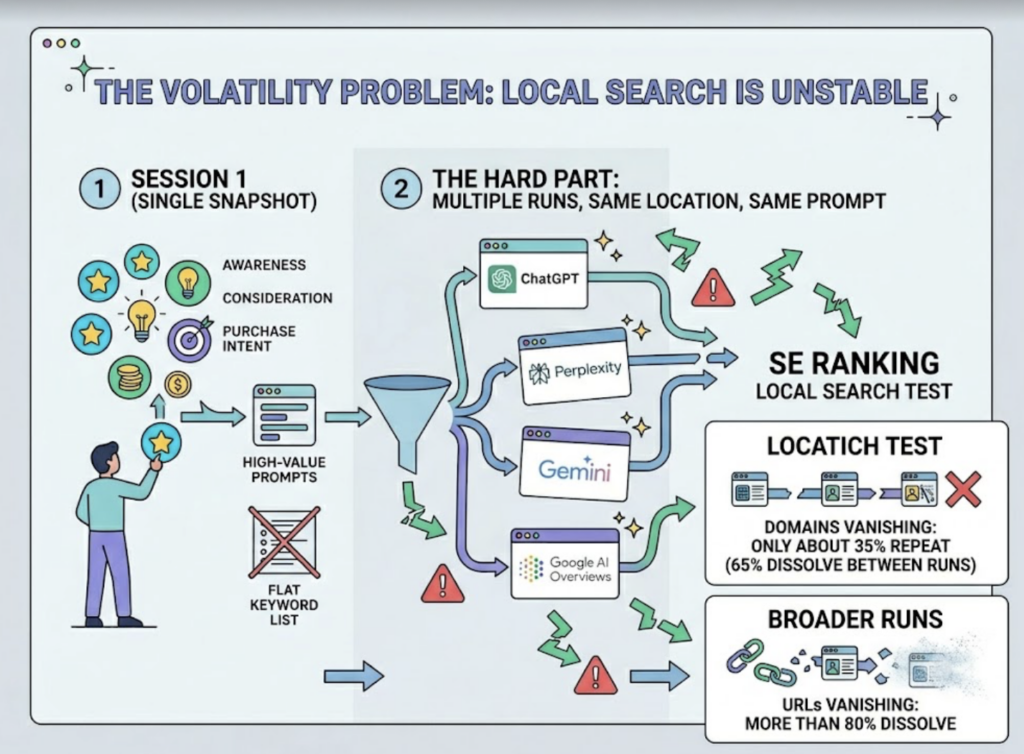
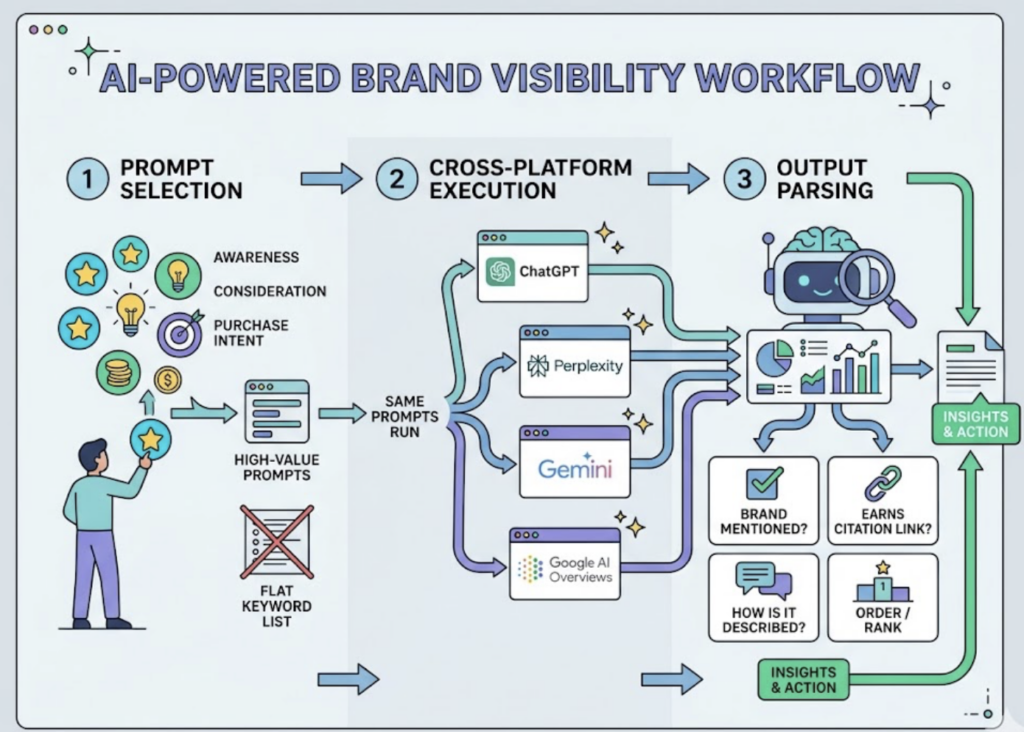
    Page crawlers don’t work here. There’s no fixed results page to scrape, so AI prompt tracking relies on structured probing: feeding defined prompts into each engine and parsing the response the way a real user would receive it.

    The hard part is volatility. In SE Ranking’s local search test, only about 35% of domains repeated when the same prompt ran multiple times from the same location. Broader runs show more than 60% of domains and 80% of URLs vanishingbetween sessions. A single snapshot tells you almost nothing.

    That’s why credible systems use repeated sampling. They run each prompt many times across accounts and locations, then average the results into a visibility score that’s statistically stable instead of a lucky screenshot.

    The fan-out adds another layer. When the engine decomposes a master prompt into sub-queries, a good tracker watches which sub-topics the model associates with your brand, not just whether your name appears once.

    How to Measure AI Prompt Tracking: The Metrics That Matter

    Counting raw mentions is the trap most teams fall into. A useful measurement framework tracks five metrics together, because each one answers a different question.

    MetricWhat it tells you
    Mention RateThe share of your tracked prompts where the brand gets named at all
    Citation ShareHow often the engine links to your site, which drives referral traffic
    Average PositionWhere you land in the AI’s ordered list of recommendations
    SentimentWhether the model frames you as positive, neutral, or negative
    Share of VoiceYour mentions relative to a defined competitor set across the same prompt cluster

    The signal hiding in this table is the gap between mention rate and citation share. If AI names you often but rarely cites your page, that usually points to a structural problem on your site: missing schema, thin information architecture, or content the model can’t confidently treat as a source of truth.

    This is also where ai search trackers earn their keep. Pulling five metrics by hand across three engines, repeated often enough to beat the volatility, isn’t realistic. The tooling exists to automate the sampling and turn it into something you can report on weekly.

    How to Improve AI Prompt Tracking, and the Mistakes That Quietly Sink It

    Improving your numbers starts with not sabotaging them. A few mistakes show up again and again.

    The dashboard trap is the most common. Tracking “total monthly mentions” with no denominator and no competitor context produces a number that climbs as the AI ecosystem grows, not as your performance improves. It feels like progress and measures nothing.

    Siloing GEO from SEO is the second. AI engines lean on the same E-E-A-T signals (expertise, experience, authoritativeness, trustworthiness) that Google’s classic systems reward, so treating AI visibility as a separate discipline wastes the authority you’ve already built.

    The third is ignoring source accuracy. Models often describe brands using stale or wrong data from their retrieval index, which is why entity audits, checking that the AI understands your products, founders, and positioning, belong in the workflow.

    On the improvement side, structure does heavy lifting. 44.2% of LLM citations come from the first 30% of a page’s text, and structured formats like clear headings, lists, and FAQ blocks tend to get pulled more often than dense prose. Put your answer up top, mark it up cleanly, and you make it easy for the model to quote you.

    A Quick AI Prompt Tracking Checklist

    If you’re building a process from scratch, this is the short version:

    • Curate a high-value prompt repository by intent (procedural, comparative, problem-solving) instead of tracking every keyword.
    • Standardize the query environment, including location when it’s relevant, to cut baseline noise.
    • Run each prompt multiple times and average, rather than trusting one response.
    • Track mentions and citations together, and earn the name-drop before chasing the link.
    • Benchmark against a fixed competitor set so your share of voice means something.
    • When a rival gets cited and you don’t, run a diff on their page structure, schema, and content depth.

    Best AI Search Trackers 2026: What to Look for in a Prompt Tracking Tool

    When you start comparing the best AI search trackers 2026 has to offer, the useful filter is simple: look for a visibility system, not a reporting dashboard. A dashboard shows you numbers. A system tells you why the engine chose one source over another and what to do about it.

    Three capabilities separate the two. Cross-engine coverage, so you’re watching ChatGPT, Perplexity, and AI Overviews at once rather than one platform in isolation. Competitor benchmarking, so every metric reads as relative performance inside a peer group. And actionable attribution, so the tool can point at the page structure, schema, or content depth that earned a citation.

    This is where Topify fits the brief. It runs prompt-level tracking across the major engines and folds visibility, position, sentiment, and source analysis into a single view, so a drop in ChatGPT mentions can be traced back to the specific source that stopped citing you.

    Its High-Value Prompt Discovery is the part most reporting tools skip. Instead of waiting for you to guess which prompts matter, it surfaces the high-volume questions in your category and watches how the answers shift, which moves a team from passive monitoring toward proactive content work. Competitor Monitoring then shows who the engines recommend ahead of you, and where the gap sits.

    On cost, plans start at $99 a month and scale by prompt volume and seats, with usage-based tiers rather than inflated enterprise bundles. Other platforms cover slices of this well, but the payoff of a single connected view is that you stop stitching three tools together to answer one question. You can get started without committing to a year up front.

    Conclusion

    The quiet moment in that meeting, when the rankings report can’t say whether you showed up in the AI answer, isn’t going away on its own. It widens every quarter as more buyers start their research inside a chatbot instead of a search bar.

    The fix isn’t complicated to start. Define a small set of high-intent prompts, run them across ChatGPT, Perplexity, and AI Overviews a few times each, and see where you actually stand. Once you can measure it, you can improve it, and that’s the whole point of AI prompt tracking.

    FAQ

    Q: What is AI prompt tracking? A: It’s the practice of monitoring whether and how your brand appears inside generative AI responses, prompt by prompt, across engines like ChatGPT, Perplexity, and Google AI Overviews. Instead of measuring keyword rank, it measures presence in the synthesized answer the user actually reads.

    Q: What are some examples of AI prompt tracking in practice? A: Running “best tools for [your category]” across three engines fifty times and recording how often your brand is named, tracking whether Perplexity cites your pricing page versus a competitor’s, or watching your average position drop after a model update. Each is a prompt tracked, sampled, and scored over time.

    Q: What do AI search trackers typically cost? A: Pricing varies by prompt volume, engine coverage, and seats. Entry tiers tend to start around $99 a month for a capped set of prompts and projects, with higher plans scaling sampling and competitor coverage. Usage-based pricing generally beats fixed enterprise bundles for teams still sizing their prompt set.

    Q: What are the most common mistakes in AI prompt tracking? A: Reporting total mentions with no denominator or competitor context, treating GEO as separate from SEO when both reward the same E-E-A-T signals, and trusting a single snapshot despite the volatility that makes most results shift between runs.

    Read More

  • AI Prompt Tracking Analytics: What It Is and How It Works

    AI Prompt Tracking Analytics: What It Is and How It Works

    Your team spent the last quarter publishing content, earning links, and climbing Google rankings. Then a buyer in your category opened ChatGPT and asked which tool to use. The answer named five options. Yours wasn’t one of them, and nothing in your analytics flagged it.

    That’s the blind spot. Google reports organize the world by keywords and pages. AI assistants organize it by prompts: the actual questions people type. When the two don’t line up, you can rank well and still go unmentioned where buying decisions now start. Closing that gap is the job of AI prompt tracking analytics.

    What Is AI Prompt Tracking Analytics?

    AI prompt tracking analytics is the practice of monitoring how a brand gets mentioned, cited, or recommended in AI-generated answers when people ask category-relevant questions.

    The shift in logic matters more than the definition. Traditional SEO tracks keywords, which are static search strings tied to a page. Prompt tracking follows prompts, which are full natural-language questions that span the buyer’s journey, from “what is X” to “which X should I buy.”

    There’s a structural reason the old model breaks. AI engines don’t return a fixed ranked list. They run a query fan-out, splitting one prompt into several retrieval tasks and synthesizing an answer from many sources at once. So the question stops being “where do I rank” and becomes “how often does the model include me, and in what light.”

    That’s a probability, not a position. And probability is exactly what analytics is good at measuring.

    How AI Prompt Tracking Analytics Works

    Prompt tracking doesn’t work like a crawler checking a ranking. It works through structured probing: a repeatable, automated routine that treats each AI answer as a data point.

    Three steps run on a loop.

    First, prompt selection. You curate a set of high-value prompts mapped to awareness, consideration, and purchase intent, instead of a flat keyword list. Second, cross-platform execution. The same prompts run across ChatGPT, Perplexity, Gemini, and Google AI Overviews, because each model has its own bias about who to name. Third, output parsing. An AI layer reads each response and pulls out whether your brand is mentioned, whether it earns a citation link, how it’s described, and where it sits in the order.

    Here’s the part most teams underestimate: consistency.

    AI answers are probabilistic, so the same prompt can return a different lineup on the next run. In one analysis of repeated queries, only 35% of domains showed up again across runs, meaning two-thirds dropped out between identical searches. The drift goes deeper than sources. A separate study found that AI recommendation lists repeat less than 1% of the timewhen you ask twice.

    So a single check tells you almost nothing. A reliable AI prompt tracking system measures presence across dozens of runs over 30+ days, and treats stable presence, not a lucky snapshot, as the real signal of authority.

    How to Measure AI Prompt Tracking Analytics: The Metrics That Matter

    Standard analytics suites have no built-in metric for AI visibility. Teams that report to executives tend to settle on a small, consistent framework instead.

    MetricThe business question it answers
    Share of AnswersDo we have a baseline visibility problem in our category?
    Third-Party Mention RateAre we recommended by name in AI-generated lists?
    Citation ShareAre we earning “source of truth” status that drives traffic?
    Sentiment PolarityDoes AI position us as a leader or a legacy option?
    Recommendation RankingDo we land in the top three of the response?

    The trade-off with any single metric is that it answers half the question. Share of Answers tells you if you show up. It says nothing about whether the model frames you as the category leader or a budget afterthought.

    This is where a unified view earns its keep. Topify tracks brand performance across major AI platforms through seven dimensions at once: visibility, sentiment, position, volume, mentions, intent, and CVR. Pulling sentiment and position into the same frame as raw mentions is what separates “we got named” from “we got named, ranked second, and described as premium.” The CVR layer goes one step further, estimating how likely an AI answer is to push a user toward real brand interaction, which connects visibility to revenue rather than vanity counts.

    Where Teams Use It: Examples of AI Prompt Tracking Analytics in Practice

    The clearest examples of AI prompt tracking analytics show up in three recurring jobs.

    The first is executive reporting. When a leadership team asks “are we showing up in ChatGPT,” a prompt-level dashboard turns a vague worry into a number trended over time. The second is competitor monitoring. Topify’s competitor benchmarking shows which rivals the models recommend, tracks your position against them, and flags new entrants the moment they start getting named. The third is content diagnosis.

    That last one is where prompt data gets genuinely actionable.

    Reverse-engineering AI citations means looking at the exact domains and URLs a model pulls from, then asking why a competitor’s page got cited and yours didn’t. Topify’s source analysis maps those references at scale, so a drop in Perplexity mentions can be traced back to a specific source that stopped citing you, all inside one view.

    Choosing an AI Prompt Tracking Tool, Platform, or Dashboard

    Search “AI prompt tracking tool” and you’ll find software that all promises AI visibility. The differences hide in three places, and they’re worth a short framework before you commit.

    Platform coverage comes first. A tool that only watches ChatGPT misses Perplexity, Gemini, and AI Overviews, where your buyers may be getting a completely different answer. Attribution depth comes second: does the platform explain why a citation moved, or just chart that it did. Execution comes third. Some solutions stop at reporting; others let you act on the finding without exporting to a separate workflow.

    On all three, Topify tends to stand out by covering global AI engines and pairing the data with one-click execution. You state a goal in plain English, review the proposed strategy, and deploy it from the same place you spotted the problem. For teams drowning in dashboards that report and never resolve, that closes the loop. You can get started with Topify on a single project before scaling across a brand portfolio.

    Plenty of category tools handle one slice of this well. The question isn’t which one is loudest, but which one matches how your team actually works.

    What Separates a Dashboard from a Real AI Prompt Tracking System

    A reporting dashboard shows you where you stand. A visibility system tells you why and what to do next. That distinction decides whether an AI prompt tracking dashboard is useful or just decorative.

    Dashboards hand you a number: “mentioned five times this week.” Systems and solutions hand you attribution: a competitor got cited because their landing-page schema matched the prompt’s intent, and here’s the gap to close. One describes the weather. The other tells you to bring an umbrella.

    How to Improve Your AI Prompt Tracking Analytics

    Improving prompt tracking is less about more data and more about avoiding the mistakes that quietly distort it.

    Four show up constantly. The volume trap is treating prompts like keywords and chasing mention frequency while ignoring citation authority. Single-model bias is assuming strong ChatGPT presence guarantees Perplexity or AI Overviews coverage; it doesn’t. Snapshot reliance is running a prompt once and trusting it, despite the volatility covered earlier. Siloed execution is the quiet one: treating generative engine optimization as separate from SEO, when AI models lean on the same trust signals, E-E-A-T, clean structure, technical health, that good SEO already builds.

    A workable strategy for AI prompt tracking analytics fits on a short checklist.

    1. Map your prompts. Take your top 20 to 40 high-intent keywords and rewrite them as natural-language questions a buyer would actually ask.
    2. Establish a baseline. Track those prompts across at least three models for 30 days before drawing any conclusion.
    3. Audit source gaps. When a competitor gets cited, study their page structure, schema, and how directly they answer the question.
    4. Iterate content. Structure yours answer-first, with clear headers and factual summaries a model can lift cleanly.

    Run that loop, and the analytics stop being a report card and start being a roadmap.

    Conclusion

    The gap between what your Google reports show and what AI assistants tell buyers isn’t closing on its own. As generative AI adoption climbs past 20% inside enterprises, the brands that win won’t be the ones ranking for the most keywords. They’ll be the ones AI engines treat as the preferred source of truth.

    Start small. Pick a focused set of high-intent prompts, baseline them across the major models for a month, and watch where you appear and where you vanish. That single habit turns AI visibility from a thing you worry about into a channel you can measure and move.

    FAQ

    Q: What is AI prompt tracking analytics? 

    A: It’s the systematic monitoring of how a brand is mentioned, cited, or recommended in AI-generated answers across platforms like ChatGPT, Perplexity, and Google AI Overviews. Unlike keyword tracking, it follows the full natural-language prompts people actually ask and measures the probability of brand inclusion rather than a fixed ranking.

    Q: How much does AI prompt tracking analytics cost? 

    A: Pricing varies by coverage and prompt volume. Topify’s platform starts at $99 per month for the Basic plan with 100 tracked prompts, moves to $199 per month for Pro at 250 prompts, and offers Enterprise plans from $499 per month for teams that need dedicated support and higher limits.

    Q: What are the most common mistakes in AI prompt tracking analytics? 

    A: The frequent ones are chasing mention volume over citation authority, assuming one platform represents all of them, relying on a single snapshot despite AI answer volatility, and treating GEO as separate from SEO instead of building on the same trust signals.

    Q: How do I build a strategy for AI prompt tracking analytics? 

    A: Convert your highest-intent keywords into natural-language prompts, baseline them across at least three AI models for 30 days, audit why competitors get cited when you don’t, and restructure your content to be answer-first so models can extract it easily.

    Read More

  • AI Prompt Tracking: What It Is and How It Works

    AI Prompt Tracking: What It Is and How It Works

    Your team ranks on page one for the keywords that matter. Backlinks are solid, content is fresh, and Search Console looks healthy. Then a buyer skips Google entirely, opens ChatGPT, and asks for the best tool in your category. The model names five options. Yours isn’t one of them. Nothing in your SEO dashboard explains why, because those metrics were built to track links and rankings, not what an AI decides to say about you. That blind spot has a name: AI prompt tracking. Closing it starts with knowing exactly what these engines say about your brand when it comes up.

    What AI Prompt Tracking Actually Means

    AI prompt tracking is the practice of monitoring how your brand appears in AI-generated answers at the level of individual prompts, rather than at the level of keywords. A prompt is the actual question a person types into ChatGPT, Perplexity, or Google AI Overviews. Instead of asking “where do I rank for this keyword,” you ask “how does the model represent my brand when someone poses this question.”

    The shift matters because generative engines have decoupled visibility from blue links. Traditional search returned a ranked list, and tools like Google Search Console gave you data on impressions and clicks. Large language models work differently. They synthesize an answer, and they don’t hand you a dashboard showing how often your brand made it into that answer.

    That’s the observability gap most brands still can’t see.

    The scale of the change is hard to ignore. By August 2025, more than half of the US working-age population was using generative AI. As people lean on these engines for product research and recommendations, brands that never surface in AI responses face a silent loss of traffic, the kind traditional SEO metrics were never designed to detect.

    How Does AI Prompt Tracking Work

    At its core, prompt tracking replaces one-time snapshots with a repeatable measurement loop. The workflow has four moving parts.

    First, selection. You define a set of high-value prompts that reflect how real buyers describe their needs, things like “best e-commerce analytics tool” or “compare Brand X vs Brand Y.” These are your prompt clusters, the questions that decide whether you get discovered.

    Second, execution. Because AI responses are stochastic, meaning the same question can return different answers on different runs, you automate recurring queries across ChatGPT, Gemini, Perplexity, and AI Overviews. One run tells you almost nothing. Thirty runs across four platforms start to reveal a pattern.

    Third, parsing. For each response, you extract whether the brand was mentioned at all, where it landed in any ranked list, whether the AI gave a clickable citation to your domain, and how it described you.

    Fourth, aggregation. You roll those signals up over time to separate a lucky one-off from a consistent presence.

    Here’s a concrete example. Say you track the prompt “best e-commerce analytics tool” across four engines, twice a day for 30 days. That’s 240 data points for a single prompt. If your brand appears in 180 of them but earns a citation link in only 40, you’ve learned something specific: you have awareness, but not the source authority that drives referral traffic.

    Research on AI search points to a binary inclusion-exclusion dynamic, where a brand tends to be either prominently woven into the answer or left out entirely. Stability measures, such as the overlap between citation sets across runs, help you tell a stable source of truth apart from a stray mention.

    How to Measure AI Prompt Tracking

    Counting total mentions feels productive, but it’s a vanity metric. Useful measurement focuses on indicators that map to trust and traffic.

    MetricWhat it tracksWhy it matters
    Mention RateThe share of prompts where your brand appearsEstablishes whether you have any top-of-funnel presence
    Citation ShareHow often the AI links to your domain as a sourceValidates authority and drives referral traffic
    PositioningThe order your brand appears in AI-generated listsPredicts how likely a user is to trust and pick you
    Sentiment PolarityThe tone the AI uses, from “reliable” to “expensive”Measures brand alignment before anyone clicks

    The pattern to watch is the gap between mention rate and citation share. A high mention rate with low citation share means the AI knows you exist but doesn’t treat your site as the source worth linking. That’s usually a content and authority problem, not an awareness problem.

    Common Mistakes in AI Prompt Tracking

    Most tracking failures come from a handful of repeatable errors.

    Single-platform bias is the most common. Plenty of brands monitor only Google AI Overviews and assume the picture holds everywhere. It doesn’t. Models don’t share citation logic, so you can lead on Perplexity and stay invisible on Gemini.

    Then there’s the volume trap, where teams celebrate mention frequency while ignoring whether those mentions came with a citation link. A mention without a citation is brand awareness. It rarely moves traffic.

    Static monitoring is another. Running a prompt once a month treats a probabilistic system as if it were deterministic. You need aggregate data over time to know your true standing.

    The subtle one is attribution drift. AI engines often cite a source while misstating what that source actually says. So you track not just whether you’re cited, but what the model claims about you when it does.

    Choosing Software for Visibility That Tracks Prompts, Not Keywords

    You can run prompt tracking by hand in a spreadsheet, but it breaks down fast once you’re covering multiple platforms and dozens of prompts on a schedule. That’s where software for visibility earns its place, provided it treats AI visibility as a system to design rather than an audit to repeat.

    A few capabilities separate genuine prompt-tracking software from a dashboard that just counts mentions.

    CapabilityWhat to look for
    Multi-engine coverageIngests data across ChatGPT, Gemini, Perplexity, and AI Overviews, not one platform
    Prompt-level discoverySurfaces new, relevant prompts people are actually asking in your category
    Citation source analysisReports why the AI chose a given source, your page versus a competitor’s
    Executable insightsMoves you from “we got mentioned” to “we got mentioned because this page matched this intent”
    Competitor benchmarkingFlags displacement events, where a rival appears in your place

    This is the layer where Topify fits for teams managing AI visibility at scale. Its Visibility Tracking monitors how often your brand surfaces across major engines, while High-Value Prompt Discovery keeps finding new prompts worth tracking as the category shifts. In practice, that means you can spot a drop in ChatGPT mentions and trace it to a specific source that stopped citing you, inside one view rather than four browser tabs.

    On pricing, prompt-tracking platforms vary with how many prompts and AI answers you monitor. Topify’s plans start at $99 a month for around 100 tracked prompts and scale up from there for teams that need more prompts, projects, and seats. The practical question isn’t the sticker price. It’s how much unmeasured AI visibility is costing you in lost recommendations.

    How to Improve and Build a Strategy for AI Prompt Tracking

    Tracking is only useful if it changes what you do next. The strongest strategy for AI prompt tracking runs as a loop, not a report.

    Start by building a repository of category-defining prompts, the questions your buyers actually ask. Then analyze for displacement events, the prompts where a competitor shows up instead of you. Those are your clearest opportunities. Finally, act by aligning your site content with the claims and facts that lead AI engines to pick a source. If Perplexity keeps citing a competitor’s comparison page, that tells you what kind of content earns the citation.

    To improve results over time, treat citation share as your north star, not raw mentions. Re-test after every content change so you can attribute movement to a specific action. And widen your prompt set as the category evolves, because the questions buyers ask in six months won’t match today’s.

    When you’re ready to operationalize this, you can get started with Topify and let its agent handle the recurring queries and parsing.

    Track it. Analyze it. Act on it.

    Conclusion

    The buyer who asked ChatGPT for the best tool in your category isn’t coming back to check your Google ranking. AI prompt tracking exists to answer the one question your SEO dashboard can’t: when an engine speaks for your brand, what does it say, and how often does it say it. Pick a focused set of high-value prompts, measure citation share alongside mentions, run it across every engine that matters, and feed what you learn back into your content. The brands that close the observability gap first are the ones AI keeps recommending.

    FAQ

    Q: What is AI prompt tracking in simple terms? 

    A: It’s monitoring how your brand shows up in AI answers based on the actual questions people ask, instead of tracking keyword rankings. You watch whether the AI mentions you, links to you, and how it describes you across engines like ChatGPT and Perplexity.

    Q: How do you measure AI prompt tracking? 

    A: Focus on four metrics: mention rate (how often you appear), citation share (how often the AI links to your domain), positioning (where you land in AI-generated lists), and sentiment (the tone the AI uses). Citation share tends to matter most because it drives referral traffic.

    Q: Is there a checklist for getting started with AI prompt tracking? 

    A: A simple checklist works: define your high-value prompts, pick the engines your buyers use, run each prompt repeatedly rather than once, track mention rate and citation share over time, watch for competitor displacement, and re-test after content changes.

    Q: How much does AI prompt tracking software cost? 

    A: Pricing usually scales with the number of prompts and AI answers you monitor. Entry plans tend to start around $99 a month for a limited prompt set, with higher tiers for teams tracking more prompts across more projects and platforms.

    Read More

  • ChatGPT Visibility Tracker: What It Is and How to Use It

    ChatGPT Visibility Tracker: What It Is and How to Use It

    Your keyword rankings look healthy. Your domain authority climbed all year. Then a buyer types “best tool in your category” into ChatGPT, reads the three names it recommends, and picks one. Your brand wasn’t in the answer, and nothing in your analytics stack flagged it.

    That’s the blind spot most marketing teams are carrying right now.

    Google rankings tell you where you sit on a page of links. They say nothing about whether an AI model mentions you, trusts you, or quietly sends a buyer to a competitor instead.

    What a ChatGPT Visibility Tracker Actually Measures

    A ChatGPT visibility tracker monitors how often, in what context, and with what authority your brand shows up inside ChatGPT’s answers. Instead of a position on a results page, it measures your presence inside synthesized, conversational responses.

    The distinction matters more than it sounds. Traditional SEO tracks a URL’s rank against a keyword. AI visibility tracks whether the model names you at all when someone asks a question your business should own.

    These are distinct ecosystems, not the same channel measured twice. A page can rank first on Google and still go uncited by ChatGPT, because the model isn’t ranking links. It’s deciding which brands to fold into a single recommendation.

    So the question shifts. Less “where do I rank for this keyword,” more “does the AI mention me, and does it trust my content enough to cite it.”

    How a ChatGPT Visibility Tracker Works

    Tracking a non-deterministic system means you can’t just check one query once. ChatGPT’s answers vary, and its citation patterns drift as models update. Measurement has to be structured and continuous.

    Most trackers run on the same core loop:

    Prompt sampling. The tool runs hundreds or thousands of industry-relevant prompts through ChatGPT, mimicking how real buyers actually ask. One query tells you nothing. A standing set of prompts tells you a pattern.

    Answer capture and parsing. Each response gets captured and scanned for brand mentions. Better tools layer in entity recognition and sentiment scoring, so a mention isn’t just counted but judged as positive, neutral, or negative.

    Citation attribution. When ChatGPT surfaces sources, the tracker logs which URLs were cited. That lets you tie your share of voice back to specific pages on your site, the same way Semrush frames ChatGPT visibility tracking around the prompts and sources that actually drive mentions.

    Continuous monitoring. Because model behavior shifts, often every few weeks, last month’s snapshot is already stale. Visibility is a trend line, not a one-time audit.

    The Metrics Behind ChatGPT Visibility Tracking

    Counting mentions is the floor, not the whole picture. A useful ChatGPT visibility tracking setup reports a few metrics together, because each answers a different question.

    MetricWhat it measuresWhy it matters
    Visibility ScoreA 0-100 index of your presence relative to competitorsA fast health check across the whole prompt set
    Mention RateThe share of tracked prompts where your brand appearsShows how consistently AI surfaces you
    Citation ShareYour links in citations versus competitors’Signals whether the model treats your content as a source of truth
    SentimentThe tone of each mention, positive to negativeFlags reputational risk before it spreads
    PositioningWhere you land in the answer, lead recommendation or footnoteTop placement carries far more trust than a passing mention

    Read in isolation, any one of these can mislead. A high mention rate paired with negative sentiment isn’t a win. A strong visibility score with near-zero citation share means the model talks about you but doesn’t cite you, which is fragile the moment a better-sourced competitor shows up.

    That’s the gap a single number can’t show you.

    How to Improve Your ChatGPT Visibility

    Improvement comes down to two things: making your content easy for the model to extract, and making your brand worth trusting.

    Start with structure. LLMs favor concise, extractable data, so lead with answer-first formatting. Put the key takeaway in the first 150 words, use clear headers, and break dense points into tables or short lists the model can lift cleanly.

    Then check technical access. An outdated robots.txt that blocks GPTBot or PerplexityBot makes you invisible to retrieval-augmented systems no matter how good your content is. JSON-LD schema markup helps the model resolve your entities, like Organization, FAQ, and Person, with less ambiguity.

    Authority does the rest. AI models lean on primary sources, so unique data, proprietary statistics, and genuine expert insight are harder for the model to skip or hallucinate around. Off-page signals count too, since models cross-reference how you’re discussed on Reddit, review sites, and industry press before recommending you.

    If you want a low-cost starting point, a set of free GEO tools can cover the first audit before you commit to a paid platform.

    What to Look for in a ChatGPT Visibility Tracking Tool

    The market is crowded, and the tools don’t measure the same things. Roundups like Yotpo’s LLM monitoring list show how wide the range gets, from single-platform mention counters to full optimization suites. A few criteria separate the useful ones.

    CriterionWhat good looks likeWhy it matters
    Platform coverageTracks ChatGPT plus Perplexity, Gemini, and othersBuyers don’t use one AI engine
    Citation depthReports the exact domains and URLs citedTells you what to fix, not just that you’re missing
    Competitor benchmarkingCompares your mentions and position against rivalsContext turns a number into a target
    ActionabilityConnects findings to next stepsA dashboard that doesn’t change behavior is overhead

    This is where a dedicated platform tends to pull ahead of a spreadsheet and a handful of manual prompts. Topify treats ChatGPT visibility as an AI optimization service rather than a static report, tracking your brand across ChatGPT, Perplexity, Gemini, and other engines from one view. Its Visibility Tracking measures how often you surface across hundreds of monitored prompts, while Source Analysis reverse-engineers the exact domains and URLs ChatGPT cites, so you can see whether your pages or a competitor’s are feeding the answer. Competitor Monitoring then benchmarks your mention rate and position against rivals in the same prompts, and the CVR metric estimates how likely those answers are to push a reader toward your brand. The result reads less like a wall of numbers and more like a map of where to act next.

    ChatGPT Visibility Tracker Pricing: What to Expect

    Pricing usually scales with three things: how many prompts you track, how many AI platforms you cover, and how many seats and projects your team needs. A solo founder watching one product has very different needs than an agency reporting on a dozen clients.

    As a reference point, Topify’s pricing starts at $99 a month for a Basic plan covering ChatGPT, Perplexity, and AI Overviews, 100 tracked prompts, and a 30-day trial. The Pro tier runs $199 a month with 250 prompts and more seats, and Enterprise begins around $499 a month with a dedicated account manager.

    The trade-off to weigh isn’t sticker price. It’s prompt volume against coverage. A cheap tool that only watches ChatGPT leaves the rest of the AI answer surface unmonitored, which is often where the visibility gap actually lives.

    Common Mistakes in ChatGPT Visibility Tracking

    Most failures aren’t strategic. They’re small oversights that quietly tank your results, and AEO Vision catalogs the same recurring ones.

    The first is blocking AI crawlers. A stale robots.txt rule against GPTBot removes you from the retrieval layer entirely, and you’ll never see why your mention rate flatlined.

    The second is inconsistent entity data. When your founding date, name, or category differs across your site, LinkedIn, and Crunchbase, the model loses confidence in your brand entity and hedges by leaving you out.

    The third is ignoring freshness. Models favor current information, so dated stats and untouched pages read as obsolete.

    And the fourth is treating AI visibility as a footnote under Google organic. They’re separate systems, and a strong SERP position is no guarantee of an AI citation. Folding ChatGPT visibility tracking into your existing SEO report without giving it its own metrics is how the gap stays invisible.

    Conclusion

    ChatGPT doesn’t rank links. It chooses brands. A ChatGPT visibility tracker exists to show you whether you’re one of them, how consistently, and what’s driving the answer when you’re not.

    Start by measuring your current mention rate and citation share, fix the technical and entity basics, then watch the trend over time rather than chasing a single snapshot. If you’d rather see your baseline across ChatGPT and other engines in one place, you can get started with Topify and check where your brand stands before your next planning cycle.

    FAQ

    Q: What is a ChatGPT visibility tracker? A: It’s a tool that monitors how often and in what way your brand appears in ChatGPT’s answers. Instead of tracking a page’s rank against a keyword, it measures your presence, sentiment, and citation share inside the AI’s synthesized responses.

    Q: What’s an example of ChatGPT visibility tracking in practice? A: A SaaS brand runs 200 buying-intent prompts through ChatGPT each week, tracks how often it’s named versus three competitors, and notices its mention rate dropping after a source page it relied on stopped citing the brand. That trend, caught early, is the kind of signal these tools surface.

    Q: How is a ChatGPT visibility tracker different from a rank tracker? A: A rank tracker reports your position in a list of links for a keyword. A visibility tracker reports whether an AI model mentions and cites you at all. High Google rankings don’t guarantee AI citations, since the two run on different logic.

    Q: How often should I check my ChatGPT visibility? A: Continuously, not occasionally. Citation patterns shift with model updates, sometimes within weeks, so a monthly trend line is far more reliable than a one-time audit.

    Read More