Blog

  • How AI Picks Which Brands to Cite

    How AI Picks Which Brands to Cite

    Inside the Ranking Logic of ChatGPT, Perplexity, and Gemini

    Your team spent six months building content, earning backlinks, and climbing Google rankings. Then a potential customer asked ChatGPT, “What’s the best tool for [your category]?” and got a list of five recommendations. Your brand wasn’t on it.

    The disconnect isn’t a fluke. Research shows the correlation between a high Google ranking and being cited in a ChatGPT response is just 0.034. That’s nearly random. Your SEO dashboard says everything is fine. The AI engines say you don’t exist.

    The brands that do get cited aren’t always the ones with the strongest domain authority. They’re the ones whose data is structured, validated across third-party sources, and formatted in ways that AI retrieval systems can actually extract. Understanding that logic is the first step toward fixing it.

    Your Google Rankings Don’t Decide What AI Recommends

    Here’s the assumption most marketing teams still operate under: if we rank on the first page of Google, AI search engines will recommend us too.

    That assumption is wrong.

    Traditional SEO is built on backlinks, domain authority, and keyword density. Generative engines like ChatGPT, Perplexity, and Gemini use a completely different retrieval logic. They don’t rank websites. They synthesize factual claims from a diverse ecosystem of sources, then assemble a response based on which entities have the highest “semantic density” and cross-platform validation.

    A brand with a DA of 70+ can be entirely absent from a ChatGPT recommendation for its core product category. Not because the content is bad, but because the AI’s confidence in that brand’s “entity clarity” is low. If your messaging is vague, your naming inconsistent, or your presence fragmented across the web, the model skips you in favor of competitors who may rank lower on Google but present cleaner, more extractable information.

    DimensionTraditional Search (Google)Generative Search (ChatGPT/Perplexity)
    Primary GoalRanking in top 10 blue linksInclusion in synthesized answer
    Authority ProxyBacklinks and DAThird-party consensus and earned media
    User InteractionClick-through to websiteZero-click information consumption
    Optimization FocusKeywords and technical SEOEntity binding and answerability

    The shift is structural, not incremental. It demands a different optimization framework entirely: Generative Engine Optimization, or GEO.

    What ChatGPT, Perplexity, and Gemini Actually Look For

    The generative search market isn’t a monolith. Each platform has its own retrieval architecture, source preferences, and citation patterns. A study found that only 11% of cited domains appeared across multiple AI platforms, which means a single optimization strategy won’t cover all three.

    ChatGPT uses a Retrieval-Augmented Generation (RAG) pipeline that queries the Bing index in real time. It favors depth and comprehensiveness, typically providing between 3.5 and 8 citations per response. It leans heavily on authoritative “earned media,” encyclopedic sources, and high-authority industry publications. If your brand is well-covered in third-party reviews and industry roundups, ChatGPT is more likely to surface you.

    Perplexity operates as a search-first retrieval engine with clear, numbered inline citations. It’s the most sensitive to content freshness: content updated within the last 30 days has an 82% citation rate, while content older than six months sees a steep drop. Perplexity also shows a willingness to cite smaller, specialized niche blogs over high-DA generalists if the data is more precise.

    Gemini and AI Overviews draw from Google’s two decades of crawl history and its Knowledge Graph. Gemini inherits Google’s E-E-A-T signals but applies a different authority weighting than the traditional ranking algorithm. While AI Overviews have high semantic overlap with standard Google results, the URL overlap is just 13.7%.

    FeatureChatGPTPerplexityGemini / AI Overviews
    Search PartnerBingProprietary + Bing HybridGoogle Index / Knowledge Graph
    Avg Citations7.9221.878.34
    Source PreferenceWikipedia, High-DA PublishersNiche Experts, Recent DataOfficial Brand Sites, Knowledge Entities
    Optimization FocusDepth, Multi-turn ContextFreshness, Claim-Source LinksE-E-A-T, Schema, Brand Profiles

    That divergence is exactly why ai visibility tracking across all three platforms matters. A brand might perform well on ChatGPT and be completely invisible on Perplexity because its content is six months stale.

    5 Signals That Get a Brand Into AI Answers

    Transitioning from traditional SEO to GEO means focusing on five signals that compel an AI engine to trust, retrieve, and cite a brand.

    Signal 1: External Validation Through Earned Media

    AI engines show a systematic bias toward third-party sources over brand-owned content. A brand mentioned consistently on Reddit, industry news sites, and review platforms like G2 is roughly 2.8x more likely to be cited than a brand that only publishes on its own domain. For LLMs, trust is built through consensus across diverse source types, not through self-promotion.

    What to do: Audit your third-party descriptions on review sites, directories, and forums. AI reflects these sources more than your website’s marketing copy.

    Signal 2: Structured, Extractable Content Architecture

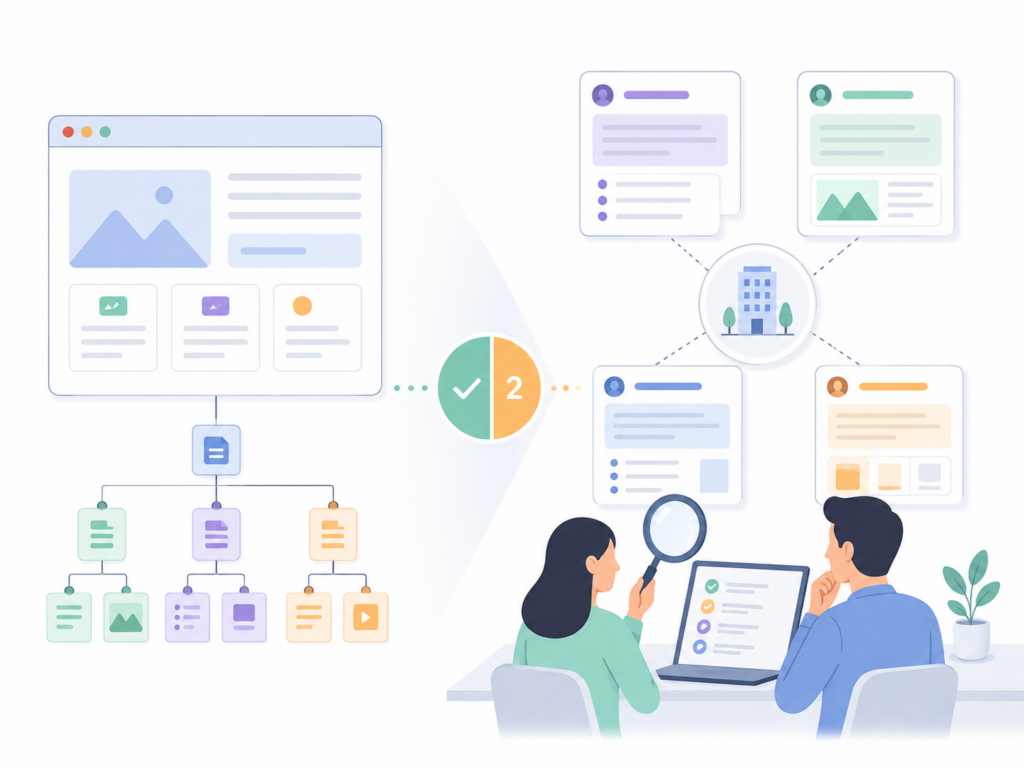
    The physical layout of your content determines its “extractability.” AI systems prefer what researchers call “Answer Capsules,” modular 40 to 60 word paragraphs that directly answer a query at the beginning of a section. Content using consistent heading hierarchies and structured data (FAQ, Article, Product schema) sees a 44% to 67% increase in citation likelihood.

    What to do: Restructure H2 headers to match common user queries and follow immediately with a direct, answer-first paragraph.

    Signal 3: Entity-Category Binding

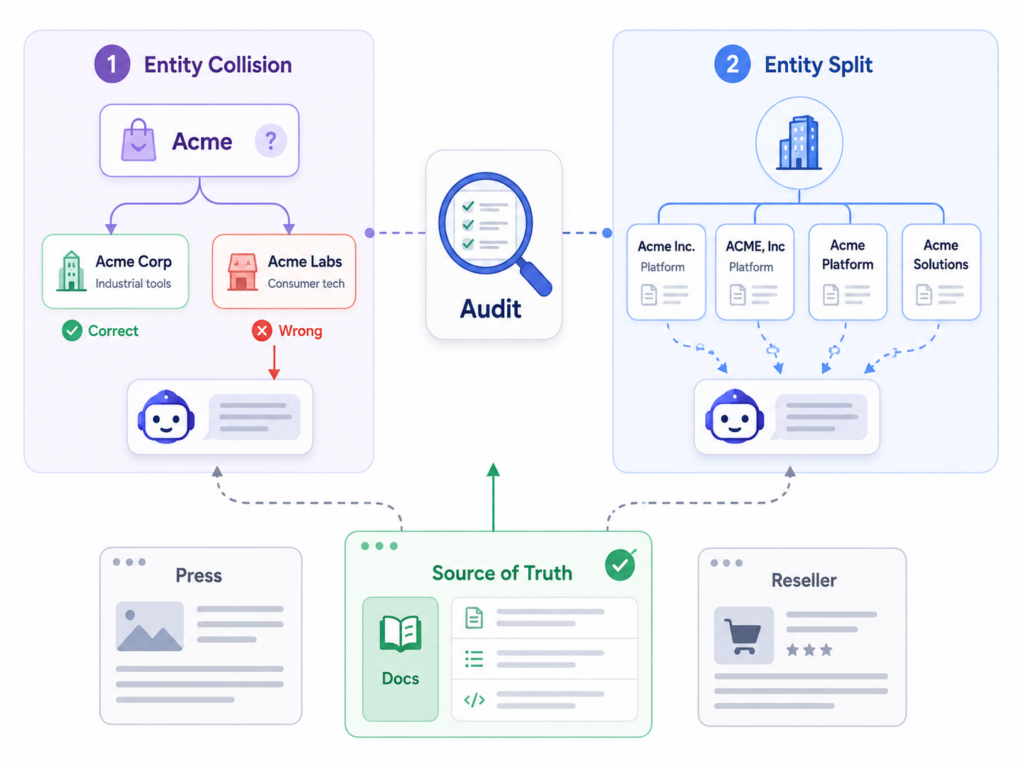
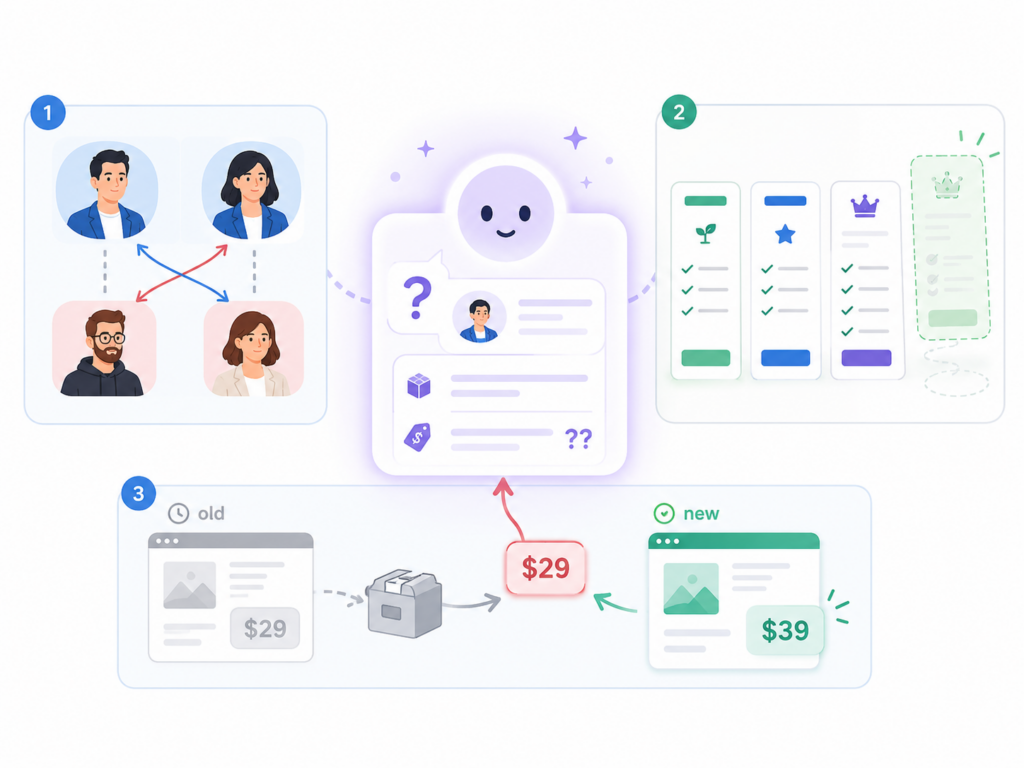
    AI visibility is, at its core, a classification problem. The model needs to confidently bind your brand name to its industry category. If your messaging says “we provide innovative solutions” instead of “we build project management software for remote teams,” the AI lacks the structured confidence to recommend you for a specific need.

    What to do: Use consistent naming and clear service descriptors across all digital platforms to reinforce the co-occurrence of your brand with industry-specific terminology.

    Signal 4: Sentiment Consistency Across Sources

    AI models evaluate what’s called “Sentiment Consistency,” the emotional polarity of how a brand is discussed across reviews, social media, and news. If negative information was prominent in the model’s training data, that perception can persist across millions of conversations. Fragmented or contradictory positioning lowers the model’s confidence in recommending the brand.

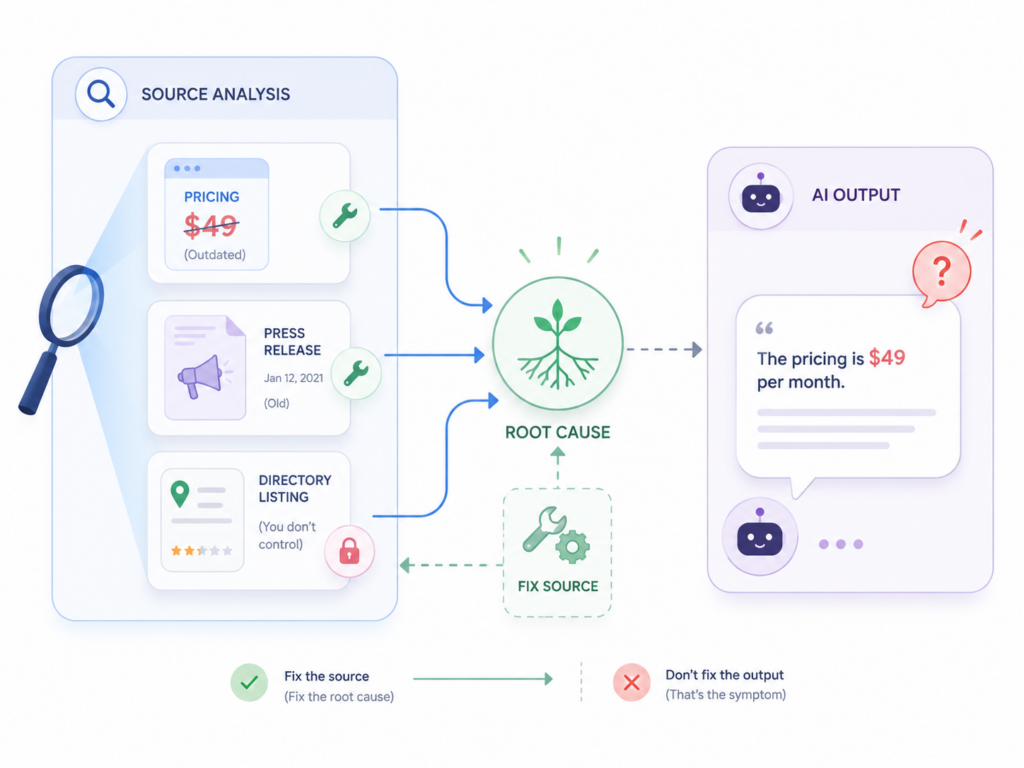
    What to do: Monitor “Semantic Drift” monthly. If AI characterizations of your brand diverge from your actual positioning, you need to fix the inputs (third-party sources) rather than trying to correct the output directly.

    Signal 5: Information Freshness and Recency

    For RAG-driven search, recency is a primary retrieval trigger. Perplexity gives a massive boost to content published within the last 30 days. Adding visible “Last Updated” dates and current statistics can lift citation rates by 47%.

    What to do: Implement a quarterly update cycle for your highest-value pages. Freshness isn’t optional anymore.

    SignalMechanismMeasured Impact
    Earned MediaConsensus across multiple platforms6.5x more weight than brand-owned content
    StructureAnswer Capsules and FAQ Schema67% improvement in AI coverage
    Entity BindingSchema and category co-occurrenceHigher likelihood of appearing in shortlists
    SentimentPolarity scores across the webInfluences how favorably the AI recommends you
    FreshnessdateModified and datePublished schema82% citation rate for content under 30 days old

    Why Most Brands Can’t See Whether AI Is Citing Them

    Here’s the thing: even if you’ve optimized for all five signals, you still can’t measure the results using traditional analytics.

    Google Analytics 4 is built to track browser sessions and cookie-based interactions. Generative engines bypass both. AI bots don’t execute JavaScript, which makes them invisible to standard tracking pixels. Over 70% of AI referrals arrive without referrer headers because users copy-paste URLs from AI chats rather than clicking them.

    The result is a “dark funnel.” Google’s AI Overviews now appear in over 13% of queries, yet they’ve caused organic click-through rates to drop by 61%. Prospects research your brand in a ChatGPT answer, form purchase intent, and later search your brand name directly. GA4 misattributes this to “Direct” or “Branded Search.”

    That’s the Influence-Attribution Gap. Traditional models measure visits. In the AI era, the real metric is influence. A brand can be the top recommendation in a ChatGPT answer, receive zero clicks, and still drive significant downstream revenue.

    To close that gap, you need ai visibility tracking: a shift from session-based metrics to Citation Rate (how often the brand is cited) and Share of Model (visibility relative to competitors).

    How AI Visibility Tracking Closes the Gap

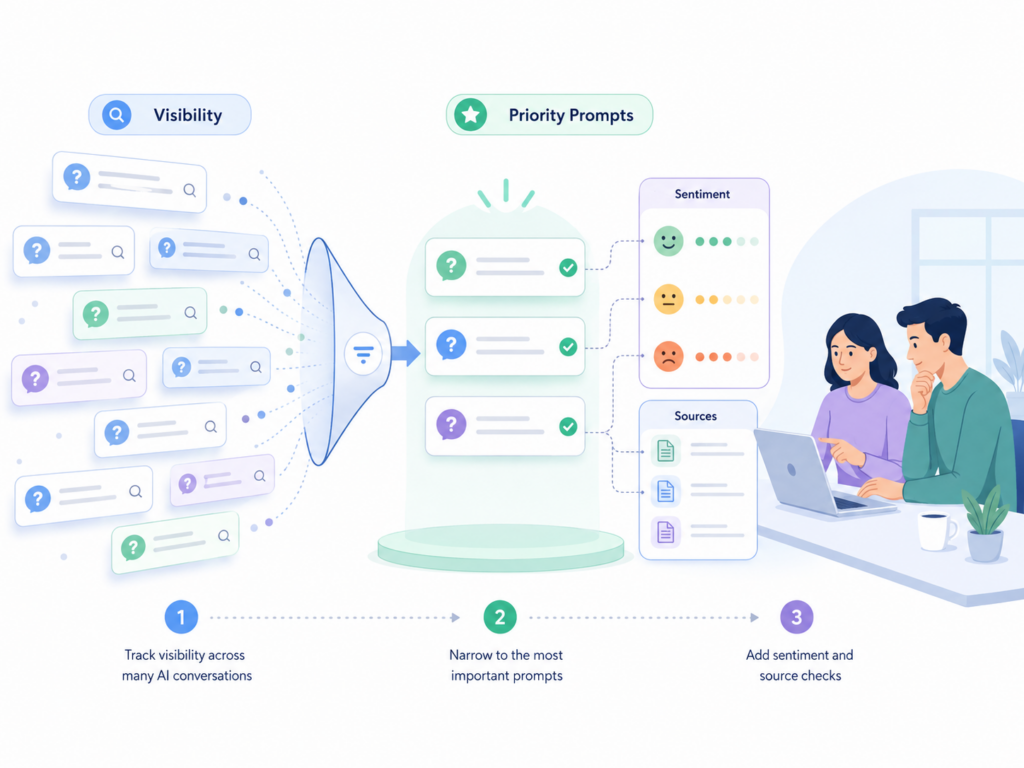
    AI visibility tracking is the continuous monitoring of how a brand appears, ranks, and is described across generative platforms. It provides a standardized view based on core metrics: visibility frequency, recommendation position, sentiment score, query volume and intent, and citation source mapping.

    Topify tracks these seven metrics across ChatGPT, Gemini, Perplexity, DeepSeek, Doubao, Qwen, and other major AI platforms. That coverage matters because a brand’s visibility profile differs significantly across platforms. Knowing you rank well in ChatGPT tells you nothing about whether Gemini is recommending a competitor for the same query.

    Here’s a practical scenario. A marketing team uses Topify to track 200 high-intent prompts. They discover a significant “Citation Gap”: a competitor is cited in 70% of responses while they appear in only 15%. Using Source Analysis, the team reverse-engineers those citations and finds that the competitor’s visibility is being driven by a series of Reddit threads and niche industry reviews. That tells the team exactly which third-party domains to target for their earned media strategy. Instead of guessing, they’re closing the gap with data.

    The Competitor Monitoring feature handles benchmarking systematically, automatically detecting which competitors appear alongside your brand and tracking how that shifts over time. And Sentiment Analysis scores how the AI characterizes your brand on a 0-100 scale, so you can see not just whether you’re mentioned, but whether the AI is positioning you as a recommendation or a cautionary example.

    Topify’s Basic plan starts at $99/mo, covering 100 prompts and 9,000 AI answer analyses, which makes professional-grade ai visibility tracking accessible for mid-sized teams.

    Three Steps to Start Tracking Your Brand’s AI Visibility

    Step 1: Discover Your High-Value Prompts

    Unlike traditional SEO keywords (averaging 4 words), AI queries are conversational prompts averaging 23 words, filled with specific qualifiers like budget, use-case, and company size. The first step is identifying 50 to 200 high-intent prompts your target audience actually asks AI platforms. Topify’s High-Value Prompt Discovery surfaces the exact conversational clusters that have volume and currently trigger recommendations in your category.

    Step 2: Establish Your Baseline

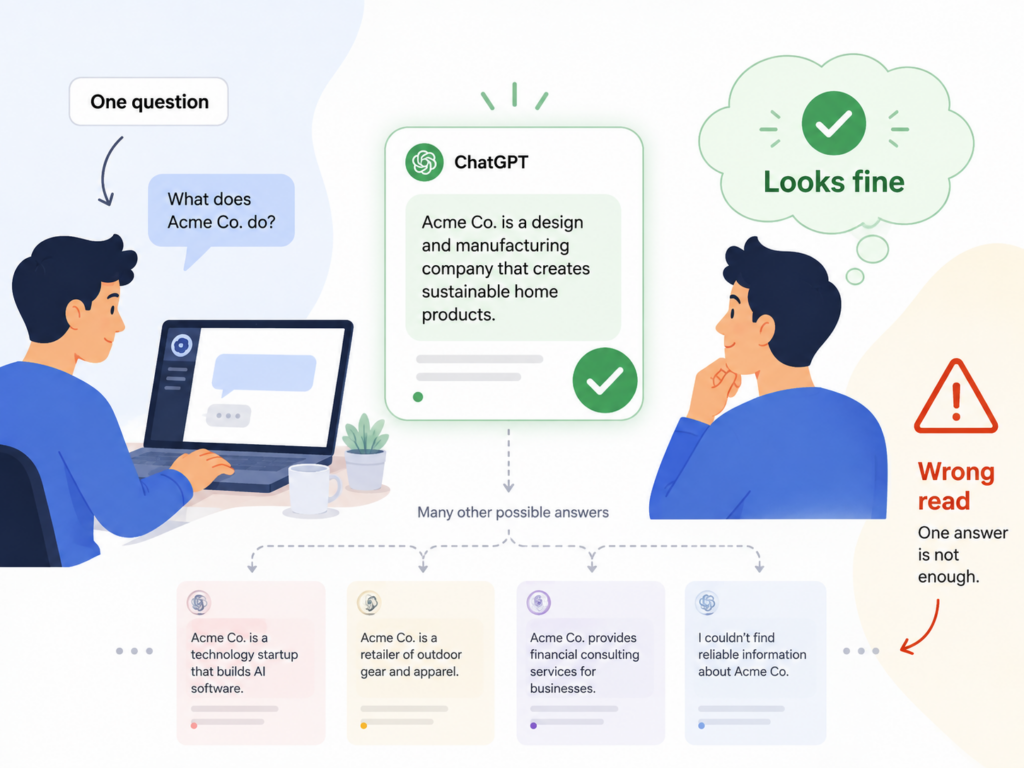
    Before automating, run “Manual Spot-Checks.” Ask 10 to 20 variations of a buyer-intent question across ChatGPT, Perplexity, and Gemini. Record whether your brand appears, its position, and whether the description is accurate. Look for Semantic Drift: if the AI’s characterization of your brand diverges from your positioning, that’s a distortion you need to fix through updated content inputs.

    Step 3: Move to Continuous Automated Monitoring

    AI models update frequently and their retrieval caches are dynamic. Visibility isn’t a static rank. Transition from manual checks to Topify’s automated dashboard, which tracks the 7 core metrics in real time. This lets teams respond immediately if a competitor gains a citation advantage or if an AI begins to hallucinate incorrect pricing or features.

    Conclusion

    AI engines aren’t random recommendation machines. They’re retrieval systems that favor entities with high structural clarity, cross-platform validation, and content freshness. The brands that get cited are the ones that have optimized for these signals, not just for Google’s blue links.

    The first step to optimization is sight. You can’t optimize what you can’t measure. AI visibility tracking is the only way to expose the Citation Gaps and Entity Inconsistencies that lead to brand invisibility. Start by understanding which prompts matter, where you stand today, and what your competitors are doing differently.

    The gap between “ranking on Google” and “being recommended by AI” is only growing. The brands that close it first will own the consideration set where modern buyers actually make decisions.

    FAQ

    What is ai visibility tracking?

    It’s the systematic process of monitoring how often, where, and with what sentiment a brand is mentioned and cited across generative engines like ChatGPT, Perplexity, and Gemini. It shifts measurement from clicks and sessions to citation rate and share of voice in AI answers.

    How often do AI search engines update their brand recommendations?

    Recommendations can shift in real time as the retrieval layer indexes new web content. Perplexity is especially sensitive to content published within the last 30 days. Other platforms update less frequently but still reflect changes in third-party source coverage.

    Can I improve my chances of being cited by ChatGPT?

    Yes. Use Answer Capsules (40 to 60 word modular answers), ensure your site uses server-side rendering (AI bots struggle with JavaScript), and secure mentions on high-authority third-party platforms like Reddit, G2, and industry publications.

    What’s the difference between SEO and GEO?

    SEO optimizes for a ranked list of links to drive website traffic. GEO optimizes for inclusion and citation within a synthesized, conversational answer to drive brand influence and purchase intent.

    Read More

  • GEO vs SEO: What AI Visibility Tracking Changes

    GEO vs SEO: What AI Visibility Tracking Changes

    Your domain authority is 72. Your keyword rankings are solid. Your content calendar runs like clockwork. But when a prospect asks ChatGPT, “What’s the best platform for [your category]?”, your brand doesn’t show up. Not in the first recommendation. Not in the third. Not at all.

    That gap between Google performance and AI visibility is widening every quarter. Google still processes over 15 billion queries daily, and traditional search volume grew 26% between 2023 and 2025. But AI-native platforms like ChatGPT and Perplexity are growing at 42.8% year-over-year, and 68% of B2B buyers now start their research inside an AI tool before they ever open a search engine. SEO tells you where your links rank. AI visibility tracking tells you whether AI recommends your brand at all. Those are two different questions with two different answers.

    SEO Still Works. But It Doesn’t Answer AI Prompts.

    SEO and GEO aren’t competing for the same job. They’re solving different problems in different systems.

    SEO optimizes for a directory. Google crawls your pages, indexes them, and ranks URLs in a list based on backlinks, keyword relevance, and technical signals. The user sees ten blue links, picks one, and clicks through. The unit of value is the click.

    GEO (Generative Engine Optimization) optimizes for a synthesizer. When someone asks ChatGPT or Perplexity a question, the AI doesn’t serve a list. It pulls information from multiple sources, extracts relevant passages, and composes a single answer. Your brand either shapes that answer or it doesn’t exist in the conversation.

    The two systems run in parallel. Google’s market share still sits between 89% and 90.7%, but AI-native search tools now account for an estimated 5% to 9.2% of global query volume, processing 1.5 to 2.5 billion queries daily. More importantly, AI platforms are capturing the discovery phase of the buyer’s journey, the moment someone decides which brands to evaluate, while traditional search increasingly handles the final transactional step.

    That’s the split. Ignoring GEO doesn’t mean losing traffic today. It means losing the conversation before your prospects even know you exist.

    How AI Decides What to Recommend vs. How Google Ranks Pages

    Google’s ranking logic is relatively transparent: crawl the page, evaluate backlinks, check keyword match, weigh domain authority, factor in Core Web Vitals. You can reverse-engineer most of it with a standard SEO toolset.

    AI engines work on a fundamentally different architecture called Retrieval-Augmented Generation, or RAG. When a user submits a prompt, the AI decomposes it into sub-queries, retrieves relevant text passages (not full pages) from its index or live web search, ranks those passages by semantic relevance, and then synthesizes a response. The unit of retrieval isn’t a URL. It’s a chunk, typically 256 to 512 tokens of self-contained, fact-dense text.

    Here’s where the sourcing logic diverges. Research analyzing millions of citations across major platforms reveals distinct editorial identities. About 92% of Google AI Overview citations come from domains already ranking in the top 10 on traditional search. ChatGPT flips that pattern: roughly 90% of its citations come from outside the Google top 20, drawing heavily from Reddit, G2, Wikipedia, and news publishers. Perplexity favors real-time retrieval with a strong recency bias, prioritizing content updated within the last 30 days.

    Across nearly every model, 82% to 85% of AI citations come from non-brand sources: third-party reviews, community discussions, and industry publications. The AI doesn’t take your word for it. It trusts what others say about you.

    For teams managing AI visibility tracking across platforms, Topify provides Source Analysis that maps exactly which domains each AI engine cites when recommending brands in your category, so you can see where the gaps are and which third-party sources you need to win.

    What SEO Metrics Miss About AI Visibility Tracking

    The metrics that built your SEO dashboard, domain authority, keyword position, organic sessions, weren’t designed to measure what happens inside an AI-generated answer. And the gap between those metrics and reality is growing.

    Consider what’s happened to organic click-through rates. When Google’s AI Overviews appear, the organic CTR for Position 1 drops from 1.76% to 0.61%, a 65.3% decline. Zero-click searches in the US now account for 58.5% to 60% of all queries. Users are getting their answers without visiting your site.

    But here’s the counterintuitive part. While click volume is compressing, the quality of traffic from AI referrals is dramatically higher. Visitors arriving via an AI recommendation convert at 4.4x to 5.1x the rate of traditional organic search visitors. The AI has already done the comparison and evaluation for the user. By the time they click through, they’re close to a decision.

    That means the metrics that matter for AI visibility tracking are categorically different from SEO KPIs:

    MetricWhat It MeasuresWhy It Matters
    Visibility Score% of target prompts where your brand appearsYour “discovery” rate in AI conversations
    Sentiment ScoreHow the AI frames your brand (positive, neutral, negative)Being mentioned as “outdated” is worse than not being mentioned
    Position RankWhere you appear in the recommendation listFirst-named brands capture disproportionate trust
    Citation ShareHow often the AI links to your domain vs. competitorsThe new “backlink” equivalent
    Share of VoiceYour mention % vs. all tracked competitorsCategory dominance in the AI conversation

    A brand can rank #1 on Google for “best enterprise CRM” and be completely absent from ChatGPT’s answer, because the model relies on a different consensus layer, Reddit threads, G2 reviews, and trade publications, where the brand hasn’t built presence.

    The Metrics That Actually Matter for AI Visibility Tracking

    Traditional SEO measurement is binary: you’re ranked or you’re not. AI visibility tracking is probabilistic and multi-dimensional. The AI might mention your brand in 40% of relevant prompts, describe you positively in 70% of those mentions, and cite your domain in only 15%. Each dimension requires a different optimization response.

    Research from Princeton University, Georgia Tech, and the Allen Institute for AI, published at KDD 2024, formalized what drives AI citation behavior. Content that includes verifiable data and statistics sees up to a 40% boost in AI visibility. Expert quotations with named sources add 30%. Authoritative tone contributes 25%. And keyword stuffing, the backbone of early SEO, actually hurts AI visibility by roughly 10%.

    The most striking finding: sites ranking outside Google’s top 10 saw the greatest relative gains, up to 115%, by implementing GEO-specific tactics. That means AI visibility tracking isn’t just a new metric layer. It’s a new competitive landscape where traditional domain authority barriers don’t apply the same way.

    For teams building an AI visibility tracking practice, Topify’s platform monitors all seven dimensions, visibility, sentiment, position, volume, mentions, intent, and CVR (Conversion Visibility Rate), across ChatGPT, Gemini, Perplexity, and AI Overviews from a single dashboard. In practice, this means you can spot a drop in ChatGPT mentions, trace it to a specific source that stopped citing your brand, and deploy a fix without switching between tools.

    3 GEO Tactics That Don’t Work in SEO, and Vice Versa

    The overlap between SEO and GEO execution is smaller than most teams assume. Here’s where the two diverge in practice.

    GEO works, SEO doesn’t:

    Optimizing for third-party consensus. AI models heavily weight what others say about your brand. Earning mentions in Reddit communities, G2 reviews, and trade publications directly increases your citation probability. In SEO, these off-site mentions contribute to backlink authority, but the mechanism and the priority are different. In GEO, third-party consensus is often the deciding factor.

    Structuring content as extractable chunks. RAG systems retrieve 40-60 word passages, not full pages. Each section of your content needs to function as a standalone answer with its own data point and attribution. Traditional long-form SEO content with gradual build-ups and vague introductions gets skipped entirely by retrieval systems.

    Managing brand sentiment across AI platforms. It’s not enough to appear. If ChatGPT describes your product as “budget-friendly” when your positioning is premium, that visibility works against you. Sentiment tracking is a core GEO discipline with no direct SEO equivalent.

    SEO works, GEO doesn’t:

    Backlink building for domain authority. While traditional DA still matters for Google AI Overviews (which favor top-ranking domains), ChatGPT and Perplexity don’t weigh backlink profiles the same way. A site with fewer backlinks but denser, more structured content often wins the AI citation.

    SERP feature optimization. Featured snippets, People Also Ask boxes, and knowledge panels are Google-specific real estate. They don’t influence whether ChatGPT recommends your brand.

    Keyword density targeting. GEO penalizes this. AI models prioritize semantic density, the richness of meaning per sentence, over keyword frequency. If your content team is still chasing keyword density, they’re optimizing against themselves in the AI layer.

    How to Run SEO and GEO Without Doubling Your Workload

    The good news: SEO and GEO share a technical foundation. A crawlable, well-structured site with clean schema markup serves both systems. The divergence happens at the content and distribution layer.

    Think of it as three layers working together. Layer 1 is your SEO foundation: technical health, indexability, and domain authority. Without this, your content can’t enter the retrieval candidate set for most AI engines. Layer 2 is Answer Engine Optimization (AEO): structuring pages with direct answers, FAQ schema, and question-format headings so that both Google’s AI Overviews and AI-native platforms can extract clean passages. Layer 3 is GEO: the citation layer, where you optimize for inclusion in synthesized AI responses by building factual density, entity clarity, and multi-source corroboration.

    Strategic PrioritySEO RoleGEO RoleWhere They Overlap
    Content StrategyKeywords and topicsPrompts and questionsUse H2s as query-match headers
    Technical StackHTML and meta tagsJSON-LD and schemaSchema labels entities for AI extraction
    Authority BuildingBacklinksCitations and mentionsPR drives mentions that fuel both
    MeasurementGSC and rankingsVisibility and sentimentTrack conversion across the full funnel

    The practical starting point: identify 50 to 200 high-value prompts your customers are asking AI. Test them across ChatGPT, Perplexity, and Gemini to map where your brand appears and where it doesn’t. Topify’s AI visibility checkerautomates this across platforms, surfacing the prompts where competitors get recommended but your brand is absent.

    From there, the workflow is straightforward. Fix content structure for extractability, build third-party authority where the AI looks for consensus, and monitor changes weekly. AI models update faster than Google’s index, and visibility can shift in days, not months. For a quick baseline, Topify’s free GEO Score Checker evaluates your site’s AI readiness across four dimensions, no signup required.

    Conclusion

    GEO doesn’t replace SEO. It adds a second front. Google still drives high-volume traffic, and traditional rankings still matter for the final transactional click. But the discovery phase, where prospects decide which brands to evaluate, is migrating to AI platforms that operate on entirely different rules.

    AI visibility tracking is the bridge between those two worlds. It tells you what SEO dashboards can’t: whether AI recommends your brand, how it frames you, and which sources are shaping that narrative. The brands building this measurement layer now are the ones that will own the recommendation when their competitors are still wondering why clicks aren’t converting. Start by mapping your AI visibility baseline with Topify, and build from there.

    FAQ

    Q: What’s the difference between GEO and SEO?

    A: SEO optimizes for ranking URLs in a list of links on search engine results pages. GEO optimizes for being cited, mentioned, and recommended inside AI-generated answers. The authority signals differ: SEO rewards backlinks and domain authority, while GEO rewards factual density, structured content, and third-party corroboration across platforms like Reddit and G2.

    Q: Do I need ai visibility tracking if my SEO is already strong?

    A: Yes. A high domain authority and strong keyword rankings don’t guarantee AI visibility. Research shows that 90% of ChatGPT’s citations come from outside Google’s top 20 results. Your brand can rank #1 on Google and still be invisible in ChatGPT’s recommendations. AI visibility tracking reveals that gap.

    Q: Which AI platforms should I track my brand on?

    A: At minimum, track ChatGPT, Google AI Overviews (Gemini), and Perplexity. Each has distinct citation biases: Google favors top-ranking domains, ChatGPT favors third-party consensus, and Perplexity favors recent, niche-expert content. Tracking only one platform gives you an incomplete picture.

    Q: How often should I monitor AI visibility?

    A: Weekly for high-priority prompts, monthly for citation trends and sentiment shifts. AI models update faster than traditional search indexes, and RAG-based platforms like Perplexity pull live data. Visibility can shift within days of a content change or competitor move.

    Read More

  • AI Visibility Tracking: A 2026 Primer

    AI Visibility Tracking: A 2026 Primer

    Your team spent six months building SEO authority. Domain Authority climbed, keyword rankings held steady, organic impressions trended up. Then your CEO typed your product category into ChatGPT and got a list of five recommendations. Your brand wasn’t on it.

    Traditional SEO dashboards can’t explain why. They weren’t built to measure what AI chooses to say, or who it chooses to recommend. That gap between ranking well on Google and being invisible to AI is where most marketing teams are operating right now, whether they realize it or not.

    Your SEO Dashboard Says You’re Winning. AI Search Says Otherwise.

    The disconnect isn’t a bug. It’s a structural shift in how information gets discovered.

    Traditional SEO was built on a “rank and click” model: secure a top position on a search engine results page, earn a click, drive traffic to your site. The AI-driven discovery model works differently. It synthesizes a direct answer for the user, often bypassing the need for any outbound click at all. A website can rank first on Google for a specific keyword but fail to appear when an AI model summarizes the same topic.

    The data backs this up. Only approximately 17% of citations in Google’s AI Overviews come from pages that rank in the top ten organic results for the same query. That means the AI’s criteria for “source-worthiness” are fundamentally different from traditional ranking algorithms.

    Here’s the practical gap this creates: while traditional SEO rewards domain age, backlink volume, and keyword density, generative engines prioritize semantic clarity, factual density, and extractive readiness. Tracking AI visibility isn’t an optional add-on to your SEO stack. It’s the primary diagnostic for whether your brand exists in the generative discovery layer.

    MetricTraditional SEOAI Visibility Tracking
    Primary ObjectiveSERP Position (Top 10)Citation Inclusion and Recommendation
    Value ExchangeUser Clicks to WebsiteInclusion in Synthesized Answer
    Key Authority SignalBacklinks and Domain AuthorityFactual Density and Entity Confidence
    Tracking UnitKeywordsNatural Language Prompts
    Performance GoalTraffic VolumeShare of Model and Sentiment

    Without dedicated AI visibility tracking, your team can’t answer why a competitor is consistently recommended by Perplexity for a high-intent query while your brand is ignored. That blind spot compounds over time.

    What AI Visibility Tracking Actually Measures

    AI visibility tracking is the systematic monitoring of how a brand is mentioned, characterized, and cited within the outputs of generative AI platforms and answer engines. It’s not a binary “yes or no” check. It’s multidimensional, accounting for frequency of mentions, sentiment of characterization, relative position in recommendation lists, and quality of the citations used to support the AI’s claims.

    The fundamental unit of measurement has changed. SEO monitors keywords. AI visibility tracking monitors prompts: full-sentence, conversational queries that often exceed twenty words and include complex constraints like budget, location, and specific use cases. The goal is to determine your “Share of Model,” the frequency with which an AI platform selects your brand as the optimal solution for a given prompt set.

    Professional tracking frameworks in 2026, like the system built by Topify, use a seven-dimension metric system to provide a holistic view of brand presence across AI platforms:

    MetricWhat It MeasuresWhy It Matters
    Visibility Score% of target prompts where the brand appearsOverall reach in AI discovery
    Sentiment ScoreTone of AI’s characterization (positive/neutral/negative)Brand reputation and narrative framing
    Position RankNumerical order in recommendation listsUser trust and recall
    Mention FrequencyTotal brand name appearances in responsesEntity strength
    Citation Share% of outbound links pointing to your domainContent authority as a “source of truth”
    Intent AlignmentHow well presence matches user journey stageVisibility for high-value commercial queries
    CVREstimated conversion probability based on mention contextDirect revenue impact

    One critical detail that catches most teams off guard: AI visibility is highly volatile and platform-dependent. A brand’s citation volume can vary by as much as 615x between different platforms. A single-platform approach leaves enormous blind spots.

    Why Marketers Can’t Afford to Skip AI Visibility Tracking in 2026

    The numbers tell the story.

    By early 2026, the AI search engine market has expanded past USD 20 billion, with 900 million weekly active users on ChatGPT alone. Gartner predicted in 2024 that traditional search volume would drop 25% by 2026 as users shifted to AI assistants. Real-world data from mid-2026 suggests this trend has accelerated, especially for informational queries where AI Overviews satisfy user intent directly on the results page.

    Zero-click searches now account for roughly 64.82% of all Google searches. AI Overviews trigger on 25.11% of Google searches, up from about 13% in early 2025. When an AI summary appears, only 8% of users click on a traditional organic result, compared to 15% when no summary is present.

    That’s the volume side. The value side is even more striking.

    AI search visitors convert at an average rate of 14.2%, compared to 2.8% for traditional Google organic search. That’s a 5x conversion advantage. Ahrefs research from June 2025 found that AI search visitors, while representing only 0.5% of total traffic for some domains, can drive up to 12.1% of all sign-ups. A 23x conversion premium.

    These users arrive pre-qualified. They’ve already done their research and comparison inside the AI interface. When they finally click through, they’re moving from research to decision. Being the cited brand in an AI response isn’t just a visibility play. It’s a direct pipeline to high-intent conversions.

    The 5 Metrics That Define Your AI Visibility

    A professional AI visibility tracking strategy focuses on five core metrics. Each one addresses a specific stage of the AI discovery funnel and informs a different optimization lever.

    Visibility Score: does the AI know you exist?

    This measures the frequency of your brand’s appearance across a defined prompt universe. In 2026, a Visibility Score below 30% in your core category signals a significant discovery gap. Above 80% indicates market leadership.

    A SaaS company might score 45% for “best PM tools” but only 12% for “PM tools with built-in time tracking.” That gap reveals a semantic hole in how AI models perceive their feature set.

    Sentiment: what is the AI actually saying about you?

    Being mentioned is only half the equation. An AI platform could reference your brand consistently while adding caveats like “users often report slow delivery times.” Tracking sentiment lets your team catch and counter these narratives before they calcify.

    Position: where do you rank in the AI’s recommendation list?

    AI platforms typically recommend three to five brands per query. The brand listed first carries an implicit endorsement. If you’re consistently placed third or fourth, your influence on the user’s decision is minimal compared to the first-position brand.

    Source Citations: what’s feeding the AI’s opinion?

    AI models rely on specific web sources. Source citation analysis identifies which external URLs are influencing the response. If 60% of Perplexity’s citations for your category come from Reddit threads and G2 reviews rather than your own content, that’s a clear signal to shift your PR and community engagement strategy toward the platforms that actually shape AI recommendations.

    CVR (Conversion Visibility Rate): what’s the revenue impact?

    CVR estimates the economic value of an AI mention by analyzing the recommendation context and prompt intent. A fintech brand might have fewer total mentions than a competitor, but if those mentions appear in higher-converting contexts like “secure tools for high-net-worth individuals,” the projected ROI is higher.

    MetricTarget Goal
    Visibility Score> 60% for core categories
    Sentiment Score> 85/100 (weighted positive)
    Position Rank< 2.0 (Top 2 placement)
    Source CitationsDominating top-3 citation sources
    CVROutperforming traditional organic CPC value

    How to Start Tracking Your Brand’s AI Visibility

    The implementation path follows three steps, from manual baseline to automated monitoring.

    Step 1: Platform selection and baseline audit.

    Identify where your audience asks AI for recommendations. In 2026, that typically means ChatGPT (creative and reasoning tasks), Perplexity (research-oriented queries), Gemini (Google ecosystem users), and Google AI Overviews. Run a representative sample of queries across each and record current visibility, sentiment, and citations.

    Step 2: High-value prompt discovery.

    Tracking the right questions matters more than tracking many questions. Unlike keyword research, prompt discovery focuses on intent and conversational context. The average conversational query in 2026 runs about 23 words long, packed with qualifiers that push an AI from “explanation mode” into “recommendation mode.”

    The methodology: pull language from sales transcripts, support tickets, and community forums. Map those prompts to the buyer journey (awareness, consideration, purchase) to ensure your brand is visible at every decision point.

    Step 3: Move from manual checks to automated monitoring.

    Manual tracking is fundamentally unscalable. AI responses are non-deterministic: the same prompt can yield different results across multiple sessions. Automated systems resolve this by running real-time monitoring across thousands of prompts simultaneously, calculating a statistical baseline that accounts for model volatility.

    Topify’s platform handles this by combining High-Value Prompt Discovery with continuous visibility tracking across all major AI platforms. The difference in accuracy is measurable: automated systems detect visibility regressions with 92% sensitivity, compared to 64% for manual monitoring, with an average detection lead time of 4.2 hours.

    For marketing teams, automation is the only way to catch “drift,” the gradual change in AI outputs as models retrain on new data, before it hits your bottom line.

    Monitoring ApproachSensitivityLead TimeScalability
    Manual Tracking64%Immediate but spottyVery Low
    Automated (Topify)92%4.2 hours (early detection)Unlimited

    3 AI Visibility Tracking Mistakes That Waste Your Budget

    As marketing teams rush to adapt, several recurring errors undermine the accuracy of their visibility data.

    Mistake 1: Treating ChatGPT as the entire AI search landscape.

    ChatGPT holds roughly 77-87% of AI referral traffic. But Perplexity, Gemini, and Google’s AI Overviews use different retrieval mechanisms and citation sources. A brand well-represented in ChatGPT’s training data can be entirely absent from Perplexity’s real-time web search results. Multi-platform tracking across at least three major models is the baseline for a representative view.

    Mistake 2: Counting mentions without measuring sentiment or position.

    A 100% mention rate means nothing if the AI characterizes your brand negatively in every instance. And being listed at the end of a five-brand recommendation carries far less weight than a first-position mention. Your tracking system needs a weighted scoring approach that prioritizes prominence and positive framing, not just raw frequency.

    Mistake 3: Benchmarking in isolation, without competitor context.

    AI visibility is a zero-sum game within the synthesized answer box. If you track your own visibility without monitoring competitors, you’ll miss that a rival’s citation share is growing twice as fast, or that the AI has started pairing your brand with a new, disruptive competitor. Continuous dynamic competitor benchmarking is non-negotiable.

    Conclusion

    The old playbook of backlinks and keyword density is no longer sufficient to guarantee that your brand shows up where your audience is looking. In 2026, the marketing team’s defining question has shifted from “how do we rank higher?” to “does the AI know we exist, and does it recommend us correctly?”

    AI visibility tracking gives you the answer. It turns an opaque, unmanaged channel into something measurable and actionable: which platforms mention you, how they describe you, where you rank against competitors, and what sources are shaping the AI’s opinion.

    The path forward starts with a baseline. Topify’s free GEO score check gives your team an immediate snapshot of where your brand stands across AI platforms, so you know exactly which gaps to close first.

    FAQ

    What’s the difference between SEO and AI visibility tracking?

    SEO optimizes for page rankings to earn clicks. AI visibility tracking optimizes for inclusion in synthesized answers to earn citations and recommendations. SEO is a volume-based traffic play. AI visibility tracking is an authority-based brand influence play. They measure fundamentally different things, and strong performance in one doesn’t guarantee performance in the other.

    Which AI platforms should I track my brand on?

    Most brands should monitor ChatGPT, Perplexity, and Google Gemini, as these represent the majority of user queries and referral traffic in 2026. Google AI Overviews are also critical because they appear directly on the primary search results page and significantly impact traditional click-through rates.

    How often should I check my AI visibility metrics?

    Weekly monitoring is the recommended cadence for most brands. AI models are volatile and retrain frequently, so weekly checks let you catch drift and competitive shifts early. Daily tracking is appropriate for high-competition sectors like SaaS or finance where recommendation positions change rapidly.

    Can I track AI visibility manually without a tool?

    Manual tracking works for a very small set of prompts, maybe 10-20. But it’s statistically unreliable due to model variance and completely unscalable for professional operations. A single prompt can return different results across different sessions. Automated tools provide the statistical rigor needed for enterprise-level decisions.

    Read More

  • ChatGPT vs Google: Where SaaS Buyers Search Now

    ChatGPT vs Google: Where SaaS Buyers Search Now

    Your team spent six months building domain authority, earning backlinks, and climbing Google rankings. Then a prospect asked ChatGPT, “What’s the best project management tool for remote engineering teams?” and got a ranked list of four vendors with inline citations. Your brand wasn’t on it.

    The strange part: your Google rankings didn’t drop. Your domain authority is stable. GA4 shows nothing unusual. But demo requests are quietly shrinking, and your pipeline can’t explain why. That disconnect points to a shift your dashboard wasn’t built to detect.

    SaaS Buyers Don’t Start on Google Anymore

    According to a March 2026 survey of 1,076 B2B software decision-makers, 51% now initiate vendor research inside an AI chatbot, up from 29% just eleven months prior. That’s not a gradual drift. That’s a structural break in the SaaS buyer journey.

    The broader search data confirms it. Research from Bain & Company shows roughly 60% of all search sessions now end without a single click to an external website. In the US, that number sits at 58.5% according to SparkToro, and it climbs to 75% on mobile.

    Google AI Overviews now appear on over 25% of tracked searches. In Google’s AI Mode, the zero-click rate hits 93%. The traditional click-through funnel that SaaS content marketing was built around is compressing faster than most teams realize.

    That’s the gap most SaaS marketers still can’t see.

    B2B procurement data backs this up: 67% of B2B buyers now prefer a rep-free, self-directed purchasing experience. And 94% report using generative AI tools during their most recent purchasing cycle to research suppliers, evaluate offerings, and validate value propositions. By the time a buyer contacts your sales team, the decision is nearly made, inside a chat window your analytics never tracked.

    What AI Search Visibility Actually Means for B2B SaaS

    Traditional SEO optimizes for a list of blue links. You rank pages, earn clicks, and nurture visitors through a funnel. AI search visibility is a fundamentally different metric: it measures how frequently, where, and in what context a brand is mentioned, recommended, or cited in AI-generated answers across platforms like ChatGPT, Gemini, and Perplexity.

    The difference isn’t cosmetic. It’s structural.

    DimensionTraditional SEOGenerative Engine Optimization (GEO)
    Primary GoalRank pages to maximize CTRGet cited and recommended in AI syntheses
    Key SignalsBacklinks, keyword volume, domain authorityEntity clarity, structured data, factual density
    Crawl TargetGooglebot indexing your domainGPTBot, ClaudeBot scraping owned and third-party footprints
    Conversion PathHigh-volume TOFU traffic requiring on-site nurtureCompressed, pre-qualified traffic with high intent

    When a SaaS buyer types a multi-variable query like “best project management software for remote engineering teams using JIRA” into ChatGPT, the engine doesn’t return a list of blog posts. It evaluates dozens of sources, reads user sentiment on forums, scans documentation, and compiles a ranked shortlist of three to four vendors with inline citations.

    For SaaS marketers, this compresses the middle of the funnel. Traditional content marketing relies on capturing broad informational queries to build email lists and run multi-month nurture sequences. In a zero-click, AI-mediated ecosystem, that middle layer gets bypassed entirely. Buyers who eventually click on a citation within an AI response are already pre-qualified: they’ve compared feature sets, verified pricing, and evaluated competitors inside the chat interface.

    The Numbers That Explain the Shift

    The scale of this migration isn’t speculative. AI chatbot environments have moved from novelty utilities to critical research tools, with total traffic growing 81% year-over-year to 55.2 billion annual visits.

    Platform-specific adoption tells the story:

    PlatformMetricTimeframe
    ChatGPT2.5 billion daily queriesJuly 2025
    ChatGPT900 million weekly active usersFebruary 2026
    ChatGPT79% share of generative AI trafficSeptember 2025
    Google Gemini1.1 billion monthly visits (157% growth)April to September 2025
    Perplexity45 million monthly active usersH2 2025

    Gartner projected a 25% decline in traditional search engine volume by 2026, expanding to 50% by 2028. That contraction isn’t evenly distributed. Informational queries, the foundation of SaaS content marketing, are the hardest hit.

    Query TypeZero-Click ShareImpact on SaaS Content
    Definitional / What-is85%Extreme: AI resolves basic terms instantly
    How-to / Step-by-step72%High: steps extracted directly on the search page
    Comparison / Versus61%Moderate to High: multi-brand comparisons synthesized into tables
    Best-of / Listicle57%Moderate: vendor lists presented without blog clicks
    Product Research38%Low to Moderate: buyers seek verified pricing and reviews
    Transactional / Buy22%Low: users must click through to purchase

    Here’s the data point that reframes the entire conversation: visitors arriving at a website via AI search referrals convert at approximately 23 times the rate of traditional search visitors. They spend 68% more time on-site, with session durations four times longer. Less traffic, but dramatically higher quality.

    Why Your Analytics Dashboard Can’t See This

    GA4 and Google Search Console were built for a click-based web. They’re structurally incapable of measuring brand exposure within generative conversational environments.

    Three blind spots compound the problem.

    First, AI engines process crawled data within closed-loop systems. Brand mentions don’t trigger JavaScript pageviews or cookie-based tracking. When your brand gets recommended inside ChatGPT, GA4 registers nothing.

    Second, when citation links are clicked, referral data is often stripped. That high-intent visitor who found you through an AI recommendation? GA4 classifies them as “Direct” traffic, misallocating conversion credit and understating AI’s true impact on your pipeline.

    Third, zero-click behavior means users consume synthesized recommendations directly on the chat interface without ever visiting an external link. Your brand could be evaluated, compared, and shortlisted by thousands of potential buyers, and your analytics would show zero impressions.

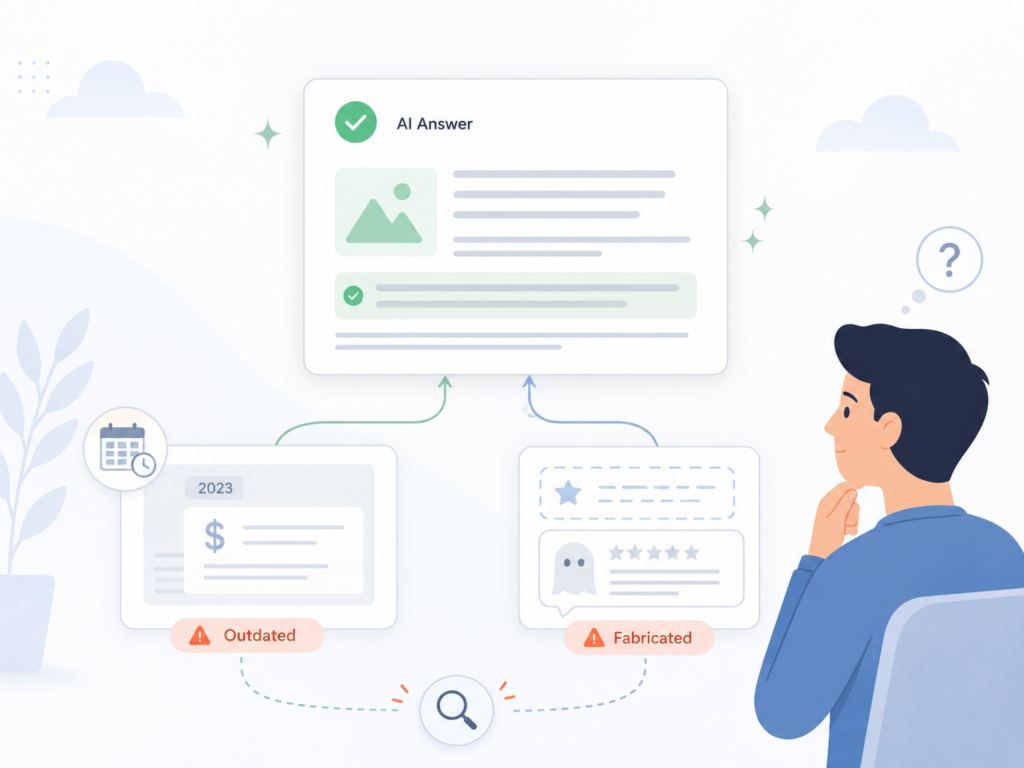
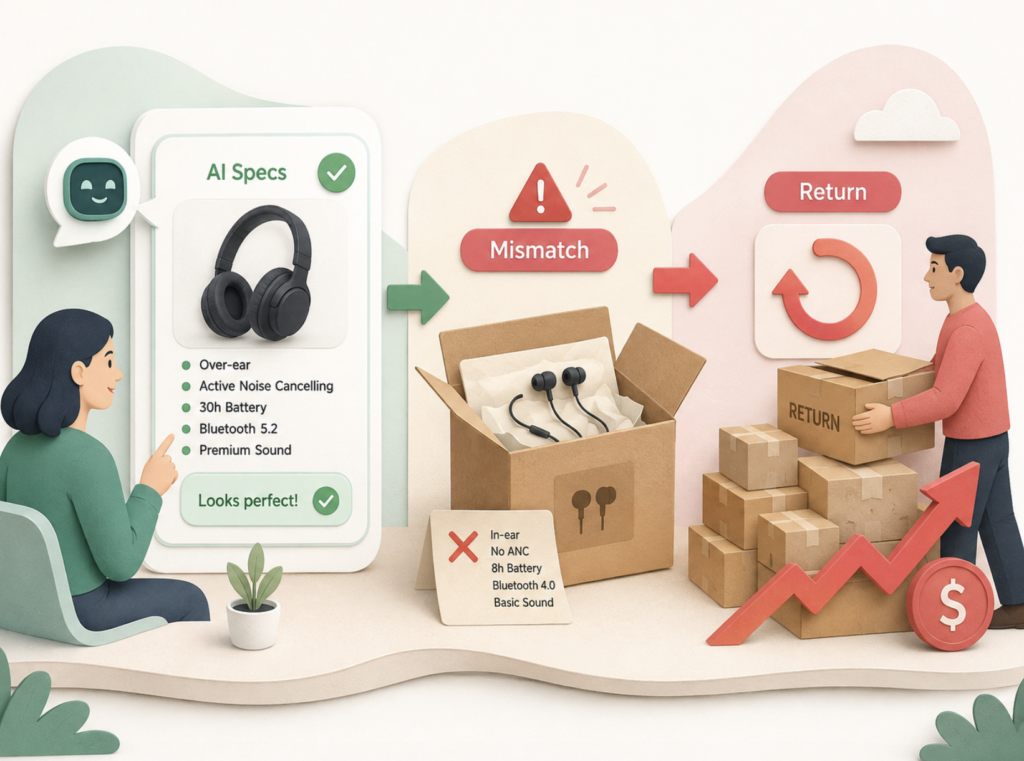
    Hallucination rates across major models range from 15% to 52%, materializing as fabricated product features, omitted differentiators, outdated pricing, and competitor confusion. Without dedicated monitoring, these errors compound as models recirculate inaccurate data.

    SaaS marketing teams frequently make decisions using incomplete data as a result. They may cut high-performing content programs because GA4 shows declining organic traffic, unaware those same pages serve as primary training sources driving high-value recommendations in ChatGPT and Perplexity.

    How to Track the Shift Before Your Competitors Do

    Manual auditing is mathematically impractical. Assessing just 10 conversational prompts across three major engines requires processing 30 unique syntheses and cataloging hundreds of brand mentions. Scale that to the 50 to 100 prompts that matter for a typical SaaS category, and it’s a full-time job with no historical trend data.

    Topify resolves this efficiency barrier by automating brand presence evaluation across multiple AI engines in seconds. The platform tracks AI search visibility across seven core metrics:

    MetricWhat It Measures
    Visibility RatePercentage of relevant prompts where your brand is explicitly mentioned
    Sentiment ScoreHow favorably AI models describe your brand (0 to 100 scale)
    Recommendation PositionWhether you’re the primary recommendation or listed as an afterthought
    AI Query VolumeEstimated monthly searches across AI platforms for category prompts
    MentionsAbsolute frequency of brand mentions per 1,000 queries
    IntentClassifies prompts into Awareness, Consideration, Decision, or Retention
    CVR (Conversion Visibility Rate)Percentage of queries that translate into purchase intent

    Most analytics tools give you two or three of these signals. Topify connects all seven and links them to downstream revenue indicators.

    Where Topify Tracks Across AI Platforms

    Each generative engine uses distinct retrieval-augmented generation (RAG) architectures, web crawls, and citation behaviors. ChatGPT, Gemini, Perplexity, DeepSeek, Doubao, and Qwen don’t “read the same internet.” A brand consistently recommended in ChatGPT responses may be completely absent on Perplexity, which pulls nearly 46.5% of its top citations from Reddit.

    Topify isolates visibility metrics across each platform independently. When the system detects a competitor securing a new citation in a “best of” prompt, it flags the gap and identifies the content change needed to close it. That’s the difference between reacting to lost visibility and staying ahead of it.

    What to Do Once You See the Data

    Tracking is the first step. Acting on the data is where AI search visibility turns into pipeline growth.

    Topify’s Source Analysis reverse-engineers AI citation patterns, identifying the specific domains and URLs that generative models trust when answering category questions. If your competitor is being cited and you’re not, Source Analysis shows exactly which authoritative sources you’re missing.

    Research from Princeton and Georgia Tech demonstrates that targeted GEO formatting adjustments yield direct visibility lifts:

    GEO StrategyVisibility Improvement
    Citing authoritative sources+40%
    Adding statistics and data+37%
    Including expert quotations+30%
    Precise technical terminology+28%

    These aren’t abstract recommendations. They’re testable, measurable interventions that change whether an AI engine includes your brand in its synthesized response.

    On the flip side, GEO doesn’t replace traditional SEO. The two methodologies are complementary. Structured technical SEO serves as the prerequisite baseline for AI crawling and extraction. About 76% of AI Overview citations still pull from pages ranking in Google’s top 10. But ranking alone isn’t enough. If your content isn’t structured for extraction, cited by third parties, and factually dense, the AI will skip it for a better-structured source from page two.

    The bottom line: SaaS brands that treat AI search visibility as a measurable channel today will have a meaningful head start by the end of 2026. The ones still relying solely on organic traffic dashboards are optimizing for a funnel their buyers have already left.

    Start with a baseline. Topify’s free GEO Score Checker evaluates your site’s technical AI-readiness, the Brand Sentiment Checker measures how AI platforms describe your brand, and the AI Visibility Checker shows your actual mention frequency across ChatGPT, Gemini, and Perplexity.

    Conclusion

    The migration of SaaS buyers from Google to generative AI engines isn’t a future trend. It’s a structural shift happening now. With zero-click searches crossing 60% globally and 94% of B2B buyers integrating LLMs into procurement research, measuring marketing performance through organic traffic and link clicks alone is a strategic liability.

    Being absent from AI-generated recommendations means your brand is excluded from the buyer’s consideration set before a sales rep is ever contacted. The SaaS companies that win in this environment won’t be the ones with the highest domain authority. They’ll be the ones whose brands appear, get cited, and get recommended when a buyer asks an AI engine for advice.

    Track it. Optimize it. Done.

    FAQ

    What is AI search visibility?

    AI search visibility measures how frequently and favorably your brand is mentioned, cited, or recommended in answers generated by AI platforms like ChatGPT, Gemini, Perplexity, and Google AI Overviews. It evaluates the quality of recommendations, ordinal placement in synthesized lists, and the AI’s sentiment toward your brand, which is fundamentally different from traditional search rankings.

    How much SaaS traffic is shifting from Google to ChatGPT?

    Gartner projected a 25% drop in traditional search volume by 2026 due to AI adoption. Informational queries, the backbone of SaaS content marketing, are experiencing traffic declines of 15% to 40% as AI Overviews and chatbots resolve intent directly. The traffic that does arrive from AI search tools is pre-qualified, converting at up to 23 times the rate of traditional organic search.

    Can Google Analytics track AI search traffic?

    No. GA4 can’t track interactions within closed AI chat sessions because no page load is triggered on your website. When a user clicks a citation link, the referral data is often stripped, causing GA4 to misclassify the visit as “Direct” traffic. This creates a measurement blind spot for SaaS marketing teams relying on traditional analytics.

    How can I check if my brand appears in ChatGPT?

    Manual spot-checking across various prompts is possible but highly inefficient and fails to account for regional differences and model updates. Topify automates this process by querying actual AI engines in real time, providing automated reports of mention frequency, recommendation position, and sentiment score across multiple platforms.

    What’s the difference between SEO and GEO?

    SEO focuses on positioning web pages at the top of organic search results to drive clicks, prioritizing signals like domain authority, keyword volume, and backlinks. GEO (Generative Engine Optimization) focuses on optimizing content so it gets selected, synthesized, and cited by AI engines. GEO prioritizes semantic clarity, factual density, structured data, and off-site brand mentions.

    <div data-topify-widget=”report-generator”></div>

    Read More

  • How to Measure Share of Voice in AI Search

    How to Measure Share of Voice in AI Search

    Your SEO dashboard says keyword rankings are at an all-time high. But the sales pipeline tells a different story: qualified leads are decelerating, and a growing chunk of direct traffic can’t be traced back to any campaign. The disconnect isn’t a reporting bug. It’s a measurement gap.

    In early 2026, 73% of B2B buyers use conversational AI assistants during vendor research and shortlisting. Meanwhile, zero-click searches have climbed past 65% overall, with informational queries hitting a 74% zero-click threshold. The buyers are still searching. They’re just getting their answers, comparisons, and recommendations inside ChatGPT, Perplexity, and Gemini before they ever reach your site.

    Traditional Share of Voice metrics, built on ad impression shares, organic rankings, and media mentions, can’t see any of this. What follows is a framework for measuring the metric that can.

    Why Traditional Share of Voice Fails in AI Search

    Traditional SOV models assume a multi-link environment. Ten or more organic results compete for clicks on a standard search page, and a brand ranking fifth still captures a predictable share of attention. Generative search collapses that model into a single, synthesized narrative. The AI typically mentions three to five brands, and frequently delivers just one primary recommendation.

    That makes AI search visibility binary. You’re either woven into the response, or you’re absent.

    The overlap between Google’s first page and AI-cited sources has deteriorated fast. By 2026, that correlation has dropped from roughly 70% in early 2024 to under 20%. A separate enterprise audit found that only 12% of AI citations matched URLs ranking on Google’s first page for the same query. A broader study of one million keywords showed just 38% overlap between AI citations and top-ten search results.

    The reason is architectural. Google ranks pages using domain authority and backlink velocity. Generative engines run Retrieval-Augmented Generation (RAG), decomposing queries into semantic vectors and extracting self-contained, high-density factual passages. The content that earns a top Google ranking and the content that earns an AI citation are selected by fundamentally different systems.

    Here’s the thing: because an AI response doesn’t expand to accommodate lower-tier results, every gain in a competitor’s visibility is a direct, zero-sum loss for everyone else. And with a projected 25% drop in traditional search volume by late 2026, the stakes are accelerating.

    What AI Search Visibility Actually Measures

    AI search visibility quantifies how frequently, accurately, and favorably large language models cite, mention, or recommend a brand when synthesizing answers to natural language prompts. It’s not a replacement for traditional search metrics. It’s a distinct, downstream layer.

    Legacy SEO acts as the initial filter, placing content within the indexable web pool. Generative engine optimization (GEO) then determines whether the model selects, extracts, and trusts that content during real-time synthesis. The two work in sequence, not in competition.

    The mechanism driving this selection is entity grounding. Generative engines don’t evaluate websites as isolated URL collections. They interpret the digital ecosystem as a web of interconnected entities: brands, products, individuals, and concepts. The model evaluates its “Entity Confidence,” the statistical certainty that a specific brand is the correct solution to recommend, by analyzing how consistently that brand is represented across independent surfaces. If your positioning is identical on your corporate blog, LinkedIn, third-party review directories, and industry forums, the model’s confidence increases.

    If it detects structural inconsistencies, your brand gets bypassed in favor of competitors with more corroborated footprints.

    This shift from link-based authority to entity-based consensus explains what analysts call the “Page 2 Anomaly.” In approximately 40% of analyzed conversational answers, platforms like ChatGPT bypass top-ten Google results to cite sources from pages two or three. The model prioritizes “information gain,” original research, proprietary statistics, or tightly structured comparison data, over raw backlink authority.

    The Five Metrics That Define AI Share of Voice

    Measuring brand representation inside probabilistic models requires a framework that distinguishes between simple presence and competitive ownership. Many legacy tools conflate presence rate (how often your brand appears) with actual Share of Voice. A presence rate ignores the other brands in those same responses.

    Open-Denominator vs. Closed-Denominator SOV

    A closed-denominator metric restricts the competitive pool to a preselected list of rivals. The problem: it’s gameable. Remove a dominant competitor from your tracking list and your reported SOV inflates instantly, even if the model’s real-world recommendations haven’t changed.

    The industry standard relies on an open-denominator framework. Here, the competitive pool is defined entirely by the model’s actual outputs. Every brand the AI names across all responses goes into the denominator. The formula:

    Open AI SOV = (Target Brand Mentions / Total Brand Mentions Across All Responses) x 100

    This must be calculated across multiple runs of a standardized prompt set. Single-prompt evaluations are too volatile to be useful.

    The Five Core Metrics

    The open-denominator SOV is evaluated alongside four secondary dimensions:

    Mention Rate. The percentage of priority prompts where your brand appears. If you’re named in 400 out of 1,000 tracked category prompts, your baseline mention rate is 40%. This is the initial gauge of whether the AI associates your brand with the category at all.

    Response Position Index. Conversational systems display a pronounced bias toward the first-named entity. Being placed as the primary recommendation is structurally distinct from an “also consider” mention at the end. The Position Index weighs mentions by placement order, assigning higher value to leading recommendations.

    Sentiment Score. A mention isn’t inherently valuable if it’s qualified negatively. If a model notes that your software is popular but “legacy, expensive, and difficult to integrate,” you’ve achieved high visibility with toxic sentiment. Advanced measurement uses NLP to score mentions on a polarity scale, turning sentiment into a multiplier that adjusts your absolute SOV score.

    Source Citation Coverage. This tracks the diversity of external domains the AI cites to validate its mention of your brand. If the model only cites your own website, that authority is shallow and prone to disruption. High-performing brands maintain citation coverage across industry publications, user forums like Reddit, and review directories like G2 and Capterra.

    Competitor Gap Analysis. This compares your performance across the previous four dimensions directly against your closest rivals. It reveals the “white space” in the AI’s consideration set: specific prompts where competitors are absent, giving you an opening to capture category real estate.

    How to Map These Metrics to a Tracking Dashboard

    Specialized platforms consolidate these five dimensions into unified diagnostic matrices. Topify, for example, maps them across a seven-metric system that adds two layers most frameworks miss.

    Abstract SOV MetricTopify IndicatorWhat It Measures
    Mention RateVisibility ScorePercentage of unbranded queries where the brand is named
    Response PositionPosition TrackingFirst-tier vs. trailing mention placement
    Sentiment ScoreSentiment (RankScale)NLP-driven rating from -100 to +100
    Source CoverageSource AnalysisDiversity of external domains cited to validate the brand
    Competitor GapShare of ModelCitation density compared against competitors on identical prompts
    Search DemandAI Volume AnalyticsEstimated search demand inside generative engines specifically
    Bottom-Line ImpactCVR (Conversion Visibility Rate)Revenue attribution from AI citations via GA4/Shopify integration

    The last two rows matter more than most teams realize. AI Volume Analytics reveals high-intent queries that traditional SEO tools miss entirely, because the queries are phrased as natural language sentences averaging 23 words in length and containing constraints around budget, company size, and integration requirements. CVR closes the attribution loop: it connects the upstream AI mention to a downstream conversion event.

    How to Track AI Share of Voice Across Platforms

    A major challenge is platform fragmentation. Brand representation varies dramatically across engines due to unique training datasets, indexing speeds, and citation architectures.

    ChatGPT dominates general discovery, processing over 2 billion queries daily across 800 million weekly active users. It embeds external links in roughly 31% of its responses, making citation tracking essential but incomplete.

    Perplexity serves research-intensive audiences with over 45 million monthly active users. It cites external sources in more than 77% of outputs, making it the primary driver of immediate referral traffic.

    Google Gemini and AI Overviews appear in approximately 18% of US desktop searches, with Gemini surpassing 750 million monthly active users and AI Overviews reaching over 2 billion users globally.

    Claude holds the highest average session value of $4.56 among conversational assistants, indicating a highly qualified audience of senior decision-makers.

    Because these systems are probabilistic, manual tracking is functionally impossible at scale. A single prompt yields slightly different answers across different users, locations, and timeframes. Platforms like Topify automate this by executing browser-rendered simulations across multiple engines, capturing what real users see rather than sanitized API outputs. The workflow follows four steps: construct a prompt playbook from sales call data and community forums, measure a multi-model baseline across 7+ engines with 3-5 regenerations per prompt, diagnose citational gaps, then surgically optimize and re-evaluate.

    For teams tracking 100+ prompts across multiple platforms, this loop needs to run continuously. Topify’s Basic plancovers 100 prompts with roughly 9,000 AI answer analyses per month. The Pro plan expands to 250 prompts and 22,500 analyses for teams managing multiple brands or competitive categories.

    From Data to Action: Turning AI SOV Into Strategy

    Once you’ve mapped your Share of Voice, the remediation playbook differs fundamentally from traditional SEO. Three scenarios cover most situations.

    When Your Mention Rate Is Below 10%

    If you have strong Google rankings but remain invisible across AI engines, the issue is typically structural. JavaScript-heavy sites that rely on client-side rendering suffer a 60% reduction in AI citations because AI bots prioritize the initial server-side HTML return. Security configurations like Cloudflare may accidentally block crawlers like GPTBot.

    Once technical access is secured, content needs restructuring using the Bottom Line Up Front (BLUF) rule. Research shows that 44.2% of all AI citations are extracted from the first 30% of an article. Place direct, sentence-level answers within the first 100 words of every major heading section.

    Landmark research from Princeton University quantified the content transformations that drive AI citability: expert quotations lift visibility by 41%, factual statistics by 30%, inline citations by 30%, and technical terminology by 28%. Keyword stuffing, on the other hand, reduces visibility by 9%.

    When Your Position Is Low and Sources Are Thin

    If you’re mentioned but routinely buried at the bottom of recommendation lists, the model lacks sufficient third-party corroboration. The fix lives off your owned website.

    Average AI citation distributions trace to established sources: industry publications and news (34%), YouTube video transcripts (23.3%), Wikipedia (18.4%), and Google ecosystem domains (16.4%). User forums like Reddit and Quora carry heavy weight with models like ChatGPT. Maintaining an active, highly reviewed profile on directories like G2 or Capterra increases a brand’s probability of being cited in ChatGPT by 3x.

    When Sentiment Is Negative or Drifting

    A negative sentiment score anchors your SOV. Conversational systems synthesize public opinion, aggregating negative reviews and unresolved issues into authoritative summaries. Brands must also watch for “Semantic Drift,” where the AI’s internal representation diverges from reality: outdated pricing, discontinued features, or misclassified positioning. A drop in embedding similarity below 0.95 indicates the AI’s portrayal has diverged from your actual offerings.

    The fix: audit the citations behind the negative summaries, refresh old product pages (content updated within the last 90 days increases selection likelihood by 2.3x), and launch targeted review generation on the cited platforms to dilute negative semantic signals.

    By deploying automated suites like Topify, teams can run this optimization loop continuously: monitoring mentions, diagnosing citational gaps, and using one-click execution to restructure pages before competitor-driven divergence erodes market share.

    Conclusion

    Traditional metrics like keyword rankings and organic impressions no longer capture the true path to revenue. Conversational search operates on a zero-sum, binary model: your brand is either integrated directly into the synthesized output as a trusted recommendation, or it’s invisible.

    Measuring AI Share of Voice isn’t a peripheral experiment. It’s a board-level indicator of future market share. By establishing an open-denominator measurement framework, tracking the five core metrics across multiple AI platforms, and connecting upstream visibility to downstream conversions, marketing teams can replace guesswork with precision. The brands that build this measurement layer now will be the ones AI systems recommend six months from now.

    FAQ

    Q: What is share of voice in AI search?

    A: Share of Voice in AI search represents the percentage of brand mentions and recommendations a company receives compared to all competitors across synthesized AI responses. Unlike traditional search metrics that track ad spend or link-based rankings, AI SOV measures how often a brand is included when conversational assistants like ChatGPT, Perplexity, and Gemini recommend solutions within a given category.

    Q: How is AI search visibility different from traditional SEO?

    A: Traditional SEO focuses on optimizing URLs to rank on search engine results pages through link building and keyword optimization. AI search visibility focuses on being cited, referenced, and recommended directly within AI-generated answers. While traditional SEO relies on domain-level backlink profiles, AI visibility is driven by semantic clarity, structural extractability (clean tables, data lists), factual corroboration across third-party sites, and overall entity authority.

    Q: Which AI platforms should I track for share of voice?

    A: A reliable strategy should cover at least three to four platforms: ChatGPT for general search behavior, Gemini for performance within Google’s ecosystem and AI Overviews, Perplexity for technical and research-oriented queries, and Microsoft Copilot for enterprise audiences. For global brands, adding engines like DeepSeek, Doubao, or Qwen provides critical visibility in non-English markets.

    Q: How often should I measure AI share of voice?

    A: Because LLMs update frequently and competitors continuously push fresh content, monthly or bi-weekly tracking is the baseline standard. Enterprises should use automated tracking systems for continuous monitoring, since citation drift rates of 40-60% per month mean manual audits are always looking at stale data.

    Read More

  • The GEO Playbook: How to Optimize Content for LLM Citations

    The GEO Playbook: How to Optimize Content for LLM Citations

    Your domain authority is 70. Your keyword rankings are solid. But when someone asks Perplexity for a recommendation in your category, the AI cites your competitor’s blog post instead of yours.

    That’s not a ranking problem. It’s a citation problem.

    Traditional SEO optimizes for link-based lists. Generative Engine Optimization (GEO) optimizes for something fundamentally different: whether AI models extract, trust, and cite your content when they synthesize answers. The two disciplines share surface-level similarities, but their underlying mechanics diverge in ways that catch most SEO teams off guard.

    Research from Princeton University, Georgia Tech, and the Allen Institute for AI (published at ACM KDD 2024) found that pages ranked fifth on Google saw their AI search visibility increase by up to 115.1% after applying GEO-specific content strategies. Meanwhile, first-place pages without those strategies often didn’t appear in AI answers at all.

    The takeaway isn’t that SEO is dead. It’s that ranking and being cited are now two separate outcomes, and they require two separate optimization approaches.

    Why High-Ranking Pages Go Missing in AI Answers

    The disconnect comes down to how generative engines process information versus how traditional search engines rank it.

    Google ranks pages. AI models extract passages.

    When a user submits a query to ChatGPT or Perplexity, the system doesn’t return a list of links sorted by authority. It runs a Retrieval-Augmented Generation (RAG) pipeline that pulls specific text chunks from indexed content, evaluates their factual density and structural clarity, and synthesizes them into a single coherent answer.

    That means your page’s overall authority score matters less than whether individual paragraphs contain extractable, verifiable claims. A well-structured blog post on a DA-30 site can outperform a DA-80 corporate page if its content is easier for the model to parse and cite.

    Here’s a side-by-side breakdown of where the two systems diverge:

    DimensionTraditional SEOGEO
    Core goalHigher SERP position for clicksCited and recommended in AI answers
    Visibility modelHierarchical (top 3 capture most traffic)Distributed (mid-tier sites can earn citations)
    Key signalsBacklinks, domain authority, keyword matchFact density, structured data, entity consistency
    User interactionClick-through to websiteZero-click consumption or citation-based verification
    Success metricsCTR, impressions, rank positionMention rate, citation frequency, sentiment, source weight

    With traditional search volume projected to decline 25% by 2026, the brands that don’t adapt their content for AI extraction will lose visibility in the channel that’s growing fastest.

    What LLMs Actually Look for When Citing Content

    AI models aren’t browsing your page the way a human reader does. They’re scanning for evidence.

    Specifically, LLMs prioritize three qualities when selecting which passages to cite: fact density, entity authority, and linguistic clarity.

    Fact density is the ratio of verifiable claims (statistics, named entities, research conclusions) to total word count. Cited passages average an entity density of 20.6%, roughly three to four times the density of standard English prose. In practical terms, that means a 100-word paragraph needs to contain around 20 words that are specific names, numbers, dates, or defined terms.

    Entity authority refers to how consistently your brand, product names, and key claims appear across multiple sources on the web. AI models cross-reference your content with third-party mentions. Inconsistent descriptions across platforms create what researchers call a “Trust Gap” that reduces citation probability.

    Linguistic clarity matters more than you’d expect. Content written at a Flesch-Kincaid readability grade of 8 to 10 (roughly high school level) gets cited 20% more often than dense academic prose. AI models function as high-speed summarizers. If your sentence structure is complex or loaded with hedging language, the model moves to a cleaner source.

    The research quantifies how specific content improvements affect citation rates:

    OptimizationCitation liftWhy it works
    Adding authoritative citations+30% to +40%Strengthens the evidence chain
    Integrating statistics+37% to +40%Provides discrete, extractable fact points
    Embedding expert quotes+30%Adds third-party verification signals
    Improving readability+15% to +30%Reduces the model’s parsing cost
    Using declarative tone+10% to +20%Lowers uncertainty perception

    The pattern is clear: the more your content reads like a well-sourced briefing document, the more likely it is to be cited.

    5 Content Structures That Earn AI Search Visibility

    Content format directly determines extractability. Not all structures are equal in the eyes of a RAG pipeline. These five formats consistently outperform in citation frequency across ChatGPT, Perplexity, and Google AI Overviews.

    1. Definition-First Format

    AI models follow what researchers call a “ski slope” retrieval pattern: roughly 44.2% of citations come from the first 30% of a page’s content.

    That means the opening sentences under each H2 or H3 carry disproportionate weight. Place a 40-to-60-word direct definition or core claim immediately after each heading. Skip the background buildup. If the AI can extract your answer from the first paragraph under a heading, your chances of being cited multiply.

    2. Numbered Step-by-Step Guides

    For process-oriented queries (“how to set up,” “steps to implement”), ordered lists are the default extraction target. Each step should be a semantically complete chunk, meaning it makes sense on its own without needing context from surrounding steps.

    Use H2 or H3 tags for each step. AI models treat heading-tagged steps as standalone units they can pull into an answer individually.

    3. Comparison Tables with Clear Dimensions

    Narrative comparisons are hard for AI to parse. Tables are easy.

    One SaaS brand converted its narrative product comparison into a structured HTML table with explicit dimensions (pricing, features, target audience) and saw a 35% CTR lift within a week, plus inclusion in Google AI Overview snapshots. If you’re targeting any “X vs Y” or “best tools for Z” query, tables aren’t optional.

    4. FAQ Sections with Direct Answers

    LLMs handle complex queries by breaking them into sub-questions, a process called “query fan-out.” FAQ sections map directly to this behavior. Each question becomes a potential sub-query match, and each answer becomes a candidate citation.

    Pair your FAQ content with FAQPage Schema markup. It won’t guarantee citation, but it improves machine readability, which is the prerequisite.

    5. Data-Backed Claims with Source Attribution

    Every factual claim should follow a simple formula: claim + statistic + (source, year).

    Princeton’s research found that adding statistics alone can boost AI visibility by up to 40%. Perplexity, which operates as a real-time research engine, particularly favors passages with high fact density and clear source attribution. If your content makes a claim without a number or a source, it’s at a structural disadvantage.

    How to Reverse-Engineer What AI Platforms Already Cite

    GEO isn’t just about optimizing your own site. It’s about understanding the full ecosystem of sources that AI models trust in your category.

    Here’s the uncomfortable data point: between 82% and 85% of AI citations come from third-party sources like Reddit, G2, LinkedIn, Wikipedia, and industry publications. Your own website accounts for a small fraction of the citation landscape. That means “off-site authority” isn’t a nice-to-have. It’s the primary driver of AI visibility.

    The Manual Approach

    Start by building a “Money Prompt Set”: 20 to 30 long-tail questions that reflect real buyer intent in your category. Think “best [product type] for [specific use case]” or “[Brand A] vs [Brand B] for [industry].”

    Run each prompt across ChatGPT, Perplexity, and Gemini. Record which brands get mentioned, which sources get cited, and where your brand is absent. Keep in mind that citation overlap between models is only about 11%, which means each platform has its own trust graph. Testing on just one engine gives you an incomplete picture.

    The Systematic Approach

    Manual testing hits a wall quickly. LLM outputs are non-deterministic, meaning the same prompt can produce different citations on different runs. A single test gives you a snapshot, not a pattern.

    Topify‘s Source Analysis automates this at scale. It runs thousands of prompt variations across multiple AI platforms, maps the citation sources for each response, and identifies exactly which third-party domains your competitors are being cited from. That data tells you where to focus your earned media and content distribution efforts: the specific Reddit threads, review platforms, and industry publications where AI models are sourcing their recommendations.

    CapabilityTraditional SEO tools (e.g., Ahrefs)Topify GEO platform
    MonitorsKeyword rankings, backlink countsAI mention rate, citation position, brand sentiment
    Data sourceSearch index, clickstreamReal-time model outputs, RAG retrieval sources
    Analysis depthDomain-level, page-levelSentence-level fact attribution, semantic drift detection
    Optimization outputKeyword targeting, link buildingParagraph restructuring, Schema injection, third-party footprint expansion

    The GEO Content Audit Checklist

    Not every optimization carries equal weight. Here’s a priority framework based on ROI and implementation difficulty.

    Tier 1: Technical AI-Readiness (High ROI, Low Effort)

    Check your robots.txt. Make sure you haven’t blocked GPTBot, ClaudeBot, or PerplexityBot. CDN providers like Cloudflare sometimes block AI crawlers by default.

    Implement server-side rendering (SSR). AI crawlers typically can’t execute complex client-side JavaScript. If your content loads via JS, it’s invisible to AI.

    Create an llms.txt file. This machine-readable file in your root directory tells AI crawlers about your site’s structure and preferred citation format.

    Tier 2: Content Citation-Readiness (Medium ROI, Medium Effort)

    Optimize your first-paragraph summaries. The opening two to three sentences after each H1 should directly answer the topic. No throat-clearing.

    Insert evidence blocks. Every H2 section needs at least one statistic or expert quote. Without them, your content is assertion-heavy and evidence-light.

    Break long paragraphs into 50-to-150-word sections with clear headings. Add comparison tables where relevant.

    Tier 3: Entity Authority (High ROI, High Effort)

    Deploy comprehensive Schema markup: Organization, Person, and Product schemas with sameAs links to Wikipedia, LinkedIn, and other verification nodes.

    Build your external footprint. Contribute genuinely to Reddit discussions, Quora threads, and industry forums in your category. AI models assign significant weight to these “human consensus” signals.

    Audit dimensionExample checkWeight (1-10)ROI expectation
    Technical foundationAI crawler access, SSR10Baseline requirement
    Structure optimizationDefinition-first blocks, lists, tables9Significant extraction rate lift
    Evidence integrationAuthoritative citations, statistics, dates8Increased citation weight
    Semantic markupJSON-LD Schema depth7Improved entity recognition
    Off-site trustThird-party media mentions, reviews9Long-term citation moat

    Tracking Your AI Search Visibility After Optimization

    You’ve restructured your content. You’ve added Schema. You’ve planted evidence blocks in every section. Now what?

    Traditional analytics won’t tell you if it worked. AI search is largely zero-click, which means improvements in citation frequency don’t show up in Google Analytics as traffic increases. You need a different measurement system entirely.

    The Metrics That Matter

    AI Mention Rate: the percentage of relevant prompts where your brand appears in the AI’s response. The average brand sits at roughly 0.3%. Top-performing brands reach 12%.

    Citation Share: the proportion of all cited links in AI answers that point to your domain. This is your market share in the AI citation economy.

    Recommendation Position: when AI lists multiple brands, where do you rank? First position carries significantly more trust than third or fourth.

    Sentiment Score: how does the AI describe your brand? Positive, neutral, or subtly negative? “Semantic drift,” where AI’s characterization diverges from your actual positioning, is a real and measurable risk.

    Building a Continuous Monitoring Loop

    Single-point testing doesn’t work because LLM outputs are probabilistic. The same prompt can return different results on consecutive runs. Topify‘s Visibility Tracking solves this by running each prompt set 10 to 20 times across ChatGPT, Perplexity, Gemini, and AI Overviews, producing statistically stable visibility scores rather than anecdotal snapshots.

    The platform also functions as a competitive early-warning system. When a competitor earns a new citation in a high-value “best of” query, the system flags it and identifies what content change drove the shift. That’s the difference between discovering you’ve lost visibility three months later and responding within days.

    Conclusion

    Optimizing for LLM citations is a separate discipline from traditional SEO. It requires different content structures, different success metrics, and a different understanding of what “authority” means in an AI-driven search environment.

    The core loop is straightforward: audit your existing content for AI-readiness, identify which prompts matter to your buyers, reverse-engineer the citation sources AI already trusts, restructure your content for extraction, and track whether it’s working with AI-specific metrics.

    The brands that build this practice now are earning a structural advantage. AI models develop citation patterns over time, and early, frequently cited sources tend to maintain their position as the default recommendation. Waiting until AI search becomes the dominant discovery channel means competing against entrenched incumbents who started earlier.

    Start with your highest-converting pages. Run the audit. Measure your baseline. Then optimize from there.

    FAQ

    What is GEO, and how is it different from SEO?

    SEO focuses on ranking pages in search engine result lists to earn clicks. GEO focuses on getting your content cited and recommended inside AI-generated answers. SEO optimizes for page-level authority signals like backlinks. GEO optimizes for passage-level extractability: fact density, structured data, and entity consistency.

    How long does it take for optimized content to appear in AI answers?

    For AI engines with real-time browsing (Perplexity, ChatGPT Search, Google AI Overviews), optimized content can appear within 12 to 24 hours. For static model versions that rely on training data, updates may take months until the next model refresh.

    Should I optimize existing content or create new pages?

    Start with existing pages that already rank in Google’s top 20. They have retrieval baseline that GEO optimization can amplify. For high-intent long-tail questions that your site doesn’t cover yet, create new “GEO-native” pages designed specifically for AI extraction. Refreshing high-authority existing content typically delivers faster ROI than building from scratch.

    Which AI platforms should I prioritize?

    ChatGPT handles the largest share of AI search traffic and is the default starting point. Perplexity, despite smaller overall volume, has exceptionally high citation density and is particularly valuable for B2B and research-oriented brands. Google AI Overviews connects most directly to traditional SEO signals. The most effective approach is cross-platform optimization, because the strategies that improve Perplexity citations (data density, clear sourcing) tend to work across all platforms.

    Read More

  • 10 Best AI Search Visibility Tools for 2026

    10 Best AI Search Visibility Tools for 2026

    Your domain authority is 70. Your keyword rankings are solid. But when someone asks ChatGPT for a recommendation in your category, your brand doesn’t show up. Not in the top three. Not even as a footnote.

    That’s the blind spot most marketing teams hit in 2026. AI search engines now handle over 2 billion queries daily across ChatGPT alone, and AI-powered platforms have captured roughly 12% to 15% of global search market share. The problem isn’t that brands lack content. It’s that the tools they’re using to measure performance weren’t built for a world where AI models synthesize answers from 2 to 7 sources and skip everything else.

    Choosing the wrong AI search visibility tool means tracking the wrong signals, optimizing for metrics that don’t predict whether AI will actually recommend you. Here’s how the 10 strongest options stack up.

    Most AI Search Visibility Platforms Only Track One Engine. That’s a Problem.

    ChatGPT commands about 60.6% of AI search market share. But Gemini is growing at 12% quarter over quarter, Perplexity attracts a disproportionately high-income B2B research audience, and Claude AI is gaining traction in enterprise document analysis at 14% quarterly growth.

    A tool that only monitors ChatGPT gives you one slice of the picture. Your brand might rank well there but remain invisible on Perplexity, where 30% of users hold senior leadership roles and 65% work in high-income white-collar positions. That’s a high-value audience making purchasing decisions based on an AI platform your dashboard doesn’t cover.

    The second trap is confusing “monitoring” with “execution.” Many platforms will tell you where you’re missing. Fewer will help you fix it. Only a handful close the loop between identifying a citation gap and deploying the content update that fills it.

    With that in mind, here’s how these tools compare across platform coverage, execution capability, pricing, and the specific use case each one fits.

    Quick Ranking: 10 AI Search Visibility Tools at a Glance

    RankToolAI Platforms CoveredExecution LayerStarting PriceBest For
    1Topify7+ (ChatGPT, Gemini, Perplexity, DeepSeek, Doubao, Qwen, AIO)Yes, one-click$99/moGrowth teams and agencies needing end-to-end GEO
    2Semrush AI ToolkitChatGPT, Gemini, AIONo$99/mo add-onTeams already using Semrush for SEO
    3Profound10+ enginesNo$99/moEnterprise intelligence in regulated industries
    4Peec AIChatGPT, Gemini, Perplexity, DeepSeekNo$95/moAgencies managing multiple client accounts
    5Ahrefs Brand RadarChatGPT, Gemini, AIONo$199/mo add-onLinking backlink activity to AI citation outcomes
    6KIME10 AI modelsGuided tasks€149/moMid-market teams wanting broadest model coverage
    7SE RankingChatGPT, Gemini, Perplexity, AIONo$52/mo + add-onAgencies proving ROI through correlation data
    8Otterly AIChatGPT, Perplexity, GeminiNo$29/moFreelancers and small brands starting GEO
    9Scrunch AIAgent-level trackingTechnical AXP~$250/moEnterprise teams with JS-heavy sites
    10ZipTie.devGoogle AI OverviewsNo$69/moBrands focused on Google’s AI Overview layer

    #1 Topify: The AI Search Visibility Platform That Actually Closes the Loop

    Most AI search visibility tools stop at the dashboard. They’ll show you a chart, flag a gap, and leave you to figure out what to do next. Topify is built around the opposite assumption: that the value isn’t in the data, it’s in what happens after the data.

    The platform tracks seven dimensions of brand representation across 7+ AI platforms: Visibility, Sentiment, Position, Volume, Mentions, Intent, and CVR (Conversion Visibility Rate). That last metric is the one worth paying attention to. CVR integrates with GA4 and CRM data to attribute revenue directly to AI citations. Given that AI-referred visitors convert at roughly 14.2% compared to the 2.8% industry average for traditional organic search, this isn’t an academic exercise. It’s a direct revenue signal.

    What separates Topify from the rest is the execution layer. The platform’s One-Click Agent Execution lets marketing teams deploy content fixes directly from the dashboard. Spotted a “best of” prompt where your competitor is cited and you’re not? Topify’s system identifies the content gap, prioritizes it by conversion potential, and generates the optimization brief. One click, and the fix is in motion.

    Three capabilities make this particularly effective:

    Source Analysis reverse-engineers which third-party domains (Reddit threads, media outlets, G2 reviews) are driving competitor visibility. In a world where 82% to 85% of AI citations originate from third-party pages, knowing which external sources matter is more valuable than optimizing your own site.

    High-Value Prompt Discovery surfaces what Topify calls “Dark Queries,” prompts with high AI research volume but near-zero traditional keyword volume. These are the conversations happening inside ChatGPT and Perplexity that your keyword tools can’t see, and they represent first-mover opportunities.

    Dynamic Competitor Benchmarking tracks your position relative to competitors across every monitored platform. When a rival secures a new citation for a prompt in your category, the system flags it and recommends the response.

    The team behind the platform includes founding researchers from OpenAI and veteran Google SEO practitioners, a combination that gives Topify a technical edge in understanding how LLM crawlers interact with web content.

    PlanPricePromptsAI AnalysesProjects
    Basic$99/mo1009,0004
    Pro$199/mo25022,5008
    EnterpriseFrom $499/moCustomCustomCustom

    #2 to #5: Strong Contenders With Trade-Offs

    #2 Semrush AI Visibility Toolkit

    For teams already embedded in the Semrush ecosystem, the AI Visibility Toolkit offers the smoothest path to GEO integration. Its “Citation Gap” view identifies high-performing organic keywords where the brand is being ignored by AI Overviews or ChatGPT, helping prioritize which pages to update first. The limitation: it’s a generalist tool. Teams needing deep, purpose-built AI intelligence often find the specialized depth lacking compared to platforms built exclusively for generative search. Pricing starts at $99/month as a domain-level add-on, or $199/month for the bundled Semrush One Starter plan.

    #3 Profound

    Profound is the go-to for enterprise intelligence, particularly in regulated industries like finance and healthcare. It processes over 5 million citation analyses daily, and its “Prompt Volumes” product uses real-world panel data to estimate how many people are asking AI platforms specific questions. That demand signal is something traditional keyword tools can’t replicate. The trade-off is clear: Profound is purely a diagnostics platform. It tells you what’s wrong but provides no execution layer to fix it. Enterprise tiers run $2,000 to $5,000+ per month.

    #4 Peec AI

    Built by ex-Google and DeepMind engineers, Peec AI has become the default for agencies managing multiple client accounts. It offers unlimited user seats, Looker Studio integration for client-ready reporting, and source-level citation data that pinpoints exactly which third-party outlets influenced a specific AI response. Daily prompt execution captures the volatility of LLM updates in near-real time. Starter plans begin at $95/month for 50 prompts.

    #5 Ahrefs Brand Radar

    Ahrefs’ entry into AI visibility leverages its massive prompt database of over 250 million real queries. Brand Radar connects traditional link-building activity to AI citation outcomes, showing how new authoritative backlinks improve a brand’s mention rate over time. The drawback: it requires an existing Ahrefs subscription plus a $199/month AI add-on, making it one of the pricier options for teams not already in the Ahrefs ecosystem.

    #6 to #10: Niche Picks for Specific Needs

    #6 KIME

    A purpose-built AI visibility command center that tracks 10 different AI models on every plan tier, giving it the broadest mid-market platform coverage. Its “Action Centre” auto-generates prioritized optimization tasks. Starting at €149/month.

    #7 SE Ranking (SE Visible)

    Uses direct UI-based monitoring rather than API data, capturing exactly what real users see. Strong correlation features link AI visibility growth to branded search lift in Google Search Console. AI Visibility add-on costs $71 to $276/month on top of the $52/month base.

    #8 Otterly AI

    The most accessible entry point for teams just beginning their GEO journey. Covers ChatGPT, Perplexity, and Gemini with a “Visibility Index” for benchmarking progress. GEO audits based on 25+ AI citability factors. Starts at $29/month.

    #9 Scrunch AI

    Addresses the technical side: JavaScript-heavy sites that are unreadable to AI agents. Its “Agent Experience Platform” serves a bot-friendly version of your site optimized for LLM ingestion. Essential for enterprise teams running complex single-page applications. Entry tiers start around $250 to $300/month.

    #10 ZipTie.dev

    The specialist for Google AI Overviews. Uses real-browser monitoring to capture authenticated Google sessions, a gap that API-based tools typically miss. Its “Success Score” integrates mentions, citations, and sentiment into a single per-prompt metric. Starter plans at $69/month.

    What Your AI Search Visibility Dashboard Should Actually Show You

    Not every team needs the same tool. But every team needs to evaluate the same five dimensions before committing.

    Platform coverage comes first. ChatGPT alone isn’t enough. If your audience researches on Perplexity or lives inside Google’s ecosystem, you need a tool that tracks those platforms natively, not through proxies.

    Data freshness matters more than you’d expect. Half of all content cited in AI responses is less than 13 weeks old. A tool that refreshes data weekly instead of daily will miss the volatility that defines AI search visibility in 2026.

    Competitor benchmarking is non-negotiable. You’re not optimizing in a vacuum. The question isn’t whether your visibility improved. It’s whether it improved relative to the brands AI is recommending instead of you.

    Execution capability separates monitoring from growth. Tools that stop at “here’s your problem” create a dependency on external agencies or internal content teams to interpret and act on the data. Tools that close the loop, like Topify’s one-click execution, compress the time between insight and action.

    Attribution accuracy is the hardest to evaluate but the most important for budget conversations. AI platforms typically don’t send referral data to Google Analytics. Traffic from AI recommendations gets misclassified as “direct” or “branded search.” A tool that connects citation data to downstream conversion signals (like Topify’s CVR metric) turns AI visibility from a vanity metric into a revenue metric.

    Conclusion

    The brands that will lead their categories by the end of 2026 aren’t the ones with the highest domain authority. They’re the ones that know, in real time, whether AI is recommending them, why or why not, and what to do about it.

    For growth teams and agencies that need the full loop, from tracking to execution to attribution, Topify is the strongest starting point. For teams with tighter budgets or more specific needs, Otterly AI and ZipTie.dev offer focused entry points, while Semrush and Ahrefs serve organizations already invested in those ecosystems.

    The one thing you can’t afford to do is wait. Only 30% of brands maintain consistent AI visibility across regenerations of the same query. The window to establish your position is now.

    FAQ

    What is AI search visibility?

    AI search visibility measures how frequently and favorably your brand appears in the synthesized responses of AI platforms like ChatGPT, Perplexity, Gemini, and Google AI Overviews. Unlike traditional SEO rankings, it reflects whether AI systems actively choose to include and recommend your brand in their answers.

    How do AI search visibility tools work?

    Most tools simulate user prompts across multiple AI platforms, then analyze the responses to track whether your brand is mentioned, where it appears in the recommendation order, how it’s described (sentiment), and which sources the AI cited. Advanced platforms like Topify add execution layers that help you act on the data, not just view it.

    What’s the difference between SEO tools and AI search visibility tools?

    Traditional SEO tools measure backlink profiles, keyword rankings, and organic traffic. AI search visibility tools measure citation frequency, recommendation position, sentiment, and source attribution across generative AI engines. Around 60% of AI Overview citations come from URLs that don’t rank in the top 20 organic results, which means SEO metrics alone can’t predict your AI performance.

    How much do AI search visibility tools cost?

    Entry-level plans start as low as $29/month (Otterly AI) for basic monitoring. Mid-tier platforms run $99 to $245/month. Enterprise solutions with deep analytics and custom integrations range from $499 to $5,000+/month. The right budget depends on how many AI platforms you need to cover and whether you need execution capability alongside monitoring.

    Read More

  • Why Your Brand Is Invisible in ChatGPT and How to Fix It

    Why Your Brand Is Invisible in ChatGPT and How to Fix It

    Your team spent six months building domain authority, earning backlinks, and climbing to Google’s top three for your primary keyword. Then a prospect typed that same keyword into ChatGPT and got a list of five recommendations. Your brand wasn’t on it.

    That disconnect isn’t a glitch. It’s structural. Generative AI traffic grew by 796% between January 2024 and December 2025, and the visitors it sends convert at 1.2x the rate of traditional organic search. The brands showing up in those AI answers are capturing pipeline you can’t even see in your analytics dashboard. The ones that aren’t are losing deals before the first click ever happens.

    Google Rankings and AI Search Visibility Run on Different Logic

    A top-three Google ranking used to mean your brand was visible where it mattered. That assumption no longer holds.

    Traditional SEO optimizes for keyword relevance, backlinks, and technical health. Generative engines like ChatGPT, Perplexity, and Gemini operate on a completely different retrieval model. They don’t rank pages. They synthesize answers by pulling “citation-worthy” chunks from a small set of trusted sources, then weave those into a single response.

    The result is a growing zero-click environment. By mid-2025, roughly 60% of Google searches ended without a click to any website. On mobile, that figure hit 77.2%. When AI Overviews appear, click-through rates for traditional organic results drop by up to 47%.

    HubSpot, widely considered an SEO benchmark, experienced a 70-80% decline in organic traffic between 2024 and 2025 as AI summaries began satisfying the top-of-funnel queries that once drove millions of blog visits. If a brand with that level of domain authority can lose visibility overnight, the traditional SEO playbook alone isn’t enough anymore.

    That’s the core shift: AI search visibility isn’t about ranking pages. It’s about whether an AI engine can identify, trust, and recommend your brand as a specific solution. Google ranks URLs. AI surfaces entities.

    3 Reasons AI Engines Skip Your Brand

    Brand invisibility in AI answers typically traces back to three structural gaps, not random algorithmic variance.

    Your Brand Falls Outside the AI’s Citation Radius

    AI engines don’t crawl the entire web equally. They rely on a specific set of high-authority, “citation-ready” sources to ground their responses. If your presence is limited to your own website and social channels, you’re likely outside that radius entirely.

    The data is stark: brands are cited 6.5 times more often through third-party sources than through their own domains. ChatGPT leans heavily on news publishers (38%) and niche authority sites (31%). Perplexity shows an even stronger bias toward publishers (42%) and community platforms like Reddit.

    A brand can rank #1 on Google for its primary keyword but remain invisible to ChatGPT simply because it’s never mentioned on Reddit, Wikipedia, G2, or major industry portals.

    Your Brand Narrative Is Fragmented

    AI models need what researchers call “Model Consensus,” consistent signals from multiple independent sources confirming what your brand is and what it does. When your description, pricing, or feature set varies across directories, review sites, and social platforms, the AI encounters “Semantic Drift.”

    The symptoms are specific. ChatGPT and Perplexity describe your brand differently. The AI confuses you with a similarly named company. It invents features you don’t have because the training data is contradictory. Each of these signals tells you the retrieval layer hasn’t reached a stable entity definition for your brand.

    Your Content Isn’t Built for AI Extraction

    Traditional SEO content is designed for human dwell time and keyword density. AI engines don’t read content that way. They chunk and extract.

    Content buried in long narrative introductions or padded with qualitative prose provides nothing for an AI to synthesize. What LLMs need instead: modular structures with autonomous blocks that can be quoted standalone, explicit statistics and expert citations that provide verifiable data points, and technical accessibility that lets AI crawlers actually parse the page.

    If your site blocks GPTBot or PerplexityBot via robots.txt, or relies heavily on client-side JavaScript rendering, your content may be invisible to the retrieval layer before any quality assessment even happens.

    How to Check Your AI Search Visibility Right Now

    The fastest way to start is manual. Open ChatGPT, Perplexity, and Gemini. Type 10-20 high-intent prompts relevant to your category. Document whether your brand appears, where it ranks in the recommendation list, and how it’s described.

    That manual audit answers three questions. First, mention rate: does your brand show up at all? Second, framing: is the AI describing you accurately, or is it hallucinating old pricing and features? Third, source forensics: which URLs is the AI citing, your own pages or third-party sites?

    The limitation is scale. Manual checks can’t track trends over time, cover enough prompts to be statistically meaningful, or account for the randomness baked into generative responses.

    Topify automates this across ChatGPT, Perplexity, Gemini, and other major AI platforms simultaneously. Its Visibility Tracking monitors brand mentions across thousands of prompts, calculates a composite AI Visibility Score, and benchmarks your performance against competitors in real time. Instead of a one-time snapshot, you get a continuous measurement loop that shows whether your content strategy is actually moving the needle.

    What Makes AI Recommend One Brand Over Another

    Understanding the retrieval-augmented generation (RAG) process is the key to getting cited. When a user asks a question, the AI retrieves relevant data chunks, evaluates their credibility, and synthesizes an answer. Not all content is treated equally in that process.

    Research published by Princeton University and Georgia Tech (KDD 2024) identified nine content optimization strategies and measured their impact on AI visibility. The top performers share a common trait: they provide concrete, verifiable units of information.

    Adding direct quotations from domain experts boosted visibility by 41%. Citing authoritative sources added 40%. Including specific statistics contributed a 37% lift. Technical terminology aligned with semantic embeddings added 28%. On the flip side, legacy SEO tactics like keyword stuffing showed zero or negative impact.

    Content freshness matters too, but unevenly across platforms. Perplexity cites content updated within the last 30 days at an 82% rate, dropping to 37% for content older than six months. ChatGPT is more tolerant of older content, particularly from established authority sources like Wikipedia and major news outlets.

    That platform-specific behavior means a single optimization approach won’t work everywhere. Topify’s Source Analysisreverse-engineers which domains and URLs each AI platform is actually citing for your category. If a competitor is winning citations because of a specific industry report or niche blog mention, you can see that and target the same sources. The Competitor Monitoring feature tracks where rivals appear and you don’t, turning competitive gaps into a prioritized action list.

    5 Steps to Get Your Brand Into AI Answers

    Moving from invisible to cited requires a systematic shift, not a single content update.

    Step 1: Establish Your AI Visibility Baseline

    Test high-intent prompts across multiple AI platforms. Document mention rate, sentiment accuracy, and source attribution. If manual testing isn’t scalable for your team, Topify’s dashboard provides a real-time baseline with competitive benchmarking built in.

    The free GEO Score Checker is a practical starting point. It evaluates your site across four dimensions: AI bot access, structured data, content signals, and overall visibility, with no signup required.

    Step 2: Restructure Content for AI Extractability

    The first 200 words of every key page should deliver a direct, concise answer to the user’s primary question. No narrative filler.

    Use H2/H3 headings phrased as questions (e.g., “What is the ROI of GEO?”) followed by 40-60 word paragraphs that work as standalone extractions. Deploy JSON-LD structured data to help LLMs identify authors, pricing, and FAQ pairs without consuming excessive tokens. Sites using schema markup see up to a 40% increase in click-through rates and higher AI citation rates.

    Step 3: Saturate Third-Party Authority Signals

    Since 85% of brand mentions in AI answers come from external sources, your off-domain strategy is where most of the leverage sits.

    Publish on high-authority platforms like LinkedIn and Tier 1 industry media to create a positive retrieval cushion. Engage in relevant Reddit threads and niche forums, which Perplexity and Google AI Overviews prioritize for “real person” perspectives. Ensure consistent entity information (name, description, category) across Wikipedia, directories, and review platforms to prevent the AI from confusing your brand with a competitor or a generic term.

    Step 4: Run a Competitor Gap Analysis

    AI search visibility is close to zero-sum. Responses rarely cite more than seven sources, creating a winner-take-all dynamic within each prompt.

    Identify the high-volume prompts where AI is recommending three competitors but omitting your brand. Those “missed prompts” become your immediate content priority. Topify’s High-Value Prompt Discovery surfaces these opportunities automatically as AI recommendations evolve.

    Step 5: Monitor Continuously and Iterate

    AI visibility shifts faster than organic rankings. A 30-day recheck cadence is the minimum. Weekly monitoring is recommended for competitive categories.

    Topify’s One-Click Execution bridges the gap between insight and action. Its AI Agent analyzes visibility gaps and generates a prioritized action feed. If your sentiment score drops due to a new negative review thread, the system flags it and suggests a specific content response. Marketing teams can publish GEO-optimized content directly to their CMS with a single click.

    The Numbers Behind a GEO Turnaround

    In a 2026 study of the accounts payable software sector, one brand implemented a targeted GEO strategy focused on extractable content and third-party consensus. They rewrote category landing pages into answer-first formats with comparison tables, integrated original survey data into technical guides, and actively managed mentions across LinkedIn and niche forums.

    Within 30 days, their visibility rate jumped from 3.2% to 22.2% across ChatGPT and Perplexity. Two optimized pages earned over 300 new AI citations. Their sales team reported a measurable increase in prospects who discovered the brand through AI during early-stage research.

    That’s the speed at which GEO operates. Traditional SEO takes 6-12 months to show results. GEO improvements can yield impact in 4-8 weeks when content is correctly structured for retrieval.

    Conclusion

    AI search visibility isn’t an extension of SEO. It’s a separate dimension of digital strategy that runs on different logic, rewards different content structures, and moves on a different timeline.

    The brands that continue to rely solely on Google rankings are effectively invisible in the interfaces where a growing share of buyers now start their research. The fix isn’t complicated, but it is specific: establish a baseline, restructure content for extraction, build third-party authority, close competitive gaps, and track everything continuously.

    The gap between “indexed by Google” and “cited by AI” is where pipeline is being won and lost right now.

    FAQ

    What is AI search visibility?

    AI search visibility measures how frequently, prominently, and accurately a brand appears in answers generated by AI platforms like ChatGPT, Perplexity, and Gemini. Unlike traditional SEO, which tracks link positions on a results page, AI visibility focuses on “Share of Model”: the degree to which a brand is integrated into the AI’s synthesized responses when users ask relevant questions.

    How is AI search visibility different from traditional SEO?

    Traditional SEO targets ranking a specific URL through keywords and backlinks. AI search visibility targets being cited and recommended in AI-generated responses through entity clarity, extractable content structures, and consistent third-party validation. The two systems measure different things, and performing well in one doesn’t guarantee results in the other. Only about 38% of AI citations overlap with Google’s top 10 results.

    Can I improve my ChatGPT visibility without paid tools?

    Yes, through manual effort. You can run a visibility audit by asking ChatGPT 10-20 high-intent questions about your category and documenting the results. You can then optimize content by adding statistics, expert quotes, and structured headings based on the Princeton GEO research. The limitation is scale: tracking sentiment trends, competitive movements, and cross-platform citation variations over time requires automated monitoring.

    How long does it take to appear in AI search results?

    GEO improvements can yield measurable impact in 4-8 weeks, significantly faster than traditional SEO’s 6-12 month timeline. Perplexity can index and cite well-structured content within days of publication. Consistent visibility growth across all major platforms typically requires 3-6 months of sustained optimization.

    Read More

  • AI Search Visibility vs Traditional SEO in 2026

    AI Search Visibility vs Traditional SEO in 2026

    Your domain authority is 70. Your keyword rankings haven’t budged. Traffic is steady. Then someone asks ChatGPT for a recommendation in your category, and your brand doesn’t appear once.

    That’s not a glitch. In 2024, roughly 70% of AI-cited sources ranked in the organic top 10. By 2026, that overlap has dropped to under 20%. The signals that make a brand visible to AI search engines aren’t the same ones that drive Google rankings. And if your reporting stack only tracks the old metrics, you’re watching half the screen while the other half decides your market share.

    Traditional SEO Metrics Can’t Tell You What AI Says About Your Brand

    Legacy SEO was built on a simple loop: rank higher, earn more clicks. Domain Authority, backlink counts, keyword positions. Those metrics still work for what they were designed to measure. The problem is they weren’t designed for AI search.

    AI engines don’t rank pages. They reason through content to synthesize an answer. Instead of rewarding historical backlink profiles, models like ChatGPT and Perplexity prioritize entity confidence and semantic completeness. A brand with a DA of 70+ and multiple first-page rankings can be completely absent from AI-generated recommendation lists.

    That gap gets worse when you factor in what the industry calls “dark queries.” The average traditional search query is around 4 words. Conversational queries in AI interfaces average 23 words. These long, specific prompts represent high-intent research behavior that traditional keyword tools can’t even see, let alone track. And they’re exactly where buying decisions are being formed in 2026.

    FactorTraditional SEOAI Search Visibility
    Primary Unit of ValueClicks and organic trafficCitations and brand mentions
    Authority SignalDomain Authority / BacklinksEntity confidence / Corroboration
    Visibility MeasureKeyword ranking positionShare of Model / Mention rate
    Success ThresholdAppearance in top 10 resultsInclusion in synthesized answer
    User InteractionCTR (click-through rate)CVR (conversion visibility rate)

    Bottom line: if your dashboard only shows keyword rankings and organic traffic, it’s giving you a half-picture of your brand’s actual market influence.

    What AI Search Visibility Actually Measures

    AI search visibility is the composite measure of how often a brand appears in AI-generated answers, the context in which it’s mentioned, and the credibility of sources the AI uses to justify those recommendations. Unlike traditional ranking, which is relatively static, AI visibility is probabilistic. The same prompt can return different results depending on model settings, data refreshes, and retrieval architecture.

    That’s why simple mention counts don’t cut it. Brands need a multidimensional framework. Topify tracks seven core metrics that capture the full picture of how AI perceives a brand:

    Visibility tracks the percentage of priority prompts where your brand is explicitly named. For category leaders, a healthy baseline in 2026 sits between 30% and 45%.

    Sentiment Score measures how AI frames your brand on a 0 to 100 scale. There’s a difference between being called a “leading solution” and a “budget alternative.” Visibility with a sentiment score below 40 is a liability, not an asset.

    Position captures where you appear in a multi-brand response. LLMs tend to default to the first-named entity as the primary recommendation. Position 1 in an AI answer is as valuable as it used to be in SEO.

    Source Coverage maps the distribution of domain types the AI cites when discussing your brand: media, reviews, forums, encyclopedias. If only your own site gets cited, the model’s confidence in your entity is shallow.

    AI Volume reveals monthly demand for specific topics within AI platforms, surfacing intent that keyword tools miss entirely.

    Intent Alignment evaluates whether the AI matches your brand to the right buyer persona and use case. High visibility with low intent alignment means wasted exposure.

    CVR (Conversion Visibility Rate) predicts the likelihood a mention drives downstream action, separating passive factual references from active product recommendations.

    This independent metrics system exists because of the zero-click reality. On AI-native platforms like Perplexity and ChatGPT’s Search mode, zero-click rates have reached between 82% and 93%. When the user never leaves the search interface, the traditional “session” metric is obsolete. Success has to be measured by Share of Model: the percentage of an AI’s knowledge base that your brand occupies.

    3 Things That Changed Between 2025 and 2026

    The shift from 2025 to 2026 wasn’t gradual. Three structural changes finalized the erosion of traditional SEO’s dominance in digital discovery.

    AI Search Became the Default Starting Point

    In 2025, most marketers still treated AI search as a brainstorming tool, something users reached for at the top of the funnel. By 2026, 37% of consumers start their search with AI tools instead of Google or Bing. And 60% of consumers say AI provides clearer, more helpful answers than traditional search engines.

    That’s compressed the buyer’s journey. Instead of clicking through multiple links to compare products, users get a synthesized shortlist directly from the AI. If your brand isn’t on that shortlist, it’s effectively out of the consideration set.

    Citation Sources Spread Beyond Reddit and Wikipedia

    In early 2025, AI models leaned heavily on Wikipedia and Reddit for factual grounding. By 2026, the citation ecosystem has fragmented. Reddit still leads at 3.1% of all citations, but YouTube now appears in 16% of AI-generated answers, a massive jump from mid-2025.

    This means visibility isn’t just about your website anymore. It’s about earning mentions in video transcripts, niche industry forums, and third-party media. Multi-platform corroboration is the new authority signal.

    The SEO “Spillover Effect” Broke Down

    It used to be that ranking in Google’s top 3 almost guaranteed inclusion in AI Overviews or featured snippets. That link has weakened. Analysis shows 67% of pages cited in AI Overviews don’t rank in the top 10 for the corresponding query.

    AI retrieval logic now prioritizes semantic similarity and information gain over historical domain authority. Ranking for the link no longer automatically means winning the citation.

    Where Traditional SEO Still Works for AI Visibility

    Dismissing traditional SEO would be a mistake. In 2026, it’s shifted from being the whole strategy to being the infrastructure that AI visibility is built on.

    AI engines using RAG architectures, including Perplexity and Google AI Overviews, still need to read the web before they can reason through it. A study of over 400,000 searches found that 52% of cited sources still overlap with the top 10 organic results. That overlap is shrinking, but it confirms that traditional SEO serves as the retrieval gate. If your site isn’t crawlable, mobile-responsive, or technically sound, it won’t even enter the candidate set for AI synthesis.

    SEO ElementRole in AI VisibilityWhat It Looks Like
    Technical healthRetrieval prerequisiteServer-side rendering so AI bots can parse content
    Topic authoritySynthesis credibilityDeep hub-and-spoke content structures
    E-E-A-T signalsEntity confidenceVerifiable author bios and third-party citations
    Structured dataMachine readabilitySchema markup (Article, FAQ, Product) for fact extraction

    Here’s the thing: traditional SEO is a necessary condition, but it’s no longer a sufficient one. It provides the raw material. Without Generative Engine Optimization (GEO), that material may never get extracted or recommended.

    The Gaps Traditional SEO Can’t Close

    Legacy SEO tools were designed for a world of links, not synthesized opinions. That leaves three blind spots.

    Tracking brand mentions in AI answers. Traditional tools tell you where a URL sits on a page. They can’t tell you how often your brand is recommended in a natural language conversation. You might see stable rankings in Ahrefs while being systematically omitted from ChatGPT recommendations. Topify’s Visibility Tracking fills this gap by simulating thousands of prompts to calculate a statistically meaningful mention rate across multiple AI platforms.

    Monitoring sentiment and semantic drift. SEO tools don’t read content for tone. In AI search, how a brand is described matters as much as whether it’s mentioned. “Semantic drift,” where the AI’s version of your brand diverges from reality, can quietly erode brand equity. Topify’s Sentiment Analysis tracks perception on a 0 to 100 scale, flagging when a model starts describing your brand as “outdated” or “expensive” before those perceptions harden.

    Competitor positioning in the shortlist. Legacy rank trackers show where competitors sit in a list of 100 links. AI visibility tools show where they sit in a shortlist of 3 recommendations. Topify’s Competitor Monitoring reverse-engineers the citation patterns of rivals, identifying which third-party sources are driving a competitor’s recommendations while your brand stays invisible.

    How to Build an AI Search Visibility Strategy Alongside SEO

    The shift from keyword optimization to citation optimization doesn’t mean starting over. It means layering a new discipline onto your existing SEO workflow.

    Step 1: Audit your current Share of Model. Run a “Money Prompt Set,” 20 to 50 conversational questions that high-intent buyers in your category actually ask. This reveals whether the visibility gap is structural (AI can’t read your site), authority-based (no third parties cite you), or sentiment-driven.

    Step 2: Discover high-value prompts. Traditional keyword research focuses on 4-word phrases. AI strategy focuses on 23-word prompts. Topify’s High-Value Prompt Discovery analyzes real AI interactions to find the clusters where buying decisions happen, so content teams can target the specific questions where their brand is currently excluded.

    Step 3: Optimize content for AI citation. Research shows GEO-specific tactics can boost visibility by up to 40%. Three moves consistently perform: replacing vague claims with hard data to increase evidence confidence, including named expert quotations to signal E-E-A-T, and structuring content into atomic knowledge blocks of 134 to 167 words that lead with a direct answer.

    Step 4: Execute and monitor continuously. AI citation patterns shift fast. Topify’s One-Click Execution lets teams generate and deploy schema-rich FAQ blocks or content updates directly to their CMS, closing the loop between identifying a gap and publishing a fix. Continuous tracking then measures the impact on your AI Visibility Score over time.

    Conclusion

    In 2026, SEO and AI search visibility aren’t competing strategies. They’re two sides of the same coin, but they require different skill sets and different tools.

    Traditional SEO provides the retrieval-ready infrastructure. AI search visibility is where influence lives. If your reporting only tracks rankings, you’re missing the dark queries, the 23-word prompts, and the synthesized shortlists where buying decisions actually happen.

    The goal for 2026 is clear: keep respecting the fundamentals of technical SEO, and start tracking Share of Model, monitoring sentiment, and optimizing for machine extraction. When a buyer asks an AI for the best solution in your category, you want your brand to be the one the machine recommends with confidence. Get started with Topify to see where you stand.

    FAQ

    Q: What’s the difference between AI search visibility and traditional SEO?

    A: Traditional SEO focuses on ranking URLs in a list of links to drive clicks. AI search visibility focuses on being cited as an authoritative source within a synthesized answer, typically in zero-click environments where users never leave the AI interface.

    Q: Does good SEO automatically improve AI search visibility?

    A: Not necessarily. Traditional SEO is a retrieval gate that helps AI find your content, but a brand can rank number one on Google and still have zero visibility in AI responses. The gap usually comes from content that isn’t structured for extraction or lacks third-party corroboration.

    Q: How do I check if my brand appears in AI search results?

    A: You can run manual “Money Prompt” checks across ChatGPT, Gemini, and Perplexity. For statistical reliability at scale, automated tools like Topify track hundreds of prompts simultaneously to provide a composite Visibility Score.

    Q: Is AI search visibility relevant for small businesses?

    A: Yes. AI search often levels the playing field. Smaller brands with structured, highly specific expert content can out-cite larger competitors who rely on domain authority alone but lack atomic information density.

    Read More

  • How to Track Brand Mentions in ChatGPT, Perplexity, and Gemini

    How to Track Brand Mentions in ChatGPT, Perplexity, and Gemini

    Your team ran 200 prompts across ChatGPT, Gemini, and Perplexity last quarter. Not hypothetical prompts. Real questions your customers type every day: “best project management tool for remote teams,” “most reliable CRM for mid-market SaaS,” “top analytics platform with real-time dashboards.” You checked manually. Some days your brand showed up. Some days it didn’t. The results changed between Tuesday morning and Wednesday afternoon, even with the exact same wording.

    That inconsistency isn’t a bug in the AI. It’s the nature of how large language models generate responses. And it means the old approach of spot-checking your brand name in ChatGPT once a month tells you almost nothing about your actual AI search visibility.

    Why Manual Spot-Checks Fail at Measuring AI Search Visibility

    Traditional search visibility relied on a stable, periodically updated index. You could check your Google ranking, see the same result an hour later, and trust the data.

    Generative search doesn’t work that way. Every response is synthesized in real time through retrieval-augmented generation (RAG), and the output is shaped by token sampling strategies, temperature settings, and even the physical hardware running the inference. Small-to-medium-sized language models (2B to 8B parameters) demonstrate answer consistency rates in the range of 50% to 80% under standard inference conditions. That means the same prompt can produce a different brand list every time you run it.

    The technical reason is surprisingly fundamental: floating-point arithmetic isn’t perfectly associative in parallel computing environments. The order of operations in matrix multiplications can vary between runs. Those tiny rounding differences cascade across billions of calculations, and at a critical branch point, the model might include your brand in a recommendation list, or it might not.

    That’s why a marketing manager can see their brand recommended on a Tuesday, then fail to reproduce it during an executive presentation on Wednesday. It’s not anecdotal. It’s mathematical.

    Manual checks create three specific blind spots. First, they’re non-reproducible, which makes stakeholder reporting unreliable. Second, they can’t achieve cross-platform coverage. ChatGPT, Gemini, and Perplexity use distinct retrieval architectures, so monitoring just one platform gives a false sense of security. Third, manual checks provide zero historical trend data. Without a longitudinal database, you can’t tell whether a brand disappearance is a random fluctuation or a genuine decline in AI authority.

    What “Brand Mentions” Actually Mean Across AI Platforms

    Not all AI mentions carry the same weight. A brand mention in generative search is fundamentally different from a mention on social media or in a news article. The commercial value of each mention is directly tied to how close it sits to the user’s decision-making moment.

    Direct recommendations are the highest-value mentions. These happen when the AI explicitly names your brand as a solution: “The best CRM for small businesses is [Brand].” This implies a degree of algorithmic trust that’s difficult to earn and easy to lose.

    Comparative mentions appear when the AI lists your brand alongside competitors, often in a table or bulleted list. These reveal the “narrative neighborhood” your brand occupies in the AI’s training data. If you’re consistently grouped with budget tools when your positioning is enterprise-grade, that’s an insight manual checks would never surface at scale.

    Source citations occur when the AI provides a clickable link to justify its response. Perplexity does this systematically for nearly every claim. Gemini provides citations for factual statements. ChatGPT has historically leaned toward synthesized answers without direct attribution, though this is shifting with its search integrations.

    Each platform also has distinct retrieval biases that shape which brands get mentioned. Gemini demonstrates a strong preference for brand-owned content, with roughly 52.15% of its citations originating from brand-owned websites. It rewards structured, factual information and consistent schema markup. ChatGPT operates on the logic of consensus, with nearly 48.73% of its citations coming from third-party directories and aggregators like Yelp and TripAdvisor. Perplexity prioritizes niche expertise and factual density, often citing industry experts, real-time news, and customer reviews.

    The practical implication: your brand can be highly visible on one platform and completely absent on another. Tracking only one engine is like measuring your Google ranking and ignoring Bing, except the stakes are higher because AI answers don’t just list your site. They tell users whether to trust you.

    5 Metrics That Define Your AI Search Visibility

    Quantifying brand performance in a non-deterministic environment requires more than checking “are we mentioned or not.” Five metrics, tracked together, normalize the noise and reveal long-term trends.

    1. Visibility Score (Answer Share of Voice). This is the percentage of high-value prompts where your brand appears in the AI’s response. If you track 100 prompts across three platforms and appear in 34 responses, your Visibility Score is 34%. Think of it as market share for generative discovery.

    2. Sentiment and Narrative Framing. This goes beyond positive/negative. It evaluates the specific descriptors and tone the AI uses when positioning your brand. Tracking “Sentiment Velocity,” the direction of sentiment change over time, reveals whether the AI is becoming increasingly critical of your pricing, support, or product quality before it shows up in customer complaints.

    3. Recommendation Position. Just as position matters in SEO, the order in which your brand appears in an AI-generated list is critical. Users overwhelmingly trust the first recommendation. Whether you’re the primary pick or listed under “other options” is a clear indicator of relative authority.

    4. Source Citation Frequency and Gaps. This tracks which domains the AI relies on as “ground truth.” The most actionable insight here is the “Citation Gap”: prompts where competitors are cited from domains where your brand has no presence. Research indicates that third-party citations carry roughly 6.5 times the authority weight of self-published material in many AI retrieval systems. That makes earned media and expert quotes disproportionately valuable.

    5. Conversion Visibility Rate (CVR). CVR evaluates the context of a mention to project the likelihood of a downstream conversion. It distinguishes between a passive mention (a historical reference) and an active recommendation that aligns with the user’s specific constraints (“this tool fits your budget and feature requirements”). High CVR means the AI is sending high-intent signals. Low CVR means you’re visible but not driving action.

    MetricWhat It Tells YouHigh ScoreLow Score
    Visibility ScoreBroad brand awareness in AIDominant category presenceDiscovery gap
    Sentiment TrendBrand reputation healthAI promotes the brandAI warns against the brand
    PositionCompetitive authorityTrusted leaderSecondary alternative
    Source GapsContent coverage blind spotsStrong earned mediaMissing from key domains
    CVRPipeline impactHigh-intent leadsPassive discovery only

    How to Set Up Cross-Platform Brand Tracking, Step by Step

    Moving from manual checks to systematic AI search visibility tracking follows a four-step lifecycle. Each step builds on the previous one, and skipping ahead typically means the data you collect won’t be representative or actionable.

    Step 1: Build Your Prompt Universe

    Visibility tracking starts with identifying high-value conversational prompts, not short keywords. While traditional search queries average four words, conversational AI prompts often exceed 23 words and include specific user constraints. You need a “Prompt Matrix” organized by funnel stage:

    Problem/Solution prompts: “How do I automate payroll for a global team?” Product selection prompts: “What is the most secure cloud storage for healthcare?” Comparison prompts: “Notion vs. Obsidian for personal knowledge management.”

    Topify’s High-Value Prompt Discovery surfaces real-world AI search volume and response patterns to isolate “Dark Queries,” prompts where your brand should be present but is currently excluded. That’s the starting point: knowing which conversations matter before you start measuring.

    Step 2: Establish a Multi-Platform Baseline

    The baseline is your “before” snapshot across ChatGPT, Gemini, and Perplexity. To account for the non-determinism discussed earlier, each prompt needs to be sampled 15 to 20 times within a controlled period to achieve a statistically significant average for visibility and sentiment. This initial audit reveals where you stand relative to competitors and highlights the most immediate gaps.

    Doing this manually for even 50 prompts across three platforms means 2,250 to 3,000 individual checks. That’s where a tracking platform becomes non-negotiable. Topify’s Visibility Tracking runs this across ChatGPT, Gemini, Perplexity, DeepSeek, and other major AI platforms automatically, producing baseline scores for all five metrics in a single dashboard.

    Step 3: Turn on Continuous Monitoring

    AI recommendations shift as models get updated and new web content gets indexed. A competitor that wasn’t in the AI’s recommendation set last month can appear this month. Worse, the AI can start hallucinating incorrect information about your brand: claiming a product has been discontinued, misquoting your pricing, or confusing you with a similarly named company.

    Continuous monitoring catches these shifts in real time. Topify’s Competitor Monitoring automatically detects emerging rivals in your category and tracks position changes across platforms. Its hallucination alerting flags factual errors about your brand so PR teams can respond before the misinformation spreads.

    Step 4: Run Competitive Forensics on Citations

    The final layer is reverse-engineering the AI’s citations. When a competitor consistently outranks you on a specific prompt, the question isn’t just “why.” It’s “what sources is the AI trusting, and are we present on those sources?”

    Source Analysis shows you the exact domains and URLs that AI platforms cite for your category. If a competitor dominates because three industry journals reference them and none reference you, that’s a specific, actionable gap: earn coverage on those publications, and you change the AI’s input data.

    What Your First AI Visibility Report Should Include

    A visibility report that just shows numbers doesn’t drive action. The standard cadence for high-performing teams is a weekly report, produced every Monday, structured to translate data into decisions.

    Headline narrative. One paragraph that converts visibility movements into business context: “Visibility in Perplexity rose 12% following the TechCrunch feature, leading to a measurable increase in referred demo requests.”

    Model-specific visibility trends. A line graph comparing brand presence across ChatGPT, Gemini, and Perplexity. Large discrepancies between platforms point to platform-specific optimization needs. If Gemini visibility is low, schema markup and brand-owned content need attention. If ChatGPT visibility lags, third-party directory listings and aggregator presence are the lever.

    Sentiment velocity chart. A visualization of how the AI’s framing of your brand is changing over time. Downward trends in sentiment are leading indicators of future reputation problems, often surfacing weeks before they appear in customer feedback.

    The citation gap matrix. A table listing high-value prompts where your brand is absent, alongside the sources the AI currently cites for competitors. This is the direct “to-do” list for content and PR teams.

    The transition from report to action is where most teams stall. Common post-report strategies include the “Digital Cushion” approach: if the AI is citing negative reviews or Reddit threads, publishing 5 to 10 high-authority articles on the same topic dilutes the negative signal in the AI’s retrieval pool. Review injection cycles, launching campaigns for fresh reviews on G2 or Trustpilot, correct negative sentiment trends. Entity disambiguation through Schema Markup ensures the AI doesn’t confuse your brand with a similarly named company.

    3 Mistakes That Tank Your Brand Tracking Results

    Even teams that adopt AI visibility tracking make predictable errors in the first few months.

    Mistake 1: Only tracking brand-name prompts. If you’re only monitoring “Is [Brand] a good CRM?”, you’re missing the category prompts that drive discovery: “best CRM for mid-market SaaS.” Category prompts are where new customers first encounter your brand in AI search. Brand-name prompts tell you what the AI thinks about you. Category prompts tell you whether the AI thinks of you at all.

    Mistake 2: Monitoring a single AI platform. Given the retrieval biases outlined earlier (Gemini favors brand-owned content at 52.15%, ChatGPT favors third-party consensus at 48.73%, Perplexity favors niche expertise), single-platform tracking produces a fundamentally incomplete picture. Your audience uses multiple AI platforms, and your visibility profile is different on each one.

    Mistake 3: Running a one-time audit instead of continuous tracking. A single snapshot captures one moment in a highly volatile environment. AI recommendations change as models update, new content gets indexed, and competitor strategies shift. Without longitudinal data, you can’t distinguish a random fluctuation from a real trend. Weekly tracking is the minimum cadence for actionable insights.

    Conclusion

    The shift from index-based search to generative synthesis has changed what “brand visibility” means. You’re no longer competing for a position on a results page. You’re competing for a place in the AI’s narrative, across every platform your audience uses, on every prompt that matters to your business.

    Manual spot-checks can’t measure that. The non-determinism of large language models, with consistency rates as low as 50%, means that anything less than systematic, multi-platform, longitudinal tracking gives you unreliable data and false confidence. The brands that build this infrastructure now will know exactly where they stand. The ones that don’t will keep guessing. Get started with Topify and find out where your brand actually stands in AI search.

    FAQ

    How often should I check my brand’s AI search visibility?

    Weekly is the recommended minimum. AI recommendations shift as models update and new content gets indexed. Monthly audits miss too many changes, and daily tracking is overkill for most teams unless you’re in a fast-moving category with aggressive competitors.

    Can I track competitors’ brand mentions in AI search?

    Yes. Competitive benchmarking is one of the most actionable parts of AI visibility tracking. Tools like Topify automatically detect competitors in your category, compare visibility scores, sentiment, and position across platforms, and surface the specific sources the AI is citing for them but not for you.

    Which AI platforms should I prioritize for brand tracking?

    Start with ChatGPT, Gemini, and Perplexity. They represent the largest share of conversational AI usage and have distinct retrieval architectures, which means your visibility profile is different on each one. If your audience skews toward specific regions, platforms like DeepSeek or Doubao may also be relevant.

    Is AI search visibility different from traditional SEO rankings?

    Yes, fundamentally. Traditional SEO measures your position on a search results page. AI search visibility measures whether the AI mentions your brand in its synthesized response, how it frames you (sentiment), and what position you hold relative to competitors. A high domain authority and strong keyword rankings don’t guarantee that AI platforms will recommend your brand. They measure different signals entirely.

    Read More