Blog

  • GPT-6 vs Claude: Why Fable 5.1 Still Wins Coding Benchmarks

    GPT-6 vs Claude: Why Fable 5.1 Still Wins Coding Benchmarks

    Your engineering team just spent a week debating GPT-6 vs Claude for the next coding assistant rollout. Someone forwarded OpenAI’s launch table, where GPT-6 Astra beats Fable 5.1 on almost every row. Someone else forwarded an independent benchmark showing Fable 5.1 in first place. Both charts cite real numbers. Neither one tells you which model to actually pick.

    GPT-6 Astra vs Claude Fable 5.1: The Coding Numbers Don’t Agree

    OpenAI launched GPT-6 Astra on September 3, 2026, two days after Anthropic shipped Claude Fable 5.1. OpenAI’s own comparison table put Astra ahead on Terminal-Bench 4.0, 57.9% against 55.8%, and further ahead on DeepSWE v1.1, 74.1% against 67.4%, according to benchmark figures compiled by CometAPI.

    Artificial Analysis, a third-party evaluator with no stake in either lab, tells a different story. Its Coding Agent Indexscores Fable 5.1 at 70, three points ahead of Astra’s 67, running each model through its own dedicated harness, Claude Code for Fable and Codex for Astra. On the broader Intelligence Index, the gap widens: Fable 5.1 scores 66, Astra sits at 61.

    That’s the part most coverage skips. OpenAI tested Fable 5.1 on Astra’s launch evaluations. Anthropic never ran the reverse comparison in public. When a vendor grades its own competitor, the scoreboard tends to tilt toward the vendor doing the grading.

    BenchmarkGPT-6 AstraClaude Fable 5.1Tested by
    AA Coding Agent Index6770Artificial Analysis
    AA Intelligence Index6166Artificial Analysis
    Terminal-Bench 4.057.9%55.8%OpenAI
    DeepSWE v1.174.1%67.4%OpenAI
    CursorBench 3.2.0not published73.4%Anthropic

    The split is consistent: whoever runs the test tends to win it, or at least come closer to winning it. That alone should make any single-source coding claim worth a second look before it shapes a purchasing decision.

    What Fable 5.1 Actually Wins at Coding

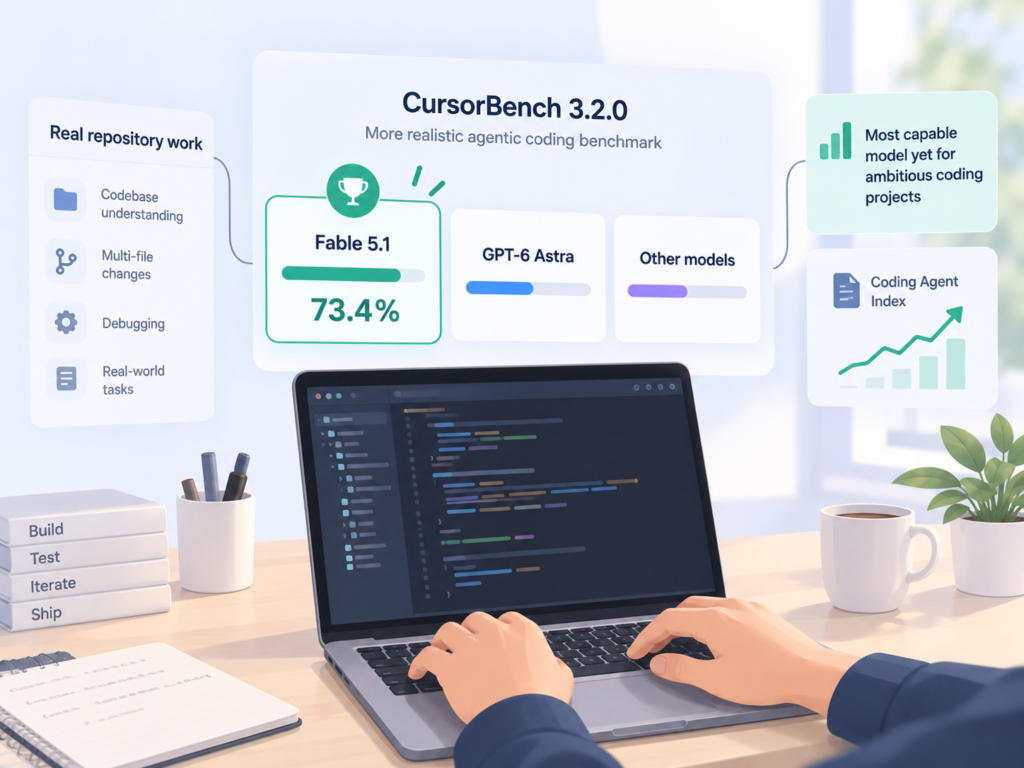
    Independent testing keeps landing in Fable 5.1’s favor on the metrics built to simulate real agentic coding work, not isolated code snippets. On CursorBench 3.2.0, a benchmark meant to reflect day-to-day repository work, Fable 5.1 posts 73.4%. Anthropic describes it as its most capable model yet for ambitious coding projects, a claim the Coding Agent Index backs up at the aggregate level.
    The pattern holds on reasoning tasks with tools attached, too. On Humanity’s Last Exam with tool access, Fable 5.1 reaches 65.0% against Astra’s 57.2%, a reversal from most of the raw knowledge benchmarks where Astra leads.

    Here’s the thing: a three-point lead on one index and a five-point lead on another sound decisive until you notice both indices come from the same evaluator, running on the same day, using methodology neither lab controls.

    Cost per task tells a similar story once you factor in what a coding agent actually spends its budget on. Fable 5.1’s cache reads price out at $0.25 per million tokens, a rate Astra doesn’t match on any tier. For teams running agentic coding loops that reread the same repository context dozens of times per session, that pricing gap shows up directly in the monthly bill, not just in the benchmark table.

    Where GPT-6 Astra Pulls Ahead Instead

    Astra isn’t a weaker model. It’s a differently optimized one. On raw execution benchmarks published by OpenAI, Astra leads FrontierMath Tier 4 at 97.6% against Fable 5.1’s 87.8%, and it holds a similar edge on GPQA Diamond and AutomationBench.

    Token efficiency is where Astra genuinely separates itself. Per task, Astra costs less than half of Fable 5 for the same Coding Agent Index score, largely because it burns roughly a third of the tokens GPT-5.6 Sol needed for comparable output. That efficiency doesn’t survive contact with pricing, though: list rates for Astra rose 2.5x to $10 per million input tokens and $50 per million output tokens, identical to Fable 5.1’s rate card.

    The one place the pricing story flips is cache reads. Astra charges $1.00 per million cached tokens, four times Fable 5.1’s $0.25 rate. In a long agent loop that rereads the same system prompt and tool schema hundreds of times, that difference compounds fast. The same workload that favors Astra on a single-shot task can favor Fable 5.1 across a forty-step agent run.

    Astra also carries a surcharge most comparison charts leave out. Above 272,000 input tokens, its rate doubles on both input and cache reads, and output pricing rises 1.5x. Fable 5.1 applies no such surcharge at any context length. For teams working with large codebases or long documents, that difference changes which model is actually cheaper well before the benchmark scores come into play.

    The Real Lesson: Benchmarks Depend on Who’s Holding the Ruler

    Both claims are true. Astra wins more rows on OpenAI’s table. Fable 5.1 wins both flagship indices on the one evaluator with no vendor stake in the outcome. They’re measuring different workloads, different harnesses, and in some cases, different task sets entirely.

    This isn’t unique to these two models. It’s the structural reality of AI benchmarking in 2026. Every lab optimizes for the evaluations it controls, and every comparison table quietly encodes whose test you’re trusting.

    What This Means If You Only Optimize for One Engine

    The same distortion shows up outside coding benchmarks, and it’s more expensive when it happens to your brand. If your team only tracks how your product shows up in ChatGPT, you’re making the same mistake as trusting a single vendor’s benchmark table: you’re seeing one engine’s version of reality and calling it the whole picture.

    AI answer engines don’t cite, rank, or recommend brands the same way. A product that gets consistently surfaced in Perplexity’s answers might be nearly invisible in Gemini’s, and neither Google Search Console nor a single-platform tracker will tell you why. Topify was built around that gap, tracking visibility, sentiment, and position across ChatGPT, Gemini, Perplexity, DeepSeek, Doubao, Qwen, and other major AI platforms, so a blind spot in one engine doesn’t become a blind spot in your entire strategy.

    Tracking Visibility Across Engines, Not Just One

    In practice, this means a marketing team can see that a product is losing citations in one AI engine while gaining them in another, and trace the shift back to a specific source domain that stopped or started getting cited. Topify’s Dynamic Competitor Benchmarking applies the same logic used to sort out the Astra-versus-Fable debate: don’t trust one scoreboard, compare across all of them, and let the pattern across engines tell you what a single dashboard can’t.

    For teams managing content across multiple client brands or product lines, that cross-engine view often matters more than any single benchmark win. A brand that ranks first in ChatGPT recommendations but never gets mentioned in Claude’s answers is optimizing for half the market, often without knowing it.
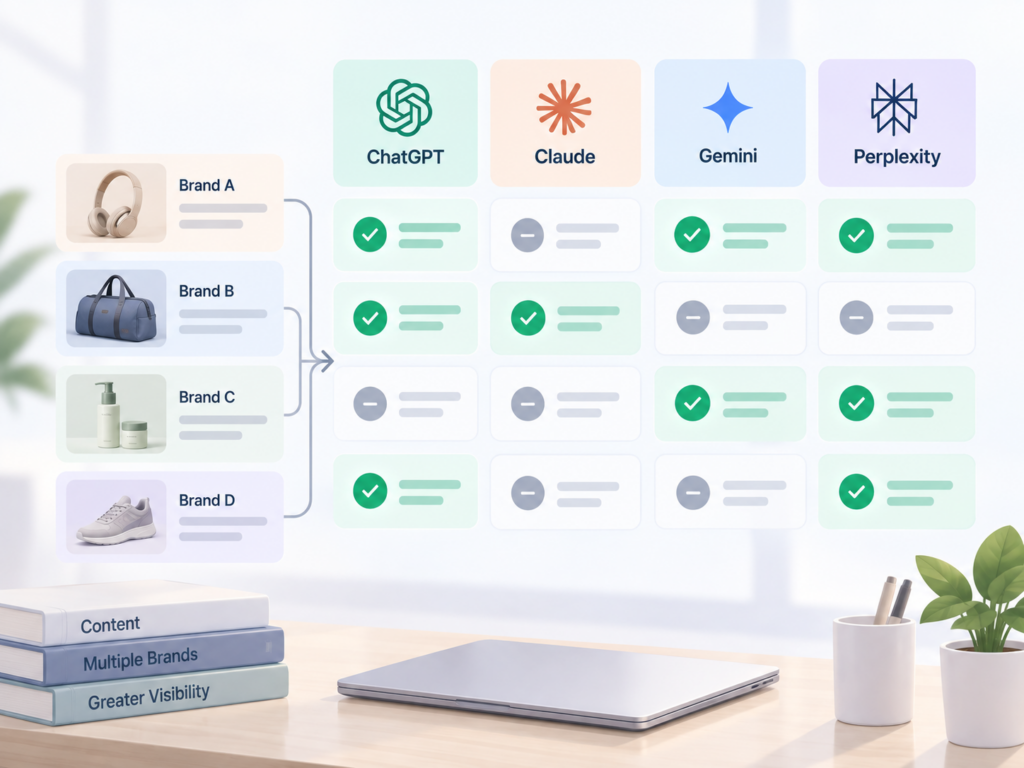
    The parallel to the Astra-versus-Fable debate holds up under scrutiny. Just as OpenAI’s table and Artificial Analysis’s index disagree because they measure different workloads, a brand’s ChatGPT visibility score and its Perplexity visibility score can disagree because the two engines pull from different source domains and weigh citations differently. Treating either one as the full picture leads to the same error: optimizing for the ruler instead of the thing it’s supposed to measure.

    Conclusion

    There’s no clean winner between GPT-6 Astra and Claude Fable 5.1 on coding, and there won’t be one between any two frontier models going forward. The scoreboards will keep disagreeing because the labs keep building the tests. The practical move isn’t picking a side. It’s tracking your own workload against multiple independent measures, whether that’s coding benchmarks or your brand’s visibility across AI engines, so one vendor’s table never becomes your only source of truth.

    FAQ

    Q: Is GPT-6 Astra better than Claude Fable 5.1 for coding? 

    A: It depends on which benchmark you trust. OpenAI’s own launch table shows Astra ahead on Terminal-Bench and DeepSWE. Artificial Analysis, an independent evaluator, has Fable 5.1 ahead on its Coding Agent Index, 70 to 67.

    Q: Why do OpenAI and Artificial Analysis disagree on benchmark results? 

    A: Each organization runs its own harness, task set, and effort settings. OpenAI tested Fable 5.1 on evaluations built for Astra’s launch, while Anthropic reports its own separately measured results, so the two tables aren’t directly comparable.

    Q: Is GPT-6 Astra cheaper than Claude Fable 5.1? 

    A: List prices are identical at $10 per million input tokens and $50 per million output tokens. Astra is more token-efficient per task, but its cache read pricing is four times higher than Fable 5.1’s, which can offset the savings in long agent workflows.

    Q: Should brands optimize content for one AI engine or several? 

    A: Optimizing for a single engine creates the same blind spot as trusting one vendor’s benchmark table. Tracking visibility across multiple AI platforms gives a more accurate picture of where a brand actually stands.
    Read More

  • ChatGPT Rate Limits Just Broke Your AI Visibility Baseline

    ChatGPT Rate Limits Just Broke Your AI Visibility Baseline

    On September 3, 2026, OpenAI announced GPT-6 Astra to considerable fanfare. Almost nobody who paid for ChatGPT could actually use it.

    Pro and Enterprise accounts got access first. Plus subscribers, who make up the bulk of ChatGPT’s paying base, waited days. Sam Altman later called the rollout “messy” and apologized publicly for the gap between what OpenAI announced and what customers could actually reach.

    If you track brand visibility in ChatGPT for a living, this isn’t just an inconvenience story. It’s a data integrity problem.

    When “ChatGPT” Stopped Meaning One Model

    Here’s the thing most GEO reports don’t account for: “ChatGPT” is not one product. It’s a moving target that depends on your plan, your region, and the day you happen to query it.

    The Astra rollout made that painfully literal. Coverage from the week of the launch shows just how fragmented access got across tiers.

    PlanAstra AccessMessage Allowance
    ChatGPT Pro ($100)Rolling out in tiers50 messages per week
    ChatGPT Pro ($200)Rolling out in tiers200 messages per week
    Business StandardIn tiers15 messages per month
    Business PremiumIn tiers50 messages per week
    ChatGPT PlusDelayed, then restoredIncluded in existing limits

    Two Plus accounts, queried on the same day, could return answers from two different model generations. One might already be on GPT-6 Astra. The other could still be running GPT-5.6 Sol.

    That’s not a rounding error. That’s a different reasoning engine producing your data.

    Why Staged Rollouts Quietly Corrupt Your Rate Limit Tracking

    Most teams treat “ChatGPT” as a fixed data source, the same way they’d treat a Google API endpoint. That assumption breaks the moment a staged rollout hits.

    Think about what actually happens when you sample a prompt to check brand visibility. You send a query, log the response, and compare it against last week’s baseline. If last week’s query ran on GPT-5.6 and this week’s ran on Astra, you’re not tracking a visibility trend. You’re comparing two different models’ opinions and calling the delta “movement.”

    Early benchmark estimates put Astra’s per-task cost around $167 on aggregate coding benchmarks, notably higher than GPT-5.6 on comparable tasks. Higher inference cost often comes with different reasoning depth, different citation behavior, and different phrasing habits. All three directly affect whether your brand gets mentioned, how it’s framed, and where it lands in the response.

    Rate limits make the noise worse. When a model change also throttles message volume, teams often cut their sampling frequency to conserve quota. Fewer samples during exactly the window when the underlying model is shifting is the worst possible combination for a clean baseline.

    The Banked Reset Was a Patch, Not a Fix

    OpenAI tried to soften the blow. Starting September 3, paid subscribers began earning one banked usage reset for every day they went without Astra access, a mechanic the company had already used before to smooth over quota complaints on Codex.

    It’s a reasonable goodwill gesture. It also doesn’t touch the actual problem.

    A banked reset gives you more messages. It says nothing about which model generated those messages, or whether your historical data points came from the same one. For a support team frustrated by throttling, that’s a fair trade. For a marketing team trying to prove a GEO campaign moved the needle, it’s irrelevant.

    By September 4, Astra had reached all Pro, Enterprise, and Business Premium accounts. Plus users kept trickling in over the following days, meaning the exact rollout window varied by account, not just by tier.

    What This Means for Anyone Measuring AI Search Visibility

    Scale is what makes this matter. ChatGPT crossed 900 million weekly active users by February 2026, with more than 50 million people paying for a subscription. That’s the single largest AI answer engine most brands are trying to get recommended by.

    When a platform that size ships a model change unevenly, the ripple hits every team using ChatGPT rate limits and API responses as ground truth for brand visibility. A single-platform, single-snapshot approach to GEO was already fragile. Staged rollouts expose exactly how fragile.

    There’s a broader pattern here, too. This wasn’t an isolated OpenAI event. In that same week, Anthropic reset Claude Code’s session limits in response to its own capacity pressure. Model providers are increasingly managing access as a lever, not a constant. Treating any single model version as a stable measurement instrument is a bet that keeps getting worse.

    The practical takeaway: if your GEO methodology depends on one model, one plan tier, and one sampling window, you’re building a baseline on sand.

    How Topify Keeps Your Baseline Stable Through Model Churn

    This is exactly the failure mode Topify was built to avoid. Instead of anchoring visibility data to a single model snapshot, its Comprehensive GEO Analytics runs repeated sampling across ChatGPT, Gemini, Perplexity, Google AI Overviews, and other major engines, then normalizes the results into seven metrics: visibility, sentiment, position, volume, mentions, intent, and CVR.

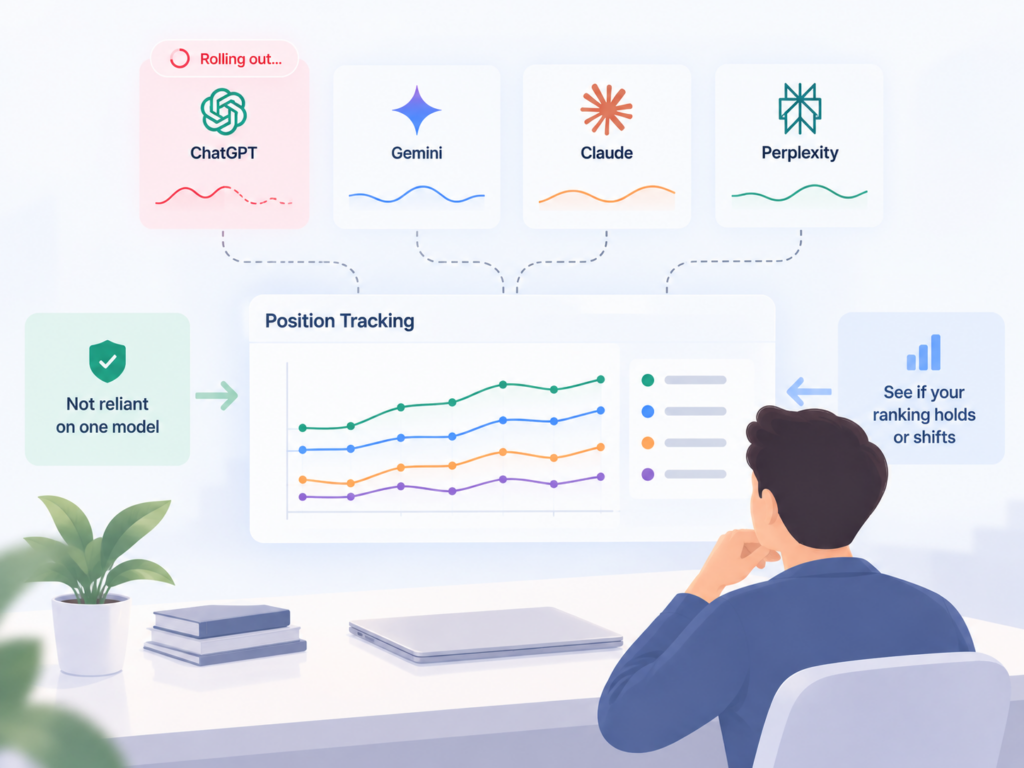
    That cross-platform, repeat-sample structure matters most exactly when one provider is mid-rollout. If Astra’s staged release introduces noise into ChatGPT-only data, Topify’s Position Tracking still shows whether your brand’s relative standing against competitors held steady or shifted, because it’s not betting everything on one model’s output.

    The platform also separates the trend line from the daily line, tracking a rolling average against day-to-day fluctuation so a single volatile week from a model update doesn’t get mistaken for a real visibility drop or gain.

    How to Audit Your Own Data for Model-Version Noise

    If you’re not ready to change tooling, you can still catch this problem in your existing reports.

    • Check whether your sampling dates cross a known model release window, like September 3 to 8, 2026, for Astra.
    • Compare visibility scores immediately before and after that window against the weeks flanking it. A sharp, isolated spike usually signals model noise, not real movement.
    • Note your account’s plan tier at each sampling date. Tier changes mid-quarter often mean model access changed too.
    • Flag any week where message volume dropped sharply. That often means quota pressure forced fewer samples, which lowers statistical confidence in that week’s number.

    Conclusion

    ChatGPT rate limits aren’t just a subscriber annoyance this time. The Astra rollout showed that “ChatGPT” can mean different models to different accounts on the same day, and that alone is enough to distort any team’s AI visibility baseline.

    The fix isn’t to stop tracking ChatGPT. It’s to stop trusting a single model, a single platform, and a single snapshot to tell you the whole story. Cross-platform, repeat-sampled monitoring is the only way to tell a real visibility shift from a model version doing the talking.

    FAQ

    Did the GPT-6 Astra rollout affect all ChatGPT plans the same way?
    No. Pro, Enterprise, and Business Premium accounts got access within a day of the September 3 announcement, while Plus and Business Standard users waited longer, per staggered messaging tiers that OpenAI published during the rollout.

    How do chatgpt plus rate limit changes affect brand tracking tools?
    Any change to message allowances or model access on Plus accounts can shift which model generation answers a given prompt, which changes phrasing, citation behavior, and mention rates in ways unrelated to actual brand performance.

    What is the real impact of a staged model rollout on GEO data?
    A staged rollout means identical prompts can return answers from different underlying models depending on account tier and timing, making week-over-week visibility comparisons unreliable unless the tracking method accounts for the version difference.

    How can I track brand mentions across AI models consistently?
    Use repeat sampling across multiple engines rather than one-off queries to a single model, track a rolling trend line instead of daily snapshots, and log which model version served each response when the data is available.

    Read More

  • Why AI Shopping Agents Turn Product Data Into Infrastructure

    Why AI Shopping Agents Turn Product Data Into Infrastructure

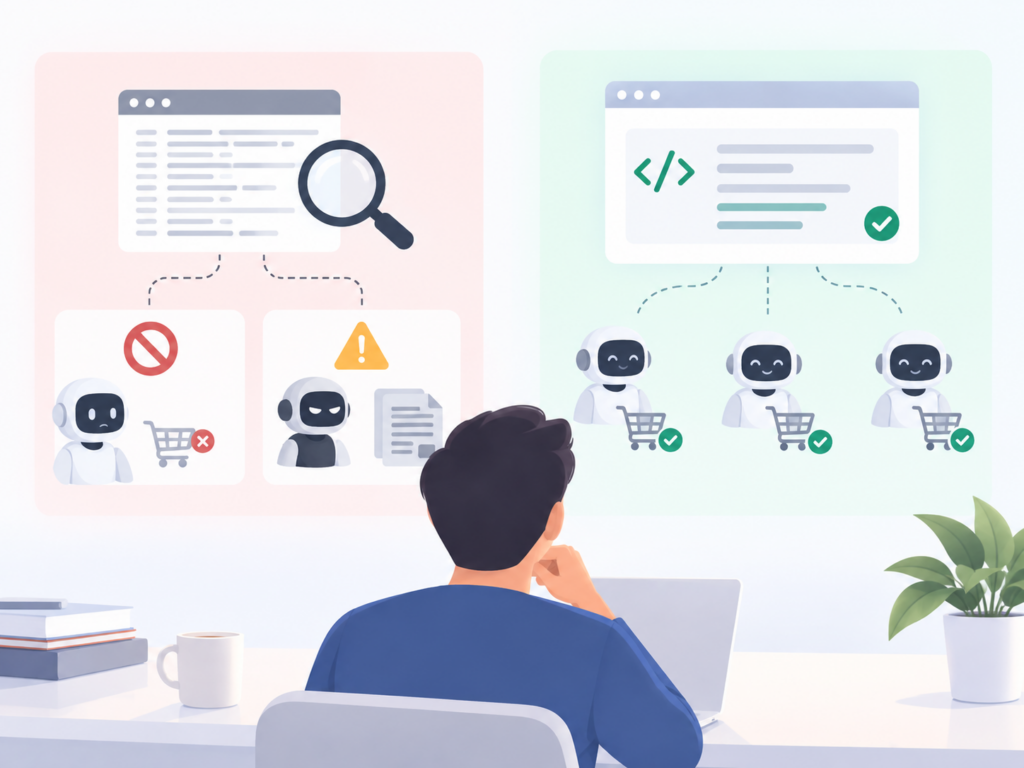
    An AI shopping agent doesn’t scroll. It doesn’t linger on a hero image or read your brand story. It pulls a query, compares a handful of structured fields across competing listings, and picks a winner in seconds. No human ever sees your product page during that decision.

    That’s the shift most brands still haven’t priced in.

    Your Product Page Was Never Built for a Buyer That Can’t See It

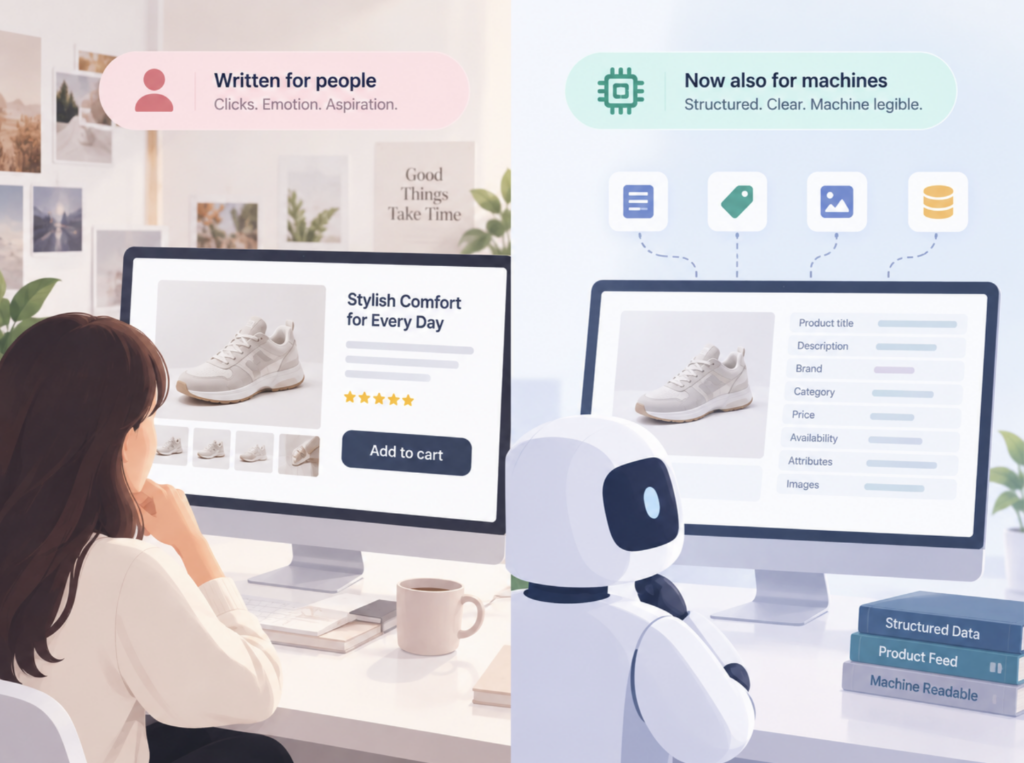
    Every e-commerce page ever designed assumed a human on the other end. Layout, photography, and copy exist to persuade someone who can look, scroll, and feel something. That’s the entire premise of a product page.

    An AI shopping agent reads differently. Product detail pages contain an average of 89 distinct attributes, but only about 12 are typically exposed in structured data. The other 77 sit in prose, behind tabs, or inside photographs. An agent can’t reliably parse any of that.

    This isn’t a hypothetical concern anymore. Seventy percent of brands, retailers, and agencies are already testing or deploying an agentic storefront, and 40% are actively running one. ChatGPT alone reached 900 million weekly active users in February 2026, and AI referral traffic to U.S. retail sites grew 393% year over year in Q1 2026.

    The buyer isn’t hypothetically becoming a machine. It already is one, at scale.

    What “Product Data as Marketing Asset” Actually Meant

    For twenty years, product data served one job: persuade a person to click “add to cart.” Titles were written for clicks. Descriptions were written for emotion. Photos were art directed for aspiration, not for machine legibility.

    SEO already started chipping away at that model. Schema markup and structured snippets forced brands to describe products in ways search engines could parse, not just readers. But SEO still assumed a search engine that ranked pages for a human to click through.

    An AI shopping agent skips the click entirely. It reads the answer to the question directly, decides, and sometimes checks out on the shopper’s behalf. When that happens, the “marketing asset” version of product data, the version built to persuade, never enters the decision at all.

    The Moment an Agent Buys, Your Copywriting Stops Mattering

    Break down what an agent actually does when a shopper asks for “a relaxed-fit linen shirt under $120.” It pulls candidate products from structured feeds, filters by the attributes it can verify, checks trust signals like reviews and return policy, and ranks what’s left.

    Adjectives don’t survive that pipeline. Neither does brand voice, mood boards, or a well-turned headline.

    Retailers need 12 core attributes complete on every SKU: title, description, brand, GTIN, MPN, category, price, sale price, availability, condition, image URL, and product URL. Miss one, and the product’s chance of being recommended drops.

    Trust signals matter just as much as the basics. ChatGPT’s shopping answers now favor stores that explicitly declare return policies in schema, yet 94% of stores scanned are missing that field entirely. That’s not a content problem. It’s a data architecture gap that copywriting can’t fix.

    What Actually Determines Whether an Agent Picks You

    The signals an agent weighs look nothing like the signals a landing page was optimized for. Here’s the practical split.

    What Humans Responded ToWhat Agents Actually Read
    Hero imagery, brand storyJSON-LD Product schema, GTIN, MPN
    Persuasive copy, adjectivesStructured price, sale price, availability
    Visual trust cues (badges, design)Declared return policy, shipping details in schema
    Scroll-depth engagementAggregateRating and review data in structured form
    SEO keyword densityCategory mapped to a standard taxonomy

    Google’s Shopping Graph now holds over 50 billion product listings, and the OpenAI Product Feed Specification has emerged as a critical standard for agentic commerce, defining fields optimized specifically for AI decision-making. A feed also needs to speak at least one agentic commerce protocol: OpenAI’s commerce feed format, Google’s Universal Commerce Protocol, Stripe’s Agentic Commerce Protocol for checkout, or a Model Context Protocol server for real-time inventory.

    None of that lives in a marketing calendar. It lives in a data pipeline.

    Why This Is a Visibility Problem Before It’s a Conversion Problem

    Here’s the trap most teams fall into: they treat this as a conversion optimization problem, something to fix after the agent already found them. But the agent has to find and trust the data first. Agents don’t recommend what they can’t parse, and stores that skip this layer become invisible before a conversion question ever comes up.

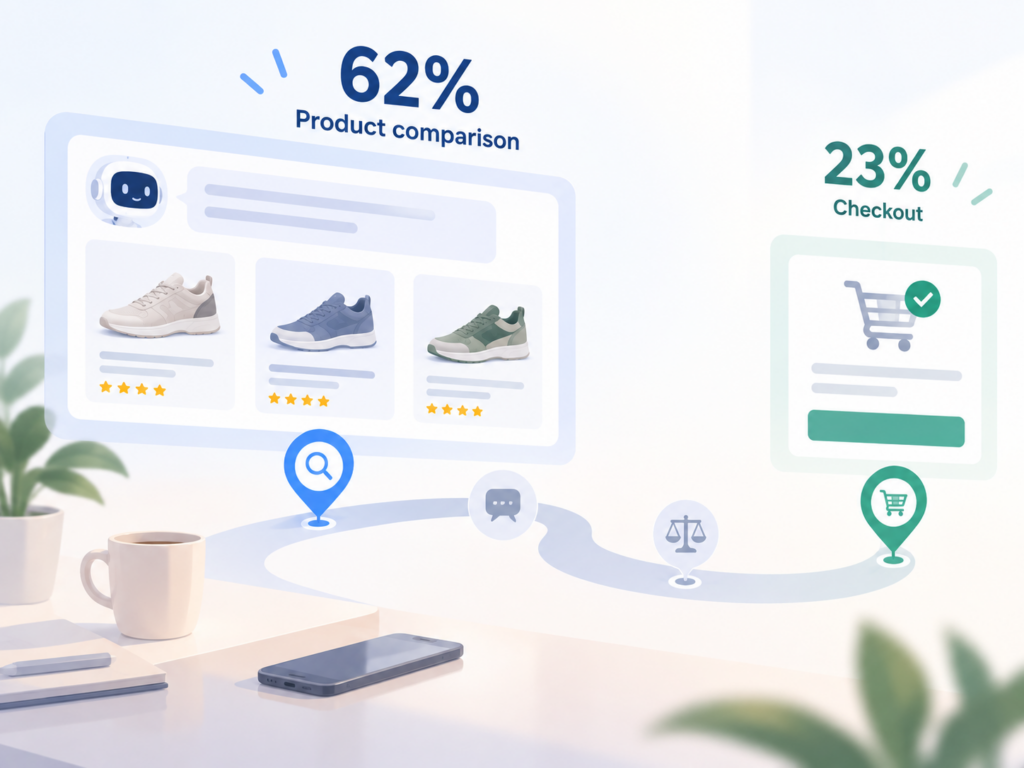
    Right now, AI adoption in commerce concentrates early in the journey: about 62% of usage happens at product comparison, versus roughly 23% at checkout. That means the decisive moment, the one where your brand gets shortlisted or dropped, happens before a shopper ever reaches a cart.

    This is exactly the gap Topify was built to close. Its Source Analysis capability tracks which domains and content structures AI platforms actually cite when they answer a shopping query, so a brand can see whether its product data is even entering the agent’s decision set, not just guess. Paired with CVR, Topify’s Conversion Visibility Rate metric, teams get a way to connect “are we being read” to “are we being chosen,” instead of treating AI visibility and commerce conversion as two separate reports.

    That connection matters because shoppers who engage with an AI agent convert at 12.3%, compared to 3.1% for unassisted browsers. The upside is real. It’s just gated behind data that’s structured correctly in the first place.

    How to Prepare Your Product Data for an Agent-First Buyer

    Fixing this isn’t about writing better copy. It’s about treating product data as infrastructure that agents depend on, not marketing collateral that humans admire.

    Start with feed completeness. Every SKU needs the core structured fields filled in, not just the ones your PIM system happened to inherit from a legacy catalog. Missing GTINs and vague categories are the most common reason agents skip a listing entirely.

    Then check consistency across channels. An agent that finds conflicting prices or availability between your site and a marketplace feed will often deprioritize the source it trusts less, and it usually doesn’t tell you why.

    Build in trust signals deliberately. Return policy, shipping timelines, and verified review data need to live in schema, not just on a policy page three clicks away. Review and sentiment signals matter here too: if that data isn’t structured or syndicated properly, the context an assistant would otherwise surface simply gets lost.

    Finally, monitor rather than assume. Structured data can be technically valid and still be ignored if it doesn’t match what’s visible on the page, or if a platform changes what it prioritizes. Ongoing tracking of how AI systems actually describe and recommend your catalog is what turns a one-time schema project into a maintained asset.

    Conclusion

    Product data used to answer one question: will this convince a person to buy? Now it has to answer a different one first: can a machine even understand what I’m selling well enough to consider it?

    That’s not a content upgrade. It’s a shift in what your product data is for. Brands that keep treating it as marketing collateral will keep losing decisions they never got to compete for. Brands that start treating it as infrastructure, complete, structured, and continuously verified, get a seat at the table when the buyer is a model instead of a person.

    FAQ

    What is an AI shopping agent?
    An AI shopping agent autonomously researches, recommends, and completes purchases on behalf of a consumer, replacing traditional browse-and-buy shopping with intent-driven, conversational transactions.

    How do AI shopping agents choose which products to recommend?
    They parse structured data fields like price, availability, GTIN, and review aggregates from product feeds and schema markup, then rank candidates against the shopper’s stated criteria. Prose descriptions and imagery typically aren’t part of that evaluation.

    Do I still need SEO if I optimize for AI shopping agents?
    Yes, but the priorities shift. Traditional SEO still matters for discovery, while AI-readiness depends more on structured data completeness, feed accuracy, and declared trust signals like return policy and shipping details.

    What’s the fastest first step to prepare for agentic commerce?
    Audit your product feed against the core structured attributes agents require, then check whether that data is consistent across every channel you sell through.

    Read More

  • Bedrock, Snowflake Get GPT-6 Astra. ChatGPT Enterprise Search Grows

    Bedrock, Snowflake Get GPT-6 Astra. ChatGPT Enterprise Search Grows

    Your team checks a handful of ChatGPT prompts every week to see if your brand shows up in the answer. That’s felt like enough for the past year, because ChatGPT was the AI surface buyers actually used.

    That assumption got harder to defend in September. On September 3, OpenAI shipped GPT-6 Astra, and within days the same model was generally available on Amazon Bedrock and running in private preview on Snowflake Cortex AI. The model your customers might ask about your product in chat is now the same model running inside a cloud data warehouse or an internal procurement agent, somewhere your weekly ChatGPT check will never reach. That’s the actual shift behind chatgpt enterprise search this quarter, and it’s less about a smarter model and more about where that model now lives.

    What Just Happened to ChatGPT Enterprise Search

    Three announcements landed inside two weeks, and together they redraw where AI-driven brand decisions actually happen.

    First, GPT-6 Astra rolled into ChatGPT Work, Codex, and the API, OpenAI’s framing for how enterprise teams use the model beyond the consumer chat window. Alongside it, OpenAI introduced new enterprise plugins for ChatGPT Workcovering Oracle Analytics, Power BI, Workday, Navan, and Avalara. That means employees can now pull the model into business intelligence dashboards, expense systems, and HR data without leaving ChatGPT.

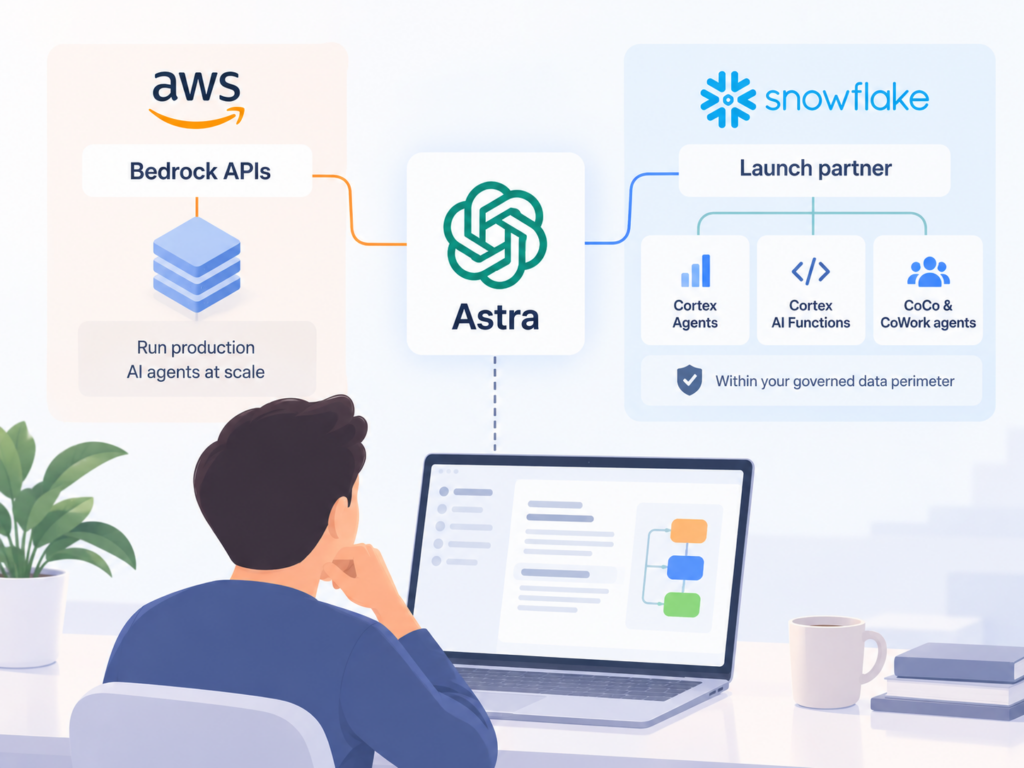
    Second, AWS made Astra callable directly through Bedrock APIs, the infrastructure layer companies already use to run production AI agents at scale. Third, Snowflake positioned itself as a launch partner, putting Astra to work inside Cortex Agents, Cortex AI Functions, and Snowflake’s own CoCo and CoWork agents, all within a customer’s governed data perimeter.

    None of that requires a single person to open chat.openai.com.

    What ChatGPT Enterprise Search Covers Once the Model Leaves the Chat Window

    Chatgpt enterprise search used to mean one thing: whether your brand got mentioned when someone typed a question into ChatGPT. That definition doesn’t hold anymore.

    The same model now answers questions from at least three different surfaces. A consumer or a researcher still types into ChatGPT directly. An employee triggers it through a Power BI or Oracle Analytics plugin without realizing which model is doing the reasoning. And an autonomous agent inside Bedrock or Snowflake calls it programmatically, with no human reading the raw prompt or response at all.

    Each surface can produce a brand recommendation, a vendor comparison, or a sourcing decision. Only the first one shows up in a typical AI visibility dashboard.

    Why an Agent That Buys and Reports Changes Your Visibility Math

    This wouldn’t matter much if enterprise agents were still a side project. They aren’t. Gartner expects 40% of enterprise applications to embed a task-specific AI agent by the end of 2026, up from under 5% in 2025. That’s not a slow ramp. That’s most of the software your buyers already use quietly gaining an agent layer this year.

    The purchasing side moves even faster. Analysts project that by 2028, AI agents will mediate roughly 90% of B2B buying, representing more than $15 trillion in spend. Some of those agents will run on GPT-6 Astra, inside Bedrock pipelines or Snowflake workflows, recommending vendors the same way a person might ask ChatGPT for one.

    That’s the part most brand tracking still can’t see.

    Where the Blind Spot Actually Sits

    Picture a finance team using the new Avalara plugin inside ChatGPT Work to reconcile vendor invoices. Or a data team running a Cortex Agent in Snowflake that recommends a tool for a workflow gap it just detected. In both cases, GPT-6 Astra is generating a brand-relevant answer, and in both cases, it’s happening inside a company’s private environment, not a public search box anyone can screenshot.

    Your product might get mentioned favorably in that answer, or skipped in favor of a competitor, and there’s no external dashboard that captures either outcome directly. What you can measure is the layer the model draws its reasoning and citation habits from, the public AI answers on ChatGPT, Perplexity, and Gemini that shape how models describe your category before they’re ever deployed inside someone’s data stack.

    How to Track Chatgpt Enterprise Search Across Every Surface That Matters

    You can’t instrument a customer’s private Snowflake instance, and no vendor honestly claims otherwise. What you can do is treat the public AI answer layer as the leading indicator for how the same underlying models will talk about you once they’re embedded in enterprise workflows.

    That’s the layer Topify tracks. It monitors how your brand shows up across ChatGPT, Gemini, Perplexity, and other major AI platforms, using seven metrics: visibility, sentiment, position, volume, mentions, intent, and CVR. In practice, that means you can see whether your brand’s visibility on ChatGPT dropped in the same week a competitor’s citations picked up, and trace it to the specific source domain that stopped mentioning you.

    Two features matter most for this particular shift. Dynamic Competitor Benchmarking shows who AI engines recommend in your category right now, before that pattern gets baked into an enterprise agent’s default behavior. Source Analysis reverse-engineers which domains and pages the models actually cite, so you can tell whether your own content is even in the pool a Bedrock or Cortex agent would draw from.

    Teams typically start with a 30-day trial through Topify’s Basic plan, tracking around 100 prompts across ChatGPT, Perplexity, and AI Overviews, before expanding prompt coverage as they map out procurement-style queries. It’s a narrower job than monitoring every enterprise deployment of a model, but it’s the part of the visibility problem that’s actually measurable today.

    What to Do Before This Becomes Standard Procurement Behavior

    Start by widening the prompts you track, not just the platforms. If your current list is “best [category] tool” and a handful of comparisons, add the phrasing a procurement agent would actually generate, things like “vendor for [use case] with SOC 2 compliance” or “alternative to [competitor] for enterprise teams.”

    Next, check who’s getting cited. If a competitor’s documentation or comparison page shows up repeatedly in AI answers about your category, that page is training the model’s default recommendation, and it’ll keep doing so whether a human or an agent asks the question.

    Finally, treat sentiment as a leading risk, not a vanity metric. An agent making a purchasing recommendation on your behalf inherits whatever tone the model already has toward your brand. If that tone skews negative or inaccurate today, it doesn’t improve on its own once the model gets deployed somewhere you can’t see.

    Conclusion

    GPT-6 Astra landing on Bedrock and Snowflake in the same week it hit ChatGPT Work is a signal, not an isolated product update. The model your customers chat with is now the same model quietly running procurement, analytics, and recommendation workflows behind the scenes at companies you’re trying to reach. You can’t monitor those private deployments directly, but you can make sure the public AI answer layer, the one that trains how these models talk about your category, works in your favor before it gets baked into someone else’s agent.

    FAQ

    Q: What does “chatgpt enterprise search” actually mean now?
    A: It used to describe brand visibility inside the ChatGPT chat window alone. With GPT-6 Astra running through ChatGPT Work plugins, Amazon Bedrock, and Snowflake Cortex AI, the same term now covers any surface where that model answers a work-related question, including ones a marketing team never sees directly.

    Q: Is GPT-6 Astra available to everyone yet?
    A: Rollout has been staged. It launched to a limited set of organizations first, then to ChatGPT Plus, Pro, Business, and Enterprise plans, with enterprise access on Bedrock and API access off by default until an admin turns it on.

    Q: Can an AI visibility tool track what happens inside a company’s private Snowflake or Bedrock deployment?
    A: No, and any tool claiming that should be treated skeptically. What tools like Topify track is the public AI answer layer, which shapes how the underlying model describes your brand across every deployment, private or otherwise.

    Q: How is this different from just watching ChatGPT mentions?
    A: ChatGPT mentions tell you how the model performs in a single, visible setting. Tracking visibility, sentiment, and source citations across multiple public AI platforms gives you a broader read on how the model’s default reasoning treats your brand, which carries over wherever that model gets deployed next.

    Read More

  • OpenAI Just Ended Your Brand’s Monopoly on ChatGPT

    OpenAI Just Ended Your Brand’s Monopoly on ChatGPT

    On September 10, 2026, OpenAI launched ChatGPT for Financial Services, a version of ChatGPT Work built for investment bankers and equity researchers. It pairs GPT-6 Astra with licensed data from Daloopa, PitchBook, LSEG News, Crunchbase, and Quartr, indexed and hosted directly on OpenAI’s own infrastructure.

    Morgan Stanley and Evercore helped design it. The stated goal is simple: let bankers trace every figure and claim back to a verified source, inside the chat window.

    That detail matters more than the product launch itself.

    What ChatGPT for Financial Services Actually Changes

    Until now, ChatGPT pulled financial information the same way it pulled everything else: from whatever content it could find and rank as trustworthy, including brand websites, filings, and third-party write-ups. That’s changing.

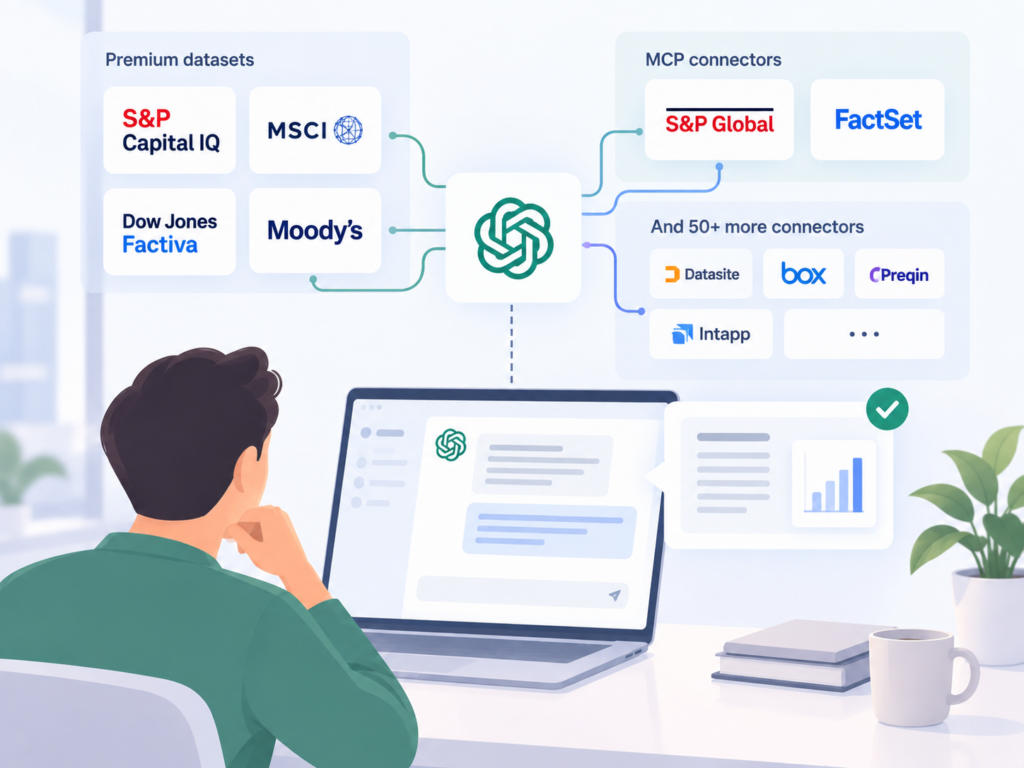
    OpenAI now indexes premium datasets in-house and is building shared sign-in integrations with S&P Capital IQ, MSCI, Dow Jones Factiva, and Moody’s, so users can access data they’re already entitled to without leaving the chat. The company also optimized MCP connectors for S&P Global and FactSet, on top of an ecosystem of more than 50 connectors including Datasite, Box, Preqin, and Intapp.

    In practice, ChatGPT no longer has to guess which source is authoritative for a given financial question. It has one already built in.

    Why Your Brand Is No Longer the Only Source

    For the past two years, financial brands built AI visibility the same way they built SEO visibility: publish original research, structure it cleanly, and hope the model picks it up. That strategy assumed ChatGPT had a gap to fill.

    That gap just got smaller.

    According to Yext’s citation research, financial services brands already draw 48% of their AI citations from their own first-party website, higher than most other verticals. That’s precisely the share now competing against a dataset OpenAI licenses, hosts, and controls directly.

    The practical effect isn’t that your content disappears from ChatGPT. It’s that when a licensed, structurally superior source exists for the same question, the model has less reason to reach for yours.

    Who Gets Squeezed and Who Gets Boosted

    Not every financial brand is affected equally. The split runs along one line: are you part of the new data supply chain, or are you still hoping to be discovered inside it.

    PositionExamplesWhat Changes
    Design partners and data providersMorgan Stanley, Evercore, Daloopa, PitchBook, LSEG, CrunchbaseDirect integration, granular citations, first-party presence inside ChatGPT’s answers
    Entitlement-integrated platformsS&P Capital IQ, MSCI, Dow Jones Factiva, Moody’sRecognized through ChatGPT sign-in, access preserved without extra connectors
    Everyone elseIndependent research shops, fintech brands, wealth managers, regional banksCompeting for citation space against a dataset the model already trusts by default

    Semrush’s 2026 AI Visibility Index, which analyzed 126 million AI search prompts, found that finance is actually one of the less concentrated categories, with the top three brands holding just 41.4% of category visibility, compared to 82.9% in news and media. That’s the good news. It means there’s still open ground, but only for brands that know where the ground has moved.

    The Blind Spot Most Brands Don’t See

    Here’s the part most marketing teams miss: you can’t tell if you’ve lost citation share unless you’re already tracking it.

    Only 16% of brands systematically track their AI search performance, based on McKinsey data cited in a recent AI search visibility analysis. And AI citations aren’t stable to begin with. Research from AirOps found that only about 30% of brands remain visible in back-to-back AI responses for the same query, meaning your position on Monday tells you very little about Wednesday.

    Add a new authoritative data layer into ChatGPT, and that volatility gets worse for anyone not already inside it.

    Most brand teams would find out about a citation drop the same way they’d find out about a stock price move: too late to react.

    How to Check If You’re Still Being Cited

    The only way to know whether ChatGPT’s new financial data layer is displacing you is to look at what it’s actually citing, prompt by prompt, before and after the rollout.

    That’s the specific gap Topify‘s Source Analysis feature is built for. It tracks the exact domains and URLs AI platforms cite in their answers, so a financial brand can see whether it’s still showing up as a source for the questions that matter, or whether a licensed dataset has quietly taken its place.

    Paired with Competitor Monitoring, which benchmarks position and mention share against rivals in real time, a brand can answer three questions that used to require guesswork: Am I still cited for my core topics? Who replaced me if I’m not? And is the gap growing or shrinking month over month.

    This isn’t a one-time audit. Given that AI citation share drifts on its own, at an average of 41 days per the Visionary Marketing tracker of 8,400 prompts, a launch like this one needs ongoing monitoring, not a single check the week it happens.

    What Financial Brands Should Do Next

    Reacting to this launch doesn’t require an enterprise data deal with OpenAI. It requires knowing exactly where you stand today and closing the gaps that are actually closeable.

    • Audit your current citation footprint. Before assuming the worst, confirm which prompts still return your brand and which ones now surface OpenAI’s built-in datasets instead.
    • Structure content the way the model rewards. The same Visionary Marketing study found that FAQ schema alone lifts citation rate by 38%, a lever entirely within a brand’s control regardless of what OpenAI licenses.
    • Track drift, not just snapshots. A single audit tells you where you stand today. Given how often AI citations shift, that snapshot is stale within weeks.
    • Watch your competitors’ response, not just your own. If a rival financial brand starts gaining ground in the same queries you used to own, that’s the earliest signal something upstream has changed.

    None of this requires predicting OpenAI’s next move. It requires building a habit of checking, the same way finance teams already check market data every morning.

    Conclusion

    ChatGPT for Financial Services isn’t just a new product tier. It’s a structural shift in where ChatGPT gets its financial answers from, and it quietly changes the odds for every brand that isn’t part of that new supply chain.

    The brands that adapt fastest won’t be the ones with the biggest content libraries. They’ll be the ones that can see, in near real time, whether they’re still part of the conversation ChatGPT is having about their industry.

    FAQ

    What is ChatGPT for Financial Services?
    It’s a tailored version of ChatGPT Work, launched September 10, 2026, that combines GPT-6 Astra with built-in licensed financial datasets for research, financial modeling, and client materials, initially focused on investment banking and equity research.

    Which data providers power ChatGPT’s financial datasets?
    Daloopa, PitchBook, LSEG News, Crunchbase, and Quartr, with additional entitlement integrations planned for S&P Capital IQ, MSCI, Dow Jones Factiva, and Moody’s.

    How can I tell if my brand is still cited by ChatGPT?
    You need a tool that tracks the actual domains and URLs ChatGPT cites in its answers over time, not just whether your brand is mentioned by name. Mentions and citations aren’t the same signal, and tracking only one gives you an incomplete picture.

    Does this affect all financial brands or only investment banks?
    The initial rollout targets investment banking and equity research, but OpenAI has said it plans to expand into other financial services categories. The underlying shift, licensed data replacing open-web content as ChatGPT’s default financial source, affects any brand competing for AI visibility in finance-related queries.

    Read More

  • Why Your Log Files Can’t Tell AI Agents from Bots

    Why Your Log Files Can’t Tell AI Agents from Bots

    A shopper never visits your product page, never lingers on the size chart, never adds anything to a cart, and never converts. Your analytics dashboard flags it as bot traffic and moves on. Except that “visit” might have been a real AI agent comparing your price against three competitors on behalf of a paying customer who’s about to buy from whichever site the agent recommends. Or it might have been a scraper harvesting your pricing data for a competitor. Your log file can’t tell you which one it was.

    That’s the uncomfortable reality behind ai agent traffic in 2026. The category is growing too fast to ignore and too ambiguous to trust at face value.

    What Counts as AI Agent Traffic Right Now

    The scale alone forces the question. As of June 2026, Cloudflare Radar data shared by CEO Matthew Prince showed automated requests crossing 57.5% of all HTML web traffic, with humans falling to 42.5%. It’s the first time in internet history machines have held the majority.

    Not all of that is what marketers mean by an AI buying agent. Search crawlers, monitoring tools, and SEO scanners still make up a huge chunk of “bot” traffic. But the subset that actually matters for commerce, autonomous agents that browse, compare, and transact on a person’s behalf, is the part growing fastest. HUMAN Security’s 2026 State of AI Traffic & Cyberthreat Benchmark Report found agentic AI traffic grew 7,851% year over year, up from just 1.7% of automated traffic at the start of 2025.

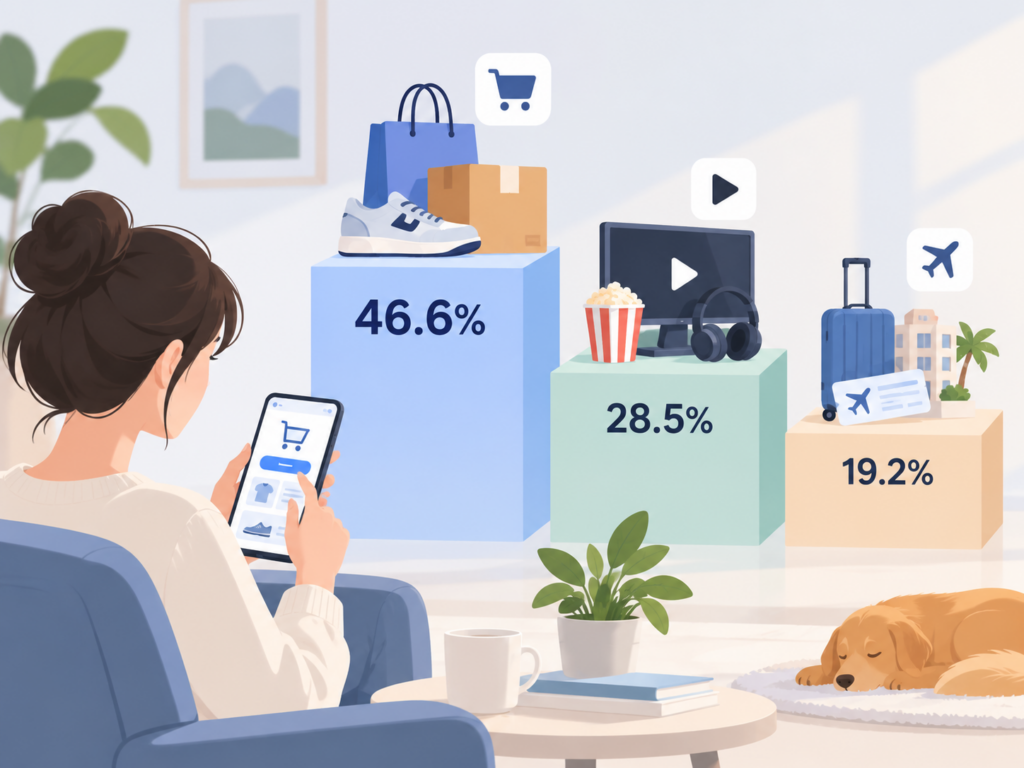
    Retail and e-commerce absorb the bulk of it. That same HUMAN report puts retail and e-commerce at 46.6% of agentic traffic, ahead of streaming and media at 28.5% and travel and hospitality at 19.2%. And it’s not just browsing anymore.

    Agents are checking out. HUMAN’s data shows a 2.31% checkout share for agentic sessions, small as a percentage, significant as a signal. Autonomous transaction execution without a human clicking “buy” was mostly theoretical before 2025. It’s operational now.

    Why User-Agent Strings and IP Patterns Stopped Working

    Traditional bot detection runs on three signals: the User-Agent header, request rate, and IP reputation. All three assume a bot behaves like a bot. AI agents don’t cooperate with that assumption.

    OpenAI’s Operator sends a genuine Chrome user-agent string, moves at roughly human speed, and often routes through a residential proxy. Every checkpoint a firewall can inspect reads it as a person. That’s not a bot problem. It’s a detection-architecture problem.

    The evasion isn’t accidental in every case, and that’s the part that should worry traffic operators. In one documented case, xAI’s Grok agent rotated through browser signatures mimicking Chrome on macOS and Safari on iPhone, without a single request identifying itself as an xAI agent. Not one line in the logs said “Grok.” Separately, Perplexity has faced legal action from Amazon over allegations that it spoofed human browser identities to bypass blocks and support its agentic shopping features.

    Here’s the part that breaks pattern-based detection entirely: some agents cycle through thousands of legitimate-looking user-agent strings, so each session appears to originate from a different human visitor. Rate limiting doesn’t trip. IP blocklists don’t fire. The agent looks like a fresh person every time.

    The Behavioral Overlap Problem

    Even when you strip away the header and IP layer, AI buying agents and synthetic bots still look alike on the surface. Both browse without a mouse cursor. Both hit product pages faster than a human reads them. Both skip marketing copy and go straight for structured data like price, availability, and specs.

    SignalAI Buying AgentSynthetic Bot
    Browser environmentReal Chromium, genuine headersOften headless, or spoofed headers
    Request paceNear human speedHuman speed or bursty
    IntentReads structured product data to complete a taskExtracts data for resale, monitoring, or abuse
    AuthorizationActing on behalf of an identified userAnonymous, no delegation context
    Checkout behaviorMay complete a real transactionNever converts, or attempts fraud at checkout

    That overlap is the real reason false positives and false negatives both run high. A retailer that blocks anything that looks automated risks turning away a paying customer’s agent. A retailer that allows anything that looks like a browser risks letting a scraper walk straight through the front door.

    Academic researchers are finding the tell isn’t in what an agent claims to be. It’s in what it can’t fake without extra engineering. A multi-layer fingerprinting study of six AI web agents found consistent header-ordering inconsistencies and Sec-Fetch rule violations across tools like AutoGen, Operator, and Skyvern, even when their user-agent strings looked identical to a real browser.

    What Actually Distinguishes an AI Buying Agent from a Bot

    Behavior alone won’t settle it. Intent and authorization will.

    Declared Identity, Verified Cryptographically

    Self-declaration was never trustworthy, since anything a request claims about itself can be spoofed. The industry’s answer is Web Bot Auth, an IETF-track standard built on RFC 9421 HTTP Message Signatures. Instead of trusting a header, a site verifies a cryptographic signature against a public key the agent operator publishes.

    Cloudflare shipped it into general availability in mid-2026, with 19 verified AI agents at launch including ChatGPT Atlas, Claude in Chrome, Perplexity Browser, and Gemini Agent Mode. OpenAI now attaches these signatures to Operator requests by default, and the protocol has become the authentication foundation for Visa’s Trusted Agent Protocol and Mastercard Agent Pay, positioning it as core infrastructure for agentic commerce rather than a niche security feature.

    That’s a meaningful shift from “guess based on behavior” to “verify based on proof.” But adoption is still uneven, and plenty of legitimate agent traffic today still arrives unsigned.

    Authorization Context, Not Just Traffic Pattern

    The clearest practical distinction industry analysts point to isn’t technical at all. It’s contextual: agentic commerce bots operate with explicit user authorization and legitimate purchase intent, while fraudulent bots operate anonymously and aim to waste ad spend or steal inventory. Both browse autonomously. Only one has a real person standing behind the action.

    That’s a hard thing to see in a raw server log. It’s easier to see when you’re pulling data from the AI platforms themselves rather than inferring it from your own traffic.

    The stakes are already visible at scale. During the most recent holiday shopping period, agentic commerce traffic on e-commerce sites surged 144% during Cyber Week alone, coinciding with the rollout of ChatGPT’s Instant Checkout and PayPal’s integration with Perplexity’s Instant Buy program. Meanwhile, one industry estimate suggests roughly 80% of retail sites remain unprotected against agent spoofing, where a malicious bot impersonates a legitimate AI agent to bypass security and distort analytics. That’s the gap most brands still can’t see.

    How Topify Tracks Real AI Agent Activity

    Guessing from log files puts brands in a reactive position: block too aggressively and lose real agent-driven sales, block too loosely and let scrapers through. The more reliable path is getting visibility from the source, not the guess.

    Topify’s AI Volume Analytics pulls data on real AI search and agent behavior directly from the platforms brands are trying to reach, rather than reconstructing intent from ambiguous header and IP signals after the fact. That means seeing which AI platforms are actually surfacing a brand, how often, and in what context, instead of squinting at a log line and hoping the User-Agent string is telling the truth.

    Paired with Source Analysis, which tracks the exact domains and URLs AI systems cite when they recommend a product or brand, the two functions answer a question log files structurally can’t: not just “was this a bot,” but “did an AI system actually consider recommending us, and to whom.” That’s the layer of visibility that turns agent traffic from a security headache into a measurable channel.

    Conclusion

    Log files were built for a web where automated traffic meant search crawlers and the occasional scraper. That assumption has expired. AI buying agents and synthetic bots now share the same headers, similar request pacing, and overlapping behavioral fingerprints, which means the old signals, User-Agent strings, IP reputation, and raw request rate, can no longer carry the weight of a real trust decision on their own.

    The direction of travel is toward verified identity and authorization context rather than inferred behavior. Web Bot Auth is the clearest sign of that shift, and it’s moving from proposal to production faster than most infrastructure standards do. Until adoption catches up across the wider web, brands that want to know whether they’re actually reaching AI shoppers, and not just getting scraped, need visibility that comes from the platform side, not the log file.

    FAQ

    How can I identify AI agent traffic in my server logs?
    User-agent strings and IP addresses alone are unreliable, since agents increasingly rotate through legitimate-looking browser signatures and residential proxies. Look instead for header-ordering inconsistencies, Sec-Fetch rule violations, and cross-reference traffic against verified bot programs that support Web Bot Auth signatures.

    Do AI shopping agents show up in standard analytics platforms like Google Analytics?
    Often not accurately. Most analytics tools were built to filter out bots, not to identify authorized AI agents acting on a real customer’s behalf, so agent sessions frequently get miscategorized or excluded entirely.

    What’s the difference between an AI buying agent and a scraper?
    An AI buying agent typically acts with a specific user’s authorization to complete a task like comparing prices or checking out. A scraper usually operates anonymously to extract data for resale, monitoring, or competitive analysis, with no delegation from an end user.

    Is Web Bot Auth required for AI agents to access websites?
    Not yet universally, though adoption is accelerating. Cloudflare, OpenAI, Visa, and Mastercard have all built it into agentic commerce infrastructure, and unsigned agent traffic is increasingly likely to face friction like CAPTCHA-style challenges on sites that have adopted the standard.

    Read More

  • AI Mode Tracking vs Google Tracking: Where They Diverge

    AI Mode Tracking vs Google Tracking: Where They Diverge

    Your rankings haven’t moved in three months. Your organic clicks have. If you’re staring at a rank tracker that says “position 3, no change” while Search Console shows a steady decline, you’re not imagining a glitch. You’re looking at two different systems that happen to share a search bar.

    Google AI Mode doesn’t rank pages the way classic search does, and that gap is exactly why most SEO dashboards can’t see what’s actually happening to your traffic.

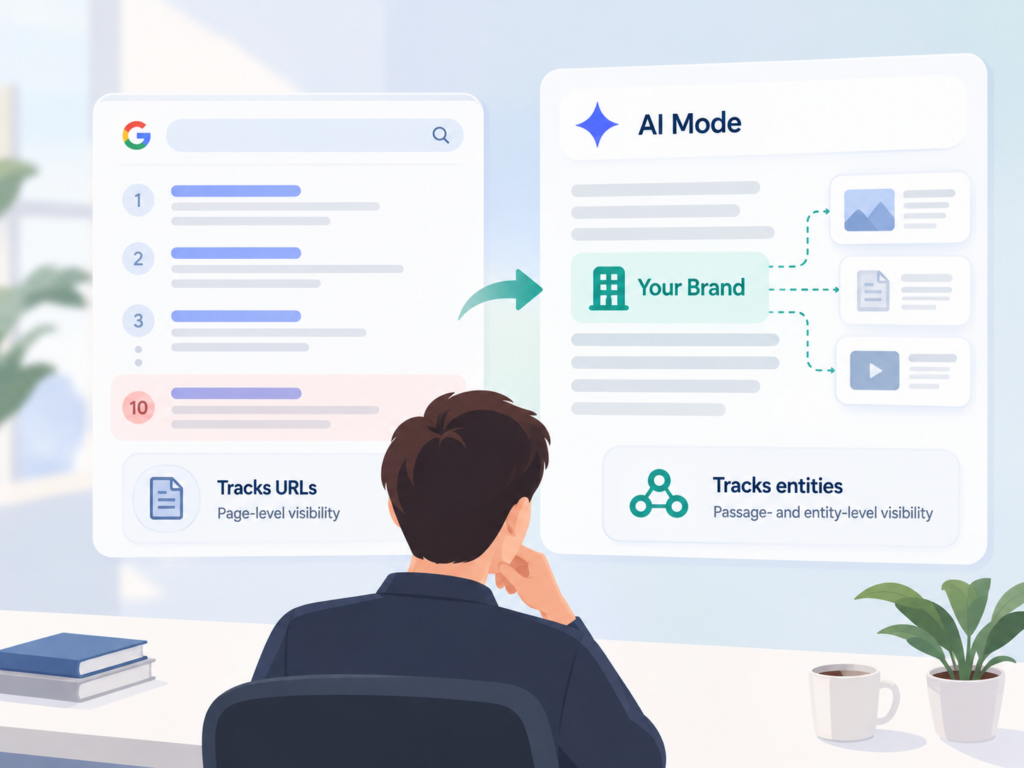
    Google Ranking Tracks Positions. AI Mode Tracks Something Else Entirely

    A traditional rank tracker works by simulating a search, scraping the results page, and recording where your URL lands in a list. Position 1 beats position 2. Simple, stable, and built for a page of ten blue links.

    AI Mode breaks that model completely. When someone activates AI Mode, Google’s AI reads across multiple sources and hands back one synthesized, conversational answer instead of a ranked list. There’s no number one, because there’s no ordered list to place you in.

    That’s the gap most SEO dashboards still don’t measure.

    Your brand can be woven into that answer, described accurately, and never show up in a single rank-tracking report. Or it can hold a top-three position on the classic results page and still be left out of the AI Mode conversation entirely.

    Three Ways AI Mode Results Behave Differently From Ranked Pages

    The differences aren’t cosmetic. They change what “visibility” even means.

    Presentation. A ranked page is a list you scan. AI Mode is a narrative you read. Your brand can be referenced inside that narrative without a clickable link attached to it at all, which means a mention can happen with zero footprint in a traditional crawl.

    Unit of visibility. Classic tracking counts URLs. AI Mode counts entities. A page ranking outside the top ten can still see its parent brand cited inside an AI Mode answer, because the system pulls information at the passage and entity level rather than the page level.

    Volatility pattern. Search rankings shift with algorithm updates, usually over weeks. AI Mode answers shift with phrasing, context, and session history, sometimes within the same day. Two people asking the same question in slightly different words can get answers that cite different sources.

    The overlap between what AI Mode cites and what shows up in classic organic rankings is smaller than most teams assume. Depending on the study, AI Mode citations line up with the traditional top ten only 17% to 54% of the time, and the overlap between AI Mode citations and AI Overview citations, a related but separate surface, sits at just 13.7%. Three surfaces, three different citation lists, one search bar.

    SignalClassic Search RankingGoogle AI Mode
    Output formatOrdered list of linksSingle synthesized answer
    What’s measuredURL positionBrand or entity mention
    Retrieval methodPage-level rankingMulti-query synthesis across passages
    Overlap with top-10 organic100% by definition17% to 54%, varies by study
    Click behavior34% to 43% zero-click92% to 94% zero-click

    Why Your Rank Tracker Can’t See What’s Happening in AI Mode

    The technical reason is simple. A rank tracker is built to scrape a static results page and match your URL against it. AI Mode output isn’t cached the same way, isn’t structured as a list, and can vary between two identical queries run minutes apart.

    That mismatch has real consequences. Top-10 organic rankers accounted for 76% of AI Overview citations in mid-2025, but that share had dropped to roughly 38% by early 2026. Ranking well used to be a reasonable proxy for AI visibility. It’s becoming a weaker one every quarter.

    Meanwhile the traffic stakes keep rising. AI Mode has passed 1 billion monthly users, and 93% of those sessions end without a click to any external site. Independent clickstream analysis puts the zero-click rate for AI Mode specifically between 92% and 94%, compared with 34% to 43% for traditional search. Whatever share of that conversation your brand occupies, your analytics probably aren’t showing it.

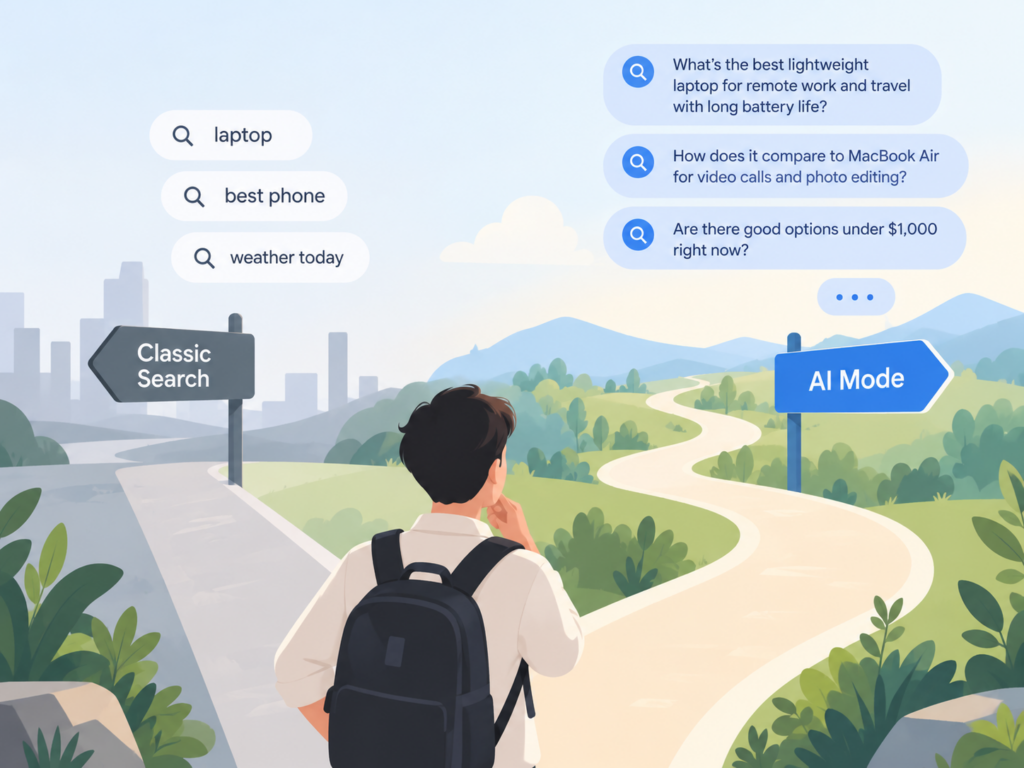
    Queries look different in AI Mode too. The average AI Mode query runs about 7.22 words, nearly double the 4.0-word average for classic Google search, and follow-up questions inside a single AI Mode session have been climbing fast. That longer, more conversational query pattern is exactly the kind of input a URL-matching rank tracker was never built to parse.

    What Tracking AI Mode Actually Requires

    If position isn’t the metric, what is? Four things matter more:

    • Mention rate. How often your brand shows up in AI Mode answers for the prompts that matter to your category, not just your target keywords.
    • Sentiment. Whether the mention describes you accurately and favorably, or gets your positioning wrong.
    • Source attribution. Which domains AI Mode actually cites when it talks about your space, and whether any of them are yours.
    • Relative position. Where you land against named competitors inside the same answer, since AI Mode often surfaces two or three options side by side.

    This is closer to brand monitoring than classic rank tracking, which is why most AI Mode trackers separate mention rate, citation share, and sentiment into distinct metrics rather than collapsing everything into a single rank number.

    Topify builds around that same logic. Its Visibility Tracking metric measures how often your brand actually appears across AI Mode and other major AI platforms, rather than assuming a strong organic rank will carry over. Position Tracking shows where you land relative to named competitors inside the same conversational answer, and Source Analysis breaks down which domains AI Mode is citing for your category, so you can see whether the gap is a content problem or a citation problem.

    None of that replaces classic SEO reporting. It sits next to it, covering the part of the funnel a URL-based crawler was never designed to see.

    How to Set Up AI Mode Monitoring Without Losing Sight of Traditional SEO

    Run both systems in parallel rather than picking one.

    Start with a fixed list of the prompts your buyers actually ask, not just your target keywords, since AI Mode queries tend to be longer and more conversational than a typical search box entry. Check those prompts on a regular cadence and log three things each time: whether you’re mentioned, how you’re described, and which sources got cited alongside you.

    Cross-reference that log against your traditional rank data monthly. If a keyword holds steady in classic rankings while its matching AI Mode prompts show declining mentions, that’s your early warning that the two systems have started to diverge for that topic.

    Topify’s One-Click Execution can shorten that loop. State the visibility goal in plain language, review the proposed content or citation strategy, and deploy it without building a manual workflow from scratch each time a gap shows up.

    Conclusion

    Google ranking and Google AI Mode are running two different games on the same platform. One rewards position in a list. The other rewards being named inside an answer the user never has to click past. Tracking only one of them means flying blind on the surface that’s already sending 1 billion people a month home without visiting a single website.

    FAQ

    Is AI Mode ranking the same as SEO ranking?
    No. Classic SEO ranking measures where a URL lands in an ordered list of results. AI Mode has no fixed order, so tracking it means measuring mention rate, sentiment, and citation share instead of position.

    How do you track brand mentions in Google AI Mode?
    Run a consistent set of buyer-relevant prompts through AI Mode on a regular schedule and log whether your brand is mentioned, how it’s described, and which sources are cited. Dedicated GEO platforms like Topify automate this across multiple AI engines at once.

    Why does my page rank well but not appear in AI Mode?
    AI Mode retrieves and synthesizes information at the passage and entity level rather than ranking whole pages, so strong keyword rankings don’t guarantee inclusion. Citation overlap between AI Mode and traditional top-10 rankings runs as low as 17% in some studies.

    Can traditional rank trackers monitor AI Mode results?
    Generally, no. Most rank trackers are built to scrape a static, list-based results page, while AI Mode output is conversational, dynamic, and varies by query phrasing, which requires a purpose-built AI visibility tool instead.

    Read More

  • Most AI Visibility Reports Skip the Data That Actually Matters

    Most AI Visibility Reports Skip the Data That Actually Matters

    Your AI visibility report landed in your inbox this morning. It’s got a dashboard full of percentages, a line chart trending slightly up, and a mention count that moved from 340 to 362 last month. None of that tells you why the mentions moved, which platform is actually costing you customers, or what to change before next month’s report looks the same.

    That gap between having data and having a decision is where most AI visibility reporting quietly fails.

    Your AI Visibility Report Probably Looks Like This

    Open a typical AI visibility report and you’ll find the same shape every time. A visibility score. A mention count. Maybe a sentiment badge that says “mostly positive.” It answers the question “are we showing up,” which matters, but it’s not the only question that matters.

    The scale of the underlying problem is bigger than most teams realize. One analysis of 1,700 businesses across 32 industries found that 88% were invisible when checked against ChatGPT, and a separate audit of nearly 7,000 buyer-question checks put the overall AI citation rate at just 15.3%, with half of brands invisible across all four major platforms tested.

    A report that only shows a score can’t explain either number. It can tell you that you’re in the invisible half. It can’t tell you why, or what to fix first.

    The AI Visibility Metrics a Complete Report Can’t Skip

    A complete set of AI visibility metrics covers more ground than a single score. At minimum, a report needs to separate five things: whether you’re mentioned, how you’re positioned relative to competitors, what tone the AI uses toward you, which sources it’s pulling from, and how often the topic gets asked about at all. One competitor visibility framework frames this the same way, auditing five dimensions across mention frequency, citation sources, sentiment, share of voice, and prompt coverage.

    Each dimension answers a different question. Mention frequency tells you if you exist in the conversation. Position tells you if you’re the first answer or the fifth. Sentiment tells you if the AI is helping or hurting you. Source analysis tells you where the AI is getting its facts. Miss any one, and you’re steering with half the dashboard dark.

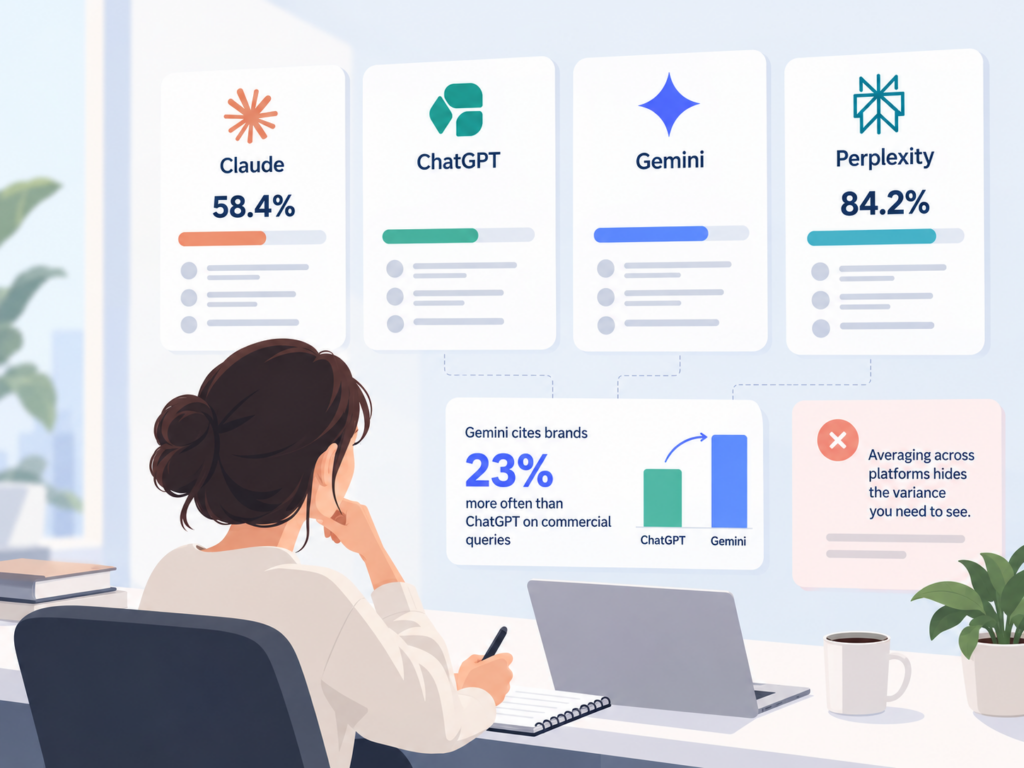
    Platforms don’t behave the same way, either. Testing across 8,400 prompts found brand mention rates ranging from 58.4% on Claude to 84.2% on Perplexity, and a separate benchmark of 60 brands found Gemini citing brands 23% more often than ChatGPT on commercial queries. A report that averages across platforms instead of breaking them out hides exactly the variance you need to see.

    Being Mentioned Isn’t the Same as Being Recommended

    This is the distinction most dashboards blur. A brand can show up in an AI answer and still lose the sale, if the answer buries it fourth on a list or frames it as the budget option when it’s positioned as premium.

    The Blind Spots Most Vendors Leave Out

    Two gaps show up again and again once you start comparing reports against what they’re supposed to measure.

    The first is source attribution. Knowing you’re mentioned is useless if you don’t know which page, listing, or article the AI pulled that mention from. Research analyzing 6.8 million AI citations found that 86% of citations traced back to brand-managed sources, split between first-party websites at 44% and business listings at 42%. If your report doesn’t show you which of your own pages is doing the work, you can’t double down on it or fix the ones that aren’t.

    The second is the connection between AI visibility and traditional search performance, because the two don’t move together the way most teams assume. One study of 150 SaaS companies found that 44% of brands ranking in Google’s top 10 got zero ChatGPT citations for the same keywords, and organic traffic turned out to be a weak predictor of AI citations at all. A report that only tracks AI mentions in isolation, without flagging that gap, leaves teams assuming their SEO investment is already covering this.

    That’s the trap. Strong Google rankings feel like proof you’re covered. The data says otherwise.

    There’s a structural reason vendors skip these layers. As one analysis of GEO reporting put it, most dashboards function as “an observation layer dressed up as a strategy tool”, tracking citation counts and sentiment scores without connecting either one to a specific piece of content or a next action. Building the connective layer takes more engineering than building the count.

    A Two-Minute Check for Whether Your Report Holds Up

    Before your next reporting cycle, run your current report through a short checklist. Does it break results out by platform instead of averaging them? Does it name the actual source URL behind each citation, not just a citation count? Does it show sentiment as a trend, not a single snapshot? Does it compare your position against named competitors on the same prompts, not just your own numbers in isolation?

    If you answered no to more than one, the report is measuring visibility without explaining it. One team building an alternative approach summed up the failure mode bluntly: your citation rate moves, and the report gives you no way to find out why.

    How Topify Structures a Complete AI Visibility Report

    Filling those gaps means building the reporting layer around metrics that connect to each other, not a single headline score. Topify structures its reporting around seven metrics in one view: visibility, sentiment, position, volume, mentions, intent, and CVR, so a drop in one number can be traced to a shift in another instead of showing up as an unexplained blip.

    In practice, that means a marketing team tracking a sentiment dip can pull up Position Tracking and Source Analysis in the same dashboard to see whether a specific competitor gained ground, or whether a single low-authority source started getting cited more often. Topify’s citation analysis works backward from the AI’s answer to the exact domains it drew from, which is the source-attribution layer most reports leave out entirely. Its competitor benchmarking runs the same prompts against named rivals automatically, so position isn’t reported in isolation.

    None of that replaces judgment. It just gives the people making the call something to base it on, instead of a percentage with no explanation attached. Teams evaluating their current setup can get started with Topify to see what a report built this way actually looks like against their own brand.

    Conclusion

    A visibility score tells you where you stand. It doesn’t tell you why you’re there or what to do next, and that’s the piece most reports still skip. Before your next AI visibility report lands, check it against the five dimensions that matter: mentions, position, sentiment, sources, and platform-level breakdowns. If two or three are missing, you’re not getting a report. You’re getting a headline number with a chart attached.

    FAQ

    Q: What should an AI visibility report actually include?
    A: At minimum, it should break out mention frequency, position relative to named competitors, sentiment trends over time, and the specific sources or domains the AI cited, separated by platform rather than averaged together.

    Q: Is there a standard AI visibility report template?
    A: Not yet an industry-wide standard, but most complete reports converge on the same core structure: a visibility and mention overview, sentiment and positioning detail, source and citation analysis, and competitor benchmarking, often customized by stakeholder audience.

    Q: How is an AI visibility report different from a traditional SEO report?
    A: SEO reports track rankings, organic traffic, and backlinks. An AI visibility report tracks how often and how favorably a brand gets mentioned inside AI-generated answers, which research shows correlates weakly with traditional rankings.

    Q: How often should a brand generate an AI visibility report?
    A: Monthly is typical for tracking trend direction, though brands in fast-moving categories often check weekly, since AI platforms can shift which sources they cite in a matter of days.

    Read More

  • Zero-Click Is No Longer an SEO Problem. It’s a Measurement Problem

    Zero-Click Is No Longer an SEO Problem. It’s a Measurement Problem

    Your rankings are holding steady. Impressions in Search Console keep climbing. Then you pull the click numbers and they’ve barely moved, or they’re sliding backward, and nothing in your usual dashboard explains why. The instinct is to blame the content calendar, a core update, or a technical issue nobody’s found yet. None of that is what’s happening. Zero click searches now account for the majority of Google activity, and the reporting stack most SEO teams still rely on was built for a search engine that no longer works that way.

    Zero-Click Searches Are Quietly Rewriting What “Ranking #1” Means

    The scale of the shift is hard to overstate. 68.01% of US Google searches ended without a single click in the first four months of 2026, up from 60.45% in 2024. SparkToro calls it the fastest two-year acceleration it’s measured since it started tracking the metric in 2016, when the rate sat closer to 45%.

    Mobile is driving most of the change. Zero-click rates hit 77% on mobile devices, compared to roughly 50 to 56% on desktop. Informational queries, the kind that used to send readers to blog posts and guides, now resolve without a click 74% of the time.

    That’s not a niche pattern buried in one query type. It’s the default outcome for most searches your content is built to answer.

    Why Zero-Click Searches Broke the Old SEO Scoreboard

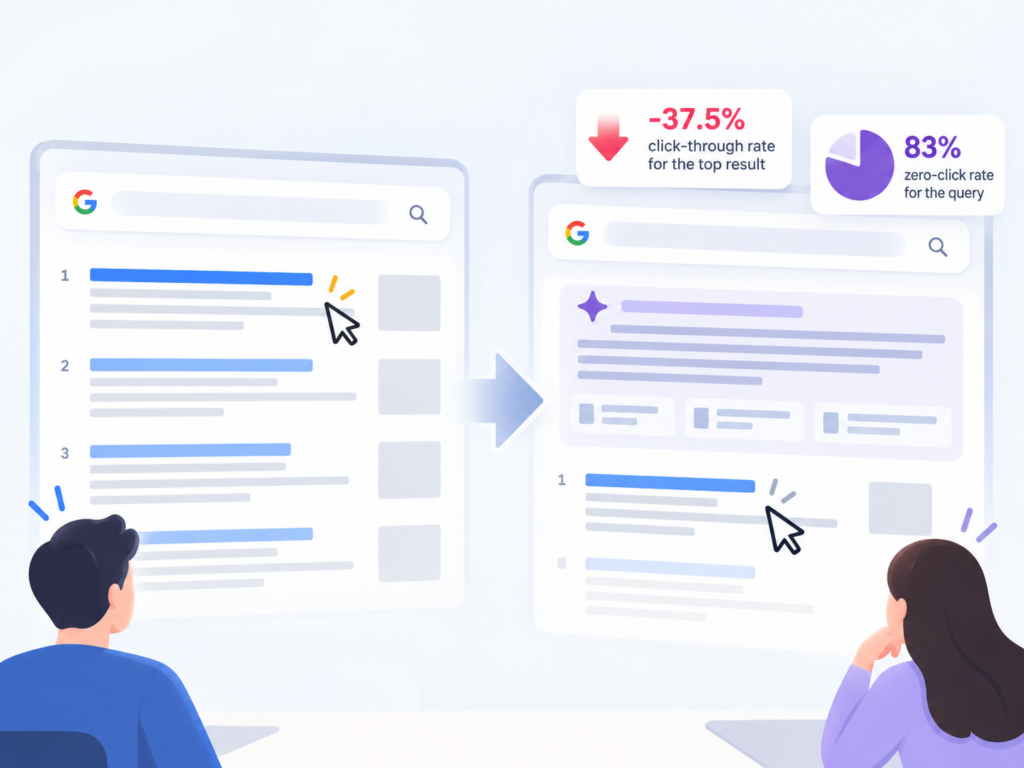
    Traditional SEO reporting runs on one assumption: if you rank, someone clicks. AI Overviews broke that assumption at the source. When an AI Overview appears on a search results page, click-through rate for the top-ranked result falls by roughly 37.5%, and the overall zero-click rate for that query jumps toward 83%.

    Pew Research found the same pattern from a different angle, watching real search sessions instead of aggregated data. Click rate on a query dropped from 15% to 8% once an AI Overview showed up, roughly cutting it in half.

    You didn’t lose your ranking. The page that used to convert a ranking into a visit stopped being the only page that matters.

    The Real Problem Isn’t Traffic. It’s a Measurement Blind Spot

    Here’s the part most teams miss. A drop in organic sessions doesn’t necessarily mean a drop in visibility. It might mean your brand is showing up inside the answer itself, in an AI Overview, a ChatGPT response, or a Perplexity summary, without anyone clicking through to confirm it. Google Analytics has no field for that. Search Console can’t see it either.

    You’re not necessarily losing visibility. You’re losing the ability to see it.

    This isn’t a hypothetical gap. Semrush’s 2026 AI Visibility Index, built from 126 million AI search prompts, found that 45% of marketing leaders can’t accurately measure their brand’s visibility inside AI-generated answers. Only 9% have tools that track every relevant metric across platforms. The same research uncovered a subtler trap: on Gemini, the overlap between brands mentioned in an answer and the domains actually cited as sources drops to as low as 30%. Your name can appear in the answer while a competitor’s site gets the citation credit, and a click-based report would show neither event.

    The problem compounds outside consumer search too. A survey of 104 senior B2B marketing leaders found 81% consider AI visibility a blind spot in their marketing intelligence, with 21% calling it a major one. These are teams with mature SEO programs. They’re just measuring the wrong layer now.

    What You Actually Need to Measure in a Zero-Click World

    Clicks used to be a reasonable proxy for four different things: whether you were found, how you were perceived, whether you outranked competitors, and whether any of it drove business. Zero-click search severs that proxy. Each of those now needs its own metric.

    • Visibility: are you mentioned at all when someone asks an AI system about your category, regardless of whether they click anything
    • Sentiment: how does the AI describe your brand when it does mention you, and does that match your actual positioning
    • Position: where do you land relative to competitors when multiple brands appear in the same answer
    • Source: which domains and pages the AI is actually pulling from, since that’s where influence over future answers gets built

    None of these show up in a standard analytics report, because none of them require a click to happen.

    Where Traditional Analytics Tools Fall Short Here

    This isn’t a knock on Google Analytics or Search Console. They were built to measure what happens after someone reaches your site, and they still do that well. The gap is upstream, in the moment an AI system decides whether to mention you, describe you accurately, and point to your content as the source. That moment happens entirely off your own domain, which is exactly why session-based tools can’t see it.

    How Topify Turns Zero-Click Visibility Into Measurable Data

    This is the layer Topify was built to close. Its Comprehensive GEO Analytics tracks brand performance across ChatGPT, Gemini, Perplexity, and other major AI platforms through the same dimensions the zero-click shift just made essential: visibility, sentiment, position, and source.

    In practice, that means a marketing team can spot a drop in ChatGPT mentions for their category and trace it back to a specific domain that recently started dominating the citations, all inside the same dashboard instead of piecing it together across screenshots and manual prompts. Source Analysis reverse-engineers which URLs an AI platform is actually citing, so a brand that’s being mentioned but not credited can see exactly where the credit is going instead. Sentiment tracking catches the kind of drift the B2B survey flagged, where an AI system’s description of a brand quietly stops matching how that brand positions itself.

    For teams trying to justify a GEO investment internally, Topify’s CVR metric estimates how likely an AI-generated answer is to actually move a user toward engaging with your brand, giving zero-click visibility a number that connects to outcomes rather than stopping at “we were mentioned.” That distinction matters more than it sounds. AI-referred traffic is growing fast enough to demand it: Adobe found that AI traffic to US retail sites climbed 1,324% between October 2024 and May 2026, and 2,215% in travel over the same period. A channel growing that quickly needs its own reporting line, not a footnote in an organic traffic report.

    Putting Zero-Click Search Measurement Into Practice

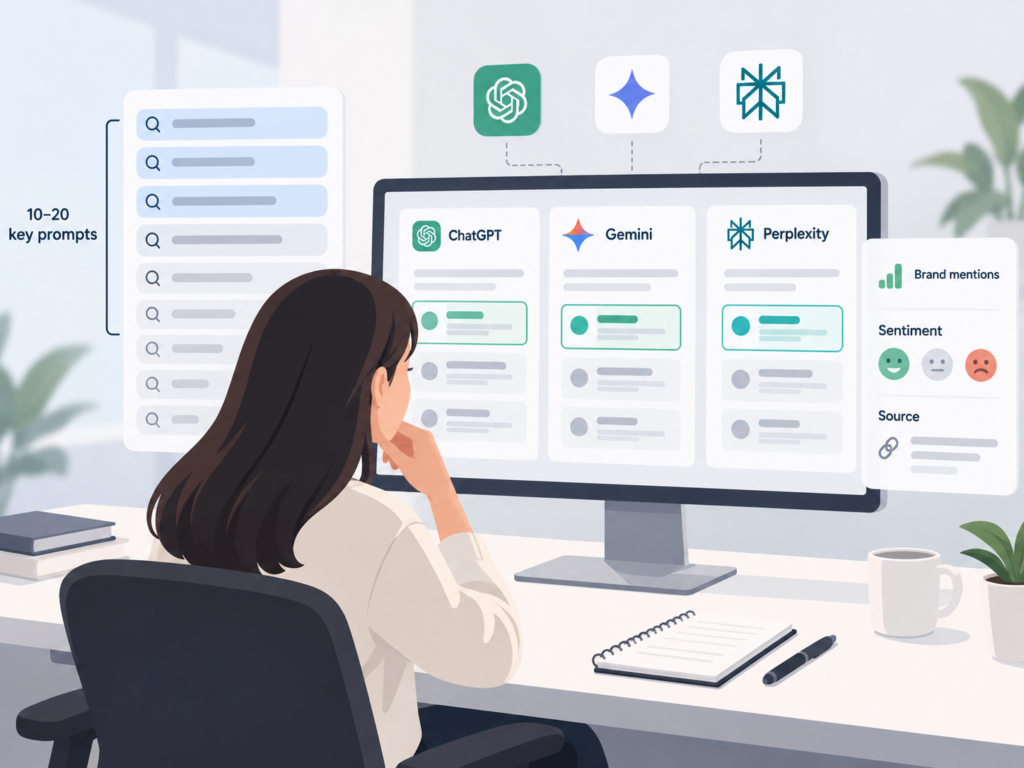
    Start narrow. Pick the 10 to 20 prompts most likely to surface your category, the same way you’d pick priority keywords, and check where your brand shows up across two or three AI platforms. Track sentiment and source alongside mentions from day one, not as a later add-on, since a mention with the wrong sentiment or no source credit isn’t the win it looks like on the surface.

    Report it separately from organic traffic at first. Folding a new, currently-smaller number into an existing traffic report just makes the existing number look worse. Framed on its own, with visibility and sentiment trends over a few weeks, it tells a clearer story about where the brand actually stands.
    Conclusion

    A ranking that no longer converts to a visit isn’t proof your content failed. It’s proof the scoreboard changed underneath you. Zero-click search didn’t remove your visibility, it just moved most of it somewhere your existing tools can’t reach. The teams treating this as a measurement gap, and building a way to see mentions, sentiment, position, and source, are the ones who’ll have a real answer the next time someone asks why traffic is flat while rankings look fine.

    FAQ

    Q: What exactly counts as a zero-click search?
    A: A search that ends without the user clicking any result, organic or paid, because the query gets answered directly on the results page through a featured snippet, knowledge panel, or AI Overview.

    Q: Does a high zero-click search rate mean SEO is no longer worth doing?
    A: No. It means clicks stopped being the only signal that matters. Being cited or mentioned inside an AI answer can still influence a buyer’s decision even without a visit, which is why visibility and sentiment tracking matter alongside traditional traffic metrics.

    Q: How is zero-click search rate different from AI Overview click-through rate?
    A: Zero-click search rate covers all searches, including ones resolved by featured snippets or knowledge panels with no AI involved. AI Overview CTR looks specifically at what happens when Google’s generative summary appears, which tends to push zero-click rates even higher for that subset of queries.

    Q: What’s the first thing a team should measure to understand its zero-click search exposure?
    A: Start with visibility, whether your brand is mentioned at all across a set of category-relevant AI prompts, before layering in sentiment and source analysis. Mentions with no way to check accuracy or citation credit give an incomplete picture on their own.

    Read More

  • Amazon vs Perplexity Ruling: Check If AI Shopping Agents Recommend You

    Amazon vs Perplexity Ruling: Check If AI Shopping Agents Recommend You

    Your team read about the Amazon vs Perplexity ruling as a legal update, filed it under “not my problem,” and moved on. That’s the wrong reaction. The Ninth Circuit didn’t just settle a fight between two companies. It confirmed that an AI shopping agent can operate on almost any retail site a user chooses, which means the real question isn’t whether these agents are allowed to shop anymore. It’s whether they mention your brand when they do.

    What the Ninth Circuit Actually Ruled on AI Shopping Agents

    The case started in November, when Amazon sued Perplexity over its Comet browser, alleging the tool covertly accessed customer accounts and violated the Computer Fraud and Abuse Act. A federal judge agreed in March 2026 and blocked Comet’s agentic shopping features on Amazon.

    That injunction didn’t last. On August 4, 2026, the Ninth Circuit Court of Appeals overturned it, ruling that Amazon was unlikely to win its core legal claim.

    The court’s reasoning is now known as the browser analogy. Comet takes a screenshot of what the user’s own browser sees, sends it to Perplexity’s servers, and sends navigation instructions back. Perplexity never talks to Amazon’s servers directly, so the judges compared it to Safari or Chrome: nobody accuses Apple of hacking Amazon just because someone uses Safari to shop there.

    That’s the first federal appellate ruling on whether an AI shopping agent can legally act on a user’s behalf online.

    Why This Ruling Widens the Lane for Every AI Shopping Agent

    This case was about Perplexity, but the logic isn’t Perplexity-specific. It applies to any agent that acts on a user’s instructions rather than accessing a retailer’s systems on its own.

    That’s a real narrowing of what a retailer’s terms of service can do. If a court won’t treat the agent’s operator as the one doing the accessing, blocking agents through lawsuits gets a lot harder.

    The timing matters, too. Adoption isn’t waiting on court decisions. Seventy percent of brands, retailers, and agencies are already testing or deploying an agentic storefront, and only 7% have no plans at all. On the consumer side, ChatGPT hit 900 million weekly active users in February 2026, and AI-referred traffic to US retail sites was still up 393% year over year in the first quarter.

    Ruling or no ruling, shoppers were already handing purchase decisions to agents. This decision just removed one of the few legal levers retailers had to slow that down.

    The Real Question: Does Your Brand Get Recommended by AI Shopping Agents

    Here’s the shift most marketing teams haven’t made yet. Before this ruling, the risk conversation was about access: could an agent even reach a product page. After it, the risk conversation is about relevance: does the agent mention your product at all.

    An AI shopping agent doesn’t rank products the way a search engine does. It reads product data, reviews, comparison content, and third-party sources, then decides what to say based on what it can find and trust. There’s no bid, no sponsored slot, no guaranteed placement.

    That’s a fundamentally different game than the one most brand and SEO teams have spent a decade optimizing for.

    The IBM Institute for Business Value found that 45% of consumers already use AI for part of their buying journey, and usage keeps climbing across every age group. Your domain authority, your keyword rankings, your ad spend on the retailer’s own platform: none of that tells you whether Perplexity or ChatGPT is quietly recommending a competitor instead of you.

    How to Measure Whether an AI Shopping Agent Recommends You

    Most teams’ first instinct is to type their own product name into ChatGPT and see what comes back. That’s a start, but it only tells you what happens when someone already knows to search for you.

    The more useful test runs the prompts a real shopper would type without your brand name in them. Category questions. Comparison questions. “Best X for Y” questions. Then check a few specific things:

    • Are you mentioned at all, and how often across repeated runs
    • Where you land in the list when you are mentioned
    • What tone the agent uses to describe you
    • Which sources the agent is pulling its information from

    Doing this by hand across ChatGPT, Perplexity, and Gemini, on a rotating set of prompts, tends to fall apart after the first week. That’s the part Topify is built to automate.

    For marketing teams tracking this across multiple platforms, Topify pulls visibility, sentiment, and position data into a single view. In practice, that means you can spot a drop in Perplexity mentions and trace it back to the exact source that stopped citing your brand, without running the prompts manually every morning.

    What to Do If Your Brand Is Invisible to AI Shopping Agents

    If the test above comes back empty, don’t panic and don’t guess. The fix starts with finding out why the agent skipped you, not with publishing more content at random.

    Look at which domains the agent is actually citing when it answers category questions in your space. Often it’s a handful of comparison sites, review aggregators, or forum threads the agent trusts more than your own product pages.

    This is less about writing more and more about closing a specific gap. Topify’s source analysis reverse-engineers which URLs an AI platform is citing for a given prompt, so you know exactly where to place content or where to fix a data gap instead of publishing blind. Once you can see the gap, getting started with visibility tracking takes a few minutes, not a quarter-long project.

    Conclusion

    The Amazon vs Perplexity ruling settled a legal question, but it opened a business one. An AI shopping agent can now operate across the web with fewer legal roadblocks, and that means more of your category’s purchase decisions will run through an agent’s recommendation instead of a search results page. The brands that check their visibility now, before it becomes a quarterly fire drill, are the ones that’ll show up when it counts.

    FAQ

    Q: Is it legal for an AI shopping agent to browse and buy on a retail site without permission?
    A: The Ninth Circuit’s ruling in Amazon v. Perplexity found that when a user directs an AI shopping agent to shop on their behalf, it’s the user who is legally accessing the site, not the company that built the agent. This weakens a retailer’s ability to block agents through hacking-law claims, though the underlying case continues in lower court.

    Q: How do I know if ChatGPT or Perplexity recommends my product?
    A: Run realistic category and comparison prompts, without your brand name included, across each platform multiple times. Track whether you’re mentioned, where you rank in the answer, and how the agent describes you. A tool built for this, like Topify, automates the process across platforms instead of requiring manual checks.

    Q: What’s the difference between AI shopping agent visibility and traditional SEO rankings?
    A: Traditional SEO rewards keyword relevance and backlink authority within a search results page. AI shopping agent visibility depends on whether the agent’s underlying model finds and trusts information about your product when generating a conversational answer, which often draws from different sources than your top Google rankings.

    Q: Which AI platforms should I monitor for AI shopping agent visibility?
    A: At minimum, ChatGPT and Perplexity, since both now have active agentic shopping features and were directly involved in this ruling. Gemini and other emerging shopping assistants are worth adding as adoption grows across each platform.

    Read More