Blog

  • Agentic Commerce Protocols Are Coming. Is Your Product Data Ready?

    Agentic Commerce Protocols Are Coming. Is Your Product Data Ready?

    On February 16, 2026, ChatGPT quietly became a storefront. OpenAI’s Instant Checkout, built on the Agentic Commerce Protocol and rolled out to ChatGPT’s 800 to 900 million weekly users generating an estimated 50 million shopping queries a day, let US shoppers buy directly inside a chat window for the first time. A few weeks earlier, Google had made its own move: Sundar Pichai announced the Universal Commerce Protocol at NRF 2026 with backing from more than 20 retailers, payment networks, and processors.

    Two of the biggest platforms on the internet just agreed, independently, that agents need a standard way to read your products. That’s the part most brands are missing. Standardization isn’t a future trend to watch. It’s infrastructure that’s already routing purchases.

    What Agentic Commerce Protocol Actually Means for Your Brand

    An agentic commerce protocol is a shared language that lets an AI agent discover, evaluate, and transact with a business without a human clicking through pages one at a time. The Agentic Commerce Protocol, maintained by OpenAI and Stripe, defines how buyers, their AI agents, and businesses connect to complete purchases. Google’s answer, the Universal Commerce Protocol, works alongside the Agent Payments Protocol, which secures agent-to-agent transactions by verifying a user’s authority, the agent’s authenticity, and providing a cryptographic audit trail.

    You don’t need to pick a side. Most retailers won’t. Shopify already abstracts both ACP and UCP through what it calls Agentic Storefronts, letting merchants toggle AI channels on or off while Shopify handles the protocol work in the background.

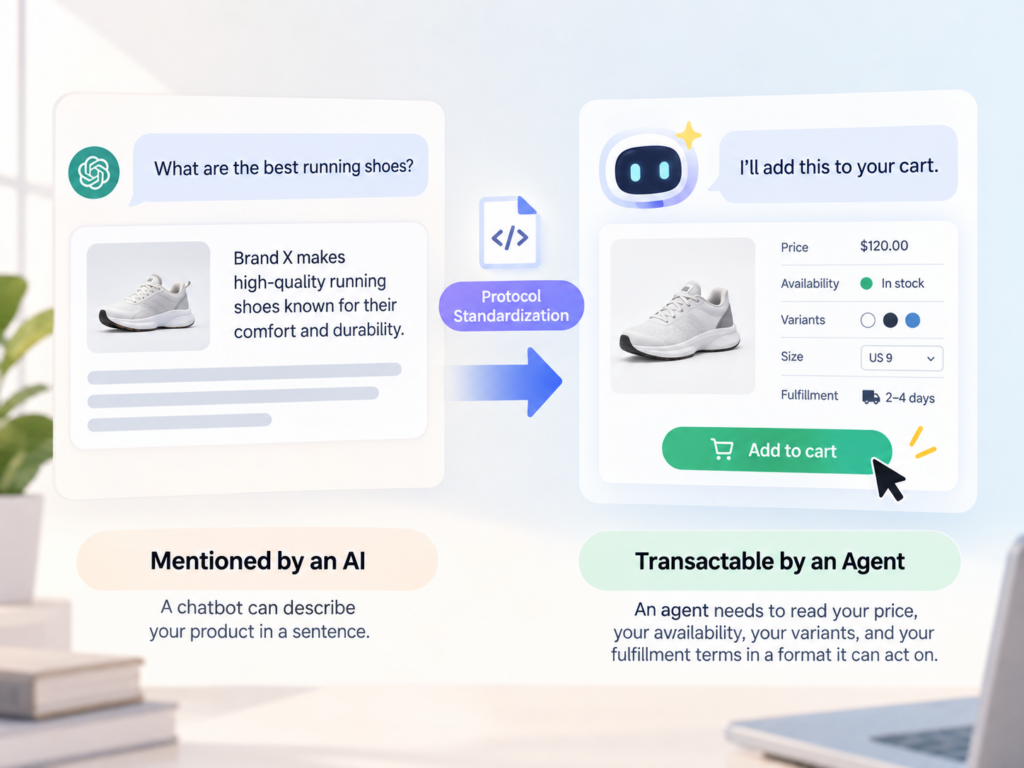
    Here’s the distinction that actually matters for you. Being mentioned by an AI is not the same as being transactable by an agent. A chatbot can describe your product in a sentence. An agent needs to read your price, your availability, your variants, and your fulfillment terms in a format it can act on. Protocol standardization is what turns “the AI knows you exist” into “the AI can put you in a cart.”
    Why Standardization Changes the Rules of Visibility

    Traditional SEO rewarded content built for people: persuasive copy, backlinks, keyword density. Agentic commerce protocol standardization rewards something narrower: structured, verifiable, machine-parseable facts.

    Under UCP, agents extract Schema.org markup and compare factual specifications against a shopper’s query, and precise attributes like “100% GOTS certified organic cotton, 200 GSM” consistently outperform marketing copy like “luxuriously soft premium cotton”. That’s not a stylistic preference. It’s how the retrieval mechanism works.

    This is the part that should worry more brands than it does. A protocol doesn’t rank you lower for weak data. It skips you. If your product feed is missing the fields an agent needs to compare, negotiate, or verify a transaction, you’re not competing for the third spot on a results page. You’re not in the query at all.

    Google’s Shopping Graph now holds over 50 billion product listings and processes more than 2 billion product updates per hour, which gives a sense of the scale agents are already querying against. Your listing either fits into that machine-readable layer or it doesn’t show up.

    The Data Gap Most Product Feeds Have Right Now

    Most catalogs aren’t close to ready, and the gap is well documented. Early 2026 research found that 40% of ecommerce businesses were still standardizing their product pages for agentic AI, while 33% hadn’t started at all. Separately, nShift’s early 2026 survey found that 58% of consumers had already replaced traditional search with AI for product discovery, even as 33% of ecommerce businesses had not begun structured data preparation.

    The gap isn’t only about missing tags. It’s also about staleness. Ahrefs data cited by Passionfruit Labs found that GPT-5.3 retrieves only 6% of pages older than 30 days, down from 33% under GPT-5.2. Agents are weighting recency harder every model cycle. A product page that hasn’t been touched since last quarter is effectively invisible to the newest retrieval behavior, regardless of how good the content is.

    Partner surveys back this up from the retailer side too. Tech partners in Mirakl’s 2026 commerce survey rated retailer AI readiness at just 4.4 out of 10, with the lowest scores going to monitoring brand presence in AI-driven search. Most brands genuinely don’t know which queries surface their products in an agent’s response, or whether they show up at all.

    How This Differs from Traditional SEO Data Requirements

    RequirementTraditional SEOAgent-Ready Data
    Core assetPage content, backlinksStructured attributes, schema markup
    Update cadenceWeekly or monthlyReal-time pricing and availability
    Success signalRanking positionSuccessful agent read and transaction
    FormatHuman-readable copyMachine-parseable JSON-LD, feeds, APIs
    Failure modeLower rankingExcluded from the agent’s result set entirely

    How to Check If Your Product Data Is Agent-Ready

    You can’t fix a gap you can’t see, and most teams are flying blind here. This is exactly where Source Analysis inside Topify’s GEO analytics platform becomes useful. It tracks the specific domains and URLs that AI platforms cite when answering product-related queries, so you can see whether agents are actually pulling from your product pages or defaulting to a competitor’s listing, a marketplace page, or a review site instead.

    That distinction matters more than a generic visibility score. A brand might show up in general brand mentions across ChatGPT or Perplexity while its actual product pages never get cited in the moments that lead to a transaction. Source Analysis surfaces that content gap directly, which is the same gap the protocol standards above are built to expose.

    Structured data correlates directly with citation rates: 71% of pages cited by ChatGPT and 65% of pages cited by Google AI Mode contain schema markup, most commonly in JSON-LD format. If your product pages lack that markup, the data says you’re statistically less likely to be the source an agent reaches for.

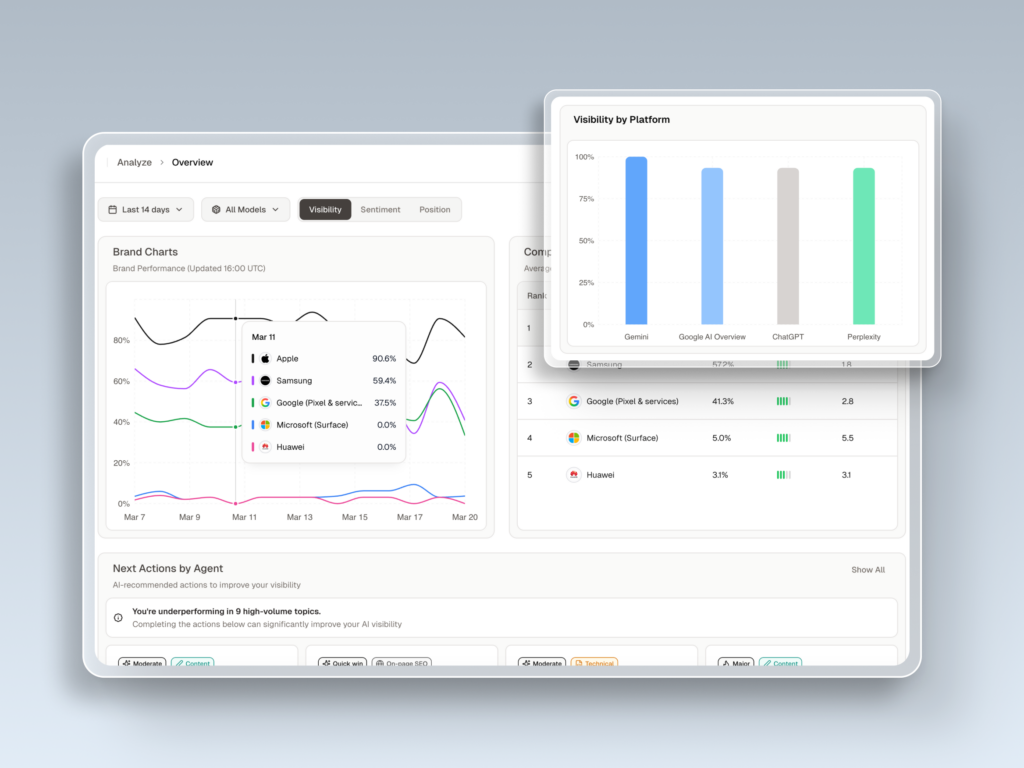
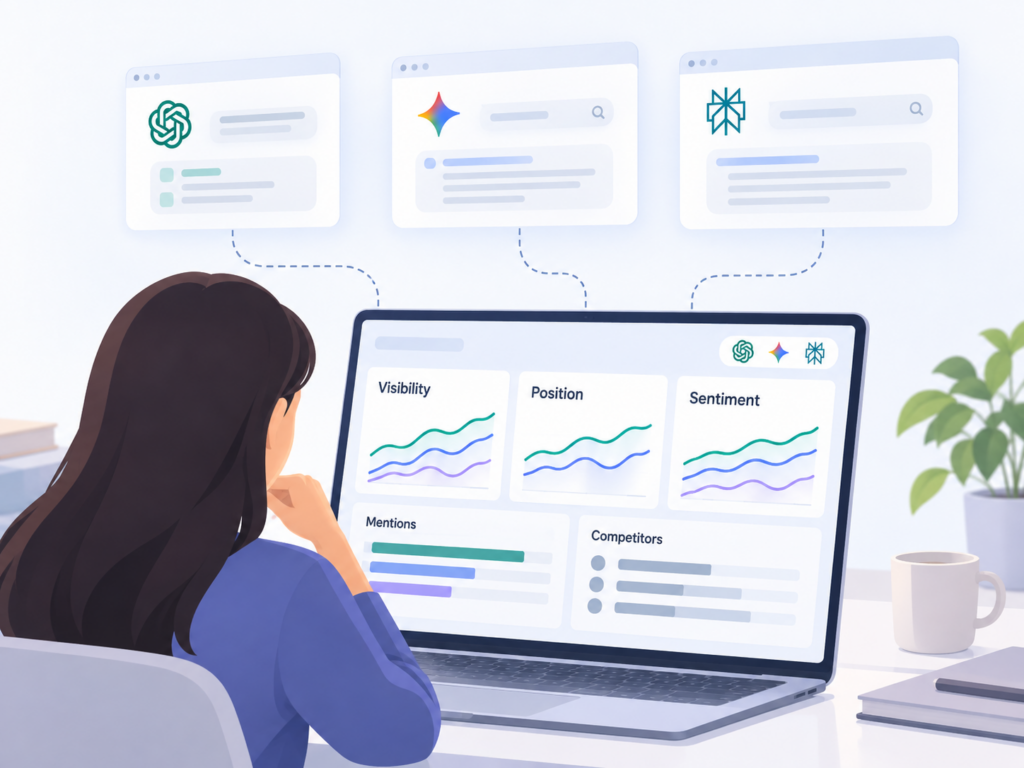
    Pairing that source-level view with Comprehensive GEO Analytics gives you the other half of the picture: how your visibility, position, and sentiment compare to competitors across ChatGPT, Gemini, and Perplexity over time, not just a one-time snapshot.
    Getting Ahead of the Standardization Curve

    The pace of adoption isn’t waiting for anyone to catch up. McKinsey’s 2026 AI Commerce Index found that 34% of online shoppers in the US had already used an AI agent to assist with a purchase decision, up from 9% in 2024. That’s a fourfold jump in two years, and the protocol layer underneath it is still being finalized.

    Fixing your data now is cheaper than fixing it after standardization fully locks in. Once ACP, UCP, and AP2 mature into the default rails for agentic transactions, brands with clean structured data will have a running head start, and brands without it will be doing emergency catalog audits under competitive pressure instead of on their own timeline.

    Start with what’s actually blocking agents today: incomplete attributes, stale pricing, missing schema markup. Then use visibility and source tracking to confirm the fix worked, not just that you shipped it. That verification step is where most teams stop, and it’s the one that actually tells you whether agents can see you.

    Conclusion

    Agentic commerce protocols aren’t a distant standard to plan for someday. ACP is already routing purchases inside ChatGPT, UCP is live in Google’s AI Mode and Gemini, and the coalition behind both keeps growing. What decides whether your brand participates in that layer isn’t your marketing copy. It’s whether your product data is structured, current, and verifiable enough for an agent to act on.

    FAQ

    What is an agentic commerce protocol?
    It’s an open standard, like ACP or UCP, that defines how AI agents discover product information, complete checkout, and transact with a business on a shopper’s behalf, without a human browsing the page directly.

    How do AI agents actually read product data?
    Agents pull from two main sources: structured feeds submitted directly to a platform, and Schema.org markup embedded in your product pages that crawlers like GPTBot or PerplexityBot can parse during a live query.

    How do I know if my product data is ready for AI agents?
    Check whether your product pages are actually being cited when AI platforms answer shopping-related queries in your category. That visibility, not your page’s traditional SEO ranking, is the signal that reflects agent readiness.

    Searched the web
    Read More

  • OpenAI Blocks Rival AI Ads in ChatGPT: What It Means for Brands

    OpenAI Blocks Rival AI Ads in ChatGPT: What It Means for Brands

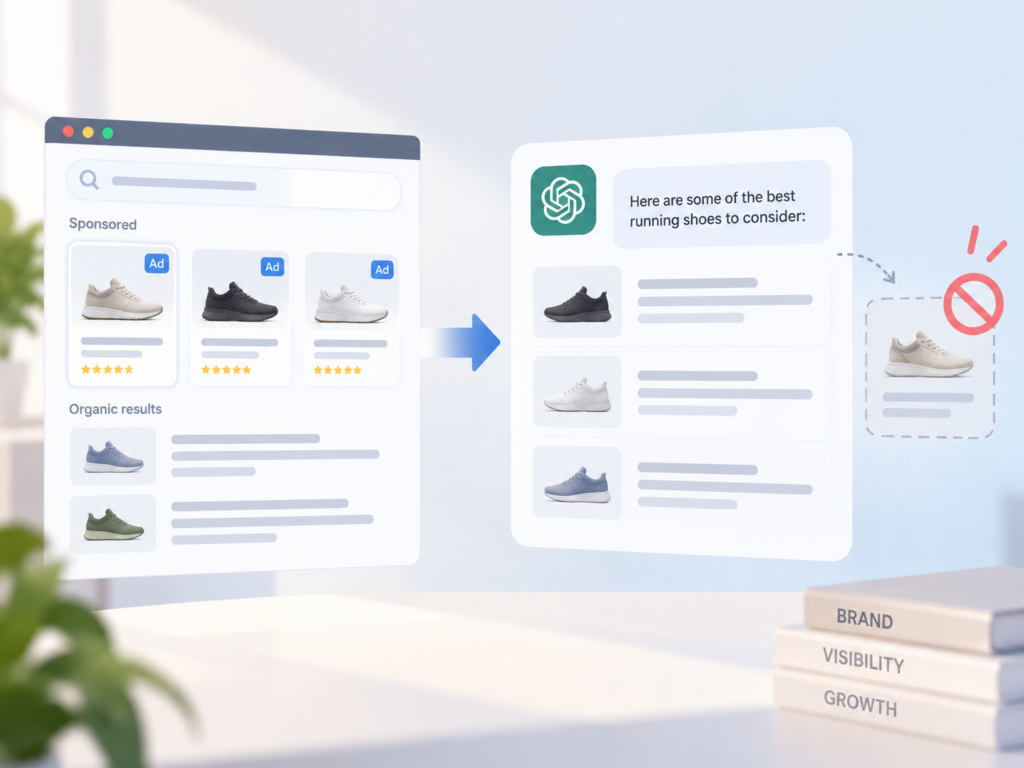
    Adobe had been running paid campaigns for Firefly and Acrobat Studio inside ChatGPT for months, treating it like any other channel. Then OpenAI quietly told Adobe those campaigns would no longer get approved. No public announcement, no warning window, just a rejected order. If your product sits anywhere near a category OpenAI wants to own, the same call could land on your desk next.

    What Actually Changed in OpenAI’s Ad Policy

    OpenAI updated its advertising rules to stop approving campaigns for standalone image and audio generation tools inside ChatGPT, and it did so without a public announcement. The shift only surfaced after advertising partners were notified directly, and Adobe was one of the first to confirm it, after previously promoting Firefly and Acrobat Studio through OpenAI’s initial ad pilot.

    The restriction is narrow for now. Video generation ads are still being approved, which suggests OpenAI is drawing the line around the specific categories where it’s actively competing rather than banning AI tool advertising outright. The timing lines up with OpenAI’s own push into the same territory: ChatGPT Images 2.5 and ChatGPT Live voice both shipped around the same window as the policy change.

    That’s less a coincidence than a pattern. Platforms tend to close the door on rivals right after launching a competing feature, not before.

    The Platform Is Also the Competitor

    Media companies and streaming platforms have rejected competitor advertising for decades, so the move itself isn’t new. What’s different here is that OpenAI controls both the paid channel and a big share of organic discovery for the same categories it just restricted.

    ChatGPT has also stopped returning outbound citations and links for action-oriented image queries, including searches for photo editors and image generators. Paid and organic paths are narrowing at the same time, for the same set of competitors.

    That’s the part brand teams tend to miss. A platform that owns both the ad auction and the answer engine doesn’t need to ban you outright. It just needs to stop mentioning you.

    According to reporting on OpenAI’s updated advertiser terms, the company now has explicit discretion to decline or remove ad content that conflicts with its business interests or competitive position. That’s a policy written to flex whenever OpenAI decides a category matters enough to protect.

    Why This Should Change How Brands Think About ChatGPT

    If your acquisition plan for ChatGPT depends on paid placement, you’re building on a channel the platform owner can close whenever your product starts looking like competition. That’s not a hypothetical. It already happened to Adobe, a company with far more leverage than most brands running ads on this platform.

    Here’s the part worth sitting with: a paid channel you don’t control isn’t a channel, it’s a favor.

    The teams least exposed to this shift are the ones who were never counting on ChatGPT ads to begin with. They built visibility into how ChatGPT answers questions about their category, not into how much they spend on placement. That distinction is becoming the difference between a durable channel and a rented one.

    OpenAI’s own ad ambitions make this more urgent, not less. The company is reportedly targeting roughly $2.4 billion in annual ad revenue, and reaching that number means favoring advertisers who don’t compete with its native tools. Expect the list of restricted categories to grow as OpenAI ships more first-party features.

    What Brands Can Still Control When Paid Access Narrows

    This is where generative engine optimization, or GEO, stops being a nice-to-have and starts being the more stable half of your AI search strategy. GEO focuses on whether AI systems mention, describe, and recommend your brand in their answers, independent of whether you’re allowed to buy a placement there.

    Topify tracks that side of the equation across ChatGPT, Gemini, Perplexity, and other major AI platforms, using seven metrics: visibility, sentiment, position, volume, mentions, intent, and CVR. In practice, that means you can see whether your brand still shows up in category recommendations even after a platform tightens its ad rules, and trace a drop back to a specific source that stopped citing you.

    For marketing teams in categories adjacent to what OpenAI builds, that visibility is worth watching closely. If ChatGPT ads for your category ever get restricted the way image and audio tools were, your organic presence in AI answers becomes the only lever left. Competitor monitoring matters just as much here: seeing which rivals keep getting recommended after a policy shift tells you whether the drop is platform-wide or specific to you.

    Source analysis rounds this out. Understanding which domains ChatGPT actually cites for your category helps you close the gap the ad restriction just opened, by earning the kind of organic mentions no policy change can revoke.

    A Practical Starting Point

    Three moves make sense regardless of what OpenAI does next:

    • Check whether your product category overlaps with anything OpenAI has launched or hinted at launching. Overlap is the strongest predictor of future ad restrictions.
    • Audit how often your brand currently shows up in ChatGPT’s answers for your core category, not just your paid campaign performance.
    • Track which sources ChatGPT cites when it recommends competitors, so you know exactly where the content gap sits.

    None of these require you to stop advertising where you still can. They just stop your visibility from depending entirely on a channel someone else controls.

    Conclusion

    OpenAI’s ad restriction isn’t really a story about Adobe or image generators. It’s a preview of how any AI platform will treat advertisers once it decides a category is worth owning outright. Brands that treat GEO as a parallel investment, not a backup plan, are the ones least exposed the next time a policy update lands without warning.

    FAQ

    Q: Can any AI company advertise on ChatGPT?
    A: Not anymore in every category. OpenAI still approves most advertising, but it now declines campaigns for standalone image and audio generation tools that compete directly with its own features. Video generation ads remain permitted for now.

    Q: What tools are banned from ChatGPT ads?
    A: Reporting points to standalone image generation and audio or voice generation products, with Adobe’s Firefly cited as an affected example. The restriction hasn’t been formalized as a public policy list, which makes it harder for brands to predict in advance.

    Q: How do brands get recommended by ChatGPT without ads?
    A: By focusing on generative engine optimization: tracking how often ChatGPT mentions your brand, understanding which sources it cites for your category, and closing content gaps competitors are filling instead of you.

    Q: Will OpenAI expand these ad restrictions to other categories?
    A: It’s likely, given OpenAI’s own product roadmap keeps expanding into new categories and its stated ad revenue targets create pressure to prioritize non-competing advertisers.

    Read More

  • AI Mode Ads Are Live. Here’s the Hit to Organic Visibility

    AI Mode Ads Are Live. Here’s the Hit to Organic Visibility

    Your brand finally started showing up in a handful of AI Mode citations. Mention rate holding steady, sentiment neutral to positive, nothing alarming on the dashboard. Then Google confirms it: Shopping ads are moving into AI Mode, sitting in the same conversational thread as the answer your content earned. That’s not a ranking problem you fix with a content refresh. It’s a real estate problem, and the real estate you were already competing for just got a lot more expensive.

    Google Just Put Shopping Ads Inside the AI Mode Answer Box

    Google made the change official at Google Marketing Live, announcing AI-powered Shopping ads that let Gemini pull up relevant products and write a custom explainer on why a specific product fits the shopper’s query, all inside the AI Mode conversation itself.

    The format looks different from a standard product listing ad. According to reporting on the rollout, sponsored product cards now appear below the AI-generated answer, carrying a “Sponsored” label, images, pricing, and purchase options woven directly into multi-turn shopping conversations.

    This isn’t an isolated ad experiment either. Google introduced the Universal Commerce Protocol months earlier, partnering with Shopify, Etsy, Wayfair, Target, and Walmart to let AI agents discover products and complete checkout without leaving the AI Mode interface. Ads are the monetization layer on top of an already-built commerce pipeline.

    Why AI Mode Ads Change the Math for Organic Brands

    AI Mode already replaces organic results with a conversation instead of showing them alongside one. That’s what makes this different from an ordinary AI Overviews update. Research cited by Omnibound’s 2026 analysis puts the zero-click rate inside AI Mode at 93 percent, meaning organic SEO effectively has no reach unless a brand earns a citation in the response itself.

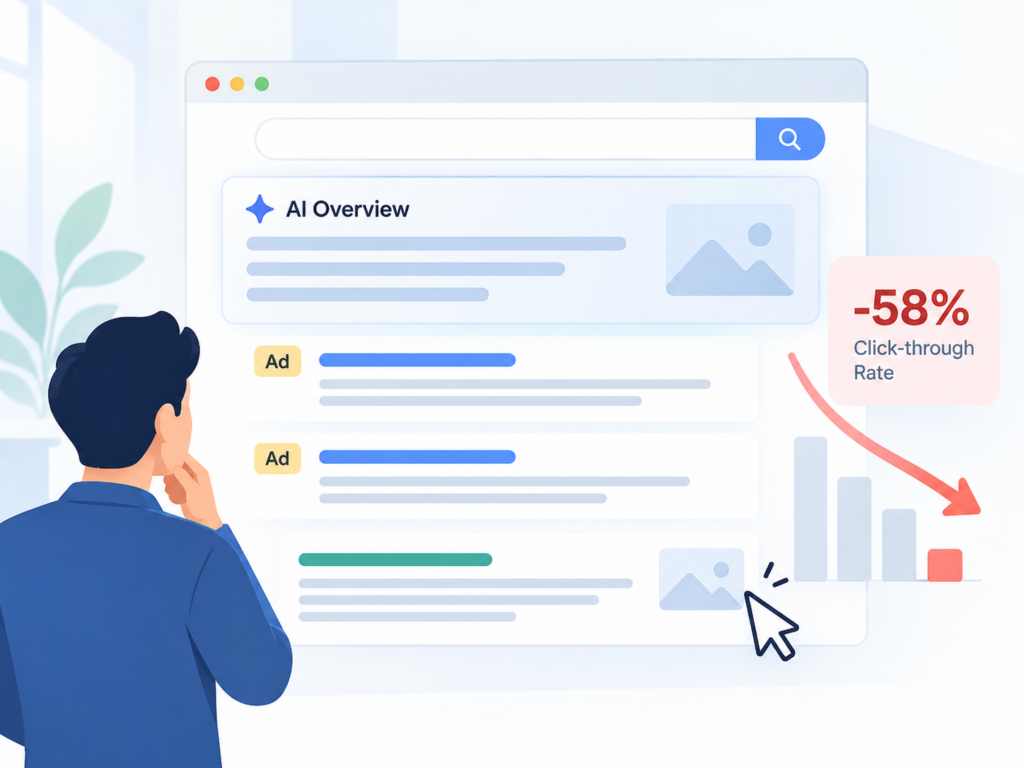
    Ads now compete for a piece of an answer space that was already shrinking for organic content. Ahrefs’ most recent study found that by December 2025, the presence of an AI Overview correlated with a 58 percent lower click-through rate for the top-ranking organic page, up from 34.5 percent the previous spring.

    The click that used to go to your site now has to compete with a sponsored product card before it even gets a chance to compete with your organic result.

    What’s Actually at Risk: Mentions, Not Just Rankings

    Position on a traditional SERP used to be the whole game. Inside AI Mode, it’s a much smaller part of it. A behavioral study from Pew Research, referenced in Omnibound’s AI Overviews breakdown, found users click a traditional result only 8 percent of the time when an AI-generated answer is present, compared to 15 percent without one.

    What still moves the needle is whether the AI chooses to name your brand at all. The same research shows brands cited inside AI-generated answers earn roughly 35 percent more organic clicks and 91 percent more paid clicks than brands the AI leaves out entirely, a gap that widens further once ads occupy part of that same answer.

    Ranking first doesn’t help much if the AI never says your name.

    How to Tell If Your Brand Is Already Losing Ground to AI Mode Ads

    The uncomfortable part is that Google Search Console has no visibility into this. AI Mode sessions don’t register as organic sessions, so a brand can be losing ground inside the answer box for weeks before anyone on the marketing team notices the drop in referral traffic.

    The signals worth watching sit one layer deeper than clicks: how often your brand is mentioned across AI Mode conversations for your category, whether the sources AI cites are shifting away from your domain, and whether your relative position inside a multi-brand answer is sliding as sponsored cards take up more of the response.

    This is where a dedicated monitoring layer matters more than another SEO audit. Topify tracks how brands appear across ChatGPT, Gemini, Perplexity, and Google’s AI surfaces, which makes it possible to isolate whether a visibility drop traces back to a genuine mention decline or simply to more ad real estate competing for the same screen. Pairing that with source-level tracking shows which domains AI Mode is citing instead of yours, so the fix targets the actual gap instead of a guess.

    What Brands Can Still Control

    Ad placement inside AI Mode is Google’s decision. What gets cited inside the answer next to those ads is still earnable, and it responds to specific, identifiable actions.

    Structure content to answer questions directly rather than building toward a conclusion. AI systems extract information that’s easy to synthesize, and structured citations with clear statistics have been shown to improve citation odds by as much as 40 percent in Princeton’s GEO research.

    Third-party authority carries more weight than most teams assume. AI models cite third-party sources roughly 6.5 times more often than brand-owned pages, so a mention in an industry publication or a well-regarded forum thread often does more for AI Mode visibility than another blog post on your own domain.

    Finally, monitoring cadence has to shift from monthly to continuous. Ad rollouts like this one change the competitive landscape inside an answer overnight, not over a quarter, and catching the shift early is the difference between adjusting content strategy and explaining a traffic drop after the fact. Teams ready to start can get started with Topify to put that tracking in place before the next rollout lands.

    Conclusion

    AI Mode ads aren’t a temporary test. They’re built on infrastructure Google has been assembling for over a year, and the direction is clear: more commerce, more sponsored placement, less organic real estate inside the answer itself. The brands that hold up aren’t the ones with the highest rankings. They’re the ones that know, in real time, whether AI Mode is still choosing to say their name.

    FAQ

    Q: What exactly changed with AI Mode ads?
    A: Google began placing AI-powered Shopping ads and sponsored product cards directly inside AI Mode conversations, appearing alongside or below the AI-generated answer rather than in a separate ad block.

    Q: Do AI Mode ads replace organic results entirely?
    A: Not entirely, but AI Mode already shows a synthesized conversation instead of a traditional results list, and ads now take up part of that same limited space, leaving less room for organic mentions to surface.

    Q: How is this different from ads in regular AI Overviews?
    A: AI Overviews still sit above a page of organic blue links. AI Mode replaces that page with a conversational interface, so ads placed there compete directly inside the answer instead of alongside a separate results list.

    Q: Can SEO alone protect visibility once ads enter AI Mode?
    A: Traditional SEO still feeds the retrieval layer AI systems draw from, but it doesn’t guarantee a mention inside the generated answer. Tracking citation rate and source overlap separately from rankings is what shows whether a brand is actually losing ground.

    Read More

  • Who Won the First Week of GPT-6? An Early AI Visibility Leaderboard

    Who Won the First Week of GPT-6? An Early AI Visibility Leaderboard

    Everyone watched OpenAI announce GPT-6 Astra on September 3 and call it the start of the AGI era. Within days, independent trackers measured its overall intelligence score at 61.2, statistically flat against the model it replaced. That gap between the announcement and the number is the real story. It’s also a preview of something worth watching every time a major model ships: benchmark rank and AI answer rank move independently, and only one of them decides who your customers actually hear about.

    OpenAI Called It the AGI Era. The Benchmarks Told a Split Story.

    Company president Greg Brockman closed the launch briefing with the phrase Brockman told reporters marked the arrival of AGI. The rollout itself was messier than the framing suggested.

    Several major outlets published coverage before OpenAI’s own model page went live, and paying users saw delayed access while some influencers had the model early. OpenAI later handed out “banked resets” as an apology for the confusion, according to reporting from Latent Space.

    The numbers arrived just as split. Astra’s overall reasoning score barely moved against its predecessor, and it still trailed Claude Fable 5.1 on the same index.

    MetricGPT-6 AstraGPT-5.6 SolClaude Fable 5.1
    Artificial Analysis Intelligence Index61.260.965.7
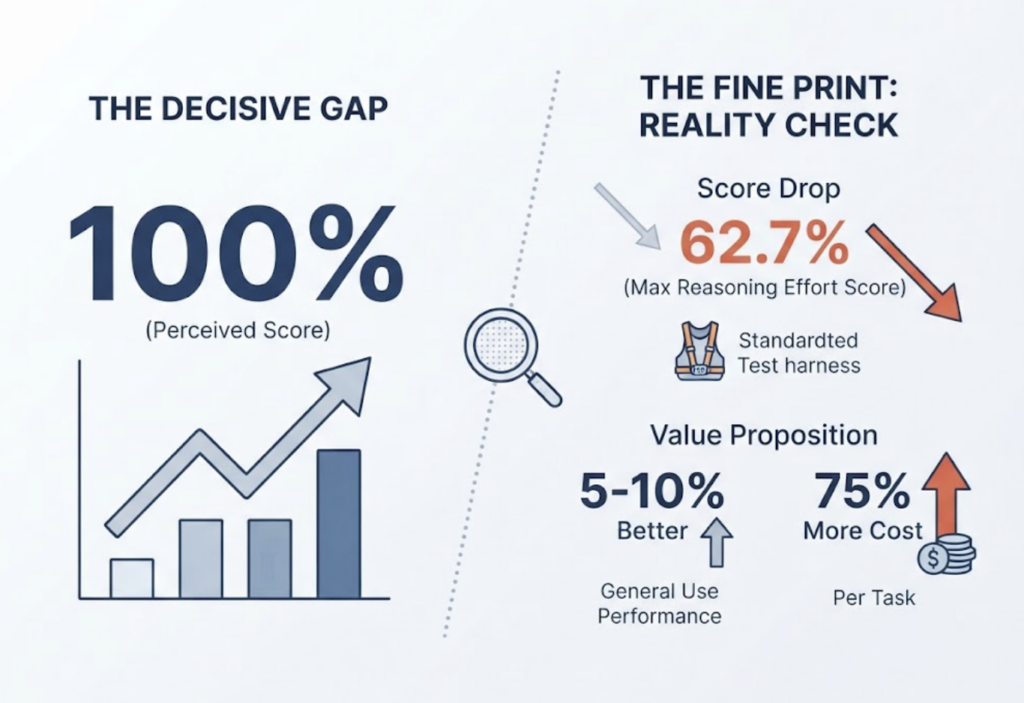
    ARC-AGI-3 (OpenAI harness)99.9%17.8%30.2% (Opus 5)
    Price per 1M tokens (in/out)$10 / $50$4 / $20—

    That ARC-AGI-3 gap looks decisive until you check the fine print. Run at max reasoning effort on the standard harness, Astra’s score drops to 62.7%, a swing of nearly 40 points depending on which test setup gets quoted. One analyst estimated Astra as only 5 to 10% better for general use at roughly 75% more cost per task.

    That single benchmark disagreement is a small taste of a much bigger disconnect.

    The Real Test: Did AI Search Engines Even Know Astra Existed?

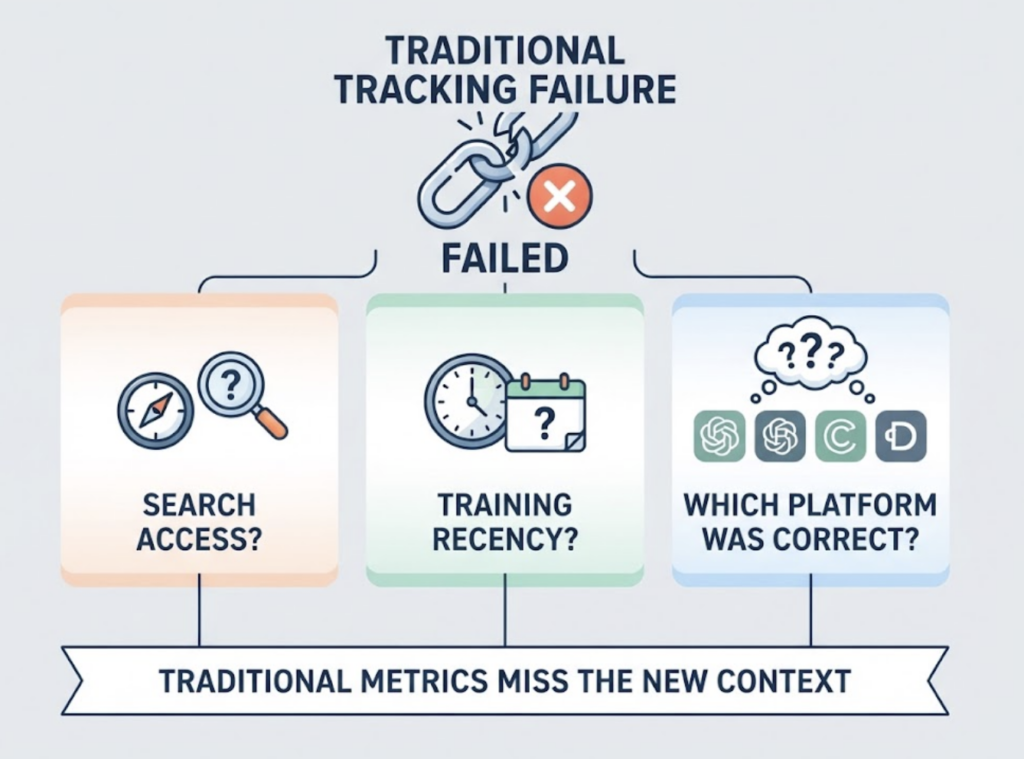
    Here’s the part that actually matters for anyone tracking AI visibility instead of AI capability. A few days after launch, one GEO research team ran the same question through four different assistants: does GPT-6 Astra exist?

    The results split cleanly along one line: whether the assistant had live web search turned on.

    AssistantSearch AccessAnswer
    ChatGPTOnCorrectly confirmed Astra
    PerplexityOnCorrectly confirmed Astra
    Claude Opus 5OffSaid it had no record of it
    Gemini 3.8 FlashOffSaid Astra “does not exist”

    Gemini went further and called the model a likely rumor or an April Fools’ joke. Astra was, at that point, a real product already being billed to enterprise customers.

    This is the actual leaderboard that matters in launch week. Two assistants got it right because they could reach live information. Two got it wrong, confidently, because their training data hadn’t caught up. Benchmark scores never entered the picture.

    Why the Two Leaderboards Keep Splitting Apart

    Reasoning benchmarks measure what a model can compute in a lab. AI visibility measures what a model, or a search assistant sitting on top of it, chooses to surface when a real person asks a real question.

    Those are different systems with different failure modes. A model can lead every coding benchmark and still get the news of its own existence wrong to a user who asked an offline assistant the day after launch.

    That’s the gap most teams still can’t see in their own category.

    Brand tracking built for Google rankings was never designed to catch this kind of failure. It has no concept of “did the assistant have search access,” “how fresh was the training cutoff,” or “which of the four platforms my customer actually used got it right.”

    How Teams Are Tracking This Kind of Gap in Real Time

    Watching one launch unfold across four assistants took a research team and a few days of manual prompting. Doing it continuously, across every AI platform a brand’s customers actually use, is a different problem.

    This is where Topify tends to be useful for marketing and GEO teams. Its Dynamic Competitor Benchmarking tracks how brands and products get described across ChatGPT, Perplexity, Gemini, and other major AI platforms, and flags the moment a mention, a ranking, or a recommendation shifts. Paired with Source Analysis, a team can trace exactly which domain an assistant pulled its answer from, which is often the difference between an assistant that’s current and one that’s citing a stale cache.

    In practice, that means a marketing team doesn’t have to guess whether their own product launch landed the way GPT-6 Astra’s did. They can see, platform by platform, whether the AI answer matches reality within hours, not after a research blog happens to run the test.

    The Week 2 Twist Nobody Priced In

    Just as the “did anyone notice” question settled, a second wave of noise hit. By the following week, users on X and Reddit were complaining that Astra had gotten noticeably dumber than it felt at launch, with one developer calling it “The Post-Launch Lobotomy.”

    It’s the same pattern GPT-5.6 Sol went through in July.

    Some builders switched back to Sol entirely over the cost-to-benefit trade, according to the same reporting. None of that shows up in a static benchmark table published on launch day. It only shows up if someone is watching sentiment and mentions change week over week, which is exactly the kind of drift that a one-time benchmark comparison will always miss.

    What This Means If Your Brand Launches Something Big Next

    The GPT-6 Astra week is a compressed version of what happens to any brand after a major announcement. Coverage spikes, some AI assistants catch up fast, others lag for days or weeks, and early sentiment can flip once the initial excitement wears off.

    Treat launch week as a monitoring window, not a one-time check. The assistants that get your story right on day one are not guaranteed to still have it right on day ten, and the ones that got it wrong on day one might correct themselves without you ever knowing when.

    Conclusion

    GPT-6 Astra didn’t lose the benchmark race. It didn’t clearly win it either, and that ambiguity is normal for major model launches. What stood out this week was a simpler signal: two of four assistants tested couldn’t confirm Astra existed at all. For anyone measuring how AI represents their brand rather than how AI performs on a leaderboard, that’s the number worth tracking after your own next announcement.

    FAQ

    Q: Is GPT-6 Astra actually smarter than Claude Fable 5.1?
    A: On the Artificial Analysis Intelligence Index, Astra scored 61.2 against Fable 5.1’s 65.7, so Fable 5.1 led on general reasoning at launch. Astra’s advantage showed up mainly in agentic coding, computer use, and cybersecurity benchmarks instead.

    Q: Why didn’t some AI assistants know about GPT-6 Astra right after launch?
    A: Assistants running without live web search rely on a training cutoff that predates the launch. Until they’re updated or given search access, they’ll answer from outdated information, sometimes confidently denying something that already shipped.

    Q: What’s the difference between AI visibility and a benchmark score?
    A: A benchmark measures raw model capability in controlled tests. AI visibility measures whether real AI assistants mention, recommend, or accurately describe a brand or product when actual users ask about it, which depends on search access, citation sources, and how current the assistant’s knowledge is.

    Q: How can a brand track whether AI assistants are describing it accurately?
    A: Continuous monitoring across the platforms a brand’s customers actually use is the practical approach, since dashboards checked once a quarter miss the kind of week-to-week shifts seen in the Astra launch.

    Read More

  • GPT-6’s Coding and CAD Strengths Are Rewriting Vertical GEO

    GPT-6’s Coding and CAD Strengths Are Rewriting Vertical GEO

    Your team assumed technical accuracy was the whole game. You wrote detailed documentation, published benchmark comparisons, and made sure every product claim was defensible. Then someone asked ChatGPT a question in your exact category, and the answer cited a GitHub thread and a niche engineering forum instead of anything you published. Nothing was wrong with your content. It just wasn’t the kind of source GPT-6 reaches for when the question gets technical.

    GPT-6 Astra’s Benchmark Jump Is Concentrated, Not Uniform

    OpenAI’s GPT-6 Astra launched on September 3, 2026, and the benchmark table tells a more specific story than “smarter model.” On BenchCAD, which tests whether a model can reconstruct a 3D object from multi-view renders by writing CAD code, Astra scores 95.9%, up from 83.3% for its predecessor GPT-5.6 Sol and ahead of Claude Fable 5.1’s 84.3%. On Terminal-Bench 4.0, which covers software engineering and system configuration tasks, Astra jumps to 57.7% from Sol’s 37.3%.

    That’s a real gain, and it’s concentrated in tasks that look like engineering work rather than general programming.

    On DeepSWE v1.1, a 113-task agentic coding benchmark, the field bunches up tightly: Astra at 74.1%, Claude Opus 5 at 73.7%, a Gemini Flash model at 73.8%, and Fable 5.1 at 67.4%. On FrontierCode 1.1 Main, Astra and Fable 5 land within a fraction of a point of each other. Artificial Analysis’s Coding Agent Index, which blends several of these tests, puts Astra at 67.0 against Fable 5’s 67.2 and Opus 5’s 68.1.

    The pattern is a specialization, not a sweep. GPT-6 pulled ahead where the task involves geometry, terminal workflows, and hands-on system operation. On broad software engineering benchmarks, it’s roughly tied with the rest of the frontier field.

    Why Coding and CAD Recommendations Work Differently

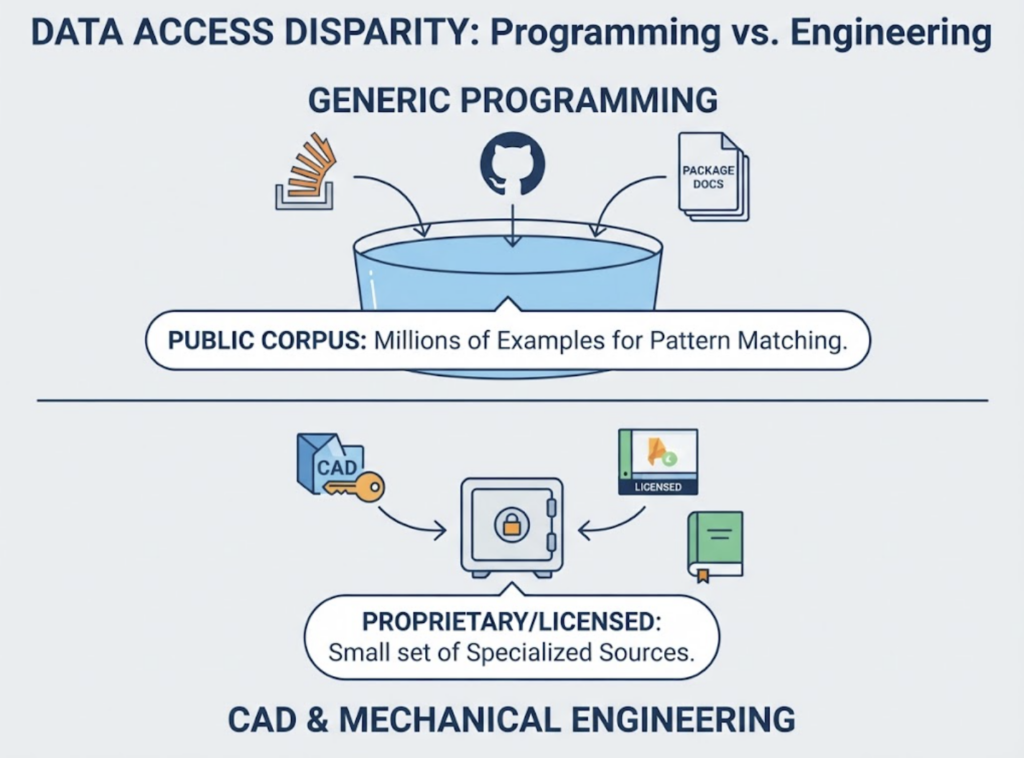
    Generic programming questions draw on an enormous, public corpus. Stack Overflow threads, GitHub issues, and package documentation give a language model millions of examples to pattern-match against. CAD and mechanical engineering don’t work that way. The geometry lives inside proprietary file formats, licensed software, and a much smaller set of specialized sources.

    That gap is showing up in independent testing. A comparison run called CAD Arena had six models rebuild 18 real parts across five CAD environments, including SolidWorks, Onshape, Siemens NX, and Fusion. GPT-6 Astra scored best in Onshape with 0.723 points, while Fable 5.1 led in SolidWorks at 0.710. The testers also noted that Astra’s Fusion run cost roughly $5.11 per part, compared with about $16.35 for Fable 5.1 on the same task, excluding CAD license fees.

    The model choice mattered more than the software choice, according to the same test.

    Creators have already been running Astra directly inside Onshape, SolidWorks, and FreeCAD through MCP connections, generating multi-part assemblies (a 41-part turbojet in one documented run) and exporting working STEP files. One breakdown of a weekend’s worth of these demos noted that the same underlying model family kept appearingacross architecture, robotics, and mechanical projects, each surfacing through a different plugin or integration.

    The Coding Side Has Its Own Version of This Pattern

    The coding half of Astra’s gains tells a related but separate story. On Terminal-Bench 4.0, which runs agents through real terminal sessions rather than isolated code snippets, Astra’s jump from 37.3% to 57.7% lines up with a cost drop too, coming in at roughly 9% below Sol and 63% below Fable 5.1 on the same tasks. On an internal database migration benchmark, Astra reaches 63.9% against Sol’s 42.7% and Fable 5.1’s 57.8%.

    Terminal work and database migrations are hands-on-a-live-system tasks, closer in spirit to CAD’s “operate the software” pattern than to writing a self-contained function. The sources that inform good answers here (shell scripting conventions, migration tooling docs, DevOps runbooks) sit in a different corner of the internet than the CAD community threads discussed above, but they share the same trait: narrow, technical, and largely invisible to a GEO strategy built around general product content.

    The Model Sits Above the Software, Not Inside It

    None of this replaces CAD systems. Autodesk, Siemens, and SolidWorks are all shipping their own natural language assistants, and the geometry engine, constraints, and file formats stay with the CAD software. What GPT-6 adds is the ability to hold a longer chain of steps together: read a drawing, generate code, check the render, fix an error, and move to the next component without a person handing off each stage manually.

    That distinction matters for GEO. If AI treats CAD software as a tool it operates rather than a topic it discusses in the abstract, the sources it trusts for “how do I do X in SolidWorks” are going to be documentation, community threads, and demonstrated workflows, not marketing pages.

    The Vertical GEO Blind Spot Most Brands Haven’t Noticed

    Most GEO advice still treats “AI search visibility” as one problem with one playbook: publish structured content, earn citations, get mentioned. That playbook was built and validated largely on general consumer and SaaS queries, and it works reasonably well there. Research on generative engine optimization has found that targeted content changes can lift visibility in AI answers by as much as 40%, with the biggest gains going to smaller, previously under-ranked sites.

    A generic GEO checklist doesn’t survive contact with a CAD workflow.

    Ask GPT-6 a question about your general product category and it likely draws on the same mix of reviews, comparison articles, and brand content that any GEO strategy targets. Ask it how to model a specific bracket in Fusion or debug a build error in a terminal session, and it reaches for a different layer entirely: official API docs, GitHub repositories, Reddit threads in r/SolidWorks or r/FreeCAD, and benchmark papers like the one behind BenchCAD itself. Your brand can be well optimized for the first kind of query and completely invisible in the second, and a single visibility score won’t tell you which is happening.

    What Changes When the Vertical Gets More Technical

    General SaaS / consumer verticalCoding, CAD, and engineering vertical
    Primary AI sourcesReviews, comparison content, brand pagesOfficial docs, GitHub, forums, benchmark papers
    Buyer roleMarketer, ops lead, generalistEngineer, developer, technical evaluator
    What AI is doingSummarizing opinions and featuresReasoning through a workflow or task
    GEO risk if ignoredMissed brand mentionsMissed inclusion in the actual technical answer

    Tracking Visibility Where GPT-6 Actually Looks

    The practical fix isn’t a different GEO philosophy. It’s tracking the right sources for the vertical you’re actually in. Topify approaches this through Source Analysis, which surfaces the specific domains and URLs that AI platforms cite when they answer a question, so a CAD or developer tools brand can see whether it’s showing up next to GitHub and official documentation, or missing from that set entirely.

    Paired with Competitor Monitoring, the same setup tracks who GPT-6 and other models recommend for a given technical prompt, and how that ranking shifts as new integrations or benchmark results land. For a team trying to figure out how to track AI search visibility across a technical vertical specifically, that combination is closer to what the job actually requires than a single aggregate score.

    In practice, that means a CAD software vendor can spot that GPT-6 keeps citing a competitor’s API documentation for a specific modeling task, trace it to a documentation gap, and fix the content problem instead of guessing at a broader brand messaging issue.

    Conclusion

    GPT-6’s gains in coding and CAD aren’t evidence that AI got smarter across the board. They’re evidence that specific technical verticals now have their own recommendation logic, built on a narrower and more specialized set of sources than the ones general GEO content targets. Brands competing in coding, CAD, or engineering software need to know which sources GPT-6 is actually citing for their category, not just whether their brand name shows up somewhere in an AI answer.

    FAQ

    Q: Does GPT-6 Astra replace CAD software like SolidWorks or Fusion? 

    A: No. Independent testing and OpenAI’s own framing describe Astra operating CAD software through APIs and MCP connections, generating and editing geometry, while the CAD application still owns the file formats, constraints, and rendering.

    Q: Why does GPT-6 score so much higher on BenchCAD than on general coding benchmarks?

    A: BenchCAD tests a narrower skill (reconstructing CAD geometry from images), where Astra jumped from 83.3% to 95.9%. On broader coding benchmarks like DeepSWE, it’s close to Fable 5.1, Opus 5, and Gemini Flash, suggesting the gain is concentrated rather than general.

    Q: Is GEO different for developer tools compared to CAD or engineering brands? 

    A: The source types overlap (both lean on GitHub and technical forums), but developer tools GEO tends to run through code repositories and package registries, while CAD and mechanical engineering GEO runs through proprietary software documentation, benchmark papers, and specialized communities tied to specific applications.

    Q: How do I know if my brand is visible in GPT-6’s answers for my technical vertical? 

    A: You need visibility tracking that reports on the specific sources cited for your category’s prompts, not just overall brand mention counts, since technical verticals draw on a much narrower source set than general consumer queries.

    Read More

  • From Typing a Search to Asking Astra: How Behavior Is Shifting

    From Typing a Search to Asking Astra: How Behavior Is Shifting

    Your team spent two years building a decision funnel: SEO content, comparison pages, retargeting ads engineered to catch someone mid-search. Then a customer stopped typing altogether. They opened ChatGPT, described what they needed, and let GPT-6 Astra find, compare, and recommend an option without ever touching a search box or landing on your site. The funnel didn’t break. It got skipped.

    That’s not a hypothetical anymore. Astra doesn’t just answer questions. It browses, executes multi-step tasks, and increasingly makes the call before a person ever sees a list of options.

    GPT-6 Astra Doesn’t Just Answer. It Goes and Does.

    OpenAI released GPT-6 Astra to a limited set of organizations on September 3, 2026, with general availability the next day across ChatGPT Plus, Pro, Business, and Enterprise, plus the API and AWS.

    The headline difference isn’t a smarter chatbot. It’s a model built for agentic computer use: browsing sites, comparing options, and completing multi-step workflows on its own. Astra scores 91.5% on BrowseComp, the benchmark for browsing, reading, and compiling information across the web, and 98.6% on ARC-AGI-3, a jump OpenAI’s own president tied to the start of what he called the AGI era.

    That’s the shift. Older models answered a question and left the deciding to you. Astra can take the question, do the research across multiple sites, and hand you a finished recommendation.

    The Data Behind the Shift: Consumers Are Already Skipping the Search Box

    Astra didn’t create this pattern. It’s accelerating one that was already underway. 37% of consumers now start their searches with AI tools rather than Google, up from a rounding error two years ago.

    The shift is sharper in B2B. 51% of B2B software buyers now start their research in an AI chatbot more often than Google, and 71% use one somewhere in the process. ChatGPT itself crossed 1 billion monthly active users in May 2026, making it the fastest app in history to reach that mark.

    People also seem to like what they’re getting. 60% of users say AI delivers clearer answers than traditional search, and only 6% say it’s worse.

    That said, trust hasn’t fully caught up to adoption. 85% of AI users still double check the answer somewhere else. People are handing off the legwork, not the final judgment, at least not yet.

    What Changes When the Assistant Does the Browsing, Not the User

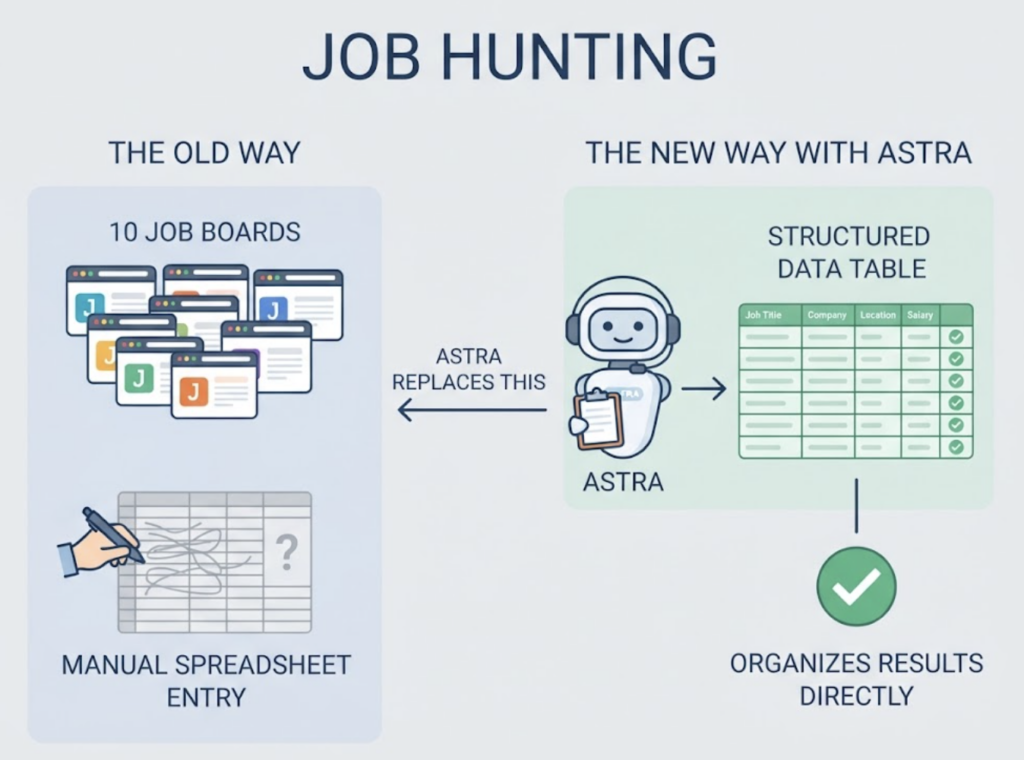
    Job hunting is a good example of what Astra actually replaces. Instead of opening ten job boards and copying listings into a spreadsheet, Astra browses the boards, extracts structured data, and organizes the results directly.

    Apply the same pattern to buying a product, choosing software, or picking a service provider, and the comparison shopping that used to generate a dozen page views for a dozen competing brands now happens inside a single agent session. Nobody clicked through. Nobody scrolled a results page. The decision still got made.

    ChatGPT is already behaving less like a destination and more like a router. 21.6% of all ChatGPT outbound traffic goes back to Google, and the buyer journey increasingly runs ChatGPT to Google to the brand’s own site, if it gets there at all. When it does convert, it tends to convert well: AI-referred traffic converts 42% better than non-AI traffic.

    The traffic that shows up is valuable. The traffic that never shows up because Astra already made the call is the part most dashboards can’t see.

    The Old Visibility Playbook Doesn’t Cover This Layer

    Zero-click search was already a problem before Astra. Between 58% and 60% of Google searches end without a click, and that climbs toward 83% when an AI Overview sits at the top of the page. Astra pushes the same logic further: not just fewer clicks, but fewer moments where a human ever compares options directly.

    Traditional SEO metrics were built to measure whether a page ranks, not whether an agent chooses to mention, recommend, or route around a brand mid-task. Ranking first on a results page and being invisible inside an agentic workflow can both be true at the same time.

    The generational split hints at where this goes next. Among 13 to 24 year olds, Google holds 74% share versus ChatGPT’s 17%, compared to 89% versus 5% among people 65 and older. The habit is forming youngest first, which usually means it isn’t done growing.

    You can rank first on Google and still be invisible to Astra.

    How Topify Tracks Where GPT-6 Astra Sends the Decision

    This is the layer Topify was built to cover. Its Comprehensive GEO Analytics tracks brand performance across major AI platforms, including newly launched models like GPT-6 Astra, through seven metrics: visibility, sentiment, position, volume, mentions, intent, and CVR.

    For a marketing team trying to understand agentic search specifically, two capabilities matter most. High-Value Prompt Discovery surfaces the prompts and task types where AI platforms are already making recommendations in your category, so you can see which agentic queries are actually shaping purchase decisions before a person ever compares options themselves. Dynamic Competitor Benchmarking shows who gets recommended instead of you, in something closer to real time, so a drop in mentions doesn’t sit undetected for a quarter.

    In practice, this means a brand can spot that Astra started routing a category of buyers toward a competitor, trace it to a specific source Astra is citing, and act on it before the next reporting cycle rather than after. If you want to see where your brand currently stands in that layer, you can get started with Topify directly.

    Conclusion

    The search box isn’t gone, but it’s no longer the only place a decision gets made. GPT-6 Astra is pulling more of that decision into a single agent session, one where browsing, comparing, and choosing all happen before a person sees a results page. Brands that only track rankings and click-through rate are measuring a shrinking part of the picture. The practical next step is simple: find out what Astra and the other major AI platforms are already saying about you, before a customer asks and acts on the answer without you knowing it happened.

    FAQ

    Q: What makes GPT-6 Astra different from earlier AI models for search behavior? 

    A: Astra is built for agentic computer use, meaning it can browse, compare, and complete multi-step tasks on its own rather than just returning an answer. That shifts more of the research and comparison stage of a purchase away from the user and into the AI session itself.

    Q: Are consumers actually skipping traditional search because of this? 

    A: Adoption was already climbing before Astra, with 37% of consumers starting searches with AI tools instead of Google and over half of B2B software buyers starting research in a chatbot. Astra’s agentic abilities are extending that shift from answering questions to executing the comparison itself.

    Q: Does this mean traditional SEO no longer matters? 

    A: No. Google still handles the majority of global search volume, and most AI users still double check answers elsewhere. What’s changing is that ranking well no longer guarantees an AI agent will mention or recommend your brand during a task, so the two need to be tracked separately.

    Q: How can a brand tell if GPT-6 Astra is recommending it or a competitor? 

    A: That requires monitoring AI-specific metrics like visibility, sentiment, and position across platforms, which is what tools like Topify’s GEO analytics are built to track, rather than relying on traditional search rankings alone.

    Read More

  • GPT-6 Resets the Clock on AI Knowledge Freshness

    GPT-6 Resets the Clock on AI Knowledge Freshness

    Most brands still think about “fresh content” the way Google taught them to: publish something, keep it up, wait for a ranking bump. Then GPT-6 shows up with a training cutoff months before its release date, a web search tool bolted on, and a completely different idea of what “current” means. That gap between what a model remembers and what it looks up is exactly where AI knowledge freshness lives, and it just moved.

    What AI Knowledge Freshness Actually Means

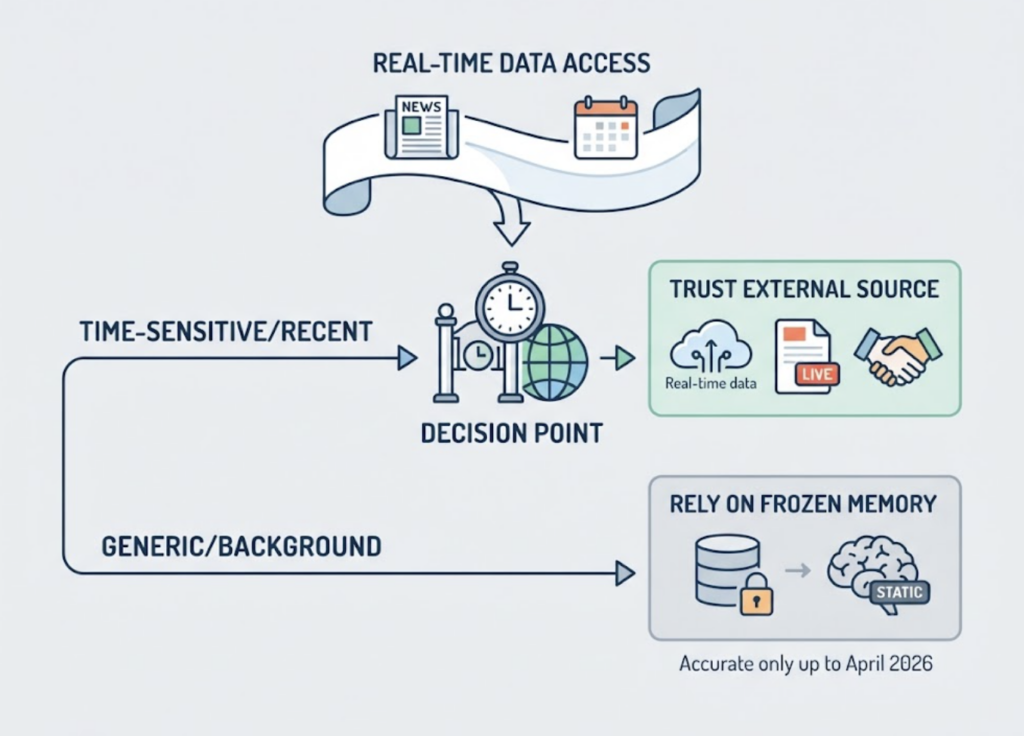
    Every large language model has two separate clocks running at once. The first is the training cutoff: the point where the model stopped learning from new data. The second is whatever it can pull in through live tools at the moment you ask it something.

    GPT-6 Astra illustrates this well. OpenAI’s flagship model carries a knowledge cutoff of April 30, 2026, but reached general availability months later, in September 2026. That lag between cutoff and release is not unusual. A training-to-release gap of six to twelve months is typical across major model families, which means even a freshly launched model is already behind the present day before anyone opens a chat with it.

    This is the part most marketing teams skip past. A model’s internal memory is frozen the day training data collection stops. Everything after that date exists only if the model reaches out and grabs it, and whether it bothers to reach out depends on the query, the tool configuration, and increasingly, on how confident the model is that its own memory is stale.

    What Changed With GPT-6 Specifically

    GPT-6 Astra ships with a 1,050,000-token context window and native access to web search, file search, and other retrieval tools. That is a meaningful jump from earlier GPT-5.x models, and it shifts more of the “freshness” burden from training data onto live retrieval.

    Here’s the tradeoff. A bigger context window and better tool use mean Astra can pull in more real-time information per query. But the model still has to decide when to bother. For anything time-sensitive, brand-specific, or recently changed, it needs a reason to trust an external source over its own frozen memory. Content that signals recency clearly gives it that reason. Content that doesn’t gets treated as background knowledge, accurate only up to April 2026.

    That’s the actual shift GPT-6 introduces. It’s not that the model became worse at knowing things. It’s that the line between “what GPT-6 knows” and “what GPT-6 has to go find” got sharper, and brands now sit on the wrong side of that line by default unless they actively signal otherwise.

    Why AI Search Now Rewards Recent Content More Than Ever

    The data backs this up across every major AI platform, not just GPT-6. A 2026 Seer Interactive study found that 75% of the pages cited by large language models had been updated within the past year. Only 3% of citations went to content untouched for five years or more.

    The more interesting finding is how pages earn that freshness. Seer’s research shows that when a page’s original publish date is used instead of its last update date, the citation rate for “recent” content drops from 72% to 42%. In plain terms, models are rewarding maintained pages, not new ones. More than a quarter of the pages the study classified as fresh were first published over two years ago and simply kept current.

    That pattern holds up across independent research. Ahrefs’ analysis of roughly 17 million citations found that AI-cited content averages about 2.9 years old, versus 3.9 years for content ranking in Google’s organic top ten, a 25.7% freshness gap. Separately, AirOps’ 2026 research found that 83% of commercial citations come from pages updated in the past year, and pages left untouched for more than three months become three times more likely to drop out of AI answers entirely.

    Recency doesn’t weigh the same everywhere though. GrowByData’s engine-level breakdown puts the citation lift for content under 30 days old at roughly 3.2x for ChatGPT, 2.6x for Perplexity, 2.1x for Gemini, and only 1.3x for Claude, which weights authority more heavily than recency.

    AI EngineCitation lift for content under 30 days oldRecency sensitivity
    ChatGPT~3.2xHigh, especially news, tech, finance
    Perplexity~2.6xVery high, recency is the core promise
    Gemini~2.1xHigh on Google-linked queries
    Google AI Overviews~1.8xModerate, topic-dependent
    Claude~1.3xLower, weights authority more

    Since GPT-6 Astra now powers ChatGPT, that top row matters most for anyone trying to stay visible there. ChatGPT’s recency lean was already the strongest among major engines, and a model with a wider training-to-release gap has even more reason to defer to fresh, well-timestamped sources.

    The Blind Spot Most Brands Have Right Now

    Most GEO strategies were built around a one-time content push, not a maintenance schedule.

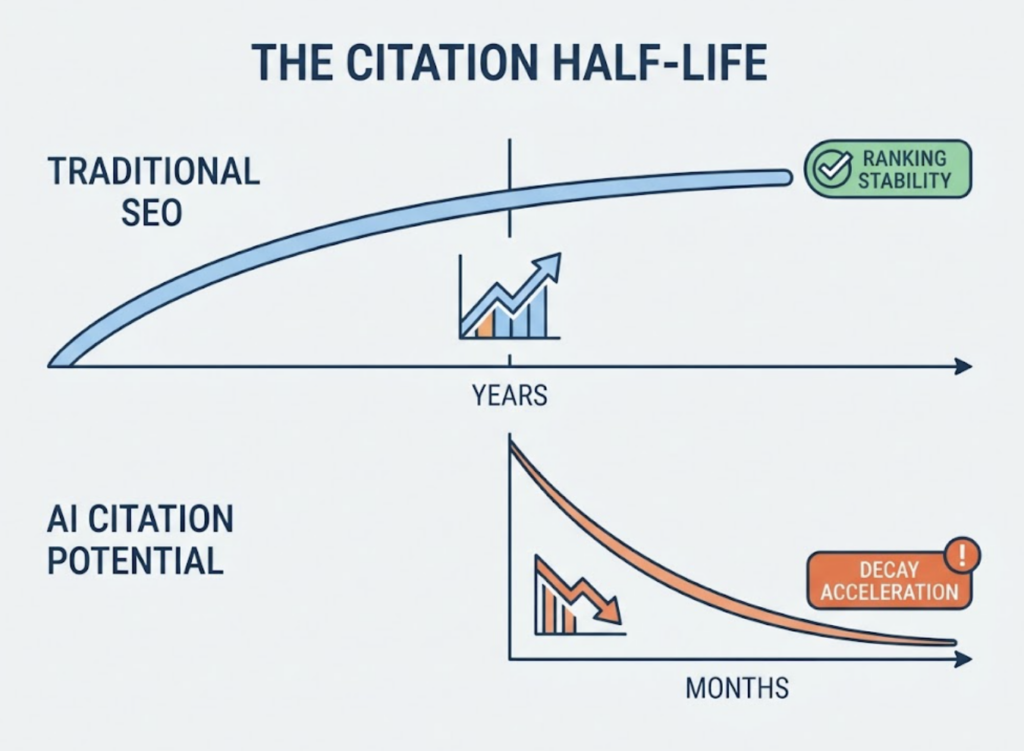
    That’s the gap GPT-6 just made more expensive. A page published eighteen months ago and never revisited isn’t just aging quietly. It’s actively losing citation share every quarter, at a rate the newest research puts around three times higher risk of dropping out of AI answers once it crosses the three-month mark without an update.

    Teams that treat GEO like a launch instead of an ongoing operation are optimizing for a version of AI search that no longer exists.

    It’s an easy trap to fall into. Traditional SEO rewarded patience. A well-built page could rank for years with minor tweaks, and content teams learned to treat publishing as the finish line. AI citation behavior doesn’t follow that same curve. The half-life on a page’s citation potential is measured in months, not years, and a model release like GPT-6’s can accelerate that decay simply by shifting how much weight the engine puts on recency versus raw authority.

    How to Know If Your Brand Still Looks Fresh to AI

    Guessing whether your content still reads as current to GPT-6 isn’t a great strategy, since the freshness signals models respond to (last-modified dates, sitemap timestamps, visible on-page dates, and actual content changes) aren’t things you can eyeball across dozens of pages.

    This is where Topify fits in. Its Source Analysis feature tracks which domains and specific URLs AI platforms are actually citing right now, alongside how recently those sources were updated. Instead of assuming your evergreen guide from last year still counts as fresh, you can see whether GPT-6 and other engines are still pulling from it, or whether they’ve quietly moved on to a competitor’s more recently touched page.

    Paired with AI Volume Analytics, which tracks how search behavior around a topic shifts after a model release like Astra’s, teams get a clearer read on whether a drop in AI mentions is a content problem or just a broader shift in what people are asking about post-launch. Visibility Tracking adds the other half of the picture, showing whether your brand’s mention frequency across ChatGPT, Gemini, and Perplexity moved at all once GPT-6 rolled out, so freshness fixes can be pointed at the pages actually losing ground instead of applied blindly across the whole site.

    What to Do Before the Next Model Update

    A few concrete moves matter more than a full content overhaul:

    • Audit your highest-traffic pages for last-updated dates, not just publish dates, and refresh anything past the six-month mark.
    • Make sure dateModified schema, visible on-page dates, and sitemap lastmod values actually match. Mismatched signals undercut the freshness case even when the content itself was updated.
    • Prioritize refreshing pages that already earn citations over publishing net-new content. Maintained authority typically outperforms volume.
    • Set a recurring review cycle, quarterly at minimum, rather than treating freshness as a one-time fix.
    • Track citation source data over time so you catch decay before traffic drops, not after.

    None of this requires guessing what the next model update will look like. It requires treating freshness as infrastructure instead of a launch checklist, so the next clock reset doesn’t catch your content flat-footed again.

    Conclusion

    GPT-6 didn’t invent the freshness problem, but its training-to-release gap and heavier reliance on live retrieval made the cost of stale content more visible than it’s ever been. Brands that keep publishing once and walking away are competing against pages that get revisited every quarter. Get started with Topify’s Source Analysis to see exactly where your content stands with the models people are actually using today.

    FAQ

    Q: What is GPT-6’s knowledge cutoff date? 

    A: GPT-6 Astra’s published knowledge cutoff is April 30, 2026, even though the model reached general availability months later, in September 2026.

    Q: Does GPT-6 search the web in real time? 

    A: Yes. GPT-6 Astra includes an integrated web search tool alongside file search and other retrieval tools, letting it pull in information published after its training cutoff when a query calls for it.

    Q: How often should brands update content to stay visible in AI search? 

    A: Recent research points to a quarterly refresh cycle as a reasonable minimum, since pages left untouched for more than three months become notably more likely to lose AI citations entirely.

    Q: Does content freshness matter equally across every AI platform? 

    A: No. ChatGPT and Perplexity show the strongest recency bias, while Claude weights source authority more heavily than how recently a page was updated.

    Read More

  • GPT-6 Astra’s Reasoning Gains and What They Mean for B2B Authority

    GPT-6 Astra’s Reasoning Gains and What They Mean for B2B Authority

    OpenAI released GPT-6 Astra on September 3, 2026, and the benchmark sheet reads differently than past launches. Astra hit 96 percent on GPQA Diamond, a test built from PhD-level questions across biology, chemistry, and physics. It scored 97.6 percent on FrontierMath Tier 4, a benchmark designed to be nearly unsolvable. It also carries a 1.05 million token context window, big enough to hold an entire technical library in a single pass.

    None of that is a party trick. A model that reasons at this level doesn’t just answer questions. It checks them. And that changes something most B2B brands haven’t priced in yet: how their content gets treated when the reader asking is a model that can tell the difference between an expert claim and an expert-sounding one.

    A Model That Scores 96% on Expert-Level Questions Doesn’t Cite Casually

    Think about what a 96 percent score on GPQA Diamond actually implies. The model isn’t retrieving a memorized answer. It’s working through the logic well enough to catch a wrong premise on its own.

    That capability carries over to how Astra treats outside sources. With a context window large enough to hold your site, your competitor’s site, and the relevant research in one place, Astra can cross-check a claim against several sources before it decides which one survives in its answer. Reporting on Astra’s retrieval behavior describes exactly this: a flagship-level reader that can hold a brand’s entire site and its competitors in context, verify claims against each other, and surface the source that holds up under scrutiny.

    That’s a meaningfully different bar than a model that summarizes the first plausible-looking page it finds. Vague authority claims don’t survive that kind of scrutiny. Specific, checkable ones do.

    Professional Queries Are a Different Game Than Consumer Queries

    A question about the best coffee maker and a question about SOC 2 compliance requirements don’t get treated the same way by a reasoning-heavy model, and they shouldn’t.

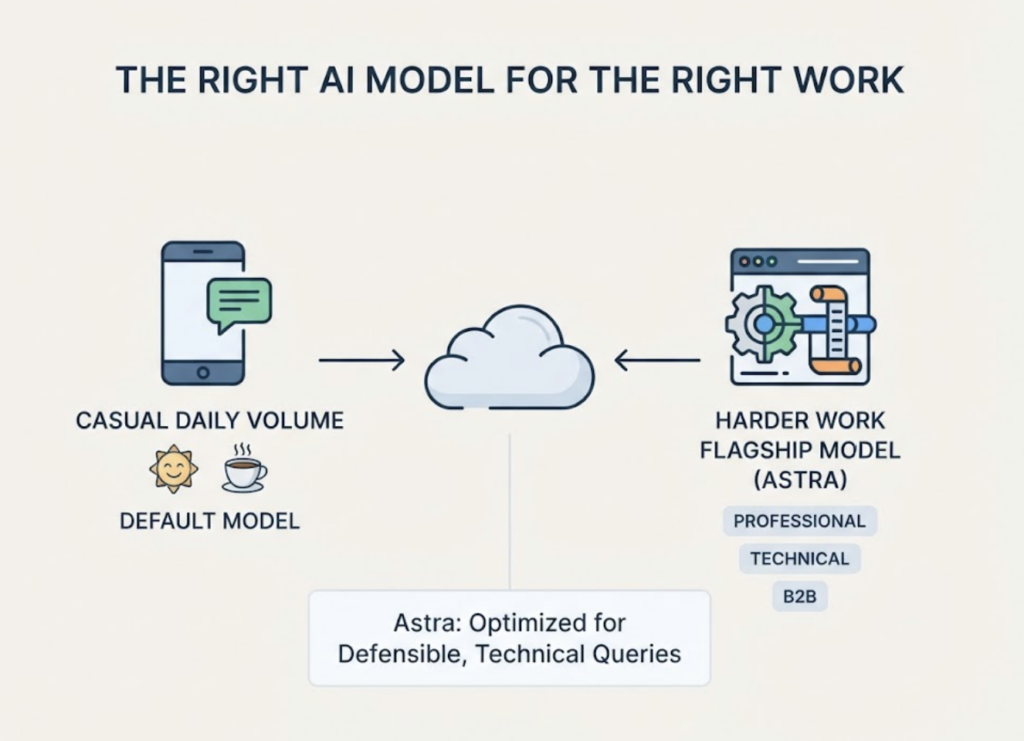
    Astra is explicitly positioned by OpenAI as a flagship users select for harder work, not the default model handling casual daily volume. That framing matters because it means Astra shows up disproportionately in exactly the kind of professional, technical, and B2B queries where the answer needs to be defensible, not just popular.

    You can already see this pattern play out in high-stakes professional use. Legal teams experimenting with Astra for case research are being warned, repeatedly, that fabricated or outdated citations remain a real risk, and that every reference still needs manual verification before it goes anywhere near a filing or a client memo. That caution exists precisely because the professional-query context has consequences that a casual chatbot answer never had.

    The lesson for B2B content isn’t “write more.” It’s that the model is now actively looking for reasons to trust or distrust a source, in a category of query where trust is the entire point.

    What Actually Signals Authority to a Reasoning-Heavy Model

    Here’s the part that should reshape a content roadmap. Reporting on Astra’s citation behavior draws a clean line: content built on specifics, named authorship, and consistency across the web gains ground, while generic positioning language loses it.

    That lines up with what B2B buyers themselves already say drives trust. In G2’s Answer Economy research, nearly half of buyers, 45 percent, name citations from independent software review sites as the single most confidence-inspiring signal inside an AI-generated answer, ahead of a vendor’s own marketing copy. Buyers aren’t rewarding brands that claim expertise. They’re rewarding the ones a third party can back up.

    A few concrete signals carry weight with this kind of model:

    SignalWhy it matters to a reasoning model
    Named authors with real credentialsGives the model an entity to verify, not just a claim to accept
    Dated, specific data pointsSpecifics survive cross-checking; vague claims don’t
    Consistent facts across your site and third-party mentionsContradictions get flagged during verification
    Independent review site and analyst coverageMatches what buyers themselves already trust as a signal

    None of this is new marketing advice. What’s new is that a model capable of GPQA-level reasoning is now the one grading it.

    Why This Raises the Stakes for B2B and Vertical Brands Specifically

    Consumer brands mostly compete for attention. B2B and vertical brands, Fintech, enterprise SaaS, legal tech, healthcare, compete for something closer to trust, and trust is exactly what a reasoning-heavy model is built to interrogate.

    The buyer-side numbers make the stakes concrete. Forrester’s 2026 Buyers’ Journey survey, covering roughly 18,000 global buyers, found 94 percent of B2B decision-makers used a large language model somewhere in their purchase process, up from 89 percent the year before. G2’s research puts a sharper point on it: 51 percent of B2B software buyers now start their research inside an AI chatbot rather than Google, and 69 percent say they picked a different vendor than they originally planned based on what the chatbot recommended.

    That last figure is the one worth sitting with. AI tools aren’t just influencing awareness anymore. They’re actively reordering B2B shortlists, and a model like Astra, tuned specifically for professional reasoning, is a disproportionate part of how those shortlists get assembled for technical and regulated categories.

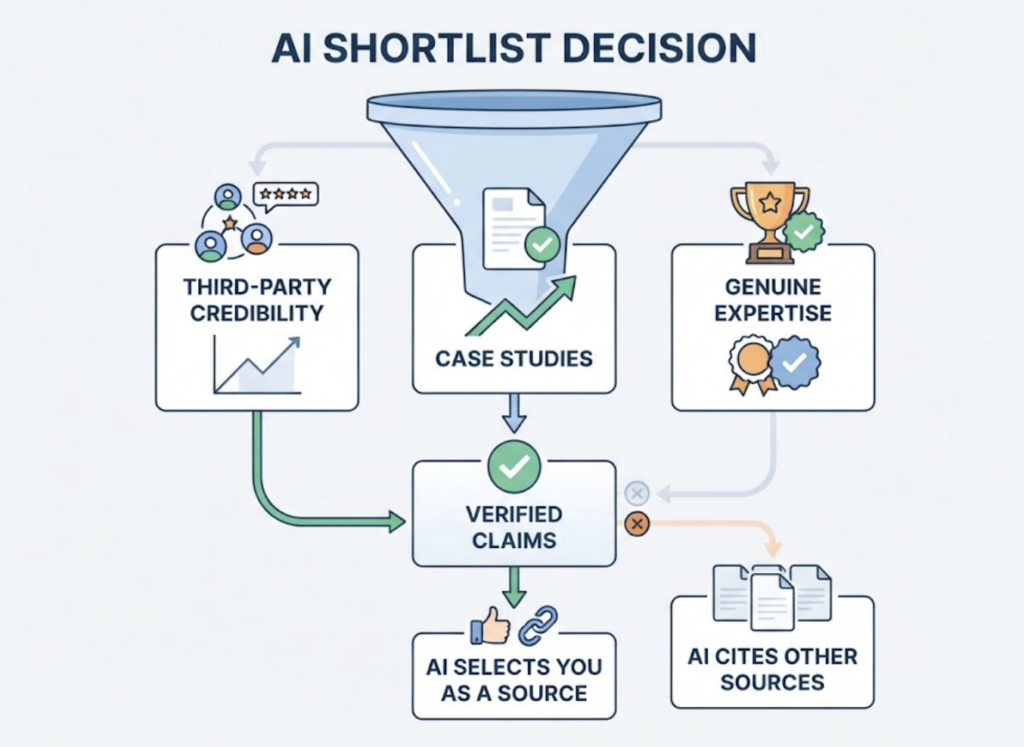
    Separate analysis covering 680 million AI citations backs this up from another angle: third-party credibility, case studies, and genuine documented expertise are increasingly what a model draws on to decide who even makes the shortlist in the first place. If Astra can’t verify your claim of expertise, it has plenty of other sources it can cite instead.

    There’s also a platform-fragmentation problem sitting underneath all of this. That same citation analysis found the volume of citations a single brand gets can differ by as much as 615 times between AI platforms, and only about 11 percent of domains get cited by both ChatGPT and Perplexity. A brand that’s earned Astra’s trust on a technical question is not automatically earning Gemini’s or Claude’s. Authority, in other words, doesn’t transfer automatically across models the way domain authority once transferred across search engines.

    How to Know Where Your Brand Stands in This New Authority Race

    The uncomfortable part is that most B2B marketing teams don’t currently know whether Astra treats them as a credible source or not. Traffic dashboards don’t show which domains got cited inside a professional answer, and rankings don’t exist in a category with no result list to rank on.

    This is where Source Analysis becomes the more useful lens than a traditional SEO report. It tracks the exact domains and URLs that AI platforms cite in response to a given prompt, so instead of guessing whether your whitepaper or documentation is being treated as an authority, you can see whether it’s actually showing up in the answer.

    Paired with Comprehensive GEO Analytics, which monitors sentiment and position alongside raw mention volume, a brand can watch whether its standing in professional, high-reasoning queries is moving in the right direction as newer models roll out. Dynamic Competitor Benchmarking adds the other half of the picture: whether a competitor with thinner but more specific content is quietly winning the citations your brand assumed it owned.

    For a marketing team that has spent years building “thought leadership” content on brand instinct, this is the first time that instinct can be checked against what a model like Astra is actually doing with it.

    That check matters more the deeper a buyer gets into the funnel. G2’s research found trust in review-site citations actually grows as buyers move from initial discovery toward a renewal decision, climbing from 40 percent of buyers at the top of the journey to 47 percent near the end. A brand that only shows up well in early, broad queries but disappears from the specific, high-reasoning questions asked later in a deal cycle is leaking authority exactly where it counts most.

    Conclusion

    A model that scores near the ceiling on expert-level reasoning benchmarks doesn’t get more generous with citations. It gets more selective. For B2B and vertical brands, that turns authority from a tone you adopt into a claim you now have to be able to defend, source by source, in front of a model built to check your work.

    The brands that treat this as a monitoring problem, not just a content problem, are the ones that will find out early whether Astra sees them as the expert answer or as one more page it decided not to trust.

    FAQ

    Does GPT-6 Astra change how B2B brands should write content? 

    Yes, indirectly. Astra’s stronger reasoning and cross-source verification reward specific, dated, attributable claims over generic positioning language, since the model is actively checking sources rather than summarizing the first plausible result.

    What makes a source trustworthy to a reasoning-heavy AI model like Astra? 

    Named authorship, verifiable and dated data, and consistency between your own site and independent third-party mentions. Buyer research shows independent review sites already carry outsized trust, and models built for verification tend to weigh the same kind of proof.

    How can a brand track whether it’s being cited in professional AI answers? 

    Traditional analytics won’t show this, since there’s no ranking to track. Tools like Topify’s Source Analysis and Comprehensive GEO Analytics show which domains actually get cited in AI-generated answers to relevant professional prompts, and how that citation volume and sentiment shift over time.

    Read More

  • What GPT-6’s Price Increase Means for AI Visibility Budgets

    What GPT-6’s Price Increase Means for AI Visibility Budgets

    Your team built a support bot on GPT-5.6 that cost about $4 per million input tokens. Then OpenAI shipped GPT-6, priced at $10 in and $50 out, and your finance team asked why the AI line item just doubled without anyone approving a budget increase. Most marketing and growth teams assumed model upgrades meant better output, not a line item that quietly reshapes what they can afford to track and produce.

    The New Math Behind GPT-6’s API Bill

    GPT-6 Astra, OpenAI’s flagship model, launched on September 3, 2026 at $10 per million input tokens and $50 per million output tokens on the standard tier. That’s 2.5 times the promotional rate of GPT-5.6 Sol, which ran $4 in and $20 out. Cached input runs $1 per million, and cache writes cost $12.50.

    The bill gets worse past a specific line. Requests over 272,000 input tokens reprice the entire request, not just the overflow, at $20 in and $75 out. A request sitting at 270,000 tokens costs roughly half of one sitting at 275,000 tokens, purely because it crossed a threshold most teams never check.

    Reasoning tokens add a second surprise. They bill at output rates even though the user never sees them, which means chatty reasoning models can quietly inflate a bill that looked fine on paper.

    Not All AI Spend Feels This Increase the Same Way

    Here’s the distinction most budget reviews miss: AI spend splits into two buckets, and GPT-6’s pricing hits them unevenly. Content generation, support automation, and internal copilots consume tokens at volume, so a 2.5x price jump on output tokens lands directly on the invoice. A support workflow processing 2 million input and 500,000 output tokens a month now costs roughly $45, up from about $18 on GPT-5.6 Sol.

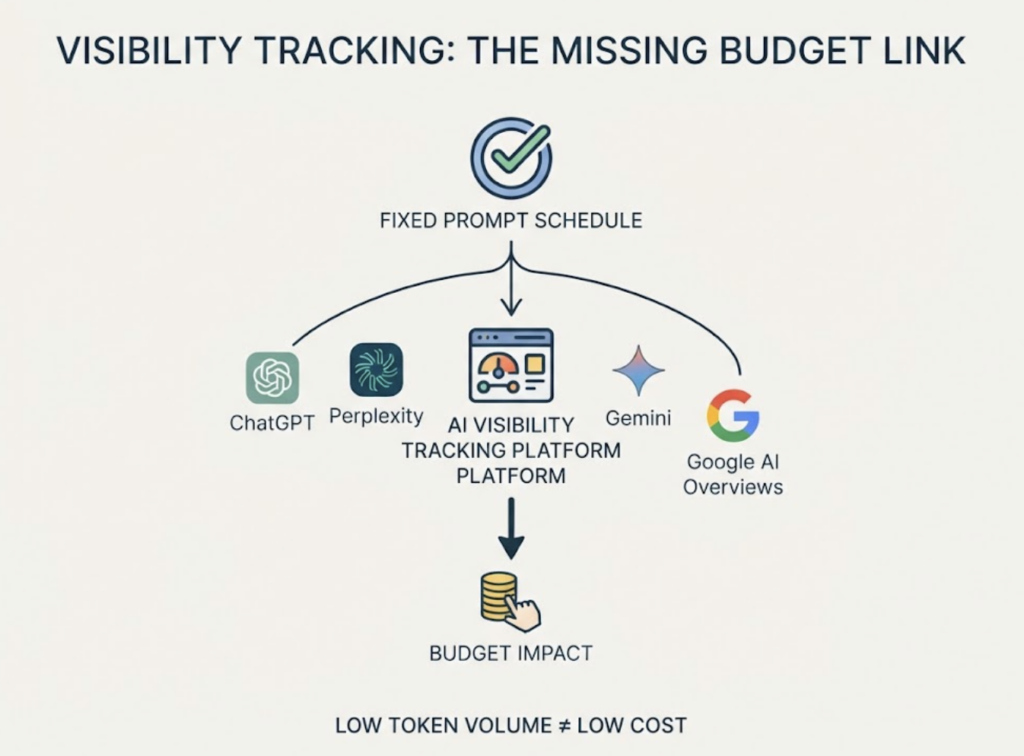
    AI visibility tracking works differently. It runs a fixed set of prompts across ChatGPT, Perplexity, Gemini, and Google AI Overviews on a schedule, so the token volume barely moves even when the underlying model gets more expensive. That’s the gap most budget conversations still miss.

    Which means the instinct to cut “AI spend” broadly, across the board, is the wrong instinct. Some of it just got a lot more expensive per unit. Some of it barely changed at all.

    Why Cutting AI Visibility Budget Is the Wrong Move Right Now

    The pressure to trim AI spend collides with a market fact: AI-driven discovery is growing, not shrinking. Gartner data shows the average marketing budget allocated to AI usage sitting at 15.3% in 2026, with 70% of CMOs naming AI their top priority for the back half of the year. Meanwhile, overall marketing budgets sit at just 7.8% of revenue, which means every dollar spent chasing AI visibility competes directly against everything else on the plan.

    That tension gets sharper because 63% of LLM visibility still comes from long-term brand building, while direct marketing spend only accounts for 22% of it. In practice, that means the teams who cut AI visibility tracking to absorb GPT-6’s price hike lose the one signal that tells them whether their brand-building work is actually landing inside ChatGPT and Perplexity answers.

    Late movers pay for that gap later. Companies missing from AI responses lose deals before prospects visit their site, and teams that wait typically face higher acquisition costs once competitors have already claimed the AI-recommended slot in their category. Cutting the tracking budget doesn’t reduce that risk. It just makes the team blind to it while it happens.

    How to Prove AI Visibility Spend Is Worth Keeping

    The real fix isn’t defending AI visibility spend on faith. It’s making the ROI visible enough that nobody questions it during the next budget cut. That’s the gap Topify is built to close.

    Topify’s core metric for this is CVR, or Conversion Visibility Rate, one of seven metrics inside its Comprehensive GEO Analytics suite alongside visibility, sentiment, position, volume, mentions, and intent. Instead of reporting a raw mention count, CVR estimates how likely an AI answer is to actually push a user toward your brand, turning “we got mentioned” into a number finance can weigh against the bill.

    The other lever is prompt discovery. Most visibility budgets get wasted tracking prompts nobody searches and platforms your buyers don’t use. Topify’s high-value prompt discovery surfaces the queries that actually drive volume in your category, so the tracking spend concentrates on the handful of prompts and platforms that matter instead of spreading thin across all of them.

    That focus matters more given what tracking itself costs. Single-brand tools in the category run $19 to $99 a month, while Topify’s Basic plan starts at $99 and includes tracking across ChatGPT, Perplexity, and AI Overviews, 9,000 AI answer analyses, and 50 content generations a month. Against a GPT-6 bill that can hit hundreds of dollars for a mid-size content workflow, the tracking layer that proves whether any of that content spend is working costs a fraction of the line item it’s meant to justify.

    Reallocating: What to Cut, What to Keep

    A practical reallocation framework starts with separating token-hungry use cases from visibility tracking, then applying different rules to each.

    For token-heavy workflows: audit which tasks actually need GPT-6’s reasoning quality versus which ones can run on a cheaper model or a trimmed prompt. Support ticket triage, internal summarization, and first-draft content rarely need the flagship model. Reserve GPT-6 for the outputs where quality differences show up in conversion, not for every automated task by default.

    For visibility tracking: don’t touch it. It’s a fixed-cost, low-token workflow that isn’t exposed to GPT-6’s price increase the way content generation is, and it’s the layer that proves whether the rest of the budget is producing results worth defending.

    Conclusion

    GPT-6’s price jump forces a question every AI budget review should have asked already: which spend produces content, and which spend proves that content works. The first bucket just got more expensive per token. The second bucket is what tells finance whether the first bucket is worth keeping. Protect the tracking layer, trim the token-heavy workflows that don’t need flagship reasoning, and let the data make the case for what stays.

    FAQ

    Q: Why did GPT-6 cost more than GPT-5.6? 

    A: GPT-6 Astra launched at $10 per million input tokens and $50 per million output tokens, about 2.5 times GPT-5.6 Sol’s promotional pricing, reflecting the jump to a larger flagship reasoning model with a 1.05 million token context window.

    Q: Does GPT-6’s price increase affect AI visibility tracking tools? 

    A: Not directly. Visibility tracking runs a fixed set of prompts on a schedule, so token volume stays roughly constant even as per-token pricing rises. Content generation and automation workflows, which scale with usage, absorb most of the impact.

    Q: How can marketing teams justify AI visibility spend to leadership? 

    A: Tie visibility tracking to a conversion metric rather than a mention count. Metrics like Topify’s CVR translate AI mentions into an estimate of actual buying influence, giving finance a number to weigh against the cost.

    Q: What should teams cut first if the AI budget needs to shrink? 

    A: Start with token-heavy, low-stakes workflows, internal summarization, draft generation, ticket triage, that don’t need flagship-level reasoning. Keep visibility tracking, since it’s both cheap relative to content spend and the only layer that shows whether the rest of the budget is working.

    Read More

  • GPT-6 vs Claude vs Gemini: Why Brand Mentions Differ by Model

    GPT-6 vs Claude vs Gemini: Why Brand Mentions Differ by Model

    GPT-6 Astra rolled out to ChatGPT Plus, Pro, Business, and Enterprise plans this month, and your team probably ran the test everyone runs on a new model: ask it who leads your category. It named three competitors and skipped you. Someone then asked Claude the identical question and got a completely different list. That’s not a fluke, and it won’t get fixed by the next model update either. The gap comes from how each system decides what counts as a trustworthy answer, and that logic barely moved between GPT-5.6 and GPT-6 Astra.

    GPT-6 Doesn’t Reset the Brand Mention Problem

    A new flagship model tends to reset expectations. People assume smarter reasoning means fairer, more consistent answers about who deserves a mention.

    That assumption doesn’t hold. GPT-6 Astra launched in phases starting September 3, 2026, first to OpenAI’s cybersecurity-focused Daybreak program, then to paid ChatGPT tiers and the API. The rollout improved reasoning and agentic task performance. It did not touch the underlying question of which sources OpenAI’s model trusts enough to cite.

    Brand recognition in AI answers isn’t a capability problem. It’s a plumbing problem, and plumbing doesn’t upgrade itself just because the engine got faster.

    Why the Same Question Gets Three Different Answers

    Each AI platform treats citations as a different kind of decision. Muck Rack’s Generative Pulse research, based on more than 25 million cited links across ChatGPT, Claude, and Gemini, found that citation behavior varies meaningfully by platform even though all three lean on earned media for the bulk of what they cite.

    The frequency gap is the clearest signal. ChatGPT includes a citation in 96% of its responses but averages only around five sources per answer, which makes it a near-universal citer that doesn’t dig deep on any single answer. Claude is the opposite. It cites in roughly 55% of responses, but when it does, it pulls in an average of 13 sources, suggesting a higher bar for confidence before it names anything at all. Gemini lands in between, citing in about 82% of responses at an average of eight sources.

    That’s the mechanism behind the frustration. Your brand isn’t being judged by three versions of the same test. It’s being judged by three different tests with three different pass thresholds.

    PlatformShare of responses with a citationAverage sources per cited answer
    ChatGPT96%~5
    Gemini82%~8
    Claude55%~13

    Read that table as a filter, not a scoreboard. A high citation rate doesn’t mean a platform is more generous toward your brand specifically. It means the platform is more willing to cite something, and whether that something is you still depends on the sources it trusts.

    The Data Sources Behind Each Model’s Answers

    Citation frequency is only half the story. Where each model actually looks matters just as much, and the three systems don’t pull from the same information ecosystem. Gemini leans heavily on Google’s own search index and Knowledge Graph, so a brand that’s a well-verified entity in Google tends to get mentioned with more confidence. ChatGPT’s live retrieval runs through Bing, which means strong Google visibility doesn’t automatically carry over. Claude relies more on what it absorbed during training plus Brave Search for anything real-time, and it tends to favor academic, technical, and niche editorial sources over major wire coverage.

    One widely cited example makes this concrete. When three models were asked who makes the best pickup truck, ChatGPT recommended the Ram 1500 and named Cars.com as its source, while Claude picked the Ford F-150 without citing anything at all. Same category, same question, two different winners, two different evidentiary standards.

    PlatformPrimary retrieval sourceWhat tends to earn a mention
    GeminiGoogle Search index, Knowledge GraphVerified entity status, strong Google Business Profile, schema markup
    ChatGPTBing-based live searchReview-site coverage, consumer comparison content
    ClaudeTraining data plus Brave SearchAcademic, technical, and niche editorial sources over major wire coverage

    Notice that none of these levers overlap much. Optimizing for one platform’s information diet doesn’t automatically move the needle on the other two, and a content strategy built only around Google SEO will quietly under-serve Claude no matter how strong your rankings get.

    What Changed (and What Didn’t) When GPT-6 Astra Launched

    GPT-6 Astra’s early access went first to enterprise security customers, then expanded to consumer and business plans over the following days. The model brought real gains in agentic reasoning and computer-use tasks. None of that changes the retrieval pipeline that decides whether your brand shows up in a recommendation.

    Here’s the part that trips people up: model version numbers move fast, but citation architecture moves slowly. Expecting GPT-7 or the next Gemini refresh to quietly fix an uneven brand footprint is a bet against how these systems have actually evolved so far.

    Look at the release cadence itself. OpenAI shipped GPT-5.4, GPT-5.5, and GPT-6 Astra inside a single year, and in each case the headline improvements were reasoning, coding, and agentic task scores rather than a rebuilt citation or sourcing layer. Anthropic and Google have followed a similar pattern with their own releases. Capability and citation behavior are simply two different roadmaps, and only one of them shows up in a launch announcement.

    Why Watching One Platform Distorts the Picture

    Say your team only tracks ChatGPT because it has the largest user base. You’d see near-universal citation behavior and conclude that showing up there means you’re covered everywhere.

    That conclusion would be wrong. A brand can rank first in Gemini because it’s a strong entity in Google’s Knowledge Graph, then disappear entirely from Claude because it lacks the third-party editorial depth Claude’s higher citation bar demands. Single-platform monitoring doesn’t just miss data. It actively produces a false sense of security, and that’s a worse position than knowing nothing at all.

    The same logic runs in reverse for agencies managing several client brands. A monthly report built only from ChatGPT checks looks complete because ChatGPT answers almost every prompt with something. It says nothing about whether Gemini is quietly recommending a competitor to the exact same searchers, and a client who finds that gap on their own tends to ask why it wasn’t in the report.

    How to See Brand Recognition Across GPT-6, Claude, and Gemini

    Getting a real picture of GPT-6 vs Claude vs Gemini brand recognition means measuring the same prompts across all three at once, not sampling one and assuming it represents the rest.

    This is the specific gap Topify‘s Comprehensive GEO Analytics is built to close. It tracks visibility, sentiment, and position across GPT-6, Claude, Gemini, and other major AI platforms from a single dashboard, so a drop in one engine shows up next to what’s holding steady in another. In practice, that means catching a scenario where your brand is well-positioned in Gemini results but has quietly gone missing from Claude’s answers, then tracing that gap back to a specific source category Claude’s citation logic tends to favor.

    The trade-off is that no single-platform tool gives you this. Point solutions built around one model will always miss the two-thirds of the picture happening somewhere else. If you’re ready to see where your brand actually stands, you can get started with Topify and run the comparison across models directly.

    Conclusion

    GPT-6 Astra changed what these models can do, not how they decide who to mention. That distinction matters because it means the uneven brand recognition your team is seeing today isn’t a temporary bug waiting on the next release. It’s a structural feature of how ChatGPT, Claude, and Gemini each evaluate trust, and it calls for ongoing, cross-platform measurement rather than a one-time check after a launch headline.

    FAQ

    Q: Does GPT-6 Astra cite sources differently than GPT-5.6 did? 

    A: The rollout focused on reasoning, coding, and computer-use gains rather than a rebuilt citation system, so the underlying retrieval and sourcing behavior that shaped brand mentions in GPT-5.6 largely carries over into GPT-6 Astra.

    Q: Why does my brand show up in Gemini but not in Claude? 

    A: Gemini draws heavily on Google’s Knowledge Graph, so a well-verified Google entity often gets mentioned with confidence. Claude sets a higher bar for third-party evidence before it names a brand, so thinner editorial coverage can leave you out of its answers entirely.

    Q: Is it possible to rank well in ChatGPT and still lose customers to a competitor named by Claude? 

    A: Yes. Because each platform pulls from different sources and applies different citation thresholds, strong visibility in one model says very little about your standing in another, which is why single-platform tracking regularly misses real gaps.

    Q: How often should brands re-check AI visibility after a major model launch like GPT-6 Astra? 

    A: Treat model launches as a trigger to re-baseline, not a one-time check. Citation behavior can shift gradually as a new model’s retrieval sources mature, so ongoing tracking catches drift that a single post-launch snapshot won’t.

    Read More