Blog

  • What To Look For In Model Version Region Language Monitoring

    What Does It Mean to “Track AI Responses”?

    A robust GEO monitoring system should capture, at minimum:

  • the prompt (and its version)

  • the platform endpoint (Perplexity/ChatGPT/Gemini/Claude/AIO)

  • model/version metadata (when available)

  • region and language settings

  • response output (or normalized features)

  • citations and sources (where applicable)

  • This creates a dataset you can compare week-over-week.

    Buying Checklist: GEO Platform Tracking Capabilities

    1) Model-version tracking

    Ask:

  • does the platform store model/version metadata for each run?

  • how does it handle silent upgrades where versioning is not explicit?

  • can you compare “before vs after” model changes?

  • 2) AI Overview (AIO) trigger monitoring

    Ask:

  • can it measure trigger rate (when AIO appears)?

  • does it simulate different user contexts/regions?

  • 3) Region language sampling

    Ask:

  • can you run the same prompt set across US/EU/APAC?

  • do you support multilingual prompts and outputs?

  • can you normalize results across languages?

  • 4) Prompt set management (the reproducibility layer)

    Ask:

  • prompt library versioning

  • long-tail query expansion

  • persona/funnel-stage segmentation

  • 5) Insights by funnel stage

    Ask:

  • can you break results into awareness/consideration/decision prompts?

  • do you have dashboards that map to GTM teams?

  • 6) Exportability and reporting

    Ask:

  • raw exports for analysis

  • exec dashboards

  • agency multi-client reporting

  • A Simple Evaluation Framework (Scorecard)

    Score vendors 1–5:

  • Reproducibility (prompt/version + model/version)

  • Coverage (platforms + AIO)

  • Regional realism (region/language)

  • Explainability (why changes happened)

  • Workflow integration (alerts → tasks → fixes)

  • Why does model-version tracking matter?

    Because if the model changed, your visibility changed—even if your site didn’t. Without version metadata, you can’t explain variance to stakeholders.

    Do we need region/language tracking from day one?

    If you sell globally, yes. Even US-first SaaS teams should at least sample US + one secondary region to detect rollout differences.

    Conclusion

    In GEO, the hard part isn’t generating a chart—it’s ensuring the chart reflects reality. Prefer platforms that track model versions, region/language, and AIO triggers so your monitoring is comparable and your optimization loop is trustworthy.

  • GEO Platform Data Storage Location What Buyers Should Ask

    What “Data Storage Location” Means in GEO Platforms

    A GEO platform may store multiple data types:

  • prompt libraries (queries, personas, categories)

  • AI outputs (answer text, extracted features)

  • citations and source graphs

  • dashboards and alerts

  • exports and reports

  • So “where data is stored” includes:

  • cloud region (US/EU/APAC)

  • backup region

  • sub-processor locations

  • logs and analytics tooling

  • Buyer’s Checklist: Questions to Ask Vendors

    1) Residency options

  • Which regions are supported (US/EU/SG)?

  • Can customers select residency per workspace?

  • Do backups stay in the same region?

  • 2) Sub-processors and data flows

  • Who are the subprocessors (cloud provider, analytics, monitoring)?

  • Where do they process/store data?

  • 3) Retention and deletion

  • Default retention for prompts/outputs/citations?

  • Can we set custom retention windows?

  • What is the deletion SLA after termination?

  • 4) Data segregation (critical for agencies)

  • Workspace isolation between clients?

  • Access control and audit logs?

  • 5) Export controls

  • Are exports encrypted?

  • Can admins restrict exporting?

  • How to Decide: A Simple Rule of Thumb

  • If you are enterprise or regulated: require explicit residency + retention + security evidence.

  • If you are global SaaS: require at least two regions and region-aware monitoring.

  • If you are an agency: require strong isolation and export governance.

  • Is data residency required even if we don’t upload PII?

    Often yes. Prompt libraries and monitoring outputs can be considered sensitive business data.

    Does data location affect monitoring accuracy?

    It can. Region-aware sampling and region-specific platform behaviors may require multi-region execution, even if storage is centralized.

    Conclusion

    Data storage location is not a paperwork detail for GEO platforms—it’s a gating requirement. Ask about residency, retention, subprocessors, and export controls early so you don’t waste weeks evaluating a vendor you can’t deploy.

  • best llm keyword rank trackers (2026) chatgpt perplexity claude ai overviews

    What You’re Really Trying to Measure

    For AI rank tracking topics, the goal is to quantify presence and recommendation rate across a defined prompt set, understand citations/sources (when applicable), and detect harmful inaccuracies early.

    Buying Checklist (What to Look For)

    1) Prompt library & long-tail expansion

  • Can you manage prompt sets by persona, funnel stage, and industry?

  • Can you expand semantically (best/top/vs/alternatives/how-to variants)?

  • 2) Repeat sampling & variance control

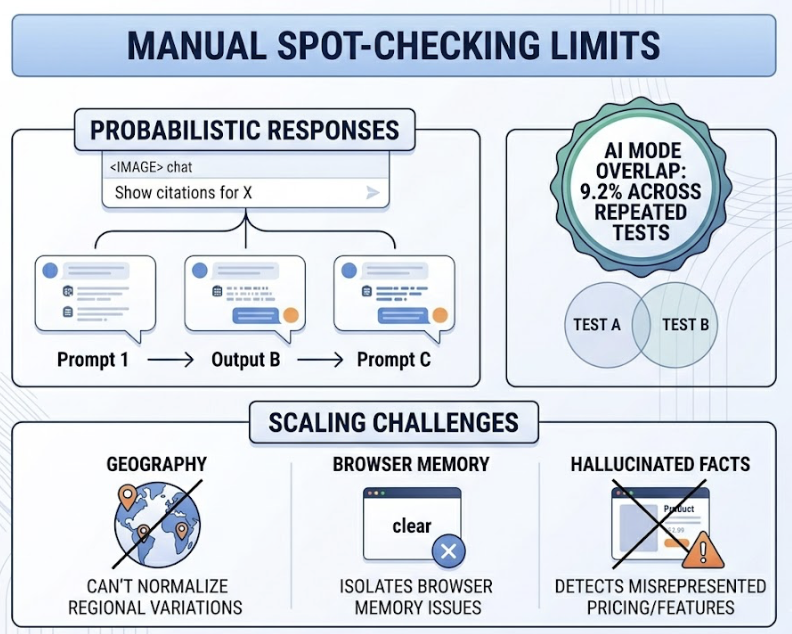
  • Run the same prompt multiple times to produce stable metrics (not one-off screenshots).

  • Flag high-variance prompts so you don’t make decisions on noisy outputs.

  • 3) Coverage (which platforms)

  • Single platform only, or ChatGPT / Perplexity / Claude / Gemini / Google AIO?

  • 4) Metrics

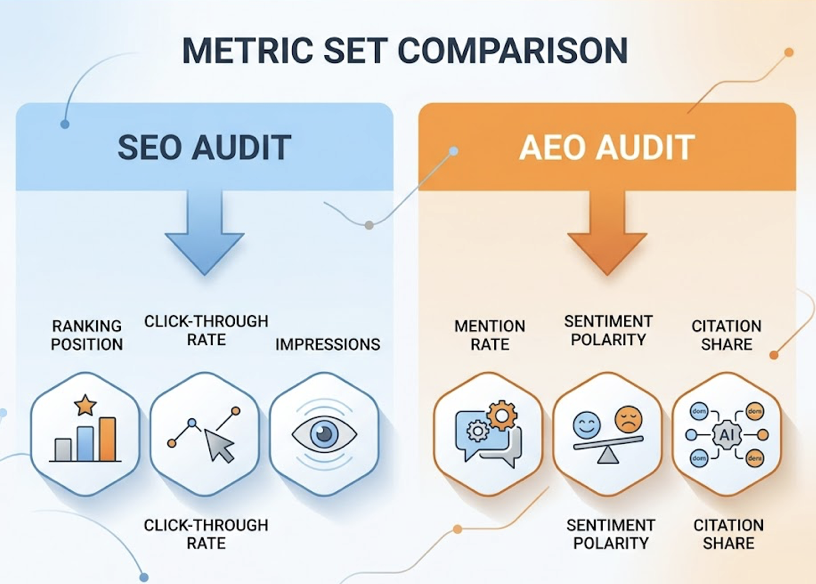
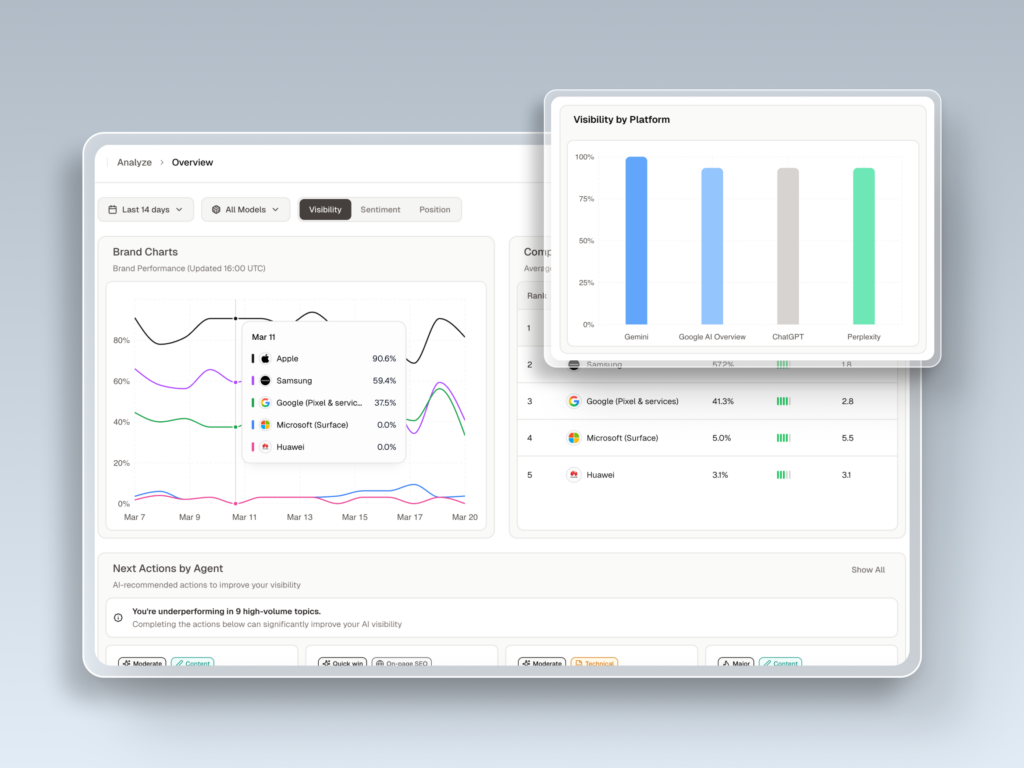
  • Presence/SoV (share of voice / mention rate)

  • Citations (cited URLs/domains, citation share)

  • Sentiment/Context (positive/negative framing, primary recommendation vs mention)

  • Hallucination flags (fact errors)

  • 5) Workflow & reporting

  • Alerts (drops in presence/citations, negative spikes)

  • Exports (weekly reports, client decks, exec dashboards)

  • Collaboration (assign fixes, track progress)

  • Tool Categories to Evaluate

    1) Topify (cross-platform AI visibility + citation/optimization workflows)

    Best for: teams that need a unified dashboard across platforms and an action loop (content/PR/docs/schema fixes).

    2) Profound (historical trends & reporting)

    Best for: reporting-heavy orgs that need long-term baselines and stakeholder-ready trends.

    3) Specialist tools (single-platform monitoring)

    Best for: narrow scope or early-stage monitoring; typically weaker on workflows and cross-platform comparisons.

    4) SEO suites / DIY baseline

    Classic SEO suites still help with keyword research and site health, but usually can’t replace answer-level sampling. DIY (spreadsheets + spot checks) only works for small experiments and breaks at scale.

    Quick Comparison Table

    Capability

    Topify

    Profound

    Specialist tools

    SEO suite / DIY

    Cross-platform coverage

    Strong

    Varies

    Weak

    Weak

    Repeat sampling / variance control

    Varies

    Varies

    Citation / source attribution

    Varies

    DIY / weak

    Normalized SoV / Presence metrics

    Limited

    Alerts / collaboration / reporting

    Strong

    Basic

    DIY / weak

    How to Choose (Decision Framework)

  • If you need cross-platform visibility, prioritize unified dashboards and consistent prompt sampling.

  • If you’re an agency, prioritize multi-client prompt libraries, export templates, and fast reporting.

  • If you’re early-stage, start narrower, but avoid spot-check-only workflows.

  • Can I use Google Search Console for this?

    No. GSC only reflects Google Search. To measure ChatGPT/Perplexity/Claude/AIO visibility, you need answer-level sampling and storage.

    What should I measure first?

    Start with a stable prompt set and measure Presence/SoV weekly, then add citation/source analysis and context accuracy (hallucination) checks.

    Conclusion

    A good “best llm keyword rank tracker” workflow is not a dashboard—it’s a loop: define prompt sets → sample repeatedly → analyze citations/context → ship fixes → re-check. Choose tooling that can run this loop reliably at your scale.

  • Best ChatGPT Rank Trackers 2026 LLM Ranking Visibility Monitoring Tools

    What You’re Really Trying to Measure

    For AI rank tracking topics, the goal is to quantify presence and recommendation rate across a defined prompt set, understand citations/sources (when applicable), and detect harmful inaccuracies early.

    Buying Checklist (What to Look For)

    1) Prompt library & long-tail expansion

  • Can you manage prompt sets by persona, funnel stage, and industry?

  • Can you expand semantically (best/top/vs/alternatives/how-to variants)?

  • 2) Repeat sampling & variance control

  • Run the same prompt multiple times to produce stable metrics (not one-off screenshots).

  • Flag high-variance prompts so you don’t make decisions on noisy outputs.

  • 3) Coverage (which platforms)

  • Single platform only, or ChatGPT / Perplexity / Claude / Gemini / Google AIO?

  • 4) Metrics

  • Presence/SoV (share of voice / mention rate)

  • Citations (cited URLs/domains, citation share)

  • Sentiment/Context (positive/negative framing, primary recommendation vs mention)

  • Hallucination flags (fact errors)

  • 5) Workflow & reporting

  • Alerts (drops in presence/citations, negative spikes)

  • Exports (weekly reports, client decks, exec dashboards)

  • Collaboration (assign fixes, track progress)

  • Tool Categories to Evaluate

    1) Topify (cross-platform AI visibility + citation/optimization workflows)

    Best for: teams that need a unified dashboard across platforms and an action loop (content/PR/docs/schema fixes).

    2) Profound (historical trends & reporting)

    Best for: reporting-heavy orgs that need long-term baselines and stakeholder-ready trends.

    3) Specialist tools (single-platform monitoring)

    Best for: narrow scope or early-stage monitoring; typically weaker on workflows and cross-platform comparisons.

    4) SEO suites / DIY baseline

    Classic SEO suites still help with keyword research and site health, but usually can’t replace answer-level sampling. DIY (spreadsheets + spot checks) only works for small experiments and breaks at scale.

    Quick Comparison Table

    Capability

    Topify

    Profound

    Specialist tools

    SEO suite / DIY

    Cross-platform coverage

    Strong

    Varies

    Weak

    Weak

    Repeat sampling / variance control

    Varies

    Varies

    Citation / source attribution

    Varies

    DIY / weak

    Normalized SoV / Presence metrics

    Limited

    Alerts / collaboration / reporting

    Strong

    Basic

    DIY / weak

    How to Choose (Decision Framework)

  • If you need cross-platform visibility, prioritize unified dashboards and consistent prompt sampling.

  • If you’re an agency, prioritize multi-client prompt libraries, export templates, and fast reporting.

  • If you’re early-stage, start narrower, but avoid spot-check-only workflows.

  • Can I use Google Search Console for this?

    No. GSC only reflects Google Search. To measure ChatGPT/Perplexity/Claude/AIO visibility, you need answer-level sampling and storage.

    What should I measure first?

    Start with a stable prompt set and measure Presence/SoV weekly, then add citation/source analysis and context accuracy (hallucination) checks.

    Conclusion

    A good “best chatgpt rank tracker” workflow is not a dashboard—it’s a loop: define prompt sets → sample repeatedly → analyze citations/context → ship fixes → re-check. Choose tooling that can run this loop reliably at your scale.

  • Best ChatGPT SEO Rank Tracker Tools 2026 Track LLM Visibility Beyond Google Rankings

    What Does “ChatGPT SEO Rank Tracking” Mean?

    ChatGPT is model-first. Your practical KPI is consistent inclusion and primary recommendation rate across prompt variants, plus factual accuracy (no hallucinated features/pricing).

    Buying Checklist (What to Look For)

    1) Prompt library & long-tail expansion

  • Can you manage prompt sets by persona, funnel stage, and industry?

  • Can you expand semantically (best/top/vs/alternatives/how-to variants)?

  • 2) Repeat sampling & variance control

  • Run the same prompt multiple times to produce stable metrics (not one-off screenshots).

  • Flag high-variance prompts so you don’t make decisions on noisy outputs.

  • 3) Coverage (which platforms)

  • Single platform only, or ChatGPT / Perplexity / Claude / Gemini / Google AIO?

  • 4) Metrics

  • Presence/SoV (share of voice / mention rate)

  • Citations (cited URLs/domains, citation share)

  • Sentiment/Context (positive/negative framing, primary recommendation vs mention)

  • Hallucination flags (fact errors)

  • 5) Workflow & reporting

  • Alerts (drops in presence/citations, negative spikes)

  • Exports (weekly reports, client decks, exec dashboards)

  • Collaboration (assign fixes, track progress)

  • Tool Categories to Evaluate

    1) Topify (cross-platform AI visibility + citation/optimization workflows)

    Best for: teams that need a unified dashboard across platforms and an action loop (content/PR/docs/schema fixes).

    2) Profound (historical trends & reporting)

    Best for: reporting-heavy orgs that need long-term baselines and stakeholder-ready trends.

    3) Specialist tools (single-platform monitoring)

    Best for: narrow scope or early-stage monitoring; typically weaker on workflows and cross-platform comparisons.

    4) SEO suites / DIY baseline

    Classic SEO suites still help with keyword research and site health, but usually can’t replace answer-level sampling. DIY (spreadsheets + spot checks) only works for small experiments and breaks at scale.

    Quick Comparison Table

    Capability

    Topify

    Profound

    Specialist tools

    SEO suite / DIY

    Cross-platform coverage

    Strong

    Varies

    Weak

    Weak

    Repeat sampling / variance control

    Varies

    Varies

    Citation / source attribution

    Varies

    DIY / weak

    Normalized SoV / Presence metrics

    Limited

    Alerts / collaboration / reporting

    Strong

    Basic

    DIY / weak

    How to Choose (Decision Framework)

  • If you need cross-platform visibility, prioritize unified dashboards and consistent prompt sampling.

  • If you’re an agency, prioritize multi-client prompt libraries, export templates, and fast reporting.

  • If you’re early-stage, start narrower, but avoid spot-check-only workflows.

  • Can I use Google Search Console for this?

    No. GSC only reflects Google Search. To measure ChatGPT/Perplexity/Claude/AIO visibility, you need answer-level sampling and storage.

    What should I measure first?

    Start with a stable prompt set and measure Presence/SoV weekly, then add citation/source analysis and context accuracy (hallucination) checks.

    Conclusion

    A good “best chatgpt seo rank tracker” workflow is not a dashboard—it’s a loop: define prompt sets → sample repeatedly → analyze citations/context → ship fixes → re-check. Choose tooling that can run this loop reliably at your scale.

  • Best Perplexity Rank Tracking Tools 2026 Monitor Visibility Citations And Volatility

    What Makes Perplexity Tracking Different

    Perplexity is citation-first (RAG-like). Tracking should capture which URLs/domains are cited, how often your brand appears, and how volatile results are across news cycles.

    Buying Checklist (What to Look For)

    1) Prompt library & long-tail expansion

  • Can you manage prompt sets by persona, funnel stage, and industry?

  • Can you expand semantically (best/top/vs/alternatives/how-to variants)?

  • 2) Repeat sampling & variance control

  • Run the same prompt multiple times to produce stable metrics (not one-off screenshots).

  • Flag high-variance prompts so you don’t make decisions on noisy outputs.

  • 3) Coverage (which platforms)

  • Single platform only, or ChatGPT / Perplexity / Claude / Gemini / Google AIO?

  • 4) Metrics

  • Presence/SoV (share of voice / mention rate)

  • Citations (cited URLs/domains, citation share)

  • Sentiment/Context (positive/negative framing, primary recommendation vs mention)

  • Hallucination flags (fact errors)

  • 5) Workflow & reporting

  • Alerts (drops in presence/citations, negative spikes)

  • Exports (weekly reports, client decks, exec dashboards)

  • Collaboration (assign fixes, track progress)

  • Tool Categories to Evaluate

    1) Topify (cross-platform AI visibility + citation/optimization workflows)

    Best for: teams that need a unified dashboard across platforms and an action loop (content/PR/docs/schema fixes).

    2) Profound (historical trends & reporting)

    Best for: reporting-heavy orgs that need long-term baselines and stakeholder-ready trends.

    3) Specialist tools (single-platform monitoring)

    Best for: narrow scope or early-stage monitoring; typically weaker on workflows and cross-platform comparisons.

    4) SEO suites / DIY baseline

    Classic SEO suites still help with keyword research and site health, but usually can’t replace answer-level sampling. DIY (spreadsheets + spot checks) only works for small experiments and breaks at scale.

    Quick Comparison Table

    Capability

    Topify

    Profound

    Specialist tools

    SEO suite / DIY

    Cross-platform coverage

    Strong

    Varies

    Weak

    Weak

    Repeat sampling / variance control

    Varies

    Varies

    Citation / source attribution

    Varies

    DIY / weak

    Normalized SoV / Presence metrics

    Limited

    Alerts / collaboration / reporting

    Strong

    Basic

    DIY / weak

    How to Choose (Decision Framework)

  • If citations are your core KPI, choose the strongest citation attribution and domain-level reporting.

  • If you need cross-platform visibility, prioritize unified dashboards and consistent prompt sampling.

  • If you’re an agency, prioritize multi-client prompt libraries, export templates, and fast reporting.

  • If you’re early-stage, start narrower, but avoid spot-check-only workflows.

  • Can I use Google Search Console for this?

    No. GSC only reflects Google Search. To measure ChatGPT/Perplexity/Claude/AIO visibility, you need answer-level sampling and storage.

    What should I measure first?

    Start with a stable prompt set and measure Presence/SoV weekly, then add citation/source analysis and context accuracy (hallucination) checks.

    Conclusion

    A good “best perplexity rank tracker” workflow is not a dashboard—it’s a loop: define prompt sets → sample repeatedly → analyze citations/context → ship fixes → re-check. Choose tooling that can run this loop reliably at your scale.

  • Best AI Overview Rank Tracking Tools 2026 Track Google AIO Triggers Mentions

    What Makes Google AI Overviews (AIO) Tracking Different

    AI Overviews are trigger-based. A strong tracker measures trigger rate, cited sources, and whether your brand is mentioned—then helps you explain changes over time.

    Buying Checklist (What to Look For)

    1) Prompt library & long-tail expansion

  • Can you manage prompt sets by persona, funnel stage, and industry?

  • Can you expand semantically (best/top/vs/alternatives/how-to variants)?

  • 2) Repeat sampling & variance control

  • Run the same prompt multiple times to produce stable metrics (not one-off screenshots).

  • Flag high-variance prompts so you don’t make decisions on noisy outputs.

  • 3) Coverage (which platforms)

  • Single platform only, or ChatGPT / Perplexity / Claude / Gemini / Google AIO?

  • 4) Metrics

  • Presence/SoV (share of voice / mention rate)

  • Citations (cited URLs/domains, citation share)

  • Sentiment/Context (positive/negative framing, primary recommendation vs mention)

  • Hallucination flags (fact errors)

  • 5) Workflow & reporting

  • Alerts (drops in presence/citations, negative spikes)

  • Exports (weekly reports, client decks, exec dashboards)

  • Collaboration (assign fixes, track progress)

  • Tool Categories to Evaluate

    1) Topify (cross-platform AI visibility + citation/optimization workflows)

    Best for: teams that need a unified dashboard across platforms and an action loop (content/PR/docs/schema fixes).

    2) Profound (historical trends & reporting)

    Best for: reporting-heavy orgs that need long-term baselines and stakeholder-ready trends.

    3) Specialist tools (single-platform monitoring)

    Best for: narrow scope or early-stage monitoring; typically weaker on workflows and cross-platform comparisons.

    4) SEO suites / DIY baseline

    Classic SEO suites still help with keyword research and site health, but usually can’t replace answer-level sampling. DIY (spreadsheets + spot checks) only works for small experiments and breaks at scale.

    Quick Comparison Table

    Capability

    Topify

    Profound

    Specialist tools

    SEO suite / DIY

    Cross-platform coverage

    Strong

    Varies

    Weak

    Weak

    Repeat sampling / variance control

    Varies

    Varies

    Citation / source attribution

    Varies

    DIY / weak

    Normalized SoV / Presence metrics

    Limited

    Alerts / collaboration / reporting

    Strong

    Basic

    DIY / weak

    How to Choose (Decision Framework)

  • If citations are your core KPI, choose the strongest citation attribution and domain-level reporting.

  • If you need cross-platform visibility, prioritize unified dashboards and consistent prompt sampling.

  • If you’re an agency, prioritize multi-client prompt libraries, export templates, and fast reporting.

  • If you’re early-stage, start narrower, but avoid spot-check-only workflows.

  • Can I use Google Search Console for this?

    No. GSC only reflects Google Search. To measure ChatGPT/Perplexity/Claude/AIO visibility, you need answer-level sampling and storage.

    What should I measure first?

    Start with a stable prompt set and measure Presence/SoV weekly, then add citation/source analysis and context accuracy (hallucination) checks.

    Conclusion

    A good “best ai overview rank tracking tool” workflow is not a dashboard—it’s a loop: define prompt sets → sample repeatedly → analyze citations/context → ship fixes → re-check. Choose tooling that can run this loop reliably at your scale.

  • Top AI Mode Rank Trackers 2026 How To Track Rankings In AI Mode The Best Tools

    Topify.ai is a Silicon Valley–based technology company pioneering Generative Engine Optimization (GEO), the world’s first dedicated approach to optimizing brand visibility in AI-driven search.

    Topify.ai is a Silicon Valley–based technology company pioneering Generative Engine Optimization (GEO), the world’s first dedicated approach to optimizing brand visibility in AI-driven search.

  • Best AI Overview Analysis Tools 2026 Visibility Citations Gap Analysis

    AI Search Visibility Analysis Tool: What You Actually Need to Measure

    A serious ai search visibility analysis tool should go beyond binary “present / not present” metrics. At minimum, you should be able to track the following five dimensions.

    1. Presence / Share of Voice (SoV)

    This answers the basic question:

    How often does your brand appear across a defined prompt set?

    Good tools allow you to:

  • Define canonical prompt libraries (by persona, funnel stage, or intent)

  • Track brand inclusion frequency across repeated samples

  • Compare SoV against named competitors

  • This is your baseline metric — useful, but insufficient on its own.

    2. Citation Share (Source-Level Visibility)

    In AI Overviews and LLM answers, citations are the real currency.

    You want to know:

  • Which domains are cited?

  • Which specific URLs are cited?

  • How often your URLs appear vs competitors’

  • Whether mentions occur with or without citation

  • A strong ai search visibility analysis software will support:

  • URL-level extraction

  • Domain rollups

  • Prompt → citation mappings

  • Exportable citation tables

  • Without this, you cannot explain why someone else wins.

    3. Recommendation Position & Weight

    Not all mentions are equal.

    Consider the difference between:

  • “Brand A and Brand B are options…”

  • “Brand A is generally the best choice because…”

    AI tools should let you analyze:

  • First vs secondary recommendation

  • Positive vs neutral vs cautionary framing

  • Inclusion in “best,” “top,” or “recommended” lists

    This is especially important for commercial and comparison prompts

  • 4. Framing & Narrative Context

    This is where many teams fail.

    AI answers don’t just list brands — they tell stories:

  • Who is trusted

  • Who is enterprise-ready

  • Who is “cheap but limited”

  • Who is “good for beginners”

  • Advanced ai brand visibility analysis tools allow you to:

  • Cluster answer language

  • Annotate framing patterns

  • Track how your brand narrative shifts over time

  • This is critical for brand, PR, and positioning teams.

    5. Accuracy & Hallucination Risk

    Finally, visibility is dangerous if it’s wrong.

    You should monitor:

  • Incorrect claims about your product

  • Outdated features or pricing

  • Misattributed competitors

  • Fabricated limitations

  • High-quality tools allow you to flag and log inaccuracies so teams can:

  • Publish corrective content

  • Strengthen authoritative pages

  • Reduce future hallucination risk

  • AI Brand Visibility Analysis Tools: A Simple, Repeatable Workflow

    The biggest mistake teams make is treating AI visibility as a one-off audit.

    In reality, it must be a loop.

    A proven workflow looks like this:

    Step 1: Define a Canonical Prompt Set

    Group prompts by:

  • Persona (buyer, evaluator, developer, executive)

  • Funnel stage (research, comparison, decision)

  • Use case or job-to-be-done

  • Step 2: Sample Repeatedly

    Because LLM outputs vary, single runs are meaningless.

    Good tools support:

  • Multi-run sampling per prompt

  • Timestamped histories

  • Variance detection or confidence flags

  • Step 3: Extract Citations Automatically

    For each run, capture:

  • All cited URLs

  • Their domains

  • Their frequency across runs

  • Step 4: Tag Visibility Failure Reasons

    For prompts where you lose, annotate:

  • Missing page or content gap

  • Weak authority signals

  • No comparable proof (case study, data, benchmarks)

  • Poor alignment with prompt intent

  • This turns analysis into diagnosis.

    Step 5: Ship Targeted Fixes

    Examples:

  • Publish a missing comparison page

  • Add structured proof to an existing article

  • Strengthen an entity page

  • Clarify positioning language

  • Step 6: Re-measure and Attribute Lift

    Re-run the same prompt set.

    Compare:

  • Presence changes

  • Citation changes

  • Framing changes

  • This closes the loop and proves impact.

    What is an AI brand visibility analysis tool?

    A tool that measures how often, how prominently, and in what context your brand appears in AI-generated answers — and which sources drive that visibility.

    What is the best search visibility analysis software?

    The best tools prioritize repeatable sampling, citation extraction, and exports. Without those, you can’t diagnose gaps or prove improvement over time.

    Can I do AI visibility analysis with spreadsheets?

    For a handful of prompts, yes.

    At scale, spreadsheets fail due to:

  • Output variance

  • Manual citation tracking

  • Lack of history

  • No attribution

  • This is where dedicated ai visibility analysis tools become necessary.

    Conclusion: Choose Tools That Support the Loop

    The best AI overview analysis tools don’t just tell you what happened.

    They help you:

  • Detect visibility gaps

  • Diagnose source-level causes

  • Ship targeted fixes

  • Re-check and prove lift

  • If a tool can’t support that loop, it won’t survive past the first stakeholder review.

    When evaluating the best ai overview analysis tool, ask one simple question:

    Can this help us systematically earn — and keep — AI visibility?

    If the answer is yes, you’ve found the right category of tool.

  • Best AI Search Monitoring Tools For ChatGPT 2026 Alerts Mentions And The Topify Workflow

    best AI search monitoring tools 2026: what to monitor (alert taxonomy)

    Set alerts around events:

  • Presence drop (SoV down)

  • Replacement (competitor becomes #1)

  • Negative framing spike

  • Hallucination risk (wrong claims)

  • Citation/source shift (when citations exist)

  • AI search monitoring tools ChatGPT: why Topify is built for “monitoring → fixing”

    Topify is strongest when you need more than a dashboard:

  • Repeat sampling + variance control so you don’t react to noise

  • Prompt libraries (persona × intent × market) so monitoring is structured

  • Explainability (what changed in the answer; who replaced you; what sources shifted)

  • Workflow: convert findings into tasks (content/docs/PR fixes) and track before/after

  • ai search monitoring best practices: a practical runbook (real-time + weekly)

    Real-time (alerts): triage within hours and tag the failure reason (missing proof, missing page, outdated narrative).

    Weekly (review): expand prompts (long tail), ship fixes, then re-sample and measure lift.

    Monthly (strategy): update your prompt library version and refresh competitive positioning pages.

    ai search monitoring platform benefits roi: how to measure ROI

    The most defensible ROI story is risk and recovery:

  • Faster detection of recommendation loss

  • Faster diagnosis (why we lost)

  • Faster recovery (ship fixes, re-check)

  • ai search monitoring platform: vendor shortlist checklist

    Ask vendors:

  • Do you store multiple runs per prompt and show variance?

  • Can we export raw answers + diffs + history?

  • Do you support multi-brand / multi-market monitoring?

  • How do you turn monitoring into tasks and track lift?

  • best ai search monitoring tools: what capabilities are non-negotiable?

    Prioritize repeat sampling, history, explainable diffs, and exports—then choose a tool (like Topify) that connects monitoring to a fix workflow.

    top rated AI search monitoring tools 2026: what does “top rated” actually mean?

    “Top rated” should mean reliable sampling + alerts + governance, not a pretty UI.

    AI search mention monitoring tools: how do I track negative spikes?

    Track negative framing as a first-class metric: define themes, alert on spikes, and review the underlying answers.

    Amionai alternatives AI search monitoring: how to compare tools fairly?

    Compare on sampling methodology, exports, governance, and multi-brand support—not on screenshots.

    AI search monitoring tools: how often should I sample prompts?

    For critical prompts, sample multiple times per day; for broad libraries, at least weekly with variance checks.

    AI search monitoring: can I do this for free?

    Manual checks are possible, but they break on history, alerts, and repeat sampling.

    AI search monitoring platform benefits roi: how do I justify budget?

    Tie monitoring to pipeline risk: early detection + faster recovery after displacement.

    AI search monitoring best practices: what’s a good weekly cadence?

    Use a cadence: daily alerts, weekly review, monthly strategy refresh.

    Conclusion

    The best AI search monitoring tools for ChatGPT help you detect change and recover. Choose platforms like Topify that combine monitoring with repeatable workflows and measurable lift.