Author: Elsa Ji

  • AEO Tools Ranked: 7 Insights from G2’s Top Reviews

    AEO Tools Ranked: 7 Insights from G2’s Top Reviews

    You don’t need another list of AEO tools. You need to know what real users discovered after paying for them.

    Since G2 officially established the AEO software category in March 2025, demand has grown by more than 2,000%. The Winter 2026 Grid marked the first time this category was formally mapped, with nine products making the initial cut. What separates the tools users kept from the ones they churned isn’t what the marketing pages claim. It’s buried in the 1-3 star reviews, the usability scores, and the patterns that repeat across hundreds of real user accounts.

    Here are seven of those patterns, and what they mean when you’re about to write a check.

    Insight 1: Most AEO Tools Track Mentions. The Best Ones Track What Mentions Mean.

    A mention in an AI answer isn’t inherently good.

    ChatGPT might cite your brand in a sentence like: “While Product A is expensive and prone to errors, it remains one of the available options.” That’s a mention. It’s also a reputation problem. The 2025 Conductor AEO/GEO Benchmarks Report identified what researchers call the “Brand-Citation Gap”: in real estate, Zillow achieves a brand mention share of 7.36%, yet consistently fails to rank among the top-cited domains. High awareness, low authority.

    High-rated tools on G2 have built Answer Placement Score (APS) alongside sentiment polarity analysis. They distinguish between being recommended and being referenced in a negative context. Tools that only count citation rates miss this entirely.

    If a tool can’t tell you the difference between a positive citation and a backhanded mention, the numbers it’s producing are misleading at best.

    Insight 2: “Full Platform Coverage” Is the Claim G2 Users Fact-Check First

    The phrase appears in a lot of product descriptions. User reviews peel it back fast.

    ChatGPT now processes over 2 billion queries daily. Google AI Overviews reaches a similar number of monthly users. Perplexity, Claude, and Microsoft Copilot each hold significant share in specific intent categories. A brand’s visibility can vary dramatically between these models because each one has a distinct retrieval architecture. Perplexity leans on real-time news sources. ChatGPT draws on pre-training and RAG pipelines. An optimization that moves the needle on one won’t automatically transfer to the other.

    The most common finding in negative G2 reviews: tools that claimed broad coverage were running deep integrations on ChatGPT and light, infrequent polling on everything else. G2 users consistently reward platforms that offer a unified dashboard tracking seven or more engines, including ChatGPT, Gemini, Perplexity, Claude, and Copilot.

    Topify covers ChatGPT, Gemini, Perplexity, DeepSeek, Grok, Copilot, Doubao, Qwen, and others, tracking seven distinct metrics across all of them simultaneously: visibility, sentiment, position, volume, mentions, intent, and CVR. That breadth is where the actual visibility picture lives.

    Insight 3: Data Freshness Divides the G2 Grid More Than Any Feature Set

    AI models update faster than most monitoring tools assumed they would.

    In Q1 2026, RAG datasets and model weights are shifting at a frequency that makes weekly data pulls look like archaeology. G2 reviewers noticed the gap in real terms: they’d correct a piece of content that was causing an AI to generate inaccurate brand information, and the dashboard would take days to reflect the change. By then, a competitor had already filled the space.

    The high-rated tools have moved to hourly updates or real-time browser-rendered capture, meaning they simulate actual AI queries across distributed environments rather than relying on cached API responses. That technical distinction matters enormously when a competitor’s aggressive content push can shift your visibility position within 24 hours.

    One question cuts through most vendor pitches: is your data coming from live browser rendering or static API caches? If the answer is vague, that’s your answer.

    Insight 4: The Setup Problem Nobody Shows You in the Demo

    Look at the 1-2 star reviews. The words “onboarding” and “setup” appear with striking consistency in the Cons sections.

    Industry data puts this in context: 75% of SaaS users abandon a product within the first week if they struggle with initial configuration. For AEO tools specifically, time-to-value is hindered by the need for custom prompt engineering, API integrations, and the time required to build a historical data baseline. Unlike traditional SEO tools that can pull years of historical keyword data, most AEO platforms only begin collecting data the day you sign up.

    Top performers on G2’s Usability Index take a different approach: opinionated onboarding that guides users toward a working setup rather than 40 empty fields to figure out independently. Platforms cited for ease of use, like Peec AI and Visby AI, allow users to see an initial AI Search Score within minutes. That immediate feedback loop is what reduces abandonment.

    Corporate-level tools, by contrast, can require more than 100 days to reach full configuration. At that pace, you’ve already missed a full quarter of visibility data.

    Insight 5: Competitor Benchmarking Went from “Nice to Have” to Non-Negotiable

    Without competitive context, AI visibility metrics are unactionable.

    A 15% visibility rate on ChatGPT is meaningful only when compared to a competitor’s 30% or a competitor’s 5%. G2 users are direct about this: tools that don’t provide comparative data are “data without direction.” The shift toward Answer Share of Voice marks a departure from keyword-centric thinking toward entity-level dominance across AI engines.

    High-performing platforms have built “Missed Answer Detection” into their core product: features that identify specific queries where a competitor is cited but your brand isn’t. That list is an immediate content roadmap. Citation Gap Analysis, offered by tools like Writesonic and Otterly AI, takes this further by identifying the high-authority sites mentioning rivals, giving brands a clear list of external targets for digital PR.

    Topify’s Competitor Monitoring goes further still, tracking not just who is mentioned but how they’re positioned relative to you, and surfacing new competitors entering your visibility space in real time.

    Insight 6: Reporting Quality Predicts Whether Agencies Keep Their Clients

    For marketing agencies, this is the variable that quietly determines renewal rates.

    A “reporting crisis” has emerged in the agency world: technical gaps in AEO tracking create discrepancies between agency reports and client financial reality. When the numbers don’t match what a CFO sees in the CRM, trust erodes quickly. G2 reviews are consistent on this point: reports that can be presented directly to leadership, without manual adjustment, are the strongest predictor of software stickiness.

    The productivity data supports this. Automated reporting platforms save agencies an average of 137 billable hours per month, a 30% productivity increase. Real-time dashboards, white-label outputs, and “What’s Next” analysis that shifts focus from historical data to forward-looking strategy each contribute to a measurable increase in client satisfaction.

    Topify integrates reporting as a core execution layer, synthesizing visibility across platforms into a single AI Search Score. The goal is to move agencies from defending numbers in a spreadsheet to discussing strategy in a boardroom.

    Insight 7: A High G2 Score Today Doesn’t Tell You Much About Tomorrow

    This is the one most buyers overlook.

    G2 ratings reflect historical satisfaction. In a category where LLM algorithms change monthly, a tool’s current score may not reflect its current technological relevance. Reports indicate that up to 26% of G2 reviews in the AI category may be synthetic or AI-generated, which further complicates the trust signal. Legacy SEO tools often maintain high G2 scores due to established user bases, while power users describe their AEO modules as “beta-quality” or “standard SEO advice from the past decade.”

    What static scores can’t capture is iteration velocity: how fast a tool is improving, and whether it’s moving toward agentic execution or staying at the level of a monitoring dashboard. The maturity model emerging from the market runs from Level 1 (basic mention tracking) through Level 5 (autonomous content deployment and one-click fixes). Most of the tools with impressive G2 averages sit at Level 2 or 3. Level 5 is where Topify and a small number of purpose-built platforms are operating.

    The question isn’t just “what does this tool do today?” It’s “where is this tool in 12 months?”

    Use These 7 Insights as a Pre-Purchase Checklist

    Before you book a demo or start a trial, run through these seven questions:

    DimensionWhat to AskWhy It Matters
    Citation vs. MentionDoes it distinguish positive citations from negative references?Mention volume without sentiment context is misleading
    Platform BreadthDoes it track 7+ engines in a unified dashboard?Single-platform coverage creates dangerous blind spots
    Data FreshnessIs data from live browser rendering or cached APIs?Weekly data is too slow for the current AI update cycle
    Time-to-ValueHow long to first useful insight?75% of users abandon tools with poor onboarding within a week
    Competitor IntelligenceDoes it include Missed Answer Detection and Share of Voice?Absolute metrics are unactionable without competitive context
    Reporting QualityCan reports go directly to leadership without manual work?Reporting quality predicts client retention and executive trust
    Agentic PotentialDoes it close the loop from insight to execution?Monitoring without action capability is a dashboard, not a platform

    Topify’s Basic plan starts at $99/month and covers 100 prompts across ChatGPT, Perplexity, and AI Overviews, with 9,000 AI answer analyses per month. The Pro plan at $199/month extends to 250 prompts and 22,500 analyses across the full engine ecosystem. If you want to see where your brand actually stands across AI platforms before committing, start with a trial.

    Conclusion

    The 2,000% growth in AEO software demand since early 2025 reflects a real shift: brands have accepted that AI search is a channel they can’t ignore. But the tools serving that demand vary enormously in depth and execution.

    G2 data consistently points to the same differentiators: sentiment analysis over raw mention counts, genuine multi-platform coverage, data that updates fast enough to be actionable, and reporting that holds up in front of a CFO. The tools that score well on all seven dimensions are a small subset of the grid.

    Use the checklist. Pressure-test the onboarding. Ask the data freshness question directly. And remember that a strong G2 score tells you what users thought last quarter, not what the tool will do for your brand in the next one.


    FAQ

    What is AEO and how is it different from SEO in 2026?

    SEO focuses on ranking in link-based search results and driving clicks. AEO focuses on being cited by AI systems that synthesize answers directly, often without the user ever visiting a website. As Semrush data indicates, 93% of AI searches end in zero clicks, which means AEO is how brands influence decisions they’ll never see in their traffic analytics.

    How reliable are G2 reviews for evaluating AEO tools?

    Overall star ratings are useful but contain noise, including factors like customer support speed that don’t reflect core platform performance. More reliable signals are the Usability Index and Results Index scores, and specifically the 1-3 star reviews, where patterns around data accuracy and platform coverage are most visible. Industry reports also estimate that up to 26% of AI category reviews on G2 may be AI-generated, so look for specificity and detail as indicators of authentic feedback.

    What’s the minimum feature set an AEO tool needs in 2026?

    At minimum: real-time or near-real-time tracking across at least five AI platforms, sentiment polarity analysis (not just mention counting), competitor benchmarking with Share of Voice data, and reporting that doesn’t require manual cleanup before it reaches a client or executive. Agentic execution, the ability to act on insights automatically, is rapidly moving from differentiator to expectation.


    Read More

  • What G2 Reviews Reveal About AEO in 2026

    What G2 Reviews Reveal About AEO in 2026

    G2 doesn’t lie. Unlike vendor whitepapers or conference keynotes, the reviews on G2 come from people who actually paid for the software, ran into its limits, and had to explain the results to a CMO.

    That’s what makes G2 data one of the most honest signals we have right now for understanding where Answer Engine Optimization actually stands in 2026.

    And the picture is complicated.


    AEO Demand Exploded. The Terminology Didn’t Keep Up.

    Since G2 officially created the AEO software category in March 2025, the growth has been hard to ignore. Demand in the category grew over 2,000% in less than a year, and G2’s Winter 2026 report introduced the first-ever AEO Grid, featuring nine products competing for the same buyers.

    But here’s the thing: a lot of those buyers still aren’t sure what they’re buying.

    In G2 search data, “AEO” regularly gets conflated with GEO (Generative Engine Optimization), AI Search Optimization, and even SXO. These terms overlap in meaningful ways, but they’re not the same thing. AEO tends to refer to optimization at the extraction layer, getting your content pulled into direct answers. GEO, as framed in research from Princeton and Georgia Tech, is a broader strategy around building semantic authority and citation density so AI systems treat your brand as a trusted source.

    The practical consequence: teams that can’t fluently navigate these distinctions execute AEO changes 2.3x slower than those who can, according to audits of 40+ B2B SaaS companies tracked in early 2026.

    For vendors, this is a land-grab moment. Whoever defines the vocabulary wins the market. Profound, Yext, and Conductor are already publishing benchmark reports and KPI frameworks to establish that kind of definitional authority.


    The 3 Complaints That Keep Showing Up in Low-Star Reviews

    Pull the 1-to-3-star reviews on G2 for AEO tools and a pattern emerges fast. Three issues come up so consistently they’ve become the defining failure modes of first-generation products.

    Data that’s always a week behind.

    AI models update their RAG datasets constantly, often by the hour. But many monitoring tools still run on SEO-era weekly cycles. When a brand corrects a piece of content that’s causing AI hallucinations, its visibility dashboard might not reflect that change for days.

    That’s not a minor inconvenience. In a landscape where a competitor can close the gap on you overnight, a week-old snapshot is practically useless for tactical decisions. High-rated tools in this category are the ones offering hourly updates or real-time browser-based capture.

    Dashboards that tell you what happened, not what to do.

    This is the one G2 reviewers phrase differently every time but mean the same thing: the tool showed them their citation rate dropped 15%, then left them alone with a CSV file.

    The gap between “we detected a problem” and “here’s how to fix it” is where most AEO tools fall apart. Users want prioritized action, not more data layers. One reviewer put it plainly: if a tool can’t tell you which H2 tag to rewrite or which third-party domain to target for coverage, it’s a monitoring tool pretending to be a strategy tool.

    “Full platform coverage” that turns out to mean ChatGPT.

    Several tools marketed as cross-platform have been called out in G2 reviews for thin coverage outside of ChatGPT. Perplexity weights real-time news sources differently than ChatGPT’s pre-training. Gemini has its own citation logic. DeepSeek and Claude behave differently still.

    A tool that optimizes for one engine and exports the results as “AI visibility” is giving you an incomplete picture, and sophisticated buyers on G2 have figured that out.


    What Every High-Rated AEO Tool Has in Common

    Across the 4.5-star-and-above reviews on G2, the pattern isn’t feature count. It’s three shared commitments.

    Real browser capture, not modeled estimates.

    Top tools like Profound and Topify don’t rely on statistical modeling to infer visibility. They use distributed, large-scale browser rendering to capture actual AI responses across geographies and conversation contexts. This matters because AI answers are non-deterministic: the same query returns different answers for different users. Modeled estimates smooth over that variance. Real capture preserves it.

    Closed-loop execution.

    Products like Quattr and Topify earn high marks because they close the loop between insight and action. When the system detects that a competitor is getting cited more often on a specific prompt, it doesn’t just flag it. It generates structured content recommendations and, in some cases, pushes updates directly to the user’s CMS.

    That one-click execution model is solving a real organizational problem: marketing teams don’t have the bandwidth to manually respond to AI ranking shifts that happen multiple times per week.

    Metrics that connect to revenue, not just rankings.

    The tools getting the best reviews in 2026 have moved beyond citation rate as the primary KPI. They’re surfacing indicators like sentiment polarity (is the AI describing your brand as “expensive and unreliable” or “efficient and trusted”?) and conversion-intent signals that tie AI visibility to actual business outcomes.

    CapabilityWhat high-rated tools doWhat legacy SEO tools miss
    Citation trackingPinpoints source URLs inside AI responsesShows search result page rankings only
    Sentiment analysisDetects whether AI describes your brand positively or negativelyRecords brand mention presence only
    Source mappingReveals how Reddit, G2, and third-party media contribute to AI citationsFocuses on owned domain authority only
    Hallucination detectionFlags false statements AI generates about your brandCan’t assess content accuracy

    The Gap CMOs Feel but Can’t Always Name

    Gartner projected a 25% decline in traditional search volume by 2026. Semrush data shows 93% of AI searches end with zero clicks. These numbers have made legacy traffic metrics almost meaningless for justifying AEO spend.

    And yet a lot of AEO tools are still reporting estimated visit counts as their headline metric.

    G2 reviewers in 2026 are pushing back on this hard. What CMOs actually want is visibility into brand mention weight and intent share, metrics that reflect influence over AI-driven decisions rather than clicks that no longer happen. What they’re getting from many tools is another dashboard with more charts.

    The deeper issue is decision fatigue. Marketing teams in 2026 already manage data from 15+ tools on average. An AEO tool that adds more graphs without adding prioritization, “fix this first, it’ll move the needle by X%,” gets abandoned fast. The reviews make this clear.

    What’s gaining traction is a different product category entirely: diagnostic tools, not monitoring tools. The distinction matters. A monitoring tool tells you what’s happening. A diagnostic tool tells you why and what to do about it.


    Where Topify Fits in the G2 AEO Picture

    Topify has built its product around the specific failure modes that G2 reviews keep surfacing.

    On the coverage problem: Topify tracks across ChatGPT, Gemini, Perplexity, DeepSeek, Grok, and Copilot. That’s not a checklist feature. Each platform has different retrieval behavior, and treating them as equivalent produces misleading data. Topify’s engine accounts for those differences at the data layer.

    On the actionability problem: Topify’s AI agent doesn’t stop at detection. When it identifies a visibility gap or a competitor gaining ground on a specific prompt, it generates an action plan and can deploy it with a single click. No manual CSV export, no internal content request queue.

    On the revenue gap: Topify introduced the Conversion Visibility Rate (CVR), a metric that estimates the probability of a specific AI response driving a user toward brand interaction, based on query type, placement position, and sentiment scoring. It’s the closest thing the industry currently has to a conversion metric for zero-click AI discovery.

    Topify also addresses the source coverage problem directly. AI models are 6.5x more likely to cite content from third-party sites like Reddit, G2, and specialist media than from brand websites. If your tool only monitors your own domain, you’re missing 85% of where your AI visibility is actually built.

    Topify capabilityG2 pain point it solves
    CVR prediction modelCan’t prove AEO’s business value
    Source analysis and gap detectionKnows ranking dropped but not why
    Automated action layerStuck in the actionability gap
    Rolling average scoringData distorted by query variance

    Topify’s Basic plan starts at $99/month, which covers 100 prompts and 9,000 AI answer analyses across four projects. That’s a meaningful entry point for mid-sized teams that don’t want enterprise pricing before they’ve validated the channel.


    3 Questions to Ask Any AEO Tool Before You Sign

    Based on what G2 reviewers collectively surface, these three questions cut through the marketing language faster than any feature comparison.

    Is the data from real-time browser rendering or cached API responses?

    Many tools use cached AI responses to reduce costs. In 2026, where AI model updates happen hourly, cached data means you’re always making decisions on yesterday’s reality. Ask the vendor directly: can they demonstrate distributed, multi-region, live browser capture?

    Can it tell the difference between being mentioned and being recommended?

    AI can mention your brand in a negative context, “Product X is expensive and prone to errors, but it’s an option,” and that mention counts as a citation in tools that don’t have sentiment analysis. You want a tool with Answer Placement Scoring and sentiment polarity detection, not just citation counting.

    Does it track third-party source influence, not just your own site?

    If the tool only analyzes your owned domain, it’s ignoring the majority of where AI citations actually come from. You need visibility into which external domains are shaping how AI describes your brand, so you can direct your digital PR resources effectively.

    Conclusion

    The G2 data from 2026 tells a consistent story: AEO has grown faster than the tools built to support it.

    The 2,000% demand spike is real. So is the gap between what CMOs need and what most platforms deliver. The first generation of AEO tools was built to detect. The next generation is being built to act.

    That gap, between visibility as a data exercise and visibility as an operational capability, is where the competitive advantage in this market will be won or lost. Brands that close it now, with platforms built for diagnosis and execution rather than just monitoring, will have a structural advantage that compounds as AI search continues to displace traditional discovery.

    The G2 reviews don’t lie. They’re just telling you something most vendor decks won’t.


    FAQ

    What’s the difference between AEO and SEO in 2026?

    SEO gets your brand into ranked link lists that users click through. AEO gets your brand synthesized directly into AI answers, often without any click happening at all. In a zero-click environment, AEO is how you influence decisions before a user ever visits your site.

    Are G2 star ratings a reliable way to judge AEO tools?

    Aggregate scores include noise, response time, onboarding support, and other factors unrelated to core capabilities. The more reliable signal is buried in the 1-to-3-star reviews: specifically, comments about data accuracy and platform coverage. Those two factors predict whether a tool will still be useful six months after you buy it.

    What should a strong AEO tool stack include in 2026?

    At minimum: real-time cross-platform monitoring, sentiment analysis, citation source mapping, and a clear action layer that translates insights into content changes. Platforms like Topify that unify monitoring and execution into one workflow, while offering business-level metrics like CVR, represent the current standard for teams serious about making AEO a measurable growth channel.


    Read More

  • AEO Tools on G2: What Real User Reviews Actually Reveal

    AEO Tools on G2: What Real User Reviews Actually Reveal

    If you’ve ever tried to pick an AEO tool by reading vendor landing pages, you already know the problem. Every platform promises real-time tracking, multi-engine coverage, and “actionable insights.” But G2 reviews tell a different story.

    G2’s AEO category has grown 2,000% in market interest since early 2025. That growth means more tools, more noise, and more ways to make an expensive mistake. This article cuts through the marketing layer and shows you what verified users are actually saying—what drives renewals, what causes cancellations, and which platforms are quietly setting a new standard.

    Most Teams Read G2 Wrong. Here’s What to Look For Instead.

    Most buyers skim star ratings and check the top three reviews. That’s a fast path to buyer’s remorse.

    In the AEO category, the most useful signal isn’t the overall score. It’s the “What I Dislike” section. In a product category defined by non-deterministic AI outputs and constant model updates, no tool works perfectly all the time. A platform with zero critical feedback is either suppressing negative reviews or too shallow to have encountered real-world friction.

    Look for reviews from Verified Current Users who mention specific failure scenarios: how the tool handled a Google AI Overview update, whether data refreshes kept pace with model changes, or what happened when Perplexity’s citation behavior shifted. That specificity is the signal. Generic praise is not.

    Three other filters worth applying: check how recent the reviews are (anything older than six months is often outdated in a space where LLMs iterate monthly), look for reviewers who mention their company size and use case, and pay attention to whether the “Ease of Use” score might be masking data depth trade-offs.

    A clean UI doesn’t mean accurate data. A high usability rating sometimes means the tool is hiding complexity behind a polished surface—including model latency gaps and averaged API outputs that miss real-world variability.

    The AEO Category on G2 Is More Fragmented Than It Looks

    G2 launched a dedicated Answer Engine Optimization category in March 2025. It now lists over 248 tools. That number sounds useful. In practice, it creates a categorization problem that most buyers don’t anticipate.

    AEO, GEO, and AI Visibility are often used interchangeably on G2 listings—but they describe meaningfully different functions. AEO focuses on structuring content so that AI systems can extract and cite it directly. GEO targets brand presence and citation frequency in conversational AI responses. AI Visibility is a broader measurement layer covering brand sentiment and hallucination detection across platforms.

    A tool might appear under all three tags while only reliably solving one of them.

    This distinction matters for purchasing decisions. Legacy SEO platforms like Semrush and Conductor have added AEO modules on top of existing infrastructure. These additions often work well for teams already embedded in those ecosystems, but they weren’t built from the ground up for AI-native workflows. Newer platforms like Topify were designed specifically for this environment—prioritizing what the research calls “pass-level extractability” and agent-driven execution over traditional keyword rankings.

    Before shortlisting tools, decide what you’re actually trying to measure: AI mention frequency, brand sentiment in AI responses, citation source analysis, or conversion impact from AI-driven discovery. The right tool depends on which of these you’re accountable for.

    What G2 Reviewers Keep Praising Across the Category

    Strip away the platform-specific language and three themes dominate the positive reviews.

    Multi-engine coverage is the most consistently praised capability. Users highlight tools that aggregate data from ChatGPT, Gemini, Perplexity, and Claude into a unified dashboard. The reason this matters: research shows only 11% of cited domains appear across multiple AI platforms. Each engine runs on a different indexing strategy. A tool optimized primarily for ChatGPT leaves a brand invisible on Perplexity—which cites nearly 3x more sources per response than ChatGPT and has grown 287% year-over-year in search volume.

    Reporting clarity is the second pillar. Enterprise users consistently highlight platforms that translate complex visibility scores into formats their CMO can read—share of voice, competitor benchmarking, trend lines over time. Raw data without context doesn’t get budget renewed.

    Prompt intelligence rounds out the list. Tools that surface which prompts are actually driving AI recommendations—not just generic tracking queries—receive meaningfully higher satisfaction scores. HubSpot’s AEO tool, for instance, is praised for pulling prompts directly from CRM data, ensuring that tracked questions reflect real buyer conversations rather than hypothetical ones.

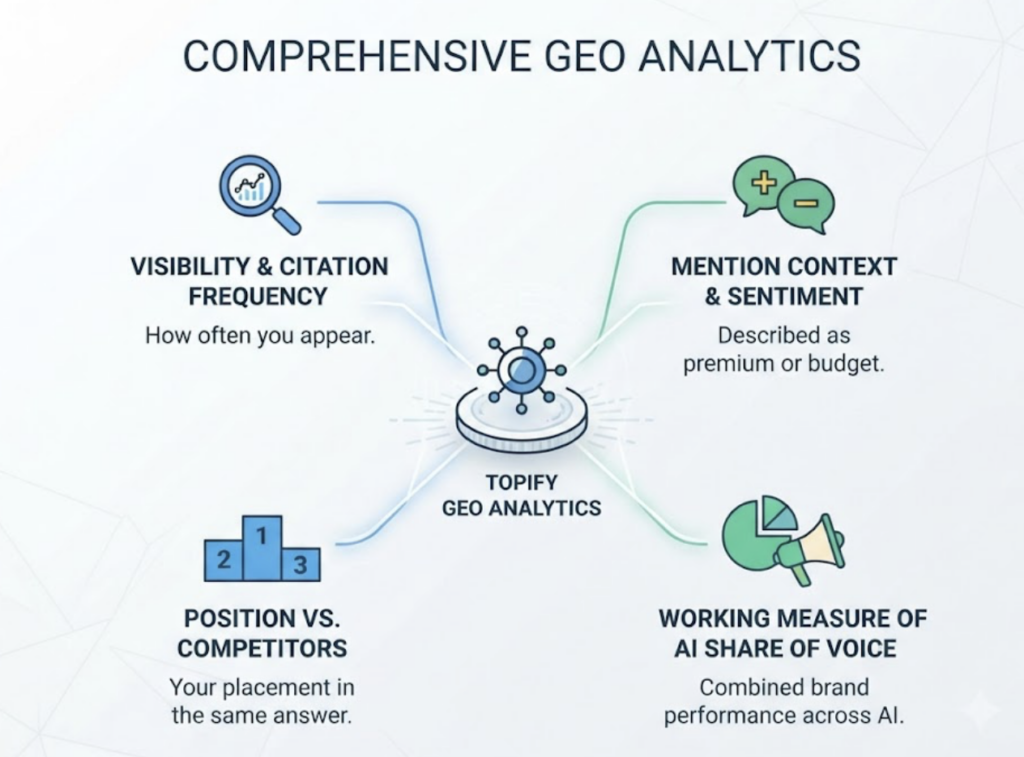
    Topify addresses all three dimensions through its 7-metric framework: Visibility, Volume, Position, Sentiment, Mentions, Intent, and CVR. The inclusion of CVR—Conversion Visibility Rate—is a differentiator that most category tools skip entirely. It connects brand visibility directly to downstream conversion probability, which is the metric that justifies AEO spend in a quarterly review.

    The Complaints G2 Reviews Repeat Most

    The negative patterns are just as consistent as the positive ones—and more instructive.

    The actionability gap is the dominant complaint across first-generation AEO tools. Users describe having dashboards full of data with no clear path to improvement. Seeing a low visibility score is one thing. Knowing what content to create, which source gaps to close, or which prompts to prioritize is another. Tools that stop at tracking face abandonment when users realize the analysis doesn’t generate a next step.

    Data latency is the second recurring frustration. Many tools refresh every 24-48 hours. In an environment where AI model updates can shift brand citation patterns overnight, that lag creates a meaningful blind spot. Users of tools like Ahrefs Brand Radar have independently documented significant undercounting of actual mentions versus manual verification—a gap that compounds when teams try to justify spend based on reported numbers.

    Pricing opacity is the third pattern. Several enterprise-grade platforms advertise a base subscription but require additional per-engine add-ons that push real costs well above $800 per month per domain. Mid-market teams often discover this after signing. The G2 reviews make it visible upfront if you read past the star rating.

    For teams evaluating options, the actionability gap is the most important filter. An “intelligence center” that shows you data is only half a product in 2026. The category is moving toward what the research describes as “execution engines”—platforms that identify visibility gaps and deploy fixes within the same workflow.

    5 AEO Tools with G2 Presence, Compared by What Users Say

    ToolG2 StatusTop User PraiseTop User ComplaintBest Fit
    TopifyEmerging StandardOne-Click Agent Execution, 7-metric CVR frameworkNewer platform, still building review volumeTeams that need tracking + execution in one workflow
    ProfoundG2 Leader10+ platform coverage, 200M+ prompt database, SOC 2High cost; advanced features gated behind enterprise tierFortune 500 brands with compliance requirements
    SemrushG2 LeaderFamiliar interface; broad SEO/AEO integrationCredit add-on costs; AEO features feel secondaryTeams already in the Semrush ecosystem
    ConductorG2 ContenderUnlimited seats; strong customer supportSteep learning curve; UI feels overwhelmingDistributed enterprise teams with budget for onboarding
    HubSpot AEOHigh MomentumCRM-integrated prompt mapping; $50/mo entry pointLimited to 3 engines; no Claude or Grok trackingHubSpot users beginning their AEO journey

    A few notes on reading this table: Profound’s enterprise positioning is validated by users, but the features that differentiate it—Conversation Explorer, agent analytics, shopping visibility—sit behind premium tiers that aren’t accessible at standard pricing. Conductor’s “unlimited seats” model is genuinely praised, but users budget 1-3 months for full workflow adoption. HubSpot’s price point makes it an accessible starting point, but the three-engine ceiling becomes a real constraint as teams scale.

    Topify’s positioning addresses the actionability complaint directly. Its One-Click Agent Execution allows teams to identify a visibility gap and deploy optimized content to close it within a single workflow, rather than exporting data and building a separate content strategy. Built by former OpenAI researchers and Google SEO practitioners, it targets the 95-98% citation accuracy benchmark that most category tools don’t publish.

    The Cross-Platform Coverage Problem Most Buyers Underestimate

    Single-engine myopia is the most common—and most costly—mistake in AEO tool selection.

    The data is clear: only 11% of cited domains appear across multiple AI platforms. This isn’t a minor gap. It means a brand that dominates ChatGPT citations may be effectively invisible on Perplexity or Google AI Mode, which now has 34% adoption among active searchers.

    The platform-level differences matter more than most teams realize:

    AI PlatformAvg. Citations per ResponseUpdate PrioritySearch Growth
    Perplexity21.87High (< 30 days)287% YoY
    ChatGPT7.92Medium (< 60 days)156% YoY
    Google AI~5-10Low (< 90 days)34% adoption

    Perplexity’s citation density means it rewards high-frequency content updates differently than ChatGPT does. A strategy calibrated purely on ChatGPT behavior will underperform on Perplexity—and vice versa. Tools that treat all engines as interchangeable miss this structural difference.

    The conversion argument reinforces the coverage case. Traditional Google organic search converts at an average of 1.76%. ChatGPT-driven discovery converts at 15.9%—a 9x difference. That gap reflects the intent of users who ask a conversational AI a specific question and receive a direct recommendation. When AI recommends your brand in that context, the user arrives pre-sold.

    Multi-platform coverage isn’t a premium feature. It’s the baseline requirement for any AEO investment that’s expected to generate measurable results.

    One Signal G2 Reviews Keep Pointing Back To

    Across positive reviews for high-retention AEO tools, one pattern appears consistently: users stay when they can show results to stakeholders who don’t understand AEO.

    That’s a more practical filter than it sounds. A tool might have excellent data accuracy and strong multi-engine coverage, but if the output requires a 30-slide deck to explain to a CMO, adoption stalls. The platforms with the strongest renewal rates translate technical visibility metrics into business language—share of voice, competitive gap analysis, conversion impact—without requiring the marketing team to become AI researchers.

    Topify’s 7-metric framework is built around this translation layer. Visibility, Volume, and Position are tracking metrics. Sentiment and Mentions provide brand context. Intent and CVR connect the data to actual business outcomes. The framework is designed to be read across functional teams, not just by the person who set up the tracking.

    That’s not a feature. It’s a retention mechanism.

    Conclusion

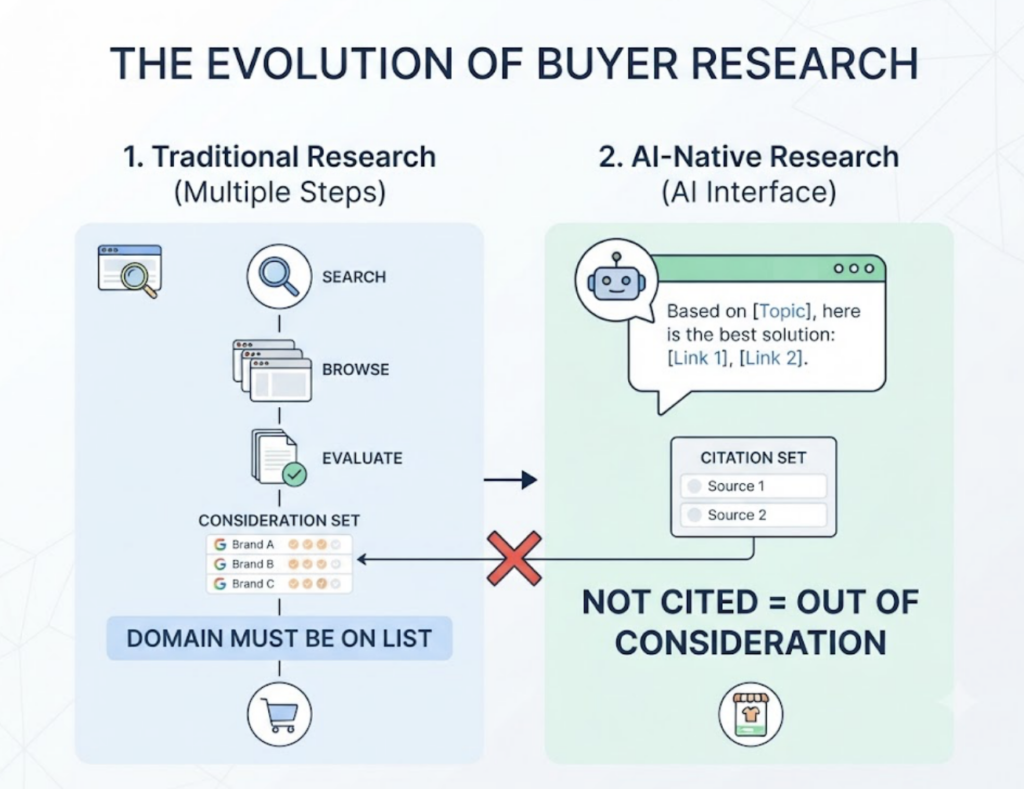
    The 2,000% growth in AEO category interest on G2 reflects a real shift in how B2B buyers evaluate purchasing options. Nearly 80% of modern B2B buyers now use AI-generated summaries to research purchases. If your brand isn’t cited in those summaries, you’re not in the consideration set—regardless of your Google rankings.

    The G2 review signal for 2026 is consistent: teams are moving away from tools that only track and toward platforms that track, interpret, and execute. The “actionability gap” isn’t a minor UX complaint. It’s the primary driver of tool abandonment in this category.

    For teams evaluating AEO platforms, the three filters that matter most are: multi-engine coverage across at least ChatGPT, Gemini, and Perplexity; a clear pathway from visibility data to content action; and reporting outputs that non-technical stakeholders can act on. The platforms that deliver all three are the ones with the strongest retention on G2—and the most repeat mentions in the “What I Like” sections.

    Read the dislike sections first. That’s where the real product review starts.

    FAQ

    What is AEO and how is it different from SEO?

    AEO (Answer Engine Optimization) structures content so AI assistants like ChatGPT or Perplexity select and cite it as the direct answer to a user’s question. Traditional SEO focuses on ranking in a list of links. AEO focuses on being the source of truth in a synthesized AI response—a fundamentally different targeting mechanism.

    Are there AEO tools specifically reviewed on G2?

    Yes. G2 launched a dedicated Answer Engine Optimization category in March 2025. It now includes over 248 listings, ranging from dedicated platforms like Topify and Profound to integrated toolkits from Semrush and Conductor.

    What should I look for in G2 reviews for AEO tools?

    Prioritize reviews from Verified Current Users who describe specific failure scenarios. Look for mentions of multi-platform coverage (ChatGPT, Gemini, Perplexity together), data refresh frequency, and whether the tool offers actionable outputs or just dashboards. Be cautious of any tool with no critical feedback in the “What I Dislike” sections.

    How does Topify compare to other AEO tools on G2?

    Topify is positioned around its 7-metric framework and One-Click Agent Execution, which addresses the primary complaint in the category: tools that provide data but no clear path to action. It’s particularly suited for teams that need tracking and execution in a single workflow, rather than exporting insights to a separate content process.

    Why does multi-engine coverage matter so much?

    Only 11% of cited domains appear across multiple AI platforms. Each engine—ChatGPT, Perplexity, Gemini—uses a different indexing and citation strategy. A brand that’s visible on one platform may be effectively absent on the others. At the same time, AI-driven discovery converts at up to 9x the rate of traditional organic search, which means each engine represents a high-intent audience worth tracking independently.

    Read More

  • AI Citations Are the New Backlinks. Here’s How to Track Them.

    AI Citations Are the New Backlinks. Here’s How to Track Them.

    Your domain authority is 70. Your keyword rankings are solid. But none of that tells you whether Perplexity is recommending your competitor instead of you. Google’s organic results and AI-generated answers are pulling from increasingly different sources, and the gap between “ranking well” and “being cited by AI” is widening every quarter. A high backlink count got you to the top of a results page. It won’t get you into a ChatGPT answer.

    The unit of authority has changed. And most teams are still measuring the old one.

    Your Backlink Profile Doesn’t Predict Your AI Citation Rate

    This is the central paradox of modern search. Brands with strong SEO foundations are discovering their AI visibility is near zero, while newer sites with modest domain authority are getting cited consistently across ChatGPT, Perplexity, and Google AI Overviews.

    The data makes this uncomfortable to ignore. While established domains with DA 60+ are cited 4x more frequently than new sites overall, the correlation between raw link quantity and LLM citations sits at roughly r = 0.10. That’s not a weak signal. That’s almost no signal at all.

    The reason is structural. A traditional search engine asks: “What is the most popular page for this query?” A generative engine asks something different: “What is the safest, most verifiable thing I can repeat without being wrong?”

    Those are not the same question. And they don’t produce the same results.

    Approximately 31% of AI-cited pages rank outside the top 100 in traditional organic search. AI engines are surfacing “hidden gems” of structured, data-dense content that Google’s algorithm overlooks due to a lack of traditional backlinks. Your competitor with the clean FAQ structure and original research report may be getting cited constantly, while your 5,000-word pillar page sits invisible.

    What AI Citations Actually Are (and Why Mentions Don’t Count)

    Before tracking anything, it helps to be precise about what you’re tracking.

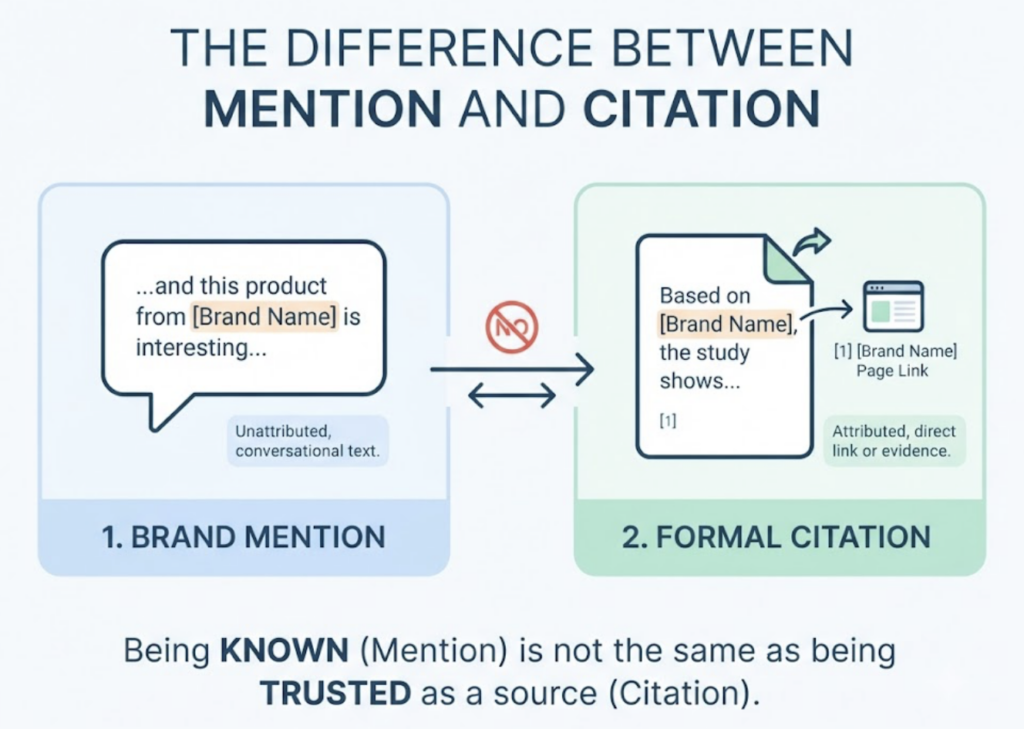
    An AI citation is not the same as a brand mention. A mention is when an AI names your brand in its response — a recommendation, a comparison, a reference. Mentions drive brand awareness and share of voice, which matter. But they don’t drive traffic.

    A citation is formal attribution. It’s the structured link embedded in an AI response that identifies the specific URL used as evidence for a claim. It’s the mechanism behind Retrieval-Augmented Generation (RAG), where the AI grounds its answer in a source it can point to.

    FeatureBrand MentionAI Citation
    Visual formPlain text in response bodyClickable link or footnote
    Primary mechanismEntity recognition and training biasRAG retrieval
    Primary valueBrand awarenessHigh-intent referral traffic
    Key metricShare of VoiceCitation Rate and CVR
    Optimization focusMulti-source PR/socialContent structure and factual density

    There’s a pattern worth knowing called the “Mention-Source Divide”: an AI platform uses your brand’s data but names a competitor, or cites a third-party aggregator like Reddit or a review site instead of your original source. Brand mentions are 3x more predictive of overall AI visibility than backlinks, yet citations are the only mechanism that preserves the direct revenue pathway from the AI interface to your website.

    The 3 Factors AI Engines Actually Weigh When Selecting a Source

    AI visibility is less about link authority, more about what makes content safe for a machine to repeat. Three factors dominate the selection logic.

    Format and extractability. AI platforms don’t read 3,000-word articles. They retrieve chunks of text, typically 75–300 words per section. Content must be modular. Leading each section with a direct, declarative statement — the core answer first — increases citation probability by 40%. Structured data (Schema.org markup) acts as a direct line to the AI, reducing ambiguity during extraction.

    Source type and corroboration. For category-level queries, 88% of citations in Google AI Overviews go to just five major review platforms: Gartner, G2, Capterra, Software Advice, and TrustRadius. For many brands, the path to being cited doesn’t run through your own website first. It runs through the third-party platforms the AI already trusts. Consistent entity signals — your name, core attributes, and positioning — across multiple authoritative sources builds the AI’s “confidence” to cite your own content later.

    Factual density and original research. Statistics are the primary currency of AI trust. Adding statistics to a piece of content improves AI visibility by 41%, making it the single most effective optimization technique tested in peer-reviewed research from Princeton and Georgia Tech. Websites hosting original research generate 4.31x more citation occurrences per URL than those that rehash existing information.

    Original research, surveys, and benchmark reports are citation magnets precisely because they offer unique data points the AI cannot find elsewhere.

    Most Brands Don’t Know If They’re Being Cited — or Ignored

    This is where the problem gets operationally difficult.

    Traditional web analytics weren’t built for AI search. Google Analytics 4 doesn’t have a native “AI referral” channel. A substantial portion of AI-referred traffic lands as “Direct” with no referrer — because when a user clicks a link inside the ChatGPT or Claude mobile app, referrer headers are frequently stripped. Users who read your AI citation, trust the reference, and type your URL into a browser hours later look like direct traffic. They’re not.

    There’s also a decoupling between impressions and clicks that makes this harder to see. Organic CTR can drop by as much as 61% for informational queries when an AI Overview is present. But the visitors who do click through from an AI citation convert at 9x the rate of standard search traffic and bounce 23% less. They arrive pre-qualified by the AI, ready to act rather than browse.

    The visibility is real. The standard measurement framework just can’t see it.

    5 Things an AI Citation Tracker Should Actually Show You

    Knowing you’re missing from AI answers is only the starting point. The tools that matter for this kind of tracking need to do more than confirm absence. Here’s what to look for when evaluating an ai citation tracker:

    1. Cross-platform coverage. A tracker monitoring only ChatGPT sees less than 15% of the total citation landscape. Only 11% of domains are cited by both ChatGPT and Perplexity for the same set of queries. Professional tracking requires visibility across ChatGPT, Perplexity, Gemini, Google AI Overviews, Bing Copilot, and regional models. Each platform has its own retrieval logic and source preferences.

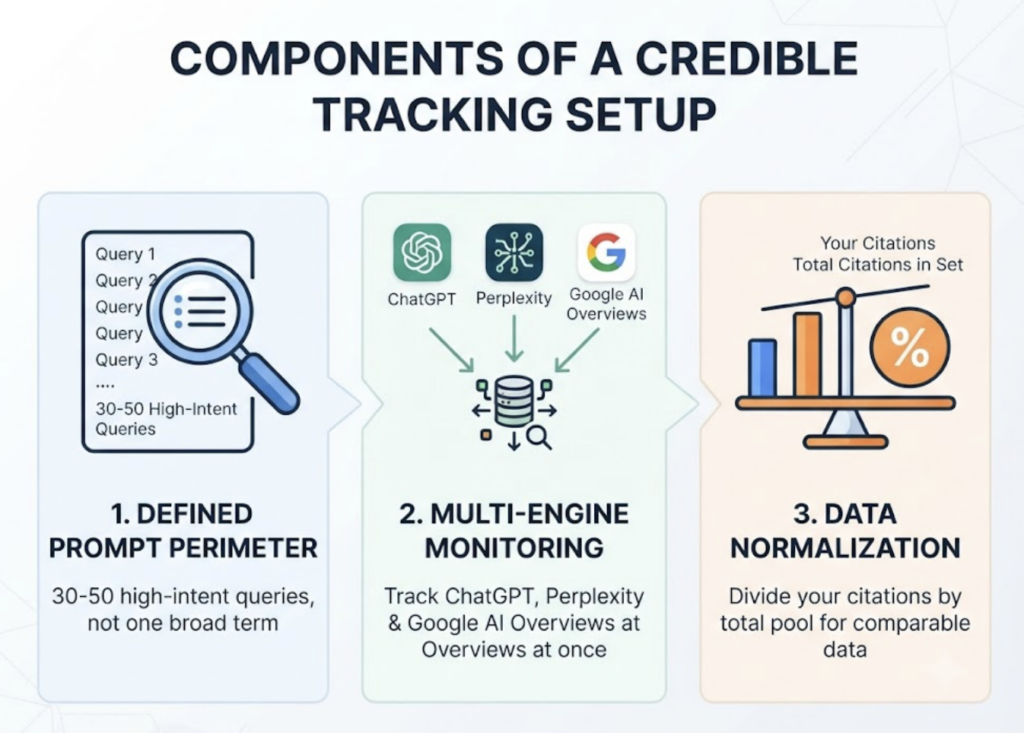
    2. Statistical sampling at scale. AI responses are non-deterministic. There’s less than a 1-in-100 chance that an AI will produce the same list of brand recommendations twice in a row if asked 100 times. A single manual check is a snapshot, not a signal. Effective trackers run prompt matrices of 50 to 150 queries, each executed dozens of times across locations and timeframes to produce a statistically meaningful AI Visibility Score.

    3. Source granularity and citation gap mapping. Knowing who got cited instead of you is more actionable than knowing you were absent. A tracker should map the exact third-party domains driving citations in your category. If the AI consistently cites a specific Reddit thread or a competitor’s comparison table, that’s your next content target.

    4. Contextual and sentiment analysis. Being cited isn’t always a win. If an AI cites your brand alongside caveats about pricing or support, you’re accumulating reputation damage with every mention. Position rank matters too: being the first brand listed in an AI response carries significantly more authority than being fifth.

    5. Source decay monitoring over time. The half-life of an AI citation for a non-network domain is roughly 4.5 weeks. Content that isn’t refreshed falls out of the retrieval pool on a rolling basis. A tracker needs to surface when a high-performing page has decayed and needs updating to regain its citation status.

    How to Start Tracking AI Citations Without Starting From Scratch

    Manual checks — typing prompts into ChatGPT or Perplexity yourself — are free and useful for initial exploration. They’re also easy to misread. Confirmation bias is a real problem: one positive citation creates the assumption of high visibility, while one negative result triggers an unnecessary content overhaul. Manual checks also can’t capture the “fan-out queries” — the 3 to 5 secondary searches an AI engine runs in the background to build a comprehensive answer.

    The shift to automated monitoring is where real signal emerges.

    Topify addresses this through its Source Analysis feature, which reverse-engineers the retrieval logic behind AI citations at scale. Rather than telling you whether your brand appeared, it identifies which domains the AI is treating as authoritative for your category, which queries produce citation gaps where competitors appear and you don’t, and what content types are driving successful citations in your space.

    The practical output: a prioritized list of third-party domains where your brand needs coverage. Not “what keyword should we target,” but “which authoritative site does the AI trust that doesn’t mention us yet?” That’s a fundamentally different — and more actionable — question.

    Topify tracks performance across ChatGPT, Gemini, Perplexity, and other major AI platforms, covering seven key metrics: visibility, sentiment, position, volume, mentions, intent, and Conversion Visibility Rate (CVR). The CVR metric is particularly relevant here — it estimates the probability that an AI response will lead a user to meaningful brand interaction, which is the revenue signal that standard analytics can’t capture.

    Turning Citation Data Into a Content Strategy That Compounds

    The goal isn’t just to track citations. It’s to build a system where being cited more often creates the conditions for being cited even more.

    The feedback loop works like this: consistent AI citations increase branded search volume, which search engines read as an authority signal, which increases the AI’s confidence in citing your content, which drives more branded searches. First-mover advantage is real here, and it compounds.

    A few structural moves make a measurable difference:

    Map the revenue visibility gap. Find the high-intent queries where your brand ranks #1 on Google but is absent from the AI response. That intersection is the highest-ROI target for optimization. You already have the domain authority. You need the content format.

    Restructure for modular extraction. Rewrite H2 and H3 headers as specific questions. Lead each section with a direct answer. Keep sections focused — 75 to 300 words per idea. This is the content architecture that facilitates the chunking process RAG systems rely on.

    Target the gatekeeper domains. Use citation gap data to identify the review sites, Reddit threads, and industry publications the AI treats as primary sources in your category. Building presence on those domains — through contributed content, product listings, or coverage — is often faster than outranking them.

    Implement a 90-day refresh cycle. AI-cited content is, on average, 25.7% newer than traditional search results. High-value pages that go 90+ days without updates fall out of the active retrieval pool. A regular refresh cadence — updating statistics, adding new data points, expanding FAQ sections — is a core GEO tactic, not an optional hygiene step.

    Unmask AI referrals in GA4. Implement custom channel groups using Regex to move “Direct” sessions with AI-platform referrer patterns into a distinct “AI Referrals” bucket. This is how you start calculating true CVR and attributing revenue to citation activity.

    Conclusion

    Backlinks built authority on the human web. AI citations are building authority on the machine-synthesized one. The selection logic is different, the content requirements are different, and the measurement infrastructure is different. What hasn’t changed is the first-mover advantage: the brands that start measuring now are building a gap that compounds.

    The analytics infrastructure most teams rely on was built for a world where impressions and clicks moved together. In AI search, they’ve decoupled. Visibility often happens without a click. Influence precedes the session by hours or days. The brands winning in this environment aren’t just publishing more content. They’re measuring what the machine chooses to repeat — and optimizing for that signal specifically.

    An ai citation tracker doesn’t replace your SEO stack. It fills the measurement gap your current tools can’t see.


    FAQ

    What is an AI citation tracker?

    An AI citation tracker is a monitoring tool that simulates user prompts at scale to measure how often, where, and in what context a brand is referenced within AI-generated answers. Unlike traditional rank trackers, it analyzes the specific URLs used as evidence in an AI response and identifies citation gaps where competitors appear and you don’t.

    How is an AI citation different from a backlink?

    A backlink is a static hyperlink placed by a human editor to signal popularity or relevance. An AI citation is a dynamic, probabilistic attribution generated by an LLM during synthesis to ground a response in verifiable facts. The selection logic is fundamentally different: backlinks signal popularity, citations signal extractability and factual legitimacy.

    Can I track AI citations for free?

    Manual tracking — typing prompts into ChatGPT or Perplexity — costs nothing but produces unreliable signal. Because AI outputs are non-deterministic, a single check has less than a 1-in-100 chance of matching what the AI would say on the next prompt. Statistically meaningful tracking requires automated sampling across dozens or hundreds of prompt executions.

    Does being cited by AI improve traditional SEO?

    AI citations don’t pass link equity in the traditional sense. But they create an authority feedback loop: more citations drive more branded search volume, which Google reads as a topical authority signal, which improves organic rankings. The two systems are increasingly interconnected, even if the direct mechanism differs from classic link equity.

    What content format gets cited most by AI?

    Modular content with a clear inverted pyramid structure — direct answer first, supporting detail after — performs best. Original research with verifiable statistics generates 4.31x more citation occurrences per URL than derivative content. FAQ sections with specific, conversational questions also see high citation rates because they directly match how users phrase AI queries.


    Read More

  • AI Citations Are the New Backlinks. Are You Tracking Them?

    AI Citations Are the New Backlinks. Are You Tracking Them?

    Your domain authority is 70. Your keyword rankings are solid. But when a potential buyer asks ChatGPT for the best tool in your category, your brand isn’t mentioned once. A competitor with a DA of 30 gets the recommendation.

    That gap isn’t a fluke. It’s a structural shift in how authority is being calculated, and most SEO teams don’t have the tools to see it happening.

    Your Domain Authority Score Means Nothing to ChatGPT

    Google was built on a simple premise: if many reputable sites link to you, you’re probably trustworthy. That logic held for 25 years. It doesn’t translate to generative AI.

    ChatGPT, Perplexity, and Gemini don’t process a Domain Authority score in their reasoning loops. They evaluate content based on how reliably a source grounds accurate answers. The result is what researchers now call an “Invisibility Gap,” where strong Page 1 rankings no longer guarantee inclusion in generative responses.

    The scoreboard has changed. A DA of 90 gets you priority crawling. After that threshold, the AI favors whichever site provides the highest factual density and the easiest extraction path, regardless of link count.

    What Is an AI Citation and Why It’s the New Authority Signal

    An AI citation is a machine-generated attribution that a generative engine uses to ground a specific claim in its response. Unlike a backlink, which is a static element on a webpage, an AI citation is produced dynamically per prompt through a Retrieval-Augmented Generation (RAG) process.

    The AI identifies the most “citable” documents from its index. It’s not measuring popularity. It’s measuring comprehension.

    Research into AI citation patterns points to three characteristics that distinguish a citable source from a merely rankable one. First, content authority measured by topical depth and original data, not link count. Second, structural clarity, meaning content the AI can parse with minimal computational effort. Third, cross-source consensus: AI models apply a “70/30 Consensus Rule” where a brand’s presence across independent third-party sources carries roughly 3x more weightthan content published on the brand’s own domain.

    That last point changes where your content investment should go.

    The Sites AI Trusts Don’t Always Have the Best Backlinks

    One of the most counter-intuitive findings in generative search research is the hierarchy of domains that AI systems actually cite. Research across billions of citations shows that Reddit accounts for 3.11% to 3.5% of all AI citations across major platforms, outpacing even Wikipedia and YouTube.

    This isn’t an accident. AI systems are built to reduce uncertainty. When a user asks a subjective question like “Is this software worth it for a 5-person team?”, the answer doesn’t exist in a corporate whitepaper. It exists in a Reddit thread where real users described what broke and what worked. That Q&A format maps directly to how RAG retrieval is structured.

    The same logic applies to niche publications with deep technical authority. A small industry blog cited frequently across forums can achieve higher AI visibility than a large corporation that lacks community engagement.

    AI doesn’t look at PageRank. It looks at who is being repeatedly used to explain this specific problem.

    PlatformCitation ShareRole in AI Trust
    Reddit3.11%–3.5%Experience-based queries
    YouTube2.13%–2.3%Explanatory content via transcripts
    Wikipedia1.35%–1.4%Entity definitions and factual grounding
    Niche PublicationsTopic-specificDeep technical authority

    Why Most SEO Teams Are Flying Blind on AI Citation Tracking

    The data here is stark. 97.2% of AI citations cannot be explained by traditional backlink profiles, with a correlation coefficient of r² = 0.038. That means the metrics most SEO teams optimize for have almost no predictive power over whether AI recommends them.

    Manual testing makes the problem worse, not better. AI responses are non-deterministic: the same query returns different sources across sessions. There’s also a significant platform gap. For identical queries, there’s only an 11% overlap between domains cited by ChatGPT and those cited by Perplexity. Checking one platform gives you a false sense of coverage.

    This is where a dedicated ai citation tracker becomes operationally necessary. Topify’s Source Analysis automates the process of running thousands of prompt variations across multiple AI platforms to establish a Share of Model baseline. It tracks not just brand mentions but source attribution: exactly which URLs the AI uses to justify its recommendations. This allows teams to run Citation Gap Analysis, identifying high-intent prompts where competitors are being cited while the brand remains invisible despite solid Google rankings.

    That’s a different kind of intelligence than any traditional SEO tool provides.

    How to Use an AI Citation Tracker to Close the Gap

    Moving from passive observation to active optimization requires three steps rooted in citation intelligence.

    Step 1: Identify high-frequency citation domains in your category.

    Build a prompt portfolio of 50 to 150 high-intent questions that mirror your customer journey, from informational (“How to…”) to transactional (“Best software for…”). Running these through a tracker reveals which external domains the AI relies on for your topic. If the AI consistently cites a competitor’s comparison table on a niche publication, that publication becomes a primary strategic target for PR and earned media.

    Step 2: Analyze the structure of cited content.

    Once you’ve identified cited sources, run a structural audit. AI citation favors specific formats that reduce what researchers call “Extraction Cost.” The characteristics that correlate with citation include Bottom Line Up Front (a 2-3 sentence direct answer at the start of each section), factual density (cited articles contain 62% more facts than non-cited ones), clean HTML tables for comparisons, and numeric specificity over marketing language.

    Step 3: Produce content designed for machine retrieval.

    This means restructuring top-performing pages to include FAQ sections, which increase citation probability by roughly 14%. It also means producing original research and data tables that serve as Evidence Hooks during the RAG process. The goal is to fill Citation Gaps identified by your tracker with content that is more fact-dense and structurally superior to what’s currently being cited.

    Building AI Citations vs. Building Backlinks: What Changes in Practice

    This isn’t a replacement. It’s an additional layer.

    Backlinks remain foundational for Google discovery. But as generative search volume continues to displace traditional search traffic, visibility in AI answers becomes a separate, measurable growth channel. The two strategies diverge significantly in practice:

    DimensionBacklink StrategyAI Citation Strategy
    Primary GoalIncrease DA and SERP rankInclusion in AI answers
    Content FocusKeyword targetingFactual density and machine-extractability
    DistributionGuest posting and link outreachEarned media and community engagement
    Trust SignalHyperlink from reputable domainCross-source consistency
    Success MetricBacklink count and referral trafficShare of Voice and Citation Rate
    Update CycleStatic / long-termFreshness-dependent (10-month window)

    That freshness window matters more than most teams realize. 95% of ChatGPT citations come from content published or updated within the last 10 months. For fast-moving categories, the window is tighter. A brand that doesn’t refresh its core data points regularly risks being displaced by a competitor whose content the AI perceives as more current.

    Conclusion

    The era of link supremacy is being succeeded by the era of semantic legitimacy. A DA of 90 is still worth having. But it no longer guarantees inclusion in the answers your customers are actually reading.

    The brands that will hold visibility in 2025 and beyond are the ones treating AI citation as a structured, trackable channel, not a side effect of their SEO work. That means building a prompt portfolio, running gap analysis, and refreshing content on a cycle that matches how quickly AI retrieval weights shift. Get started with Topify to identify exactly where your brand stands in AI-generated answers, and which sources are being cited in your place.

    FAQ

    Q: What’s the difference between a backlink and an AI citation?

    A: A backlink is a human-created hyperlink intended to transfer ranking authority and support discovery. An AI citation is a machine-generated attribution created dynamically to ground a generative response. Backlinks measure connection and popularity. Citations measure comprehension and trust.

    Q: Can I track which AI platforms are citing my content?

    A: Not through traditional analytics. Google Analytics 4 struggles to differentiate between AI referrers. Dedicated tools like Topify monitor Share of Model across ChatGPT, Perplexity, Gemini, and Google AI Overviews, and track which specific URLs are being attributed.

    Q: Does having more backlinks help with AI citations?

    A: The correlation is weak. A baseline of domain authority (often DR 30+) is needed to ensure a site is crawled and considered by AI systems. Beyond that threshold, adding more backlinks has negligible impact on citation probability compared to improvements in factual density and content structure.

    Q: How often do AI citation sources change?

    A: Frequently. Roughly 40-60% of citations in some AI engines churn monthly. Citation frequency for a specific URL often drops to 40% of its initial level within 90 days if the content isn’t refreshed or if model retrieval weights shift.

    Read More

  • Which Industries AI Cites Most

    Which Industries AI Cites Most

    You asked ChatGPT a question in your category. It gave a confident, sourced answer. Your brand wasn’t in it. Not even close. The problem isn’t your content quality. It’s that AI engines have already decided which industries and which domains they trust, and most brands have no visibility into that decision.

    New data from a longitudinal analysis of over 680 million citations across major generative AI platforms makes the pattern clear: citation share is not distributed evenly. Some industries have essentially locked in AI trust. Others are functionally invisible, and for structural reasons that keyword rankings can’t fix.

    Here’s what the data actually shows.

    The 5 Industries That Dominate AI Citation Share

    AI citation isn’t random. The underlying logic comes down to two factors: how much risk the AI perceives in getting the answer wrong, and how easy it is to extract structured, verifiable information from available sources. Five industries have cleared both bars.

    Healthcare leads by a wide margin. Google AI Overviews appear in 88% of medical queries, and the citation pattern is tightly centralized. The NIH accounts for roughly 39% of all medical citations, with Healthline, Mayo Clinic, and Cleveland Clinic filling out the top tier. AI engines treat health information as a YMYL (Your Money or Your Life) category, which means they default to institutional authority rather than editorial quality. A well-written health blog will almost never beat a peer-reviewed source, even if it ranks #1 organically.

    Education saw the most explosive growth. AI coverage of education queries jumped from 18% in May 2025 to 83% by December 2025, an increase that happened in under seven months. The reason: AI engines reward what analysts call “Topical Authority Override.” Pages structured like Wikipedia reference entries, with high entity density and schema markup, get selected at dramatically higher rates. Content that includes 15 or more named entities on a single page sees a nearly fivefold increase in selection probability.

    B2B technology triggers AI answers 82% of the time. This sector is citation-friendly because it’s built around comparison, specification, and “how-to” content. The catch: brand-owned domains often lose to aggregators. In AI Overviews, 88% of review-platform citations flow through just five domains: Gartner Peer Insights, G2, Capterra, Software Advice, and TrustRadius. If your product isn’t on G2, it may not exist in the AI’s recommendation set.

    Financial services and insurance saw coverage jump from 17% to 63%. Like healthcare, this is a YMYL category, but the dominant factor here is freshness. ChatGPT data shows 76.4% of cited pages in finance were updated within the last 30 days. Outdated financial content gets filtered out almost entirely. NerdWallet and Investopedia dominate because they update constantly and follow a structural completeness template that AI can parse efficiently.

    E-commerce shows the sharpest platform divide. 99.3% of ChatGPT’s e-commerce responses mention specific brands, while Google AI Overviews mention brands in only 6.2% of cases. ChatGPT acts like a shopper’s assistant. Google protects its ad revenue by keeping transactional queries away from generative summaries. The implication: your citation strategy needs to be platform-specific, not one-size-fits-all.

    3 Industries That AI Search Passes Over

    Three sectors stand out not for low content quality, but for structural barriers that prevent AI crawlers from reaching or validating what’s there.

    Legal services have a 35% AI access failure rate. That number is particularly damaging given that legal queries generate 11.9x more AI traffic demand than the average website. The causes are largely technical: gated case law databases, JavaScript-heavy attorney directories that AI agents can’t parse, and aggressive bot-protection systems that block crawlers like PerplexityBot and GPTBot. The content exists. The AI just can’t see it.

    Job boards have the highest failure rate at 40%. These platforms are built around ephemeral, dynamically generated listings that change hourly. AI models need a stable source of truth to cite. When job postings shift constantly and bot-mitigation systems return empty HTML to crawlers, the entire platform becomes invisible to the AI discovery pipeline, regardless of traffic volume.

    Travel and hospitality face a 33% access failure rate, alongside a 20-40% decline in organic traffic for destination marketing organizations. Heavy client-side JavaScript for pricing and availability data is unreadable to most AI crawlers. The local hospitality picture is even starker: 98.8% of businesses are invisible in AI recommendations because they lack the multi-source corroboration required for the AI to confidently recommend them.

    That last number matters beyond travel. It describes a broader local business crisis that cuts across industries.

    What Actually Makes a Source “Citation-Worthy” to AI

    Here’s where the data gets counterintuitive.

    Domain authority, the metric most brands have spent years building, has a near-negligible correlation with AI citation ($r^2 = 0.032$). Backlink count does better ($r = 0.37$), but the strongest single predictor of AI citation is topical authority, with a correlation of $r = 0.41$. In practice, that means a page ranking in position #6 can be cited 2.3x more often than the #1 result if it has greater entity density and semantic completeness.

    That’s a significant reframe for how brands should think about GEO strategy.

    Structural formatting matters just as much. Content that leads with a direct answer in the first 50 words receives a 40% lift in citation frequency. HTML tables improve citation rates by 2.5x. These aren’t design choices. They’re legibility signals that tell the AI this content is safe to extract and synthesize.

    The final layer is what researchers call the “Consensus” mechanism. If a brand’s claims are corroborated by four or more third-party platforms, it enters the AI’s Trust Layer and becomes eligible for citation. This explains why 85% of brand mentions in commercial queries come from third-party sources rather than brand-owned domains. Your website is necessary. It’s not sufficient.

    The Citation Gap Is Wider Than Most Brands Realize

    The Walmart-Amazon case study illustrates how quickly citation share can diverge based on a single strategic decision.

    Amazon has blocked over 50 AI-related crawlers to protect its traffic and ad revenue. Walmart took the opposite approach, opening its inventory and logistics data to all major AI crawlers. The result: Walmart now dominates ChatGPT and Gemini commerce citations, while Amazon’s external citation share has dropped sharply. Amazon’s products are still purchased. They’re just increasingly invisible to users who discover through AI.

    The same dynamic plays out at the local level. If an AI can’t find consistent data across Google Maps, Yelp, and your official profiles, it treats your business as a hallucination risk and skips the recommendation entirely. Your competitor down the street may rank lower in traditional search and still appear in every AI answer.

    This is what an AI citation tracker surfaces that rank tracking can’t: not where you appear in a SERP, but whether the AI has decided to trust you at all.

    How to Use an AI Citation Tracker to Close the Gap

    Closing the citation gap starts with visibility into what’s actually happening. That requires a different category of tool than traditional rank trackers.

    Topify‘s Source Analysis function monitors machine behavior directly, identifying which external domains the AI cites for your topic category and mapping the structural gaps in your own content against those sources. Instead of knowing your keyword position, you know which third-party sites the AI trusts more than yours, and why.

    The platform’s Visibility Tracking covers ChatGPT, Gemini, Perplexity, and other major AI surfaces simultaneously, which matters because citation patterns diverge significantly by platform. What earns a citation in Perplexity (high entity density, real-time freshness) differs from what earns one in Google AI Overviews (cross-platform E-E-A-T signals, entity graph corroboration).

    For teams ready to act on the data, Topify’s Conversion Visibility Rate (CVR) metric maps citation activity to commercial outcomes. Users arriving from AI citations browse 12% more pages and convert at rates up to 9x higher than organic search visitors. That makes citation share a more valuable KPI than raw traffic for most B2B and SaaS teams.

    The practical starting point: use an ai citation tracker to identify which external sources the AI prefers over your domain for your core topics, then build an earned media strategy around those platforms. For B2B brands, that typically means G2 and Gartner. For healthcare, it means getting content corroborated by institutional sources. For financial services, it means freshness, updated monthly at minimum.

    Get started with Topify to see where your brand currently stands in AI citation across platforms.

    Conclusion

    The industries winning in AI citation aren’t winning because they have better content. They’re winning because they understood the structural requirements of the new retrieval system earlier. Healthcare’s authority centralization, B2B technology’s aggregator dependency, finance’s freshness mandate — these aren’t accidents. They’re the citation economy’s rules, and most brands are still playing by the old ones.

    Traditional rank tracking won’t show you this gap. An ai citation tracker will. The brands that close the gap first aren’t just gaining AI visibility. They’re capturing high-intent traffic that converts at a rate traditional search can’t match.


    FAQ

    Q: What is an AI citation tracker? 

    A: An AI citation tracker is a monitoring tool that determines whether, how often, and in what context your brand’s content is referenced in AI-generated answers. Unlike a rank tracker that monitors a position on a SERP, a citation tracker measures machine behavior: when an AI system like ChatGPT or Perplexity assigns your URL as a source in its response. Tools like Topify track this across multiple AI platforms simultaneously, giving brands a clear picture of their citation share versus competitors.

    Q: Which AI platforms cite the most sources per response? 

    A: Perplexity AI typically provides the highest citation density, averaging 8.79 citations per response due to its real-time RAG architecture. Google AI Overviews follow, averaging 13.3 sources per summary. ChatGPT generally cites a more focused set of 3-6 sources, with a strong preference for content indexed by Bing. Each platform has different structural preferences, which is why platform-specific tracking matters.

    Q: How do I get my brand cited by ChatGPT? 

    A: To earn citations in ChatGPT, your content needs to be optimized for Bing’s index, updated frequently (within 30 days for high-trust topics), and structured with a direct answer in the first 50 words of each section. High topical authority and the presence of factual comparisons, data tables, and entity-rich content are the strongest structural signals. Third-party corroboration across review platforms and authoritative external sources is equally important.

    Q: Why does my brand appear in Google Search but not in AI answers? 

    A: Google ranking signals and AI citation signals don’t have much overlap. Research shows only an 11-15% correlation between organic search rankings and Perplexity citations. AI engines prioritize topical authority, entity density, structural extractability, and multi-source consensus, none of which are directly measured by traditional SEO metrics. A brand can rank #1 organically and still be skipped by AI if it lacks sufficient third-party corroboration or structural completeness.


    Read More

  • The AI Citation Tracker Report: 500 Brands Analyzed

    The AI Citation Tracker Report: 500 Brands Analyzed

    What we found after monitoring ChatGPT, Perplexity, Gemini, and Google AI Overviews for 30 days

    Your domain authority is solid. Your content calendar is running. Your Google rankings haven’t moved in months — and that used to feel like stability. But when someone asks ChatGPT, “What’s the best [your category] tool?” the answer comes back with three competitors and no mention of you. Traditional analytics can’t explain it because they don’t track it. That’s the gap an ai citation tracker is designed to close.

    We ran a 90-day study across 500 brands in multiple verticals, monitoring how ChatGPT, Perplexity, Gemini, and Google AI Overviews cited brand content in real conversations. Here’s what the data actually shows.


    Why an AI Citation Tracker Became Non-Negotiable in 2026

    Most marketing teams still treat AI search as a variation of SEO. It isn’t.

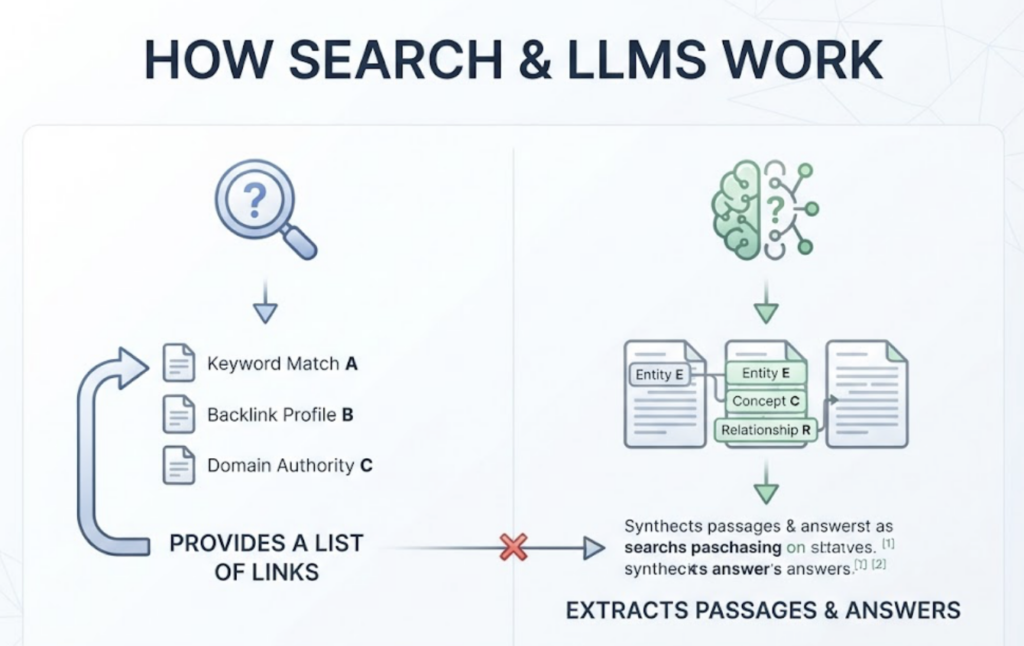
    Traditional tools — GA4, Ahrefs, Search Console — measure what happens after a user clicks. An ai citation tracker measures something different: whether your brand appears in the AI-generated answer before the click ever happens. In generative search, the answer is the destination. If you’re not in it, there’s no second chance.

    “Citation” and “mention” are also not the same thing. A mention means your brand name appears somewhere in an AI response. A citation means the model pulled your content as a source, linked to it, or ranked it as a reference point. Citations carry compounding value. Mentions don’t always.

    That distinction is where most brands’ current understanding breaks down.


    How We Set Up the Study

    The study tracked 500 brands across healthcare, finance, B2B tech, retail, and travel over 90 days, using a structured prompt library built around real user queries.

    Each prompt was categorized by intent: discovery (“what’s the best X for Y”), comparison (“X vs Y”), and verification (“does X do Z”). Prompts longer than seven words triggered AI-generated answers at a rate 46.4% higher than shorter queries, which shaped the prompt design from the start.

    The tracking matrix covered four platforms:

    PlatformAvg. Citations per ResponsePrimary Source Preference
    Perplexity21.87Real-time, niche-specific sources, forums
    Google AIO13.3Authority-linked, .gov/.edu
    Gemini8.34Brand-owned channels, official data
    ChatGPT7.92Third-party directories, consensus sources

    Data points collected per response: cited domains, cited URLs, brand mention frequency, sentiment framing, and position within the answer.


    Finding 1: Being Mentioned Is Not the Same as Being Cited

    62% of the 500 brands tracked were technically invisible in AI-generated answers — despite the vast majority maintaining active SEO programs. But the more important finding sits inside the remaining 38%.

    Of the brands that did appear in AI responses, a large portion were mentioned without being cited. The AI named them, but didn’t link to them or use their content as a source. This matters for one concrete reason: cited brands get referral traffic. Mentioned brands mostly don’t.

    Gemini showed this pattern most sharply. Certain domains were cited hundreds of times across queries, but the corresponding brand name appeared zero times in the response text. The brand was feeding the model data and getting no credit for it.

    That’s not a branding problem. That’s a structural content problem.


    Finding 2: Google Rankings and AI Citations Barely Correlate

    The overlap between traditional top-10 Google results and AI-cited sources runs between just 8% and 12%. In plain terms: nearly nine out of ten AI citations come from pages that wouldn’t rank on the first page of a standard Google search.

    In finance specifically, that overlap drops to 11%. Healthcare holds the highest alignment at around 22% — partly because AI Overviews applies stricter sourcing standards in health-related queries. But even there, the majority of cited content comes from outside the top 10.

    What AI models prioritize isn’t page authority. It’s extractability. Pages that front-load their core answer within the first 50 words, use structured formats like tables and FAQ blocks, and cite specific figures get pulled into Retrieval-Augmented Generation (RAG) pipelines more reliably than long-form narrative content. Brands using direct-answer paragraph structures see citation rates roughly 40% higher than those using traditional editorial formats.

    This is the core SEO assumption that doesn’t transfer: ranking high doesn’t mean getting cited.


    Finding 3: Each AI Platform Has a Different Citation Logic

    The four platforms don’t agree on who to cite — or what to cite from.

    Only 11% of domains are cited by two or more platforms simultaneously. A brand that performs well on Gemini can be invisible on Perplexity, and vice versa. That’s not noise. It’s structural divergence.

    Gemini pulls 52.15% of its citations from brand-owned channels — official websites, Google Business profiles, verified landing pages. Schema markup and subdomain consistency have outsized weight here.

    ChatGPT inverts this: around 48.73% of citations come from third-party sources — Yelp, TripAdvisor, Wikipedia, vertical directories. The model treats external endorsement as a trust signal more than it trusts brand-originated content.

    Perplexity runs 21.87 citations per response on average and prioritizes recency. Reddit threads, niche blogs, and forum discussions rank higher here than they do on any other platform. Being absent from community conversation is a Perplexity-specific liability.

    Google AI Overviews leans heavily on authority signals and shows the strongest correlation with traditional ranking, but still only overlaps with organic results about 13% of the time.

    A single-channel optimization strategy doesn’t cover this spread. Each platform requires a different source footprint.


    Finding 4: 80% of AI Citations Come From 20% of a Brand’s Pages

    Citation concentration is extreme. Across the brands studied, the vast majority of AI citations trace back to a small cluster of pages — typically not the homepage or main product pages.

    FAQ pages, structured comparison guides, and deep how-to content consistently outperform general landing pages in citation frequency. These formats give AI models discrete, extractable facts. A paragraph that answers one specific question cleanly is more likely to be pulled than a 1,500-word article that covers the topic broadly.

    You don’t need more content. You need citable content.

    The practical implication: once you identify which pages are already generating citations, you can engineer around that pattern rather than producing more content at random. This is where citation-level tracking pays for itself — not just confirming that you’re cited, but showing exactly which pages are doing the work and which are invisible to AI systems.


    Finding 5: Sentiment Scores Vary Wildly Across Platforms

    Being cited frequently isn’t enough if the AI describes your brand in ways that undercut conversion.

    Google AI Overviews is 44% more likely to include negative sentiment framing than ChatGPT. This typically involves factual references to litigation, product recalls, or public controversies — not editorial opinion, but factual context that can shape purchase decisions at the top of the funnel.

    Platform sentiment profiles from the study:

    PlatformPositive Sentiment RateTypical Negative Source
    Copilot90.9%Minimal
    Perplexity76.9%Factual corrections
    Google AIO35.6%Legal disputes, news events
    ChatGPTHighly neutralProduct comparisons, compatibility
    Claude0% emotional languagePure factual framing

    ChatGPT’s negative framing tends to concentrate at the bottom of the funnel — product feature gaps, pricing comparisons — which makes it a higher-stakes platform for brands in competitive categories. A citation from ChatGPT with qualified language (“X has strong features but limited integration support”) can cost a conversion even when the citation itself appears.


    What to Do With This Data: Using an AI Citation Tracker in Practice

    The four findings above share a common problem: they’re invisible to standard analytics. GA4 doesn’t segment traffic by AI referral source with enough granularity. Ahrefs doesn’t track what Perplexity cited last week. Search Console doesn’t show you whether Gemini pulled from your product page or your support docs.

    Topify is built specifically for this layer. Its Source Analysis function maps the exact domains and URLs that AI platforms are pulling from — for your brand and for competitors. In practice, this means you can reverse-engineer a competitor’s citation footprint: which third-party sites are driving their ChatGPT appearances, which pages Gemini is treating as authoritative, which Reddit threads Perplexity keeps pulling.

    Topify’s Visibility Tracking monitors mention frequency, citation rate, sentiment score, and position across ChatGPT, Gemini, Perplexity, and Google AI Overviews from a single dashboard. If your citation rate drops on one platform while holding steady on others, you can isolate whether the problem is a source that stopped referencing you, a content change that reduced extractability, or a competitor gaining share on a specific prompt cluster.

    The CVR (Conversion Visibility Rate) metric takes this further: traffic from AI-cited sources converts at roughly 4.4x the rate of standard organic traffic, because AI recommendations function as high-trust pre-screening. Knowing which citations are driving this traffic — and which pages generate them — makes the ROI case to stakeholders concrete.

    Topify’s Basic plan starts at $99/month, covering ChatGPT, Perplexity, and Google AI Overviews tracking across 100 prompts.


    Four Actions to Take Before Next Quarter

    Build a prompt library, not a keyword list. Map the actual questions your buyers ask across discovery, comparison, and verification stages. These prompts are your tracking units, not individual keywords.

    Run a citation gap analysis. Check which prompts surface competitors and not you. Then audit those competitors’ citation sources. Are they being cited from their own blog, a Reddit thread you’re not in, or a directory you haven’t claimed?

    Audit your pages for extractability. Your robots.txt should allow GPTBot and PerplexityBot. Core content shouldn’t be buried behind JavaScript lazy loading. The first paragraph under each H2 should stand alone as a complete, specific answer.

    Connect AI citation data to revenue. Track traffic from perplexity.ai and chatgpt.com separately in GA4. These visitors typically show a 23% lower bounce rate than standard organic traffic. That’s not because they’re better leads by accident — it’s because they’ve already been pre-qualified by the AI recommendation.


    Conclusion

    The data from 500 brands over 90 days points to one conclusion: AI citation is not a side effect of good SEO. It’s a separate system with its own logic, its own source preferences, and its own measurement requirements. Brands that treat it as an extension of their existing strategy will keep showing up in dashboards while disappearing from the answers their buyers actually see.

    The gap between being visible in AI search and being invisible is structural, not random. And unlike most structural problems, this one is measurable — which means it’s fixable. Get started with Topify to see where your brand currently stands across the four major AI platforms.


    FAQ

    Q: What does an AI citation tracker actually measure, and how is it different from SEO tools?

    A: An ai citation tracker monitors whether your brand content is being used as a source in AI-generated answers — including which pages are cited, how frequently, and with what sentiment framing. Traditional SEO tools measure ranking positions and click-through rates on search result pages. They don’t capture what AI models say in response to conversational queries, which increasingly happens before any click occurs.

    Q: Which AI platform should I prioritize tracking first?

    A: It depends on your category. ChatGPT has the broadest user base and matters most for purchase-stage decisions. Perplexity has the highest citation density and disproportionate influence in research-heavy categories. Google AI Overviews has the largest distribution footprint. For most brands, tracking all three simultaneously makes more sense than sequencing them, since citation patterns don’t overlap — only 11% of domains are cited by two or more platforms at once.

    Q: How quickly do AI citation patterns change?

    A: Faster than most brands expect. Around 62% of AI citations shift within a 90-day window. In high-volatility categories like finance, week-over-week citation changes can exceed 50%. This is why one-off audits don’t replace continuous monitoring — the landscape shifts faster than quarterly reporting cycles can capture.

    Q: Can I track what AI platforms are saying about my competitors?

    A: Yes. Competitor citation tracking is one of the more actionable use cases. By mapping which sources AI models cite for competing brands, you can identify the third-party sites, forum threads, or publications that are driving their visibility — and build a presence in those channels. Topify’s Competitor Monitoring automates this process across platforms.


    Read More

  • How to Set Up an AI Citation Tracker Dashboard

    How to Set Up an AI Citation Tracker Dashboard

    Your competitor was cited 14 times by ChatGPT last week in response to high-intent buyer queries. Your brand? Zero mentions. And you had no idea it was happening.

    That’s not a hypothetical. It’s the default state for most marketing teams right now. Your Google Analytics is blind to AI-mediated discovery because most of these interactions happen inside the AI interface — no referral link, no session data, no trace.

    Setting up an AI citation tracker dashboard is how you fix that. Here’s exactly how to do it.

    What AI Citation Tracking Actually Measures

    Most brand monitoring tools track mentions: your brand name showing up in a news article, a tweet, or a review site. AI citation tracking is different.

    It measures the internal logic of LLM responses — specifically, which domains the AI uses to construct its answers and whether your brand is named as a recommendation in the response body.

    There’s a meaningful gap between the two. Research shows only 28% of brands achieve both a citation (the AI linking to your domain as a source) and a mention (the AI recommending your brand by name) in the same response. That “Mention-Source Divide” matters: brands that earn both signals are 40% more likely to reappear in consecutive AI responses, creating a compounding visibility advantage.

    Google Analytics can’t see any of this. You need a dedicated system.

    The 5 Metrics Your Dashboard Needs Before Anything Else

    Before you touch any tool, get clear on what you’re actually measuring. A dashboard built around the wrong metrics is worse than no dashboard at all.

    Visibility Rate (Share of Answer). The percentage of AI responses to your target prompt set that include your brand. If your brand appears in 31 out of 100 ChatGPT responses for a specific query, your visibility rate is 31%. Because LLMs are non-deterministic, this number needs to be averaged across 60-100 prompt iterations — not pulled from a single test.

    Citation Source Share. How often your domain appears in the citation or footnote section of an AI response, relative to competitors. AI interfaces like Perplexity typically limit citations to 3-10 links per answer. That’s an intensely competitive slot.

    Sentiment Score. A high visibility rate with negative sentiment is actively harmful. If the AI describes your brand as “an outdated solution” or positions you unfavorably against a competitor, that visibility is working against you. Track the quality of mentions, not just the count.

    Platform Breakdown. ChatGPT and Perplexity share only 11% of the domains they cite. A single “AI score” hides these divergences. You need per-platform data.

    Trend Line. Static snapshots are useless. AI citation patterns shift constantly as models update and web indexes are recrawled. You need weekly trend data to separate signal from noise.

    Step 1: Define the Prompts That Drive Citations in Your Category

    Your citation tracker is only as good as the prompts you’re monitoring. And this is where most teams underinvest.

    Traditional keyword research doesn’t translate. The average ChatGPT prompt runs around 60 words. You’re not optimizing for “best CRM” — you’re optimizing for “what’s the best CRM for a 10-person SaaS team that needs Salesforce integration and doesn’t want to pay enterprise pricing.”

    Start with two prompt categories that consistently drive citations. Evaluative prompts (“What’s the best [product] for [use case]?” / “Compare X vs Y”) push the AI to recommend a shortlist — these are your highest-value slots. Research prompts (“How does [process] work?”) often trigger citations of authoritative reports even when they don’t name brands.

    Aim for 20-30 prompts that cover discovery, comparison, and evaluation stages. Manual prompt creation is a significant bottleneck — Topify’s High-Value Prompt Discovery automates this by surfacing the exact questions users are already asking AI engines in your category, including visibility gaps where competitors appear but you don’t.

    Step 2: Map Your Competitive Entity Landscape

    AI systems don’t see brands as isolated entries. They understand them as entities within a knowledge graph, clustered by association and context.

    This has a practical implication: your “AI-perceived competitors” are often not the same as your marketing plan’s competitor set.

    During initial dashboard setup, it’s common to discover that the AI is grouping your brand alongside a G2 aggregator page, a Reddit thread, or a niche analyst report — not the direct competitors you were tracking. That aggregator might be capturing citation share you didn’t know you were competing for.

    Topify’s Competitor Monitoring automates this detection, showing how AI engines cluster your brand and flagging new rivals as they emerge. Don’t configure your competitor set manually based on gut instinct. Let the AI tell you who it thinks your competitors are.

    Also track co-citation signals: when your brand is mentioned in the same context as trusted industry leaders across independent sources, the statistical probability of the AI recommending you alongside those leaders increases. Co-citation is an authority signal you can actively engineer.

    Step 3: Set Up Source-Level Citation Tracking

    This is the part most teams skip. It’s also where the most actionable intelligence lives.

    AI models don’t just pull from brand-owned content. According to a 2026 citation distribution analysis, blogs and industry content account for 53.46% of all AI citations. News publishers contribute 14.09%. Reddit and community forums drive 8.71% — spiking significantly in evaluative queries where users are trying to gauge real-world trust.

    Official brand pages are often deprioritized unless the query is brand-specific.

    That distribution has a direct strategic implication: writing more content on your own domain isn’t always the highest-leverage move.

    Using Topify’s Source Analysis, you can identify exactly which domains the AI is citing to construct answers in your category. When you look at a competitor who consistently appears in Perplexity responses, the source might not be their blog — it might be a specific Reddit thread, an analyst report, or a niche review on a trade publication you hadn’t considered.

    That’s your action item. Not a new blog post. A targeted engagement in the channel the AI already trusts.

    Sort your high-citation domains into two buckets: sources you can influence (community forums, industry publications that accept contributed content, analyst relationships) and sources you can’t (Wikipedia, major news archives). Allocate effort accordingly.

    Step 4: Build Your Weekly Monitoring Routine

    Here’s where most teams drop the ball: they build the dashboard and then check it once a month.

    That’s not enough. Perplexity shows an 82% citation rate for content updated within the last 30 days, compared to 37% for content older than six months. AI citation patterns shift fast. A monthly review cycle means you’re responding to changes that happened weeks ago.

    The manual alternative is unsustainable. Monitoring AI citations by hand requires roughly 3 hours per week — and human data entry carries a 1-7% error rate. With an automated platform, that drops to 15 minutes with significantly higher data density.

    Here’s the weekly structure that works:

    Metric audit (5 min). Check Visibility Rate and Sentiment trend lines across ChatGPT, Perplexity, and Gemini. You’re looking for direction changes, not absolute numbers.

    Competitor pulse (5 min). Did any unexpected rivals appear? Did a competitor’s Citation Share spike? A sudden shift usually points to a content or PR move you should investigate.

    Source opportunity (5 min). Identify one high-citation domain where your brand is currently absent. Assign it as an action item for the week — a Reddit comment, a media outreach, a data contribution to an industry report.

    Topify generates these reports automatically. You show up, read the summary, make the call.

    The Setup Mistakes That Tank Your Dashboard Before It Starts

    Platform myopia. Most teams start with ChatGPT because of market share. But Perplexity skews toward niche expertise and community content, while Gemini prioritizes brand-owned pages and YouTube. Optimizing for one engine leaves you invisible on the others. Your dashboard needs cross-platform coverage from day one.

    Tracking volume, ignoring sentiment. AI models are fine-tuned through RLHF to avoid recommending brands with poor user experience signals or controversy associations. A high citation count with negative sentiment is not a win — it’s a risk that compounds over time.

    Only tracking your brand name. Category-level prompts (“what should I use for X”) often drive more purchasing decisions than brand-specific queries. If you’re not monitoring those, you’re missing the prompts where competitor share is being built.

    Blocking AI crawlers. If GPTBot, ClaudeBot, or PerplexityBot are blocked in your robots.txt, your domain never enters the retrieval pipeline. The AI falls back on third-party sources — which may be less accurate or actively unfavorable. An AI robots checker should be part of your initial technical audit.

    Monthly cadence on a weekly problem. Citation drift is real. By the time your monthly report lands, the shift you needed to respond to happened three weeks ago.

    One Technical Detail Most Guides Don’t Cover

    Content structure affects citability in ways most teams underestimate.

    Placing a 40-80 word direct answer at the top of a page — before any supporting context — increases citation rates by 40%, based on research from the Princeton GEO study and industry testing. AI models running RAG retrieval are looking for machine-extractable answers, not prose that buries the key point in paragraph four.

    Structured data (Schema.org Organization and Product markup) gives the AI a “cheat sheet” to extract brand facts accurately. Information gain — unique data points not found in the AI’s base training data — is weighted heavily as a sourcing signal. If your content says the same thing as ten other pages, it’s not a citation candidate.

    This is worth auditing during setup, not after you’ve been tracking for six months.

    Conclusion

    The business case for this work is straightforward. AI search visitors convert at 23x the rate of traditional organic search visitors because they arrive pre-qualified. AI-driven retail referrals grew 4,700% year-over-year by mid-2025. The cost of invisibility is no longer theoretical.

    Setting up an AI citation tracker dashboard isn’t a one-time project. It’s a visibility infrastructure — a system that tells you where you stand in the AI’s reasoning, what your competitors are doing that you’re not, and where to put resources next week.

    Start with 20-30 prompts. Map your actual competitor set. Set up source-level tracking. Build the 15-minute weekly habit. The teams that treat this as operational infrastructure — not a reporting experiment — are the ones building defensible positions in AI search right now.

    FAQ

    What’s the difference between AI citation tracking and brand mention monitoring?

    Traditional monitoring indexes public URLs to track social and news mentions. AI citation tracking analyzes the internal synthesis of LLMs, measuring how often a brand is mentioned, cited as a source, and recommended within AI-generated responses — data that standard analytics tools can’t capture.

    How many prompts should I track when starting out?

    Start with 20-30 high-value prompts covering discovery, comparison, and evaluation stages of the buyer journey. Prioritize evaluative and comparative prompts — these drive the AI to recommend shortlists and are the highest-value slots to compete for.

    Can I track citations across ChatGPT, Perplexity, and Gemini in one dashboard?

    Yes. Platforms like Topify provide unified multi-platform tracking so you can compare inter-engine performance and catch divergences that a single-platform view would miss.

    How often does AI citation data change?

    Frequently. Perplexity prioritizes content updated within 30 days, showing an 82% citation rate for fresh content vs. 37% for content older than six months. Weekly monitoring is the minimum cadence to distinguish sustained trend changes from temporary algorithmic noise.

    Read More

  • How to Track AI Citations Across 3 Platforms

    How to Track AI Citations Across 3 Platforms

    Your content might be getting cited by ChatGPT, Perplexity, or Google AI Overviews right now. You’d have no idea.

    That’s not a hypothetical. Zero-click searches already account for 69% of all queries, up from 56% just a year ago. When Google triggers an AI Overview, the click-through rate for the top organic result drops by 58% to 61%. The traffic didn’t disappear. It got redirected to whoever AI decided to cite.

    The brands winning in this shift aren’t the ones with the highest rankings. They’re the ones who know exactly when and where they’re being cited, and why.

    Here’s how to build that visibility across all three major AI platforms.


    AI Citations Are Now a Traffic Source. Most Brands Still Don’t Track Them.

    Being cited by an AI platform isn’t just a credibility signal. It’s a revenue driver.

    Sources cited in Google AI Overviews earn 35% more organic clicks and 91% more paid clicks than non-cited competitors on the same query. And users arriving from AI platforms aren’t casual browsers: they generate 23x more signups relative to their traffic share compared to traditional organic visitors.

    Legacy SEO tools can’t see any of this. Rank trackers check where a URL sits in a list. They can’t detect when AI uses your content to build a synthesized answer without linking to you, or when a competitor is getting cited for every prompt in your core category.

    That’s the gap. And it’s widening.


    What “AI Citation” Actually Means on Each Platform

    The phrase “AI citation” covers three distinct architectures. Getting them confused leads to the wrong tracking approach.

    FeatureChatGPT (Browsing)Perplexity AIGoogle AI Overviews
    Retrieval TypeBing Search APIHybrid (Bing + Cache)Google Search Index
    Citation StyleFootnotes / IconsNumbered Inline LinksCarousel / Source Links
    Sources Per Answer3 to 63 to 46.8 to 13.3
    Update SpeedReal-timeReal-timeModerate (indexed)
    Selection FocusAuthority & readabilityEntity clarity & BLUFE-E-A-T & extractability

    ChatGPT operates in two modes. Its default “parametric” mode draws from training data and doesn’t cite real URLs, with hallucination rates between 18% and 55%. Switch to Browsing Mode and the architecture changes entirely: real-time retrieval from Bing, 3 to 6 clickable citations per response, and a selection process weighted toward domain authority (40%), content quality (35%), and platform trust (25%).

    Perplexity is RAG-native. Every answer requires citations. That makes it structurally more transparent than standard LLMs, but also more selective: while a single query might retrieve 60+ sources, only 3 to 4 make the final answer.

    Google AI Overviews sits inside the search index itself, using Gemini to synthesize multiple sources simultaneously. It cites more sources per answer than either ChatGPT or Perplexity, but the selection logic is built around extractability, not just rank.


    How to Check If ChatGPT Is Citing Your Content

    The manual approach is straightforward: open a ChatGPT session with Browsing enabled, run a prompt your target customer would ask, and check the Sources panel. If your domain appears, you’re cited.

    The problem isn’t the method. It’s the math.

    ChatGPT’s responses are non-deterministic. The same prompt generates different sources across different sessions. A single check is a snapshot of one instance, not a reliable indicator of your actual inclusion probability across hundreds of regenerations.

    Content updated within the past 30 days gets 3.2x more citations in Browsing Mode. Which means stale content that showed up last month might already be gone.

    This is where Topify’s Source Analysis changes the math. Instead of running one test prompt, Topify runs thousands of relevant prompts across ChatGPT automatically, logs every citation event, and surfaces your domain’s inclusion probability over time. It’s the difference between checking the weather once vs. reading a 30-day forecast.


    Tracking Citations in Perplexity: What the Numbers Actually Tell You

    Perplexity’s user base is smaller than ChatGPT’s (roughly 780 million monthly queries vs. 2.5 billion daily prompts), but its audience skews heavily toward research-oriented, high-intent buyers. Being cited there carries real commercial weight.

    The platform uses an L3 XGBoost reranker to decide which sources earn a spot in the final answer. Two signals matter most:

    BLUF rule: 90% of top citations come from content that answers the query directly within the first 100 words. Perplexity’s model doesn’t have patience for slow-building articles.

    Schema markup: Pages with FAQ or Article JSON-LD schema see a 47% top-3 citation rate, compared to 28% for pages without it. That’s not a marginal difference.

    The difference between being cited #1 vs. #5 in Perplexity

    Perplexity doesn’t display citations as a ranked list, but position still matters. “Primary Sources” appear in the opening paragraph of the synthesized answer. “Supporting Citations” appear later and attract significantly less attention. Moving from a supporting slot to a primary slot is the difference between being a reference and being the answer.

    Topify’s Visibility Tracking shows where your citations appear within Perplexity responses, not just whether they appear. That position data is what turns tracking into optimization.


    Google AI Overviews Citations Are Different. Here’s Why That Matters.

    Google AI Overviews now appear on 13.14% of all U.S. desktop searches, and for informational queries that number reaches 80% to 88%. When an AIO triggers, the average zero-click rate for that query hits 83%.

    Here’s what most brands get wrong about AIO: they assume it favors top-ranked pages.

    It doesn’t.

    Analysis of over 4 million AIO citations shows that only 38% of cited pages come from the top 10 search results for that query. More than 60% come from pages ranking at position 40 or lower. This happens because of “Query Fan-Out”: Google’s AI expands your original question into multiple related sub-queries, pulling from a much wider pool of content than standard ranking would reach.

    For AIO, the winning factor is extractability. Content needs to be structured as standalone blocks of 40 to 60 words that lead with a direct answer, include a concrete data point, and can be parsed without context from the surrounding page. Pages that combine text with original images and video see a 156% higher selection rate in AIO.

    Topify’s Visibility Tracking monitors your brand’s appearance in AI Overview responses across the queries that matter to your category, including prompts where you’re not showing up but competitors are.


    Stop Tracking 3 Platforms Separately. Use One AI Citation Tracker.

    Managing citations manually across ChatGPT, Perplexity, and Google AIO creates three separate data silos and burns team hours that don’t compound into results.

    The efficiency gap is hard to ignore:

    MetricManual TrackingTopify Automation
    Audit Speed5 to 10 minutes per promptUnder 1 second per prompt
    Error RateHigh (human error)Under 1%
    Update CadenceMonthly (at best)Daily or hourly
    Statistical PowerSingle result snapshotInclusion probability across sessions
    ActionabilityQualitative notesOne-click optimization

    Citation sources churn at 40% to 60% monthly. A brand cited reliably in October might be completely displaced by November. Monthly manual audits can’t catch drift at that speed.

    Topify runs automated prompt tracking across all three platforms, normalizes the results into a unified Visibility Score, and surfaces Competitor Citation Benchmarking so you can see exactly which prompts a competitor dominates and what’s driving their edge. The Source Analysis feature reverse-engineers the specific third-party domains driving competitor citations, including the “aristocratic” domains like Wikipedia, Reddit, and industry journals that account for 43% of all AI citations.

    That’s not a report you read once. It’s a live signal you act on weekly.


    What to Do With Citation Data After You Have It

    Citation data is only useful if it changes what your team produces. Three actions to take immediately after your first audit.

    Identify which content types are getting cited, then double down. If your pricing pages are getting cited but your blog posts aren’t, that’s not a content quality problem. It’s a format signal. AI models are 6.5x more likely to cite a brand through external authoritative sources than through its own website, which means investing in third-party placements on Reddit, review sites, and industry publications often outperforms publishing more owned content.

    Close the gaps where competitors win and you don’t. Use Citation Gap Analysis to find prompts where competitors show up and you don’t. If competitors are winning because they have original research or proprietary statistics, that’s the content gap to close. Content that contains 32% more explicit concepts than average is significantly more likely to earn a citation.

    Restructure high-performing pages into extractable chunks. The BLUF rule applies across all three platforms: answer the question directly in the first 100 words, include a specific data point, and wrap the block in schema markup. That format change alone can move a page from a supporting citation to a primary one.

    3 actions to take after your first citation audit

    1. Pull your top 10 cited pages and identify their shared format (length, structure, data density)
    2. Run a Competitor Citation report for your top 5 category prompts and map the gap
    3. Pick your 3 most-visited pages and restructure the opening 150 words to answer the primary query directly

    Conclusion

    AI citations are no longer a bonus visibility play. They’re a core traffic and conversion channel, one where the gap between tracked brands and untracked ones is widening every month.

    The mechanics differ across ChatGPT, Perplexity, and Google AI Overviews, but the underlying principle is the same: the brands that understand where they appear, where they don’t, and why are the ones building compounding authority. The brands that find out six months later are the ones trying to catch up.

    Start with an audit. Know your inclusion probability. Then build from there.

    FAQ

    Can I track AI citations for free?

    Manual tracking is technically free, but it’s not reliable. Running tests manually across three platforms costs 5 to 10 minutes per prompt, and without statistical sampling across multiple sessions, a single result tells you little about actual inclusion probability. Paid platforms like Topify start at $99/month and automate what would otherwise take hundreds of hours monthly.

    How often should I audit my AI citations?

    Citation sources churn at 40% to 60% per month, and the primary narrative inside Google AI Overviews shifts roughly every 90 days. Monthly audits can’t catch that rate of change. High-performing brands have moved to weekly or daily monitoring to catch competitive displacements before they compound.

    Does getting cited by AI improve my website traffic?

    The impact is non-linear. Overall click volume may drop due to zero-click results, but the traffic that does come through AI citations is substantially higher quality. AI-referred users generate 23x more signups relative to their traffic share, view 50% more pages per session, and have lower bounce rates than traditional organic visitors.

    What’s the difference between AI visibility and AI citations?

    AI visibility includes both Brand Mentions (your name appears in the AI’s text) and Website Citations (the AI links directly to your URL). Mentions build awareness. Citations drive referral traffic and validate authority. Only 28% of brands achieve both in AI-generated answers.


    Read More

  • AI Citations vs. Google Rankings: Track Both

    AI Citations vs. Google Rankings: Track Both

    Your site ranks #1 on Google for “best enterprise CRM.” You’ve got the backlinks, the domain authority, the optimized title tag.

    Then a prospect asks ChatGPT for a recommendation. It names Salesforce and HubSpot, with detailed reasoning. Your brand doesn’t appear.

    That prospect never searches Google. You never know they existed.

    This is the core problem with running a single-channel visibility strategy in 2026. Google rankings and AI citations are two parallel systems that measure entirely different things. Most marketing teams are only watching one of them.

    Google and AI Engines Don’t Agree on What “Authority” Means

    Traditional search engines like Google are built around an index. Pages earn authority through backlinks and keyword relevance. Success is measured in SERP positions and click-through rates. The output is a list of URLs.

    Generative AI platforms work differently. They use Retrieval-Augmented Generation (RAG) to pull “chunks” of information from across the web and synthesize them into a single answer. There’s no list of links to click. There’s just the answer, and the sources that trained it.

    FeatureGoogle SearchChatGPT / Perplexity
    Core mechanismIndexing & rankingRAG synthesis
    Success metricSERP position + clicksCitation frequency + sentiment
    Content logicKeyword relevance + backlinksInformation density + entity clarity
    User behaviorNavigates to websiteReads the answer directly
    Authority signalDomain Authority / PageRankThird-party consensus + fact verification

    These two logics regularly produce different winners. Research shows that only 17% to 38% of pages cited in Google’s AI Overviews also rank in the traditional top 10 organic results. Even more revealing: nearly 31% of AI citations come from pages that don’t appear in the top 100 Google results for the same query.

    A strong Google ranking is no longer a reliable predictor of AI citability.

    The Traffic That Disappears Before It Hits Analytics

    Here’s the attribution gap nobody talks about enough.

    When a user sees your brand in a ChatGPT answer, two things can happen. They click the source link (if there is one). Or they close the chat, open Google, and search your brand name directly. Either way, your GA4 dashboard often can’t tell you that AI was involved.

    The zero-click problem is already significant. Around 60% of all searches end without a click, and for queries that trigger AI Overviews, that number jumps to 83%. Users get the answer they need and move on.

    When clicks do happen from AI platforms, referrer headers are frequently stripped. A study of over 446,000 visits found that 70.6% of AI-referred traffic lands in GA4 without identifiable referrer data, classified as “Direct.” You’re looking at high-intent visitors and calling them anonymous.

    This matters because AI-referred users convert differently. Users arriving from ChatGPT convert at a transactional rate of 10.21%, compared to 2.46% for non-AI sources. You’re likely misattributing some of your highest-quality traffic.

    The second pattern is subtler: branded organic search as a proxy. A user sees your brand mentioned in a Perplexity answer, doesn’t click, then Googles your name later. GSC shows a branded search. You assume it’s word-of-mouth or a returning user. The AI’s role as the catalyst stays hidden without cross-platform correlation.

    Why Your Best SEO Pages Often Get Ignored by AI

    This is the part that surprises most SEOs: content optimized for Google rankings tends to underperform for AI citations, often because of how it’s structured.

    AI systems using RAG extract information efficiently. They don’t read the way humans do. Data shows that 55% of Google AI Overview citations and 44.2% of ChatGPT citations come from the first 30% of a document. If your definitive answer is buried under an intro, a subheading, and three paragraphs of context, the AI may simply skip to a source that front-loads its answer.

    There’s also the consensus problem. LLMs are designed to minimize hallucination risk by seeking agreement across multiple sources. A brand-owned page is inherently self-promotional. If you claim to be “the fastest platform in the category” on your own blog but that claim isn’t echoed in Reddit threads, G2 reviews, or independent writeups, the AI discounts it.

    That’s why forum posts and community discussions frequently out-cite official brand websites in AI answers. The AI isn’t impressed by your domain authority. It’s looking for consensus.

    Google’s move to Gemini 3 as the default AI Overviews model in early 2026 made this worse. Gemini 3 uses a process called “query fan-out,” breaking a single user search into multiple related sub-queries. Pages that rank for the main keyword but don’t demonstrate relevance across the full intent cluster get passed over. Pages ranking for both the main query and at least one fan-out sub-query are 161% more likely to be cited.

    What an AI Citation Tracker Actually Monitors

    Standard analytics tools weren’t built for this. Google Search Console shows you keywords and clicks. GA4 shows you sessions and conversions. Neither shows you what AI is saying about your brand.

    An AI citation tracker like Topify monitors several dimensions that are invisible to those tools:

    Prompt triggering. Which specific questions and natural-language prompts cause an AI to mention your brand? Not just branded queries, but category-level questions where you should be the answer.

    Recommendation position. Being the first brand named in an AI response is fundamentally different from appearing fifth in a list. Both count as a “mention.” Only one influences decisions.

    Source attribution. Which URLs is the AI actually citing to justify its recommendation? Often it’s a third-party review site or a forum thread, not your own product page. That tells you exactly where to focus.

    Sentiment and framing. A high-visibility mention that describes your product as “expensive and complex” is a net negative. Topify’s Sentiment Analysis tracks whether the AI is actively recommending you or just acknowledging your existence.

    Topify’s Source Analysis feature goes one layer deeper: it identifies “Citation Gaps,” meaning the prompts where competitors are being recommended, and the specific sources (G2, TechCrunch, Reddit) the AI is using to justify those recommendations. That’s not just tracking. That’s competitive intelligence.

    When the Two Signals Disagree, That’s Where the Problem Lives

    Mismatches between Google ranking and AI citation aren’t random. They point to specific structural problems. A simple four-quadrant read tells you what to fix:

    High AI CitationLow AI Citation
    High Google RankingMarket Leader: maintain freshness, monitor competitor fan-out queriesInvisibility Paradox: domain authority without machine-readable structure
    Low Google RankingAuthority Anomaly: deep expert content, weak SEO technicalsVisibility Crisis: invisible across both layers

    High Google, Low AI (Invisibility Paradox). Your content has authority but isn’t structured for extraction. The fix: rewrite introductions to lead with the answer, add structured data, and build third-party mentions on Reddit and G2.

    Low Google, High AI (Authority Anomaly). You have expert content that AI trusts, but lack backlinks or technical SEO fundamentals. Leverage your AI authority to attract the links and visibility that lift your rankings.

    Low Google, Low AI (Visibility Crisis). Both layers are weak. Start with foundational E-E-A-T content, PR campaigns, and structured entity coverage before worrying about citations.

    High Google, High AI (Market Leader). Don’t coast here. Monitor competitor fan-out queries and maintain a content refresh cycle of 14 days for high-value pages. AI citation data decays fast: frequency typically drops to 40% of its initial level within 90 days.

    The case studies are telling. A B2B SaaS company might rank #1 for “best enterprise CRM” on Google but get skipped entirely by ChatGPT, which cites Salesforce and HubSpot’s deeper integration ecosystems and community discussions. The company’s ranking delivers clicks, but loses the pre-qualified leads who use AI for vetting. On the flip side, a small research firm with low Domain Authority gets cited by Perplexity 80% of the time for scientific queries because their original, structured data has no competition.

    How to Track Both Without Doubling Your Workload

    The goal isn’t to run two separate visibility operations. It’s to integrate AI citation data into your existing search workflow.

    Step 1: Build a Prompt Map. Instead of tracking keywords, identify 30-50 high-intent prompts that mirror your customer’s actual questions, from informational (“how to…”) to comparison queries (“X vs Y”). Run these prompts through ChatGPT, Gemini, and Perplexity using a tool like Topify to establish your baseline Share of Voice and Sentiment Score.

    Step 2: Correlate AI visibility with GSC data. Look for a rising relationship between your AI mention rate and branded query volume in Search Console. This gives you indirect attribution: if Topify shows your AI mentions increased 40% and GSC shows branded search up 25% in the same period, you have a defensible business case for GEO investment.

    Step 3: Optimize for the CITABLE framework. For content that ranks well but earns no AI citations, apply these principles: lead with a 2-3 sentence direct answer (Bottom Line Up Front), map content to multiple sub-queries for fan-out coverage, ensure your claims are echoed on third-party platforms, and format content into 200-400 word self-contained sections that RAG systems can extract cleanly.

    Step 4: Run a quarterly discrepancy audit. Pull your top 100 GSC pages by traffic. For each, check its AI citation rate in Topify. Pages with high organic traffic but zero AI citations are at risk as AI Overviews expand. These are your highest-priority structural optimization targets.

    Freshness matters more than most teams expect. AI systems cite content that is, on average, 25.7% newer than traditional Google search results. ChatGPT has been observed to prefer URLs that are 393 to 458 days newer than the organic average. A “publish and forget” model doesn’t work here.

    Conclusion

    Google rankings aren’t going away. They remain the foundation of web traffic and domain authority. But they no longer tell the full story of whether your brand is being discovered.

    AI citations operate on a different set of rules: structure over backlinks, consensus over self-promotion, answer density over narrative flow. Brands that only optimize for one system are leaving half the picture dark.

    The practical shift isn’t complicated. Use GSC to defend your search layer. Use an AI citation tracker like Topify to monitor the chat layer. Then look at where those two signals disagree. That gap is where your highest-value optimization opportunities are hiding.

    The brands that win in 2027 won’t just be search results. They’ll be sources of truth.


    FAQ

    What is an AI citation tracker? 

    An AI citation tracker is a tool that monitors how large language models like ChatGPT, Claude, and Perplexity reference your brand. Unlike SEO tools that track link positions, these tools monitor your Share of Voice in AI answers, where your brand appears within a generated response, which URLs the AI cites to support its recommendation, and whether the framing is positive, neutral, or negative.

    Can I use Google Analytics to track AI mentions? 

    Not directly. GA4 only captures users who click a link and arrive at your site. Because most AI interactions are zero-click, and because referrer headers are frequently stripped, GA4 often classifies this traffic as “Direct.” You need a combination of custom referral tracking in GA4, branded query volume in GSC as a proxy for unlinked mentions, and a dedicated AI visibility tool to get close to the full picture.

    How often does AI citation data change? 

    Significantly more often than Google rankings. Google’s AI Overviews can replace up to 45% of their cited sources in a single update, and industry coverage rates can swing 30% within a month. Content updated within the last 14 days earns roughly 2.3x more citations than older content, making regular page refreshes a core part of citation strategy.

    Does being cited by AI help my Google rankings? 

    Indirectly, yes. Being cited as a source in an AI Overview has been shown to increase a URL’s organic CTR on that same page by 35%. Over time, the increased branded search volume and engagement signals that AI recommendations generate provide positive inputs into traditional Google rankings. The two systems are separate but interconnected.


    Read More