Author: Elsa Ji

  • KPIs for AEO: What to Track When AI Answers First

    KPIs for AEO: What to Track When AI Answers First

    Your Google rankings are holding. Your content is ranking on page one. But organic traffic is quietly falling — and no one can explain why.

    That’s not a mystery anymore. It’s a structural shift. Nearly 69% of all global searches now end without a single click, with users getting their answers directly from AI-generated summaries. The traffic didn’t disappear. It got intercepted.

    The problem isn’t your content. It’s your dashboard. The KPIs you’ve been reporting for years were built for a world where people clicked. That world is shrinking fast.

    Your Rankings Are Still Going Up. Your Traffic Isn’t.

    Traditional SEO metrics assume a simple chain: high rank → impression → click → visit. Break any link in that chain and the whole model falls apart.

    Statista and Similarweb data now shows 68.7% of global searches resolve entirely within the search ecosystem, never generating an outbound click. That’s roughly 14 billion daily search sessions that produce zero traffic for any external site. On mobile, the zero-click rate hits 77.2%.

    The data from Seer Interactive and Authoritas makes the CTR impact concrete: when an AI Overview is present, organic CTR drops 61% — from 1.76% down to 0.61%. Paid CTR fares worse, collapsing 68% from 19.7% to just 6.34%.

    Ranking #1 still matters. But it no longer guarantees visits the way it used to.

    SEO, AEO, and GEO Don’t Just Differ in Name

    Before rebuilding your KPI framework, it helps to be precise about what you’re actually optimizing for. These three disciplines have different mechanics, different targets, and different definitions of “winning.”

    DimensionSEOAEOGEO
    Core goalRank in blue-link resultsBe the direct answer (snippets, voice)Get cited and recommended by LLMs
    Primary targetGoogle SERPFeatured snippets, Alexa, SiriChatGPT, Gemini, Perplexity
    Success signalRank position, CTR, trafficInclusion rate in direct answersAI visibility, sentiment, position
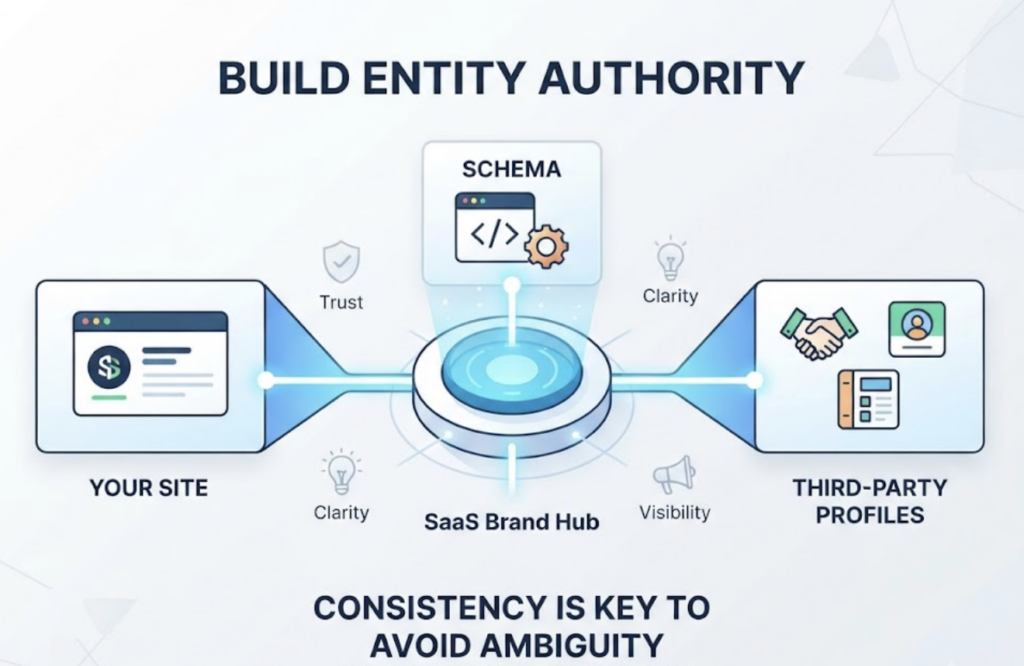
    Key technical signalBacklinks, relevanceSchema markup, FAQ structureEntity authority, third-party mentions

    SEO handles the bottom of the funnel, where users still click to transact. AEO wins featured extractions for factual, question-based queries. GEO earns the brand a seat in synthesized, conversational responses.

    You need all three. But you can’t track all three with the same scorecard.

    The 3 SEO KPIs You Can’t Rely on Anymore

    This isn’t about abandoning what worked. It’s about knowing where the blind spots are.

    Organic CTR used to be a reliable proxy for content relevance. Now it measures something else entirely: how many of your indexed queries don’t trigger an AI answer. Pew Research and Semrush data shows only 1% of users click links embedded inside AI summaries. If your highest-traffic informational queries now trigger AI Overviews, CTR will drop even if your content is performing well.

    Rank position is still useful for commercial queries. But for informational queries, ranking #1 organic is now primarily a prerequisite for citation — not a traffic driver in its own right. It gets you in the room. It doesn’t guarantee the result.

    Bounce rate and time-on-page are losing meaning for informational content. When users increasingly resolve their question before reaching your site, the visitors who do arrive skew toward high-intent, late-funnel behavior. Your averages get distorted.

    These metrics didn’t stop working. They stopped telling the whole story.

    The KPI Framework Built for AEO and GEO

    Here’s what the new scorecard looks like in practice. These are the metrics that actually reflect how your brand performs in a world where AI answers first.

    AI Visibility Rate (Share of Model) This is the new Share of Voice. It measures how often your brand appears in AI-generated responses for high-intent category prompts. If you query ChatGPT with 100 variations of “best CRM for SaaS teams” and your brand appears in 48 of those responses, your Share of Model is 48%.

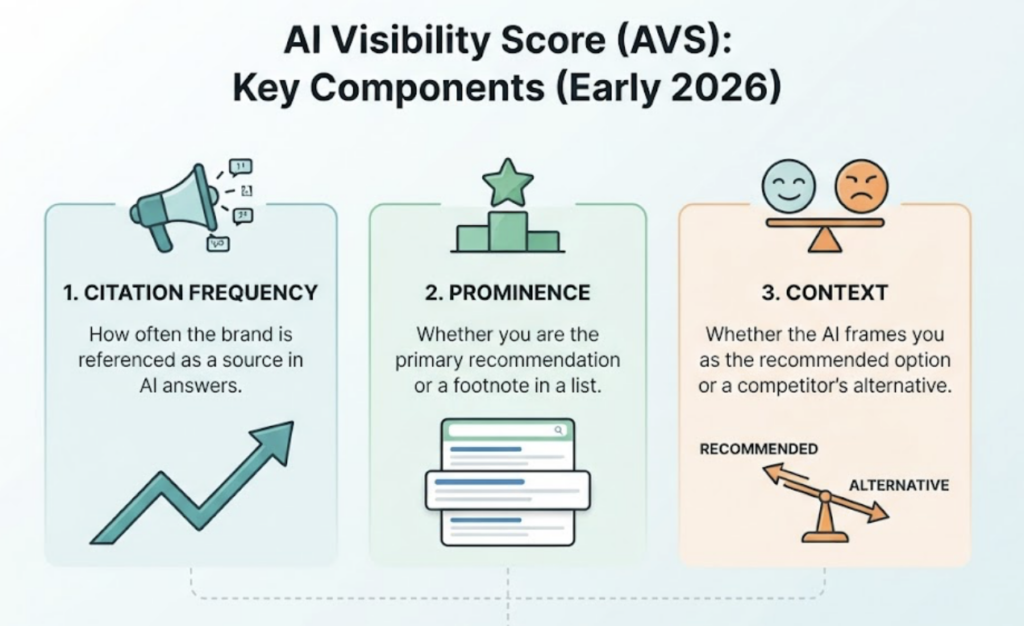
    Citation Frequency How often AI platforms cite your content or mention your brand name in a response. This is the AEO equivalent of backlink count — it’s an authority signal in generative results. Research from the Princeton GEO study confirms brand search volume carries a 0.334 correlation with model confidence, making it the single strongest predictor of AI recommendation.

    Sentiment Score AI doesn’t just list brands. It characterizes them. Being described as “reliable but expensive” or “good for small teams” shapes whether you appear in “best” or “affordable” category prompts. Sentiment Score measures the polarity of how AI engines describe your brand — and it directly filters which prompts you’re eligible to win.

    Position in AI Answer Not all mentions are equal. Being named first in a ChatGPT recommendation carries more weight than appearing fifth. Position tracking measures your relative rank within AI-generated responses compared to competitors.

    Recommendation Rate vs. Mention Rate There’s a critical gap between being listed and being recommended. A brand can appear in an AI response as a neutral option or as the explicit top pick. Recommendation Rate captures how often the AI actively steers users toward your brand, not just mentions it.

    These five metrics, tracked consistently, give you a diagnostic view of your AEO and GEO performance that rank tracking simply can’t provide.

    One Metric Most Brands Miss: Conversion Visibility Rate

    Most teams stop at visibility. That’s a mistake.

    High visibility with weak sentiment or poor positioning may generate brand impressions that never translate into intent. The gap between “being mentioned by ChatGPT” and “driving a user to search your brand name or visit your site” is where most AEO strategies leak.

    CVR — Conversion Visibility Rate — estimates the likelihood that an AI-generated mention is actually moving users toward a conversion action, even when no click is recorded. It bridges the technical visibility metrics and real business outcomes.

    The commercial case for closing that gap is real. Adobe’s 2026 analysis found AI-driven traffic to retail sites converts 42% better than traditional search traffic. In B2B SaaS, the gap is even wider: AI search visitors convert at 23x the rate of traditional organic visitors, because they’ve already completed a deep evaluation session inside the AI interface before ever clicking.

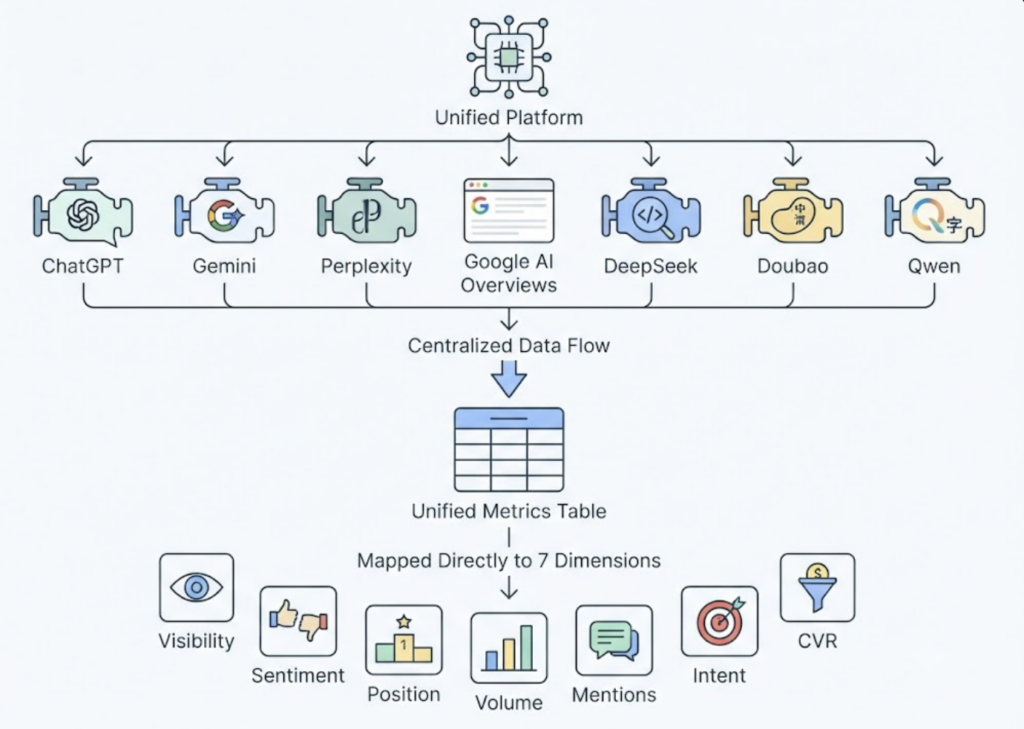
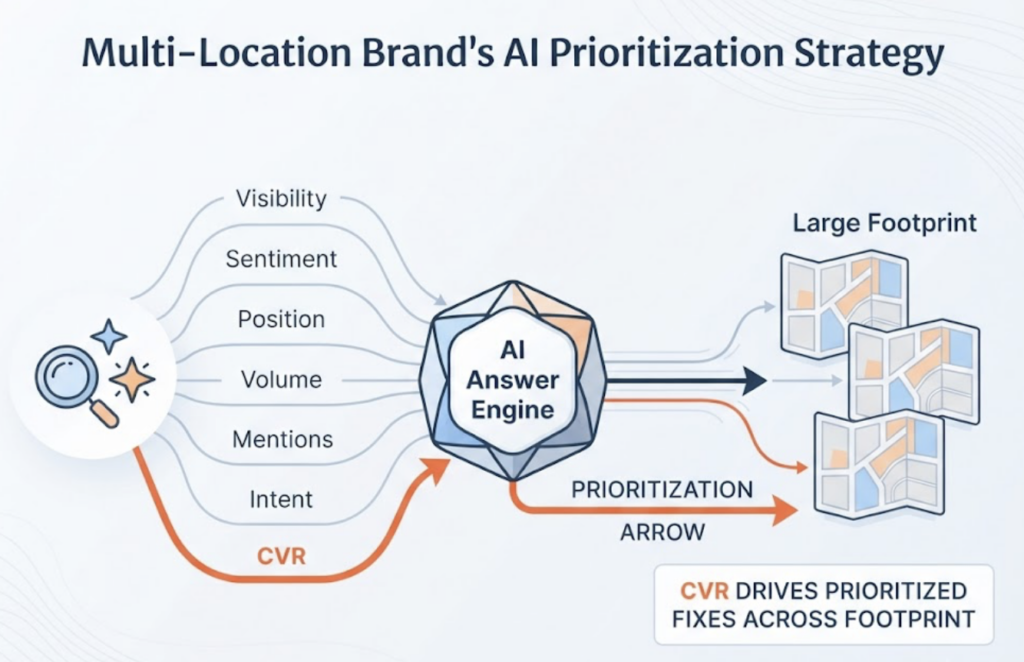
    Topify includes CVR as one of its seven core tracking metrics, alongside visibility, sentiment, position, volume, mentions, and intent. The combined view is what makes it possible to correlate AI surface performance with downstream revenue signal — instead of guessing.

    How to Start Tracking These KPIs Without Building from Scratch

    The practical challenge is setup. Most teams default to Google Search Console and GA4, which have real blind spots in generative environments.

    GSC’s new AI Mode filter tracks impressions and clicks, but it doesn’t capture pure citations — cases where a user saw your brand in an AI Overview and didn’t click anything. For queries with six or more words (the long-tail conversational format most likely to trigger AIOs), you’re essentially flying blind without a dedicated tracking layer.

    GA4 is more useful for measuring quality once traffic arrives. Teams are building custom “AI Search” channel groups using regex to capture referral traffic from sources like chatgpt.comperplexity.ai, and gemini.google.com. That data consistently shows AI traffic is a small slice of total volume (roughly 1% in 2026) but converts at a disproportionately high rate.

    For actual AI visibility tracking, the practical path is to:

    1. Define the 30-50 core prompts your category uses across different AI platforms
    2. Establish a baseline Share of Model for each platform separately
    3. Track weekly — AI recommendations shift faster than SERP rankings
    4. Monitor competitor positions in parallel, not separately

    Topify’s Basic Plan at $99/month handles this across ChatGPT, Gemini, Perplexity, and AI Overviews with 100 prompts out of the box. The seven-metric dashboard gives you visibility, sentiment, position, and CVR in a single view, so you’re not manually stitching together data from multiple tools.

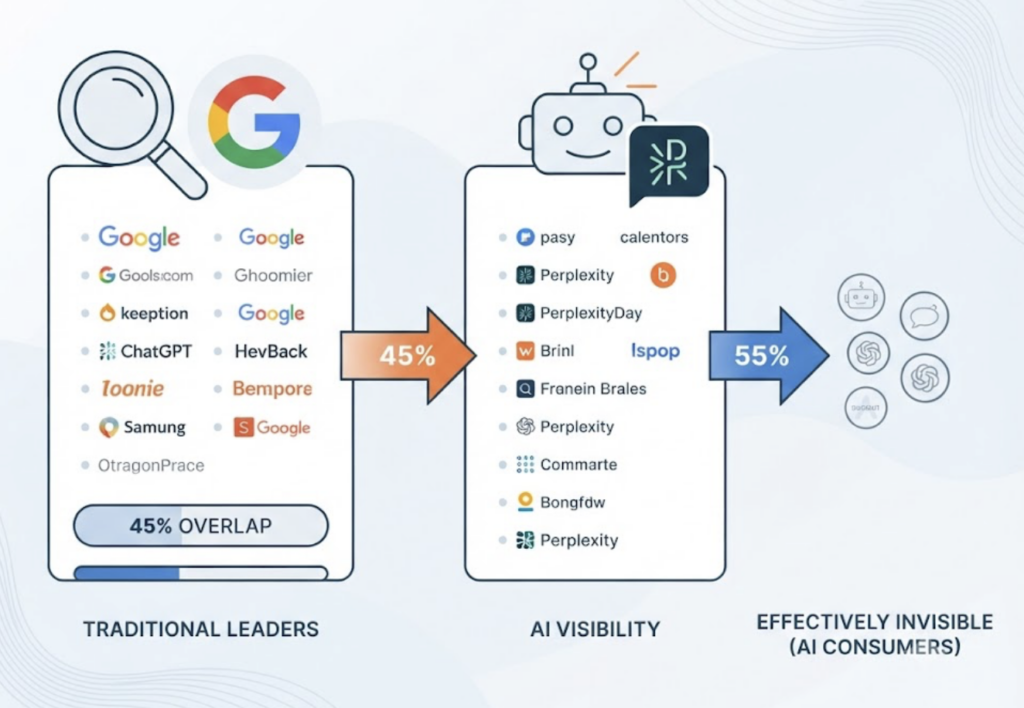
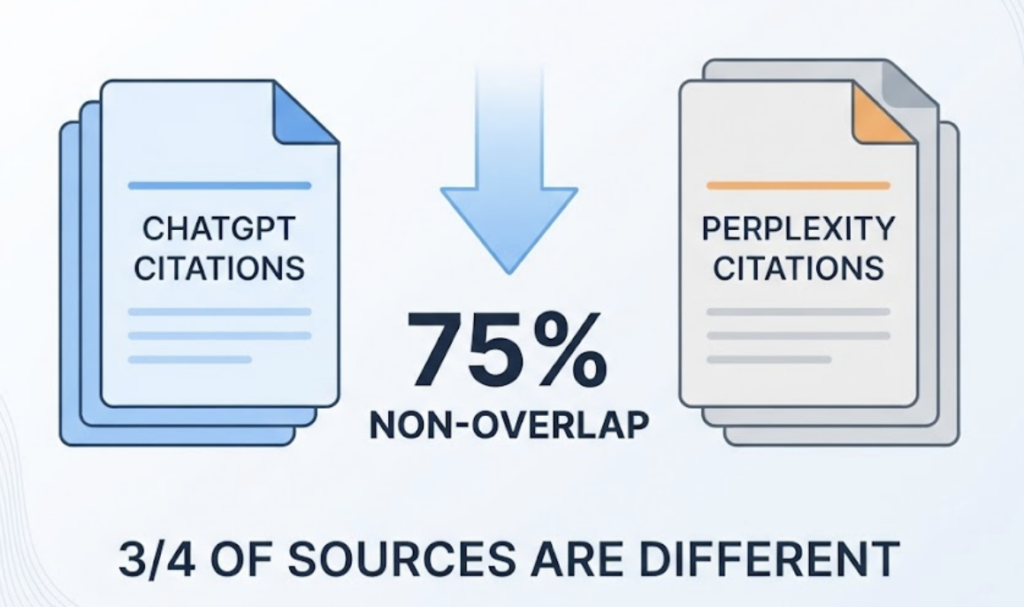
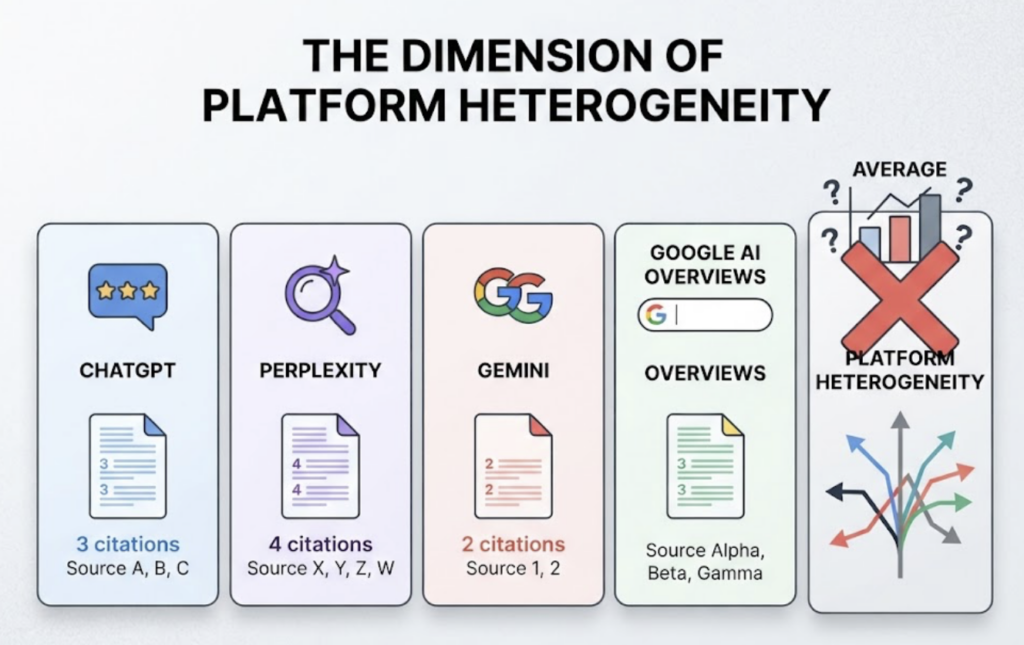
    One thing to flag: don’t assume a strategy optimized for Google’s AI Overviews transfers directly to ChatGPT. Research shows only an 11% overlap between domains cited by ChatGPT and those cited by Perplexity. Platform-specific optimization is table stakes in 2026.

    Your Reporting Template Needs to Change, Too

    The metrics upgrade only matters if the reporting structure changes with it. A slide deck built around “organic traffic up 12% month-over-month” doesn’t capture whether your brand is gaining or losing ground in generative search.

    A practical AEO/GEO reporting template covers four layers:

    AI Visibility Score — Share of Model across your core prompt set, broken out by platform. This is your headline metric, equivalent to the old “rankings summary.”

    Competitor Gap — Where competitors appear in prompts where you don’t, and where you’ve closed or widened the gap month-over-month.

    Sentiment Trend — Whether AI characterizations of your brand are moving in a commercially favorable direction (more “recommended,” fewer “expensive,” etc.).

    CVR Estimate — Correlation between AI visibility changes and branded search volume or direct traffic, as a proxy for downstream commercial impact.

    The goal isn’t just to rank. It’s to be the brand AI recommends.

    That distinction shapes every decision downstream — what content you build, which third-party platforms you prioritize, how you brief your PR team. The 82-85% of AI citations that come from third-party sources (media coverage, Reddit threads, G2 reviews) means your off-site presence is now a direct AEO/GEO input, not just a brand exercise.

    Conclusion

    The KPI migration from SEO to AEO/GEO isn’t a future problem. For most brands, the gap between what their dashboard shows and what’s actually happening in AI search is already widening.

    The good news: the new framework isn’t complicated. Share of Model, Citation Frequency, Sentiment Score, Position, Recommendation Rate, and CVR replace the old rank-and-click model with metrics that map directly to how AI engines make recommendations.

    Start with a prompt baseline. Build the tracking layer. Then run SEO and AEO/GEO in parallel — they serve different funnel stages now, and collapsing them into one scorecard is how teams end up optimizing for the wrong signal.


    FAQ

    What’s the difference between AEO KPIs and GEO KPIs? 

    AEO KPIs focus on inclusion rate in direct-answer formats — featured snippets, voice search, factual extractions. GEO KPIs measure brand performance in synthesized, conversational AI responses from LLMs like ChatGPT or Gemini. In practice, you’ll want both: AEO metrics for structured content performance, GEO metrics for brand narrative and recommendation positioning.

    Can I use Google Search Console to track AEO performance? 

    Partially. GSC’s AI Mode filter captures clicks and impressions on generative features, but it doesn’t record citations where a user read your brand name in an AI Overview without clicking. For full AEO visibility, you’ll need a dedicated multi-engine tracking tool alongside GSC.

    How often should I review my AEO metrics? 

    Weekly at minimum. AI recommendations shift significantly faster than SERP rankings, and competitor positioning can change after a single news cycle or third-party content spike. Monthly review cycles that work for traditional SEO will miss meaningful movement in generative results.

    What’s a good AI visibility score benchmark? 

    This varies by category and competitive density, but a Share of Model above 30% for your core category prompts is generally considered a strong position. More important than the absolute number is the trend and the competitor gap — are you appearing in prompts where your top competitors appear? That comparison is typically more actionable than a standalone score.

    Do I need separate KPIs for different AI platforms like ChatGPT vs. Perplexity? 

    Yes. Research shows only an 11% overlap between domains cited by ChatGPT and those cited by Perplexity. A brand can rank well on one platform and be nearly invisible on another. Platform-specific tracking is essential, especially if your target audience is concentrated on particular AI interfaces.


    Read More

  • KPIs for AEO: What to Track If AI Is Citing You

    KPIs for AEO: What to Track If AI Is Citing You

    Your domain authority is solid. Your keyword rankings haven’t dropped. But someone on your team just searched for your product category in ChatGPT and your brand wasn’t mentioned once, while two direct competitors appeared in the top three recommendations. The problem isn’t your SEO. It’s that the metrics you’re using to measure success weren’t built to see AI search at all.

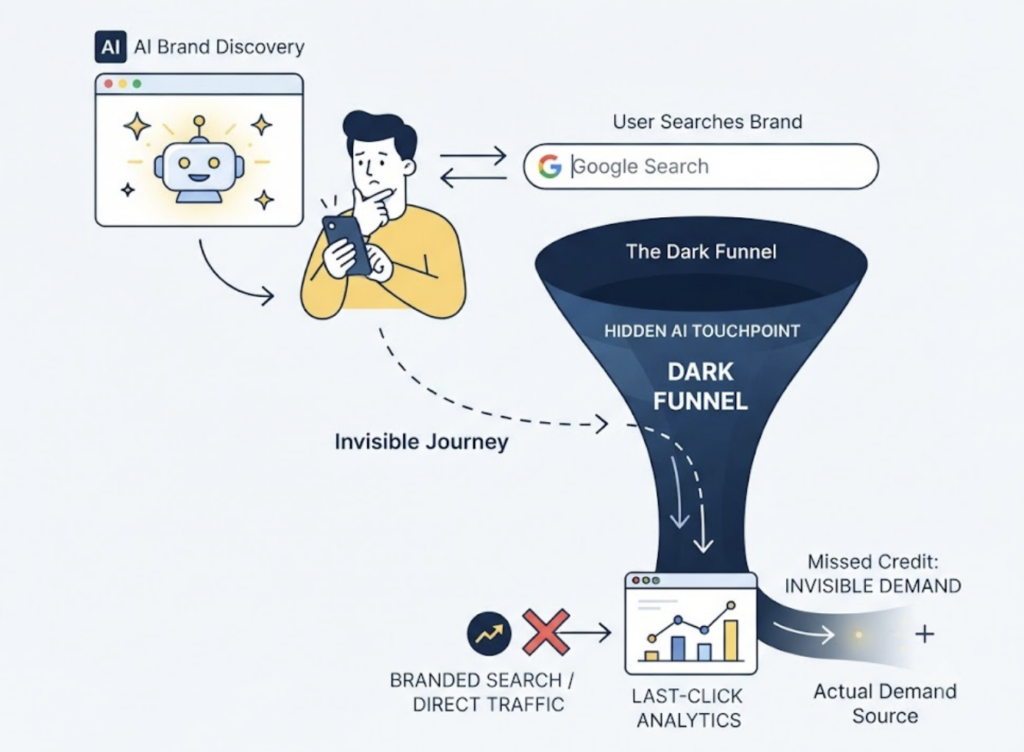
    Around 70.6% of traffic originating from AI platforms is misclassified as “Direct” in GA4. So the AEO and GEO work you’ve been doing? A chunk of its impact is already showing up in your reports, just buried under the wrong label.

    Here’s how to build a GEO dashboard around the KPIs that actually tell you what’s happening.

    Your Analytics Dashboard Can’t See AI Traffic

    Before covering which KPIs for AEO matter, it’s worth understanding why your current setup is blind to them.

    When a user asks ChatGPT for a software recommendation and then navigates directly to your site, they typically copy the URL into a new browser tab. No referrer header gets passed. GA4 logs the visit as “Direct.” This is what researchers call “Dark AI” traffic, and it’s a significant blind spot: that same traffic converts at a transactional rate of 10.21%, roughly 4.1 times higher than standard non-AI traffic.

    The scale of the underlying activity makes this more urgent. ChatGPT’s crawl-to-refer ratio sits at approximately 3,700:1, meaning for every visitor it sends to your site, it may have crawled and ingested your content 3,700 times. For Claude, that ratio expands to roughly 500,000:1. AI platforms are extracting value from your content at a rate that never shows up in referral data.

    This is compounded by the zero-click reality. About 60% of all searches end without a website visit, with user intent satisfied directly in the interface. When a Google AI Overview is triggered, that zero-click rate jumps to 83%, and the average CTR for the top organic result drops by 58%. A brand can be cited ten times daily across AI platforms and register zero sessions in Search Console.

    That’s the gap a GEO dashboard is designed to close.

    The 7 KPIs for AEO That Actually Matter

    These metrics shift the frame from “winning a click” to “winning a citation.” Each one maps to a specific question your team needs to answer.

    #1 AI Visibility Rate (Citation Rate)

    This is the baseline KPI: what percentage of your target prompts return a response that mentions your brand?

    The formula is straightforward. Divide the number of queries where your brand appears by the total number of tested queries, then multiply by 100. For B2B SaaS, 8-15% typically indicates minimal presence. Category leadership in most verticals starts around 40-50%. Run this across a defined prompt library covering purchase-intent, comparison, and informational queries, not just branded terms.

    #2 Answer Placement Score (APS)

    Being cited isn’t enough. The third recommendation in a conversational AI response carries a fraction of the value of the first.

    APS assigns weighted credit by position: the primary recommendation scores 1.0, the second approximately 0.6, and anything lower typically drops below 0.3, which is effectively irrelevant in a conversational context. A brand with a 25% Citation Rate but consistently low APS scores is being mentioned without being recommended. That’s a very different strategic problem.

    #3 Sentiment Polarity

    AI platforms don’t just list brands. They characterize them. “Ideal for enterprise security teams” and “a reasonable budget option” are both citations. Only one of them maps to your positioning.

    Sentiment Polarity uses NLP to assess how generative engines frame your brand. It also captures Recommendation Strength: whether the AI “soft” suggests your product (“you might consider…”) or hard-endorses it (“the most reliable option for…”). A Sentiment Score shift is often the first signal that something in your content strategy needs to change.

    #4 Feature Association Coverage

    This KPI measures whether AI models associate your brand with the right value propositions.

    If your company’s strategic goal is to be recognized for AI-native analytics, but generative models primarily describe you as a “legacy reporting tool,” there’s a positioning gap. Feature Association Coverage tracks the percentage of brand mentions that include your target thematic keywords. It’s how you validate whether your messaging has actually permeated the model’s retrieval context.

    #5 Branded Search Lift

    Successful AEO frequently drives zero-click awareness that surfaces later as a branded search.

    A user encounters your brand in a ChatGPT summary, doesn’t click through immediately, but searches for you by name later in the day. That shows up in Search Console as branded search volume, not as an AI referral. Tracking the correlation between rising AI visibility and rising branded search volume gives you a measurable proxy for AEO impact, even when direct attribution is impossible.

    #6 Source Citation Rate

    AI models are 6.5 times more likely to cite a brand through an external authoritative source than through its own website. This makes third-party mentions, Reddit threads, G2 reviews, and independent editorial coverage as strategically important as owned content.

    Source Citation Rate tracks which domains are “carrying” your brand’s visibility in AI retrieval. If AI models consistently surface your brand through a competitor comparison article on a third-party review site, that article is functioning as a citation asset, and you need to know about it.

    #7 Conversion Visibility Rate (CVR)

    The final KPI connects visibility to revenue intent. CVR estimates the probability that an AI response will lead a user toward a brand interaction, based on the query type, placement, sentiment, and response structure.

    This isn’t direct conversion tracking. It’s a predictive signal that helps prioritize which prompt clusters to invest in. High CVR prompts with low Citation Rates represent your clearest content gap opportunities.

    How to Structure Your GEO Dashboard

    A functional GEO dashboard isn’t a single view. It’s three layers, each answering a different question.

    The Monitoring Layer covers daily and weekly brand health. Citation Rate, Mention Frequency, and Share of Voice across the major AI platforms: ChatGPT, Perplexity, Gemini, and Google AI Overviews. Because generative outputs are non-deterministic, these scores should be based on rolling averages across a defined prompt library, not single-query snapshots. This layer answers: “Are we visible this week?”

    The Analysis Layer goes qualitative. Sentiment Polarity trends, Feature Association Coverage, and Source Citation Distribution live here. This layer answers: “Why is our visibility what it is?” It surfaces which third-party domains are influencing AI citations and where your brand’s framing is drifting from its intended positioning.

    The Action Layer converts data into work orders.

    That’s the layer most teams skip. It includes content decay alerts for URLs that have dropped in retrieval performance, competitive displacement notifications when a rival brand displaces yours for a high-value prompt cluster, and gap reports that identify subtopics your competitors own in AI responses but you have no content covering. Without this layer, a dashboard is a scoreboard with no scoreboard.

    Dashboard LayerCore MetricsReporting Cadence
    MonitoringCitation Rate, Visibility %, Mention FrequencyWeekly
    AnalysisSentiment, Feature Association, Source DistributionBi-weekly
    ActionContent Decay Alerts, Gap Reports, Competitor DisplacementContinuous

    Competitor Benchmarking Makes These KPIs Meaningful

    A 20% Citation Rate sounds decent until you learn your top competitor is at 62%.

    This is why absolute visibility scores need competitive context. The most useful framing is Share of Model (SoM): what percentage of AI citations in your category go to your brand versus all named competitors, across a representative set of 50-100 buyer-intent queries? SoM reveals not just where you stand, but which specific prompts competitors dominate.

    From that analysis, prompt clusters split into two categories.

    Defensive prompts are queries where you currently lead. These need continuous monitoring. A competitor publishing fresher data or better-structured content can displace you without any algorithmic update. The mechanism is retrieval-based: if their content provides a more complete, extractable answer, the model will prefer it.

    Offensive prompts are queries where competitors lead but you have no presence. These are your clearest content investment opportunities. Industry benchmarks for 2026 show the IT sector sees AI referral traffic around 2.8%, the highest across tracked verticals. For most B2B SaaS categories, the difference between a 15% and a 45% Share of Model typically comes down to prompt coverage and content freshness, not domain authority.

    One Platform That Tracks All 7 KPIs Natively

    Building a custom AEO dashboard means scraping multiple AI platforms, processing unstructured conversational text, running manual prompt tests on a regular cadence, and rebuilding the analysis every time a platform updates its behavior. Most teams that start down that path abandon it within 60 days.

    Topify tracks all seven core AEO KPIs natively across ChatGPT, Gemini, Perplexity, DeepSeek, and several other platforms. The platform covers Visibility Rate, APS, Sentiment Polarity, Feature Association, Branded Search correlation, Source Analysis, and CVR in a single dashboard, without requiring manual prompt submission.

    A few specific capabilities are worth noting. Topify’s Source Analysis and Gap Detection reveals which third-party domains are driving your AI citations, where your coverage is weak, and which competitors are benefiting from sources you haven’t prioritized. Its Competitor Monitoring runs continuously, so if a rival brand displaces yours as the primary recommendation for a high-value query cluster, you get an alert rather than discovering it a month later in a manual audit.

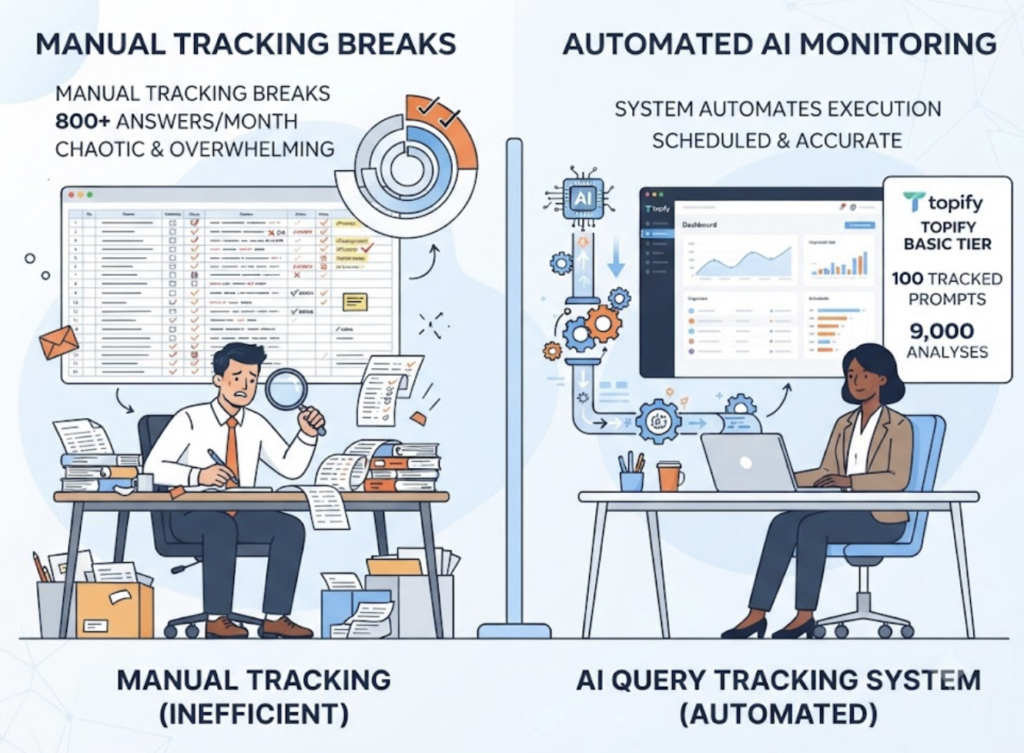
    The Basic plan starts at $99/month and covers 100 prompts with 9,000 AI answer analyses across four projects. For teams just getting started with GEO measurement, that’s enough prompt coverage to establish baseline Citation Rates and Share of Model across a primary product category. The Pro plan at $199/month expands to 250 prompts and 22,500 analyses, which supports multi-category tracking or competitive prompt libraries.

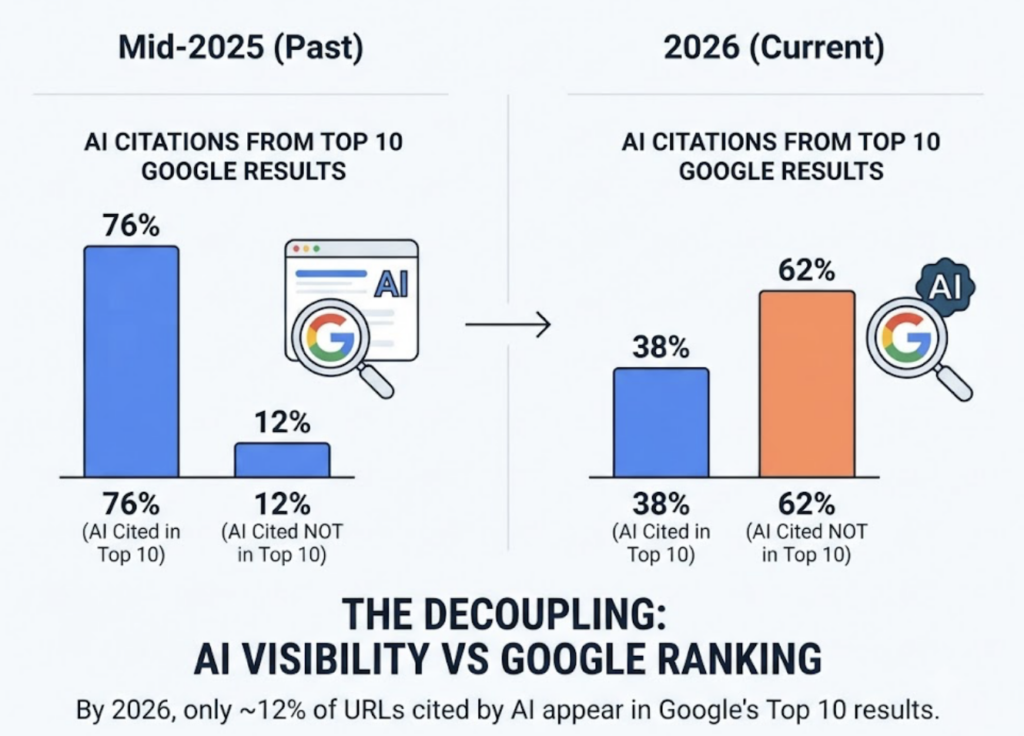
    Other platforms serve specific segments well. Profound focuses on enterprise compliance requirements and Fortune 500 technical audit needs. Frase works for content teams that need to optimize for Google rankings and AI citations simultaneously, noting that only 38% of AI citations come from the top 10 Google results, so organic authority alone doesn’t guarantee AI visibility. Each platform reflects a different set of trade-offs, but for teams that need native coverage of all seven AEO KPIs in one place, Topify is the practical starting point.

    The Measurement Mistakes Most AEO Teams Make

    A few patterns show up consistently across teams that invest in GEO measurement but don’t get traction.

    Tracking only one AI platform. ChatGPT has the largest public mindshare, but it isn’t where all AI-assisted discovery happens. A brand with a 45% Citation Rate on ChatGPT and a 9% rate on Perplexity has a real gap, especially if their audience skews toward technical or research-oriented users who tend to favor Perplexity for commercial queries.

    Ignoring Sentiment while optimizing for Visibility. A rising Citation Rate paired with a declining Sentiment Score is not progress. It means AI models are mentioning your brand more often in negative or misframed contexts. Teams that optimize purely for presence without monitoring how they’re being characterized can accelerate brand positioning problems rather than fix them.

    Prompt coverage that’s too narrow. Many teams start by tracking branded queries only, checking whether their brand appears when someone searches for them by name. That’s the wrong set. AEO value comes from showing up for category-level, comparison, and use-case prompts where the user has no brand preference yet. Those are the queries that drive discovery.

    Treating AEO as a one-time project. Research shows that 50% of content cited in AI answers is less than 13 weeks old. Content published and left static will see its citation rate decay as competitors publish fresher data and better-structured answers. Additionally, 44% of all AI citations come from the first third of a piece of text (Princeton GEO study, KDD 2024), so structural updates to where key answers are positioned in your content can have a faster impact than publishing new pages.

    Conclusion

    The brands that win AI search visibility aren’t necessarily the ones with the highest domain authority. They’re the ones that know what they’re measuring and act on it at the right cadence.

    Start with AI Visibility Rate and Answer Placement Score to establish a baseline. Add Sentiment Polarity to catch positioning drift early. Build toward Share of Model benchmarking once your prompt library is large enough to be representative. The seven KPIs for AEO outlined here aren’t a replacement for your existing analytics stack. They’re the layer that fills in what your current dashboard can’t see. Get started with Topify to run your first visibility audit across the AI platforms your audience is actually using.


    FAQ

    Q: What’s the difference between AEO KPIs and GEO KPIs?

    A: The terms are often used interchangeably, but there’s a useful distinction. AEO (Answer Engine Optimization) KPIs focus on visibility in direct answer interfaces, such as Citation Rate and Answer Placement Score. GEO (Generative Engine Optimization) KPIs extend that frame to include how AI models synthesize and characterize brands across longer conversational responses, covering Sentiment Polarity, Feature Association, and Source Citation patterns. In practice, an effective dashboard tracks both sets together.

    Q: How often should I check my GEO dashboard metrics?

    A: Citation Rate and Mention Frequency are worth reviewing weekly, since generative models update their retrieval behavior more frequently than traditional search algorithms. Sentiment trends and Source Distribution are better reviewed bi-weekly or monthly, as they shift more gradually. The action layer, specifically content decay alerts and competitor displacement notifications, should be monitored continuously if you’re running an active GEO strategy.

    Q: Can I track AEO KPIs for free without a dedicated tool?

    A: Manual tracking is possible but limited. You can run weekly prompt tests across ChatGPT and Perplexity and log whether your brand appears, roughly estimating Citation Rate. Sentiment analysis would need to be done by reading responses manually. Source tracking requires identifying which URLs AI responses reference and cross-checking them against your domain. At 50-100 prompts across 3-4 platforms, the manual workload becomes unsustainable for most teams within the first month.

    Q: What’s a realistic AI Visibility Rate target for a B2B SaaS brand?

    A: For most B2B SaaS categories, an 8-15% Citation Rate indicates minimal presence. Reaching 25-35% across a representative prompt library typically signals a content strategy that’s working. Category leadership, where your brand is the default first-mention in AI responses for your core use cases, generally requires a 40-50% or higher rate. The useful benchmark, though, is relative to your specific competitors in a Share of Model framework rather than an absolute percentage.


    Read More

  • 10 KPIs to Track AEO & GEO Performance in 2026

    10 KPIs to Track AEO & GEO Performance in 2026

    Your SEO dashboard is lying to you.

    Not because the data is wrong, but because it’s measuring the wrong game. When a user asks ChatGPT “what’s the best project management tool for remote teams,” your Google ranking doesn’t matter. What matters is whether you’re in the answer at all, and how you’re described when you are.

    That’s the core challenge of AEO and GEO measurement. The old stack — organic sessions, CTR, keyword rankings — was built for a world of blue links. In a world where AI synthesizes the answer directly, those numbers tell you almost nothing about brand influence.

    This playbook breaks down 10 KPIs across three measurement layers: Visibility, Quality, and Impact. Each one maps to a specific question your team should be able to answer every week.

    Why Your Old SEO Metrics Break Down in AI Search

    Traditional SEO worked because the output was consistent: a ranked list of links. You could measure position, click-through rate, and impressions. The relationship between effort and measurement was linear.

    AI search doesn’t work that way. There are no stable “positions.” Responses are synthesized in real-time, drawing from a rotating pool of sources. Research shows that 40-60% of cited sources in Google AI Overviews change every month. You can rank #1 organically and still be invisible to ChatGPT.

    Gartner projects a 25% drop in traditional search volume by 2026 as users shift to AI assistants. That traffic doesn’t disappear. It moves to a channel with a completely different measurement logic.

    The 3-Layer Measurement Framework

    Before tracking individual KPIs, you need a mental model for what you’re measuring. AEO performance breaks down into three distinct layers:

    LayerCore QuestionKPIs
    Layer 1: VisibilityIs your brand in the AI’s response at all?KPI 1-3
    Layer 2: QualityHow is your brand being described?KPI 4-6
    Layer 3: ImpactIs AI visibility driving real business results?KPI 7-10

    Each layer answers a different question. Teams that skip straight to Impact without establishing Visibility baselines end up with attribution gaps they can’t explain.

    Layer 1 — Visibility KPIs: Are You Even in the Room?

    KPI 1: AI Mention Rate

    The most fundamental AEO metric. It measures the percentage of target prompts where your brand appears in the AI’s response.

    For B2B SaaS, a healthy baseline falls between 10-15% of relevant category queries. Category leaders typically exceed 30%. If you’re tracking 100 prompts and appearing in 12 of them, that’s your starting point, not your ceiling.

    One distinction worth making: a “mention” means the AI knows you exist. A “citation” means your content actively grounded the response. Both matter, but for different reasons.

    KPI 2: Prompt Coverage

    Your brand might appear for “CRM tools” but disappear completely on “CRM for startups” or “CRM for sales teams under 10 people.” That gap is the prompt coverage problem.

    Build a list of 50-100 high-value prompts that map to your buyer journey — including “Why,” “How,” and “What” question formats. Track coverage across that full set. Coverage below 50% on commercial-intent prompts is a signal that your content strategy has blind spots.

    KPI 3: Platform Distribution

    ChatGPT, Gemini, and Perplexity don’t behave the same way. They pull from different source types, apply different reranking logic, and serve different user demographics.

    A brand that’s highly visible on Perplexity but invisible on ChatGPT has a platform concentration risk. Track mention rate separately by engine, not just as a blended average. The splits often reveal which platforms you’ve inadvertently optimized for and which you’ve ignored.

    Layer 2 — Quality KPIs: How Are You Being Described?

    Visibility gets you in the room. Quality determines whether the AI’s description of you builds trust or quietly erodes it.

    KPI 4: AI Sentiment Score

    AI platforms synthesize responses from hundreds of sources — including Reddit threads, G2 reviews, and forum discussions. If the consensus on those platforms is negative, the AI will reproduce that sentiment, faithfully.

    Sentiment scoring uses NLP to classify AI-generated mentions as positive, neutral, or negative. A 0-100 scale works well in practice. A high mention rate with a low sentiment score is often worse than a low mention rate — you’re being seen, but the framing is working against you.

    Watch for specific language patterns: being described as “expensive” or “complex” in AI answers doesn’t mean you’re invisible. It means you’re visible in the wrong way.

    KPI 5: Brand Position in AI Answers

    Not all mentions are equal. Being the first recommendation in a ChatGPT response is fundamentally different from being fifth in a list.

    Position tracking uses a weighted formula: position weight = 1 / rank. First position carries a weight of 1.00; second is 0.50; fifth is 0.20. This matters because the gap between first and third recommendation in a high-intent AI response can translate to a 5x difference in conversion probability downstream.

    Track your average weighted position across your core prompt set, and watch how it shifts week over week relative to competitors.

    KPI 6: Citation Source Coverage

    AI platforms don’t cite your website because you asked nicely. They cite it because it appeared in the sources they trust most.

    Perplexity pulls nearly 47% of its top citations from Reddit. ChatGPT favors Wikipedia for around 48% of its responses. If your brand has no meaningful presence on those third-party platforms, your domain competes against a significant structural disadvantage.

    Citation source analysis maps which domains the AI is using to ground its responses about your category. If a competitor’s blog or a user’s product review is shaping what the AI says about the problem your brand solves, that’s a content gap you can close.

    Layer 3 — Impact KPIs: Is It Actually Working?

    This is where AEO measurement gets interesting. AI referral traffic behaves very differently from organic search traffic, and the numbers justify the investment in a way that most marketing dashboards still don’t capture.

    KPI 7: AI Search Volume Trend

    AI search volume tracks how often users are querying AI platforms about your category over time. This isn’t your brand’s traffic — it’s the size and direction of the pool you’re fishing in.

    Rising AI search volume for your core topics is a leading indicator of opportunity. Falling volume on topics you’ve invested heavily in is a signal to rebalance. Track the trend line, not just the snapshot.

    KPI 8: Share of Voice vs Competitors

    AI Share of Voice (AI SoV) measures your brand’s proportion of the total “answer real estate” in your category. The weighted formula accounts for position, not just presence:

    AI SoV = (Sum of Your Brand’s Position Weights / Sum of All Brands’ Combined Position Weights) × 100

    This is the closest AEO equivalent to market share. A competitor holding 40% AI SoV while you hold 8% in a growing category is a quantifiable revenue risk, not an abstract concern. Track this monthly against your top three to five competitors.

    KPI 9: Conversion Visibility Rate (CVR)

    Here’s the data that justifies the entire AEO investment: AI referral traffic converts at 14.2% on average, compared to 2.8% for Google organic search. That’s a 5x conversion advantage.

    For context, Claude referral traffic converts at up to 16.8% in B2B SaaS contexts. AI-sourced visitors show 67% higher lifetime value and convert 73% faster than traditional search visitors.

    The mechanism is the “pre-qualified recommendation” effect. By the time a user follows a link from a ChatGPT or Perplexity response, they’ve already received a trusted recommendation. They’re in verification mode, not shopping mode.

    CVR blends sentiment score, position weight, and prompt intent into a single estimate of how likely an AI mention is to drive a conversion-eligible visitor. It’s a composite signal, but it’s the most direct line between AI visibility work and revenue.

    KPI 10: Week-over-Week Visibility Delta

    Absolute numbers are less useful than directional momentum. A brand at 12% AI mention rate trending up 3 points week-over-week is in a better position than a brand at 22% trending flat.

    WoW delta is the operational heartbeat of AEO measurement. It tells you whether your content and optimization efforts are working, and it gives you a fast signal when something breaks — a competitor launches a major content push, a third-party source changes its framing, or a new AI platform update reshuffles citation priorities.

    Track the delta for at least four of your core KPIs on a weekly cadence, and build a simple threshold alert: if any metric drops more than 5 points in a week, investigate before it compounds.

    Putting It Together: A Practical AEO Dashboard

    An AEO dashboard doesn’t need to be complex. It needs to answer two questions at a glance: where do we stand, and where are we headed?

    Here’s a workable structure for most teams:

    Review CadenceKPIs to Track
    WeeklyAI Mention Rate (WoW delta), Brand Position, Sentiment Score, Visibility Delta
    MonthlyAI Share of Voice, Prompt Coverage, Citation Source Coverage, AI Search Volume Trend, CVR
    QuarterlyPlatform Distribution, Full competitor benchmark, Attribution modeling

    The monthly cadence matters particularly for citation source analysis. Because 40-60% of cited sources rotate monthly in major AI engines, a monthly audit catches drift before it becomes a structural problem.

    Manual audits of a 100-prompt set typically take 8-12 hours per month. At scale, platforms like Topify automate this across ChatGPT, Gemini, Perplexity, and other major engines — tracking all seven core metrics (visibility, sentiment, position, volume, mentions, intent, and CVR) without manual query runs. Their Basic plan starts at $99/month and covers 100 prompts with 9,000 AI answer analyses across engines.

    The One Mistake Most Teams Make

    Most teams starting AEO measurement make the same error: they treat their own website as the primary lever.

    It isn’t.

    AI engines don’t view your website as the authoritative source. They view it as one node in a larger ecosystem. Vendor product pages account for a small fraction of actual AI citations. The majority of source weight comes from Reddit threads, Wikipedia entries, industry publications, and review platforms like G2.

    A team that invests 80% of its resources into on-site optimization is effectively controlling only a fraction of the citation surface. The rest — the part that actually determines what AI says about your brand — lives off-site.

    The practical fix is a “Search Everywhere” mentality. Track which third-party domains the AI uses to ground responses in your category. Then build an active presence there — not just as a content creator, but as an entity with consistent, accurate representation across every platform an AI might reference.

    There’s also a common technical mistake: blocking AI crawlers in robots.txt to protect content from training data. This prevents real-time retrieval engines from seeing your most recent updates, causing the AI to describe your brand based on outdated information. Whitelisting GPTBot and OAI-SearchBot costs you nothing and keeps your entity data current.

    Conclusion

    AEO measurement isn’t about replacing your SEO dashboard. It’s about adding a second instrument panel for a channel that operates on completely different logic.

    The 10 KPIs in this playbook — organized across Visibility, Quality, and Impact — give you the foundation to track what’s actually moving in AI search, explain it to stakeholders, and connect the work to revenue. Start with the Layer 1 visibility metrics, build your prompt list, and establish baselines before trying to optimize. The brands that win in 2026 won’t be the ones that publish the most content. They’ll be the ones that know, with precision, what AI says about them right now.


    FAQ

    What’s the difference between AEO KPIs and traditional SEO metrics?

    Traditional SEO metrics (rankings, CTR, organic sessions) measure performance in a list-based environment where clicks are the primary signal. AEO KPIs measure brand presence in a synthesized, zero-click environment where the AI answer itself is the output. There’s no impression data, no stable rank, and no direct click attribution. AEO instead tracks mention rate, sentiment, position weight, and citation sources.

    How many prompts should I track to get meaningful AEO data?

    Most teams start with 50 prompts and expand to 100 once they’ve validated their core query clusters. The key is covering all intent types: “What is X,” “Best X for [use case],” “How to do X,” and comparison queries. A 100-prompt set audited consistently over 90 days gives you enough variance data to distinguish signal from noise.

    How often should I review these KPIs?

    Four of the 10 KPIs (mention rate, sentiment, position, WoW delta) warrant weekly review because they move fast and can reflect platform-level changes quickly. The remaining six are better suited to monthly review, where trend lines are more meaningful than week-to-week variance.


    Read More

  • AEO KPIs That Actually Matter When Clicks Disappear

    AEO KPIs That Actually Matter When Clicks Disappear

    Your analytics dashboard looks fine. Sessions are stable. Bounce rate is normal. Rankings haven’t moved.

    But somewhere right now, a potential customer is asking ChatGPT which tool to use in your category. And your brand isn’t in the answer.

    That’s the gap most teams still can’t see — because they’re measuring the wrong things. Traditional SEO metrics track what happens after a click. In 2025, the decision happens before one. If your KPI stack still starts with organic traffic, you’re not measuring AEO performance. You’re measuring something that no longer reflects how your buyers discover you.

    This article breaks down the seven KPIs that replace rankings in the AI search era, how to report them to stakeholders who still think in clicks, and the three measurement mistakes that quietly make your data useless.

    Your Analytics Look Fine. Your AI Presence Might Not.

    Search volume is actually up. Global daily search queries are projected to hit between 9.1 billion and 13.6 billion in 2025, driven by AI-integrated platforms. But those searches aren’t producing the same clicks they used to.

    About 60% of Google searches in 2025 end without a single click. On mobile, that number climbs to 77.2%. When AI Overviews appear, top-of-page click-through rates drop by 58%, and the cited sources inside those overviews earn only around 1% CTR. Information query CTR has fallen from a 15-19% range down to roughly 8%.

    The result: B2B sites are seeing baseline referral traffic decline by 34%, even as search volume increases.

    Here’s what this means for measurement. User discovery now happens before a click is ever made. Brand recognition forms inside the AI response itself. A user who read a ChatGPT answer recommending your product and went directly to your site won’t show up in organic search attribution. They’ll look like direct traffic, or dark social, or nothing at all.

    That’s not a traffic problem. It’s a visibility measurement problem.

    The 7 AEO KPIs That Replace Rankings

    These aren’t supplementary metrics. For any brand with meaningful exposure to AI-driven queries, these are the primary indicators of search performance.

    1. Visibility Rate

    Visibility Rate measures how often your brand appears in AI-generated answers across a defined set of target prompts. It’s calculated as the percentage of tracked queries where your brand shows up.

    This is the north-star metric for AEO. It doesn’t track where your page ranks. It tracks whether you’re present in the conversation at all.

    Strong B2B SaaS companies typically target 10-15% as an initial benchmark. Market leaders tend to hold above 30%. The right number is heavily industry-dependent: healthcare AI Overviews trigger at a 48.7% rate, making 30%+ visibility table stakes for category authority. Real estate AIO triggers only 4.4% of the time, so a 10% visibility rate there already signals market leadership.

    2. Position / Mention Rank

    Not all mentions are equal. Being named first in a ChatGPT response carries a fundamentally different weight than appearing in a closing “you might also consider” list.

    In Perplexity-style roundups, a first-position mention signals that AI systems have categorized your brand as the primary entity in that topic space. It shapes the context of everything that follows in the response. Second and third mentions carry real value, but the drop-off is significant.

    Track this as a distribution: what percentage of your brand appearances are first-mention, mid-response, or trailing? Watch how it moves relative to competitors.

    3. Sentiment Score

    Being mentioned and being recommended are not the same thing.

    Sentiment Score uses natural language processing to analyze the tone AI platforms use when describing your brand, typically on a 0-100 scale. If an AI response reads “Brand X has a strong feature set, though users frequently report slow support response times,” your visibility number looks fine. Your conversion potential doesn’t.

    This score evaluates literal language, surrounding context, and the credibility weight of the sources being synthesized. A brand with 25% visibility and a 78 sentiment score will consistently outperform a brand with 40% visibility and a 54 sentiment score.

    4. Share of Voice

    Share of Voice (SOV) measures your brand’s AI mention share relative to competitors across a relevant topic cluster. If an AI response lists five solutions in your category and your brand accounts for two of those slots, your SOV on that prompt is 40%.

    This is the metric that translates most cleanly for executives. In an environment where AI satisfies 60% of search queries, AI Share of Voice is a direct proxy for future market share. It’s the competitive scoreboard your leadership team already understands.

    5. Source / Citation Coverage

    This metric tracks which specific domains and pages AI platforms draw from when mentioning your brand. More importantly, it reveals AI’s “trust neighborhoods”: the third-party platforms (Reddit, Wikipedia, vertical media, industry analysts) that AI systems treat as authoritative sources about your category.

    Citation Coverage lets you reverse-engineer AI trust paths. If Perplexity is citing three competitor case studies from a niche industry forum you haven’t touched, that’s a specific content distribution gap, not a generic “create more content” problem.

    6. Prompt Coverage

    Traditional SEO tracks rankings for a finite keyword list. Prompt Coverage measures how many distinct query types, phrasings, and intents trigger your brand to appear.

    This includes “why” questions, “how to choose” comparisons, “Brand A vs.” queries, and long-form conversational prompts with subjective modifiers. High Prompt Coverage indicates broad semantic representation inside AI knowledge models, not just keyword matching. It’s the difference between a brand that shows up for “best CRM” and a brand that shows up for “what CRM works best for remote teams scaling past 50 people.”

    7. CVR: Conversion Visibility Rate

    The click volume is lower. The intent behind those clicks is significantly higher.

    AI-referred traffic converts at 4.4 times the rate of traditional organic search. In some documented cases, ChatGPT referral traffic converts at 16%, compared to Google organic’s average of 1.8%. CVR estimates the probability that an AI recommendation leads to a downstream commercial action: a signup, a demo request, a purchase.

    This is what closes the ROI argument for AEO investment.

    AEO vs GEO KPIs: Same Framework, Different Baselines

    These seven metrics apply to both Answer Engine Optimization and Generative Engine Optimization, but the execution context differs.

    DimensionAEOGEO
    Primary targetsGoogle AI Overviews, voice assistants, featured snippetsChatGPT, Gemini, Perplexity, Claude
    Content styleShort, extractable, answer-firstSemantically rich, comprehensive, data-heavy
    Visibility baselineAIO trigger rate by industryChat-based prompt response frequency
    Citation sourcesGoogle’s crawl indexTraining data + real-time retrieval (RAG)
    Key technical signalsFAQ/HowTo schema, conversational toneE-E-A-T signals, third-party authority, freshness
    Sentiment measurementSnippet toneSynthesized narrative tone

    The overlap is real: brands that rank well on AEO Visibility Rate tend to perform well on GEO Prompt Coverage. But a brand that’s dominated Google AI Overviews can still be invisible on ChatGPT. Platform-specific tracking is non-negotiable.

    How to Report AEO KPIs to People Who Still Think in Clicks

    The biggest internal obstacle to AEO strategy usually isn’t budget. It’s a CMO or CFO asking “where are the numbers I recognize.”

    Use translation, not terminology.

    Visibility Rate ≈ Qualified Impressions. Frame it as the number of AI-driven decision conversations where your brand was present. Unlike ad impressions, these are AI-endorsed placements at the top of the user’s decision funnel.

    Share of Voice = Competitive Market Position. This is language senior leaders already use. A 40% AI SOV in your category means you’re winning the AI recommendation market by a 2:1 margin over your nearest competitor.

    Report change, not absolutes. AI models update frequently. About 40-60% of AI Overview citation sources rotate monthly. What matters to leadership is trend direction: is your Visibility Rate climbing, holding, or losing ground? Establish a baseline and report variance, not a single data point.

    For the ROI case, NerdWallet is the clearest analogy available: a 20% decline in organic traffic, paired with a 35% revenue increase, driven by becoming a primary AI citation source. The clicks went down. The qualified intent traffic went up.

    3 Measurement Mistakes That Make Your AEO Data Useless

    Treating ChatGPT as the Entire AI Ecosystem

    Different AI platforms have up to 615 times variance in how they select sources. Google AI Overviews cite YouTube at a 25% rate. ChatGPT’s YouTube citation rate is under 1%. A brand with strong Google AIO presence can be nearly invisible on Perplexity. A brand dominating ChatGPT responses may not appear in AI Overviews at all.

    Single-platform tracking doesn’t give you a partial picture. It gives you a misleading one.

    Calling Mentions the Same as Positive Mentions

    A simple keyword monitoring tool tells you whether your brand appeared. It doesn’t tell you how it was described.

    In generative AI environments, LLMs synthesize patterns from thousands of sources, including user forums. If your brand has consistent negative patterns in Reddit threads, AI may surface those as recurring context in responses, and repeat that framing to every user asking a relevant question. A brand with 30% visibility and a sentiment problem is in worse shape than a brand with 15% visibility and a clean sentiment signal.

    Visibility without sentiment is an incomplete, and potentially dangerous, metric.

    Only Tracking Keywords You Already Know

    Most SEO teams monitor the queries in their existing keyword database. But AI users interact in long-form, highly specific, often subjective prompts: “which CRM is best for a team that does a lot of async work and doesn’t want to deal with complex onboarding.”

    These “dark queries” don’t appear in your keyword planner. Without prompt expansion techniques to surface how real users are phrasing AI conversations about your category, your Prompt Coverage will always look higher than it actually is, and you’ll miss the exact moments where purchase decisions are forming.

    Building Your AEO KPI Dashboard: What to Track and When

    AI visibility shifts faster than traditional search rankings. Monitoring frequency needs to match that pace.

    Weekly: Track Visibility Rate changes and competitor Share of Voice. Flag sudden drops and run prompt retests to check whether key pages have been de-indexed by AI crawlers or lost citation weight.

    Monthly: Review Sentiment Score trends, Source Coverage changes, and the stability of cited URLs. Audit AI trust sources and identify which third-party platforms are gaining citation weight in your category.

    Quarterly: Assess Entity Authority Score and Prompt Coverage expansion. Update structured data markup and adjust site content architecture to align with current AI extraction patterns.

    For teams that need this at scale, Topify structures all seven of these dimensions into a single monitoring matrix: Visibility, Sentiment, Position, Volume, Mentions, Intent, and CVR tracked across ChatGPT, Gemini, Perplexity, and other major AI platforms. In a B2B SaaS scenario, for example, Topify surfaces where a competitor has displaced your brand by publishing updated benchmark data or securing new third-party citations, and surfaces one-click optimization actions — like generating comparison tables formatted for AI extraction or identifying the specific content gaps driving the position shift.

    The dashboard architecture that works best layers four data levels: where your brand surfaces across AI platforms (surface), which content types AI preferentially cites (asset), which prompt intents you’re covering (prompt), and what downstream commercial behavior results (outcome). Most teams start with surface and skip straight to outcome. The asset and prompt layers are where the actual optimization signal lives.

    Conclusion

    The measurement gap in most marketing teams right now isn’t a data problem. It’s a framework problem.

    Traffic dashboards are optimized for a world where clicks were the primary signal of discovery. That world is eroding. When 60% of searches resolve without a click, and when the highest-intent traffic comes from AI referrals that look like direct visits, the old metrics don’t just underperform. They actively hide what’s happening.

    Visibility Rate, Share of Voice, Sentiment Score, Position Rank, Source Coverage, Prompt Coverage, and CVR — these aren’t additions to your KPI stack. For any brand with real exposure to AI-driven search, they’re the primary scorecard.

    The brands building measurement fluency in these areas now will have 12-18 months of competitive insight before the rest of the market catches up.

    FAQ

    Can I track AEO KPIs without a paid tool?

    Manual spot-checking is possible, but structurally misleading. Because LLM outputs are probabilistic, the same prompt can return different results across queries. Professional tools use large-scale repeated sampling to build statistical averages of brand performance across hundreds of thousands of potential user interactions. A manual audit of 20-30 queries typically takes 8-12 hours and captures a single moment in time. Automated tools cover thousands of variants in 2-4 hours and return a reliable mean performance score.

    How fast do AI visibility metrics change?

    Fast. Between 40-60% of AI Overview citation sources rotate every month. This isn’t traditional ranking drift. It reflects model updates, real-time retrieval (RAG) weight adjustments, and new data source integration. Continuous monitoring, not periodic auditing, is the right operational model.

    What’s a good Visibility Rate benchmark for my industry?

    It varies significantly. In healthcare, AI Overviews trigger on 48.7% of relevant queries, making 30%+ visibility necessary to maintain category authority. In real estate, AIO triggers only 4.4% of the time, so 10% visibility already represents market leadership. For most B2B SaaS categories, 10-15% is a healthy starting benchmark. Above 30% is market leader territory.

    Is zero-click actually hurting my brand, or is it neutral?

    For ad-revenue-dependent publishers, it’s damaging. For brand marketers, it’s a reallocation of where value gets created. The direct referral traffic that disappears tends to be lower-intent. What remains converts at 4-5x the historical rate. Plus, repeated brand mentions in AI responses build top-of-mind awareness even without a click, compounding into long-term brand equity in ways that don’t show up in session counts.

    Read More

  • AEO KPIs: What to Track When CTR Stops Making Sense

    AEO KPIs: What to Track When CTR Stops Making Sense

    Your domain authority is solid. Your top pages are ranking. But organic traffic dropped 61% for informational queries between mid-2024 and late 2025. The rankings didn’t move. The CTR did. And the reason isn’t a Google algorithm update—it’s that the answer to your customer’s question is now living inside a ChatGPT or Perplexity response, not on your site.

    Traditional KPIs can’t capture that. Here’s what to track instead.

    Why CTR Can’t Tell You What AI Search Is Doing to Your Brand

    CTR made sense when search was a list of blue links. Click a link, visit a page. Simple.

    That model is broken now.

    As of mid-2025, approximately 60% of all Google searches end without a single click to an external website. On mobile, that number hits 77.2%. When a Google AI Overview is present, the top organic result’s CTR can fall by roughly 79%. For paid search on queries that trigger AI Overviews, CTR dropped from 19.7% to 6.34% in just over a year.

    This creates what researchers call a “visibility gap.” Your analytics platform reports impressions. It reports sessions. But it can’t tell you whether an AI engine cited your brand, recommended your competitor, or described your product in terms that contradict your positioning entirely.

    That’s the gap your current KPI stack can’t see.

    The 5 Core AEO KPIs That Actually Matter

    Tracking AEO performance starts with shifting the measurement frame from “user actions on your site” to “brand influence inside AI responses.” These five metrics form the foundation.

    1. AI Visibility Rate: Is Your Brand Even in the Answer?

    AI Visibility Rate measures how often your brand appears in AI-generated responses for a set of target queries. It’s the AEO equivalent of organic ranking.

    The formula is straightforward: divide the number of queries where your brand appears by the total queries tested, then multiply by 100. The harder number is the benchmark. Average brand visibility in AI answers sits around 0.3%, while top performers in competitive categories reach 12% to 30%. If you’re tracking 100 prompts and appearing in fewer than 10, there’s a structural content problem worth diagnosing.

    2. AI Position: Where You Land in the Response

    Being mentioned in an AI answer isn’t the same as being the first recommendation. Position tracking captures where your brand appears within the response, since a first-place mention carries significantly more trust-building weight than being listed fourth.

    Because AI responses are probabilistic, brands often use a weighted Position Index. A first mention scores 1.0, second scores 0.5, and so on. This gives you a comparable, stable number across prompt sets, rather than a volatile “sometimes first, sometimes fifth” that’s hard to act on.

    3. Share of AI Voice: You vs. Everyone Else

    AI Share of Voice (AI SOV) measures what percentage of brand mentions your company captures relative to all brand mentions across a competitive query set.

    The most accurate method is the “open denominator” approach: identify every brand mentioned in a response set, not just the ones you pre-defined as competitors. This prevents metric inflation and forces an honest look at who else AI is recommending. Leading SaaS companies achieve AI SOV rates up to 59.4% in their categories, highlighting just how uneven the distribution can be.

    4. Citation Source Rate: Which Content Is AI Actually Pulling From?

    Citation Source Rate tracks the domains and URLs an AI model uses to construct its answers. This is the most diagnostic metric in the AEO toolkit because it tells you why your visibility is high or low.

    Research into 46 million citations shows AI models tend to favor a small cluster of high-authority domains. If AI Overviews for your category are pulling from Reddit threads or G2 reviews instead of your owned content, the strategy implication is clear: you need visibility on those third-party platforms, not just on your own site.

    5. AI Sentiment Score: What Tone Does AI Use About Your Brand?

    A brand can have 80% AI visibility and still be losing. If the AI consistently describes your product as “expensive and difficult to configure,” visibility becomes a liability.

    Sentiment scores typically run on a 0-100 scale, evaluating the overall tone of AI responses, how that tone shifts across topics (product features vs. pricing vs. customer support), and the sentiment of the underlying sources influencing the AI’s language. Tracking sentiment over time tells you whether your content strategy is shaping the AI’s narrative about your brand, or whether someone else’s content is.

    The Metric Most Teams Skip: Conversion Visibility Rate

    There’s a sixth metric that most AEO dashboards don’t include yet. It’s the one most directly tied to revenue.

    Conversion Visibility Rate (CVR) estimates the likelihood that an AI answer is driving users toward a brand interaction—even without a direct click. The logic: a user who arrives at your site via an AI citation has already been pre-qualified. They’ve compared options inside the AI interface and read about your value proposition before they ever hit your homepage.

    The data supports this. AI-referred search converts at 14.2% compared to 2.8% for traditional organic search. For SaaS companies specifically, lead conversion from ChatGPT referrals reaches 15.9%, versus 1.76% for standard organic. That’s an 803% variance. Traffic volume is down; traffic quality is up. CVR is the metric that captures this shift.

    Platforms like Topify track CVR as part of their seven-metric analytics framework—alongside Visibility, Sentiment, Position, Volume, Mentions, and Intent—to give marketing teams a full picture of downstream business impact from AI citations.

    How to Build a Simple AEO Reporting Dashboard

    The first thing to fix is your prompt library. Replace “keywords” with a prompt matrix: 25 to 100 conversational queries that simulate real buyer journeys. “Best project management tool for remote teams” instead of “project management software.”

    From there, the reporting structure is straightforward:

    DimensionWeekly MetricTarget
    VisibilityAI Visibility Rate>10% for category prompts
    AuthorityShare of AI VoiceTop 3 in competitive set
    TrustAI Sentiment Score>80/100
    ConversionConversion Visibility RateHigh-intent prompt correlation
    Branded LiftBranded Search VolumeMonth-over-month increase

    Weekly tracking catches model volatility and citation rotation. Monthly benchmarking gives you the competitor SOV comparison. Quarterly audits let you review the technical layer—structured data, schema markup, content extraction efficiency.

    Topify automates this by querying AI platforms directly in real time, so the data reflects what ChatGPT and Perplexity are actually saying about your brand today, not what a crawler estimated last week. The High-Value Prompt Discovery tool surfaces the exact questions your audience is asking AI, which feeds directly back into content gaps.

    The Platforms You Can’t Ignore in 2026

    A single “AI search” number is misleading. Citation logic varies significantly across platforms, and treating them as interchangeable leaves blind spots.

    PlatformRetrieval LogicCitation Behavior
    ChatGPTGPT training + Bing SearchAccounts for 87.4% of AI referral traffic
    PerplexityRetrieval-first (Sonar)Cites 6+ sources per answer; over-indexes on Reddit/Quora
    Google GeminiGoogle Knowledge GraphFavors Google properties (YouTube, Maps, Docs)
    Google AI OverviewsGoogle Search IndexHigh correlation with top 10 organic rankings

    Perplexity rewards “semantic concept density”—pages cited by Perplexity tend to have around 32% more explicit concepts than uncited content and benefit from a 60-day freshness loop. Google AI Overviews rotate their cited sources 40-60% month-over-month, which makes continuous monitoring non-negotiable rather than a nice-to-have. Brands that do appear in AI Overviews earn 35% higher organic CTR than those only ranking in the traditional results below.

    Optimizing for one platform without monitoring the others creates a false sense of coverage.

    Conclusion

    The shift from CTR to AI visibility metrics isn’t a trend to watch. It’s a structural change that’s already affecting revenue.

    CTR measures what happens after a user sees your result. AEO KPIs measure whether your brand is in the result at all—and what the AI says about you when it is. The brands building these measurement systems now are accumulating a compounding advantage: higher AI visibility leads to more branded searches, which reinforces organic authority, which feeds back into AI citations.

    Start with AI Visibility Rate and Share of Voice. Add Sentiment once you have baseline data. Build CVR tracking as the business case grows. The specific tools matter less than the habit of measuring what AI is actually saying about your brand, across all the platforms your customers are using.


    FAQ

    Q: How is AEO different from SEO when it comes to measurement?

    A: SEO measures user actions—clicks, sessions, rankings in a list. AEO measures brand influence: how often you’re cited, where you appear within AI responses, and how the AI describes you. SEO asks “How do I rank for this keyword?” AEO asks “How do I become the source of the answer?”

    Q: How often should I check my AEO KPIs for AEO?

    A: Track core prompt visibility weekly. AI models are non-deterministic and update their crawl caches frequently, so weekly checks catch citation drops before they compound. High-volatility platforms like Google AI Overviews may need even more frequent monitoring given their 40-60% monthly source rotation.

    Q: Can small brands realistically track KPIs for AEO without a big budget?

    A: Yes. AI engines prioritize clarity and structured data, not ad spend. A small brand can build a list of 20-30 core prompts, test them weekly across ChatGPT, Gemini, and Perplexity, and track results in a spreadsheet. Adding FAQ schema markup and a clear “source of truth” page costs nothing but improves AI extraction meaningfully.

    Q: What’s the most important AEO KPI for long-term brand authority?

    A: Share of AI Voice across a broad set of category-level prompts is the closest equivalent to market share in generative search. It captures not just whether you’re mentioned, but how your presence compares to every other brand the AI considers relevant to your category.


    Read More

  • AI Brand Visibility: 5 Metrics That Tell You the Truth

    AI Brand Visibility: 5 Metrics That Tell You the Truth

    Your Google Analytics dashboard shows stable organic traffic. Your keyword rankings haven’t moved. Everything looks fine.

    Meanwhile, ChatGPT just recommended your competitor to 900 million weekly users. And your brand wasn’t mentioned once.

    That’s the gap. And most brands still can’t measure it.

    Traditional SEO tools were built for a world where users click links. That world is shrinking fast. As of early 2026, 83% of searches that trigger an AI Overview end without a click, and Google’s dedicated “AI Mode” pushes that number to 93%. The discovery path has moved upstream, into the AI’s answer, before any link is ever touched.

    The five metrics below are what actually tell you whether AI is recommending your brand, ignoring it, or quietly pointing people elsewhere.

    Your SEO Dashboard Doesn’t See What AI Sees

    Traditional search attribution works on a simple model: user searches, user clicks, you measure. AI search breaks that model at every step.

    When a user asks Perplexity “what’s the best project management tool for remote teams” and Perplexity answers directly, no click happens. No impression is recorded in your Search Console. No session appears in Analytics. Your brand either existed in that answer or it didn’t, and you have no way of knowing which.

    This isn’t a minor reporting gap. Between January 2025 and February 2026, ChatGPT’s weekly active user base grew from 400 million to over 900 million. Google AI Overviews now reach 1.5 billion monthly users. AI-powered search tools have captured 12-15% of global search market share, up from 5-6% at the start of 2025.

    The brands that measure what’s actually happening in that space will have a structural advantage over those still optimizing for clicks that increasingly aren’t coming.

    Metric #1: AI Visibility Score — How Often AI Mentions You

    Think of the AI Visibility Score (AVS) as your brand’s “mental share” inside the models. It answers one question: across the prompts your buyers are actually typing, how often does your brand appear?

    The standard methodology runs 20 or more structured prompts across major platforms like ChatGPT, Perplexity, Gemini, and Claude, then scores mentions by prominence:

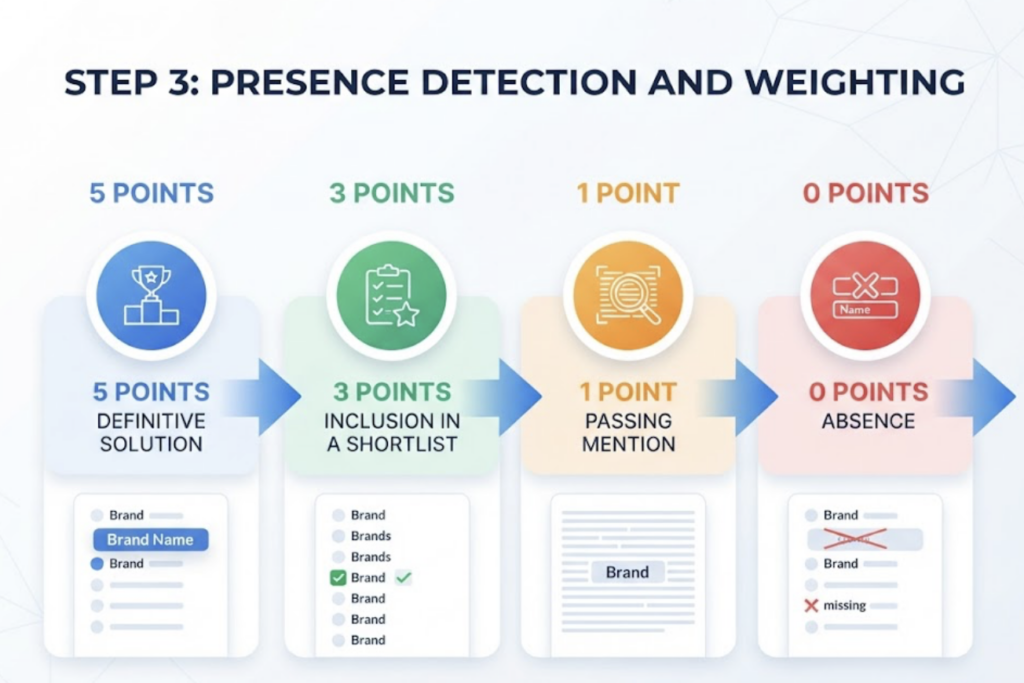
    Prominence LevelScoreExample
    Primary recommendation, specific reasoning5 pts“For enterprise teams, [Brand] is the top choice because…”
    Included in a comparison list3 pts“[Brand], [Competitor A], and [Competitor B] are the main options”
    Passing mention without detail1 pt“Some users also mention [Brand]”
    Not mentioned0 pts

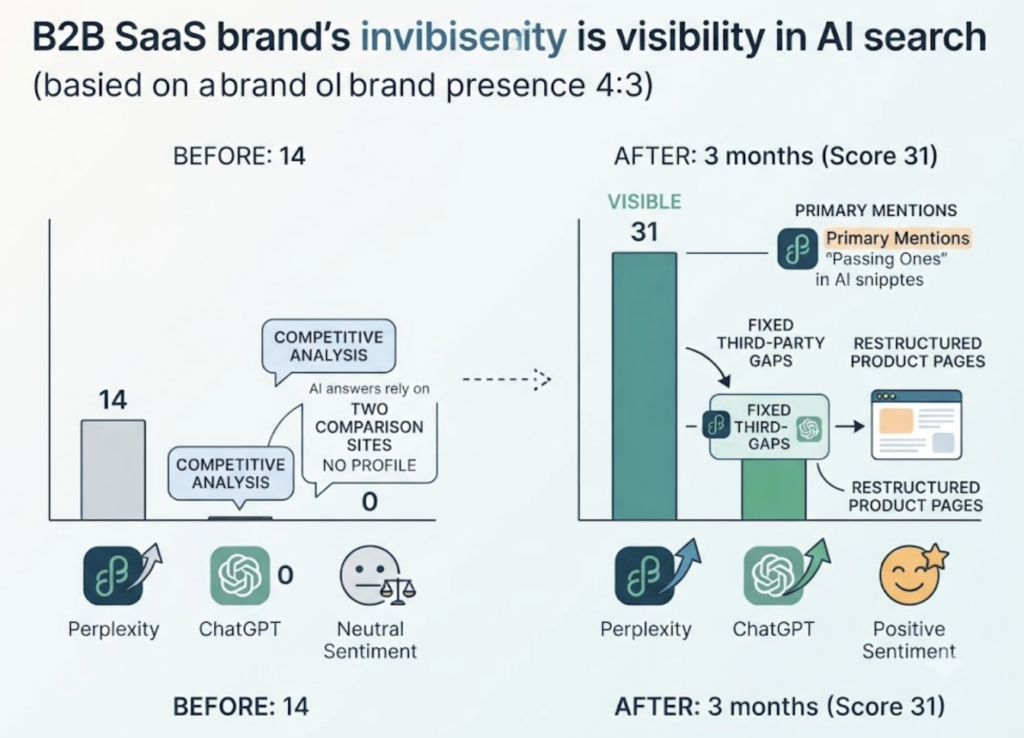
    Most brands start with an AVS between 0 and 8 out of 100. A score of 25-50 is considered “Category Presence” — AI knows you exist and mentions you in relevant contexts. Above 70 is “Category Authority” — AI actively recommends you as a leading option.

    Topify‘s Visibility Tracking automates this across seven major AI platforms, running structured prompt sets and returning a normalized visibility score broken down by topic, platform, and competitor.

    Metric #2: Sentiment Score — Being Mentioned and Being Recommended Are Two Different Things

    A brand can appear in 80% of AI answers about its category and still be losing customers to competitors. The reason: AI might be mentioning you as the “budget option,” the “legacy choice,” or worse, surfacing old negative reviews as the first thing it cites.

    Sentiment score measures the favorability of how AI talks about your brand, not just whether it talks about you.

    By early 2026, 66% of consumers said they believed AI tools provide accurate results. That trust transfers directly to whatever characterization the AI has formed about your brand. If the AI’s training data is weighted toward a period when your product had known issues, or if a competitor has built a stronger third-party review presence, the AI’s default narrative about you may not reflect where you actually are.

    A particularly costly version of this problem: brands marked as “discontinued” in AI answers because of deleted blog posts or rebranded domains. The AI inherited that signal from its training data and kept surfacing it.

    Tracking sentiment requires analyzing not just whether your brand appears, but what value-adjectives surround it and how it’s framed relative to competitors. Topify’s Sentiment Analysis assigns a 0-100 score and flags shifts in narrative tone across platforms, so you know whether a recent content change or PR mention is actually moving the needle.

    Metric #3: AI Position Ranking — First Mention Is Not the Same as Fifth Mention

    Position-based thinking isn’t obsolete in AI search. It’s just moved inside the answer.

    Research into user behavior shows that B2B buyers with high purchase intent clicked through to at least one cited source in 90% of encounters with AI-generated summaries. But which source they clicked depended heavily on where it appeared in the AI’s narrative — and whether the AI framed it as a recommendation or a footnote.

    On traditional Google, the CTR for position #1 has dropped by 58-61% when an AI Overview is present. The traffic didn’t disappear; it got absorbed by whichever brand the AI chose to present first.

    That’s the new position #1: being the brand the AI names first, with reasoning, when someone asks a relevant question.

    Topify’s Position Tracking monitors where your brand falls in AI-generated recommendation sequences, across ChatGPT, Perplexity, Gemini, and others. It tracks not just whether you’re in the answer, but whether you’re the lead recommendation or the runner-up — and how that position shifts week over week against specific competitors.

    Metric #4: Source Citation Rate — If AI Doesn’t Read You, It Can’t Recommend You

    AI recommendations don’t come from nowhere. They’re grounded in content the models have crawled, indexed, and retrieved. Your Source Citation Rate measures how much of that grounding actually includes your domain.

    A large-scale analysis of 17.2 million AI citations in late 2025 found that first-party brand websites generate 4.31 times more citation occurrences per URL than aggregators or listing sites — but only if they meet the content quality thresholds the models use for selection. Content that includes hard data is 30-40% more likely to be cited. Freshness matters too: AI-cited content tends to be 25.7% newer than what traditional SERP rankings surface.

    Platform architecture shapes this differently across engines. ChatGPT Search relies heavily on Bing’s organic index — 87% of its citations match Bing’s top 10. Perplexity prioritizes real-time retrieval and recency, often surfacing niche sources if they’re precise. Knowing which platform favors what kind of content changes how you structure your citation strategy.

    Topify’s Source Analysis reverses-engineers the domains and URLs that AI platforms are actively citing within your category, showing you where the citation share is flowing and which content gaps are costing you presence.

    Metric #5: Conversion Visibility Rate — The Metric That Connects AI Mentions to Revenue

    AI search currently drives between 0.15% and 1% of total web traffic. That sounds like a rounding error. It isn’t.

    AI search visitors arrive at your site having already read a synthesized comparison. The AI handled the research phase. The user clicking through has already narrowed their shortlist. That changes the conversion math entirely.

    Across B2B SaaS, AI search visitors convert at 12-15%, compared to 2.5-4% for traditional organic search. In retail, AI-sourced traffic converts 42% better than non-AI traffic (including paid search), with users spending 48% longer on site and browsing 13% more pages per visit.

    The Conversion Visibility Rate tracks the quality and commercial relevance of the contexts in which your brand appears — not just mention volume, but whether those mentions are occurring inside high-intent prompts where a buyer is actually making a decision.

    There’s also an AI readability problem underneath this metric. The average U.S. retail homepage is only 75% machine-readable by AI systems. Product pages drop to 66%. Roughly a third of most brands’ digital presence is effectively invisible to the agents that are guiding purchasing decisions.

    Topify’s CVR metric maps which prompt categories are driving actual downstream engagement and flags where your AI visibility is concentrated in low-intent contexts.

    Reading All Five Together

    No single metric tells the full story. In practice, each one exposes a different failure mode:

    MetricWhat High Scores MissRisk If Ignored
    AI Visibility ScoreCan be high even with negative sentimentAppears often, but as the “wrong” choice
    Sentiment ScoreDoesn’t show volumeGood reputation, but AI rarely mentions you
    Position RankingDoesn’t show conversion qualityFirst mention in low-intent contexts
    Source Citation RateDoesn’t show commercial framingCited as a source, not as a recommendation
    Conversion Visibility RateDoesn’t show reachStrong conversion rate on minimal volume

    The brands that win in AI search aren’t necessarily the ones with the highest visibility score. They’re the ones with a healthy score across all five.

    Topify tracks all of these metrics in a single dashboard, running structured prompt sets across ChatGPT, Perplexity, Gemini, DeepSeek, and others, then returning a composite view with week-over-week shifts. The Basic plan starts at $99/month and covers 100 prompts and 9,000 AI answer analyses — enough to build a meaningful baseline for most brands within the first 30 days.

    Conclusion

    SEO dashboards measure what happens after discovery. These five metrics measure discovery itself.

    Your AI Visibility Score tells you if you exist in the conversation. Your Sentiment Score tells you how AI talks about you. Your Position Ranking tells you whether you’re the recommendation or the footnote. Your Source Citation Rate tells you whether AI has the content infrastructure to cite you at all. And your CVR tells you whether those mentions are converting into anything.

    Together, they replace the guesswork about whether AI is helping or ignoring your brand with something you can actually act on.

    Start measuring. Topify covers all five metrics in one place.

    FAQ

    What’s a good AI Visibility Score for my brand? 

    Most brands start between 0 and 8 out of 100. Reaching 25-50 (Category Presence) within six weeks of active GEO effort is a realistic benchmark. Above 70 is considered Category Authority, where AI actively recommends you as a leading option in your space.

    How is AI brand visibility different from traditional SEO metrics? 

    Traditional SEO measures what happens after a user clicks a link — rankings, impressions, traffic. AI visibility measures what happens before the click: whether your brand is present in the AI’s synthesized answer, how it’s characterized, and whether it’s the option the user walks away wanting to research further. Most brands have no data on that part of the funnel at all.

    Can I track AI brand visibility across ChatGPT and Perplexity at the same time? 

    Yes, and you should — each platform has different citation logic. ChatGPT Search draws 87% of its citations from Bing’s top 10. Perplexity prioritizes freshness and real-time retrieval. A brand that’s well-cited in one may be underrepresented in the other. Cross-platform tracking surfaces those gaps.

    How often should I check these five metrics? 

    Perplexity updates citation patterns within 2-3 weeks of content changes. ChatGPT can lag by months due to its reliance on crawl cache and training data. A weekly or biweekly check is reasonable for most brands, with daily monitoring reserved for periods of active content publishing or reputational events.

    What’s the fastest way to improve my AI Visibility Score? 

    The single strongest correlation in citation research is web mentions: how often your brand is referenced on third-party, authoritative domains. Publishing data-dense content and building mentions on sites like Reddit, LinkedIn, and industry publications tends to move the AVS faster than on-site optimization alone.

    Read More

  • AI Brand Visibility 2026: The Cost of Doing Nothing

    AI Brand Visibility 2026: The Cost of Doing Nothing

    Your team spent six months building content, earning backlinks, and climbing Google rankings. Then a potential customer asked ChatGPT for a tool recommendation in your category and got a list of five brands. Yours wasn’t on it. Your analytics dashboard didn’t flag it. Your SEO report didn’t mention it. The sale went somewhere else, and you had no idea.

    That’s the real cost of ignoring AI brand visibility. Not a theoretical future risk. A transaction that already happened.

    AI Search Isn’t Coming. It’s Already Here.

    ChatGPT now has 900 million weekly active users, up 125% from the start of the year. Perplexity AI processes over 435 million searches per month. More importantly, 52% of adults actively use ChatGPT, Gemini, or Perplexity for online search and purchasing decisions.

    The shift is most concentrated where it hurts most. Among households earning over $100,000 per year, AI search adoption sits at 72–74%. That’s your highest-value customer segment, and they’re increasingly getting brand recommendations from AI, not from Google.

    These aren’t people browsing AI out of curiosity. They’re using it to make decisions.

    What “AI Brand Visibility” Actually Measures

    AI brand visibility isn’t about page rankings. It measures how often, how prominently, and with what tone your brand appears inside AI-generated answers.

    When someone asks ChatGPT “What’s the best CRM for a 50-person team?”, AI doesn’t display a list of links. It synthesizes an answer, names two or three brands, and frames them with specific context. Your visibility score reflects whether you’re one of those named brands, where you appear in the answer, and how AI describes you.

    There are seven core metrics worth tracking: visibility (mention frequency), position (where in the answer you appear), sentiment (how AI frames your brand), volume (how many distinct prompt types trigger your brand), citations (how often AI links to your domains), intent alignment (whether AI recommends you in the right context), and CVR (conversion rate from AI-referred traffic).

    CVR is where this gets concrete. AI-referred traffic converts at 3 to 5 times the rate of traditional organic traffic, because users have already completed deep research before they ever reach your website.

    Why Sentiment Scores Matter More Than You’d Expect

    In traditional SEO, if the #1 result doesn’t answer your question, you click #2. In AI search, that option often doesn’t exist. AI delivers a conclusion, and that conclusion carries a specific tone about your brand.

    Research shows that a 10% improvement in brand perception score leads to a 25% increase in user intent to choose that brand at the verification stage. Sentiment isn’t just a soft metric. It determines whether your brand makes it into the consideration set at all.

    If your training data footprint frames your brand as “a budget alternative” while your positioning is enterprise-grade, AI will keep saying the wrong thing to every user who asks, across every platform, indefinitely.

    The Brands Already Losing Customers Right Now

    The most dangerous part of AI brand invisibility is that it doesn’t show up anywhere in your existing reports.

    In B2B SaaS, the compression is severe. 94% of B2B decision-makers now use LLMs to conduct vendor due diligence. They’re not Googling anymore. They’re asking ChatGPT to compare your product against two competitors, generate a shortlist based on company size, and explain the pricing differences. If your brand isn’t extracted as a relevant entity in that answer, you’re cut from the process before the conversation even begins.

    AI typically mentions 2 to 7 brands per answer. That’s a significantly tighter shortlist than Google’s first page of 10 results. The brands that don’t make the cut don’t get a second chance in that session.

    In e-commerce, AI recommendation engines already account for 7% of traffic but 26% of revenue. For products with incomplete data, outdated inventory signals, or weak third-party validation, AI agents skip them automatically at decision time. No warning. No fallback.

    That’s the gap most brands still can’t see.

    B2B buyers now complete 70% of the decision path before they ever contact sales. And AI is shortening that overall journey by 33%. The early stage, where a buyer asks AI to narrow the field, is where invisible brands are quietly eliminated.

    Why Your SEO Rankings Don’t Protect You Here

    This is the assumption that costs brands the most time: “If we rank well on Google, AI will find us.”

    The data says otherwise. The overlap between ChatGPT’s answers and Google’s top 10 search results is only 6.5%. The two systems operate on fundamentally different logic.

    Google ranks pages based on backlinks, keyword signals, and user behavior. AI models, especially those using retrieval-augmented generation (RAG), work with semantic vector matching. They look for content that provides informational density and direct answers, not keyword coverage.

    A page ranked #50 on Google that contains structured data, precise statistics, and clear factual statements will often be cited by AI more than a page ranked #1 built for keyword density. AI measures “conversational authority”: how tightly your brand is associated with specific concepts across its training corpus and real-time index.

    The citation logic is also different. AI pulls from Wikipedia, peer-reviewed sources, industry review platforms like G2 and Capterra, and forum discussions. It prioritizes third-party consensus over brand-owned content. A backlink profile optimized for Google won’t solve the problem of weak representation on the nodes AI actually trusts.

    Content structure matters too. Pages with tables, lists, and clear conclusions see 40% higher citation rates in AI answers. Traditional long-form content built for time-on-page and keyword saturation typically has high extraction resistance for AI systems parsing content into chunks.

    5 Things That Determine Whether AI Recommends Your Brand

    Citability: structure your content so AI can extract it. Implement JSON-LD schema markup at the site level (Organization, Product, FAQ). Use a conclusion-first writing structure: the first 50 to 60 words of any article should directly answer the core question. Princeton research found that adding statistics, expert quotes, and citation references improves AI visibility by 30–40%.

    Prompt coverage: appear across the full intent spectrum. Don’t just track branded queries. Map out 500 to 1,000 natural-language prompts your target audience might ask at different stages: problem discovery, solution comparison, risk assessment. If your brand only shows up when someone types your name, you’re missing the top of the funnel entirely.

    Competitive positioning in AI answers. AI typically includes 2 to 7 brands per answer. Your goal isn’t just to appear. It’s to hold a specific label: “best for enterprise teams,” “highest reliability,” “fastest implementation.” If a competitor already owns a valuable label in AI answers across your category, unseating them requires deliberate content strategy, not more backlinks.

    Sentiment consistency across platforms. If Reddit threads describe your product differently from how LinkedIn posts frame it, AI registers the inconsistency and tends to hedge. Brands with consistent third-party sentiment across forums, review platforms, and industry media get recommended with more confidence.

    Source domain authority on AI-trusted nodes. Wikipedia coverage, G2 and Capterra reviews, Trustpilot ratings, and forum discussions carry disproportionate weight in AI citation logic. A brand with 200 mediocre blog backlinks will often lose to a brand with three strong G2 reviews and a Wikipedia mention.

    How to Start Tracking AI Brand Visibility Today

    The core problem isn’t that AI brand visibility is hard to improve. It’s that most brands have no baseline to work from.

    Start by defining a core prompt set: 50 to 100 natural-language queries that reflect how your target buyers actually search, split across discovery, comparison, and validation intent. Run those prompts across ChatGPT, Perplexity, and Gemini. Record where your brand appears, in what position, and what language AI uses to describe you.

    Each platform behaves differently. ChatGPT leans on long-term brand authority and official documentation. Perplexity prioritizes real-time forum sentiment and social signals. Gemini integrates Google ecosystem data and traditional SEO authority. A brand can look strong on one and be invisible on another.

    This is where manual auditing hits its limits fast. Tracking 100 prompts across three platforms, weekly, isn’t a sustainable workflow for most marketing teams. Topify was built specifically for this gap. Its Visibility Tracking runs your entire prompt set automatically across major AI platforms, returning mention frequency, position data, and sentiment scores in a single view.

    The Competitor Monitoring feature goes further. It surfaces not just where your competitors appear, but what content strategies are driving their AI citations, which sources are being pulled, and what sentiment labels they currently hold. That context is what turns a visibility gap into an actionable optimization plan.

    When Topify’s monitoring shows your brand trailing in “security-focused” queries, for example, the response is targeted: update FAQ pages, strengthen third-party review language on G2, and run a content gap analysis against the sources AI is currently citing. The feedback loop closes quickly.

    Get started with Topify and run your first brand visibility audit across ChatGPT, Perplexity, and Gemini.

    Conclusion

    AI brand visibility isn’t a future optimization problem. The customer journeys reshaping your pipeline are happening right now, inside AI conversations your analytics tools aren’t logging.

    The brands building AI visibility now are accumulating a compounding advantage: more citations mean stronger semantic association, which means higher mention frequency, which means more conversions at 3 to 5x the rate of organic traffic. The brands waiting are losing ground that gets harder to recover with each passing month.

    The question isn’t whether to invest in AI brand visibility. It’s whether you start with data or keep guessing.

    FAQ

    Q: What is AI brand visibility?

    A: AI brand visibility measures how often, how prominently, and with what sentiment your brand appears inside AI-generated answers across platforms like ChatGPT, Gemini, and Perplexity. Unlike traditional SEO rankings, it tracks your brand as a knowledge entity within AI reasoning, not just as a page in search results.

    Q: How is AI brand visibility different from SEO?

    A: SEO optimizes web pages for click-through from search result lists. AI brand visibility, which falls under generative engine optimization (GEO), optimizes how your brand is extracted, synthesized, and framed by AI models. SEO is driven by keywords and backlinks; AI visibility is driven by entity association, structured content, and third-party consensus.

    Q: How do I know if my brand is showing up in AI answers?

    A: Run a prompt audit. Use 50 to 100 natural-language queries that reflect your buyers’ search behavior and test them across ChatGPT, Perplexity, and Gemini. Note whether your brand appears, in what position, and how it’s described. Automated platforms like Topify can run this process at scale and track changes over time.

    Q: Can smaller brands compete with established players in AI search?

    A: Yes, often more effectively than in traditional SEO. AI systems weight domain-specific authority and factual density over general brand size. A brand with highly structured, data-rich content and strong niche community presence on platforms like Reddit or G2 can outrank much larger competitors for specific prompt categories.

    Read More

  • Why ChatGPT Ignores Your Brand and How to Fix It

    Why ChatGPT Ignores Your Brand and How to Fix It

    A practical guide to improving AI brand visibility in ChatGPT and beyond

    Open ChatGPT and type: “What’s the best [your category] software?” If your brand doesn’t appear, you’re not dealing with a product problem. You’re dealing with a structural exclusion from the AI’s knowledge circle.

    That gap is more expensive than most teams realize. AI referral traffic converts at 15.9% compared to 1.76% for traditional organic Google traffic. Visitors who arrive from an AI recommendation skip the research phase entirely. They arrive at pricing and demos.

    So the question isn’t whether AI brand visibility matters. It’s what’s actually driving it, and what you can do this week to change where you stand.

    You’re Not in ChatGPT’s Answers. Neither Are Most Brands.

    Most marketing teams assume strong Google rankings translate to AI visibility. They don’t.

    Publishers globally observed a 33% decline in traditional search traffic between 2024 and 2025, with news organizations hit hardest at 38%. Desktop searches per user dropped 20% year-over-year in the U.S. Meanwhile, 44% of consumers now cite AI tools as their primary source of insight, ahead of traditional search at 31%.

    The mechanism is completely different. Google ranks links. ChatGPT synthesizes recommendations. A brand that’s spent a decade building backlink authority can still be entirely absent from an AI answer if it hasn’t built presence in the right places.

    That’s the structural problem most marketing teams haven’t caught up to yet.

    How ChatGPT Decides Which Brands to Recommend

    ChatGPT doesn’t run a keyword search when you ask it a question. It performs a virtual consensus check across everything it’s learned and everything it can retrieve in real time.

    Two channels drive this process. The first is parametric memory: the statistical patterns baked into the model during training. If your brand isn’t prominent in high-quality training sources including major news archives, industry publications, and community forums, it doesn’t come up from memory.

    The second is Retrieval-Augmented Generation (RAG), where the model pulls from live web sources during your query. Here’s the detail that changes everything: 85% of brand citations in AI responses originate from third-party domains, not brand-owned websites. ChatGPT treats your homepage as a self-reported claim. It looks to independent sources to confirm or deny that claim.

    If you have strong owned content but a thin third-party footprint, you’re invisible to the very consensus check that drives recommendations.

    5 Signals That Shape Your AI Brand Visibility Score

    Generative Engine Optimization (GEO) research has identified five specific signals that determine whether you get cited or get skipped.

    Signal 1: Referring Domain Diversity

    Sites with more than 32,000 referring domains receive 3.5x more citations in ChatGPT than sites with fewer than 200. Active Reddit and Quora discussions about a brand correlate to a fourfold increase in citation rates. LLMs are fine-tuned on human feedback, so they weight “human chatter” heavily over corporate messaging.

    Signal 2: Entity Clarity

    It takes roughly 250 consistent documents across the web for a stable brand narrative to form inside an LLM. If your category label and value proposition vary between your website, LinkedIn profile, and press releases, the model’s confidence score in recommending you drops.

    Signal 3: Sentiment

    Sentiment isn’t just a PR metric in generative AI. It’s a technical ranking factor. ChatGPT is trained to avoid recommending brands associated with consistent negative reviews or unresolved controversies. A brand appearing in an AI response with cautionary framing is in a worse position than a brand that isn’t mentioned at all.

    Signal 4: Prompt-Specific Presence

    AI brand visibility varies by query intent. For problem-discovery queries, AI lists category leaders. For solution-comparison queries, it highlights differentiators. You need to know which prompt scenarios trigger your inclusion, and which ones surface competitors instead.

    Signal 5: Content Structure

    Pages using structured formatting including bulleted lists, tables, and direct Q&A sections observe 30-40% higher visibility in AI responses. Content organized into sections of 120-180 words with the core claim in the first 40-60 words earns significantly more citations. This atomic structure lets RAG systems extract and credit your content with minimal friction.

    Track Where You Actually Stand Before Optimizing Anything

    You can’t fix what you can’t measure.

    Most teams default to manual testing: type a few prompts into ChatGPT, see if the brand appears, draw conclusions. That approach has three hard limits. It’s confined to a single platform. It can’t detect how visibility shifts over time. And it can’t tell you which competitors are being recommended instead of you.

    Topify was built specifically to close this gap. The platform tracks AI brand visibility across ChatGPT, Gemini, Perplexity, and other major AI platforms, measuring seven core metrics: visibility rate, mention frequency, sentiment score, recommendation position, source citations, prompt volume, and conversion visibility rate (CVR).

    The Basic plan starts at $99/month and covers 100 prompts and 9,000 AI answer analyses. Research indicates that 20-30 prompts is the minimum needed to establish a meaningful baseline. Below that, you’re reading noise.

    One concrete example: Topify’s analysis of Harness, a software delivery platform, found that while Harness dominated “Continuous Delivery” prompts, it had a visibility gap in “startup” and “simplicity” queries where GitHub Actions was the default recommendation. That kind of gap doesn’t show up in manual testing. It requires systematic prompt coverage across intent scenarios.

    3 Steps to Rank Higher in ChatGPT Search Results

    Once you have a baseline, the path forward follows a clear sequence.

    Step 1: Expand Your Citation Ecosystem

    Since 85% of AI citations come from third-party sources, this is where most of the leverage sits. Use source analysis to identify exactly which domains are driving your competitors’ recommendations. Then run targeted digital PR to earn coverage on those same outlets: industry media, technical blogs, and authoritative review platforms.

    Community presence matters specifically here. Authentic discussions about your brand on Reddit and industry forums carry outsized weight because LLMs prioritize community consensus as a proxy for real-world relevance.

    Step 2: Harmonize Your Brand Narrative

    Entity clarity is an AI trust signal. Use identical language for your category label, value proposition, and product description across every owned and earned property. Implement JSON-LD schema to explicitly define your organization, products, and industry associations. This gives AI retrieval systems a structured reference that removes ambiguity during synthesis.

    Inconsistency is an AI trust killer. Fragmented messaging across platforms splits the model’s confidence.

    Step 3: Monitor, Refresh, and Iterate

    AI-cited pages are 25.7% fresher than traditional Google results on average. Content updated within the last 30 days receives up to 6x more citations than content over a year old.

    Set a quarterly refresh cadence for high-value pages. More important: monitor model drift. LLMs are retrained regularly, and your brand’s representation can shift without notice. Monthly audits of visibility and sentiment scores let you catch changes before they compound into competitive losses.

    The timeline is faster than most teams expect. Technical improvements show impact within 2 weeks. Initial citations in Google AI Overviews typically appear in 3-4 weeks. Consistent ChatGPT mentions generally take 5-6 weeks, with mature category-level visibility requiring 2-3 months of sustained effort.

    The Conversion Data Behind AI Brand Visibility

    The ROI data from early GEO adopters is concrete.

    In one documented case, the agency Discovered helped a B2B SaaS client pivot from traditional SEO to a GEO-centric content model. By publishing 66 LLM-optimized articles in a single month, the brand achieved a 600% uplift in citations and grew AI-referred trials from 575 to over 3,500 per month within seven weeks.

    Across sectors, B2B SaaS companies report 800% year-over-year growth in AI-referred traffic, while retail brands tracked by Adobe Research observed a 12x jump in AI-sourced visits. AI-referred sessions also show 30% higher time-on-site, which indicates that users who find a brand through a synthesized recommendation arrive already in consideration mode, not discovery mode.

    That distinction matters for how you interpret visibility metrics. You’re not just trading impressions. You’re reaching buyers who’ve already been pre-qualified by the AI’s recommendation.

    Conclusion

    AI brand visibility is a quantifiable metric with a direct line to revenue. ChatGPT doesn’t reward your backlink investments or keyword density. It recommends brands that independent, authoritative sources consistently validate, and whose content is structured well enough to cite.

    Track your current position first. Then build the third-party presence, narrative consistency, and content structure that AI systems actually weight. The compounding advantage of getting this right today will be significantly harder to close in two years.

    Start with a visibility baseline. The gap is usually larger than expected, and more specific than a single manual test can reveal.


    FAQ

    Does ranking in ChatGPT work like Google SEO?

    No. Google SEO is built on backlinks, keyword density, and technical site performance. ChatGPT ranking (GEO) is driven by entity density in training data, independent third-party consensus, and how structurally citable your content is for RAG extraction.

    How long does it take to improve AI brand visibility?

    Technical and structural improvements typically show results within 2 weeks. Initial citations in Google AI Overviews appear in 3-4 weeks. Consistent mentions in ChatGPT or Gemini generally take 5-6 weeks, with mature category-level visibility requiring 2-3 months of sustained optimization.

    Which AI platforms should I track first?

    Start with ChatGPT, which serves 900 million weekly users, and Perplexity, which offers the most transparent citation data due to its retrieval-first architecture. Monitor Google AI Overviews concurrently since they directly affect traditional organic click-through rates.

    What’s the difference between AI mentions and AI brand visibility?

    An AI mention is a single occurrence of a brand name in a response. AI brand visibility is a composite score that weights mention frequency by the authority of citing sources, the sentiment of the description, and the recommendation position relative to competitors.

    Can small brands rank in ChatGPT results?

    Yes. Unlike Google, which often defaults to high-authority legacy domains, AI models prioritize the most relevant and citable answer for a specific prompt. A small brand that builds structured, expert content corroborated by community discussion can outrank larger competitors in niche generative queries.


    Read More

  • Why AI Ignores Your Brand

    Why AI Ignores Your Brand

    You rank on page one. Your content is technically clean. Your backlink profile took months to build.

    And when someone types “what’s the best tool for [your category]” into ChatGPT, it names three of your competitors. Not you.

    This isn’t a traffic anomaly. It’s a structural disconnect, and it’s one of the most common problems brands face in 2026. The signals that get you ranked in Google and the signals that get you recommended by AI are not just different. In several key ways, they’re almost opposite.

    Google Ranks Pages. AI Recommends Brands. That’s Not a Small Distinction.

    Google’s algorithm is built on a graph model. It crawls the web, indexes pages, and assigns authority based on who links to whom. The output is a ranked list of URLs. You compete for position.

    AI platforms like ChatGPT, Perplexity, and Gemini use a fundamentally different mechanism: Retrieval-Augmented Generation (RAG). When someone submits a prompt, the system interprets intent, retrieves relevant documents, and synthesizes them into a single conversational answer. The output isn’t a list of links. It’s a verdict.

    The user behavior shift backs this up. The average Google query is roughly 3.4 words. The average AI prompt runs about 23 words. Users aren’t just navigating the web. They’re asking for judgment calls, product picks, and vendor comparisons, and they expect a direct recommendation in return.

    Google gives options. AI gives verdicts.

    If your brand isn’t structured to earn verdicts, no amount of SEO work will fix the problem.

    The 5 Reasons AI Skips You (Even When You Rank #1)

    You’re not in the sources AI actually learns from

    AI systems don’t discover brands by crawling your website. They develop confidence about brands through a training process that weights certain sources far more than others. Wikipedia alone accounts for 47.9% of ChatGPT’s top cited sources. Authoritative “Best of” listicles influence 41% of brand recommendations in ChatGPT.

    If your brand isn’t present in those reference-grade sources, the model’s internal confidence in your brand is low regardless of your domain authority.

    You can rank #1 on Google and still be effectively unknown to an AI.

    Your brand has no story outside your own domain

    LLMs treat brands as entities in a knowledge graph, not just as URLs to index. An entity isn’t just a name. It’s a cluster of attributes: what the brand does, who it’s for, how it compares, and what independent users say about it.

    If that entity profile only exists on your website, the AI can’t build a reliable picture. Brands described consistently and positively across at least four non-affiliated forums or publications are 2.8 times more likely to appear in ChatGPT responses. Without cross-platform reinforcement, the model doesn’t have enough data to confidently surface your brand when it counts.

    Real users aren’t talking about you where AI listens

    Traditional SEO values backlinks. AI systems look for social validation through authentic community engagement. Reddit accounts for 46.7% of Perplexity’s top citations. If real users aren’t discussing your brand in relevant subreddits, comparison threads, or Q&A forums, AI registers that as an absence of endorsement.

    That absence is enough for it to name someone else.

    Your content is built for clicks, not extraction

    A lot of SEO content is designed to keep readers engaged. AI doesn’t need engagement. It needs extractable facts. Research from the Princeton GEO study, which tested 10,000 queries, found that adding statistics increases AI visibility by up to 40%. Adding citations to credible sources adds another 40% lift. Expert quotes contribute around 30%.

    Most brand content continues to publish prose-heavy, keyword-optimized text that gives AI models nothing concrete to cite or synthesize.

    If the model can’t chunk your content into verifiable claims, it won’t use it.

    Competitors are earning AI citations while you optimize title tags

    Around 41% of ChatGPT’s brand recommendations come from list mentions in “Best of” articles and industry roundups. Traditional backlinks, the metric most SEO teams track carefully, have near-zero influence on AI citation probability.

    That’s the gap most brands still can’t see.

    What AI Brand Visibility Actually Measures

    The standard SEO dashboard won’t surface any of this. AI brand visibility is a separate set of metrics, and the gap between them and your current reporting is where most brands are flying blind.

    Mention Frequency tracks what percentage of relevant queries include your brand in the AI’s response. Think of it as impressions, except it measures presence inside the answer, not on the results page.

    Sentiment Score measures how the AI describes you when it does mention you. Being named isn’t the win. If AI consistently pairs your brand with phrases like “limited integrations” or “better for smaller teams,” that framing affects user decisions downstream, even if your product outperforms the description.

    Position Index captures where you land in an AI recommendation list. First mention and fourth mention are not comparable outcomes. AI responses operate with a steeper winner-take-all dynamic than anything in traditional search.

    Entity Confidence is newer, and it’s arguably the most telling. Only 30% of brands maintain consistent visibility across multiple regenerations of the same query. If you appear in AI responses sometimes but not reliably, your brand has an entity confidence problem, not just a coverage problem.

    Together, these metrics form what’s called Share of Model: the AI-era equivalent of Share of Voice. You measure it by testing a set of relevant prompts, tracking how often your brand appears across multiple runs, and comparing that rate against competitors in your category.

    You Can’t Fix What You Can’t See

    Most brands today have no idea what their AI visibility looks like. Unlike Google Search Console, which gives you a direct feedback loop of impressions, clicks, and positions, AI platforms are black boxes. The same query can produce different answers at different times. Your brand might appear consistently in ChatGPT and be completely absent from Perplexity.

    This is the traceability gap, and it’s the reason most GEO efforts stall before they start.

    Topify addresses this directly. Its Visibility Tracking lets you run specific prompts across major AI platforms and see exactly where your brand appears, or doesn’t, across ChatGPT, Gemini, Perplexity, and others. The Source Analysis feature goes further, identifying which third-party domains are driving AI recommendations for your competitors. You can see the citation gap in concrete terms rather than hypothesizing about it.

    The starting point isn’t optimization. It’s establishing a baseline. Which prompts trigger competitor mentions? Which ones ignore your brand entirely? Which third-party sources are building the AI citations you don’t have yet?

    Track it. Map it. Then act.

    3 Moves That Actually Improve AI Brand Visibility

    Build content AI can actually cite

    The Princeton GEO study confirmed that structured, statistics-rich content consistently outperforms fluent prose for AI citations. The practical implication: restructure your cornerstone content around atomic facts. Each section should contain standalone, extractable claims backed by specific numbers. Use H2 and H3 headings framed as natural questions. Add a TL;DR at the top of long-form guides. Implement Schema.org markup so AI systems can extract your brand’s attributes, pricing, and product specs without inferring from prose.

    The bar isn’t “informative.” It’s “extractable.”

    Expand your third-party footprint

    Between 82% and 85% of AI citations come from third-party sources. Your own domain contributes less than most marketing teams expect. The brands earning AI recommendations are investing in authentic community presence on Reddit, inclusion in industry roundups and authoritative listicles, and publishing original research with verifiable data points.

    This isn’t about gaming AI. It’s about building the kind of cross-platform brand presence that AI systems interpret as consensus, not self-promotion. Those are different things, and the model can tell the difference.

    Monitor sentiment, not just mentions

    Visibility alone isn’t the goal. If an AI mentions your brand but consistently frames it with negative attributes, that’s a messaging problem dressed up as a visibility win. Topify’s Sentiment Analysis tracks how AI platforms characterize your brand compared to competitors, so you can identify where the framing is off and correct it through targeted content and external PR.

    Brands that run systematic GEO campaigns show what’s possible. A building materials supplier achieved a 540% increase in Google AI Overview mentions after restructuring content around user intent and AI-friendly structure. An e-commerce brand saw a 312% increase in organic traffic after a six-month GEO campaign. Visitors arriving from AI sources also tend to convert at significantly higher rates than standard organic traffic, with estimates ranging from 4x to 23x, because they’ve already received a recommendation before clicking.

    The opportunity is large. But only if you can measure your starting point first.

    Conclusion

    SEO built the foundation. It’s not being torn down.

    But the rules for what gets built on top of it have shifted. AI systems don’t reward the brands that optimized hardest for crawlers. They recommend the brands with the clearest entity definition, the strongest cross-platform consensus, and the most extractable content. Those are different skills, and most SEO playbooks haven’t caught up yet.

    The gap between ranking and being recommended is real, measurable, and closeable. But only if you can see it first.

    FAQ

    Is GEO replacing SEO?

    No. GEO is layered on top of traditional SEO, not replacing it. Your existing rankings and domain authority are part of the “source discovery” phase, where AI systems identify which pages to retrieve. Many AI citations still come from pages already ranking in Google’s top 10. But GEO determines whether a page, once found, gets synthesized and named in the AI’s actual response. You need both layers working.

    How long does it take to improve AI brand visibility?

    Most brands see measurable movement within three to six months. A practical starting sequence: establish your baseline in the first 10 days, implement structural content changes (statistics, schema markup, expert citations) in the following two weeks, then shift focus to third-party expansion through Reddit, media outreach, and industry publications. Some brands have reported significant AI Overview lift within six months of systematic implementation.

    Which AI platforms should I prioritize?

    It depends on your audience. B2B and enterprise brands typically get more value from prioritizing Perplexity and ChatGPT. B2C and e-commerce brands should focus on Google AI Overviews and ChatGPT. Technical audiences tend to use Claude and Perplexity for source-heavy queries. The practical answer: track all major platforms first, then allocate optimization effort based on where your target audience is actually making decisions.

    Read More

  • AI Brand Visibility: Why Your SEO Score Lies

    AI Brand Visibility: Why Your SEO Score Lies

    Your dashboard looks clean. Keyword rankings are holding. Domain authority is up. Organic traffic is steady.

    And yet, when a potential customer asks ChatGPT to recommend tools in your category, your brand doesn’t show up. Your competitors do.

    That’s not a technical glitch. That’s an AI visibility problem. And your SEO tool won’t catch it.

    SEO Measures Search Engines. AI Has Its Own Rules.

    Traditional SEO is built around one assumption: users search, Google returns links, users click. Your job is to rank high in that list. It’s a system based on keyword matching, backlink graphs, and domain authority scores.

    Generative AI doesn’t work that way. When someone asks ChatGPT a question, it doesn’t return a ranked list of URLs. It synthesizes an answer, pulls from multiple sources, and presents a conclusion. The user never has to click anywhere.

    Here’s what makes this a structural problem, not just a tactical one. Research shows the correlation between Google rankings and ChatGPT citations is approximately 0.034. That’s essentially zero. A brand that dominates Google search has no statistical guarantee of appearing in AI-generated answers.

    SEO optimizes for the index layer. AI operates on the synthesis layer. These are two different games.

    So What Exactly Is AI Brand Visibility?

    AI brand visibility is how often, how prominently, and how positively your brand appears in answers generated by AI systems like ChatGPT, Perplexity, Gemini, and DeepSeek.

    It’s not a single number. It’s a multi-dimensional signal made up of three core components.

    Mention frequency measures how often your brand appears across hundreds of relevant prompts in your category. Because AI outputs are probabilistic, one test query tells you almost nothing. You need to simulate the full range of questions your buyers actually ask.

    Sentiment measures how AI describes you when you do appear. Being mentioned as “a budget option” versus “an industry-recognized leader” are both mentions, but they produce very different buyer perceptions. A high mention rate paired with weak or negative descriptors can actively work against you.

    Position measures where in the answer your brand appears. The first recommendation in an AI response carries significantly more weight than a brand listed third with no elaboration. AI doesn’t just mention brands, it ranks them implicitly through the structure of its answer.

    Platforms like Topify formalize this into seven trackable metrics: visibility rate, total mentions, sentiment score, position index, prompt volume, intent match, and conversion visibility rate (CVR). Each one connects AI-end performance to downstream business outcomes.

    The Brands Winning in AI Aren’t Always Winning in Google

    This is where things get counterintuitive.

    Approximately 88% of AI citations come from sources that don’t appear in the top ten Google results for the same query. The brands AI chooses to recommend are often not the brands ranking highest in traditional search.

    Why? Because AI systems don’t optimize for backlinks or page authority. They optimize for entity clarity, third-party consensus, and structured, extractable information. A domain authority 40 vertical media site that was cited once by The Verge can outrank a DA 80 competitor in AI-generated answers if its content is clearer, more data-rich, and more frequently referenced across independent sources.

    There’s also what researchers call “AI consensus verification.” If your brand claims to be the fastest or most secure option but that claim only lives on your own website, AI models discount it. They’re looking for corroboration from Reddit threads, industry publications, analyst reports, and structured review platforms. Without that external validation, the claim doesn’t register as credible.

    A B2B CRM query illustrates this well. Google’s top result is typically a high-DA media site optimized for keywords. ChatGPT’s top source for the same query is often a vertical industry association’s annual report, chosen for entity accuracy and multi-source consensus. Perplexity favors content updated within the last 30 days. Three platforms, three entirely different selection logics.

    5 Signs Your Brand Has an AI Visibility Gap

    Most brands don’t know they have this problem until a sales rep mentions that prospects arrived already having eliminated them from consideration. By then, the damage is done.

    Here are the signals to watch.

    AI uses your data but not your name. If your research or statistics appear in AI answers without attribution, your content lacks identity markers. A report titled “2025 Industry Trends” gets treated as common knowledge. A report titled “Topify AI Search Report 2025” gives AI a named source to cite.

    Aggregators are standing in for you. If AI recommends your product by citing a G2 review page or a Wikipedia entry rather than your own domain, your owned content doesn’t register as authoritative enough to be a primary source.

    Your SEO share of voice is 30%. Your AI citation share is under 5%. This is the clearest signal. Content optimized heavily for traditional search algorithms tends to be too verbose, too keyword-dense, and too difficult for AI systems to extract clean “atomic facts” from.

    You rank on page one. AI still skips you. This happens when your pages are built to maximize time-on-site rather than to answer questions directly. AI prioritizes content where the core answer appears in the first 40-60 words. Long-winded introductions and buried conclusions are extraction dead ends for AI.

    Sales is hearing it before data is. When prospects tell your team they “already looked into you and moved on,” they often mean they asked an AI and your brand didn’t make the recommended list. This loss is invisible in your analytics. No click, no session, no bounce rate. Just a deal that never started.

    What Actually Drives AI Brand Visibility

    About 63% of your current AI visibility is determined by your historical brand footprint: how consistently you’ve been mentioned, cited, and referenced across the web before any AI model was trained. That part is slow to change.

    The remaining 37% can be moved in weeks, not months, through targeted content and citation strategies.

    Research from Princeton University and IIT Delhi formalized this into what they call GEO (Generative Engine Optimization). Their findings show that adding authoritative citations to a page can boost AI visibility by up to 115% for lower-authority sites. Restructuring content to place the direct answer first improves visibility by roughly 32.5%. These aren’t abstract recommendations. They’re structural changes to how you present information.

    The underlying mechanism is AI’s preference for “token efficiency.” Content that delivers a clear, fact-dense answer in the opening sentences gets extracted and cited more often than content that builds slowly toward a conclusion. If your page starts with “In today’s competitive landscape…” you’ve already lost the AI’s attention.

    Third-party consensus matters just as much. A brand that appears consistently across G2, Capterra, relevant Reddit threads, and two or three industry publications signals to AI that its authority is real, not self-declared. That cross-platform presence is what AI uses as a proxy for credibility.

    You Can’t Improve What You Can’t See

    Here’s the practical problem: none of this shows up in Google Search Console, Semrush, or Ahrefs. Those tools are measuring the index layer. AI visibility lives in the synthesis layer, and it requires a completely different measurement approach.

    Topify is built specifically for this. Rather than tracking keyword positions, it simulates hundreds of buyer prompts across ChatGPT, Perplexity, Gemini, and other platforms, then measures where and how your brand appears across all of them.

    A B2B marketing team used this approach to audit their AI presence and found their visibility for the prompt “most secure collaboration tool” was 15%. Their main competitor was at 60%. Topify’s Source Analysis revealed why: AI was pulling from a Reddit thread and two 2023 industry comparison articles, none of which mentioned the brand.

    The team didn’t respond by writing more blog posts. They updated relevant wiki entries, launched an expert Q&A program on Reddit, and restructured their core product page to front-load their security certifications. Within a month, their AI mention share had climbed to 45%, and the sentiment descriptor had shifted from “unknown” to “highly trusted.”

    That’s the operational loop: measure, identify the source gap, fix the specific content structure, remeasure.

    Conclusion

    SEO tells you how visible you are to Google’s algorithm. AI brand visibility tells you whether you exist in the answers that buyers are actually using to make decisions.

    They’re not competing priorities. They’re parallel ones. SEO is your passport to traditional search. AI visibility is your presence in the new layer of discovery that’s growing alongside it.

    The brands that win in this environment aren’t necessarily the biggest or the best-funded. They’re the ones with the clearest, most credible, most consistently cited digital footprint. That’s a game that smaller brands can compete in, if they know the rules and can measure their position.

    Right now, most brands are flying blind. That’s the actual problem. Not that AI visibility is hard to build, but that most teams don’t yet know where they stand.

    FAQ

    Is AI brand visibility the same as GEO? 

    Not exactly. AI brand visibility is the outcome, how often and how well your brand appears in AI-generated answers. GEO (Generative Engine Optimization) is the set of techniques used to improve that outcome. Think of visibility as the metric and GEO as the strategy.

    Does good SEO help with AI visibility at all? 

    It helps, but indirectly. Research suggests that 76-86% of AI citations do appear somewhere in traditional search results, so SEO gets your content into the pool AI can pull from. What SEO doesn’t do is ensure your content gets selected and synthesized into an answer. That’s where GEO-specific structure and third-party consensus matter.

    How quickly does AI visibility change? 

    Faster than most teams expect. Real-time retrieval platforms like Perplexity can shift citation sources within days based on fresh content. Core model-based visibility (in ChatGPT, for instance) changes more slowly, but remains responsive to structured content updates. The practical recommendation is to audit your top brand prompts on at least a 30-day cycle.

    Can a smaller brand compete with established players in AI answers? 

    Yes. AI systems weight content quality and third-party corroboration more than brand size. A focused brand with structured, data-rich content that’s cited across a handful of credible third-party sources can outrank a much larger competitor whose content is optimized for traditional search but poorly structured for AI extraction.

    Read More