Author: Elsa Ji

  • AI Citation Trackers in 2026: Tested Across 4 Platforms

    AI Citation Trackers in 2026: Tested Across 4 Platforms

    Your brand might be cited by ChatGPT dozens of times today. You probably don’t know about any of it.

    That’s not a hypothetical. As AI platforms like Perplexity, Gemini, and Google AI Overviews increasingly synthesize the web for users, they pull from brand content, product pages, and thought leadership pieces without sending a single referral ping to your analytics. Traditional tracking infrastructure, built on cookies and referrers, can’t see any of this. The result is a growing layer of “dark visibility” that most marketing teams are measuring with tools built for a completely different era.

    AI citation trackers exist to close that gap. But the market has matured fast in 2026, and not every tool is built the same way.

    We ran hundreds of prompts across ChatGPT, Perplexity, Gemini, and Google AI Overviews to evaluate which platforms actually tell you when AI is citing your brand, and which ones are just estimating.

    Last Year’s SEO Dashboard Won’t Show You This

    Here’s the thing most teams don’t realize until it’s too late: AI search doesn’t work like Google’s blue links. When a user asks Perplexity for the best SaaS project management tool, the platform doesn’t list ten options. It picks two or three, explains why, and sometimes links directly to the ones it trusts most.

    That link is a citation. And AI-referred visitors who arrive through a citation convert at rates up to 6x higher than standard organic traffic, because they’ve already received a vetted recommendation from a system they trust.

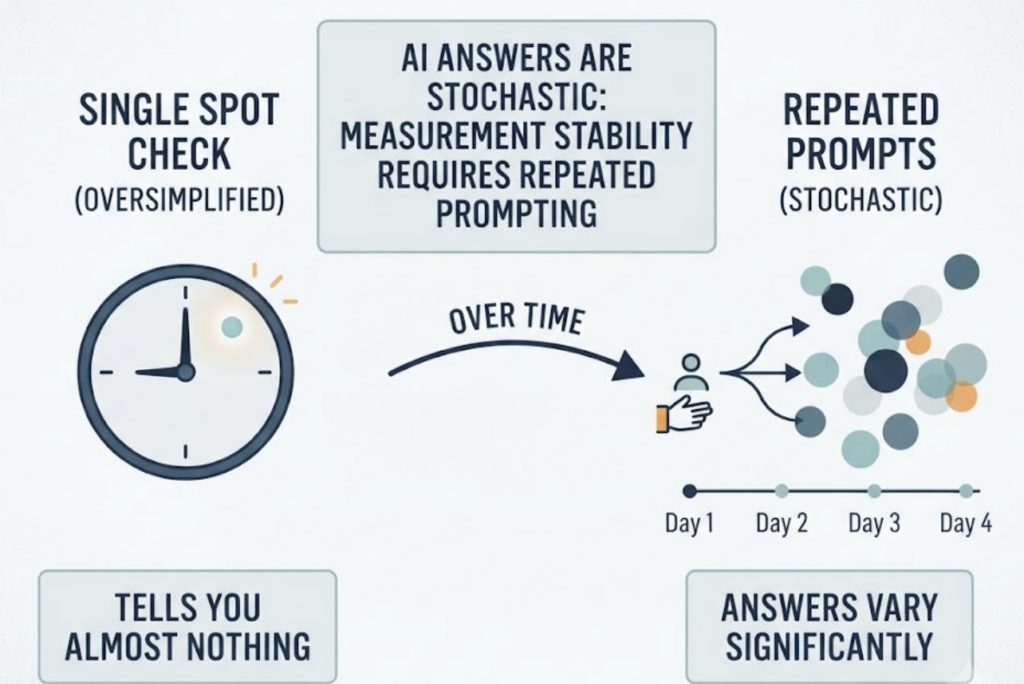
    The tricky part? AI responses vary by up to 70% for the same prompt across different sessions. You can’t just check once and call it done.

    Citation vs. Mention: Why Only One of These Drives Revenue

    Before evaluating any tool, it’s worth getting this distinction right.

    mention is when an AI names your brand in a response but doesn’t link to your site. A citation is a formal attribution: a clickable link, a footnote, or a reference card that sends actual traffic your way.

    This matters because mentions and citations require completely different optimization strategies.

    FeatureBrand MentionAI Citation
    Visual formatText-only name in the responseClickable link, footnote, or reference card
    Traffic impactMinimal, awareness onlySignificant, drives high-intent referral traffic
    Optimization signalBrand exists in AI training dataContent is structured for RAG retrieval
    Primary goalShare of VoiceAttribution and lead generation

    A high mention rate with low citations is a diagnostic signal: your brand has recognition, but your content isn’t structured authoritatively enough for the AI to treat it as a primary source. The fix is different from what most SEO tools recommend.

    That gap between current performance and AI-cited potential is what researchers call the Revenue Visibility Gap. If you rank number one on Google for a query but aren’t cited in the AI Overview for that same query, you’re missing a predicted 33% citation premium, plus the AI conversion multiplier that comes with it.

    The 5 Things That Actually Separate Reliable AI Citation Trackers

    Not all tools measure citation data the same way. Here’s what separates the useful ones from the ones that generate a lot of charts without driving decisions.

    Platform coverage. There’s only a 13.7% overlap between the citations provided by Google AI Overviews and Google’s AI Mode for the same queries. A tool that only monitors ChatGPT is giving you a fraction of the picture. You need coverage across ChatGPT, Perplexity, Gemini, AI Overviews, and regional models to identify platform-specific gaps.

    Prompt volume and refresh rate. Because AI responses are non-deterministic, a single check is a snapshot, not a signal. Reliable tools support prompt matrices of 50 to 150 queries that mirror actual buyer journeys. Perplexity’s content retrieval logic refreshes in hours, not weeks. A tool checking citations once a month is perpetually behind.

    Source-level granularity. Knowing your brand appears in 20% of responses is a start. Knowing which external domains the AI cited instead of your site is actionable. The best tools map the exact URLs pulling weight in generated answers, including third-party review sites, Reddit threads, and industry publications.

    Actionability of output. A report that says “your visibility dropped 8%” isn’t useful without a path to correction. Top-tier tools pair citation data with content recommendations: information density audits, Schema markup gaps, and specific pages the AI is skipping over.

    Pricing vs. data depth. Budget matters, but cheap tools that check a handful of prompts across one platform will miss more than they catch. The right floor for a professional baseline is typically in the $99 to $199 per month range, depending on team size and prompt volume.

    AI Citation Tracking Tools in 2026, Ranked

    Here’s a quick overview of the main platforms, followed by a deeper look at the ones worth your time.

    ToolPlatforms CoveredCitation DepthStarting PriceBest For
    TopifyChatGPT, Gemini, Perplexity, AIO, DeepSeek, and moreHigh: 7-dimensional analysis + CVR~$37/moFull-spectrum visibility and GEO execution
    Otterly AIChatGPT, Gemini, Perplexity, AIO, Claude, CopilotMedium: GEO Audit + Share of Voice$29/moSMBs and agencies
    Profound10+ platforms including ChatGPT, Claude, PerplexityHigh: server log validation$99/moEnterprise-grade monitoring
    AirefsChatGPT, Perplexity, regional LLMsHigh: source mapping$24/moLean teams
    AthenaHQ8 AI platformsMedium: recommendation focus$295/moAction-oriented teams

    Topify: The Platform That Connects Citations to Revenue

    Topify stands out in 2026 because it’s one of the few platforms built around a question most tools don’t ask: not just “is your brand being cited?” but “what is that citation actually worth?”

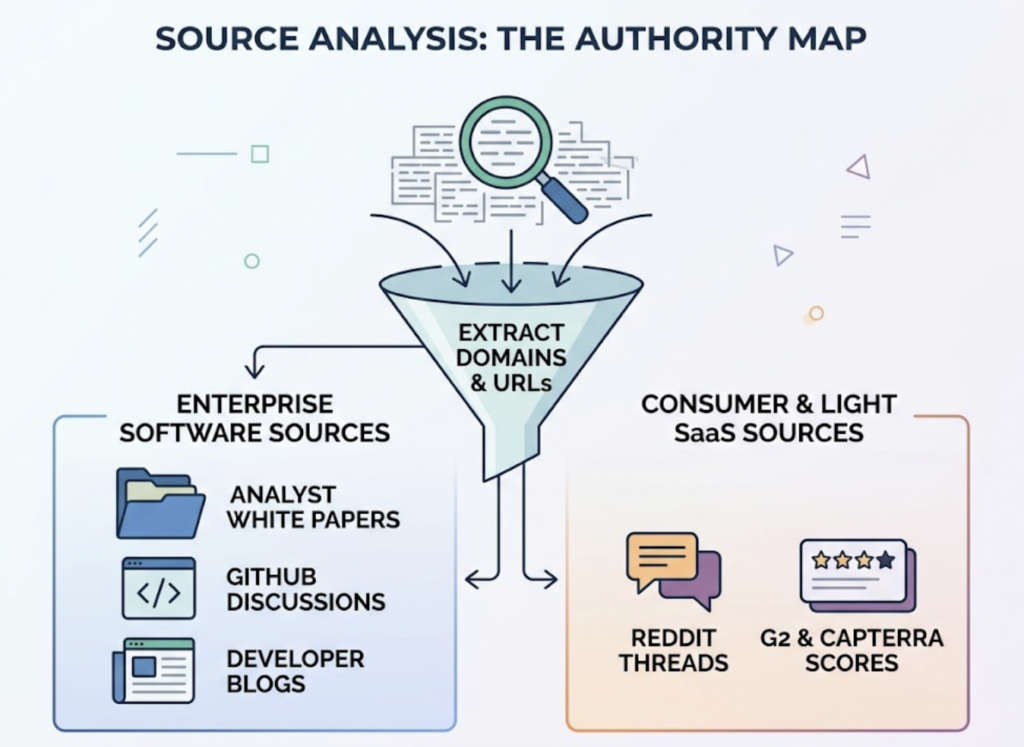
    Its Source Analysis feature maps the exact domains and URLs the AI platforms pull from when generating answers. You don’t just see that a competitor ranked above you. You see which third-party sources the AI used to justify that ranking, and whether those sources include review sites you’ve ignored, Reddit threads you’re not participating in, or technical pages with higher factual density than yours.

    That source-level transparency feeds directly into an action plan. Topify’s Action Center lets teams deploy fixes, from clarifying entity signals to updating structured data, without switching between tools. The analysis drives the execution from a single dashboard.

    What makes Topify’s approach genuinely different is its Conversion Visibility Rate (CVR) metric. CVR maps AI citation activity to actual commercial outcomes by integrating first-party data from Google Search Console and GA4. This makes the ROI of citation tracking defensible to leadership, not just to the marketing team. Research shows AI-referred visitors deliver a 4.4x higher conversion value than standard organic traffic, and CVR makes that premium visible at the brand level.

    Topify also tracks across a wider engine set than most competitors, including ChatGPT, Gemini, Perplexity, AI Overviews, and DeepSeek, with full seven-dimensional reporting across all of them. Plans start at approximately $37 per month for a base tier, scaling to $199 per month for growth teams that need expanded prompt volume and multi-project tracking.

    If your team needs to prove that AI visibility investments translate to pipeline, Topify is where that case gets built.

    Otterly AI: Accessible for SMBs and Agencies

    Otterly AI is a practical choice for smaller teams that need broad platform coverage without enterprise-level complexity. Its GEO Audit scores content against 25-plus citation-readiness factors, and its AI Visibility Score provides a consolidated view of mention rate and citation frequency over time. Gartner has recognized it as a Cool Vendor in the space. At $29 per month, it’s the most accessible entry point for teams starting to measure AI visibility systematically.

    Profound: Built for Enterprise Validation

    Profound’s standout feature is its Agent Analytics, which uses server log data to provide definitive proof of AI crawler activity. You can see exactly how bots from OpenAI or Anthropic are parsing your site’s technical structure. It monitors share of voice and sentiment across 10-plus platforms and is the right tool for global brands with complex competitive landscapes and strict data governance requirements. Plans start at $99 per month.

    Airefs: Source Mapping for Lean Teams

    For startups and solo founders, Airefs offers solid source-level transparency at $24 per month. It’s built around reverse-engineering which external domains are driving citations for your category, and its regional LLM coverage makes it useful for brands in markets where ChatGPT isn’t the primary AI platform.

    What Most Citation Reports Don’t Tell You

    Here’s something 90% of basic tools miss entirely: the why behind a citation.

    Knowing your brand appeared in 22% of sampled prompts doesn’t explain what earned those appearances. LLMs don’t just search the web. They look for third-party validation to minimize hallucination risk, a process researchers call the Consensus Mechanism. That means the AI isn’t just reading your site. It’s reading everything that references your site, your category, and your competitors.

    The data on this is striking. About 85% of non-paid AI citations come from earned media and third-party validation, not brand-owned content. Wikipedia alone accounts for roughly 27% of all citations across major AI platforms. Reddit threads, industry review sites, and G2 category pages often outrank well-resourced brand pages in AI retrieval because they carry more third-party consensus signals.

    Reverse-engineering citations means identifying which specific external pages influenced the AI’s decision to cite your brand, or your competitor instead of you. That’s the analysis that turns citation tracking from a reporting exercise into a content acquisition strategy.

    Citation Data Is Only Half the Picture

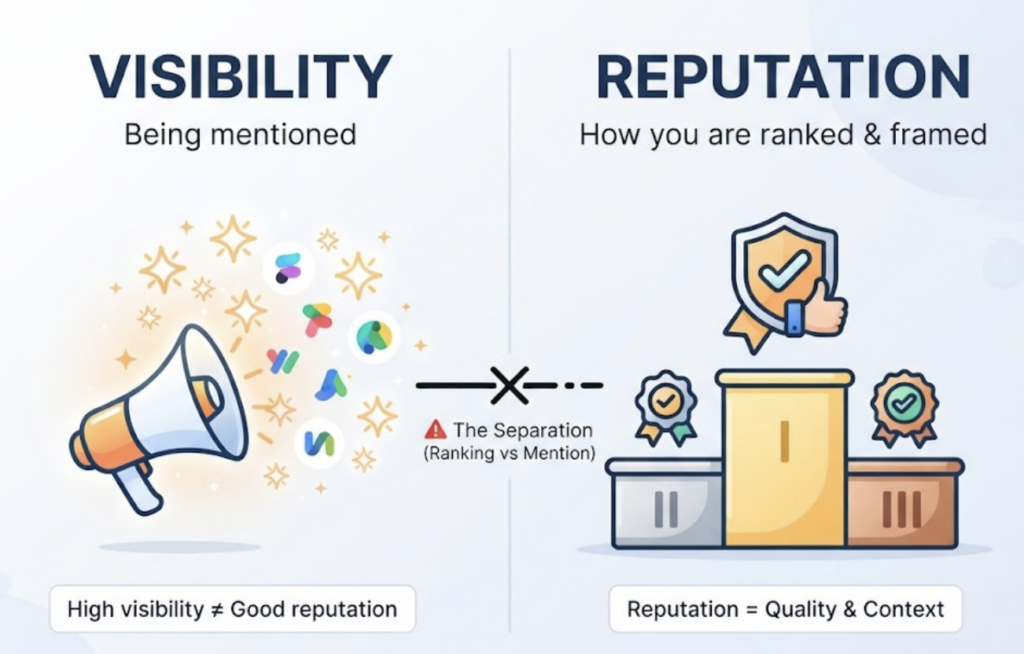
    A high citation rate doesn’t automatically mean things are going well.

    Brands can appear frequently in AI responses and still take reputation damage if the tone of those responses is consistently negative. “Brand X is a powerful tool but has poor customer support” is a citation. It’s not a win.

    This is why multi-dimensional tracking matters. Topify has popularized a seven-metric framework that’s becoming the industry standard for GEO reporting in 2026.

    Visibility Rate: The percentage of target prompts where the brand appears. Industry leaders typically target 30% or above.

    Sentiment Score: A 0-100 scale analyzing the tone the AI uses when referencing your brand. High visibility with low sentiment is a reputation risk.

    Position Rank: The first brand mentioned in an AI response is framed as the primary authority. Later mentions are secondary alternatives. Position matters.

    Volume Density: The number of prompt analyses backing the data. AI non-determinism means statistical confidence requires thousands of samples.

    Mention Frequency: Raw reference count, including text-only mentions, which measures brand salience even without link attribution.

    Intent Alignment: Whether the brand is being cited at the right stage of the funnel. “How-to” citations are less valuable than “best solution” citations for transactional queries.

    CVR (Conversion Visibility Rate): The measured impact of citation activity on lead generation and pipeline.

    Together, these seven dimensions let a team diagnose whether they’re in the Reputation Risk quadrant (high visibility, low sentiment) or the Distribution Problem quadrant (high sentiment, low visibility), and build a targeted response accordingly.

    How to Pick the Right AI Citation Tracker for Your Team

    The right tool depends on your team’s size, technical maturity, and how directly you need to tie citation activity to revenue.

    Team TypeRecommended ToolCore Reasoning
    Startups and solo foundersAirefsLow barrier to entry at $24/mo, solid source tracking for prompt testing
    SMBs and boutique agenciesOtterly AIComprehensive GEO Audit and automated reporting at an accessible price
    Growth-stage tech teamsTopifyGSC/GA4 integration and CVR make it the right tool for proving ROI and executing changes fast
    Global enterprisesProfoundServer log validation and multi-market governance for complex organizations

    One more consideration: the cost of not tracking. For an enterprise team, manual AI response auditing runs at roughly $14,200 annually per employee when you factor in the hours spent checking platforms, logging results, and maintaining prompt libraries. A platform like Topify at $199 per month pays for itself before the second month is out.

    Conclusion

    In 2026, the goal isn’t to be the first search result. It’s to be the trusted node that the AI uses to build its answer. Citation tracking is the infrastructure that tells you whether you’re there yet.

    The right tool for most growth-stage teams is Topify: it’s the only platform in the current market that combines source-level citation transparency, multi-engine coverage, and direct revenue attribution through CVR. It converts citation data into action, and action into measurable pipeline.

    For teams at earlier stages, Airefs or Otterly AI provide a strong starting point. For global enterprises needing server-log-level validation, Profound scales to that complexity.

    Pick the tool that matches where your team is today. But start tracking. The gap between your traditional SEO performance and your AI citation reality is almost certainly larger than you think.

    FAQ

    Can AI citation trackers work with Perplexity and Gemini, not just ChatGPT?

    Yes. Modern platforms like Topify, Otterly AI, and Profound are built specifically for the fragmented engine landscape. They track visibility across Google AI Overviews, Gemini, Perplexity, Claude, and regional models. It’s worth noting that there’s only a 13.7% overlap between citations provided by Google AI Overviews and Google’s AI Mode for the same queries, so multi-engine tracking isn’t optional if you want an accurate picture.

    How often should I check my AI citation data?

    The refresh rate of your tool should align with the engines it monitors. Perplexity and Google AI Overviews update their retrieval logic frequently, so weekly tracking is the recommended standard for most teams. About 40 to 60% of citation sources rotate monthly, which means monthly reporting alone will consistently miss shifts in your competitive position.

    Is AI citation tracking different from traditional backlink monitoring?

    Fundamentally, yes. Backlinks measure a static relationship between domains used by Google’s traditional index. AI citations measure real-time inclusion in generated responses. A site can have a strong backlink profile and zero AI citations if its content is poorly structured for LLM retrieval. The two metrics track different kinds of authority.

    What’s the minimum budget to get reliable AI citation data?

    Basic tracking can start at $10 to $24 per month with tools like Airefs, which works for startups testing a small prompt set. A professional baseline for a mid-sized team typically starts around $99 to $199 per month, providing the prompt volume and multi-engine coverage necessary for strategic decision-making.

    How do I calculate the Revenue Visibility Gap for my brand?

    Map your traditional SERP positions against your AI citation status. If you rank number one on Google for a query but aren’t cited in the AI Overview, you’re missing an estimated 33% citation probability for that position. The gap is the difference between your current organic revenue from that query and the potential revenue if you captured the AI Conversion Premium, which runs 4.4x to 6x the value of standard organic traffic.

    Read More

  • AI Citation Tracker: How to Know If AI Mentions You

    AI Citation Tracker: How to Know If AI Mentions You

    Your Google Analytics dashboard looks fine. Traffic is stable. Rankings haven’t moved.

    But somewhere right now, a potential customer is asking ChatGPT which tool to use in your category — and your brand isn’t in the answer.

    That’s the gap most marketing teams still can’t see.

    As AI search becomes the default way people discover products, the metric that matters is no longer “Did they click?” It’s “Did the AI mention us at all?” This guide breaks down what AI citation tracking is, how it works across ChatGPT, Perplexity, and Gemini, and what you can do about it starting this week.


    You Can’t See AI Traffic in Google Analytics. That’s the Problem.

    Between 65% and 69% of all Google searches end without a click to an external website. On mobile, that number climbs to nearly 77%.

    This isn’t a traffic problem. It’s a measurement problem.

    When an AI engine answers a query, it does the browsing on the user’s behalf. It visits your site, extracts relevant facts, and synthesizes an answer — all without generating a session in your analytics. You provided the data. You got zero credit in GA4.

    The dangerous part: a brand can be the most-cited authority in ChatGPT responses and still see a declining traffic report internally. Marketing teams perceive a failure that isn’t actually there.

    What makes this worth tracking anyway? Visitors who do click through from AI citations browse 12% more pages per visit and bounce 23% less than traditional search traffic. AI referrals convert at rates up to 9 times higher than the Google organic baseline. The volume is smaller. The intent is sharper.


    What an AI Citation Actually Is (Hint: It’s Not a Backlink)

    A backlink is a static hyperlink added by a human editor. An AI citation is a probabilistic outcome — the model decided, during synthesis, that your content was the most accurate and contextually relevant source for the answer.

    The difference matters because the signals are completely different. Backlinks demonstrate popularity and social proof. AI citations demonstrate factual legitimacy. You can have thousands of backlinks and zero AI citations.

    There are three ways a brand actually appears in a generative answer:

    Direct Citations are clickable links in a “Sources” box or as footnotes. This is the only modality that shows up in GA4 as referral traffic.

    Brand Mentions name the brand in the body of the answer without a link. This builds Share of Voice and entity authority but stays completely invisible to click-based analytics.

    Recommended Rankings are the comparative lists AI produces — “Top 3 CRM tools for startups.” Where you land in that list drives user perception, even if your name isn’t linked.

    Traditional tools like Ahrefs and Semrush can’t see any of this. They index crawlable URLs and backlinks. They can’t read the non-deterministic text an LLM generates inside a private chat session.


    3 Questions an AI Citation Tracker Should Answer

    Not all tracking tools are built the same. Before choosing one, make sure it’s designed to answer these three questions — in order.

    Is your brand being mentioned at all?

    Start here. Research indicates that 98.8% of local businesses and 26% of major brands are currently invisible in AI-generated recommendations for their primary categories. Being absent from an AI answer is functionally equivalent to being removed from the consideration set.

    This first question measures entity clarity: does the model recognize your brand as a distinct, authoritative entity with defined attributes? If the answer is no, no amount of content optimization will fix it until you build multi-source corroboration through PR, third-party coverage, and structured data.

    What sources is AI citing when it talks about your category?

    Here’s where it gets counterintuitive. AI models often don’t cite your own website. Instead, they rely on a narrow set of domains they’ve determined to be authoritative.

    For example, 88% of review-platform citations in AI Overviews go to just five sites: Gartner, G2, Capterra, Software Advice, and TrustRadius. That means if your brand isn’t covered on those platforms, you’re structurally absent from a huge portion of category queries — regardless of how good your own site is.

    Understanding these retrieval patterns lets you reverse-engineer visibility by targeting the domains AI actually trusts.

    How do you rank against competitors in AI answers?

    The final layer is competitive. If AI mentions a competitor 80% of the time for purchase-intent queries and mentions you 20% of the time, you have a visibility deficit that no traditional dashboard will surface.

    A solid tracker calculates Share of Voice across platforms and identifies Citation Gaps — specific prompts where competitors are recommended and you’re absent.


    How AI Citation Tracking Works Under the Hood

    The technical challenge here is real. Unlike a search engine that returns a stable list of links, an LLM can produce different answers to the same prompt minutes apart.

    AI citation trackers handle this by simulating human interactions at scale. They run large libraries of prompts — conversational questions that mirror real user behavior — across multiple platforms. Because of model volatility, they use high-frequency sampling: each prompt gets run dozens or hundreds of times across different locations and settings to produce a statistically significant visibility score.

    Most serious tools follow the logic of the RAG (Retrieval-Augmented Generation) pipeline. They monitor which URLs the AI is pulling in real-time, track which specific passages from those URLs were extracted for synthesis, and record which sources were ultimately credited in the final response. This breakdown pinpoints exactly where the failure happens — a retrieval issue (the site isn’t being crawled) versus a synthesis issue (the content isn’t structured clearly enough to be used).

    Continuous monitoring matters more here than in traditional SEO. A model update can shift a brand from primary source to completely omitted overnight. And source decay is real: the median citation half-life for non-network domains is roughly 4.5 weeks. Content that isn’t refreshed falls out of the citation pool on a rolling basis.


    ChatGPT vs. Perplexity vs. Gemini: Do They Cite the Same Sources?

    They don’t. There’s only an 11% domain overlap between sources cited by ChatGPT and those cited by Perplexity for identical queries. That’s the number that kills single-platform monitoring strategies.

    PlatformAvg Citations / ResponseFreshness SensitivityKey Bias
    ChatGPT7.92Moderate (60-day window)High-authority domains, Wikipedia, major news
    Perplexity21.87Extreme (30-day window)Reddit, YouTube, niche technical docs
    Gemini / AI Mode8.34Moderate (90-day window)E-E-A-T signals, Google Knowledge Graph

    ChatGPT’s citation behavior

    ChatGPT relies on the Bing index and Microsoft’s crawler. It favors a small set of high-authority sources: major publications, Wikipedia, established industry journals. It’s 3.5 times more likely to cite an established industry journal than a niche blog. For B2B brands, it functions as a curator of established reputations, not a discovery engine for emerging players.

    Perplexity’s citation behavior

    Perplexity is built for recency. It cites nearly three times more sources per response than ChatGPT and actively surfaces secondary sources — Reddit threads, YouTube videos, specialized documentation. 82% of its cited content was updated within the last 30 days. If your content publishing cadence is slow, Perplexity will quietly deprioritize you.

    Gemini’s citation behavior

    Google’s AI systems draw from two decades of crawl history and a proprietary Knowledge Graph. They weight E-E-A-T signals heavily. There’s also a meaningful internal divergence: Google AI Overviews and the Gemini-powered AI Mode only cite the same URLs 13.7% of the time. AI Overviews lean toward top-ranking pages and YouTube. AI Mode behaves more like a conversational assistant pulling from a broader entity graph.

    One-platform monitoring misses almost everything that matters.


    How to Start Tracking Your AI Citations in 30 Days

    The transition from keyword tracking to citation tracking follows a four-week rhythm.

    Week 1: Build your Core Prompt Set. Stop tracking keywords. Start tracking prompts — the conversational questions your target customers actually ask. Compile 30 to 50 prompts covering brand-specific questions, category comparisons, and problem-aware queries. Run them through an AI visibility checker to establish a baseline score across all three platforms.

    Week 2: Run cross-platform capture and source analysis. Extract every cited URL and brand mention from the AI responses across ChatGPT, Perplexity, and Gemini. Topify’s Source Analysis feature is built for exactly this step: it reverse-engineers which third-party domains are driving competitor citations and outputs a prioritized PR target list — the external sites that need your content to appear before AI will trust you.

    Week 3: Identify Citation Gaps. With the data captured, map the prompts where competitors appear and you don’t. Analyze the authority weight of your mentions. Are you being recommended as a primary solution or buried as a footnote in the third sentence?

    Week 4: Optimize and monitor. Increase fact density in your core content (concrete statistics, named sources). Improve structural clarity (H1/H2 hierarchy, FAQ schema). Implement Organization and Product schema markup. Then monitor whether your Visibility Score and Share of Voice respond. Brands using systematic GEO approaches have reported significant increases in AI mentions within two weeks of targeted optimization.


    5 Signs Your Brand Is Losing Ground in AI Citations Right Now

    These are diagnostic signals, not vanity metrics. If you’re seeing two or more of these, the problem is already compounding.

    1. Your rankings are stable but your AI Visibility Score is declining. This is the clearest sign of low extractability. Your content exists but isn’t structured clearly enough for a model to pull facts from it with confidence. Verbose content without structured data fails the synthesis test even when it ranks.

    2. Competitors dominate transactional prompts. If Topify’s Source Share data shows competitors cited in 70%+ of purchase-intent queries (“What is the best [product] for [use case]?”) while you’re under 10%, you have a multi-source corroboration problem. AI sees competitors discussed across many authoritative domains. It sees you only on your own site.

    3. Sentiment is shifting toward neutral. When AI citation tracking reveals that mentions of your brand are accumulating caveats or becoming factually hedged, the model is likely retrieving outdated or negative content from Reddit or Quora. Your reputation moat is leaking.

    4. You’re disappearing from niche, long-tail queries. Research shows that citation changes are overwhelmingly binary — domains go from cited to not cited, not gradually down. Disappearing from fringe queries first is the early warning signal that your content freshness is falling below the model’s threshold.

    5. High impressions, falling CTR in Search Console. If your brand appears in AI Overviews but your click-through rate on those queries has dropped, and you’re not the primary cited source in the answer, you’re effectively supplying data that helps a competitor win the customer’s decision.

    Conclusion

    AI citations are the new first impression. A potential customer who never visits your website can still form a complete opinion about your brand based on how — or whether — an AI describes you.

    The measurement tools most marketing teams rely on were built for a different era. Zero-click search and generative synthesis have made a significant portion of brand discovery invisible to traditional analytics. That gap is only widening.

    The path forward isn’t complicated, but it requires a different set of metrics. Identify your Core Prompt Set. Run cross-platform capture. Find your Citation Gaps. Optimize for fact density and entity clarity. Then monitor whether the model’s behavior actually changes.

    Brands that build this workflow now will have a significant data advantage over those that start when the shift is already complete.


    FAQ

    Is an AI citation tracker the same as a rank tracker? 

    No. A rank tracker measures where a URL sits in an ordered list of links. An AI citation tracker measures how frequently your brand is mentioned, how prominently it’s positioned, and what sentiment surrounds it inside a synthesized narrative answer. Rank trackers measure where you are. Citation trackers measure whether you’re recommended at all.

    How often does AI change what it cites? 

    High-authority sources are relatively stable — 96.8% of citations remain consistent week-to-week. But when changes happen, they’re usually binary. Content either stays in the citation pool or drops out entirely. Pages updated within the last 14 days are cited 2.3 times more often than older content.

    Do I need separate tools for ChatGPT and Perplexity? 

    With only 11% overlap in cited sources between the two platforms, single-platform monitoring gives you a severely incomplete picture. A reliable tracker needs to cover ChatGPT, Perplexity, and Gemini at minimum to reflect how your target audience actually searches.

    Can I track competitor citations too? 

    Yes, and you should. Running identical prompts for competitor brands lets you calculate relative Share of Voice and map the specific Citation Gaps where competitors are winning discovery opportunities you’re currently missing.


    Read More

  • AI Citation Tracker: What It Is and Why It Matters

    AI Citation Tracker: What It Is and Why It Matters

    AI engines cite sources. Your brand might not be one of them.

    You already track your keyword rankings. You monitor your backlink profile. But if you’re not tracking which sources AI engines cite when answering your customers’ questions, you’re missing a layer of visibility that’s quietly reshaping how brands get discovered.

    That’s where an AI citation tracker comes in.


    AI Answers Don’t Come from Nowhere

    When someone asks ChatGPT, Perplexity, or Gemini a question, the answer they get isn’t invented. It’s pulled from specific domains, specific URLs, specific pieces of content that the AI system has decided to trust.

    That selection process isn’t random. Platforms like Perplexity run queries through a multi-stage reranking system. A single user prompt gets expanded into several search queries, retrieves around 10 candidate pages, and then typically cites just 3 to 4 as numbered sources. Most content doesn’t make the cut.

    For brands, that cutoff has real consequences.

    Being cited means being recommended. Not being cited means your brand simply doesn’t exist in that answer.


    So, What Exactly Is an AI Citation Tracker?

    An AI citation tracker is a monitoring tool that tells you whether your brand’s content is being pulled into AI-generated answers, and if so, how often, for which topics, and in what context.

    It’s a fundamentally different instrument from the tools you’re already using.

    backlink tracker monitors when other humans link to your site. An AI citation tracker monitors when AI systems reference your content to generate an answer. One measures human behavior. The other measures machine behavior.

    rank tracker tells you where you appear in a Google SERP. An AI citation tracker tells you whether you appear inside the AI’s actual response, as a cited source, not just a result.

    That distinction matters because the two often don’t overlap. A page ranking on page two of Google can still become a primary AI citation source if its structure, fact density, and semantic clarity are strong enough.


    Why This Matters More in 2026 Than It Did Last Year

    The numbers have crossed a threshold that makes this impossible to ignore.

    ChatGPT’s weekly active users surpassed 900 million in early 2026, handling over 1 billion queries per day. Gartner projects that traditional search engine traffic will drop 25% by 2026, not because people are searching less, but because queries are being absorbed by conversational AI interfaces.

    Zero-click behavior has accelerated that shift. With Google’s AI Mode active, 93% of searches now end without a click to any external site. The only way to capture attention in that environment is to be the source AI cites.

    And the traffic that does come through AI citations converts at a rate that justifies the investment. AI-referred traffic converts at roughly 4.4 times the rate of traditional organic search. In some industries, AI citation traffic hits a 14.2% conversion rate, compared to 2.8% for standard search.

    On the B2B side, 51% of software buyers now start their vendor research through AI chatbots rather than Google. If your brand isn’t in the AI’s answer, you’re not in the consideration set at all.


    5 Things a Good AI Citation Tracker Should Tell You

    Not all citation tracking tools deliver the same depth. Here’s what actually matters.

    Which Domains AI Cites in Your Category

    You need to know whether your domain appears when AI answers questions in your space. But equally important: which competitor domains show up when yours doesn’t? That gap is your first strategic priority.

    Which Prompts Trigger Your Citations

    Different questions lead to different citation patterns. A good tracker identifies the specific prompts where your brand gets cited, whether that’s comparison queries, definition queries, or purchase-intent queries. Knowing the context tells you what content is actually working.

    How Your Citation Frequency Trends Over Time

    AI models update their retrieval weights frequently. A weekly view of your citation share reveals whether you’re gaining ground or slipping. A sudden drop often signals a content freshness issue or a competitor publishing something stronger.

    What Your Competitor Citation Share Looks Like

    In a query like “best B2B analytics tools in 2026,” how many times does your domain appear versus your top three competitors? Citation share is a direct proxy for perceived authority in that topic area.

    Where You’re Losing Citations You Should Be Winning

    This is the highest-value output. When AI cites a competitor instead of you on a topic you’ve written about, that’s not just a traffic miss. It’s a signal that your content has a structural or semantic problem worth fixing.


    How SEOs Are Already Using Citation Data

    The SEO role is shifting. Keyword optimization is still relevant, but it’s no longer sufficient on its own. The practitioners getting ahead in 2026 are using citation data as a core strategic input.

    Content gap analysis looks different now. If AI cites a competitor’s whitepaper when answering “how to evaluate B2B marketing automation tools,” and ignores your in-depth guide on the same topic, citation data can tell you why. Was it a comparison table the competitor included? A specific FAQ schema markup? More recent publication date? That’s actionable intelligence, not just a ranking gap.

    Content validation has a new feedback loop. If a piece you published gets cited across ChatGPT, Perplexity, and Gemini repeatedly, that’s the clearest possible signal that the topic selection, structure, and fact density are working. It becomes a repeatable template.

    Link building strategy gets a sharper filter. Research shows that 76.1% of AI citation sources already rank in Google’s top 10. But beyond domain authority, the domains that AI frequently cites are the same sites worth pursuing for external links. A mention on a domain that AI already trusts creates an authority transfer effect that improves your own citation probability.

    Topify’s Source Analysis is built for exactly this kind of investigation. It breaks down which URLs are being cited in your category, traces which content elements AI is pulling from those pages, and identifies the structural gaps between what AI references and what you’ve published. The platform tracks citation patterns across ChatGPT, Gemini, Perplexity, and other major AI engines, so you’re not guessing which platform matters most for your audience.


    What to Do If AI Isn’t Citing Your Brand

    Don’t assume the problem is brand awareness. In most cases, it’s a content architecture issue.

    The most common reason is EEAT signal gaps. AI models are risk-averse. If your content doesn’t include verifiable author credentials, original research, or proprietary data, the system flags it as a potential hallucination risk and skips it. The fix is to embed structured author profiles using Person Schema and incorporate original survey data or first-party research wherever possible.

    The second reason is semantic mismatch. Your content might be written around marketing language rather than the natural-language questions your audience actually asks AI. Research shows that content using an inverted pyramid structure (direct answer in the first 50 words of each section) gets cited 40% more often than traditional narrative formats. Restructuring H2 and H3 headers as questions, and leading each section with the answer, makes a measurable difference.

    The third reason is technical inaccessibility. If your core content is buried behind JavaScript rendering, lazy-loading, or deep HTML nesting, AI crawlers like PerplexityBot may never parse it correctly. Core answers should be visible in raw HTML source. Page load speed (FCP) should stay under 0.4 seconds. Robots.txt should explicitly allow AI crawlers.

    According to research from Princeton, adding authoritative citations to your content can increase AI citation probability by 115.1%. Incorporating specific statistics boosts it by 37%. Including verifiable expert quotes adds another 40%.

    These aren’t marginal improvements. They’re structural decisions that determine whether your content enters the AI retrieval pool at all.


    Conclusion

    An AI citation tracker isn’t an add-on for advanced practitioners. It’s becoming the baseline observability layer for any SEO strategy that accounts for how search actually works in 2026.

    You track keyword rankings because you need to know where you stand in search results. You track backlinks because you need to know what’s building your authority. Now you need to track AI citations because that’s where brand discovery increasingly begins.

    The brands that build this monitoring into their workflow now won’t just see the data earlier. They’ll understand the new rules of the game before their competitors do.


    FAQ

    Is AI citation tracking the same as GEO?

    Not exactly. AI citation tracking is the measurement layer: it tells you what’s happening right now. GEO (Generative Engine Optimization) is the execution layer: the content and technical changes you make to improve what happens next. They work together, the way rank tracking works alongside on-page SEO.

    How do I know if ChatGPT is citing my website?

    The most reliable method is using a dedicated AI visibility platform that runs prompts automatically and captures attribution data at scale. You can also analyze your GA4 traffic for AI search referral sources, or look for high-impression, low-click anomalies in Google Search Console’s AI Mode reports.

    Do AI citations affect Google rankings?

    There’s an indirect relationship. About 76.1% of AI citation sources already appear in Google’s top 10, which suggests that traditional search authority is still the entry ticket. That said, AI systems prioritize content structure and fact density, so a page ranked 20th with stronger extractability can outperform a page ranked first in AI citations.

    What’s the difference between AI visibility and AI citation?

    AI visibility includes any brand mention in an AI response, with or without a source link. AI citation is a specific technical action where the AI assigns your URL as a numbered footnote or source card. Mentions build awareness. Citations drive referral traffic and signal technical authority to the AI system.


    Read More

  • Is Your Brand Invisible in AI Search? Find Out Now

    Is Your Brand Invisible in AI Search? Find Out Now

    Your brand ranks on page one of Google. Your SEO reports look clean. Traffic is stable.

    And yet, somewhere right now, a potential customer is asking ChatGPT which tools to use in your category. ChatGPT answers. Your brand isn’t in it.

    You don’t know that happened. You have no alert, no report, no data point that tells you. That’s the AI citation blind spot, and in 2026, it’s quietly doing more damage to brand equity than most marketing teams realize.

    Most Brands That Rank on Google Are Invisible to AI. Here’s Why That’s a Problem Now

    Google rankings and AI visibility run on completely different logic.

    When you rank on Google, you control a URL in a list. When AI recommends a brand, it synthesizes an answer from sources it deems authoritative and cites who it trusts. Those two lists often don’t overlap.

    The scale of this shift matters. AI assistants now handle nearly 50% of discovery-oriented queries, approaching parity with traditional search. At the same time, research shows that 73% of B2B buyers regularly use AI tools for vendor research and purchase comparisons. These buyers aren’t googling a list of options. They’re asking a question and accepting an answer.

    The core problem: only 22% of marketing teams have any infrastructure to track whether they appear in those answers.

    That means roughly 4 out of 5 marketing teams are flying blind in a channel that’s influencing nearly half of discovery. And unlike traditional search, there’s no click to track. 93% of AI search sessions end without a website visit. Your brand can be excluded from the consideration set entirely, and your dashboard shows nothing unusual.

    You’re Not Ranked. You’re Not Cited. But You Don’t Know Which One.

    Here’s a distinction that most tools don’t help you make.

    brand mention is when the AI includes your name in its response text. A citation is when the AI links to or references a URL as a source. A recommendation is when the AI explicitly positions you as the answer to a question.

    You can be mentioned without being cited. You can be cited without being recommended. And here’s the part that makes standard brand monitoring tools useless: up to 73% of a brand’s AI presence can consist of “Ghost Citations.”

    A Ghost Citation is when an AI platform links to your domain as a source but never mentions your brand name in the response text. Take a concrete example: Gemini might reference a specific domain over 180 times in a single month but mention the brand name zero times. A keyword alert for your brand name catches none of this.

    That’s why an AI citation tracker works differently from traditional monitoring. It watches for URL references, domain-level attribution, and source patterns, not just text strings. Without it, you lose credit for the authority you’re actually providing to these models.

    Run Your First AI Citation Audit in 3 Steps

    Before investing in any tool, you can run a manual baseline. It won’t scale, but it tells you where you stand.

    Step 1: Build a prompt list, not a keyword list.

    AI responses are triggered by conversational queries, not head terms. Research shows that “Why” queries trigger AI answers at a 59.8% rate, and long-tail queries of 7+ words trigger AI responses 46.4% of the time. Start with 10-15 prompts that your target customers would actually say, covering purchase intent, comparisons, and informational questions in your category.

    Step 2: Test across platforms and document what gets cited.

    Run each prompt through ChatGPT, Perplexity, and Gemini. Note: does your brand appear? Does it appear as a recommendation, a mention, or a source link? Which competitor names come up instead?

    Step 3: Check the citation sources, not just the brand names.

    Look at what links or domains each platform is referencing. This is the data most manual audits miss. Which sources is the AI pulling from? Your blog? A Reddit thread? A G2 review? That sourcing pattern tells you exactly where to focus content investment next.

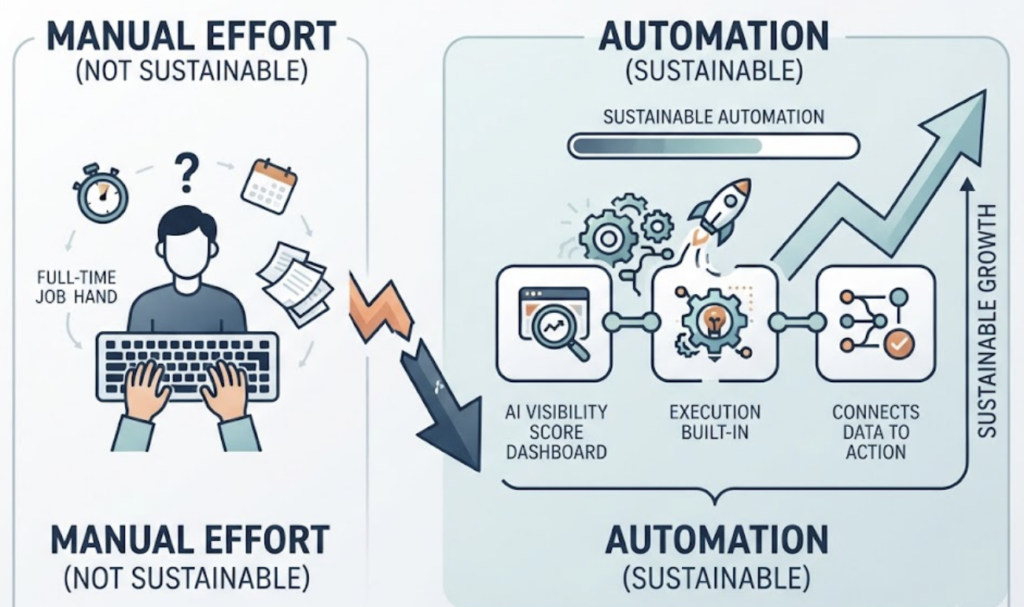
    The limitation of this approach is obvious. Doing it manually across 50+ prompts, 3+ platforms, and weekly cadence takes 3-5 hours per week with ~80% consistency. Topify automates the same process at 99% consistency for $99/month, covering 100 prompts and 9,000 AI answer analyses monthly. For most teams, the math on that trade-off takes about 30 seconds.

    5 Signs Your Brand Has a Serious AI Citation Problem

    You might not need a full audit to know something is off. These patterns tend to show up first.

    1. Your competitors appear in AI answers for your core category queries, and you don’t. Run a single test: ask ChatGPT “What are the best tools for [your category]?” If a direct competitor shows up and you don’t, that’s a displacement event.

    2. Your organic traffic looks stable, but your pipeline is softening. Because 93% of AI sessions don’t result in a website click, the exclusion from AI answers often doesn’t register in GA4. The brand is being filtered out before the website visit ever happens.

    3. AI is citing your category, but crediting third-party sources rather than your own. This is critical: AI models are 6.5 times more likely to cite a brand through an external authoritative source, such as Reddit, G2, or a trade publication, than through the brand’s own website. If your only content investment is your blog, you’re structurally at a disadvantage.

    4. You can’t answer “what does ChatGPT say about our brand?” If the question produces silence in your team, that’s the signal. It means no one has the data.

    5. Content freshness has stalled. Content updated within the last two months earns 28% more citations than older material. If your key pages haven’t been touched in 6+ months, your citation rate is likely decaying in real time.

    One of these signals is worth investigating. Three or more means the problem is already in motion.

    What a Real AI Citation Tracker Measures (It’s Not Just Mentions)

    A purpose-built AI citation tracker operates across four dimensions of brand presence, and all four matter.

    Citation frequency (sometimes called Share of Model) tracks what percentage of relevant queries include your brand. For B2B SaaS categories in 2026, category leadership is typically defined by a 40-50% citation rate across a defined prompt library. Below that threshold, a competitor is likely filling the gap.

    Source attribution identifies exactly which URLs and domains the AI uses to retrieve information about your brand. This is the most actionable data layer. If the AI is pulling from your competitor’s case studies instead of your own, you know what content to build.

    Competitive displacement tracking monitors the prompts where a competitor appears and you don’t. These “displacement prompts” are the highest-priority targets for GEO strategy because the query is already relevant to your category; you’re just not the answer.

    Sentiment and contextual framing tracks how your brand is characterized when it does appear. There’s a meaningful difference between being cited as “the leading platform” and being mentioned as “a lower-cost option.” Both are presence. Only one helps your positioning.

    Topify covers all four dimensions across ChatGPT, Gemini, Perplexity, DeepSeek, and other major platforms. Its Source Analysis feature surfaces the specific domains AI platforms are citing for your brand and your competitors, giving content and PR teams a direct brief on where external authority needs to be built. The Basic plan starts at $99/month and includes a 30-day trial.

    And because 40-60% of AI-cited sources rotate within a single month due to model updates and content freshness changes, this isn’t a quarterly audit. Weekly tracking is the practical minimum to catch competitive shifts as they happen.

    Conclusion

    The pattern is consistent: brands don’t know they have an AI visibility problem until they look for it.

    Traditional analytics can’t surface it. GA4 classifies AI-driven visits as “Direct.” Referrer headers get stripped by mobile apps. Zero-click sessions leave no trace. The tools that built the last decade of search measurement weren’t designed for this environment.

    An AI citation tracker doesn’t replace your existing analytics stack. It fills the layer above it, the layer where modern buyers are actually making decisions. And given that AI-referred traffic converts at 5.1x the rate of traditional organic search, even a modest increase in citation frequency has real pipeline impact.

    The first step isn’t optimization. It’s measurement.

    You can’t improve what you can’t see, and right now, most brands can’t see the most important channel in their discovery funnel.


    FAQ

    What is an AI citation tracker? 

    It’s a tool that monitors how often your brand, domain, or content appears as a source in AI-generated responses from platforms like ChatGPT, Perplexity, and Gemini. It tracks URL references and domain-level attribution, not just brand name mentions.

    What’s the difference between AI mentions and AI citations? 

    A mention is when your brand name appears in the AI’s response text. A citation is when the AI links to or references your domain as a source, which can happen without your brand name ever appearing. Research suggests the majority of brand AI presence falls into the citation-only category, which standard monitoring tools miss entirely.

    Which AI platforms should I track for brand citations? 

    At minimum: ChatGPT, Perplexity, and Gemini. These three cover the broadest reach for B2B and B2C discovery. Tools like Topify extend coverage to DeepSeek, Doubao, and other regional platforms depending on your target markets.

    How often does AI citation data change? 

    Frequently. Research shows 40-60% of cited sources can rotate within a single month due to model updates and changes in content freshness. Weekly tracking is the recommended minimum cadence.

    Can I track competitor citations with the same tool? 

    Yes. Competitive displacement tracking, seeing which prompts your competitors appear in but you don’t, is one of the highest-value outputs from a citation tracker. Topify’s Competitor Monitoring feature benchmarks your visibility against rivals across the same prompt sets.

    Is AI citation tracking only relevant for large brands? 

    No. Smaller brands can use strong AI citation positioning to appear alongside much larger incumbents in AI recommendations, provided their content is structured for AI retrieval and they have third-party mentions on authoritative sources.


    Read More

  • Is ChatGPT Citing Your Brand? Most Marketers Don’t Know

    Is ChatGPT Citing Your Brand? Most Marketers Don’t Know

    Your quarterly report looks clean. Organic traffic is stable, keyword rankings are holding, and the team has nothing to flag. Meanwhile, a potential customer asked ChatGPT to recommend a tool in your category—and your brand wasn’t mentioned once. No alert fired. Nothing in the dashboard moved. You had no way to know.

    That’s the AI citation blind spot. And for most marketing teams, it’s been open for longer than they realize.

    Most Brands Have No Idea AI Is Ignoring Them

    The scale of the problem is hard to overstate. Only 22% of marketing teams currently have the infrastructure to track their brand’s visibility inside AI models—yet 73% of B2B buyers now routinely use AI tools to research vendors and compare options before making contact.

    That math doesn’t work in your favor.

    What makes it worse: 93% of AI search sessions end without a website visit. The buyer researches, gets an answer, and moves on. If your brand wasn’t cited in that answer, you weren’t part of the decision. Your analytics will never show a dip. Your rankings stay exactly where they were. Nothing changes—except you lost the deal.

    What “AI Citation” Actually Means in 2026

    Most marketers treat “appearing in AI” as a single thing. It isn’t. There are three distinct forms of presence, and they require different tracking logic.

    brand mention is when the AI includes your brand name in the text of a response. It signals that the model has learned your brand exists, but it doesn’t mean you’re being recommended.

    An AI citation is when the model links to or references a specific URL or domain as a source. This is about authority. The AI is treating your content—or content about you—as a credible information source.

    An AI recommendation is the highest-value outcome: the model explicitly names your brand as a solution to a problem. This is what drives pipeline.

    Here’s the thing most teams miss: you can have plenty of citations without a single recommendation. And you can be recommended without ever being cited. Each of these has its own tracking requirement.

    There’s also a fourth scenario that almost no one is monitoring: ghost citations. Research from early 2026 found that up to 73% of a brand’s AI presence can consist of invisible citations—cases where a platform like Gemini pulls from your domain over 180 times in a month but never mentions your brand name in the response text. Traditional brand monitoring tools, which scan for brand name mentions, will log zero activity. The citations are real. The credit is invisible.

    Why Your Analytics Dashboard Can’t See Any of This

    GA4 wasn’t built for a zero-click, non-linear, conversational discovery environment. It runs on referrer headers. When AI discovery happens, those headers often don’t survive the journey.

    When a user taps a link inside the ChatGPT or Perplexity mobile app, the in-app browser strips the referrer data. The visit lands in GA4 as “Direct” traffic. When a user reads an AI answer, copies the URL, and pastes it into a new tab, there’s no referral signal at all. When a click comes from Google’s AI Overviews, it gets grouped into “Google Organic”—making it impossible to tell whether your traditional SEO or your AI visibility is driving the result.

    The AI traffic you can see in GA4 is a floor, not a ceiling. The actual volume of AI-influenced discovery is higher, and there’s no native tool to close the gap. This is why a new category of AI citation tracker platforms has emerged: they measure presence at the source—inside the LLM response—rather than at the destination.

    What a Real AI Citation Tracker Actually Monitors

    An effective ai citation tracker isn’t doing keyword scans. It’s simulating the conversational queries your buyers are actually running, then extracting structured data from the responses. Four dimensions matter.

    Citation frequency. What percentage of relevant queries include your brand? For B2B SaaS, category leadership in 2026 is typically defined by a 40-50% citation rate across a defined prompt library. If you don’t know your number, you’re making content decisions without a baseline.

    Source attribution. Which domains and URLs is the AI pulling from when it talks about your brand? This is where things get counterintuitive. AI models are 6.5 times more likely to cite a brand through an external authoritative source—like Reddit, G2, or a trade publication—than through the brand’s own website. If you’re only publishing on your blog, you’re contributing less to your AI visibility than you think.

    Competitive displacement. Visibility is always relative. The critical metric isn’t just “did I appear?”—it’s “when I didn’t appear, who did?” Tracking displacement prompts tells you exactly where your competitors are taking citations you’re not.

    Sentiment polarity. How is the AI characterizing your brand when it does mention you? There’s a meaningful difference between being cited as “a leading enterprise platform” and being cited as “a budget-friendly legacy option.” Both count as mentions. Only one helps your positioning.

    Topify tracks all four of these dimensions across ChatGPT, Gemini, Perplexity, and other major AI platforms. Its Source Analysis feature identifies the specific domains the AI is using to retrieve information about your brand—not just whether you’re appearing, but why. For teams moving from manual spot-checks to systematic tracking, the platform’s Basic plan covers 100 prompts and 9,000 AI answer analyses monthly for $99/mo.

    How to Set Up AI Citation Tracking in 3 Steps

    Step 1: Build a prompt matrix.

    Don’t start with generic keywords. AI Overviews and assistants are triggered most reliably by conversational queries. Question-based prompts (“How do I choose…?”) carry a 57.9% AI trigger rate. “Why” queries hit 59.8%. Long-tail queries with 7+ words land at 46.4%. Your prompt matrix should mirror how your buyers actually talk—covering purchase intent, comparison, and informational scenarios.

    Step 2: Run a baseline.

    Before you automate anything, manually test 10-20 core prompts across ChatGPT, Perplexity, and Gemini. Record not just whether your brand appears, but how it’s described. This “sentiment audit” often surfaces narrative drifts—cases where the AI is characterizing your product in ways that no longer match your current positioning. It’s better to find this in a baseline than to discover it six months into a tracking program.

    Step 3: Automate the cadence.

    Manual tracking breaks down fast. AI-cited sources rotate 40-60% within a single month due to model updates and content freshness changes. A weekly monitoring cadence is the practical minimum to catch competitive displacements as they happen. Manual audits run 3-5 hours per week with roughly 80% consistency. Automated tracking through a platform like Topify runs at 99% consistency and cuts active time to about one hour per week.

    Scaling across 50-100+ prompts and multiple competitors is where spreadsheets stop working. Automation isn’t just about efficiency—it’s about catching the signal before your competitor does.

    What to Do After You See Your Citation Data

    The data is only the first half. The second half is acting on it.

    When you identify a displacement prompt—a query where a competitor is cited but you’re not—the Source Analysis data tells you exactly why. If the AI is citing a competitor’s Reddit thread, your gap is in community presence. If it’s citing a competitor’s structured how-to guide, your gap is in content architecture. The citation data doesn’t just tell you where you stand. It tells you exactly what to build next.

    Three actions tend to move citation rates the fastest. First, reformatting high-value pages into concise “answer capsules”—factual blocks at the top of the page that AI crawlers are far more likely to extract than dense paragraphs. Second, increasing third-party mentions on authoritative sites. Given that AI is 6.5x more likely to cite external sources, a mention in an independent editorial or community forum is higher leverage than another post on your own blog. Third, keeping citation assets fresh. Content updated within the last two months earns 28% more citations than older content—making a regular refresh cadence as important as original production.

    The ROI case for getting this right is documented. Brands that have focused on answer engine optimization have seen 120% revenue growth from AI-driven traffic and 693% increases in AI-channel visits. AI-referred traffic also converts at 5.1x the rate of traditional organic search—so even a modest shift in citation frequency carries outsized pipeline impact.

    Conclusion

    The AI citation blind spot isn’t going to close on its own. As B2B buyers complete 61% of their purchase journey before ever contacting a vendor, the conversations that shape their shortlists are happening entirely inside AI interfaces—without any signal reaching your dashboard.

    Closing that gap starts with knowing where you stand. Run a baseline this week. Map your prompt matrix. Then decide whether manual checks can realistically keep up with a measurement environment where cited sources rotate monthly. For most teams, the answer is clear. Get started with Topify and turn AI citation tracking from a blind spot into a growth channel.

    FAQ

    Q: What is an AI citation tracker? 

    A: It’s a specialized tool that monitors how often and in what context your brand, content, or URLs are referenced in AI-generated responses from platforms like ChatGPT, Perplexity, and Gemini. Unlike brand monitoring tools that scan for name mentions, an AI citation tracker also monitors URL-level references, which often account for the majority of a brand’s AI presence.

    Q: How is AI citation different from traditional SEO ranking? 

    A: Traditional SEO focuses on ranking a URL in a list of results to drive a click. AI citation focuses on being the synthesized answer—or being the source the AI draws from to construct that answer—in a zero-click environment. The feedback loops, measurement tools, and optimization actions are fundamentally different.

    Q: Can I track brand citations across ChatGPT and Perplexity at the same time? 

    A: Yes. Modern platforms like Topify offer multi-model monitoring, allowing you to compare citation frequency, sentiment, and source attribution across different AI ecosystems from a single dashboard.

    Q: How often does AI citation data change? 

    A: AI visibility is more volatile than traditional search rankings. Research shows 40-60% of cited sources can rotate within a single month due to model updates and content freshness signals. Weekly tracking is the recommended minimum cadence to catch displacement events before they compound.

    Read More

  • AEO KPIs That Go Beyond Impressions

    AEO KPIs That Go Beyond Impressions

    Your SEO dashboard is lying to you, and it’s not even wrong.

    The rankings are stable. Impressions look healthy. But your brand doesn’t show up in a single ChatGPT response when someone asks which tool to use in your category. That’s not a ranking problem. That’s a measurement problem.

    Answer Engine Optimization (AEO) runs on entirely different logic than traditional search. AI platforms don’t show your brand a list of links; they render a conclusion. And if you’re still reporting on impressions and CTR to justify your AEO investment, you’re measuring the wrong thing entirely.

    Here’s what to measure instead.

    Your Old Metrics Can’t See What’s Actually Happening

    Traditional SEO tracked a clean linear path: keyword → impression → click → conversion. AI search breaks that chain at the first step.

    When a user asks ChatGPT “what’s the best project management tool for remote teams,” they don’t see a list of links ranked by domain authority. They get an answer. If your brand isn’t in that answer, you don’t exist for that user, regardless of what your Google Search Console says.

    Research shows organic CTR for queries that trigger an AI Overview has dropped 61% year-over-year. That number isn’t a warning. It’s already happened.

    The “visibility paradox” is now a standard failure mode: teams report to leadership with green dashboards while their brand quietly disappears from the conversations that shape purchase decisions.

    That’s the gap most brands still can’t see.

    The 7 KPIs That Actually Measure AEO Performance

    The following metrics don’t replace SEO reporting. They answer a different question: not “where do we rank,” but “what does AI say about us, and how often.”

    1. AI Visibility Rate

    This is the percentage of your target prompts that trigger a response that mentions your brand. Think of it as your “room presence” metric. If AI doesn’t mention you, nothing else matters downstream.

    For B2B SaaS teams, a visibility rate between 10-15% across category-level prompts is a reasonable baseline. Category leaders typically clear 30-40%. Getting above 0% is a meaningful signal for newer brands.

    Platforms like Topify track visibility rate across ChatGPT, Gemini, Perplexity, and other major AI platforms simultaneously, so you’re not making decisions based on a single engine’s output.

    2. Citation Share

    Being mentioned is awareness. Being cited is trust.

    Citation Share tracks how often AI responses reference your owned domains as a factual source, not just your brand name. Brands are 6.5 times more likely to be cited through external sources, like Reddit threads, G2 reviews, or industry publications, than through their own websites.

    That number forces an uncomfortable question: if AI trusts Reddit more than your homepage, where should your next content investment go?

    Topify’s Source Analysis surfaces exactly which domains AI is citing when describing your brand, so you can close those gaps strategically rather than guessing.

    3. Sentiment Score

    AI doesn’t just list brands. It characterizes them.

    A Sentiment Score measures whether the AI describes you favorably, neutrally, or with caveats. Scores typically range from 0 to 100. A positively framed AI summary increases purchase likelihood by 32%. Negative framing, on the other hand, causes what researchers call “silent churn,” users who form an opinion before they ever hit your site.

    High mentions plus low sentiment is often worse than being invisible. You’re being seen, but the framing is doing active damage.

    4. Answer Placement Score

    In a numbered list from an AI recommendation, position one carries a weight of 1.0. Position five carries a weight of 0.2. That’s a 5x difference in downstream conversion probability, for the same query.

    Answer Placement Score measures where your brand lands within AI responses when it does appear. Being in the “room” matters. Being first in the room matters more. Category leaders show up as the primary recommendation in 30% or more of relevant responses.

    If your visibility rate is high but your placement score is low, you’re being mentioned as an alternative, not a recommendation.

    5. Prompt Coverage

    Traditional SEO tracks a finite keyword list. AI search doesn’t work that way.

    The average AI query is 23 words long, compared to 4 words in traditional search. Users ask things like “what’s the most secure CRM for a 15-person remote startup that doesn’t need Salesforce-level complexity.” No keyword tool built this query.

    Prompt Coverage measures how many distinct user intents, across discovery, evaluation, and comparison stages, produce a response that mentions your brand. Enterprise teams typically track 100+ prompts per category cluster to get statistically meaningful data. Topify continuously surfaces new high-value prompts as AI behavior evolves, so your tracked set doesn’t go stale.

    6. AI Share of Voice

    If your brand appears in 10% of category recommendations and your top competitor appears in 40%, that’s a 30-point mention gap. That gap is your market opportunity, or your market risk, depending on which side you’re on.

    AI Share of Voice calculates your brand’s mentions as a percentage of total brand mentions across a query set. It’s the AEO equivalent of market share. And in an environment where AI satisfies roughly 60% of search queries, SOV is a direct proxy for future pipeline.AI SOV=Brand MentionsCompetitor Mentions×100AI SOV=∑Competitor MentionsBrand Mentions​×100

    This is also the metric executives actually understand. Topify’s Competitor Monitoring tracks SOV in real time, including emerging competitors who weren’t on your radar six months ago.

    7. Conversion Visibility Rate (CVR)

    AI traffic is often invisible in standard analytics setups. Assistants suppress referrers, strip UTM parameters, and don’t always show up cleanly in GA4. Actual AI influence is likely 2-3x what standard dashboards report.

    CVR works around this by tracking what happens after AI exposure. Users encounter your brand in a ChatGPT response, don’t click immediately, then search for you by name three days later. That branded search lift is measurable, and it’s the clearest signal that your AEO investment is generating demand. AI-referred traffic, when you can capture it, converts at 14.2%, compared to 2.8% for traditional organic search.

    The Metrics Brands Get Wrong First

    Getting the right KPIs is half the work. Using them correctly is the other half.

    Mistake 1: tracking mention count in isolation. A high mention count is a liability if sentiment is negative. Modern AI sentiment analysis distinguishes between being praised for your interface and criticized for your pricing in the same response. Averaging those together produces a number that means nothing.

    Mistake 2: treating AI referrals like organic traffic. If you’re measuring AEO performance purely in GA4, you’re undercounting by a significant margin. Include “AI Assistants” as a response option in post-conversion surveys. Check server logs for ChatGPT-User agents. The attribution gap is real and it’s currently making AEO look less effective than it is.

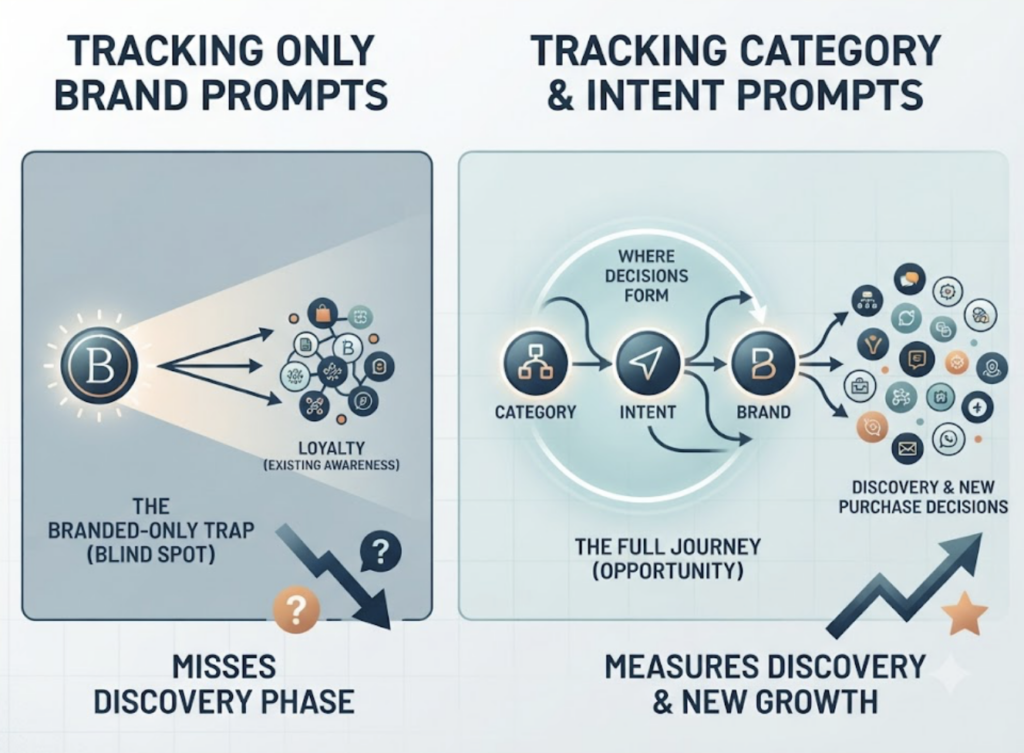
    Mistake 3: only tracking branded prompts. “What does [Your Brand] do?” will always give you flattering visibility numbers. The real test is unbranded category prompts: “best analytics tool for B2B SaaS.” If you only appear when someone already knows your name, you’ve failed at the top of the funnel entirely.

    How to Build Your AEO Reporting Framework in 3 Layers

    Organizing these 7 KPIs into a reporting structure turns raw data into decisions. The framework has three layers, each answering a different organizational question.

    Layer 1: The Visibility Layer Are we being retrieved at all?

    KPIs: AI Visibility Rate, Prompt Coverage, Platform Distribution.

    Report this weekly. Platform algorithm changes move fast. A week-over-week visibility delta tells you whether your optimization work is landing, or whether a competitor just pushed you out of a cluster of prompts.

    Layer 2: The Quality Layer How is AI describing us?

    KPIs: Sentiment Score, Answer Placement Score, Citation Source Share.

    Report this monthly. Narrative drift, where AI gradually shifts from describing you as a “leading solution” to a “viable option,” rarely happens overnight. Monthly audits catch it before it becomes structural.

    Layer 3: The Impact Layer Is AI presence driving demand?

    KPIs: AI Share of Voice, Branded Search Lift, Lead Quality Shift (conversion rate and deal size of AI-referred visitors vs. organic).

    Report this quarterly, alongside competitor benchmarking. This is the layer that justifies AEO spend to finance and leadership. Users arriving from AI recommendations convert at 14.2% and move through the pipeline 2-3x faster, because they’ve been pre-qualified by the AI’s recommendation.

    What a Good AEO Report Actually Looks Like

    C-suite audiences don’t want to reconstruct meaning from raw data. They want implication-first summaries that answer one question: “What does this mean for the business?”

    A solid executive AEO report fits in four slides:

    SlideExecutive FocusKey Data Point
    Executive SummaryRecommendation-first“We appear in 12% of category prompts. Competitor A appears in 38%.”
    Competitive SOVCurrent market standingAI Share of Voice vs. top 3 competitors
    Narrative ControlBrand reputation healthSentiment Score trend + top AI qualifiers used
    Impact / ROIPipeline connectionBranded Search Volume Lift + Lead Quality comparison

    The operational team needs the full 7-KPI breakdown. Leadership needs the business translation. Build both, from the same data set.

    Setting Benchmarks When There’s No Industry Standard Yet

    AEO is new enough that there’s no universal benchmark. The right target depends heavily on how often AI surfaces responses in your category at all.

    IndustryAI Overview Trigger RateTarget Visibility Rate (Leader)
    Healthcare88%40-50%
    B2B Tech / SaaS55%30-40%
    Finance21%15-20%
    E-commerce13%10-15%
    Real Estate4.4%5-10%

    A 10% visibility rate in real estate signals market leadership. In healthcare, that same number is a serious problem.

    Start by tracking 30-50 unbranded prompts and establishing your baseline over 30, 60, and 90 days. Trend stability matters more than single-point snapshots. Your 90-day moving average is a more reliable signal than any single week’s report.

    Conclusion

    AEO is a shift from the link economy to the citation economy. The click, which once was the primary unit of digital marketing value, is being replaced by something less visible but more powerful: the authoritative mention inside an AI-generated answer.

    The 7 KPIs in this framework don’t make AEO harder to report. They make it possible to report it honestly, with data that reflects what’s actually happening in the conversations shaping your buyers’ decisions.

    AI Visibility Rate is the baseline. Sentiment Score is the health check. Answer Placement tells you how loud your voice is when you’re in the room. SOV shows you the competitive gap. CVR connects it all to revenue.

    Start measuring what AI actually says about you. Then optimize from there.

    FAQ

    Q: What’s the main difference between AEO KPIs and traditional SEO KPIs? 

    SEO measures actions, clicks, traffic, and rankings. AEO measures influence and trust: citation frequency, sentiment framing, and presence within synthesized answers. One tracks what users do after seeing you. The other tracks whether AI includes you in the conversation at all.

    Q: How often should I report on AEO metrics? 

    Weekly for visibility and prompt coverage (tracks fast platform changes), monthly for sentiment and placement audits (catches narrative drift), and quarterly for Share of Voice and pipeline impact (executive-level benchmarking).

    Q: Which AEO KPI should I prioritize first? 

    AI Visibility Rate. You need to confirm you’re present in relevant AI responses before any other metric is worth optimizing. If your visibility rate is 0% for category-level prompts, that’s the only problem that matters right now.

    Q: Can AEO performance be tied directly to revenue? 

    Yes, through Branded Search Lift and Lead Quality Shift. Users arriving from AI recommendations convert at 14.2%, compared to 2.8% for traditional organic search, and move through the sales cycle 2-3x faster because AI pre-qualifies them during the research phase.

    Q: Why is sentiment analysis important in AEO? 

    Because AI doesn’t just list your brand name. It describes you. A high visibility rate combined with a low sentiment score means you’re being mentioned in ways that actively erode purchase intent. Sentiment is the difference between being recommended and being used as a cautionary example.

    Read More

  • AEO KPIs Most Brands Still Don’t Track

    AEO KPIs Most Brands Still Don’t Track

    A practical framework for measuring brand visibility across ChatGPT, Gemini, and Perplexity

    You run the weekly report. Rankings are stable. Organic traffic is up. The dashboard looks fine.

    Then a colleague casually mentions they found your main competitor recommended three times while researching options in ChatGPT. Your brand didn’t appear once. You have no metric to explain why, no way to know how long it’s been happening, and no clear path to fixing it.

    That’s the measurement gap most marketing teams haven’t closed yet.

    Traditional SEO metrics were built for a list-based world. KPIs for AEO — answer engine optimization — require an entirely different framework. When AI delivers one synthesized answer instead of ten blue links, “position 1” is no longer the goal. What matters is whether you’re in the answer at all, what the AI says about you, and whether your competitors are being named first.


    Your Old SEO Dashboard Is Measuring the Wrong Race

    The metrics you’ve relied on for years — keyword rankings, organic clicks, impressions — weren’t designed to capture what happens inside a generative response.

    Here’s the structural problem. AI Overviews and conversational interfaces act as a proxy for the user, synthesizing multiple sources and delivering a single answer. That process reduces the click-through rate for the top organic result by an average of 58% to 61%. That traffic doesn’t go to competitors in the traditional sense. It stays inside the AI interface.

    What’s more, standard analytics platforms like GA4 typically misclassify AI-driven brand exposure as “Direct” or “(not set)” traffic because AI assistants frequently strip referral headers and UTM parameters. You’re likely receiving more AI-driven interest than your current reports show.

    The deeper shift is about authority, not traffic. In traditional SEO, visibility was a function of position. In the generative era, it’s a function of “Information Gain” — whether your content provides unique, factual, structured data that AI finds indispensable for its response. That’s a different race. And it requires different metrics to run it.


    The 6 AEO KPIs That Actually Tell You Where You Stand

    AI Visibility Rate

    This is the foundational metric of AEO, and the closest successor to keyword rankings.

    AI Visibility Rate measures the percentage of queries within your tracked prompt set where your brand is mentioned, cited, or recommended by the AI. The formula: queries with brand mention divided by total tracked queries, multiplied by 100.

    What makes this metric meaningful is its scope. A brand may have strong visibility on branded queries but zero visibility on high-intent category comparisons — the exact queries where purchase decisions happen. Professional tracking typically starts with a “Master Prompt List” of 50 to 1,000 queries that reflect how real users search for solutions in your category.

    Visibility tiers help you read your position quickly: 0–10% means you’re largely absent from AI knowledge models; 10–20% signals occasional mentions with low authority; 20–40% puts you in the competitive range alongside recognized peers; above 40% signals category dominance.

    AI Sentiment Score

    Showing up in an AI response isn’t enough. How you show up matters just as much.

    AI Sentiment Score tracks the qualitative framing AI engines use when they describe your brand. LLMs don’t just list options — they characterize them. Describing your product as “feature-rich but expensive” or “great for beginners but lacks enterprise scaling” shapes user perception before a single click occurs.

    The Net Sentiment Score (NSS) categorizes mentions into five tiers: Endorsement (AI proactively recommends your brand as the primary solution), Neutral Mention (factual, no evaluative language), Cautious Mention (includes hedging or caveats), Negative Mention (highlights weaknesses or criticism), and Hallucination (AI generates incorrect information). Scores above +60 signal a defensible brand position in AI search. Scores below -20 indicate your digital footprint is actively working against your sales pipeline.

    That last scenario — negative AI sentiment — is particularly damaging because most brands don’t catch it until the pipeline impact is already visible.

    Share of Voice vs. Competitors

    In most generative responses, AI surfaces several vendors or solutions at once. AI Share of Voice tells you who’s dominating that recommendation window.

    The formula: your brand mentions divided by total tracked brand mentions across your competitive set, multiplied by 100. It’s a leading indicator of future market share. When AI satisfies up to 93% of informational search intent without a click, the brand appearing most consistently as the “consensus pick” across ChatGPT, Gemini, and Perplexity captures the cognitive awareness that drives branded searches and offline conversions later in the funnel.

    Position in AI Answers

    Not all mentions carry equal weight. The order matters.

    Being the first brand named in a generative response carries significantly more authority than appearing fourth in a trailing list. The Citation Placement Index (CPI) assigns weighted values based on position: a primary recommendation earns 10 points; top-3 placement earns 7; a lower list placement earns 4; a trailing or passing mention earns 2.

    Brands with higher CPI scores tend to benefit from what researchers call “Reinforced Visibility.” As AI generates follow-up responses within a conversation thread, it’s more likely to stay anchored to the entity it introduced first. First mention isn’t just an impression — it compounds.

    Source Citation Rate

    This KPI tends to surprise marketing teams the most.

    Roughly 85% of citations in AI responses come from third-party sources — Reddit, Wikipedia, G2, industry publications — rather than brand-owned domains. So Source Citation Rate doesn’t just track whether AI links to your website. It tracks which domains are actually shaping the AI’s narrative about your category.

    The citation landscape differs sharply by platform. ChatGPT leans on Wikipedia (47.9%) and news sources; Perplexity favors Reddit (46.7%) and industry blogs; Google AI Overviews draw from YouTube (23.3%) and Reddit (21%). If your brand isn’t present in these high-trust third-party ecosystems, you’re leaving the narrative to others — or to your competitors.

    Conversion Visibility Rate (CVR)

    This is where AEO connects directly to revenue.

    AI-referred visitors are among the most qualified traffic sources you can get. Users arriving from ChatGPT convert at approximately 15.9%, compared to 1.76% for traditional organic search. Perplexity referrals convert at around 10.5%. The reason is structural: by the time someone clicks through from an AI answer, the AI has already handled the research and comparison phase of the buyer journey. They arrive ready to engage.

    CVR estimates the revenue value of your AI visibility by applying that conversion premium to your tracked mention volume. It’s the metric that turns an AEO report from an awareness slide into a business case leadership actually cares about.


    One Number That Ties All Six Together

    Six metrics can complicate a stakeholder presentation. The Visibility Coefficient (Cv) simplifies it.

    It’s a composite index that normalizes mention frequency, sentiment, and position into a single score from 0 to 100. The formula: average brand mention frequency multiplied by a sentiment weight, divided by total category queries.

    Think of it as a leading indicator of brand equity in the machine-learning era. A high score means AI models — trained on billions of data points — consistently treat your brand as the category default. That reduces dependence on expensive paid terms. A declining score is an early warning system: sentiment drift, content gaps, or a competitor quietly gaining ground in the AI’s retrieval index.

    It’s also what you bring to a quarterly review when you need to show AEO momentum without a 20-slide breakdown.


    Most Teams Start Tracking After the First Traffic Drop. Here’s the Baseline You Need

    Waiting for a traffic anomaly before establishing AEO baselines is one of the most common mistakes marketing teams make. Without a “before” snapshot, there’s no way to validate whether your AEO efforts are working.

    A solid baseline starts with intent mapping: build a list of 500 to 1,000 queries spanning the full customer journey, from “what is [category]” through “[your brand] vs [competitor].” Then run those queries across ChatGPT, Gemini, and Perplexity. Cross-engine sampling is essential — a brand may have strong Perplexity visibility (which searches the live web) while being largely invisible on ChatGPT (which relies more on training data and the Bing index). Only about 11% of domains are cited by both platforms, which means the two ecosystems require separate strategies.

    Record brand position and sentiment for each response. Map which third-party domains the AI is citing when discussing your category. Run the same prompts for 3–5 competitors. That’s your Narrative Baseline. Every subsequent measurement gets compared to it.

    Context matters for target-setting. AI Overview triggers vary significantly by industry: Healthcare sees a 48.7% trigger rate, making high visibility close to table stakes. SaaS and B2B sit around 30%, where a >25% visibility target is a reasonable first benchmark. Real Estate triggers at just 4.4%, so a 10% visibility rate may actually signal leadership in that segment.


    When Your Numbers Look Bad: What to Do First

    Low visibility and poor sentiment have different root causes. They need different fixes.

    If your AI Visibility Rate is low, the most common cause is content structure. AI engines using Retrieval-Augmented Generation (RAG) prioritize content that can be extracted cleanly — direct, factual, structured summaries. Content with consistent H1-H2-H3 heading hierarchies is 40% more likely to be cited by LLMs. Adding 40–60 word “atomic answers” at the top of high-traffic pages significantly improves extractability. Embedding YouTube content on key topic pages also matters: YouTube signals correlate with AI citation at 0.735, the highest correlation of any measured signal.

    If visibility is adequate but sentiment is negative, the fix is third-party reputation work. AI uses multi-source corroboration to determine what it believes about a brand. A negative Reddit thread from 2022 or an outdated industry article can drive poor sentiment consistently across platforms. Actively seeking mentions in high-authority “trust neighborhoods” — Wikipedia, industry publications, review platforms like G2 — delivers more impact on sentiment than any on-page optimization.

    Data freshness also has a measurable effect. Refreshing content timestamps and updating product information can shift AI ranking positions by up to 95 places.


    How Topify Turns These 6 KPIs Into a Live Dashboard

    Manual tracking across ChatGPT, Gemini, and Perplexity is workable for an initial audit with a small prompt set. It doesn’t scale.

    For marketing teams managing AEO visibility across dozens of prompts, multiple platforms, and a shifting competitive set, Topify centralizes all six metrics into a single operating view. In practice, this means you can open a weekly report, see that your ChatGPT Visibility Rate dropped 14 points over the past month, trace it to a third-party source that stopped citing your brand, and identify which competitor captured that share — all within the same dashboard.

    The platform covers the full KPI stack: real-time AI Visibility Tracking across ChatGPT, Gemini, Perplexity, and other major engines; Sentiment Analysis with 0–100 scoring; Position Tracking and competitor Share of Voice monitoring; Source Analysis that reverse-engineers exactly which domains AI platforms are citing in your category; and CVR estimation to connect visibility data to revenue impact.

    Topify also flags hallucinations — cases where AI generates inaccurate information about your brand — before they compound into sustained negative sentiment. And it continuously surfaces high-value prompts your brand isn’t appearing for yet, so you’re optimizing toward opportunity, not just defending what you already have.

    For teams that want to move from insight to action, Topify’s One-Click Agent Execution identifies citation gaps and deploys optimized content directly, without manual workflows.


    Conclusion

    The shift from SEO to AEO isn’t incremental. It’s structural — a move from measuring clicks to measuring authority inside the AI’s answer.

    Your existing analytics stack isn’t broken. It’s just measuring the wrong thing. The six KPIs for AEO — Visibility Rate, Sentiment Score, Share of Voice, Position, Source Citation Rate, and CVR — give you a framework to understand where your brand actually stands when a potential customer asks an AI for a recommendation. Start with a 30-day baseline. Pick two or three metrics to track weekly. And don’t wait for a traffic anomaly to discover you’ve been invisible.


    FAQ

    Q: What’s the difference between AEO KPIs and GEO KPIs?

    A: AEO (Answer Engine Optimization) and GEO (Generative Engine Optimization) are often used interchangeably, and their core KPIs overlap significantly. In practice, GEO refers to the broader strategy of optimizing for generative AI platforms, while AEO emphasizes the answer layer specifically — how your brand appears within AI-synthesized responses. The six KPIs in this framework apply equally to both.

    Q: How often should I review these metrics?

    A: For real-time retrieval platforms like Perplexity, a weekly cadence is recommended for high-growth teams. Monthly trend analysis is the standard for board-level reporting on Share of Voice progress. At minimum, run a full cross-engine audit quarterly to catch shifts in citation sources and competitor positioning.

    Q: Can I track AEO KPIs without a paid tool?

    A: A manual baseline with 50–100 prompts is feasible, and it’s worth doing early. The practical limit is consistency. AI responses aren’t static — running the same prompt on the same platform on different days can produce different answers. At scale, that variability makes manual tracking unreliable. Dedicated platforms address this through browser-level crawling and statistical sampling across large prompt sets.

    Q: How do I explain AEO KPIs to leadership?

    A: Lead with CVR and the Visibility Coefficient. CVR connects AI visibility directly to conversion value, which makes the business case immediately legible. The Visibility Coefficient gives leadership a single trend number to track over time — similar to how NPS works for customer experience reporting. Avoid leading with raw Visibility Rate alone; without competitive context, a 22% rate has no obvious meaning.


    Read More

  • Keyword Rankings Are Dead. Meet Your New AEO KPIs

    Keyword Rankings Are Dead. Meet Your New AEO KPIs

    Your domain authority is 72. You’re ranking top-three for a dozen high-intent keywords. Then your CMO pulls out her phone, types your category into ChatGPT, and asks why your brand isn’t in the response. You don’t have an answer, because nothing in your current report was built to track that.

    Traditional keyword rankings measure a world that’s changing fast. The KPIs replacing them are already in use by GEO teams that figured this out the hard way.

    Your Keyword Report Doesn’t Know What AI Sees

    The premise of a “ranking” assumes a fixed list. For two decades, SEO worked because Google returned ten links in a deterministic order, and position one meant something concrete. Generative engines don’t work that way.

    AI platforms return a recommendation, not a list. A brand is either cited in the synthesized answer or it isn’t. That binary outcome has no equivalent in traditional rank tracking.

    The data behind this shift is hard to ignore. Gartner projects that traditional search engine volume will drop 25% by 2026 as users move toward AI-powered answer tools. When Google’s AI Overviews appear in results, organic click-through rates for the first traditional result drop by as much as 61%. In Google’s full AI Mode environment, the zero-click rate climbs to an estimated 93%.

    What’s more unsettling for SEO teams: the overlap between AI Overview citations and top-10 organic rankings has dropped from 76% to roughly 38%, with some analyses putting it as low as 17%. And 80% of LLM citations now come from pages that don’t rank in Google’s top 100 for the original query.

    That’s not a gap. That’s a different game entirely.

    What “Answer Share” Means (and Why It’s Now the Core AEO KPI)

    Answer Share is the percentage of relevant AI-generated responses that mention or cite your brand across a defined set of prompts. The formula is straightforward:

    Answer Share = (# of responses mentioning brand ÷ total prompts tested) × 100

    If you test 50 prompts relevant to your category and your brand appears in 18 of the AI responses, your Answer Share is 36%.

    Where Search Share of Voice tracked link appearances on a page, Answer Share tracks how often your brand is part of the actual “truth” the AI constructs for a user. When someone asks ChatGPT “What’s the best quiet cordless vacuum for a home with pets?”, the AI synthesizes a buyer’s guide. If your brand isn’t in that guide, it doesn’t exist for that buyer at that moment.

    The quality of traffic this generates is worth noting. AI search visitors are estimated to be 4.4 times more valuable than traditional organic visitors due to their high conversion intent. Separately, AI-referred traffic converts at a 31% higher rate than non-AI sources. These aren’t huge volumes yet, but the intent density is meaningfully higher.

    Answer Share is the new North Star metric. The other four KPIs exist to explain and improve it.

    The 5 KPIs for AEO That GEO Teams Are Actually Using in 2026

    KPIWhat It MeasuresWhy It Matters
    Answer Share% of relevant AI responses mentioning your brandPrimary visibility indicator
    Citation RateHow often the AI links to your domain vs. just naming youDistinguishes “known” from “trusted”
    Prompt Coverage# of distinct topic clusters where you have any visibilityMaps content gaps across the buyer journey
    Sentiment ScoreQualitative framing (positive / neutral / negative) of mentionsHigh visibility with bad framing is a liability
    Position in AnswerYour numerical order in multi-brand recommendation listsCaptures primacy bias — 1st position drives 32% higher purchase intent

    Answer Share: The Visibility Baseline

    This tells you whether the AI retrieves your brand at all. For new brands in competitive categories, any Answer Share above 0% in a contested niche is a meaningful starting point. Established brands typically target 20-40% share across their core prompt clusters.

    Citation Rate: The Trust Metric

    Being mentioned and being cited are different things. An AI might say “many users prefer Brand X” without linking anywhere. A citation happens when the AI explicitly references your domain as the source of a specific fact. High Citation Rates come from publishing original research and proprietary data — content that LLMs need to ground their answers. Studies show that including statistics and authoritative quotes can improve AI visibility by 30-40%.

    Prompt Coverage: The Journey Metric

    Traditional SEO focuses on head terms. Prompt Coverage looks at whether your brand is visible across the full arc of how users actually ask AI questions — which averages 23 words per query, compared to 4 for traditional search. You need coverage at the discovery phase (“What is…”), the evaluation phase (“Best for…”), and the comparison phase (“X vs Y”).

    Sentiment Score: The Qualitative Check

    AI synthesizes consensus from across the web. That means it can inherit negative sentiment from Reddit threads or review sites. A brand mentioned as “the most expensive but least reliable option” has high Answer Share and a disastrous Sentiment Score. Positively framed LLM summaries increase purchase likelihood by 32% — so visibility without sentiment monitoring is only half the picture.

    Position in Answer: The Prominence Signal

    Primacy bias is real in LLM interactions. The first brand mentioned in a multi-brand list carries 32% higher purchase intent than those listed later. Tracking whether you’re the primary recommendation or the afterthought in a list is the AEO equivalent of position 1 vs. position 7 in legacy SEO.

    Why Most Teams Only Track One of These Five

    The honest answer: manual tracking doesn’t scale.

    Testing 50 prompts across three platforms (ChatGPT, Perplexity, Gemini) in five markets equals 750 individual manual searches per month. Most teams run 10 prompts on ChatGPT once a month and call it “AI search monitoring.” That anecdotal approach produces directional guesses, not KPIs.

    There’s also a structural problem: each platform retrieves information differently. ChatGPT relies heavily on training data plus real-time search, with a strong bias toward Reddit for professional services. Perplexity is search-first and favors recency and source diversity, making it the platform of choice for high-intent shoppers close to a decision. Google Gemini correlates strongly with E-E-A-T signals and organic rankings. A brand might have 40% Answer Share on Perplexity and 5% on ChatGPT for the same query set — and without cross-platform tracking, the team has no idea.

    The other trap is the exposure-sentiment mismatch. A team successfully optimizes for Answer Share, watches their visibility climb, and misses the fact that the AI is describing their product in a neutral or negative tone. High visibility, wrong story.

    One more reason not to check monthly and move on: AI visibility is volatile. Research shows a brand’s AI visibility can decline by 36% in as little as five weeks without any change in traditional organic rankings. Regular monitoring isn’t optional — it’s the baseline for any credible AEO program.

    How to Set Your First AEO KPI Baselines

    The prerequisite for any AEO strategy is a structured prompt set and a clean initial measurement.

    Step 1: Build a Master Prompt List (30-50 prompts)

    Start with 30 to 50 intentionally unbranded prompts that reflect how your target audience actually asks AI questions. Mix informational queries (“What’s the best way to solve X?”), evaluation queries (“Top tools for Y use case”), and direct comparisons (“Brand A vs Brand B for Z”). Sources for these: your Google Search Console long-tail data, “People Also Ask” boxes, and your sales team, who hears the literal questions prospects ask.

    Enterprise teams managing multiple product lines typically track 100+ prompts per cluster. For context, Topify‘s Basic plan supports 100 prompts with 9,000 AI answer analyses per month across ChatGPT, Gemini, Perplexity, and other major platforms — enough to get statistically meaningful data at a $99/month entry point.

    Step 2: Test Across Platforms in Private Mode

    Run each prompt across your target platforms using private/ephemeral chat to avoid personalization bias. Record your Answer Share, note whether citations link to your domain, log your position in any multi-brand recommendation list, and flag the sentiment framing. This is your baseline.

    For global brands: AI visibility can vary by as much as 2.8x depending on geography, so testing across key markets is necessary for an accurate picture.

    Step 3: Track Monthly and Watch for Movement

    Baselines are only useful if you track against them. Monthly cadence is the industry standard for most brands. If your Answer Share drops while organic rankings hold steady, it’s a signal that the AI’s “consensus engine” has shifted toward a competitor’s content or a new third-party source. That’s an actionable content gap, not a mystery.

    This is where automated platforms like Topify move from nice-to-have to necessary. Manually checking 50 prompts across three platforms and five countries every month is a 750-search operation. Topify’s Visibility Tracking automates that cross-platform query process in real time, while its Position Tracking monitors where your brand sits in the recommendation order relative to competitors. The Gap Detection feature identifies the specific prompts where a competitor is winning citations and you’re invisible — turning a data problem into a direct content roadmap.

    Reporting These KPIs to a CMO Who Still Thinks in Rankings

    The final hurdle isn’t measurement. It’s translation.

    Most CMOs and executive stakeholders still think in terms of “Page 1 of Google.” The fastest way to reframe this: position Answer Share as digital market share. A 28% Answer Share in your core category means the AI recommends your brand in roughly 1 in 4 relevant conversations. That framing lands differently than “we tracked 50 prompts across three platforms.”

    A practical AEO dashboard for monthly executive reporting:

    • AI Visibility Index (Answer Share %): The primary metric. Show MoM trend, not just the number.
    • Sentiment Score Trend: Qualitative brand health signal. Is the AI describing you more or less favorably than 90 days ago?
    • Top Cited Sources: Which third-party domains (Reddit, G2, Forbes, niche publications) are driving AI citations. This justifies PR and community budget.
    • Competitive Answer Share: Your share vs. top 3 competitors, side by side. This “Share of Voice” view is often the most persuasive element for leadership.
    • CVR (Conversion Visibility Rate): The downstream impact estimate — how AI citations translate into predicted lead volume or revenue.

    For SaaS brands specifically, a well-run AEO program typically targets a 15-20% lift in AI Visibility Score within the first two quarters of active optimization. That’s a concrete, reportable number. Topify’s Competitor Monitoring surfaces the side-by-side benchmarking data needed to build that narrative — tracking Visibility, Sentiment, and Position relative to named competitors across all major AI platforms.

    Conclusion

    Keyword rankings aren’t going to zero. But their value as the primary performance signal is already compromised for any category where AI platforms are part of how buyers research decisions.

    The new KPI stack — Answer Share, Citation Rate, Prompt Coverage, Sentiment Score, and Position in Answer — isn’t a theoretical framework. It’s what GEO teams that report accurately to leadership are already using. The core shift is simple but consequential: stop measuring where you appear in a list, and start measuring how often you’re part of the answer.

    FAQ

    Is “Answer Share” the same as “Brand Mention Rate”? 

    Not quite. Brand Mention Rate is a raw count of how many times your name appears. Answer Share is a probabilistic percentage tied to a specific set of intent-based prompts. Answer Share tells you where and why you’re being mentioned — not just that you were.

    How many prompts do I need for reliable AEO KPIs? 

    30 to 50 prompts is the industry standard for a focused brand or product line. Enterprise teams managing multiple categories typically use 100+ prompts per cluster to ensure statistical confidence.

    Can I track AEO KPIs without a dedicated tool? 

    A one-time audit, yes. Ongoing performance monitoring, no. Account personalization in AI platforms introduces bias, and the volume required for accurate cross-platform tracking makes purely manual approaches unreliable at scale.

    How often should I report on AEO performance? 

    Monthly rollups for brand health. For high-competition categories, weekly monitoring of Share of Voice and Citation Gaps is recommended — AI visibility is volatile enough that monthly-only tracking can leave you 4 weeks behind a competitor shift.

    What’s a good Answer Share benchmark for a new brand? 

    For a new brand, any Answer Share above 5-10% in a niche category is a strong starting point. The first goal is “Entity Recognition” — getting the AI to reliably associate your brand with the relevant category at all.

    Read More

  • KPIs for AEO: What to Track When CTR Dies

    KPIs for AEO: What to Track When CTR Dies

    Your rankings are fine. Your traffic isn’t.

    Position one still shows your domain. Google Search Console confirms your impressions are stable. But organic sessions are down 30%, and the pipeline has gone quiet. The culprit isn’t a penalty or an algorithm update you missed. It’s the synthesized answer sitting above your blue link, answering the user’s question before they ever consider clicking.

    That gap between ranking and traffic is widening fast, and the KPIs you’re using can’t explain it.

    Organic CTR Is Down. Your Rankings Aren’t Broken.

    The numbers from mid-2025 are hard to argue with. For informational queries where an AI Overview is present, organic click-through rates have dropped from a baseline of 1.76% to 0.61%, a collapse of over 65%. Position one listings, which historically captured the most clicks, have seen a 34.5% drop in CTR when AI Overviews appear above them. Some studies put that number closer to 79% for the top organic result.

    The mechanism is partly visual. AI Overviews push traditional results down by an average of 1,562 to 1,630 pixels, moving them below the fold before a user even starts reading. But the bigger issue is cognitive: the answer is already there. Global zero-click rates have reached approximately 60%, with mobile searches ending without a click 77.2% of the time.

    Blaming this on bad content or weak rankings is the wrong diagnosis. It’s a structural shift in how search works.

    What AEO Actually Measures (and Why It’s Different)

    Legacy SEO treated the search engine as a librarian pointing users toward relevant pages. AEO exists because that model no longer describes what Google, ChatGPT, or Perplexity actually do. These systems function as analysts: they read the pages, synthesize an answer, and deliver it directly.

    The result is a broken funnel. Awareness and consideration are now happening inside the search interface, without an external click. A user asking “Which email tool is best for a 50-person SaaS team?” gets a synthesized recommendation, evaluates the options presented, and often makes a decision, all without visiting a single website.

    That’s what the research calls Retrieval-Augmented Generation (RAG): the AI retrieves content blocks and weighs them based on “information gain,” the degree to which a source provides structured, unique, factual data that others don’t. Your content either gets extracted to form the answer, or it doesn’t.

    The median enterprise B2B brand is cited in only 3% of the AI Overviews for which it is relevant. That’s the visibility gap most dashboards still can’t see.

    The 6 KPIs for AEO That Actually Matter

    These aren’t replacements for every traditional metric. They’re the indicators that tell you what’s happening in the layer of search where clicks are no longer the primary outcome.

    1. AI Visibility Rate

    This is the primary health indicator for AEO. It measures the percentage of relevant, high-intent prompts where your brand appears in the synthesized AI response. The formula is simple: divide the number of queries where your brand is mentioned by the total tested category prompts, then multiply by 100.

    A low visibility rate means the AI doesn’t associate your brand with the core problems your product solves. That’s a content and positioning issue, not an SEO technical issue.

    2. Brand Position Index

    Being mentioned isn’t enough if you’re buried in an “others to consider” footnote. The Brand Position Index measures where your brand appears within recommendation lists or comparisons. High-performing brands aim to be the first-named entity in 30% or more of relevant responses. The difference between being listed first and third in an AI answer is roughly equivalent to the difference between ranking first and fifth on a traditional SERP.

    3. Sentiment Score

    AI engines don’t just cite brands. They characterize them. The Sentiment Score quantifies the tone used to describe your brand, typically on a scale from -100 to +100. There’s a meaningful difference between “Brand X is a CRM provider” (neutral) and “Brand X is widely recommended for its onboarding and support” (positive). Tracking this also catches AI hallucinations early, before they influence thousands of users.

    4. Citation Source Share

    Here’s a number worth sitting with: 82 to 85% of AI citations currently come from third-party platforms, not brand-owned domains. Reddit threads, G2 reviews, and industry publications are often driving your AI presence more than your own content. Citation Source Share tracks which domains are influencing how AI describes your brand. That shapes where you invest in digital PR.

    5. Prompt Coverage and Semantic Breadth

    Most teams track 10 to 20 branded queries. That’s not enough. The majority of high-value discovery happens through unbranded, category-level prompts: “best security software for small businesses,” “which analytics tool works with Shopify,” “what CRM does a 20-person team need.”

    Prompt Coverage measures how many distinct user intents your brand appears in. A narrow prompt pool produces a flattering visibility rate and a misleading picture of actual reach. A meaningful AEO baseline requires 25 to 100 context-rich prompts, expanding to thousands for enterprise-level tracking across ChatGPT, Perplexity, and Gemini.

    6. Conversion Visibility Rate (CVR)

    Traditional AI referral traffic often shows up as “Direct” in GA4 because UTM parameters get stripped. The Conversion Visibility Rate estimates the probability that an AI response is driving user interaction. The underlying data point here is significant: AI-referred visitors convert at a rate 4.4 times higher than organic search visitors, because the AI has already handled the research phase of their journey.

    That means your AI visibility is generating pipeline you’re not measuring, and likely not attributing.

    The Prompts You’re Not Tracking Are Costing You Visibility

    This is where most AEO strategies fall short before they even start.

    Branded prompts (queries containing your brand name) behave like navigational searches. They tend to produce high sentiment scores, but they don’t reach new customers. The real entrance for net-new discovery is the unbranded, category-level prompt: someone who doesn’t know your brand yet, asking an AI for a solution to a problem you solve.

    There are three practical ways to expand your prompt pool. Semantic mapping builds a matrix crossing product features with user personas and funnel stages. Community intelligence mines Reddit, Quora, and industry forums for the natural language questions users ask before a purchase decision. Sales and support mining extracts recurring themes from discovery calls and support tickets, which are often the exact questions AI systems are answering for prospects who haven’t contacted you yet.

    Manual methods work up to a point. Topify’s High-Value Prompt Discovery automates this by continuously surfacing new high-volume prompts across ChatGPT, Gemini, and Perplexity as AI recommendation patterns shift. That matters because 70% of AI Overview content changes within 90 days. Static prompt pools go stale fast.

    How to Build Your AEO Reporting Dashboard

    The reporting structure needs to match the audience, not just the data.

    For execution teams tracking weekly, the focus is on week-over-week shifts in visibility rate, new competitor recommendations entering the AI results, and changes in citation source patterns. This cadence allows content teams to respond to emerging gaps before they compound.

    For marketing managers reviewing monthly, the relevant metrics are Sentiment Score trends, Position Index changes, and competitor share of voice in AI responses. This level answers whether campaigns are actually shifting how AI characterizes the brand.

    For CMOs and VPs reviewing quarterly, the focus shifts to category role (are you positioned as a leader, challenger, or afterthought in AI answers?), AI referral CVR, and the correlation between AI visibility and branded search volume. This is the layer that justifies AEO investment and informs budget allocation.

    Topify’s 7-metric framework integrates all of this into a unified dashboard: visibility rate, brand mentions, position index, sentiment quotient, source/citation rate, AI search volume, and intent/CVR. That’s relevant because fragmented tools force teams to manually reconcile data from five different sources, which slows down the iteration cycle that AEO requires.

    Short-Term: Run SEO and AEO KPIs in Parallel

    Don’t drop organic metrics cold. During the transition, the right approach is a dual-track system: continue monitoring organic search sessions alongside AI visibility and citation rate. This prevents a specific blind spot where stable rankings can mask a collapsing pipeline caused by AI displacement.

    The metrics to run in parallel:

    Traditional SEO KPIAEO Equivalent
    Organic CTRAI Visibility Rate
    Average PositionBrand Position Index
    Branded Search VolumeSentiment Score + Brand Mentions
    Backlink Domain CountCitation Source Share
    Keyword Ranking CoveragePrompt Coverage
    Organic ConversionsConversion Visibility Rate (CVR)

    The crossover point varies by category. In cybersecurity, where AI Overviews appear in roughly 60% of relevant queries, the AEO metrics are already more predictive. In real estate, where that figure is closer to 4.5%, traditional metrics still carry more weight.

    What Good Looks Like: AEO Benchmarks by Stage

    Performance in AEO is relative to your category and current maturity, not an absolute number.

    Foundation stage (visibility below 20%): The brand is largely absent from synthesized answers. The priority is “atomic answers”: adding 30 to 60 word direct summaries at the top of high-performing pages and implementing FAQ and structured schema. The goal is to become extractable before trying to become primary.

    Growth stage (visibility 20 to 50%): The brand is entering the conversation but typically ranked second or third. The shift here is toward “information gain”: adding proprietary data, original research, and expert quotes that AI models favor for primary citation. Third-party platforms like G2 and industry publications need active management because they’re likely driving more of your AI presence than your owned content.

    Leadership stage (visibility above 50%): The brand is the first-choice recommendation in its category. The focus becomes narrative defense: monitoring for sentiment drift and ensuring AI models don’t retrain on competitor content or outdated positioning.

    Industry variance matters here. Health and finance categories show the highest AI Overview prevalence (48.75% and 25.79% respectively), meaning those brands face the steepest zero-click challenge, but also the highest trust transfer when they earn a citation. B2B SaaS sits near 50% prevalence with a median of just 3% of brands receiving consistent citations, which represents both the problem and the opportunity.

    Conclusion

    Organic CTR isn’t dead. It still matters for transactional and deep-research queries where users need to verify complex decisions. But for informational and early-stage research queries, it’s become a lagging indicator that hides more than it reveals.

    The brands building durable positions in 2026 are the ones treating AI visibility as a measurable channel with its own KPI structure, not a side effect of SEO. Start with AI Visibility Rate and Conversion Visibility Rate. These two metrics are the easiest to establish a baseline on, and they’re the ones that will tell you whether your brand exists in the layer of search where your next customer is making decisions.

    FAQ

    What are KPIs for AEO? 

    Key Performance Indicators for Answer Engine Optimization include AI Visibility Rate (percentage of relevant prompts where the brand appears), Brand Position Index (rank within AI recommendation lists), Sentiment Score (tone of AI characterization), Citation Source Share (which domains drive AI mentions of your brand), Prompt Coverage (breadth of user intents captured), and Conversion Visibility Rate (estimated conversion probability per AI response).

    How is AEO different from SEO measurement? 

    SEO measurement centers on page-level rankings and the volume of clicks driven from a results page. AEO measurement focuses on entity-level inclusion within a synthesized answer, tracking the brand’s role in the response rather than the traffic it generates.

    Can I still use organic CTR as a KPI? 

    Yes, for transactional and lower-funnel queries. For informational and early-stage research queries, CTR has become a misleading indicator because zero-click rates now exceed 60% globally, with mobile at 77.2%. Use it in parallel with AEO metrics during the transition rather than as a standalone measure of search performance.

    How many prompts should I track for AEO? 

    A meaningful baseline requires 25 to 100 context-rich prompts representing your target personas and journey stages. Enterprise-level tracking typically expands to thousands of prompts to account for variation across ChatGPT, Perplexity, Gemini, and platform-specific behavior.

    What tools can help track AEO KPIs? 

    Specialized platforms like Topify are built specifically for this: tracking brand mentions, citations, sentiment, and position across major LLMs in a unified dashboard. Traditional SEO platforms like Ahrefs and SEMrush are beginning to integrate some of these metrics, but their AI visibility coverage remains limited compared to purpose-built AEO tools.

    Read More

  • Your SEO KPIs Are Lying to You. Measure This

    Your SEO KPIs Are Lying to You. Measure This

    Your brand ranks #1 on Google. Traffic looks stable. The dashboard is green.

    And somewhere right now, a high-intent buyer just asked ChatGPT which tool to use in your category. Your competitor got recommended. You weren’t mentioned.

    Your KPIs didn’t catch it.

    That’s not a data gap. That’s a measurement system built for a world that no longer exists.

    Ranking #1 on Google Doesn’t Mean You Exist in AI Search

    Google’s dominance is cracking. Its global search market share has dropped below 90% for the first time since 2015, sitting at 89.56% as of early 2025. Meanwhile, ChatGPT now handles roughly 2.5 billion prompts per day, with about a third of those being direct information queries.

    The shift isn’t just about volume. It’s about how answers get built.

    AI platforms like ChatGPT, Perplexity, and Gemini use Retrieval-Augmented Generation (RAG) to synthesize answers from crawled sources. They don’t serve a list of links. They make a judgment call about which brands to name, which to skip, and what to say about each one.

    Research shows that only 12% of AI-cited sources overlap with Google’s top 10 organic results.

    That’s the gap most SEO teams still can’t see.

    Why Traditional SEO KPIs Break Down for AEO

    The entire logic of SEO measurement rests on a single assumption: users click links, and clicks are trackable.

    AI search breaks that assumption completely.

    Zero-click search now accounts for 65–69% of all Google queries, and 77% on mobile. When AI Overviews answer a question directly, users read the summary and move on. No click. No session. No conversion event in GA4. Your analytics report shows silence while your brand’s narrative is actively being shaped in AI-generated text.

    There are three specific failure modes worth understanding.

    The invisible mention. A user asks an AI which software to use for your exact use case. Your brand gets described positively. They internalize the recommendation. GA4 shows zero traffic from the interaction.

    The competitor blind spot. AI platforms often present competitors in a synthesized narrative, not as a list of domain names. Without dedicated monitoring, you have no way to know your share of voice in AI answers is eroding week by week.

    The sentiment drift. AI pulls from third-party sources like Reddit, G2, and Wikipedia when forming its descriptions of brands. If your reputation is slipping in those channels, AI starts adding qualifiers. “While [Brand] is well-known, recent user feedback suggests…” That kind of framing does damage that never shows up in a keyword ranking report.

    Gartner projects that traditional search engine traffic to websites will fall 25% by the end of 2026. The measurement gap isn’t theoretical. It’s already costing brands visibility they can’t currently quantify.

    The 5 KPIs That Actually Measure AEO Performance

    These aren’t replacements for your existing SEO stack. They’re the metrics your current stack was never designed to capture.

    1. AI Visibility Rate

    This is the foundational AEO metric, and the closest equivalent to keyword ranking in traditional SEO.

    It measures the percentage of prompts in a defined test set where your brand gets mentioned or cited by an AI model. If you run 100 industry-relevant queries and your brand appears in 18 of them, your AI Visibility Rate is 18%.

    For market leaders, this number typically needs to exceed 30% to reflect genuine category authority. Most brands tracking this for the first time discover they’re well below that threshold, even when their Google rankings look healthy.

    2. Brand Mention Frequency by Platform

    Not all AI platforms recommend the same brands. ChatGPT leans on Bing-indexed content and high-authority encyclopedia-style sources. Perplexity is a pure RAG engine that heavily weights Reddit discussions and real-time news. Gemini integrates Google’s Knowledge Graph and YouTube signals.

    A brand that dominates on Perplexity can be nearly invisible on ChatGPT, and vice versa.

    Tracking mention frequency across platforms separately gives you an accurate picture of where your AI presence is strong and where the gaps are. Averaging across platforms produces a number that’s accurate nowhere.

    3. AI Sentiment Score

    Visibility without sentiment context is incomplete data.

    This metric tracks the attitudinal tone AI uses when mentioning your brand, expressed as a score (typically on a 0–100 or -100 to +100 scale). The calculation looks at positive recommendations and neutral mentions against negative descriptions and factual errors generated about your brand.

    Being mentioned with the wrong framing compounds over time. AI systems aren’t static. They update their descriptions of brands as new content gets crawled. A negative sentiment score is a leading indicator that needs to be addressed at the source: the third-party content AI is pulling from.

    High visibility with a low sentiment score isn’t a win.

    4. Source Citation Share

    Roughly 85% of AI citations come from third-party sources, not brand-owned domains. That means the content shaping how AI describes your brand is largely outside your direct control.

    Source Citation Share measures what percentage of AI-referenced domains in your category belong to you versus competitors and third parties. It’s the most direct signal of how much your content ecosystem is influencing AI output.

    If a competitor consistently shows up in AI answers because three key industry blogs cite them heavily, that’s actionable intelligence. It points directly to where your PR and content partnerships strategy needs to go.

    5. Conversion Visibility Rate (CVR)

    This is the AEO metric that ties most directly to business outcomes.

    CVR estimates the likelihood that AI-generated mentions of your brand lead to downstream user behavior: direct brand searches, website visits, or purchase intent. Research from Semrush indicates that users arriving from AI search convert at 4.4 times the rate of traditional organic search users.

    The practical measurement approach is correlation analysis: track how changes in your AI Visibility Rate correlate with movement in branded search volume. The relationship is real, but it’s not immediate. AI visibility improvements typically take 60–90 days to surface in branded search data.

    Position in AI Answers Isn’t One Number

    In traditional SEO, Position 1 is straightforwardly better than Position 3.

    AI answers don’t work that way.

    An AI response might mention your brand as the first recommendation in a long-form answer, or as a brief comparison point near the end, or as a cited source in the footnotes without naming you in the main text. Each of these carries a fundamentally different weight.

    The industry has started standardizing this through a Citation Placement Index (CPI) that assigns weighted scores to different mention types: a primary recommendation scores 10 points, a top-3 placement scores 7, a lower-list appearance scores 4, and a passing mention scores 2.

    That scoring structure matters because a passing mention in 8 prompts is not equivalent to a single primary recommendation, even though the raw mention count looks similar.

    The other thing to stop tracking: average ranking across platforms. If ChatGPT puts you third and Perplexity puts you first, the average (Position 2) tells you nothing useful. The right question is why your authority signals are stronger in Perplexity’s crawl path than in ChatGPT’s. That answer points to a specific content and distribution strategy.

    How to Build an AEO KPI Dashboard That Works

    Start with 30–50 core prompts that cover your target user’s decision journey: awareness-stage questions (“What is [category]?”), consideration-stage questions (“What are the top options for [use case]?”), and comparison-stage questions (“[Brand A] vs. [Brand B]?”).

    Track those prompts weekly, not monthly. AI models, particularly RAG-based systems, update their recommended sources continuously. Studies suggest 40–60% of citation sources change within any given month. Monthly reporting lags too far behind to be useful for optimization decisions.

    This is where a platform like Topify changes what’s operationally possible. Topify tracks brand performance across ChatGPT, Gemini, Perplexity, DeepSeek, and other major AI platforms against seven core metrics: visibility, sentiment, position, volume, mentions, intent, and CVR. The Source Analysis module reverse-engineers the exact domains AI platforms are citing, so if a competitor is dominating AI recommendations because of three specific industry publications, you can see that directly and adjust your content and PR strategy accordingly.

    The visibility radar view makes cross-platform gaps immediately obvious. A significant drop in one platform’s coverage usually indicates a technical issue in that platform’s crawl path, not a content quality problem.

    One integration note for teams running both AEO and traditional SEO metrics: in GA4, AI-referred traffic frequently gets miscategorized as Direct or Referral. Set up a custom channel grouping to isolate traffic from AI sources like perplexity.ai. Then run correlation analysis between your AEO Visibility Rate and branded search trends over 90-day windows. That’s the most reliable way to demonstrate AEO’s contribution to business outcomes in terms your leadership team already understands.

    AEO isn’t a replacement for your existing SEO stack. It’s the layer your current stack was built without.

    Conclusion

    Rankings and organic traffic aren’t going to zero. But they’re no longer telling you the full story of where your brand stands in the minds of high-intent buyers.

    The search session that doesn’t generate a click, the AI recommendation that shapes a purchasing decision before a user ever visits your site, the competitor quietly accumulating authority in AI answer systems while your dashboard stays green: none of that is visible in a traditional KPI report.

    AI Visibility Rate, Brand Mention Frequency, Sentiment Score, Source Citation Share, and CVR aren’t abstract metrics for an abstract future. They’re the signals that reflect what’s already happening to your brand in AI search, whether you’re measuring it or not.

    Start measuring it.

    FAQ

    What’s the difference between SEO KPIs and AEO KPIs? SEO KPIs track user pathways: how did someone get to your site? AEO KPIs track cognitive influence: what did AI tell someone about your brand before they made a decision? SEO pushes traffic. AEO shapes authority.

    How often should I check my AEO metrics? Weekly is the minimum. AI citation sources change at a rate of 40–60% per month, so monthly reporting is too slow to catch meaningful shifts before they compound.

    Can I track AEO KPIs without a dedicated tool? At small scale, yes. You can manually submit prompts to each AI platform and log mention frequency, sentiment, and cited domains in a spreadsheet. It’s not scalable and it won’t give you competitive benchmarks, but it’s a reasonable starting point for understanding your baseline.

    Which AI platform should I prioritize? It depends on your audience. B2B brands should prioritize Perplexity (more precise academic and real-time sourcing) and ChatGPT (largest user base). E-commerce and local service brands should prioritize Google AI Overviews, which integrates directly with Shopping and Maps data.

    How do I benchmark my AEO performance against competitors? Build an AEO Readiness Score for each competitor across three dimensions: content structure and schema markup, third-party entity authority (number and quality of external sources citing them), and raw citation frequency in your core prompt set. Score each on a 1–5 scale. Any competitor scoring above 10 total has already established algorithmic trust that you’ll need a deliberate strategy to close.

    Read More