Blog

  • AI Mode SEO: Ranking 1 on Google Isn’t Enough. Here’s the Data

    AI Mode SEO: Ranking 1 on Google Isn’t Enough. Here’s the Data

    Your top three keywords all sit in position one. Domain authority keeps climbing. Then you open Google’s AI Mode, ask it to recommend a tool in your category, and read a clean, confident answer that cites five sources. None of them are you.

    That gap isn’t a fluke. Recent studies show only 14% of the URLs cited in AI Mode also rank in Google’s organic top 10. AI Mode SEO turns out to run on different rules than the SEO you’ve been doing for a decade, and traditional metrics can’t explain the miss, because they were never built to measure what an AI decides to say.

    The Data: Ranking #1 on Google Barely Overlaps With AI Mode

    Start with the overlap numbers, because they’re the whole story in miniature.

    SEO Ranking’s analysis found that AI Mode citations match Google’s organic top 10 at just 14% at the URL level and 21.9% at the domain level. Semrush ran a separate study and measured AI Mode’s overlap with the top 10 at roughly 35% of URLs and 54% of domains, which it described as looser, more independent retrieval than either AI Overviews or Perplexity showed. Different methods, same direction: ranking predicts far less than most teams assume.

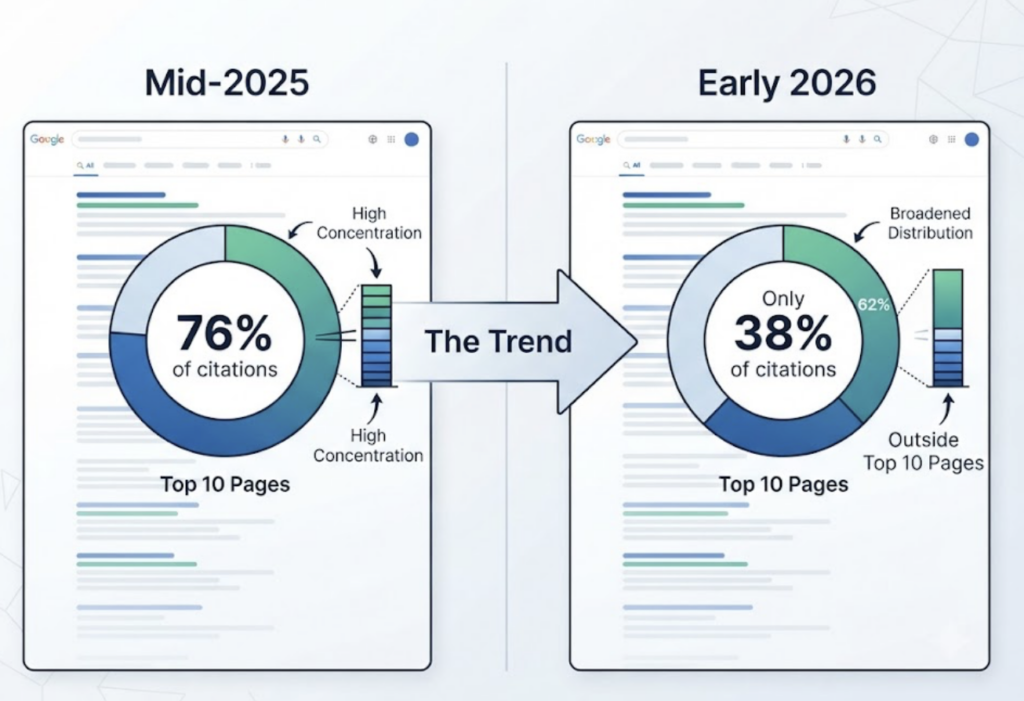
    The trend is also moving fast. In mid-2025, about 76% of AI Overview citations came from pages ranking in the top 10. By early 2026 that had fallen to roughly 38%, with a separate cross-methodology read putting it near 17%. Roughly five out of six citations now come from pages that don’t hold a top-10 spot at all.
    One more distinction worth internalizing: AI Mode and AI Overviews aren’t the same surface. Ahrefs found they cite the same URLs only 13.7% of the time. Optimizing for one doesn’t hand you the other.

    Ranking still functions as an upstream filter. It just stopped being the thing that decides who gets pulled into the answer.

    Why AI Mode SEO Doesn’t Work Like Traditional SEO

    The mechanism explains the numbers.

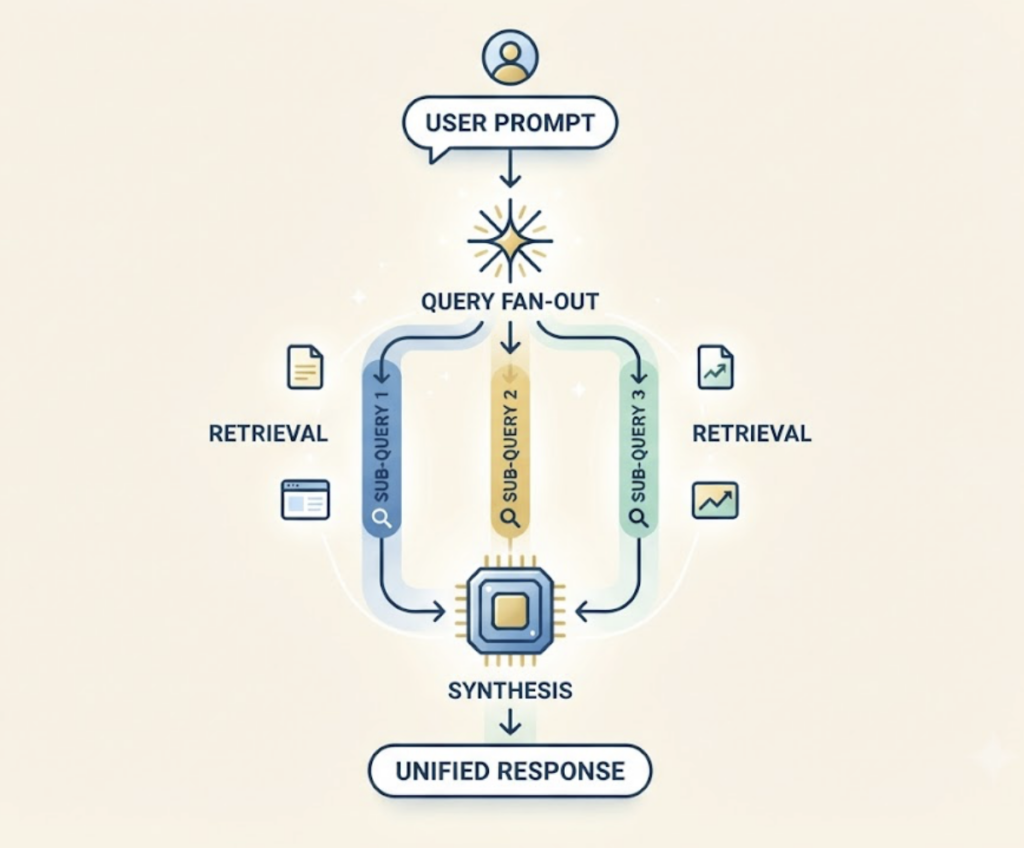
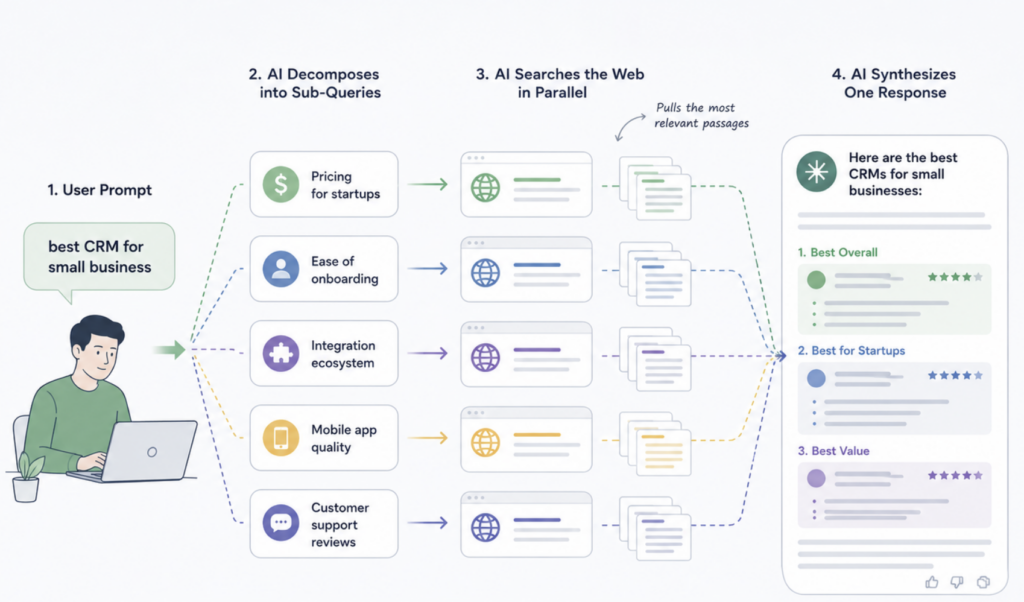
    AI Mode is a dedicated conversational surface powered by Gemini, and it uses a technique called query fan-out. One question like “best CRM for a 10-person agency under $50 a seat” gets decomposed into four to eight background sub-queries covering pricing, use cases, integrations, and reviews. Then the model synthesizes an answer from whatever passages best fit each fragment.

    That changes the unit of competition. Traditional SEO optimizes a page to rank for a query. AI Mode SEO is closer to optimizing passages to be extracted for sub-queries you’re not even tracking.

    Placement inside the page matters too. Roughly 44.2% of LLM citations come from the first 30% of a page, which rewards answering the question up front instead of burying it under context.

    That’s the shift most SEO teams still can’t see.

    Your rank for a head term can be perfect while the specific passage the model needed sits three scrolls down, wrapped in setup, and never gets picked. Page-level authority and passage-level extraction are two different games.

    What Actually Gets You Cited in Google AI Mode

    If ranking isn’t the lever, what is?

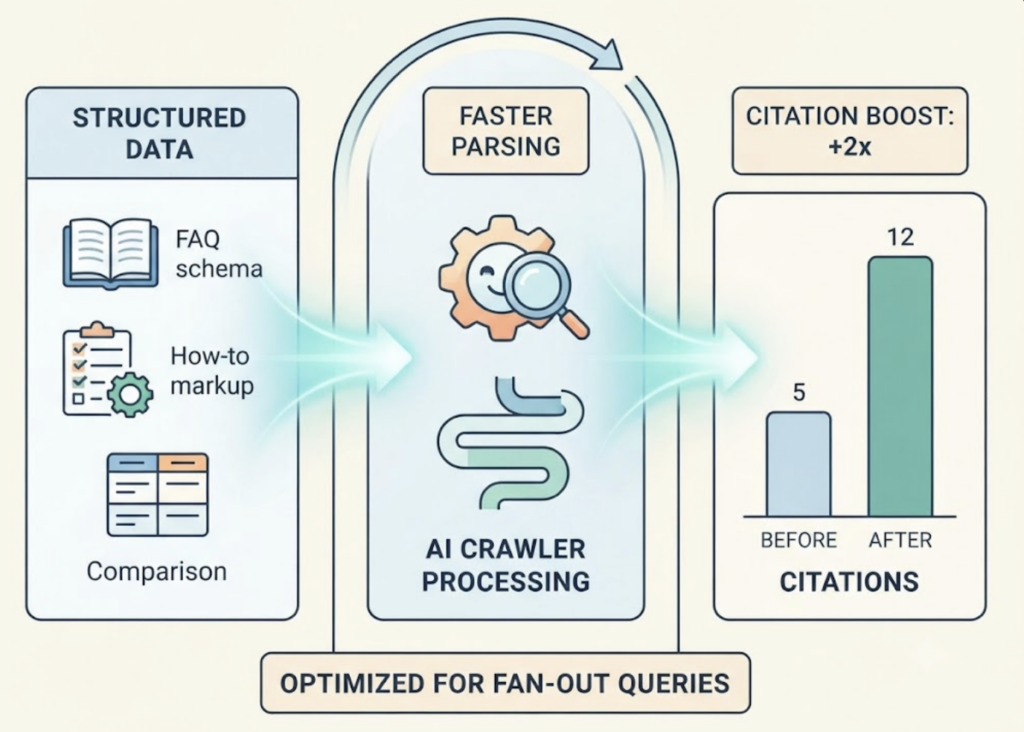
    Three inputs tend to carry weight. First, structured, extractable passages: concise, self-contained answers in the featured-snippet mold that a model can lift without rewriting. Second, information consistency across sources, where the same product claims show up the same way across Reddit, review platforms, and independent publications, so the model finds agreement when it grounds its answer. Third, topical coverage across formats rather than a single well-ranked page, since fan-out rewards breadth over a lone position.

    There’s also a volatility problem that traditional SEO never had to face. SE Ranking found that in AI Mode, over 60% of domains and 80% of URLs change between runs, even for the same user, city, and query. A citation you earn today may not reappear tomorrow.

    That instability is exactly why single-snapshot checks mislead you. Appearing once tells you almost nothing about whether you’re reliably present.

    Your Rank Tracker Is Blind to AI Mode Visibility

    Here’s the uncomfortable part. Most teams are measuring the wrong surface entirely.

    Only about 14% of marketers currently track AI search performance at all. The rest are watching rank dashboards that, by the data above, explain a shrinking share of what actually drives discovery.

    Meanwhile the stakes on these queries are real. AI Mode runs at roughly a 93% zero-click rate, meaning the answer usually ends the search. And when your brand is the cited source, that citation is worth about 35% more organic clicksthan being an uncited competitor on the same query. Being in the answer is the position now.
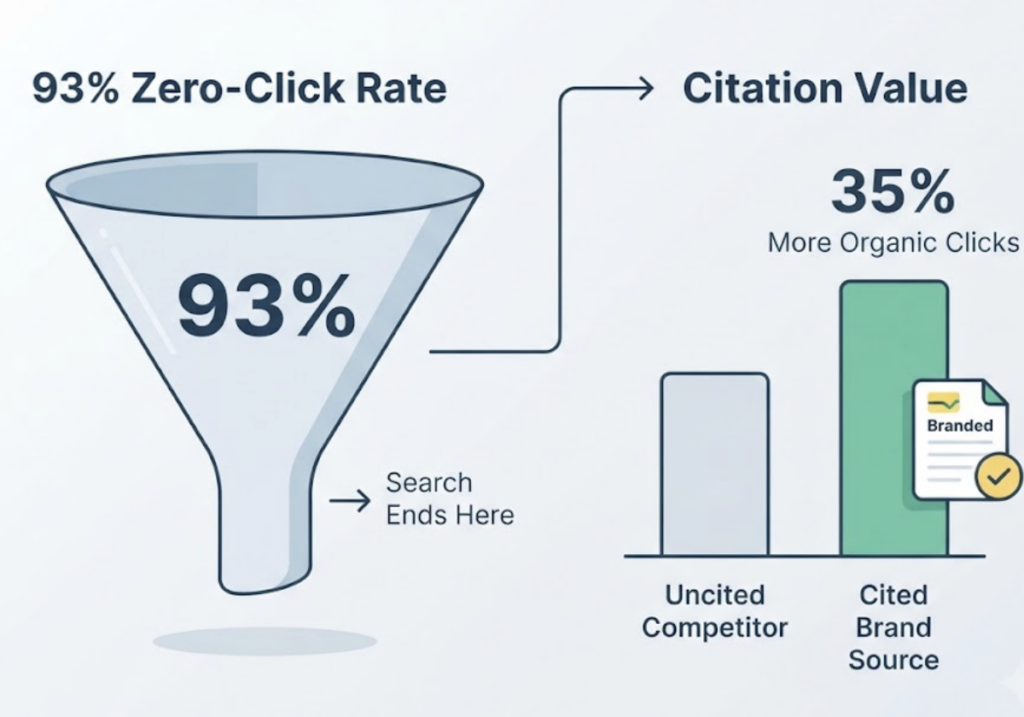
    A rank tracker can tell you you’re number one. It can’t tell you whether Gemini mentioned you, what it said, or which competitor it recommended instead. Those are different questions, and AI Mode SEO lives entirely in the second set.

    Building an AI Mode SEO Strategy You Can Actually Measure

    Closing the gap starts with measuring the right thing, then acting on it.

    You need three capabilities that a keyword tool doesn’t provide: visibility tracking that watches whether AI systems mention you across their answers, citation analysis that shows which domains and URLs those systems actually pull from, and competitor benchmarking so you can see who’s getting recommended in your place.

    This is where Topify fits for teams making the move from SEO to GEO. Its Comprehensive GEO Analytics tracks brand performance across major AI platforms, including Google AI Overviews, ChatGPT, Gemini, and Perplexity, through metrics like visibility, sentiment, position, and mention frequency. Instead of a single spot-check, you get repeated sampling, which matters given how volatile AI Mode citations are between runs.

    The citation piece tends to be the most useful for answering “why not me.” Topify’s source analysis reverse-engineers the exact domains and URLs AI platforms cite, so you can see whether a competitor owns the references a model leans on and where your content is missing from the grounding set. Pair that with position tracking and you can watch your standing relative to rivals shift in something close to real time.

    In practice, that turns a vague worry (“are we in AI answers?”) into a specific, trackable metric your team can move. You can get started with Topify and benchmark your current AI Mode visibility before deciding where to invest.

    The point isn’t to abandon SEO. Strong rankings still help you get crawled, indexed, and considered. The point is to stop assuming the rank carries over, and to start measuring the surface where the decision now happens.

    Conclusion

    Ranking #1 on Google and appearing in AI Mode used to be close to the same exercise. The data says they’ve come apart: 14% URL overlap, a top-10 citation share that fell from 76% to under 40% in months, and a surface that ends 93% of searches without a click. Treat AI Mode SEO as its own discipline with its own scoreboard. Audit whether AI systems actually cite you, find the sources they trust instead, and rebuild your content around passages a model can extract. The teams that win the next few years aren’t the ones that only rank. They’re the ones that rank and get cited.

    FAQ

    Does ranking #1 on Google help you appear in AI Mode? 

    It helps as an upstream signal but no longer determines the outcome. Only about 14% of AI Mode citations come from URLs in Google’s organic top 10, and the broader top-10 citation overlap has dropped sharply since mid-2025. Ranking supports indexability; passage structure and source consistency drive citation.

    Is AI Mode SEO the same as optimizing for AI Overviews? 

    No. AI Mode and AI Overviews are separate surfaces that share infrastructure but behave differently, citing the same URLs only about 13.7% of the time. You need to track and optimize for each one rather than treating them as a single target.

    Why isn’t my brand showing up in AI Mode? 

    Usually because your content isn’t structured for passage-level extraction, your claims aren’t consistent across the sources models trust, or competitors own the citations the model grounds its answer on. AI Mode’s query fan-out also evaluates sub-queries you may not be tracking, so single-keyword optimization leaves gaps.

    How do I track my brand’s AI Mode visibility? 

    Rank trackers can’t see it. You need a GEO tool that monitors whether AI systems mention you, analyzes which sources they cite, and benchmarks you against competitors across repeated samples, since AI Mode citations are volatile between runs.
    Read More

  • AI Mode SEO: What Google’s First Official AI Guide Actually Says

    AI Mode SEO: What Google’s First Official AI Guide Actually Says

    Over the past year, plenty of teams added an llms.txt file, broke their pages into bite-sized chunks, and rewrote perfectly good content “so the AI could read it.” The advice came from a wave of GEO and AEO vendors promising a separate playbook for AI Mode. Then Google published its first official guidance on the subject, and the message was blunt: for Google Search, none of those tactics do anything. Not chunking. Not llms.txt. Not rewriting for machines.

    If you’ve been treating AI Mode as a new game with new rules, the guide is worth reading closely, because it says close to the opposite of what most of the internet has been selling.

    What Google Actually Put on the Record About AI Mode SEO

    Google Search Central published the guide on May 15, 2026, announced by John Mueller and filed under a new “Generative AI fundamentals” section of the documentation. It’s titled “Optimizing your website for generative AI features on Google Search,” and it covers both AI Overviews and AI Mode from a site owner’s point of view.

    Most of what’s in there isn’t new. Google staff had said similar things at conferences and in interviews for over a year. What changed is that the position now sits in official documentation you can cite, rather than in scattered tweets and conference recaps.

    That matters for one practical reason. When a client or a colleague asks whether AI Mode needs its own strategy, you now have an on-record answer instead of a vendor’s pitch deck.

    There’s No Separate AI Mode Index. It Pulls From the Same Ranking

    The central claim of the guide is short: SEO still matters because Google’s generative AI features are rooted in its core Search ranking and quality systems. There’s no separate “AI index” and no separate “AI ranking algorithm.”

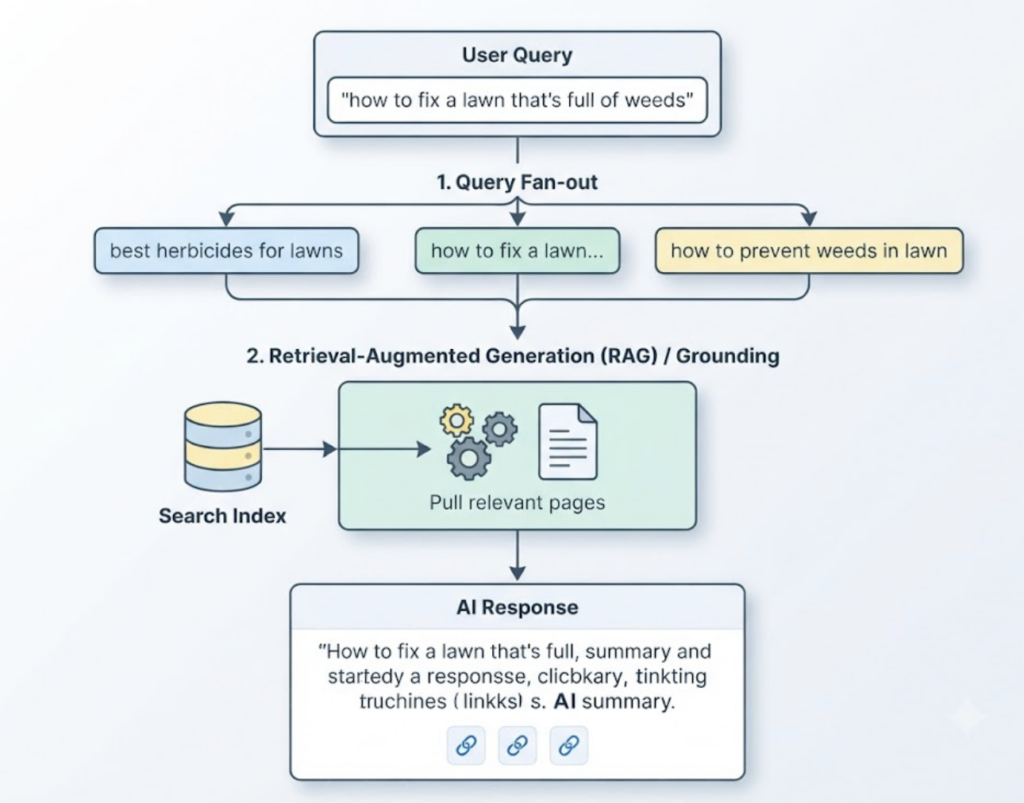
    Two techniques do the work. Retrieval-augmented generation, which Google also calls grounding, pulls relevant, up-to-date pages from the Search index and uses them to build a response with clickable supporting links. Query fan-out sends out several related queries at once. Ask “how to fix a lawn that’s full of weeds,” and the model may also run “best herbicides for lawns” and “how to prevent weeds in lawn” behind the scenes.

    Both techniques read from the same index that powers classic Search.

    The eligibility rule follows from that. To appear in AI Overviews or AI Mode, a page has to be indexed, eligible to show with a snippet, and meeting Google’s technical requirements. If your page can’t earn a normal snippet, it can’t surface in an AI answer either.

    Google Says “GEO” and “AEO” Are Still Just SEO

    The guide addresses the acronyms head-on. From Google’s perspective, optimizing for generative AI search is optimizing for the search experience, and that’s still SEO. The document names AEO and GEO directly and points readers toward its guidance on evaluating third-party advice.

    This lines up with what Googlers Gary Illyes and Cherry Prommawin told Search Central Live audiences: AI search doesn’t need a separate framework. The difference now is that it’s written down.

    Here’s the nuance a lot of the coverage skipped. This is a statement about Google’s own surfaces. It tells you the label “GEO” doesn’t unlock a hidden algorithm inside Google. It does not say anything about what happens outside Google, which turns out to be the more interesting half of the story.

    The Mythbusting Section: AI Mode SEO Tactics Google Says to Drop

    The guide includes a section called “Mythbusting generative AI search,” listing tactics you can ignore for Google Search. It’s the most direct Google has been about the AI optimization industry.

    Tactic making the roundsWhat Google says
    llms.txt and other “special” markupGoogle Search doesn’t use these files. Keeping one won’t help or hurt your rankings.
    Chunking content into tiny blocksNot required. Google’s systems read nuance across a full page and show the relevant part.
    Rewriting content just for AIUnnecessary. The systems handle synonyms and intent without you chasing every keyword variant.
    Chasing inauthentic “mentions”Ineffective. Core ranking rewards quality content while other systems filter spam.
    Overfocusing on structured dataNot required for AI answers, though still worth using for rich results.

    One caveat is worth keeping straight. “Ineffective for Google Search” is not the same as “ineffective everywhere.” Some of these tactics may still matter for other AI systems that do read files like llms.txt. The guide only speaks for Google.

    What the Guide Tells You to Do Instead

    Strip out the myths and the positive advice reads like a refresher on fundamentals.

    First, create non-commodity content. Google draws a line between common-knowledge posts like “7 Tips for First-Time Homebuyers” and something built on real experience, like a first-hand account of waiving an inspection and what it cost. A unique point of view, drawn from what you actually know, tends to influence long-term visibility more than any technical tweak in the guide.

    Second, keep a clean technical structure. Make pages crawlable and indexable, follow JavaScript SEO basics if your site relies on frameworks, provide a good page experience, and reduce duplicate content. Semantic HTML helps, but Google says not to obsess over perfect code.

    Third, handle local and ecommerce details where they apply. Merchant Center feeds and Google Business Profiles feed the product and local information that can appear in AI responses.

    Fourth, keep an eye on agentic experiences. Browser agents may read your site through screenshots, the DOM, and the accessibility tree, and emerging protocols like the Universal Commerce Protocol point to where this is heading.

    None of that is a new discipline. It’s the SEO you already know, reframed for a new surface.

    The Blind Spot: Google’s Guide Only Covers Google

    Read the guide twice and the gap becomes hard to miss. Every line is about Google’s own AI Overviews and AI Mode. Even the recommended measurement tool, the Generative AI performance report in Search Console, only reports on Google surfaces.

    Meanwhile, a large share of AI search now happens somewhere Google can’t see. ChatGPT holds the majority of AI-assistant usage, Gemini and Copilot split much of the rest, and Perplexity has grown into tens of millions of monthly users. By early 2026, AI platforms were taking an estimated 15 to 20 percent of informational query volume. Zero-click behavior has climbed too, with about 43 percent of Google searches ending without a click, rising sharply when AI Mode is active.

    Google’s guide says nothing about any of it. That’s not an oversight. Google can only document its own product.

    The guide also warns you to be wary of third-party tools that claim access to “internal” Google metrics, and it’s right to. No outside tool sees Google’s ranking systems. The honest read is narrower than the skeptics suggest: a good third-party tool shouldn’t pretend to hold Google’s internal data. It should measure the platforms Google’s own report leaves out.

    That’s the gap Topify is built for. Instead of guessing at Google internals, it tracks how your brand shows up across ChatGPT, Gemini, Perplexity, DeepSeek, and other engines, then reports visibility, sentiment, and position in one view. In practice, that means you can see a drop in ChatGPT mentions and trace it to a source that stopped citing you, which is the kind of movement Search Console will never show.

    Citation data explains why the source layer matters. Research suggests 40 to 55 percent of ChatGPT and Perplexity citations flow to fewer than 1,000 domains. Topify’s source analysis maps which domains those engines cite for your topics, so you can find the pages worth earning a mention on. When you’re ready to check where you stand, you can get started with Topify and pull a cross-platform baseline in a few minutes.

    Conclusion

    Google’s first official guide doesn’t hand you a secret AI Mode SEO playbook. It does two quieter things. It confirms that solid SEO is what earns visibility inside Google’s AI features, and it tells you most of the “AI optimization” industry is selling tactics Google doesn’t use.

    So the plan splits cleanly. For Google surfaces, do the fundamentals well and lean on the Generative AI performance report to track them. For everything outside Google, where a growing slice of AI search now lives, build a separate measurement layer, because Google’s tools were never designed to look there. Read the guide for what it says. Then plan for what it doesn’t.

    FAQ

    Does AI Mode need separate SEO from regular Google Search? 

    No. Google’s guide states that AI Overviews and AI Mode run on its core Search ranking systems, so the same SEO fundamentals apply. There are no extra requirements to appear in AI Mode beyond being indexed and eligible for a snippet.

    Are GEO and AEO different from SEO according to Google? 

    Not for Google Search. The guide says optimizing for generative AI search is optimizing for the search experience, which is still SEO. The acronyms describe the same work, not a separate algorithm inside Google.

    Do I need an llms.txt file to show up in AI Mode? 

    No. Google Search doesn’t read llms.txt or other special markup, and keeping one won’t help or hurt your Google rankings. It may still matter for other AI systems, but the guide only speaks for Google.

    How do I measure my visibility in AI Mode and other AI search engines? 

    Use the Generative AI performance report in Search Console for Google’s own surfaces. For ChatGPT, Perplexity, Gemini, and other engines, you’ll need a cross-platform tracker, since Search Console doesn’t report on anything outside Google.

    Read More

  • AI Mode SEO: How to Measure Visibility Search Console Misses

    AI Mode SEO: How to Measure Visibility Search Console Misses

    You live in Search Console. So when Google shipped its generative AI performance report in June, you opened it expecting an answer to the question your team keeps asking: how are we doing in AI Mode? What you got was a single impression count with AI Mode, AI Overviews, and Discover folded into one line, no clicks, no queries, and no history before mid-May. You can tell something’s happening. You just can’t tell what, where, or whether it’s worth anything.

    That’s the gap AI Mode SEO runs into. And Search Console alone won’t close it.

    Why Search Console Still Can’t Tell You How You’re Doing in AI Mode

    For two years, the honest answer to “are we showing up in AI Mode?” was a shrug. That changed on June 3, 2026, when Google added dedicated Search Generative AI performance reports that isolate impressions inside AI Overviews, AI Mode, and Discover. It’s real progress. It’s also narrower than it looks.

    Three limits keep it from answering the question you actually have.

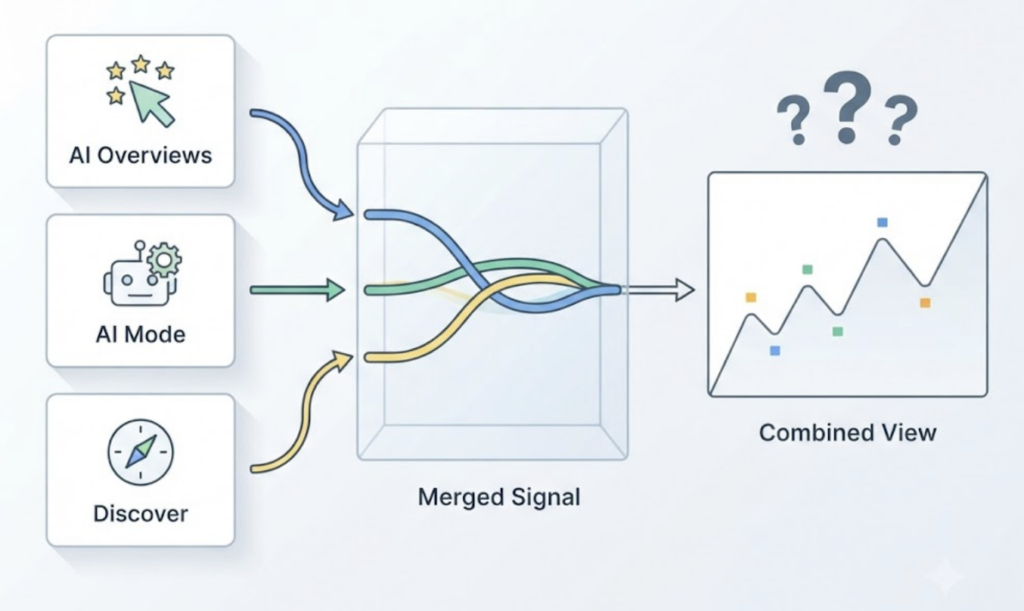
    First, the surfaces are blended. AI Overviews, AI Mode, and Discover’s generative features all get counted in the same combined view, so you can’t pull AI Mode out on its own. A spike could be Discover. A dip could be AI Overviews. You’re reading a merged signal and guessing which surface moved.

    Second, it’s impressions only. The current report shows no click, CTR, or query data, so you learn how often you appeared but nothing about what that appearance was worth. Visibility without value is a vanity metric wearing a lab coat.

    Third, there’s no history and limited access. Early observers report the data only reaches back to around mid-May 2026, with no backfill, and Google is rolling it out to a subset of sites in the UK first while US properties wait. If you’re not in the rollout, you have nothing at all.

    And none of this touches the AI platforms outside Google. The report covers no data for ChatGPT, Gemini, or Perplexity, which is where a growing share of your buyers now start.

    What AI Mode SEO Visibility Actually Means

    AI Mode isn’t a ranked page. It’s a synthesized answer built through what Google calls query fan-out, where one question gets split into many sub-queries that run in parallel, then the results get stitched into a single response with citations.

    The scale of that is easy to underestimate. One analysis found AI search queries average 70 to 80 words versus 3 to 4 for traditional search, with Google firing hundreds of searches behind a single complex prompt. Your brand isn’t competing for one keyword anymore. It’s competing to be pulled into dozens of sub-answers you never see.

    So AI Mode SEO visibility means something different from ranking. It’s whether your content gets retrieved, cited, and surfaced as a supporting source inside that generated answer.

    That also makes AI Mode and AI Overviews different targets, not two names for the same thing. AI Overviews sit on top of a classic results page and shape click behavior there. AI Mode is a longer, conversational surface where users ask follow-ups and stay to explore, with sessions averaging around 49 seconds against 21 for AI Overviews, per adoption data from Google’s 2026 I/O. Optimizing for one doesn’t automatically win you the other.

    A 3-Step Method to Measure AI Mode Visibility Without Waiting on Search Console

    You don’t have to wait for Google to add clicks and query breakdowns. You can measure AI Mode visibility directly by treating it like the conversational surface it is.

    Step 1: Build a Prompt Set That Mirrors Real AI Mode Queries

    Start with the questions your buyers actually ask, not the short keywords you tracked for classic SEO. Because AI Mode queries run roughly three times longer than traditional searches, your tracking set should be full-sentence, intent-rich prompts: comparisons, “best tool for X,” “how do I,” and the follow-ups a real user would type next.

    Aim for coverage of your category’s sub-intents, not just your branded terms. The fan-out process rewards content that answers adjacent questions, so your prompt set should map the neighborhood around your core topic.

    Step 2: Track Mentions, Citations, and Position Across Those Prompts

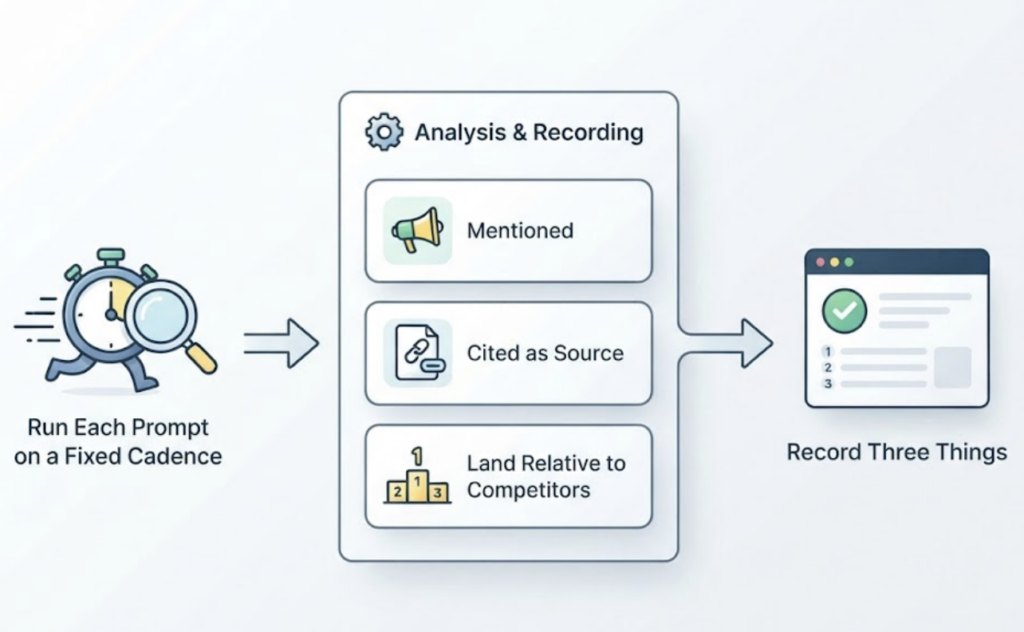
    Run each prompt on a fixed cadence and record three things: whether you’re mentioned, whether you’re cited as a source, and where you land relative to competitors. Mentions tell you presence. Citations tell you Google trusted you enough to link. Position tells you whether you’re the first name in the answer or the afterthought at the bottom.

    This is the layer Search Console skips entirely. Impressions confirm you appeared somewhere in a blended surface. Prompt-level tracking tells you the actual sentence you showed up in and who beat you to it.

    Step 3: Pair Visibility Signals With Downstream Analytics

    Visibility only matters if it moves something. Search Console shows presence but not value, which is why pairing impression data with session and conversion data from analytics is the only way to know what AI Mode exposure is genuinely worth.

    That connection matters more in AI Mode than anywhere else, because 92 to 94% of AI Mode sessions end without a click to an external site. If you judge success by traffic alone, you’ll write off a surface that’s shaping demand well before the click ever happens.

    The AI Mode SEO Metrics That Matter Beyond Impressions

    Impressions are the floor, not the picture. A useful AI Mode SEO measurement model tracks what a blended impression count can’t.

    MetricQuestion it answersIn GSC today?
    ImpressionsDid I appear at all?Yes, but surfaces are blended
    MentionsHow often is my brand named in answers?No
    Citations / sourcesWhich of my URLs does AI actually link?No
    PositionAm I first or buried among competitors?No
    Share of voiceHow do I compare to rivals on the same prompts?No
    SentimentHow does AI describe my brand?No

    Read that column on the right and the takeaway is blunt.

    Search Console tells you that you exist. It doesn’t tell you whether you’re winning.

    Common Mistakes When Measuring AI Mode Visibility

    The teams that misread AI Mode tend to make the same handful of errors.

    They treat impressions as value. A high impression count in a blended report feels like progress, but with no clicks or queries attached, it can’t tell you whether those appearances drove anything.

    They ignore the citation layer. Being mentioned and being cited aren’t the same. A citation means your page was pulled in as evidence, which is the closest thing AI Mode has to a ranked position, and it’s exactly what impression counts obscure.

    They measure only Google. AI Mode matters, but your buyers also live in ChatGPT and Perplexity, and the Search Console report says nothing about either. Measuring one engine and calling it AI visibility is measuring one room and calling it the house.

    And they skip the baseline. With no backfill before mid-May, every week you don’t capture data is a week you can’t reconstruct later. Start tracking before you feel ready, because the history you skip is gone for good.

    Building a Repeatable AI Mode SEO Measurement Workflow

    Doing this by hand across dozens of prompts and multiple engines gets unmanageable fast. That’s the point where a purpose-built platform earns its place, less for the dashboard and more for the layers Search Console leaves out.

    This is where a tool like Topify fits into an AI Mode SEO workflow. Instead of a single blended impression line, it tracks visibility at the prompt level across major AI platforms, so you can see which specific questions surface your brand and which hand the answer to a competitor. In practice, that means a drop in mentions isn’t a mystery. You can trace it to the prompt that changed.

    The part that maps most directly to AI Mode is citation analysis. Topify reverse-engineers the exact domains and URLs AI systems cite, which turns the invisible fan-out process into something you can actually audit: is it your page getting pulled into answers, or your rival’s? Pair that with competitor benchmarking and position tracking, and you get the share-of-voice view the Search Console report structurally can’t produce.

    Coverage is the other half. Because AI Mode is one surface among many, tracking that spans ChatGPT, Gemini, Perplexity, and Google’s AI features keeps you from optimizing for one engine while going dark on the rest. When you’re ready to set a baseline, you can get started and begin capturing prompt-level data before more history slips away.

    Track the prompts. Watch the citations. Tie it to outcomes.

    Conclusion

    The June update was a real step, but it answered “did I appear?” and left “where, and was it worth it?” wide open. AI Mode SEO measurement has to fill that gap on its own: a prompt set that mirrors real conversational queries, tracking that captures mentions, citations, and position, and a link back to sessions and conversions so visibility connects to value. Start building the baseline now. The surfaces will keep shifting, and the teams that measure early are the ones who’ll know what changed when it does.

    FAQ

    Q: Does Google Search Console show AI Mode visibility separately? 

    A: Not on its own. The June 2026 generative AI report isolates AI features from classic Search, but it blends AI Mode, AI Overviews, and Discover into one impression view, and it shows no clicks, CTR, or query data yet.

    Q: What’s the difference between AI Mode and AI Overviews for SEO? 

    A: They’re separate optimization targets. AI Overviews sit above classic results and shape click behavior on the page, while AI Mode is a longer, conversational surface built through query fan-out where users ask follow-ups and explore. Appearing in one doesn’t guarantee the other.

    Q: How can I measure AI Mode visibility if Search Console data is limited? 

    A: Build a set of full-sentence prompts that mirror real AI Mode queries, track mentions, citations, and position across them on a fixed schedule, then pair those signals with your analytics to connect visibility to conversions.

    Q: Why do impressions alone fail as an AI Mode SEO metric? 

    A: Because impressions confirm you appeared in a blended surface but say nothing about whether AI cited your page, where you ranked against competitors, or whether the appearance drove any action. Citations and position carry the signal impressions hide.

    Read More

  • Query Fan-Out and AI Mode SEO: How to Show Up in Every Sub-Query

    Query Fan-Out and AI Mode SEO: How to Show Up in Every Sub-Query

    Your page ranks in the top three for its target keyword. Traffic from that term looks steady. Then a user opens Google AI Mode, types the same question, and Google quietly runs eight to twelve searches you never see, pulling answers from pages that aren’t always yours. Your ranking didn’t drop. It just stopped being the whole game. The query that used to send you traffic now gets split into a dozen smaller ones, and most SEO reports have no way to tell you which of those you actually showed up in. That gap is what AI Mode SEO has to close.

    One Query In, a Dozen Searches Out: What Fan-Out Really Does

    Query fan-out is the mechanism behind that split. At Google I/O 2025, Head of Search Elizabeth Reid described it plainly: AI Mode calls on a custom version of Gemini to break a question into subtopics and issue a multitude of queriesat once. One question goes in. Many related searches come out. The system runs them in parallel, then synthesizes a single answer from the combined results.

    The scale is bigger than most people assume. Google AI Mode typically fires 8 to 12 sub-queries for a standard prompt, and for complex research it can trigger a Deep Search mode that issues dozens or even hundreds of background queries before it responds.

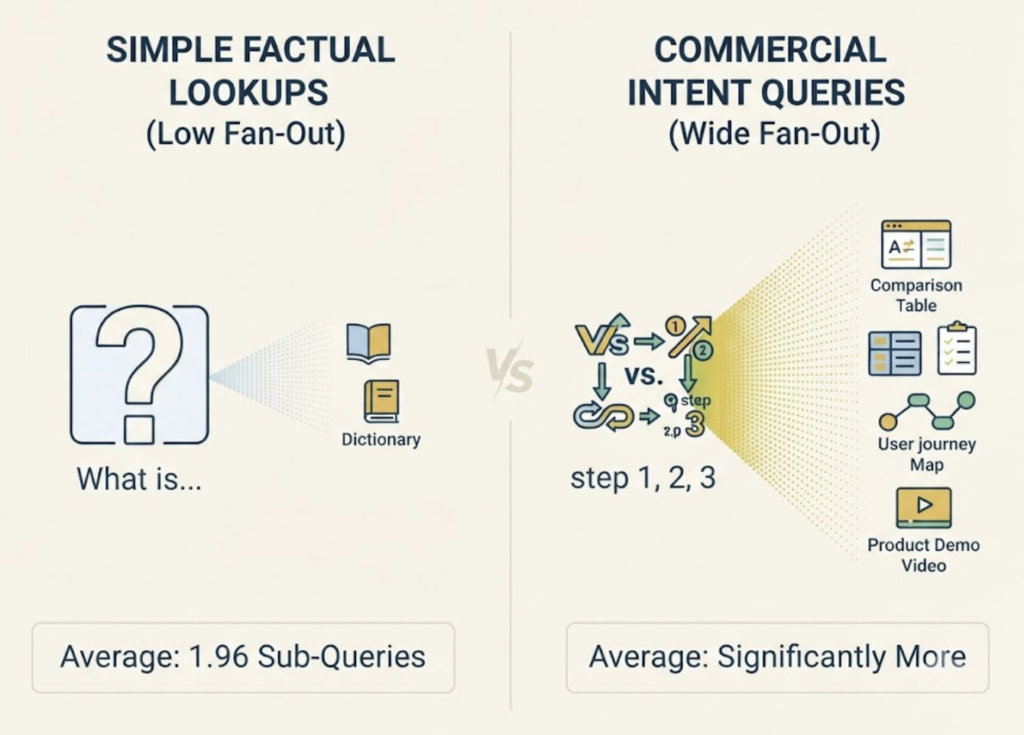
    Not every query fans out the same way. Simple factual lookups barely trigger it. Analysis found that prompts starting with “what is” generate only 1.96 sub-queries on average, because the model often answers definitions from its own training data. Comparative and multi-step questions, the kind with real commercial intent, fan out the widest.

    Fan-out also reaches past the open web. AI Mode pulls from Google’s Knowledge Graph, its web index, and specialized sources like the Shopping Graph, then looks for agreement across them rather than trusting any single page.

    That’s the shift in one line: you’re no longer optimizing for a query. You’re optimizing for a query’s entire family tree.

    Why AI Mode SEO Isn’t the Same as Ranking Page One

    Traditional SEO optimizes one page for one keyword and measures success by rank position. AI Mode SEO works on a different unit. Because fan-out evaluates your content against a spread of sub-queries, the thing being judged isn’t your page’s rank. It’s whether specific passages answer specific sub-intents well enough to get cited.

    This has a direct consequence. Your content can be pulled into an AI answer even when it doesn’t rank first, since AI systems weigh passage relevance over raw page authority. In one dataset, only about half of cited sources sat in the top 10 organic results. Ranking still helps. It just no longer decides the outcome on its own.

    Here’s how the two approaches compare in practice:

    DimensionTraditional SEOAI Mode SEO
    Unit of optimizationOne page per keywordTopic cluster across sub-queries
    Success metricRank positionPassage citation and mention rate
    Retrieval modelOne query, one result setOne query, 8 to 12 parallel sub-queries
    Authority signalPage-level backlinks, domain authorityPassage relevance plus entity consistency
    Visibility outcomeClick-through from the SERPInclusion in the synthesized answer

    The measurement gap is real too. Roughly 92 to 94% of AI Mode sessions end without a click to an external site, per Semrush data. When AI Mode has already passed a billion monthly users, being cited rather than clicked becomes the thing worth tracking.

    The Sub-Queries Google Never Shows You

    Here’s the hard part. Google doesn’t publish the sub-queries fan-out generates. You can see the answer it produces, but not the dozen searches behind it, which means you can’t easily tell which sub-queries cited you and which handed the spot to a competitor.

    It gets harder. Only 27% of fan-out sub-queries stay stable across repeated searches, based on a December 2025 study. The other 73% shift each time, so chasing individual sub-queries is a losing game. Broad topical coverage holds up where single-query optimization doesn’t.

    The cost of ignoring this shows up in the citation data. One analysis across 173,902 URLs found that 88% of brands miss AI citations entirely, mostly because they optimize for head terms instead of the full fan-out cluster.

    If you’re optimizing for the original question alone, you’re visible to one retrieval path out of a dozen.

    For now, most teams reverse-engineer the gap by hand, scraping People Also Ask boxes and running seed prompts through AI Mode to log the follow-up questions, a workaround documented by Digiday. It works, but it doesn’t scale, and it goes stale within weeks.

    How to Show Up in Every Sub-Query AI Mode Generates

    You can’t control which sub-queries Google generates. You can control how much of that sub-query space your content covers. Three moves do most of the work.

    Cover the Subtopics, Not Just the Head Keyword

    Fan-out breaks one question into many, so a single thin page rarely satisfies the full set. Map the sub-intents around your topic: features, pricing, comparisons, use cases, and common objections, then build content that answers each. Comparison pages, product reviews, and “best of” formats tend to get retrieved far more often than basic definitional pages, which the model usually answers from memory.

    Think in clusters, not keywords. A topic with strong sub-query coverage keeps far more AI visibility than a page tuned for one term, even as the underlying sub-queries churn week to week.

    Structure Content So AI Can Extract It

    Google’s fan-out does passage-level retrieval. It evaluates specific sections, not just the page as a whole, and in AI Mode it may pull up to five chunks before and after a relevant passage for context.

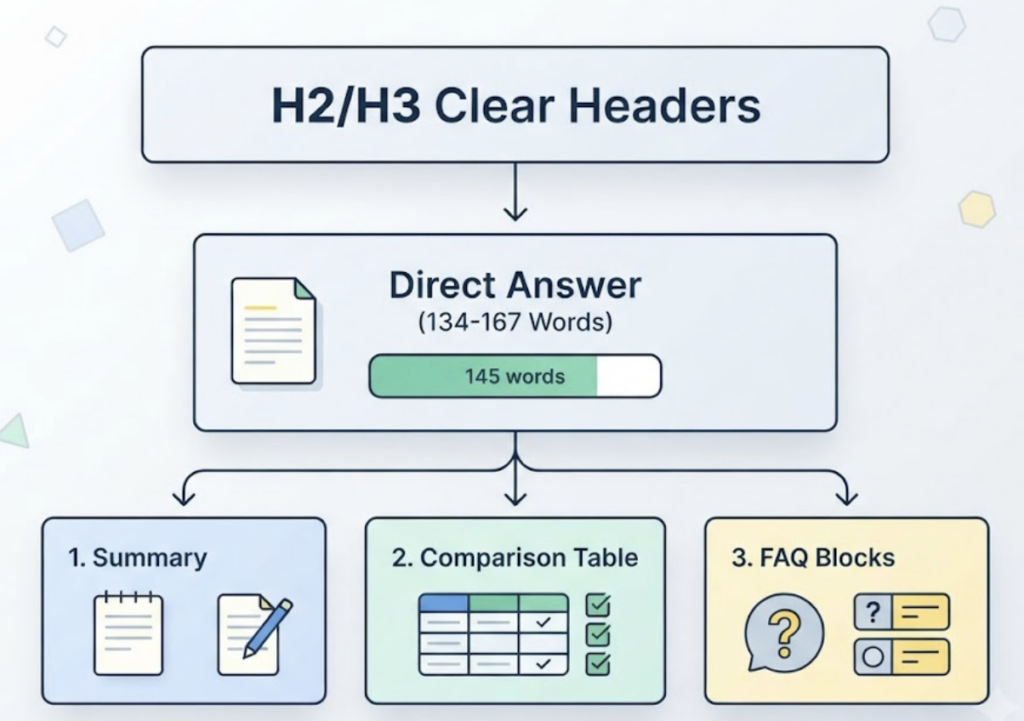
    Structure for that. Use clear H2 and H3 headers phrased as the questions users actually ask, and put a direct answer in the first sentence of each section. Research on AI Overview citations found passages of 134 to 167 words get cited most, so keep answer blocks tight. Add short summaries, comparison tables, and FAQ blocks that each map to a distinct sub-intent.

    Freshness helps as well. AI tools tend to cite content that’s meaningfully fresher than what traditional search rewards, so update high-value pages on a schedule instead of letting them sit.

    Build Entity Authority Across Sources

    Fan-out retrieves across the live web, the Knowledge Graph, and third-party sources, then favors information that several sources agree on. A brand mentioned consistently across multiple credible places is easier to ground an answer in than one that only describes itself on its own domain.

    Keep your entity facts consistent everywhere: your site, review platforms, industry directories, and structured data that matches your visible content. When the sources line up, fan-out has an easier time attributing part of its answer to you.

    Turning Hidden Sub-Queries into a Measurable AI Mode SEO Channel

    Coverage and structure get you into more sub-queries. The open question is whether you can see the results. Since Google hides the fan-out set, the practical challenge is turning an invisible process into something you can track and act on.

    That’s where a dedicated AI search platform earns its place. Topify approaches the problem from the sub-query side rather than the keyword side. Its High-Value Prompt Discovery surfaces the high-volume AI prompts that matter for your brand and keeps surfacing new ones as AI recommendations shift, which maps directly to the churn that breaks manual fan-out tracking.

    From there, its Comprehensive GEO Analytics tracks how you appear across ChatGPT, Gemini, Perplexity, and other engines on seven metrics: visibility, sentiment, position, volume, mentions, intent, and conversion visibility. In practice, that means you can catch a drop in mentions on one platform and trace it back to a specific source that stopped citing your brand, inside a single view.

    The citation layer matters most for fan-out. Topify’s citation analysis reverse-engineers the exact domains and URLs AI engines pull from, so you can see whether your pages or a competitor’s are winning the sub-queries you care about. You can get started with one project and expand coverage as the picture sharpens.

    Conclusion

    Your rankings aren’t obsolete. They’re one input into a process that now runs a dozen searches for every question a user asks. AI Mode SEO is less about owning a keyword and more about covering the full family of sub-queries that fan-out generates, then structuring content so specific passages get cited. Start by mapping the sub-intents around your top topics and building coverage across them. Then find a way to measure which sub-queries you actually appear in, because in a search experience where most sessions end without a click, being cited is the metric that counts.

    FAQ

    Q: What is query fan-out in Google AI Mode? 

    A: It’s the technique where AI Mode uses a custom version of Gemini to break a single question into multiple sub-queries, run them in parallel across Google’s web index and Knowledge Graph, then synthesize one answer. A standard prompt typically triggers 8 to 12 sub-queries.

    Q: Does traditional SEO still work for AI Mode? 

    A: Yes, but not on its own. Ranking well still helps your pages get retrieved, yet AI Mode weighs passage relevance over page authority, so content can be cited without ranking first. The real shift is optimizing for a cluster of sub-queries instead of a single keyword.

    Q: How can I tell which sub-queries my brand appears in? 

    A: Google doesn’t publish the fan-out set, so it won’t show up in Search Console. Teams either reverse-engineer it by hand through People Also Ask and seed prompts, or use an AI visibility platform that discovers the relevant prompts and tracks citations across engines.

    Q: Which queries trigger the most fan-out? 

    A: Comparative, multi-step, and commercial-intent questions fan out the widest. Simple definitional queries like “what is X” generate the least, often under two sub-queries, because the model answers them straight from training data.

    Read More

  • Query Fan-Out Differs by Platform: Google vs ChatGPT vs Perplexity

    Query Fan-Out Differs by Platform: Google vs ChatGPT vs Perplexity

    You built topic clusters. You covered sub-intents. You structured every page so AI engines could pull clean, citable answers. Then you checked your brand across three AI platforms and got three completely different results: visible on Perplexity, mentioned once in ChatGPT, absent from Google AI Mode.

    That gap isn’t random. Each AI engine runs its own version of query fan-out, the retrieval process that decomposes a single user prompt into multiple parallel sub-queries. And a cross-platform citation analysis found that only 12% of cited sources overlap between engines for the same query. One optimization strategy can’t cover all three.

    What Query Fan-Out Does Behind Every AI Search

    Query fan-out is the mechanism that decides which content gets into an AI answer and which doesn’t.

    When someone types a prompt into Google AI Mode, ChatGPT, or Perplexity, the engine doesn’t run a single keyword lookup. It breaks the prompt into a cluster of related sub-queries, executes them simultaneously, retrieves passages from each result set, and synthesizes one unified response. Google coined the term when it launched AI Mode, describing a system that “issues multiple related searches concurrently across subtopics and multiple data sources.”

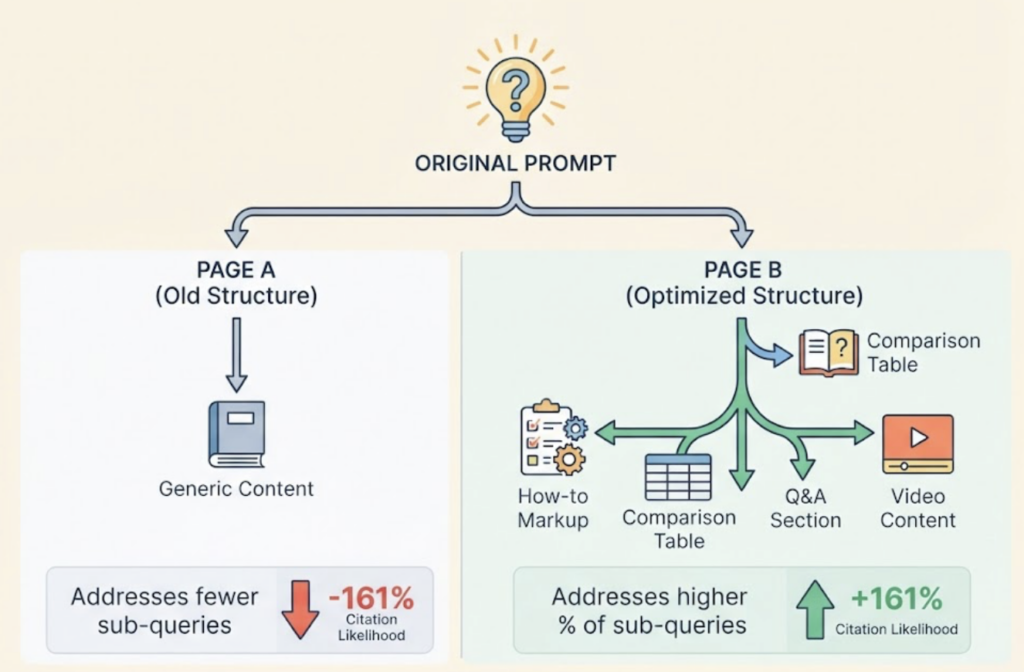
    The stakes are measurable. Pages that rank for these fan-out sub-queries are 161% more likely to be cited in AI-generated answers, according to an analysis of 10,000 keywords. And with 92 to 95% of AI-powered searches producing zero clicks, the citation is the only visibility that matters.

    Here’s the thing: each engine fans out differently. The depth, the consistency, the source preferences, and the ranking logic all vary. That means the content architecture that wins on one platform can miss entirely on another.

    Google AI Mode Runs the Widest Query Fan-Out

    Google AI Mode, powered by a custom Gemini 2.5 model built specifically for query decomposition, runs the most aggressive fan-out of any AI engine.

    Standard prompts typically trigger 8 to 12 parallel sub-queries. Complex reasoning tasks or Deep Search scenarios can push that number into the hundreds. Research from Ekamoira found that 59% of prompts generate between 5 and 11 simultaneous sub-queries.

    The ranking logic is distinct too. Google uses Reciprocal Rank Fusion, where documents that appear consistently across multiple sub-query result sets accumulate higher scores than documents that rank first in only one. In practice, broad topical coverage beats narrow keyword dominance.

    Fan-out depth also varies by industry. Nectiv’s analysis of 60,000 queries showed software-related prompts averaging 11.7 fan-outs, travel at 10.8, careers at 9.8, and local queries at just 3.79. If you’re in SaaS or travel, your content competes across far more hidden sub-queries than a local business does.

    One more pattern worth noting: Google searches content from the current year and the previous year. That gives older content a grace period before the engine treats it as stale.

    The correlation between fan-out coverage and citation likelihood is strong. An ALM Corp longitudinal study covering 173,000 URLs found a Spearman correlation of 0.77 between sub-query coverage and AI Overview citations. In the same study, the AI Overview citation rate for top-10 ranked pages dropped from 76% to 38% in a single year. Ranking alone no longer guarantees a citation.

    ChatGPT Searches Less Often, but Each Sub-Query Cuts Deeper

    ChatGPT takes a different approach. It doesn’t fan out on every prompt. It fans out when it needs to.

    On average, ChatGPT issues roughly 3.5 sub-queries per prompt when it does search. Semrush data from February 2026 showed search activation on just 34.5% of queries, down from 46% in late 2024. The model’s training data already covers a lot of ground, so it searches only when it needs current or specialized information.

    But when ChatGPT does search, those queries are precise. Sub-query word count has doubled from 6 to 12 words since October 2025, meaning each search is narrower and more targeted.

    The biggest difference from Google is volatility. An analysis of 102,018 queries by Qwairy found that 91% of ChatGPT’s search strings are unique. It rarely issues the same sub-query twice for the same prompt. That makes optimization unpredictable. You can’t reverse-engineer a fixed set of sub-queries the way you might for Google.

    ChatGPT also treats content freshness differently. It searches only the current year. If your page references 2024 data without a 2026 update, ChatGPT is less likely to pull it. Google, by comparison, gives last year’s content a grace period.

    The strategic implication is clear. For ChatGPT, coverage across query variations matters more than winning any single keyword. A brand appearing in all 6 of ChatGPT’s sub-queries for a given prompt gets 6x the visibility of a brand appearing in just one.

    Perplexity Keeps Query Fan-Out Tight: Fewer Searches, Higher Precision

    Perplexity sits at the opposite end of the spectrum.

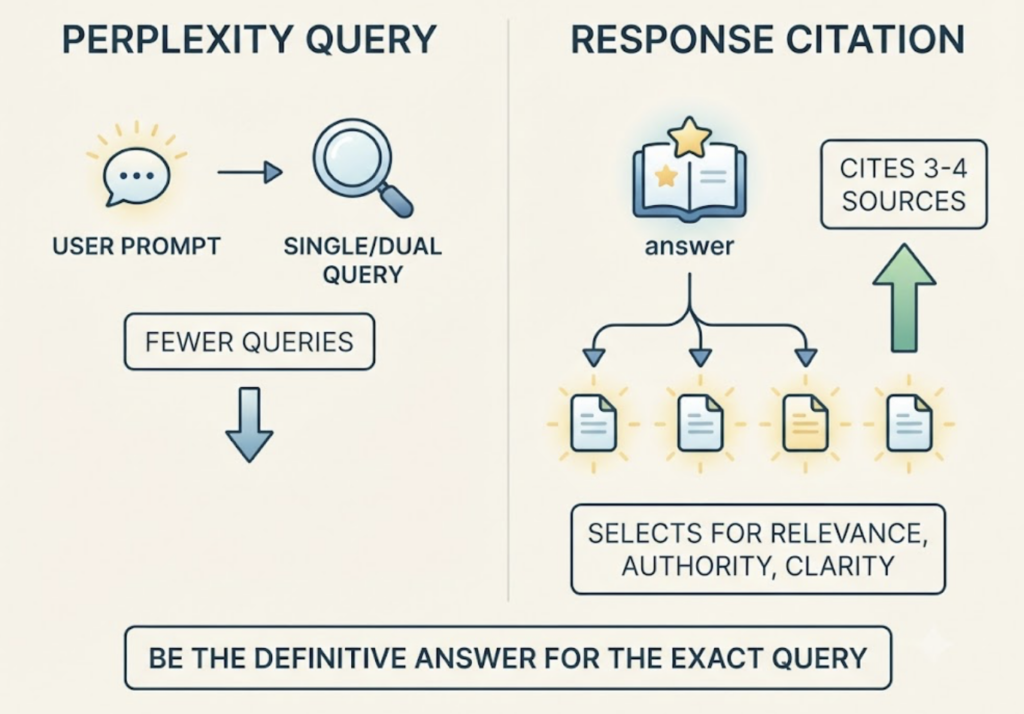
    Qwairy’s dataset showed that 70.5% of Perplexity prompts generate exactly one query. It only fans out when a topic is genuinely ambiguous or multi-faceted, typically producing 3 to 5 sub-queries for complex questions. The engine was built around a single-pass retrieval model from day one.

    What Perplexity loses in breadth, it gains in consistency. About 92.8% of its search patterns stay stable across repeated runs. Run the same prompt three times, and you’ll get the same sources cited in the same order. That predictability is rare in AI search.

    Perplexity’s citation behavior is also more concentrated. Each response typically cites 3 to 4 sources, selected based on direct relevance, authority, and structural clarity. For brands, the math is straightforward: if Perplexity only runs one or two queries, you need to be the definitive answer for that exact query. Broad topical coverage matters less here. Depth and authority on the specific question matter more.

    Its Pro Search and Deep Research tiers do expand the fan-out significantly, sometimes issuing 10 to 30 sub-queries and reading full pages rather than snippets. But the majority of Perplexity’s organic traffic runs through standard single-pass queries.

    Three Engines, One Prompt, Three Query Fan-Out Paths

    The differences become obvious when you put them side by side.

    DimensionGoogle AI ModeChatGPTPerplexity
    Avg. sub-queries per prompt8 to 12+~3.51 to 3
    Search activation rateHigh (nearly every prompt)Moderate (34.5%)High (single-pass default)
    Result stabilityModerateVery low (91% unique strings)Very high (92.8% consistent)
    Freshness windowCurrent + previous yearCurrent year onlyReal-time web
    Ranking mechanismReciprocal Rank FusionBroad semantic matchingAuthority-first precision
    Winning strategyHub-and-spoke coverageBroad entity and variation coverage#1 authoritative positioning

    The pairwise citation overlap between engines ranges from just 16% to 59%. That means a page cited by Google AI Mode has, at best, a coin-flip chance of being cited by ChatGPT for the same prompt. Treating these engines as interchangeable is the fastest way to miss two-thirds of your AI visibility.

    One Query Fan-Out Strategy Won’t Cover All Three Engines

    The platform-level differences in fan-out behavior translate directly into different content requirements.

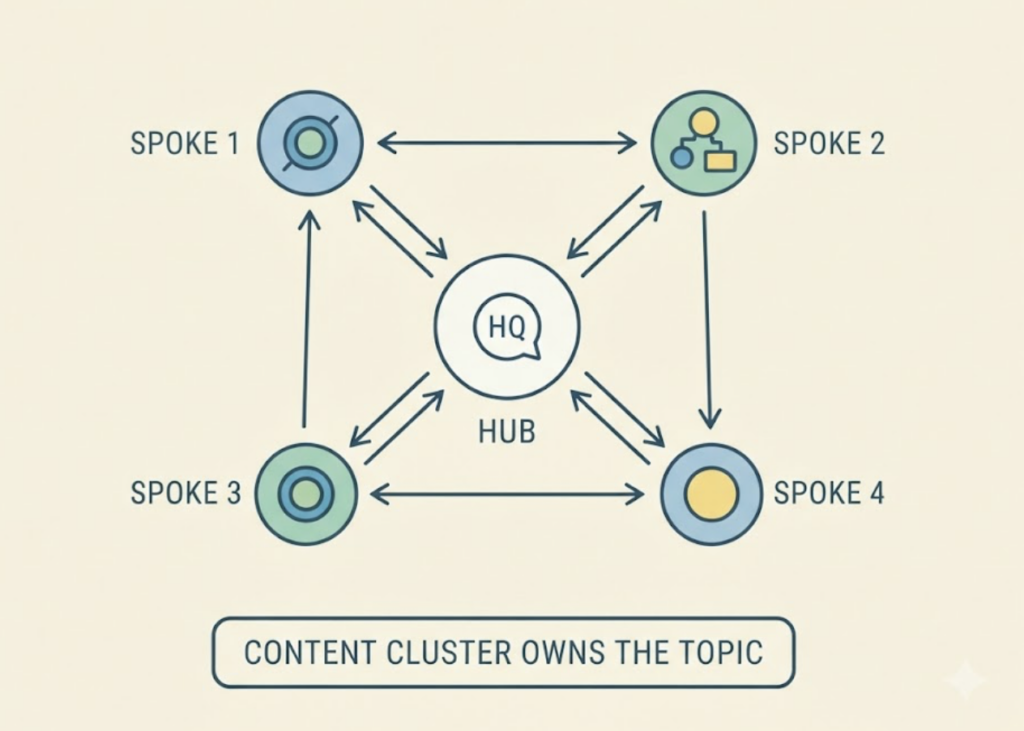
    For Google AI Mode, the play is topical coverage. You need a hub-and-spoke content architecture where a pillar page covers the broad topic and supporting pages address individual sub-query variants. Research shows that pages covering 26 to 50% of sub-queries actually get cited more often than pages trying to cover 100%. A focused cluster beats a single mega-article.

    For ChatGPT, the priority shifts to semantic breadth and recency. Because its sub-queries are highly variable and search strings rarely repeat, your content needs to align with the entity and intent space around your topic, not just specific keyword phrasing. And everything needs to reference current-year data.

    For Perplexity, the game is precision authority. Win the primary query. Structure your content in clean, extractable 50 to 150-word blocks that a RAG system can pull without distortion. Adding 3 or more data points per section can improve citation probability by 15 to 40%.

    That’s three different playbooks for three different engines. And without cross-platform tracking, you’re guessing which one is working.

    Topify addresses this by tracking brand visibility across ChatGPT, Perplexity, Google AI Overviews, and other major AI engines through a single dashboard. Its Comprehensive GEO Analytics layer monitors seven metrics, including visibility, sentiment, position, and source citations, broken down by platform. You can see where your brand is being cited, where it’s missing, and trace the gap back to specific fan-out patterns that your content doesn’t cover.

    The Source Analysis feature is particularly relevant here. It shows which domains and URLs are being cited by each AI engine, so you can identify whether your hub-and-spoke architecture is working on Google while your ChatGPT visibility lags because of stale data or missing entity coverage.

    How to Adapt Your Content for Platform-Specific Fan-Out

    Knowing the differences is step one. Acting on them requires a systematic approach.

    Start by simulating query fan-out for your top keywords. Tools like Qforia (from iPullRank) can show you which sub-queries fire for a given prompt. Map those sub-queries against your existing content to find coverage gaps.

    Then prioritize by platform. If your audience skews toward Perplexity (researchers, B2B professionals, early adopters), focus on authoritative depth for primary queries. If they’re on ChatGPT, invest in semantic breadth and make sure every key page references current-year data. If Google AI Mode is the priority, build out your topic cluster with dedicated spoke pages for the sub-query variants you’re missing.

    Cross-platform monitoring turns this from a one-time audit into an ongoing feedback loop. Topify’s Competitor Monitoring feature lets you see not just your own visibility, but which brands the engines are recommending instead. When ChatGPT starts citing a competitor you’ve never tracked, that’s a signal about a sub-query variant you haven’t covered.

    The brands gaining ground in AI search aren’t the ones with the most content. They’re the ones matching their content architecture to how each engine actually retrieves information.

    Conclusion

    Query fan-out is the hidden layer that determines AI search visibility. But it doesn’t work the same way everywhere. Google AI Mode fans out aggressively across 8 to 12 sub-queries and rewards topical breadth. ChatGPT searches less often but with high variability, making coverage and freshness the priority. Perplexity runs tight, single-pass retrievals where precision and authority on the primary query decide everything.

    The 12% citation overlap across platforms confirms that a single optimization strategy leaves most of your AI visibility to chance. Map the fan-out behavior for each engine your audience uses, build content that matches each platform’s retrieval logic, and track the results across all of them. That’s the only way to close the gap.

    FAQ

    Q: What is query fan-out in AI search?

    A: Query fan-out is the process where an AI search engine breaks a single user prompt into multiple parallel sub-queries, retrieves results for each one, and synthesizes a unified answer. Google AI Mode coined the term, but ChatGPT and Perplexity use the same general pattern with different depths and behaviors.

    Q: How many sub-queries does Google AI Mode generate per prompt?

    A: Google AI Mode typically generates 8 to 12 sub-queries for standard prompts. Complex queries or Deep Search scenarios can trigger significantly more. The exact number varies by industry: software-related prompts average 11.7 fan-outs, while local queries average around 3.8.

    Q: Does ChatGPT use query fan-out the same way Google does?

    A: No. ChatGPT averages about 3.5 sub-queries per prompt and only activates web search on roughly 34.5% of queries. Its fan-out is narrower but more precise, with each sub-query averaging 12 words. The biggest difference is volatility: 91% of ChatGPT’s search strings are unique, making it less predictable than Google.

    Q: How can I track my brand’s visibility across different AI search fan-out behaviors?

    A: You need cross-platform AI visibility monitoring that breaks down citations, mentions, and source analysis by engine. Topify offers this through its Comprehensive GEO Analytics, covering ChatGPT, Perplexity, Google AI Overviews, and other major platforms with per-engine metrics for visibility, sentiment, position, and source citations.

    Read More

  • Query Fan-Out: One Big Guide or Ten Focused Articles?

    Query Fan-Out: One Big Guide or Ten Focused Articles?

    You rebuilt your content strategy around pillar pages. Long-form guides, topic clusters, internal links pointing every direction. Then you checked whether AI search engines were actually citing any of it.

    They weren’t. Not because the content was thin, but because AI systems don’t retrieve pages the way Google ranks them. When someone asks ChatGPT or Perplexity a question, the model doesn’t pull up your 4,000-word guide and scan for the answer. It breaks that question into 12 to 15 sub-queries, runs them in parallel, and assembles a response from the best passage it finds for each one. That process is called query fan-out. And it turns the “one big guide vs. many small articles” debate into a question of architecture, not word count.

    What Query Fan-Out Actually Changes About Content Strategy

    Traditional SEO rewarded depth on a single page. The more thoroughly you covered a topic, the better your chances of ranking for it. Query fan-out breaks that logic.

    A user types a question. The AI system decomposes it into a dozen or more sub-queries, each targeting a different facet of the original intent. A prompt like “best project management tool for remote teams” might trigger sub-queries about pricing, integrations, security, team size, user reviews, and onboarding difficulty. Each sub-query runs its own retrieval cycle, pulling passages from different sources.

    Your content doesn’t compete as a whole page. It competes passage by passage, sub-query by sub-query.

    That’s a structural shift. Pages optimized to address a higher percentage of fanned-out sub-queries are 161% more likely to be cited in AI-generated answers. But a single page can’t realistically provide the best passage for every sub-query. Not when each sub-query has a different intent, a different expected format, and a different depth requirement.

    Content architecture, not content volume, becomes the variable that determines AI visibility.

    The Pillar Page Trap

    The pillar page model isn’t dead. But relying on it as your primary AI citation strategy is a losing bet.

    A typical pillar page runs 2,000 to 5,000 words. It covers a broad topic, links to cluster articles, and consolidates topical authority in one URL. For traditional organic rankings, that still works. For AI retrieval, it creates a problem: semantic dilution.

    AI models seek concise, extractable answers. A 5,000-word guide buries specific answers inside layers of context, subheadings, transitions, and supporting points. When the model runs a sub-query about pricing, and the answer sits 3,000 words deep between two unrelated sections, the model often skips it for a competitor’s 600-word article that leads with a pricing table.

    Here’s the math that matters. If an AI system generates 12 sub-queries for a single prompt, a monolithic pillar page might effectively address two or three of them. That leaves nine or ten sub-queries open for competitors to capture. You’re not losing to better content. You’re losing to better architecture.

    One data point tells the story: 62% of content cited by AI systems doesn’t even appear in Google’s traditional top 10 results. The AI isn’t prioritizing page authority. It’s prioritizing passage relevance.

    When Ten Focused Articles Beat One Comprehensive Guide

    There’s a reason the “ten focused articles” approach keeps gaining traction in GEO circles. It aligns with how AI retrieval actually works.

    Each focused article targets a specific sub-query intent. Instead of one page trying to cover “What is GEO, how does it work, who needs it, what tools exist, how to get started,” you produce five articles, each answering one of those questions in depth. The AI model now has a dedicated, structurally clean passage to extract for each sub-query, instead of hunting through a wall of text.

    The concept is what Similarweb’s GEO research calls “node architecture”: every significant section of content is a self-contained, extractable unit. When applied at the article level, each piece becomes a citeable node.

    The data backs this up. Topify’s internal analytics show that 92% of AI citations come from domains that maintain atomic content structures: short, fact-dense segments rather than long-form, loosely structured essays. The Princeton GEO study found that adding quantitative data to content improved AI citation rates by up to 41%. Keyword stuffing, by contrast, performed below the unoptimized baseline.

    Focused articles also offer practical advantages. They’re faster to publish, easier to A/B test, and simpler to update when AI citation patterns shift. If a specific sub-query gains traction, you can spin up a dedicated spoke article in days, not weeks.

    Hub-and-Spoke: The Content Architecture Query Fan-Out Rewards

    The “one guide or ten articles” framing is a false binary. The most effective content architecture for query fan-out combines both.

    The hub page serves as your entity center. It defines the core topic, provides high-level summaries, and links out to every spoke article. Think of it as a table of contents with enough substance to establish topical authority, but not so much detail that it competes with its own spokes.

    Each spoke article focuses on one or two sub-query intents. One spoke handles the “how to” intent. Another tackles “pricing comparison.” A third covers “common mistakes.” Each spoke contains what the research calls “best-answer blocks”: 130 to 170 words of structurally clean, fact-dense content that AI crawlers can extract without parsing through irrelevant context.

    The linking structure matters as much as the content itself. Hub links to every spoke. Every spoke links back to the hub. Related spokes cross-link to each other. This bidirectional linking pattern signals to both traditional search engines and AI retrieval systems that your content cluster owns the topic.

    Websites using this structured node architecture see a 41% increase in AI visibility compared to sites with flat, unstructured content hierarchies.

    The sweet spot for most teams? One hub page plus 8 to 15 spoke articles per core topic, expanding based on performance data and content gaps.

    How to Map Your Query Fan-Out Before Writing a Single Word

    Content architecture decisions shouldn’t start with a content calendar. They should start with a fan-out map.

    Step 1: Identify the fan. Take your core topic and run it through Perplexity, Gemini, or ChatGPT. Ask the same question three different ways. Document every sub-question, follow-up, and tangent the AI explores in its response. That’s your raw fan-out data.

    Step 2: Classify intent. Group each sub-query by type:

    Intent TypeExample Sub-QueryContent Format
    Informational“What is query fan-out?”Explainer article
    Comparative“Pillar page vs. cluster content”Comparison table
    Commercial“Best tools for AI visibility”Review or feature matrix
    Procedural“How to optimize for fan-out”Step-by-step guide

    Step 3: Assign content. Map each sub-query cluster to either a dedicated spoke article or a specific section within your hub. High-volume, high-competition sub-queries get their own spoke. Narrower or lower-intent sub-queries can be folded into the hub or an existing spoke.

    Step 4: Validate with data. This is where guesswork turns into strategy. Tools like Topify surface the specific prompts AI engines are actually generating around your brand and category through its High-Value Prompt Discovery feature. Instead of guessing which sub-queries matter, you see the actual prompts AI models produce, including ones you’d never find in traditional keyword research.

    Topify’s Source Analysis also reveals which domains AI platforms currently cite for each sub-query. If a competitor owns the “comparison” intent while your content only covers “informational,” you know exactly which spoke to build next.

    Measuring Content Architecture Performance in AI Search

    You can’t optimize an architecture you can’t measure. And traditional SEO dashboards don’t measure what matters for query fan-out performance.

    Organic traffic, keyword rankings, and domain authority tell you how Google sees your pages. They don’t tell you whether ChatGPT is extracting passages from your spoke articles, whether Perplexity is citing your hub page, or whether a competitor just captured three sub-query intents you left uncovered.

    Effective measurement requires three layers.

    Citation presence. Track how often your domain appears in AI-generated answers for your target sub-query sets. This is the GEO equivalent of ranking position.

    Source gap analysis. Identify which sub-query intents your competitors own in AI responses and which ones you’re missing. Topify’s Competitor Monitoring and Source Analysis features map this automatically across ChatGPT, Gemini, Perplexity, and other major AI platforms.

    Architecture impact tracking. Monitor how changes to your hub-and-spoke structure affect AI visibility over time. Adding a new spoke article, updating your hub’s internal links, or restructuring a section should produce measurable shifts in citation patterns within weeks.

    The brands that win in AI search aren’t the ones producing the most content. They’re the ones building architectures that give AI systems exactly what they need, one clean passage at a time.

    Conclusion

    Query fan-out doesn’t reward longer guides or more articles. It rewards smarter architecture.

    Start with one core topic. Map its fan-out. Build a hub that establishes authority and spokes that deliver extractable answers for every sub-query intent. Link them together. Then track which passages AI systems are actually citing, and iterate from there.

    The brands that figure this out first won’t just rank in traditional search. They’ll become the default source AI turns to when it needs to answer a question in your category.

    FAQ

    What is query fan-out in AI search?

    Query fan-out is the process where AI search systems break a single user query into 12 to 15 sub-queries, run them in parallel, and synthesize the best passages from multiple sources into one answer. It means your content competes at the passage level, not the page level.

    Should I create one pillar page or multiple articles for GEO?

    Neither approach works perfectly on its own. The most effective strategy is a hub-and-spoke architecture: one hub page that defines the core topic, plus 8 to 15 focused spoke articles that each target a specific sub-query intent. This gives AI systems clean, extractable passages while maintaining topical authority.

    How many cluster articles do I need per topic hub?

    Most teams see strong results with 8 to 15 spoke articles per hub, expanding based on performance data. The goal isn’t a fixed number. It’s covering the full range of sub-queries AI systems generate for your core topic.

    How do I know which sub-queries AI systems are generating from my topic?

    You can manually test by running your topic through Perplexity, Gemini, or ChatGPT and documenting the sub-questions explored. For systematic tracking, tools like Topify’s High-Value Prompt Discovery surface the specific prompts AI engines generate around your category, showing you the actual fan-out picture rather than guesses based on traditional keyword data.

    Read More

  • Is Keyword Research Dead? What Query Fan-Out Means for Content

    Is Keyword Research Dead? What Query Fan-Out Means for Content

    You spent months optimizing a page for “best CRM for small teams.” It ranks third on Google. Organic traffic is steady. Then a prospect asks ChatGPT the same question, and the AI pulls together an answer from six different sources. Yours isn’t one of them.

    The reason is a retrieval mechanism called query fan-out. Instead of matching your page to a single search phrase, AI systems break that one prompt into a cluster of sub-queries, retrieve passages for each, and synthesize a response from whatever content best answers each piece. Your page answered the main question. It didn’t answer the ten related ones the AI generated behind the scenes.

    That gap between keyword rankings and AI citations is where most content strategies are now failing.

    Your Page Ranks First on Google. AI Search Didn’t Even Pull It.

    When someone types a question into Google AI Mode, ChatGPT, or Perplexity, the system doesn’t search for that exact phrase. It generates a fan of synthetic sub-queries, each targeting a different facet of the user’s intent, then runs them all in parallel.

    The scale varies by platform. Google’s AI Mode typically triggers 8 to 15 sub-queries per prompt. ChatGPT and Perplexity tend to generate a tighter fan of 3 to 10. Complex reasoning tasks can push that number even higher.

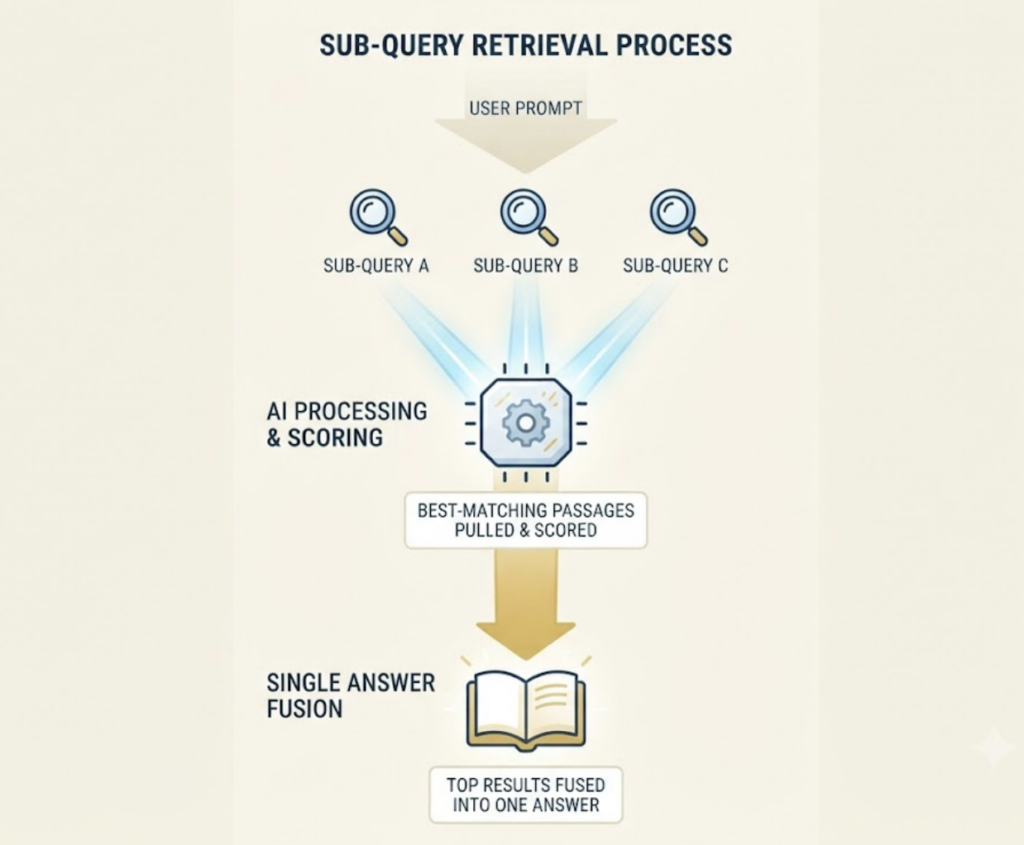
    Here’s the thing: each sub-query runs its own retrieval process. The AI pulls the best-matching passages from across the web, scores them, and fuses the top results into a single answer. Your content doesn’t need to rank first for the original prompt. It needs to contain passages that satisfy at least some of those sub-queries.

    That’s a fundamentally different selection process than the ranked-list model SEO teams have spent years optimizing for.

    Why Single-Keyword Content Loses in a Query Fan-Out World

    Traditional SEO is built around separation. One page targets one primary keyword. Related topics get their own pages. Internal links connect them. This architecture works well for Google’s ranked results, where each page competes independently.

    AI search doesn’t work that way. When a model fans out a query, it’s looking for sources that can cover multiple related sub-questions within the same topic area. A page that only answers one narrow angle might still get retrieved, but it’s easily replaced as the fan-out expands.

    The math tells the story. A page ranking #14 for a head term can appear in an AI answer because it contains one highly relevant paragraph for a specific sub-query. Meanwhile, the #1 result gets skipped because its content is broad but shallow, covering the topic in general terms without the specific, extractable passages the AI needs.

    This is what makes the shift so disorienting for SEO teams. Nearly 30% of marketers already report declining search traffic as users move toward AI tools. And an estimated 15% of daily searches in 2026 are brand-new queries with zero historical data. You can’t target a keyword that didn’t exist yesterday.

    Keyword Research Isn’t Dead. But It’s No Longer the Whole Job.

    The “is keyword research dead” debate has been running for years. In 2026, the answer is clear: it’s not dead, but its role has changed.

    Keywords still validate demand. They tell you what people care about, what language they use, and how much interest exists around a topic. That function hasn’t gone away. What’s changed is what you do with that information.

    In a query fan-out world, a keyword is a starting signal, not the destination. The real work begins after you’ve identified your target phrase: mapping the full intent landscape around it, identifying the entities and relationships that define the topic, and building content that covers the sub-questions AI systems will inevitably generate.

    Think of it as a shift from “keyword to page” to “keyword to topic authority to entity alignment to fan-out coverage.” Keywords validate demand. Entities build authority. Authority drives AI visibility.

    The teams still treating keyword research as the endpoint of their content strategy are optimizing for a search architecture that’s no longer the only one that matters.

    How to Build Content That Survives Query Fan-Out

    Adapting for query fan-out doesn’t require abandoning everything you know about SEO. It means adding a layer on top of it.

    Start with the fan-out, not the keyword. Before writing, take your target keyword and map the full cluster of sub-questions AI might generate. Tools like People Also Ask, AlsoAsked, and AI query simulators can help. The goal is to see your keyword the way an AI system sees it: not as a phrase, but as an entry point into a web of related information needs.

    Design for extractability. AI systems retrieve passages, not pages. Structure your content so each section can stand alone as a direct answer to a specific sub-query. Clear headings, concise topic-level chunks, and FAQ blocks all help the model find and pull the right piece.

    Cover multiple intent types in one asset. AI search often surfaces informational, evaluative, and contextual questions together during fan-out. A page that only handles the informational angle misses the evaluative sub-queries. Build content that addresses “what is it,” “how does it compare,” and “when should I use it” within a single, well-organized resource.

    Reinforce semantic clarity. Query fan-out optimization relies on making entities, relationships, and key concepts explicit. When meaning is clear, AI systems can interpret how ideas connect and apply your content more consistentlyacross related queries. Don’t assume the reader, or the model, can infer relationships you haven’t stated.

    The Visibility Gap Most SEO Teams Still Can’t Measure

    Here’s the problem that ties everything together. You can’t optimize for query fan-out if you can’t see what AI systems are actually doing with your topic.

    Google Analytics tells you who visited. Search Console tells you which queries drove impressions. Neither tells you whether ChatGPT cited your competitor for a sub-query you didn’t even know existed.

    That measurement gap is exactly what Topify was built to close. Its High-Value Prompt Discovery feature surfaces the specific prompts and sub-queries AI systems generate around your target topics, giving you the fan-out map your content strategy needs. Source Analysis then tracks which domains AI platforms are citing for those prompts, so you can see exactly where competitors are winning and where content gaps exist.

    In practice, that looks like tracking 200+ prompts across ChatGPT, Gemini, Perplexity, and DeepSeek over 30 days, then watching how citation patterns shift as your content changes. It’s the difference between guessing which sub-queries matter and knowing.

    For teams already investing in GEO, Topify’s Visibility Tracking and Competitor Monitoring add the layer traditional tools miss: not just whether you rank, but whether AI systems trust your content enough to cite it.

    From Keywords to Query Ecosystems: A Practical Shift

    The shift query fan-out demands isn’t a revolution. It’s an expansion.

    You still do keyword research. You still build pages. You still earn links and optimize technical SEO. What changes is the frame: instead of thinking “this page targets this keyword,” you start thinking “this page anchors a cluster of sub-queries that AI will generate around this topic.”

    Early adopters are already seeing results. Brands that build comprehensive topic coverage with well-structured, entity-rich content are outperforming competitors in AI citations, even when those competitors have higher domain authority.

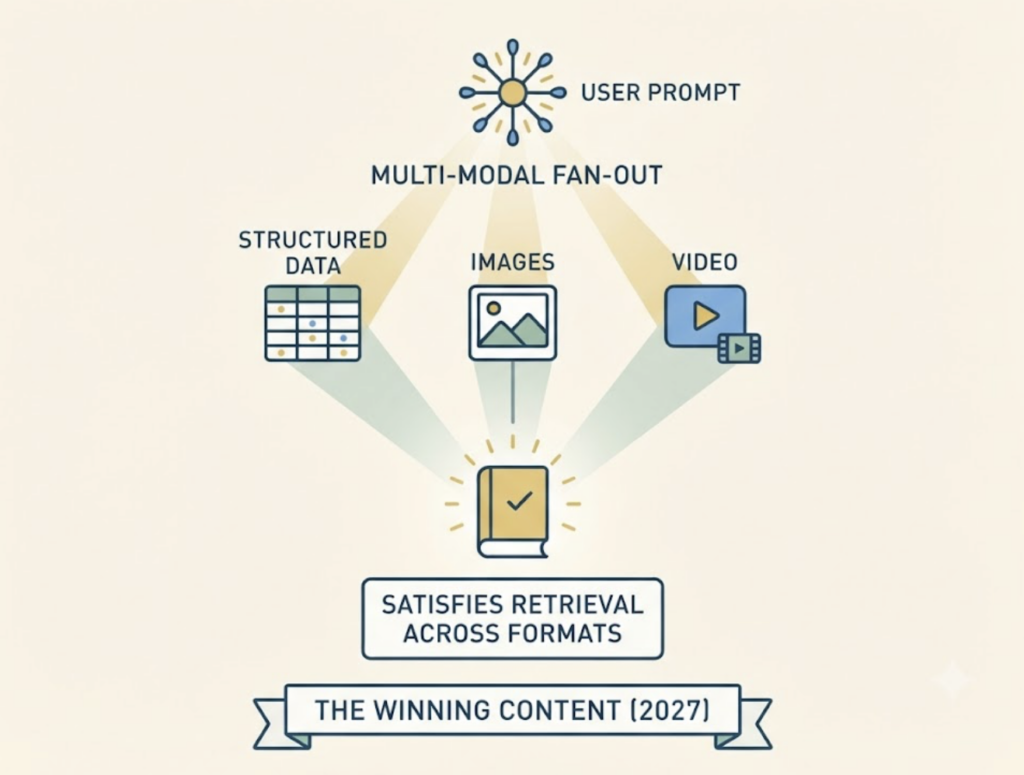
    The trend is accelerating. Multi-modal query fan-out, where AI systems incorporate images, video, and structured data into the fan-out process, is already emerging. The content that wins in 2027 won’t just answer text-based sub-queries. It’ll need to satisfy retrieval across formats.

    The starting point is practical. Pick your ten highest-traffic pages. Map the likely fan-out sub-queries for each. Audit whether your content actually answers them, or whether it only covers the main keyword. Then start tracking how AI systems are handling those topics today.

    Conclusion

    Keyword research isn’t dead. What’s dead is the assumption that ranking for a single phrase means AI search will find and cite you.

    Query fan-out changed the retrieval architecture. AI systems now decompose every prompt into a cluster of sub-queries, and your content either answers enough of them to earn a citation, or it doesn’t. The brands that adapt, building for topic coverage, passage-level extractability, and measurable AI visibility, are the ones showing up in the answers that matter.

    Start with the pages you already have. Map the fan-out. Fill the gaps. Measure what changes.

    FAQ

    Q: What is query fan-out in AI search?

    A: Query fan-out is a retrieval technique where AI search systems break a single user prompt into multiple sub-queries. Each sub-query targets a different facet of the user’s intent. The AI retrieves passages for each, then synthesizes the results into one unified answer. Google popularized the term when launching AI Mode at Google I/O 2025.

    Q: Is keyword research still relevant in 2026?

    A: Yes, but its role has shifted. Keywords still validate demand and reveal what audiences care about. The difference is that keywords are now a starting signal, not the full strategy. Teams need to map the broader intent landscape, entity relationships, and sub-queries that AI systems generate around a keyword, not just optimize a page for that single phrase.

    Q: How many sub-queries does a single AI search generate?

    A: It depends on the platform and prompt complexity. Google’s AI Mode typically generates 8 to 15 sub-queries per prompt. ChatGPT and Perplexity tend to generate 3 to 10. Simple prompts might trigger only 2 to 4, while complex reasoning tasks can produce dozens.

    Q: How can I optimize my content for query fan-out?

    A: Focus on four areas: map the full cluster of sub-queries around your target keyword before writing, structure content so each section can be independently retrieved, cover multiple intent types in a single asset, and reinforce semantic clarity by explicitly stating entity relationships. Use AI visibility tools to track which sub-queries your content is being cited for and where gaps exist.

    Read More

  • Query Fan-Out Optimization: How to Cover AI Sub-Queries

    Query Fan-Out Optimization: How to Cover AI Sub-Queries

    Your domain authority is solid. Your keywords rank on page one. But when a prospect asks Google AI Mode for a recommendation in your category, your brand isn’t part of the answer. Only 38% of URLs cited in AI Overviews now rank in Google’s Top 10 for the same query, down from roughly 76% a year earlier. The disconnect between organic rankings and AI citations has a technical explanation: query fan-out. Most content strategies still aren’t built for it.

    What Happens When AI Fans Out Your Query

    Query fan-out is the retrieval mechanism behind AI search platforms like Google AI Mode, ChatGPT, and Perplexity. Instead of matching a user’s prompt to a single keyword, the AI decomposes the query into 8 to 12 parallel sub-queries, each targeting a different angle of the user’s intent. It then retrieves passages from multiple sources, synthesizes the results, and delivers one answer.

    Here’s what that looks like in practice. A user types “best project management tools for remote teams.” A traditional search engine looks for pages optimized around that exact phrase. An AI system fans the query out into sub-queries like “top project management software 2026,” “remote team collaboration features,” “project management pricing comparison,” and “enterprise vs small team PM tools.”

    The user never sees these sub-queries. They only see the final answer.

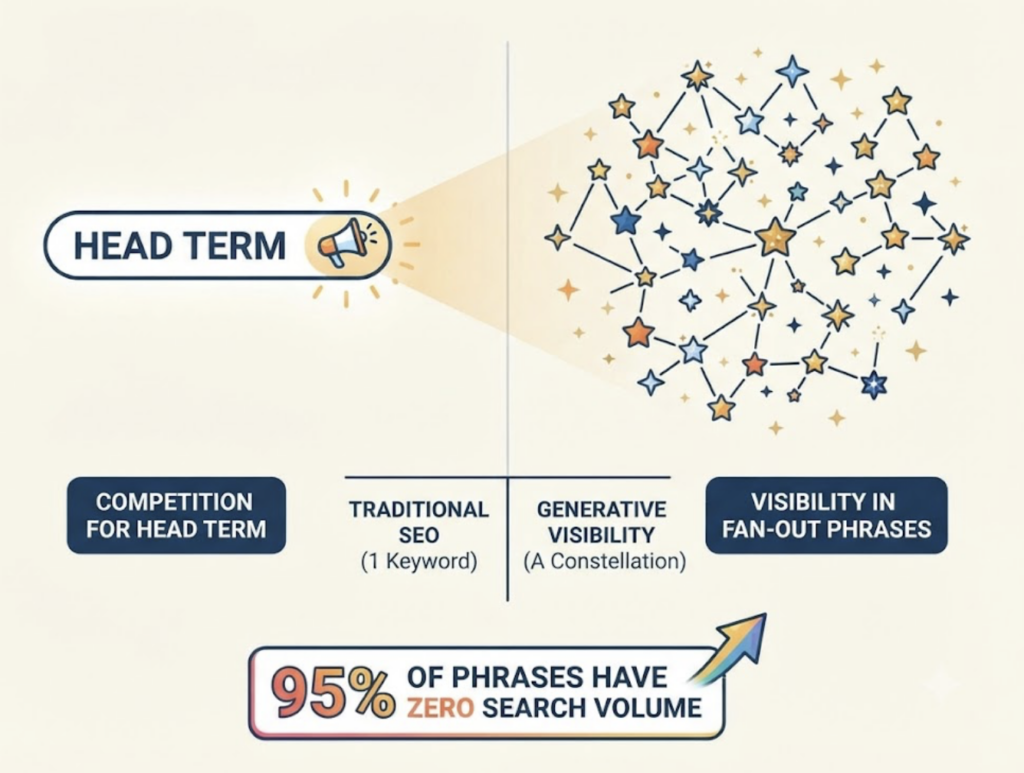
    But the brands that get cited are the ones whose content matched the hidden sub-queries, not just the head term. Your content isn’t competing for one keyword anymore. It’s competing for a constellation of related questions you can’t find in any keyword tool. 95% of fan-out phrases show zero monthly search volume in traditional keyword research platforms, yet they’re the gatekeepers of generative visibility.

    Why Traditional Rankings Don’t Predict AI Citations

    A decoupling has occurred between where you rank in Google and whether AI systems cite you. The data is clear.

    An Ahrefs analysis of 863,000 keyword SERPs and 4 million AI Overview URLs found that the overlap between top-10 organic results and AI citations dropped from 76% to about 38% in one year. Put another way: roughly 62% of AI Overview citations now come from pages that don’t rank in Google’s Top 10 at all.

    Why? Because AI systems don’t evaluate pages. They evaluate passages. Research from Ziptie.dev indicates that self-contained answer units of roughly 134 to 167 words are significantly more likely to be selected as citation sources. A 3,000-word article with no clear passage boundaries loses to a shorter, well-structured piece that directly answers one of the fanned-out sub-queries.

    This creates a real opening for smaller brands. You don’t need a domain authority of 80 to get cited. You need a passage that answers a specific sub-query better than anyone else’s.

    Ranking and citation are now separate games.

    Five Sub-Query Types AI Generates During Fan-Out

    Not all fan-out sub-queries work the same way. Understanding the types helps you build content that covers more of them.

    Intent Diversity Queries

    When a user asks a broad question, AI generates sub-queries spanning different intents: comparing, exploring, purchasing. A single prompt like “best CRM for startups” triggers sub-queries about pricing, features, integrations, and user reviews simultaneously. Google’s own patent documentation describes this as the LLM generating queries across multiple user intents from a single input.

    Temporal Variants

    AI systems frequently add freshness qualifiers to sub-queries. Freshness signals lift citation probability by 25.7%according to aggregated industry research. Sub-queries like “latest CRM updates 2026” or “recently launched features” target content refreshed within the past 30 to 90 days. Re-dating a post without updating its facts produces no measurable lift.

    Entity-Based Expansion

    AI models fan out into specific entities: brand names, tools, techniques, people, statistics. Entity-rich passages that name specific products, cite concrete numbers, or reference known frameworks score higher in passage-level retrieval than generic descriptions. Content that says “one leading platform” instead of naming it gets treated as lower-value by retrieval systems.

    Context and Profile Alignment

    Two users asking the same query can see different citations. AI adjusts sub-queries based on contextual signals: location, device, search history, language. Your content needs to address multiple contextual interpretations of the same topic, or you’ll only match one slice of the fan-out.

    Comparative Queries

    Fan-out routinely generates “vs” and “comparison” sub-queries, even when the user didn’t explicitly ask for a comparison. Research shows that ranking for fan-out queries only, without ranking for the main keyword, makes you 49% more likely to earn citations than ranking exclusively for the head term. If your content doesn’t include comparative elements, you’re invisible to an entire branch of sub-queries.

    How to Optimize Content for Query Fan-Out

    The query fan-out optimization playbook overlaps with good GEO practice, but a few priorities change.

    Simulate the Fan-Out First

    Before writing or restructuring a page, run your target query through ChatGPT, Perplexity, and Google AI Mode. Note what follow-up questions appear, which entities surface, and which sources get cited. These patterns reveal how the model interprets your topic and which content formats it prefers. AI Mode queries tend to be 2x longer than traditional searches, so test with conversational, multi-part prompts too.

    Cover Multiple Angles on a Single Page

    Traditional SEO splits sub-topics across separate pages and links them together in a hub-and-spoke model. Query fan-out optimization takes a different approach: make a single page resilient to query expansion by addressing the main query plus 3 to 5 sub-query directions within the same piece of content.

    That doesn’t mean writing a 10,000-word mega-post. It means structuring your page so each major section directly answers a likely sub-query with a clear, self-contained passage.

    Optimize at the Passage Level

    AI systems extract passages, not pages. Keep answer-ready sections between 134 and 167 words. Lead each section with a direct answer in the first sentence, then support it with data or context. Clear headings, short factual summaries, and definition-style answers make it easier for AI systems to parse and extract your content.

    Build Entity Density

    AI models favor content with high entity density: roughly 15 or more Knowledge Graph entities per 1,000 words. That means naming specific tools, citing concrete statistics, referencing known frameworks, and mentioning relevant brands rather than writing in vague generalities. “A popular CRM platform” is invisible to retrieval. “HubSpot’s free tier with contact management for up to 1,000 contacts” is extractable.

    Maintain Freshness

    Content refreshed within the past 30 to 90 days with substantive data updates holds a 25.7% citation probability advantage over stale pages. References to 2024 data are increasingly treated as outdated by AI citation models. Regular content refreshes with real updated figures aren’t optional anymore.

    Add Structured Data

    FAQ schema, how-to markup, and comparison tables help AI crawlers parse entity relationships faster. In a controlled experiment by Semrush, content optimized specifically for fan-out queries saw citations more than double. Structured data played a measurable role in that result.

    How to Track Whether Your Content Covers Fan-Out Queries

    Here’s the problem with query fan-out: it’s invisible. AI Mode doesn’t reveal which sub-queries it used. You can’t see in Google Search Console which fan-out queries your content matched or missed.

    The manual approach is to run your target queries across multiple AI platforms regularly and check whether your brand or pages get cited. That works for a handful of queries. It doesn’t scale.

    For teams managing dozens or hundreds of target topics, Topify offers a more systematic approach. Its Visibility Tracking monitors brand presence across ChatGPT, Gemini, Perplexity, and other major AI platforms at the prompt level, not just the keyword level. Source Analysis shows which domains and URLs AI systems actually cite, helping you identify exactly where your content gets pulled in and where it doesn’t.

    In practice, the workflow looks like this: you optimize a page to cover fan-out sub-queries using the strategies above, then track whether AI platforms start citing that page across related prompts. If citations increase, the coverage is working. If they don’t, Topify’s Competitor Monitoring shows which competing pages are winning those sub-queries, giving you a specific target to improve against.

    The combination of High-Value Prompt Discovery and fan-out awareness also helps teams move beyond reactive optimization. Instead of waiting to see which prompts mention your brand, you can proactively identify high-volume AI prompts in your category and check whether your content structure matches the sub-queries those prompts generate.

    Query Fan-Out vs. Traditional Keyword Optimization

    The shift from keyword optimization to query fan-out optimization changes several fundamentals at once.

    DimensionTraditional SEOQuery Fan-Out Optimization
    Optimization targetSingle keyword per pageMultiple sub-queries per page
    Content modelHub-and-spoke, separate pages linkedContainer page, comprehensive and structured
    Success metricRank positionAI citation presence
    Authority signalBacklinks and domain authorityPassage relevance and entity density
    Results formatRanked list of linksSingle synthesized answer
    Query visibilityKeyword tools show search volume95% of fan-out queries show zero volume
    Ideal passage lengthFull page optimized for keywordExtractable passages of 134 to 167 words

    This isn’t a replacement. SEO still feeds the retrieval pipeline that AI systems depend on. But it’s no longer sufficient on its own. Teams that track fan-out coverage as a separate metric alongside traditional rankings will have a clearer, more accurate picture of their actual search visibility.

    Conclusion

    Query fan-out explains why strong organic performance no longer translates directly into AI visibility. When every prompt triggers 8 to 12 hidden sub-queries, content that only answers the head term becomes easy to skip.

    The practical shift is straightforward: structure each page to cover multiple angles, optimize at the passage level, maintain entity density and freshness, and track citation presence across AI platforms rather than relying on rank position alone. Platforms like Topify make that tracking systematic instead of manual, so you can measure whether your fan-out coverage is actually working.

    The brands that adapt to query fan-out now will own the citation layer that defines AI search visibility in 2026 and beyond. The ones that don’t will keep ranking without being seen.

    FAQ

    Q: What is query fan-out in AI search?

    A: Query fan-out is a retrieval technique where AI search systems break a single user query into 8 to 12 parallel sub-queries, each targeting a different angle of intent. The AI retrieves passages for each sub-query, then synthesizes everything into one answer. Your content needs to cover not just the original query, but the sub-queries generated behind the scenes.

    Q: How many sub-queries does AI generate per search?

    A: Google AI Mode typically generates 8 to 12 sub-queries for standard prompts, while Gemini averages about 10.7 fan-out queries per prompt. Complex “Deep Search” scenarios can trigger hundreds. The exact count varies by query complexity and platform.

    Q: Does ranking #1 on Google guarantee an AI citation?

    A: No. Only 38% of AI Overview citations come from pages that also rank in Google’s Top 10, down from 76% in July 2025. AI systems evaluate passage-level relevance, not page-level rankings. A page ranked #7 can earn citations while #1 gets skipped if it provides better passage-level answers to fan-out sub-queries.

    Q: How do I check if my content covers fan-out queries?

    A: Start by running your target queries through ChatGPT, Perplexity, and Google AI Mode to see which sources get cited. For systematic tracking at scale, AI visibility platforms like Topify monitor citation presence across multiple AI search engines and show exactly which prompts and sub-queries your content is or isn’t matching.

    Read More

  • Query Fan-Out: The Hidden Queries That Control AI Visibility

    Query Fan-Out: The Hidden Queries That Control AI Visibility

    Your domain authority is 72. Your primary keyword sits at position three. Your content team published 40 articles last quarter targeting every variation of your core terms. Then someone asks Perplexity, “What’s the best [your category] tool for growing teams?” and your brand doesn’t appear anywhere in the response.

    The disconnect isn’t about effort. It’s about a mechanism most SEO teams have never directly observed: query fan-out. When an AI search engine receives a prompt, it doesn’t match your content against that single query. It silently generates 8 to 15 sub-queries, retrieves information for each one in parallel, and synthesizes everything into one answer. If your content doesn’t cover the specific sub-intents the AI decided to explore, you’re filtered out before the response is even assembled.

    That’s the gap between traditional search visibility and AI visibility. And right now, most brands can’t see it.

    What Happens Between a Prompt and an AI Answer

    Traditional search was straightforward. A user typed a query, Google returned a ranked list of pages, and the user clicked. One query in, ten links out.

    Query fan-out works differently. When a user enters a prompt into ChatGPT, Perplexity, Gemini, or Google’s AI Mode, the system doesn’t treat that prompt as a single retrieval task. It decomposes the prompt into multiple sub-queries, each targeting a different facet of the user’s intent.

    Here’s what that looks like in practice. A prompt like “best CRM for small business” might fan out into sub-queries covering pricing for startups, ease of onboarding, integration ecosystems, mobile app quality, and customer support reviews. The AI runs all of these searches simultaneously, pulls the most relevant passages from across the web, and stitches them into one synthesized response.

    Google popularized the term “query fan-out” when introducing AI Mode, but the technique underpins every major answer engine. Perplexity, ChatGPT with browsing, and Gemini all employ variations of the same decomposition-retrieval-synthesis pipeline.

    One question in, a dozen hidden questions out.

    Why Your Brand Can Rank on Google and Still Be Invisible to AI

    This mechanism creates a structural disconnect between traditional SEO performance and AI search visibility. Your Google rankings reflect how well your content matches a primary query. AI search engines evaluate your content against a dynamically generated cluster of sub-queries you never see.

    The result is a new category of visibility blind spots. You might hold a top-10 position for “project management software,” but if your content doesn’t address the sub-intents the AI generates, like “project management for remote teams under 20 people” or “Gantt chart alternatives for agile workflows,” your page gets passed over. The AI pulls that specific passage from a competitor who covered it.

    Domain authority, backlink profiles, keyword density: none of these metrics tell you whether your content answers the questions the AI is actually asking. They measure performance in a retrieval system that operates on a fundamentally different model.

    The shift goes deeper than retrieval. AI synthesis creates zero-click interactions where users get what they need inside the AI interface without visiting your site. Visibility in this environment isn’t about earning a click. It’s about earning inclusion in the answer.

    The Sub-Queries You Never See: How Query Fan-Out Creates Blind Spots

    The core challenge with query fan-out isn’t just that sub-queries exist. It’s that they’re invisible, dynamic, and personalized.

    You can’t predict them. A single prompt generates different sub-queries depending on the AI platform, the user’s conversation history, their location, and the model’s own reasoning chain. The sub-queries Perplexity generates for “best HR software” today might not match what it generates tomorrow, and they almost certainly won’t match what ChatGPT generates for the same prompt.

    You also can’t manually track them. As practitioners have noted, traditional SEO tools struggle with the dynamic nature of query fan-out because there’s no static index of sub-queries to monitor. The variations are effectively infinite and often personalized.

    This creates a compounding problem. Even if your content thoroughly covers the primary topic, a single uncovered sub-intent can knock you out of the AI’s synthesized response. The AI doesn’t partially cite you. If another source covers both the primary query and the sub-query the AI is exploring, that source wins the citation. You get nothing.

    “Comprehensive content” in the fan-out era doesn’t mean long content. It means content that anticipates the specific facets an AI model might explore when deconstructing a user’s question.

    What Query Fan-Out Means for Content Strategy

    The strategic shift is clear: optimizing for a primary keyword alone is no longer sufficient. Content needs to cover the full spectrum of sub-queries that AI might generate around your core topics.

    That requires a few structural changes in how content gets built.

    Lead with direct answers. AI models scan for easy-to-extract information. Content that buries its core point beneath three paragraphs of context gets skipped. The first 75 to 150 words should contain a concise, factual answer to the primary question.

    Align headings with natural language questions. H2s and H3s should mirror the kinds of questions users actually ask. Not “CRM Features Overview,” but “How much does a CRM cost for a 10-person team?” Each heading becomes a potential match for a sub-query the AI generates.

    Design atomic sections. Every section of your content should be able to stand alone as a citation source. If an AI pulls a single passage to answer a sub-query, that passage needs to make sense without the surrounding context. Specific facts, concrete numbers, and named entities make sections more extractable.

    Build explicit topical relationships. AI models assess whether a brand has authority across a broader topic cluster, not just a single page. Internal linking, consistent terminology across articles, and comprehensive coverage of related sub-topics all signal topical depth to the retrieval system.

    None of this is about writing more. It’s about writing with the right architecture.

    How to Track Query Fan-Out When You Can’t See the Queries

    Here’s the operational problem: Google Search Console won’t tell you whether ChatGPT cited your page for a sub-query you never targeted. Traditional rank trackers measure your position on a results page that AI users are increasingly skipping.

    Tracking query fan-out coverage requires a different kind of tool, one that simulates buyer-intent prompts across multiple AI platforms, monitors whether your brand appears in the responses, and identifies which sub-queries you’re winning or losing.

    Topify approaches this through a layered workflow. Its High-Value Prompt Discovery feature continuously surfaces the AI prompts that matter most in your category, including the sub-queries that fan out from them. Visibility Tracking then monitors your brand’s presence across ChatGPT, Gemini, Perplexity, and other platforms at the prompt level, covering seven key metrics: visibility, sentiment, position, volume, mentions, intent, and CVR.

    The Source Analysis layer adds depth. It shows which domains and URLs the AI is actually citing when it answers prompts in your space. If a competitor’s blog post keeps getting cited for a sub-query you haven’t covered, that gap surfaces in the data before it shows up in your traffic numbers.

    Competitor Monitoring closes the loop. You can see not just where you appear, but where your competitors appear on the sub-queries you’re missing. That turns a black box into a visible map of content gaps.

    The practical workflow: set up your target prompts, track visibility and sentiment scores over time, identify fan-out gaps where competitors outperform you, and build content specifically designed to fill those gaps. It’s measurable, repeatable, and tied to actual AI search behavior rather than keyword proxies.

    For teams ready to start, Topify’s platform offers plans starting at $99/month with coverage across major AI search engines and up to 100 tracked prompts.

    Brands That Ignore Query Fan-Out Will Lose the AI Search Funnel

    AI search isn’t just changing how users find information. It’s compressing the entire purchase funnel into a single interaction. A user who asks “best project management tool for marketing agencies” can get awareness, consideration, and a recommendation in one response.

    Query fan-out determines where in that compressed funnel your brand appears, or whether it appears at all. If the AI’s sub-queries about pricing, integrations, and use-case fit all point to competitors, you’ve lost the user before they ever visit your site.

    The trend is accelerating. Uberall estimates that $750 billion in commerce will flow through AI-driven search by 2028. As AI agents become more autonomous in making purchasing decisions on behalf of users, the fan-out mechanism will only grow more influential in determining which brands get recommended.

    Waiting to see how this plays out is itself a strategic choice. And it’s one that compounds: every month your content doesn’t cover the sub-queries AI is generating, you’re building a deeper visibility gap that competitors are filling.

    Conclusion

    The queries that shape your AI visibility aren’t the ones users type. They’re the ones the AI generates behind the scenes, and traditional search tools can’t show them to you.

    Query fan-out is the mechanism that turns a single prompt into a research process spanning a dozen sub-intents. If your content covers those intents, you get cited. If it doesn’t, you’re invisible, regardless of your Google rankings.

    The path forward starts with acknowledging that this hidden layer exists, then building the content architecture and tracking infrastructure to address it. Brands that make this shift now will own the AI search funnel. The rest will keep optimizing for a system that’s already moving on without them.

    FAQ

    What is query fan-out in AI search?

    Query fan-out is the process where AI search engines decompose a single user prompt into multiple sub-queries. Each sub-query targets a different facet of the user’s intent, and the AI retrieves information for all of them simultaneously before synthesizing a unified answer. Your content needs to address not just the primary question, but the related sub-intents the AI explores.

    How many sub-queries does AI generate from one prompt?

    The number varies by prompt complexity and platform, but research indicates that a typical complex prompt generates 8 to 15 distinct sub-queries. Simple, factual queries may produce fewer, while multi-faceted questions about products, comparisons, or recommendations tend to trigger more extensive fan-out.

    Can traditional SEO tools track query fan-out?

    No. Tools like Google Search Console and traditional rank trackers measure your position on search engine results pages, but they don’t capture whether your content was cited in AI-generated responses or which sub-queries the AI explored. Tracking fan-out coverage requires AI-native monitoring platforms that simulate prompts across multiple AI search engines.

    How do I optimize my content for query fan-out?

    Focus on four areas: lead with direct answers in the first 75 to 150 words, structure headings around natural language questions that mirror potential sub-queries, design each section as an atomic unit that can stand alone as a citation, and build topical authority across related sub-topics through internal linking and consistent coverage.

    Read More

  • Claude Traffic in GA4: How to Track Visitors from Claude

    Claude Traffic in GA4: How to Track Visitors from Claude

    Your GA4 dashboard says referral traffic grew 12% last quarter. Somewhere inside that number, buried under newsletter platforms and random backlinks, visitors from Claude are converting at nearly 3x the rate of Google organic. You just can’t see them.

    That’s not a minor reporting gap. Claude referral sessions grew 64x between November 2024 and May 2026, overtaking Perplexity as a referral source in March 2026. And because GA4’s default channel grouping doesn’t separate AI traffic from generic referrals, most analytics teams are flying blind on the fastest-growing segment in their acquisition mix.

    Why Claude Traffic Is Growing Faster Than Most Teams Realize

    Claude’s referral footprint is small in absolute terms but accelerating at a pace that dwarfs traditional channels. According to SE Ranking data, Claude’s share of total website traffic jumped 386% between January and April 2026 alone, with most of that growth concentrated in a single month.

    The broader context matters. AI referral traffic across all platforms grew 796% over two years, and it’s expanding 165x faster than organic search. Within that wave, Claude’s trajectory stands out. In the B2B segment specifically, Claude’s share of AI referrals rose from 1.4% to 18.5% in just eight months, turning what was once a single-platform story into a four-engine market.

    Here’s what makes Claude traffic different from other AI sources. Claude users tend to be researchers, developers, and professionals who arrive with specific intent. They spend longer on page and engage more deeply with B2B and SaaS content. The visitors Claude sends aren’t browsing. They’ve already narrowed their options inside the conversation and clicked through because they want to act.

    Where Claude Traffic Actually Shows Up in Your GA4 Reports

    Finding Claude traffic in GA4 takes some digging, because the default setup doesn’t make it easy. Here’s what to look for.

    Open GA4 and navigate to Reports > Acquisition > Traffic Acquisition. Change the primary dimension to “Session source / medium.” In the search bar, type claude.ai. If Claude is citing your content, you’ll typically see it as claude.ai / referral.

    That’s the straightforward case. In practice, Claude traffic can appear in multiple places depending on how the user interacted with the link. Desktop web sessions from claude.ai usually pass a clean referrer header. But sessions from Claude’s mobile app, API integrations, or third-party tools often arrive without any referrer data at all, landing in your “Direct” bucket instead.

    This isn’t unique to Claude. Across all AI platforms, roughly 70% of AI-driven traffic lacks standard referrer headers. That means the claude.ai sessions you can see in GA4 are likely a floor, not a ceiling.

    One recent development helps. In May 2026, Google added a native “AI Assistant” channel to GA4’s default channel grouping, automatically classifying traffic from ChatGPT, Gemini, and Claude. It’s a step forward, but it only works when a referrer header is present, it isn’t retroactive, and it doesn’t cover every AI platform. You’ll still want a custom setup.

    How to Build a Custom Channel Group for Claude Traffic in GA4

    The native AI Assistant channel is a good baseline, but a custom channel group gives you historical data, broader platform coverage, and full control over the classification logic. Here’s how to set it up.

    Go to Admin > Data display > Channel groups. Duplicate your default channel group so you’re working on a copy, not the original. Click “Add new channel” and name it something clear: “AI Traffic” or “AI Search.”

    Set the condition to Source matches regex and use this pattern:

    ^(chatgpt\.com|chat\.openai\.com|openai\.com|perplexity\.ai|claude\.ai|gemini\.google\.com|copilot\.microsoft\.com|deepseek\.com|grok\.com|meta\.ai|you\.com|phind\.com|mistral\.ai)$
    

    This single anchored pattern captures the major AI referral sources currently passing attribution data to GA4. Avoid loose patterns like .*ai.*, which will match email providers and retail domains that happen to contain those letters.

    Now the part most people miss: drag your new AI channel above the Referral channel in the list. GA4 evaluates channel rules top-to-bottom. If your generic Referral rule fires first, it claims Claude sessions before your custom filter ever gets a chance. This ordering step is the single most common setup mistake in AI traffic tracking.

    Save, then verify. Open Reports > Realtime, visit your site from a Claude citation link, and confirm the session appears under your new AI channel within a minute. If it shows up under Referral, your channel order is still wrong.

    Plan to review your regex quarterly. New AI platforms launch regularly, and existing ones sometimes change their domain structure. Building a quarterly audit into your analytics maintenance keeps the data clean.

    UTM Parameters: Tracking the Claude Traffic You Control

    Most Claude traffic is passive. Claude cites your content in a conversation, the user clicks, and the referral shows up in GA4 (or doesn’t, if the referrer header is stripped). You can’t attach UTM parameters to those links because you didn’t create them.

    But there’s a category of Claude traffic you can control. If your brand publishes content designed to be shared via AI assistants, or if you distribute links through channels where users paste them into Claude conversations, UTM tagging gives you attribution precision that referral tracking alone can’t provide.

    A clean naming convention keeps the data usable:

    ParameterRecommended Value
    utm_sourceclaude
    utm_mediumai_referral
    utm_campaign[your campaign name]

    The practical use case: you publish a product comparison page and promote it in a developer community where Claude is heavily used. Tag the promoted links with UTMs so you can distinguish “someone found this page through Claude’s citations” (passive referral) from “someone clicked our promoted link, then may have also shared it in Claude” (active distribution).

    Don’t over-tag. UTMs are for links you place. Passive Claude referral traffic should flow through your custom channel group instead. Mixing the two approaches creates cleaner segmentation than either one alone.

    What GA4 Can’t Tell You About Claude Traffic in GA4

    Here’s the gap that changes how you think about this entire channel.

    GA4 tracks clicks. When someone in a Claude conversation clicks a link to your site, GA4 records a session. But Claude might mention your brand in a hundred conversations and generate exactly zero clicks from most of them. Those mentions still shape how users perceive your brand, your product, and your competitors. GA4 has no way to measure them.

    This isn’t a hypothetical. Research shows that AI platforms often mention brands without linking to them. The “mention rate,” which reflects how often an AI recommends or references your brand, operates independently from the “citation rate,” which measures how often it links to your URL. The first is driven by PR, reviews, and community sentiment. The second rewards structured, data-heavy content. Both matter, but GA4 only captures the second, and only when a user clicks.

    That visibility gap is where purpose-built AI monitoring tools come in. Topify, for example, tracks brand mentions across ChatGPT, Perplexity, Claude, and other major AI platforms at the prompt level. Instead of waiting for a click to show up in GA4, you can see how often Claude mentions your brand, what sentiment it assigns, which competitors it recommends alongside you, and which source domains the AI is citing.

    In practice, that means you can spot a drop in Claude mentions and trace it back to a specific content gap or a competitor that recently earned stronger citations. Topify’s Source Analysis shows exactly which domains AI platforms reference, so you know where to focus your content strategy. GA4 tells you what happened after the click. Topify tells you what happened before it.

    The two aren’t competing approaches. They’re complementary layers. GA4 gives you session-level conversion data. Topify gives you the visibility data that explains why those sessions are (or aren’t) growing.

    Three Metrics That Tell You If Claude Traffic Is Worth Optimizing

    Once tracking is in place, resist the urge to stare at raw session counts. Claude’s referral volume will be smaller than organic search for a while. The question isn’t “how much traffic,” it’s “how good is this traffic.”

    Metric 1: Engagement rate of Claude traffic vs. other channels. In GA4, compare your AI channel’s engagement rate against organic search and direct. AI-referred visitors typically show 68% longer session duration and higher pages-per-session than organic. If Claude traffic is outperforming your other channels on engagement, it signals that these visitors arrive with clear intent and find what they’re looking for.

    Metric 2: Conversion rate by AI source. Don’t lump all AI traffic together. Break it down by source. Across multiple studies, ChatGPT referrals convert at roughly 15.9%, Perplexity at 10.5%, and Claude at 5%, all significantly above Google organic’s 1.76% benchmark. Your numbers will vary by industry, but the relative pattern, where AI traffic outperforms organic on conversion, holds across approximately 72% of websites measured.

    Metric 3: Month-over-month Claude session growth. This is your leading indicator. AI referral traffic overall is growing at roughly 1 percentage point month-over-month, but Claude specifically is growing faster than any other platform on a percentage basis. Track whether your Claude sessions are following that curve, beating it, or falling behind. A stall might mean Claude stopped citing your content, which is a content strategy signal, not a traffic problem.

    Conclusion

    Claude traffic in GA4 isn’t a curiosity anymore. It’s a measurable, high-intent acquisition channel that most analytics setups still misclassify or miss entirely.

    The fix starts with a 15-minute custom channel group configuration that separates AI referrals from generic traffic. That gives you the baseline. From there, the real strategic advantage comes from understanding what GA4 can’t show you: whether Claude is mentioning your brand at all, how it frames you relative to competitors, and which content earns citations. Tools like Topify fill that gap by tracking AI visibility across platforms at the prompt level, turning a blind spot into a growth channel you can actually optimize.

    FAQ

    Q: How do I find Claude traffic in GA4?

    A: Go to Reports > Acquisition > Traffic Acquisition, change the primary dimension to “Session source / medium,” and search for claude.ai. You’ll typically see it as claude.ai / referral. For a permanent solution, create a custom channel group with a regex filter that captures all AI referral sources.

    Q: Does Claude pass referrer data to GA4?

    A: Claude’s web app (claude.ai) generally passes referrer headers on desktop, so those sessions show up as referral traffic. However, mobile app sessions, API integrations, and some third-party tools often strip the referrer, causing traffic to appear as “Direct” in GA4. Industry data suggests roughly 70% of AI traffic may arrive without proper referrer attribution.

    Q: Can I track how often Claude mentions my brand without anyone clicking?

    A: GA4 can’t track mentions, only clicks. To monitor whether Claude is recommending your brand in conversations, you need an AI visibility platform like Topify that tracks brand mentions, sentiment, and competitor comparisons across AI search engines at the prompt level.

    Q: Should I create a separate GA4 channel for all AI traffic or just Claude?

    A: Create one channel that captures all major AI sources (ChatGPT, Claude, Perplexity, Gemini, Copilot, and others) using a single regex pattern. This gives you a unified “AI Traffic” metric for reporting. You can then break down by individual source within that channel using GA4’s secondary dimensions or Explorations when you need platform-level detail.

    Read More