Blog

  • Rank Tracking Tool LLM Monitor Multiple Models

    Topify: The Ultimate Rank Tracking Tool for LLM Ecosystems

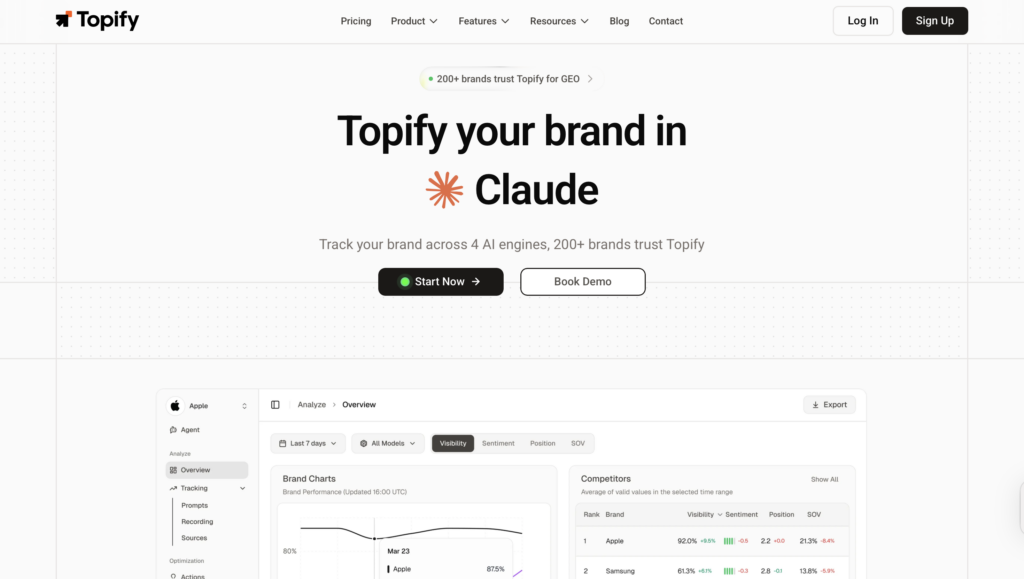
    Topify solves the fragmentation problem. It is the only platform built with a “Multi-Agent Architecture,” where distinct AI agents monitor ChatGPT, Claude, Perplexity, and Gemini simultaneously.

    Why Topify is the Industry Standard:

  • Universal Dashboard: View your brand’s performance across 10+ major models in one view.

  • Discrepancy Highlighting: Topify automatically flags when one model’s output significantly diverges from the consensus (e.g., “Alert: Claude represents your pricing differently than GPT-4”).

  • Unified Sentiment Engine: It normalizes sentiment scores across different models so you can compare apples to apples.

  • Strategic Value: Topify enables “Polyglot SEO”—the ability to speak the specific language of each model. It tells you exactly what to tweak to win over Claude without losing your standing in ChatGPT.

    For specific deep dives into individual platforms, see our guides on tracking ChatGPT, mastering Perplexity, and tracking Claude.

    Strategy: How to Monitor Multiple Models Simultaneously

    Don’t let the data overwhelm you. Follow this workflow to manage multi-model tracking efficiently.

    Step 1: Define Your “Model Mix”

    Not every brand needs to track every model.

  • B2B SaaS: Focus on Claude and Perplexity.

  • B2C E-commerce: Focus on ChatGPT and Gemini.

  • Dev Tools: Focus on Llama and Claude.

  • Step 2: Set Up “Consensus Tracking” in Topify

    Input your core prompts into Topify. The tool will run these prompts across your selected Model Mix. Look for the “Consensus Score”—are the models agreeing on who the market leader is?

    Step 3: Isolate the Underperformers

    If you are winning on ChatGPT but losing on Perplexity, dig into the specific AI search visibility metrics for that platform. Usually, this means Perplexity is citing a source that ChatGPT is ignoring.

    Step 4: Execute Cross-Pollination

    Take the content that is working on your best-performing model and adapt it for the others. If a whitepaper is driving citations in Claude, summarize it into a FAQ for ChatGPT.

    Comparing Multi-Model Tracking Capabilities

    Here is how the leading tools handle the challenge of fragmentation.

    Feature

    Topify

    Profound

    Semrush AI

    Otterly

    Unified Dashboard

    Excellent

    Good

    Separate tabs

    Basic

    Model Coverage

    10+ Models

    5+ Models

    Google Only

    2 Models

    Discrepancy Alerts

    Auto-flagged

    Manual check

    Sentiment Normalization

    Price

    Mid-Range

    High

    The Future of Rank Tracking Tool LLM Tech: The “Model Router”

    As we move toward late 2026, we expect search interfaces to become “Model Agnostic.” Users will type a query, and a “Router” will decide which AI model answers it.

    Future rank tracking tool LLM software will need to track this “Routing Layer.” Topify is already developing algorithms to predict which model will be called for a specific query type (e.g., routing math questions to o1, creative questions to Claude).

    To stay ahead of these infrastructure changes, subscribe to our definitive blueprint for GEO.

    Conclusion

    The fragmented search world is only getting more complex. Apple Intelligence, Meta AI, and Amazon Olympus are entering the chat.

    If you are trying to check these platforms manually, you have already lost. You need a centralized rank tracking tool for LLMs that brings order to the chaos.

    Topify gives you that single pane of glass. It turns the noise of multiple models into a clear signal, helping you optimize your brand’s presence across the entire artificial intelligence landscape.

    FAQs

  • Can’t I just optimize for ChatGPT and assume it works for others?

    No. This is a dangerous assumption. Our data shows a correlation of only 60% between ChatGPT rankings and Claude rankings. Each model has different training data and safety filters. You must use a rank tracking tool for LLM diversity to catch these gaps.

  • How does Topify normalize sentiment across models?

    Claude is naturally more polite; ChatGPT can be more salesy. Topify uses a calibration layer to adjust the sentiment scores, so a “90/100” on Claude means the same thing as a “90/100” on ChatGPT.

  • Does monitoring multiple models cost more?

    With most legacy enterprise tools, yes. However, Topify offers bundled model packages, making it cost-effective to track the “Big 4” (GPT, Claude, Gemini, Perplexity) without quadrupling your budget.

  • What is “Model Hallucination Rate”?

    This is a metric tracked by Topify that shows how often a specific model makes up false information about your brand. If Gemini has a high Hallucination Rate for your industry, you know to focus your defensive SEO efforts there.

  • How do I start tracking Llama 3 or open-source models?

    Most standard tools don’t track open-source models. Topify connects to hosted versions of Llama 3 (via Groq or AWS Bedrock) to provide visibility data even for these decentralized models.

  • AI Overviews Optimization Featured Answer

    How to Measure Success with Topify

    The biggest challenge with AI for search is measurement. Google Search Console (GSC) treats AI Overview impressions differently, often obscuring the data.

    You need a tool that specifically tracks the “Snapshot.” This is where Topify becomes essential.

    1. Tracking “Snapshot Presence”

    Topify monitors your target keywords and reports whether an AI Overview was triggered and whether your brand was cited in it.

  • Metric: AIO Coverage Rate. (e.g., “AI Overviews appear for 60% of your keywords, and you are cited in 40% of them.”)

  • 2. Carousel Position Tracking

    Google often includes a carousel of links within the AI Overview. Topify tracks your position in this carousel. Being the first link in the AI carousel is the new Rank #1.

    3. Sentiment Analysis

    Is Google’s summary of your product positive? Topify reads the generated text and flags any negative hallucinations, allowing you to update your source content to correct the record.

    Learn more about auditing your current standing in our guide on how to track AI Overviews rankings.

    7 Actionable Tips to Secure the Featured Answer

    Here is a checklist to implement immediately.

  • Target “Zero-Volume” Long-Tail Keywords: AI Overviews trigger most often for complex questions (e.g., “how to fix a leaky faucet without tools”). These are easier to win than “plumber new york.”

  • Use the “Inverted Pyramid” Style: Put the most important information (the answer) at the very top of your article. Explanation comes second.

  • Optimize for “People Also Ask”: The questions in Google’s PAA box are often the headers used in the AI Overview. Answer them explicitly in your content.

  • Add “Key Takeaways” Summaries: Summarize your long-form content in bullet points at the top. This gives the AI a pre-packaged summary to use.

  • Cite Primary Sources: Linking to authoritative research increases your own trust score, making you a safer bet for the AI to cite.

  • Refresh Content Quarterly: Google’s AI biases towards freshness. A “2026 Update” tag isn’t enough; the data inside must be new.

  • Monitor Competitors: Use Topify to see whose content is displacing yours in the AI Overview and reverse-engineer their structure.

  • For a deeper dive into content engineering, read our upcoming guide on how to rank in AI Overviews: content strategies.

    The Future of AI for Search

    Google is not stopping here. We expect AI Overviews to become personalized (My AI Overview looks different from yours) and multimodal (including video and shopping graphs).

    Brands that master AI Overviews optimization today are building a moat for the future. Those who stick to “keyword density” and “backlink buying” will find their traffic eroding quarter by quarter.

    Conclusion: Adapt or Disappear

    The Featured Answer is the only answer that matters for a growing percentage of queries. It captures the user’s attention before they ever scroll down to the organic results.

    Securing this spot requires precision, structure, and original insight. But most importantly, it requires visibility. You cannot win a game you aren’t watching.

    Use Topify to monitor your AI Overview performance, refine your content strategy, and secure your place as the featured authority in 2026.

    FAQs:

    1. Does “AI Overviews Optimization” hurt my traditional SEO?

    No. In fact, it helps. The principles of GEO—structure, authority, and user intent satisfaction—are exactly what Google’s traditional algorithms reward. Optimizing for the AI usually lifts your organic rankings as well.

    2. How do I know if I am in the AI Overview?

    Google Search Console provides some data, but it is aggregated and often delayed. A dedicated tool like Topify provides real-time verification of your presence in the AI snapshot and the carousel.

    3. Can I opt out of AI Overviews?

    You can use the nosnippet tag to prevent Google from showing snippets of your content, but this is generally not recommended as it removes you from the most visible part of the search page.

    4. Why does Google cite my competitor but not me?

    Usually, this is due to “Information Gain.” If your competitor provides a unique stat or a more concise definition, the AI prefers them. Use Topify to analyze the “content gap” between you and the winner.

    5. Is AI Overview traffic valuable?

    Yes. While click-through rates (CTR) might be lower than the old Rank #1, the traffic is higher intent. Users who click a citation in an AI Overview are looking for deep verification or specific details, meaning they are more likely to convert.

  • How To Rank In AI Overviews Content Strategies

    Strategy 1: The “Answer-First” Architecture

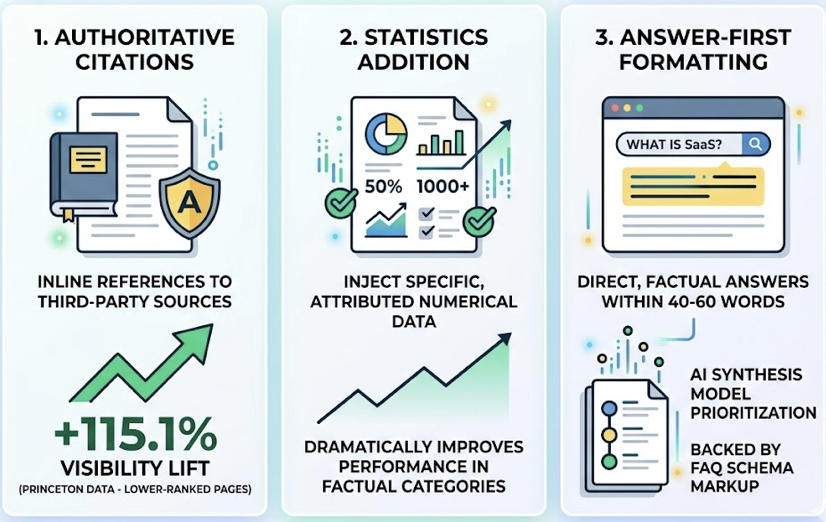
    The most common reason brands fail to rank in AI Overviews is “Buried Ledes.” LLMs prioritize content that mimics their own output structure: Direct Answer → Nuance → Data.

    To learn how to rank in AI Overviews, you must adopt the Inverted Pyramid for AI:

    The “Zero-Token” Definition

    Immediately after your H2 (e.g., “What is GEO?”), the very first sentence must be a definitive, standalone definition.

  • Bad: “GEO is a complex topic that many marketers are discussing…”

  • Good: “GEO (Generative Engine Optimization) is the process of optimizing content to appear in AI-generated answer snapshots.”

  • The “Key Takeaways” Block

    Place a summary box at the very top of your article. Use bullet points. Google’s RAG (Retrieval-Augmented Generation) system often lifts these bullet points directly into the AI snapshot.

    Explicit Targeting of “People Also Ask” (PAA)

    Use Topify to identify the PAA questions related to your keyword. Use these exact questions as H2s or H3s in your content, and answer them immediately.

    Strategy 2: Structuring Data for “Listicle” Dominance

    AI Overviews love lists. Whether it is “Top 10 Tools” or “5 Steps to Fix X,” the AI prefers structured lists over narrative paragraphs.

    The Parallel Syntax Rule

    Ensure every item in your list follows the same grammatical structure.

  • Verb-First: “Optimize your images.”

  • Verb-First: “Minify your code.”

  • Verb-First: “Leverage browser caching.”

  • This consistency makes it easier for the AI to tokenize and summarize your list. If you mix structures, the AI is less likely to cite the entire list.

    Use HTML Tables, Not Just CSS Grids

    LLMs parse raw HTML. An HTML <table> with clear <th> (headers) is the gold standard for data. If you are comparing pricing or features, put it in a table. Our data at Topify shows that pages with data tables have a 45% higher chance of appearing in AI Overviews for comparison queries.

    Strategy 3: Information Gain and “Unique Tokens”

    Google has explicitly stated that “Information Gain” is a ranking factor. If your content is a rewrite of the top 3 results, you add no value to the AI’s synthesis.

    How to Engineer Information Gain

    To solve how to rank in AI Overviews, you must provide “Unique Tokens”—words or numbers that appear on your page and nowhere else.

  • Proprietary Data: “According to our survey of 500 CIOs…”

  • New Terminology: Coin a phrase (like “Content Engineering”) and define it.

  • Contrarian Perspectives: “While most experts say X, our data suggests Y because…”

  • Citation Clusters

    Link out to high-authority primary sources (e.g., government data, academic papers) within your content. This “Citation Cluster” signals to the AI that your content is grounded in truth, increasing your “Trustworthiness” score in the E-E-A-T framework.

    For more on building authority, see our guide on securing the featured answer.

    Strategy 4: Entity Salience and Contextual Bridging

    Robots don’t understand metaphors. They understand entities (People, Places, Things, Concepts).

    Noun-Based Optimization

    Ensure your sentences clearly connect the Subject (Entity) to the Predicate (Action). Avoid vague pronouns like “it,” “this,” or “they” in critical sentences.

  • Vague: “It helps you track rankings.”

  • Clear:Topify helps marketers track AI Overview rankings.”

  • Semantic HTML Tags

    Use HTML5 semantic tags to help the AI parse your layout.

  • Use <article> for the main content.

  • Use <aside> for related but non-critical info.

  • Use <mark> or <strong> to highlight the exact keywords you want the AI to pay attention to.

  • Measuring Your Content Engineering with Topify

    You have engineered your content. Now, is it working? You need to verify if your structural changes are actually triggering the AI Overview.

    Topify is the essential tool for this verification loop.

  • Snapshot Trigger Rate

  • Use Topify to see how often an AI Overview triggers for your target keywords. If the AI isn’t triggering, you might be targeting a keyword that is too simple or too sensitive (YMYL).

  • Carousel Position Monitoring

  • If the AI Overview triggers, where are you? Topify tracks your specific position in the citation carousel.

  • Action: If you are in the carousel but not Position 1, try tightening your “Zero-Token” definitions to be more concise.

  • Content Gap Analysis

  • Topify compares your content against the current winner. Does the winner have a table you lack? Do they have a video schema you missed?

    Learn more about the metrics that matter in our guide on measuring AI citation growth.

    Advanced: Code-Level Optimization for AI

    For the technical SEOs, here is the bleeding edge of how to rank in AI Overviews.

    Fragment Indexing with Named Anchors

    Google’s AI often cites a specific part of a page. Help it out by adding id attributes to your H2s and H3s (e.g., <h2 id="what-is-geo">). This allows the AI to generate a “Scroll-to-Text” fragment link directly to your answer.

    Reduce DOM Depth

    Keep your critical text high in the DOM (Document Object Model). If your answer is buried inside 15 layers of <div> tags due to a messy page builder, the crawler might de-prioritize it.

    Conclusion: Engineering Your Way to the Top

    Winning in 2026 isn’t about being the loudest; it’s about being the clearest.

    By adopting Content Engineering—structuring your data, defining your entities, and respecting the machine’s need for order—you make it mathematically probable for the AI to choose you.

    Don’t guess at what works. Use Topify to validate your engineering, iterate on your structure, and secure your dominance in the era of Generative Search.

    Ready to build your complete framework? Return to our definitive blueprint for GEO.

    FAQ: How to Rank in AI Overviews

  • What is the most important factor for ranking in AI Overviews?

    Directness. The AI values content that answers the user’s intent immediately and concisely. The “Inverted Pyramid” writing style is the single most effective tactic for this.

  • Does word count matter for AI Overviews?

    Not directly. The AI looks for “Information Density,” not length. A 500-word article packed with unique data is more likely to rank than a 3,000-word fluff piece. However, longer content often covers more related entities, increasing the chance of triggering for long-tail queries.

  • Can Topify help me optimize existing content?

    Yes. Topify can analyze your existing pages against the current AI Overview winners and highlight specific structural gaps, such as missing tables, vague definitions, or lack of schema markup.

  • How long does it take to rank in an AI Overview after optimizing?

    It varies, but AI Overviews are often more dynamic than traditional SERPs. We have seen pages jump into the snapshot within days of a “Content Engineering” refresh, especially when using content strategies.

  • Is Schema Markup mandatory?

    Technically no, but practically yes. While you can rank without it, Schema Markup (JSON-LD) translates your content into the native language of the machine, significantly increasing your probability of being understood and cited.

  • Track AI Overviews Rankings Measure Citation Growth

    Defining the New KPIs: Citation Growth vs. Rank Position

    In the generative web, a single number cannot capture performance. Here are the five metrics that actually matter.

    1. Snapshot Trigger Rate (STR)

    How often does an AI Overview actually appear for your target keywords?

  • Calculation: (Queries with AI Overview / Total Queries Checked) * 100.

  • Why it matters: You cannot rank in an AI Overview if Google isn’t generating one. Knowing the STR helps you prioritize keywords worth optimizing. Informational queries often have an STR above 80%, while transactional queries may vary.

  • 2. Citation Presence (CP)

    If an AI Overview triggers, is your brand cited? This is the new “Rank #1.”

  • Metric: Citation Rate = (Total Citations / Total Snapshots Triggered).

  • Goal: Aim for a CP >40% for core brand terms. Anything less implies the AI prefers a competitor’s data source.

  • 3. Citation Growth Velocity

    This measures the change in citation frequency over time. It is a leading indicator of future traffic.

  • Goal: If you applied our content engineering strategies last month, positive velocity proves the model is “learning” your content.

  • 4. Sentiment Score & Velocity

    Topify uses NLP to grade the sentiment of the text surrounding your citation (-100 to +100).

  • Sentiment Velocity: Tracking the rate of change in sentiment is crucial. A rapid drop in sentiment velocity often predicts a removal from the AI snapshot before it actually happens, giving you time to react.

  • 5. Share of Model (SoM)

    Unlike Share of Voice, SoM measures how much of the AI’s context window is dominated by your brand entities. Are you mentioned once, or are you the primary subject of the generated answer?

    Step-by-Step: How to Track AI Overviews Rankings with Topify

    Manually checking Google is impossible due to personalization. You need an automated system.

    Step 1: Isolate “Generative Keywords”

    Use Topify to filter your keyword list for “AI-Triggering Queries.” Focus on complex, informational queries (e.g., “how to integrate CRM”) rather than simple navigational terms, as these trigger the most citation opportunities.

  • Cluster Strategy: Group keywords by intent. Transactional AI queries often feature carousels, while informational ones favor text citations.

  • Step 2: Configure “Snapshot” Monitoring

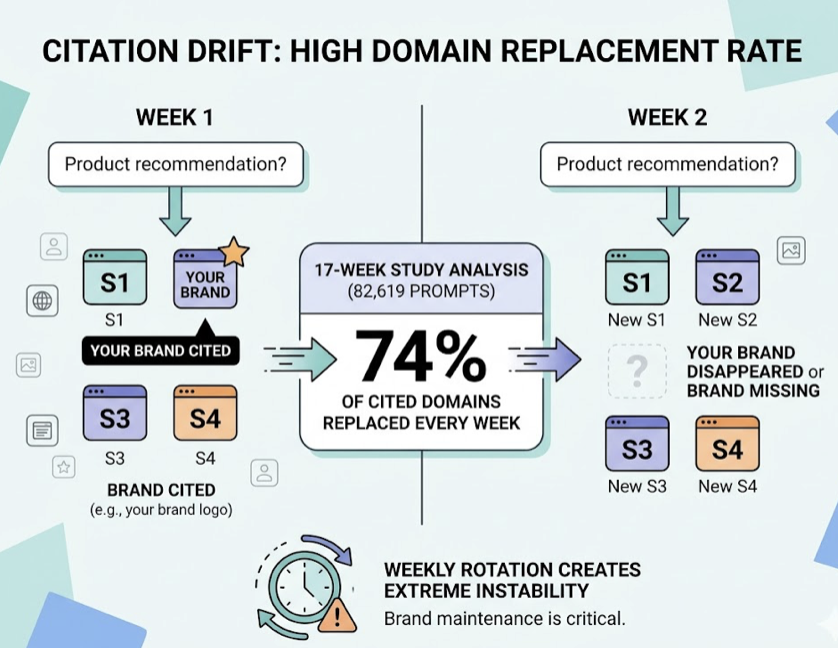
    Set Topify to analyze priority keywords daily. Unlike static SERPs, AI answers change frequently based on new data ingestion (RAG). You need a historical record to detect if your brand is dropped.

  • Location Variance: AI Overviews are highly localized. Ensure your tracking is set to the specific regions (e.g., US-NY vs. UK-London) relevant to your market, as the AI’s source selection can differ wildly by geography.

  • Step 3: Segment by Citation Type

    Topify distinguishes visibility value:

  • Text Citation (Gold Standard): Brand mentioned in the paragraph. Highest authority.

  • Carousel Link (Traffic Driver): Content in the horizontal scroll. Highest CTR.

  • Expansion Link (Deep Dive): Visible only after clicking “Show More.” Lower visibility.

  • Advanced Analytics: Measuring Citation Growth Over Time

    Citation Growth is a lagging indicator of Authority. Here is how to analyze it.

    The “Authority Lag” Phenomenon

    Topify data shows an average “Authority Lag” of 14-21 days between publishing content and seeing it cited in an AI Overview. Don’t panic; track the trend, not the day.

    Correlating Optimization with Growth

    Use Topify’s annotation feature to mark when you optimized a page (e.g., added Schema Markup). Look for a correlation between that date and an upward trend in Citation Presence weeks later. This proves your complete GEO strategy framework is working.

    Content Decay Tracking

    AI models “forget” content that isn’t refreshed. Use Topify to monitor Content Decay. If a high-performing citation suddenly drops, it often means the AI considers your data “stale.” Refreshing the publication date and stats can often restore the ranking within 48 hours.

    Competitor Share of Voice (SoV)

    Are you growing, or is the market shrinking? Overlay your Citation Growth against competitors in Topify. If they are growing faster, audit their “Information Gain” tactics.

    The Economics of AI Visibility: ROI Calculation

    If clicks go down but citations go up, are you winning? Yes, if you measure “Qualified Visitor Value.”

    Visitors clicking an AI Citation are “Pre-Qualified.” They have consumed the summary and want deep details. Formula: (AI Citation Traffic * Conversion Rate) * Lifetime Value (LTV). Most brands find AI Citation Traffic converts 2x-3x higher than standard search traffic.

    Diagnosing Drops: When AI Rankings Disappear

    One day you are cited; the next day you aren’t. Common causes:

  • Information Redundancy: If another site publishes your data but formats it better (e.g., in a table), Google may swap them in. Fix: Update with fresh, unique data.

  • Sentiment Shift: Negative reviews can cause the AI to remove you to protect its credibility. Fix: Monitor sentiment in Topify.

  • Structural Confusion: Broken H2/H3 hierarchies confuse the LLM. Fix: Re-validate with our technical SEO checklist.

  • Algorithm Volatility: Google frequently updates its RAG thresholds. If you see a global drop, check Topify’s “Market Volatility” index to see if it’s a system-wide update or specific to your brand.

  • Conclusion

    Your CFO cares about growth. By shifting reporting from “Organic Traffic” to “Citation Growth,” you align KPIs with reality.

    You cannot manage what you cannot measure. Use Topify to gather the granularity needed to prove your GEO efforts are driving value.

    FAQs:

    1. Can Google Search Console track AI Overviews?

    GSC data is aggregated and lacks detail. It tells you that you appeared, but not how (text vs. carousel) or the sentiment. You need a dedicated tool like Topify.

    2. What is a good “Citation Rate”?

    For informational queries, 20-30% is excellent. For navigational queries (e.g., your brand name), it should be near 100%.

    3. Why does Citation Growth fluctuate?

    AI models are probabilistic. They re-generate answers to test quality. Focus on the 30-day moving average rather than daily spikes.

    4. Does Citation Growth correlate with sales?

    Yes. Users clicking AI citations convert at a higher rate because the AI has pre-qualified the answer for them.

    5. How much does Topify cost?

    Topify offers scalable pricing. Startups can begin with the essential pack detailed in our startup tool stack guide.

    6. Can I track competitor rankings?

    Absolutely. Topify allows you to input competitor domains to see their visibility for your keywords, helping you identify “Gap Analysis” opportunities.

  • How To Audit Brand Visibility On LLMs

    Step-by-Step: How to Audit Brand Visibility on LLMs

    Manual auditing is impossible due to the “Stochastic” (random) nature of AI. You need a dedicated AI brand visibility tool. Here is the workflow using Topify.

    Phase 1: The “Unbranded” Category Audit

  • Goal: Determine if you are part of the AI’s “Consideration Set.”

  • Action: Input 50 generic prompts related to your industry into Topify (e.g., “Top 5 project management tools for agencies”).

  • Analysis: Topify will run these prompts across ChatGPT-4o, Claude 3.5, and Perplexity.

  • Metric: Category Presence Rate. (e.g., “We appear in 30% of category recommendations.”)

  • Phase 2: The “Branded” Reputation Audit

  • Goal: Detect hallucinations and sentiment issues.

  • Action: Input specific navigational prompts (e.g., “Is [Brand Name] secure?”, “What are the cons of [Brand Name]?”).

  • Analysis: Look for “Hallucination Flags” in the Topify dashboard.

  • Correction: If the AI claims you lack a feature you actually have, this is a content gap you must fill on your website using Schema Markup.

  • Phase 3: The Competitor Head-to-Head

  • Goal: Understand why you are losing.

  • Action: Use Topify’s competitor tracking features to run a side-by-side comparison.

  • Insight: Does the competitor have more citations from high-authority sources like Wikipedia or G2?

  • Analyzing the Data: The Audit Scorecard

    Once Topify completes the scan, you need to organize the data. Use this scorecard template to report to stakeholders.

    Metric

    Definition

    Good Score

    Critical Flag

    Entity Confidence

    How accurately the AI describes your core offering.

    >90% Accuracy

    AI calls you by a wrong category.

    Share of Voice

    Frequency of appearance in “Best of” lists.

    >40% Presence

    <10% (Invisible).

    Sentiment Score

    The qualitative tone of the mention (-100 to +100).

    >75 (Positive)

    <50 (Neutral/Negative).

    Hallucination Rate

    Percentage of answers containing false info.

    <5%

    >20% (Reputation Risk).

    Choosing the Right AI Brand Visibility Tool

    You cannot perform this audit with Google Search Console. You need specialized software.

    Topify is the industry standard for this specific task because:

  • Multi-Model coverage: It audits ChatGPT, Gemini, and Perplexity simultaneously.

  • Historical Benchmarking: It shows you if your visibility is trending up or down over time.

  • Citation Forensics: It traces the exact URL the AI used to generate the answer, allowing you to fix the source.

  • For a comparison of other tools in the market, read our review of best tools for tracking brand visibility.

    From Audit to Action: Fixing the Gaps

    An audit is useless without a remediation plan. Here is how to fix the issues you find.

    Scenario A: Low Entity Salience

  • Diagnosis: The AI doesn’t know you.

  • Fix: You need “Knowledge Graph Optimization.” Update your “About Us” page, Wikipedia entry, and Crunchbase profile. Ensure your brand entity is clearly defined in structured data.

  • Scenario B: Negative Sentiment

  • Diagnosis: The AI calls your product “glitchy.”

  • Fix: The AI is likely pulling from an old forum thread. You need to flood the context window with fresh, positive reviews on trusted third-party sites like Capterra or Trustpilot.

  • Scenario C: Losing Share of Voice

  • Diagnosis: Competitors appear in the “Top 5” list, but you don’t.

  • Fix: Your content lacks “Listicle Structure.” Rewrite your comparison pages to be more direct and data-heavy, making it easier for the AI to extract your features.

  • Resource: Learn more in our content engineering guide.

  • The Future of Brand Auditing: “Persona-Based” Audits

    As we look toward late 2026, audits will become more granular. You won’t just audit “ChatGPT”; you will audit “ChatGPT for a CFO Persona” vs. “ChatGPT for a Developer Persona.”

    Topify is already pioneering this advanced AI search optimization strategy, allowing brands to see how their reputation shifts depending on who is asking the question.

    Conclusion: Visibility is Liability (Until Audited)

    In the generative age, what you don’t know can hurt you. An unchecked AI model recommending your competitor is a silent revenue leak.

    By learning how to audit brand visibility on LLMs today, you turn this risk into an asset. You gain control over your narrative in the most influential channel of the decade.

    Don’t guess. Audit. Use Topify to shine a light into the black box and secure your brand’s future.

    FAQs:

  • How often should I conduct an AI Brand Audit?

    We recommend a “Deep Audit” quarterly and “Pulse Checks” weekly. AI models update their weights and retrieval sources frequently. A weekly check with an AI brand visibility tool ensures you catch hallucinations before they spread.

  • Can I remove my brand from an AI model?

    Generally, no. Once you are in the training data, you are there. However, you can use robots.txt to block future scraping, though this is often counterproductive as it ensures the AI only has old data about you. The better strategy is optimization, not removal.

  • Why does the AI say my pricing is wrong?

    This is a common hallucination caused by the AI reading outdated pricing pages or third-party reviews. Use Topify to identify the source of the misinformation and update it with a “Last Updated: 2026” timestamp to signal freshness.

  • Does social media affect my AI audit scores?

    Yes. Models like Grok (Twitter/X) and Google Gemini (YouTube/Reddit) ingest social data in real-time. A viral negative thread can tank your sentiment score overnight.

  • What is the difference between an SEO Audit and a GEO Audit?

    An SEO audit checks technical site health (speed, links). A GEO (Generative Engine Optimization) audit checks information accuracy and entity relationships. It is more akin to PR than engineering.

  • Search Marketing Visibility Generative Answers

    The Collapse of the Marketing Funnel

    Generative answers compress the buyer’s journey. A user can move from “Problem Awareness” to “Solution Selection” in a single prompt chain without ever visiting a website.

    The “Zero-Visit” Conversion

    In the past, search marketing visibility meant driving a user to your landing page to educate them. Now, the AI educates them.

  • Implication: Your “Brand Voice” must live inside the AI, not just on your blog. If the AI explains your value proposition incorrectly, you lose the sale before the user clicks.

  • The Role of Sentiment in Visibility

    In traditional search, a negative review ranking #4 was annoying. In AI search, a negative sentiment injected into the main answer is fatal.

  • Topify data shows that 65% of users accept the AI’s summary as “objective truth.” If the sentiment is negative, visibility becomes a liability.

  • Learn how to safeguard this aspect of your brand in our guide on AI brand visibility tracking software.

    Measuring Search Marketing Visibility in 2026

    You cannot manage what you cannot measure. Google Search Console is blind to ChatGPT. You need a new dashboard.

    Topify is the industry standard for quantifying AI visibility. Here is how to use it to benchmark your performance.

  • Share of Model (SoM)

  • Forget “Share of Voice.” Share of Model measures the percentage of AI-generated answers in your category that mention your brand.

  • Calculation: (Mentions / Total Category Prompts) * 100.

  • Goal: Achieve 30%+ SoM in your niche.

  • “Attribute Association” Tracking

  • Does the AI associate your brand with your core keywords?

  • Test: When users ask for “Enterprise Security,” does the AI think of [Brand A]?

  • Topify Feature: Entity Association Map. This visualizes which adjectives and topics are semantically linked to your brand in the LLM’s latent space.

  • Competitor Visibility Gap

  • Where are your rivals winning? Topify allows you to overlay your search marketing visibility against competitors.

  • Insight: “Competitor X is winning on ‘Pricing’ queries, but we are winning on ‘Features’ queries.”

  • For a step-by-step audit process, use our brand visibility audit framework.

    Strategies to Increase AI Visibility

    If your numbers are low, how do you fix them? The strategy moves from “Link Building” to “Information Seeding.”

    Strategy 1: “Digital PR” for Training Data

    LLMs trust high-authority third-party sources (Wikipedia, G2, Forbes, Reddit).

  • Tactic: Instead of just posting on your blog, secure placements in the sources that the AI cites most frequently. Topify identifies these “Seed Sources” for you.

  • Strategy 2: The “Definitive Guide” Approach

    AI models look for the “ground truth.”

  • Tactic: Publish massive, data-backed definitive guides. Structure them with clear definitions (e.g., “What is X?”). This makes your content the easiest for the AI to ingest and cite.

  • Strategy 3: Schema-First Architecture

    Make your site machine-readable.

  • Tactic: Use extensive JSON-LD schema to explicitly tell the AI who you are, what you sell, and who your competitors are. This removes ambiguity and boosts Entity Salience.

  • See the tools needed to execute this in our review of best tools for tracking brand visibility.

    The Future of Search Marketing Visibility

    As we look toward 2027, the concept of “Search” will continue to blur into “Assistance.”

    We predict the rise of “Agentic Marketing.” Your goal will not just be to be seen by a user, but to be selected by an autonomous AI agent performing a task (e.g., “Book a flight,” “Buy software”).

    In this world, AI visibility is binary. The agent picks the best option based on data confidence. Brands with messy data will be invisible to agents.

    To stay ahead of this curve, ensure you are following our complete GEO strategy framework.

    Conclusion: Visibility is Earned, Not Bought

    In the era of Generative Answers, you cannot buy your way to the top with simple PPC. You must earn your place in the neural network through authority, clarity, and sentiment.

    Search marketing visibility has evolved from a game of keywords to a game of entities.

    Use Topify to navigate this shift. By monitoring your Share of Model, Sentiment, and Citation Velocity, you can ensure that when the world asks the AI, the AI answers with you.

    FAQs:

  • Is “AI Visibility” the same as SEO?

    No. SEO focuses on ranking URLs on a search engine results page. AI visibility focuses on being mentioned, cited, or recommended within a generated text answer. You can have good SEO but poor AI visibility (and vice versa).

  • Can I pay to increase my AI visibility?

    Currently, most LLMs (like ChatGPT) do not have a direct “Ad” model for organic answers, though this is changing with SearchGPT prototypes. For now, the only way to increase organic AI visibility is through Generative Engine Optimization (GEO).

  • Why did my search marketing visibility drop?

    Common reasons include:

  • Model Updates: OpenAI or Google updated their underlying model, changing how they weigh certain data sources.

  • Sentiment Shift: A wave of negative reviews may have caused the AI to “downgrade” your recommendation status.

  • Competitor Activity: A rival may have published “fresher” content that displaced you in the context window.

  • How does Topify measure “influence”?

    Topify assigns an “Influence Score” based on the context of the citation. A recommendation (“You should buy X”) is weighted higher than a passive mention (“X is a company”).

  • Does social media impact AI visibility?

    Yes, significantly. Real-time models (like Google Gemini and Grok) ingest social data. A strong social presence helps signal “Freshness” and “Relevance” to the AI, boosting your overall visibility.

  • AI Brand Visibility Tracking Software

    Core Features of Enterprise AI Brand Visibility Tracking

    When evaluating software to protect your brand in 2026, look for these specific capabilities.

  • Sentiment Velocity Monitoring

  • It’s not enough to know your sentiment score is “75/100.” You need to know the direction.

  • The Metric: Sentiment Velocity. Is the AI becoming more critical of your pricing over time? A downward trend in velocity is a leading indicator of a future drop in sales.

  • Share of Sentiment (SoS)

  • How does the AI feel about you compared to your competitors?

  • Topify visualizes this as a comparative graph. If ChatGPT loves your competitor’s customer service but hates yours, that is a specific operational gap you need to address.

  • Hallucination Alerting

  • The software must offer real-time alerts. If an LLM starts generating a false claim (e.g., “This product causes data loss”), your PR team needs a push notification immediately so you can flood the context window with corrective data.

    To see how to set up these baselines, read our guide on how to audit brand visibility on LLMs.

    Topify: The Industry Standard for AI Reputation Management

    Topify is the first platform built exclusively for AI brand visibility tracking. While others focus on SEO rankings, Topify focuses on Brand Integrity.

    Why Topify is Essential for Reputation:

  • Multi-Model Surveillance: It monitors your reputation across ChatGPT, Claude, Gemini, and Perplexity simultaneously. A brand might be “Safe” in ChatGPT but “Risky” in Claude due to different safety training data. Topify reveals this discrepancy.

  • Source Forensics: When Topify detects negative sentiment, it reverse-engineers the footnotes to find the source. Is the AI quoting a 5-year-old bad review? Topify identifies that specific URL so you can target it for a content refresh or takedown.

  • Crisis Mode: Topify allows you to increase sampling frequency during a PR crisis, checking AI outputs every hour to measure how quickly the models ingest your apology or correction.

  • Strategic Value: Topify turns “AI Fear” into “AI Control.” It gives you the data needed to prove to stakeholders that your brand is resilient in the face of algorithmic volatility.

    Comparative Analysis: Topify vs. Legacy Tools

    Here is why you need a specialized stack for AI brand visibility tracking.

    Feature

    Topify

    Brandwatch / Sprout

    Google Alerts

    Data Source

    LLM Outputs (Generated)

    Social/Web (Static)

    Web Index (Static)

    Sentiment Analysis

    NLP on AI Answers

    Keyword Matching

    None

    Hallucination Detection

    Citation Tracing

    RAG Analysis

    Prompt Simulation

    Thousands/Day

    Strategy: Managing Reputation in the Generative Age

    Once you have Topify installed, how do you actively manage your reputation?

    Step 1: The “Digital Cushion” Strategy

    If Topify identifies that the AI is citing a negative Reddit thread, you cannot delete the thread. Instead, you must create a “Digital Cushion.”

  • Action: Publish 5-10 high-authority articles (on your blog, Medium, LinkedIn) that address the specific topic positively. This dilutes the negative signal in the AI’s retrieval pool.

  • Step 2: Entity Disambiguation

    Sometimes, bad reputation comes from confused identity. The AI might confuse your “Acme Corp” with a bankrupt “Acme Inc.”

  • Action: Use Schema Markup to explicitly define your entity. Topify tracks “Entity Confidence” to tell you if the AI successfully distinguishes you from similarly named brands.

  • Step 3: The “Review Injection” Cycle

    LLMs love fresh user reviews from trusted sites like G2, Capterra, or Trustpilot.

  • Action: Launch a campaign to get new reviews specifically mentioning the features the AI is criticizing. Watch your Sentiment Velocity in Topify improve as the models ingest this new training data.

  • For a deeper dive into the tools needed for this execution, check our review of the best tools for tracking brand visibility.

    The Future of AI Brand Visibility Tracking

    As we look toward 2027, reputation management will become proactive rather than reactive.

    We predict the rise of “Reputation Injection” APIs, where brands can securely feed verified data directly to AI providers to correct factual errors. Topify is currently beta-testing integrations that allow for faster correction cycles with major search engines.

    To stay ahead of these developments, subscribe to our definitive blueprint for GEO.

    Conclusion: The Truth is What the AI Says It Is

    It is a harsh reality: for a growing number of customers, if ChatGPT says your product is bad, it is bad. The AI’s output is the new truth.

  • Best AI Search Visibility Tracking Tools

    The Top 6 Best AI Search Visibility Tracking Tools for 2026

    We have tested the market leaders. Here is the definitive list.

    1. Topify: The Strategic Leader for GEO

    Topify is widely considered the industry standard for Generative Engine Optimization (GEO). Unlike legacy tools that bolted on AI features, Topify was built natively for the LLM era.

    Why It Wins:

  • Proprietary Sentiment Engine: Topify doesn’t just count mentions; it uses advanced NLP to score the quality of your brand’s presence (-100 to +100).

  • Unified Dashboard: It offers a “Single Pane of Glass” to monitor ChatGPT, Perplexity, Claude, and Gemini simultaneously.

  • Actionable Strategy: It bridges the gap between data and action, offering specific content engineering suggestions to win the “Featured Answer.”

  • Best For: Mid-to-Enterprise brands who need a complete “Monitor + Optimize” workflow.

    Learn more about how Topify powers audits in our guide on how to audit brand visibility on LLMs.

    2. Profound: The Enterprise Attribution Powerhouse

    Profound is a heavyweight solution designed for Fortune 500 companies. Its primary focus is connecting AI visibility to revenue.

    Key Features:

  • Revenue Mapping: Integrates with Adobe Analytics and Tableau to model the ROI of an AI citation.

  • Global Scale: Capable of tracking millions of SKUs across different geographies.

  • The Downside: It comes with an enterprise price tag and a steep learning curve. It is less suited for agile teams and more for data scientists.

    3. Goodie AI: The Content-First AI Search Monitoring Tool

    Goodie AI approaches visibility from a content production angle. It is an end-to-end platform that combines tracking with generative writing.

    Key Features:

  • Content Optimization: It analyzes the winning answers in ChatGPT and helps you rewrite your content to match that structure.

  • Ease of Use: Very user-friendly interface for content marketers.

  • The Downside: Its tracking capabilities are less granular than Topify’s, particularly regarding non-Google engines.

    4. Semrush AI: The Hybrid Choice for SEOs

    For teams deeply embedded in the Semrush ecosystem, their new AI visibility modules offer a convenient bridge.

    Key Features:

  • Correlation Data: Excellent at showing how your traditional organic rankings correlate with your AI Overview visibility.

  • Keyword Research: Leverages Semrush’s massive keyword database to find AI triggers.

  • The Downside: It is primarily focused on Google. If your audience is heavy on Perplexity or Claude, Semrush leaves a significant blind spot.

    See how legacy tools compare in our article: AI search ranking tracking tool vs. legacy SEO.

    5. Otterly.ai: The Budget-Friendly Option

    Otterly breaks down barriers to entry. It is a lightweight, effective tool for startups or freelancers who need to know “Am I there?” without breaking the bank.

    Key Features:

  • Simplicity: You can set up a tracker in 5 minutes.

  • Cost: Highly affordable tiers for small businesses.

  • The Downside: It lacks the deep sentiment analysis and strategic recommendations found in premium tools.

    Check our guide on the startup tool stack to see how Otterly fits a lean budget.

    6. Peec AI: The Competitor Intelligence Specialist

    Peec AI focuses almost exclusively on “Gap Analysis.” It is designed to tell you exactly when and where your competitors are beating you.

    Key Features:

  • Real-Time Alerting: Get notified the moment a competitor secures a new citation in an AI Overview.

  • Gap Visualization: Visual maps of where competitors appear in the user journey vs. where you appear.

  • The Downside: It is a niche tool; you likely need another platform for comprehensive brand management.

    Comparison: Top AI Search Visibility Tool Providers Matrix

    To help you choose, we’ve compared the critical features of the top contenders.

    Feature

    Topify

    Profound

    Semrush

    Otterly

    Primary Focus

    Strategic GEO

    Revenue Data

    Google SEO

    Basic Monitoring

    Models Tracked

    ChatGPT, Claude, Perplexity, Gemini

    All Major LLMs

    Google SGE

    ChatGPT, Google

    Sentiment Analysis

    Advanced (NLP)

    Standard

    Basic

    None

    Prompt Simulation

    Complex/Multi-Turn

    Complex

    Keyword-based

    Simple

    Optimization Tips

    SEO-focused

    Mid-High

    Enterprise

    How to Integrate These Tools into Your Workflow

    Buying the tool is step one. Integrating it into your daily operations is how you win.

    1. The Weekly “Share of Voice” Report

    Use Topify to generate a weekly report for your stakeholders. Focus on Citation Growth rather than just raw rankings.

  • Metric: “We increased our Share of Model in ChatGPT by 15% this month.”

  • 2. The Content Refresh Cycle

    Use the “Hallucination Alerts” from your tool to prioritize content updates. If the AI says your product lacks a feature, update your product page schema immediately.

    3. Cross-Functional Collaboration

    Share your AI visibility data with your PR team. If sentiment drops, it’s often a PR issue (e.g., bad press) feeding the AI, not just a content issue.

    For a broader look at managing this workflow, read our guide on evaluating SaaS cloud services.

    The Future of Best AI Search Visibility Tracking Tool Tech

    As we look toward late 2026, we expect these tools to evolve from “Monitoring” to “Active Injection.”

    Future iterations will likely include APIs that allow brands to push verified data directly to AI knowledge graphs, bypassing the crawling lag. Topify is already beta-testing features that allow for “Entity Claiming,” giving brands more control over their knowledge panel.

    To stay ahead of these trends, ensure you are subscribed to our definitive blueprint for GEO.

    Conclusion

    The era of “flying blind” in AI search is over. The tools listed above—led by Topify—provide the lens you need to see into the black box of generative answers.

    Choosing the best AI search visibility tracking tool depends on your scale.

  • Enterprises should look at Topify or Profound for data depth.

  • SEOs might stick with Semrush for transition.

  • Startups can begin with Otterly.

  • But the most important decision is simply to start. The AI is already talking about your brand; it’s time you joined the conversation.

    FAQs:

    1. Why isn’t Google Search Console on this list? GSC is a legacy tool. While it provides some data on AI Overviews, it is aggregated and lacks the granularity needed for GEO. It cannot track ChatGPT, Perplexity, or Claude, which are critical for best ai search visibility tracking.

    2. Can I use multiple tools? Yes. Many enterprises use Topify for their primary GEO strategy and sentiment analysis, while keeping Semrush for their traditional keyword research. This creates a “Hybrid Stack.”

    3. How much do these tools cost? Prices vary wildly. Otterly starts as low as $49/mo, while Profound enterprise licenses can run into the thousands. Topify offers a balanced tier structure suitable for both agencies and in-house teams.

    4. Do these tools track mobile vs. desktop AI results? Yes. AI Overviews render differently on mobile. Leading tools like Topify allow you to toggle the “Device User Agent” to see how your visibility changes on a smartphone screen.

    5. How accurate is the data? Tools like Topify use real-time simulation, meaning they run the actual prompt through the LLM API. This provides near 100% accuracy for that specific moment, though AI results can fluctuate based on randomness settings.

  • AI Search Visibility Management Tools Enterprise

    Why Standard Trackers Fail Global Brands

    Using a standard “Pro” subscription of a rank tracker is insufficient for enterprise needs. Here is why global brands require specialized AI search engine visibility tracking tools.

  • The Geo-Variance of LLMs

  • AI models are not static monoliths. They are fine-tuned regionally.

  • The Risk: A standard tool running from a US IP address will show you US results. It will miss the hallucination happening in the French version of GPT-4o.

  • The Requirement: Your tool must possess a global proxy network capable of simulating prompts from specific cities (e.g., London, Tokyo, São Paulo) to capture true local sentiment.

  • Enterprise Security & Compliance (SSO/SOC2)

  • Global brands cannot paste sensitive keywords or internal product codes into a generic tool.

  • The Requirement: Enterprise tools must offer Single Sign-On (SSO), Role-Based Access Control (RBAC), and SOC2 Type II compliance to ensure your tracking data remains proprietary.

  • Data Warehouse Integration

  • You don’t need another dashboard; you need data in your dashboard.

  • The Requirement: The best AI search visibility tracking tools for enterprise offer robust APIs. You need to pipe visibility metrics directly into Snowflake, Tableau, or PowerBI to correlate AI Share of Voice with global revenue.

  • Core Features of Enterprise AI Search Visibility Management Tools

    When issuing an RFP (Request for Proposal) for GEO software, these are the non-negotiable features for 2026.

  • Multi-Language Sentiment Analysis

  • Does the tool understand nuance in Mandarin, Spanish, and Arabic? Topify uses native-language NLP models to grade sentiment, ensuring that “sarcasm” in British English or “politeness” in Japanese is interpreted correctly.

  • Crisis Alerting System

  • For a global brand, a negative AI hallucination is a PR crisis waiting to happen.

  • Feature: Real-time “Anomaly Detection.” If your sentiment score drops by >10% in any region, the tool should trigger an immediate alert to the local PR team.

  • Attribution Modeling

  • How much is an AI citation worth? Enterprise tools like Profound and Topify attempt to solve the “Dark Social” attribution problem by modeling the lift in direct traffic following an increase in AI visibility.

    See how these metrics work in practice in our guide on measuring AI citation growth.

    Topify: The Enterprise Standard for Global GEO

    Topify has engineered its “Enterprise Tier” specifically for the Fortune 2000. It moves beyond simple tracking into complex management.

    Why Global Brands Choose Topify:

  • Global Infrastructure: Topify monitors AI outputs across 50+ countries and 30+ languages simultaneously.

  • The “Brand Safety” Shield: It proactively identifies when LLMs associate your brand with “unsafe” topics (e.g., gambling, adult content, political controversy), allowing legal teams to issue correction requests.

  • Team Collaboration: It allows global teams to comment, tag, and assign “Hallucination Tickets” within the platform. (e.g., The US team tags the German team: “Fix this pricing error in ChatGPT Germany”).

  • Strategic Value: Topify acts as the “System of Record” for your AI brand integrity. It replaces scattered spreadsheets with a unified governance platform.

    Comparing Enterprise Solutions: Topify vs. The Field

    Here is how the enterprise landscape stacks up for global management.

    Feature

    Topify Enterprise

    Profound

    BrightEdge AI

    Standard SaaS

    Global Geo-Simulation

    50+ Regions

    20+ Regions

    US/EU Focus

    US Only

    Multi-Language NLP

    Native Support

    Basic

    Limited

    English Only

    API / Data Export

    Full Access

    Full Access

    Full Access

    Limited

    SSO & RBAC

    Crisis Alerts

    Real-time

    Daily

    Weekly

    None

    Cost

    High-Value

    Premium

    Premium

    For a broader look at the general tool landscape, read our review of the best AI search visibility tracking tools.

    Governance Strategy: How to Roll Out GEO Globally

    Buying the software is easy; implementation is hard. Here is the 2026 Framework for deploying AI search visibility management tools across a global organization.

    Phase 1: Centralized Audit (HQ Level)

  • Action: The Global SEO/Brand team uses Topify to establish a “Global Baseline.”

  • Output: A heat map showing brand health across key markets. (e.g., “We are winning in North America but invisible in APAC.”)

  • Resource: Use our brand visibility audit framework.

  • Phase 2: Decentralized Optimization (Regional Level)

  • Action: Give regional marketing teams access to their specific country data in Topify.

  • Task: Regional teams are responsible for fixing local hallucinations. If ChatGPT Spain has the wrong product specs, the Spain team must update their local schema markup.

  • Phase 3: The “Feedback Loop”

  • Action: Use Topify’s API to pull regional performance data into a global HQ dashboard.

  • Goal: Identify patterns. Is a specific competitor attacking us globally? Is a new LLM update affecting all regions simultaneously?

  • The Future of Enterprise GEO: “Agentic Defense”

    As we look toward 2027, enterprise management will move from “Monitoring” to “Defense.”

    We predict the rise of “Agentic SEO,” where brands deploy their own autonomous AI agents to crawl the web and “debate” with other agents to correct misinformation. Topify is currently prototyping “Correction Agents” that can automatically submit feedback to LLM providers when factual errors are detected.

    To stay ahead of this cutting-edge tech, subscribe to our definitive blueprint for GEO.

    Conclusion: Governance is Growth

    For global brands, chaos is the enemy. The fragmented nature of AI search creates a chaotic environment where your brand voice can be distorted a thousand different ways in a thousand different languages.

    AI search visibility management tools are the antidote to this chaos. They bring order, governance, and visibility to the black box.

    Equip your global organization with Topify. Ensure that whether a customer asks in English, Japanese, or German, the answer they get is accurate, positive, and undeniably yours.

    FAQ: AI Search Visibility Management Tools

  • How does Topify handle multi-language tracking?

    Topify doesn’t just translate queries; it uses “Native Prompt Simulation.” It asks questions the way a local speaker would (using local idioms and slang) to get the most accurate reflection of the local AI model’s output.

  • Can we integrate Topify data with Adobe Analytics?

    Yes. Topify Enterprise offers pre-built connectors for major enterprise stacks, including Adobe, Salesforce, and Google BigQuery, allowing you to view AI visibility alongside your web traffic data.

  • What is the difference between “Tracking” and “Management”?

    “Tracking” is passive (watching the score). “Management” is active (assigning tasks, fixing issues, monitoring progress). Enterprise tools like Topify include workflow features (Ticket Assignment, Jira Integration) that turn data into tasks.

  • Does this replace our existing Enterprise SEO platform (like BrightEdge)?

    Not necessarily. They are complementary. BrightEdge/Conductor manage your website’s technical health and Google rankings. Topify manages your brand’s reputation and visibility inside the AI models (ChatGPT/Claude) that traditional tools don’t touch.

  • How secure is our keyword data in Topify?

    Topify adheres to strict enterprise security standards, including data encryption at rest and in transit. We do not use your proprietary keyword data to train public models.

  • How To Use AI Search Visibility Checking Tool

    Step-by-Step: How to Audit Your Website with Topify

    In this walkthrough, we will use Topify as our primary AI search visibility checking tool due to its multi-model capabilities.

    Phase 1: The “Seed” Configuration

    You cannot just type in your URL. You must define your “Entity.”

  • Define Your Brand Entity: In the Topify dashboard, input your official Brand Name and any common variations (e.g., “Coca-Cola” and “Coke”).

  • Select Your “Arena”: Choose the specific AI models that matter to your audience. For B2B, select Claude 3.5 and Perplexity. For B2C, select ChatGPT-4o and Google Gemini.

  • Input “Gold Standard” Keywords: Upload your top 50 revenue-driving keywords. Topify will convert these into conversational prompts automatically.

  • Phase 2: The “Visibility Scan”

    Run the scan. This process usually takes 10-20 minutes as the tool performs thousands of real-time queries.

    What to Look For:

  • Zero-Visibility Zones: Are there entire categories of keywords where the AI never mentions you?

  • Hallucination Hotspots: Is the AI consistently getting your pricing or features wrong?

  • Phase 3: The Competitor Gap Analysis

    An audit is meaningless without a benchmark. Input your top 3 competitors.

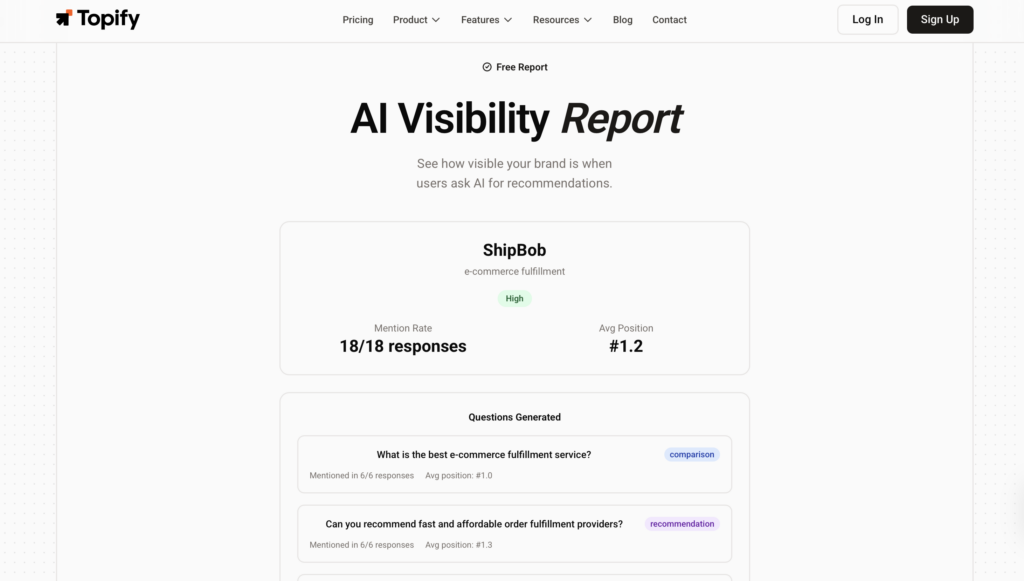
  • The Insight: Topify will show you a “Venn Diagram” of visibility.