Blog

  • AI Search Ranking Tracking Tool vs Legacy SEO

    The Core Difference: Deterministic vs. Probabilistic Tracking

    To understand the tools, you must understand the underlying math.

    Legacy SEO Trackers work on a simple logic: Input Keyword -> Scrape HTML -> Report Position (1-100). It is linear. If you check it five times, the result is usually the same.

    AI Search Trackers operate in a chaotic environment. An LLM (Large Language Model) uses a “Temperature” setting that introduces randomness.

  • Prompt 1: “Best CRM” -> Result: Salesforce.

  • Prompt 2 (5 mins later): “Best CRM” -> Result: HubSpot.

  • A legacy tool would see this as an error. An AI search tracker sees this as “Share of Voice.” It runs the prompt 100 times to calculate that Salesforce appears 60% of the time and HubSpot 40%.

    Feature Showdown: Legacy SEO vs. AI Search Tracking

    We have broken down the technical differences into a comparison matrix to help you justify the budget for a new tool.

    Feature

    Legacy SEO Tracker (e.g., Ahrefs, GSC)

    AI Search Tracker (e.g., Topify)

    Data Source

    Static HTML Index

    LLM API & Generated Text

    Ranking Logic

    Position (1-100)

    Citation Presence & Share of Voice

    Context

    Blind to Context

    Understands Sentiment & Nuance

    Query Type

    Keywords (“CRM software”)

    Prompts (“Act as a CFO and recommend a CRM”)

    Output

    URL List

    Synthesized Answer + Footnotes

    Volatility

    Low (Updates Daily/Weekly)

    High (Updates Real-Time/Per Request)

    Blind Spot

    Cannot see ChatGPT/Claude

    Cannot see traditional Blue Links

    Why Legacy Tools Are “Blind” to AI Search Tracker Metrics

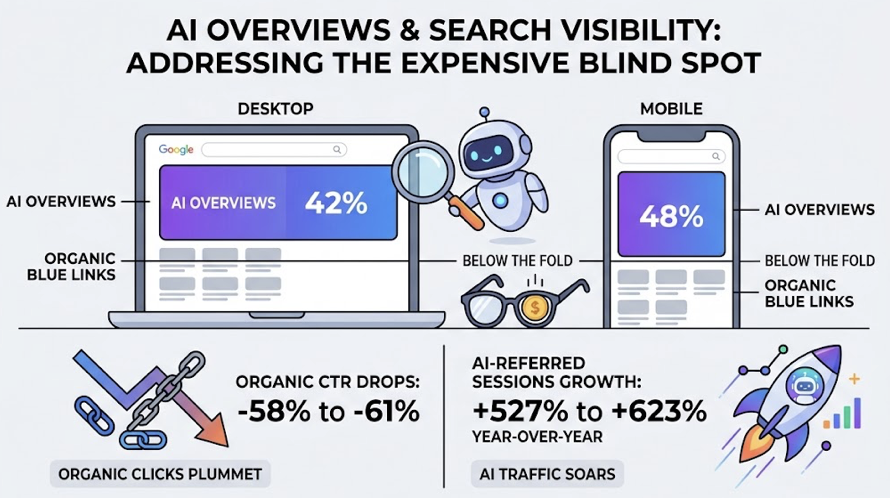
    If you rely solely on Google Search Console (GSC), you are operating with a 40% blind spot in 2026. Here is what legacy tools miss.

  • The Sentiment Blind Spot

  • A legacy tool celebrates if you rank #1. But what if the snippet says, “Topify is the #1 ranked tool, but users report frequent crashes”?

  • Legacy View: Rank #1 (Success).

  • AI Reality: Negative Sentiment (Failure).

  • The Fix: Topify uses an NLP Sentiment Engine to grade the quality of the mention, not just the position.

  • The Hallucination Blind Spot

  • Legacy crawlers assume the content on the SERP is “true” because it comes from indexed pages. AI models, however, can fabricate facts (hallucinations) that don’t exist on any webpage.

  • Legacy View: Invisible.

  • AI Reality: Brand Reputation Risk.

  • The Fix: Specialized AI search tracking detects when an LLM invents false pricing or features about your brand.

  • The Multi-Model Blind Spot

  • Legacy tools are obsessed with Google. But your customers are on Perplexity and ChatGPT.

  • Legacy View: Google Only.

  • AI Reality: Fragmented across 5+ models.

  • The Fix: Tools like Topify monitor the entire ecosystem simultaneously.

  • See the full list of tools that solve these problems in our review of the best AI search visibility tracking tools.

    The AI Search Engine Ranking Tracking Tool Advantage: Topify

    Topify represents the next generation of tracking infrastructure. It doesn’t just “scrape”; it “interacts.”

    How Topify Closes the Gap:

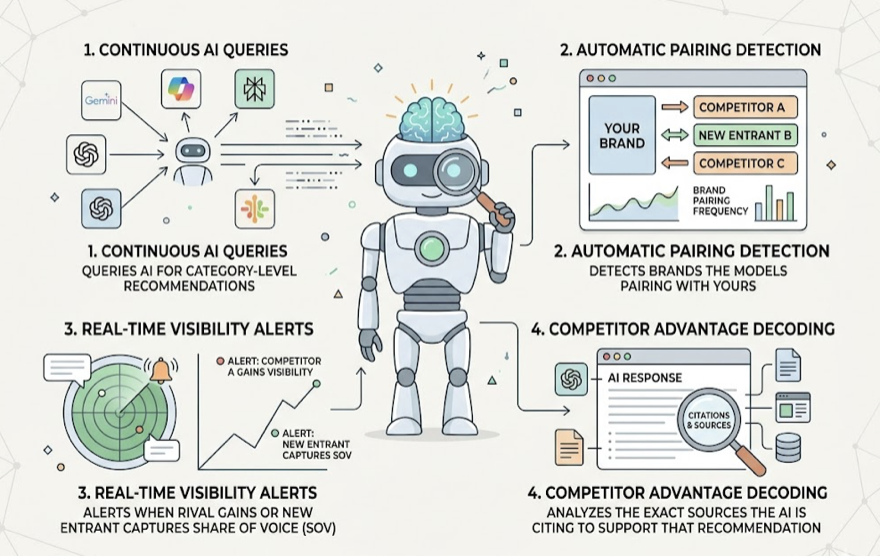
  • Multi-Agent Simulation: Topify deploys AI agents that act like different user personas (e.g., “Skeptical Buyer,” “Technical Researcher”) to see how LLMs tailor answers for different intents.

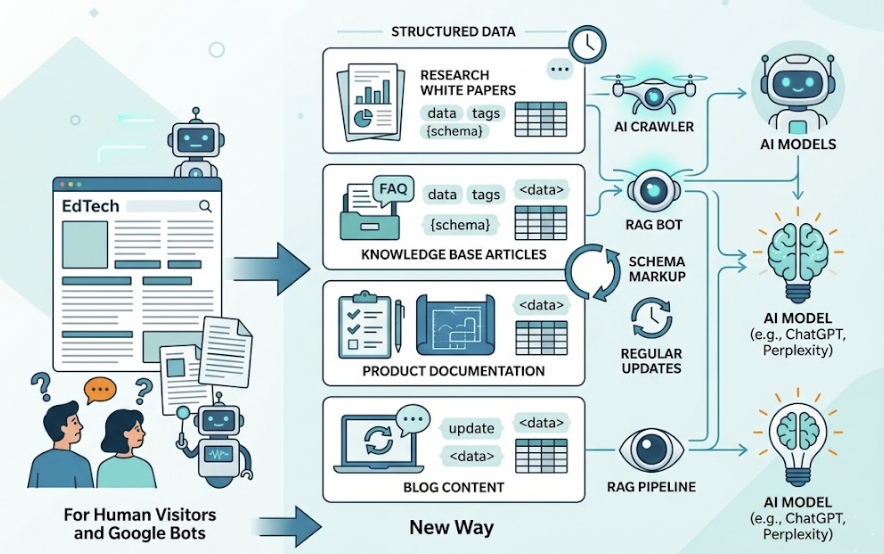
  • Citation Velocity: It tracks how quickly a new piece of content is absorbed into the RAG (Retrieval-Augmented Generation) pipeline.

  • Competitor “Share of Model”: It visualizes exactly how much “mental space” your brand occupies in the AI compared to your rivals.

  • Strategic Insight: While legacy tools help you optimize your website, Topify helps you optimize your entity. It shifts the focus from “Technical SEO” to “Digital PR and Information Gain.”

    For a guide on how to perform an audit using this tech, read how to use an AI search visibility checking tool.

    How to Run a Hybrid Strategy (The “Bridge” Approach)

    We are not suggesting you cancel your Ahrefs subscription today. In 2026, the winning strategy is Hybrid.

    Step 1: Use Legacy Tools for “Input”

    Continue using legacy tools for keyword research, backlink analysis, and technical site health. This is the foundation.

    Step 2: Use AI Search Trackers for “Output”

    Use Topify to monitor how that foundation translates into AI visibility.

  • Legacy: “We built 10 backlinks to this page.”

  • AI Tracker: “Did those backlinks increase our Citation Probability in ChatGPT?”

  • Step 3: Correlate the Data

    Look for the disconnects.

  • Scenario: You rank #1 on Google (Legacy) but are invisible on Perplexity (AI).

  • Diagnosis: Your content is optimized for keywords but lacks the “Information Gain” required for AI citation.

  • Action: Refactor content using our content engineering strategies.

  • The Economic Impact of Switching

    Why invest in a second tool stack? Because the cost of inaction is “Zero-Click” irrelevance.

    As search volume migrates from Google to AI agents, brands sticking to legacy metrics will see their traffic decay without knowing why. An AI search engine ranking tracking tool provides the leading indicators—Citation Growth and Sentiment Velocity—that predict future revenue.

    For enterprise teams, this data integration is critical. Learn more in our enterprise management guide.

    Conclusion: Upgrade Your Vision

    You wouldn’t navigate a spaceship with a paper map. You shouldn’t navigate the AI web with a keyword tracker.

    The transition from “Legacy SEO” to “GEO” requires a fundamental upgrade in your tooling. An AI search tracker like Topify gives you the eyes and ears you need to operate in the probabilistic, generative future.

    Stop tracking links. Start tracking answers.

    FAQ: AI Search Engine Ranking Tracking Tool vs. Legacy SEO

  • Can Google Search Console replace an AI tracker?

    No. GSC offers limited data on AI Overviews within Google, but it is aggregated and lacks detail on sentiment or citation type. Crucially, GSC cannot see outside of Google (e.g., ChatGPT, Claude), which is where a huge portion of search behavior is shifting.

  • Do I need to track keywords or prompts?

    Legacy SEO tracks keywords. AI search tracking tracks prompts. A prompt gives context (e.g., “Compare X and Y for a small business”). Tracking prompts is essential because LLMs output different answers based on the nuance of the request.

  • Is “Rank #1” still a valid metric in AI?

    Not really. In AI, the metrics are Citation Presence (Are you mentioned?) and Share of Model (How often?). “Rank” implies a list; AI gives a narrative. Being the first brand mentioned in a paragraph is the new “Rank #1.”

  • How does Topify handle personalization?

    Legacy tools strip personalization to show a “clean” rank. Topify embraces it by using persona-based agents. It can show you how your brand appears to a user in New York vs. London, or a technical user vs. a novice.

  • Is AI tracking more expensive than legacy SEO tracking?

    It can be, because it requires more computing power. Running an LLM query (API cost) is more expensive than scraping a static HTML page. However, the ROI is higher because the traffic from AI citations is often 2x-3x more qualified.

  • Generative Engine Optimization GEO Guide

    Part 2: GEO vs. SEO – Navigating the Critical Shift

    To master GEO, you must unlearn legacy SEO habits. The rules of engagement have changed.

    Feature

    SEO (Search Engine Optimization)

    GEO (Generative Engine Optimization)

    Goal

    Rank #1 on a list of links.

    Be the “Featured Answer” or Citation.

    Target

    The Crawler (Googlebot).

    The Model (LLM / RAG).

    Metric

    Rankings, Click-Through Rate (CTR).

    Share of Model, Citation Velocity.

    Content

    Long-form, comprehensive guides.

    Structured, fact-dense, direct answers.

    Keywords

    Exact match / Volume-based.

    Natural Language / Prompt-based.

    Authority

    Backlinks from other sites.

    Information Gain & Entity Salience.

    Competition

    10 blue links per page.

    1-3 citations per answer (Winner Take All).

    For a deeper dive into this transition, read our analysis on GEO vs SEO: Navigating the Most Critical Shift in Search History.

    The Economic Impact

    The shift from SEO to GEO isn’t just technical; it’s financial. The ROI of generative engine optimization services for e-commerce is proving to be higher than traditional SEO because AI-qualified traffic converts at a much higher rate (often 2x-3x). While traffic volume drops, “Visitor Value” skyrockets.

    Part 3: How Generative Engines Work (The RAG Framework)

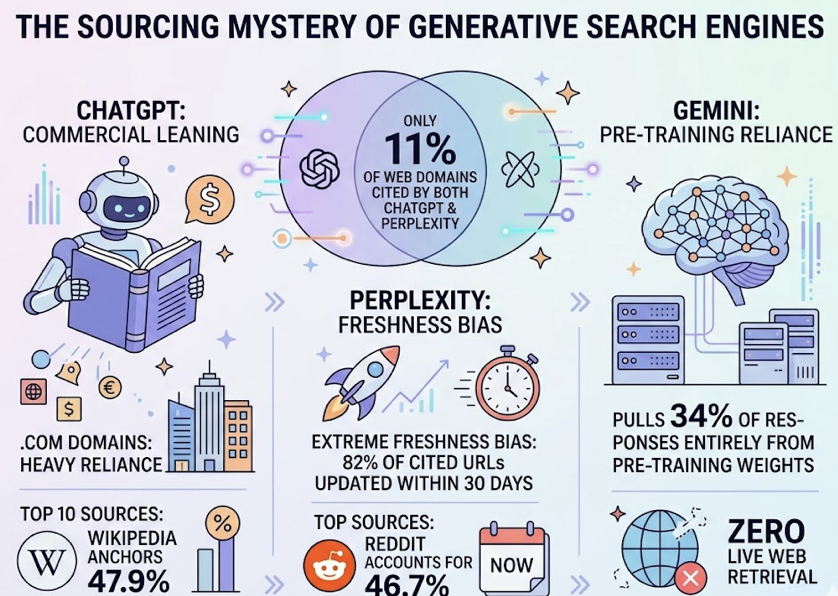
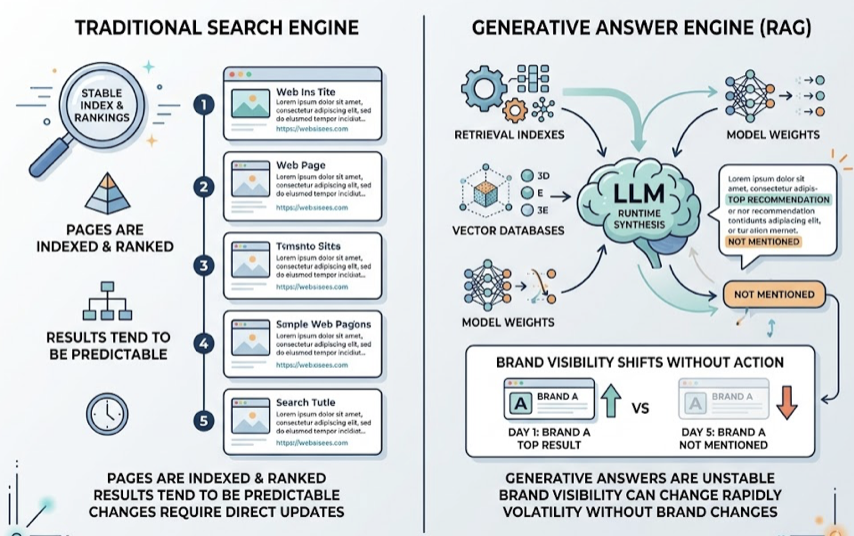
    You cannot optimize for a system you don’t understand. Generative engines like Perplexity and Google Gemini do not “memorize” the internet; they “retrieve” it.

    The architecture is called RAG (Retrieval-Augmented Generation). Understanding this is one of the fundamentals of GEO optimization.

    Step 1: Retrieval (The Search)

    When a user prompts: “Compare Topify and Semrush,” the AI first acts like a traditional search engine. It searches its vector database for relevant chunks of text.

  • Optimization Goal: Ensure your content contains the specific “Vector Embeddings” (keywords + context) that match the prompt.

  • Step 2: Augmentation (The Context)

    The AI selects the top 3-5 most authoritative chunks. It prioritizes:

  • Freshness: Data published recently.

  • Structure: Data in tables or lists.

  • Authority: Data from trusted domains (Wikipedia, G2, Official Docs).

  • Step 3: Generation (The Answer)

    The LLM reads the selected chunks and writes a new, original answer. It adds footnotes (citations) to the sources it used.

  • Optimization Goal: Citation Worthiness. If your content was used to generate the answer, you get a link. If it was too vague, you get ignored.

  • Part 4: Optimizing for Specific Generative Platforms

    One size does not fit all. Each “Answer Engine” has a unique personality and retrieval algorithm. A generic strategy will fail; you need a platform-specific approach.

  • Google AI Overviews (AIO / SGE)

  • Google’s AI is helpful, safe, and factual. It prioritizes content that mimics a “Featured Snippet” but with more depth.

  • The Strategy: Focus on “How-To” schema and “Information Gain.” Google wants to summarize the web.

  • The Tactic: You must structure your content specifically to trigger the snapshot. We detail this in our guide on how to rank in AI Overviews: content strategies.

  • The Goal: Securing the “Carousel Position” is the new Rank #1. Learn how to secure the featured answer in AI Overviews.

  • ChatGPT (OpenAI)

  • ChatGPT is conversational, direct, and reasoning-heavy. It relies heavily on its internal training data augmented by Bing browsing.

  • The Strategy: Focus on Brand Entity definition. You need to ensure ChatGPT understands who you are.

  • The Tooling: You cannot track this manually. You need a dedicated rank tracking tool for ChatGPT to monitor your Share of Voice.

  • Perplexity AI

  • Perplexity is the “Academic” engine. It is source-obsessed and real-time.

  • The Strategy: Focus on “Citation Velocity.” Perplexity loves breaking news, recent stats, and footnotes.

  • The Tactic: Optimizing for Perplexity requires a focus on “Source Authority.” Read our guide on mastering Perplexity SEO to understand how to win the footnote war.

  • Claude (Anthropic)

  • Claude is nuanced, safe, and verbose. It reads long documents (PDFs) better than others and has strict safety guardrails.

  • The Strategy: Focus on “Safety” and “Depth.” Claude prefers comprehensive whitepapers over clickbait blogs.

  • Track AI Overviews Rankings Trends

    Setting Up Longitudinal Tracking with Topify

    You cannot identify these trends with a spreadsheet. You need a database. Here is how to configure Topify for historical analysis.

    Step 1: Establish Your “Golden Set” of Keywords

    Do not try to track history for 10,000 keywords. Select 50-100 “Golden Keywords” that drive revenue.

  • Action: Lock these in Topify for daily snapshots. This builds a pristine historical dataset free from noise.

  • Step 2: Monitor the “Trend Line” vs. “Daily Line”

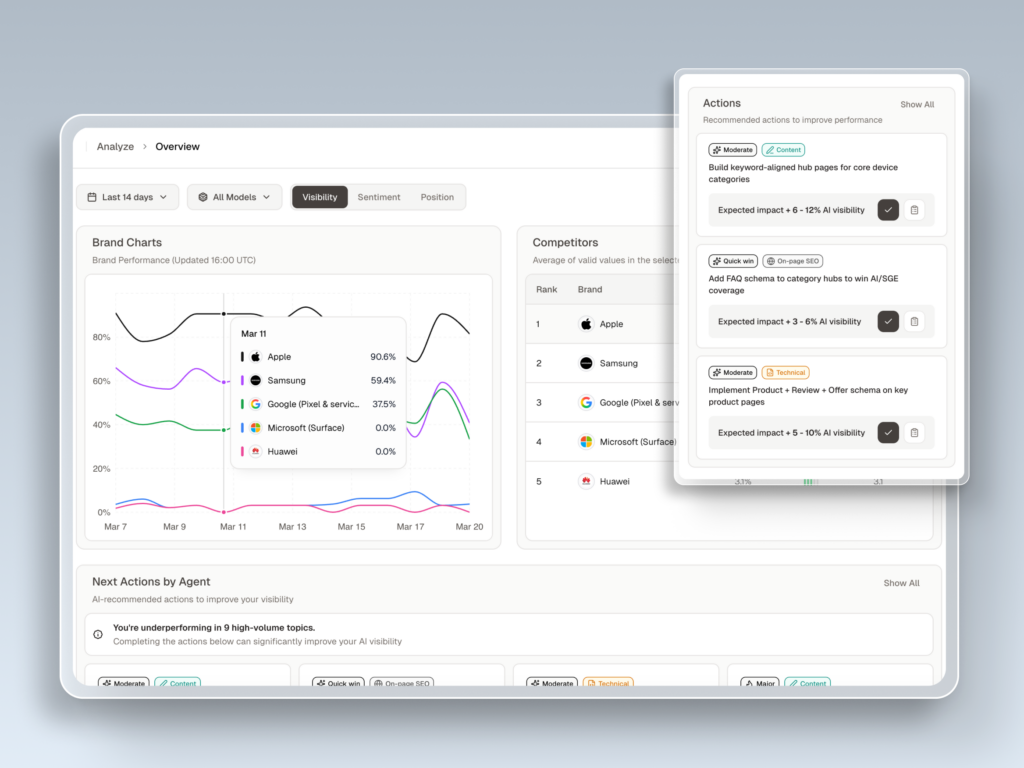
    Topify visualizes two lines on your dashboard.

  • Daily Line: Shows today’s fluctuation (Noise).

  • Trend Line: Shows the 7-day moving average (Signal).

  • Strategy: Ignore the daily line. Only react when the 7-day trend line breaks its support level.

  • Step 3: Annotation of Algorithm Events

    Google updates its Gemini models weekly. Topify automatically annotates these “System Updates” on your timeline.

  • Analysis: If your visibility drops exactly on the day of a “Gemini 2.0 Update,” you know the issue is algorithmic (e.g., they increased the threshold for E-E-A-T), not technical.

  • Identifying Trends: The 4 Patterns of AI Visibility

    When you learn how to track AI Overviews rankings over time, you will start to see four distinct shapes in your data.

    Pattern 1: The “Step Up” (The Goal)

  • Shape: Flat line → Sharp vertical rise → New flat plateau.

  • Cause: This usually happens after a successful content engineering strategy implementation, such as adding Schema Markup. The AI “unlocks” your site and re-indexes it as a trusted entity.

  • Pattern 2: The “Slow Bleed” (The Danger)

  • Shape: Consistent, gradual decline of 1-2% per week.

  • Cause: Content Decay. Your data is getting old, and competitors are publishing fresher insights.

  • Action: Immediate content refresh required.

  • Pattern 3: The “Heartbeat” (The Volatility)

  • Shape: Wild swings up and down every few days.

  • Cause: Semantic Confusion. The AI is unsure if your content satisfies the intent. It usually means your H2s are vague or your structure is messy.

  • Action: Tighten your definitions and structure.

  • Pattern 4: The “Cliff” (The Penalty)

  • Shape: High stability → Sudden drop to zero.

  • Cause: Safety Violation or Hallucination Correction. The AI has flagged your brand as “unsafe” or “unreliable.”

  • Action: Conduct a Sentiment Audit using Topify immediately.

  • Advanced Strategy: Predictive Analytics

    The ultimate goal of historical tracking is not just to see the past, but to predict the future.

    Topify uses your historical data to forecast your “Citation Probability” for the next quarter.

  • Scenario: “Based on your current decay rate, your article on ‘Best CRM’ will fall out of the AI Overview in 14 days.”

  • Benefit: This allows you to be proactive. You can schedule a content update before you lose the ranking.

  • Correlating Trends with Multi-Platform Data

    Trends on Google often foreshadow trends on other platforms.

  • Leading Indicators: We often see that a citation drop in Perplexity (which updates faster) is a leading indicator of a future drop in Google AI Overviews.

  • Cross-Platform Strategy: Use Topify to overlay your Google trends with your ChatGPT and Perplexity trends. If you are dropping everywhere, it’s a brand authority issue. If you are only dropping on Google, it’s a technical SEO issue.

  • Learn more about monitoring these other platforms in our guide on monitoring multiple models simultaneously.

    The Economics of Trend Tracking: Proving LTV

    Your stakeholders think quarterly. You need to show them that GEO is a long-term asset.

    By showing a “Year-over-Year” increase in Citation Stability, you prove that you are building a defensible digital asset. A brand that is cited by AI consistently for 12 months becomes part of the model’s “Long-Term Memory” (training data), which is far more valuable than a temporary SEO spike.

    To build this business case, refer to our definitive blueprint for GEO.

    Conclusion: Playing the Long Game

    In the volatile world of AI search, patience is a competitive advantage. Brands that react to every daily fluctuation will churn out low-quality upda

    tes and confuse the model.

    Brands that master how to tr

    ack AI Overviews rankings over time will see the signal in the noise. They will build authority brick by brick, securing a position in the AI’s knowledge graph that is resilient to daily algorithm shifts.

    Use Topify to be the brand that plays the long game. Because in 2026, stability is the new #1 ranking.

    FAQ: How to Track AI Overviews Rankings Over Time

  • How far back does Topify’s historical data go?

    Topify maintains an archive of your AI Overview snapshots for up to 24 months. This allows you to perform Year-over-Year analysis to see how seasonality affects AI triggers.

  • Why did my AI rankings drop on the weekend?

    This is a common trend. B2B queries often have lower “Snapshot Trigger Rates” on weekends because Google’s algorithm detects lower user intent for complex business tasks. Do not panic; check if it rebounds on Monday.

  • What is a good “Stability Score”?

    For core brand terms, you want a score above 90 (cited 90% of the time). For competitive non-branded terms, a score above 60 is considered market-leading stability.

  • Can I export trend data for my BI tool?

    Yes. Topify allows you to export CSVs of your daily visibility metrics. You can import this into Looker or Tableau to correlate AI visibility trends with your sales revenue trends.

  • Does updating content reset my stability score?

    It can cause a temporary “Heartbeat” fluctuation while the AI re-processes the new content, but typically leads to a “Step Up” pattern within 7-14 days if the update adds Information Gain.

  • Is it better to track daily or weekly?

    Daily tracking is mandatory for AI. Weekly tracking misses the “Heartbeat” patterns that help you diagnose structural issues. Topify automates this daily check so you don’t have to do it manually.

  • How To Monitor Brand Visibility In AI

    Core Metrics for AI Visibility Tracking

    To protect your brand voice, you need to measure specific dimensions of the AI’s output. Simple “Mention Counts” are not enough.

  • Narrative Consistency Score

  • How closely does the AI’s description of your value proposition match your official “About Us” page?

  • https www.topify.ai blog how to monitor brand visibility in ai

    The Top 5 Tools for AI Brand Visibility in 2026

    We tested the leading platforms to see which ones offer the most actionable brand intelligence.

  • Topify: The Industry Standard for Brand Defense

  • Topify creates a new category of software: Generative Brand Management. It is built specifically to protect brand integrity in the stochastic world of AI.

    Why It Wins:

  • Sentiment Velocity: Topify tracks the direction of your reputation. Is ChatGPT becoming more positive or negative about you week-over-week?

  • Adversarial Monitoring: It simulates “stress test” prompts (e.g., “Why should I NOT buy [Brand]?”) to see how the AI defends you.

  • Unified Dashboard: It aggregates brand health scores from ChatGPT, Gemini, Perplexity, and Claude into a single view.

  • Best For: CMOs and Brand Managers who need to prove that AI narratives align with official positioning.

    Learn how to use Topify for a full audit in our guide on how to audit brand visibility on LLMs.

  • Profound: Enterprise Attribution & ROI

  • Profound focuses heavily on the “Value” of visibility. It is designed for large enterprises that need to justify the budget for AI monitoring.

    Key Features:

  • Revenue Mapping: Attempts to correlate “Share of Model” with direct traffic and sales.

  • Global Scale: Excellent for tracking brand visibility across 50+ languages.

  • The Downside: High complexity and cost. It is a data science tool, not just a marketing tool.

  • Brandwatch (AI Module): The Social Hybrid

  • For brands that still rely heavily on social media, Brandwatch has introduced AI visibility features.

    Key Features:

  • Holistic View: See your AI mentions alongside your Twitter/Reddit mentions.

  • Crisis Alerts: Good at flagging viral negative sentiment that might feed into AI models.

  • The Downside: Its AI capabilities are “bolted on” to a legacy architecture. It struggles with deep hallucination detection compared to native tools like Topify.

    Understand the difference in our analysis of AI brand visibility tracking software.

  • Talkwalker: Visual & Text Intelligence

  • Talkwalker excels at multimodal tracking. If your brand relies heavily on logos and visual identity, this is a strong contender.

    Key Features:

  • Visual Recognition: Tracks if AI models are generating images that include your logo.

  • Consumer Intelligence: Deep demographic data on who is talking about you.

  • The Downside: Less focus on the technical “SEO” aspects of why the AI is citing you.

  • Semrush (Brand Monitoring): The SEO Bridge

  • Semrush offers a solid entry point for SEO teams who want to start tracking brand mentions in AI Overviews.

    Key Features:

  • Sentiment Filter: Basic positive/neutral/negative grading.

  • Backlink Correlation: Shows which backlinks are driving your brand authority.

  • The Downside: Limited primarily to Google’s ecosystem. It has blind spots for ChatGPT and Claude.

    Feature Comparison Matrix

    Here is how the best tools for tracking brand visibility in AI search results stack up.

    Loading Sheets. Please try again after it’s finished.

    Building Your Brand Tracking Stack

    Selecting the tool is just step one. You need a workflow.

    Step 1: Establish Your Baseline

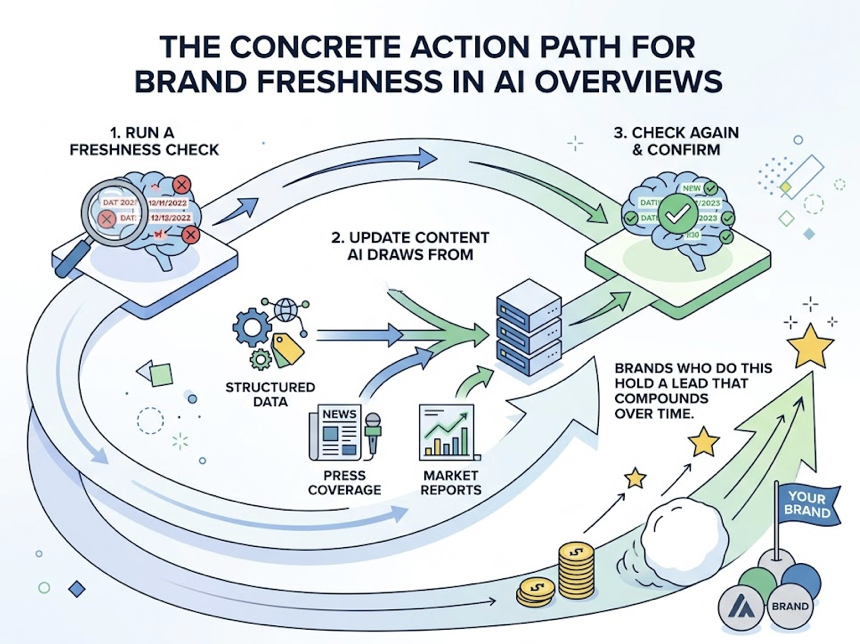
    Use Topify to run a historical scan. What has ChatGPT been saying about you for the last 6 months?

  • Resource: Use our framework for how to monitor brand visibility in AI.

  • Step 2: Monitor “Entity Association”

    Track which adjectives the AI pairs with your brand. If “expensive” or “buggy” starts appearing, you need to launch a search marketing visibility campaign to flood the training data with positive counter-narratives.

    Step 3: Crisis Response

    Set up alerts for “Sentiment Drops.” If your score dips below 60/100, your PR team should be notified immediately to investigate potential negative sources feeding the RAG pipeline.

    The Future of Brand Tracking: “Predictive Reputation”

    As we look toward 2027, the best tools for tracking brand visibility in AI search results will move from “Reporting” to “Prediction.”

    We expect tools like Topify to simulate future model updates (e.g., GPT-5) to predict how your brand visibility will change before the model is released to the public. This allows for pre-emptive optimization.

    To stay ahead of these trends, ensure you are subscribed to our definitive blueprint for GEO.

    Conclusion: The New Brand Guardians

    In the generative age, your brand is not what you tell the customer; it is what the AI tells the customer.

    You cannot afford to let a machine define your reputation without oversight. The tools listed above—led by Topify—are the essential “Brand Guardians” for 2026.

    Stop guessing what the AI thinks of you. Start tracking, measuring, and influencing the narrative today.

    FAQ:

  • Can these tools remove negative AI answers?

    No tool can “delete” an AI answer. However, tools like Topify identify the source of the negative information (e.g., a bad review site). By suppressing or fixing that source content, you can indirectly “clean” the AI’s output over time.

  • How accurate is AI sentiment analysis?

    Modern tools use LLMs to grade other LLMs, achieving 90%+ accuracy. They understand context, sarcasm, and industry-specific jargon better than old keyword-based tools.

  • Is Topify suitable for small businesses?

    Yes. While it offers enterprise features, its core “Brand Health” monitoring is accessible for mid-sized companies that need to protect their reputation in their specific niche.

  • Why isn’t Google Alerts enough?

    Google Alerts only tracks new web pages. It does not track generated text. An AI can hallucinate a lie about you without a single new web page being published. Only a generative tracking tool can catch this.

  • How often do AI narratives change?

    They can change weekly or even daily depending on the model’s “Temperature” and RAG updates. Continuous monitoring is essential to catch “flickering” negative sentiment.

  • AI Search Visibility Tracking Tools ChatGPT Perplexity

    Defining “Reliability” in AI Tracking Tools

    For an enterprise marketing team, a “reliable” tool must pass three specific technical stress tests.

    The Stochastic Smoothing Test

    LLMs are non-deterministic. If you ask Perplexity a question twice, you might get two different citation sets. A reliable tool runs Multi-Sample Probing (e.g., 100 probes per prompt) to calculate a Confidence Interval.

    Topify Standard: We report visibility not as a binary “Yes/No,” but as a probabilistic score (e.g., “85% Citation Probability”), which reflects the true behavior of the model.

    The Cross-Geo Consistency Test

    Perplexity and ChatGPT results vary wildly by region due to local data privacy laws (GDPR) and server-side caching.

    Topify Standard: Our global node network simulates user prompts from 50+ countries to ensure that your “Global Visibility” report is actually composed of accurate local data, not just a US-centric snapshot.

    The RAG Attribution Test

    Does the tool know why you were cited? Reliable tools must intercept the citation link.

    Topify Standard: We identify whether the AI cited your “Pricing Page,” your “Blog,” or a “Third-Party Review.” This distinction is critical for optimizing your content strategy.

    Top Tools for Cross-Platform Reliability

    While many tools claim AI capabilities, only a few have the infrastructure to track both ecosystems reliably.

    Topify: The Unified Intelligence Layer

    Topify is engineered for cross-platform reliability. It normalizes the data differences between ChatGPT’s narrative output and Perplexity’s structured source cards.

  • Best For: Enterprise teams needing a single source of truth for AI Share of Voice.

  • Reliability Feature: Entity Signal Sync. Topify tracks how your brand entity appears in the Knowledge Graph, which is the common “Trust Layer” shared by both ChatGPT and Perplexity.

  • Profound: The Attribution Specialist

    Profound focuses on the downstream impact. It is reliable for tracking the traffic that comes from these platforms.

    Best For: Performance marketers focused on ROI.

    Limitation: Less granular on the “Why” of visibility (e.g., specific content structure issues).

    Peec AI: The Broad Monitor

    Peec AI excels at tracking brand mentions across a wide array of smaller models and wrappers.

  • Best For: PR teams monitoring brand sentiment.

  • Limitation: Lacks the deep RAG Diagnostic capabilities required to engineer citations in Perplexity.

  • Comparison Matrix: ChatGPT vs. Perplexity Tracking Capabilities

    Feature

    Topify

    Profound

    Peec AI

    Legacy SEO Tools

    Cross-Platform Prob. Checking

    High (Multi-Sample)

    Medium

    None

    ChatGPT “Memory” Tracking

    Yes (Entity Audit)

    Mentions Only

    Perplexity RAG Diagnostics

    Deep (Density Score)

    Traffic Only

    Basic

    Citation Integrity Check

    Yes (Link Validation)

    Update Frequency

    Real-Time / Hourly

    Daily

    Daily

    Weekly

    Strategic Output

    Optimization Roadmap

    Revenue Report

    Alerts

    Rank Report

    For more on selecting the right tool, see our guide on how to compare AI search optimization tools.

    Case Study: Harmonizing Visibility for FinGuard

    To illustrate the importance of reliable cross-platform tracking, let’s examine FinGuard (pseudonym), a B2B cybersecurity platform.

    The Discrepancy

    FinGuard’s dashboard showed they were a “market leader.” In ChatGPT, they were cited in 60% of prompts. However, their sales team reported zero leads from Perplexity users.

    The Topify Diagnosis

    Using Topify’s cross-platform audit, the discrepancy was revealed:

  • ChatGPT: Was relying on FinGuard’s historical brand authority (Wikipedia, Crunchbase), where they were strong.

  • Perplexity: Was failing to retrieve FinGuard’s website content because it was behind a strict firewall that blocked the PerplexityBot crawler. The “Reliability” of their tracking tool had failed to flag this technical block.

  • The Fix

    FinGuard used Topify’s roadmap to:

  • Technical Allow-Listing: Updated robots.txt to allow PerplexityBot.

  • Structure Update: Published a “Public Security Spec” page with high Information Density specifically for RAG engines.

  • The Result

  • Perplexity Visibility: Jumped from 0% to 45% in 2 weeks.

  • Consistency: The brand became the #1 cited source across both platforms, stabilizing their lead flow.

  • Strategic Outlook: The Agentic Convergence

    By late 2026, the distinction between ChatGPT and Perplexity will blur as both move toward Agentic Search.

    Tracking “Agentic Handshakes”

    Reliability will soon be measured by M2M (Machine-to-Machine) success rates. Can an autonomous agent from ChatGPT successfully parse your pricing API? Can a Perplexity agent verify your stock levels?

  • Topify’s Roadmap: We are developing “Agentic Reliability Scores” to test these handshakes, ensuring your brand is ready for the autonomous economy.

  • Frequently Asked Questions (FAQ)

  • Can one tool really track both ChatGPT and Perplexity accurately?

  • Yes, but only if it uses Polymorphic Probing. This means the tool must send different types of prompts to each engine.

    It sends “Conversational” prompts to ChatGPT and “Factual/Research” prompts to Perplexity. Topify automates this nuance to ensure data accuracy.

  • Why does my brand rank in Perplexity but not ChatGPT?

  • This is often an Entity Authority issue. Perplexity might cite you because you have a great blog post (Content), but

    ChatGPT might ignore you because your brand lacks a verified Knowledge Graph entry (Entity). Topify helps you identify and fix these Entity SEO gaps.

  • How often should I audit my cross-platform visibility?

  • We recommend a Weekly Pulse Check. Because Perplexity indexes the live web, a single competitor article can displace you in days. ChatGPT is slower to update, but when it does fine-tune, the changes are seismic. Topify’s automated alerts keep you ahead of both cycles.

    4 Is “Citation Share” the same as “Market Share”?

    In the AI era, yes. If you are not cited, you are not in the consideration set. Citation Share is a leading indicator of future market share. Brands that dominate citations in 2026 will dominate revenue in 2027.

    Conclusion: Unified Intelligence for a Fragmented World

    The days of optimizing for a single algorithm are over. To win in 2026, brands must demonstrate reliability across the conversational nuance of ChatGPT and the factual rigor of Perplexity.

    Topify provides the unified intelligence layer required to navigate this complexity. By offering high-fidelity probing, entity synchronization, and RAG diagnostics, we ensure your brand speaks the language of every major AI model.
    Ready to unify your AI visibility strategy?

    Schedule Your Cross-Platform Audit with Topify

  • Comparison Best Tools Tracking Brand Visibility

    Head-to-Head: Topify vs. Brandwatch (Legacy Social)

    The Matchup: The AI-Native vs. The Social Giant.

    Brandwatch: The Social Lens

    Brandwatch is trying to pivot from Twitter to ChatGPT.

  • Pros: If you want one dashboard for TikTok comments and AI mentions, this is it.

  • Cons: It treats AI outputs like social posts. It lacks “Citation Forensics”—it can’t tell you why the AI said what it said (i.e., the RAG source).

  • Topify: The Generative Lens

    Topify understands that AI is not social media.

  • Pros: It reverse-engineers the RAG process. It tells you: “ChatGPT said X because it read this Reddit thread.” This allows you to fix the root cause.

  • Verdict: Social listening tools are insufficient for GEO. For true brand visibility tracking tools ai search, you need a native solution like Topify, which differs significantly from legacy AI brand visibility tracking software.

    Deep Dive: Platform-Specific Tracking Capabilities

    Not all tools track all engines equally well. Here is a breakdown of which tool wins for each specific AI platform.

    Best for Tracking ChatGPT

  • Winner: Topify.

  • Why: ChatGPT is highly conversational and prone to hallucination. Topify’s “Adversarial Prompting” feature stresses the model to see if it cracks and gives false info about your brand, making it the best ChatGPT rank tracking tool for defensive strategy.

  • Best for Tracking Perplexity

  • Winner: Topify.

  • Why: Perplexity is a citation engine. Topify’s “Citation Graph” visualizes exactly which sources Perplexity trusts most in your industry, allowing you to target them for PR—a key component of mastering Perplexity SEO.

  • Best for Tracking Google AI Overviews (SGE)

  • Winner: Tie (Topify / Semrush).

  • Why: Semrush has strong traditional Google data, but Topify offers better sentiment analysis of the generated snapshot text.

  • The Ultimate Comparison Matrix

    A detailed look at the specifications of the best tools for tracking brand visibility in ai search platforms.

    Feature

    Topify

    Profound

    Brandwatch

    Semrush

    Core DNA

    GEO / Reputation

    Data / ROI

    Social Listening

    SEO / Keywords

    ChatGPT Tracking

    Deep

    Deep

    Basic

    None

    Claude Tracking

    Deep

    Basic

    None

    None

    Sentiment Engine

    NLP-Native

    Standard

    Keyword-based

    Basic

    Hallucination Alerts

    Real-Time

    Daily

    Citation Forensics

    Limited

    Brand Voice Audit

    Mid-High

    Enterprise

    Premium

    Strategic Implementation: Using the Right Tool for the Right Job

    You might not need just one tool. Many enterprises run a “Hybrid Stack.”

    The “Defense & Offense” Stack

  • Defense (Reputation): Use Topify to monitor hallucinations and sentiment velocity. This protects your brand voice.

  • Offense (Content): Use a content optimization tool alongside Topify to restructure your blog posts for answer engine readability.

  • Integration with Audits

    Before you buy a subscription, run a one-time audit to see which tool gives you the best data. You can use our framework for how to audit brand visibility on LLMs to benchmark the tools against each other using your own keywords.

    The Cost of Inaccuracy

    Why does this comparison matter? Because bad data leads to bad strategy.

    If you use a legacy tool that only tracks Google, you might think your brand sentiment is “Positive” because you rank #1. Meanwhile, on Perplexity (where B2B buyers actually research), your sentiment might be “Negative” due to a recent bad review.

    Without a dedicated tool like Topify, you have a blind spot that competitors will exploit.

    Conclusion

    When comparing the best tools for tracking brand visibility in ai search platforms, the choice depends on your priorities.

  • If you need ROI Attribution above all else, look at Profound.

  • If you just want Social Media consolidation, stay with Brandwatch.

  • But if you need to protect your reputation, detect hallucinations, and optimize for the future of search, Topify is the clear category leader.

  • The “Black Box” of AI is only scary if you don’t have a flashlight. Topify is that flashlight.

    Ready to build your defense? Read our definitive blueprint for GEO.

    FAQs

    1. Why is Topify better than Semrush for AI tracking? Semrush is excellent for keywords, but AI is about entities. Topify tracks the semantic relationship between your brand and concepts, which is how LLMs actually think. Semrush creates a list; Topify creates a knowledge graph.

    2. Can I replace my social listening tool with Topify? Not entirely. You still need social listening for Twitter/TikTok trends. However, you should shift your reputation budget towards AI brand visibility tracking, as AI answers are more permanent and influential than ephemeral tweets.

    3. Does Profound track Claude? Yes, but with limitations compared to its Google/Bing capabilities. Topify offers deeper integration with Anthropic’s specific safety guidelines and context windows.

    4. How fast do these tools update? Topify offers real-time monitoring for crisis keywords (checking every hour). Most legacy tools update daily or weekly, which is too slow for the speed of AI hallucination.

    5. What is “Citation Forensics”? This is a feature found in Topify that traces an AI answer back to its original source URL. It is crucial for fixing negative sentiment because you can’t edit the AI, but you can optimize the source it is quoting.

  • Case Studies Successful Generative AI SEO

    Case Study 2: The E-commerce “Zero-Click” Win

    Industry: D2C Athletic Footwear The Problem: Invisible in the “Best Of” Lists

    The Context: “StrideMax” makes high-end marathon shoes. They ranked #1 on Google for “Marathon Shoes,” but they were completely absent from Google’s AI Overviews and Perplexity’s answers for the prompt: “What shoes should I buy for a sub-3 hour marathon?”

    The Diagnosis with Topify: A competitive analysis using AI search ranking tracking tool vs. legacy SEO data revealed the issue. The AI preferred competitors who had structured “Comparison Tables” and specific “weight specs” in grams. StrideMax only had marketing fluff descriptions.

    The Strategy: Content Engineering They stopped writing for humans and started writing for the machine.

  • Data Tabulization: They converted their product descriptions into HTML data tables listing Weight, Drop, Cushioning, and Price.

  • The “Inverted Pyramid”: They rewrote their product intros to answer the question “Who is this for?” in the very first sentence.

  • Video Optimization: They added “Chapter Markers” to their YouTube reviews, allowing Gemini to index specific clips about durability.

  • The Outcome:

  • Citation Rate: StrideMax became the “Featured Citation” in Google AI Overviews for 40% of relevant long-tail queries.

  • Conversion Rate: Traffic volume dropped by 10%, but the conversion rate of visitors rose from 2% to 6%.

  • ROI: The shift to high-intent AI traffic resulted in the highest quarterly ROI in company history. Read more about this phenomenon in the ROI of generative engine optimization services for e-commerce.

  • Case Study 3: The FinTech Reputation Defense

    Industry: Consumer Fintech App The Problem: The “Security Breach” Ghost

    The Context: “FinFlow” had a minor data incident in 2022. It was resolved quickly. However, in 2026, when users asked Claude “Is FinFlow safe?”, the AI would fixate on the 2022 incident, describing the app as “risky.”

    The Diagnosis with Topify: Using AI brand visibility tracking software, the team tracked “Sentiment Velocity.” They saw that while recent press was positive, the weight of the old negative news in the AI’s training data was overwhelming the new signals.

    The Strategy: The “Digital Cushion” They needed to dilute the negativity with “Safety Consensus.”

  • The Trust Center: They built a massive, schema-rich “Security Hub” on their site, detailing their ISO certifications and encryption standards.

  • Entity Association: They partnered with three major security influencers to publish deep-dive audits of their app. This associated the entity “FinFlow” with “Bank-Grade Security” in the semantic web.

  • Adversarial Testing: They used Topify to simulate “Skeptical User” personas daily, tweaking their content until the AI’s response shifted from “Risky” to “Secure.”

  • The Outcome:

  • Sentiment Score: Improved from 35/100 (Negative) to 85/100 (Positive).

  • Trust Metric: Customer acquisition costs (CAC) decreased by 18% as the “trust barrier” was removed from the AI research phase.

  • The Common Denominator: Data, Not Guesswork

    What links these three successful cases? None of them relied on “gut feeling.”

    They all treated GEO as a data science problem. They used Topify to:

  • Audit the invisible problem.

  • Measure the baseline metrics (Share of Model, Sentiment).

  • Verify the impact of their changes.

  • Without this infrastructure, they would have been optimizing in the dark. This data-first approach is the hallmark of the future of AI search optimization.

    Comparative Analysis: Winners vs. Losers

    Why do some brands succeed while others fail?

    Feature

    The Winners (GEO Adopters)

    The Losers (Legacy SEOs)

    Focus

    Entity Management (Who we are)

    Keyword Density (What we say)

    Content

    Structured, Data-Dense Tables

    Long, Fluffy Blog Posts

    Measurement

    Quantifying AI Share of Voice

    Checking Google Rank #

    Reaction Speed

    Proactive (Fixing Hallucinations)

    Reactive (Wondering where traffic went)

    Tooling

    Topify / Multi-Model Simulators

    Google Search Console / Ahrefs

    Building Your Own Success Story

    You don’t need to be a Fortune 500 company to execute these strategies. The beauty of GEO is that it democratizes visibility. An intelligent startup with clean data can outrank a lazy incumbent.

    Your Action Plan:

  • Start with the Audit: Use how to audit brand visibility on LLMs to find your own “Zombie Narratives.”

  • Engineer Your Content: Don’t just write; structure. Apply the tactics from proven content strategies for AI Overviews.

  • Track the Trend: Use Topify to monitor your “Citation Growth” month over month.

  • Conclusion: The Proof is in the Prompt

    The brands in these case studies didn’t just “get lucky.” They recognized that the algorithm had changed, and they changed with it.

    Successful generative AI search engine optimization is not magic. It is engineering. It is the deliberate construction of a brand entity that is safe, authoritative, and easy for a machine to understand.

    Your brand has a story. The only question is: Are you telling it, or is the AI hallucinating it?

    Take control of the narrative. Start your journey with Topify today.

    FAQ: Generative AI SEO Case Studies

  • How long did it take for these brands to see results? I

    n Case Study 1 (Pricing), results took 3 months. In Case Study 2 (E-commerce), results appeared in Google AI Overviews within 3 weeks. GEO timelines vary based on the “Refresh Rate” of the AI model.

  • Is this strategy expensive?

    It requires investment in tools and expertise, but it is often cheaper than paid ads. In Case Study 3, the “Reputation Defense” cost significantly less than the lost revenue from the “Security Ghost” narrative.

  • Can I replicate this without Topify?

    Technically, you could try manual checking, but it is unscalable and biased. You wouldn’t be able to detect the “Sentiment Velocity” shifts that alerted the Fintech company to their problem.

  • What is the biggest risk in these strategies?

    Over-optimization. If you try to “trick” the AI with keyword stuffing or fake reviews, the model’s safety filters will flag you as spam. The winners focused on genuine authority and structure.

  • Where can I find an agency to help me do this?

  • If you need hands-on help, check our 2026 list of top AI marketing companies. Many of them use the exact strategies outlined here.

  • Future AI Search Optimization Beyond

    Trend 1: From “Answer Engine” to “Action Engine”

    The most critical evolution in AI search optimization is the move towards utility. Search engines are becoming operating systems.

    The Agentic Web

    Autonomous agents (like OpenAI’s Operator or Google’s Project Astra) do not browse websites visually; they interact with code.

  • The Challenge: Traditional websites are built for eyeballs (CSS, Images). Agents need structured logic (JSON, APIs).

  • The Solution: Brands must deploy “Agent-Ready” endpoints. This means documenting your products and services in standardized schemas that allow an AI to “hook” into your inventory.

  • Optimization Strategy: “Action Schema”

    You must implement PotentialAction Schema. This tells the AI: “Here is not just a description of a product, but here is the specific link/API to buy it.”

  • Resource: Prepare your infrastructure by understanding what is a generative engine today.

  • Trend 2: Hyper-Personalization (The “Me” Algorithm)

    Currently, if two people search for “Best CRM,” they get similar AI answers. In the future, the answer will be 100% unique.

    The “N=1” Search Result

    AI models will ingest a user’s entire digital footprint (emails, calendar, slack, CRM data) to generate a hyper-personalized recommendation.

  • Scenario: “Based on your team’s Slack complaints about slow load times, the best CRM for you is HubSpot.”

  • The economic driver for this is clear. McKinsey & Company reports that companies that excel at personalization generate 40% more revenue from those activities than average players. In the AI era, this personalization happens automatically at the search layer.

    Measuring the Invisible

    This creates a measurement crisis. How do you track a ranking that is unique to every single user?

  • The Topify Solution: Topify is developing “Persona Simulation.” Instead of tracking keywords, you track personas. You simulate a “Tech-Savvy CTO in Fintech” to see how the AI customizes the answer for that specific demographic.

  • Trend 3: Multimodal Optimization (Video & Audio)

    Text is becoming a legacy format. The future of AI search optimization is video-native.

    Models like Gemini 2.0 and GPT-5 are natively multimodal. They can “watch” a 20-minute YouTube video in seconds and extract the answer.

  • The Shift: If your answer exists only in text, you lose. If your answer exists in a video with clear transcripts and visual cues, you win.

  • The Rise of “Visual Citation”

    AI Overviews will increasingly feature video timestamps as citations. Data from Think with Google reveals that over 50% of shoppers say online video has helped them decide which specific brand or product to buy. As AI models prioritize video ingestion, brands must optimize video metadata as rigorously as they optimize text.

  • Tactic: Structure your videos with distinct “Chapters.” Label each chapter with a clear H2-style title (e.g., “How to fix the leak”). This allows the AI to deep-link directly to the relevant second of your video.

  • Comparison: The Evolution of Search Eras

    Here is how the landscape will shift over the next three years.

    Feature

    The SEO Era (2015-2022)

    The GEO Era (2023-2026)

    The Agentic Era (2027+)

    Primary Unit

    Webpage (URL)

    Answer (Text)

    Action (API Call)

    User Intent

    “Find Information”

    “Synthesize Information”

    “Complete Task”

    Optimization Focus

    Keywords & Backlinks

    Entities & Consensus

    APIs & Permissions

    Success Metric

    Traffic / Session

    Share of Model / Citation

    Transaction Completion

    Tracking Tool

    Google Analytics

    Topify Visibility

    Agent Success Rate

    Trend 4: The Privatization of Search

    Public search volume will decline as “Private Search” rises.

    Enterprise RAG

    Companies are building their own internal search engines (e.g., “CompanyGPT”) trained on their own data.

  • Implication: If you are a B2B vendor, your goal is to get your documentation ingested into your client’s private RAG instance.

  • Strategy: Publish high-quality “Knowledge Bases” and PDF whitepapers that enterprise crawlers love to ingest.

  • Apple Intelligence & On-Device AI

    Search is moving from the cloud to the device (Edge AI). Siri will search your local apps before searching the web.

  • Strategy: App Store Optimization (ASO) merges with GEO. You need your app to be the “Default” data provider for the OS.

  • Preparing Your Brand for the Future

    You cannot wait until 2027 to adapt. The brands that win in the Agentic Economy are building their data infrastructure today.

    Step 1: Audit for “Machine Readability”

    Use Topify to scan your current site. Is it easy for a bot to parse? Or is it cluttered with JavaScript and pop-ups?

  • Action: Simplify. Move from “Visual Design” to “Data Design.” Use proven content strategies for AI Overviews to structure your data now.

  • Step 2: Build an “Entity Moat”

    Agents rely on trust. If your entity is ambiguous, the agent won’t transact with you.

  • Action: Harden your Knowledge Graph presence. Ensure your AI Share of Voice is dominant so that agents view you as the “Safe Default” choice.

  • Step 3: Shift to API-First Marketing

    Start thinking of your content as an API. Can a partner ingest your pricing via JSON? Can an agent check your inventory without a captcha?

  • Action: Remove barriers between your data and the bots.

  • The Role of Topify in the Future Stack

    As the web becomes more complex, manual tracking becomes impossible. Topify is evolving to be the “Mission Control” for the Agentic Web.

    Future capabilities will include:

  • Agent Interception: Tracking when an autonomous agent visits your site vs. a human crawler.

  • Transaction Verification: Verifying if AI-driven purchases are succeeding or failing due to technical blocks.

  • Predictive Modeling: Simulating how future model updates (e.g., GPT-6) will impact your search marketing visibility.

  • Conclusion: Optimizing for the Non-Human Customer

    The customer of the future is not a human; it is an algorithm acting on behalf of a human.

    AI search optimization in 2026 and beyond is about learning to market to machines. It requires a shift from “Persuasion” (emotional copy) to “Precision” (accurate data).

    Brands that cling to the old ways of “traffic acquisition” will find themselves serving a shrinking audience of manual browsers. Brands that embrace the Agentic future—using platforms like Topify to guide them—will unlock a new era of automated, high-velocity commerce.

    Start building your future infrastructure today. Read our definitive blueprint for GEO to lay the groundwork.

    FAQ: Future of AI Search

  • Will websites disappear?

    No, but their purpose will change. Websites will become “Data Warehouses” for agents and “Brand Experience Centers” for humans. The “informational blog post” meant to drive traffic will likely disappear, replaced by direct AI answers.

  • How do I optimize for “Agents”?

    Focus on structured data. Agents need standard formats (Schema.org) to understand pricing, availability, and specifications. If your data is unstructured, the agent cannot execute the task.

  • Is “Voice Search” finally happening?

    Yes, but via Multimodal AI (like OpenAI’s Advanced Voice Mode). It’s not just “reading a snippet”; it’s a real-time conversation. Optimizing for this requires conversational, natural language content structure.

  • How does Topify help with future-proofing?

    Topify monitors the “bleeding edge” models. By tracking your visibility in beta models (like OpenAI’s o1 or Google’s latest Gemini iterations), Topify gives you a preview of how the future search landscape will treat your brand before it rolls out to the public.

  • What is the biggest risk for brands in 2027?

    “Data Lockout.” If AI companies strike exclusive deals with data providers (e.g., Reddit x Google), and you are not part of that ecosystem, you could be locked out of the training data entirely. Diversifying your digital agency strategy to include multiple data partnerships is key.

  • How GEO Reshaping Digital Marketing

    Shift 1: From “Traffic Acquisition” to “Influence Acquisition”

    The most painful reality for marketers in 2026 is the decline of organic traffic. Gartner’s Official Predictions warn that traditional search engine volume will drop by 25% by 2026 as users migrate to AI chatbots. This forces brands to look beyond “clicks” as a primary KPI.

    Does this mean marketing is dead? No. It means the metric has changed.

    The Old Metric: Sessions. The New Metric: Share of Model (SoM).

    Marketing teams must stop obsessing over how many people visit their blog and start obsessing over how many people read about them in an AI answer.

    The New “Influence Funnel”

  • Top of Funnel: Being mentioned in an AI listicle (Entity Salience).

  • Middle of Funnel: Being described with positive sentiment (Sentiment Velocity).

  • Bottom of Funnel: Being the primary citation (Citation Authority).

  • Tools that track clicks (Google Analytics) are no longer enough. You need AI search visibility checking tools to measure this invisible influence.

    Shift 2: The Convergence of SEO, PR, and Data Science

    In the past, these departments were silos.

  • SEOs tweaked meta tags.

  • PR pitched journalists.

  • Data Scientists managed warehouses.

  • Generative engine optimisation forces these silos to merge.

    Why SEO Needs PR

    AI models rely on “Seed Sources”—high-authority sites like the New York Times, G2, or specialized industry journals—to verify facts. You cannot rank in ChatGPT simply by optimizing your own blog. You need Digital PR to get your brand mentioned in the sources that ChatGPT trusts.

    Why PR Needs Data Science

    PR can no longer just report “clippings.” They need to understand Knowledge Graphs. They need to ensure that when a journalist writes about the brand, they use the correct “Entity Attributes” (e.g., calling you a “Platform,” not a “Tool”) so the AI learns the right definition.

    The Role of Topify: Topify acts as the collaboration layer for this merged team.

  • The SEO team uses it to track schema.

  • The PR team uses it to monitor AI brand visibility tracking software metrics like sentiment.

  • The Data team uses the API to feed visibility data into corporate dashboards.

  • Shift 3: Content Engineering Over Content Creation

    “Content is King” is a dead phrase. “Structured Data is King.”

    Marketing teams are pivoting from hiring creative writers to hiring Content Engineers. The goal is not to write a beautiful story; it is to structure information so a machine can easily ingest it.

    According to the HubSpot State of Marketing Report, the most effective marketers are now prioritizing high-quality, data-driven content that builds authority, rather than high-volume blog churn.

    The Rise of “Machine-Readable” Marketing

  • Old Way: A 2,000-word storytelling blog post.

  • New Way: A concise page featuring nested JSON-LD Schema, HTML comparison tables, and direct “Answer Blocks.”

  • If your content cannot be parsed by a RAG (Retrieval-Augmented Generation) system, it is useless to the AI. This requires a fundamental retraining of content teams.

    Resource: Learn the tactics in our guide to proven content strategies for AI Overviews.

    Comparison: The 2020 Marketing Stack vs. 2026

    How does this reshape your budget and tools? Data from Salesforce’s State of Marketing highlights that AI implementation is now the #1 priority for CMOs looking to personalize customer journeys at scale.

    Component

    The 2020 Stack

    The 2026 GEO Stack

    Primary Channel

    Google Search / Facebook Ads

    AI Agents / Answer Engines

    Success Metric

    CPA / ROAS

    Quantifying AI Share of Voice

    Content Format

    SEO Blog Posts

    Structured Data / Knowledge Graphs

    Team Structure

    Siloed (SEO, PPC, PR)

    Integrated (Growth Engineering)

    Core Tooling

    Semrush / HubSpot

    Topify / Vector Databases

    Strategic Adaptation: How to Pivot Your Marketing Org

    Changing tools is easy; changing culture is hard. Here is a roadmap for CMOs.

    Step 1: Audit Your “Entity Health”

    Before you launch a new campaign, ask: Does the AI know who we are? Use Topify to run a “Hallucination Audit.” If the AI thinks your B2B software is a B2C app, your entire marketing budget is being wasted on confused users.

  • Action: Use our framework for how to audit brand visibility on LLMs.

  • Step 2: Shift Budget to “Authority Seeding”

    Move 20% of your PPC budget into “Authority Building.” Pay for placements in high-trust newsletters, sponsor industry data reports, and invest in “Review Generation” campaigns.

  • Why: These are the data points that feed the LLM’s “World View.”

  • Step 3: Train for “Prompt Empathy”

    Train your marketers to think in prompts. Instead of researching keywords, they should research user intent.

  • Activity: Have the team use best tools for tracking brand visibility to simulate how different personas (e.g., “Angry Customer” vs. “Happy Prospect”) interact with AI about your brand.

  • The Future: Marketing to Autonomous Agents

    We are currently marketing to humans using AI tools. By 2027, we will be marketing to AI agents acting on behalf of humans.

    Imagine a world where a user says, “Siri, buy me the healthiest dog food.” The marketing battle happens entirely between your API and Siri’s algorithm.

    Generative engine optimisation is the training ground for this future. By structuring your data for ChatGPT today, you are preparing your brand for the “Agentic Economy” of tomorrow.

    Stay ahead of this curve with our definitive blueprint for GEO.

    Conclusion: The New Marketing Mandate

    The reshaping of digital marketing is not a drill. It is a permanent structural shift.

    Brands that cling to the “Traffic Volume” model will see their influence decay. Brands that embrace generative engine optimisation—focusing on Entity Salience, Sentiment, and Structure—will capture the high-intent customers of the future.

    You need a new map for this territory. Topify provides that map. It gives you the data, the strategy, and the visibility needed to turn the AI disruption into your competitive advantage.

    FAQ: Reshaping Digital Marketing

  • Will AI replace digital marketers?

    No, but it will replace digital marketers who don’t understand AI. The role shifts from “Creation” (writing/designing) to “Curation and Engineering” (guiding the AI).

  • Is GEO just for tech companies?

    Absolutely not. Whether you sell shoes, legal services, or software, your customers are using AI to make decisions. E-commerce brands, in particular, see high ROI from generative engine optimization services.

  • How do I explain this shift to my CEO?

    Focus on “Brand Control.” Explain that AI models are currently acting as unauthorized spokespeople for the brand. GEO is the process of training those spokespeople to stay on script.

  • Can Topify help with the PR side of GEO?

    Yes. Topify identifies which third-party sources (news sites, blogs) are driving your positive sentiment in AI. This tells your PR team exactly where to pitch stories for maximum algorithmic impact.

  • What is the biggest risk of ignoring GEO?

    Invisibility. As search volume migrates to Zero-Click interfaces, brands without a GEO strategy will simply disappear from the consideration set of the modern buyer.